Royal de Versailles, 101 Bloor Street West Location. Source: Royal de Versailles
Toronto’s luxury retail corridor on Bloor Street West continues to evolve, with Royal de Versailles Jewellers completing a significant transformation of its flagship at 101 Bloor Street West. The renovation, which spans both the interior and exterior of the store, reinforces the retailer’s position as one of Canada’s most prominent independent jewellery and watch destinations while reshaping how luxury is presented and experienced in-store.
The project builds on the late 2023 opening of a dedicated Rolex boutique at the same address, and now introduces a fully reimagined Royal de Versailles showroom alongside newly opened mono-brand boutiques for Tudor and Omega. Together, the spaces create a consolidated luxury presence along one of the most important retail frontages in the country.
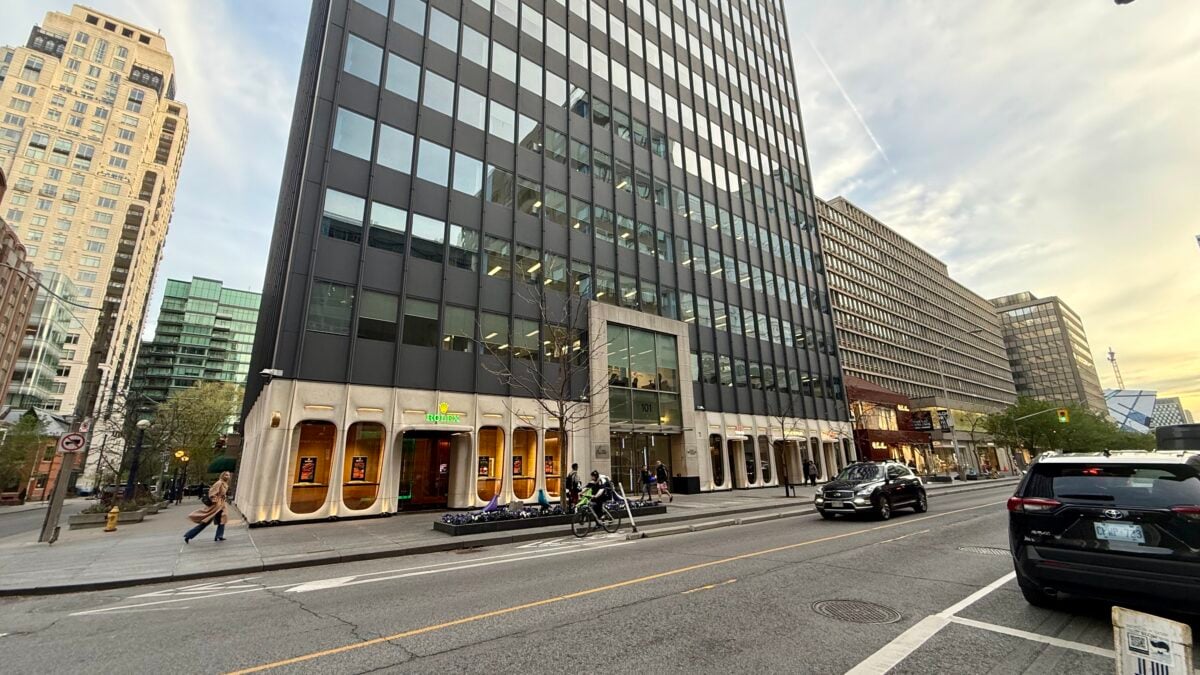
Royal de Versailles and Rolex at 101 Bloor St. West in Toronto. Image taken from above the Hermes store at 100 Bloor St. W. by Craig Patterson/Retail Insider
A Unified Presence on Bloor Street
One of the most visible changes is the exterior, where Royal de Versailles and its adjacent Rolex boutique now share a cohesive façade designed by PARTISANS. The limestone exterior, defined by sculptural window forms inspired by the cyclops lens of a watch crystal, establishes a distinctive identity along the Bloor Street streetscape.
The façade was initially introduced with the Rolex boutique and later extended across the Royal de Versailles storefront, creating a unified architectural expression. According to co-owner Gail Burnett, the goal was to move toward a more understated and integrated design language that still reflects the precision and craftsmanship associated with Swiss watchmaking.
The result is a continuous visual presence that now anchors a significant portion of the building’s frontage, reinforcing the retailer’s prominence within the Yorkville luxury node.
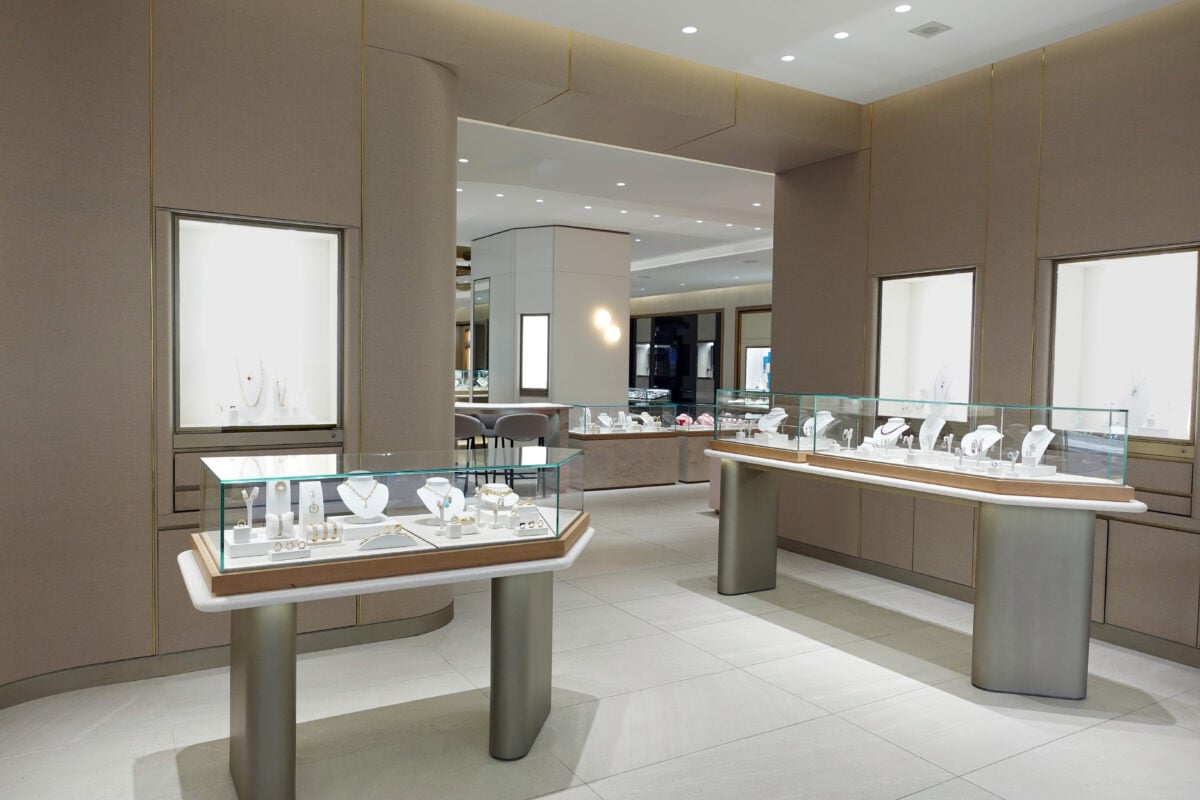
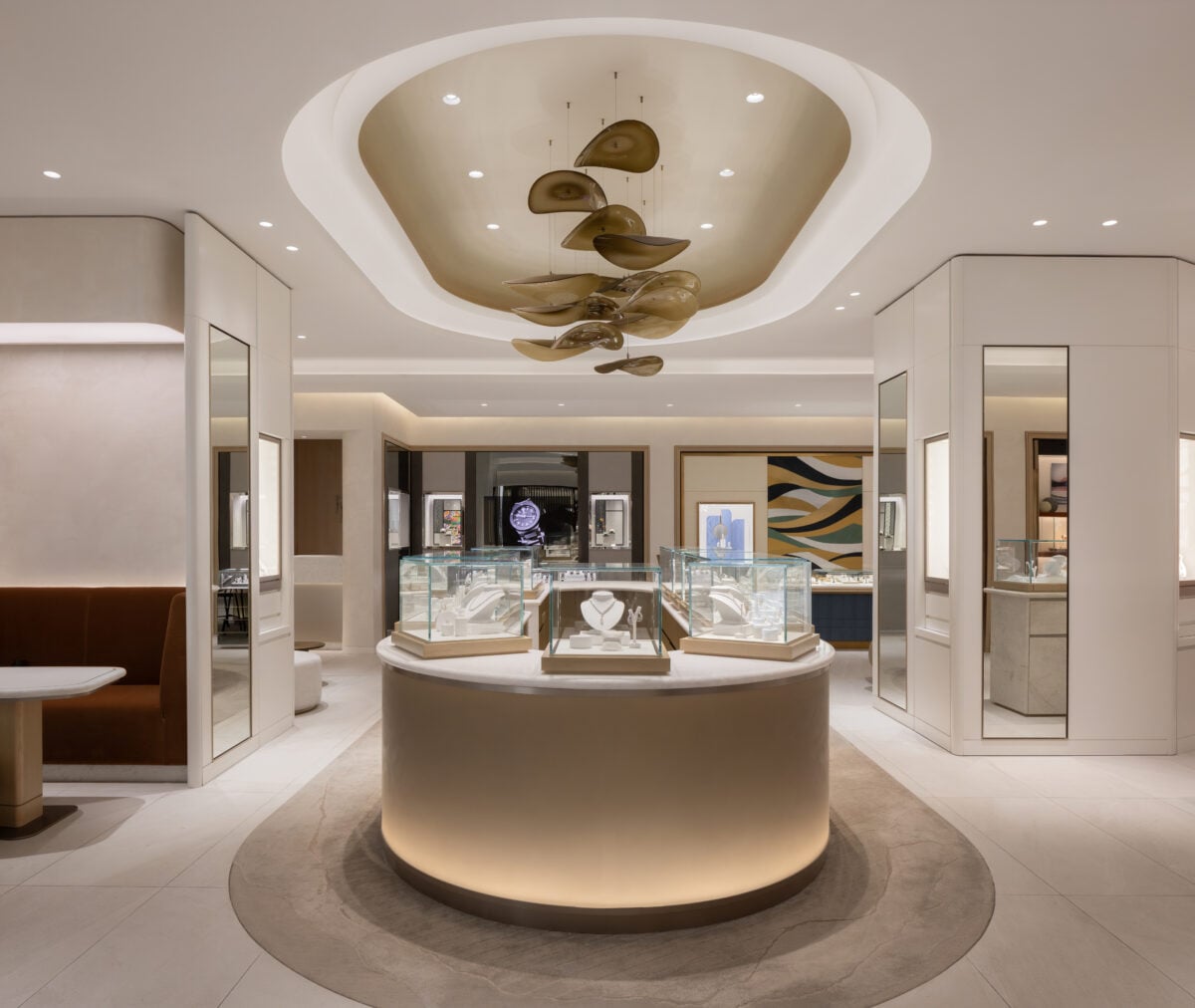
Gold department at Royal de Versailles, 101 Bloor Street West Location. Source: Royal de Versailles
Interior Designed Around Experience
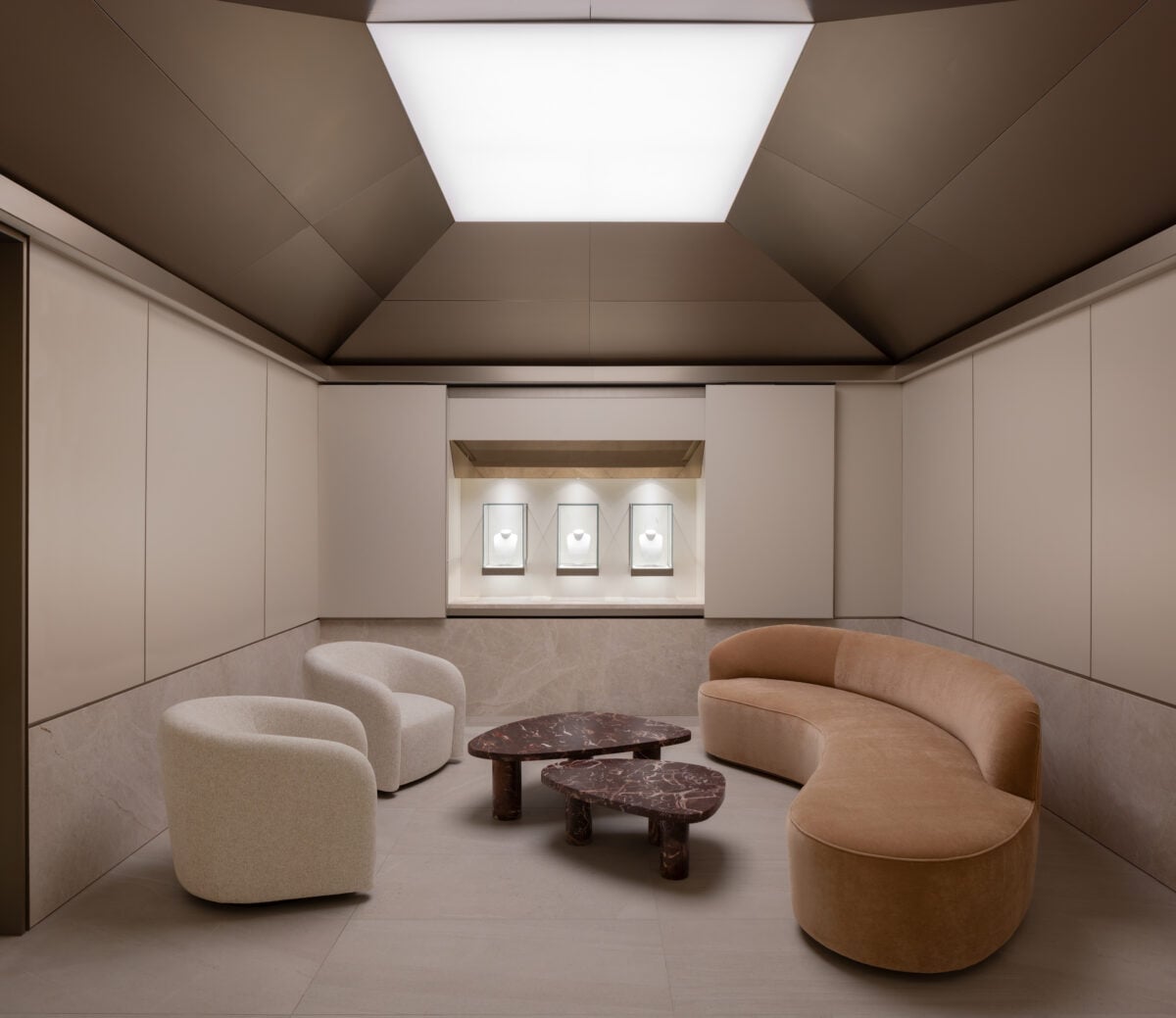
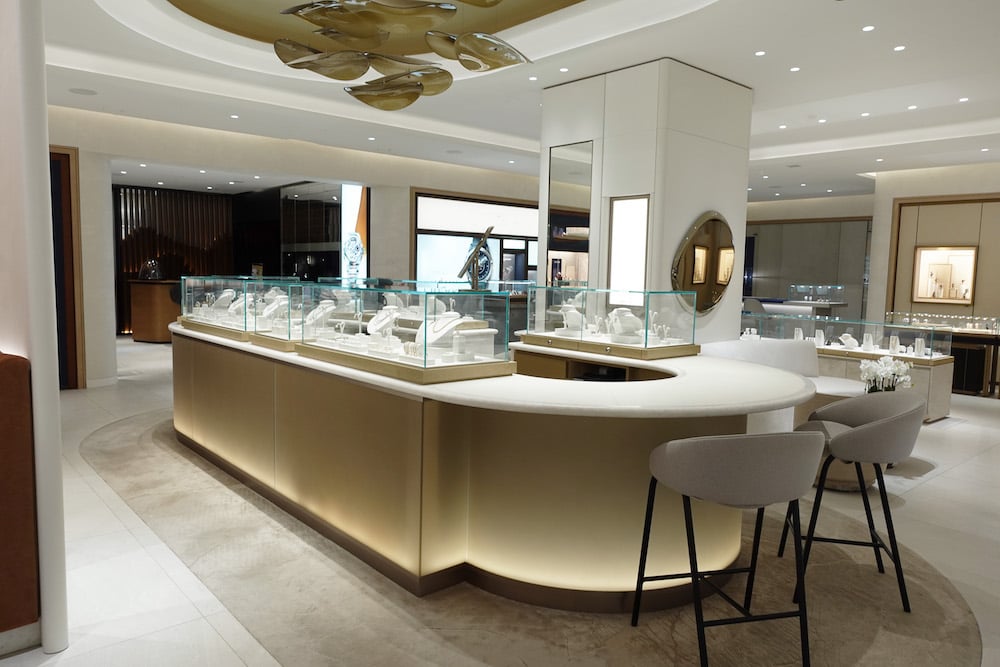
Inside, the transformation reflects broader shifts in how luxury retail is evolving. The interior, designed by Mason Studio, moves away from traditional showcase-driven selling toward a more experiential format.
Burnett explained that the redesign was informed by changing consumer expectations, particularly a growing desire for comfort, personalization, and time spent in-store. Seating areas, open layouts, and lounge-like environments now define the space, encouraging clients to engage with products in a more relaxed setting rather than through quick transactions.
“It’s not so much selling from a showcase anymore,” Burnett said. “It’s more about sitting down, having a coffee, and creating an experience.”
The store also introduces more “negative space,” with fewer products displayed at once. This approach allows individual pieces to stand out while shifting the focus toward storytelling and service.
The redesign was developed by Mason Studio with a focus on customer behaviour rather than traditional luxury retail conventions. According to the design firm, the space was intentionally created to encourage visitors to spend more time in the store through integrated seating, reduced product density, and a more relaxed circulation pattern. The goal was to create an environment that supports discovery and conversation rather than emphasizing immediate transactions.
That philosophy aligns closely with Burnett’s vision for the store. She noted that clients increasingly value personalized experiences and meaningful interactions, prompting Royal de Versailles to create a space that feels more like a private residence than a conventional jewellery store.
A key component of the renovation is the introduction of dedicated boutique environments within the broader store footprint.
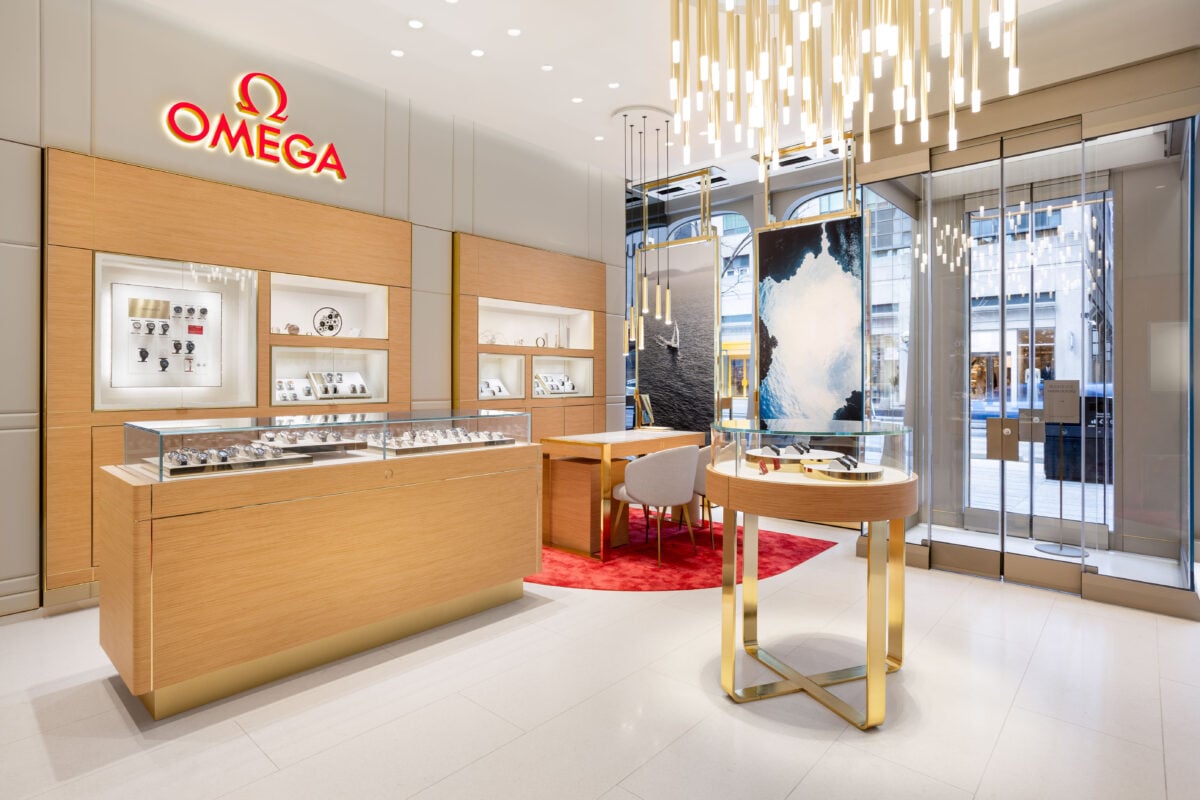
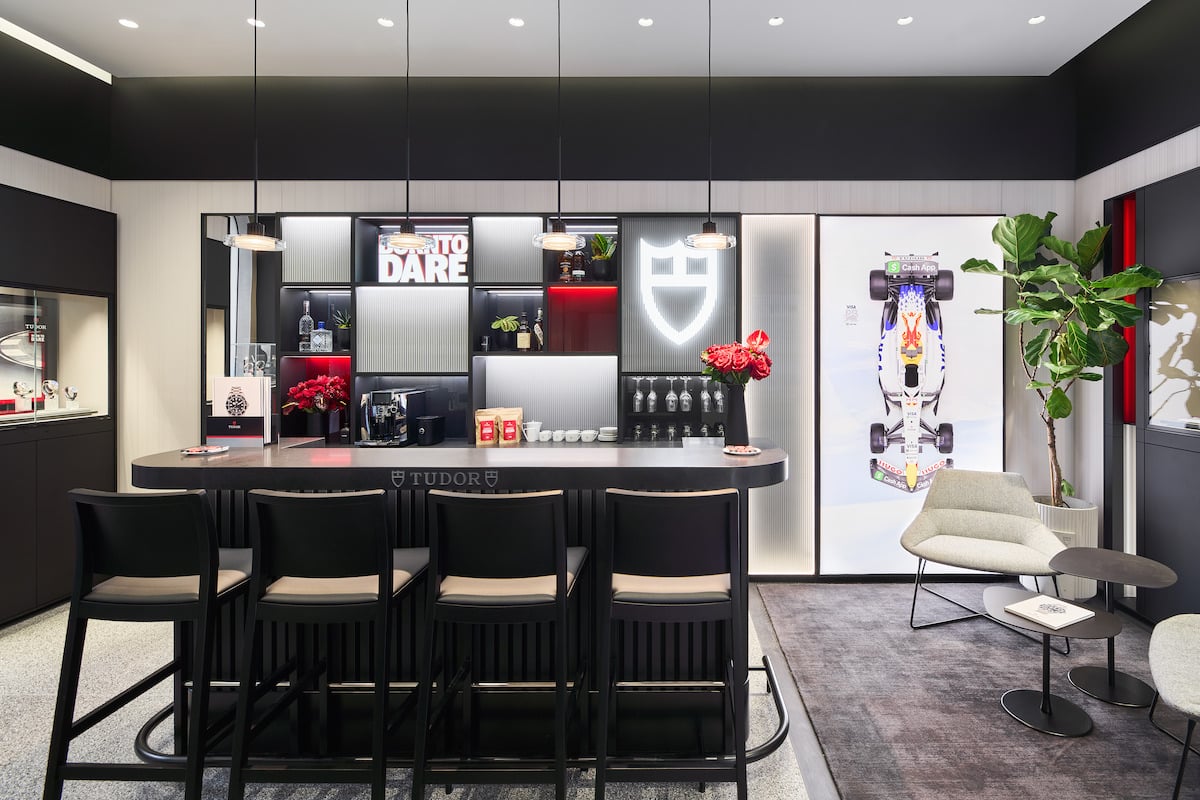
A Tudor boutique, which opened in December 2025, presents the brand through a bold, high-contrast design language rooted in black, red, and industrial finishes. Meanwhile, a new Omega boutique, which opened in 2026 following construction delays, brings a contrasting aesthetic defined by warm lighting, champagne tones, and refined materials.
Both boutiques feature direct entrances from Bloor Street while remaining internally connected to the main Royal de Versailles space. This dual-access design allows each brand to maintain a distinct identity while benefiting from integration with the larger retail environment.
The approach reflects a growing global trend where multi-brand retailers collaborate more closely with luxury maisons to create immersive, branded environments rather than traditional shared showcases.
Rolex and Royal de Versailles at 101 Bloor Street West, Photo: Craig Patterson
A Larger, More Integrated Operation
Beyond the sales floor, the transformation extends to the operational backbone of the business. The combined footprint now includes approximately 6,000 square feet for the Royal de Versailles showroom, 3,000 square feet for the Rolex boutique, and an additional 6,000 square feet of basement space dedicated to workshops and staff facilities.
The lower level houses in-house jewellery production as well as watch servicing capabilities, including Rolex-certified repair operations. The expanded space also supports training and brand collaboration, reflecting the increasing complexity of luxury retail partnerships.
Mason Studio, Toronto. Image: Mason+Studio
Art and Design Elements
The renovation also incorporates commissioned artistic elements intended to contribute to the store’s residential-inspired atmosphere. These include a gradient ceiling installation by artist Kate MacNeil and a suspended glass sculpture by artist Tisha D. Myles.
Together with carefully controlled lighting, tactile materials, and integrated display systems, the features help create an environment focused on comfort, clarity, and extended engagement.
Tudor at Royal de Versailles, 101 Bloor St. W. in Toronto. Photo: Michael Muraz
Adapting to a Changing Retail Landscape
The renovation comes at a time when the broader retail industry continues to recalibrate following shifts accelerated during the pandemic. While e-commerce remains an important channel, Burnett noted that physical retail is regaining momentum as consumers seek more meaningful, in-person experiences.
“There was a big shift to online, but now people want to come back and have an experience,” she said, adding that the company has been encouraging staff to spend more time with clients and focus on relationship-building rather than transactional selling.
That philosophy is increasingly evident across the luxury sector, where brands are investing heavily in flagship environments that function as both retail spaces and brand showcases.
Mason Studio, Toronto. Image: Mason+Studio
Strengthening an Independent Luxury Player
For Royal de Versailles, the transformation signals a broader evolution from a traditional multi-brand jeweller into a more complex, multi-format luxury destination.
With a Rolex boutique, branded shop-in-shop environments, expanded service capabilities, and a cohesive architectural identity, the retailer has effectively redefined its presence on Bloor Street West.
At a time when many independent retailers face mounting pressure from global luxury brands and shifting consumer behaviour, the move positions Royal de Versailles as a notable example of how an independent operator can scale, adapt, and remain competitive within Canada’s highest-profile luxury corridor.
Diamond department at Royal de Versailles, 101 Bloor St. W. in Toronto. Image supplied
Canadian retail marketing faced growing pressure in Q1 2026 to connect spending with measurable business outcomes.
Retailers, brands, landlords, agencies, and media companies entered the year facing a more complex environment. Consumer attention remains fragmented across digital platforms, streaming services, physical environments, and emerging AI-powered interfaces. At the same time, marketing budgets continue to face scrutiny as organizations seek stronger evidence that investments are contributing to traffic, engagement, loyalty, and sales.
Several themes emerged during the quarter. AI-powered discovery is beginning to reshape how consumers find products and retailers. Digital out-of-home (DOOH) advertising continues evolving into a more measurable channel supported by programmatic technology and audience data. Connected TV is becoming more accountable as advertisers demand clearer links between exposure and action. Loyalty ecosystems are expanding through partnerships that connect retail, travel, payments, and customer data. Meanwhile, promotional automation is becoming increasingly important as retailers manage growing complexity across websites, apps, digital flyers, social media, retail media networks, and stores.
Retail Insider’s Q1 coverage reflected a market where marketing success increasingly depends on connecting discovery, media, loyalty, promotion, measurement, and transaction into a coordinated system. Retailers that can align those elements effectively may gain meaningful advantages in customer acquisition, retention, and operational efficiency.
Several examples illustrated this shift during the quarter. Amazon Ads used its unBoxed Toronto event to showcase AI-powered campaign management, creative support, and measurement tools designed to simplify advertising workflows. Vistar Media Canada continued advancing the role of programmatic DOOH in transit systems, airports, and other high-traffic locations. Canadian Tire expanded the reach of Triangle Rewards through its partnership with WestJet Rewards, while ARISTID highlighted the operational side of marketing through promotional automation initiatives with retailers including RONA and Canac.
Taken together, Q1 2026 highlighted a marketing landscape increasingly shaped by data, integration, and accountability.
Smash a Double or a Single Smash Burger at A&W on Monday, May 25th. (CNW Group/A&W Food Services of Canada Inc. (marketing & PR))
Executive Summary
Several themes defined Marketing & Media coverage during Q1 2026:
AI-powered discovery is beginning to challenge traditional website and SEO-driven marketing models.
Retailers and brands face growing pressure to connect marketing investment with measurable business outcomes.
DOOH continues gaining traction as a programmatic and accountable media channel.
Connected TV is becoming increasingly performance-oriented.
Loyalty partnerships are evolving into broader customer engagement and ecosystem strategies.
Promotional automation is helping retailers improve speed, consistency, and compliance.
First-party data continues increasing in strategic importance.
Marketing infrastructure is becoming a competitive advantage.
The broader trend is clear: retailers are investing in systems that help them understand customer behaviour, improve visibility, strengthen loyalty, and measure results more effectively.
Overall Marketing & Media Coverage by Retail Insider
Retail Insider published 18 Marketing & Media stories during Q1 2026, with significant coverage focused on advertising, loyalty, promotional technology, retail media, AI, and emerging customer acquisition strategies.
The quarter’s reporting highlighted an industry focused less on individual campaigns and more on the systems supporting modern marketing. Discussions increasingly centred on attribution, customer data, media effectiveness, operational efficiency, and discovery.
Amazon’s unBoxed Toronto event provided insight into how major platforms are approaching the future of advertising. AI-powered creative tools, automated campaign management, and enhanced measurement capabilities were positioned as ways to help marketers manage growing complexity while improving performance.
At the same time, Vistar Media Canada argued that transit systems, airports, shopping centres, and other public environments represent valuable opportunities for measurable engagement through programmatic DOOH. Canadian Tire and WestJet demonstrated how loyalty partnerships can strengthen customer ecosystems, while Coca-Cola’s FIFA World Cup 2026 preparations highlighted the continued importance of integrating physical activations, packaging, digital engagement, and fan experiences.
Across these examples, one theme remained consistent: marketing is becoming increasingly connected to operational capability, customer data, and measurable outcomes.
AI Changes Discovery and Challenges Traditional Marketing Funnels
The growing influence of AI on consumer discovery emerged as one of the quarter’s most important marketing developments.
For years, retailers relied on a relatively predictable digital pathway. Consumers searched online, clicked links, visited websites, compared products, and eventually completed transactions. That journey still exists, but AI-powered discovery tools are beginning to alter how consumers gather information and evaluate options.
Rather than reviewing multiple sources independently, shoppers can increasingly receive summarized answers, product recommendations, and purchase suggestions through AI-powered interfaces. Adobe’s reporting on AI-driven traffic growth suggests that consumers are already incorporating these tools into their shopping journeys.
This creates important implications for retailers.
Discovery increasingly occurs across a wider range of environments, some of which sit outside a retailer’s direct control. Product information, reviews, inventory visibility, pricing, content quality, and brand reputation all influence how retailers appear within AI-assisted recommendations.
The shift also raises questions about the future role of traditional search optimization. Strong websites remain important, but marketers must increasingly consider how products and brands are represented within emerging discovery systems.
Amazon Ads reinforced this theme during unBoxed Toronto by emphasizing AI-powered campaign management and automated creative tools. The company’s approach reflects a broader industry effort to simplify advertising while improving visibility and measurement across channels.
Retailers that maintain strong content, accurate product information, trusted customer relationships, and high-quality first-party data may be better positioned as AI continues influencing discovery behaviour.
Attention Becomes More Measurable
The distinction between awareness media and performance media continues to narrow.
DOOH has traditionally been viewed as a visibility and branding channel. Advances in programmatic buying, audience targeting, dynamic creative, and attribution are changing that perception.
Vistar Media Canada’s Q1 commentary highlighted how transit systems, airports, office towers, shopping centres, and other high-traffic environments are increasingly being integrated into measurable marketing strategies. Advertisers can now align location-based exposure with broader campaigns, mobile engagement, store traffic analysis, and customer behaviour data.
The Canadian market offers significant opportunities in this area. Transit systems in major cities, airports serving domestic and international travellers, and large retail destinations provide access to valuable audiences outside increasingly crowded digital environments.
The strongest campaigns increasingly connect multiple touchpoints. A consumer may encounter a transit campaign during a commute, engage with related content on a mobile device, receive a loyalty offer, and eventually visit a store or complete a purchase online.
This ability to connect physical visibility with measurable action is reshaping how marketers evaluate media investments.
For retailers, landlords, and media owners, attention becomes more valuable when it can be measured, optimized, and connected to customer behaviour.
Loyalty Evolves Into a Broader Customer Ecosystem
Loyalty programs continue expanding beyond their traditional role.
Canadian Tire’s partnership with WestJet provided one of the strongest examples during the quarter. The partnership allows members to connect everyday retail spending with travel rewards while creating additional engagement opportunities across both ecosystems.
The strategic value extends beyond rewards.
Modern loyalty programs increasingly function as customer engagement platforms, data assets, communication channels, and acquisition tools. Strong programs help retailers understand customer behaviour, personalize offers, strengthen retention, and encourage greater share of wallet.
As customer acquisition becomes more expensive and discovery becomes more fragmented, direct customer relationships become increasingly valuable.
Programs such as Triangle Rewards and PC Optimum provide retailers with important first-party data advantages while supporting personalized marketing initiatives and targeted offers. Partnerships further strengthen those ecosystems by expanding relevance and creating additional engagement opportunities.
Retailers with strong loyalty platforms may be better positioned to maintain direct customer relationships as AI-powered discovery, retail media, and third-party platforms continue influencing consumer behaviour.
Retailers must coordinate promotional activity across websites, apps, digital flyers, social media, retail media networks, email campaigns, in-store signage, and third-party platforms. Maintaining consistency across those channels requires increasingly sophisticated systems and workflows.
ARISTID’s work with RONA and Canac demonstrated how promotional automation is becoming a practical business tool. Centralized product information, automated creative production, and integrated promotional workflows help retailers improve speed, reduce errors, and support compliance requirements.
The business benefits are straightforward.
Retailers with modern promotional systems can launch campaigns more efficiently, localize offers more effectively, maintain greater pricing accuracy, and adapt more quickly to changing conditions. Organizations relying on fragmented workflows and manual processes may face greater challenges as promotional complexity continues increasing.
Regulatory considerations add another layer of importance. Pricing transparency requirements and evolving compliance expectations place greater pressure on retailers to maintain accurate information across all customer touchpoints.
Promotional infrastructure may not receive the same attention as advertising campaigns, but it increasingly influences marketing effectiveness, customer experience, and profitability.
Marketing Infrastructure Becomes a Competitive Advantage
Many of the quarter’s strongest examples shared a common characteristic: they focused on infrastructure.
Amazon Ads highlighted AI-powered campaign management and reporting. Vistar Media Canada emphasized programmatic media capabilities. Canadian Tire expanded its loyalty ecosystem through strategic partnerships. ARISTID focused on promotional workflows and operational efficiency.
Each initiative addressed a different challenge, but all were designed to improve how organizations connect customer attention, data, media, promotion, and transaction.
This trend is creating a growing divide between organizations with integrated systems and those operating through disconnected processes. Retailers with stronger infrastructure can respond more quickly, execute more consistently, personalize more effectively, and evaluate performance with greater confidence.
Operational capability is becoming a larger contributor to marketing performance.
Risks to the Thesis
Several factors could influence how these trends evolve.
AI-powered discovery remains in its early stages, and consumer adoption patterns may vary significantly. Traditional search, social media, marketplaces, and retailer websites will likely remain important components of the customer journey for years to come.
Measurement also has limitations. While attribution continues improving across many channels, marketers must balance short-term performance metrics with longer-term brand-building objectives.
Platform concentration presents another challenge. As major technology companies expand their roles across discovery, advertising, commerce, and measurement, retailers may become increasingly dependent on ecosystems they do not control directly.
Operational readiness remains an important consideration as well. Organizations with fragmented systems, weak data governance, or limited internal capabilities may struggle to realize the full benefits of these emerging tools and strategies.
The underlying trends are becoming clearer, but execution remains a significant challenge.
Editor’s Take
Q1 2026 highlighted how quickly retail marketing continues evolving.
AI-powered discovery is influencing how consumers find products and retailers. DOOH and connected TV are becoming easier to measure and optimize. Loyalty programs are expanding through partnerships and broader ecosystem strategies. Promotional automation is helping retailers manage growing operational complexity.
The strongest organizations are investing in capabilities that connect these elements.
Amazon Ads is strengthening campaign management and measurement through AI-powered tools. Vistar Media Canada is helping advertisers treat physical environments as measurable media channels. Canadian Tire continues expanding the reach of its loyalty ecosystem. ARISTID is helping retailers modernize promotional operations and execution.
These initiatives share a common objective: improving the ability to understand customer behaviour, strengthen engagement, and measure outcomes.
Attention remains valuable, but retailers increasingly need to understand how it moves through the customer journey, how it connects to customer data and loyalty, and whether it ultimately contributes to measurable business outcomes.
Those capabilities are becoming increasingly important as discovery, media, commerce, and customer engagement continue converging.
Running out of stock is not just a back-end inventory issue anymore. For many shoppers, it is enough to push them toward a competitor. As consumers grow used to fast shipping, endless product choice, and real-time availability, a missing item can quickly become a loyalty problem.
In a new study, DOSS surveyed 1,000 U.S. adults and analyzed 8,679 Reddit posts across 18 major brands and product subreddits to see how stockouts affect consumer behavior and where shoppers complain most.
The findings show that out-of-stock products are costing brands more than a single sale.
Key Takeaways
82% of consumers would try a competitor if their go-to product is frequently out of stock.
74% of consumers encountered an out-of-stock product they regularly buy in the past 12 months.
62% of consumers have switched to a competing brand because of a stockout.
53% of shoppers hit stockouts in food and grocery
25% of consumers say stockouts damage their trust in a brand.
Over 1 in 13 fashion and apparel posts analyzed (7.9%) on Reddit mention stockout language, the highest rate of any category.
Sephora ranks highest among retailers in the dataset:12.8% of Reddit posts analyzed mention stockout language.
The study also breaks down where stockout frustration is most visible online, including complaint rates across fashion, beauty, electronics, grocery, and mass retail. Brand-level Reddit analysis includesSephora, Alo Yoga, Lululemon, Trader Joe’s, Ulta, Best Buy, Target, Costco, Amazon, Walmart, and more.
Question: The study suggests stockouts are becoming a loyalty issue rather than just an inventory problem. What changes do retailers and brands need to make to prevent a temporary out-of-stock situation from turning into a permanent customer loss?
Answer: Stockouts are no longer seen as a one-off or short-term problem with availability. The shopper data now indicates that stockouts increase consideration of alternative products and may ultimately lead to abandonment of the original brand. If 82% of consumers indicate they would seek out an alternative to their primary brand due to frequent unavailability of their preferred item, it’s unreasonable for retailers to expect their customers to continue waiting for what they need.
Therefore, retailers should utilize stronger systems for real-time inventory monitoring, which in turn enables brands to communicate more clearly about when products will again be available (and when). In practice, a large share of what gets recorded as a stockout is actually a visibility program – the inventory exists somewhere in the network, but procurement, warehousing, 3PLs, and sales channels are working off of different numbers, and as a consequence, are missing the sale.
Q: With 82% of consumers saying they would try a competitor when a preferred product is frequently unavailable, which retail sectors are most vulnerable to losing market share because of stockouts, and why?
A: Fashion, electronics, and beauty were among the most vulnerable categories, not because shoppers are indifferent, but because they combine high emotional specificity with low switching costs and abundant substitutes. As our Reddit analysis confirmed, fashion drove the highest share of stock-out complaints at 7.9%, followed by beauty/personal care (7.5%) and electronics (7.4%). These are also the categories with the most operational complexity — high SKU counts, fast trend cycles, and frequent new releases are where fragmented systems break down first.
Q: Your Reddit analysis found particularly high levels of stockout discussion in fashion and beauty. What factors make these categories especially prone to consumer frustration when products are unavailable?
A: Stockouts have an even greater impact on fashion and beauty products than many other categories because so many people buy these items based on trends, routines or what makes them unique. When a particular skin care product, colour, size or limited release item is out of stock; consumers do not view this as simply being inconvenienced. Consumers perceive that something about their daily routine and/or identity has been impacted.
This explains why Sephora was at the top of our list for retailers by stockout complaint rates (at 12.8%) when we analyzed social media posts containing stockout-related words. Additionally, these categories run on limited releases, shade and size variants, and short replenishment windows – the exact conditions where a system that can’t track inventory in real-time across channels will show ‘available’ on something that’s already gone.
Vitaly Gariev photo
Q: The data shows that 25% of consumers say stockouts damage their trust in a brand. What distinguishes brands that successfully retain customer loyalty during inventory shortages from those that do not?
A: The brands that retain trust treat inventory accuracy as a brand-protection issue and a driver of customer satisfaction and topline growth, not a back-office one. When procurement, production, fulfillment, and sales channels run on one real-time system, the “sorry, it’s actually out” moment never reaches the customer.
In the event of a stockout, the biggest risk is being silent. When a customer has checked on the availability of a product multiple times and receives no information regarding the status of the product from the brand, the customer’s anger turns to distrust very rapidly.
Q: Looking ahead, how should retailers balance inventory efficiency and cost management with consumer expectations for constant product availability, especially in an era of fast shipping and real-time inventory visibility?
A: The retailers that get this right aren’t choosing between inventory efficiency and customer expectations for availability. They’re closing the gap between the two. The problem is that most operations teams are still making replenishment decisions on data that’s hours or days old, spread across disconnected systems. When your procurement, inventory, and order data share a single and real-time view, you stop buffering against uncertainty with excess stock and start making precise, location-specific decisions. You carry less, but you have fewer stockouts, because the inputs are more accurate.
The Canadian Franchise Association (CFA) is celebrating World Franchise Day on June 10, a global initiative to raise awareness of the industry and the vital role it plays in local economies.
The day celebrates the people, brands, and systems that drive entrepreneurship, economic growth, and thriving local communities. At its core, it is about small, locally owned businesses – people who live, work, and actively contribute to the communities they serve, said the Association.
“On World Franchise Day, we recognize the people behind the brands — local business owners who are employing Canadians, investing in their neighbourhoods, and helping their communities thrive,” said Sherry McNeil, President and CEO of the Canadian Franchise Association. “Franchising is a powerful contributor to Canada’s economy, but more importantly, it’s built on local entrepreneurs making a difference every day.”
Sherry McNeil
Fast Facts About Franchising in Everyday Canadian Life
A new franchise opens in Canada every two hours, year-round
There is one franchise for every 450 Canadians
The average Canadian interacts with 3–5 franchise businesses daily
One in 20 Canadians is employed directly or indirectly in franchising
New data from the 2026 Canadian Franchise Industry Economic Outlookhighlights the scale and strength of the industry nationwide. Produced in partnership with the Canadian Franchise Association and the Canadian Centre for Economic Analysis (CANCEA), the report shows that it is not only a recognizable part of everyday life — it is a major driver of economic activity and employment across the country.
According to the report, the sector is entering a period of steady, sustainable growth, supported by strong consumer demand, rising wages, and increased productivity.
A Growing National Footprint
The industry in Canada contributed over $143 billion to the national GDP in 2025—far exceeding the previous projection of $133 billion
Canada’s franchise sector is the 12th largest industry in the country, with more than 1,100+ brands operating at least one establishment in Canada
Nearly 70,900 establishments are expected to be in operation by 2027
457 net new locations are projected in the coming year alone
Strongest growth areas are anticipated to be professional and technical services and construction
Jobs, Wages, and Economic Impact
Employment expected to reach 1.83 million jobs by 2027
Nearly 11,800 new jobs are projected in the coming year
Wages expected to total $75.7 billion
$19.3 billion in federal and $17.2 billion in provincial tax revenue forecast
“While Ontario continues to lead in overall expansion with the highest number of new franchise locations, growth is being seen across the country,” said the Association. “Western provinces such as Alberta and British Columbia remain strong contributors, while Eastern Canada is experiencing steady momentum, with increasing franchise development supporting local economies, job creation, and small business ownership opportunities in communities across the region.
“Franchising offers a unique pathway to entrepreneurship allowing individuals to be in business for themselves, but not by themselves. Behind every location is a local owner who is deeply connected to their community.
“World Franchise Day, first launched in 2025, was created to spotlight this very impact bringing global attention to an industry that blends brand strength with local ownership.”
Today’s economic landscape is proving to be challenging for business owners in Canada.
A recent TD survey found that 27% of Canadians say the economy is too uncertain to start a business and 24% are not comfortable with the financial risk involved.
During this time of economic uncertainty, some prospective entrepreneurs are considering becoming franchisees to help reduce the risks of starting a business by leveraging a proven model and established brand.
According to the Canadian Franchise Association, franchises make up Canada’s 12th largest industry and is projected to contribute nearly $150 billion to the economy this year, creating jobs for almost two million Canadians.
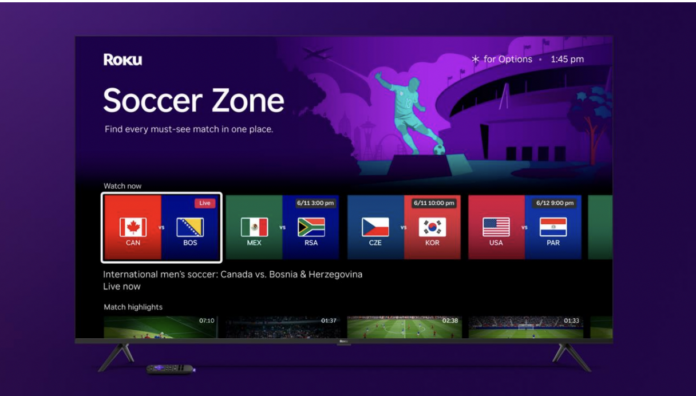
Roku has launched its new Soccer Zone, a dedicated destination that brings live matches and related content together in one place, as Canada prepares to co-host the FIFA World Cup, the world’s biggest soccer tournament alongside the United States and Mexico.
“With Canada hosting matches in Toronto and Vancouver, and fans across the country rallying behind teams from around the world, the tournament is set to be one of the biggest cultural moments of the year,” said Mitch Ward, Head of Partner Growth – Canada. “Roku’s new Soccer Zone cuts through the clutter by showing fans where to watch, when to watch and how to jump straight into the action, all in one simple destination. It’s built to make following the tournament feel effortless, whether you’re catching a late-night match or tuning in with friends.”
Mitch Ward
Roku said the Soccer Zone includes full access to this summer’s live soccer matches available through subscriptions to TSN, RDS, and Crave, in one simple, centralized hub on Roku devices. Fans can also stay up to date with a dynamic scoreboard covering all matches, alongside a leaderboard tracking the tournament’s top goal scorers. Built for a streaming-first audience, the Soccer Zone shows where matches are available across supported apps, so that fans can focus on watching soccer, not searching for it.
“Beyond live coverage, the Soccer Zone curates a selection of soccer-related films, series, and documentaries, giving fans more ways to engage with both the tournament and the sport,” it said.
“The Soccer Zone will be available on all existing and new Roku players, Roku TV models, and Roku Smart Projectors in Canada. Viewers can access it directly from the Roku Home Screen menu, as well as through featured placements on the Home Screen and within the What to Watch destination, ensuring the next game is always within easy reach.”
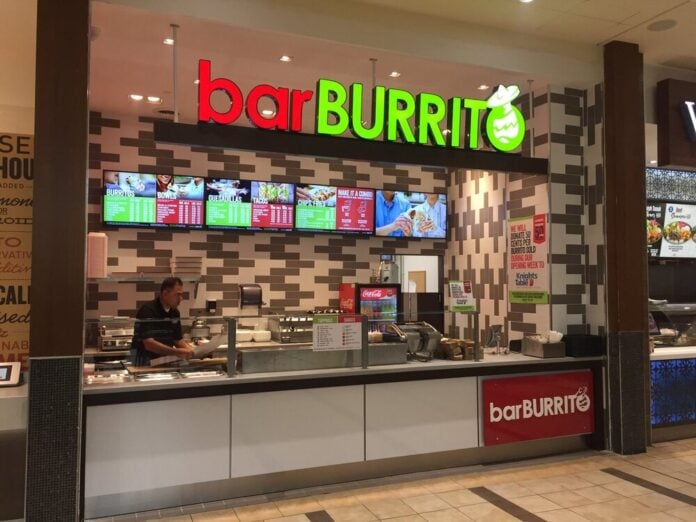
BARBURRITO LOCATION AT BRAMALEA CITY CENTRE IN BRAMPTON, ONTARIO. PHOTO: BARBURRITO
barBURRITO, Canada’s largest Mexican-inspired quick-service restaurant chain, has unveiled a new national brand platform and Daily Crave value program promoted by Canadian Men’s National Team defender Alistair Johnston and Toronto creator Lucas Lopez.
The company said the new brand identity introduces an updated logo, refreshed visual system and a new Built for Craves positioning. Designed to highlight what has long differentiated the brand – fresh ingredients, in-house preparation and food built to order – the move pairs with a more current reflection of its spirit and service culture, it said.
Launching as Canada prepares to co-host the 2026 FIFA World Cup, the company said the campaign affirms barBURRITO’s commitment to serving fresh, made-to-order food every day across its growing network of restaurants.
“Consumers have increasingly come to expect convenience at the expense of freshness. At barBURRITO, we’ve always believed great food should deliver both. BarBURRITO has partnered with two distinctly Canadian personalities to expand the brand’s fan base.”
Johnston brings a reputation for consistency, preparation and performance at the highest levels of the sport, explained the company, adding that Lopez is known for his comedic digital content and four-million online audience.
Lopez introduces Coach Burrito, an original barBURRITO campaign character – part motivational coach, part burrito enthusiast – fully committed to helping Canadians satisfy their cravings.
“Proudly Canadian-owned and operated, we’re excited to celebrate a summer when soccer will capture the attention of the entire country,” added Baric. “Alistair and Lucas don’t seem like an obvious pair – a Celtic FC defender and a comedian with four million followers – but they play well together, and that’s so on-brand for us.”
The campaign will run nationally across TSN, Sportsnet, CTV, Global and Crave throughout the summer starting today. Until July 5, customers can also enjoy free delivery on the barBURRITO app and website.
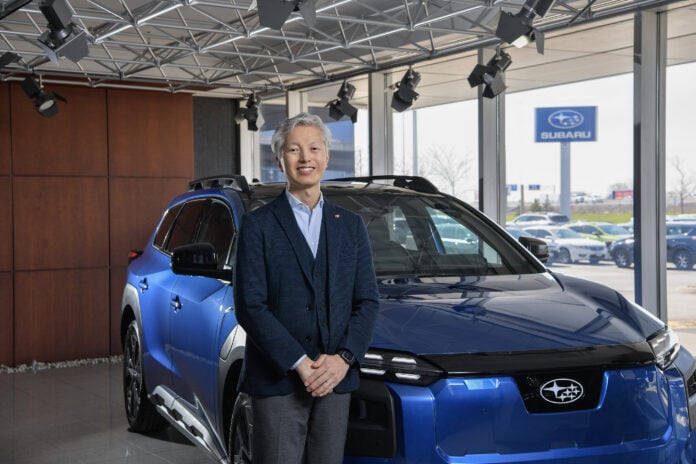
Subaru Canada Inc. (SCI) has appointed Yoichi Hori as the company’s new Chairman, President and CEO.
He replaces the previous Chairman, President and CEO, Tomohiro Kubota, after his three-year and four-month term.
Yoichi Hori continues to serve as Managing Executive Officer of Subaru Corporation and Chairman and CEO of Subaru of America, Inc.
“I would like to express my gratitude towards Tomohiro Kubota for exceptional leadership and dedication, making significant contributions to the growth and success of the Subaru business in Canada,” said Hori. “I’m excited to build on this strong foundation and lead Subaru Canada.”
SCI is excited to be under Hori’s leadership, benefitting from his depth of experience and multi-market positions, said the company.
Subaru Canada, Inc. is a wholly owned subsidiary of Subaru Corporation of Japan. Headquartered in Mississauga, Ont., the company markets and distributes Subaru vehicles, parts and accessories through a network of 96 authorized dealers across Canada.
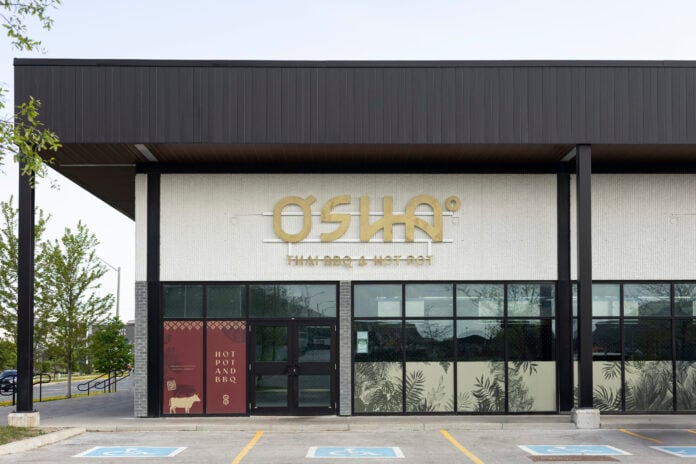
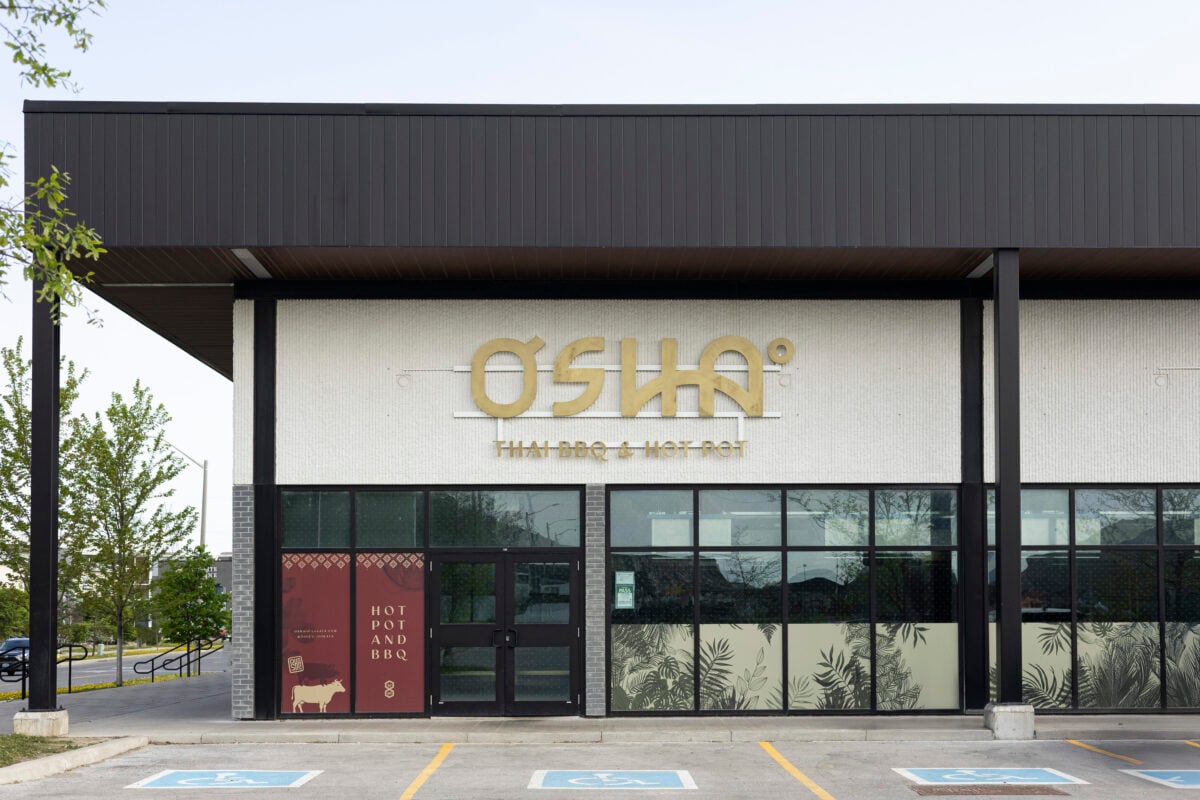
A new Thai-inspired tabletop barbecue and hot pot restaurant is introducing Toronto diners to Thailand’s popular mookata dining format as Accencis Group expands its growing portfolio of hospitality and lifestyle brands in Canada.
Located at 390 Silver Star Boulevard in Scarborough, Osha Mookata soft-opened earlier this spring and centres around communal tabletop cooking, combining barbecue grilling and hot pot dining in a single interactive experience. Diners grill meats on a raised dome-shaped surface while broth simmers around the perimeter, allowing juices and rendered fat from the proteins to gradually enrich the soup throughout the meal.
The restaurant occupies half of a roughly 10,000-square-foot space shared with sister restaurant Susu Siam, another Thai-focused dining brand operated by Richmond Hill-based Accencis Group.
The opening reflects growing consumer demand for social and experience-driven dining formats, particularly concepts that combine food, atmosphere, and interaction in a highly visual setting.
Brandon Lee, Chief Operating Officer at Accencis Group, said the idea for Osha Mookata emerged through the company’s ongoing research into hospitality concepts across Asia.
“Eugene Chan, co-founder of Accencis Group, spends a lot of time travelling throughout Asia looking at concepts that are successful locally but still underrepresented in North America,” said Lee. “When we experienced mookata in Thailand, we immediately saw the potential because it combines food, interaction, and a very communal style of dining.”
Lee said the company recognized an opportunity to introduce a more refined Thai-focused version of the experience to the GTA market.
“There are tabletop barbecue and hot pot restaurants across Toronto, but we didn’t really see a strong Thai-focused version that felt elevated,” he said. “We wanted to create something authentic to Thai dining culture while still making it modern and approachable for Toronto diners.”
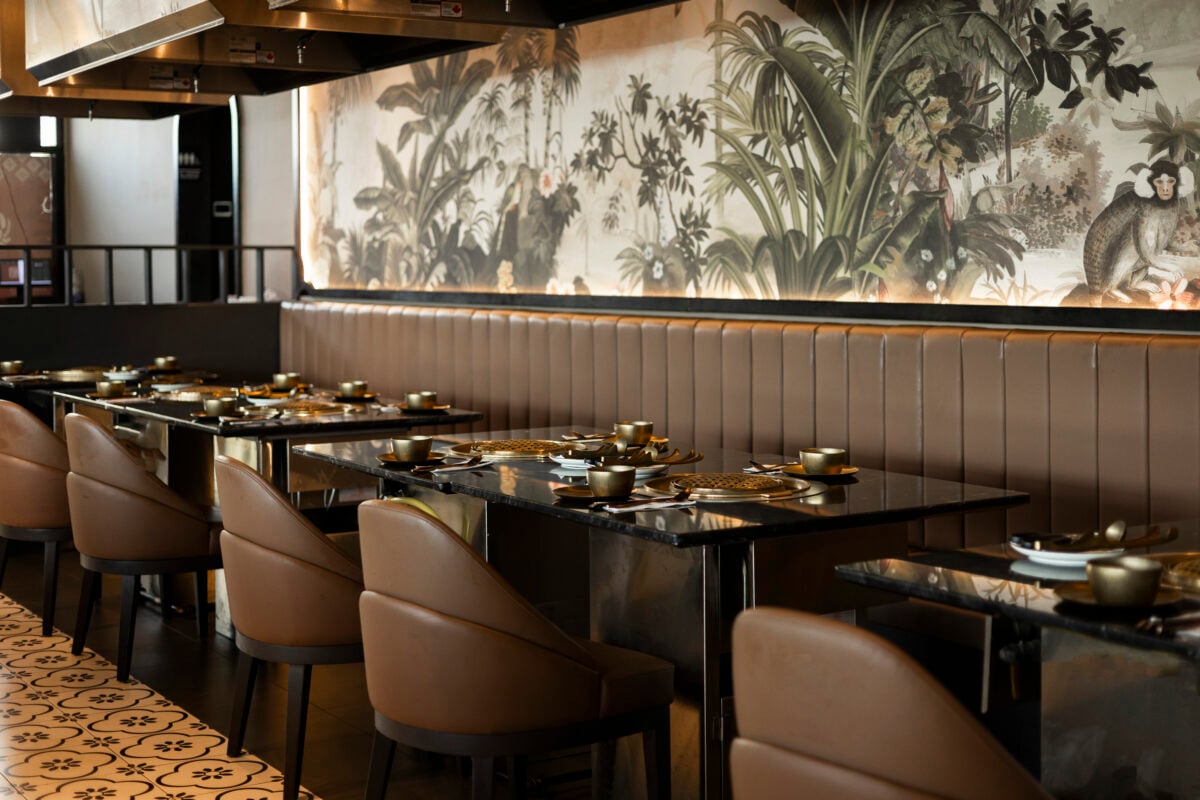
Osha Mookata, Scarborough. Credit: Osha Mookata
Communal Dining Meets Premium Ingredients
Unlike conventional restaurant formats, Osha Mookata centres around shared cooking and group dining. Guests prepare meats, seafood, vegetables, and noodles directly at the table using customized grill and broth stations featuring soup options such as tom yum and coconut broth.
The menu includes premium meat and seafood platters designed for sharing, including the Osha Premium Set featuring pork jowl, pork belly, beef short ribs, ribeye, jumbo shrimp, scallops, vegetables, and sides. Appetizers include Crab Rangoon, Som Tum Tod, and Pork Jowl Salad, while the beverage menu features fruit slushies, Thai tea drinks, and desserts including mango sticky rice and Thai tea ice cream.
Accencis intentionally positioned the restaurant differently from the all-you-can-eat tabletop grill operators that dominate much of the GTA market.
“A lot of restaurants compete on quantity, but our focus was always quality and authenticity,” said Fadi Hammound, Vice President of Operations and Marketing at Accencis Group. “We’ve put a lot of emphasis into the marinades, sauces, ingredients, and flavour profiles so the experience feels closely connected to Thai cuisine.”
Hammound said the company has continued refining the restaurant since opening, making adjustments to menu items and preparation techniques based on customer feedback and operational experience.
“We’re constantly improving the experience,” he said. “The response so far has been very encouraging, especially considering most of our growth has happened organically through word of mouth.”
The company plans to introduce alcohol service as part of the restaurant’s upcoming grand opening, adding cocktails and curated beverage offerings designed to complement the interactive tabletop dining experience.
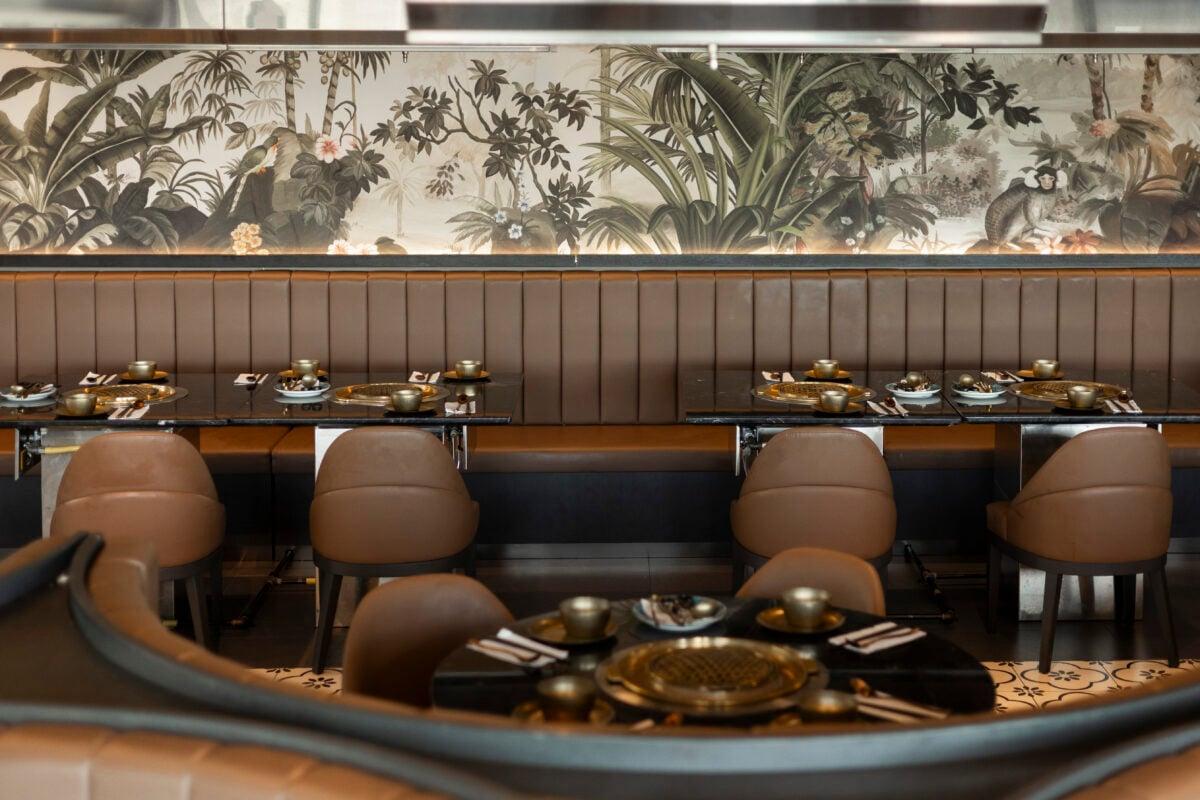
Osha Mookata, Scarborough. Credit: Osha Mookata
Silver Star Boulevard Emerges as Dining Destination
The opening of Osha Mookata adds to the growing concentration of destination dining concepts in the Silver Star Boulevard area, which has increasingly become known for Asian restaurants and highly specialized food offerings drawing visitors from across the GTA.
Osha’s contemporary interior blends industrial finishes with references to Thai street barbecue culture, creating an environment designed for social gatherings as much as dining itself. Sizzling tabletop grills, bubbling broth, colourful drinks, and communal preparation all contribute to an atmosphere built around interaction and shared experiences.
Lee described the restaurant as a more premium interpretation of the tabletop dining category.
“You still get the fun and interaction of grilling at the table, but with stronger Thai culinary influence and more attention to ingredient quality,” he said. “That’s what we felt was missing in the market.”
Osha Mookata, Scarborough. Credit: Osha Mookata
Accencis Continues Expanding Hospitality Platform
Accencis Group was officially established in 2020, though several brands within its portfolio trace their roots back more than a decade. Today, the company has expanded into one of Canada’s more active hospitality and lifestyle operators.
The company’s portfolio includes brands such as % Arabica, HeyTea, The Captain’s Boil, Midori Ramen, Bakebe, Dear Saigon, and several emerging concepts spanning wellness, fitness, entertainment, and immersive hospitality experiences.
Accencis describes its business model through three primary pillars: international brand integration, proprietary brand development, and expansion of established concepts across North America.
The company is also preparing additional projects including AKUA, an immersive Japanese-inspired wellness concept, and Altitude, a premium indoor golf simulator brand.
Lee said Osha Mookata is already being evaluated for future expansion opportunities.
“This is our first proof of concept for the brand, and we’re very encouraged by the early response,” he said. “We’re already studying additional locations and looking at how the restaurant can continue evolving and scaling.”
As consumers increasingly seek out immersive and socially driven hospitality experiences, Osha Mookata reflects Accencis Group’s broader strategy of identifying internationally successful dining formats and adapting them for North American audiences through design-forward, culturally rooted restaurant experiences.
Welcome to the Daily Synopsis by Retail Insider. We hope you enjoy the 10 articles we published most recently, covering key developments in Canadian retail.
Canada’s labour market posted strong overall job growth but retail employment fell by 35,000, reflecting ongoing workforce challenges as retail expands. Canada’s luxury retail market entered a more strategic era focusing on flagship optimisation and experiential environments in major urban centres including Toronto and Calgary.