A bold pink double-decker bus will roll through Toronto on Thursday, June 4, unmistakable and unlike anything the city has seen before.
High Sociétéa, Canada’s first afternoon tea experience served in motion, offers a curated city tour, live violin, and a theatrical onboard experience beneath a panoramic glass roof with 180-degree city views.
High Sociétéa was conceptualized around memory and shared experience, particularly those between founder and creator Veruschka Mungroo and her mother. When her mother was diagnosed with dementia, Mungroo found herself returning to one specific ritual: afternoon tea together in South Africa. Those memories became the inspiration for something greater, a space designed to evoke the same sense of warmth, presence and togetherness across the city, inviting guests to pause and reconnect, said the company in a news release.
Veruschka Mungroo
“I wanted to create a space that honours connection, nostalgia, and the kind of joy that stays with you,” said Mungroo. “Not just a beautiful experience, but a meaningful one. One where people can make memories, as I have with my mother. And Toronto, with its rich multicultural tapestry and deep appreciation for community, felt like a natural home for it.”
Inside, the bus transforms into an elegant escape. Soft floral booths, layered textures and golden accents add a touch of refined whimsy. Every detail has been thoughtfully curated to take guests through a full sensory experience, where the aesthetic and the tea ritual are equally important, explained the company
At its heart, High Sociétéa is a social experience, celebrating connections between loved ones, longtime friends, and new relationships. Onboard, guests can choose from multiple packages, featuring a curated selection of teas, seasonal non-alcoholic rosé, and delicate tea sandwiches and pastries, it said.
For Mungroo, who immigrated from South Africa eight years ago, supporting women and fellow immigrants is deeply personal.
“Every six months, women from local shelters will be invited as guests of honour for complimentary trips. “Every woman deserves to feel special and celebrated,” said Mungroo.
High Sociétéa runs for 90 minutes and will be available Thursday to Sunday from 10:30 AM to 6:00 PM. After June, tours will run Tuesday to Sunday from 10:30 AM to 6:00 PM.
Retailers across Canada continue to adapt to changing economic conditions and shifting consumer expectations. While the country remains in a technical recession, the retail sector is showing resilience as brands invest in new stores, innovative concepts, and experiences designed to attract shoppers. Many retailers are also placing greater emphasis on community engagement and creating destinations that encourage customers to spend more time in physical spaces.
This week saw several notable expansions, new retail concepts, and sustainability-focused initiatives across the country. Retailers are also adjusting their operations and hiring strategies as they respond to changing consumer behaviour. With major events such as the FIFA World Cup expected to drive tourism and spending in the years ahead, many businesses are positioning themselves for long-term growth while remaining focused on serving local communities.
Retailer News
Sephora Canada is making a pivotal leap into smaller, community-focused formats with its first-ever small store in Kitsilano. This 2,000-square-foot location emphasizes a hands-on, curated beauty discovery that complements evolving local shopping preferences while rethinking traditional footprint strategies. Meanwhile, Tilley is pursuing premium urban consumers by expanding with three new stores that align with its transition from classic hatmaker to a comprehensive outdoor lifestyle brand, reflecting a refined outdoor aesthetic tailored for affluent markets in its recent expansion.
Large-scale retail development continues to garner attention with the opening of Oakridge Park which introduced a luxury retail and experiential food hall space as part of Vancouver’s growing upscale shopping milieu. This new destination signals diversification in mixed-use urban retail, showcasing a changing vision of luxury away from heritage corridors. Complementing the sustainability trend, MEC launched its first permanent Gear Swap store, facilitating circular commerce through trade, repair and resale of outdoor gear to foster community and eco-conscious shopping.
On the growth and market consolidation front, Dr. Phone Fix’s entry into New Brunswick via acquisition and store expansion strengthens its national footprint in the device repair sector, as detailed in its strategic move. These concrete expansions and innovative retail concepts reflect a broader industry emphasis on quality, sustainability, and functional urban experience in physical retail spaces.

Retailer Financials / Trends / Reports
Despite Canada’s entry into a technical recession, the retail sector reported a 1.0% trade increase in Q1 2026, driven primarily by health, personal care, and general merchandise retailers, highlighting resilience in consumer spending and signalling sustained opportunities for retail and commercial real estate investment, according to the latest report. At the same time, Statistics Canada data points to continuing declines in retail employment, underscoring persistent labour challenges that could impact store operations and service delivery in key sub-sectors.
Retail pricing strategies are also evolving amid inflation fatigue. Insights into counter-tariffs reveal selective price increases for affected U.S. goods, coupled with transparency efforts through product labelling, which helped maintain consumer acceptance of modest price adjustments as discussed in Canada’s counter-tariffs analysis. This balanced approach demonstrates tactical cost management important for maintaining competitiveness during economic uncertainty.
Furthermore, physical grocery stores remain vital for product discovery, with nearly half of consumers making spontaneous purchases in-store, as detailed in the grocery retail report. Consumer behaviour surveys reveal shifts in spending patterns as 35% of Canadians intend to reduce discretionary summer spending due to cost pressures, though younger demographics buck this trend with increased social-driven expenditure, according to the consumer study. Meanwhile, event-driven economic boosts such as the Montreal Canadiens’ NHL playoff run highlight how live experiences continue to drive substantial restaurant and retail spending in urban areas.
Retailer People News
Leadership shifts and workforce dynamics are front and centre as retail brands position themselves for growth amid competition and labour constraints. L’Oréal Canada appointed Stéphane Bérubé as its first Canadian President and CEO, signalling a strategic focus on omni-channel innovation and localized market responsiveness in its recent announcement. In a competitive labour market, Tim Hortons launched a campaign to hire 10,000 local workers and expand its store base as a defensive strategy against Dunkin’s planned Canadian re-entry, detailed in their hiring initiative.
Retail leaders in hospitality are preparing for a significant surge in demand as the FIFA World Cup approaches, with warnings about enduring staffing shortages and the need for robust training and retention efforts to meet visitor volumes and protect service standards, outlined in hospitality industry insights. These developments underscore the interconnectedness of talent strategy and capacity building in retail and hospitality sectors facing heightened demand volatility.
Retailer Op-Eds
Analysis of retail operational challenges reveals that despite apparent demand, many retail spaces struggle with conversion issues due to poor visual merchandising and suboptimal store layouts resembling storage more than curated environments, underscoring the necessity for focused investments in presentation and engagement to unlock space potential and drive profitability as highlighted in Why Retail Spaces Aren’t Converting Despite Demand. This reflects a wider need to address the ‘last mile’ of in-store experience amid hybrid retail models.
On food retail, rising chicken prices tied to supply shortages spotlight structural vulnerabilities in Canada’s supply-managed protein sector, foreshadowing cost pressures that could ripple through grocery prices and consumer budgets, detailed in the chicken prices analysis by Dr. Sylvain Charlebois. Separately, debates around taxation of convenience foods highlight government recognition that such products are necessities for many Canadians, with policy changes aiming to alleviate undue burdens on vulnerable demographics and potentially influence sector sales and retail footprints as argued in Taxing Convenience Foods Punishes the Wrong Canadians.
Meanwhile, broader retail pricing debates clarify myths about surveillance pricing, emphasizing that Canadian grocers currently do not engage in price discrimination based on consumer data at checkout, but rather rely on common personalized offers. This distinction is crucial to understanding real pricing dynamics and regulatory contexts affecting consumer trust and retailer strategies in a sensitive economic climate, as explored in Double Click: Big Foot, The Easter Bunny & Surveillance Pricing.
Editor’s Take
This week’s developments highlight a retail sector that continues to evolve despite ongoing economic uncertainty. Across Canada, retailers are investing in new store concepts, experiential destinations, sustainability initiatives, and community-focused strategies to strengthen customer relationships and drive growth. These efforts demonstrate that many businesses remain confident in the long-term potential of physical retail, even as consumers become more selective about where and how they spend.
At the same time, challenges remain. Economic pressures, labour shortages, and changing consumer behaviour continue to affect retail operations across the country. While overall retail sales have shown resilience, many businesses are working to balance rising costs with the need to deliver value, maintain service levels, and remain competitive in an increasingly crowded marketplace.
This week’s stories also reinforced the importance of trust, authenticity, and creating compelling shopping environments. Whether through transparent pricing, sustainability efforts, or thoughtfully designed stores, retailers are finding that success increasingly depends on building meaningful connections with customers. As the industry continues to adapt, those that remain responsive to changing consumer expectations will be best positioned for growth in the months and years ahead.
Welcome to the Daily Synopsis by Retail Insider. We hope you enjoy the 7 articles we most recently published, covering key developments in Canadian retail.
Canada entered a technical recession while the retail sector recorded 1.0% growth in the first quarter of 2026. Canadians are increasingly using stores as social spaces, with Gen Z leading this shift toward experiential shopping. Meanwhile, employment in retail and hospitality sectors continued to decline in March 2026, reflecting ongoing workforce changes.
Sephora Canada First-Ever Small Store in Kitsilano (CNW Group/Sephora Canada)
Sephora Canada says it is redefining neighbourhood beauty retail with the opening of its first-ever small store format in Kitsilano, Vancouver, marking a strategic evolution in how the retailer brings its signature multi-brand discovery experience closer to Canadian consumers.
Located in one of Vancouver’s most vibrant and wellness-driven communities, the new format is designed to complement the pace and personality of neighbourhood shopping districts. The Kitsilano store delivers its signature multi-brand assortment, and beauty expertise, tailored to how Canadians increasingly live, shop, and connect with beauty today, said the brand.
The new store is located at 2235 4th Ave W and officially opens to the public on June 5.
The opening marks Sephora Canada’s 147th store nationwide and represents an important milestone in the retailer’s ongoing retail evolution, focused on deepening proximity to consumers while preserving the discovery and human connection at the heart of Sephora Canada, it said.
Thomas Haupt
“We know that beauty is an inherently personal and experiential category, where customers want to touch, test, discover, and connect with experts before they buy,” said Thomas Haupt, Country General Manager, Sephora Canada.
“Our new small store format lets us bring the best of Sephora into communities like Kitsilano in a way that feels curated, convenient, and reflective of the neighbourhood. “It’s about meeting clients where they already live and spend their time, making Sephora part of their everyday.”
The company said the store will span just over 2,000 square feet and feature a curated assortment of brands, including Glow Recipe, Haus Labs, Kayali, Kérastase, Makeup by Mario, Merit Beauty, Rare Beauty, Rhode, and Sol de Janeiro, alongside exclusive ‘Only at Sephora’ collections.
Sephora is the world’s leading global beauty retail brand with 50,000 employees operating in 35 markets. It has more than 3,200 stores and close 500 brands as well as its own label, Sephora Collection. It was founded in 1969 in Limoges, France, and has been part of the LVMH Group since 1997.
Sephora’s real estate strategy in Canada has long been guided by Aurora Retail Group, founded by Jeff Berkowitz, which has represented the retailer since its entry into the Canadian market more than 20 years ago. Perri Zimmerman from the firm’s team handled the Kitsilano lease transaction.
“The data shows an economy that is losing momentum and struggling to find a clear source of growth,” said CPA Canada’s chief economist David-Alexandre Brassard. “Canadians are continuing to spend, supported by strong wage growth, but job creation has yet to pick up meaningfully in 2026.”
David-Alexandre Brassard
Household spending continued to hold up despite broader weakness across the economy. Ongoing uncertainty continues to weigh on business investment, while a weaker housing market is dragging down residential investment. A temporary boost from businesses in North America rebuilding depleted inventories helped offset some of this weakness, said the CPA.
“Consumers are carrying more of the load, at the expense of savings and increasing financial strain. And that is not entirely sustainable,” said Brassard. “Stronger investment and government spending are needed to offset slowing momentum elsewhere in the economy because right now Canada is lacking a clear engine for growth.”
Looking ahead, the outlook remains weak, Brassard added. Higher oil prices in April may provide some support, but that benefit could be offset by tougher U.S. sectoral tariffs. Meanwhile, labour market data suggests employers remain cautious amid ongoing uncertainty despite wage growth supporting consumption for now.
This weaker-than-expected data is likely to be noted by the Bank of Canada and could keep policymakers on the sidelines through 2026, said the organization.
Statistics Canada also reported that retail trade rose 1.0% in the first quarter, with health and personal care retailers (+3.5%) and general merchandise stores (+3.2%) contributing the most to the sector’s quarterly growth.
But it also said the retail trade sector contracted 0.6% in March, partially offsetting the back-to-back monthly expansions in January and February.
“General merchandise retailers (-2.7%) contributed the most to the decline in the sector in March, the first contraction in six months. Retailing activity at building material and garden equipment and supplies dealers (-3.0%) was another large contributor to the decline. Gasoline stations and fuel vendors (-1.9%) further added to the decline in the retail trade sector, coinciding with a jump in gas prices, arising from the supply shock caused by the conflict in the Persian Gulf,” noted the federal agency.
Tahir Xəlfə photo
Statistics Canada said household spending rose 0.4% in the first quarter of 2026, following a 0.7% increase in the fourth quarter of 2025. Growth in the first quarter was led by higher spending on financial services and food. Meanwhile, fewer Canadians travelling abroad as well as decreased purchases of new vehicles tempered the overall growth in household consumption expenditures, it said.
“The household saving rate slowed to 3.5% in the first quarter of 2026, the lowest rate since the first quarter of 2024, as disposable income increased 0.6%, while nominal consumption expenditure rose 0.9%. Although compensation of employees increased in the first quarter of 2026, declines among other income sources weighed on disposable income, including self-employment income (termed net mixed income), net investment income (termed net property income) and net receipts of current transfer,” explained Statistics Canada.
“Net property income declined 0.6% in the first quarter of 2026 due to a combination of reduced investment earnings and higher interest payments. Household investment earnings (i.e., property income received) declined 0.1% in the first quarter, due mainly to lower returns on interest-bearing instruments. Household property income paid, comprised of mortgage and non-mortgage interest expenses, increased by 0.7%, marking the first increase since the second quarter of 2024. The Bank of Canada policy rate was unchanged during the first quarter of 2026, in contrast with its numerous reductions over the past two years.”
Canadian heritage apparel company Tilley is in the midst of a rapid retail expansion across Canada, with three store openings in roughly three months as the company accelerates its push into physical retail under the Unity Brands platform.
Tilley recently opened a new store at The Well in downtown Toronto following the launch of a location in Victoria, British Columbia. A store at Bayview Village Shopping Centre is also expected to open soon, becoming Tilley’s eighth location including its factory outlet store.
For many consumers, Tilley is still best known for its iconic hats. The company, however, has steadily expanded into apparel, sport and lifestyle categories while building a growing network of standalone stores in carefully selected markets across Canada.
David Lui, co-founder of Unity Brands, said the platform continues to explore expansion opportunities in markets that align with Tilley’s customer base and long-term growth strategy.
Tilley at The Well, Toronto. Photos by David Lui.
Tilley Targets Lifestyle-Oriented Retail Markets
Tilley’s recent expansion builds on the opening of its first modern standalone store on Toronto’s Ossington Avenue in late 2022. Since then, Tilley has expanded into locations that align closely with its customer base, including Oakville, CF Chinook Centre in Calgary, Victoria and The Well.
Rather than pursuing rapid expansion, Tilley has focused on markets that align closely with its customer base, including affluent urban neighbourhoods, premium shopping centres and destinations with strong outdoor and travel-oriented lifestyles.
According to Lui, Ossington and Oakville have emerged as strong markets for the brand, reflecting the alignment between Tilley’s evolving product assortment and those customer demographics.
Tilley also operates locations at Toronto Premium Outlets and a factory store in Toronto.
Tilley at The Well, Toronto. Photos by David Lui.
The Well Store Introduces a More Refined Concept
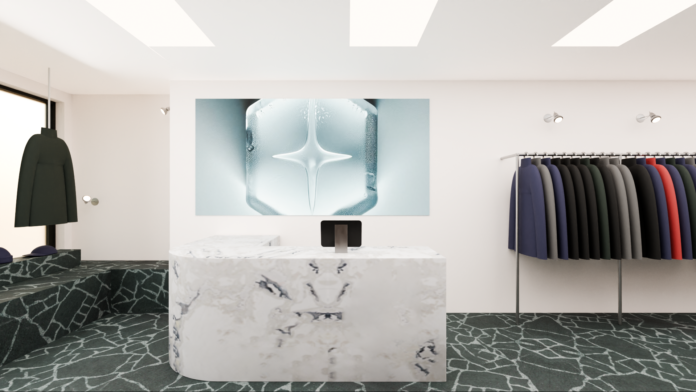
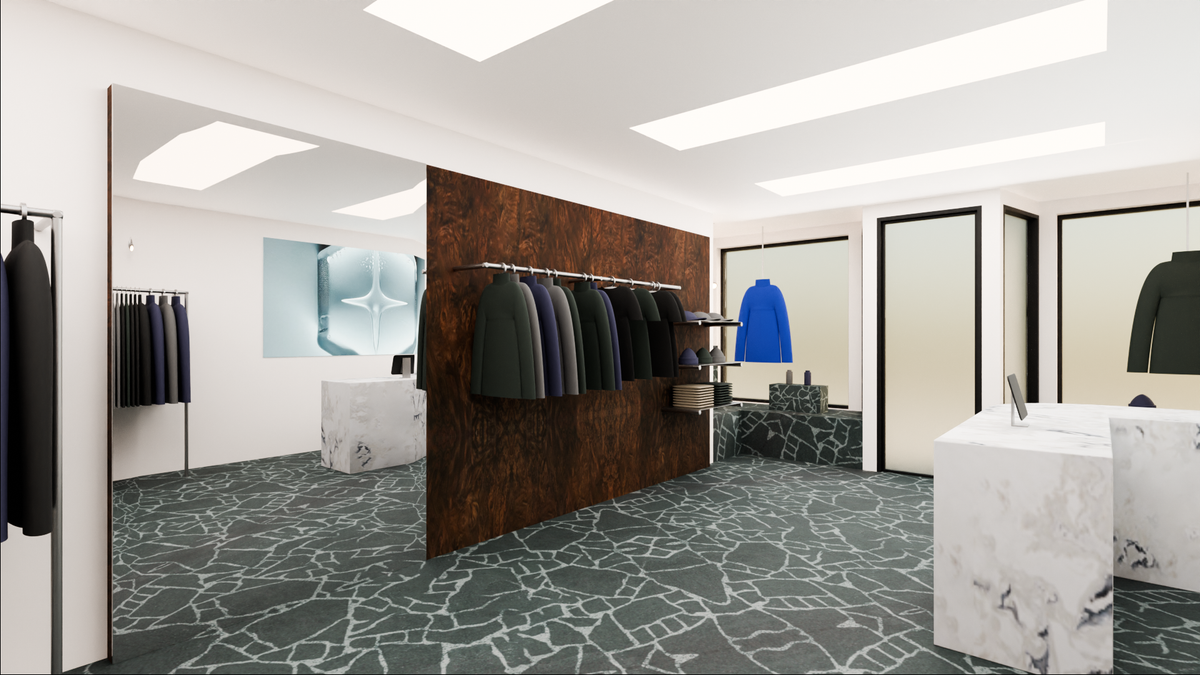
The recently opened store at The Well spans approximately 2,600 square feet and reflects what the company describes as a more refined retail concept for the brand.
Arif Mukhtar, Vice President of Retail Development at Unity Brands, said Tilley has spent the past several store openings refining what the brand retail environment should look and feel like.
“The stores have a very outdoors feel that reflects what the brand is about, getting outdoors and embracing nature,” he said.
The newer stores incorporate dark walnut finishes, forest green accents and lifestyle-focused merchandising intended to reflect the company’s outdoor roots while presenting the broader apparel assortment in a more contemporary way.
The assortment now extends well beyond hats and travel apparel. Tilley has expanded into full men’s and women’s collections as well as Tilley Sport, which includes golf, tennis and active lifestyle apparel.
The stores are also helping introduce the modern Tilley brand to consumers who may still associate the company primarily with headwear.
Tilley at The Well, Toronto. Photos by David Lui.
Wholesale Remains Core to the Business
Founded in 1980 by Alex Tilley, the company built its reputation through durable outdoor hats and travel apparel before growing into a broader wholesale and international distribution business.
Today, Tilley products are sold globally, including operations in Australia and the United Kingdom.
While the company is expanding its direct-to-consumer business, wholesale remains a major part of operations.
Wholesale continues to account for the majority of Tilley’s business, even as the company invests in growing its store network and direct relationships with customers.
In Canada, the company has partnerships with retailers including RONA, where Tilley Tuff workwear products are sold.
Unity Brands Guides Tilley’s Evolution
Tilley’s retail expansion has unfolded under Unity Brands, the platform behind brands including Tilley, Kit and Ace and Mastermind Toys.
Unity Brands is led by a team that includes Canadian retail entrepreneur Joe Mimran, whose retail career includes founding Club Monaco and Joe Fresh.
Tilley has also maintained some manufacturing operations in Toronto, which Mukhtar said remains important to the brand’s Canadian identity.
“Being a Canadian brand, it’s important for us to maintain manufacturing in Toronto, and a good percentage of our hats are still made here,” he said.
“Window shopping” is making a comeback, but it looks different in 2026. A new survey from Adyen, the global financial technology platform, finds that more than half of Canadians (58%) have physical stores they enjoy visiting to spend time, browse, or relax even when they don’t plan to buy anything.
This shift comes at a time when Canadians are becoming more intentional with their money, with two-thirds (66%) saying they’re more selective with spending than last year, said Adyen:
Gen Z’s lead the adoption of stores as third spaces (69%), followed by Millennials (61%), Gen X (57%), and Boomers (51%).
Bookstores emerge as the ultimate third space: 55% of Canadians visit bookstores to spend time, making them the top hangout destination nationwide, with strongest appeal among Millennials (61%) and Boomers (54%), followed by Gen X (52%) and Gen Z (46%).
The mall is so back: Once in decline, malls are being reclaimed and found to be the second most popular hangout destination among Canadians (44%), with Gen Z leading the resurgence at 49%, followed by Millennials (45%), Gen X (42%), and Boomers (39%).
The rise of IRL discovery: Thrift stores (36%) rank among top destinations, pointing to a growing appetite for “treasure hunting, ”where the thrill of finding something unique in person mirrors the curated “finds” of digital shopping.
Question: What’s driving the resurgence of “window shopping” as a leisure activity, and how sustainable is this trend for physical retail?
Answer: Recent data from Adyen shows that more than half of Canadians (58%) visit stores without the intention to buy. Window shopping in 2026 goes beyond passing time or idly browsing and now reflects something more akin to ‘social wellness.’ We are seeing shoppers deliberately choosing to spend time in retail spaces that offer connection, community, and engagement with brands.
Gen Z is leading this shift, with 69% viewing stores as “third spaces” — a social environment outside of their home or workplace — but the appetite is cross-generational, with Millennials at 61%, Gen X at 57%, and Boomers at 51%.
Sander Meijers
What’s compelling is that our data indicates that despite window shopping being a social or leisure activity, it’s still resulting in strong conversion. Nine in ten Canadians say they make emotion-led purchases, and 35% do so every week, reflecting a fundamental shift away from the rational shopping model retail has been built around. Among these emotional shoppers, 38% cite comfort, and 25% indicate stress relief as a motivation. A staggering 87% cite treating themselves as a reason for their purchases.
Feelings are driving purchases across the board. For retailers, the store that people want to spend time in is the store they end up buying from. Those positioned to benefit are investing in environments that engage and reward time spent, while ensuring their operational infrastructure is ready to convert emotionally driven sales across every channel.
Q: How should retailers rethink store design and in-store experiences to better serve customers who are browsing without immediate intent to purchase?
A: We are seeing that retailers who design stores as environments that reward time spent and encourage discovery are generating repeat foot traffic and sales. Our data offers some insight into where investment resonates most. Nostalgia is shaping store preference, particularly among younger consumers. Gen Z is driving a cultural shift toward physical, tactile, and retro experiences. In fact, 32% of Gen Z say nostalgic or retro aesthetics define what’s ‘cool’ in 2026 — a figure that is three times the rate of Boomers. Bookstores have emerged as a top national hangout destination, with 55% of Canadians ranking them as a favourite.
Malls tell a similar story, with 49% of Gen Z actively reclaiming them as social spaces despite years of predictions about their decline.
The nostalgia trend reinforces the power of discovery in the retail experience. Bookstores, thrift stores, and malls offer the experience of stumbling across products that feel personal and unexpected. Beyond nostalgia, our data also indicates comfort (38% of shoppers) and identity expression (18% of shoppers) as key drivers of emotional spending that could be integrated into the retail experience.
Retail design will also extend to the point of purchase. A shopper who’s spent an hour browsing is primed to buy, and a seamless, fast and flexible checkout experience is vital to capture that moment. That means carefully considering checkout from what payment methods to offer to how loyalty enrollment fits into the flow, so the transaction feels like a continuation of a great brand experience rather than a disruption of it.
Vlad Deep photo
Q: What role do generational differences—particularly Gen Z’s embrace of stores as “third spaces”— play in shaping retail strategies going forward?
A: Across all ages, Canadians are visiting stores for enjoyment, but Gen Z leads the way. Gen Z has reduced discretionary spending the least of any generation, with only 60% reporting reduction compared to last year, versus 67% of Millennials, 71% of Gen X, and 64% of Boomers.
Selectivity in this case doesn’t indicate restraint. When looking at these emotional purchases, 43% are made to cope with stress, while 51% are associated with comfort, proving that multiple feelings can drive a single transaction. Gen Z are directing their dollars based on in-the-moment feelings, toward items that carry personal meaning, express identity or affirm a sense of belonging. Brands offering a unique in-store identity or experience will appeal. Stores that host events and workshops to foster community, lean into a distinctive aesthetic, or curate products in a tasteful way will stand out.
It is important to note that Gen Z’s relationship with a brand does not begin or end at the shop door. They’re also omnichannel by nature, engaging fluidly across in-store, online, and social platforms, according to our Retail Report. Retailers need to offer the flexibility Gen Z has come to expect, including digital wallets and buy-now-pay-later options, so they can discover a product in-store and complete the purchase however works best for them.
Sam Lion photo
Q: With bookstores, malls, and thrift stores emerging as top destinations, what common elements make these environments successful as social or experiential spaces?
A: Across all three, the common thread is discoverability. Bookstores, thrift stores and malls reward the wandering hunt. That sense of potential discovery is deeply appealing to Canadian consumers right now. On top of that, our data also shows broader consumer demand for tangible products, with more than half (51%) of Canadians choosing physical versions of items more often in the past year, compared to only 23% who opted for digital. The resurgence of vinyl records over streaming, physical books over e-readers, and film photography over digital illustrate this.
The desire to discover is not exclusive to physical retail, and agentic commerce is increasingly replicating it in digital environments, with AI-driven discovery surfacing products in ways that feel intuitive rather than algorithmic. Ultimately, people want to feel like they found something rather than being sold something.
Similarly, while things are trending towards tangible and experiential, shoppers who spend an afternoon browsing a carefully curated bookshelf still arrive at the point of purchase with entirely modern expectations around speed, convenience, and payment flexibility. Retailers are tasked with balancing both.
Andrea Piacquadio photo
Q: How can retailers convert this renewed in-store engagement into sales without undermining the relaxed, low-pressure experience consumers are seeking?
A: We know that 91% of Canadians make emotion-led purchases, and the shift toward nostalgic, community-oriented retail environments illustrates this. When a shopper is genuinely enjoying their time in-store, the inclination to buy increases. This needs to be met with a checkout experience that feels like a continuation of the time they just spent, rather than an interruption.
For Adyen, converting emotional engagement into sales comes down to three interconnected dimensions of the checkout experience. The first is speed: long queues and slow terminals are disproportionately damaging in a third-space context, where the entire value proposition rests on the quality of the time spent in-store. The second is payment choice: whether a customer wants to tap their card, use a digital wallet, spread the cost through a buy-now-pay-later option, or direct a portion of their purchase to a cause they care about through Adyen Giving — that flexibility needs to be available and seamless. The third is brand coherence: the checkout experience should feel like a natural continuation of the brand environment the customer has just been immersed in, not a jarring operational departure from it.
OAKBERRY Açaí, Canada’s and the world’s largest and fastest-growing açaí brand, is accelerating its national expansion with a major rollout of new locations planned across the country in 2026.
The expansion will bring OAKBERRY’s customizable açaí bowls and smoothies to more communities across British Columbia, Alberta, Manitoba, and Ontario, said the company.
“Our goal is to make OAKBERRY accessible to more Canadians by opening stores in vibrant communities across the country — bringing our premium Brazilian açaí to people looking for something customizable, energizing, and delicious.”
Additional locations are currently in development, with more to be announced soon, bringing the Canadian total to over 40 stores by the end of 2026. With approximately 1,000 locations worldwide, OAKBERRY has become one of the most recognizable names in the global superfood category. The Canadian expansion reflects growing consumer demand for convenient, nutritious options made with natural ingredients, said the company.
OAKBERRY Açaí photo
The company said every OAKBERRY location offers build-your-own açaí bowls layered with premium toppings, smoothies, and hand-whisked SOAR Organics matcha lattes. Known for its bright, welcoming stores and quick service, OAKBERRY has become a popular stop for customers looking for a feel-good snack or meal.
Many of the new Canadian locations are expected to open throughout summer 2026, with grand opening celebrations planned in each community featuring promotions, giveaways, and sampling events, it added.
In March, payroll employment in retail trade decreased by 3,600 (-0.2%). This decline extends a downward trend for the sector following a peak in June 2023, with an overall decline of 69,700 (-3.4%) during this period, according to a report by Statistics Canada.
On a year-over-year basis, payroll employment in retail trade was down by 20,300 (-1.0%) in March 2026. This decline was mainly attributable to clothing and clothing accessories retailers (-6,800; -4.0%), department stores (-6,500; -6.7%), furniture, floor covering, window treatment and other home furnishings retailers (-3,700; -5.6%) and building material and supplies dealers (-3,100; -2.3%). It was partially offset by a gain in warehouse clubs, supercentres, and other general merchandise stores (+5,200; +3.2%), said the federal agency.
“Payroll employment in accommodation and food services (-7,000; -0.5%) decreased for a second consecutive month in March, bringing the cumulative decline since February to 9,700 (-0.7%). Payroll employment in the sector had previously increased by 3,100 (+0.2%) in January,” added Statistics Canada.
“The consecutive declines in the sector in February and March were broad-based, led by full-service restaurants and limited-service eating places (-6,300; -0.6%), special food services (-1,900; -2.4%) and traveller accommodation (-1,200; -0.7%).”
The federal agency said the number of overall employees in Canada receiving pay and benefits from their employer—measured as “payroll employment” in the Survey of Employment, Payrolls and Hours—edged down by 31,800 (-0.2%) in March, bringing the cumulative decline since February to 69,900 (-0.4%). On a year-over-year basis, payroll employment was up slightly (+23,700; +0.1%) in March.
In March, declines in monthly payroll employment were led by accommodation and food services (-7,000; -0.5%), construction (-4,100; -0.3%), retail trade (-3,600; -0.2%), other services (except public administration) (-2,500; -0.4%) and real estate and rental and leasing (-1,900; -0.7%). Public administration (+4,300; +0.3%) and management of companies and enterprises (+900; +0.8%) recorded increases in March, it explained.
In Canada, job vacancies held steady at 500,300 in March. Year over year, job vacancies were down by 16,500 (-3.2%). This decrease was significantly lower than the decline from March 2024 to March 2025, when job vacancies fell by 81,900 (-13.7%). It was also the smallest year-over-year decline since September 2019, it said
“The job vacancy rate—which corresponds to the number of vacant positions as a proportion of total labour demand—was 2.8% in March 2026, unchanged from February. The rate was down 0.1 percentage points from March 2025 (2.9%),” added Statistics Canada.
“There were 3.0 unemployed persons for every job vacancy in March 2026, down 0.1 from the previous month and unchanged on a year-over-year basis.”
A grocery store in Quebec. Photo: Vergo Construction
Canadian retailers spent much of 2025 trying to answer a difficult question: how do you pass along rising costs without pushing already exhausted consumers even further?
A new analysis from the Bank of Canada suggests the answer was far more strategic and selective than many Canadians may have realized.
Published through the Bank of Canada’s Sparks at Bank research series, the analysis examined how Canada’s 2025 counter-tariffs on U.S. goods affected retail prices across a large sample of products sold in Canada. Researchers found that products subject to counter-tariffs rose about 6% more than comparable non-tariffed goods, representing roughly one-quarter of the 25% tariff imposed by Canada. The Bank estimated the tariffs contributed approximately 0.3 percentage points to inflation.
The results suggest retailers passed some costs along to shoppers while absorbing a meaningful portion themselves.
That mattered in an economy already shaped by inflation fatigue, cautious spending and broader uncertainty. Canadians have spent several years adjusting to higher grocery bills, rising housing costs, elevated borrowing expenses and volatile fuel prices. Consumers have become increasingly sensitive not only to price increases themselves, but also to whether those increases feel justified.
The Bank of Canada analysis suggests retailers increasingly understand that distinction.
Transparency Became Part of Pricing Strategy
One of the most revealing findings involved how retailers communicated price increases to consumers.
Researchers found that two retailers in the sample displayed a visible “Tariffed” label on certain affected products online. Those products experienced larger and faster price increases than tariffed goods without the label. Products without the label showed little meaningful price increase.
The implication is significant. Consumers may be more willing to accept higher prices when retailers clearly explain the source of the increase.
That insight speaks directly to how retail pricing has evolved in recent years. Consumers can now compare prices instantly across retailers and marketplaces, and many have grown increasingly skeptical of price increases after several years of inflation pressure.
In that environment, pricing has become part operational strategy and part communications strategy.
Retailers are no longer simply deciding whether to raise prices. They are also deciding how consumers will interpret those increases.
The Bank’s analysis suggests transparency may reduce resistance to higher prices by shifting blame away from retailers and toward external events such as tariffs, supply-chain disruptions or rising costs imposed elsewhere in the economy.
That may help explain why some retailers, particularly in grocery, have become more deliberate about identifying tariff-related pressures and other external cost increases for shoppers.
The broader implication is difficult to ignore: price perception may now matter almost as much as price itself.
Retail Pricing Has Become More Tactical
The analysis also offers a rare real-time look at how modern retail pricing behaves during periods of economic stress.
Researchers tracked daily online prices for more than 110,000 products sold by seven major Canadian retailers between February and December 2025. Artificial intelligence tools helped identify which products originated in the United States and were therefore subject to Canadian counter-tariffs.
The methodology itself reflects how retail pricing has changed. Retailers can now monitor competitors, pricing movements and consumer behaviour almost instantly. Consumers can do much the same.
That environment creates enormous pressure on merchants to react quickly while avoiding broad price increases that could damage trust or weaken traffic.
The data showed that prices on tariffed goods rose gradually after Canada imposed counter-tariffs on March 4, 2025. By mid-June, affected products were approximately 6% more expensive than comparable non-tariffed goods. However, researchers found little evidence of broad spillover inflation across unrelated categories. Domestic substitutes and non-tariffed products generally did not experience the same pricing effect.
That distinction mattered. The pricing behaviour suggests retailers did not broadly use tariffs as justification to raise prices across entire assortments. Instead, increases appeared targeted toward affected categories such as appliances, household goods and some grocery products. For consumers already dealing with inflation fatigue, that restraint likely made a difference.
Expectations and Uncertainty Also Influenced Prices
The research also suggests retailer expectations played a major role in pricing decisions.
On April 2, 2025, the United States announced sweeping global tariffs. Canada did not introduce new counter-tariffs that day. Even so, prices on some tariff-affected products increased sharply following the U.S. announcement.
At one appliance retailer in the sample, prices increased 7% in just two days compared with comparable non-tariffed goods. Less than a month later, the increase peaked at roughly 10%.
According to the Bank of Canada, the escalation may have signalled to retailers that the trade conflict would last longer than originally expected. As uncertainty increased, retailers passed through a greater share of costs they had previously absorbed.
That finding feels especially relevant in today’s economic climate. Tariffs influence retail pricing not only through direct costs, but also through expectations around how long disruption may persist. If retailers believe a shock is temporary, they may absorb costs to maintain customer loyalty and protect traffic. If pressure appears longer-lasting, protecting margins becomes increasingly difficult to avoid.
In that sense, uncertainty itself can become inflationary.
Grocery store produce. Image: iStock/licensed
Retailers Continue to Face Broader Economic Pressure
The research arrives during a period of renewed global instability and rising economic pressure.
Statistics Canada reported that the Consumer Price Index rose 2.4% year over year in March 2026, up from 1.8% in February. Higher gasoline prices tied to conflict in the Middle East were a major contributor.
Gasoline prices surged 21.2% month over month in March, which Statistics Canada described as the largest monthly increase on record.
For retailers, those pressures extend far beyond fuel purchases. Energy volatility can influence freight expenses, supplier pricing, transportation costs and household spending behaviour.
Many Canadian consumers are already exhausted by years of elevated living costs. When households spend more on gasoline, housing or borrowing, discretionary spending often weakens. That creates another challenge for retailers attempting to protect margins without triggering customer backlash.
Some merchants may absorb costs longer in traffic-driving categories. Others may rely more heavily on promotions, private label products, alternate sourcing or pack-size adjustments to maintain value perception.
The Bank of Canada analysis does not directly examine all of those tactics. However, the findings align with a broader reality across Canadian retail: pricing strategies are becoming increasingly tactical, data-driven and precise.
Prices Fell Quickly Once Tariffs Ended
The analysis also found tariff-related price increases reversed relatively quickly once most Canadian counter-tariffs were removed on September 1, 2025.
Prices on affected grocery and appliance products moved back toward comparable non-tariffed goods within several months. That suggests retailers remained highly responsive to both the underlying cost structure and competitive market pressures.
In today’s digitally transparent retail environment, maintaining elevated prices after a temporary cost shock disappears can become difficult, particularly when consumers can compare prices instantly across multiple retailers and platforms.
What the Findings Mean for Canadian Retail
The Bank of Canada analysis does not suggest tariffs were insignificant. They raised prices on affected products and contributed modestly to inflation.
However, the research also suggests Canadian retailers approached those increases carefully.
Retailers absorbed some costs, passed through others selectively, and responded differently depending on consumer-facing communication and expectations around how long economic pressure might persist.
The broader implication may be that Canadian retail pricing is becoming increasingly psychological, strategic and data-driven.
Tariffs, geopolitical instability, energy volatility and supply-chain disruptions are increasingly part of the retail operating environment. Merchants must now decide not only when to raise prices, but also how consumers are likely to interpret those increases.
In a market shaped by inflation fatigue and economic uncertainty, retailers may increasingly compete both on price and on how effectively they explain it.