“We ended our 2025 fiscal year with a solid fourth quarter, delivering adjusted fully diluted net earnings per share growth of 10.8%, achieving our financial framework on all metrics for the year. After almost two months of shutdown, I am pleased to report that we resumed operations last week at our frozen distribution centre in Toronto and expect to be essentially back to normal by the end of December. I want to thank all our teams who continue to execute our contingency plan to supply our stores, thereby minimizing the impact on our customers. During the quarter, we successfully opened 4 new food stores and converted 2 others, and we are confident that our sustained investments in our retail network combined with effective merchandising and strong execution will continue to resonate well with customers and create long-term shareholder value,“ said Eric La Flèche, President and Chief Executive Officer.
Operations were interrupted due to a mechanical issue in the refrigeration system.
2025 FOURTH QUARTER HIGHLIGHTS
Sales of $5,108.7 million, up 3.4%
Food same-store sales up 1.6%
Pharmacy same-store sales up 4.8%
Net earnings of $217.0 million, down 1.3% and adjusted net earnings of $246.0 million, up 8.6%
Fully diluted net earnings per share of $1.00, up 2.0% and adjusted fully diluted net earnings per share of $1.13, up 10.8%
Negative impact of $22.5 million on net earnings ($30.6 million before taxes) due to the temporary shutdown of our frozen food distribution centre in Toronto
FISCAL 2025 HIGHLIGHTS
Sales of $22,006.7 million, up 3.7%
Net earnings of $1,019.5 million, up 9.4% and adjusted net earnings of $1,049.8 million, up 7.9%
Fully diluted net earnings per share of $4.63, up 12.7% and adjusted fully diluted net earnings per share of $4.77, up 10.9%
“Operations at our frozen food distribution centre in Toronto resumed on November 10 and we expect to be essentially back to normal by the end of December. We estimate that the direct costs associated with the temporary shutdown of our distribution centre will impact our net earnings by approximately $15 to $20 million in the first quarter of fiscal 2026. The impact on sales and gross profit is expected to be modest given the contingency plan in place. In addition to the ramp-up of the freezer, our focus remains on realizing efficiency gains throughout our supply chain and store network while we continue to execute on our plan to accelerate the development of our growing discount banners with the planned opening of about a dozen new or converted stores in the next fiscal year. We remain steadfast in our efforts to deliver the best value possible to our customers through our effective merchandising programs, strong private labels, the Moi program, and consistent execution at store level,” said Metro.
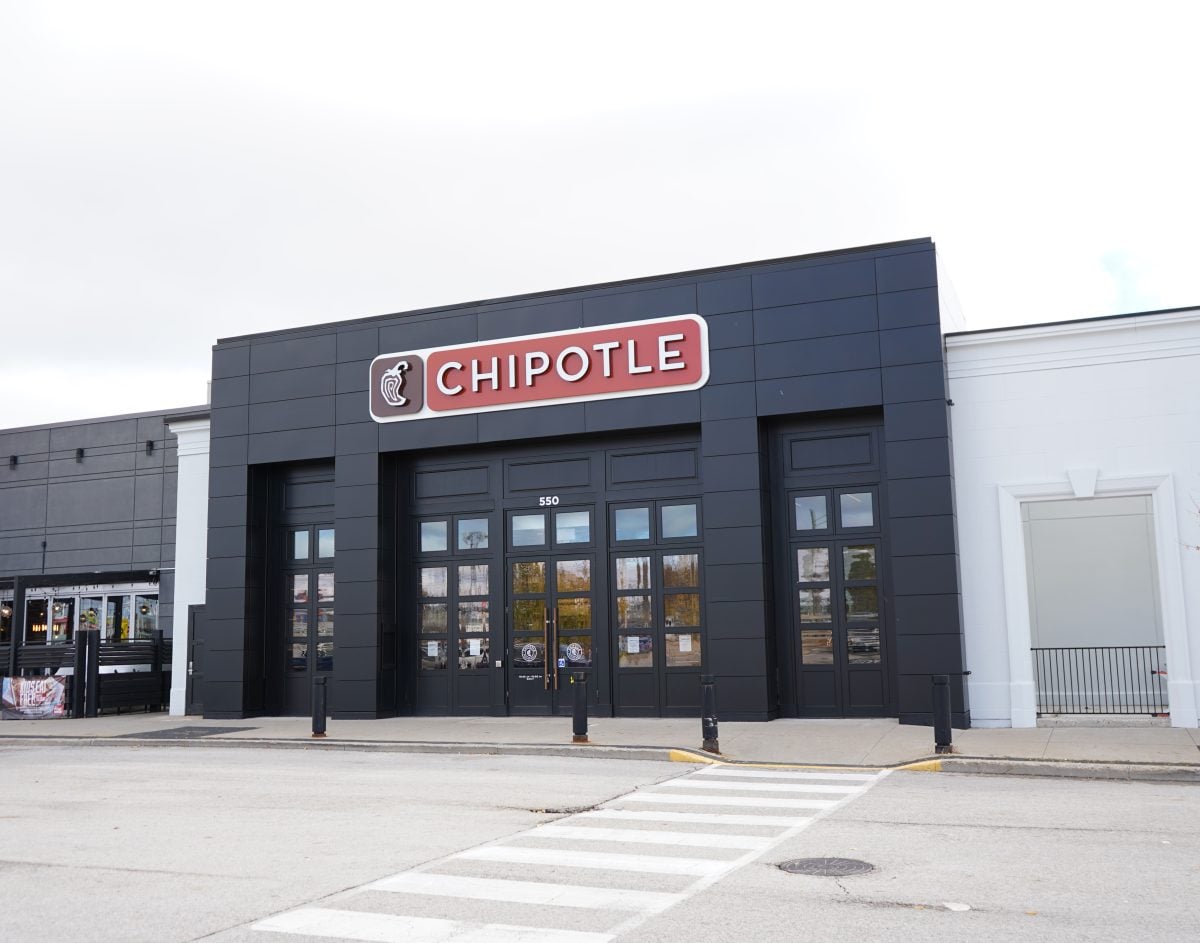
Conestoga Mall, located in Waterloo, ON, has welcomed two new key retailers to its tenant mix – Ardene and Chipotle.
“This marks the beginning of an exciting new chapter at Conestoga Mall,” said Lauren Robbers, Vice President, Leasing, Primaris REIT. “Alongside this year’s new store openings, in 2026 we will welcome even more sought-after brands, reflecting our ongoing commitment to the Waterloo region, and delivering the shopping experience our visitors are asking for.”
Lauren Robbers
Ardene makes a highly anticipated return to the centre with a 7,000-square-foot store launch, one of its largest and most elevated locations in the region. And just in time for festive cravings, Chipotle opens a 3,000-square-foot restaurant this November, bringing one of the region’s most sought-after dining experiences to the centre.
After many years, Conestoga Mall unveils a brand new Santa set, Santa’s Holiday Winter Garden — a magical transformation that ushers in a season of family fun, community celebrations, and an elevated shopping experience for all.
“Located at Centre Court,Santa’s Holiday Winter Garden invites families to capture cherished moments with Santa and also step inside the magic of an eight-foot illuminated snow globe — the ultimate holiday backdrop. Throughout the centre, guests will be immersed in dazzling lights, shimmering snowflakes, and décor that beautifully brings to life the wonder and warmth of the season,” said the shopping centre.
What’s On This Season at Conestoga Mall:
Photos with Santa – From November 15 to December 24, guests can visit Santa’s Holiday Winter Garden at Centre Court to capture special holiday moments with Santa.
Sensory-Friendly Santa – Quiet sessions tailored for guests who benefit from a low-sensory environment, will be held on November 23 (9:00–10:30 a.m.) and December 7 (8:30–9:30 a.m.)
Pet Party Photos – Photos for furry friends are available on November 30 and December 14 (6:30–8:30 p.m.). Guests can purchase a variety of photography packages, with registration for all photo opportunities opening November 15 at conestogamall.com.
Santa Claus Parade – Conestoga Mall returns as a lead sponsor of the Lions Club of Kitchener Santa Claus Parade on November 15. The parade starts at 10 a.m. and follows along Weber Street from Frederick to Erb Street.
Christmas Dreams Tree Raffle – The May Court Club’s highly anticipated annual event kicks off November 25 through December 6, featuring a variety of beautifully decorated, themed Christmas trees on display for viewing at Winners Court. Guests are invited to purchase raffle tickets for their chance to win cash prizes, Toronto Maple Leafs tickets, exclusive entertainment and dining experiences and more. Proceeds from the raffle will go to various local charitable groups and projects including Make-A-Wish Canada, KidsAbility, Waterloo Regional Health Network, and May Court Club Projects.
Wonders of Winter – The centre continues to support this popular festival of lights event at Waterloo Park, featuring over 100 colourful displays with 100,000+ light bulbs. This event is complimentary for everyone to enjoy and runs from November 29 to January 3, 2026. Visitors can view the lights from 5 p.m. to 10:30 p.m. every evening.
Holiday Toy Drive -The Holiday Toy Drive in support of Grand River Kids returns from December 1 to December 24. Guests can drop off new, unwrapped toys at Guest Services to make the season brighter for kids in need.
The Grump Meet and Greet -The Grump is back and up to his old tricks! Meet the mischievous character as he makes his way through the centre on December 20 (12- 4 p.m.), spreading laughs and posing for festive photos along the way.
Holiday Christmas Gift Wrapping – Gift wrapping is available from December 1 to December 24, staffed by volunteers from Grand River Hospital. All proceeds support Grand River Kids, with the station located near Levi’s and Kiokii.
Black Friday – Conestoga Mall will be open for extended hours on Black Friday from 8:00 a.m. to 9:00 p.m. on November 28. Visit the centre for a Black Friday Gift Card Bonus:
Purchase a $100 gift card and receive an extra $10 for free
Purchase a $150 gift card and receive an extra $15 for free
Purchase a $250 gift card and receive an extra $25 for free
Conestoga Mall has about 7.4 million annual visitors to its more than 120 stores and services.
Retail Insider is streamlining its Canadian retail news from around the web to include a handful of top news stories that can be viewed quickly during the day. Here are the top stories from the past 24 hours.
As Canadian e-commerce and retail operations expand both domestically and globally, the stakes of ensuring secure, reliable shipping are higher than ever. Amid rising customer expectations and increasingly complex logistics networks, shipping insurance has become a business essential.
InsureShield® shipping insurance allows retailers to recoup up to the full value of goods if a shipment is compromised during transit, whether delivering across provinces or sending parcels globally.
With up to the full declared value of the shipment, dedicated claims portal, and easy integration into most shipping systems, InsureShield® shipping insurance helps retailers manage risk with confidence.
Shipping Risk Is a Reality, and Insurance Provides a Solution
Whether it’s a package lost in transit, mishandled during delivery, or stolen from a doorstep, shipping issues are an unavoidable part of modern retail. While many carriers offer basic liability coverage, it typically falls short. These policies often compensate based on weight or exclude certain items altogether.
InsureShield® shipping insurance addresses these shortcomings directly. Retailers simply declare the value of a package at the time of shipment. If something goes wrong, they can be reimbursed for the full amount. This eliminates the uncertainty and financial strain that often comes with shipping disruptions.
Shipping insurance offers retailers a way to demonstrate professionalism and care, especially in the eyes of a first-time customer. It’s not just about replacing a product — it’s about protecting a relationship.
Designed for Retailers, Built for E-Commerce
InsureShield® shipping insurance was created with the needs of both traditional and digital-first retailers in mind. The platform integrates easily into popular e-commerce and shipping platforms, including checkout flows and backend logistics systems. This enables retailers to offer optional coverage to customers or apply it internally on outbound shipments.
Whether a retailer is shipping across Canada or internationally, InsureShield® shipping insurance offers tailored coverage for a wide range of products. Electronics, apparel, collectibles, and high-value specialty items can all be protected. Businesses can choose coverage levels that align with their products and customer expectations.
Carrier Liability Versus True Shipping Insurance
A common point of confusion is the difference between carrier liability and actual shipping insurance. Carrier liability is often included automatically with shipments, but it is more restricted. It usually offers lower reimbursement and includes exceptions that may leave valuable or fragile items uncovered.
Shipping insurance, especially through third-party providers like InsureShield® shipping insurance, offers broader protection with fewer limitations. This distinction is especially important for Canadian retailers shipping items that exceed standard liability limits, including luxury goods, tech accessories, and subscription boxes.
Key Advantages of InsureShield® Shipping Insurance for Canadian Retailers
InsureShield® shipping insurance offers a combination of comprehensive protection, affordability, and ease of use. These qualities are critical in today’s competitive retail landscape.
All-risk Coverage Retailers are protected up to the full declared value of the shipment. This provides clarity and confidence for both businesses and their customers.
Fast and Simple Claims InsureShield® shipping insurance’s claims process is digital, streamlined, and supported by a responsive service team.
Customer Confidence Shoppers today are highly sensitive to the post-purchase experience. Offering insurance at checkout provides customers with protection, particularly when buying from a boutique or emerging brand.
Who Benefits Most from Shipping Insurance?
For small businesses, shipping insurance offers valuable peace of mind. With limited inventory and tighter margins, even a single lost or damaged package can have a significant financial impact. Coverage may protect retailers against their losses
Mid-size and high-volume retailers also benefit from reducing the cumulative effect of frequent shipping issues.
Retailers that specialize in high-value or fragile goods, such as jewelry, electronics, or collectibles, are particularly vulnerable to transit risks.
Direct-to-consumer brands also find shipping insurance beneficial. With recurring deliveries and a need for consistent service, these companies rely on insurance to help maintain customer satisfaction and retention.
Overcoming Common Misconceptions
Despite its value, some businesses hesitate due to lingering myths. InsureShield® shipping insurance addresses these concerns head-on.
“It’s too expensive” InsureShield® shipping insurance is often more affordable than replacing even one lost item and scales with business size.
“Claims are complicated” InsureShield® shipping insurance’s digital claims platform simplifies the claim submittal process.
InsureShield® shipping insurance was designed to work with popular shipping software platforms, making it practical for retailers managing complex. Support teams are available to guide businesses through setup, claims, and coverage options, providing a smooth experience from start to finish.
This combination of technology and human support helps retailers focus on growth.
Protecting Revenue and Brand Reputation
Shipping problems can affect more than a balance sheet. In today’s review-driven retail environment, even a single delivery issue can damage a brand’s reputation.
When issues arise, having shipping insurance allows retailers to respond professionally. They can offer a refund or replacement without delay, preserving customer trust and protecting long-term relationships.
A Smart Investment in a Competitive Market
As e-commerce continues to evolve, shipping insurance has become more than just protection. It is a strategic asset.
InsureShield® shipping insurance provides Ontario*, Canadian retailers with the tools to ship confidently, grow sustainably, and maintain the level of service customers expect.
Learn More About InsureShield® Shipping Insurance
For Canadian retailers seeking a smarter way to manage shipping risk, InsureShield® shipping insurance offers easy claims, and flexible pricing. It’s a practical solution that supports business growth, operational resilience, and customer satisfaction.
*We are licensed as an insurance broker in Ontario only and are not yet offering any services or products in other provinces, including Québec. You can find the complete insurance disclosure here: Product Disclosure.
If you would like us to let you know when we are licensed in your province, then send us an email via insureshieldca@ups.com, and we will get back to you.
Insurance coverage is underwritten by a Canadian licensed insurance company and issued through UPS Capital Canada Insurance Brokers, Limited (“UPS Capital Insurance Brokers”) – an indirect wholly-owned subsidiary of UPS Capital Corporation (“UPS Capital”). The insurance company and UPS Capital Insurance Brokers reserve the right to change or cancel the program at any time. Insurance coverage is governed by the terms and conditions, including the limitations and exclusions, set forth in the applicable insurance policy (the “Policy”). This information does not in any way alter or amend the terms or conditions, including the limitations or exclusions, of the Policy, and is intended only as a brief summary. Insurance coverage is not available in all jurisdictions. UPS Capital Insurance Brokers only issues policies of a single insurer in Canada, and receives commission on sales of insurance. An affiliate of UPS Capital Insurance Brokers reinsures a material portion of the risk insured by this insurance policy and the UPS Capital group therefore has a financial interest in the insurance program. You are not required to purchase insurance from UPS Capital Insurance Brokers and have the right to seek insurance elsewhere. In particular, your ability to ship using United Parcel Service Canada Ltd. or its affiliates is not conditional on your purchase of insurance from UPS Capital Insurance Brokers.
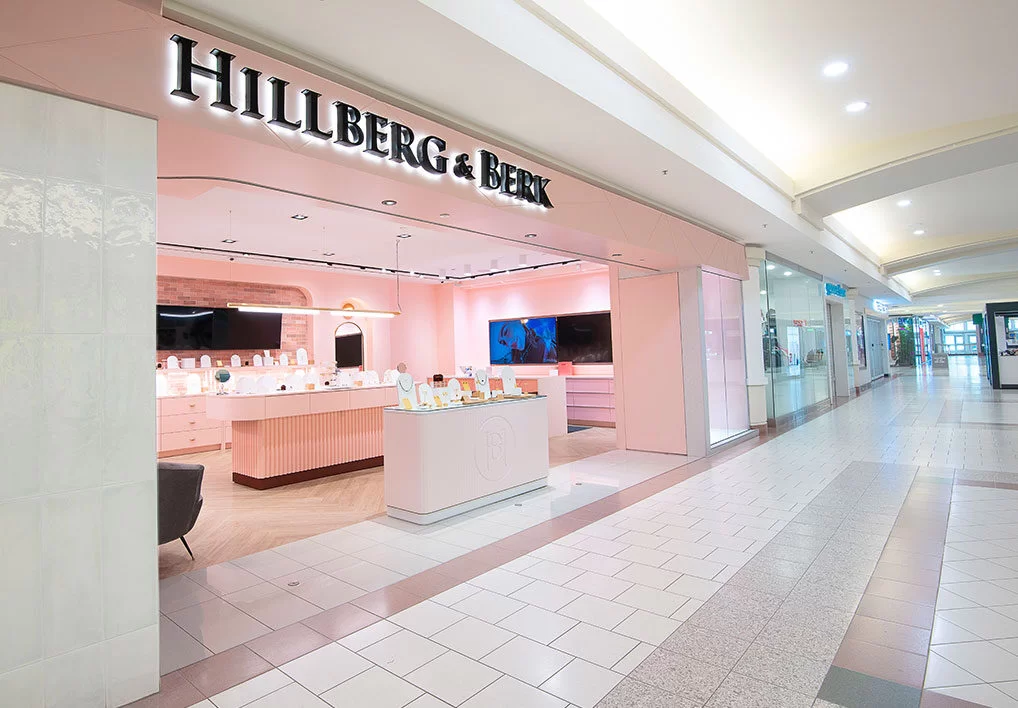
Hillberg & Berk store at Upper Canada Mall in Newmarket, ON. Photo: Hillberg & Berk
Canadian jewellery brand Hillberg & Berk is preparing for a new phase of growth that will expand its national footprint and sharpen its identity as a purpose-driven retailer. The Regina-based, women-owned company will open six new boutiques from late 2025 through 2026, beginning at Hamilton’s Lime Ridge Centre on Saturday, November 22, 2025. Those openings form the first wave in a plan to double the store base to 30 locations by the end of 2027, with additional leases now in active negotiation.
“We’re so excited to bring the Hillberg & Berk experience to even more people across the country,” said Rachel Mielke, Founder and CEO, in an interview. “Each of these new locations represents a chance to invite new people into our community of jewellery with purpose. Coming off the momentum of our Canadian Olympic Committee partnership and the national pride it inspires, this Canadian growth feels especially significant.”
Rachel Mielke
The six confirmed sites follow Hamilton: Willowbrook Shopping Centre in Langley, British Columbia and Sherwood Park Mall in Sherwood Park, near Edmonton, both targeted for spring 2026; Scarborough Town Centre in Toronto for summer 2026; and Hillcrest Mall in Richmond Hill as well as Oshawa Centre for fall 2026. With 15 boutiques currently operating across Canada, the brand’s stated objective is to roughly double that count over the next several years. “We are aggressively looking for the right spots, primarily across Ontario and British Columbia,” said Mielke. “We want the right malls, the right co-tenancies and a pace of openings that keeps quality high.”
Focus on Hamilton to Start, Then a Cross-Country Push
Opening in Hamilton gives Hillberg & Berk a meaningful anchor for the coming year. The launch will include in-store offers and limited editions, consistent with the brand’s approach to tailoring each event to local shoppers. Although the company does not disclose sales by store, Mielke said the new markets align with strong e-commerce demand and a data-driven view of where the brand already resonates.
“Sherwood Park is a really strong online market for us, so online sales are definitely part of what we look at,” she said. “We have focused on building the strength of Hillberg & Berk as a brand so that our retail concept is turnkey. We can hit a new market with a clear strategy for getting open and getting profitable.” She added that the pipeline of expansion includes several additional opportunities in British Columbia and Ontario, which together account for a large share of Canada’s mall traffic and jewellery spend.
A Turnkey Store Concept with a Distinct Design Language
Hillberg & Berk’s retail environments have become part of its identity. Stores mix clean lines and warm textures with curved forms and softly lit displays, producing a space that feels both elevated and welcoming. Mielke summarized the aesthetic as modern southwestern influences combined with a feminine sensibility and luxury detail, designed to feel like a “dream closet.”
“I traveled through Europe and looked for luxury retail inspiration elements to bring into the store,” she said. “We wanted a luxury, elevated feel, but also warm and inviting. With every store we tweak and make it stronger.” The Cornwall Centre boutique in Regina was cited as an early example of the look and feel, and later flagships have broadened the palette with arches, layered materials and a focus on comfortable dwell time. The intent is to stage the collections in a way that encourages discovery, gifting and return visits.
Merchandise breadth remains a point of emphasis. Shoppers can expect a full expression of the core assortment, from sterling silver and gold pieces to gemstone-forward designs, with many items priced below $250. The brand’s signature Sparkle Ball earrings continue to serve as an accessible entry point. Mielke confirmed that the company still operates Sparkle Bar formats in selected centres, including CrossIron Mills near Calgary and CF Polo Park in Winnipeg, along with a larger, modular Sparkle Bar experience at West Edmonton Mall. These concepts allow guests to explore sparkle-centric looks within a distinct in-store zone.
Renovated Hillberg & Berk store at Southgate Centre in Edmonton. Photo: North Elm Construction
From Kitchen Table to National Brand
Hillberg & Berk began in 2007, when Mielke rebranded her earlier line as a dedicated jewellery business and later secured investment through CBC’s Dragons’ Den. The company has since moved well beyond its prairie roots. Operations today are centred in Regina, where the firm designed and built a 30,000-square-foot head office and distribution centre almost a decade ago, complemented by satellite offices across the country. “We started the business at my kitchen table and then in a small character house,” Mielke recalled. “Now we are a brand represented across the country, with ambitious growth goals for the next several years.”
Ownership has also evolved. While early backers helped fuel expansion, Mielke said she now owns the business outright. “Still a huge supporter of the brand,” she said of former investor W. Brett Wilson, “but I own the business one hundred percent now.” The ownership clarity supports Hillberg & Berk’s long-term positioning as a Canadian independent with a strong social mission.
National Partnerships Signal Maturation and Reach
Partnerships have become central to the brand’s profile. In 2025, Hillberg & Berk was named the Official Jewellery Partner of Team Canada through the Canadian Olympic Committee, with programs slated to run into Milano Cortina 2026 and Los Angeles 2028. The relationship includes a custom Team Canada Sparkle Ball and athlete rings that celebrate national pride and women in sport. The company has also supported professional women’s hockey, entering a second season as a sponsor of the PWHL. Mielke said these relationships do more than generate media value. They align the brand with communities where confidence, performance and role modelling matter.
“You can see the impact when girls stay in sport,” she said. “They report higher self-confidence, self-esteem and healthier body image. We also know that a large majority of women in executive roles played sports growing up. The power of sport in developing leadership is real, and it connects to the kind of impact we want as a brand.”
Renovated Hillberg & Berk store at Southgate Centre in Edmonton. Photo: North Elm Construction
A Purpose-Led Retailer with Community at the Core
Hillberg & Berk’s mission is to empower women as a practical framework for giving, partnerships and culture. The company donates a minimum of one percent of annual sales to organizations that support women, and it maintains a national program with Dress for Success Canada. “We give all of the women who go through the suiting program new Hillberg & Berk jewellery,” Mielke said. “There were about eight thousand participants last year who received pieces.” She emphasized that the company supports hundreds of organizations, with cumulative contributions now in the millions, and that these commitments help attract and retain a team motivated by impact.
Community events will feature prominently in each opening wave. While details vary by market, store teams focus on collaborations with local partners, purposeful gifting moments and activations that introduce the brand to multiple generations at once. “We definitely see multi-generational customers,” Mielke said. “A woman discovers the brand, then she brings in her daughter, her sister and her mother. Before long, we are seeing families shopping together, which is special.”
Northern Super League design by Hillberg & Berk. Image: Hillberg & Berk
Merchandising Strategy and In-Store Experience
As the company scales, its merchandising targets two outcomes: consistency across locations and room for local nuance. New stores debut with a curated core that showcases best sellers and seasonal stories, while leaving flexibility for regional preferences. The store layout supports this strategy. Walk-in sightlines highlight signature categories, while side walls and focal tables present colour stories, gemstone moments and gifting statements. Associates guide shoppers through layers of add-on styling, from everyday studs and stackable rings to occasion pieces.
The Hamilton opening and the 2026 series of launches will continue to test fresh ideas in service and space planning. Mielke said the goal is to keep dwell times high and conversion strong by making stores comfortable. Seating areas, warm materials and a hospitality-minded approach to greetings are now standards. Store managers also receive training to host small events that bring in community partners during off-peak hours, creating a cadence of reasons to visit beyond traditional retail seasons.
A Data-Informed Real Estate Playbook
While brand heat matters, the Hillberg & Berk expansion is built on a practical playbook for site selection. The team triangulates e-commerce sales by postal code, mall footfall, co-tenancy fit and the availability of well-placed inline units near complementary categories. “It is a matter of making sure it is the right spot in the right mall,” Mielke said. “We want to land where our customer already spends time.” That lens explains the early emphasis on Greater Toronto Area nodes and established regional centres in British Columbia and Alberta.
Mielke credited broker Jessica Millet of Oberfeld Snowcap for recent dealmaking support, noting that clear credit matters as landlords and peers track momentum. In a tight availability cycle for prime inline units, a steady pipeline of deals often depends on relationships made years earlier, and on a brand’s reputation for presentation standards and store productivity.
New luxury wing at Toronto's Yorkdale Shopping Centre. Photo: Craig Patterson
The centre of gravity in Canada’s luxury market is shifting, and the forces at work are both global and deeply local. The most immediate shock has come from currency. “If I look at the Euro to Canadian conversion, it’s now 1.63,” says strategic retail advisor Antony Karabus. “In October a year ago it was 1.5, so it’s 10 percent worse this year. The cost of luxury product in Canadian dollar terms has increased 10 percent just because of the currency decline.” Most luxury merchandise is sourced in Europe and priced in euros, meaning Canadian luxury retailers are facing a materially higher cost base than last fall.
Karabus is blunt about the implications. “You really cannot absorb the cost increases as it would severely impact your profitability. It is virtually impossible for a retailer to absorb a 10 percentage point hit to margin.” For stores built on curated luxury assortments, personalized high service and beautiful ,high-cost stores, this movement in cost of goods lands fast. It narrows room for promotions and raises the bar on what justifies full price at the point of sale.
Antony Karabus
At the same time, the luxury customer has evolved. As Karabus frames it, today’s shopper wants authenticity, sustainability, and meaningful experiences. The old belief that price equals prestige is giving way to a mindset that asks whether a brand and service model deliver value. That shift makes the traditional department store, often seen as transactional, less compelling than a strong, differentiated specialty retailer or luxury brand mono-brand boutique.
For Canadian luxury retail, the past year has underscored how closely the industry is tied to the Euro — and to a consumer who expects more than a beautiful emporium of brands. Where the luxury customer chooses to spend is increasingly about experience, personalized service and the ability to get curated, unique product from brands they can trust and value.
The Power of Place: Bloor–Yorkville and Yorkdale
Toronto remains Canada’s luxury epicentre. “There are really only two concentrations of luxury in Toronto —Yorkdale and Bloor Street between Bay and Avenue Road,” Karabus notes. “Virtually every luxury mono-brand store is on both.” Brands want full expression, from architecture to environment, and seek proximity to big-spending, luxury clients. The result is a dense two-block radius of designer flagships near multi-brand department stores.
This brand power shapes how department and specialty stores operate. “The brands want the ambience and environment of their brand inside a luxury department store,” Karabus says. “They don’t just want three hundred square feet with a narrow assortment of their product, they want their store inside a the luxury department store to reflect the fuller expression of their brand.” That logic explains the growth of concessions within Holt Renfrew and the parallel build-out of flagships by the designer brands in Yorkville and luxury wings in Yorkdale and other top malls across Canada.
When mono-brand luxury designer brand doors offer the full expression of their brand assortments and well-trained ambassadors, department stores will be at risk of feeling marginalized, unless they provide something distinctive the mono brands cannot.
Louis Vuitton and Tiffany & Co. anchor 150 Bloor St. W. in Toronto, Photo Craig Patterson
Harry Rosen’s Specialty Advantage
One Canadian retailer using this moment to strengthen its position, says Karabus, is Harry Rosen. “The only luxury menswear player of consequence in Canada is Harry Rosen. They own the dominant mind share of the luxury male consumer in Canada.”
He credits leadership succession and openness to change. “When Larry [Rosen] succeeded Harry, he transformed it to make it more contemporary. And Larry’s sons are now evolving the environment, experience, and merchandise assortment to meet the luxury male consumer as he evolves.”
The retailer’s refreshed concepts, including the reimagined First Canadian Place store and upcoming Yorkville flagship, lean into lifestyle storytelling, tailored service, and curated edits across suiting, footwear, and modern luxury casual. Karabus believes this positions Harry Rosen to continue to successfully serve the high-value client seeking breadth across brands with seamless personal service.
There is also a structural tailwind for menswear. “The resale or vintage market is not as applicable to men as it is to women,” he notes. “Women buy much more apparel each year, whereas men refresh components of their wardrobe annually.” No menswear retailer has leveraged that runway more effectively than Harry Rosen, and Karabus expects the chain to thrive as the market evolves.
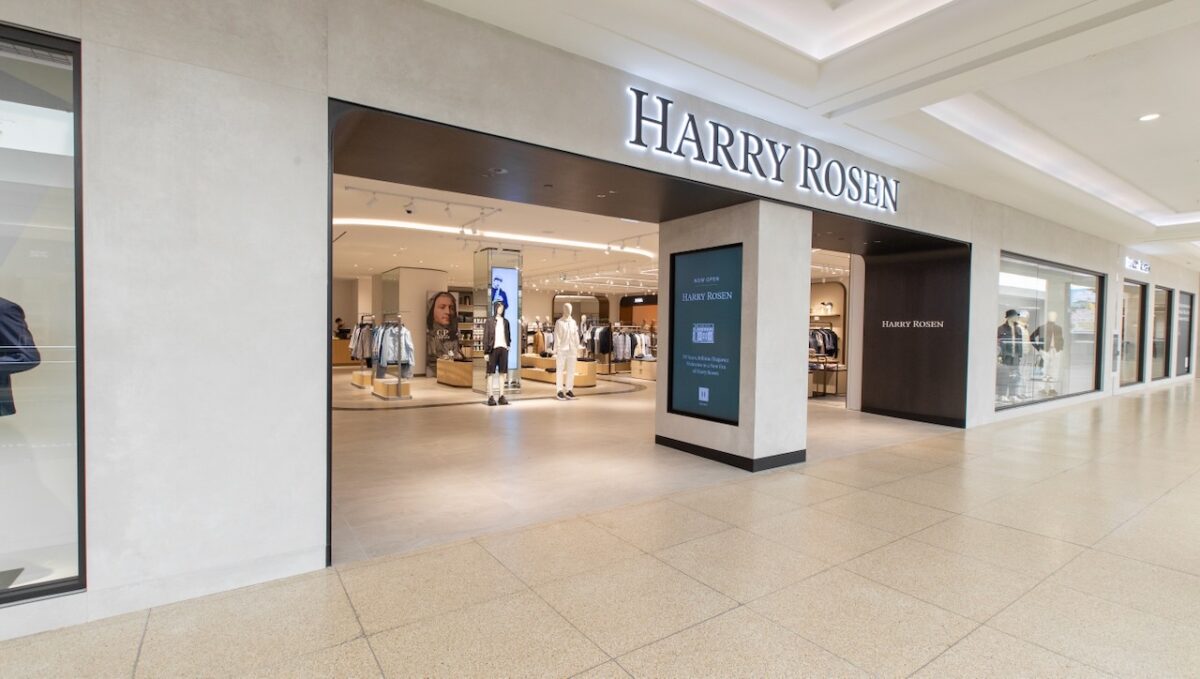
Harry Rosen at West Edmonton Mall (Image: Nick Hirschmann / Harry Rosen)
Holt Renfrew at an Inflection Point
The other pillar of Canadian luxury, Holt Renfrew, is navigating a model increasingly driven by concessions. “The brands are forcing it because they want the benefit of the personal shoppers and their own environment inside Holts,” says Karabus. As more labels operate their own spaces in Holt Renfrew and larger boutiques at Yorkdale, Bloor Street, and in Montreal and Vancouver, the authority over product, pricing, and presentation keeps shifting toward the brands.
Karabus foresees some brands moving away from wholesale entirely. “I could see one day when most of the best designer brands say “ I will stay in your stores so long as I can do it under a concession model rather than a wholesale model.” Watches and jewellery already demonstrate that power. “If I want a Cartier, I am going to Cartier. If I want a Rolex, I am going to Rolex.” The best clients will be guided through tightly- controlled brand experiences.
An ownership question also hovers over Holt Renfrew. The Weston family has focused on its food and real estate assets while investing heavily to modernize Holts. With leadership turnover, speculation about future ownership surfaces regularly. “If I was a betting man, I would see a change in ownership in the near to medium term,” Karabus says, suggesting a global multi-brand operator with deep luxury relationships could be a likely buyer.
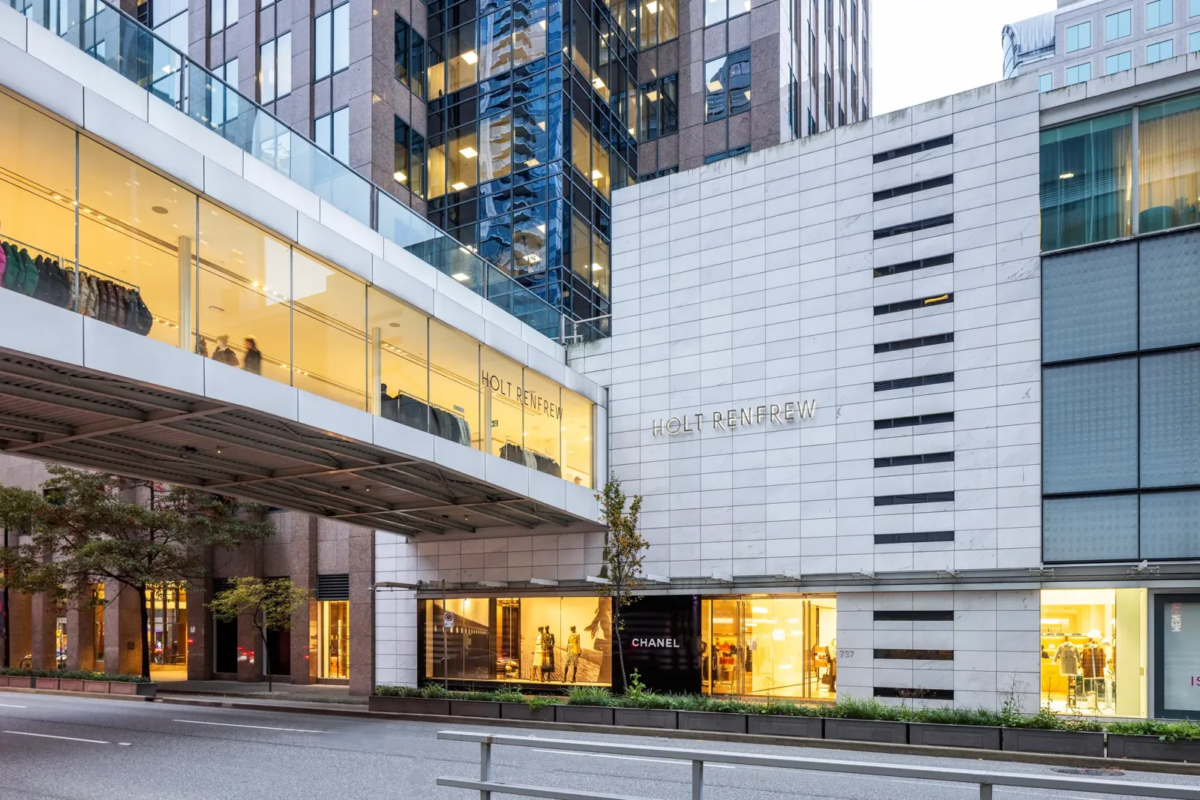
Holt Renfrew at CF Pacific Centre in downtown Vancouver. Photo: Cadillac Fairview
Experience and Service as the True Moats
Intensifying competition from designer brand mono-brand stores means multi-brand retailers must excel where brands cannot easily follow. “The only sure way you stop people from going to the mono-brand store is through exceptional and personalized service and the ability for those salespeople to serve the luxury consumer across multiple brands,” Karabus says. “If it’s just a transaction, the consumer will go to the mono-brand store.”
He advocates experiences that turn visits into events — private shows, masterclasses, beauty workshops, or culinary collaborations. “You go to a multi-brand luxury store for an experience, not just a transaction,” he says. “You go shopping, have lunch, see your friends.” Digital can enhance that theatre through live-streamed runway shows and stylist commentary with pre-order options.
Personal shoppers who understand fit and lifestyle remain key differentiators. Cross-brand styling, early access to pieces, and on-site tailoring justify premium pricing and deepen loyalty — a level of service mono-brand stores rarely match.
Luxury brand stores in Toronto’s Yorkdale Shopping Centre. Photo: Craig Patterson
The Circular Economy Goes Mainstream
The resale market has become a structural part of luxury retail. Karabus sees this as a fundamental shift in mindset. Customers who once insisted on new now embrace authenticated pre-owned, particularly in women’s handbags, accessories, and watches. “If they can get a bag for $15,000 instead of $28,000, and it’s authenticated, many luxury consumers will appreciate and enjoy the savings,” he says. “They’d rather go on an incredible vacation for the difference.”
Retailers can either cede that market to external platforms or integrate it themselves. Karabus advocates for the latter, through in-store consignment, certified pre-owned watch programs, or trade-in credits that keep value within the retailer’s ecosystem. “The last thing brands want is to get the first sale but not the second and third when it’s resold again and again.”
Toronto’s consignment landscape reflects that momentum. Boutiques on Dundas and Queen have built followings through curated, authenticated pieces and boutique-level service. Mine & Yours, founded in Vancouver and expanded to Toronto, and Calgary- and Toronto-based VSP Consignment, have helped push luxury resale into the mainstream. The lesson, says Karabus, is clear: treat the circular economy as an extension of luxury, with authentication and concierge-grade service, and it becomes a loyalty engine rather than a threat.
GoodLeaf Farms, Canada’s only national and largest vertical farming operator, has completed an equity financing totaling $52 million, to expand the production capacity of GoodLeaf’s farms in Alberta and Quebec and establish a new research and development centre in Ontario.
The past year was transformational for GoodLeaf Farms, marked by accelerated growth and a sharp increase in demand for its Canadian-grown baby greens, microgreens, and blends across Canada. Combined with the launch of its Agricultural Centre of Excellence in Guelph, Ontario as a new hub for research and development, the company is well positioned to lead the vertical farming industry into a strong and viable future, explained the company.
“We entered 2025 with incredible momentum, and by April, demand for our products nearly doubled as Canadians from coast to coast embraced Canadian-grown greens,” said Andy O’Brien, CEO of GoodLeaf Farms. “With this new funding, we will double the capacity of our two largest farms in 2026, giving Canadians even greater access to premium, locally grown baby greens and nutrient dense microgreens.”
Andy O’Brien
GoodLeaf was founded in Halifax in 2011.
Like many Canadian brands this year, GoodLeaf is reaping the benefits of a strong Buy Canadian movement in response to the trade war with the U.S.
“For every Canadian brand, for whatever reason, that first week of March our sales quadrupled and the biggest challenge we had over the course of the next four or five months was meeting the needs of our customers. Not consumers. Loblaw, Sobey’s. It was mayhem. We spent all of our energy on increasing capacity, getting stuff out the door,” said O’Brien.
“The whole Canadian buy sentiment. I’ve been in this business for 30 years. I’ve never seen this level of Canadians before. It was crazy . . . I think it struck a personal cord . . . We’ve been on fire since then. Increasing capacity. Increasing our retail footprint. We’ve launched a bunch of SKUs.”
O’Brien said R&D has been a cornerstone of GoodLeaf for 15 years.
Source: GoodLeaf Farms
He said the company is evolving the portfolio to more value-added products. Salad kids and salad bowls will be launched in the New Year. Other new products will be launched later in 2026.
The company will be expanding geographically into the northeast U.S. by March or April. It will also expand its channels into other areas such as convenience stores, drugstores, transportation networks.
“The demand for Canadian, the demand for healthier, the demand for 365 high quality long-lasting nutritious produce is just increasing,” said O’Brien.
“Lots going on and part of the (funding) raise was to allow us to do that.”
“FCC is proud to deepen our partnership with GoodLeaf, supporting Canada’s growing appetite for locally produced, fresh food,” said Adam Smalley, Managing Director of FCC Capital. “GoodLeaf’s innovative approach is exactly what Canada needs to drive productivity, strengthen our food economy and ensure a reliable supply of fresh produce for families nationwide. By investing in forward-thinking businesses like GoodLeaf, FCC is helping secure Canada’s food future for generations to come.”
Jonathan Belair
“The ability to raise funds in today’s market speaks to the confidence investors have in vertical farming as a key solution to Canada’s food security challenges, and the key operational and financial milestones GoodLeaf has achieved,” said Jonathan Belair, Managing Partner of Power Sustainable Lios. “We’re proud to support Canadian companies like GoodLeaf that are reimagining the future of our food system and driving sustainable agriculture forward.”
Charlie Angelakos
Part of the new investment will support the creation of a new research and development centre in Ontario focused on developing more sustainable and efficient growing practices across GoodLeaf’s three vertical farms.
“McCain Foods is a homegrown Canadian success story; we invest in fellow Canadian innovators transforming agriculture and advancing sustainability. From the early days, we have been a key partner in GoodLeaf’s development, and we’re excited to continue supporting their mission,” said Charlie Angelakos, Vice President, Global External Affairs and Sustainability of McCain Foods.
Salesforce’s new State of Service Report reveals AI is expected to handle 40% of all customer service cases by 2027 –up from the 25% already being handled by AI today.
Based on a global survey of 6,500 service professionals, including 300 in Canada, the data finds AI has leapt from the margins to the mainstream, becoming the #2 priority for service leaders, up from #11 a year ago and second only to improving the customer experience.
Key Canadian findings from the Salesforce report include:
Service professionals project AI agents will drive significant business value, including a 20% decrease in service costs and a 20% increase in customer satisfaction scores, alongside a 20% lift in upsell revenue.
83% say customer expectations are higher than they used to be
81% of Canadian service professionals using AI say it’s making them more productive.
“So I think that we don’t necessarily talk about the importance of customer service in the retail industry as much as we should. Retailers have identified it as an opportunity, and then when we surveyed consumers in that same report, the third worst experience that a consumer can have in Canadian retail is poor customer service. Waiting in line at the checkout is the worst experience, Canadians said. And the second one was out of stock,” explained Grant.
Michelle Grant
“And so this report comes along, and it’s really fascinating because it sort of echoes the importance of customer service and how consumer expectations are much higher than they have before, and how to meet that need. One of the key themes, though, that I really took away is just how quickly AI is being adopted in the customer service centre.
“ChatGPT has only been around since November of 2022, but as of today, this year, customer service professionals in Canada see that 25% of their customer service cases are being helped by AI, and they expect that penetration to increase to 40% in the next two years. So it’s really important to have customer service professionals using AI to deliver great, best in class service. But also resolve things very quickly and really enhance that self service option to deflect cases.”
Consumers these days want efficiency and fast service, says Salesforce.
“People don’t want to spend time trying to fix a problem that they shouldn’t have had or don’t think they should have had. With the generative AI technology in particular, because the models work so fast, for the most part, people are getting self serve responses at a much faster rate, and then they also have, if it is delayed in thinking, you can see that it’s thinking, and there’s usually an icon denoting that it’s thinking and going through the steps, whereas in a traditional decision tree chat bot, you would not get that type of notification, and it could take a bit longer,” explained Grant.
“AI is only limited by how fast the model is processing things. And at this point the latency is really, really low, and they really have worked on that, even in that consumer experience with like a ChatGPT or a Gemini.
Grant said the biggest barrier for companies in adopting AI is security concerns.
“The models do ingest a lot of very sensitive information about your end user, so making sure that those models and your process are protecting that data and are not using that data to train the model, or having that data leak into the model and show up in someone else’s search results is the biggest barrier to overcoming this technology. And the second thing is just the ability to trust the results,” she said.
“You really need to make sure that what that model is generating and telling that consumer is extremely accurate. So that means you have to do a lot of quality assurance, a lot of testing, to make sure that it is consumer facing. A human agent that might get a result may know from institutional knowledge and experience that, oh, this is not accurate. I need to override this. And so oftentimes, our companies will test with the human agent first to have them provide that quality assurance, have them tested, know things that are incorrect before they deploy in a consumer facing instance.”
Best before date on a can. Image: Love Food Hate Waste
A new national study released by Too Good To Go in partnership with Dalhousie University’s Agri-Food Analytics Lab is shedding urgent light on how Canadians interpret best before dates, how those interpretations drive food waste, and the financial toll this confusion creates in households across the country. The findings suggest that misreading or overvaluing best before dates has become a significant contributor to unnecessary waste, costing Canadians hundreds of dollars each year at a time when food affordability remains one of the country’s most pressing concerns.
To better understand the results and their implications for consumers, retailers, and policymakers, Retail Insider spoke with Dr. Sylvain Charlebois, Director of the Agri-Food Analytics Lab and one of Canada’s leading food system researchers. His perspective reinforces the study’s key message: Canadians believe best before dates carry a level of scientific certainty that they were never designed to provide, and this misunderstanding has real financial and environmental consequences.
Sylvain Charlebois
A Study Designed to Measure Lost Value in Canadian Households
The 2025 study collected responses from more than 1,000 Canadians, examining how consumers interpret various food date labels, how confident they feel about those interpretations, and how best before dates influence household waste patterns. The research also estimated the average financial cost of food Canadians discard because those dates have passed.
The response data revealed a consistent theme. Most Canadians rely on best before dates as a definitive indicator of safety, even though the dates are not intended for that purpose. The result is substantial waste. According to the report, households throw out an estimated 0.38 million metric tonnes of edible food each year due specifically to misinterpretation of date labels. That volume represents nearly one quarter of all avoidable household food waste.
For Dr. Charlebois, this was not surprising. “We are throwing away a lot of money, essentially,” he said. “A lot of people think that there is a lot of substance to these dates, but not really. People need to know what these dates actually mean.”
Best before dates are created to reflect quality, not safety, yet the study shows that many consumers do not know the distinction. Three in ten Canadians cannot correctly identify what a best before date represents. Confidence is high, but understanding is low, a combination that leads to predictable wasteful behaviours.
Best before date on a can. Image: Second Harvest
Household Costs That Add Up Quickly
The financial dimension of the study is where the impact becomes stark and relatable. On average, Canadians estimate they discard $761 worth of food annually because it has reached its best before date. One third of that amount, or approximately $246, is waste driven directly by confusion around best before dates. For a household managing rising grocery bills, that amount represents a meaningful opportunity to save.
The study also found that sixty-three percent of Canadians rely exclusively on best before dates to determine whether a food item is still edible, rather than using sensory evaluation such as smell, taste, or texture. Dairy products in particular seem to trigger the most caution. More than half of respondents said they discard yogurt or other dairy items immediately after the printed date, even if the product still appears fresh.
Dr. Charlebois emphasized that many Canadians instinctively treat these dates as hard rules. “Some people have nose tolerance and want to be careful, but if you are healthy and your immune system is healthy as well, why not take a chance,” he said. “Best before does not mean after. It does not mean unsafe. People need to be more proactive in how they evaluate the food they have.”
Packaged Goods Drive Some of the Most Surprising Waste
While consumers often associate risk with perishables like meat or dairy, the study found that packaged goods are at the center of much of the misunderstanding. In extreme examples, consumers discard products like honey, sugar, or salt after a printed date has passed, even though these foods do not spoil. Cereal and bottled beverages also commonly carry dates, encouraging consumers to discard them prematurely.
“Right now in Canada, there are best before dates on honey, sugar, salt, products that never go bad,” Dr. Charlebois noted. “People rely on these dates and take them as a point of reference, but you want to be more judgmental in terms of what they actually mean.”
He also pointed out the confusion surrounding bottled water, which in some cases has a date stamp even though the product itself cannot expire. Only the plastic packaging changes over time, yet consumers assume the liquid has somehow turned unsafe.
These examples illustrate why younger consumers appear particularly vulnerable to confusion. Among Gen Z respondents aged eighteen to twenty-four, forty percent did not know the meaning of best before dates, the highest of any demographic group. This same cohort also reported some of the highest rates of discarding items that look safe to eat.
Dairy Aisle in a grocery store. Photo: Dustin Fuhs
A Shift in Consumer Behaviour During Times of Inflation
The study suggests that high food inflation has caused some Canadians to rethink how they interpret best before dates. With grocery costs steadily rising, respondents indicated they are stretching food longer than they would have in the past, rather than disposing of items automatically at the printed date.
“A few years ago, people actually threw away food before the best before date just to be sure,” Dr. Charlebois said. “But now they are stretching their dollars as much as possible. Understanding what these dates mean is very critical.”
Nearly two thirds of Canadians say they now consider food costs when deciding whether to eat a product past its best before date, and seventy-three percent cite financial motivation as a key reason they want to reduce waste.
This shift presents an opportunity for education, retailers, and policy makers to help consumers make informed decisions that save money and reduce waste without compromising safety.
How Retailers Can Support Better Consumer Decisions
The research also provides insight into how Canadians shop and how best before dates influence behaviour at the shelf. Seventy-eight percent of respondents said they intentionally choose items with the farthest future best before date when shopping for groceries. Even when consumers know they may use the product quickly, the force of habit remains strong.
According to Dr. Charlebois, this behaviour is rooted in the way consumers view time when they shop. “Every time people go to the grocery store, they do not just buy food. They buy time,” he said. “They look for these dates because they want to make sure that when they come back from a trip or get busy, they are not wasting food.”
Retailers have an opportunity to help consumers better understand how to evaluate freshness and safety beyond a printed date. This could include clearer signage, staff education, or in-store information campaigns. Some retailers already offer discounts on items approaching their best before date, a practice that not only reduces waste but increases accessibility for cost-conscious consumers.
Dynamic pricing may also play a larger role in the future. When asked whether pricing strategies could help address waste, Dr. Charlebois agreed they can. “That could be one way to do it,” he said. “There is a secondary food rescue economy developing because people actually have more time to look for bargains.”
Apps like Too Good To Go offer another approach, enabling consumers to purchase surplus food directly from restaurants or retailers at a significant discount. “It tells you if there is overstock in whatever businesses have food available,” he noted. “You can pick it up, which is really useful. It is dealing with it more in real time.”
Is Government Intervention Needed?
The study also examined Canadians’ views on whether best before dates should be eliminated altogether. The results reveal that only twenty-seven percent of participants support removing the dates entirely, demonstrating that consumers see them as helpful even if they misinterpret them.
“People look at these dates a lot,” Dr. Charlebois said. “It is the interpretation that needs to change. I think perhaps the government should play a role in that regard.”
Rather than eliminating date labels, the research suggests governments can focus on education. Eighty-six percent of respondents said they would benefit from more information about how best before dates work, what they signify, and how they differ from expiry dates, which indicate safety rather than quality.
Clearer national guidelines or standardized labeling could help bridge these gaps in consumer understanding. Educational materials can also be distributed through community organizations, schools, or public health partners.
Technology and the Future of Food Labeling
While date labels have been used for decades, emerging technologies are beginning to shift how freshness and safety can be measured. Smart labels, which monitor the condition of a product in real time, are already being piloted. These labels can detect the presence of pathogens, changes in temperature, or other indicators of food quality and then visually alert consumers by changing colour.
“We are in an era where there are smart labels telling people when food is no longer edible,” Dr. Charlebois explained. “The technology exists. If you have yogurt in your fridge and there is the presence of pathogens, a label can turn from green to yellow to red. It is just costly at this point.”
As technology becomes more affordable, such tools could help consumers make safer and more accurate decisions about edibility. This would significantly reduce food waste driven by overly cautious interpretations of best before dates.
Something profound is happening in Canada’s food economy, and most people haven’t quite grasped it yet. It’s not a new grocer, a new restaurant chain, or even a new diet trend. It’s a class of medications—GLP-1 drugs such as Ozempic and Wegovy—that are rapidly altering how Canadians eat, drink, and shop.
For years, industry leaders have assumed that food demand is stable, predictable, and tied mostly to income and demographics. But for the first time in modern history, chemistry is reshaping consumption faster than economics.
According to a new national survey conducted by the Dalhousie University Agri-Food Analytics Lab, in partnership with Caddle, approximately two million Canadians are using a GLP-1 drug strictly for weight loss. To put that in perspective, that is roughly the combined population of Manitoba and New Brunswick, or every single person in Vancouver, Calgary, and Halifax combined. In other words: this is not a niche group — it is the size of a province.
And what they’re reporting should make every grocer, restaurant operator, and food manufacturer sit up straight.
More than 51% say they are eating less, 27% are going to restaurants less often, and nearly 19% are buying fewer groceries. This is not a fringe phenomenon; this is a structural shift in demand.
When we model the impact, the numbers are staggering. Conservatively, GLP-1 medications are already removing over $3.3 billion a year from the Canadian food economy—mostly from snacks, baked goods, sugary beverages, and alcohol. These are the categories that keep many retailers profitable. Manufacturers rely heavily on them to fund innovation, marketing, and trade promotions. And restaurants count on impulse-driven spending—desserts, drinks, extras—to stay afloat.
Grocery store carts. Photo: Markus Spiske via Upsplash
But GLP-1 users behave differently. They skip dessert. They drink less. They choose smaller portions. They snack less. In fact, our survey shows sharp reductions in purchases of cookies, pastries, candy, chocolate, salty snacks, soft drinks, and even alcohol. These are not small shifts. They are drops ranging from 26% to nearly 40%.
The food industry is already sensing the shift. Last year, Nestlé launched an entire GLP-1-friendly food product line, explicitly designed for people taking these medications. And this is just the beginning. With billions of dollars now flowing into the GLP-1 market, pharmaceutical companies are quickly becoming addicted to these new revenue streams tied directly to how much people weigh—or don’t. More drugs are in development, more indications are coming, and more consumers will enter the ecosystem. Appetite suppression is becoming big business.
In the United States, early retail data already suggests falling volumes in snack and confectionery. Canada is headed in the same direction—if not faster.
The consequences extend well beyond retailers and manufacturers. Farmers producing sugar beets, wheat for baked goods, potatoes for snack foods, and even barley for beer could feel downstream effects. The food-service sector, already struggling with higher labour costs, may find it even harder to sustain traffic, especially among younger consumers who represent the core of GLP-1 adoption.
Meanwhile, alcohol producers—already dealing with a generation drinking less—now face an additional headwind. Nearly a quarter of GLP-1 users report drinking less alcohol. That is seismic.
Some in the industry still hope this is a passing fad. But our data shows 82% of GLP-1 users have been on the medication for more than three months, and most will likely stay on it for years. This is not a diet. It’s a physiological reset of appetite and reward systems. Once you eat less and feel satisfied, you don’t go back to previous habits.
So what should the food industry do?
First, accept that volume growth will not return to pre-GLP-1 levels. The era of pushing larger portions and maximizing calorie sales is over.
Second, invest aggressively in reformulation: higher protein, lower sugar, smaller formats, and functional ingredients will win.
Third, restaurants need to rethink menu engineering. The “supersize me” model belongs in the museum of food history.
Fourth, policymakers should pay attention. A $3-billion annual drop in food spending affects tax revenues, jobs, and rural economies. We’ve never seen a medication reshape the food economy at this scale.
GLP-1 drugs are not the enemy. For many Canadians, they are life-changing. But the ripple effects are real, measurable, and already underway. The food industry has a new competitor—one that lives in your medicine cabinet.