Manitoba’s decision to remove the provincial sales tax (PST) from all groceries is a sound policy move—though perhaps not for the reasons many assume. What makes this announcement even more remarkable is who is making it: an NDP government choosing to reduce taxes at the grocery store. In today’s policy environment, that is both unexpected and noteworthy.
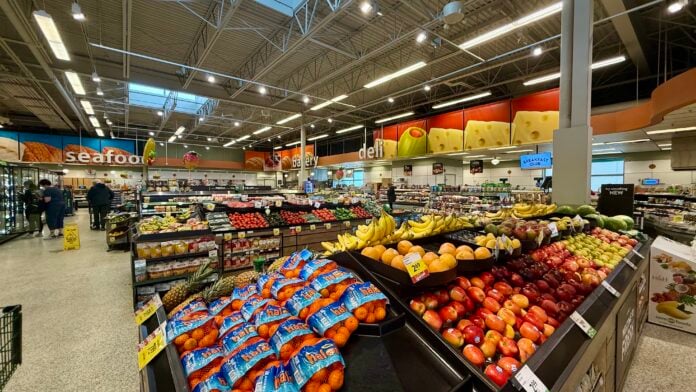
At first glance, food in Canada appears largely tax-free. Most basic groceries are indeed exempt. But that perception quickly breaks down once consumers move beyond raw ingredients. As households increasingly rely on convenience—whether due to time constraints, smaller household sizes, or shrinkflation—they enter a fully taxable part of the store. Prepared foods, snacks, beverages, and single-serve items are all subject to sales tax. That’s where affordability quietly erodes.
This matters more than policymakers often acknowledge. Seniors, single-person households, and lower-income Canadians are disproportionately affected. These groups depend more on ready-to-eat and smaller-format foods—not out of preference, but necessity. Larger, untaxed formats are often impractical, effectively exposing them to a higher tax burden on food. Put simply, taxing food—particularly in the ways we do today—is fundamentally unfair. Food is not a discretionary good; it is a necessity. Taxing it is, in principle, immoral. Full stop.
In Manitoba, while essential groceries are largely exempt, households still pay PST on a meaningful share of their food purchases. Based on typical spending patterns, between 10% and 15% of a household’s food budget falls into taxable categories. For a family of four spending roughly $17,000 annually on food, this translates into about $120 to $180 per year in PST paid at the grocery store.
For a single senior, the burden is often more pronounced due to a greater reliance on ready-to-eat and convenience items. With taxable spending typically ranging from 15% to 23% of their food budget, a senior spending around $4,000 to $5,000 annually on food would pay approximately $40 to $80 per year in PST at the grocery store.
Individually, these amounts may seem modest. But collectively, they reveal a structural inefficiency in how food is taxed in Canada. Food affordability is not just about shelf prices—it is also about how policy shapes what consumers ultimately pay at checkout.
What Manitoba is doing is reducing friction in a system already under pressure. The food supply chain operates on thin margins, and businesses face a growing accumulation of costs—fuel, carbon pricing, packaging requirements, recycling fees—all of which are passed on, at least in part, to consumers. It is rare to see governments step back and reduce their fiscal footprint in the food sector. Manitoba should be recognized for doing so.
That said, the policy is incomplete. The exemption does not extend to foodservice. Restaurants and prepared food providers remain fully taxed, creating a competitive imbalance between retail and foodservice channels. At a time when the restaurant sector is already under strain, a broader exemption covering all food—regardless of where it is purchased—would have been more coherent.
Still, the signal is important—and it should not stop at Manitoba’s borders. Other provinces, and Ottawa as well, should take note. If an NDP government can move decisively to cut taxes on food, others have little excuse to stand still. If we are serious about improving food affordability, reducing or eliminating sales taxes on food—particularly on the categories Canadians actually buy today—should be part of the policy toolkit. Manitoba has set a precedent; others should follow.
Food affordability in Canada will not be solved by a single measure. But removing taxes where they quietly accumulate is a meaningful place to start—and one that governments across the country can no longer afford to ignore.
Dollarama store at Station Mall in Sault St. Marie, ON. Photo: Dollarama
Dollarama Inc. reported stronger-than-expected fourth quarter results, but a reset in forward earnings expectations tied to its Australian expansion sent shares lower, underscoring investor concern around near-term profitability despite a stable Canadian business.
The Montreal-based value retailer posted adjusted earnings per share of $1.43 for the fourth quarter, up 2.1 per cent year over year and ahead of analyst expectations. Revenue reached $2.1 billion, representing an increase of 11.7 per cent compared to the prior year period.
However, the earnings beat was overshadowed by updated guidance and a more cautious outlook for fiscal 2027, driven largely by the company’s ongoing transformation of its recently acquired Australian operations.
Australian Expansion Creates Near-Term Pressure
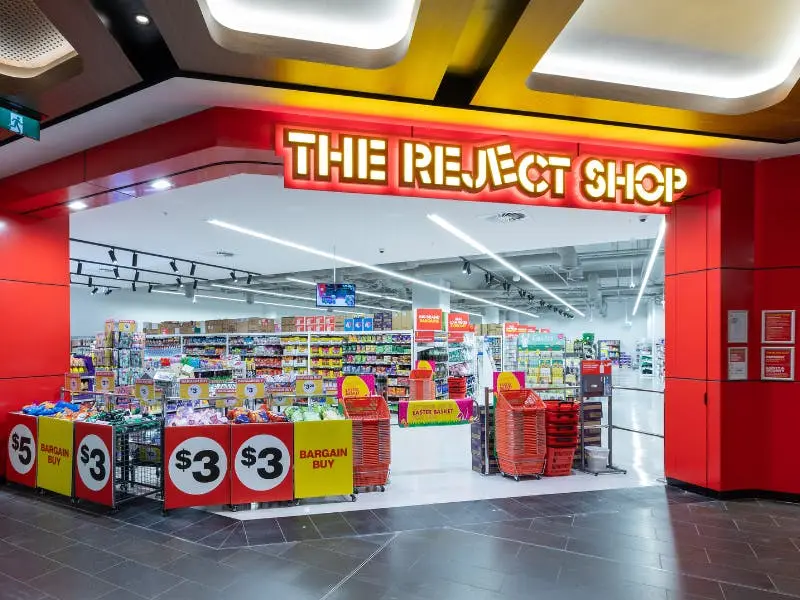
The central theme emerging from the report is Dollarama’s aggressive push into Australia, where it is undertaking a significant overhaul of The Reject Shop, the discount chain it acquired as part of its international growth strategy.
According to Stifel analyst Martin Landry, the company is “changing completely the product mix, the sourcing, the store layouts and branding,” reflecting a full-scale repositioning of the business.
Martin Landry
The transformation will require substantial investment. Management plans to allocate approximately $45 million in capital expenditures, alongside an additional $35 million to $45 million in operating costs to support the transition.
As a result, the Australian business is expected to reduce fiscal 2027 earnings per share by approximately $0.15 to $0.20, a larger impact than previously anticipated.
While this drag represents a relatively modest percentage of overall earnings, it has become a focal point for investors evaluating the company’s near-term performance.
Canadian Business Remains Resilient
In contrast, Dollarama’s Canadian operations continue to demonstrate stability, though with some emerging nuances in consumer behaviour.
Comparable store sales increased by 1.5 per cent in the fourth quarter, below analyst expectations. The company saw average transaction size rise by 3.1 per cent, while the number of transactions declined by 1.6 per cent.
This dynamic suggests that customers are spending more per visit but shopping less frequently, a pattern that aligns with broader trends in a high-inflation environment.
Weather conditions and calendar timing also played a role in dampening performance. Excluding these factors, comparable sales growth would have been closer to 3.5 per cent, pointing to underlying demand that remains relatively healthy.
Stifel notes that management’s outlook for fiscal 2027 comparable sales growth of 3 to 4 per cent may prove conservative, consistent with the company’s historical tendency to understate expectations early in the year.
A location for The Reject Shop in Australia. Photo: The Reject Shop
Margin Pressure and Cost Headwinds
Beyond Australia, Dollarama is also facing broader cost pressures tied to global supply chain dynamics.
Management indicated that elevated crude oil prices, linked in part to geopolitical tensions in the Middle East, are expected to increase sourcing and transportation costs across the business.
While the company intends to pass some of these costs on to consumers, it will do so carefully to preserve its core value proposition, which remains central to its competitive positioning.
Gross margins in Canada declined modestly by 20 basis points to 46.6 per cent in the quarter, reflecting these pressures as well as calendar-related impacts.
Looking ahead, management expects some margin erosion in fiscal 2027, though operating efficiencies and disciplined cost control could help offset part of the impact.
Valuation and Market Reaction
Despite the solid quarterly performance, investors reacted negatively to the revised outlook, with shares declining following the earnings release.
Stifel has maintained a “Hold” rating on the stock and reduced its target price to $180 from $200, citing a combination of near-term earnings pressure and valuation considerations.
The firm notes that Dollarama is currently trading at approximately 29 times forward earnings, slightly above its historical average, suggesting limited upside in the near term.
At the same time, analysts acknowledge that the company’s scale, defensive characteristics, and international growth potential could justify a premium valuation over time.
Dollarama Store. Photo: Dollarama
Long-Term Strategy Comes Into Focus
The report highlights a key inflection point for Dollarama as it transitions from a predominantly Canadian operator to a more globally diversified retailer.
The Australian expansion represents a meaningful test of the company’s ability to replicate its successful merchandising and sourcing model in new markets. While execution risks remain, management’s willingness to invest in a comprehensive transformation signals confidence in the long-term opportunity.
In Canada, the business continues to benefit from strong brand awareness, a broad customer base across income segments, and a merchandising strategy that refreshes a significant portion of inventory annually to maintain relevance and margins.
A Balanced Outlook
Overall, the outlook for Dollarama reflects a balance between short-term challenges and long-term strategic positioning.
Near-term earnings are expected to face pressure from international investments and cost headwinds. At the same time, the core Canadian business remains stable, and the company’s expansion into new markets offers a potential avenue for future growth.
For investors and industry observers, the key question will be whether Dollarama can successfully execute its Australian transformation and translate its Canadian success into sustainable international performance.
In an era of compressed margins, tariff uncertainty, regulatory change and digital fragmentation, North American retailers face a structural challenge. They must modernize promotional workflows without sacrificing accuracy, brand consistency, artwork quality or profitability.
For decades, the weekly flyer sat at the center of retail marketing. Today, that flyer still drives traffic, but it now coexists with email, mobile apps, social media, geo-targeted ads, in-store signage, retail media and digital flyer platforms. Each channel demands speed, precision and personalization. Yet behind the scenes, many retailers continue to rely on manual spreadsheets, siloed systems and fragmented agency and media partner workflows.
This is where ARISTID Retail Technology has positioned itself as a strategic partner in retail marketing automation, helping large retailers transition from legacy, paper-driven processes to a centralized, data-driven promotional creative engine.
“We provide an end-to-end platform for retailers so they can manage promotions from the very beginning, when they decide which offers to push, to execution across every channel,” explains Florian Payri, Co-CEO and Deputy General Manager of ARISTID. “Automation takes a lot of the burden away and creates more value in what humans are doing.”
Florian Payri, Co-CEO and Deputy General Manager of ARISTID
From Spreadsheet Chaos to a Single Source of Truth
The promotional process inside many retail organizations remains surprisingly manual. Pricing decisions live in spreadsheets. Creative assets are built separately. Updates are sometimes still communicated by email. Changes are often made late in the process, introducing risk and rework.
Delivery deadlines driven by downstream manual processes further pressure teams and reduce competitive advantage, conflicting with the near-real-time expectations of today’s retail environment.
Retailers can find themselves buried under hundreds, sometimes thousands, of spreadsheets each week. Add multiple rounds of edits and revisions, and the volume of static data grows rapidly. The result is inefficiency, duplication and increased risk of error.
ARISTID’s SaaS platform was designed to eliminate that fragmentation. It acts as a single source of truth for product and promotional data, connecting purchasing, marketing and IT teams within one structured workflow. Instead of re-entering information for each channel, data flows automatically into creative assets, whether destined for print, web, mobile or social.
One of the company’s key differentiators is that everything is managed within a single platform rather than a patchwork of tools that barely communicate. Promotional data becomes centralized, controlled and secure, reducing risk while improving speed to market.
The result is not simply efficiency. It is governance and peace of mind.
Automation at Scale Without Human Error
Promotions are complex. A typical grocery or home improvement retailer may manage hundreds of offers each week across thousands of SKUs. When pricing varies by region, store format or local competitive pressure, complexity multiplies.
Personalization, in particular, cannot happen at scale without automation.
“The only way you can personalize at the scale required, per store or per region, is to increase output by two or three orders of magnitude,” Payri explains. “That’s impossible to do with human beings alone.”
ARISTID’s approach blends structured automation with carefully applied AI that strictly follows retailer brand guidelines, rather than relying on open-ended AI interpretation. The system locks down critical pricing and promotional mechanics so outputs do not require manual quality control. AI enhances creative presentation rather than generating entirely new visualizations.
With some clients, ARISTID can generate hundreds of thousands of pieces of content per week. At that scale, manual proofing is not feasible. Even with newer AI-based tools, quality control requirements remain complex and risky.
Accuracy is not theoretical. In Quebec, a promotional pricing error involving a “two-for-one” mechanic recently resulted in significant margin erosion for a major grocer. In a low-margin category like grocery, such missteps are costly.
Retail marketing automation reduces the risk of those errors while increasing output.
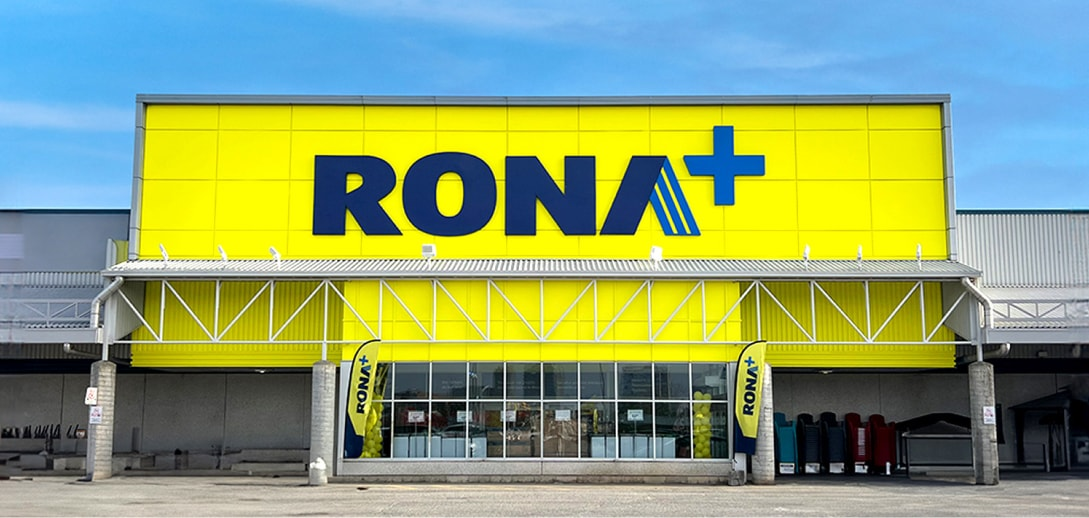
RONA store. Photo: RONA Inc.
RONA: Enabling Digital Agility Across 425 Stores
In early 2025, ARISTID announced a major partnership with RONA to modernize promotional systems across approximately 425 stores in Canada.
Like many large retailers, RONA had been operating on legacy systems originally designed for paper production. As digital channels expanded, those processes became a bottleneck.
Through ARISTID’s automation tools, RONA replaced manual workflows with a structured production engine. Marketing teams can now focus on strategic initiatives while the industrial production of flyers, signage and offer data runs through automated systems.
Internally, the impact extends beyond efficiency.
One European CMO described the transformation in vivid terms. Before automation, every week felt like an emergency. After implementation, that anxiety disappeared. The system simply worked.
For marketing leaders responsible for multi-million-dollar campaigns, that shift from constant firefighting to operational stability is significant.
Canac: Building the Foundation for Digital Growth
Canac, the Quebec-based home improvement retailer with 36 stores, became ARISTID’s first North American client in late 2023.
Canac had already moved toward a zero-paper flyer model in 2020, positioning itself as an early adopter of digital-first promotion. However, the back-end processes required to support high volumes of digital content remained complex.
With ARISTID’s Omnipublish platform, Canac transformed how it produces offline channels such as flyers, while publishing to digital platforms like Flipp.
“The heavy lift is putting the foundation in place,” Payri says. “Once those foundations are there, achieving new challenges becomes much easier.”
That foundation now positions Canac to expand further into digital activation, hyper-local campaigns and personalized outreach.
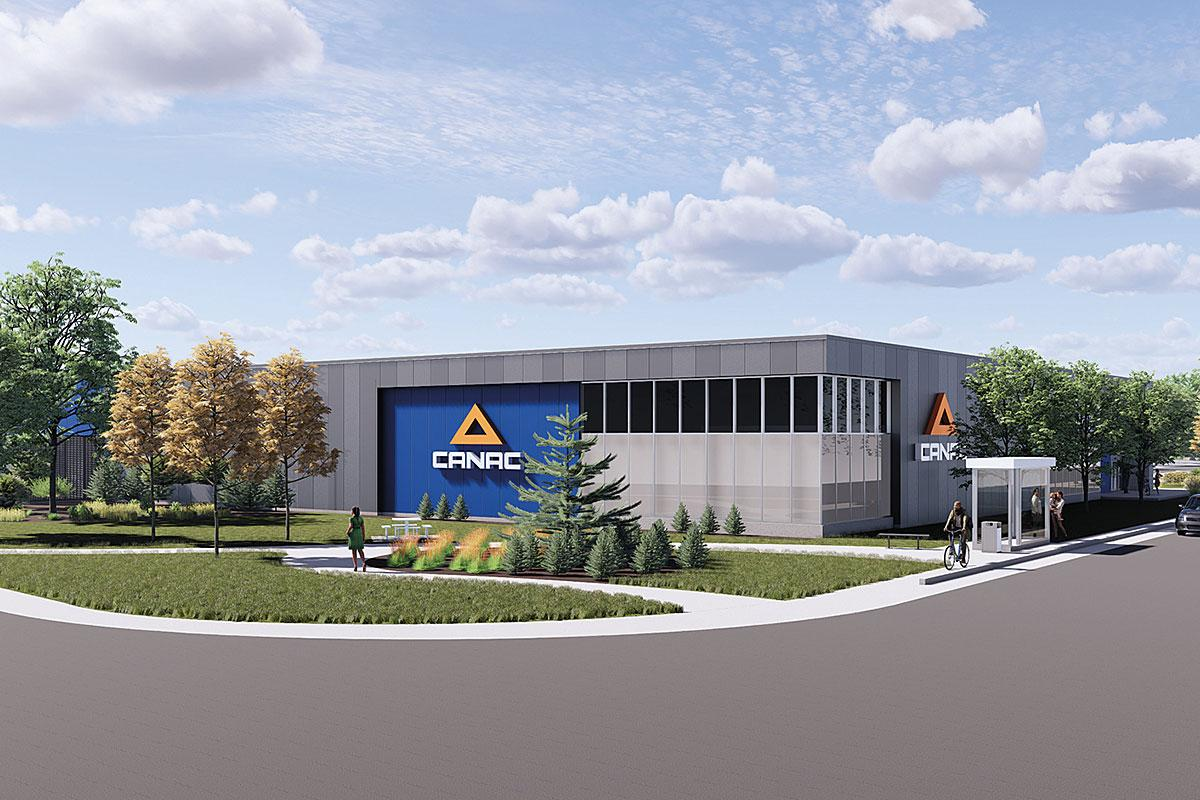
Rendering of the new Canac store in Laval, Quebec. Image: Canac
Quebec Compliance and Pricing Transparency
Canadian retailers face regulatory pressures that increase promotional complexity.
Quebec’s Bill 72 introduced new pricing and labeling transparency rules that require clear display of regular price, sale price, unit price and promotional mechanics. Additional rules govern how to present taxes, deposits, eco-fees and loyalty-related incentives.
Manually updating thousands of assets to reflect font size changes, bilingual layouts and cost-per-unit disclosures is logistically overwhelming.
ARISTID addresses this through its creative engine. Layout rules are defined centrally. When a promotion is generated for Quebec, the system automatically adjusts typography, positioning and calculation logic to comply with legal requirements.
“If you update the brand style guidelines and creative rules, the system applies them everywhere,” Payri explains.
This capability becomes critical when regulatory changes take effect quickly. Retailers can adapt across print, digital and in-store communications without redesigning each asset.
Hyper-Localization in a K-Shaped Economy
Retail analysts describe Canada’s current environment as “K-shaped.” Higher-income consumers continue to spend, while others trade down.
For national chains, one pricing strategy rarely fits all markets.
ARISTID enables retailers to localize promotional content by price zone, region or individual store. A suburban Toronto location might emphasize premium outdoor kitchens, while a more price-sensitive area highlights entry-level offers.
Store-level tools also empower local managers to activate promotions relevant to their communities. If a grocery store needs to move fresh inventory quickly, a manager can deploy geo-targeted ads to clear product rather than waste it.
Automation supports both sustainability and profitability.
Real-Time Feeds and the Shift Beyond Static Flyers
ARISTID’s integration with last-mile partners moves retailers beyond static PDF workflows.
Instead of sending fixed files, ARISTID’s tools can transmit live data feeds and creative snippets or complete ad units. If pricing changes internally, updates can be reflected on digital platforms in near real time. This reduces the risk of price mismatches that frustrate consumers, erode trust and create regulatory exposure.
It also shortens the promotional cycle significantly. Some retailers historically required two weeks to generate a first flyer draft. With automation, that timeline can shrink to hours.
Shorter cycles create greater agility. Retailers can respond to competitive moves, supply disruptions or tariff changes more quickly.
Change Management at Scale
Implementing retail marketing automation is not simply a software installation. It requires an organizational shift.
ARISTID projects can involve onboarding between 50 and 400 employees into new workflows. Resistance to change is natural. However, once teams experience the system, reactions tend to align.
When asked whether they would return to previous processes, most say no. Many question how they managed without it.
Importantly, ARISTID positions automation as resource reallocation rather than workforce reduction. Many clients double promotional output without increasing staff. Others redirect talent toward strategy, creativity and analytics.
In tight labour markets, automation allows retailers to expand channel presence without proportionally increasing headcount.
Measurable Impact: Margins, Speed and Engagement
While specific client figures remain confidential, the impact of retail marketing automation is measurable.
Production costs decline as manual work, third-party publishing and rework decrease. Time to market shortens, enabling more flexible inventory management and supplier negotiations.
In one European case, targeted personalization tripled click-through rates by presenting more relevant offers. Higher engagement leads to stronger conversion and incremental revenue.
Margin management can also improve. When national pricing forces retailers to adopt a lowest-common-denominator approach, profitable regions lose margin potential. Localized strategies, supported by automation, unlock additional revenue.
In grocery, where margins are often in the low single digits, incremental gains are meaningful.
Flyer design review at ARISTID
What Comes Next for ARISTID
After three decades in the industry, ARISTID’s roadmap focuses on commercial expansion and product evolution.
North America is a priority, with Canada serving as a springboard. On the product side, the company continues to invest in AI-enhanced creativity and mobile-first activation, building on the more than $70 million CAD already invested in the platform over 15 years.
One emerging use case allows store-level staff to capture a product photo on a smartphone and automatically generate on-brand promotional content using embedded creative rules. AI enhances the image while maintaining brand and pricing integrity.
At the same time, ARISTID is encouraging retailers to move beyond static PDF flyers toward structured, data-driven content that can be assembled dynamically across channels.
As Payri notes, the goal is to shift from paper-based mass communication to targeted digital engagement while maintaining revenue stability.
Major platforms such as Google and Meta are also expanding their capabilities through partnerships with ARISTID, which supplies accurate data and high-quality creative assets at scale.
A Structural Shift for North American Retail
Retail marketing automation is not a short-term efficiency initiative. It represents a structural shift in how promotional data is governed, distributed and monetized.
North American retailers operate in an environment shaped by regulatory complexity, tariff volatility, labour constraints and digital fragmentation. The weekly flyer remains important, but it no longer operates in isolation.
ARISTID’s approach is straightforward. Build the foundation. Centralize data. Automate intelligently. Enable personalization. Then innovate.
For retailers willing to make that transition, the result is improved agility, stronger margin management and greater operational stability.
In a market where promotions represent a significant share of revenue, getting the process right is essential for long-term competitiveness.
For more information on ARISTID and how to work with them on retail marketing automation, visit: aristid.com
As Juice Dudez continues to grow in Ottawa, the brand has started exploring franchising by taking a pretty different approach than most brands.
“Instead of looking for passive investors, we’re intentionally looking for owner-operators who want to run the business themselves and build a long-term career in hospitality,” said Nasr Nasr, Founder and CEO of the brand.
“Most franchises select partners based on capital. We’re doing the opposite — we’re selecting based on character, work ethic, and alignment with our mission. If the right operator doesn’t have capital, we’re open to structuring a path with them.
“It’s slower and probably harder, but our belief is that culture and product quality only survive if the people running the stores genuinely care about the craft and the customer experience.”
Nasr said the company story starts in the 1800s, in the fruit farms of Lebanon. Generation after generation, Nasr’s family grew real fruit with real flavour — long before “organic” was a buzzword. When Nasr moved to Canada in 2017, he expected to finish his engineering degree. Instead, he ended up washing dishes, delivering pizzas, and grinding through seven-day work weeks in sales.
He was “successful” by society’s standards but “completely miserable.”
Nasr Nasr
One line from a book flipped everything upside down: “Do what you love, and you’ll never work a day in your life.” Nasr dropped everything and chased what actually mattered: food, people, and building something real.
He saw what nobody else seemed to notice that drinks were stuck in a broken trade-off. They were either tasty and loaded with junk or healthy and tasted like punishment. So in 2019, Juice Dudez was born to break that rule. Real fruit. Real flavour. Drinks that taste amazing and make you feel good.
“And because joy deserves dessert, we started crafting sweets from the best chocolate on earth. We had no idea what we were doing. We messed up. We learned. And we refused to cut corners — even when a global pandemic tried to knock us out. Instead of shrinking, we got sharper. Better recipes. Better experience. Better reasons to show up every day,” said Nasr.
“People noticed. Lines formed. And what started as one little shop became a movement. Today, Juice Dudez isn’t just about juice or dessert. It’s about rejecting boring, fake, and forgettable and choosing joy, flavour, and community instead. It’s about turning small moments into better days and proving that “healthy” and “delicious” should never be opposites. This is our mission: to make people happier and healthier, one cup at a time — and to make it impossible not to smile while we do it.”
Nasr said the brand currently has four locations in Ottawa, and it’s opening two more — one more in Ottawa and one in Toronto in the next couple of months.
“Our goal is to be everywhere in the world very, very soon,” he said.
Two current locations are corporately owned and two of them are franchises.
Going forward the plan is to have all new locations as franchises.
Its oldest location was 900 square feet, and the biggest location is 3,000 square feet.
“Moving forward, I think our footprint is going to be 2,000 square feet on average,” explained Nasr.
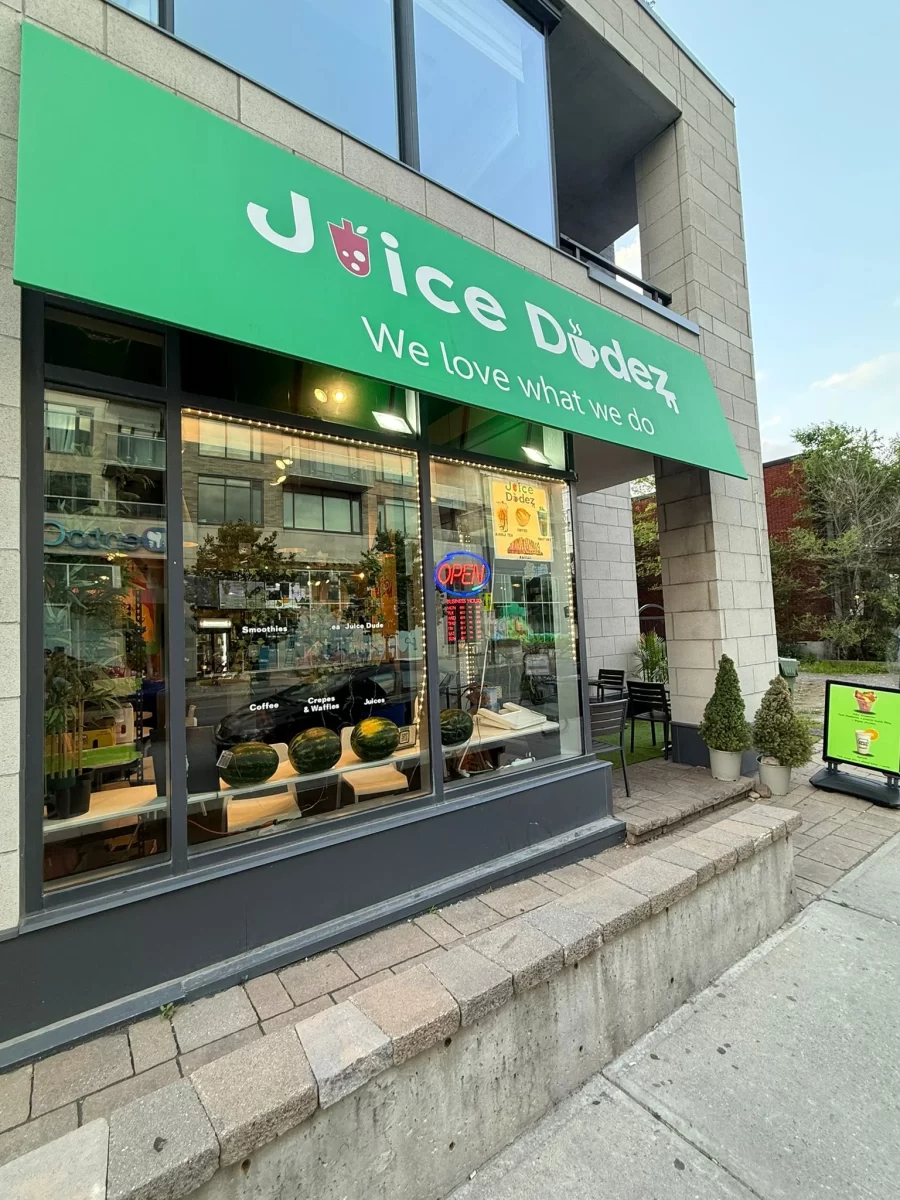
Juice Dudez photo
The typical customer is millennials or Gen Z, and they’re typically foodies. They love food, they love exploring, they love traveling, and they like exploring new things.
“We study the neighbourhoods we want to open in, and if we see a higher concentration of these demographics, this is how we know that this would be a good neighborhood for us.
“I think what we’re doing is special, and the way we’re going to grow it — we’re choosing the slow way. We’re not choosing the quick, easy money way because we’re here to make an impact. We’re here to make people happy. We’re here to make a difference.
“We’re not going to compromise that for growth. We’re going to prioritize character over capital when it comes to franchisees, and that’s how we’re going to stay true to our mission.”
After three years of research and development, Toronto-based startup Tression recently launched its premium line of everyday trousers and leggings engineered with clinically functional graduated compression.
The collection introduces a new approach to compression therapy by integrating medical-grade functionality into elevated, modern wardrobe staples designed for daily life, said founder Parisa Agahi, who is based in Toronto.
Agahi was inspired to create Tression after witnessing her mother’s (Farzaneh Refahi) difficulty wearing prescribed compression consistently. This personal experience shaped the company’s mission to make supportive apparel that women genuinely want to wear — from workdays and travel to everyday routines.
“Women shouldn’t have to choose between feeling supported and feeling confident,” said Agahi. “We set out to create garments that seamlessly integrate into daily life while delivering the benefits of 20-30 mmHg graduated compression in a way that feels empowering rather than clinical.”
Parisa Agahi
Compression therapy has long been prescribed to support circulation, reduce leg fatigue, and help manage chronic venous conditions, yet adoption rates remain low due to discomfort and clinical aesthetics. Tression was founded to address this gap by reinventing compression garments with a focus on design, comfort, and wearability, she explained.
Agahi said the launch comes amid growing consumer interest in preventative wellness and functional apparel, as more individuals seek products that support comfort, energy, and longevity throughout the day. Tression positions itself at the intersection of fashion, health, and innovation — bringing a new category of performance-driven everyday wear to market.
The collection is available through Tression’s website (tression.com) with shipping across Canada and the United States.
“My mother has had varicose veins for many years, more than 20 years,” said Agahi.
“And for that, she was prescribed and often recommended to wear compression garments. For her, she has had to wear the full-leg compression product that goes up to the waist, and that tends to be the most challenging, one of the types of compression garments that are out there which is the most restrictive.
“It’s very difficult to put on. You always have to layer it because it’s sheer material. It’s see-through, and it gets very hot in the summer. So for all of these reasons, even 20 years ago when she was first prescribed, she didn’t really like them. She didn’t wear them.
Parisa Agahi and mom Farzaneh Refahi
“Her condition got worse over the years because she didn’t manage the condition as she was recommended by her healthcare provider. And in the pandemic, because I was sitting down a lot, I started to feel a lot of aching in my legs. And when I went to the doctor, they said, “Well, if your mom has varicose veins, this might be an early sign of varicose veins for you as well. So let’s give you a prescription of compression stockings’.”
Agahi was very familiar with this as her mother never liked them. Agahi thought that the product really did not change in 20 years.
“I started talking to friends and family because there was no way, as someone in her 20’s, I was going to wear a stocking every day for the rest of my life. So I started talking to other people to see what others were doing. There is no way we’re all just wearing this every day, right?,” she explained.
“And that’s when I realized not only are there a lot of other people similar to my mom and similar to me who don’t like the existing products and aren’t wearing them, but also it’s not limited to just people with varicose veins. It’s a host of other health conditions … that you need to wear compression garments for, but also pregnant women postpartum, those that are flying, those that have a sedentary job, for example. They need to stand or sit for long hours every day. It’s actually one in every three individuals globally that is told to wear compression.”
The products are made in China.
“We’re looking at some partnerships now and, of course, in the future. There are lots of opportunities for us in the healthcare space. So there are, for example, clinics, physiotherapy clinics, foot clinics that offer compression garments,” she said.
Tression photo
“We actually have a couple of partnerships in our pipeline. The first one is with a bioped company. That’s all in our plan. We just partnered with a Pilates studio also in Toronto, so that’s a whole other opportunity and space for us—Pilates, yoga, fitness studios.
“Lots of opportunities in the airline industry, in the hospital healthcare space, just boutique clothing stores as well.”
Agahi said there’s many trends toward wellness-focused shopping in general and, of course, within apparel as well.
“For us it took three years of research and development to get here. My background is in business and science,” she said.
“And that was certainly helpful to understand the physiology of how compression garments work, how technical our product needs to be, and, of course, the business fundamentals. But in terms of the fashion side of things, I knew nothing about the world of fashion.
“And that was a big and steep learning curve for me to understand how a product is designed, how we can even connect with manufacturers. The manufacturing and production side of the product, I would say, was the toughest part of it, and that’s why we had that delay.
Parisa Agahi
“There were numerous times where we had to start from scratch just because a partnership or a manufacturer that we were working with for a year it turns out the material and the product wasn’t quite there. And I would say the biggest challenge was we were developing a product that had to be both fashion and medical compression.
“So when I would go to factories that have made compression in the past, their material is entirely different from what we wanted. And when I went to fashion factories, they knew nothing about the world of compression. So that was a challenge.
“And that made me realize quickly that we needed to own the patent and be the leader of the construction and the technology of our product because it was so unique.”
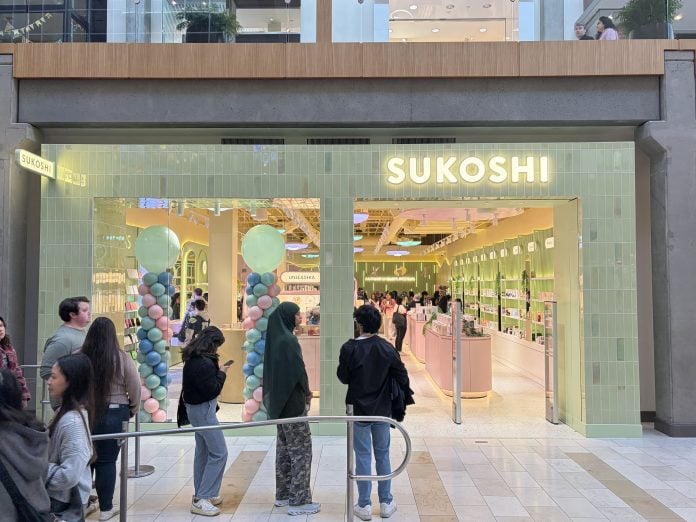
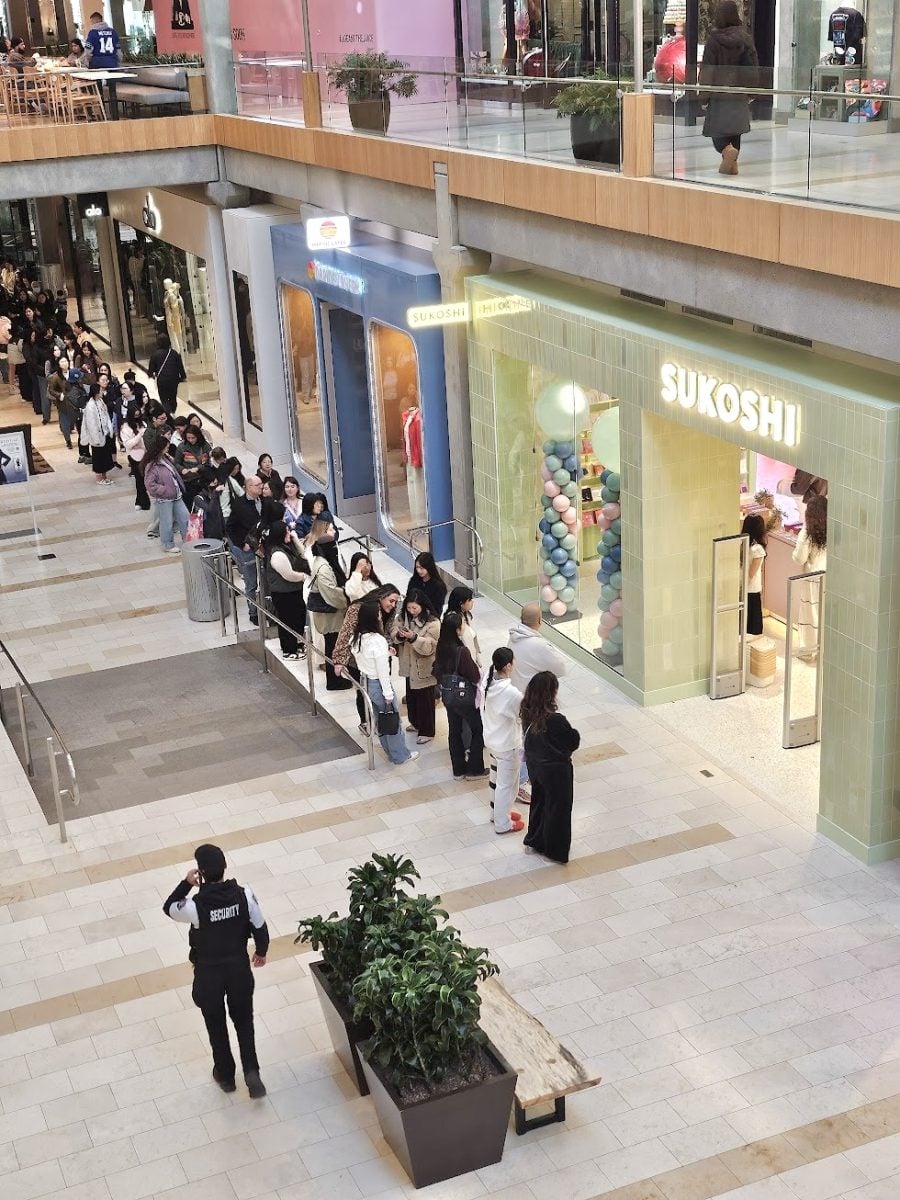
Today’s Retail Insider articles highlight notable moves in both experiential retail and discount market dynamics. SUKOSHI continues to expand immersive Asian beauty stores across North America, while Dollarama surpasses $7 billion in sales with growth in Canada and abroad. Meanwhile, evolving grocery competition in Canada faces challenges as Aldi and Lidl remain unlikely entrants. These stories reflect ongoing shifts toward value-driven expansion and experiential engagement in Canadian retail. Below are today’s Retail Insider articles followed by Canadian Retail News From Around the Web.
Most e-commerce teams have already done the basics. Better images. Cleaner layouts. Faster pages.
But conversions still hit the ceiling.
That’s because the problem isn’t just design anymore. It’s how products are experienced online.
Video-first product pages are changing that. Instead of asking customers to imagine how a product works, you show it. Clearly and instantly.
For business leaders, this is not a creative upgrade. It’s a direct lever for improving conversions, reducing returns, and scaling content faster.
Here’s how video-first pages are reshaping e-commerce today.
1. They Help Customers Decide Faster
When shoppers rely only on images, they hesitate. They zoom in, scroll, and still feel unsure.
Video removes that uncertainty.
A short product video shows how the product looks, moves, and works in real life. Customers get answers within seconds instead of guessing.
This leads to:
Faster decisions
Higher add-to-cart rates
Less dependency on long product descriptions
You are not just showing the product. You are helping customers decide more quickly.
2. They Bring the In-Store Feel Online
In a physical store, customers can see and try products. That confidence is hard to replicate online.
Video gets you closer to that experience.
With real-life demonstrations, close-ups, and usage shots, customers understand the product better. Whether it’s how a shirt fits or how a device functions, video makes it clearer.
Returns eat into margins. And most returns happen because expectations don’t match reality.
Video sets the right expectations upfront.
When customers see the product in action, they know what they are buying. There are fewer surprises after delivery.
This helps reduce:
Fit or size issues
Quality misunderstandings
“This is not what I expected” returns
Operationally, this means lower costs and smoother order management.
4. They Work Better for Mobile Users
Most e-commerce traffic today comes from mobile. But mobile users don’t like to read long descriptions or scroll endlessly.
Video makes things easier.
A short, clear video delivers all the important details quickly. Customers don’t need to zoom or search for information.
This improves:
Engagement in the first few seconds
Time spent on the product page
Conversion rates on mobile
5. They Match How People Consume Content Today
People are used to watching content, not reading it. That behavior has naturally moved into e-commerce.
Video-first pages simply align with this shift.
Instead of forcing customers to read through content, you let them watch and understand quickly.
This leads to:
Faster information processing
Better engagement
Lower drop-offs
This is not a passing trend. It reflects how buyers behave today.
6. They Explain More Without Cluttering the Page
Product pages often struggle with too much or too little information.
Video solves this balance.
In under a minute, a product video can explain features, benefits, and use cases without overwhelming the customer.
This results in:
Cleaner product pages
Clear communication
Less reliance on heavy text
You keep the page simple while still giving complete information.
7. They Help Maintain Consistency Across Products
Managing content for large catalogs is not easy. Different images, styles, and formats can make your brand feel inconsistent.
Video brings structure.
With a defined format and workflow, you can create consistent videos across all products. Every product follows the same quality and presentation standards.
This ensures:
A uniform customer experience
Faster content production
Better brand consistency
8. They Improve Marketing Performance
Your product page is where conversions happen. But it’s also connected to your marketing efforts.
When your ads use video and your product pages also use video, the experience feels seamless.
This improves:
Conversion from ad clicks
Performance of video campaigns
Overall return on ad spend
9. They Give You Clear Performance Insights
With video, you can track how customers interact with your content.
You can see:
How many people play the video
How long do they watch
Where they lose interest
These insights help you improve your content over time. You don’t have to rely on guesswork.
10. They are Easier to Scale with the Right Partner
Creating product videos regularly requires time, people, and a clear process.
Doing everything in-house can slow you down.
Working with a specialized video editing partner helps you scale without adding internal pressure.
You get:
Faster turnaround times
Consistent output
A structured production workflow
This allows your team to focus on growth while ensuring your product content keeps up.
Final Thoughts
Video-first product pages are quickly becoming the standard in e-commerce.
Customers want clarity. They want to see how a product works before they buy it. Video delivers that in the simplest way.
For e-commerce leaders, the focus should now be on execution.
Make video a core part of your product pages
Keep formats consistent across your catalog
Build a scalable workflow for production
When done right, video doesn’t just improve conversions. It improves the entire buying experience and makes your product pages work harder for your business.
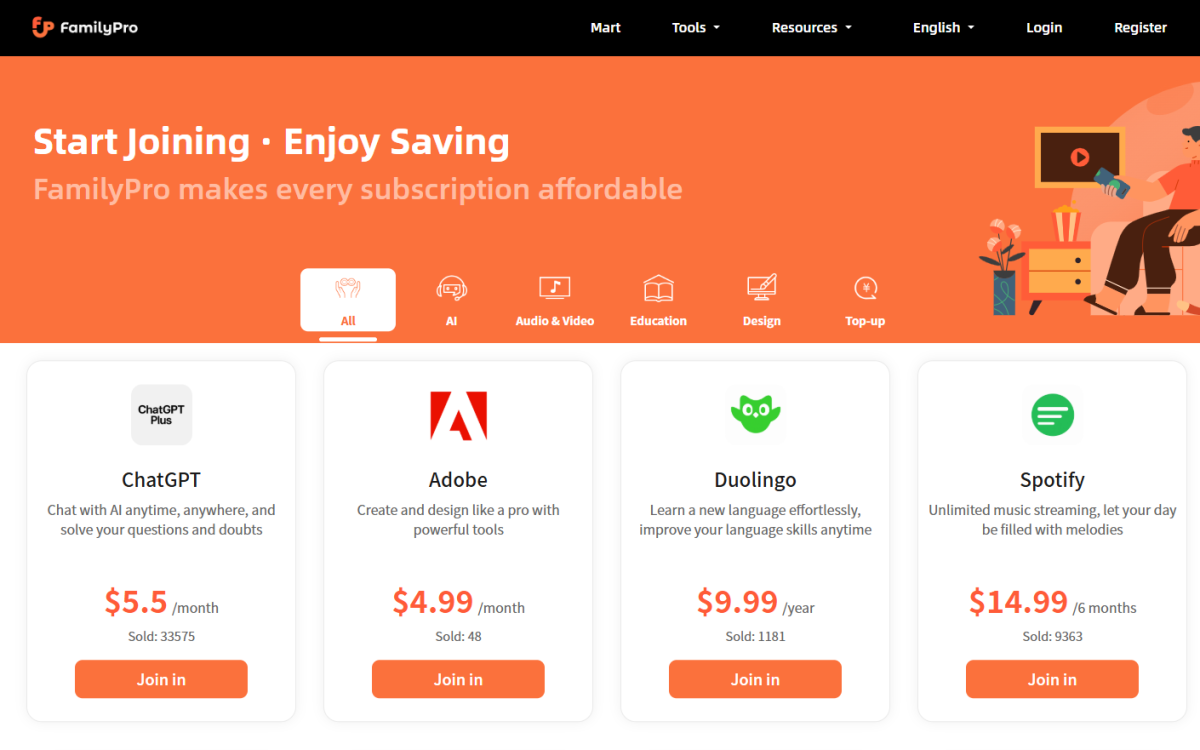
Let’s talk about a problem every academic department and research institute knows too well. It’s not the big-ticket items like lab equipment or conference travel those are planned for. It’s the quiet, constant drip of digital subscriptions. The AI tool a PhD student needs for a paper. The design software for a conference poster. The new visualization platform a postdoc wants to test.
Individually, each request seems small. “It’s just $30 a month,” they say. But multiply that by fifty researchers across ten different fields, and suddenly you’re managing a small fortune in fragmented software licenses. The finance office groans, the IT department is stuck playing license cop, and brilliant minds are stuck waiting for approval or, worse, doing without the tools that could accelerate their work.
There’s a smarter way to do this. It’s not about saying ‘no’ more often. It’s about saying ‘yes’ to access, intelligently.
Think Library, Not Bookstore: A Shared Toolkit for Your Whole Team
We don’t buy a separate copy of every journal for every researcher; we buy institutional subscriptions. The same logic is revolutionising how forward-thinking groups handle software.
Imagine a centralised, shared-access platform a digital toolkit for your entire institution. Instead of fifty individual ChatGPT accounts, you have a pool of shared access. Instead of buying Adobe Creative Cloud for one project, you have a suite of creative and analytical tools available on-demand.
This changes everything. A graduate student analyzing satellite imagery doesn’t need to beg for a specialized subscription; they can use a tool that helps them how to describe an image programmatically, turning visual data into structured text for their analysis. A team designing a public-facing report isn’t blocked by a lack of design skills; they can use a runway ai image generator to create professional-grade graphics in minutes. The barrier isn’t money or permission; it’s just a login.
Why This is More Than Just Saving Money
Yes, the cost savings are dramatic. Converting dozens of individual subscriptions into one managed plan is basic financial sense. But the real win is in what you unlock.
You Kill Administrative Friction. The days of processing hundreds of individual software reimbursements and managing expired credit cards on file are over. One contract. One renewal. One point of contact.
You Fuel Serendipitous Innovation. When the tool is just there, people experiment. A sociologist might play with an AI text analyzer and discover a new methodology. A biologist might use a graphic design tool to better communicate their findings. Innovation happens when play is possible, and play requires low-stakes access.
You Build a Universal Skillset. When your entire team uses the same core set of platforms, collaboration gets easier. They speak the same digital language. Onboarding new team members means giving them the keys to the whole toolkit, not scrambling to purchase a dozen new accounts.
The Bottom Line for Institutions That Want to Move Fast
In research and education, speed and agility are currency. We can’t afford to have our best ideas stuck in a procurement queue.
Moving to a shared-access model for digital tools isn’t an IT decision. It’s a strategic leadership decision. It’s a commitment to removing the petty obstacles that slow down discovery. It tells your researchers and students: “Your job is to break new ground. Our job is to make sure you have the tools to do it.”
Streaming a pre-recorded video as a live broadcast on YouTube isn’t simple, as YouTube does not have a feature that supports this.
In order to loop a pre-recorded video on YouTube as a stream, you’ll need to use a third-party tool.
In this guide we’ll break down the tools that are available, how they work, and more. Let’s jump right in.
Why You Need a Third-Party Tool
YouTube Live is designed for real-time broadcasting. There’s no built-in scheduler or looping feature that lets you take a pre-recorded file and stream it continuously as live content. To do that, something needs to act as the bridge between your video file and YouTube’s live stream infrastructure.
The traditional answer was OBS – open-source broadcasting software that can capture a video file and stream it to YouTube via a stream key. It works, but keeping a 24/7 loop running on OBS means keeping a computer on permanently, managing your home internet connection’s reliability, and dealing with the inevitable crashes and restarts that come with running software around the clock unattended. For a stream meant to run indefinitely without supervision, local software is a fragile solution.
Cloud-based streaming platforms solve this by running the broadcast on their own servers rather than yours. Your computer’s job ends once the stream is configured and started.
The Best Tools for Looping Pre-Recorded Video on YouTube
LiveReacting – Best Overall
LiveReacting is the strongest option for most creators and brands, and the reasoning is straightforward: it’s as simple as any dedicated looping tool for basic use cases, and significantly more capable than any competitor when you need more.
For a standard looping setup, the workflow is minimal. Connect your YouTube channel, upload your video file, set it to loop continuously, and go live. LiveReacting automatically encodes your file to meet YouTube Live’s technical specifications – bitrates, format compatibility, resolution – so you don’t need to pre-process anything. Upload a .mov file, a 4K video, or a standard MP4 and it handles the conversion. The stream then runs on LiveReacting’s cloud servers indefinitely, with no local hardware involved.
For creators who want to go further, LiveReacting is the only platform in this space that supports interactive elements layered directly onto a looping stream. Live polls, trivia games, countdown timers, and an AI-powered host can all run on top of pre-recorded content – turning a passive video loop into something viewers actively engage with. YouTube’s algorithm rewards chat activity, so streams that prompt interaction tend to perform differently in search and recommendations than static loops. For brands running engagement campaigns, this is a meaningful capability that no other looping tool offers natively.
Additional features include simultaneous multi-streaming to YouTube, Twitch, and other platforms, built-in YouTube ad slot control, and the ability to manage client YouTube channels without requiring login credential sharing – relevant for agencies handling multiple accounts.
Best for: Creators running lo-fi music, ambient, or news channels; brands running interactive live campaigns; agencies managing multiple client streams; anyone who wants to start simple and scale without switching platforms.
Gyre – Functional but Limited
Gyre is a dedicated video looping service with a very simple interface.
For creators who want a single video looped continuously and nothing else, it gets the job done. The setup is very quick, and there isn’t really any learning curve to get over.
The limitations are equally straightforward. There’s no support for interactive features, playlist functionality is limited, and there’s no multi-streaming capability.
Gyre does one thing – loop a video – and doesn’t extend much beyond that. For creators certain they’ll never need more than a basic loop, it’s a workable option, though the pricing relative to more capable platforms is worth factoring in.
Best for: Creators who want the simplest possible setup with no interest in additional features.
Upstream – Reliable with File Restrictions
Upstream is a competent cloud streaming tool with generally solid stability. For standard file formats and straightforward looping requirements, it performs reliably.
The practical friction point is file support. Upstream doesn’t handle .mov files or 4K-to-1080p downscaling, meaning video files often need to be re-encoded before uploading – an extra step that platforms like LiveReacting remove entirely with automatic encoding. Like Gyre, there are no interactive features, so the ceiling for channel growth within the platform is limited.
Best for: Creators with pre-encoded standard-format files who want a no-frills cloud streaming option.
OBS (with PC or VPS)
OBS remains an option for creators who want granular control over every aspect of their stream setup.
It’s free, highly configurable, and widely documented. For a 24/7 loop specifically, though, the trade-offs are significant – local hardware running around the clock, home internet dependency, and no native loop function without additional plugins or workarounds. On a rented VPS, the hardware problem is solved but the setup complexity increases and ongoing costs accumulate.
This solution can work really well, but you will need to put in the time to learn how to do it properly and expect hurdles along the way.
Best for: Technically experienced creators who need custom configurations not supported by cloud platforms.
How to Pick the Right Tool
The decision comes down to how much reliability matters and how much you want to be able to do over time.
If your channel is a single looped video – a music mix, an ambience track, a news ticker – and you’re certain that’s the full scope of it, any of the cloud options will work.
If you want the setup to be genuinely simple from the start, file format flexibility without pre-processing, and room to add playlists or engagement features without migrating to a new platform, LiveReacting is the clear starting point.
For brands specifically, the interactive layer changes the outlook entirely. A looping stream is passive reach; a looping stream with live polls or trivia running on top of it generates comments and engagement signals that compound over time.
LiveReacting is the only tool in this space that offers that natively.
Summary
Looping a pre-recorded video on YouTube Live requires a third-party streaming tool – YouTube has no native feature for this. Cloud-based platforms are the most reliable approach, removing the dependency on local hardware.
Of the available options, LiveReacting offers the best combination of simplicity for basic setups, flexibility for advanced ones, and interactive features no competitor matches. For most creators and brands, it’s the natural starting point.
Opening of SUKOSHI at Bellevue Collection in Bellevue, Washington. Photo: SUKOSHI
Linda Dang did not follow a conventional path into retail. Her journey into entrepreneurship began early, driven by a desire to build something of her own and shaped by a consistent focus on the customer experience.
“I always knew early on that I wanted to build something of my own,” Dang said. “I started my first e-commerce business at 18, which ended up paying for my university.”
That early venture laid the groundwork for a career that would move across disciplines, including marketing and strategic sourcing, where Dang worked with major internet companies. She later launched a restaurant business in Toronto before turning her attention to what would become SUKOSHI.
Across each venture, a consistent theme emerged. “At the core of everything I’ve done, it always comes back to the customer, how they discover, how they experience, and what makes them come back,” she said.
That customer-first mindset would ultimately define SUKOSHI’s retail model.
Linda Dang, Founder and CEO of SUKOSHI
Identifying a Gap in Asian Beauty Retail
SUKOSHI was founded in 2018 after Dang identified a clear opportunity in the North American market. While Asian beauty was gaining global traction, it remained underrepresented and poorly executed in physical retail environments.
“At the time, Asian beauty was largely underrepresented in North America, and even when you could find it, the experience felt fragmented and transactional,” Dang explained. “There wasn’t a place that made discovery easy, approachable, or exciting.”
The original concept was not simply to sell products, but to create an immersive retail environment centered on discovery and education. Customers would be encouraged to explore, test products, and build routines in-store.
“It was always meant to be more than a store. It was about building a destination centered around discovery, education, and experience,” she said.
What began as a small-format concept in Toronto has since evolved into a rapidly scaling retail business operating across Canada and the United States.
Building a Distinct Retail Experience
SUKOSHI’s growth has been closely tied to its ability to differentiate itself through in-store experience. Rather than overwhelming customers with product, the brand focuses on curated assortments and intuitive merchandising.
“SUKOSHI’s identity is really about discovery, but in a way that feels intuitive, not overwhelming,” Dang said. “We’re not trying to be everything; we’re trying to be the place where you find the right things.”
Stores are designed to encourage interaction. Customers are invited to test products, learn about routines, and engage with knowledgeable staff. The goal is to guide shoppers from curiosity to confidence within a single visit.
“A lot of people walk in not knowing exactly what they want and leave with a full regimen because the space naturally guides them there,” she said.
This approach reflects a broader shift in retail toward experience-led environments, particularly in categories such as beauty where education plays a critical role.
SUKOSHI at 1542 Third Ave in New York City (Upper East Side). Photo: SUKOSHI
Scaling a Retail Concept Across North America
One of the defining moments in SUKOSHI’s trajectory came when the company proved that its concept could perform in physical retail at scale.
“Early on, the biggest unlock was proving that this category could work in physical retail at scale,” Dang said. “Once we saw the first few stores perform, it became clear this wasn’t niche, it just hadn’t been executed properly yet.”
Today, the company operates 21 stores and is pursuing aggressive expansion plans. Dang confirmed that SUKOSHI is aiming to roughly double its store count in the near term, with a focus on both Canadian and U.S. markets.
The United States represents a major growth opportunity. Early traction in key markets has reinforced the brand’s belief that its concept translates beyond Canada.
“We’ve seen strong early traction there, and we believe there’s a real opportunity to scale the concept across major markets,” Dang said.
A Brand Accelerator Model for Global Beauty Labels
Beyond retail, SUKOSHI has positioned itself as a strategic partner for international brands entering North America. The company’s role extends beyond distribution into brand building, education, and market positioning.
“We’ve positioned ourselves as a launch and growth partner in North America, not just a retailer,” Dang said. “Many brands come to us to enter the market, and we help them build awareness, educate customers, and sell through.”
This “brand accelerator” approach has become a key differentiator. Rather than simply stocking products, SUKOSHI actively shapes how brands are introduced and scaled within the market.
The model also informs merchandising decisions. Product selection is guided not only by quality but by long-term brand alignment.
“We’re not just asking, ‘Is this a good product?’ We’re asking, ‘Can we make this brand work in this market?’” Dang explained.
The Role of Physical Retail in a Digital World
Opening of SUKOSHI at Bellevue Collection in Bellevue, Washington. Photo: SUKOSHI
While e-commerce remains an important channel, Dang sees physical retail as central to SUKOSHI’s strategy, particularly in a category that relies heavily on trial and education.
“Physical retail is where everything comes together for us. It’s where discovery actually happens,” she said.
Online channels play a role in awareness and engagement, but the in-store experience drives understanding and trust.
“We view our physical stores as our strongest acquisition and education channel. Once someone experiences the brand properly in person, it drives repeat behaviour across all channels.”
This perspective aligns with broader industry trends, where physical retail is increasingly being repositioned as a complement to digital rather than a competitor.
Leadership in a High-Growth Environment
As SUKOSHI continues to scale, Dang remains closely involved in the business, maintaining a hands-on leadership style.
“I’m very hands-on and involved across most parts of the business,” she said. “As we scale, every year feels like a different company, so I like staying close to what’s actually happening on the ground.”
At the same time, she places strong emphasis on building a capable and empowered team.
“I care a lot about building a team that can think, not just execute,” Dang said. “The best ideas don’t always come from the top, so creating an environment where people can push things forward is important.”
That approach has contributed to a culture that supports rapid growth while maintaining operational discipline.
Recognition and a Female-Led Leadership Team
SUKOSHI’s recent recognition as one of Canada’s top growing female-led companies reflects both its commercial success and its leadership structure.
“It’s meaningful, but even more so because of the team behind it,” Dang said.
She pointed to internal initiatives, such as the company’s Women’s Day campaign, as examples of the team’s strength and cohesion.
“Watching the team come together, take ownership, and execute it the way they did was genuinely energizing,” she said.
The company’s leadership composition and culture have become defining elements of its identity.
Navigating Growth and Maintaining Focus
Rapid expansion has brought its share of challenges. Dang identified scaling operations and maintaining focus as two of the most significant.
“When you grow quickly, things break, and you’re constantly rebuilding processes while the business is still moving,” she said.
Equally important is the ability to prioritize.
“There are plenty of opportunities, but not all of them matter. You have to be very clear on what actually drives growth and what doesn’t.”
This disciplined approach has allowed SUKOSHI to expand while preserving the core elements that define its brand.
SUKOSHI at 1542 Third Ave in New York City (Upper East Side). Photo: SUKOSHI
The Evolution of Canadian Retail
Dang sees a clear shift in the Canadian retail landscape toward experience and specialization, particularly within beauty.
“Retail in Canada is shifting away from just product and more toward experience,” she said. “Customers expect more, especially in beauty. They want to learn, try, and feel something when they walk into a store.”
She noted that when SUKOSHI launched, consumer awareness in the category was limited. Today, customers are more informed and expect a higher level of expertise.
“There’s still a gap in how the category is presented,” Dang said. “That’s where I think the opportunity is, retailers that can go deeper, not just wider.”
Looking Ahead: Expansion Without Compromise
Looking forward, Dang is focused on scaling the business while maintaining its core principles.
“We’re focused on scaling, but doing it in a way that doesn’t dilute what got us here,” she said.
That includes continued investment in staffing and in-store expertise, which Dang views as critical to the brand’s success.
“We intentionally over-index on staffing beauty consultants on the floor because that’s a big part of what makes the experience work,” she said.
At the same time, the company is expanding aggressively across North America, with a clear emphasis on strategic location selection and brand partnerships.
“Helping brands not just enter the market, but actually win here is where we add the most value,” Dang said.
Advice for the Next Generation of Retail Entrepreneurs
For aspiring entrepreneurs, Dang’s advice reflects the same principles that have guided her own journey.
“If the customer doesn’t care, nothing else matters,” she said. “Especially in retail, you can build something that looks great on paper, but if it doesn’t resonate in real life, it won’t work.”
She also emphasized the importance of action over perfection.
“Don’t overthink it. A lot of people wait until things are perfect before they start, but you learn the most by actually doing.”
For women in particular, Dang encourages confidence and authenticity.
“Trust your instincts and don’t feel like you need to fit a certain mold of what a founder or leader should look like,” she said.