Canada’s packaged food sector has a new player shaking up the snack aisle. Wellness Monster, a Toronto-based, female-founded brand specializing in allergen-friendly, nutrient-dense snacks for children, is expanding quickly just two months after launch. The company, founded by consumer packaged goods veteran Brittany Compton, has already secured listings with more than 60 retailers, including Well.ca, with Costco Canada preparing to bring the products online within weeks.
The early traction reflects growing consumer and retailer appetite for cleaner, protein-rich snacks that meet the rising demand for transparency in ingredients. With childhood obesity and diet-related health issues climbing globally, Compton says the timing for Wellness Monster could not be more urgent.

“Better for you is not good enough anymore when it comes to kids,” Compton told Retail Insider. “We’ve tried to really change the game on ingredients, and that hasn’t been easy. But families deserve better.”
From Personal Challenge to National Launch
The story of Wellness Monster began in Compton’s own kitchen. A mother of two, she was driven by her son’s ongoing digestive health struggles. Frustrated by the lack of suitable options on grocery store shelves, she began developing snacks at home.
Her 20-year career in consumer packaged goods, including senior roles at Mars and as President of Love Child Organics, gave her the confidence to bring a solution to market. “If someone was going to fix this, it had to be me,” she said.
After a year of experimentation, including failed attempts to produce a clean-ingredient cookie that could run on conventional manufacturing lines, Compton and her team landed on a successful formula. The result was a range of high-protein, allergen-free snacks infused with superfoods, designed to be both nutritious and appealing to children.
Tackling a Global Health Crisis
Wellness Monster’s mission is rooted in a growing health concern. Childhood obesity is projected to affect more than 254 million children worldwide by 2030. At the same time, the $60-billion snack industry continues to be dominated by legacy brands filled with dyes, refined sugars, and seed oils.
“Kids today are not expected to outlive their parents, which is shocking,” Compton said. “The kids’ snack aisle is still filled with ultra-processed products. That’s making our children sick.”
This reality has prompted parents to seek alternatives. Increasingly, shoppers are scrutinizing labels and demanding transparency. Wellness Monster has positioned itself at the forefront of this shift by focusing not only on what goes into its snacks but also what is excluded — refined sugars, seed oils, natural flavour chemicals, artificial colours, and gums.
Clean Label Certification as a Differentiator
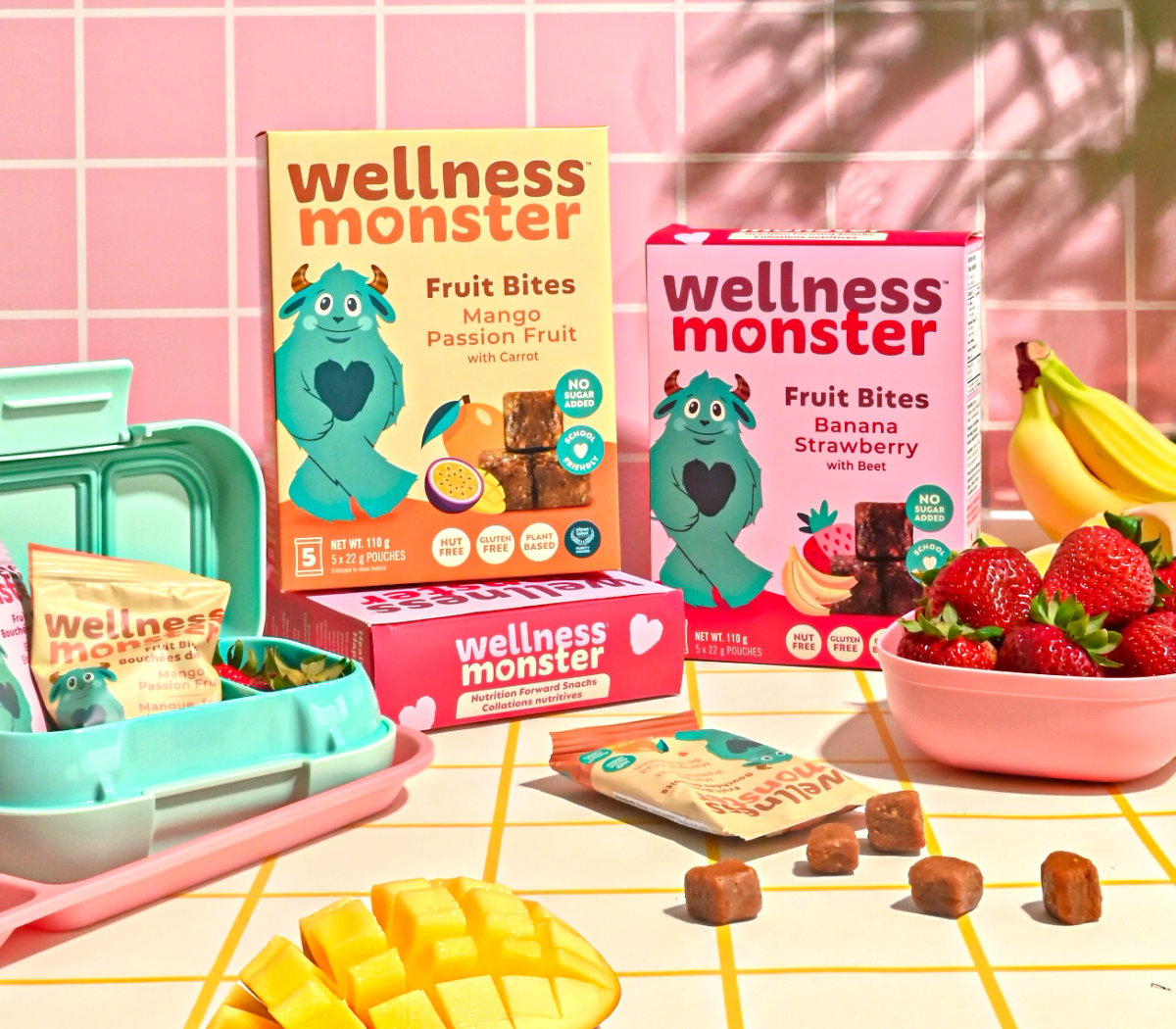
A key element of Wellness Monster’s appeal is its Clean Label Project certification, a third-party designation that tests for more than 500 environmental toxins, including pesticides, glyphosates, and heavy metals.
Originally established in the baby food sector, the certification is now being embraced by parents as children transition into the snack aisle. “We’ve achieved the Purity Award, which places us in the top 25% of tested brands,” Compton explained. “Parents actually trust Clean Label over organic now because it provides lab testing that organic alone doesn’t guarantee.”
This certification has given the brand credibility in a crowded marketplace, while also aligning with rising parental concerns over long-term health impacts of food additives.
Early Retail Traction and Distribution Growth
Since its launch, Wellness Monster has secured an impressive roster of retail partners. Independent natural chains, online platforms, and major distributors have embraced the brand. Within weeks of debuting, Wellness Monster snacks began appearing on store shelves across Ontario, with expansion into other provinces underway.
Well.ca listed the products off-cycle, underscoring the urgency retailers see in the category. Costco Canada is expected to bring Wellness Monster to its online platform in the coming month, and larger mass-market grocers such as Loblaws and Walmart are targets as well.
“Retailers see the space as ripe for disruption,” Compton said. “They recognize that parents are demanding higher protein, lower sugar, and cleaner snacks for their kids.”
Protein-Focused Innovation
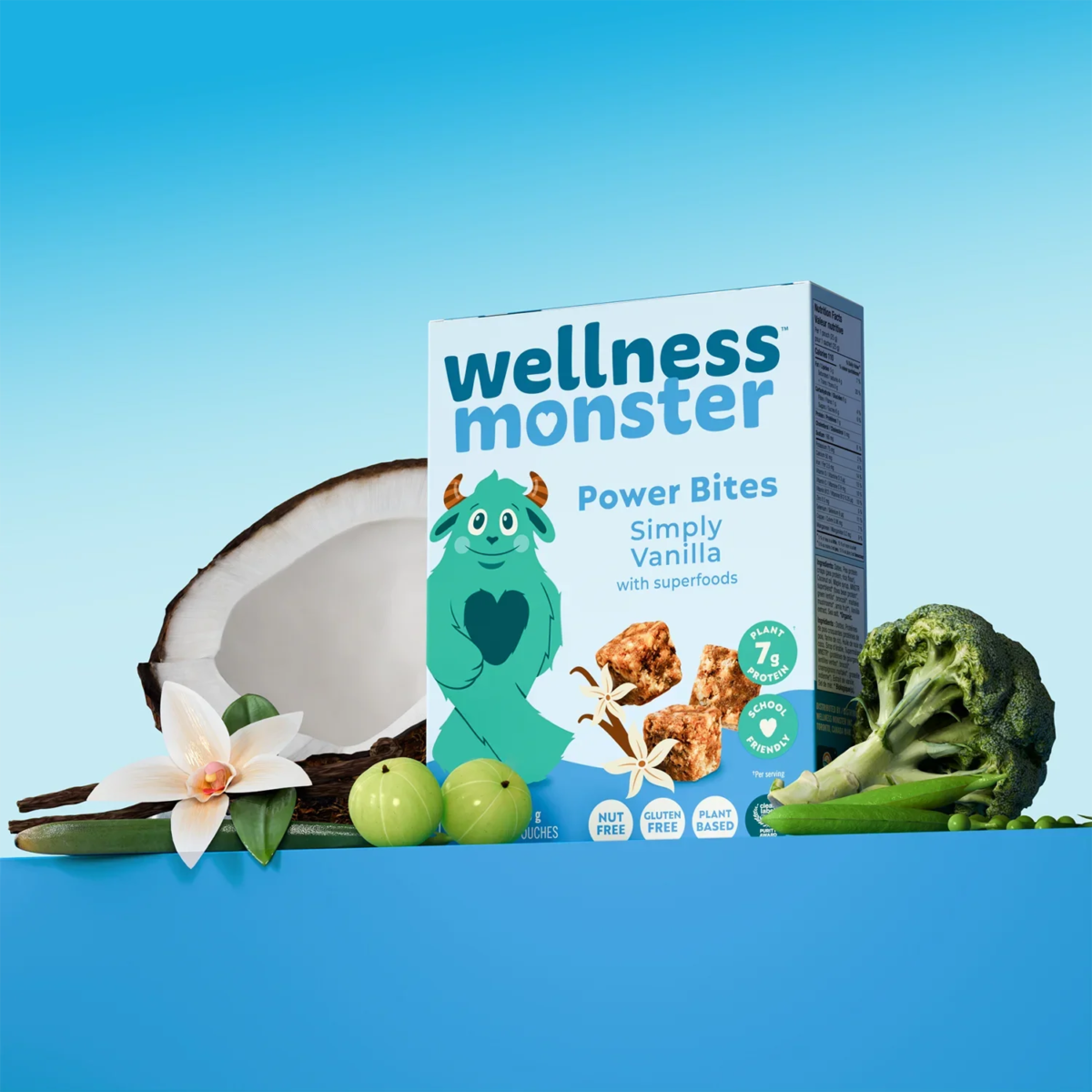
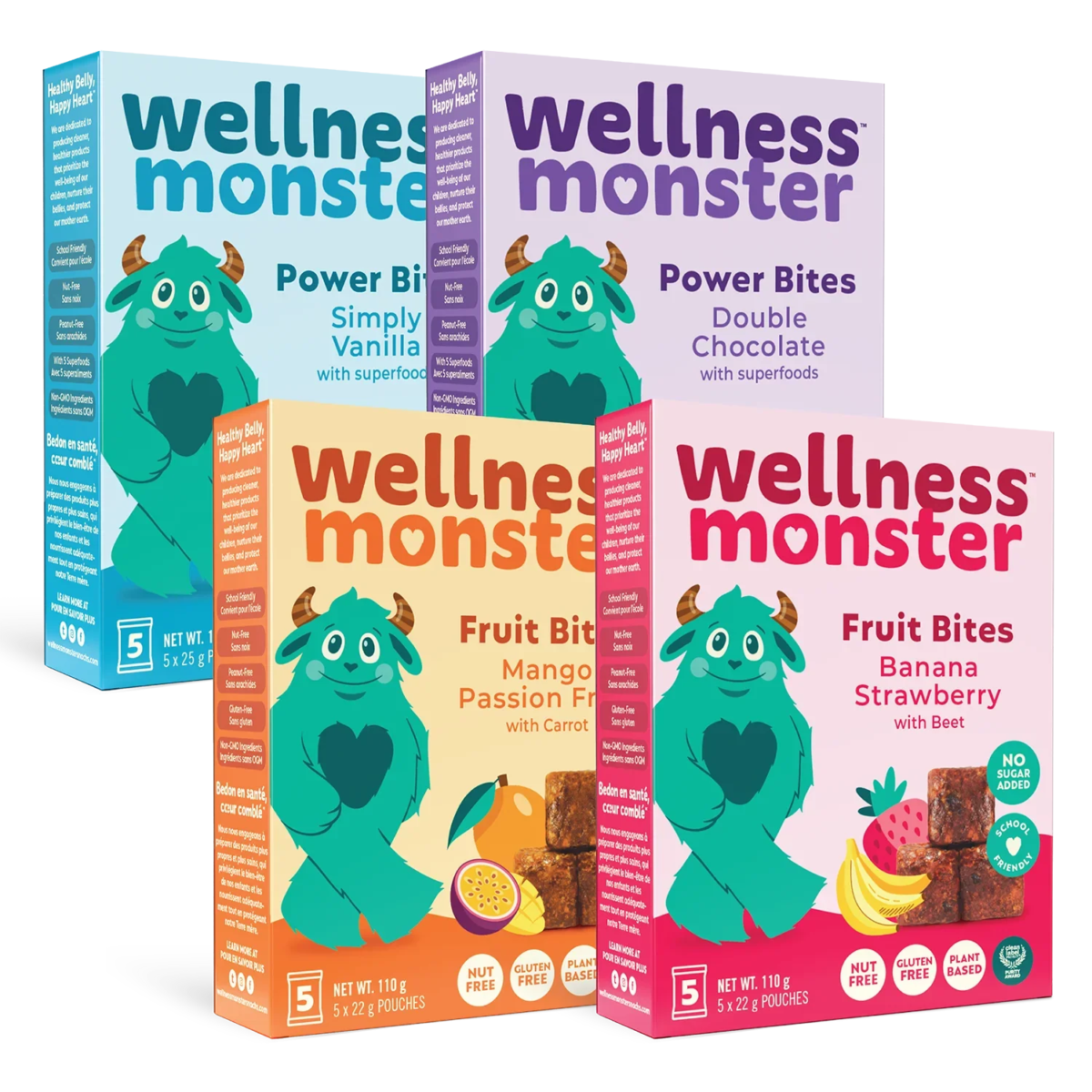
One of the most distinctive features of Wellness Monster products is their protein profile. Each “Power Bite” provides seven grams of plant-based protein, roughly one-third of a child’s daily requirement.
“Protein is about more than muscle growth for kids,” Compton explained. “It’s about keeping them full longer. Parents constantly tell us their children are hungry all the time. Our snacks provide a more substantial solution.”
The protein comes from pea and fava bean sources, combined with a proprietary “Monster Blend” of superfoods including mushrooms, lentils, broccoli, and amla fruit. This combination not only boosts satiety but also delivers key vitamins such as D and C.
Playful Branding Meets Parental Trust
Part of Wellness Monster’s resonance lies in its branding. Packages feature a colourful monster character designed to appeal to children while reassuring parents. The character evokes nostalgic parallels to cereal aisle mascots and even Care Bears, but with a modern wellness twist.
“Character branding has always been important in the cereal aisle,” Compton noted. “We’ve built a character that embodies health and wellness instead of sugar and junk food.”
The approachable branding has also extended to marketing campaigns targeting parent communities, with partnerships among mom influencers and social media voices.
Advisory Support and Experienced Leadership
Wellness Monster’s leadership team combines startup agility with deep industry experience. Alongside Compton, the company is advised by Tara Bosch, the founder of SmartSweets, who led her company to a nine-figure exit before the age of 30. Gord Flaten, former CEO of Avena Foods, also brings expertise in food manufacturing and scaling.
Sarah Jordan, powerhouse executive with extensive experience growing and building Canadian brands, has also backed the brand.
“We’ve built a really strong team around this venture,” Compton said. “That’s been critical for navigating challenges and seizing opportunities.”
Manufacturing Partnerships and Global Sourcing
Wellness Monster has secured Canadian co-manufacturing partners capable of working with clean ingredients — no small feat in an industry optimized for refined sugars and artificial flavours. “It was a journey to find partners who could produce snacks that met our standards,” Compton said.
One product line, a fruit snack range, is manufactured in Ghana, where fruit is harvested tree-ripened and processed onsite to preserve nutrients. The Power Bite protein line, meanwhile, is made domestically in Canada.
Expansion Plans: Canada and Beyond
For now, Wellness Monster is focused on expanding its footprint in Canada, but U.S. entry is firmly on the horizon. Whole Foods and Sprouts are high on the target list for an initial rollout.
“The U.S. is very much ripe for disruption,” Compton said. “But first we’re establishing strong roots here at home.”
Within Canada, expansion into major grocers is a priority, alongside continued growth in specialty and natural channels. Product diversification is also planned, with categories like puffs, cookies, and cereals under consideration.
A Brand with Wider Appeal
Though designed for children, Wellness Monster snacks are already resonating with adults. Parents report enjoying the protein bites themselves, and the brand is exploring opportunities in office distribution. “Millennials and Gen Z find the packaging nostalgic,” Compton said. “We see potential in expanding the brand beyond kids.”
That could include fitness enthusiasts and professionals seeking on-the-go snacks. “Our protein content and clean ingredients make these suitable for a much wider audience,” Compton added.
A Mission-Driven Disruptor
At its core, Wellness Monster represents more than a product launch. It is a movement aimed at reshaping food culture for the next generation. “Like many kids in the ’90s, I ate more processed foods than I’d choose today.” Compton reflected. “I don’t want today’s kids to go through that.”
The brand’s tagline, “Healthy Snacks for Hungry Monsters,” captures its playful tone, but the mission remains serious: reducing the dominance of ultra-processed food in children’s diets.
“Food has a direct impact on how children grow, learn, and live,” Compton said. “It’s time we offered them snacks that truly nourish rather than harm.”