Millie Moon Luxury Diapers, Sensitive Wipes, and Exclusive New Ms. Rachel Training Pants Now Available in Canada
Millie Moon, the award-winning diaper brand known for its premium quality at an accessible price, is expanding its Canadian reach with Walmart Canada.
Families can now find Luxury Diapers, Sensitive Wipes, and Ms. Rachel Training Pants in stores nationwide, “combining trusted, performance-driven essentials and playful, confidence-building potty-training solutions for toddlers,” said the brand in a news release.
Millie Moon launched in 2021 exclusively at Target in the US and expanded to Loblaws in Canada in 2023.
The brand said it has made it its mission to provide a range of luxury diapers and sensitive wipes that are expertly crafted, luxuriously soft, and designed to perform, all at an affordable price.
It said it is passionate in its belief that every child deserves the best. Their award-winning products are available in over 8,000 stores globally. As a company, they are also proud to support Reach Out and Read, an early literacy nonprofit helping children on their reading journey.
Millie Moon said its Luxury Diapersare designed with the brand’s signature CloudTouch™ Softness, delivering a noticeably plush feel that 92% of sampled parents say is the softest diaper they’ve ever used without the premium price tag.
In addition to Millie Moon’s award-winning assortment launching at Walmart Canada, they will also be the exclusive Canadian retailer for Millie Moon Ms. Rachel Training Pants, created to support little ones through one of their biggest milestones.
To round out the collection, Millie Moon’s Sensitive Wipes are made with a 99% natural, pH-balanced formula enriched with aloe, avocado, and marigold, they protect delicate skin without alcohol, parabens, phthalates, or perfume.
Canadian fashion brand Joseph Ribkoff is entering a pivotal new chapter as it approaches its 70th anniversary, with newly appointed President and CEO Stephen Belfer outlining an ambitious strategy to elevate the company’s global presence, modernize its brand positioning, and expand into direct-to-consumer channels and physical retail.
Founded in Montreal in 1957, Joseph Ribkoff has quietly grown into one of Canada’s most globally distributed apparel companies, with products sold in 62 countries through more than 3,500 retail partners. Yet despite its scale, Belfer believes the brand has remained underrecognized, particularly in its home market.
“We’re a very quiet company that just went about doing business,” Belfer said in an interview. “It’s an amazing story because nobody really knows the size of this company and what we’re doing.”
Leadership Transition Signals Strategic Shift
Belfer joined Joseph Ribkoff in October as Vice President of Global Sales and Business Development before being quickly elevated to CEO and President within two months. His appointment reflects a broader strategic pivot backed by private equity owners Novacap, Fonds de solidarité FTQ, and DNA Partners, who are positioning the brand for accelerated growth.
The move brings seasoned leadership to the Montreal-based company. Belfer previously spent more than a decade scaling German fashion brand Marc Cain across North America, building expertise in premium women’s apparel and boutique-driven distribution models.
“This is a new opportunity to grow the brand, tell our story, and modernize into today’s apparel environment,” Belfer said.
Joseph Ribkoff Spring Showcase 2026 Source: Joseph Ribkoff
A Global Brand Built Quietly Through Wholesale
Joseph Ribkoff’s business has historically been built through wholesale partnerships, particularly with independent boutiques. This network remains a cornerstone of the company’s strategy, even as it evolves digitally.
The brand operates 42 showrooms globally and maintains strong market penetration across Europe, which accounts for roughly half of total business. Countries such as Germany, Ireland, the Netherlands, and Spain have emerged as particularly strong performers.
“What’s incredible is that you would think we would be more dominant in North America, but Europe has really taken a clear connection to the brand,” Belfer said.
The company’s continued focus on wholesale aligns with a “digital-first wholesale” strategy, supporting independent retailers through improved inventory systems and real-time ordering capabilities. This approach reinforces relationships with smaller partners while maintaining flexibility in a challenging retail environment.
Direct-to-Consumer Launch Marks Turning Point
A major milestone for the brand will be the launch of its first official e-commerce platform, expected to roll out initially in Europe before expanding to North America.
For a company that has relied heavily on third-party retail partners, the move into direct-to-consumer represents a fundamental shift.
“We never had that before,” Belfer said. “It gives us an opportunity to tell the story of Joseph Ribkoff in a way we couldn’t for the last 69 years.”
The e-commerce platform will also enable broader marketing initiatives, including social media engagement, influencer partnerships, and direct brand storytelling. Belfer emphasized that this capability is critical to reaching new consumers and driving awareness.
JosephRibkoff Showroom, 2026 Source: Joseph Ribkoff
Retail Expansion Begins with Travel Channels
Alongside its digital push, Joseph Ribkoff is entering physical retail in a more direct way, beginning with travel retail and select standalone locations.
The company recently launched its first airport retail concept in Cairns, Australia, followed by an upcoming flagship-style store in Auckland, New Zealand. Additional outlet locations and travel retail opportunities are also in development.
“Airports are a great way to get eyeballs on the brand,” Belfer said. “We’re seeing strong results, with customers buying multiple pieces at once.”
The travel retail channel has proven particularly effective for Joseph Ribkoff due to its product attributes, including wrinkle-resistant fabrics designed for ease of packing and wear. These characteristics align with the needs of frequent travelers and professional women.
The brand has also expanded into cruise ship retail, where it performs well in multi-brand environments catering to affluent, experience-driven consumers.
Product Innovation Anchored in Fabric Technology
At the core of Joseph Ribkoff’s success is its proprietary approach to fabric development, particularly its “Silky Knit” materials. These fabrics offer durability, stretch, and wrinkle resistance, making them highly practical for travel and everyday wear.
The company has also expanded into more casual categories through its JR Sport line, which reflects broader shifts toward athleisure and hybrid work lifestyles. The collection targets “luxury leisure,” blending comfort with elevated design.
This product evolution is part of a broader effort to modernize the brand and appeal to a wider demographic.
“We want to reach not only our existing customer but also a younger woman,” Belfer said. “Even a more mature customer today wants to dress younger and more modern.”
Manufacturing in Canada Provides Strategic Advantage
In an era defined by supply chain volatility, Joseph Ribkoff’s continued manufacturing presence in Montreal stands out. The company remains one of the few apparel brands still producing domestically at scale, supported by a large in-house team of pattern makers and production staff.
This nearshoring model offers greater control over quality and lead times, while also mitigating risks associated with global disruptions.
“It’s a story you don’t see anywhere in Canada at this point,” Belfer said. “People are really impressed when they see what we’re doing here.”
The company also maintains additional production capabilities in Bulgaria to support European distribution.
Joseph Ribkoff Spring Showcase 2026 Source: Joseph Ribkoff
Market Positioning in “Accessible Luxury”
Joseph Ribkoff occupies a distinct position between contemporary fashion and luxury, often described as “entry-level luxury” or “premium” in European markets.
This positioning allows the brand to compete with labels such as Max Mara’s Weekend line and other premium European brands, while remaining accessible to a broad consumer base.
“We’re in between contemporary and luxury,” Belfer said. “It’s a niche market with a lot of room to grow.”
Expanding Distribution and Partnerships
The company is also strengthening its presence through new partnerships, including a launch on Nordstrom’s Marketplace platform. Additional wholesale relationships in Europe and North America continue to expand the brand’s reach.
Despite these developments, independent boutiques remain central to the business model. Belfer emphasized the importance of maintaining strong relationships within this network while introducing new channels.
Looking Ahead to the 70th Anniversary
As Joseph Ribkoff approaches its 70th anniversary, the company is preparing for a period of transformation that blends its legacy with a more visible, modern identity.
Belfer described the next 18 to 24 months as a critical window for growth, with initiatives spanning e-commerce, retail expansion, product innovation, and global marketing.
“This is going to be a super exciting time for us,” he said.
For a brand that has long operated under the radar, the strategy signals a clear shift toward greater visibility and consumer engagement, while maintaining the operational strengths that have defined its longevity.
Joseph Ribkoff Spring Showcase 2026 Source: Joseph Ribkoff
A new Canadian Tire – WestJet loyalty partnership is now live, marking a notable development in Canada’s evolving loyalty landscape. The initiative allows members of Canadian Tire Corporation and WestJet to link their Triangle Rewards and WestJet Rewards accounts, creating a system where consumers can earn across both retail and travel spending.
The program introduces a “spend once, earn twice” structure, enabling members to accumulate both Canadian Tire Money and WestJet points on eligible purchases across participating banners and flight bookings.
Expanding Loyalty Beyond Traditional Retail Spend
The structure of the Canadian Tire WestJet loyalty partnership reflects a broader shift in how retailers are positioning loyalty programs. Canadian Tire’s core business is rooted in everyday purchases, including automotive, sporting goods, and workwear. By linking these transactions to travel rewards, the company connects routine spending with aspirational outcomes such as vacations.
According to the announcement, linked members can earn rewards across banners including Canadian Tire, SportChek, and Mark’s, while also earning Canadian Tire Money on flights, vacation packages, and travel add-ons booked through WestJet.
This approach may strengthen engagement by encouraging customers to consolidate spending within a single ecosystem, particularly when rewards are tied to high-value experiences.
A key feature of the program is the ability to convert WestJet points into Canadian Tire Money. This functionality addresses a common friction point in travel loyalty programs, where smaller balances often go unused.
By enabling conversion into retail currency, Canadian Tire effectively redirects those balances into its stores. This creates an additional pathway to drive in-store and online traffic, while also increasing the perceived utility of WestJet’s points program.
The partnership also integrates Canadian Tire’s financial services division. Members who pay using Triangle credit cards or WestJet RBC Mastercard products can earn enhanced rewards rates across both ecosystems.
This layer reinforces Canadian Tire’s long-standing strategy of using financial services as a driver of customer retention and profitability. By tying credit usage to travel and retail rewards simultaneously, the company strengthens its value proposition in a competitive credit card market.
A Federated Approach to Loyalty in Canada
The Canadian Tire WestJet loyalty partnership also reflects a distinct strategic direction compared to coalition programs such as PC Optimum, Scene+, and Aeroplan. Rather than joining a single large network, Canadian Tire continues to build a series of bilateral partnerships.
The company has already established relationships in fuel and is expected to expand further into everyday categories such as quick service restaurants. This “federated” model allows Canadian Tire to extend its reach while maintaining control over its data and brand positioning.
Beyond points and rewards, the partnership includes a marketing integration component. Canadian Tire’s private label FRANK snacks will be served onboard WestJet flights, introducing the brand directly to travelers in a captive environment.
This move places Canadian Tire’s product offering into a new context, potentially increasing brand awareness and reinforcing its presence beyond traditional retail channels.
PetSmart Charities of Canada recently awarded $450,000 in grants to community animal welfare organizations across the country ahead of National Adoption Week (March 23–29), where local pets will be available for adoption at PetSmart stores across the country.
PetSmart Charities of Canadahas awarded $450,000 in grants to community animal welfare organizations nationwide to support in-store adoption programs that help animals find loving homes.
Adoptable pets are available in PetSmart stores every day, but from March 23–29, local animal shelters and rescues will bring even more adoptable pets, including dogs, cats, rabbits, and small animals of all ages and personalities, to PetSmart stores across the country to connect people and pets.
New findings from an Angus Reid survey highlight the powerful emotional impact pets have on Canadians. An overwhelming 96% of pet owners report that having a pet has improved their emotional well‑being, said PetSmart
The survey also reveals that comfort and companionship is the leading emotional benefit pets provide:
39% of respondents ranked comfort and companionship as the #1 benefit.
19% ranked increased happiness as their top emotional benefit, with those under 55 more likely to cite this.
12% identified reduced stress or anxiety as their primary benefit.
Credit: PetSmart (PRNewsfoto/PetSmart Canada)
Pets are also strengthening social ties. Nearly half of owners (45%) say that adding a pet to their family has helped deepen their sense of community, whether through interactions with neighbours, fellow pet owners, or local shelters, added the retailer.
Funding from PetSmart Charities of Canada supports the needs of adoptable pets including veterinary care, enrichment and nutrition, to ensure they are ready for placement in loving homes. Adopting a new best friend at an in-store event can save lives, bring more joy to families and ease the burden of local animal welfare organizations working to give every pet the love and attention they need to thrive.
Aimee Gilbreath
“We’ve seen that Canadian pet parents overwhelmingly benefit from adding a pet to their family,” said Aimee Gilbreath, president of PetSmart Charities of Canada. “This year, we’re excited to continue this trend through $450,000 in adoption support grants to our animal shelter and rescue partners, who are working tirelessly to intake new pets, support their adoption journey and help every pet find the loving home they’ve been waiting for.”
During PetSmart Charities of Canada National Adoption Week, local shelters and rescues will bring adoptable pets into nearly every PetSmart store across Canada. Potential pet parents will have the chance to interact with adoptable pets, with staff and volunteers available to help educate potential adopters on pet care needs and provide adoption resources.
The retailer said those interested in other ways to support adoptable pets can still make an impact by donating funds to help pets in need at PetSmartCharities.ca. They can also find their match when the time is right by visiting PetSmartCharities.ca/adopt-a-pet to view adoptable pets, adoption centres, and upcoming events.
PetSmart Charities of Canada has helped over 400,000 pets find loving homes.
Poshmark, a leading fashion marketplace “where style comes alive through discovery, self-expression, and community engagement”, has launched a redesigned app, marking what it says is a defining evolution in how people discover, shop, and sell on the platform.
Heather Friedland
“This redesign reimagines how our shoppers and sellers interact on Poshmark,” said Heather Friedland, Chief Product Officer. “By letting inspiration and style lead discovery for shoppers and simplifying the experience for sellers, we’re empowering our small business owners to grow and evolve alongside the latest trends, all while giving shoppers exactly what they want.”
The company said the reimagined app delivers:
● Guided Discovery: Curated, trend inspired browsing that encourages exploration of individual pieces and full outfits.
● Streamlined Closets: Cleaner look with a straightforward, easy-to-use design.
● Simplified Seller Experience: A centralized Seller Tools destination with clearer navigation to reduce friction and support seller growth.
● Amplified Visual Impact: Clearer, larger, 4:3 portrait imagery that gives listings greater presence and brings style to life and focus on color and font.
Elizabeth von der Goltz
“Fashion today is about the confidence to define your own point of view, and the community that helps you find it,” said Elizabeth von der Goltz, Chief Revenue Officer. “We see where the industry is headed and the important role resale plays, which is why Poshmark is helping to pave the way for the future of fashion. We’re investing in our platform in a way that celebrates personal taste, lived-in wardrobes, and pieces with a story. We’re Poshmark not just as a marketplace, but as a leader in how fashion is discovered, showcased, and interacted with today.”
Poshmark said the cleaner, more focused app design puts incredible finds front and centre, so customers see what matters, faster. Trends, inspiration and style are woven directly into the browsing experience to make discovery feel more guided, intuitive, and personal.
“The new version of the app will feature a For You page for shoppers and will learn from their engagement, making it easier to uncover unexpected trends and style pieces from a community of real people with amazing taste,” said the company.
“The redesigned app puts sellers – the community’s tastemakers and style curators – and their listings front and centre, helping them stand out and connect with the right shoppers. Portrait photos give items more presence, clearer layouts make managing closets easier, and style-led discovery creates new ways for shoppers to find sellers’ curated collections. With the new centralized Seller Tools destination, sellers can spend less time on administrative tasks and more time focused on growth. These updates are designed to make great listings easier to discover.”
Apple Business — a new platform that includes key services companies need to run and grow — will be available April 14. Image: Apple
Apple Inc. has unveiled a new all-in-one solution aimed at simplifying how companies manage operations while expanding their reach to customers, introducing the Apple Business platform ahead of its April 14 global rollout. The announcement signals a notable evolution in how businesses, including retailers, can integrate technology, marketing, and operations within a single ecosystem.
The Apple Business platform combines device management, communication tools, and customer engagement capabilities into one interface, reflecting Apple’s broader push into enterprise services. According to the company, the goal is to streamline both the day-to-day running of a business and its ability to grow through improved visibility and digital connectivity.
At its core, Apple Business consolidates a range of previously separate tools into a single destination. Businesses can manage devices, configure security settings, deploy applications, and organize employees without requiring extensive IT infrastructure.
A key component is built-in mobile device management, which allows organizations to deploy Apple devices with minimal setup. Through a feature called “Blueprints,” companies can preconfigure devices with apps, Wi-Fi access, and security settings, enabling employees to begin working immediately upon unboxing.
The platform also introduces business email, calendar, and directory services tied to a company’s domain, providing a more professional communications infrastructure. This is particularly relevant for smaller businesses that may still rely on generic email services.
Blueprints allow users to easily set up devices with preconfigured settings and apps, ensuring consistency and security and enabling zero-touch deployment for employees. Image: Apple
Built for Both Small Businesses and Enterprise Users
While Apple Business simplifies deployment for smaller organizations, it also includes advanced tools for larger enterprises. Companies can create custom employee roles, automate account creation through integrations with platforms such as Google Workspace and Microsoft Entra ID, and distribute apps at scale.
The platform includes a dedicated Apple Business app for employees, allowing them to access work applications, view colleague directories, and request support directly from their devices. Additional services, including iCloud storage upgrades and AppleCare+ for Business, provide further operational support.
Importantly, Apple has made the core platform free to use, a move that lowers the barrier to entry for businesses that may not have previously invested in device management solutions.
New Apple Maps Advertising Opportunity for Canada
One of the most significant developments for retailers is the introduction of advertising within Apple Maps. Beginning this summer, businesses in Canada and the United States will be able to place ads directly within Maps search results and discovery features.
These ads will appear at key moments when users are actively searching for products or services, such as restaurants, stores, or local providers. Apple emphasized that ads will be clearly marked and limited in number, with only one sponsored result shown per search experience to maintain a clean user interface.
From a retail perspective, this represents a new performance-driven marketing channel tied closely to consumer intent. As one Apple executive noted during the briefing, users of Maps are “searching with intention, and they’re ready to make a decision and even visit a destination right then and there.”
The advertising model is designed to be accessible, allowing businesses to set their own budgets and pay based on engagement, such as taps on an ad. This could prove particularly valuable for independent retailers and restaurants seeking local visibility without large marketing budgets.
Mobile device management is built in to Apple Business, facilitating a comprehensive view of an organization’s Apple devices, settings, and more from a single interface. Image: Apple
Apple continues to differentiate itself with a privacy-focused advertising model. The company confirmed that user location data and ad interactions within Maps are not linked to Apple accounts and are not shared with third parties.
This approach aligns with Apple’s broader positioning in digital advertising, where it aims to balance targeting capabilities with user privacy. For retailers, this may limit granular targeting compared to other platforms, but it also offers a brand-safe environment that could appeal to privacy-conscious consumers.
Enhanced Brand Presence Across Apple Ecosystem
Beyond advertising, Apple Business expands how companies present themselves across Apple’s ecosystem. Businesses can manage brand profiles, customize place cards with images and operational details, and highlight promotions through “Showcases.”
These features extend across Apple services, including Maps, Mail, Wallet, and Siri, creating a consistent brand presence. Retailers can also access location insights, such as how customers discover and interact with their listings, providing data to inform marketing and operational decisions.
Additionally, features like Tap to Pay on iPhone allow businesses to display their branding during transactions, reinforcing trust and recognition at the point of sale.
New Apple store at 1255 Ste-Catherine St. W. in Montreal. Photo: Maxime Frechette
Implications for Canadian Retailers
For Canadian retailers, the Apple Business platform introduces a combination of operational efficiency and new customer acquisition tools within a familiar ecosystem. The integration of device management, communications, and marketing into a single platform reflects a broader industry trend toward consolidation and simplification.
The introduction of Apple Maps advertising is particularly noteworthy. As consumers increasingly rely on mobile search and navigation to discover nearby businesses, this feature positions Apple as a more active player in local commerce and retail discovery.
The platform’s free entry point also suggests that adoption could be widespread, especially among small and mid-sized businesses seeking to modernize operations without significant upfront costs.
As Apple Business launches globally on April 14, with Maps advertising to follow in Canada this summer, the platform has the potential to reshape how retailers manage their operations and connect with customers in an increasingly digital and location-driven marketplace.
Manitoba’s decision to remove the provincial sales tax (PST) from all groceries is a sound policy move—though perhaps not for the reasons many assume. What makes this announcement even more remarkable is who is making it: an NDP government choosing to reduce taxes at the grocery store. In today’s policy environment, that is both unexpected and noteworthy.
At first glance, food in Canada appears largely tax-free. Most basic groceries are indeed exempt. But that perception quickly breaks down once consumers move beyond raw ingredients. As households increasingly rely on convenience—whether due to time constraints, smaller household sizes, or shrinkflation—they enter a fully taxable part of the store. Prepared foods, snacks, beverages, and single-serve items are all subject to sales tax. That’s where affordability quietly erodes.
This matters more than policymakers often acknowledge. Seniors, single-person households, and lower-income Canadians are disproportionately affected. These groups depend more on ready-to-eat and smaller-format foods—not out of preference, but necessity. Larger, untaxed formats are often impractical, effectively exposing them to a higher tax burden on food. Put simply, taxing food—particularly in the ways we do today—is fundamentally unfair. Food is not a discretionary good; it is a necessity. Taxing it is, in principle, immoral. Full stop.
In Manitoba, while essential groceries are largely exempt, households still pay PST on a meaningful share of their food purchases. Based on typical spending patterns, between 10% and 15% of a household’s food budget falls into taxable categories. For a family of four spending roughly $17,000 annually on food, this translates into about $120 to $180 per year in PST paid at the grocery store.
For a single senior, the burden is often more pronounced due to a greater reliance on ready-to-eat and convenience items. With taxable spending typically ranging from 15% to 23% of their food budget, a senior spending around $4,000 to $5,000 annually on food would pay approximately $40 to $80 per year in PST at the grocery store.
Individually, these amounts may seem modest. But collectively, they reveal a structural inefficiency in how food is taxed in Canada. Food affordability is not just about shelf prices—it is also about how policy shapes what consumers ultimately pay at checkout.
What Manitoba is doing is reducing friction in a system already under pressure. The food supply chain operates on thin margins, and businesses face a growing accumulation of costs—fuel, carbon pricing, packaging requirements, recycling fees—all of which are passed on, at least in part, to consumers. It is rare to see governments step back and reduce their fiscal footprint in the food sector. Manitoba should be recognized for doing so.
That said, the policy is incomplete. The exemption does not extend to foodservice. Restaurants and prepared food providers remain fully taxed, creating a competitive imbalance between retail and foodservice channels. At a time when the restaurant sector is already under strain, a broader exemption covering all food—regardless of where it is purchased—would have been more coherent.
Still, the signal is important—and it should not stop at Manitoba’s borders. Other provinces, and Ottawa as well, should take note. If an NDP government can move decisively to cut taxes on food, others have little excuse to stand still. If we are serious about improving food affordability, reducing or eliminating sales taxes on food—particularly on the categories Canadians actually buy today—should be part of the policy toolkit. Manitoba has set a precedent; others should follow.
Food affordability in Canada will not be solved by a single measure. But removing taxes where they quietly accumulate is a meaningful place to start—and one that governments across the country can no longer afford to ignore.
Dollarama store at Station Mall in Sault St. Marie, ON. Photo: Dollarama
Dollarama Inc. reported stronger-than-expected fourth quarter results, but a reset in forward earnings expectations tied to its Australian expansion sent shares lower, underscoring investor concern around near-term profitability despite a stable Canadian business.
The Montreal-based value retailer posted adjusted earnings per share of $1.43 for the fourth quarter, up 2.1 per cent year over year and ahead of analyst expectations. Revenue reached $2.1 billion, representing an increase of 11.7 per cent compared to the prior year period.
However, the earnings beat was overshadowed by updated guidance and a more cautious outlook for fiscal 2027, driven largely by the company’s ongoing transformation of its recently acquired Australian operations.
Australian Expansion Creates Near-Term Pressure
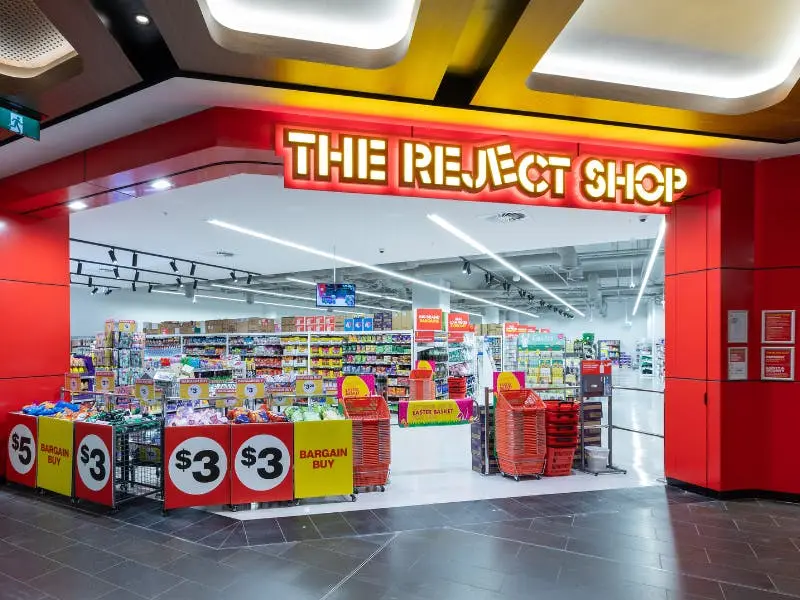
The central theme emerging from the report is Dollarama’s aggressive push into Australia, where it is undertaking a significant overhaul of The Reject Shop, the discount chain it acquired as part of its international growth strategy.
According to Stifel analyst Martin Landry, the company is “changing completely the product mix, the sourcing, the store layouts and branding,” reflecting a full-scale repositioning of the business.
Martin Landry
The transformation will require substantial investment. Management plans to allocate approximately $45 million in capital expenditures, alongside an additional $35 million to $45 million in operating costs to support the transition.
As a result, the Australian business is expected to reduce fiscal 2027 earnings per share by approximately $0.15 to $0.20, a larger impact than previously anticipated.
While this drag represents a relatively modest percentage of overall earnings, it has become a focal point for investors evaluating the company’s near-term performance.
Canadian Business Remains Resilient
In contrast, Dollarama’s Canadian operations continue to demonstrate stability, though with some emerging nuances in consumer behaviour.
Comparable store sales increased by 1.5 per cent in the fourth quarter, below analyst expectations. The company saw average transaction size rise by 3.1 per cent, while the number of transactions declined by 1.6 per cent.
This dynamic suggests that customers are spending more per visit but shopping less frequently, a pattern that aligns with broader trends in a high-inflation environment.
Weather conditions and calendar timing also played a role in dampening performance. Excluding these factors, comparable sales growth would have been closer to 3.5 per cent, pointing to underlying demand that remains relatively healthy.
Stifel notes that management’s outlook for fiscal 2027 comparable sales growth of 3 to 4 per cent may prove conservative, consistent with the company’s historical tendency to understate expectations early in the year.
A location for The Reject Shop in Australia. Photo: The Reject Shop
Margin Pressure and Cost Headwinds
Beyond Australia, Dollarama is also facing broader cost pressures tied to global supply chain dynamics.
Management indicated that elevated crude oil prices, linked in part to geopolitical tensions in the Middle East, are expected to increase sourcing and transportation costs across the business.
While the company intends to pass some of these costs on to consumers, it will do so carefully to preserve its core value proposition, which remains central to its competitive positioning.
Gross margins in Canada declined modestly by 20 basis points to 46.6 per cent in the quarter, reflecting these pressures as well as calendar-related impacts.
Looking ahead, management expects some margin erosion in fiscal 2027, though operating efficiencies and disciplined cost control could help offset part of the impact.
Valuation and Market Reaction
Despite the solid quarterly performance, investors reacted negatively to the revised outlook, with shares declining following the earnings release.
Stifel has maintained a “Hold” rating on the stock and reduced its target price to $180 from $200, citing a combination of near-term earnings pressure and valuation considerations.
The firm notes that Dollarama is currently trading at approximately 29 times forward earnings, slightly above its historical average, suggesting limited upside in the near term.
At the same time, analysts acknowledge that the company’s scale, defensive characteristics, and international growth potential could justify a premium valuation over time.
Dollarama Store. Photo: Dollarama
Long-Term Strategy Comes Into Focus
The report highlights a key inflection point for Dollarama as it transitions from a predominantly Canadian operator to a more globally diversified retailer.
The Australian expansion represents a meaningful test of the company’s ability to replicate its successful merchandising and sourcing model in new markets. While execution risks remain, management’s willingness to invest in a comprehensive transformation signals confidence in the long-term opportunity.
In Canada, the business continues to benefit from strong brand awareness, a broad customer base across income segments, and a merchandising strategy that refreshes a significant portion of inventory annually to maintain relevance and margins.
A Balanced Outlook
Overall, the outlook for Dollarama reflects a balance between short-term challenges and long-term strategic positioning.
Near-term earnings are expected to face pressure from international investments and cost headwinds. At the same time, the core Canadian business remains stable, and the company’s expansion into new markets offers a potential avenue for future growth.
For investors and industry observers, the key question will be whether Dollarama can successfully execute its Australian transformation and translate its Canadian success into sustainable international performance.
In an era of compressed margins, tariff uncertainty, regulatory change and digital fragmentation, North American retailers face a structural challenge. They must modernize promotional workflows without sacrificing accuracy, brand consistency, artwork quality or profitability.
For decades, the weekly flyer sat at the center of retail marketing. Today, that flyer still drives traffic, but it now coexists with email, mobile apps, social media, geo-targeted ads, in-store signage, retail media and digital flyer platforms. Each channel demands speed, precision and personalization. Yet behind the scenes, many retailers continue to rely on manual spreadsheets, siloed systems and fragmented agency and media partner workflows.
This is where ARISTID Retail Technology has positioned itself as a strategic partner in retail marketing automation, helping large retailers transition from legacy, paper-driven processes to a centralized, data-driven promotional creative engine.
“We provide an end-to-end platform for retailers so they can manage promotions from the very beginning, when they decide which offers to push, to execution across every channel,” explains Florian Payri, Co-CEO and Deputy General Manager of ARISTID. “Automation takes a lot of the burden away and creates more value in what humans are doing.”
Florian Payri, Co-CEO and Deputy General Manager of ARISTID
From Spreadsheet Chaos to a Single Source of Truth
The promotional process inside many retail organizations remains surprisingly manual. Pricing decisions live in spreadsheets. Creative assets are built separately. Updates are sometimes still communicated by email. Changes are often made late in the process, introducing risk and rework.
Delivery deadlines driven by downstream manual processes further pressure teams and reduce competitive advantage, conflicting with the near-real-time expectations of today’s retail environment.
Retailers can find themselves buried under hundreds, sometimes thousands, of spreadsheets each week. Add multiple rounds of edits and revisions, and the volume of static data grows rapidly. The result is inefficiency, duplication and increased risk of error.
ARISTID’s SaaS platform was designed to eliminate that fragmentation. It acts as a single source of truth for product and promotional data, connecting purchasing, marketing and IT teams within one structured workflow. Instead of re-entering information for each channel, data flows automatically into creative assets, whether destined for print, web, mobile or social.
One of the company’s key differentiators is that everything is managed within a single platform rather than a patchwork of tools that barely communicate. Promotional data becomes centralized, controlled and secure, reducing risk while improving speed to market.
The result is not simply efficiency. It is governance and peace of mind.
Automation at Scale Without Human Error
Promotions are complex. A typical grocery or home improvement retailer may manage hundreds of offers each week across thousands of SKUs. When pricing varies by region, store format or local competitive pressure, complexity multiplies.
Personalization, in particular, cannot happen at scale without automation.
“The only way you can personalize at the scale required, per store or per region, is to increase output by two or three orders of magnitude,” Payri explains. “That’s impossible to do with human beings alone.”
ARISTID’s approach blends structured automation with carefully applied AI that strictly follows retailer brand guidelines, rather than relying on open-ended AI interpretation. The system locks down critical pricing and promotional mechanics so outputs do not require manual quality control. AI enhances creative presentation rather than generating entirely new visualizations.
With some clients, ARISTID can generate hundreds of thousands of pieces of content per week. At that scale, manual proofing is not feasible. Even with newer AI-based tools, quality control requirements remain complex and risky.
Accuracy is not theoretical. In Quebec, a promotional pricing error involving a “two-for-one” mechanic recently resulted in significant margin erosion for a major grocer. In a low-margin category like grocery, such missteps are costly.
Retail marketing automation reduces the risk of those errors while increasing output.
RONA store. Photo: RONA Inc.
RONA: Enabling Digital Agility Across 425 Stores
In early 2025, ARISTID announced a major partnership with RONA to modernize promotional systems across approximately 425 stores in Canada.
Like many large retailers, RONA had been operating on legacy systems originally designed for paper production. As digital channels expanded, those processes became a bottleneck.
Through ARISTID’s automation tools, RONA replaced manual workflows with a structured production engine. Marketing teams can now focus on strategic initiatives while the industrial production of flyers, signage and offer data runs through automated systems.
Internally, the impact extends beyond efficiency.
One European CMO described the transformation in vivid terms. Before automation, every week felt like an emergency. After implementation, that anxiety disappeared. The system simply worked.
For marketing leaders responsible for multi-million-dollar campaigns, that shift from constant firefighting to operational stability is significant.
Canac: Building the Foundation for Digital Growth
Canac, the Quebec-based home improvement retailer with 36 stores, became ARISTID’s first North American client in late 2023.
Canac had already moved toward a zero-paper flyer model in 2020, positioning itself as an early adopter of digital-first promotion. However, the back-end processes required to support high volumes of digital content remained complex.
With ARISTID’s Omnipublish platform, Canac transformed how it produces offline channels such as flyers, while publishing to digital platforms like Flipp.
“The heavy lift is putting the foundation in place,” Payri says. “Once those foundations are there, achieving new challenges becomes much easier.”
That foundation now positions Canac to expand further into digital activation, hyper-local campaigns and personalized outreach.
Rendering of the new Canac store in Laval, Quebec. Image: Canac
Quebec Compliance and Pricing Transparency
Canadian retailers face regulatory pressures that increase promotional complexity.
Quebec’s Bill 72 introduced new pricing and labeling transparency rules that require clear display of regular price, sale price, unit price and promotional mechanics. Additional rules govern how to present taxes, deposits, eco-fees and loyalty-related incentives.
Manually updating thousands of assets to reflect font size changes, bilingual layouts and cost-per-unit disclosures is logistically overwhelming.
ARISTID addresses this through its creative engine. Layout rules are defined centrally. When a promotion is generated for Quebec, the system automatically adjusts typography, positioning and calculation logic to comply with legal requirements.
“If you update the brand style guidelines and creative rules, the system applies them everywhere,” Payri explains.
This capability becomes critical when regulatory changes take effect quickly. Retailers can adapt across print, digital and in-store communications without redesigning each asset.
Hyper-Localization in a K-Shaped Economy
Retail analysts describe Canada’s current environment as “K-shaped.” Higher-income consumers continue to spend, while others trade down.
For national chains, one pricing strategy rarely fits all markets.
ARISTID enables retailers to localize promotional content by price zone, region or individual store. A suburban Toronto location might emphasize premium outdoor kitchens, while a more price-sensitive area highlights entry-level offers.
Store-level tools also empower local managers to activate promotions relevant to their communities. If a grocery store needs to move fresh inventory quickly, a manager can deploy geo-targeted ads to clear product rather than waste it.
Automation supports both sustainability and profitability.
Real-Time Feeds and the Shift Beyond Static Flyers
ARISTID’s integration with last-mile partners moves retailers beyond static PDF workflows.
Instead of sending fixed files, ARISTID’s tools can transmit live data feeds and creative snippets or complete ad units. If pricing changes internally, updates can be reflected on digital platforms in near real time. This reduces the risk of price mismatches that frustrate consumers, erode trust and create regulatory exposure.
It also shortens the promotional cycle significantly. Some retailers historically required two weeks to generate a first flyer draft. With automation, that timeline can shrink to hours.
Shorter cycles create greater agility. Retailers can respond to competitive moves, supply disruptions or tariff changes more quickly.
Change Management at Scale
Implementing retail marketing automation is not simply a software installation. It requires an organizational shift.
ARISTID projects can involve onboarding between 50 and 400 employees into new workflows. Resistance to change is natural. However, once teams experience the system, reactions tend to align.
When asked whether they would return to previous processes, most say no. Many question how they managed without it.
Importantly, ARISTID positions automation as resource reallocation rather than workforce reduction. Many clients double promotional output without increasing staff. Others redirect talent toward strategy, creativity and analytics.
In tight labour markets, automation allows retailers to expand channel presence without proportionally increasing headcount.
Measurable Impact: Margins, Speed and Engagement
While specific client figures remain confidential, the impact of retail marketing automation is measurable.
Production costs decline as manual work, third-party publishing and rework decrease. Time to market shortens, enabling more flexible inventory management and supplier negotiations.
In one European case, targeted personalization tripled click-through rates by presenting more relevant offers. Higher engagement leads to stronger conversion and incremental revenue.
Margin management can also improve. When national pricing forces retailers to adopt a lowest-common-denominator approach, profitable regions lose margin potential. Localized strategies, supported by automation, unlock additional revenue.
In grocery, where margins are often in the low single digits, incremental gains are meaningful.
Flyer design review at ARISTID
What Comes Next for ARISTID
After three decades in the industry, ARISTID’s roadmap focuses on commercial expansion and product evolution.
North America is a priority, with Canada serving as a springboard. On the product side, the company continues to invest in AI-enhanced creativity and mobile-first activation, building on the more than $70 million CAD already invested in the platform over 15 years.
One emerging use case allows store-level staff to capture a product photo on a smartphone and automatically generate on-brand promotional content using embedded creative rules. AI enhances the image while maintaining brand and pricing integrity.
At the same time, ARISTID is encouraging retailers to move beyond static PDF flyers toward structured, data-driven content that can be assembled dynamically across channels.
As Payri notes, the goal is to shift from paper-based mass communication to targeted digital engagement while maintaining revenue stability.
Major platforms such as Google and Meta are also expanding their capabilities through partnerships with ARISTID, which supplies accurate data and high-quality creative assets at scale.
A Structural Shift for North American Retail
Retail marketing automation is not a short-term efficiency initiative. It represents a structural shift in how promotional data is governed, distributed and monetized.
North American retailers operate in an environment shaped by regulatory complexity, tariff volatility, labour constraints and digital fragmentation. The weekly flyer remains important, but it no longer operates in isolation.
ARISTID’s approach is straightforward. Build the foundation. Centralize data. Automate intelligently. Enable personalization. Then innovate.
For retailers willing to make that transition, the result is improved agility, stronger margin management and greater operational stability.
In a market where promotions represent a significant share of revenue, getting the process right is essential for long-term competitiveness.
For more information on ARISTID and how to work with them on retail marketing automation, visit: aristid.com
As Juice Dudez continues to grow in Ottawa, the brand has started exploring franchising by taking a pretty different approach than most brands.
“Instead of looking for passive investors, we’re intentionally looking for owner-operators who want to run the business themselves and build a long-term career in hospitality,” said Nasr Nasr, Founder and CEO of the brand.
“Most franchises select partners based on capital. We’re doing the opposite — we’re selecting based on character, work ethic, and alignment with our mission. If the right operator doesn’t have capital, we’re open to structuring a path with them.
“It’s slower and probably harder, but our belief is that culture and product quality only survive if the people running the stores genuinely care about the craft and the customer experience.”
Nasr said the company story starts in the 1800s, in the fruit farms of Lebanon. Generation after generation, Nasr’s family grew real fruit with real flavour — long before “organic” was a buzzword. When Nasr moved to Canada in 2017, he expected to finish his engineering degree. Instead, he ended up washing dishes, delivering pizzas, and grinding through seven-day work weeks in sales.
He was “successful” by society’s standards but “completely miserable.”
Nasr Nasr
One line from a book flipped everything upside down: “Do what you love, and you’ll never work a day in your life.” Nasr dropped everything and chased what actually mattered: food, people, and building something real.
He saw what nobody else seemed to notice that drinks were stuck in a broken trade-off. They were either tasty and loaded with junk or healthy and tasted like punishment. So in 2019, Juice Dudez was born to break that rule. Real fruit. Real flavour. Drinks that taste amazing and make you feel good.
“And because joy deserves dessert, we started crafting sweets from the best chocolate on earth. We had no idea what we were doing. We messed up. We learned. And we refused to cut corners — even when a global pandemic tried to knock us out. Instead of shrinking, we got sharper. Better recipes. Better experience. Better reasons to show up every day,” said Nasr.
“People noticed. Lines formed. And what started as one little shop became a movement. Today, Juice Dudez isn’t just about juice or dessert. It’s about rejecting boring, fake, and forgettable and choosing joy, flavour, and community instead. It’s about turning small moments into better days and proving that “healthy” and “delicious” should never be opposites. This is our mission: to make people happier and healthier, one cup at a time — and to make it impossible not to smile while we do it.”
Nasr said the brand currently has four locations in Ottawa, and it’s opening two more — one more in Ottawa and one in Toronto in the next couple of months.
“Our goal is to be everywhere in the world very, very soon,” he said.
Two current locations are corporately owned and two of them are franchises.
Going forward the plan is to have all new locations as franchises.
Its oldest location was 900 square feet, and the biggest location is 3,000 square feet.
“Moving forward, I think our footprint is going to be 2,000 square feet on average,” explained Nasr.
Juice Dudez photo
The typical customer is millennials or Gen Z, and they’re typically foodies. They love food, they love exploring, they love traveling, and they like exploring new things.
“We study the neighbourhoods we want to open in, and if we see a higher concentration of these demographics, this is how we know that this would be a good neighborhood for us.
“I think what we’re doing is special, and the way we’re going to grow it — we’re choosing the slow way. We’re not choosing the quick, easy money way because we’re here to make an impact. We’re here to make people happy. We’re here to make a difference.
“We’re not going to compromise that for growth. We’re going to prioritize character over capital when it comes to franchisees, and that’s how we’re going to stay true to our mission.”