Healthy Planet is seeing a growing shift among Canadian consumers toward nutritious snacks and “micro meals” as busy lifestyles and rising costs reshape eating habits, according to Monica Walker, head of food and grocery at the retailer.
Walker said shoppers are increasingly building smaller, balanced meals using items such as yogurt, fruit, nuts and vegetables rather than relying solely on traditional grab-and-go protein or granola bars. She noted many consumers are paying closer attention to nutrition labels, moving away from high-sugar snacks and focusing on protein, fibre and lower sodium options.
Cost considerations are also influencing behaviour, Walker said, with some shoppers finding they can assemble healthier mini meals for roughly the same price as a single packaged snack. Beverage choices are evolving as well, with greater interest in low-sugar sodas and water as part of the micro meal approach.
To meet changing demand, Healthy Planet is adjusting merchandising strategies and product assortments. Walker said stores are expanding grab-and-go refrigeration sections, increasing healthier drink selections and prioritizing natural, organic and Canadian-sourced products. She added the retailer monitors international trends, including emerging interest in functional ingredients such as mushrooms, turmeric and herbal teas.
Walker said future store formats will continue to reflect consumer preference for convenient, partially prepared meal options that support healthier eating.
A breakfast-focused quick-service restaurant concept launched in Toronto in 2020 is aiming to accelerate its growth with plans to open about 11 new locations this year, as founder Jason Yu sets his sights on eventually building a 300-store network.
Yu, founder of Egg Club, said the brand currently operates nine locations after opening its first outlet on Sept. 12, 2020, at 88 Dundas St. East. The expansion push marks a significant step for a business that began as a niche concept designed to fill what he described as a gap between traditional fast-food breakfast offerings and sit-down dining.
“Our goal is 300 locations,” Yu said in an interview, adding that further announcements related to the company’s growth are expected later this year.
Identifying a market gap
Yu said the idea for Egg Club emerged in 2018 as he evaluated the competitive landscape for breakfast food. He observed what he believed were two dominant segments in the market: large quick-service chains offering speed and convenience, and full-service restaurants delivering higher-quality meals but requiring more time from customers.
“There’s nothing in between,” he said. “There’s no QSR for breakfast that’s made to order.”
Jason Yu
The concept he developed sought to position itself between those extremes by offering food priced slightly above mass-market fast food while emphasizing freshness and quality. The goal, he said, was to replicate elements of the sit-down dining experience while maintaining a takeaway-friendly model.
“That’s when I kind of saw the niche — why don’t we make it just a bit more expensive than [traditional fast food], make it made-to-order, a lot more high quality, like you’re sitting at fine dining, but at the same time it’s on the go,” he said.
Background in restaurants and training
Yu said his decision to pursue entrepreneurship was influenced in part by his upbringing. Born in South Korea and raised in Vancouver, he grew up in a family that operated restaurants and began helping in the business at age 14.
“Being a restaurateur is in my blood,” he said.
He later studied business management at Kwantlen Polytechnic University in Vancouver before enrolling in culinary school at the Art Institute of Vancouver. While he described his formal business education as less impactful than hands-on experience, he credited his culinary training with helping him develop Egg Club’s menu.
“Understanding the fundamentals — like how to cook eggs, what’s the temperature, what’s carryover cooking — all that stuff … definitely helped me a lot,” he said.
Yu said he personally designed the menu, which features items such as breakfast sandwiches made with Japanese milk bread, a product he believes helped differentiate the brand in its early days.
Egg Club Liberty Village (Image: Egg Club)
Managing risk and uncertainty
Like many entrepreneurs, Yu said one of the biggest challenges during the startup phase was uncertainty over whether the concept would resonate with customers.
He recalled spending days observing competitor locations and tracking customer volumes in an effort to assess market potential.
“I was sitting in a car for about five days, for 12 hours, looking at some competitors’ customers. I was counting customers,” he said. “But you’ll never know … when you go live, you’ll never know if the idea will work.”
The novelty of the offering also contributed to early concerns, he added, noting that customers were unfamiliar with some of the brand’s products.
“People had never seen Japanese milk bread with an egg inside and special sauce. There was nothing like it out there,” Yu said. “That was one of the scariest moments for us.”
Egg Club on Dundas in Toronto (Image: Egg Club)
Designing for scalability
Beyond establishing demand, Yu said Egg Club’s leadership focused early on building a model that could be replicated across multiple markets. Questions about franchisability influenced decisions ranging from menu development to operational procedures.
“Even on day one of the 2018 idea, I was always asking myself: is it franchisable?” he said.
He described the process as a balance between maintaining product quality and ensuring that systems were simple enough for franchisees to execute consistently.
“When we were making the sauce, we asked ourselves: is it franchisable? Is it easy for franchisees to understand?” he said. “At the same time, we had to make a delicious menu. That was another kind of engineering we had to think through.”
Yu said he believed from the outset that the concept had potential to scale, citing its relatively streamlined menu and what he characterized as a lack of direct competitors targeting the same segment.
“We were really in the blue ocean for this concept,” he said.
Photo: Egg Club
Expansion outlook
Now based in Toronto, Yu said Egg Club is focused on accelerating its physical footprint while maintaining momentum from its initial growth phase. The planned openings this year would more than double its current store count if completed as expected.
He suggested further developments are in progress but declined to provide specifics.
“Good things are coming for us at the moment,” he said. “We have big news coming this year as well that I cannot disclose right now.”
Looking ahead, Yu said the company intends to continue expanding as long as market conditions and operational performance support its ambitions.
“So we want to go as much as we can right now,” he said.
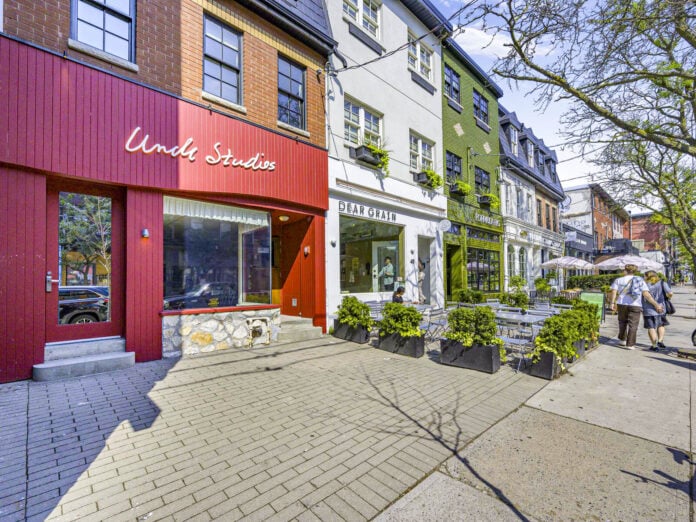
Beautiful row of shops on Ossington Avenue in Toronto. Image: CBRE Urban Retail Team
Toronto retail availability has tightened dramatically at the neighbourhood level, with some of the city’s most in-demand streets now fully leased.
According to JLL’s latest Toronto Urban Retail Report, both Ossington Avenue and Leslieville recorded 0.00% retail availability at the end of the fourth quarter of 2025, making them the tightest retail submarkets in the city. The figures highlight the intensity of demand for well-located, streetfront retail space in Toronto’s most active neighbourhood corridors.
Brandon Gorman, Executive Vice President at JLL Canada, said the lack of availability underscores just how competitive these streets have become.
“Ossington remains the tightest market in the city,” he said, noting that availability has effectively disappeared across multiple consecutive quarters.
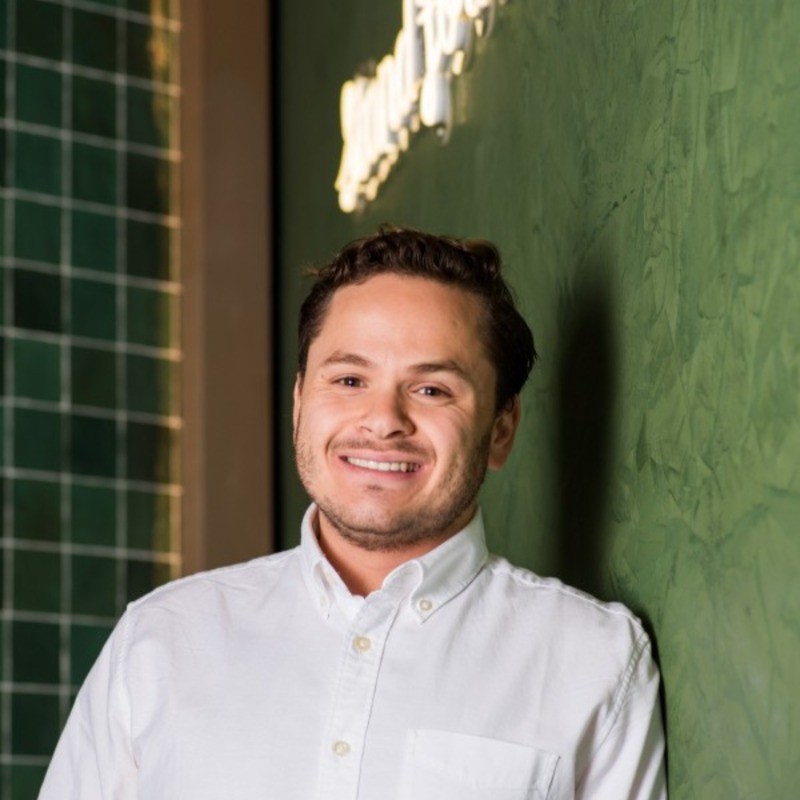
Brandon Gorman
Neighbourhood Retail Demand Continues to Intensify
Ossington’s transformation over the past decade into a destination for independent retail, restaurants, and nightlife has made it one of Toronto’s most sought-after retail corridors. Limited inventory and strong consumer traffic have created a supply-demand imbalance that leaves little opportunity for new entrants.
Leslieville is now experiencing a similar dynamic. For the first time, the Queen Street East stretch between Booth Avenue and Leslie Street has reached full occupancy, reflecting growing demand for retail space in Toronto’s east end.
The appeal of these neighbourhoods lies in their ability to combine strong local customer bases with destination appeal. Retailers are drawn to the consistent foot traffic, curated tenant mix, and community-driven atmosphere that support long-term performance.
West Queen West and Summerhill Also Tight
Beyond Ossington and Leslieville, several other Toronto corridors are experiencing similarly tight conditions.
West Queen West continues to attract strong tenant interest, particularly east of Ossington, where available space is increasingly difficult to secure. Gorman noted that many tenants are actively searching for space in the area, but suitable options remain scarce.
“We have a number of tenants looking for space in this corridor and it simply does not exist – it is a very tight market.”
Midtown Toronto is also seeing strong demand. In the Summerhill area, availability is limited, and much of the upcoming retail supply is already attracting interest before completion. New developments, including One Roxborough, are expected to deliver additional space, but leasing activity suggests that demand will continue to outpace supply.
Queen St. E. in Toronto’s Leslieville. Photo: CASTILLO + PARDO
Yonge Street Sees Shift Toward Higher Quality Tenants
While some corridors are effectively fully leased, others are evolving as market conditions improve.
On Yonge Street, particularly between Gerrard and Bloor, leasing activity has increased as landlords gain greater confidence in offering longer lease terms. This shift has allowed higher-quality tenants to enter the market, replacing shorter-term or less established operators that previously dominated parts of the corridor.
Gorman said that smaller-format spaces are driving much of the activity, especially units under 2,000 square feet that can accommodate food and beverage concepts or boutique retailers.
In many cases, these spaces are attracting multiple offers, further illustrating the competitive nature of Toronto’s streetfront retail market.
Limited Supply Continues to Shape the Market
The lack of available space across Toronto’s neighbourhood corridors reflects a broader structural constraint. Unlike enclosed shopping centres, streetfront retail is inherently limited by geography, making it difficult to add new inventory in established areas.
At the same time, redevelopment activity can temporarily remove space from the market, further tightening availability. In some cases, landlords are holding properties for future projects, reducing the number of leasable units in the short term.
This combination of strong demand and constrained supply is expected to keep Toronto retail availability under pressure in the near term.
A Competitive Landscape for Retailers
For businesses looking to enter Toronto’s most desirable neighbourhoods, the current environment presents both opportunity and challenge.
While strong consumer demand and vibrant local economies offer compelling reasons to secure space, the lack of availability means that timing, flexibility, and location strategy are more critical than ever.
As Gorman noted, many of the city’s top-performing streets are no longer simply competitive, they are effectively full.
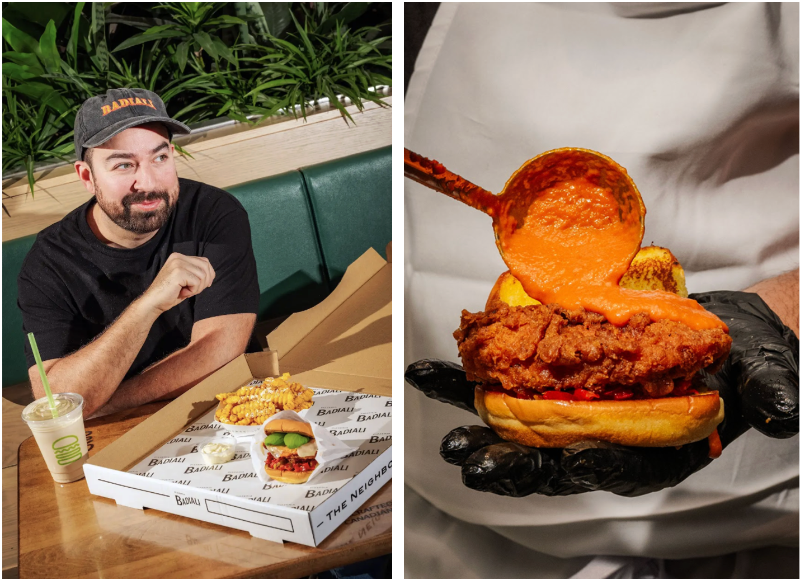
Shake Shack is partnering with Pizzeria Badiali with three exclusive menu items crafted by Ryan Baddeley, available for a limited time from April 6 to April 19, at four Shake Shack locations in Toronto (Yonge & Dundas, Union Station, Yorkdale Shopping Centre, and Yonge & Eglinton), and for pick-up and delivery through Uber Eats and Skip.
“Community has always been at the heart of what we do at Shake Shack Canada. Partnering with Pizzeria Badiali reflects our commitment to giving back and championing the local talent that makes Toronto’s food scene so vibrant,” said Billy Richmond, Business Director, Shake Shack Canada. “What Ryan has built is truly special – a neighbourhood favourite with real character – and we’re proud to showcase that energy on our menu.”
Billy Richmond
Formed in 2023, Shake Shack Canada is a partnership between Osmington Inc. and Harlo Entertainment Inc.—two Canadian-based private investment companies. It has plans to open at least 35 locations nationwide.
Founded by Baddeley, a fine-dining chef who traded tasting menus for the perfect New York–style slice, Pizzeria Badiali, located at the corner of Argyle and Dovercourt, has built its reputation since 2021 on authenticity, simplicity, and a focused commitment to doing one thing exceptionally well. More than a pizza shop, it’s a neighbourhood institution with a city-wide cult following, explained the brand.
“Badiali has always been about doing simple things really well. Shake Shack gets that. These three dishes are exactly what they should be, nothing more.” said Baddeley.
Daniel Neuhaus photo
The brands said each limited-edition dish begins with premium ingredients from both kitchens, crafted with care and quality that defines both brands. They describe the offerings:
Spicy Vodka Chicken Parm – Crispy, white-meat chicken breast layered over a Badiali and Shake Shack hot pepper mix, topped with Badiali’s spicy vodka rosé sauce, aged parmesan cheese, sliced mozzarella, and fresh basil on a toasted potato bun.
Pizza Fries + Creamy Pepperoncini Dip – Crinkle-cut fries dusted in Badiali’s pizza seasoning, finished with aged parm, and served with Badiali’s signature housemade pepperoncini dip.
Brio Chinotto Shake – Shake Shack’s vanilla frozen custard blended with Brio Chinotto, Toronto’s iconic soda, reimagined as a shake.
A consortium of experienced investors, composed of Group Society and Laurier Capital, has acquired Windsor Station, an architectural and historical gem nestled in the heart of Montréal.
This transaction marks the beginning of an ambitious revitalization project aimed at restoring this “exceptional asset and transforming it into a vibrant hub for Montréal’s workforce and community,” according to a news release.
The retail offering will be diversified and upgraded, including the arrival of a major new 10,000-square-foot restaurant adjacent to the Bell Centre on Avenue des Canadiens-de-Montréal. Additional retail and service concepts are currently being evaluated and will contribute to leasing new spaces while enhancing the experience of existing tenants, explained the consortium.
Although known for its iconic architecture and its event hall, Salle des Pas Perdus, Windsor Station remains relatively unknown to the public for its 326,000 square feet of office and retail space, with direct access on Peel Street, Avenue des Canadiens-de-Montréal, and Saint-Antoine Street, it said.
“Our strategy is to acquire high-quality, well‑located properties with strong growth potential. We are seeing increasing demand for AAA spaces, and this category is nearly fully leased. With no new office construction in the pipeline, high‑quality properties will continue to experience rising rents and higher occupancy.”
The new owners said their aim is to restore Windsor Station to its full vitality and turn it into a true Montréal attraction that is accessible, vibrant, and contributing to the dynamism of downtown Montréal.
The consortium intends to build on the history and legacy of Windsor Station, as stated by members of the Cheaib family, founders of Group Society: “Our vision is to ensure that this historic landmark becomes an essential destination, where history meets innovation, energizing downtown Montréal and supporting the return to the office.”
The consortium said it aims to attract innovative companies, technology firms, dynamic start-ups, as well as smaller professional offices. The objective is to offer inspiring and engaging environments connected to urban life, responding to the growing demand for distinctive, high‑quality work experiences.
Despite the challenges surrounding the return to office, Group Society and Laurier Capital noted their confidence in the potential of this asset class.
Founded by the family of Elie Cheaib, Group Society has developed more than 800 rental units and owns several commercial properties in Montréal.
A new organization in Montréal’s real estate landscape, Laurier Capital was founded by Jacob and Laurent Dionne‑Legendre. Laurier Capital leverages its established network for leasing and asset management, demonstrating an ability to act quickly. Windsor Station represents its fifth acquisition since its founding less than three months ago.
TD Spend data points to volatile consumer spending in recent months.
After finishing 2025 strong, outlays weakened in a storm-affected January and rebounded in February. Real consumer spending is tracking a 1.2% (annualized) pace in the first quarter, down from 1.7% in Q4 2025, according to a recent report.
The report, by Economist Maria Solovieva, said goods spending has recently been driven by necessities. Housing-related spending, by contrast, has contracted for two consecutive months.
Services are reliably carrying the load. Travel and recreation remained the most resilient categories, suggesting that higher-income households appear to be the primary engine keeping spending afloat in early 2026, it said.
The report added that the Middle East conflict has brought higher gas prices and renewed market volatility, throwing yet another wildcard at consumers. Canadian households continue to fight one battle after another, with no intermission in sight.
Maria Solovieva
“Canadian consumer spending started 2026 on a slightly softer footing. Our internal TD Spend data show that spending softened early in the year before stabilizing somewhat in February, leaving the three-month average growth rate at 0.8%, or roughly 9.5% annualized,” said the report.
“This pace is broadly consistent with nominal retail sales, which – while excluding services but including auto sales – are up 6.5% annualized on a three-month trend basis. On a year-on-year basis, TD Spend growth held near 5.0% with base effects from last year’s GST/HST tax break creating some noise across the winter months. Accounting for these signals, real consumer spending (PCE) growth in the first quarter is currently tracking around 1.2 % (annualized).”
The composition of spending over this period highlights a divergence in consumer preferences, said TD.
“Goods spending has been the main source of volatility. It finished 2025 on a remarkably strong note, before posting a notable pullback in January and partially recovering in February. Meanwhile, services spending has been steady, rising for three consecutive months. Weather likely played a role in these dynamics. The winter storm that swept across much of the country appears to have both frozen consumer activity in some areas and redirected spending in others.
“Spending on essential categories has dominated goods outlays. Over the past three months, spending at grocery stores, convenience stores and general merchandise retailers (which include wholesale outlets like Costco) collectively accounted for roughly 70% of goods spending growth, up from 40% a year ago, as spending on clothing, electronics and department stores has effectively fallen away. Food inflation picked up in the second half of 2025 and, at more than double the headline rate, continues to keep nominal grocery spending elevated.”
Gustavo Fring photo
The recent spending data point to a consumer sector that remains resilient but increasingly battle-worn, said TD.
“Essential goods categories are holding up, while discretionary goods categories – particularly those tied to housing – are losing momentum. Services spending continues to provide forward momentum, but the support is narrower than the headline suggests. It rests largely on discretionary outlays like travel and recreation, which tend to be concentrated in higher income households.”
Today’s Retail Insider articles cover significant moves in Canadian retail, including Joseph Ribkoff’s global expansion under new leadership and Dollarama’s challenging Australian push affecting its outlook. We also see important discussion on food taxes in Canada with Manitoba’s recent PST removal on groceries highlighting affordability issues. Additionally, Juice Dudez reveals ambitious franchising plans to grow sustainably. These stories spotlight strategic shifts in retail growth, taxation impacts, and consumer-focused innovation.
Montreal-based real estate investment and operating platform Leyad has announced a series of senior appointments and promotions as it continues to scale its national platform and deepen operational capabilities. The Leyad leadership expansion comes as the firm manages approximately 5,000 residential units and 10 million square feet of commercial assets across Canada.
The appointments reflect a strategic focus on strengthening internal expertise across leasing, operations, and asset management. As a result, Leyad is positioning itself to support continued portfolio growth while enhancing tenant experience and operational performance.
Anthony Casalanguida
Anthony Casalanguida Appointed Vice President, Retail
As part of the Leyad leadership expansion, the company has appointed Anthony Casalanguida as Vice President, Retail. He brings more than 25 years of experience overseeing high-performing retail, office, and mixed-use portfolios across Canada.
In his new role, Casalanguida will oversee strategic growth, leasing, property operations, and tenant experience across Leyad’s retail platform.
Prior to joining Leyad, Casalanguida most recently served as General Manager of The Well in downtown Toronto, where he led leasing, activation, and operations across a 3 million square foot mixed-use development. Before that, he spent 16 years at Oxford Properties Group, where he most recently held the role of Vice President, Retail. In that position, he oversaw a retail portfolio exceeding $4 billion across multiple provinces and managed a team of more than 400 professionals.
Earlier in his career, Casalanguida served as General Manager of Yorkdale Shopping Centre, widely recognized as Canada’s highest-performing retail destination. In that role, he directed more than $500 million in development activity and helped drive annual retail sales exceeding $1 billion.
Dina Lianos Joins as Director of Operations
Leyad has also appointed Dina Lianos as Director of Operations. She joins from Colliers, where she developed experience in property operations and asset performance.
In her new role, Lianos will focus on enhancing operational efficiency and supporting the continued growth of Leyad’s national portfolio. Her appointment further supports the Leyad leadership expansion as the company builds out its internal operational infrastructure.
Gregory Castiel
Gregory Castiel Promoted to Senior Vice President, Commercial Properties
In addition to new hires, Gregory Castiel has been promoted to Senior Vice President, Commercial Properties. In this expanded role, he will oversee Leyad’s national commercial portfolio, which comprises approximately $2 billion in assets across eight provinces.
Castiel will also lead a broad team of leasing, operations, and property management professionals. The promotion reflects Leyad’s continued confidence in his leadership and execution capabilities as the platform grows.
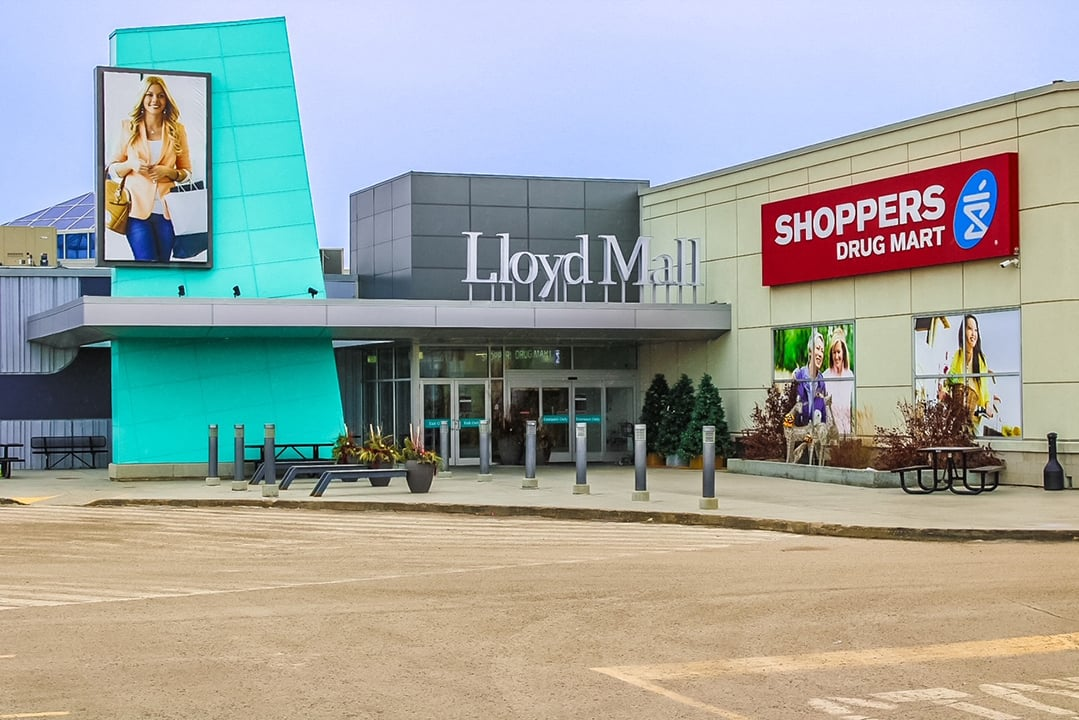
Lloyd Mall in Lloydminster AB. Image: Commercial Cafe
Recent Mall Acquisitions Signal Aggressive Growth Strategy
The Leyad leadership expansion comes at a time when the company has been actively growing its retail portfolio through a series of high-profile acquisitions across Canada.
Earlier this month, Leyad also acquired Lloyd Mall in Lloydminster, Alberta. The more than 200,000 square foot enclosed shopping centre serves a regional trade area spanning the Alberta and Saskatchewan border. The property is anchored by key daily needs retailers, including Safeway, Shoppers Drug Mart, and Dollarama, aligning with Leyad’s focus on necessity-based retail fundamentals.
In February 2026, Leyad acquired St. Vital Centre in Winnipeg for $160.5 million. The approximately 1 million square foot enclosed mall is one of Manitoba’s top-performing retail destinations and attracts roughly eight million visitors annually. The property includes a roster of major national tenants such as Walmart, Indigo, and London Drugs, and represents one of the largest retail transactions in Western Canada in recent years.
These acquisitions build on a broader expansion strategy that accelerated in 2025. Notable purchases include Pen Centre in Ontario, a 1.1 million square foot regional shopping centre, as well as Londonderry Mall and St. Albert Centre in Alberta.
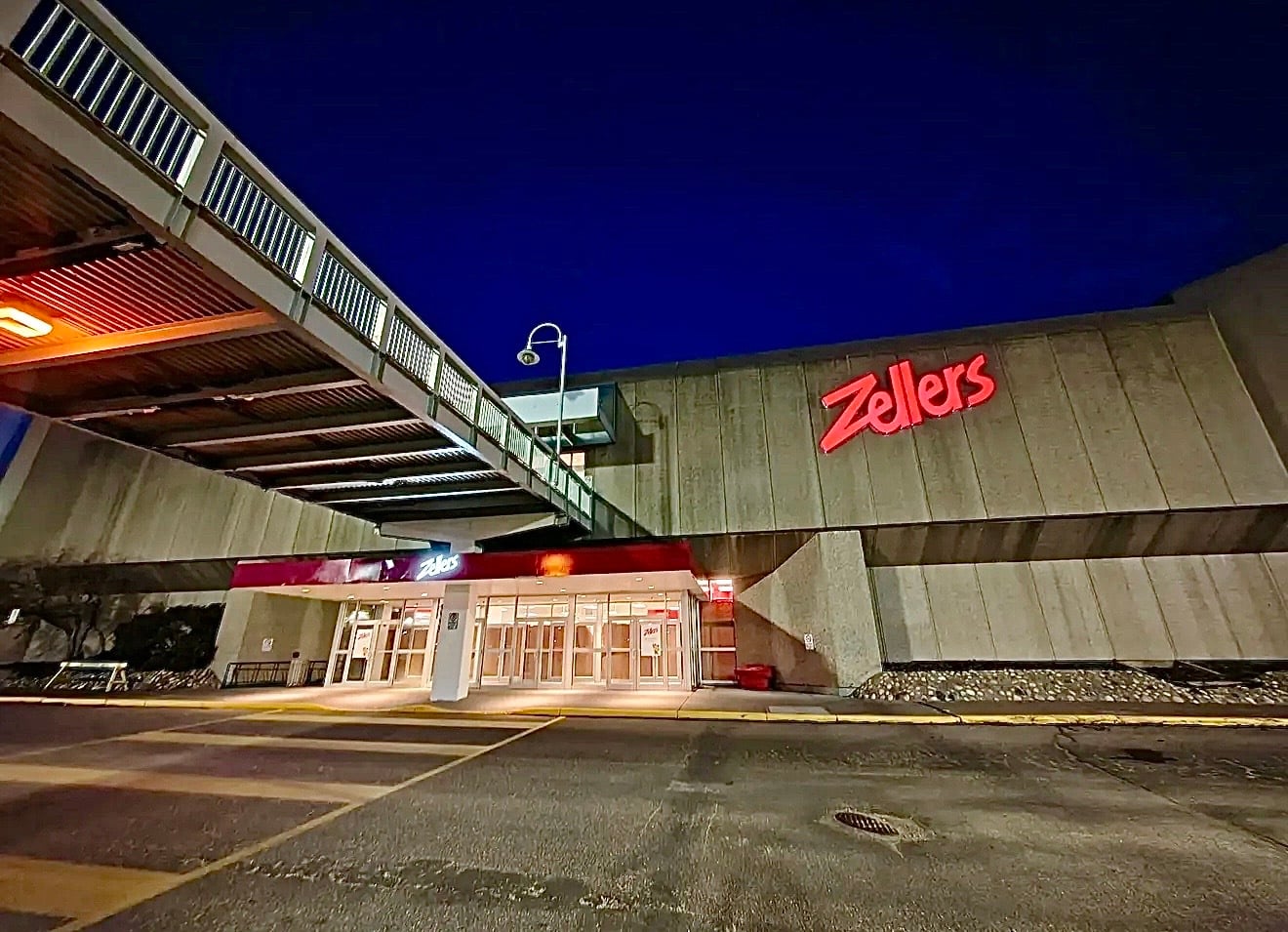
Across these assets, Leyad has focused on repositioning underutilized space and enhancing tenant mix. This includes backfilling former Hudson’s Bay department store boxes and introducing new retail concepts to drive traffic and long-term value. At Edmonton’s Londonderry, Zellers opened its first new 3.0 concept store last fall on one level of the mall’s former Hudson’s Bay.
Zellers store at Londonderry Mall in Edmonton. Photo: Ulfhednar Hvedrungr
“These appointments reflect the continued evolution of Leyad’s platform as we invest in top-tier talent to support our growth across Canada,” said Henry Zavriyev, CEO of Leyad. “Anthony, Dina, and Gregory, each bring strong leadership, operational expertise, and a deep understanding of the real estate landscape. We are excited to have them in these roles as we continue to expand our portfolio and capabilities.”
The timing of the Leyad leadership expansion suggests a deliberate effort to align executive talent with an expanding asset base. As the company integrates newly acquired properties, operational discipline and leasing strategy will be critical to unlocking value.
Retail packaging is an important part of how products are perceived. Several full-service providers offer integrated solutions that cover everything from design to delivery and are suitable for businesses of any size.
The Importance of Retail Packaging
Packaging is the first interaction many customers have with a brand, whether they’re browsing online or in-person. This vital part of marketing and the customer experience has become a $1 trillion-plus global industry. Packaging also serves a functional role, protecting products during handling and transit.
Sustainability is another factor that businesses need to consider, as many customers are conscious of packaging recyclability or reusability. Environmental factors are important to 37% of Gen Z consumers and 39% of Millennial consumers when they make purchasing decisions. That’s a huge portion of the world’s customer base that may outright reject your products in favor of competitors based on the materials they are packed with.
Features of High-Quality Retail Packaging
There is a wealth of packaging solutions available for your business and products. Here are some important aspects of packaging to consider when selecting retail packaging:
Durability: It is a fundamental requirement that the packaging remains sturdy through shipping and handling.
Customization: Structural design and printing options are an important part of marketing.
Sustainability: Recyclable materials are essential to many consumers when purchasing products.
Testing: Look for certifications from bodies like the International Safe Transit Association (ISTA).
Scalability: Determine whether the packaging choice and supplier can scale with your products and business as it grows.
Balancing Cost With Customization
Balancing cost with customization is an important part of the decision-making process when looking for the right retail packaging.
Stock packaging is the most cost-effective option. It offers fast turnaround times with low up front investment and generally much lower minimum order quantities. It is ideal for standardized products or businesses on tighter budgets.
Custom packaging lets retailers get creative. Box designs can complement their product and brand. This can be a key marketing factor, enhancing shelf presence and the unboxing experience. The drawbacks are the cost and the higher minimum order quantities usually required.
There is some middle ground, such as a hybrid approach combining custom-branded outer packaging with internal stock materials. Ultimately, the best decision comes down to a business’s budget, customer expectations and products.
Where to Find Packaging for Retail Stores: 3 Leading Suppliers
There are several excellent packaging suppliers who can help products reach their potential through box designs, print quality and more.
1. Great Northern Packaging
Great Northern Packaging is a certified ISTA facility that offers recyclable solutions well-suited to protecting products during shipping and delivery. It serves businesses across countless industries. It can handle any size requirement, boasts a wide array of print capabilities and accommodates varying strength needs, from light-grade chipboard to the heaviest grades of corrugated.
Key Features:
Experience since 1962
SQF and ISTA certified
Accommodates a wide range of strength requirements
2. Smurfit WestRock
WestRock and Smurfit Kappa merged in 2024 to become Smurfit WestRock, a global paper and packaging solutions partner with nearly 100,000 employees across over 500 facilities. Smurfit WestRock offers a huge range of packaging solutions available and won over 100 awards in 2024 for design, print and sustainability.
Key Features:
Emphasis on sustainability
Global brand capable of dealing with large enterprises
Award-winning packaging
3. Packlane
Packlane is a custom packaging platform that focuses on short-run, fully customized packaging. Retailers can go to their site and select a packaging style, desired quantity, custom and stock sizes and then start customizing their boxes to create their ideal design. An instant quote is displayed once retailers finish designing their packaging, making Packlane a convenient option for those who want a fast turnaround.
Key Features:
Instant quote
Intuitive platform to design your own packaging
Offers packing accessories, such as poly tapes and custom tissue paper
How to Determine the Best Packaging Suppliers
Packaging can come in many shapes and sizes. The featured retail packaging companies e.g. flexible packaging solutions can serve businesses with varying needs and sizes. They have strong industry reputations and extensive experience. The companies were chosen for their performance reliability, sustainability and the quality and flexibility of their customization options.
Frequently Asked Questions
Learn more about retail packaging.
What is the minimum order quantity for custom packaging?
Minimum order quantities vary by supplier. Digital platforms tend to have lower minimums compared to large-scale manufacturers.
How do I choose the right packaging supplier?
Focus on your business’s needs, such as marketing and product fragility, and find a supplier that best fits those needs.
What’s the difference between retail and shipping packaging?
Retail packaging focuses on aesthetics and branding, often using lighter and more visually appealing materials. Shipping packaging focuses on the durability and protection needed to withstand transit.
A Modern Approach to Retail Packaging
Packaging is an important part of any business’s marketing strategy. Many consumers value packaging materials that are durable and made of sustainable materials. Careful consideration is needed when selecting a packaging supplier to ensure your products reach their potential.
Even as the world of marketing becomes increasingly digital, there is still immense value in designing an enticing, high-impact physical storefront. Wide-format printing remains a critical aspect of store decoration, making it a highly important process to understand for any retailer, even in 2026. Whether it’s window displays or localized seasonal graphics, the right printing strategy is a key asset in bringing foot traffic.
Strategic Retail Use Cases for Wide-Format Printing
Wide- or large-format printing refers to any material between 18 and 100 inches wide. It is a highly effective and versatile tool for retail workers. For example, high-definition vinyl prints can transform glass windows into immersive canvases for brand storytelling. While they are primarily used for aesthetic purposes, they also bring considerable operational value. Large-format color printing is great for seasonal signage, effectively communicating product promotions.
Research shows that 68% of customers form their opinions of a store based on its exterior, highlighting signage’s relevance in boosting revenue. Beyond the storefront, wide-format printing also has many uses inside. When strategically placed, signs can serve as a highly effective wayfinder, visually suggesting how customers should navigate the store. This includes ADA signage, which ensures your shop remains accessible to all customers.
Should You Choose In-House Wide-Format Printing and Buy Your Own Printer?
Whether or not to invest in a wide-format printer depends mainly on volume. If you own a large retail store with an in-house marketing department, moving production can reduce printing costs significantly. Another advantage that comes with investing in your own printer is not having to worry about potential delays when relying on third-party services.
If your company updates signage frequently, bringing printing in-house will reduce long-term expenses while also allowing for complete creative control. Alternatively, boutique stores that don’t change signage often would likely find it more cost-effective to print elsewhere.
For retailers who fall between these extremes, leasing programs like supplier Duncan-Parnell’s One-Site Print Solutions offer a middle-ground solution. These programs provide in-house equipment without the large upfront capital investment, bundling hardware, supplies, maintenance and support into a single monthly payment. This model allows mid-sized retailers to test in-house printing capabilities while maintaining financial flexibility and access to equipment upgrades as technology evolves.
Leading Wide-Format Printing Manufacturers
If you’ve decided to purchase a printer, selecting the right hardware company is imperative to ensuring it is a valuable investment.
1. Hewlett-Packard (HP)
HP is often the first brand that comes to mind when printing is being discussed. It is a dominant force with its PageWide and DesignJet lines. HP PageWide technology is engineered for high-speed production, utilizing a stationary print bar that spans the width of the page.
Key Features
Speed: High-volume color production just as fast as black and white
Sustainability: Green-certified inks, great for companies that emphasize sustainable operations
Precision: High-resolution output that ensures small details in the digital design are visible when printed
2. Canon
Canon’s imagePROGRAF and Colorado series are renowned for color accuracy and durability. Its UVgel technology is one of its notable selling points, capable of creating prints that are fade- and scratch-resistant.
Key Features
Durability: Prints that are durable against environmental conditions
Accuracy: Advanced tools that ensure brands are consistently represented across material types
Versatility: Wide range of substrates, from thin films to thick banners
3. Ricoh
Ricoh focuses on versatility and environmental sustainability. Its Latex and GelJet printers are ideal for both indoor and outdoor signage.
Key Features
Eco-friendly: Odorless latex inks so prints are safe for immediate use in indoor retail settings
Performance: Engineered for long-term outdoor use
Interface: Intuitive controls that allow staff to conduct print jobs with minimal training
Manufacturer
Technology
Key Strength
Best For
HP
PageWide
High-speed output
High-volume printing
Canon
UVgel/ imagePROGRAF
Color accuracy
Window displays
Ricoh
Latex/ GelJet
Eco-versatility
Outdoor signage
Manufacturer vs. Supplier: Understanding the Difference
Once you’ve identified which printer technology best fits your needs, you face another decision: purchase directly from the manufacturer or work with a supplier?
Manufacturers like HP, Canon and Ricoh design and produce the printing equipment. Purchasing directly from them can work for large retailers with dedicated procurement teams and technical staff.
Suppliers (also called authorized dealers or distributors) act as intermediaries who sell equipment from multiple manufacturers while providing additional services that manufacturers typically don’t offer directly. Most retailers choose to work with suppliers for several key reasons:
Multi-brand expertise: Suppliers can recommend the best equipment across different manufacturers based on your specific needs, rather than being limited to a single product line
Local service and support: Authorized dealers provide faster on-site service, with technicians who can respond quickly when equipment malfunctions
Flexible financing: Suppliers often offer leasing programs, trade-in options and upgrade paths that protect against rapid technology obsolescence
Comprehensive training: Beyond just delivering equipment, suppliers train your staff on operation and maintenance
Ongoing relationship: A dedicated account manager who understands your business and can proactively suggest improvements
For most retailers, working with an established supplier provides better long-term value than purchasing directly from manufacturers, especially when considering service response times and the ability to compare multiple brands.
Top 3 Suppliers for Wide-Format Solutions
It’s important to find the right supplier for your business, since you will be working with them closely. There are a few key criteria worth considering:
Portfolio depth: Models from top brands
Domain expertise: Specialized focus on wide-format technology
Financial flexibility: Programs that protect against technological malfunctions
The following three suppliers are known as some of the best in the business based on the criteria above.
1. Duncan-Parnell
With over 70 years of experience, Duncan-Parnell is a leading supplier of wide-format production printers, including HP, Canon, Ricoh and Oce. It is highly rated for its One-Site Print Solutions (OSPS) program, a turnkey in-house option available for a single monthly payment.
Key Features
OSPS program: An all-inclusive package covering equipment, maintenance, training and all consumables
Upgrade flexibility: Allows users to swap for newer models without a financial penalty
Domain expertise: A sole focus on wide-format printers so clients receive expert advice
2. Repro Products
Repro Products is a significant distributor of HP and Xerox equipment in the southeast United States. It is well-regarded for its technical training program and local service centers.
Key Features
Established dealer: Provides specialized access to Xerox and HP products
Service network: Has technicians specifically trained for efficient on-site support
Staff training: Provides comprehensive training for clients’ staff
3. ARC Document Solutions
ARC is a well-known global provider with a massive footprint in hardware sales and reprographic services, specializing in high-volume needs across multiple locations.
Key Features
Global reach: Provides standardized service to retailers worldwide
Cloud tools: Integrates with digital platforms to manage print assets
Hybrid model: Bridges the gap between in-house production and outsourced printing
Supplier
Brands Offered
Key Strengths
Duncan-Parnell
HP, Canon, Ricoh
OSPS program and upgrade flexibility
Repro Products
HP, Xerox
Localized training
ARC
Multiple
Global services
Achieving Retail Success With Effective Printing
Wide-format printing remains a competitive advantage for retailers who understand how to use it strategically. The decision between purchasing equipment outright, adopting a leasing program or outsourcing to print vendors depends on your specific volume needs, budget constraints and growth trajectory. By evaluating manufacturers based on technology fit and selecting suppliers who offer comprehensive support and flexible financing, retailers can build a printing strategy that enhances store presentation while controlling long-term costs.