
Home Blog Page 231

Nearly nine in 10 small businesses want reforms to Canada Post: CFIB

Photo: Canada Post

An overwhelming majority of small businesses (87%) support reforming Canada Post, finds a new report from the Canadian Federation of Independent Business (CFIB).

Half of businesses support reduced residential mail delivery (52%) and replacing door-to-door delivery with community mailboxes (51%), while over two in five support limiting or freezing employee compensation packages over the next few years (45%), and replacing corporate postal outlets with franchised locations (42%), said the CFIB.

Corinne Pohlmann
Corinne Pohlmann

“Canada needs a national postal service, but not in its current form. We’re glad to see the federal government taking steps to modernize Canada Post services,” said Corinne Pohlmann, CFIB’s executive vice-president of advocacy. “It’s already losing customers and millions of dollars every day. Doing nothing would just sentence Canada Post to extinction.”

After the 2024 strike, four in five surveyed businesses said they still use Canada Post. Nearly three-quarters (73%) of those businesses use it for sending cheques, 61% to send other letter mail, 58% like to use Canada Post for its low cost and 50% for its convenience, added the CFIB, Canada’s largest association of small and medium-sized businesses with 100,000 members across every industry and region.

CFIB said it recommends government:

  • Immediately end the Canada Post strike and quickly move forward with the announced changes.
  • Freeze Canada Post’s compensation expenses and support the implementation of more flexible work schedules. 
  • Consider Canada Post an essential service provider to limit the possibility and impacts of work stoppages in the future and enhance reliability.  
  • Introduce financial constraints to limit repeated yearly deficit. 
Jasmin Guenette
Jasmin Guenette

“Canada Post needs major reforms to make sure it becomes financially viable. But in the short term, the government must end the strike and ensure that all postal services are fully available while the reforms are being implemented,” said Jasmin Guénette, CFIB’s vice-president of national affairs.

More from Retail Insider:

Reality TV drives Canada’s streaming & ad trends in 2025

Photo: Roku
Photo: Roku

Reality TV isn’t just entertainment — it’s shaping how Canadians stream. Roku’s latest data shows that 85% of Canadian TV streamers are now reachable via in‑stream ads, with weekly viewing of ad-supported content jumping from 7.3 hours in 2024 to 10.2 hours in 2025. Nearly 9 in 10 streamers use ad-supported streaming at least part of the time, while traditional subscription VOD (Video on Demand) usage has slightly declined. 

This shift presents a timely opportunity: reality TV—whether dating shows, competitions, or docuseries—is increasingly driving engagement and subscriptions in ad-supported environments. Lean-back formats like these keep viewers engaged, fuel social conversation, and create natural advertiser touchpoints, especially as Roku’s footprint grows (30% of Canadians now use a Roku device or Smart TV). 

Reality TV is more than a genre—it’s a driver of streaming trends, ad revenue, and subscriber retention.

Ivan Pehar
Ivan Pehar

Ivan Pehar, Director of Ad Sales at Roku Canada, said the company is seeing the strongest performance from socially sharable, appointment-style unscripted formats: dating/competition shows, short-form reality docu-series, and eventized competition (think talent, obstacle-course, renovation).

“Those formats drive tune-in behaviours and discussion — people want to watch episodes as they drop and talk about them right away, which makes them ideal for FAST channel lineups and ad-supported VOD (Video on Demand)windows. The behaviour matters: ad-supported viewing has surged (time spent jumped to 10.2 hours/week in 2025), so formats that encourage repeat tune-ins and social conversation naturally build bigger audiences on our platform.”

Pehar said what the company is seeing in its VOD Evolution Study is that Canadians are open to ads when they feel useful and relevant — in fact, 64% of TV streamers say they find interactive ads helpful, and that jumps to over 80% with younger audiences.

“That’s why brands are leaning into features like QR codes, clickable prompts, and mobile offers that let viewers act in the moment. On the content side, FAST channels and reality programming are creating these lean-back, appointment-style viewing habits again, with big spikes around premieres, finales, or eliminations. Advertisers are adapting by placing their campaigns around those high-engagement moments, which really maximizes attention. The bottom line is, ad-supported viewers expect ads — they just want them to be quality and tailored to their interests.”

He said Canadians are ad-tolerant when the content is valued and the ad experience is respectful.

“With 9 in 10 streamers using ad-supported content at least sometimes, viewers are demonstrating they’ll accept ads if the programming is compelling and the ad load feels fair. Reality formats—because they’re emotionally engaging and conversation-driving—often produce higher ad recall and incremental attention versus passive viewing. In short: if you pair the right creative to the right reality moment, you’ll get engagement rather than avoidance,” explained Pehar.

“FAST channels are a discovery engine for reality: themed linear blocks (e.g., “dating marathons,” “competition afternoons”) surface older seasons and bingeable moments to new viewers, extending a show’s lifespan beyond its initial SVOD (Subscription Vide on Demand) run. Hybrid models (free + ads with optional premium tiers) let viewers sample content with low friction, then convert the most engaged fans to paid experiences or companion products. That flywheel — discovery on FAST, repeat viewing in AVOD (Advertising Video on Demand), premium upsell for exclusives — is why we’ve invested in expanding FAST offerings in Canada (The Roku Channel surpassed 200+ FAST channels in Canada), which increases findability for unscripted formats.”

Photo: Roku
Photo: Roku

Pehar said Roku focuses on three levers: packaging, measurement, and activation.

“First, packaging: curated FAST blocks and promotional carousels on the home screen make it easy to
binge and share. Second, measurement: we give advertisers timely signals on episode peaks and retention so they can place complementary creative (and measure social lift). Third, activation: we work with partners on social extensions (clips, recaps, highlight reels) and encourage creators to seed second-screen conversation — driving social discussion that sends viewers back to the platform. The result is a loop where social buzz creates discovery, discovery drives ad reach and attention, and attention fuels more social content,” he explained.

“SVOD isn’t dead — it remains critical for prestige scripted content — but the economics and viewing habits are changing. We’re seeing a hybrid landscape: audiences pick and choose premium scripted through SVOD, while adopting ad-supported lanes (FAST/AVOD) for appointment viewing, nostalgia, and shareable reality. For premium content creators, the implication is that value will be judged on a combination of direct subscribers and discoverability in ad-supported ecosystems. That means studios and streamers will increasingly adopt windowing strategies and creative ad partnerships to maximize lifetime value across both AVOD and SVOD. For brands, it creates more entry points to engage consumers across the customer journey.”

Reality TV isn’t just entertainment — it’s shaping how Canadians stream. Roku’s latest data shows that 85% of Canadian TV streamers are now reachable via in‑stream ads, with weekly viewing of ad-supported content jumping from 7.3 hours in 2024 to 10.2 hours in 2025. Nearly 9 in 10 streamers use ad-supported streaming at least part of the time, while traditional subscription VOD usage has slightly declined. 

This shift presents a timely opportunity: reality TV—whether dating shows, competitions, or docuseries—is increasingly driving engagement and subscriptions in ad-supported environments. Lean-back formats like these keep viewers engaged, fuel social conversation, and create natural advertiser touchpoints, especially as Roku’s footprint grows (30% of Canadians now use a Roku device or Smart TV). 

Canadian Retail News From Around The Web For October 10, 2025

Canadian Retail News From Around The Web

News at a Glance

Retail Insider is streamlining its Canadian retail news from around the web to include a handful of top news stories that can be viewed quickly during the day. Here are the top stories from the past 24 hours.

Cineplex reports September box office revenue $37.7M, up from $35.2M a year earlier (The Canadian Press)

Demand for retail space remains strong in Metro Vancouver, says report (BIV)

Metro launches reusable container program at 24 Ontario stores (Grocery Business)

Ardene in Pasay: Canadian Fashion Brand Launches Its First Asian Store (Philippine Primer)

Walmart expands with new South Oakville, Ont. supercentre (Grocery Business)

Canadian furniture retailer supporting non-profits like Foundry Kelowna (Sicamous News)

Manitoba Launching $2,500 Security Rebate for Retailers (Retail Council of Canada)

How AI Is Boosting Sales for Retailers Through Improved Inventory Management

Artificial intelligence is now touching every industry, including retail, and retailers of all sizes are tapping into the technology to improve their operations. While AI can give all aspects of a retail business a boost, there’s one particular area that’s capturing the limelight right now, which is inventory management.

By improving inventory management, retailers can hold the right number of products in the right colors and sizes at the right locations, enabling them to better meet customer demand while minimizing warehouse costs and maximizing profitability due to reduced stockouts.

Using AI to better forecast demand leads to improved accuracy and customer satisfaction, making this technology a critical part of today’s inventory management systems.

How AI Gives Inventory Management a Boost

Demand forecasting is an essential component of inventory management, as is real-time visibility into where products are located. Other use cases for AI within inventory management include developing what-if scenarios, managing warehouse operations and suppliers, detecting anomalies, and automating replenishment.

In the area of demand forecasting, AI enables retailers to respond dynamically to the changing market. The technology grants them deeper insights into how customers are behaving and what demand is looking like. As a result, demand forecasting becomes more precise, enabling retailers to adjust their inventory levels in real time.

“AI enhances demand forecasting and inventory management by rapidly analyzing large data sets from various sources in real time to deliver accurate forecasts and data-driven inventory recommendations,” explained 7thonline CEO Max Ma. “… With faster insights — down to style, color, size — brands and retailers are able to make agile inventory decisions that align with demand in real-time and optimize stock levels across channels by predicting what products are needed, where and when.”

Real Results from AI in Demand Forecasting

Retailers have already been reaping the benefits of using AI in inventory management. In fact, some are reporting actual numbers demonstrating the improvements they’ve seen.

For example, earlier this year, Walmart announced it was reengineering its global supply chain using real-time AI and automation. Early deployments in markets like Costa Rica were a success, so the big-box retailer began rolling the technologies out to other locations.

Walmart’s Self-Healing Inventory system has been in place in Mexico City for some time. Shelf space is scarce there, so timing is critical. Self-Healing Inventory watches for overstocks and then automatically reroutes supply to other stores before that excess inventory turns into waste. According to the retailer, this system alone has already saved over $55 million.

Merchants selling on Amazon have also benefited from AI technologies for demand forecasting. For example, India’s More Retail reported that Amazon Forecast enabled it to improve its forecasting accuracy from 27% to 76% and reduce wastage in fresh produce by 20%.

According to 7thonline, one retailer managing over 8,000 stores was able to boost its inventory accuracy from 60% to 90% using 7thonline’s AI-powered forecasting. The retailer reported that they were better able to analyze regional demand and predict what products will sell, down to style, color, size per store, to reduce costly reallocation/ transfer efforts.

The Future of AI in Inventory Management

Going forward, we can expect AI to improve more and more over time, both in general and for each individual retailer. The more a retailer uses AI for things like demand forecasting, the better it will get at predicting customer flows and demand. AI models improve as they gain more data, so we expect dramatic improvements in accuracy, decision making, and real-time capabilities.

Ma also predicts a widening gap between the haves and have-nots — retailers that use AI and those that don’t.

“AI for demand forecasting and inventory management will further the divide between large enterprises and smaller retailers,” he explained. “But clean data and early adoption can serve as a saving grace.”

Ma also believes that AI personalization for shopping will rapidly evolve until it doesn’t feel like AI.

“Chatbots may be gone, but personalization efforts that people don’t associate with AI (such as FYPs) will take off,” he added.

Winston Churchill Painting Leads Hudson’s Bay Auction

Frederic Marlett Bell-Smith’s celebrated 1894 masterpiece, Lights of a City Street, will be a highlight of the Hudson’s Bay Company Collection, offered by Heffel on November 19, 2025. (CNW Group/Heffel Fine Art Auction House)

Heffel Fine Art Auction House will present a once-in-a-generation sale this fall featuring the Hudson’s Bay Company Collection auction, marking the public’s first opportunity to view and bid on some of the most treasured artworks and artifacts from Canada’s oldest commercial institution. The sale includes rare paintings, historical artifacts, and retail-era memorabilia that span more than three centuries of Canadian history.

The auction follows the collapse of Hudson’s Bay Company’s retail operations earlier this year and comes under court authorization to help satisfy outstanding debts to the company’s creditors. While the auction represents a loss of cultural legacy for the defunct retailer, it also offers collectors and institutions a chance to acquire pieces deeply woven into Canada’s national story.

Among the Highlights

Among the most notable pieces in the Hudson’s Bay Company Collection auction is Marrakech, an oil on canvas painting by former British prime minister Sir Winston Churchill. Created during a painting holiday in Morocco, the piece captures a tranquil, sunlit scene of women standing beneath palm trees. Churchill, an avid painter, gifted the work to Hudson’s Bay Company around 1935.

Heffel Fine Art estimates the painting’s value between $400,000 and $600,000, making it the most valuable item in the auction. “For the first time, collectors can now take part in this historic moment, carrying forward a piece of Canada’s legacy,” said David Heffel, President of Heffel Fine Art Auction House, in a statement accompanying the announcement.

Another centrepiece of the sale is Lights of a City Street by Frederic Marlett Bell-Smith, painted in 1894. The atmospheric work depicts pedestrians navigating Yonge and King Streets in Toronto on a rainy evening, illuminated by streetlamps and shopfronts.

Heffel describes the painting as “the most significant work by the artist ever to come to auction,” noting its extensive exhibition history, including displays at the National Gallery of Canada, the Art Gallery of Ontario, and the Montreal Museum of Fine Arts. The piece carries an estimated value between $100,000 and $150,000.

Two monumental early 19th-century works by William von Moll Berczy, one of Toronto’s founding figures, are also featured. Measuring nearly seven feet tall, the canvases titled Battle of Trafalgar and Rear Admiral Lord Horatio Nelson depict key naval moments in British history.

Heffel values each between $70,000 and $90,000. Battle of Trafalgar portrays a fiery seascape with warships amid smoke and blaze, while Rear Admiral Lord Horatio Nelson honours the admiral who perished during the pivotal 1805 battle.

A rare and important canvas by Sir Winston Churchill, Marrakech, will be offered in Heffel’s November 19, 2025 live auction, A Legacy Through Art: The Hudson’s Bay Company Collection. (CNW Group/Heffel Fine Art Auction House)

HBC Calendar Paintings: Art from Retail History

Beyond these high-profile artworks, the Hudson’s Bay Company Collection auction includes more than a dozen paintings commissioned for the company’s famed historical calendars, produced annually between 1913 and 1970.

These calendar commissions feature artists such as W.J. Phillips, George Franklin Arbuckle, and Frank Johnston, and depict moments from Hudson’s Bay Company’s storied past. For decades, these calendars adorned offices, stores, and trading posts across the country, celebrating Canadian identity and exploration.

Contemporary Works and Pop Art Influence

The collection’s most contemporary inclusion is Bay Watch, a 2011 oil on canvas by Charles Pachter, one of Canada’s best-known modern artists. The pop art-style painting features the company’s iconic multicoloured stripes alongside a moose — both recurring motifs in Pachter’s art.

Pachter, celebrated for his depictions of Canadian symbols, also created the hockey-themed murals found at Toronto’s College subway station. Bay Watch carries an estimated value between $15,000 and $25,000, offering a vibrant modern contrast to the historical works in the sale.

Auction and Exhibition Schedule

Heffel Gallery at 13 Hazelton Avenue in Toronto. Photo: Heffel Gallery

Heffel will exhibit highlights from the Hudson’s Bay Company Collection auction in Toronto from November 11 to 18, 2025, at its gallery located at 13 Hazelton Avenue. The live auction will follow on November 19, 2025, marking Heffel’s 30th anniversary since its first auction in 1995.

The live sale, titled A Legacy Through Art: The Hudson’s Bay Company Collection, will include 27 high-value works and will be followed by additional sessions featuring the Lillian Mayland McKimm Collection, Canadian, Impressionist & Modern Art, and Post-War & Contemporary Art.

Most of the remaining HBC artifacts, about 4,400 items in total including 1,700 artworks and 2,700 historical objects, will be sold through a series of online auctions running from November 12 to December 4, 2025. These sales will include “retail-era” memorabilia such as HBC point blankets, rare coins, and collectible toys, all considered valuable pieces of Canadian retail heritage.

Exclusions and Historical Safeguards

Notably absent from the Heffel auctions is Hudson’s Bay Company’s royal charter of 1670, which established the corporation and granted it vast trading rights over much of what would become Canada.

The retailer is expected to seek court permission later this month to allow its financial adviser to auction the document separately. Hudson’s Bay Company is reportedly urging that any successful bidder donate the charter to a public institution to ensure continued public access.

Prominent Canadian families, including the Westons of Loblaw Companies Ltd. and the Thomsons of Thomson Reuters Corp., are said to have expressed interest in the charter’s fate. The court has adjourned discussion of the matter twice, with a new hearing scheduled for October 20.

Also excluded from the upcoming sales are 24 artifacts believed to be of Indigenous origin, which the retailer plans to donate. In addition, thousands of artifacts previously gifted to the Archives of Manitoba and the Manitoba Museum in 1994 remain preserved as part of the company’s cultural legacy.

The 1670 royal charter signed by King Charles II establishing Hudson’s Bay, is shown on display at the Manitoba Museum where it was loaned to be displayed alongside its permanent collection of Hudson’s Bay artifacts in 2020. Photo: Manitoba Museum

Heffel’s Milestone 

The Hudson’s Bay Company Collection auction also coincides with a significant milestone for Heffel Fine Art Auction House, celebrating three decades since its inaugural sale in 1995. Founded in 1978, the firm has facilitated more than $1 billion in art sales, connecting collectors and institutions worldwide with historic and contemporary works.

Heffel is widely regarded as Canada’s leading fine art auctioneer, with galleries in Toronto, Vancouver, Montreal, and Calgary. Its reputation for handling major estate collections and heritage artworks positions it as an ideal custodian for this unprecedented event.

In his statement, David Heffel emphasized the cultural importance of the sale. “This is more than an auction — it’s a moment to honour over three centuries of Canadian enterprise, exploration, and creativity,” he said.

More from Retail Insider:

States That Offer the Best Incentives for Renewable Energy Systems

The quest for renewable energy in homes for 2025 is being driven by a wave of attractive incentives for homeowners. Money-saving bonuses, from state rebates to federal credits, are enticing people to consider home battery systems and advanced battery storage systems. 

With rising electricity prices, more Americans are seeking alternative ways to manage household energy. Here, we examine some of the states offering the most attractive incentives for home battery systems.

The best time for renewable energy use for homes

“The American consumer is more focused than ever on energy resiliency and independence,” says Vincent Ambrose, Chief Commercial Officer at FranklinWH. “Homeowners nationwide are asking, ‘How do I safeguard my family against outages, while saving on energy costs and living more sustainably?’”

Installing energy management and battery systems enables homeowners to store energy for later use or utilize it to power photovoltaic solar grids. These systems also allow homeowners to weather issues such as rolling blackouts and power outages caused by storms. On average, families can save between a few hundred and a few thousand dollars annually with these systems. However, the cost of the initial installation can be a deterrent for many families, which is where the incentives come in.

Energy efficiency on the federal and state levels

State and federal government incentive plans allow homeowners to access renewable energy systems at a reduced cost. The Residential Clean Energy Credit can cover up to 30% of the cost of a qualified home battery system — either standalone or with solar — through December 31, 2025. The credit is uncapped and can be rolled forward if it exceeds tax liability. 

This federal incentive can also be bundled with state and local incentives for maximum savings. “The barriers to energy management and battery storage system ownership drop dramatically with these incentives,” explains Ambrose.

State incentives vary, but can include upfront cash rebates, tax credits, or the availability of recurring payments through performance-based programs. The goal is to benefit the individual through reliable protection during power outages and flexibility on their power and lighting bills, while also benefiting the community as a whole, as an increase in residential energy storage can help stabilize the power grid overall.

States leading the charge toward generating renewable energy sources

Some states that are offering better incentives than the rest are seeing the overall benefits as a result. For example, California’s Self-Generation Incentive Program (SGIP) has led the way for state-sponsored incentives, becoming the gold standard and offering general rebates of $150-$250 per kWh, with as much as $1,000/kWh for low-income or medically vulnerable households under the Equity Resiliency tier. 

In 2025, a statewide Residential Solar & Storage Equity Initiative upped the ante and boosted incentives further, with $1,100/kWh for batteries and $3,100/kW for solar, effective as of June 2, 2025. Add demand-side programs, such as DSGS and local initiatives from utilities like LADWP, and stacking incentives can cover the bulk of the installation costs for solar energy.

New York is one state that is following California’s lead with an upfront rebate program that sets a statewide benchmark at $200/kWh for systems up to 25 kWh.

States facing unique grid challenges, such as Hawaii and Texas, have created programs that directly address their specific issues. For example, Hawaii’s Bring Your Own Device Plus program offers $400/kW upfront, rising to $800/kW for qualifying low- and moderate-income families, as well as ongoing retail-rate bill credits for strategic energy export during peak times. 

The Texas model makes direct rebates less common through a Battery Rewards program that provides a $100 prepaid card for every six months users remain in the program, and Octopus Energy’s Octo GridBoost program, which provides $40 per month for flexible battery control, plus uncapped market-rate energy credits for exported power.

Other states, such as Oregon, Connecticut, and Vermont, are also leaders in renewable energy incentives, demonstrating to other states the benefits of creating programs for their citizens.

Make your home energy efficient with home battery incentives and solar panels, lowering heating and cooling costs while providing community benefits 

With programs designed to run through 2025 and beyond, it’s easy to see why many are considering this a peak time for home battery incentives. However, the clock is ticking on federal programs. 

With the introduction of the “One Big Beautiful Bill,” clean energy models have been rolled back, with the home battery incentive ending this year instead of in 2032, as outlined in the 2022 Inflation Reduction Act. Essentially, this means that those who wish to take advantage of the federal credit must act now by investing in solar panels, energy-efficient heating and cooling systems, and appliances. 

However, with a wealth of state-sponsored programs, it is still a prime time to consider renewable energy systems for the home. “These systems are more than just a backup in case of a blackout; they are an investment in the future,” says Ambrose. Not only do these systems help with energy bills, but they also contribute to buffering local renewable energy and energy savings.

With the opportunities to save more widespread than ever, 2025 may be a transformative year for renewable energy and a lower carbon footprint for many states.

Aritzia releases Q2 financial results, net revenue of $812 million, up 32% from a year ago

Aritzia (CNW Group/Aritzia Inc.(Communications))

Aritzia Inc., a design house with an innovative global platform offering Everyday Luxury online and in its boutiques, announced Thursday its financial results for the second quarter ended ended August 31, 2025.

Jennifer Wong
Jennifer Wong

“We delivered net revenue of $812 million in the second quarter of Fiscal 2026, a 32% increase compared to last year. Comparable sales grew 22%, with double-digit growth in all channels and all geographies, led by our United States eCommerce business. Our performance was fueled by robust demand for our high-quality beautiful products, including an outstanding response to our Fall launch, as well as our strong inventory position, strategic marketing investments and new boutique openings. Exceptional strength in the United States continued to drive our results, as net revenue increased 41%, underscoring the growing awareness of the Aritzia brand and affinity for Everyday Luxury,” said Jennifer Wong, Chief Executive Officer. “In addition, we generated meaningful gross profit margin expansion and SG&A leverage, resulting in growth in adjusted net income per diluted share of over 180%.”

“Our broad-based momentum has continued into the third quarter of Fiscal 2026, driven by the ongoing positive response to our product and strong execution across our three strategic growth levers – geographic expansion, digital growth and increased brand awareness. We remain agile as we navigate tariff-related developments from a position of strength. The momentum in our business, our proven operating model and our healthy balance sheet give us confidence in our path forward as we capitalize on our vast opportunity for growth in the United States and beyond.”

Second Quarter Highlights

For Q2 2026, compared to Q2 2025:

  • Net revenue increased 31.9% to $812.1 million, with comparable sales growth of 21.6%
  • United States net revenue increased 40.7% to $486.1 million, comprising 59.9% of net revenue
  • Retail net revenue increased 34.3% to $571.7 million
  • eCommerce net revenue increased 26.5% to $240.3 million, comprising 29.6% of net revenue
  • Gross profit margin increased 360 bps to 43.8% from 40.2%
  • Selling, general and administrative expenses as a percentage of net revenue decreased 160 bps to 30.8% from 32.4%
  • Adjusted EBITDA increased 122.5% to $122.7 million. Adjusted EBITDA as a percentage of net revenue increased 610 bps to 15.1% from 9.0%
  • Net income increased 263.4% to $66.3 million, or 8.2% from 3.0% as a percentage of net revenue. Net income per diluted share increased 250.0% to $0.56 per share, compared to $0.16 per share in Q2 2025
  • Adjusted Net Income increased 184.6% to $69.8 million. Adjusted Net Income per Diluted Share increased 181.0% to $0.59 per share, compared to $0.21 per share in Q2 2025

Based on quarter-to-date trends, Aritzia expects net revenue in the range of $875 million to $900 million, representing growth of approximately 20% to 24%. The Company expects gross profit margin to be approximately flat and SG&A as a percentage of net revenue to also be approximately flat for the third quarter of Fiscal 2026 compared to the third quarter of Fiscal 2025.

More from Retail Insider:
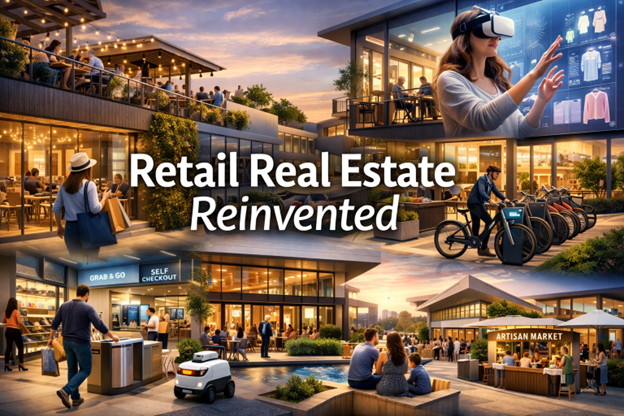
 

Ecommerce Success Starts With Understanding the Customer

Ecommerce Trends: AI, AR, and Sustainability Shaping Retail

In an era defined by digital acceleration, it has become increasingly easy to make broad assumptions about how consumers live, communicate, and shop. Smartphones feel almost mandatory, information flows instantly, and digital tools now sit at the center of daily life. For retailers, the parallel assumption is clear. To remain relevant, businesses believe they must follow their customers online, invest in ecommerce, and expand digital capabilities as quickly as possible.

Yet conversations with retailers, technology partners, and industry leaders at the eTail Canada conference in fall 2025 reinforced an important reality. While ecommerce is undeniably essential, the path to digital success is neither universal nor automatic. The decision to invest time, capital, and organizational energy into ecommerce requires thoughtful consideration, strategic clarity, and a strong understanding of both brand and customer.

Most retailers today already operate online. If they were not digitally enabled prior to the pandemic, they almost certainly are now. Store closures, supply chain disruptions, and shifting consumer behavior accelerated ecommerce adoption at an unprecedented pace. This surge created meaningful growth opportunities, but it also introduced risk. Too many businesses equated being online with being successful online, without fully defining what digital should achieve for their brand.

The reality is that there are multiple paths to ecommerce success, and none of them begin with technology alone.

Ecommerce as an Expansion of the Brand Ecosystem

One of the most consistent themes that emerged from discussions at eTail Canada was the pressure small and mid-sized retailers feel to keep pace with larger competitors. Without the same resources, teams, or budgets, many rush into digital investments driven by fear of being left behind. Unfortunately, these investments often fail to improve efficiency, enhance customer experience, or generate meaningful returns.

Ecommerce should never be treated as a standalone initiative. Putting products online is not a finish line, it is an expansion of a brand’s ecosystem. Digital channels extend how customers discover, engage with, and purchase from a brand. They also play a critical role in enabling a cohesive omnichannel experience.

To build this ecosystem effectively, retailers must first define who they are as a brand and what experience they aim to deliver. Equally important is a deep understanding of their customer. Without clarity on these fundamentals, any digital investment risks becoming disconnected from the business and the people it serves.

When retailers align digital strategy with brand identity and customer expectations, ecommerce becomes a powerful amplifier rather than a costly experiment.

Understanding the Customer Before Choosing the Channel

The digital layer of a retail ecosystem can take many forms. A brand may sell directly through its website, activate social commerce, leverage third-party marketplaces, or adopt a hybrid approach. Fulfillment options continue to expand as well, ranging from home delivery and buy online pickup in store, to curbside pickup and ship-from-store models.

Each of these options can enhance customer experience, but only when they align with how customers prefer to shop and engage. Retailers cannot be everywhere at once, nor should they try to be. The most successful brands are intentional about where they show up and how they deliver value.

Understanding the customer allows retailers to make informed decisions about which channels to prioritize and which services to offer. Where do customers already spend their time online. How do they prefer to interact with the brand. What level of convenience, speed, or personalization do they expect.

Answering these questions helps retailers build a focused digital ecosystem that works in harmony with physical stores and other touchpoints, rather than competing against them.

Building Digitally With Purpose and Patience

Developing a digital strategy should always begin with the customer at the center. This principle came through clearly in conversations at eTail Canada, particularly among retailers who have successfully navigated digital transformation without overextending their organizations.

Customer data plays an important role in shaping this journey. Even basic insights can inform smarter decisions, allowing retailers to evolve their ecosystem over time as behaviors and expectations change. However, digital maturity does not happen overnight. Building, refining, and optimizing an ecommerce operation is a multi-year process.

Retailers do not need to launch every capability at once. Progress comes from identifying where improvements will have the greatest impact and focusing efforts there. Incremental enhancements, tested and refined over time, often lead to stronger outcomes than large-scale rollouts driven by urgency alone.

Being online is no longer optional. Understanding why you are online, what you are building, and who you are building it for is what separates meaningful growth from costly missteps. For small and mid-sized retailers especially, ecommerce success is a journey taken one step at a time.

The goal is not complexity. The goal is consistency. Customers expect seamless movement between channels, clear brand experiences, and frictionless shopping journeys. Retailers that deliver on those expectations will earn loyalty, trust, and long-term growth in an increasingly competitive digital marketplace.

More from Retail Insider:
Silverts acquires IZ Adaptive, opens Toronto hub

PHOTO: IZ ADAPTIVE

Silverts, the Canadian-based leader in adaptive apparel, has acquired IZ Adaptive, the award-winning brand founded by Toronto designer Izzy Camilleri. It’s a move that brings together two of the country’s most influential names in inclusive fashion. 

Under the transaction, IZ Adaptive retains its brand identity and dedicated website, while Silverts assumes leadership of sourcing, supply chain, and distribution. Camilleri becomes Chief Design Officer for both labels, an appointment that signals a stronger design-led future for adaptive apparel in North America. “Izzy is truly the best designer of adaptive clothing in the world,” said Joshua Norris, General Manager of Silverts and now the company’s President and CEO, who called the acquisition “an opportunity to really make fashionable, great clothing,” and a platform to “serve the entirety of the market.”

Joshua Norris

The combined business arrives at a turning point for inclusive retail in Canada. With demographic pressures from an ageing population, a growing cohort of younger customers living with disabilities, and rising caregiver needs, demand for adaptive solutions is expanding in both community and institutional settings. The acquisition also lands as Silverts celebrates its ninety-fifth year, under independent Canadian management, with an operational footprint now calibrated for speed and scale on both sides of the border.

A Canadian legacy meets a Canadian pioneer

Founded in Ontario in 1930 as a small chain of department stores, Silverts gradually shifted its focus as its customers aged and new dressing challenges emerged. Norris described a moment that crystallized the company’s purpose. “One of our customers had trouble raising their arms. It was like, I can’t even put on my shirt anymore,” he said. “The old owner cut up the back of a dress, wrapped it around, and put it on. That is how adaptive clothing in our world was born.” From there, Silverts began supplying nursing homes and hospitals, then expanded into direct-to-consumer e-commerce, with distribution in Canada and the United States.

PHOTO: IZ ADAPTIVE

Camilleri, whose work has ranged from high fashion to film wardrobe, entered adaptive design nearly two decades ago after meeting Toronto Star journalist Barbara Turnbull, a wheelchair user who sought a garment suited to her needs. “I had no idea this category existed,” Camilleri said. “I became a sponge working with her, enlightened by her issues and inspired by them.” She launched IZ Adaptive in 2009, producing wardrobe essentials such as jeans, chinos, and T-shirts designed for wheelchair users and others facing dressing barriers. The label quickly gained international recognition for marrying style and function, and for elevating dignity and independence through design.

Izzy Camilleri

The two paths began to entwine years ago. “IZ Adaptive was the first company I found doing something special,” said Norris, who credited Camilleri as both mentor and collaborator. The brands worked together on adaptive denim in the late 2010s, then diverged as Silverts went through ownership changes. Following a management-led buyout in late 2024 that returned Silverts to Canadian hands, Norris re-engaged Camilleri and reached a deal to reunite the businesses in early September 2025.

Strategy behind the deal

The logic is straightforward. Silverts has deep penetration among older customers and care facilities, supported by broad assortments that include tops, pants, sleepwear, intimates, outerwear, recovery wear, swimwear for hydrotherapy, and adaptive footwear. IZ Adaptive brings global design credibility and a stronger connection to younger adults and professionals who want clothing that is both functional and fashion forward. “We have long looked at how we can address the greater market, reach younger people, and serve a much broader spectrum of people with disabilities,” said Norris. “Silverts reinventing itself on its own would be a stretch. The acquisition under IZ Adaptive gives us the opportunity to deliver fashionable, great clothing and hit our next level of growth.”

Camilleri underscored the shift. “A lot of people break their back at a young age and they are not ready to dress in clothing for the elderly,” she said. “I started by creating wardrobe basics we all have, and that is still the foundation. People still want to look stylish and cool.” Her move into the Chief Design Officer role aims to infuse that sensibility across both banners, growing IZ Adaptive’s profile while elevating Silverts’ design language.

The market is larger than many think

Awareness remains the category’s biggest hurdle. “Most people just do not know adaptive clothing,” Norris said. “It solves a lot of problems that people experience with dressing.” Silverts estimates that more than eighty percent of Canadian long-term care homes purchase its products. Yet there is still significant runway in Canada and even greater opportunity in the United States. The company’s goal is to work with points of care so that adaptive clothing becomes standard practice, whether in a facility or at home with a single caregiver.

The value proposition is practical and human. Norris points to the strain injuries suffered by personal support workers and to the emotional impact of restoring independence. “We now have a magnetic closing dress shirt that allows someone to dress independently and go downstairs on their own. That is real empowerment,” he said. The feedback Silverts hears most often, he added, is, “We wish we knew about this sooner.”

Camilleri also highlighted the ecosystem around the end user. “Our end user is not our only customer,” she said. “People often buy for their parents or for an adult child with a disability. It is not just the end user purchasing, it is the network around them.” That dynamic places adaptive apparel at the crossroads of family decision making, professional caregiving, and retail discovery.

New Toronto distribution centre accelerates Canadian growth

Silverts is opening a new Canadian distribution centre in Toronto that the company says will cut shipping times across the country to two or three days, reduce costs for consumers, and increase inventory capacity for individuals, care homes, and wholesale partners.

The distribution centre is designed to remove friction for Canadian customers after years of shipping most orders from the United States. “We went live in that distribution centre the day we closed IZ Adaptive,” Norris said. “Canadians who have supported the business for ninety plus years now get their packages quickly and at a fraction of the cost.” He added that average delivery charges have been cut roughly in half compared to August, which the company views as critical heading into the holiday season when family gift giving ramps up.

By locating inventory in Toronto, Silverts expects to trim typical shipping times to two or three days, including to the West Coast. The facility increases capacity for care institutions and wholesale partners while improving the consumer experience. For customers who have waited for shipments to clear the border, the change should be visible in both speed and predictability.

PHOTO: IZ ADAPTIVE

Product innovation meets lived experience

Silverts and IZ Adaptive both emphasise everyday solutions that reduce pain points. That ranges from magnetic closures and easy on and off silhouettes to open-back garments that make assisted dressing faster and less taxing. The footwear category continues to be a focus, particularly for customers managing daily fluctuation in swelling. “People with swollen feet will go up in size to fit their shoes, which can increase risks of slips and falls,” Norris said. “We make sure footwear accommodates swelling so the fit stays proper, which supports safety.”

Beyond core categories, the brands have moved into recovery wear for post-surgical needs and swimwear that recognises the realities of hydrotherapy. “Putting on and taking off a soaking wet bathing suit is no easy task,” said Norris. “The easier we can make dressing, the better we can support our clients.” Camilleri, for her part, brings decades of pattern cutting and materials experience to ensure garments sit correctly when seated and avoid pressure points that can cause discomfort.

Youtube video

Demographics, dignity, and design

The acquisition also speaks to generational change. The younger end of the baby boom cohort is dressing more casually and fashionably, and many are not ready to adopt garments that read clinical. “They still want to look stylish,” Camilleri said. “The blending of our offering helps those who may not be entering long-term care, yet need adaptive clothing that reflects how they see themselves.” That nuance is central to IZ Adaptive’s brand DNA and is now a shared priority across the combined business.

At the same time, Silverts is leaning into the realities of the sandwich generation, where adult children support ageing parents while raising families of their own. Purchasing pathways are complex, with decision makers ranging from spouses and relatives to care workers and administrators. The company sees its role as meeting people where they are, whether through e-commerce, institutional ordering, or community-based retail.

Brick and mortar touchpoints return

While both brands are digitally native, the company plans to reintroduce in-person touchpoints. “We will be building a showroom at the IZ Adaptive offices, a place to serve our community directly and learn from them,” Norris said. The move acknowledges that fabric feel, fit, and sensory considerations matter, especially for customers with specific mobility or sensory needs. Trying on footwear, for example, can be complex when braces or orthotics are involved. A dedicated space offers education, consultation, and the opportunity to refine product based on real-time feedback.

That physical presence also dovetails with a broader conversation in Canadian retail about the value of bricks and mortar for discovery and brand building. In adaptive apparel, where use cases are personal and detailed, the ability to demonstrate solutions in person can accelerate adoption.

PHOTO: IZ ADAPTIVE

Operational momentum after a reset

Silverts navigated a significant corporate reset over the past two years. The business was previously owned by Careismatic Brands, which filed for bankruptcy protection in January 2024. Norris and a group of employees subsequently led a buyout to return Silverts to Canadian control. That transition, completed late in 2024, set the stage for renewed investment in product, service, and infrastructure. In February 2025, Silverts marked its ninety-fifth anniversary and outlined a plan to relaunch paused initiatives, including targeted programmes for care facilities across North America.

The acquisition of IZ Adaptive in September 2025 builds on that momentum, pairing operational depth with design leadership, and anchoring both to a Canadian distribution backbone. For customers, the message is continuity and improvement. For the sector, it is a signal that Canadian firms can lead globally in inclusive design and practical innovation.

Voices at the centre of the story

Throughout the conversation, both leaders returned to the human impact of getting dressed with ease and dignity. “What Silverts does is make a small difference every day in the lives of the people who wear our clothing and those who help dress them,” Norris said. “It is really powerful in its impact.” Camilleri echoed that sentiment. “The more I learned working with Barbara Turnbull, the more compassionate I became for people with disabilities,” she said. “There was a lot of white space. People wanted basic wardrobe pieces that fit properly and looked like what everyone else wears.”

The pair also emphasised language and representation. As the category grows, they said, brands and media alike have a responsibility to use inclusive language and to listen to those with lived experience. The planned showroom and continued partnerships with advocates and creators aim to keep that feedback loop tight.

More from Retail Insider:

Altea announces major expansion into Edmonton with new 125,000-square-foot wellness & fitness flagship (Images)

After the most recent successful AVANT (luxury concept) launch in Yorkville, Toronto, Altea Active is now expanding into the Edmonton market with the signing of a 125,000-square-foot flagship deal with Allard Developments.

Altea Active, Canada’s rapidly growing luxury fitness and wellness operator, will open this new destination in West Edmonton at the former RONA site (17303 100 Ave NW). The project represents a significant, long-term investment in Edmonton’s fitness, wellness, and retail ecosystem—and a clear vote of confidence in the city as a prime market for Altea’s integrated model, said the company.

Designed as a one-stop wellness destination, the Edmonton flagship will unite cutting-edge fitness, restorative recovery, social lounges, and indoor sport under one roof. Building on the success of Altea’s clubs in Toronto, Vancouver, Winnipeg, and Ottawa, the concept mix is expected to include boutique fitness studios (Pilates, yoga, hot yoga, HIIT, strength, cycle, boxing), women’s-only fitness spaces, cold plunge / contrast therapy, saunas and steam, dedicated recovery zones, and a robust indoor racket sport program—14 pickleball courts (including 2 championship-sized) plus 2 padel courts, explained the brand.

“Edmonton represents exactly the kind of growth market we look for—a city with strong community values, active lifestyles, and meaningful demand for premium wellness,” said Jeff York, CEO, Altea Active. “With this 125,000-sq-ft flagship, our goal is to create a wellness destination where people come together not only to work out, but to recover, socialize, and build community. This is about enhancing daily life and helping Edmontonians thrive.”

David Wu
David Wu

“This Edmonton flagship reflects the next phase of our growth strategy,” added David Wu, Co-Founder & Chief Growth Officer. “Following the success of AVANT in Yorkville, we’re accelerating expansion into key Canadian markets—including Edmonton, Calgary, Vancouver, and the GTA—bringing both flagship and luxury concepts to communities ready for elevated wellness experiences.”

From a retail real estate and urban renewal perspective, repurposing a previously vacant big-box into an activated wellness hub will introduce new daily foot traffic, extended operating hours, and diverse patronage to the node, said the company.

Altea’s presence is expected to complement surrounding retail, food, and service operators and support ongoing commercial revitalization in West Edmonton, it said.

“We’re ecstatic to partner with Altea on revitalizing the former RONA property and bringing a landmark wellness destination to West Edmonton,” said Paul Allard of Allard Developments. “This 125,000-square-foot investment underscores our commitment to community infrastructure, re-activating underutilized sites, and delivering experience-driven amenities that support healthy living across the city.”

Expansion Momentum

According to Wu, Altea’s expansion has been intentionally designed across varying size formats to adapt to different markets and real estate opportunities.

In Ottawa, Altea converted a former Canadian Tire store into a 129,000-square-foot premium wellness destination featuring six pickleball courts, a broad range of boutique fitness studios, and aquatics. Altea’s West 6th location in Vancouver occupies 45,000 square feet within an office building, demonstrating the brand’s flexibility in adapting its model to diverse urban spaces.

In Edmonton, Altea is transforming a former RONA into a 125,000-square-foot flagship wellness destination, further underscoring its ability to adapt and repurpose significant retail footprints.

In Winnipeg, Altea’s 79,677-square-foot club anchors a major retail node, reinforcing the brand’s position as both a community hub and a long-term operating partner with its U.S. REIT partner.

At the boutique end of the spectrum, AVANT by Altea in Yorkville, Toronto offers an intimate luxury concept with curated programming, expanded recovery, and spa-inspired amenities.

Wu said Altea will also start construction on the second AVANT club at Oakridge Park in Vancouver in Q1 2026, bringing the luxury concept into one of Canada’s most anticipated mixed-use developments.

He noted that the company’s growth strategy has been to work collaboratively with landlords and development partners, adapting its premium wellness model to fit seamlessly within the unique space requirements of each property. This approach, he noted, has enabled Altea to revitalize underutilized real estate while ensuring its destinations deliver maximum impact for both members and the surrounding community.

Key Highlights

• 125,000 sq ft of fitness, wellness, and social spaces

• 14 pickleball courts (including 2 championship-sized)

• 2 padel courts

• Boutique studios: Pilates, yoga, hot yoga, HIIT, cycling, strength, boxing

• Women’s-only fitness spaces

• Recovery & thermal: cold plunge / contrast therapy, steam rooms, saunas, recovery lounge

• Social spaces: café + smoothie bar, lounges, flexible work/social nooks

• One membership providing access across the full ecosystem of amenities

More from Retail Insider: