“2025 was Shopify at full throttle – driving compounding growth, while laying the rails for the new era of AI commerce,” said Harley Finkelstein, President of Shopify. “2026 will be the year of the builders, and we’ll be powering them – from first sale to full scale.”
Jeff Hoffmeister
Harley Finkelstein
Jeff Hoffmeister, Chief Financial Officer, said: “We closed Q4 with strong top-line growth and disciplined cash generation with revenue up 31% year-over-year and a 19% free cash flow margin. This brings 2025 to 30% revenue growth, 4 percentage points higher than 2024, and a 17% free cash flow margin. With AI reshaping how buyers discover and purchase, we delivered these strong margins while investing in Catalog, Sidekick, Universal Commerce Protocol, and our full platform of commerce solutions. We ended 2025 with strength across all merchant sizes, regions, and channels, setting us up well for 2026.”
Shopify said it provides essential internet infrastructure for commerce. Shopify’s all-in-one platform makes it easier to start, run, and grow a business, powering sales online, in-store, and everywhere in between. Millions of businesses in 175+ countries use Shopify—from entrepreneurs to brands like Aldo, BarkBox, Carrier, Meta, Vuori, SKIMS, and Supreme.
It noted the following key highlights from the quarter:
Operating FFO per unit of $0.34, representing YoY growth of 7%
Same Property NOI growth of 5.7%, excluding bad debt expense (recovery) and lease termination fees
Lease renewal lift of 15.8% on strong leasing volume
Total portfolio occupancy of 97.1%, representing an increase of 30 basis points year-over-year
“Strong fundamentals for FCR’s grocery anchored portfolio together with the disciplined execution of our capital allocation strategy delivered solid results again in 2025,” said Adam Paul, President & CEO.
“Healthy leasing metrics including same property NOI growth of more than 5%, lease renewal spreads of nearly 15% and occupancy of 97.1% contributed to normalized Operating FFO per unit growth of 5.5% for the year”. Mr. Paul continued, “As we commence the final year of our three-year strategic plan, I am pleased that we continue to track well against the metrics we presented to our investors in early 2024.”
Adam Paul
The REIT said its Q4 earnings highlights were:
Operating FFO per Diluted Unit of $0.34: Operating Funds from Operations of $72.3 million increased $4.6 million, or $0.02 per unit, over prior year. Supported by strong operating metrics, the increase in Operating FFO year-over-year was primarily due to higher NOI of $3.3 million and interest expense savings of $2.1 million, partially offset by higher corporate G&A and lower interest and other income. Net operating income in the fourth quarter of 2025 included $2.6 million of lease termination income.
FFO per Diluted Unit of $0.32: Funds From Operations of $68.4 million, or $0.32 per unit, remained consistent with prior year. On a year-over-year basis, Funds From Operations was driven by higher Operating FFO of $4.6 million, largely offset by a year-over-year decrease in other gains (losses) and (expenses) of $3.8 million, which included $4.8 million ($0.02 per unit) of restructuring and advisory costs related to the Trust’s internal tax reorganization.
Net Income (Loss) Attributable to Unitholders: For the three months ended December 31, 2025, First Capital recognized net income (loss) attributable to Unitholders of $849.5 million or $3.95 per diluted unit compared to $32.1 million or $0.15 per diluted unit for the prior year period. The increase in net income over prior year was primarily due to the remeasurement of deferred income taxes in the fourth quarter of 2025 as a result of the Trust’s internal tax reorganization resulting in a deferred income tax recovery of $746.7 million versus $39.3 million of deferred income tax expense in the fourth quarter of 2024. Additionally, the fair value of investment property increased $36.1 million in the fourth quarter of 2025 versus a $3.6 million increase in fair value of investment property recognized in the fourth quarter of 2024, on a proportionate basis.
First Capital said its Q4 operating performance and capital allocation highlights were:
Same Property NOI Growth: Total Same Property NOI increased 7.9% over the prior year period. The growth was primarily due to rental rate growth, higher year-over-year occupancy, and a year-over-year increase in lease termination fees of $2.1 million. Same Property NOI excluding bad debt expense (recovery) and lease termination fees increased 5.7%.
Portfolio Occupancy: On a quarter-over-quarter basis, total portfolio occupancy remained consistent at 97.1% compared to September 30, 2025.
Lease Renewal Rate Increase: During the quarter, net rental rates increased 15.8% on a volume of 522,000 square feet of lease renewals, when comparing the rental rate in the first year of the renewal term to the rental rate in the last year of the expiring term. Net rental rates on leases renewed in the quarter increased 20.2% when comparing the average rental rate over the renewal term to the rental rate in the last year of the expiring term owing to higher contractual growth rates embedded within the renewed lease terms.
Average Net Rental Rate: The portfolio average net rental rate increased by 0.7% or $0.16 per square foot over the prior quarter to a record $24.73 per square foot, primarily due to rent escalations and renewal lifts.
Property Investments: During the fourth quarter, First Capital invested approximately $47 million into property development, redevelopment and residential inventory.
Property Dispositions: During the fourth quarter, First Capital completed property dispositions totalling $67 million, including the previously announced sale of the Montgomery Assembly in Toronto for $42 million. In addition, during the fourth quarter the Trust entered into firm agreements to sell four properties having a total value of $43 million. The largest of these transactions is a residential development site in Toronto which closed during the fourth quarter. The other three property sales are expected to close in the first and third quarters of 2026.
For the year, First Capital cited the following as its earnings highlights:
Operating FFO per Diluted Unit of $1.33: Operating Funds from Operations of $285.6 million decreased $5.3 million, or $0.03 per unit, over prior year. The decrease was primarily due to non-recurring items recognized in the prior year, including a $9.5 million assignment fee related to a small development parcel located in Montreal as well as a density bonus of $11.3 million in connection with a previously sold property. Excluding these amounts, Operating FFO increased $15.4 million, or $0.07 per unit, over prior year primarily due to higher NOI of $11.2 million.
FFO per Diluted Unit of $1.30: Funds From Operations of $279.2 million decreased $10.5 million, or $0.05 per unit, over prior year. The decrease was driven by lower Operating FFO of $5.3 million, and a year-over-year decrease in other gains (losses) and (expenses) of $5.2 million, which included $6.8 million ($0.03 per unit) of restructuring and advisory costs related to the Trust’s internal tax reorganization.
Net Income (Loss) Attributable to Unitholders: For the year ended December 31, 2025, First Capital recognized net income of $1.1 billion or $4.96 per diluted unit compared to $204.9 million or $0.96 per diluted unit for the prior year. The increase in net income over prior year was primarily due to the remeasurement of deferred income taxes as a result of the Trust’s internal tax reorganization resulting in a deferred income tax recovery of $763.5 million for the year versus $14.3 million of deferred income tax expense in 2024. Additionally, the fair value of investment property increased $44.2 million in 2025 versus a $49.6 million decrease in fair value of investment property recognized in 2024, on a proportionate basis.
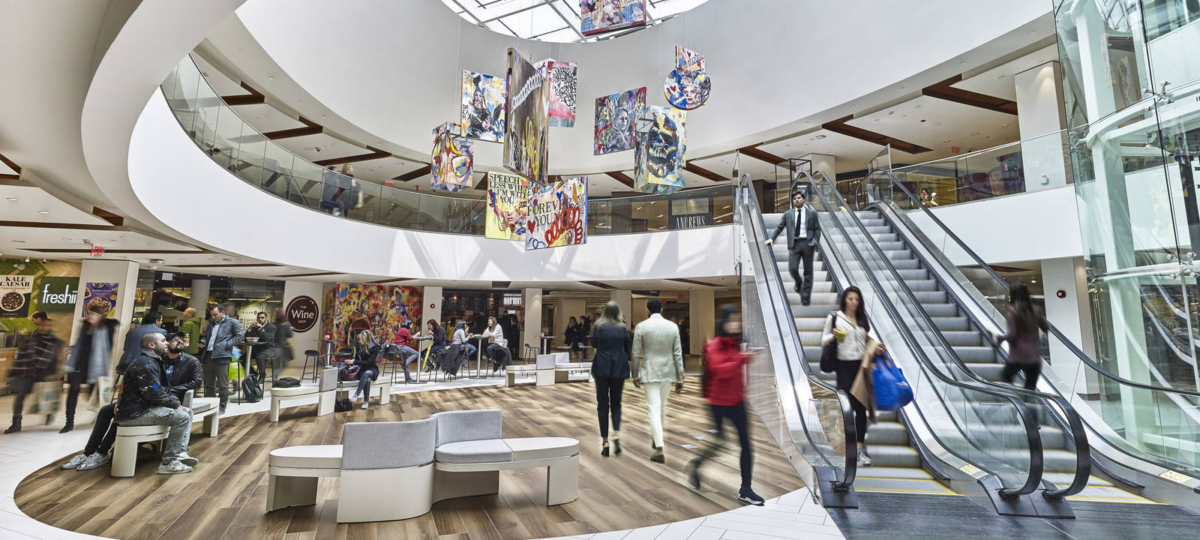
Central oval at Yorkville Village in Toronto. Photo: First Capital REIT
First Capital said the following were the REIT’s annual operating performance and capital allocation highlights:
Same Property NOI Growth: Total Same Property NOI increased 5.2% over prior year, primarily due to rental rate growth and higher year-over-year occupancy, partially offset by a year-over-year decrease in lease termination fees of $2.5 million. Same Property NOI excluding bad debt expense (recovery) and lease termination fees increased 5.9%.
Portfolio Occupancy: On a year-over-year basis, total portfolio occupancy increased by 0.3%, to 97.1% at December 31, 2025, from 96.8% at December 31, 2024.
Lease Renewal Rate Increase: Net rental rates increased 14.8% on 2,201,000 square feet of lease renewals when comparing the rental rate in the first year of the renewal term to the rental rate in the last year of the expiring term. Net rental rates on leases renewed during 2025 increased 19.7% when comparing the average rental rate over the renewal term to the rental rate in the last year of the expiring term owing to higher contractual growth rates embedded within the renewed lease terms.
Average Net Rental Rate: The portfolio average net rental rate increased $0.73 to $24.73 per square foot representing year-over-year growth of 3.0%. The strong growth was primarily due to rent escalations, renewal lifts and dispositions.
Property Investments: First Capital invested approximately $190 million into its properties during 2025, primarily through development, redevelopment, residential inventory and strategic acquisitions.
Property Dispositions: During 2025, First Capital completed or entered into firm agreements for $194 million of property dispositions. Reflecting FCR’s disciplined approach to asset sales, the collective transaction values equated to an in-place yield that is less than 3% and an average premium to IFRS carrying value of more than 40%. As at December 31, 2025, the Trust classified $106 million of investment properties as held for sale.
“Throughout 2025, our team maintained exceptional momentum, delivering high leasing volumes and double-digit rental spreads that exceed our 2024 benchmarks. At the same time, by proactively managing our balance sheet, we believe we have secured near-term financing stability that will help position the portfolio for continued long-term performance.”
For the CEO’s letter to unitholders for the quarter, please follow the link here.
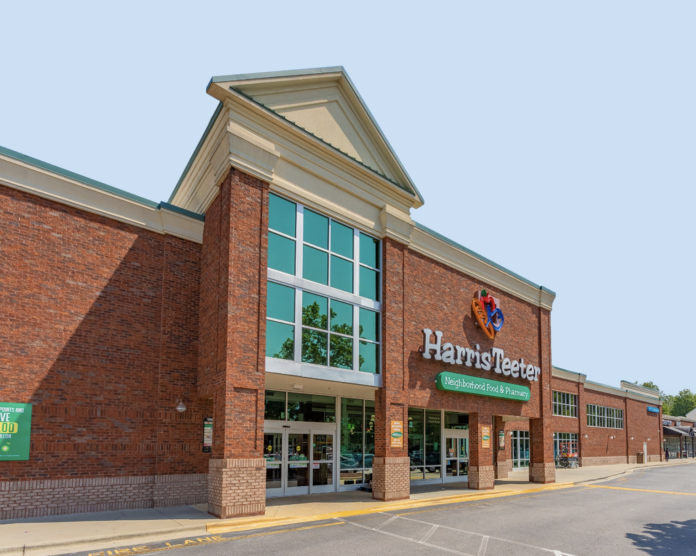
Slate noted these highlights:
The REIT completed 1.7 million square feet of total leasing throughout the year at consistently high rental spreads that continue to drive strong performance
Renewals were completed at 14.9% above expiring rents, and new deals were completed at 34.9% above comparable average in-place rent
Adjusting for completed redevelopments, same-property Net Operating Income increased by $3.3 million or 2.0% in the fourth quarter on a trailing twelve-month basis
Portfolio occupancy remained stable at 94.4% as at December 31, 2025
The REIT’s average in-place rent of $12.86 per square foot remains well below the market average of $24.34, providing meaningful runway for continued rent increases
The REIT has a weighted average interest rate of 5.0%, with 87.8% of its debt having a fixed interest rate, providing a stable outlook for the REIT’s near term financing costs
Subsequent to quarter end, the REIT refinanced an eight-property portfolio for $90.0 million to consolidate a portfolio of existing property-level mortgage loans, highlighting the continued demand for high-quality grocery-anchored real estate assets among lenders
The REIT’s weighted average capitalization rate remains well above the REIT’s weighted average interest rate for outstanding debt, allowing the REIT to maintain positive leverage; this attractive valuation, combined with continued NOI growth, is expected to increase portfolio valuation over time
During the fourth quarter, the REIT completed two strategic transactions to strengthen tenant mix and further de-lever the portfolio
On December 1, 2025, the REIT acquired the remaining minority interest in a 10-asset joint venture portfolio for cash consideration of $5.7 million, bringing its ownership to 100% of the portfolio and providing the REIT with enhanced refinancing flexibility and the ability to fully capture further mark-to-market opportunities
On December 9, 2025, the REIT strategically disposed of a non-grocery anchored property located in Flower Mound, Texas, using proceeds from the sale to de-lever the REIT’s portfolio
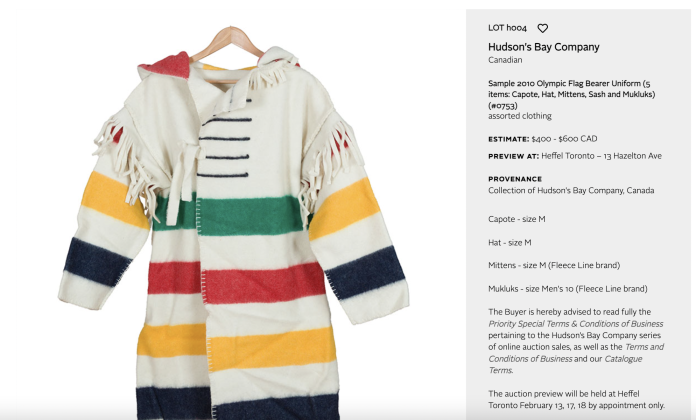
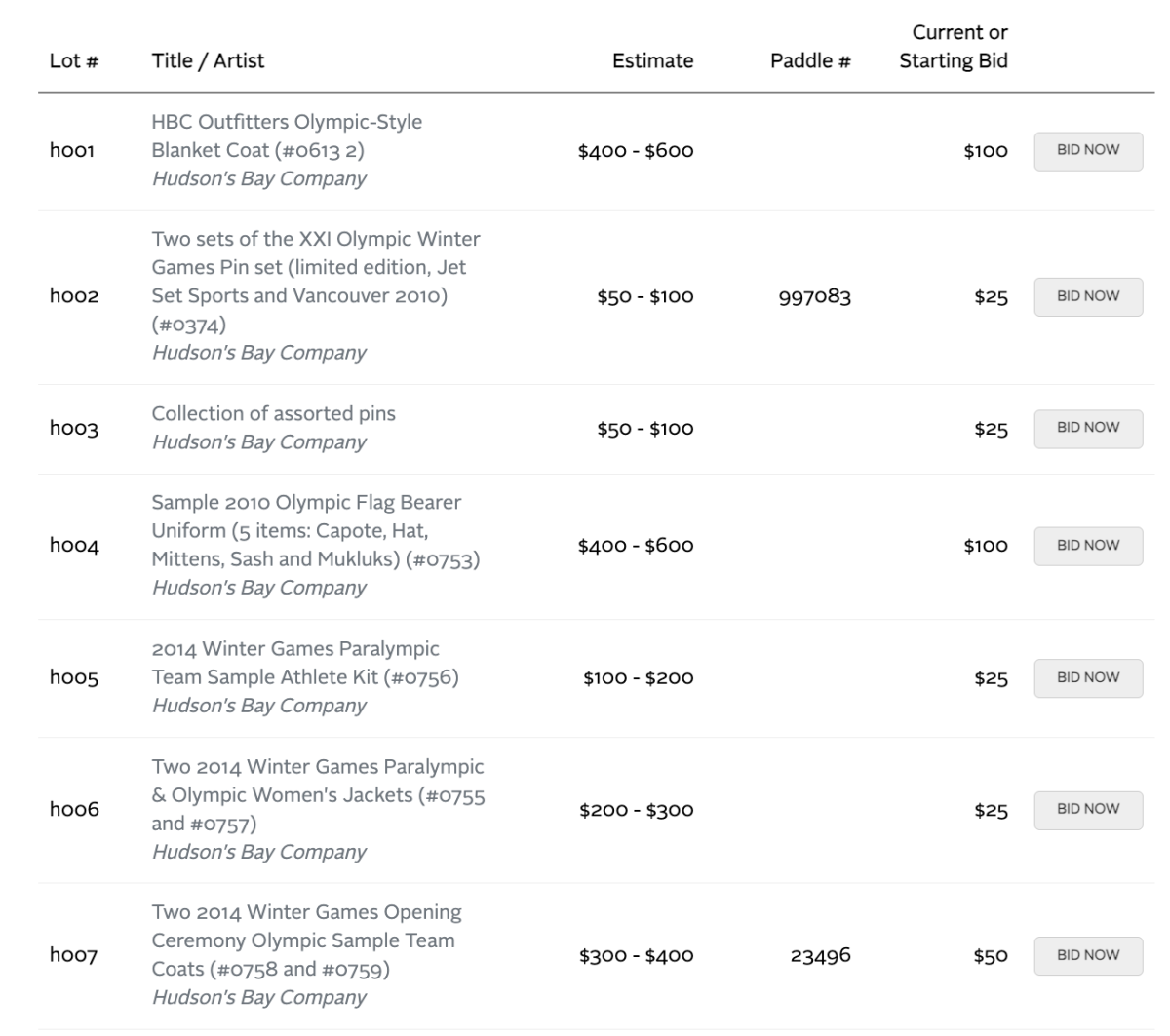
Screen shot of Heffel's HBC Olympic collection auction
Heffel Fine Art Auction House has launched a new online sale featuring Olympic-themed merchandise and memorabilia from the Hudson’s Bay Company collection, continuing the court-authorized disposition of the retailer’s corporate artifacts. The HBC Olympic memorabilia auction opened today on Heffel’s website and is scheduled to close on February 19, aligning with the broader Olympic news cycle.
The sale marks the third online auction organized by Heffel to find new homes for items from the former retailer’s archives. This latest session focuses on Team Canada apparel and collectibles tied to Hudson’s Bay’s long-standing role as the country’s Olympic outfitter.
Olympic Apparel and Collectibles Headline the Sale
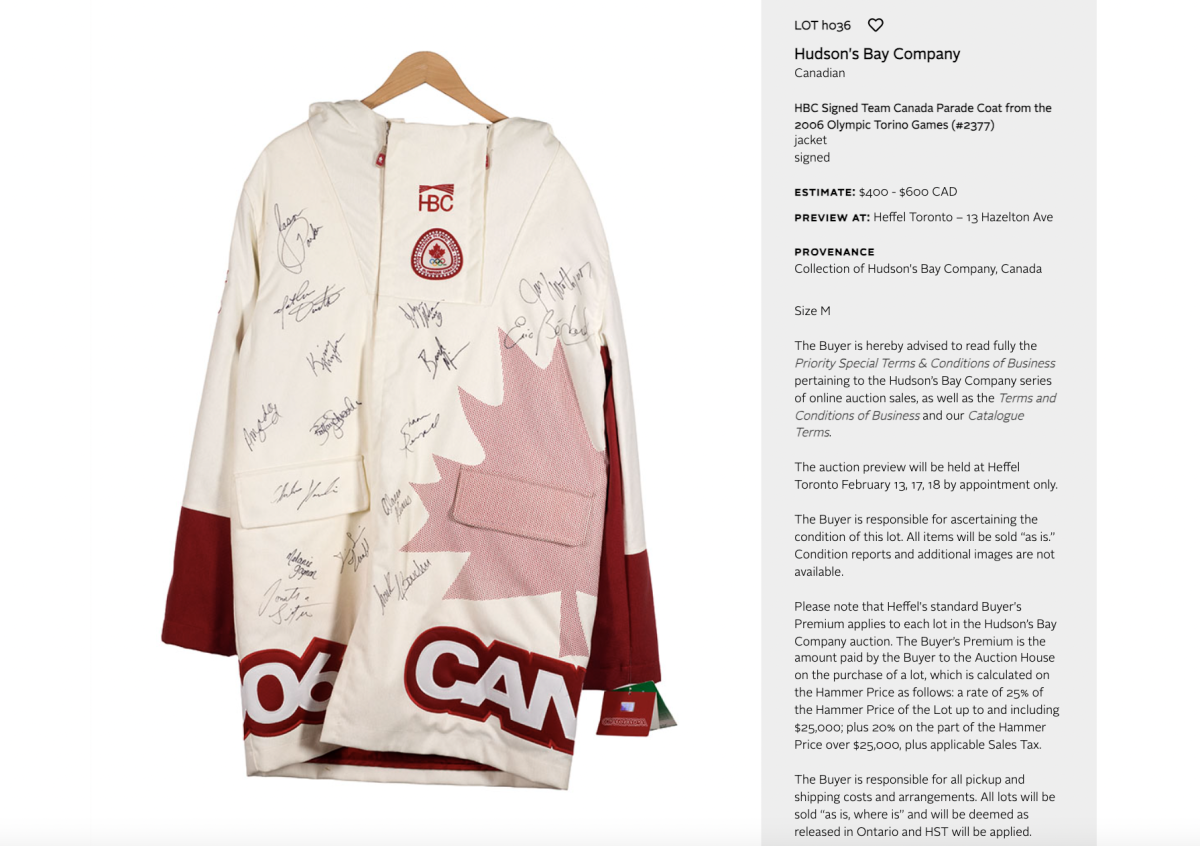
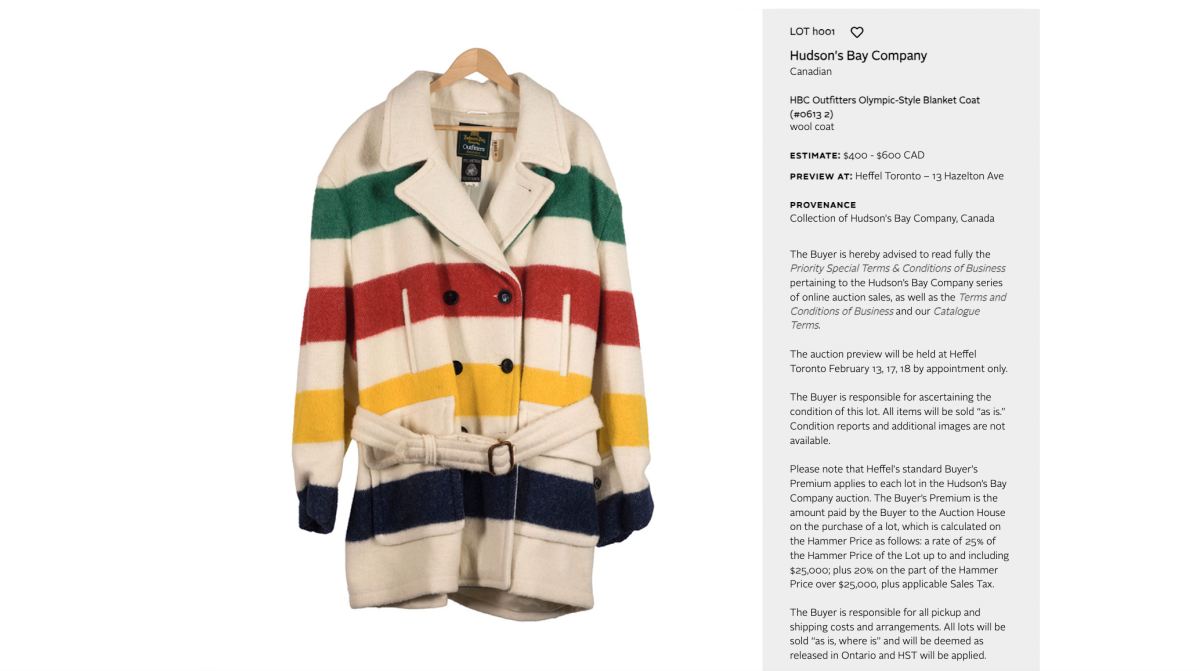
The HBC Olympic memorabilia auction includes a wide range of items associated with Canada’s Olympic teams. Among the most prominent pieces are Team Canada podium jackets signed by athletes, along with flag-bearer and torch-bearer uniforms from past Games. Several Olympic coats are also part of the offering.
Additional merchandise in the sale includes shearling hats, branded luggage, coins, ball caps, and scarves connected to Hudson’s Bay’s Olympic outfitting programs. The assortment reflects both the ceremonial and retail sides of the company’s Olympic involvement, spanning items worn by athletes as well as products sold to consumers.
Alongside the Olympic material, the auction also features non-Olympic collectibles drawn from the broader Hudson’s Bay corporate archive. These include Barbie dolls, teddy bears, and calendars that were once part of the retailer’s merchandise mix.
Screen shot of Heffel’s HBC Olympic collection auction
Third Phase of Court-Authorized Artifact Sales
The HBC Olympic memorabilia auction is part of a broader, court-sanctioned process to liquidate the company’s corporate collection following its bankruptcy and move into supervised proceedings. In 2025, an Ontario Superior Court judge authorized Heffel to sell approximately 4,400 artworks and artifacts from the Hudson’s Bay Company collection in order to satisfy creditors.
That mandate includes a wide spectrum of material, ranging from fine art and historic objects to branded merchandise and retail ephemera. Earlier phases of the process focused on high-value artworks, including a November 2025 auction that grossed more than $31 million and dispersed an initial group of 27 major pieces.
The current HBC Olympic memorabilia auction represents the continuation of that program, shifting the focus from institutional-grade art to consumer-facing collectibles.
Screen shot of offerings from Heffel’s HBC Olympic collection auction
Consumer-Focused Sale Timed to Olympic Interest
Compared with earlier auctions centered on fine art, this latest session emphasizes more accessible memorabilia. The offering includes a higher volume of items with lower estimates, such as coats, hats, scarves, toys, and other branded goods that reflect Hudson’s Bay’s retail heritage.
The timing of the HBC Olympic memorabilia auction is tied to the 2026 Winter Olympic Games, positioning the sale as an opportunity for collectors and fans to acquire pieces connected to Canada’s Olympic teams. Unlike the marquee live auction used for earlier high-value art sales, this round is being conducted entirely online.
Screen shot of Heffel’s HBC Olympic collection auction
Heritage Context Shapes What Can Be Sold
The ongoing auction program has also been shaped by discussions around heritage preservation. When the court first reviewed the plan to sell Hudson’s Bay artifacts, it excluded 24 items believed to be of Indigenous origin so they could be returned or donated instead of being auctioned.
Many older fur-trade-era artifacts were also safeguarded earlier, as a large portion of that material had already been donated to the Manitoba Museum in the 1990s. The pieces now being sold through Heffel come from the remaining corporate collection that the court determined could be liquidated.
By contrast, Olympic apparel and branded collectibles do not carry the same restrictions. As a result, these items are appearing in online sales such as the current HBC Olympic memorabilia auction rather than being diverted to museums or heritage institutions.
Bidding for the HBC Olympic memorabilia auction is taking place exclusively on Heffel’s website. The sale runs from today through February 19, with a range of Olympic-themed apparel, accessories, and collectibles available to bidders across the country and internationally.
As the court-authorized process continues, additional auctions are expected to follow, further dispersing the remaining Hudson’s Bay artifacts into private and institutional collections.
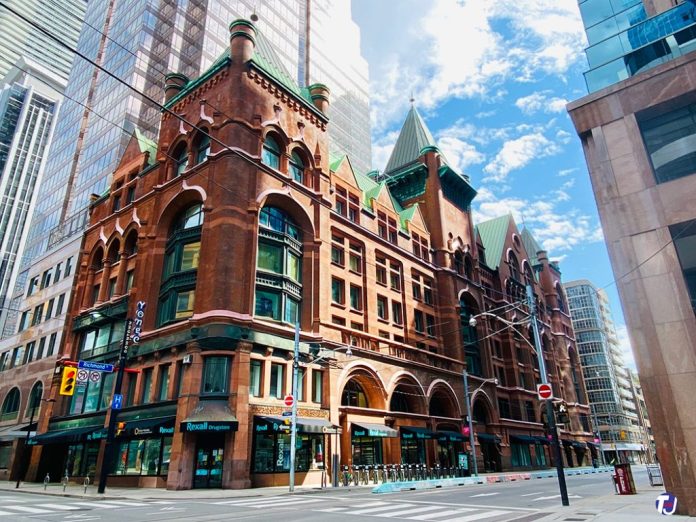
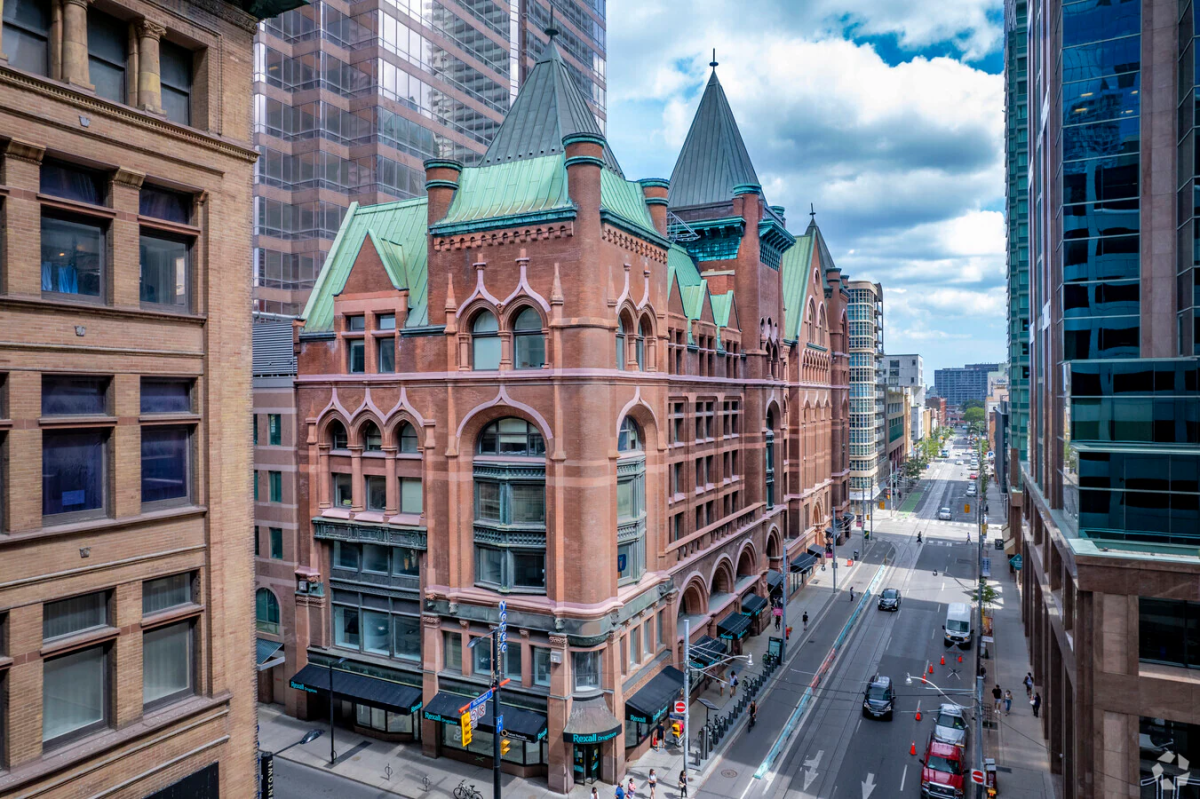
20 Richmond St. E. in Toronto. Photo: TorontoJourney416
Montreal-based custom clothing brand SUITABLEE is preparing to enter Canada’s largest and most competitive retail market, with a Toronto showroom set to open in spring 2026 at 20 Richmond Street East. The location, situated within the historic Confederation Building, marks a major milestone for the fast-growing made-to-measure brand as it continues to evolve from a Quebec-rooted company into a national player.
For Jean-Sebastien Siow, Co-Founder and CEO of SUITABLEE, the Toronto opening is the result of patience and discipline rather than urgency. “Toronto was always on our radar, but we wanted to be disciplined,” Siow said. “We see a lot of brands rush expansion. For us, the address mattered more than speed.”
Jean-Sebastien Siow
That approach reflects how SUITABLEE has grown since its founding in 2015 by brothers Jean-Sebastien and Jean-Jeremie Siow, both engineers who built the business without major outside funding. By blending AI-driven sizing technology with traditional tailoring, the company has positioned itself as a modern alternative to both off-the-rack suiting and traditional bespoke, offering custom garments that are more accessible in both price and process.
A Strategic Downtown Location at the Crossroads of Toronto
The SUITABLEE Toronto showroom will occupy a street-level unit at 20 Richmond Street East, between Terroni and Rexall, in a pocket where the Financial District, King East, and the St. Lawrence neighbourhood converge. Siow said the site stood out immediately once it became available.
“When this location came up, we knew right away it was the one,” he said. “It sits at the intersection of the Financial District, King East, and St. Lawrence, which brings together business, weddings, and everyday foot traffic.”
The building itself played a key role in the decision. “It’s a beautiful historic building,” Siow said. “It feels established and authentic, not overly commercial, which aligns closely with our Old Montreal flagship.”
That sense of permanence and character mirrors SUITABLEE’s headquarters showroom in Old Montreal, located near the Notre-Dame Basilica, and reflects the brand’s preference for spaces that feel grounded rather than overtly corporate.
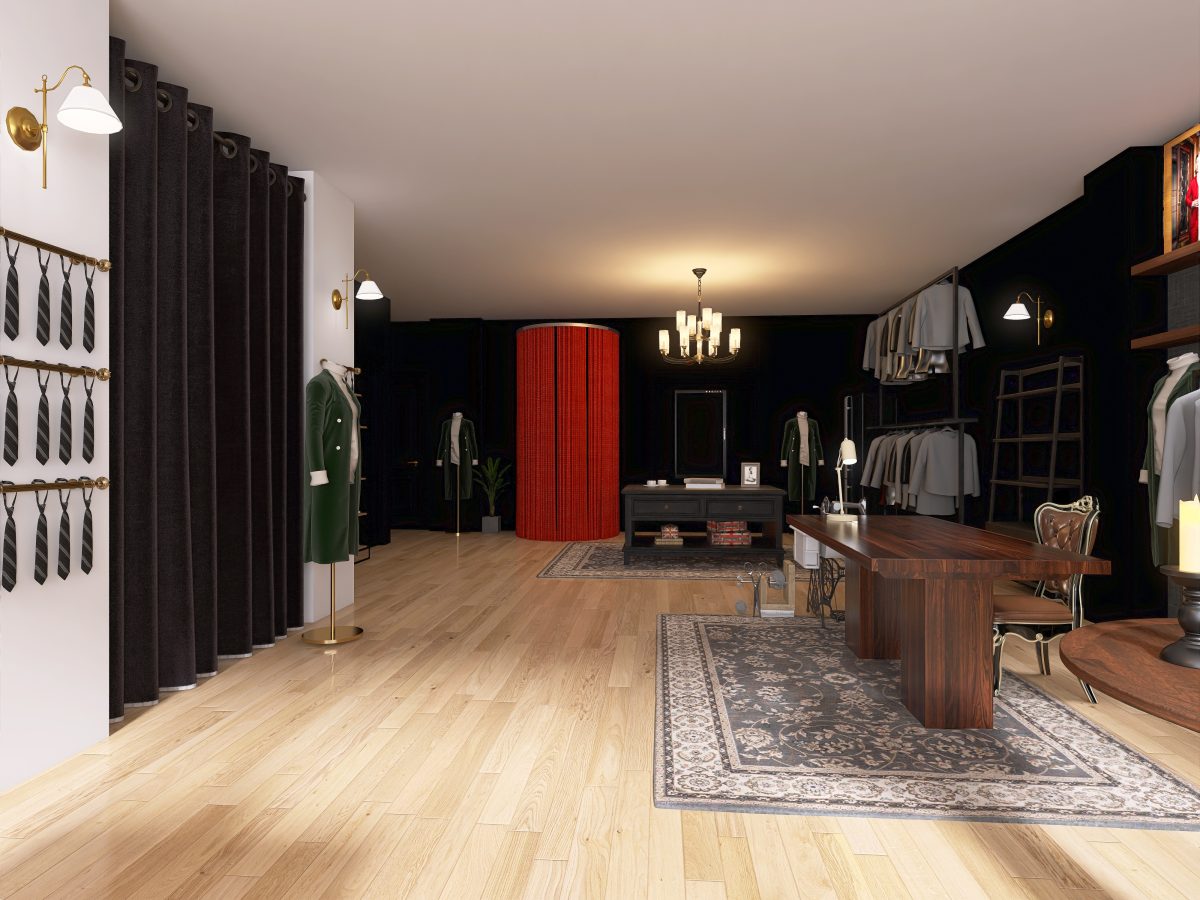
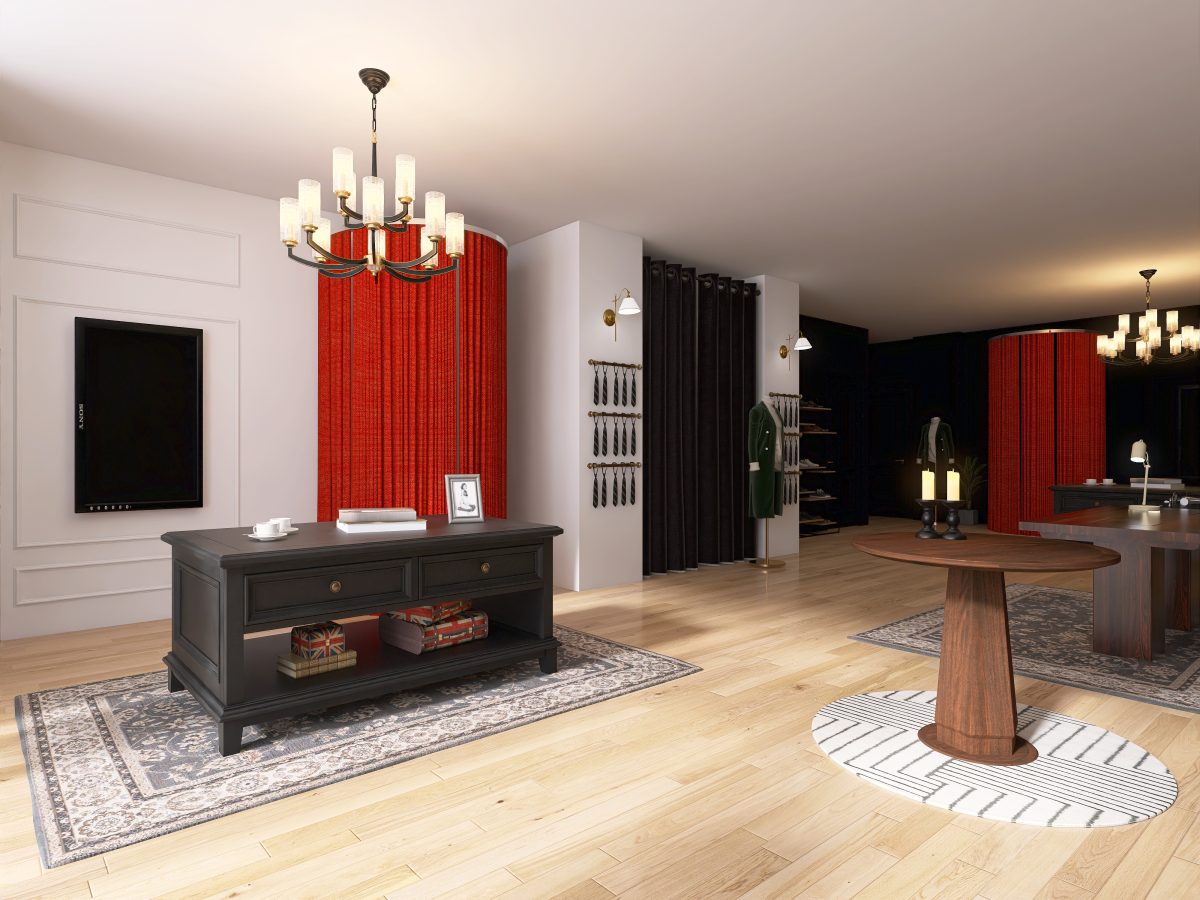
Rendering of the new Suitablee showroom in Toronto. Image supplied
Designed for Walk-Ins and Appointments
While SUITABLEE began as a more appointment-driven custom tailoring business, its retail model has evolved significantly over the past several years. The Toronto location will reflect that shift.
“We’re no longer an appointment-only business,” Siow said. “We built the infrastructure to handle volume, including walk-ins, which started with our Brossard location and will carry through to Toronto.”
Inside the SUITABLEE Toronto showroom, customers will find a browsing area where they can explore fabrics, styles, and finishes, alongside digital displays that allow visitors to design garments interactively. Fitting stations will support both individual clients and groups, particularly wedding parties.
“The traditional tailor is often one-on-one in a closed environment,” Siow said. “Our spaces feel more open. It’s a market-style experience, but still very personal.”
The interior is being completely rebuilt to reflect SUITABLEE’s established showroom design language. “We’re completely reworking the interior to match our brand,” Siow said. “We’re flying in our interior designer to ensure the Toronto showroom feels consistent with our locations in Montreal and Ottawa.”
The brand’s visual identity, which features black, white, and a distinctive Canadian red, will be carried through the Toronto space. “We chose Canadian red from the beginning,” Siow said. “It’s always been part of who we are.”
Womenswear Emerges as a Core Growth Driver
One of the most significant shifts within SUITABLEE has been the rapid rise of womenswear, which now represents a substantial share of the business.
“In the past three years, womenswear has taken off,” Siow said. “Women now account for about 40% to 50% of our revenue, which is a major shift for a company that began primarily in menswear.”
The growth has been fueled by both changing consumer preferences and SUITABLEE’s technical investment in women-specific patterning. “Many competitors adapt menswear patterns for women,” Siow said. “We built women’s patterns from the ground up, and that difference is visible in how the suits fit and move.”
That investment has also reshaped the brand’s customer mix. While professional women, including lawyers, executives, and real estate professionals, remain a core audience, weddings have become an increasingly important category.
“We’re seeing a strong increase in women choosing suits for weddings,” Siow said. “That includes LGBTQ weddings and women who simply prefer suiting. That segment has grown faster than we expected.”
Ottawa, where SUITABLEE operates a downtown showroom, has been a particularly strong market for this segment. Siow noted that LGBTQ weddings have become a meaningful driver of womenswear fittings in the capital.
20 Richmond St. E. in Toronto. Photo: LoopNet
Customers Will Travel for Fit
SUITABLEE’s emphasis on fit accuracy has produced an unexpected outcome, destination clients. According to Siow, customers regularly travel long distances specifically to be fitted in person.
“Every week, we see customers flying in from across Canada and the U.S. just to get fitted,” he said. “They come in for their appointment and often fly home the same day.”
The brand’s AI-powered sizing system, built on thousands of local body scans and pattern refinements, has been central to that confidence. “Because we’re a custom business, avoiding remakes was critical from day one,” Siow said. “Today, about 95% of our customers do not require a remake, and adjustments are minimal.”
That precision also differentiates SUITABLEE from off-the-rack apparel retailers that continue to struggle with returns and fit-related waste.
Rendering of the new Suitablee showroom in Toronto. Image supplied
Made-to-Measure as a Sustainability Advantage
While sustainability is not the brand’s primary marketing message, Siow acknowledged that the made-to-measure model naturally reduces waste.
“We don’t mass-produce,” he said. “Everything is made to order, which reduces waste and overproduction.”
In an industry still grappling with excess inventory and markdown cycles, the ability to produce garments on demand, without returns in the traditional sense, has become an operational advantage as well as a philosophical one.
Strengthening the Home Market Before Going National
Before turning westward, SUITABLEE is reinforcing its Quebec footprint. In addition to its Old Montreal and Brossard locations, the company is planning a third Greater Montreal showroom in Laval.
“Home has to be strong,” Siow said. “We’re solidifying our stronghold in Montreal before expanding further.”
That strategy mirrors SUITABLEE’s earlier decision to open in Brossard, near Quartier DIX30, which initially raised questions but ultimately proved successful by attracting customers who preferred suburban access and easier parking.
Looking ahead, Siow said the brand’s long-term ambition is national, with major Canadian cities firmly on the map. “Our goal is to be a national brand,” he said. “Eventually, that means serving all major Canadian markets.”
Toronto, he added, could ultimately support more than one location. “The GTA can easily support multiple showrooms over time,” Siow said, suggesting that suburban locations may eventually complement the downtown flagship.
Toronto as a Defining Moment
For SUITABLEE, opening in Toronto carries symbolic weight beyond sales projections.
“In Canadian retail, Toronto is a major milestone,” Siow said. “Opening here strengthens the brand and signals that we’re operating at a national level.”
Montreal-based clothing retailer GARAGE has launched e-commerce operations in the United Kingdom, allowing customers to shop the brand online as the company advances its international growth strategy.
The North American apparel brand said its U.K. website is now live, with shipping available across England, Scotland, Wales and Northern Ireland. The launch gives the company a direct-to-consumer foothold in the market ahead of planned physical store openings later this year.
Entry into U.K. market
The company said the e-commerce rollout represents a first step in building a customer base in the U.K. and provides immediate access to its products through the brand’s digital platform.
Andrew Lutfy
“This is something we’ve been working toward for a long time,” said Andrew Lutfy, CEO of GARAGE. “We already see strong interest from the UK, and launching e-commerce is an important first step in building a real connection with customers here. It gives people immediate access to the brand, and it sets the foundation for what’s coming next.”
Photo: GARAGE
GARAGE said the online launch introduces the brand to a new geographic market and supports its broader international expansion plans.
Physical retail plans
In addition to the digital launch, the company confirmed it plans to open physical retail locations in the U.K. later this spring. Stores are slated for Oxford Street in London and at Bluewater Shopping Centre.
The company characterized the combination of e-commerce and physical retail as part of its approach to establishing a presence in the market.
Product offering and brand positioning
GARAGE said the U.K. website features its latest collections, alongside brand campaigns. The online platform serves as an introduction to the company’s merchandise for U.K. customers.
The brand described itself as having a strong following in North America, where it has built recognition through regular product releases and a focus on direct engagement with its customer base.
Photo: GARAGE
Company background
Founded in Montreal in 1975, GARAGE operates as a women’s clothing brand with a long-standing presence in North America. The company said it has built its business around frequent product drops and an emphasis on understanding its customer.
GARAGE said it has developed a loyal following by maintaining close ties with its audience and adapting its offerings to how customers live and dress. The company positions its products as elevated, off-duty essentials designed for everyday use.
The U.K. e-commerce launch marks the latest step in the company’s efforts to extend that model beyond North America as it pursues growth in international markets.
Consumer insolvencies in Canada edged higher in 2025 to the second-highest annual total ever recorded, while business insolvencies declined from the year before but remained well above pre-pandemic levels, according to data cited by the Canadian Association of Insolvency and Restructuring Professionals.
Figures from the Office of the Superintendent of Bankruptcy show consumer insolvencies rose 2.3 per cent last year from 2024 to 140,457 filings. The total represents the highest level in 16 years and translates to an average of about 385 consumer insolvencies per day.
The data suggest financial strain on households remains widespread, even as the pace of growth slowed from the sharp increases recorded in 2024.
Consumer filings remain elevated
“The modest increase in consumer insolvencies in 2025 suggests that financial pressure remains widespread, even as some economic indicators have begun to stabilize,” said Wesley Cowan, a licensed insolvency trustee and vice-chair of CAIRP. “Many households are still feeling the cumulative impact of years of high inflation, higher borrowing costs, and stretched budgets.”
Consumer insolvencies dipped 3.8 per cent in the fourth quarter compared with the third quarter, but were still up 3.3 per cent from the same quarter a year earlier.
Wesley Cowan
CAIRP said overall consumer insolvency volumes have levelled off in recent quarters, even as household debt continues to climb. Equifax Canada reported total consumer debt reached $2.62 trillion in the third quarter of 2025, up 3.4 per cent from a year earlier, while average non-mortgage debt per consumer rose to $22,321.
Cowan said the combination of steady insolvency volumes and rising debt may indicate some households are postponing action.
“Many households may be ‘delaying the inevitable’ by relying more heavily on credit to stay afloat rather than seeking help earlier,” he said. “When people are juggling rising costs with growing balances on credit cards, lines of credit, and other loans, they can feel like they’re managing, until they’re not. That can keep insolvency volumes steady in the short term, even as underlying financial stress continues to build.”
Mortgage pressures and uneven job conditions
Cowan said higher mortgage payments and ongoing cost-of-living pressures continue to weigh on household finances.
“Even as inflation has cooled from its peak, everyday expenses remain significantly higher than they were just a few years ago. For homeowners renewing mortgages at higher rates, the impact on monthly budgets can be substantial, leaving less room for savings and debt repayment,” he said. “While the much-discussed mortgage ‘renewal cliff’ has not been as severe as some earlier forecasts suggested, higher payments for many homeowners are still squeezing household budgets and, in some cases, spilling over into missed or delayed payments on other credit. At the same time, while the job market has held up overall, conditions haven’t been the same for everyone, which is adding to financial anxiety for some households.”
CAIRP said the data underscore the importance of early support for individuals facing financial stress.
“Whether someone is already overwhelmed by debt or simply unsure of their options, Licensed Insolvency Trustees can help people understand what they’re dealing with and what their options actually look like,” Cowan said. “They typically offer free initial consultations, with no pressure or obligation, and clearly explain all available debt-relief options, which could include reworking a budget, consolidating debts, selling assets, or filing a consumer proposal or bankruptcy. They can also step in to stop collection calls and ease the stress of dealing with creditors. The earlier people seek guidance, the more options they usually have.”
Provincial differences
Among provinces, British Columbia recorded the largest year-over-year increase in consumer insolvencies in 2025, rising 10.6 per cent to 15,331 filings. Newfoundland and Labrador followed with a seven per cent increase to 2,395 filings, while Prince Edward Island saw a 6.1 per cent rise to 593 filings.
Business insolvencies decline but stay elevated
Business insolvencies moved in the opposite direction in 2025, falling 21.8 per cent from 2024 to 4,840 filings. Despite the decline, CAIRP said the total remains 31.5 per cent above the pre-pandemic average from 2016 to 2019.
Business filings rose 1.3 per cent in the fourth quarter from the previous quarter, but were down 15.8 per cent compared with the same period in 2024.
craig munro
“Business insolvencies have come down in 2025, but that doesn’t mean the operating environment has suddenly become easy,” said Craig Munro, a licensed insolvency trustee and chair of CAIRP. “Many businesses are still managing higher costs, tighter margins, and uneven demand, which continues to test their resilience.”
CAIRP said many firms remain cautious, often limiting investment and hiring amid softer demand.
Ongoing risks for some sectors
Munro said uncertainty continues to pose challenges for certain businesses.
“Supply chain volatility and higher financing costs continue to weigh on many Canadian businesses, and ongoing uncertainty around cross-border trade and export demand remains a headwind, particularly for companies that rely heavily on international markets,” he said. “Larger businesses are often better positioned to ride out these shifts, while smaller businesses are typically the first to feel these pressures, making it harder for them to weather unexpected shocks or prolonged periods of weaker demand.”
Munro said early intervention can help business owners assess their options.
“Speaking with a Licensed Insolvency Trustee can give business owners a clearer picture of their options, whether that means negotiating with creditors, restructuring debt, or making strategic adjustments to strengthen long-term viability,” he said.
Sector-level data showed only three industries recorded increases in business insolvencies in 2025: agriculture, forestry, fishing and hunting; mining, quarrying and oil and gas extraction; and utilities. The largest declines were reported in accommodation and food services, transportation and warehousing, and construction, though accommodation and food services continued to account for a significant share of total filings.
Construction represented the largest portion of business insolvencies in 2025 at 15.5 per cent, followed by accommodation and food services at 13.7 per cent.
Dr. Phone Fix Canada Corporation says preliminary, unaudited results for 2025 show higher revenue and improved profitability as the electronics repair chain benefited from stronger performance across its existing stores.
The Edmonton-based company, which trades on the TSX Venture Exchange under the symbol DPF, said that revenue for the year ended Dec. 31, 2025, is expected to be about $12.1 million, up from $10.2 million in 2024. The company also reported a year-over-year increase in adjusted EBITDA and said gross margins remained in the high-40-per-cent range.
The results, which are based on an operating base of 35 stores during 2025, are preliminary and unaudited. The company said audited financial statements will be released at a later date.
The company focuses on device repair, resale and what it characterized as responsible device lifecycle management as it continues to expand its national footprint.
Founded in 2019, Dr. Phone Fix said it operates a standardized platform designed to support consistent execution across multiple markets.
The press release noted that the
Revenue growth and margins
Dr. Phone Fix said revenue growth of more than 19 per cent in 2025 was accompanied by higher gross profit and improved operating leverage.
According to the company, gross profit for the year is expected to be approximately $6.0 million, compared with $5.4 million in 2024. Gross margins remained in the high-40-per-cent range.
Adjusted EBITDA for 2025 is expected to be approximately $0.6 million, up from $187,082 a year earlier, which the company described as a material year-over-year improvement.
The company said the results reflect its 35-store operating base during 2025. It also pointed to previously disclosed data indicating that it exited the year with unaudited average annualized run-rate revenue per store of about $350,000.
That figure was disclosed in a Jan. 22, press release and, according to the company, reflects improved store-level productivity across its legacy network.
“As newly acquired and recently opened locations mature, management expects further operating leverage and margin expansion across the national platform,” the company said.
Piyush Sawhney
Focus on store-level performance
Chief executive Piyush Sawhney said improvements in 2025 were driven by stronger performance across existing locations and a focus on operational discipline.
“Our performance in 2025 was driven primarily by continued improvement across our legacy store base, supported by disciplined cost controls, pricing optimization, and a strong focus on execution at the store level,” Sawhney said. “During the year, we observed consistent customer demand across our existing store network, which allowed management to prioritize operational efficiency, and store-level performance.”
The company said it ended 2025 with a larger operating footprint than in the prior year and continues to pursue both organic growth and acquisitions.
“As we enter 2026, we are operating with a larger national footprint, improving unit economics, and increasing scale,” Sawhney said. “Our growth strategy remains balanced between organic expansion and disciplined acquisitions, supported by a robust pipeline of potential targets, which we expect to execute on throughout the year as we work toward our objective of reaching approximately 70 stores by the end of 2026. Importantly, the improvements achieved in 2025 reflect structural enhancements to our operating model rather than one-time initiatives, positioning the Company for continued margin expansion as scale increases.”
Dr. Phone Fix said that while it operated 35 stores during 2025, it now operates 44 retail locations nationwide through what it described as a standardized and scalable operating platform.
Investor relations agreement
Alongside its preliminary financial results, Dr. Phone Fix announced it has entered into an investor communications agreement with Apollo Shareholder Relations Ltd., doing business as Edge Investments.
The agreement is dated Jan. 23, 2026, and has an initial term of three months, with an option for the company to extend it for an additional three months.
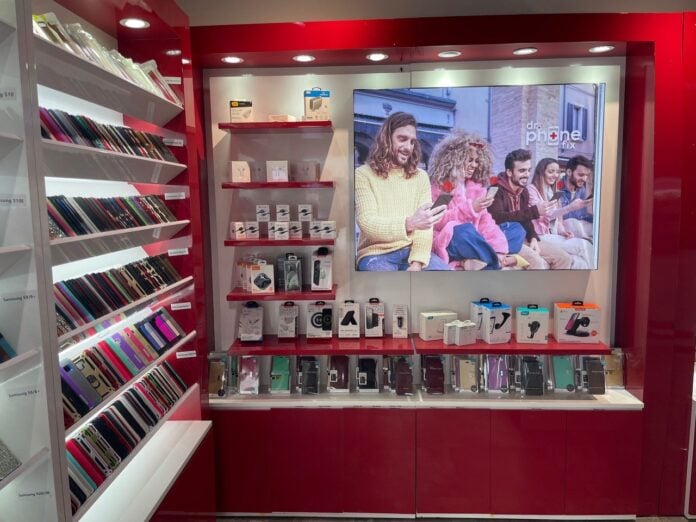
Image: Dr. Phone Fix
Under the agreement, Apollo will provide digital investor relations and communications services intended to increase investor awareness and understanding of the company and its business.
In consideration for its services, Dr. Phone Fix will pay Apollo a cash fee of $2,500 per month during the initial term and $2,500 for each successive month during any extension of the agreement.
The company said Apollo operates at arm’s length and has no equity interest in Dr. Phone Fix securities, nor any right to acquire such an interest, to the best of the company’s knowledge.
Apollo was co-founded and is owned by Kevan Matheson, Chase Kazakoff and Jazz Chodak. Its offices are located in Langford, B.C.
Preliminary results
Dr. Phone Fix emphasized that the financial figures released are preliminary and unaudited. The company said it will provide audited results for the year ended Dec. 31, 2025, when they become available.
CrossIron Mills will host the full Calgary Flames roster for a free autograph session later this month, launching a promotional activation tied to the shopping centre’s partnership with the NHL club.
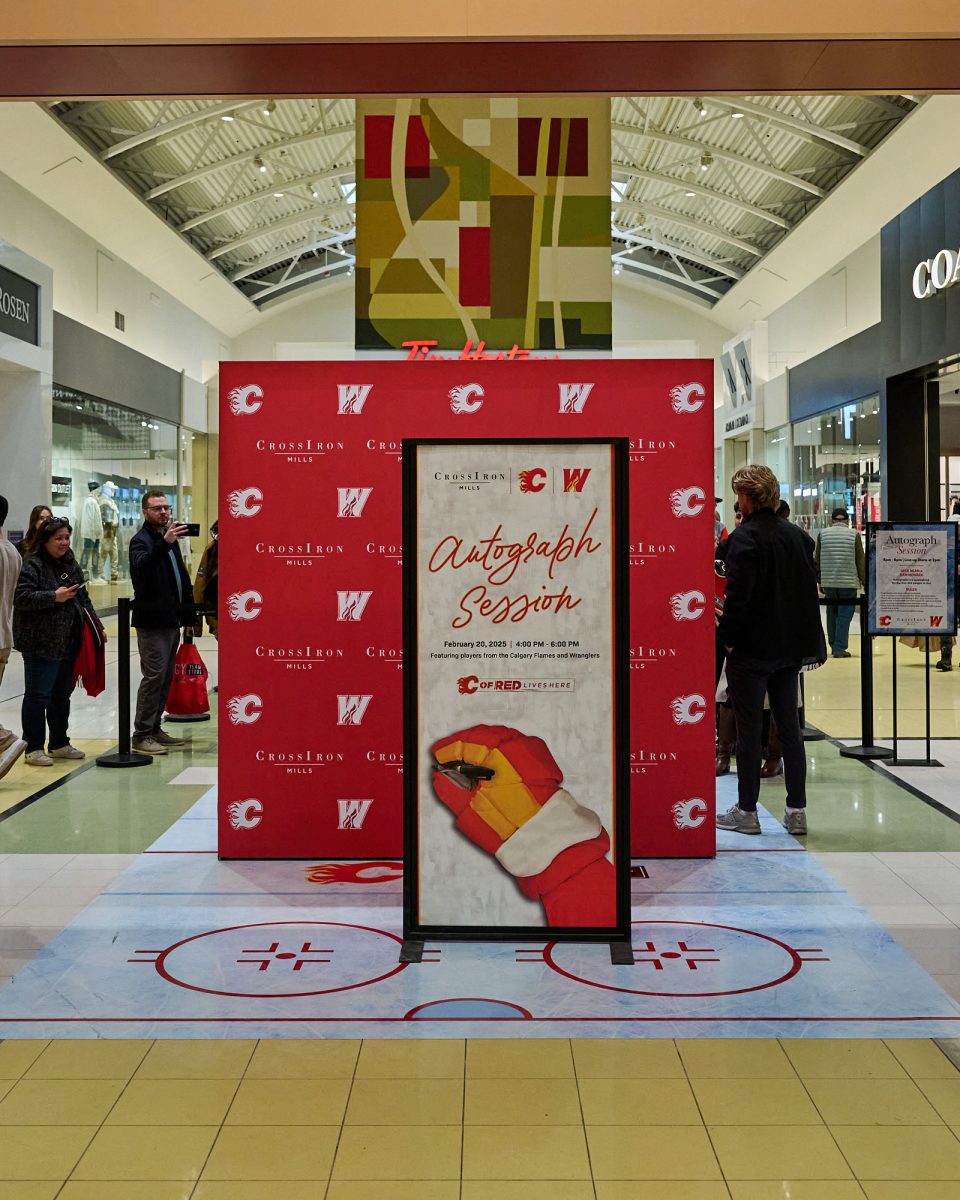
The mall will welcome the Flames on Monday Feb. 23, from 5 p.m. to 7 p.m. for an autograph event held at multiple locations throughout the property. The appearance marks the start of CrossIron Mills’ C of Red Celebration, a mall-wide initiative running until March 15.
Autograph event details
According to the release, the first 300 fans in line at each signing station will be guaranteed an autograph. Lineups will open at 2 p.m. on the day of the event, several hours before the scheduled signing window.
Joel Tatlow
“We’re proud to be a partner of the Calgary Flames and to welcome the full team to CrossIron Mills,” said Joel Tatlow, marketing manager at CrossIron Mills. “It’s exciting to provide fans with an opportunity to meet their favourite players in person. CrossIron Mills has always been a place where people come together and connect, and nothing brings our community together more than the Calgary Flames.”
The autograph stations will be spread throughout the mall. CrossIron Mills said player maps and the exact locations of signing stations will be released on its social media channels on Feb. 22, one day before the event.
Fans will be limited to one autograph per player. Autographs may be signed either on a personal item or on a player card, with individual player cards available at each station. The release notes that posed photographs with players will not be permitted because of capacity limits and time constraints.
Partnership focus
The event is positioned as a joint initiative between the mall and the Flames, reflecting an ongoing partnership between the two organizations. The Flames said the appearance is intended to create a direct point of contact between the team and its fan base.
Robert Hayes
“Our fans are at the heart of everything we do, and creating meaningful opportunities for them to connect with the team matters deeply to us,” said Robert Hayes, President & CEO of the Calgary Flames. “Partnering with CrossIron Mills allows us to bring the Flames directly to our fans and recognize the passion they show season after season. We’re excited to kick off the C of Red Celebration with an experience designed to celebrate their loyalty and love for the game.”
CrossIron Mills described itself in the release as a partner of the Calgary Flames and framed the event as a way to draw visitors to the mall while hosting a high-profile community gathering.
Photo: CrossIron Mills
C of Red Celebration
The autograph session will serve as the opening event for the C of Red Celebration, which will run at CrossIron Mills until March 15. The activation is described as mall-wide and focused on interactive experiences tied to Calgary’s hockey culture.
As part of the promotion, visitors will have opportunities to enter contests offering prizes, including a $500 CrossIron Mills gift card and an ultimate Calgary Flames Game Day Prize Pack valued at approximately $2,000, according to the release.
The mall said the celebration is intended to commemorate Calgary’s hockey legacy and to provide multiple touchpoints for fans during the two-week period following the team appearance.
Rexall Pharmacy Group Ltd. has appointed Ron Wilson as its new president and chief executive officer, effective March 2, as the company positions itself for its next phase of growth and operational transformation.
The pharmacy retailer said Wilson will succeed Nicolas Caprio, who will transition from his role as president to join Rexall’s board of directors and support the leadership change through the end of March.
The leadership changes also include the appointment of Jeff Boutilier, currently senior vice-president of store operations and pharmacy, as chief operating officer.
Leadership transition
Rexall said Wilson will be responsible for leading the company’s strategy as it advances its position in community-based health and wellness across Canada.
Wilson most recently served as president of Best Buy Canada, where the company said he led a number of growth and innovation initiatives. Those initiatives included expanding the Best Buy Express store network, scaling the Best Buy Marketplace and modernizing fulfillment and customer-facing operations.
Ron Wilson
Rexall said Wilson brings experience leading large-scale retail organizations through periods of change and operational growth.
“I’m honoured to join Rexall at an important moment of growth for the business,” said Wilson. “Rexall is a trusted name for Canadians, and I’m excited to work alongside the pharmacy teams to empower their expertise, enhance performance, drive growth, and continue improving how we support customers and patients.”
Strategic focus
In his new role, Rexall said Wilson will focus on strengthening execution across the organization, increasing engagement and advancing what the company describes as its pharmacy-first strategy to community care and health services.
The company characterized Wilson as a people-focused leader who emphasizes organizational culture, collaboration and frontline teams responsible for delivering care and service.
Rexall said pharmacy operations will remain central to its business model and strategic direction.
As part of that focus, Boutilier’s appointment as chief operating officer is intended to strengthen the company’s pharmacy strategy and operational leadership.
“With pharmacy at the heart of Rexall’s purpose and business, Jeff Boutilier, currently Senior Vice President, Store Operations & Pharmacy, is also appointed Chief Operating Officer, where he will lead a pharmacy strategy dedicated to supporting the health and wellness of Canadians,” the company said in its release.
Board continuity
Caprio, who has served as president, will remain involved with Rexall through his role on the board and during the leadership transition period.
The company said the planned transition is intended to maintain continuity while advancing its long-term priorities.
“It has been a privilege to lead Rexall and our dedicated teams across the country. As I transition to the Board of Directors, I am incredibly confident in Ron’s ability to lead Rexall into its next chapter of growth,” said Caprio. “Ron’s extensive retail expertise, combined with Jeff Boutilier’s deep pharmacy leadership as the new Chief Operating Officer, ensures that our pharmacy-first commitment remains at the heart of everything we do. This planned transition reinforces our stability and our unwavering focus on providing exceptional care to the patients and customers we serve.”
Company overview
Rexall operates more than 370 pharmacies across Canada and employs approximately 7,800 people. The company provides prescription services, preventive care and in-store health support.
The retailer said its leadership changes are aligned with its stated purpose of delivering health care services at the community level, with pharmacy operations as the foundation of its business.