Home Blog Page 290

Pop-Up Warehousing? Why Retailers Are Looking at Containers Differently

Key Highlights

  • Containers are being used as short-term warehousing for retail overflow and pop-ups
  • They support faster delivery, decentralised fulfilment, and flexible inventory control
  • Brands are turning to affordable shipping containers to avoid costly long-term leases
  • Modular container setups allow retailers to scale logistics with demand

Warehousing has become one of the most expensive parts of running a retail operation — especially for brands chasing speed, flexibility, and a presence in more places at once. With commercial rents climbing and long-term leases limiting agility, retailers are under pressure to find faster, more adaptable solutions.

Enter the shipping container.

Once reserved for freight and storage yards, containers are now being repurposed as micro-warehouses, seasonal inventory hubs, and mobile fulfilment points. For retailers managing stock across multiple channels — or reacting to sudden demand spikes — these compact units offer a way to stay nimble without locking in heavy overheads.

What started as a temporary fix is quickly becoming a long-term strategy.

The pressure to stay fast, local, and flexible

The modern retail customer doesn’t just expect fast delivery — they expect local service, real-time stock availability, and short lead times, especially during peak periods. That demand puts pressure on retailers to decentralise their logistics, bringing inventory closer to key delivery zones without committing to long-term warehousing deals.

But in dense urban areas and regional growth corridors, space is tight and leases are slow to secure. For many retailers, particularly those with a strong e-commerce focus, traditional fulfilment models no longer match the speed or flexibility the market demands.

That’s where container-based warehousing is starting to fill the gap. Containers can be placed temporarily on-site, in overflow yards, or near distribution points, offering fast setup and minimal disruption. They give brands a way to move quickly — without the friction of adding permanent infrastructure.

Containers as temporary warehousing solutions

When retail demand spikes, traditional infrastructure often can’t scale fast enough. Whether it’s a peak-season sale, a sudden promotion, or a new store rollout, stock needs somewhere to go — and quickly. That’s where containers come in.

Retailers are increasingly using shipping containers as short-term inventory hubs. Delivered directly to store sites, pop-up locations, or regional distribution points, they allow teams to handle overflow without waiting on warehouse space or third-party logistics providers. For omnichannel retailers, this also creates opportunities to stage online and in-store stock closer to the customer — cutting down delivery time and internal transfers.

In regional areas, where warehousing is limited or non-existent, containers act as temporary infrastructure that can be packed, locked, and relocated with minimal hassle. They’re particularly useful for retailers launching activations or testing new markets — the container becomes a mobile back-of-house unit that moves with the brand.

Cost matters — and so does control

Retail has always run on margins, and with warehousing costs rising across Australia, every square metre counts. Locking in a traditional lease — especially for a short-term need — doesn’t always make financial sense. Containers offer a lower-cost, high-control alternative that fits where traditional models can’t.

With affordable shipping containers, retailers can create their own flexible storage networks without waiting on third-party availability or signing multi-year contracts. Containers can be dropped onsite, repositioned, or repurposed as needs shift — giving brands direct control over where and how inventory is managed.

It’s not just about saving money. It’s about being able to respond fast when stock needs to move, space runs out, or a new sales channel opens up. For fast-growing retailers or brands testing new formats, that level of agility is often worth more than square footage.

Modular thinking for agile retail

Retail is no longer about locking in one model and scaling it. Brands are launching pop-ups, running hybrid online-offline experiences, and adjusting inventory locations month to month. In that kind of environment, modular infrastructure isn’t just useful — it’s essential.

Shipping containers support that modular approach. One unit might serve as a temporary storeroom behind a new store opening. Another might become a fulfilment hub during a limited-time campaign. Stack two together, and you’ve got room for seasonal stock without touching your core warehouse. When the moment passes, they can be relocated, repurposed, or picked up entirely.

For retailers experimenting with new formats or growing into new regions, this kind of infrastructure lets them test without overcommitting. It’s a way to match physical space to actual demand — and that’s where traditional warehousing often falls short.

Final thoughts

Shipping containers aren’t replacing traditional warehousing — but they’re becoming a valuable extension of it. For retailers trying to stay agile in a fast-moving, space-constrained market, containers offer a way to scale without overcommitting, move quickly without losing control, and meet customer demand without long lead times. The brands using them aren’t downsizing. They’re designing logistics systems that flex as fast as retail now moves.

How Retailers Can Keep Up With Rapidly Changing Consumer Trends

Retail has always been shaped by consumer behaviour, but the pace of change in recent years has accelerated dramatically. Shifts in technology, economic pressure, sustainability concerns and changing lifestyle expectations mean that today’s shoppers are more selective, informed, and therefore demanding than ever. For retailers, understanding these evolving behaviours is no longer a “nice to have” – it’s fundamental to survival. What’s the challenge? Definitely not the lack of data, since the retailers have access to more consumer information than ever before in recorded history. The real issue lies in interpretation and execution. In other words: how to turn insights into decisions that meaningfully improve the customer experience, drive loyalty, and support long-term growth.

Why Insights Alone Are Not Enough?

Many retailers invest heavily in reports, analytics platforms, and customer surveys. While these tools are essential, they often sit in isolation, disconnected from daily decision-making. Without context, insight can become overwhelming or underutilised. That’s why so many retail leaders are increasingly engaging with consumer trends experts who specialise in translating complex behavioural shifts into practical strategies. Such experts can help understand not only what consumers are doing but why they are doing it and what exactly it means for the product, pricing, design, and digital experience.

The Role of Speakers in Making Insight Actionable

Industry speakers play a unique role in the retail ecosystem. Unlike static reports, experienced speakers bring insights to life through real-world examples, case studies, and narrative. They connect macro trends with frontline realities and help teams visualise how change will impact their specific business. In retail, a well-chosen speaker, like the ones at PepTalk, can act as a trigger to deliver unexpected results in executing the company’s strategy. These sessions can help align teams around a shared understanding of the consumer in question and create a better plan for future plans. Speakers who focus on consumer behaviours don’t just inform; they challenge the assumptions we tend to make when we observe our desired clientele from within the business. We need an outsider with expertise to point out things that we could otherwise miss.

Turning Consumer Understanding into Retail Strategy

Once we understand, we need to execute. This is where many retailers struggle. Knowing that consumers value convenience is one thing – redesigning our company’s operations to deliver easier solutions for them is another. Consumer-focused speakers help by providing very specific insights within operational realities, exploring how changing expectations affect supply chains, staff training, technology investment, and communication with your clients. This practical approach will help retailers prioritise initiatives with the biggest impact. A strong speech grounded in consumer truth can also energise teams at every level of the organisation, reinforcing necessary changes and preventing a wrong turn.

How to Keep Pace with Continuous Change

One of the defining characteristics of the modern consumer is inconsistency. Behaviours evolve quickly and are hard to predict. They are influenced by social trends, economic situation, and global events, among millions of other variables. Retailers can no longer rely on static, outdated data and long-term assumptions. They need to keep up, and let’s be honest, it’s hard to stay on top of the game at all times. That’s why regular engagement with trained consumer behaviour specialists can be so valuable to your business. It helps you stay agile without investing more time in research.

Final Thoughts

Understanding the modern consumer is more than just data collection. It’s about its active interpretation, communication and drawing insightful conclusions. Retailers that succeed are those who keep up with the game and centre their decisions on the right insight. By learning from consumer trends experts and leveraging that knowledge to their advantage, retailers can translate data into the right behaviours and finally achieve the desired results.

Green Stationery Market Set to Reach $13.7 Billion by 2030 as US Retailers Race to Meet Demand

The global green and eco-friendly stationery market is projected to grow from $9.87 billion in 2023 to $13.70 billion by 2030, representing a compound annual growth rate of 4.8%, according to market research commissioned by sustainable stationery manufacturer SeedPrint.

This expansion coincides with intensifying consumer and regulatory pressures on US retailers. The US stationery products market was valued at $34.80 billion in 2024 and is expected to reach $43.41 billion by 2032, driven by rising demand for eco-friendly alternatives across educational, corporate, and consumer sectors.

US consumer demand for sustainability reaches record levels

American consumers are prioritizing sustainability despite economic headwinds. PwC’s 2024 Voice of the Consumer Survey found that 80% of consumers are willing to pay more for sustainably produced or sourced goods, with some willing to spend an average of 9.7% more. The survey of over 20,000 consumers across 31 countries revealed that 85% are experiencing the disruptive effects of climate change in their daily lives.

A 2024 PDI Technologies survey showed 80% of US consumers are very or somewhat concerned about the environmental impact of products they buy, up from 68% in 2023 and 66% in 2022. This concern translates into action: 46% say they are buying more sustainable products to reduce environmental impact.

However, YouGov’s 2024 consumer segmentation reveals complexity beneath these figures. While 21% of Americans are “Green Champions” willing to pay sustainability premiums, 24% are “Green Rejectors” skeptical about climate change, and 19% remain “On the Green Fence” showing little concern. A significant 55% doubt the authenticity of most brands’ eco-friendly claims, creating demand for products with tangible, verifiable environmental benefits.

Paper waste crisis demands urgent retail solutions

The scale of America’s paper waste problem is substantial. American businesses produce approximately 21 million tons of paper waste annually, with US offices using 12.1 trillion sheets of paper each year. The average office worker uses 10,000 sheets annually and generates about two pounds of paper waste per day.

Mixed paper products make up an estimated 70% of total waste in offices. A Xerox study found that nearly half of all printed documents are thrown away within 24 hours, and 30% are never picked up from the printer. Paper and paperboard comprise 23.1% of total municipal solid waste, with 67.4 million tons generated in 2018.

Despite recycling infrastructure, 40% of US landfills contain paper waste, translating to 680 pounds of paper per person annually. The American Forest & Paper Association reports that about 80% of US paper mills use some recycled paper, yet 110 million tons of paper and cardboard waste was managed domestically in 2019, with approximately 56% landfilled and only 38% recycled.

Retail sector embraces sustainability amid skepticism

The US retail industry recognizes sustainability as a competitive necessity. Major retailers including Walmart, which has set a zero emissions goal by 2040, and IKEA, committed to shifting delivery vehicles to electric by 2025, are leading the transformation. An NYU Stern study found products with environmentally friendly labels experienced 5.6 times larger sales than those without.

Yet implementation challenges persist. The National Retail Federation estimates US consumers will return nearly $850 billion worth of goods in 2025, representing environmental costs from shipping and potential landfill waste. A 2023 survey found 59% of retail professionals prioritized eco-friendly logistics in 2023, up from 43% in 2022.

The secondhand market demonstrates shifting consumer values. First Insight research shows 83% of US consumers utilize secondhand shopping formats, with Baby Boomers 56% more likely to engage with recommerce than two years ago. The US secondhand market is projected to double to $82 billion by 2026.

Brasswater Acquires Mont Tremblant Retail Village

Overhead view of Tremblant Village (CNW Group/Brasswater Inc.)

Brasswater, a leading private real estate investment and development firm, has completed the acquisition of the retail village at Mont Tremblant, one of Canada’s most established and heavily visited four-season resort destinations. The transaction brings a landmark experiential retail asset under Canadian ownership and further strengthens Brasswater’s growing focus on destination-oriented properties.

Located at the base of Mont Tremblant in Quebec, the retail village is widely regarded as the commercial heart of the resort. The Mont Tremblant retail village acquisition aligns with Brasswater’s strategy of investing in assets that benefit from strong tourism fundamentals, limited competition, and sustained visitation.

The Mont Tremblant retail village comprises approximately 135,000 square feet of European-style, pedestrian-oriented retail space. Designed as an open-air streetscape rather than a conventional enclosed mall, the village is directly integrated into the resort’s lodging, lift infrastructure, public plazas, and event spaces. This physical integration allows the retail component to capture spending from both day visitors and overnight guests throughout the year.

The village is organized as a compact but dense environment that includes roughly 60 rental units accommodating approximately 75 businesses. Its layout of walkable main streets, stairways, and gathering areas gives it the character of a small town center, reinforcing its role as a social and commercial hub rather than a purely transactional retail destination.

Photo: Official Mont Tremblant

Curated Tenant Mix and Resort Services

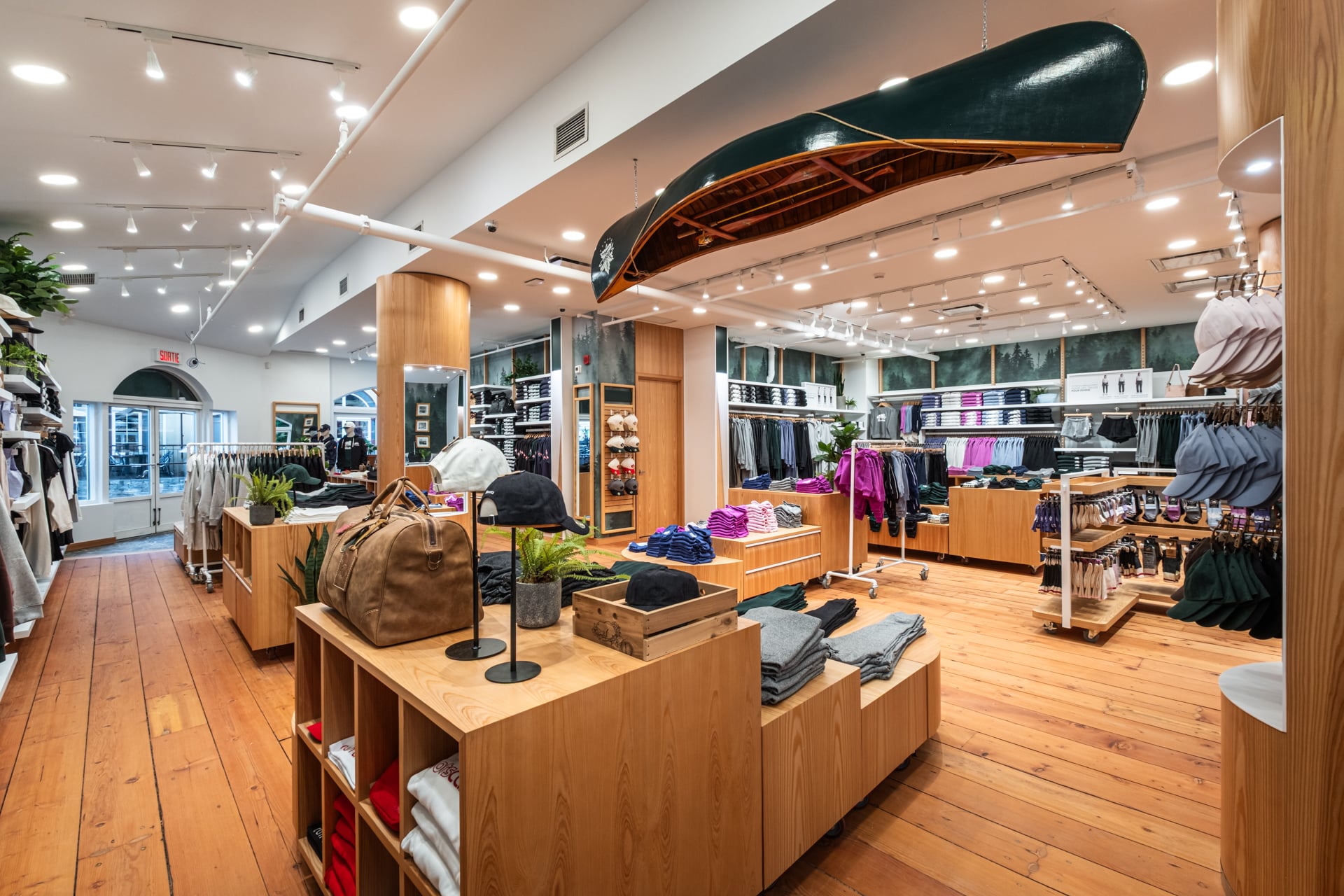
Merchandising within the village reflects a deliberate balance between national brands, international labels, and local operators. Tenants include recognizable names such as Roots, Helly Hansen, Columbia, Burton, Starbucks, and the SAQ, alongside independent boutiques and destination restaurants. The mix spans outdoor and technical apparel, lifestyle and fashion retail, food and beverage offerings ranging from quick-service to full-service dining, and essential resort services.

This blend supports year-round demand tied to skiing, golfing, lake activities, festivals, and special events, while also extending dwell time and per-visitor spending. The Mont Tremblant retail village acquisition positions Brasswater to further refine this tenant mix while preserving the character that has made the village a draw for both domestic and international visitors.

Roots Tremblant store. Photo: Roots

Strong Visitation and Operating Performance

Mont Tremblant Resort attracts more than 2.5 million visitors annually, with some estimates placing total visits closer to 3.5 million in peak years. This consistent volume creates a largely captive audience for the retail village, supporting strong sales performance and high occupancy levels.

Reported sales densities have increased from approximately $670 per square foot in 2023 to about $848 per square foot more recently, while occupancy has remained in the mid-90 percent range or higher. These metrics signal a resilient and well-performing experiential retail asset, particularly at a time when traditional retail formats continue to face pressure.

Strategic Fit for Brasswater

The acquisition reflects Brasswater’s long-term interest in experiential and destination-oriented retail, a segment that has shown relative strength due to its reliance on experiences, tourism, and place-based demand rather than purely transactional shopping.

“We’re thrilled to bring this iconic property back into Quebec hands” said Ian Quint, Founder and President of Brasswater. “I have a strong personal connection to Tremblant as a part-time resident who deeply appreciates the area’s natural beauty, amenities, and restaurants. As an avid triathlete and skier, I regularly enjoy the mountain, the lake, and the extensive trail network. At Brasswater, we’re excited to build on this foundation and continue growing the resort into a world-class, four-season destination.”

Brasswater has indicated that it plans to work closely with existing stakeholders to enhance the tenant mix and guest experience, while maintaining the energy and character that define Mont Tremblant as a global destination. The Mont Tremblant retail village acquisition also provides exposure to ongoing residential growth in the region and continued investment in resort infrastructure.

“This acquisition reflects our long-term interest in experiential, destination-oriented retail,” added Quint. “It’s a niche we’ve been looking to grow into, and Mont Tremblant is best-in-class.”

About Brasswater

Brasswater is a privately held real estate investment, development, and operating platform with a diversified portfolio spanning industrial, retail, and office assets across Canada and the United States. Founded in 2014 and formerly known as Groupe Quint, the firm operates a vertically integrated model encompassing acquisitions, leasing, development, property management, and construction.

The company manages more than $2.3 billion in assets, owns over 12 million square feet across more than 100 properties, and employs more than 70 professionals.

More from Retail Insider:

Manulife Centre Launches Atelier Noël Holiday Experience

Manulife Centre in Toronto, December 2025. Photo supplied

Manulife Centre has introduced a new holiday activation in Toronto’s Bloor-Yorkville neighbourhood with the debut of Atelier Noël, a curated seasonal experience designed to blend retail, culture, and community engagement. Running until December 21 on the Concourse Level at 55 Bloor Street West, the activation positions the shopping centre as an active participant in the area’s broader holiday programming, including the Bloor-Yorkville NOËL Floral Trail.

Rather than focusing solely on festive décor or short-term promotions, Atelier Noël has been designed as a destination experience that encourages visitors to slow down, explore, and connect. The concept reflects a growing shift in how urban shopping centres approach the holiday season, emphasizing experiential retail as a way to remain relevant amid changing consumer expectations and continued growth in e-commerce.

The inspiration behind Atelier Noël came from observing how consumer behaviour has evolved, particularly in established urban neighbourhoods such as Bloor-Yorkville. “The idea came from noticing how much today’s consumers, especially in a neighbourhood like Bloor-Yorkville, are looking for experiences that feel genuine rather than purely transactional. People want to feel something when they visit a space,” Kerry Chan, Property Manager with JLL Canada, said.

She explained that the activation grew naturally out of existing relationships with cultural and community partners. “Through our ongoing relationship with Fleurs de Villes and our partnership with the local BIA, we had the opportunity to showcase local talent, including floral artist Jeanna Jane Chua of Happy Fairy Art and Pistil Flowers, one of our centre tenants,” she said.

The decision to locate Atelier Noël on the Concourse Level was closely tied to the broader neighbourhood celebration. “When we learned about the larger Bloor-Yorkville NOËL Floral Trail, with more than 25 installations across the area, it felt like a natural fit,” Chan said, noting that the space provided an ideal setting to invite visitors to engage more deeply with both the neighbourhood and the centre’s retail mix.

Atelier Noel Lounge at Manulife Centre in Toronto, December 2025. Photo supplied

Floral Artistry at the Centre of the Activation

Floral installations serve as the visual anchor of Atelier Noël, created in collaboration with Fleurs de Villes and local artist Jeanna Jane Chua of Happy Fairy Art. The installations form an expanded extension of the NOËL Floral Trail and were designed to function as immersive, photo-ready moments within the centre.

“What really sets Atelier Noël apart is that it focuses on creation and connection, not just presentation,” Chan said. Instead of relying on standardized holiday décor, the centre commissioned original floral works that reflect both international expertise and local creativity.

Karen Marshall, co-founder of Fleurs de Villes, echoed that sentiment in a statement, saying, “Fleurs de Villes is thrilled to collaborate with Manulife Centre to present Atelier Noël for the holiday season, featuring local floral artist Jeanna Jane Chua from Happy Fairy Art. We hope everyone comes in to enjoy the beautiful flowers and the fun holiday activations.”

A Multi-Sensory Holiday Environment

Beyond florals, Atelier Noël incorporates several elements designed to appeal to a wide range of visitors. Guests can enjoy complimentary warm holiday cider, subject to availability, explore a Curated Gifting Gallery featuring thoughtful gift ideas, and take part in festive giveaways tied to the centre’s retailers.

Chan described the experience as “artfully curated, community-centred, and full of unexpected delights.” She said the goal was to strike a balance between the sophistication expected by Yorkville residents and an atmosphere that feels welcoming and accessible for families and visitors spending the day downtown.

Live music plays a key role in shaping the atmosphere. Students from the University of Toronto’s Faculty of Music perform on the Concourse Level each weekend throughout mid-December. “Live music really changes how people experience the space,” Chan said. “It adds a layer of warmth and cultural richness that instantly makes the environment feel more alive.”

Atelier Noel Lounge at Manulife Centre in Toronto, December 2025. Photo supplied

Driving Holiday Traffic for Retailers

A core objective of Atelier Noël is to support Manulife Centre’s retailers during the critical holiday shopping period. By creating a destination experience, the centre aims to increase dwell time and encourage visitors to explore stores throughout its three levels of retail.

“Atelier Noël really supports our retailers by encouraging people to spend more time here,” Chan said. Shoppers who spend $200 or more at Manulife Centre retailers receive a custom hand-painted ornament while supplies last, a detail intended to reward spending while leaving visitors with a keepsake tied to the experience.

Complimentary gift wrapping is also being offered for purchases made at Manulife Centre retailers through December 24. Gift wrapping for items purchased outside the centre is available in exchange for a donation supporting the Children’s Aid Foundation of Canada. Chan said these practical touches make a meaningful difference for shoppers choosing where to complete their holiday errands.

Charitable Giving as a Core Element

Charitable participation has been woven directly into Atelier Noël, with Manulife Centre committing to donate up to $5,000 to Dreams Take Flight based on visits to the activation. “It was important to us because we believe retail spaces should play a meaningful role in the communities they serve, not just function as places to shop,” Chan said.

She added that giving back aligns closely with the values of the Bloor-Yorkville community. “Partnering with Dreams Take Flight allows visitor participation to directly translate into impact,” she said, noting that the charitable component helps build genuine loyalty among shoppers who want their time and spending to support shared values.

Why Bloor-Yorkville Made Sense

The choice of Bloor-Yorkville as the setting for Atelier Noël was intentional. “Bloor-Yorkville just makes sense for a concept like this,” Chan said, pointing to the neighbourhood’s appreciation for artistry, authentic experiences, and community-driven initiatives.

She also emphasized practical considerations, including underground parking and validated options that make it easy for people to spend time at the centre. “When you combine that accessibility with our curated mix of destination retailers like Eataly and Cineplex Varsity VIP, plus unique independents, we become a natural gathering place for community celebrations,” she said.

Atelier Noel Lounge at Manulife Centre in Toronto, December 2025. Photo supplied

A Broader Strategy for an Urban Mixed-Use Destination

The launch of Atelier Noël reflects Manulife Centre’s continued evolution as a premium urban mixed-use destination. Located at the southeast corner of Bay and Bloor, the complex integrates a three-level shopping centre with a 19-storey Class A office building and a 51-storey residential tower containing more than 800 suites.

Over the past decade, the retail podium has undergone significant modernization, including a $100 million redevelopment announced in 2016 that added approximately 35,000 square feet of new retail space and refreshed the building’s street presence. The tenant mix has been repositioned toward premium urban retail, dining, and services, anchored by Eataly, Indigo, Cineplex Varsity VIP, and a growing roster of specialty retailers.

More from Retail Insider:

Mastermind Toys Bets on Franchising for Its Next Growth Phase

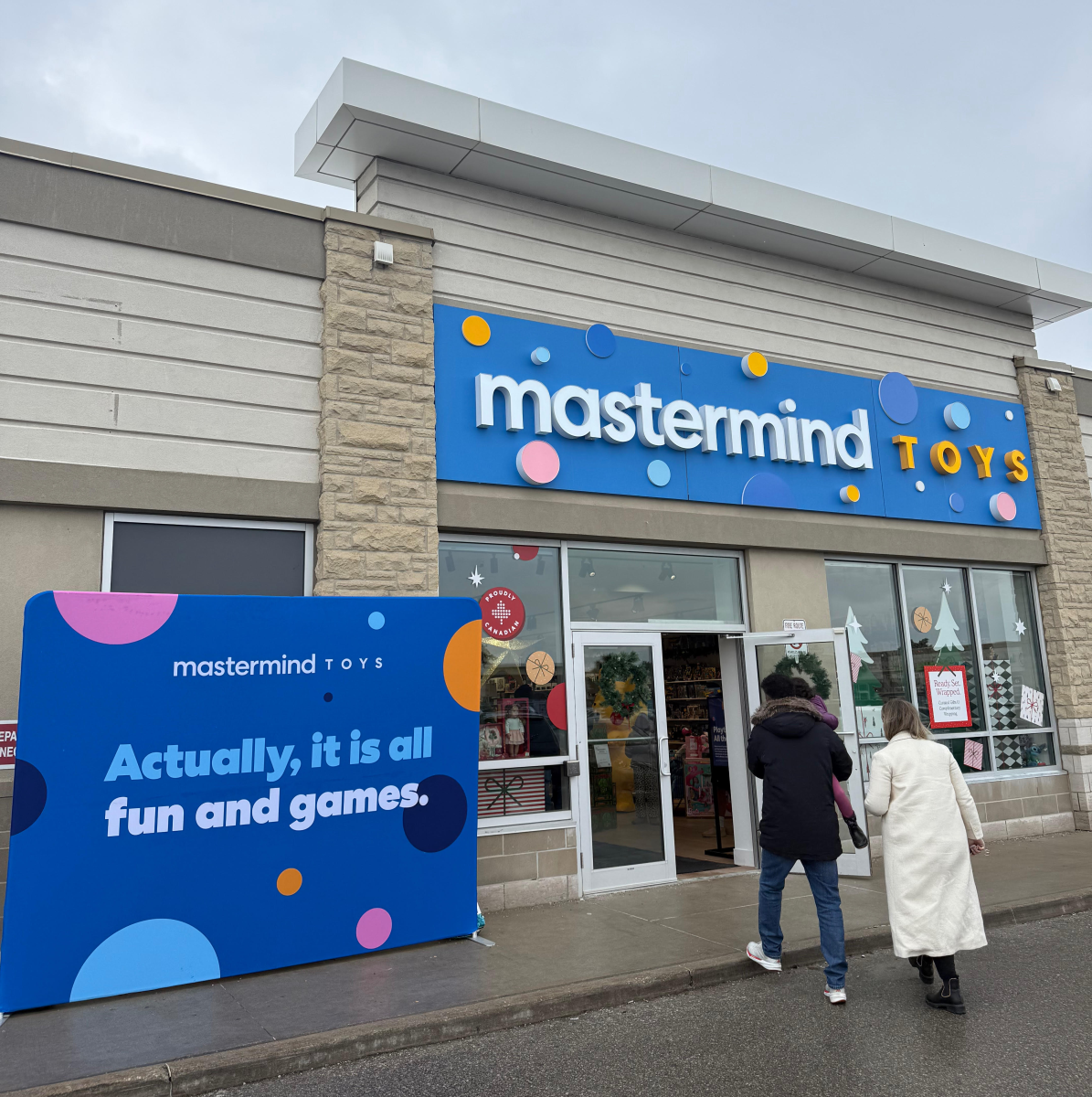
Mastermind Toys in Woodbridge, Ontario. Photo: Mastermind Toys

For much of the past two years, Mastermind Toys has been quietly rebuilding. After filing for creditor protection in late 2023 and closing dozens of locations, the iconic Canadian toy retailer emerged under new ownership with a narrower store base, a refreshed brand identity, and a renewed focus on what it believes made the company successful in the first place.

Now, that rebuilding phase is turning into a growth strategy.

Mastermind Toys has officially launched a franchising program, marking a significant shift in how the company plans to expand across Canada. Rather than racing to reclaim store count through corporate ownership, the retailer is leaning into a model rooted in local ownership, community engagement, and careful market selection.

Danielle Bazely

For Danielle Bazely, Senior Director of Marketing at Mastermind Toys, the decision reflects a broader rethinking of how national retail brands should grow in the current environment.

“With this new phase of growth, we looked at the best opportunity for bringing this business into what we call Mastermind 3.0,” Bazely said. “The community presence of a location and the engagement with the local community is so important. Through franchising, we have a way to expand in a really thoughtful way, not rapid expansion, but growth that happens at a community level.”

Why Franchising Fits Mastermind’s DNA

Franchising, Bazely stressed, is not being positioned as a shortcut to scale. Instead, it is being framed as a way to replicate the conditions under which Mastermind stores tend to perform best.

Over its four-decade history, the brand has learned that its strongest locations are often those where store leaders are deeply embedded in their neighbourhoods. Schools, families, and local organizations are not just customers, but active participants in the store’s ecosystem.

“We’re really looking for somebody who is a community-embedded operator who wants to build a trusted local institution,” Bazely said. “Not just a passive investment.”

The ideal franchise partner, she explained, is someone with retail or hospitality experience who wants to be a hands-on owner-operator. Multi-unit operators are also welcome, particularly where they can help the brand scale responsibly across adjacent markets. This approach is especially appealing in smaller cities and regional centres where local knowledge often matters more than centralized decision-making.

“In some of these rural communities across Canada, having someone who knows that community so well gives us a much better chance to succeed,” Bazely said.

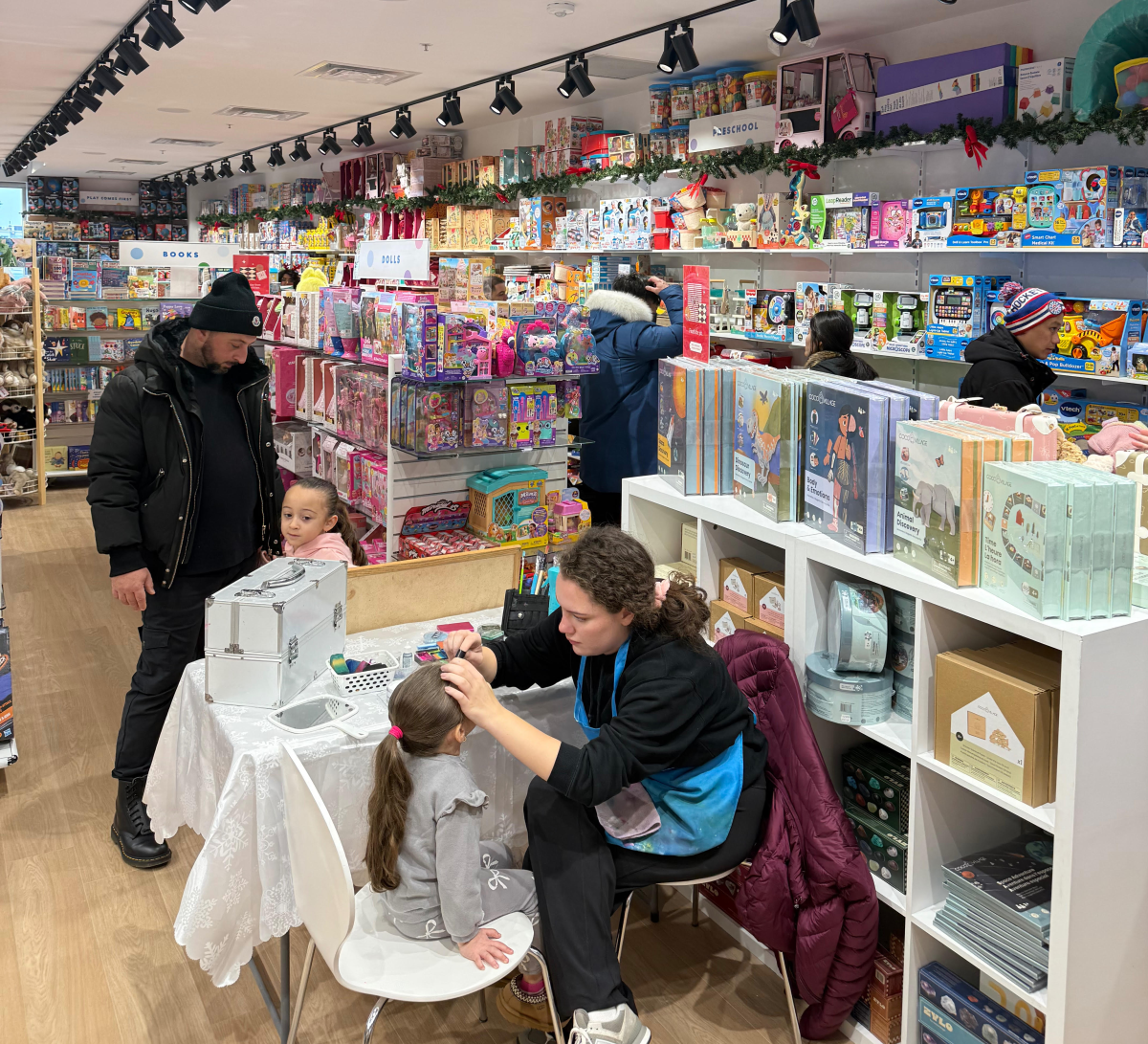
Mastermind Toys in Woodbridge, Ontario. Photo: Mastermind Toys

From Recovery to Opportunity

The first franchised Mastermind Toys store has already opened in Woodbridge, Ontario, a location that carries symbolic weight for the brand. Woodbridge previously had a Mastermind store before the company entered CCAA proceedings, and its return underscores a broader theme running through the franchising strategy.

“Just because locations closed doesn’t mean those markets weren’t a good fit,” Bazely said. “It just means it wasn’t the right model at that time.”

Franchising allows Mastermind to re-enter former markets with a structure better aligned to local realities. Rather than carrying the full burden of corporate overhead, franchise operators can scale at a pace suited to their communities, while benefiting from national brand recognition and centralized merchandising support.

This recalibration mirrors a wider shift across Canadian retail, where brands are increasingly cautious about overexpansion and more willing to experiment with hybrid ownership models.

Mastermind Toys in Woodbridge, Ontario. Photo: Mastermind Toys

How Big Could It Get

While Mastermind is deliberately avoiding aggressive timelines, the long-term potential of the franchising program is significant. Bazely indicated that the brand could ultimately support more than 100 locations nationally, though she emphasized that quality matters far more than speed.

“There’s definitely opportunity for more than 100 doors,” she said. “But we’re not just looking to grow. We’re looking to bring in strategic partners who can really carry out the magic of Mastermind in their local spaces.”

The company plans to maintain a mix of corporate-owned and franchised stores, allowing it to retain direct control over key locations while using franchising as the primary vehicle for geographic expansion.

Where Mastermind Is Looking to Grow

There remains room to grow even in markets where Mastermind already has a presence. Bazely pointed to continued opportunity across the Greater Toronto Area, particularly in neighbourhoods that previously supported a store or where other retailers have exited.

Beyond Ontario, the brand is targeting further expansion in Vancouver, particularly in the urban core, as well as Ottawa, Niagara, Calgary, Kelowna, and Kingston. Smaller and underserved markets are also firmly on the radar.

“If you look at places like Sudbury or North Bay, they don’t necessarily have a dedicated specialty toy retailer serving the community,” Bazely said.

Underlying all site selection decisions is a focus on population dynamics. Mastermind is prioritizing markets with sustained population growth, strong family formation, and long-term demographic stability, whether driven by immigration or birth rates.

Source: Mastermind Toys
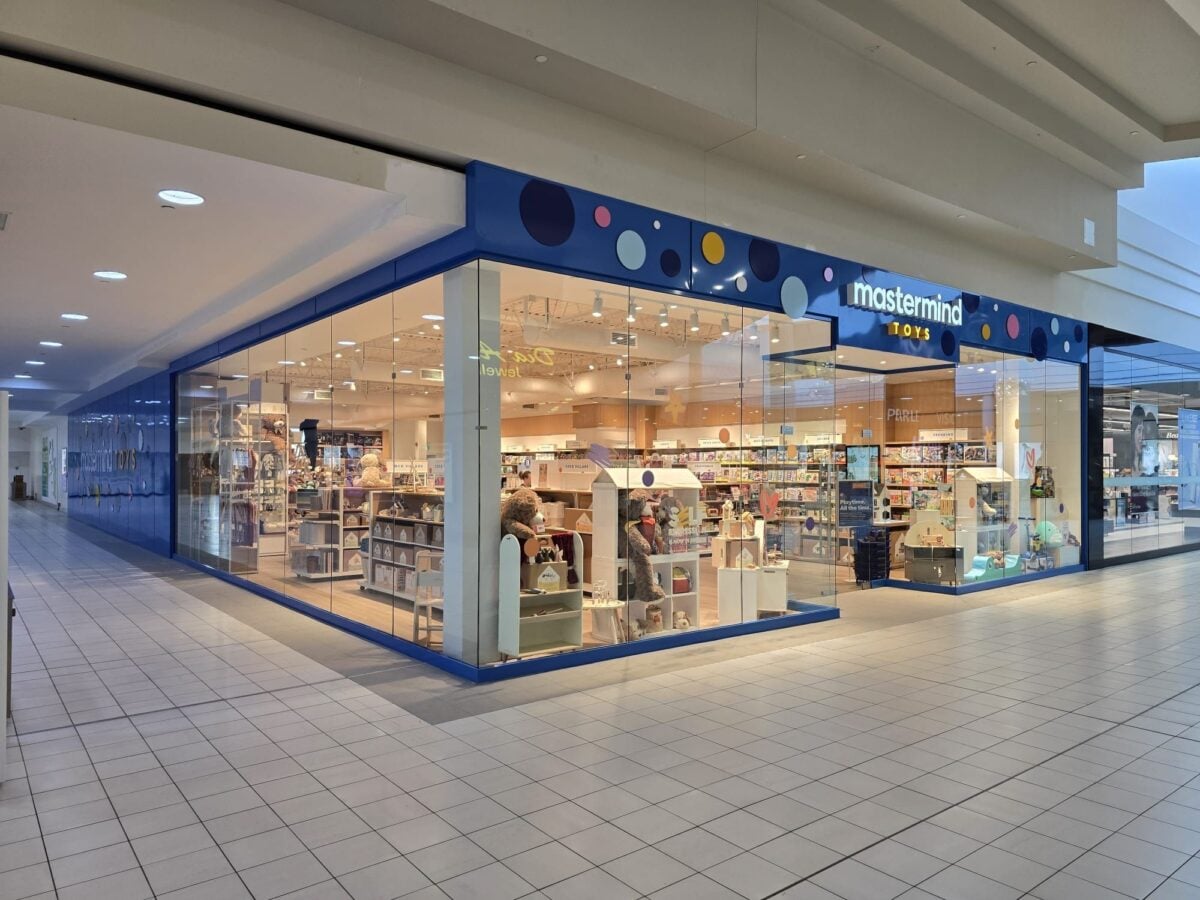
Mastermind Toys store in Pickering, Ontario (not franchised), showing the retailer’s updated look. Source: Mastermind Toys

A Cleaner, More Focused Store Experience

Franchise locations will reflect Mastermind’s refreshed store design, which debuted earlier this year and has already been rolled out at select corporate stores.

The updated format emphasizes openness, brightness, and clarity, a noticeable shift from some of the denser layouts of the past. The goal is not minimalism for its own sake, but a clearer expression of Mastermind’s role as a specialty retailer.

“We want to be the place you can find unique pieces you can’t find somewhere else,” Bazely said. “The toys, the gifts, the books, all of that needs to be at the forefront.”

Recommended franchise store sizes range from 3,000 to 3,600 square feet, allowing for a full assortment while remaining operationally efficient.

Coco Village at Mastermind Toys in downtown Montreal. Photo: Mastermind Toys

Coco Village and the Broader Assortment

Franchise stores will carry Mastermind’s full assortment, including Coco Village, the children’s apparel brand acquired by the company. Coco Village remains one of Mastermind’s masthead brands, though its growth strategy is currently focused on direct-to-consumer channels.

“We continue to invest in Coco Village, and our buyers are really excited about growing our vendor relationships more broadly,” Bazely said.

Standalone Coco Village stores operate primarily in Quebec, where the brand has strong regional roots. Mastermind is not actively pursuing a franchise expansion for Coco Village in Quebec at this time.

The franchising announcement follows a period of heightened activity for Mastermind across multiple channels.

Over the holiday season, the retailer operated pop-up locations inside Holt Renfrew stores, hosting events such as Storytime with Santa, LEGO craft bars, and doll tea parties. The partnership, which runs into early January, positioned Mastermind within a luxury retail context while reinforcing its experiential credentials.

At the same time, Mastermind has expanded partnerships with 7-Eleven and DoorDash, extending its reach beyond traditional store walls and meeting customers where convenience increasingly matters.

Why the Timing Matters

Bazely noted that franchising interest tends to spike at the end of the year, making the launch particularly timely.

“This time of year is one of the highest periods for franchise inquiries,” she said. “People are spending more time with their families, doing goal-setting, and asking what they want to do next.”

For some, franchising represents a path out of long corporate careers. For others, it is an opportunity to invest capital, gain more control over work-life balance, or build something rooted in their community.

At its core, the Mastermind Toys franchising expansion is less about reinvention than refinement. Founded in 1984, the brand has always differentiated itself through curation, trust, and a belief in the developmental value of play.

Franchising, Bazely said, allows the company to extend that philosophy nationally without losing its local soul.

“We’re looking for people who want to bring the Mastermind Toys brand to their community,” she said. “Whether that’s bringing it back, expanding where it already exists, or starting somewhere new.”

More from Retail Insider:

Amazon 2025 Impact Report Details $65bill Invested in Canada

Amazon Canada office in Toronto - Photo by Dustin Fuhs

Amazon has released its Amazon Canada Impact Report 2025, outlining the scale and breadth of the company’s investment, employment footprint, logistics infrastructure, and community involvement across the country. The report positions Amazon as one of the most significant private sector contributors to Canada’s retail, logistics, technology, and digital services ecosystem, with more than $65 billion invested since 2010 and operations spanning nearly every province.

Since launching Amazon.ca in 2002, the company has steadily expanded its presence nationwide. As of 2025, Amazon employs more than 46,000 people across Canada and operates close to 70 logistics and operations sites from coast to coast. According to the report, third party economic analysis estimates Amazon’s investments have contributed more than $55 billion to Canada’s gross domestic product, reflecting both direct and indirect economic activity.

The report frames 2025 as a year of continued operational scaling, workforce investment, and faster delivery capabilities, while also emphasizing Amazon’s growing role in supporting Canadian small businesses, content production, and sustainability initiatives.

Capital Investment and Economic Contribution Continue to Climb

Amazon reported more than $13 billion invested in Canada during 2024 alone, including spending on infrastructure and employee compensation. Cumulatively, Amazon’s Canadian investment since 2010 now exceeds $65 billion. These investments include fulfillment centres, delivery stations, sortation centres, AWS data centres, corporate offices, and technology hubs.

The report estimates that Amazon’s activities supported more than 95,000 indirect jobs in Canada in 2024 across sectors such as construction, transportation, logistics, and professional services. Amazon also reported contributing more than $12 billion to Canada’s GDP in 2024 through its investments and operations.

From a fiscal perspective, Amazon reported total tax contributions of $4.7 billion in Canada for the full year 2024, up from $3.8 billion the previous year. This included $780 million in directly incurred taxes such as corporate income tax and payroll taxes, along with an additional $3.9 billion in indirect taxes collected and remitted through sales taxes.

Amazon Canada Office in Toronto – Photo by Dustin Fuhs

Expanding a National Logistics Network

A significant portion of Amazon’s Canadian footprint is its logistics and fulfillment network. As of 2025, Amazon operates 23 fulfillment centres, four sortation centres, 31 delivery stations, six AMXL delivery stations, and four exchange points across Canada. These facilities support last mile delivery in more than 4,500 cities and towns eligible for Prime free One Day delivery.

The company’s physical presence spans major urban markets and secondary communities, with fulfillment centres in locations including Delta, Richmond, Calgary, Edmonton, Ajax, Brampton, Hamilton, Mississauga, Ottawa, and Toronto. The network is designed to bring inventory closer to customers, reduce delivery times, and increase reliability.

Amazon reported that this infrastructure investment directly enabled expanded Same Day and Overnight Delivery options in several Canadian markets during 2025, reinforcing the company’s competitive positioning in convenience driven retail.

Faster Delivery Reshapes Customer Expectations

In 2025, Amazon expanded Same Day Delivery across multiple Canadian cities, including Calgary, Edmonton, the Greater Toronto Area, Hamilton, and Ottawa. In Calgary and Edmonton, Prime members now have access to delivery windows that bring packages from click to doorstep in as fast as seven hours. Overnight delivery options also allow orders placed as late as 8:30 p.m. to arrive the following morning.

In Ontario markets, Amazon introduced additional daytime and afternoon delivery windows, complementing existing evening and overnight options. According to the report, customers can now place orders in the morning and receive items later the same day, expanding flexibility across millions of eligible products.

The company attributes these delivery enhancements to continued investment in fulfillment proximity, automation, and logistics efficiency, while maintaining a focus on employee health and safety.

Workforce Investment and Wage Growth

Amazon reported that it invested more than $110 million in additional frontline employee pay in 2025. In September, the company raised the average hourly base wage for frontline employees in Canada to $24.50, up from $23.50 in 2024. This represents a 4.3 percent year over year increase.

According to the report, full time frontline employees now earn a minimum annual salary of $50,960 based on a 40 hour work week. Amazon also highlighted its step plan compensation model, which provides scheduled wage increases over time and additional referral incentives for eligible employees.

In addition to wages, Amazon emphasized its benefits offering, which includes medical, dental, vision coverage, and a group RRSP plan for eligible employees.

One employee quoted in the report stated, “We now have a nice home to live in, and I don’t think that would be possible without Amazon.”

Photo: Amazon
Photo: Amazon

Education, Upskilling, and Career Mobility

Amazon’s Career Choice program remains a central component of its workforce strategy in Canada. In 2025, the company enhanced the program to pre pay 100 percent of tuition costs for eligible employees, removing the previous employee contribution requirement. Amazon also reduced the eligibility period from one year of employment to 90 days.

Since launching in Canada in 2014, nearly 12,000 employees have participated in Career Choice. The most popular programs include truck driving, data analytics, and cybersecurity. The program partners with 18 educational institutions across Canada.

Chuck Cummings, Director of Customer Fulfilment at Amazon Canada, stated, “By removing cost and eligibility barriers, we’re taking our most significant step to help employees build new skills and pursue new careers at Amazon and beyond.”

AWS and Canada’s Digital Economy

Amazon Web Services continues to play a major role in Amazon’s Canadian impact. AWS operates cloud regions in Calgary and Montreal, with additional local zones announced for Vancouver and Toronto. According to the report, AWS will invest an estimated $24.8 billion in Canadian digital infrastructure by 2037, supporting more than 9,300 full time equivalent jobs annually and generating more than $43 billion in GDP.

AWS reported that 100 percent of electricity consumed by its Canadian data centres is matched with renewable energy sources. The company also highlighted water efficient cooling practices, particularly in Calgary and Montreal.

AWS was named a Leader in the 2025 Gartner Magic Quadrant for Strategic Cloud Platform Services for the fifteenth consecutive year, reinforcing its positioning in enterprise and public sector cloud adoption.

Supporting Canadian Small Businesses

The Amazon Canada Impact Report highlights the role of independent sellers and small businesses on Amazon’s marketplace. Amazon launched its Canada Showcase storefront in 2025, featuring thousands of products from hundreds of Canadian brands across categories including grocery, home goods, beauty, and health.

The report includes case studies of Canadian entrepreneurs using Amazon to scale nationally and internationally, emphasizing the platform’s role in logistics, fulfillment, and customer acquisition. Amazon positions its marketplace tools, fulfillment services, and advertising products as enablers for small businesses seeking omnichannel growth.

Photo: Amazon
Photo: Amazon

Sustainability and Climate Commitments

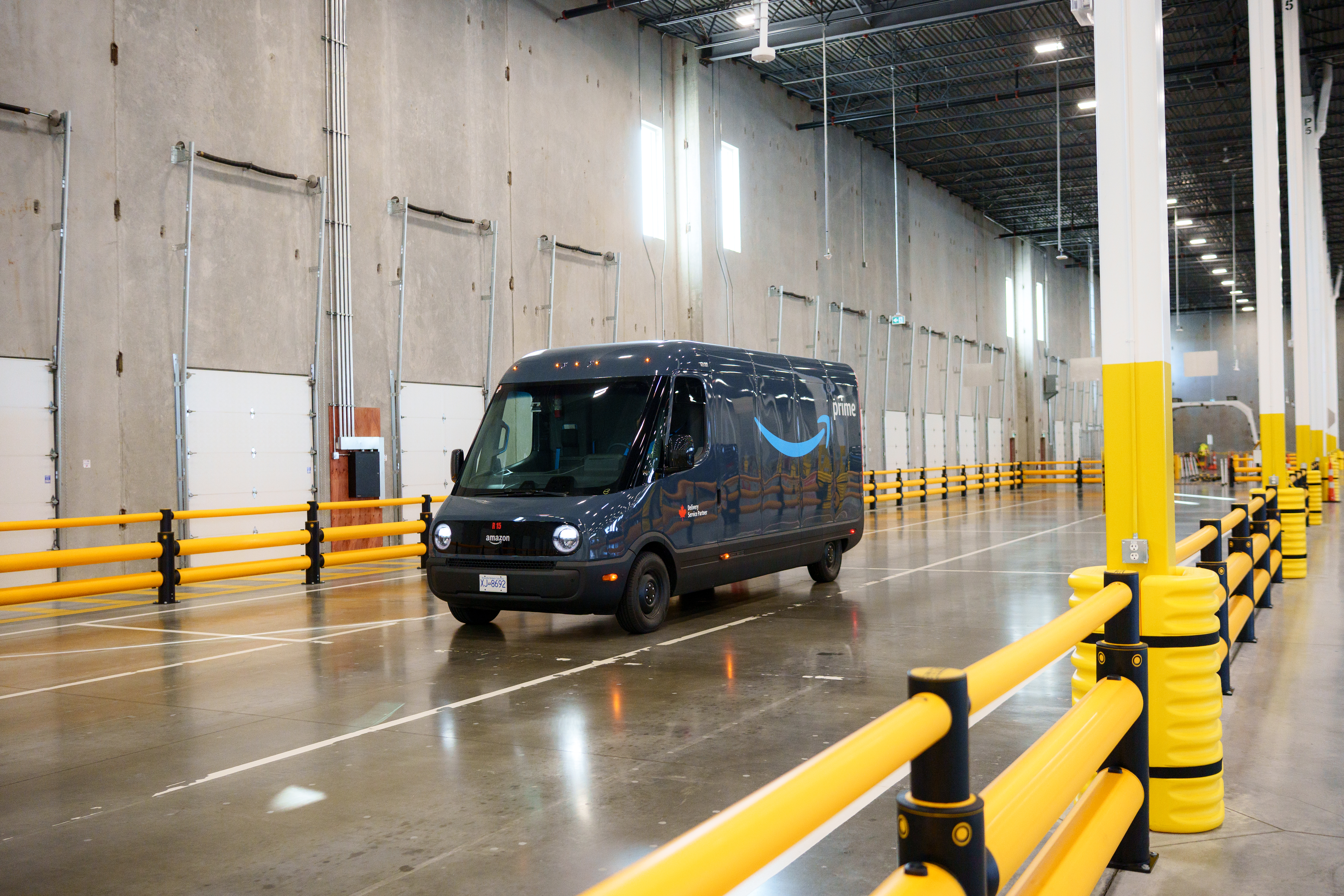
Amazon reaffirmed its commitment to reaching net zero carbon emissions by 2040 through The Climate Pledge. In Canada, the company launched 50 custom electric delivery vans from Rivian in Greater Vancouver, marking the first deployment of these vehicles in the country.

The company also highlighted renewable energy investments, including wind and solar projects in Alberta and rooftop solar installations at logistics facilities. Amazon reported that it is the world’s largest corporate purchaser of renewable energy for the fifth consecutive year.

Community Investment and Canadian Content

Beyond logistics and retail, Amazon detailed its contributions to Canadian communities through grants, donations, and education programs. In 2025, Amazon awarded more than $700,000 in community grants and donated more than 1.8 million items to local organizations.

Amazon also continues to expand Canadian content production through Amazon MGM Studios, Prime Video, and Amazon Music. The company reported that more than 50 Amazon Original films and series have been produced in Canada since 2015, supporting jobs across the creative economy.

More from Retail Insider:

Livingston Commercial Centre Secures Calgary Building Permits

Livingston Commercial Centre. Image via CBRE

The Livingston Commercial Centre has reached a development milestone with building permits now issued for the new retail project in north Calgary. The approval signals the formal transition from planning into construction for the grocery-anchored commercial centre, which is expected to deliver more than 100,000 sq. ft. of retail space to one of the city’s fastest-growing residential communities.

Located at 14390 1st Street NE, the Livingston Commercial Centre sits within the master-planned Livingston community, a large-scale residential development that continues to expand north of Stoney Trail. The issuance of building permits in December marks a key regulatory milestone and clears the way for active construction to move forward.

Designed as a neighbourhood-oriented commercial centre, the Livingston Commercial Centre will feature nine commercial retail unit buildings across a 5.04-acre site. In total, the project will deliver approximately 113,000 sq. ft. of retail space, with a tenant mix focused on everyday needs and service-driven retail categories.

The centre is planned to include a grocery store, pharmacy, gas bar with a convenience store, restaurants, fitness offerings, personal services, and health and wellness uses. This mix reflects a strategy focused on convenience and accessibility, providing essential retail and services within close proximity to residents and reducing the need for longer trips to other parts of the city.

The development is expected to serve not only Livingston residents but also surrounding northeast Calgary communities that continue to experience steady population growth and evolving retail demand.

Strategic Location Within a Growing Community

The Livingston Commercial Centre benefits from strong regional accessibility. The site offers convenient access from both Stoney Trail NE and 144 Avenue NE, positioning it well for neighbourhood traffic as well as commuters travelling through the area. Calgary International Airport is approximately 15 minutes away, and the site is located near major transportation corridors, including the QEII Highway, with future C-Train service planned as part of Calgary’s long-term transit expansion.

Surface parking is planned throughout the site to support convenience-oriented retail visits, reinforcing the centre’s role as a practical, day-to-day shopping destination rather than a discretionary retail draw.

Click image for interactive Google Map

Development Team and Ongoing Partnership

The Livingston Commercial Centre is being developed through a collaboration between Brookfield Residential and Elan Construction, with Zeidler Architecture serving as the project architect. The development represents the fifth retail project undertaken jointly by Elan Construction and Brookfield, reflecting an established working relationship between the two firms.

Construction activity on the project commenced earlier this year, with an estimated build timeline of approximately 22 months. With permits now in place, the project is expected to remain under construction through 2026, with completion anticipated in 2027.

Brookfield’s involvement builds on its broader role as the master developer of the Livingston community, where residential, commercial, and institutional components are being delivered in coordinated phases.

Flexible Retail Space and Leasing Strategy

The Livingston Commercial Centre has been designed to accommodate a wide range of retail and service uses through flexible unit sizing. Retail units range from approximately 912 sq. ft. for smaller operators to more than 7,000 sq. ft. for larger tenants, allowing the centre to attract a diverse tenant mix.

Mid-sized units are expected to appeal to restaurants, fitness operators, pharmacies, and service-based retailers, while larger footprints are positioned to support anchor and high-traffic tenants. Lease terms are structured around five- to ten-year initial commitments, reflecting a long-term approach to tenant stability and community integration.

Leasing activity is underway, with a portion of the retail space still available as the project advances through construction.

Supporting the Livingston Master-Planned Community

Livingston is one of Calgary’s largest master-planned communities, with a projected population of approximately 30,000 residents upon full build-out. The community is expected to include more than 11,000 homes across multiple neighbourhoods, supported by schools, recreation facilities, and commercial infrastructure.

The Livingston Commercial Centre forms part of a broader vision that includes more than one million sq. ft. of planned commercial and institutional space within the community. This includes additional retail destinations, office space, and community services designed to support a more self-contained urban environment.

As one of the early major retail developments in Livingston, the centre is expected to play a central role in establishing the area’s retail and service offering as residential density continues to increase.

Economic Impact and Employment

During construction, the Livingston Commercial Centre represents a significant source of economic activity in northeast Calgary, supporting local trades, consultants, and suppliers over the project’s estimated 22-month build period. Once completed, the centre is expected to support between 100 and 150 permanent retail jobs, depending on the final tenant mix and store sizes.

Beyond employment, the development will contribute ongoing property tax revenue to the City of Calgary and support the broader economic sustainability of the Livingston community by keeping more consumer spending local.

More from Retail Insider re: Calgary:

Rising Grocery Prices Drive Debt Stress for Canadians

Shopper checking prices on a mobile device in a grocery store. Photo: Eagle Eye

While Canada’s Consumer Price Index rose 2.2 per cent year over year in November, the lived experience for many households tells a more difficult story. Grocery prices climbed 4.7 per cent compared with the same period last year, marking the largest increase since December 2023. As a result, everyday food costs are rising far faster than overall inflation, placing renewed pressure on household budgets at a time when seasonal spending is already elevated.

The widening gap between headline inflation and essential expenses has become increasingly visible as Canadians move through the holiday season. For many households, higher grocery bills combined with year end obligations are leaving little room to absorb additional costs, setting the stage for financial strain as the calendar turns to January.

According to the Credit Counselling Society, the financial stress associated with rising grocery prices in Canada is already translating into higher demand for support. In November 2025, the number of Canadians reaching out for credit counselling increased by 11 per cent compared with November 2024. Those seeking help were carrying heavier debt loads, with average unsecured debt reaching $35,000, up from $31,000 a year earlier.

Peta Wales, President & CEO of CCS, says the data highlights a growing disconnect between inflation headlines and household realities. She states, “Even though inflation appears stable at 2.2 per cent, many Canadians are still feeling the pinch in their daily lives. Rising grocery costs and holiday spending are leaving households with less flexibility to manage debt, and we’re seeing people reach out earlier than ever for guidance.”

This earlier engagement is notable because November is typically a quieter period for counselling services. Historically, demand surges after the holidays, once credit card statements and deferred payments arrive.

January Pressures Expected to Intensify

The current uptick in counselling requests is being viewed as an early warning signal for the new year. CCS notes that demand for support tends to spike sharply in January, following the accumulation of holiday related expenses. Last year, the number of Canadians seeking help rose 51 per cent from December to January.

With more people already contacting CCS in the fall, the organization expects financial strain to reach unprecedented levels heading into 2026. Isaiah Chan, Vice President of Programs & Services at CCS, explains, “Historically, counselling demand spikes in January after the holiday bills arrive. Last year, we saw a 51 per cent jump from December to January. With more Canadians already seeking help this year, it’s clear that financial strain will reach unprecedented levels heading into the new year.”

For retailers and financial service providers alike, the trend underscores how rising grocery prices in Canada are reshaping consumer behaviour, particularly as discretionary spending gives way to a sharper focus on essentials and debt management.

Budget Strain Meets Holiday Spending

The convergence of higher food prices and holiday expenses is creating a difficult balancing act for many households. As grocery bills absorb a larger share of monthly income, Canadians are left with less flexibility to manage existing debt or unexpected costs. This is particularly challenging for consumers who rely on credit to smooth cash flow, as higher balances quickly translate into mounting interest charges.

CCS counsellors report that many clients are struggling with large purchases as well as with everyday expenses such as food, utilities, and transportation. The pressure is prompting more Canadians to seek guidance before missing payments, rather than waiting until financial challenges become unmanageable.

Practical Guidance to Reduce Financial Stress

In response, CCS is encouraging Canadians to take proactive steps before January arrives. Rather than making abrupt changes after bills come due, counsellors advise reviewing household budgets now to prioritize essential obligations such as rent, utilities, and minimum debt payments. Adjusting discretionary spending, including last minute holiday purchases, can help ease short term pressure.

The organization also points to grocery planning as a practical area for savings. Building a rotation of affordable meals and snacks can help households manage food costs more predictably, especially as rising grocery prices in Canada continue to outpace broader inflation. At the same time, CCS cautions against adding high interest debt to cover everyday expenses, noting that reliance on credit can intensify the post holiday financial crunch.

Reaching out for guidance early is another key recommendation. Even modest adjustments made before the new year can help prevent late fees, missed payments, and escalating debt balances in January.

Early Action Can Ease the January Crunch

Mark Kalinowski, Financial Educator & CCS spokesperson, emphasizes the importance of timely intervention. He says, “We’re already seeing Canadians struggling with everyday expenses on top of holiday bills. By reviewing your budget, prioritizing essentials, being cautious with buy now, pay later options, and seeking guidance early, you can stay on top of payments and reduce stress when January bills arrive.”

CCS is encouraging Canadians to assess their financial position now, explore payment arrangements with creditors if necessary, and seek free, confidential guidance before year end. Taking these steps early may help households navigate the ongoing impact of rising grocery prices in Canada while avoiding deeper financial strain in the months ahead.

Canadians seeking assistance can speak with a certified credit counsellor by visiting nomoredebts.org or calling 1-888-527-8999.

About the Credit Counselling Society

The Credit Counselling Society is a non profit organization dedicated to helping consumers better manage their money and debt. CCS provides free and confidential credit counselling, objective debt repayment options, budgeting assistance, and financial education services to Canadians nationwide. More information is available at nomoredebts.org.

More from Retail Insider:

Second Cup Expands with New Calgary Location

Calgary opening. Photo: Second Cup

Second Cup Café has added another location to its growing Canadian network with the opening of a new café in Calgary’s Trinity Hills area, reinforcing the brand’s steady expansion strategy focused on community-based locations and local franchise ownership.

The café, located at 435 Na’a Common, officially opened on December 15 and employs nine team members. Situated near Olympic Plaza in a rapidly developing area of the city, the new location is designed to serve both residents and visitors with Second Cup’s premium coffee, specialty beverages, and food offerings, while providing a welcoming space for people to gather and connect.

The Calgary opening reflects a broader pattern of growth for Second Cup, which has been methodically adding locations across Canada as it builds momentum under Foodtastic ownership. Rather than pursuing rapid, high-volume expansion, the brand has emphasized thoughtful site selection and franchise partnerships that embed each café within its surrounding community.


A Franchisee-Led Opening Rooted in the Local Community

The Trinity Hills café is operated by Ravinder Dhillon, marking his first franchise with Second Cup and his second franchising venture overall. Dhillon previously operated a Pita Pit location in Airdrie, bringing prior experience in the franchised restaurant sector to the Second Cup system.

“As a proud member of the local community, opening this Second Cup is incredibly meaningful to me,” said Ravinder Dhillon, Franchisee, Second Cup Trinity Hills. “Second Cup is a brand with strong Canadian roots and a commitment to quality and community, and I’m excited to bring that experience to guests in this growing area of Calgary.”

Second Cup’s reliance on engaged local operators has become a defining feature of its recent growth. By partnering with franchisees who have direct ties to their neighbourhoods, the company aims to create cafés that function as familiar gathering places rather than anonymous chain locations. This approach has been central to the brand’s efforts to differentiate itself in an increasingly competitive Canadian coffee market.


Reinforcing the Brand’s Role as a Community Gathering Place

Brand leadership says the Trinity Hills opening reflects Second Cup’s longstanding philosophy of offering more than just coffee. The brand continues to position its cafés as “third spaces,” places where customers can slow down, socialize, and step away from increasingly digital routines.

“Ravinder and his team are eager and ready to offer our homegrown Canadian coffee culture to residents and visitors to Trinity Hills,” said Otman Haouzi, Brand Leader of Second Cup. “Today, perhaps more than in recent years, Canadians are looking for in-person connections as a way to combat social isolation, screen time or an over-extended schedule, and that’s why having a local coffee shop is so vital to any community. We look forward to bringing our Second Cup experience to new guests in this growing area of the city.”

That emphasis on connection has become more pronounced in recent years, as consumer habits shift and demand grows for spaces that support in-person interaction. Second Cup’s café model, which prioritizes seating, atmosphere, and conversation, stands in contrast to more convenience-driven coffee formats and has helped shape the brand’s expansion decisions.

Part of a Broader National Growth Plan

The Calgary opening comes as Second Cup continues to execute a national expansion plan that has taken shape since Foodtastic acquired the brand in 2021. As of November 2025, Second Cup operated over 190 locations across Canada, and the company has articulated a longer-term goal of reaching 300 stores within a five-year growth cycle.

Rather than chasing rapid scale, Second Cup’s expansion strategy has focused on consistency, franchisee support, and operational discipline. Recent openings across the country have included cafés in transit hubs, shopping centres, educational institutions, and mixed-use developments, reflecting a flexible real estate approach that allows the brand to meet customers in a variety of settings.

The Trinity Hills café fits squarely within this framework, adding incremental growth while reinforcing the brand’s community-oriented positioning.

A Canadian Coffee Brand with Deep Roots

Founded in 1975, Second Cup has played a significant role in shaping Canada’s specialty coffee culture. The brand began as a small kiosk selling specialty coffee beans at a time when espresso-based beverages were largely unfamiliar to Canadian consumers. Over the decades, Second Cup helped introduce cappuccinos, lattes, and European-style coffeehouse culture to a national audience.

Despite periods of challenge and ownership changes, Second Cup has retained its identity as a Canadian-founded and Canadian-owned specialty coffee brand. That distinction has taken on renewed importance as consumers increasingly express interest in supporting domestic businesses, particularly in sectors dominated by international chains.

The company marked its 50th anniversary in 2025, a milestone that coincided with renewed confidence in the brand’s future. Under Foodtastic, Second Cup has undergone operational refinements, refreshed branding, and a renewed emphasis on franchise partnerships, all of which have contributed to its return to growth.

More from Retail Insider: