The 2025 eBay Recommerce Report, released Tuesday, reveals that the recommerce (the buying and selling of pre-owned goods) market has shown global momentum and resilience in a year marked by trade dynamics and continued consumer pricing pressures.
Nearly nine in 10 consumers surveyed plan to maintain or increase their spending on pre-loved items, reflecting how economic pressures and value-seeking behaviour are accelerating this trend, said the report.
The report reveals a broad movement propelled not just by affordability, but by sustainability, self-expression, and community values. Saving money remains a top motivator – 81% of global consumers feel good about the money saved when buying pre-owned – but nearly as many cite non-financial reasons.
“Almost half (45%) of consumers rank environmental benefits among their top reasons for shopping pre-loved. Many also cherish the “thrill of the hunt” for unique finds (65% enjoy the search for second-hand treasures) and the personal satisfaction of giving products a second life,” explained eBay.
“Young consumers are leading this evolution. Gen Z and Millennials, in particular, have embraced recommerce as part of their lifestyle — nearly 80% say they see themselves as part of the movement, and 59% of Gen Z and 56% of Millennials plan to increase their spending on pre-loved items in the year ahead.
Photo: Nataliya Vaitkevich
“At the same time, this mindset is becoming cross-generational, reflecting a broader shift toward mindful consumption and community-driven commerce. More than half of consumers (56%) say that buying pre-loved allows them to express their personal style, and 63% report feeling connected to a recommerce community through their second-hand shopping.”
eBay said the recommerce boom shows no sign of slowing – it’s even influencing holiday shopping habits. New survey data reveals 78% of consumers globally (82% in the U.S.) are more likely to purchase a second-hand gift this year compared to last, highlighting how deeply recommerce is becoming ingrained in consumer behaviour.
Key Findings
● Widespread adoption: Nearly 9 in 10 consumers plan to maintain or increase their spending on second-hand goods in 2025, confirming that recommerce has gone mainstream. Younger generations are driving this trend, with 59% of Gen Z and 56% of Millennials expecting to buy more pre-loved items in the coming year;
● Affordability & sustainability: 81% of shoppers feel good about the money they’ve saved by buying used items, but value isn’t the only appeal. Nearly half of consumers (45%) include sustainability and environmental impact among their top three reasons for shopping pre-owned – demonstrating that eco-conscious values and purpose (68% say they feel good about giving items a second life) are major drivers of recommerce beyond just low prices;
● Self-expression & community: More than half of consumers (56%) agree that purchasing pre-loved goods allows them to express their personal style. The social aspect is also strong – 63% consider themselves part of a recommerce community of buyers and sellers, and 65% say they enjoy the “thrill of the hunt” when searching for second-hand treasures.
● Holiday shopping shifts to second-hand: 78% of respondents globally – and 82% in the U.S. – say they are more likely to purchase a second-hand gift this year compared to last year. This indicates a significant year-over-year increase in consumers’ openness to gifting pre-owned items.
● Seller empowerment and motivations: Recommerce is enabling micro-entrepreneurship – 86% of eBay sellers report sourcing inventory from their own households (reselling items they already own). Many are motivated by more than profit: 63% of sellers cite “giving items a second life” as a key reason they sell, underlining the community’s shared purpose and the personal fulfillment sellers gain;
● Global momentum across markets: The rise of resale is evident worldwide. Over half of consumers in the U.K. (52%) and Spain (46%) plan to spend more on second-hand goods this year than last. In Italy, 77% of shoppers feel good about giving items a second life through recommerce, and in the U.S., 86% are happy about the money saved on pre-loved purchases – underscoring the universal appeal of recommerce across different economies and cultures.
The report also found that 89% of consumers expect to spend the same or more on pre-loved goods in 2025; 42% plan to increase their pre-loved spending next year (11% “a lot more,” 31% “a little more”); the trend is led by Gen Z (59%) and Millennials (56%), who expect to increase their spend at notably higher rates; and 35% purchase pre-loved goods monthly or more often.
Consumers were asked to choose their top three reasons for recommerce:
Retail Insider is streamlining its Canadian retail news from around the web to include a handful of top news stories that can be viewed quickly during the day. Here are the top stories from the past 24 hours.
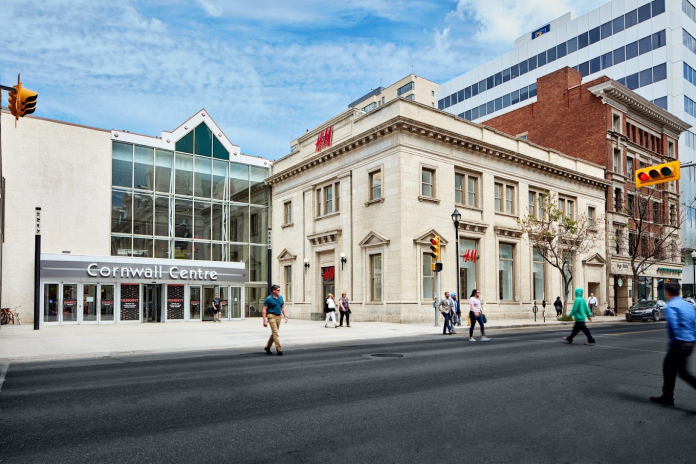
Cornwall Centre in Regina. Photo: Cornwall Centre/Cushman & Wakefield
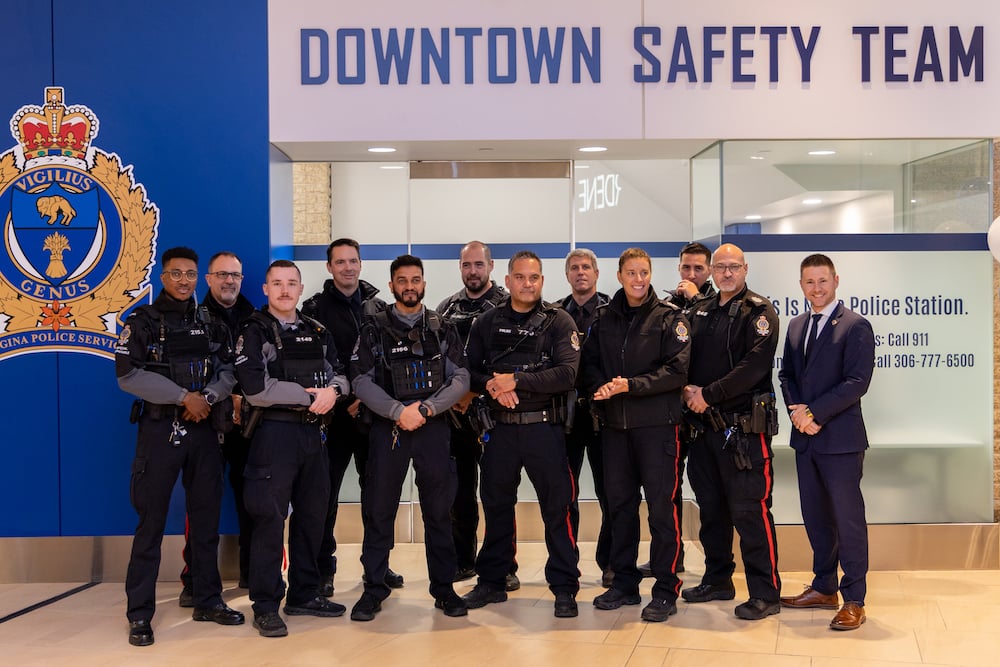
Cornwall Centre has opened a new Regina Police Service workspace on its main level near the Saskatchewan Drive East entrance, a move aimed at keeping officers in the core during their shifts and reducing time lost to travel for routine paperwork. The non-public space, launched on November 13, serves as a base for the Downtown Safety Team and Alternative Response Officers.
“Cornwall Centre is happy to make this space available to the Regina Police Service in support of the Downtown Safety Team,” said Katie Dockham, General Manager, Cornwall Centre. “We are dedicated to building a stronger, more vibrant downtown for everyone, and this new office is intended to serve the greater good of the community.”
Katie Dockham, General Manager, Cornwall Centre
Mall management positioned the room at a busy entrance with direct street access and dedicated stalls for police vehicles. The workspace is steps from the centre’s security office, allowing officers to coordinate quickly with on-site personnel. The objective is straightforward: officers can file notes and reports without leaving the district, which helps sustain a visible presence in the highest-footfall parts of the core.
Focus on presence and response in the core
The Cornwall Centre police office supports the city’s post-pandemic approach to downtown safety. Dockham said the Downtown Safety Team is now dedicated to the core for the entirety of a shift, addressing a historic coverage gap that emerged when teams were routinely pulled to calls in other parts of Regina.
“For years we were seeing a large gap in police coverage downtown,” Dockham said. “The Downtown Safety Team is now dedicated to the downtown when they are on shift. They are no longer being pulled to other calls outside of the core.” She added that the Alternative Response Officers program, modeled on a Saskatoon initiative, has expanded after a successful pilot. “They work in conjunction with the Downtown Safety Team, usually in groups of twos or fours,” she said. “The program has been a great success.”
The centre’s scale underpins the choice of location. Cornwall is a large, high-traffic property with a steady cadence of calls for service in cold-weather months. “We have a roughly 600,000 square foot public space,” Dockham said. “We were seeing a real need over the past couple of years, which uncovered the opportunity for the partnership to build a police office inside the centre.”
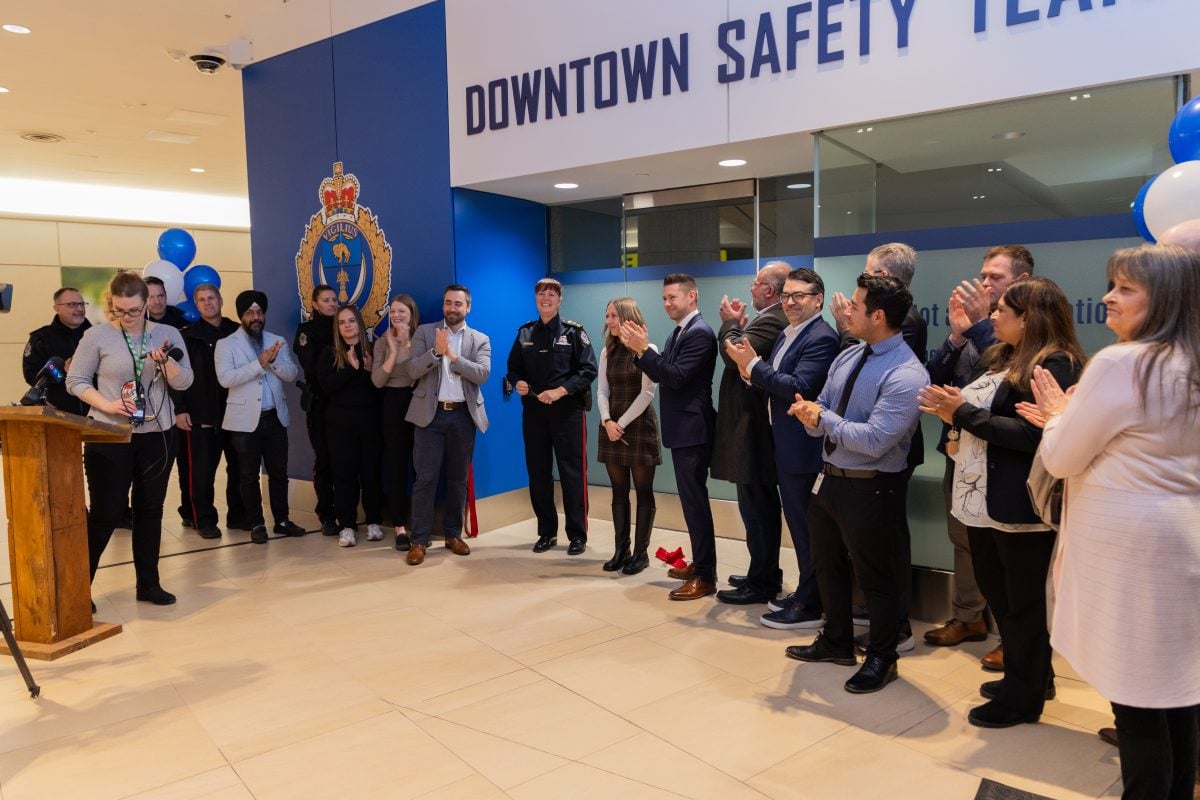
Grand opening of Regina Police Service at Cornwall Centre in Regina. Photo: Cushman & Wakefield
Turning a former guest services desk into a working room
The new workspace occupies the centre’s former guest services unit. The site offered several advantages: direct exposure to Saskatchewan Drive East, ease of arrival for patrol vehicles, and adjacency to the mall’s security base. “That space was quickly identified,” Dockham said. “It is very close to our security office, which they naturally spend quite a bit of time with, so it became an ideal site.”
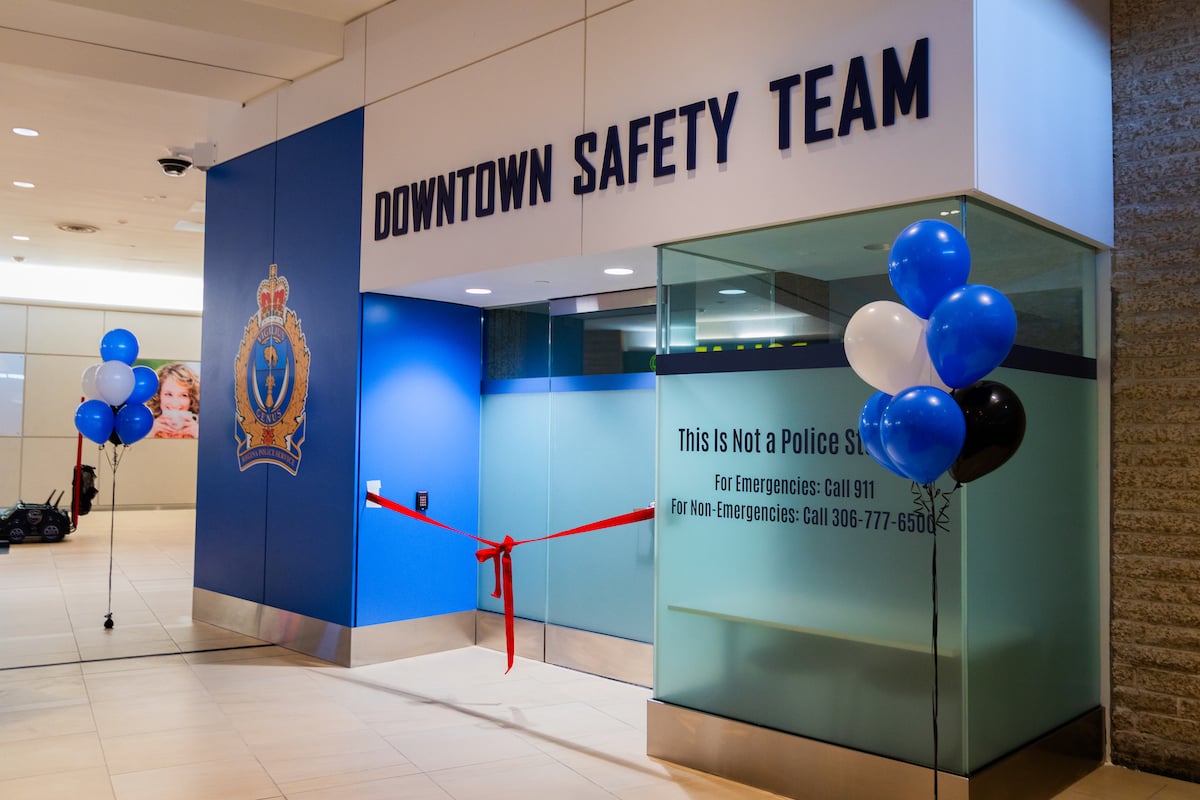
Cornwall Centre emphasized that the room is not a public precinct. It is a small, functional workspace designed for report writing, coordination, and brief resets between calls. Officers remain on regular patrols in and around the mall and throughout the core. The arrangement is intended to maintain coverage and reduce the friction that comes from leaving the district for routine documentation.
Regina Police Service at Cornwall Centre in Regina. Photo: Cushman & Wakefield
Addressing perception and reality for shoppers and retailers
Management framed the move as part of a broader effort to stabilize and grow downtown retail. Dockham pointed to the distinction between discomfort and genuine risk, and to the role of visible service teams in shaping how customers feel about spending time in the core.
“We battle downtown safety perception challenges,” she said. “There is a big difference between feeling uncomfortable and feeling unsafe. The new police office changes perception because people naturally feel safer when there is a visible service presence.”
She said the partnership also acts as a deterrent. “The presence of Alternative Response Officers and the partnership with our security team and the Downtown Safety Team acts as a deterrent for those who do not want to follow the properties code of conduct.”
Cornwall Centre framed the initiative as city-building rather than a mall-only solution. “This is meant for the greater good of the downtown,” Dockham said. “It is to keep officers in the downtown area. We had great buy-in from our neighbours and the Downtown Business Improvement District.”
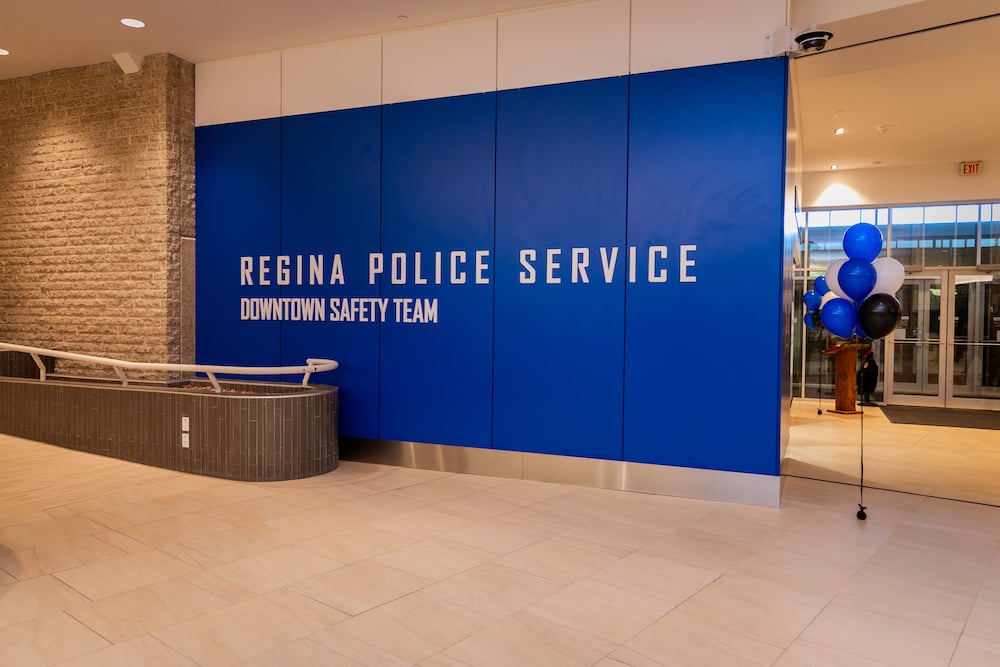
Regina Police Service at Cornwall Centre in Regina. Photo: Cushman & Wakefield
Leasing momentum feeds the retail narrative
The centre tied the safety initiative to its recent and upcoming leasing activity. JD Sports opened and has “done nothing but boost productivity,” Dockham said, while Reitmans returned to the core after consolidating elsewhere in the city. For 2026, Cornwall confirmed Hot Topic, Unique Bunny, and MINISO.
“Progress is also emerging in large-format space. Urban Planet occupies the entire second level of the former Sears box, with Ardene on the lower level. Dockham said there is strong interest in about 30,000 square feet that remain. The former Hudson’s Bay department store, which closed earlier in 2025, also represents a major redevelopment opportunity in the core. Cornwall Centre confirmed there has been significant interest in the site from potential tenants and developers, though details have not yet been announced.”
Streetscape investments align with retail goals
The opening of the police workspace comes as the City of Regina advances multi-year streetscape and infrastructure work in the core, including upgrades along 11th Avenue and Dewdney Avenue. The combined effect supports both the journey and the destination: new sidewalks, lighting, landscaping, and transit shelters, paired with a stronger officer presence where people shop and work.
“It is part of a greater revitalization,” Dockham said. “One thing leads to another. You start to clean things up in one area and it can really change the perception of a potential visitor. We truly believe the future of downtown Regina is very bright. I see it returning to a place where people want to come, where we can get back to later night shopping hours.”
Grand opening of Regina Police Services at Cornwall Centre in Regina. Photo: Cushman & Wakefield
Operational details and expected outcomes
Cornwall Centre said expectations have been set for officers to use the workspace several times a day while maintaining a visible presence across the core. Because the room is not public-facing, shoppers will see minor changes in layout or signage at the entrance. The difference will be measured in efficiency: reports entered on site, coordination handled next to security, and shorter travel times between calls.
That efficiency translates to retail. For tenants, a calmer trading environment reduces disruptions and allows store teams to focus on customers. For shoppers, a steady, predictable presence eases decision-making about when and where to visit. The approach also gives the Regina Police Service clear metrics to track, including response times and incident categories, that can be assessed against pre-opening baselines.
Ownership support and national context
Cornwall Centre is owned by IMCO and managed by Cushman & Wakefield Asset Services. The firms supported the conversion of the former guest services unit and the operational framework with RPS. The partnership places Regina alongside other Canadian malls that have used in-centre workspaces to support patrol teams serving dense areas, though Cornwall said it is the first major shopping centre in Saskatchewan to adopt the model in this form.
The mall underscored that the Cornwall Centre police office is not a substitute for broader investment. Rather, it is one of several coordinated steps that together can shift shopper sentiment and retailer confidence. “We get to be a bigger voice for the little guys who do not necessarily get heard,” Dockham said. “The police office helps propel the other positive things, because people need to feel safe and protected in order to battle perceptions and want to come back downtown again.”
Launch timing and next steps
The ribbon-cutting took place the morning of November 13, 2025, with senior RPS leadership and members of the Downtown Safety Team and Alternative Response Officers in attendance. Cornwall’s management said the two-stage media approach, which began with hoarding and renderings and culminated in the opening, allowed stakeholders to see the project’s progression and intent.
While the workspace is operational, Cornwall plans to continue coordinating with the police service and downtown partners through the winter trading period, when foot traffic spikes and cold weather raises the stakes for quick, local responses. The centre said it will continue to emphasize clarity of roles between security, Alternative Response Officers, and sworn officers, and will keep reinforcing expectations around conduct for all visitors.
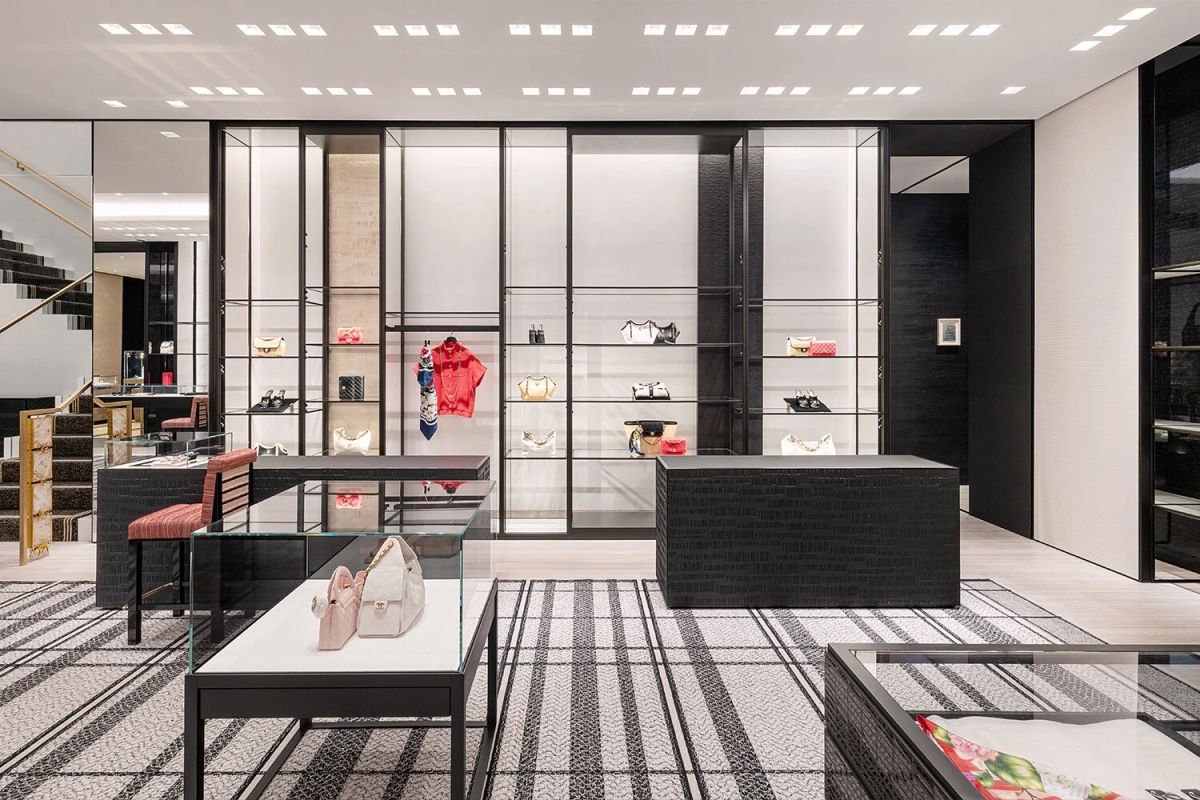
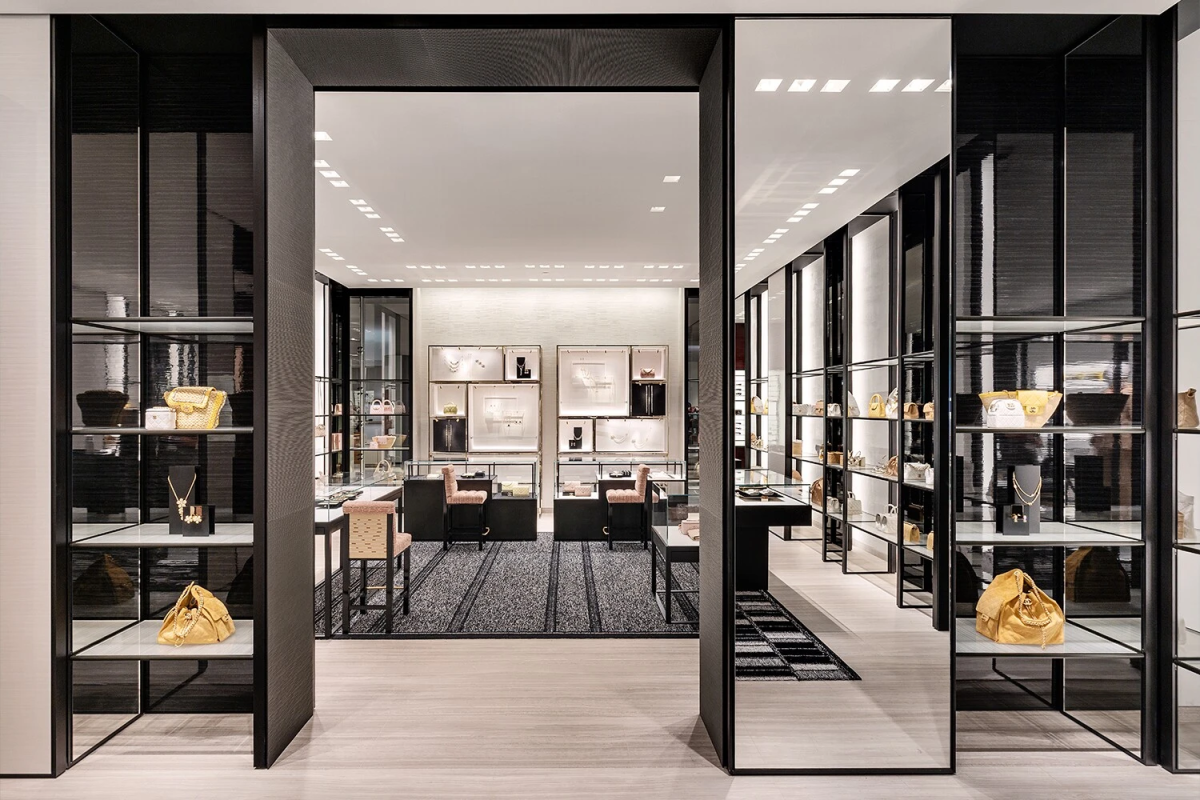
Chanel boutique at Holt Renfrew Yorkdale. Photo: Chanel
Chanel has expanded its Canadian footprint with the opening of its largest boutique in the country at Toronto’s Yorkdale Shopping Centre. The newly completed Chanel boutique Yorkdale space, located inside Holt Renfrew, spans approximately 10,600 square feet across two levels. It is now the largest Chanel concession in the world and the largest Chanel-operated store in Canada. Construction on the project began a year ago and has resulted in a highly visible new anchor presence for the department store.
The reopening marks a significant investment for Chanel at a time when luxury retail continues to grow in the Canadian market. With another major Chanel location set to open in Vancouver in 2026 and continued investment in its concession network nationwide, the brand is reinforcing its long-term commitment to the Canadian luxury consumer.
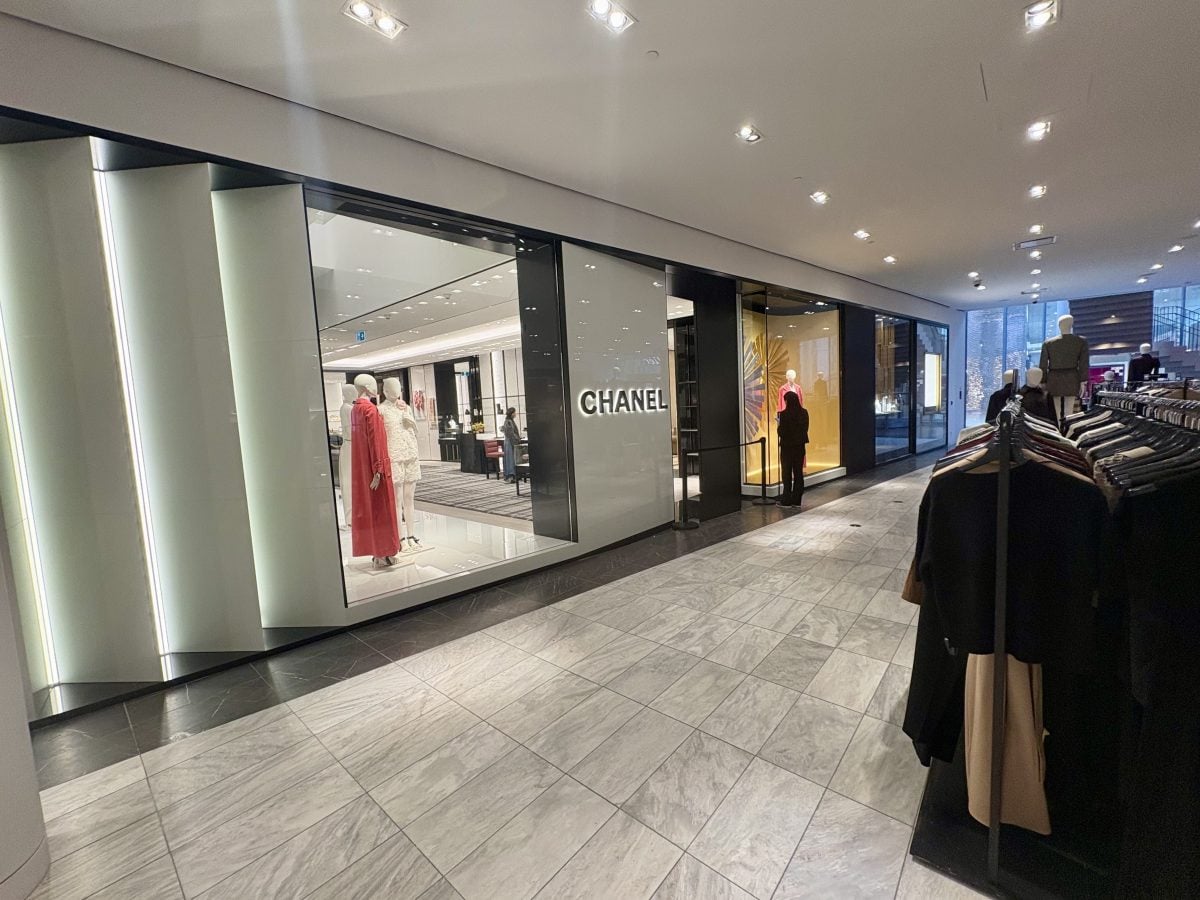
The Chanel boutique Yorkdale location occupies approximately 11 percent of Holt Renfrew’s total retail square footage and has been designed to function similarly to a standalone boutique. Although part of the department store, the space features its own dedicated double-height façade opening directly into Yorkdale’s main hallway. Two additional entrances connect internally to Holt Renfrew.
Industry sources speaking to Retail Insider say Chanel has set exceptionally high expectations for the Yorkdale store. The boutique is anticipated to generate about $100 million annually, which would make it the highest-performing Chanel location in Canada. That would represent roughly double the sales volume of the brand’s standalone flagship on Yorkville Avenue.
The new Yorkdale boutique is debuting with the CHANEL Cruise 2025/26 collection and offers ready-to-wear, bags, footwear, accessories, watches, fine jewellery, and high jewellery. The introduction of High Jewellery is a first for the brand in Toronto and signals further expansion of Chanel’s top-tier product offering in Canada.
Mall facade of the Chanel boutique at Holt Renfrew Yorkdale in Toronto. Photo: Kyle Rempfer
A Two-Level Space Designed by Peter Marino
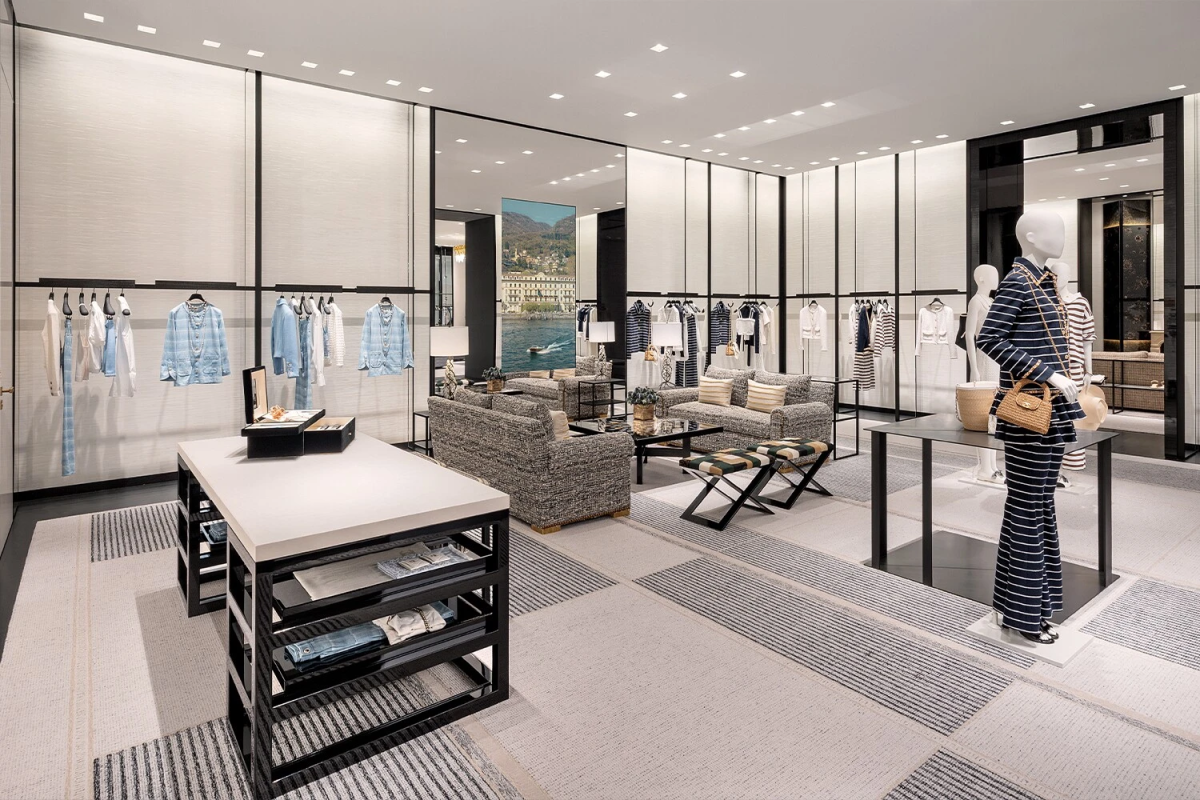
The boutique was designed by renowned architect Peter Marino, who has shaped many of Chanel’s global flagships. The Yorkdale design incorporates the House’s signature black and white palette with gold detailing, creating an environment inspired by Parisian residential architecture.
The main floor is centred around accessories and leather goods, including the CHANEL 25 collection. The space also houses watches, fine jewellery, and high jewellery. Two Goossens gilded bronze and rock crystal chandeliers were installed as focal pieces, along with a commissioned portrait of Gabrielle Chanel created by Gregor Hildebrandt using more than 1,000 custom cassette tape cases.
A major addition to this location is “CHANEL & Moi,” the brand’s repair and alteration service, which is being introduced in Canada for the first time. The service allows clients to bring in pieces for restoration or adjustments, strengthening Chanel’s emphasis on craftsmanship and long-term product care.
The upper level showcases ready-to-wear and includes a private VIP salon as well as three dedicated fitting rooms intended for more personalized appointments.
Chanel boutique at Holt Renfrew Yorkdale. Photo: Chanel
Yorkdale Continues Expansion of Luxury Offering
Yorkdale Shopping Centre has been expanding its luxury retail footprint at a rapid pace. The mall’s 65,000-square-foot luxury wing is nearing completion and has become a hub for global brands seeking high-performing Canadian locations.
Several flagship stores over 10,000 square feet have opened or are scheduled to open in the wing. Dior recently debuted a large-format boutique, while Gucci and Saint Laurent are preparing to launch similarly scaled locations. These additions reinforce Yorkdale’s positioning as one of North America’s leading centres for luxury retail productivity.
Chanel’s expanded boutique further strengthens Holt Renfrew’s roster at the mall and aligns with Yorkdale’s continued strategy of attracting international luxury brands with high sales potential.
Chanel boutique at Holt Renfrew Yorkdale. Photo: Chanel
Chanel’s Retail Network and Continued Investment in Canada
The Chanel boutique Yorkdale expansion forms part of a broader strategy to grow and modernize the brand’s retail presence across Canada. Chanel is continuing to invest in both standalone locations and concessions, with a significant new store opening planned for Vancouver’s Oakridge Park in March 2026. The two-level Oakridge boutique will be similar in size to the Yorkdale concession and will mark the brand’s second standalone location in Canada after Yorkville Avenue. DWSV Realty (David Wedemire and Stan Vyriotes) represent Chanel as brokerage in Canada.
Chanel’s history in Canada dates to the late 1980s, beginning with a shop-in-store at Creeds in Toronto’s Manulife Centre. The brand moved to The Colonnade at 131 Bloor Street West in 1989 and remained there until opening its purpose-built flagship at 99 Yorkville Avenue in 2017. That location remains the only standalone Chanel store in Canada until the Vancouver opening next year.
Today, Chanel also operates several Holt Renfrew concessions nationwide. These include:
A 5,000-square-foot street-level concession at Holt Renfrew Vancouver, which last year was said to generate approximately $60 million annually.
A new main-level concession at Holt Renfrew Calgary, measuring approximately 2,900 square feet, following a relocation from the second floor in the summer of 2020.
A renovated 1,800-square-foot concession at Holt Renfrew’s flagship store at 50 Bloor Street West in Toronto.
A 3,300-square-foot concession at Holt Renfrew Ogilvy in Montreal, which relocated to the main floor luxury hall in late 2019.
These investments point to consistent performance across Canada’s major luxury markets and reflect Chanel’s strategy of strengthening its physical retail presence through larger footprints and more comprehensive product assortments. The brand otherwise does not sell online.
Main floor entrance to the Chanel boutique from within Holt Renfrew Yorkdale in Toronto. Photo: Kyle RempferSecond floor entrance to the Chanel boutique from within Holt Renfrew Yorkdale in Toronto. Photo: Kyle Rempfer
Background on Chanel and Its Global Influence
Chanel remains one of the most recognized luxury houses globally, known for innovations that reshaped women’s fashion throughout the 20th century. Founded in 1910 by Gabrielle “Coco” Chanel as a millinery shop in Paris, the brand expanded into apparel by introducing comfortable jersey sportswear and silhouettes that gave rise to the flapper style of the 1920s. Chanel’s focus on comfort, elegance, and simplicity helped redefine women’s wardrobes and remains central to the brand’s identity.
The House continued to grow through the introduction of the Chanel No. 5 fragrance in 1921, which remains a leading global perfume. Chanel also expanded into costume jewellery, watches, and ready-to-wear, producing enduring fashion staples such as the little black dress and the classic tweed jacket.
After Coco Chanel’s passing in 1971, the brand underwent several transitions before Karl Lagerfeld assumed the role of creative director in 1983. Lagerfeld modernized the House while maintaining key design codes, leading Chanel into renewed global prominence and commercial success for more than three decades.
Mall facade of the Chanel boutique at Holt Renfrew Yorkdale in Toronto. Photo: Kyle RempferChanel boutique at Holt Renfrew Yorkdale. Photo: Chanel
Creative Leadership Transition and New Direction for the Brand
Chanel is currently undergoing a significant creative leadership transition. Virginie Viard, who led the House from 2019 to 2024 following Lagerfeld’s death, departed the company in June 2024. Her tenure delivered strong commercial performance through 2023, although profits declined by 30 percent in 2024 and 2025 due to increased marketing investment and a broader slowdown in the global luxury sector.
Viard’s collections largely focused on Chanel’s heritage and emphasized continuity. Some industry observers praised her commitment to the brand’s codes, while others expressed concerns about limited experimentation and a need for stronger creative momentum.
In December 2024, Chanel named Matthieu Blazy as its new creative director. Blazy is widely known for his work at Bottega Veneta and is regarded for forward-thinking craftsmanship. Chanel leadership described his appointment as an opportunity for a “powerful approach to creation.” His first collection for Chanel will be presented for Spring Summer 2026 and is being closely watched by the fashion industry.
Uber’s latest Economic Impact Report reveals that the platform helped generate an estimated $13.6 billion in total economic value for Canada last year, powering small business growth, flexible earning opportunities, and local spending from coast to coast, said the company.
Developed in collaboration with independent research firm Public First, the report highlights how the brand is enabling Canadians to earn more, save time, and connect with their communities amid economic uncertainty, it said.
“This report shows that the Uber platform isn’t just moving people and meals — it’s moving the economy forward”.
Driving earnings and flexibility in a shifting labour market
At a time when Canada’s unemployment rate sits around 7%, the company said it continues to play a critical role in providing flexible earning opportunities to help Canadians earn additional income on their own terms.
Drivers and delivery people using it earned 19.6% more than their next-best alternatives in 2024, an extra $680 million in total earnings.
Half of all earners said they would have struggled to cover costs without app-based work.
Another 51% said Uber helped them pay their bills after losing a traditional job.
As economic volatility reshapes the labour market, the report underscores how platform work is serving as a financial safety net for thousands of Canadians, said the company.
Fueling small business growth nationwide
The company said the report also highlights the key role Uber Eats plays in supporting Canadian small and medium-sized enterprises (SMEs), where Uber Eats has become an essential growth engine.
In 2024 alone, the app supported $1.61 billion in additional revenue for merchants across the country.
One in five orders for SME merchants came through the app
Nearly 70% said Uber Eats helped them reach new customers they wouldn’t have otherwise reached.
“For many independent restaurants, cafes, and retailers, Uber Eats has become an essential digital sales channel, driving resilience and growth in a highly competitive market,” it said.
Catalyzing broader economic activity
Beyond direct economic impact, the platform contributes to Canada’s wider economic ecosystem by increasing local spending and supporting supply chains tied to platform activity, according to the report.
Uber users generated $1.17 billion in local spending at restaurants, bars, and shops in 2024.
Canadians saved 70.3 million hours in travel and cooking time, freeing up both household income and consumption capacity.
“We asked Canadians how much they would have to be compensated to lose access to Uber and Uber Eats for the next month. In 2024, we estimate that the total consumer surplus created by Uber and Uber Eats together is equal to almost $31.3 billion.”
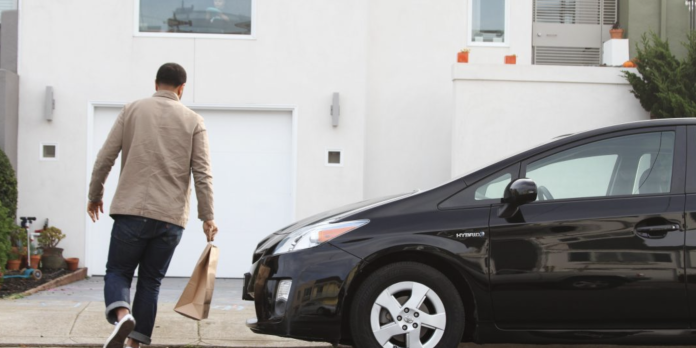
Photo: Uber
Rethinking urban movement
The company said its growth is also reshaping mobility patterns nationwide:
Ridesharing helped remove an estimated 260,000 cars from Canadian roads last year.
52% of riders without cars say Uber is part of the reason they don’t own one.
41% used Uber to connect with public transit.
“These shifts underscore Uber’s increasing role in Canada’s transition toward more flexible, lower-emission urban transportation.”
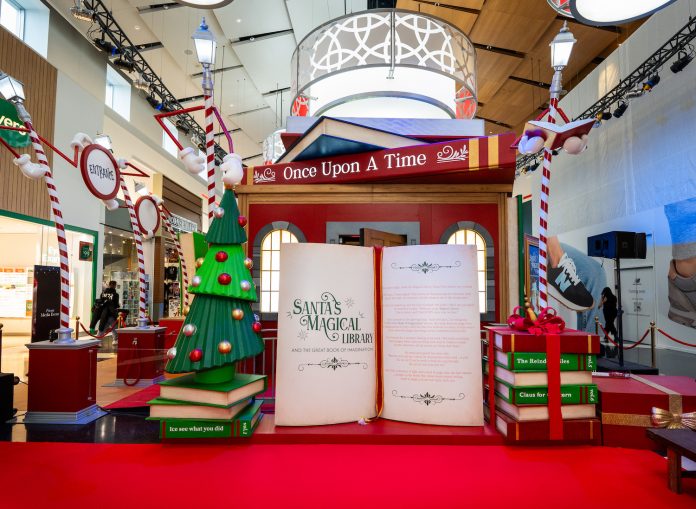
Santa’s Magical Library AR journey at Vaughan Mills. Photo: Vaughan Mills
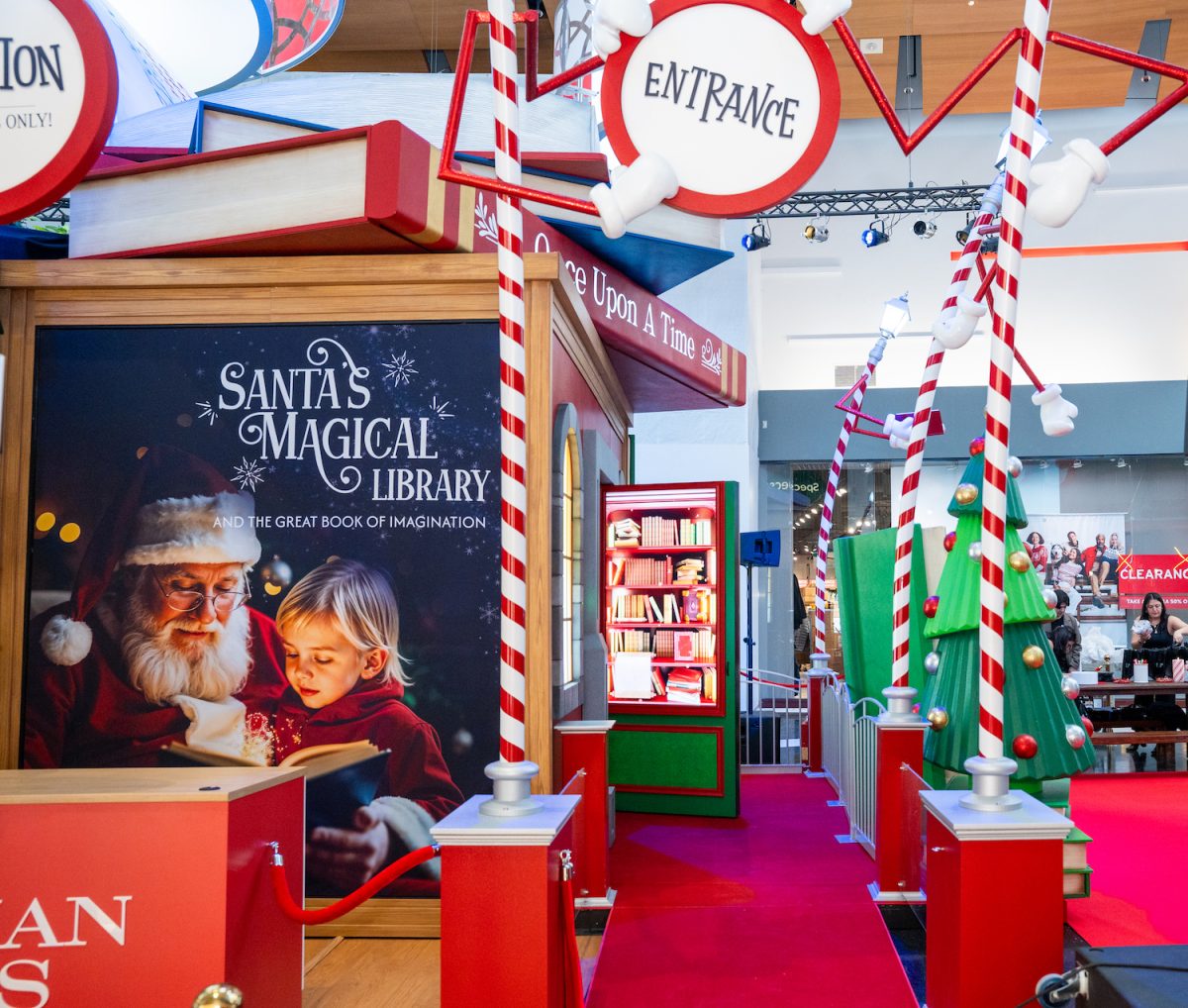
Vaughan Mills has launched one of the most ambitious holiday attractions seen in a Canadian shopping centre with the debut of Santa’s Magical Library AR journey Vaughan Mills. The immersive experience opened to the public on November 16 and introduces a new approach to seasonal programming that blends storytelling, augmented reality and live performance. The result is a narrative holiday journey designed to engage families, strengthen community connection and reimagine how a Santa experience can function within a major retail destination.
Developed and produced in partnership with Montreal-based Studio Artefact Inc., the experience reimagines what a Santa visit can be, shifting from a traditional photo moment toward a story-driven journey that brings families directly into Santa’s world. In this first edition, children enter a setting where beloved characters from Santa’s Great Book of Imagination have wandered away from their stories. Only young visitors can help restore the magic by reading, believing and discovering what makes them uniquely special.
Vaughan Mills expects the new concept to serve as a major seasonal draw, creating reasons for families to engage with both the immersive attraction and the broader retail environment at a time when Canadian shopping centres are investing heavily in experiential innovation. The Santa’s Magical Library AR journey Vaughan Mills activation is positioned as a centrepiece of the property’s holiday season, with the potential to become an annual tradition supported by evolving story themes and new collectible books each year.
“We’re not just updating the Santa experience, we’re reimagining what’s possible when you combine storytelling magic with cutting-edge technology,” says Rhonda Richmond, Regional Marketing Director, Ontario with JLL Canada. “This experience proves that innovation and impact can go hand in hand creating magical moments for families, while simultaneously supporting life-changing care at SickKids. When children visit Santa and pledge to keep the magic of stories alive by reading, they’re not just participating in entertainment, they’re part of a movement that has raised over one point two million dollars for pediatric healthcare.”
Santa’s Magical Library AR journey at Vaughan Mills. Photo: Vaughan Mills
Inside Santa’s Library: An Immersive Journey from Check-In to Storybook Magic
The experience begins long before families meet Santa. Upon arrival, guests check in with a costumed librarian who guides them into a private storytelling chamber. Inside, an enclosed circular room is wrapped in digital screens, creating a cinematic moment in which Santa explains that his story characters have escaped, setting the narrative in motion.
Jennifer Dunn
Jennifer Dunn, Senior Director of Marketing at JLL and one of the leaders behind the project, says the team spent considerable time studying how Santa experiences across North America have evolved.
“We have been watching how Santa experiences have changed over the years, and what we kept learning is that digital elements are exciting, but the real magic still comes from in-person theatre and human connection,” says Dunn. “Families remember how they felt, not just the visuals. That insight guided everything about this project.”
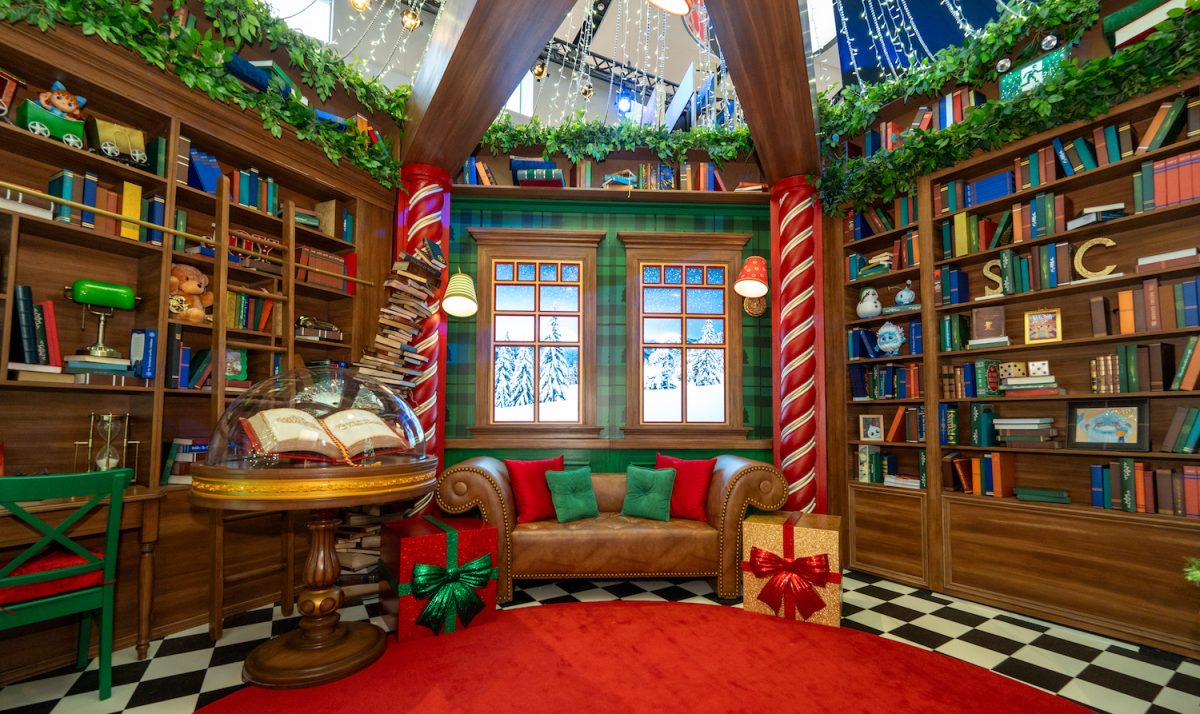
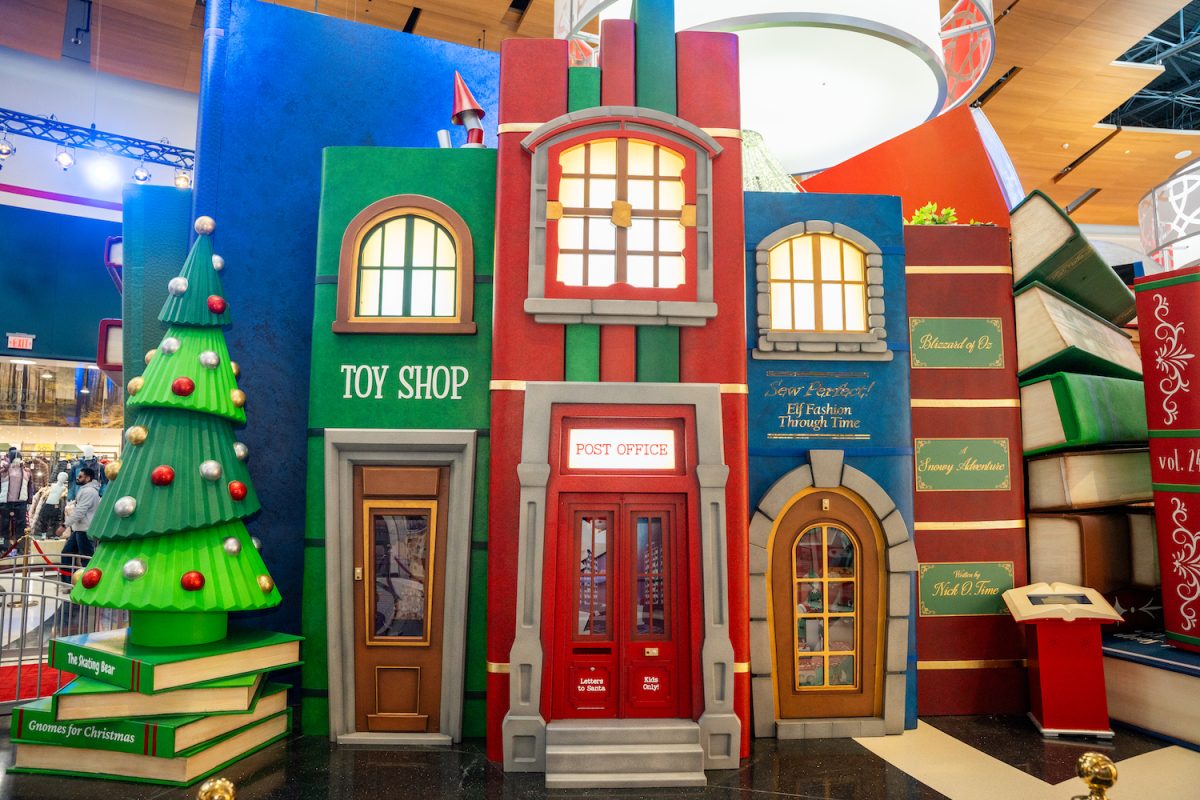
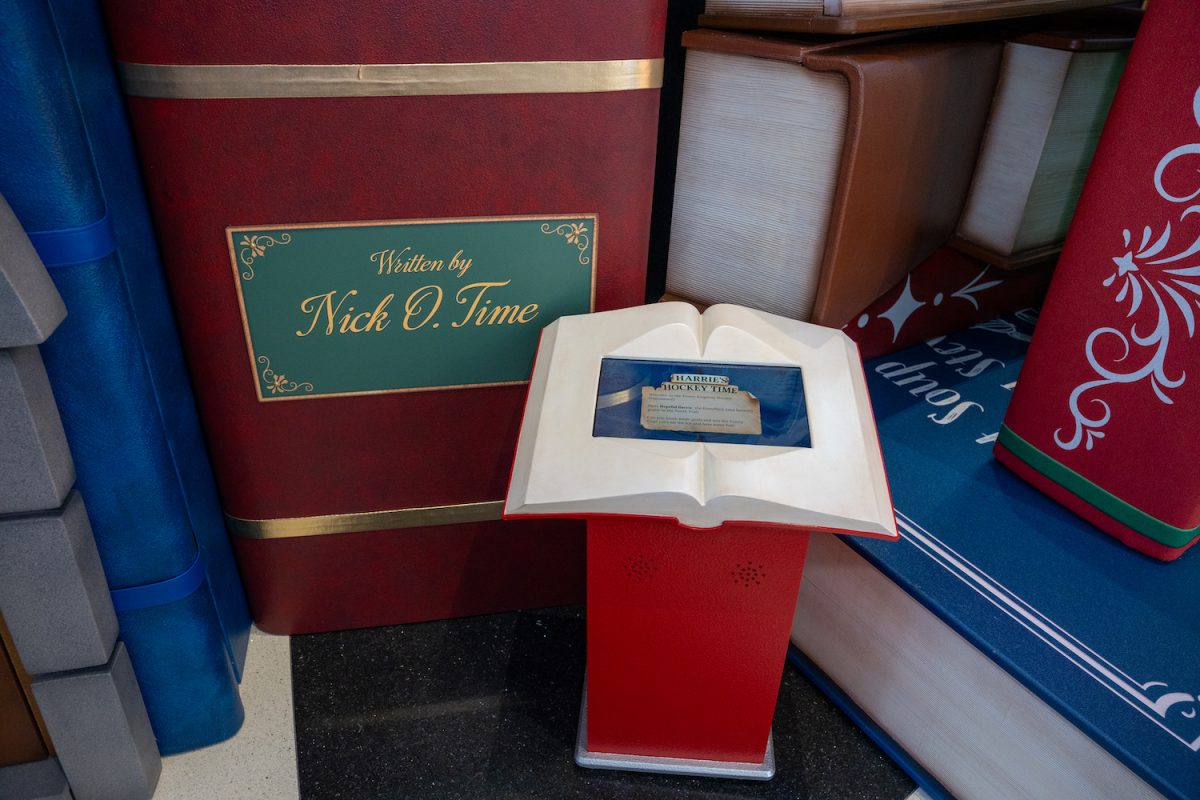
In the storytelling room, children are transported through different realms tied to the stories Santa protects. The 2025 theme is belief, emphasizing imagination, reading and the idea that everyone has something unique that fuels the magic of the season. When the story sequence concludes, an elf opens a set of doors and leads the group directly into Santa’s library, a richly detailed environment filled with oversized books, glowing story props and Santa himself.
Santa invites children to gather around the Great Book of Imagination, placing their hands on an interactive version of the book. When they do, coloured lights pulse and animate throughout the set, symbolizing the return of magic through belief. Families then move into a dedicated photo moment before receiving the annual collectible storybook that corresponds with the season’s theme.
Santa’s Magical Library AR journey at Vaughan Mills. Photo: Vaughan MillsSanta’s Magical Library AR journey at Vaughan Mills. Photo: Vaughan Mills
A Journey That Continues Beyond the Santa Visit
One of the defining features of Santa’s Magical Library AR journey Vaughan Mills is that the experience does not end when families leave Santa’s set. A companion mobile app extends the story across the shopping centre through AR-enabled touchpoints. QR markers positioned throughout the property allow children to collect missing characters, unlock digital animations and take part in challenges linked to the narrative.
“The mobile app provides an open access layer to the experience,” says Dunn. “If a family cannot secure a booking, they can still participate through the AR touchpoints throughout the centre. And for those who do visit Santa, it becomes a continuation of the story rather than the end of it.”
This structure also reflects Vaughan Mills’ broader strategy of engaging families across longer periods of time within the shopping environment. By merging the physical set with centre-wide AR activations, the experience aims to influence traffic flow, dwell time and repeat engagement, making the Santa experience a true destination within the centre rather than a standalone attraction.
Dunn notes that considerable time went into shopper journey mapping and storyboarding to ensure every touchpoint felt cohesive. “This experience is a pillar of our engagement strategy. We wanted every moment to feel intentional, from the librarian check-in to the storybook children take home. The goal is visitor satisfaction first and foremost, with the natural halo of increased traffic and dwell time following from that.”
Santa’s Magical Library AR journey at Vaughan Mills. Photo: Vaughan Mills
A Meaningful Partnership with SickKids
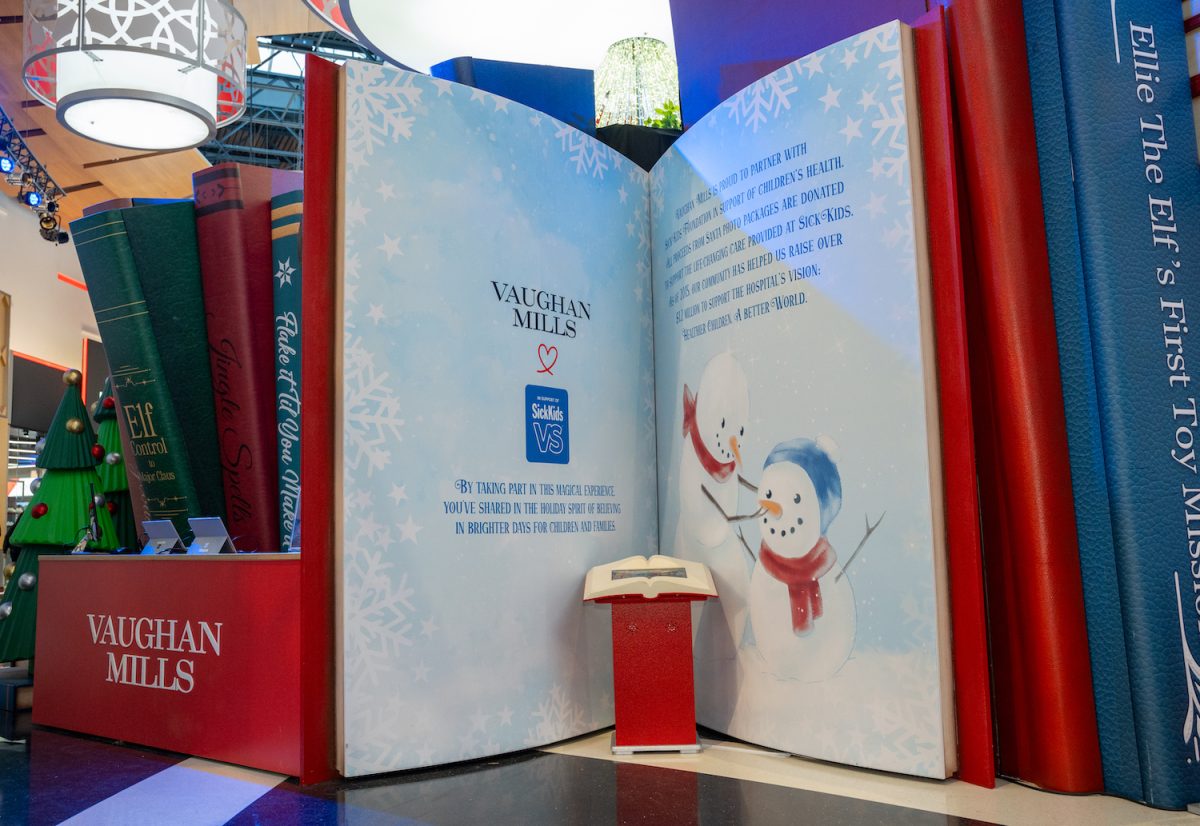
The experience builds on a decade-long partnership between Vaughan Mills and SickKids Foundation. All photo package proceeds are donated to SickKids, and this year’s photo packages range from fifty-five to seventy-five dollars. Every dollar from those sales goes directly to the hospital.
“We’re so grateful to our partners at Vaughan Mills for bringing the magic of the holidays and the spirit of giving to the patients and families at SickKids,” says Julie Garcia Sjogrim, Vice-President of Corporate and Community Partnership at SickKids Foundation. “Through this innovative and immersive experience, Vaughan Mills is showcasing the way it can bring people together in a show of support for priority needs at SickKids. Donor support allows the hospital to respond to the needs of today while making the discoveries of tomorrow.”
In addition to fundraising, the partnership brings the holiday experience into the hospital itself through in-hospital Santa visits and storytelling activations. Vaughan Mills also hosts a special holiday breakfast event for SickKids families, offering a private first-look experience before the attraction opens to the general public.
For Dunn, the alignment is meaningful on both a community and national level. “SickKids is a centre of excellence that serves families from across Canada. Because Vaughan Mills draws visitors from across the GTA and Southern Ontario, it felt natural to partner with an institution that reaches far beyond our local community.”
Santa’s Magical Library AR journey at Vaughan Mills. Photo: Vaughan Mills
A Scalable Experience Designed for Growth
Bookings for Santa’s Magical Library opened on November 13. While the centre expects strong demand, Dunn emphasizes that this first year is also a learning phase in which availability will be optimized dynamically to keep the experience comfortable and enjoyable.
“We will be closely monitoring bookings to make real-time adjustments,” she says. “We want to deliver an experience that feels magical, not rushed. The AR elements available throughout the centre also help ensure that every visitor can participate, regardless of whether they have a booking.”
Themes, story content and collectible books will change annually, with the Great Book of Imagination designed as a long-term narrative framework. As more families collect each season’s storybook, the property anticipates developing continuity from one year to the next.
Santa’s Magical Library AR journey at Vaughan Mills. Photo: Vaughan Mills
Designed by Experts in Immersive Storytelling
The creation of Santa’s Magical Library involved extensive collaboration across multiple disciplines. JLL marketers, Vaughan Mills leadership, Studio Artefact and creative specialists with backgrounds in video game design worked together to build a cohesive experience.
Dunn describes the level of planning as one of the most comprehensive efforts the centre has undertaken for a seasonal program. “There were hours upon hours of storyboarding and customer journey mapping. We had people who design physical worlds and people who design digital worlds all contributing. The goal was to build something where technology supports the story rather than overpowering it.”
Holiday décor across the centre has also been refreshed to match the theme, creating visual cohesion between the immersive set and the retail environment, reinforcing the feeling that the story extends throughout the entire property.
Santa’s Magical Library AR journey at Vaughan Mills. Photo: Vaughan Mills
Vaughan Mills as a Destination for Families and Visitors
Since opening in 2004, Vaughan Mills has grown into one of the largest and most visited super-regional shopping centres in Canada. With more than 220 retailers and over 11 million visitors annually, the property has built a reputation for blending off-price, full-price and entertainment-driven retail under one roof.
Dunn notes that the market surrounding Vaughan Mills continues to expand. “Vaughan is one of the fastest-growing communities in the country. The centre serves a large and diverse trade area, drawing from across the GTA, Southern Ontario and an increasing number of tourists. Experiences like Santa’s Magical Library deepen our ability to serve families who are looking for more than a transactional visit.”
She adds that the broader evolution of Canadian shopping centres reflects a renewed emphasis on physical experiences. “I am digital first and I am excited about AI, but people still crave authenticity. They want real interactions in real places. That is why experiences like Santa’s Library resonate. Technology enhances the magic, but Santa is still a real person sitting with your child, creating a moment they will remember.”
The all-items CPI decelerated largely due to gasoline prices, which fell at a faster pace year over year in October (-9.4%) compared with September (-4.1%). Excluding gasoline, the CPI rose 2.6% in October, matching the increase in September, said the federal agency.
Slower growth in grocery prices further contributed to the deceleration in the CPI in October, which was moderated by higher prices for cellular phone plans, it said.
The CPI rose 0.2% month over month in October. On a seasonally adjusted monthly basis, the CPI was up 0.1%, added Statistics Canada.
“Prices at the pump fell at a faster pace year over year in October (-9.4%) compared with September (-4.1%), resulting from a 4.8% month-over-month decline in October. The monthly decline was largely due to a switch to cheaper winter blends, as well as lower crude oil prices amid continued concerns of oversupply,” said Statistics Canada.
“Year over year, prices for food purchased from stores rose 3.4% in October, down from a 4.0% increase in September. Though grocery prices decelerated in October, prices remained elevated and have exceeded overall inflation for nine consecutive months. The deceleration was due in part to prices for other food preparations (+3.2%), which mostly includes processed foods, as well as prices for fresh vegetables (-1.4%). Partially offsetting the slowdown was higher prices for fresh or frozen chicken (+6.2%), after a 1.5% increase in September.
“On a month-over-month basis, grocery prices fell 0.6% in October, the largest decline since September 2020 (-1.1%).”
“Overall, while inflation decelerated in October, the move was in line with expectations and it would take a longer period of easing price pressures, combined with indications of economic growth deteriorating again, to bring the Bank of Canada back off the sidelines. We continue to forecast no change in the overnight rate through to the end of next year,” he said.
Andrew Hencic | Director & Senior Economist, TD Economics, said: “The takeaway here is that top line inflation came in as expected while the various underlying measures continues to hover in-and-around the target range – with some heating up and others cooling off.
“The Bank of Canada delivered a cut at their past meeting and signaled there wasn’t much more they could do in the current economic environment – a view we have shared for some time. This month’s report doesn’t change the story much, inflation is unlikely to fall below the lower end of the target range given the disruptions on the supply side of the economy, but it’s also unlikely to sharply accelerate amid expectations for tepid domestic demand. Markets remain on the same page, putting the odds of a cut by next April at roughly 30%.”
Douglas Porter
Douglas Porter, Chief Economist at BMO Capital Markets, said: “On the surface, this looks to be a mildly friendly report with headline and median inflation rates dipping. However, the sources of relief were well-known ahead of time, and the new news here is not great, driven by persistent strength in insurance costs and a snap higher in cell charges. Overall, this does little to change the BoC’s view that underlying inflation remains close to 2-1/2%; but, if anything, most underlying metrics have been stuck a bit above that, or have just crept up there. In other words, this report is just another reason to believe the Bank is moving to the sidelines in December.”
While affordability and housing supply dominate headlines, the report points to growth in purpose-built rental, grocery anchored retail and seniors’ housing, fueled by new sources of capital and faster cross industry partnerships.
Fred Cassano
“Canadian real estate is at a pivotal moment–policy momentum is building, and the sector’s ability to collaborate across industries is opening doors to new opportunities,” said Fred Cassano, Partner, National Real Estate Leader, PwC Canada. “Addressing the construction shortage is essential, as its impact ripples across every asset class, from housing to retail and industrial. By embracing new approaches and partnerships, we have a tremendous opportunity to build the spaces our communities need and unlock growth throughout the market.”
The report said grocery anchored/open-air retail continues to outperform.
“Sentiment toward the retail segment is largely optimistic, as evidenced by the sector’s relatively low NAV (Net Asset Value) discount. Several interviewees identified retail as a good bet, with landlords reporting strong tenant demand and rising rental rates,” said the report.
“One interviewee suggested that some vacancies would be welcomed, as it would give them a chance to reset rents at higher levels. Limited construction in recent years has likely contributed to this, putting space at a premium. Some interviewees even suggested they may be looking at building new retail developments. Others noted that with cap rates compressing, those looking at investing in the space will likely find themselves paying more than they hoped.”
The report said open-air retail is performing well: interviewees identified grocery-anchored developments in suburban locations as a best bet for 2026.
“Several suggested that there will always be a market for good-quality local retail, while others highlighted how mixed-use developments are a key strategy for bringing in customers—with the quality of the residential component bolstering the retail side and vice versa,” said the PwC report.
Provigo grocery store in downtown Montreal. Image via Broccolini
“Experiential retail is also attracting increasing attention. One interviewee highlighted the concept of “eatertainment”—the combination of food and beverage offerings with novel and sharable entertainment experiences—as an attractive opportunity because of its ability to create destination locations that then support other retail businesses nearby. Some of these experiential offerings are taking up spaces left by anchor tenant departures, helping to reinvigorate retail properties. Several owners are also looking at anchor tenant departures as an opportunity to redevelop larger spaces to unlock new value aligned with evolving consumer preferences.
“It’s important to note that the positive sentiment toward the retail segment isn’t universal. In addition to the loss of a major department store tenant this year, some interviewees said increased caution about the economy is causing more hesitation among companies considering long-term leases for large spaces, extending the time for property owners to find new occupiers.”
Consumer insolvencies also increased 3.3% in the third quarter compared to the previous quarter, it said.
Wesley Cowan
“Behind these numbers are Canadians who continue to struggle to balance daily expenses with mounting debt obligations. For many, consumer insolvency filings are the result of financial pressures that have been building quietly for some time,” said Wesley Cowan, Licensed Insolvency Trustee and Vice Chair of CAIRP.
“People often wait until they feel completely overwhelmed before seeking help. But opening up about debt earlier — even just having that first conversation — can make a world of difference. Financial Literacy Month is about encouraging those conversations and showing Canadians that help is available. Licensed Insolvency Trustees offer a trusted, confidential place to talk through your options and find a way forward.”
Against the backdrop of continued household strain, the third-quarter volume of consumer insolvencies remains markedly above pre-pandemic levels, sitting 17.1% higher than the pre-pandemic five-year average for the third quarter and 29.4% above the recent four-year average. In the last 12-month period ending September 30, 2025, there were 139,335 consumer insolvencies filed – slightly more (+2.9%) than the 12-month period ending September 30, 2024. Yet even these numbers likely understate the extent of financial distress, as the fear of judgment and stigma continues to keep many Canadians struggling in silence, explained CAIRP.
The organization said business insolvencies fell in the third quarter of 2025, with 1,108 filings — a decrease of 15.5% from the same period last year and 13.3% from the previous quarter. Over the 12-month period ending September 30, 2025, there were 5,050 business insolvencies filed, down 20.8 percent compared to the 12-month period ending September 30, 2024.
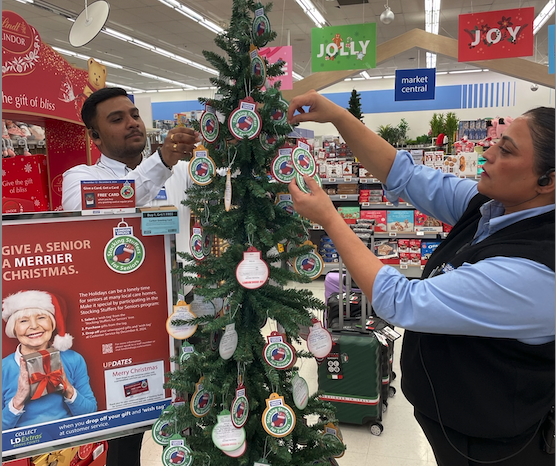
London Drugsstores across Western Canada have announced the return of the annual Stocking Stuffers for Seniors initiative for the 2025 holiday season.
Now celebrating a decade of programming at London Drugs, Stocking Stuffers for Seniors is running to December 8, encouraging communities to participate, in turn bringing comfort to seniors in need during the holidays.
Clint Mahlman, President/COO of London Drugs at the Brentwood Village Mall location in Calgary. Photo by Mario Toneguzzi
“Seniors in Western Canada are dealing with rising costs of living, and for some, the addition of experiencing loneliness or social isolation. The holidays can present further challenges, and with Stocking Stuffers for Seniors, our goal is to continue reaching those in need,” said Clint Mahlman, president and COO of London Drugs.
“It is an honour to collaborate with our customers again this year, in our 80th year of business, to champion a program that uplifts the seniors at the heart of our communities.”
Active since 2015 in British Columbia, Saskatchewan, and Manitoba, and 2014 in Alberta, Stocking Stuffers for Seniors was created to spread holiday cheer to seniors in the communities London Drugs serves, explained the company.
“Now chain-wide at London Drugs’ 80 locations, it sees holiday trees placed in stores from which customers can pick a gift tag containing wish list items for a senior in their community. All items are then returned to London Drugs for delivery to care homes; the retailer is collaborating with more than 200 care homes in Western Canada this year.,” it said.
The impacts of loneliness and social isolation are widespread globally, with approximately 11.8% of older people experiencing loneliness, per World Health Organization data. Quality of life, physical and mental health, and longevity can be affected by social isolation and loneliness, with risk factors for seniors including living alone, having compromised health status, changing family structures, location of residence, being a caregiver, or living with low income. A quarter (25%) of Canadian seniors in the lowest income group were much more likely than those in the highest income group (15%) to report being lonely, according to Statistics Canada.
“London Drugs’ Stocking Stuffers for Seniors program has delivered approximately 97,000 gifts to seniors to date. The retailer is collaborating with local organizations to ensure no seniors are forgotten this year, including Operation Friendship Seniors Society in Edmonton and Seniors Secret Service in Calgary. Gifts purchased for seniors will be delivered via the care home or charity partner connected with the London Drugs store in their community,” said the retailer.
“LDExtras members can receive additional LDExtras points per gift donated during the 2025 Stocking Stuffers for Seniors initiative: 1,000 points before December 1 and 500 points until December 8 when the program ends.”
Founded in 1945, B.C.-based London Drugs sells throughout Canada through its online store, and has 80 London Drugs locations in more than 35 major markets across British Columbia, Alberta, Saskatchewan and Manitoba.