Retail Insider is streamlining its Canadian retail news from around the web to include a handful of top news stories that can be viewed quickly during the day. Here are the top stories from the past 24 hours.
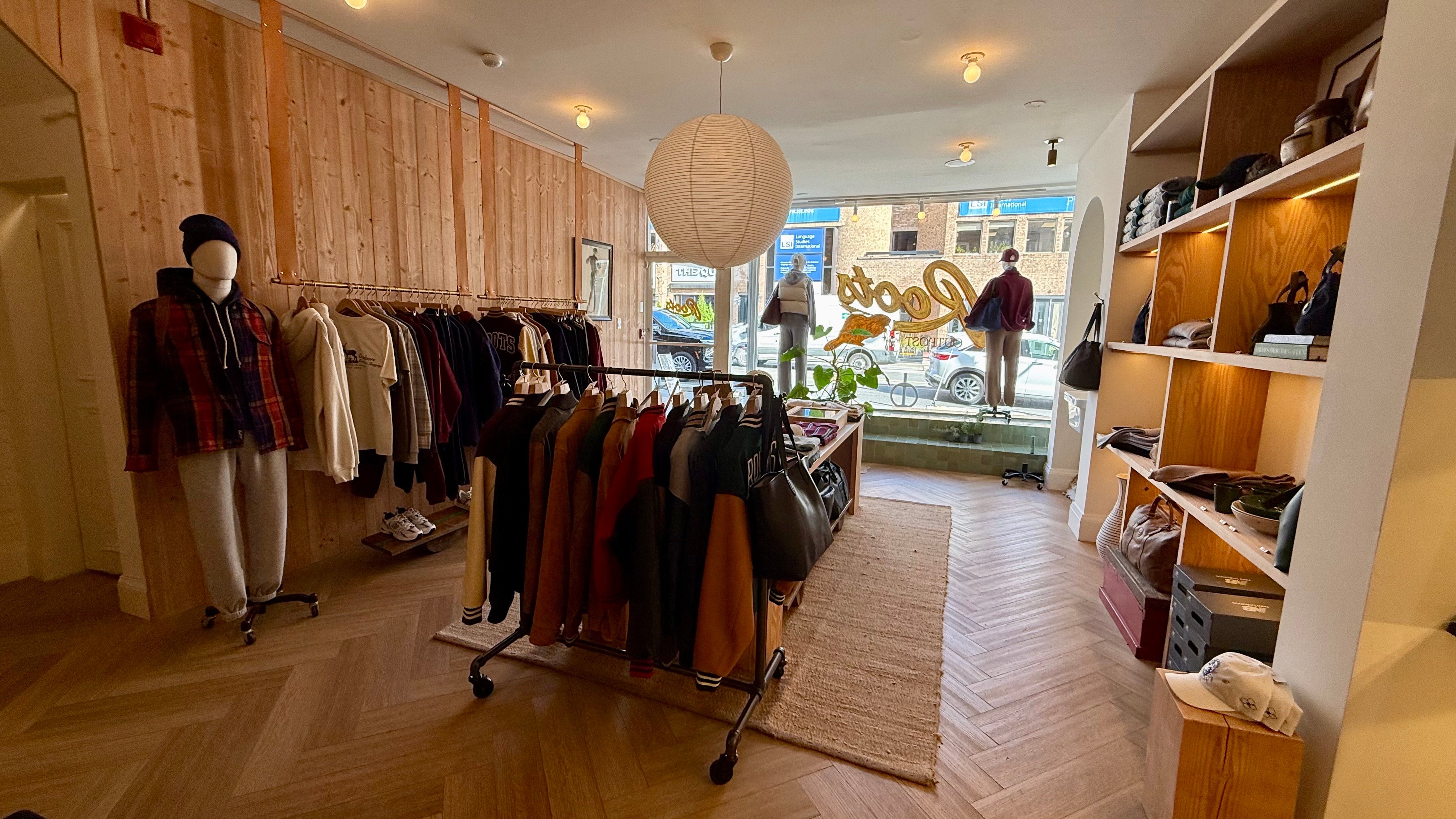
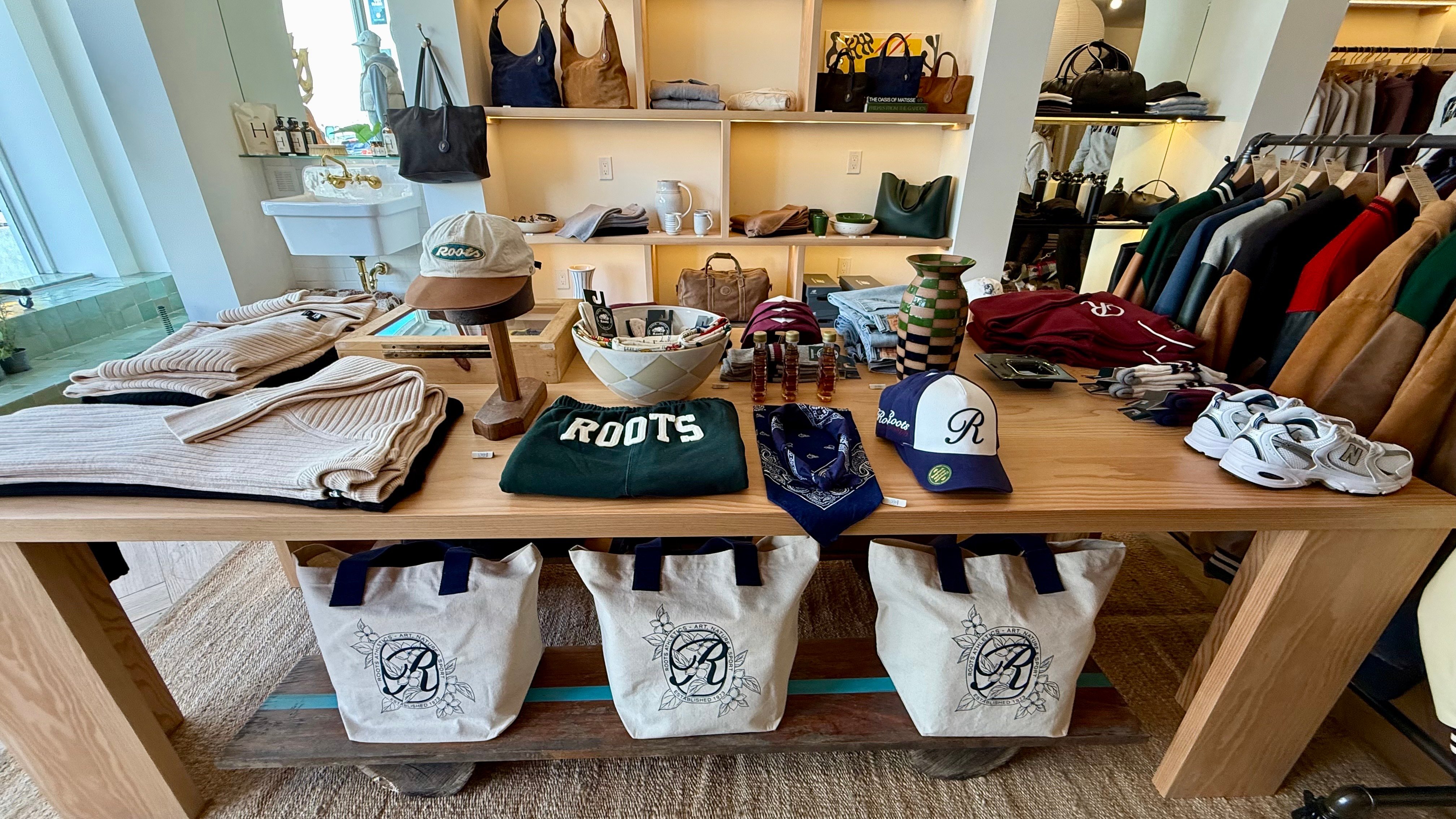
Roots Outpost at 1096 Yonge Street in Toronto. Photo: Craig Patterson
Roots has opened a new pilot concept store called Roots Outpost at 1096 Yonge Street in Toronto’s Rosedale commercial area. The space marks a meaningful return to the neighbourhood where the company’s first location debuted more than 50 years ago, and it introduces a reimagined retail approach that blends heritage storytelling, local collaborations, and a curated assortment of products.
The Outpost is designed to reconnect customers with the brand’s origins while testing fresh strategies for community-driven retail. The concept integrates archival photography, heritage objects, Canadian art, and warm natural finishes to create a multi-sensory environment that celebrates Roots’ 52-year history.
Roots Outpost at 1096 Yonge Street in Toronto. Photo: Craig Patterson
The new Outpost sits just steps from Roots’ first-ever store, which opened at 1052 Yonge Street in August 1973. For Meghan Roach, President and CEO of Roots, the Rosedale address carries symbolic weight.
“It feels like it’s a really good nod to our heritage to be coming back to a location where it all started, to be launching off the next phase of the brand and testing out some of these new concepts,” Roach told Retail Insider.
Meghan Roach
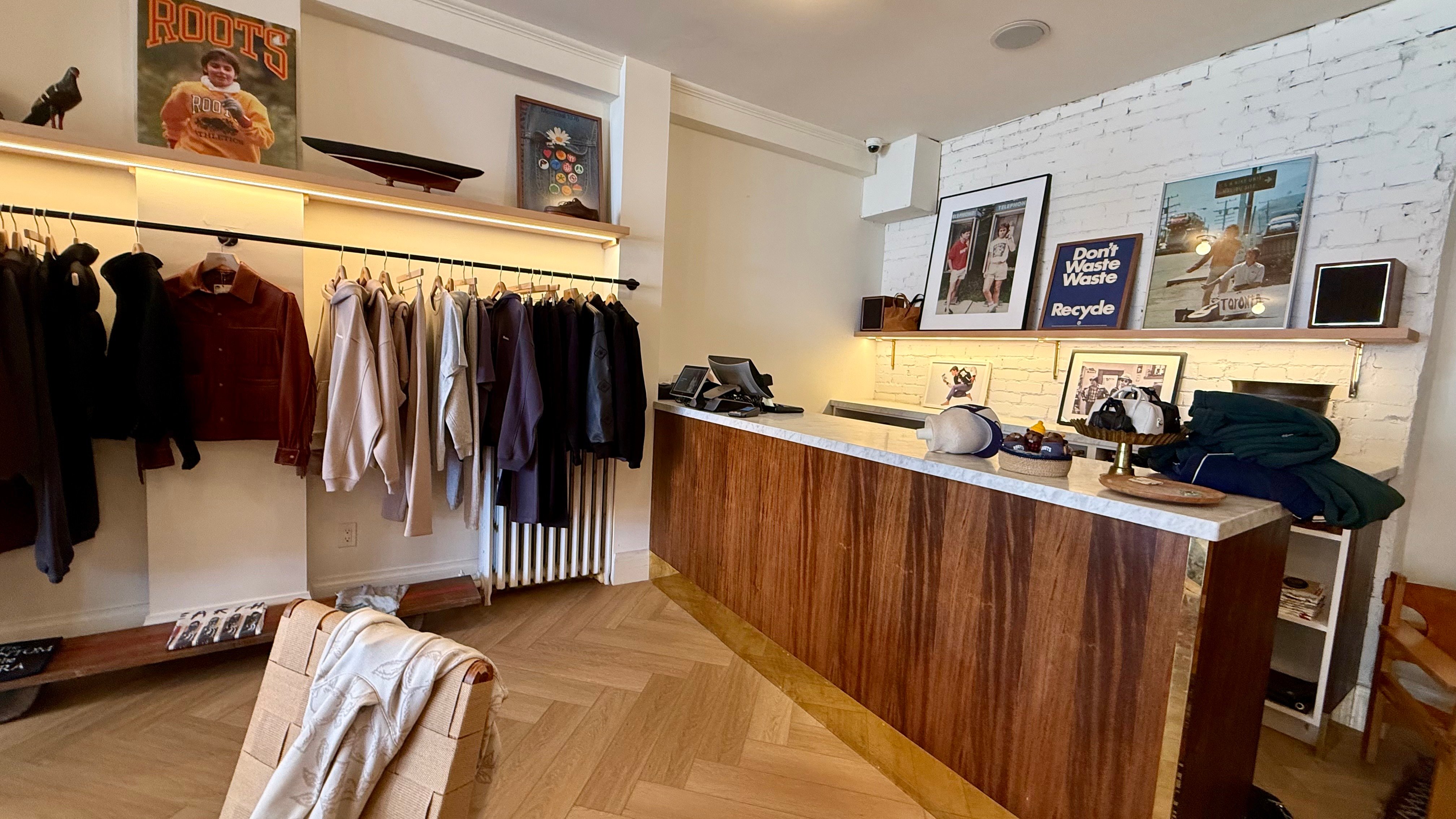
The Outpost introduces a smaller, highly curated model, where vintage pieces and select contemporary apparel are displayed in a gallery-like setting rather than among racks of inventory. This format allows customers to engage more directly with store staff and explore the Roots story in a way that is immersive and personal.
Heritage and Modernity Intertwined
Roach described the design as a juxtaposition of vintage and modern elements, with wood benches made from split logs, leather straps from the Toronto leather factory, and archival jackets that recall Roots’ connections with theatre and film productions.
“Some of these vintage pieces you see, you wander around the store and think, wait a second, which is vintage and which is not? It shows how strong the quality and craftsmanship of Roots has always been,” said Roach.
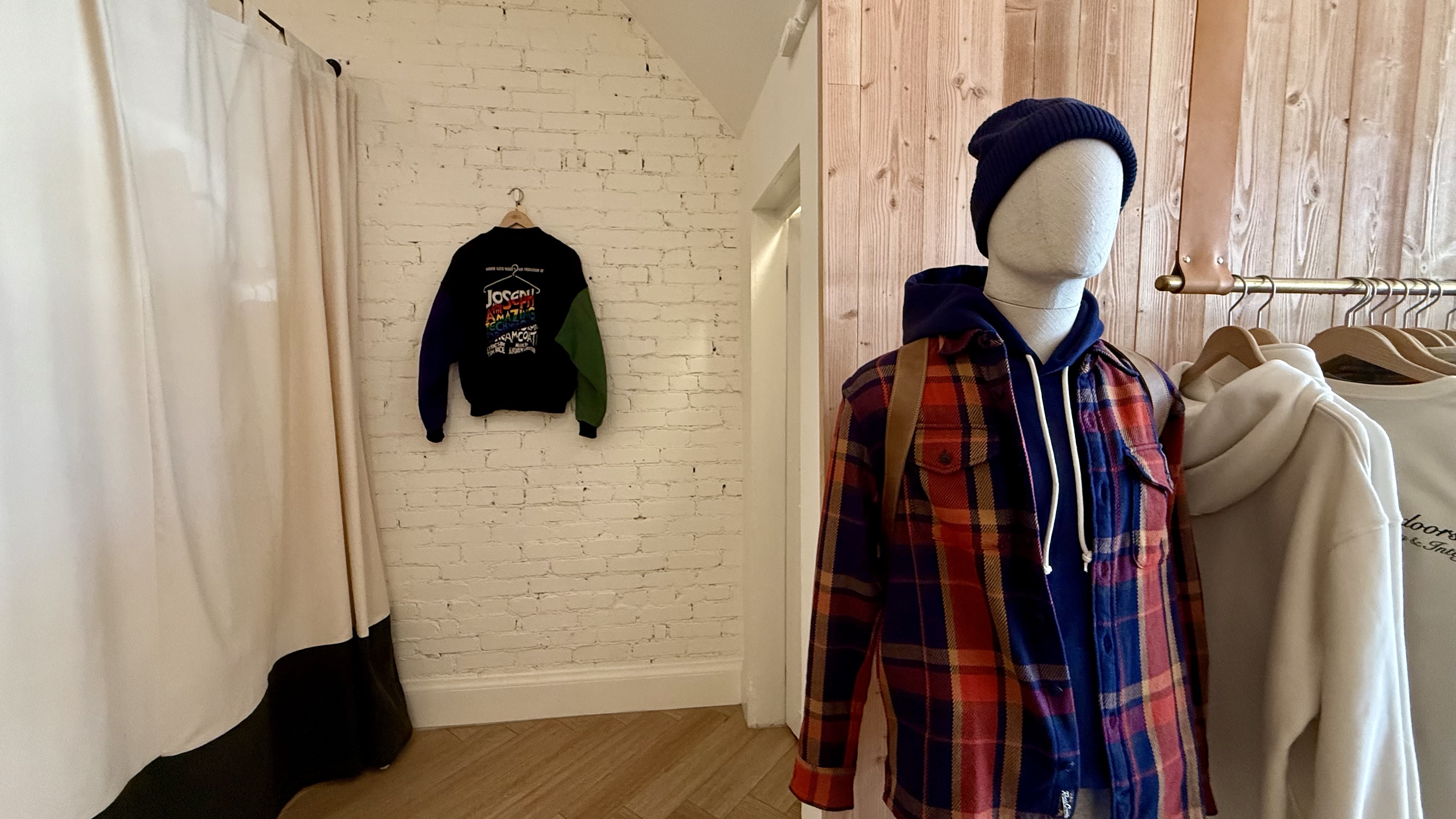
The store carries products that are already available in Roots’ broader network, but the curated presentation highlights items that often get overlooked in larger flagship locations. Fashion-forward collections, script logo apparel, and corduroy jackets appear alongside rare archive garments, such as varsity jackets from Phantom of the Opera and Joseph and the Amazing Technicolor Dreamcoat.
Joseph and the Amazing Technocolour Dreamcoat at Roots Outpost at 1096 Yonge Street in Toronto. Photo: Craig Patterson
A Community-First Approach
Roots Outpost also showcases third-party brands and local artisans, reinforcing its role as a community hub. Pottery, hand soaps, candles, and apothecary products are currently featured, with more seasonal additions expected closer to the holidays.
Micah Cameron
“We wanted to pepper in some local makers to expand on the lifestyle of it all, and also entrench into the community,” explained Micah Cameron, Image Director at Roots, who was instrumental in conceptualizing the Outpost.
Cameron emphasized that the store is intended to evolve throughout the year, adapting its displays and product mix to reflect seasonal events and cultural moments, including Roots’ long-standing ties with the Olympic Games.
Vintage as a Draw
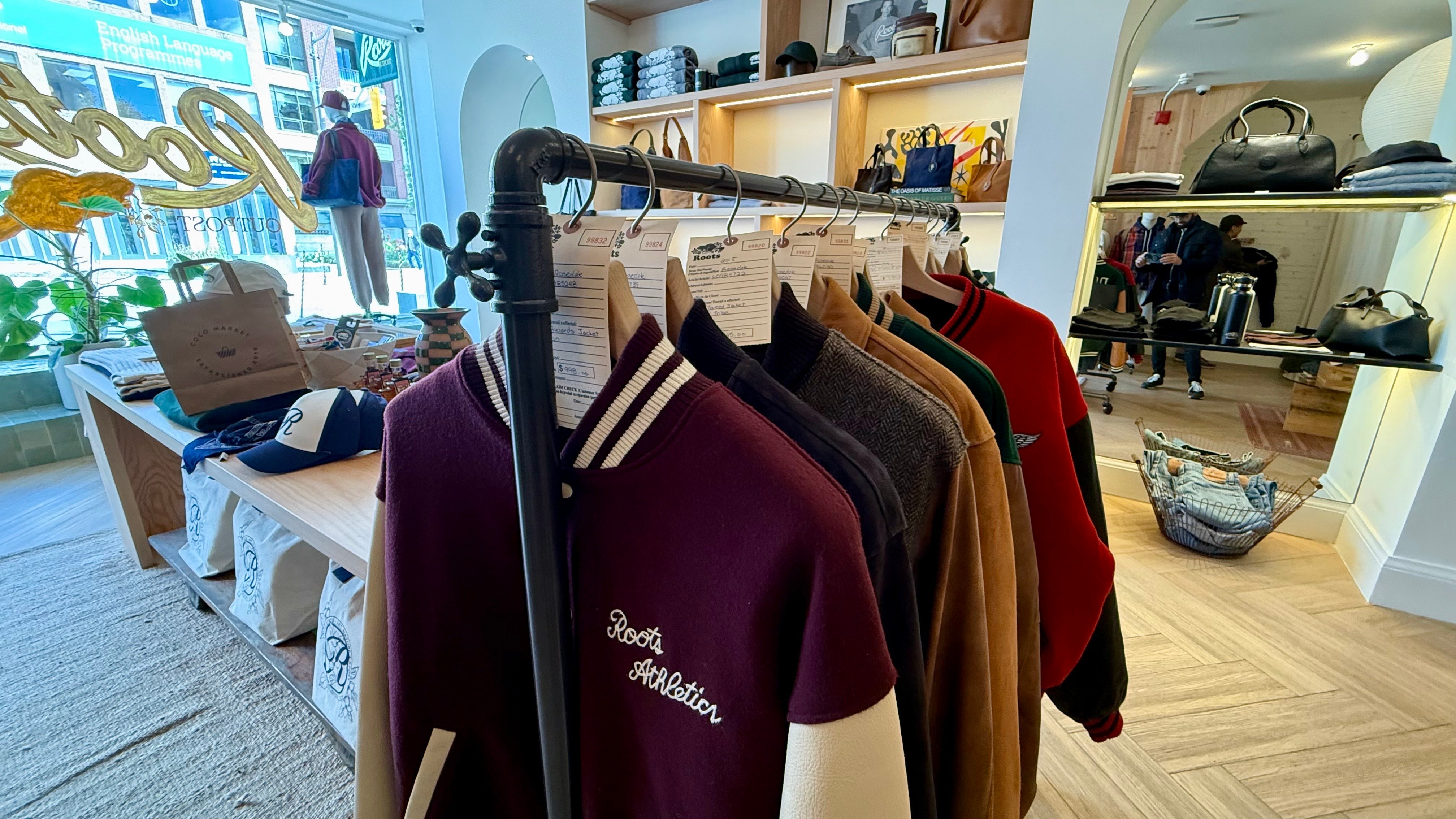
The vintage component has quickly become one of the most talked-about aspects of the Outpost. Items such as purple suede shoes once belonging to Marcus O’Hara and limited-edition jackets produced for theatrical promotions are available for purchase, with price points reflecting their rarity.
Vintage pieces in the Roots Outpost at 1096 Yonge Street in Toronto. Photo: Craig Patterson
“The Phantom of the Opera jacket, for example, is around $1,600. They are essentially priceless, but they’re available for customers who truly value that piece of history,” said Cameron.
These items are curated by Cameron herself, who sources and authenticates pieces from collectors, often acquiring accompanying stories that enrich the merchandise. “It’s been such a huge hit. People are really loving the connection to storytelling, the quality, and the history behind it,” she added.
Roots Outpost at 1096 Yonge Street in Toronto. Photo: Craig Patterson
Leather Innovation in a Heritage Setting
Roots’ Toronto leather factory, still in operation today, plays a central role in the Outpost concept. The store will introduce limited-run leather capsules made from archival materials, designed specifically for the Rosedale location.
“This is a great proof of concept, where we can test out beautiful pieces and reintroduce the smaller batch approach that was always part of Roots’ DNA,” said Cameron.
Canadians can now have groceries and household items from Walmart Canada delivered through Skip, the companies announced Thursday.
Skip, a Canadian delivery network, said it has teamed up with Walmart Canada to offer customers faster and more accessible shopping from more than 300 Walmart stores across the country.
The partnership allows couriers to pick, pack and deliver orders directly from Walmart locations using Skip’s Shop + Pay model. Products available include groceries, cleaning supplies, home goods, pet care and personal essentials.
“Teaming up with Walmart Canada brings together the best of both worlds: trusted value and everyday convenience. From midweek grocery top-ups to last-minute household restocks and everything in between, we’re helping Canadians get what they need, when they need it, without adding stress to their day.”
“We want to be the retailer Canadians trust most, no matter how they like to shop. For us, it’s all about making things easy, quick and affordable and being there for customers in ways that matter most to them,” Go said. “That’s why we’re so excited to bring our wide range of groceries and household essentials to Skip. It’s another way we’re helping Canadians save money and live better.”
Skip described the collaboration as part of its ongoing retail expansion and a major step toward becoming the go-to destination for on-demand retail. The company said the partnership pairs Walmart’s product variety and affordability with Skip’s delivery speed and reliability.
Founded in 2012 in the Prairies, Skip has grown into a nationwide network that connects millions of Canadians in more than 450 cities and towns with over 50,000 restaurant, grocery, convenience and retail partners. The company is a subsidiary of Just Eat Takeaway.com.
Bento, Canada’s largest sushi company and a pioneer of ready-to-eat Japanese cuisine in grocery stores, is entering a new era under its refreshed brand identity, Bento Brave. The rebrand reflects nearly 30 years of evolution from a small Toronto restaurant into a North American foodservice powerhouse, serving over 34 million sushi portions each year across grocery, universities, hospitals, airports, and retail environments.
Unveiled this fall, Bento Brave represents a vibrant reimagining of how Canadians experience sushi. The new look, designed by Jump Branding & Design and brought to life by Dialogue 38, blends contemporary design with an inclusive ethos aimed at making sushi an everyday choice for families.
“For us, Bento Brave is an outward expression of what we stand for—modern, vibrant, sustainability-focused, and evolving with the times,” said Wesley-Anne Rodrigues, Director of Marketing. “It makes sushi feel accessible and inviting while reflecting the values our customers care about.”
Founded in 1996 by Ken Valvur as a small takeout restaurant in Toronto, Bento quickly recognized the potential for freshly prepared sushi in grocery environments. By partnering with major retailers like Loblaw and Sobeys, Bento transformed the accessibility of sushi in Canada, moving it from a niche dining experience to a mainstream grocery staple.
Today, Bento operates more than 950 locations across Canada and the United States, including grocery kiosks, food-court counters, and institutional foodservice spaces. The company’s production facilities supply over 2,000 retail and institutional clients across North America.
Though Bento’s footprint has grown internationally, its roots remain proudly Canadian. Headquartered in Richmond Hill, Ontario, the brand employs thousands of sushi chefs and team members. In 2017, Bento was acquired by UK-based YO! Sushi, and by 2023, it became part of Japan’s Zensho Holdings through the Wonderfield Group, aligning it with an international portfolio of hospitality and food-service companies.
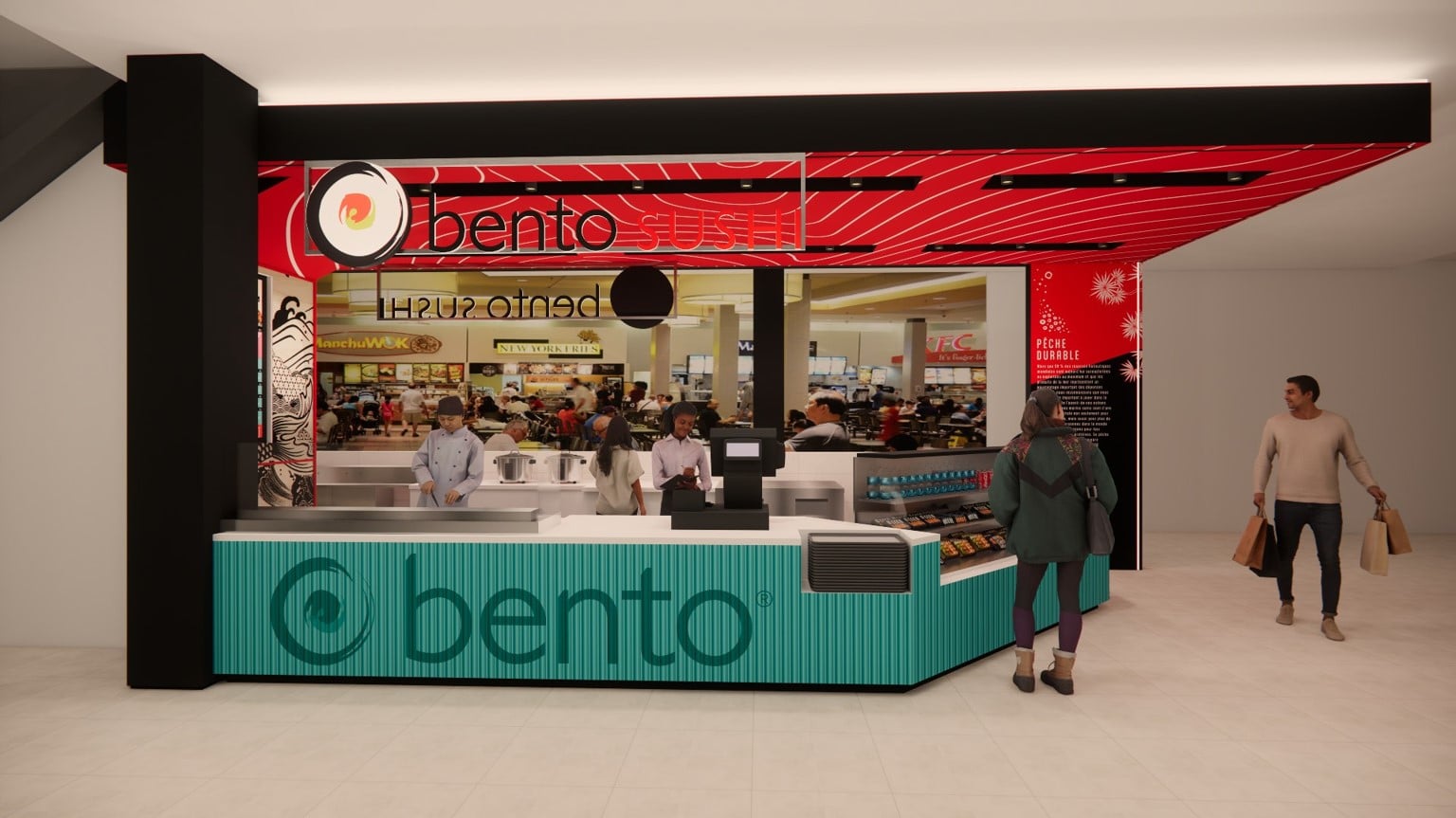
Photo: Bento Brave
The Design of Bento Brave
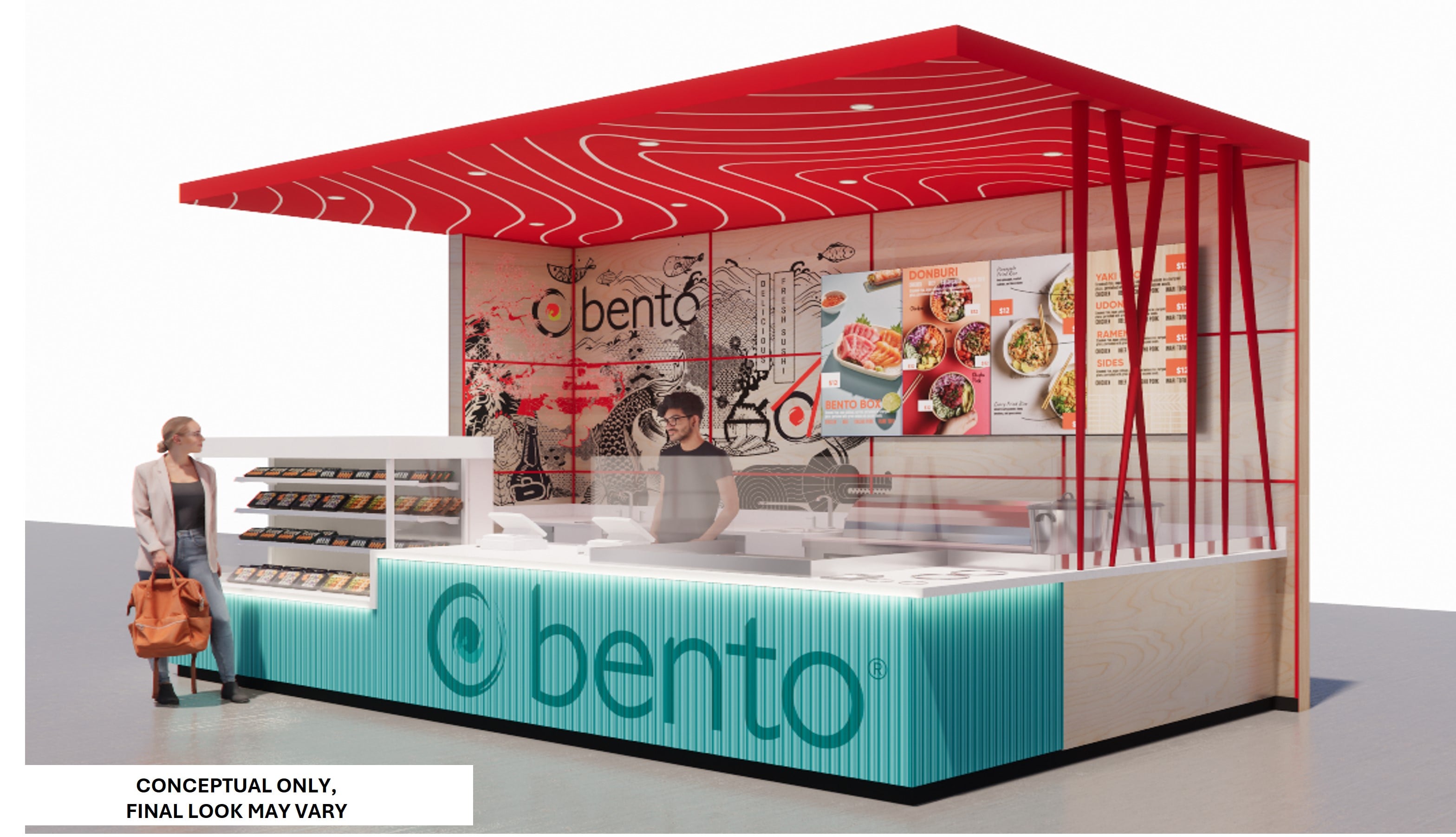
The Bento Brave rebrand represents more than a visual update; it is a signal of the company’s renewed focus on innovation and inclusivity. The design incorporates teal accents, red salmon-vein matting, and pop-art-inspired graphics that create a bright, inviting atmosphere.
The signature dragon motif anchors the visual identity, blending traditional Japanese symbolism with contemporary graphic appeal. “The dragon graphic is our focal point,” said Rodrigues. “It’s modern, eye-catching, and vibrant. The red was designed to evoke the natural veining of salmon, while teal ties everything together, creating a balanced and recognizable palette.”
These refreshed design elements will appear across retail locations and food-service counters in Canada and abroad, beginning with early rollouts at Promenades St. Bruno and Eaton Centre in Montreal, as well as international sites like JFK Airport in New York and Sangster International Airport in Montego Bay, Jamaica.
Rodrigues described the process of working with long-time partners Jump Branding & Design and Dialogue 38 as highly collaborative. “Jump led the creative concept, and Dialogue 38 helped us bring it to life physically,” she explained. “Whether it’s in a grocery setting or a standalone food-court kiosk, our goal was to make the Bento Brave experience consistent, recognizable, and adaptable across environments.”
Rendering of the updated Bento Brave in St. Bruno, Quebec. Image: Bento Brave
Building Consistency Through Experience
While Bento operates across diverse environments, from airports and universities to grocery stores, the company’s design philosophy now emphasizes consistency in brand experience.
“Retail spaces are about experiences,” said Rodrigues. “The idea was that no two Bento Brave locations will look exactly the same, but each will include key elements that make it unmistakably Bento. Just like when you walk into a Starbucks, there’s familiarity even in different settings.”
This modular approach means Bento’s visual identity can flex between smaller grocery counters and full-service dining areas, maintaining continuity through its signature materials, colours, and lighting.
Growth and Expansion in a Changing Market
The Bento Brave rebrand aligns with an ambitious growth phase for the company. Bento plans to open 20 new food-service locations this year, reflecting strong consumer demand for fresh, quick-service sushi options.
“Our growth plans are aggressive,” said Rodrigues. “Sales have been rising, and Bento has been growing tremendously over the past few years. The rebrand gives our partnerships team a stronger, more modern identity to bring to the table as we expand into new markets.”
In addition to expansion across Canada and the United States, Bento’s international reach continues to grow, with airports serving as key entry points into new markets. Rodrigues noted that Jamaica’s Sangster Airport represents the company’s furthest expansion to date, a symbol of its increasing global relevance.
Photo: Bento Brave
Evolving Through a Franchise Model
As Bento expands, it is also transitioning toward a franchise-based model, giving sushi chefs and team members a chance to invest directly in the brand.
“We’ve recently moved to a franchise model,” Rodrigues explained. “Many of our chefs, who were corporate employees for years, have now become franchisees. It’s learning for both sides, but it’s incredibly rewarding. These are people who already care deeply about the product and our customers.”
The grocery kiosk model, with its low overhead and manageable footprint, makes it accessible for franchisees to enter ownership. This shift allows Bento to scale while maintaining quality and operational consistency.
Photo: Bento Brave
Making Sushi Family-Friendly
Alongside the Bento Brave launch, the company is introducing two marketing campaigns aimed at expanding its appeal to families: New Family Pack and Family Sushi Nights. Both are designed to make sushi feel like a natural, everyday dinner choice rather than an occasional treat.
The New Family Pack campaign celebrates new mothers returning to sushi after pregnancy, a moment often filled with nostalgia and relief. “It’s based on a real-life insight,” Rodrigues explained. “Many women crave sushi during pregnancy but can’t have it. So, we created thoughtful care packages and complimentary rolls for new moms. It’s about connection, appreciation, and joy.”
Meanwhile, Family Sushi Nights encourages families to see sushi as an alternative to pizza or takeout wings. The campaign promotes combo packs, gluten-free options, and child-friendly selections to position sushi as a fun and easy weeknight meal.
“We want sushi to feel simple and fun,” said Rodrigues. “These campaigns are about enjoyment and togetherness for everyone at the table.”
Bento Brave’s Broader Mission
Beyond aesthetics and marketing, Bento Brave signals a deepened commitment to sustainability and community engagement. The company continues to partner with the Marine Stewardship Council (MSC) and other sustainability organizations to ensure responsible seafood sourcing.
Its corporate philosophy ‘Own it, Care about it, Make it exceptional, Win together’ guides its operations and brand interactions alike. Bento’s emphasis on trust, accessibility, and continuous improvement has helped the company maintain long-term relationships with major retailers and consumers alike.
“Innovation isn’t just a value at Bento; it’s the lens through which we approach growth,” said Erica Gale, Senior Vice President of Brand Development. “We’re proud of where we started, but our sights are firmly set on what’s next.”
Saskatoon’s City Council has deferred a decision on a proposed private partner Agreement Framework with OVG360 (OVG) which would have begun to create a third-party operating management structure for the Downtown District Event Centre and Convention Centre– a more than $1 billion project in the heart of the Saskatchewan city, adjacent to Midtown Plaza.
Council voted unanimously to defer a discussion on the proposed framework until the first quarter of 2026 to further process the information, consider negotiated points and have an opportunity to discuss with impacted organizations.
The proposed agreement framework presented to Council set out $15 million from the Oak View Group in up-front capital plus a projected $235 million in forecasted operating revenue sharing over the full potential 30-year term, in contrast with the previous agreement which estimated a projected $170 million (combined capital and operating revenue) over 25 years.
The proposed agreement would reduce financial risk for the City: if there are Event Centre losses, those would be absorbed by OVG.
The ambitious project, described by many as transformational for the city’s downtown and beyond, would include an arena/event centre with a capacity of about 16,000 people, a convention centre, a parkade, a theatre and public spaces.
Tara Faris
“We welcome and support the Downtown District renewal project and its vision to activate public space, increase pedestrian traffic, and strengthen downtown retail. This initiative will create meaningful benefits for our tenants and customers, and we look forward to collaborating where possible with the project team and the community,” said Tara Faris, General Manager, Midtown.
Melissa Newton
Melissa Newton, Client Advisor, The Commercial Group, said the project would be so positive for downtown, because people can look to invest long term, whether that be owning real estate, because there’s great opportunities for that in the downtown core right now, or creating new retail around the proposed area.”
“I think Midtown has done a great job at attracting new tenants. There’s a lot of great shopping in there. I think it looks great. So for what Saskatoon can offer, there’s for sure, potential. I’m not going to say downtown is rosy, but could it grow to be fantastic? Yeah, it could.”
In Saskatoon, the vision for a Downtown Event & Entertainment District is anchored around a new event centre/arena and convention centre made accessible to everyone through the future Bus Rapid Transit (BRT) system. The area will be developed sustainably and with a focus on Indigenous placemaking. By offering residents and visitors a gathering place for entertainment and events, with a variety of restaurants, venues, shopping and nightlife, Saskatoon’s Downtown will become an economic driver for the city and the province. Downtown BRT stations will encourage redevelopment of adjacent areas, supporting a variety of businesses and housing opportunities, says the City of Saskatoon.
Christina Stus
Christina Stus, Sales Associate, Colliers, said: “What I’ve heard from a lot of people, and I agree with, is that it would add vibrancy and give some life to downtown, which would help people feel safer in numbers.”
“It would help with having people hanging out downtown to go to a show, they go out to eat downtown, they go look at some shops, they go through Midtown. It naturally draws people downtown because there’s more to do,” she said.
“Whether it’s a hockey game, a Rattlers game, or a concert, people who might not normally go downtown would come for those events. Some folks only go downtown for appointments or specific reasons, but they’ll go to the arena for an event. If you bring that downtown, it’ll naturally bring people through those businesses they might otherwise not visit.”
Linely Schaefer
“Saskatoon’s new downtown arena proposal and entertainment district would be a win-win situation. Live events would positively contribute to Saskatoon’s tourism and overall economy, allowing the city to compete with Edmonton, Calgary, and Winnipeg as a destination for major events. Ultimately, Saskatoon would be positioned as a desired city to live in and relocate to, adding even more quality individuals to the workforce,” said Linely Schaefer, Managing Director, Avison Young in Regina.
When Newfoundland entrepreneur Maria Halfyard appeared on the season premiere of CBC’s Dragons’ Den on September 25, she wasn’t just pitching a business. She was sharing a piece of Newfoundland’s spirit. Her outerwear company, Mernini, founded in 2020, began as a personal solution to the province’s famously wet and windy weather. Now, after striking a deal with investor Arlene Dickinson, Mernini is poised for expansion across Canada and into international markets.
“I really went in looking for expertise in marketing,” said Halfyard. “Being on the far east of Canada, reaching the other side of the country can be difficult. Arlene countered my bid, I countered hers, and we reached an agreement. I couldn’t be happier.”
Maria Halfyard
The Dragons’ Den appearance capped a remarkable journey for the St. John’s-based founder, who started the company from her kitchen table. What began as a sketch of a raincoat has since grown into a nationally recognized brand carried by La Maison Simons, TSC (Today’s Shopping Choice), and over 60 independent boutiques across the country.
A Brand Born from Newfoundland Weather
Mernini’s story begins, fittingly, in the rain. As a professional in the maritime sector, Halfyard often arrived at meetings drenched from the waist down — a reality of life on Canada’s eastern edge.
“I came to work one day, half my outfit soaked, and thought, this is ridiculous,” she recalled. “I looked for a raincoat that was long enough, practical, and stylish, but couldn’t find anything. So I designed one.”
Lacking a design background, Halfyard hired a Montreal-based designer to create technical specifications and connected with a manufacturer in China to bring her vision to life. “It was a learning process,” she said. “But the more I researched, the more I realized this wasn’t just a Newfoundland problem. People across Canada wanted functional, beautiful outerwear.”
She launched Mernini in early 2020, just as the pandemic began. The timing, while challenging, worked in her favour. “People were spending more time outdoors, and they wanted to look stylish doing it,” said Halfyard. “The response was incredible.”
From E-Commerce to National Retailer Network
Initially conceived as an e-commerce brand, Mernini quickly expanded into retail after customers asked to see and feel the coats in person. “People wanted to touch the fabric, try it on, see the colours,” said Halfyard. “So I started calling stores, a lot of cold calling.”
Persistence paid off. Within months, Mernini’s coats began appearing in boutiques across Newfoundland, then in shops throughout Canada. “Some hung up on me,” she laughed. “But others saw the product and loved it. Now we’re in more than 60 stores nationwide and growing.”
Her biggest breakthrough came when La Maison Simons, the Quebec-based large-format fashion store, agreed to carry the brand. “I tried to call them several times,” she said. “When I got through and they responded, I did a little rain dance on my patio. They took a sample, loved it, and placed an order.”
Simons has since reordered for multiple seasons and carries Mernini’s bright raincoats in locations across Canada. “They’re one of the few major retailers that grew during COVID,” said Halfyard. “They’ve been an incredible partner.”
Image: Mernini
A Distinctly East Coast Aesthetic
Mernini’s design language draws deeply from Newfoundland’s maritime identity. “We have a strong fishing industry and offshore energy sector,” explained Halfyard. “The workwear people wear here is incredibly durable, made to withstand harsh conditions. I wanted to create something that honoured that practicality, but that you could wear every day.”
To achieve this, she replaced heavy PVC materials with polyurethane and cotton-backed polyester, combining durability with comfort. The result is a long, A-line raincoat that’s fully waterproof yet soft to the touch, what one customer described as “feeling like butter.”
Colour also plays a central role. From Merlot Red to Dory Yellow, Caramel, and Tickled Pink, the coats echo the brightly painted homes that line Newfoundland’s coastal towns. “If you’ve ever been to Newfoundland, you know we love colour,” said Halfyard. “It makes you feel happy on a rainy day. People choose their colour as an expression of personality.”
Mernini rain hat in yellow. Image: Mernini
Retail Expansion and Growing Demand
While Simons remains a key retail partner, Mernini’s wholesale network continues to expand across eight provinces. Halfyard’s tenacity and attention to detail have been instrumental in this growth. “We’re getting organic requests all the time,” she said. “Retailers are reaching out because customers are asking for the brand.”
That momentum was amplified by TSC, where Mernini gained a national platform thanks to Canadian fashion icon Jeanne Beker. “I reached out to Jeanne on Facebook when she first started being active online,” said Halfyard. “To my surprise, she replied and connected me with a buyer. Before I knew it, I was on her show Style Matters three or four times.”
Beker’s endorsement helped Mernini reach new audiences. “People trust Jeanne,” said Halfyard. “They appreciate her taste, and they see the coat as something special.”
From The Rock to the World
Beyond Canada, Mernini is now preparing for international expansion. Earlier this year, the brand joined a fashion accelerator program with Canada’s Trade Commissioner Service, pairing Halfyard with a consultant in the United Kingdom. “We’re developing relationships with UK buyers,” she said. “It’s a perfect market, similar weather, and people love the practicality.”
Her British consultant noted that the country’s fashion landscape is dominated by dark tones, creating an opportunity for Mernini’s signature colour palette. “She told me I’d bring something fresh and uplifting,” said Halfyard. “That’s exactly what we aim to do.”
Halfyard’s vision also includes expanding her product range. “Customers asked for more warmth in the winter, especially in B.C.,” she explained. “So we created a liner vest that fits under the raincoat. We’ve also introduced matching children’s raincoats and hats, called Mernini Minis, and we’re exploring rubber boots next.”
Image: Mernini
A Celebration of Strength and Sustainability
For Halfyard, Mernini is also a reflection of Newfoundland’s resilience. “We live on the edge of the North Atlantic,” she said. “We get some of the worst weather in the country, and we thrive in it. The brand represents that strength and perseverance.”
Each coat carries a symbolic reminder of home: an engraved black granite emblem, representing “a piece of the rock.” “In our first year, I was literally grinding actual pieces of Newfoundland rock to be used,” said Halfyard. “Now it’s black granite, but it still connects the brand to our roots.”
Sustainability also plays a central role in Mernini’s philosophy. The coats are designed to be timeless and durable, with a single core style refined each season. “We’re not fast fashion,” said Halfyard. “We want to make a piece that lasts for years. That’s real sustainability.”
Customer Loyalty and Word of Mouth
Mernini’s customers have become passionate advocates for the brand, often sharing photos and testimonials online. “We have over 600 five-star reviews,” said Halfyard. “These aren’t incentivized, people take time to write, send pictures, and share where they’ve worn the coats.”
That enthusiasm extends far beyond Canada. “We’ve had customers stopped on the streets in Iceland and Dublin by people asking where their coat is from,” she said. “It’s becoming recognizable for its silhouette and colour.”
Mernini’s average price point, $325 for the signature raincoat, positions it in the accessible luxury segment, appealing to customers seeking quality without excess. “It’s a reasonable price for something you’ll wear year after year,” said Halfyard.
Halfyard’s immediate focus remains on growing Mernini’s wholesale network and preparing for international entry. “Opening a standalone Mernini store in Newfoundland would compete with my retail partners,” she explained. “But in a city like Toronto or Vancouver, it could make sense.”
Gildan Activewear Inc. has announced financial results for the third quarter ended September 28, 2025, indicating it was a record quarter with net sales of $911 million.
“We were pleased with this quarter’s results as we continue to drive profitable growth, supported by strong net sales growth of 5.4% in Activewear which allowed us to deliver record adjusted diluted EPS. Our record-setting third quarter results once again showcase the effectiveness of the Gildan Sustainable Growth (GSG) strategy to drive strong financial performance, and we’re excited about the next phase of our growth journey. Our keen focus on execution, combined with Gildan’s low-cost vertically integrated business model, will be further enhanced by the added capabilities and reach introduced through the HanesBrands acquisition, which is expected to close later this year or early in 2026.” said Glenn J. Chamandy, Gildan’s President and CEO, in a news release.
The company reported that net sales were $911 million, up 2.2% over the prior year, in line with previously provided guidance for the quarter of low single-digit growth. Activewear sales of $831 million were up 5.4% driven by a favourable product mix and higher net prices.
“Solid sales to North American distributors were complemented by sustained momentum with National account customers, driven by our strong overall competitive positioning. We continued to see robust demand for Comfort Colors® and our innovative pipeline continues to drive excitement, with our new soft cotton technology and new brands such as Champion® and ALLPRO™. Separately, Hosiery and underwear sales were $80 million, down 22.1% versus the prior year. The year over year drop in sales was mainly owing to lower sales volumes, reflecting as expected a timing shift of shipments into the fourth quarter, and, to a lesser extent, unfavourable mix, as the category experienced continued broader market weakness during the quarter. Finally, International sales were $60 million versus $64 million last year, a decrease of 6.1% year over year, primarily due to ongoing demand softness across markets,” it said.
“The Company generated gross profit of $307 million, or 33.7% of net sales, versus $278 million, or 31.2% of net sales, in the same period last year representing a 250-basis point improvement, which was mainly a result of lower manufacturing costs, complemented by favorable pricing reflecting price increases implemented to offset the initial impact from tariffs, and to a lesser extent, the benefit from lower raw materials costs.”
Photo: Gildan Activewear website
On August 13, Gildan announced that it entered into a definitive merger agreement to acquire HanesBrands, a leading global apparel company with a portfolio of iconic brands. Under the terms of the merger agreement, HanesBrands shareholders will receive 0.102 common shares of Gildan and $0.80 in cash for each share of HanesBrands common stock, representing a total equity value of approximately $2.2 billion and an enterprise value of approximately $4.4 billion, based on the closing price of Gildan’s common shares on August 11. The transaction, unanimously approved by the Boards of Directors of both companies, is expected to close in late 2025 or early 2026, subject to HanesBrands shareholder approval and the satisfaction or waiver of other customary closing conditions.
“Delivering another strong quarter despite the fluid macroeconomic environment and a generally softer demand environment is a testament of our continued commitment to execute our Gildan Sustainable Growth (GSG) strategy and underscores our confidence in our ability to achieve our objectives, as we continue to drive growth in key product categories and channels. We believe that our vertically integrated business model, paired with our strong industry positioning should support continued strong financial performance,” it said.
“Our shopping centre portfolio continues to perform well with strong rental revenue growth and robust leasing momentum,” said Patrick Sullivan, President and Chief Operating Officer. “Tenant demand across our portfolio is very strong, including demand for our HBC boxes. We are in advanced discussions with strong covenant, high-quality national retailers, including large format tenants and anticipate tenants to take possession early in 2026.”
Alex Avery
“With the October acquisition of Promenade St-Bruno, Primaris’ high quality acquisitions now exceed $3.3 billion since 2021. All of these acquisitions offer strong NOI growth potential and significant excess land,” said Alex Avery, Chief Executive Officer.
“We have materially expanded and enhanced the overall quality of our enclosed shopping centre portfolio, driving the portfolio’s proforma annual same store sales productivity to $800 per square foot. Disciplined capital allocation remains a core focus for us, while driving strong financial and operating results, delivering transformative changes to our portfolio.”
Primaris is Canada’s only enclosed shopping centre focused REIT, with ownership interests in leading enclosed shopping centres located in growing Canadian markets. The current portfolio totals 15.6 million square feet, valued at approximately $5.4 billion at Primaris’ share.
Quarterly Financial and Operating Results Highlights
$159.2 million total rental revenue (net of $2.0 million negative impact from HBC);
$794 per square foot total same store sales productivity;
+0.7% Same Properties Cash Net Operating Income growth, or +1.7% adjusting for a $0.6 million operating cost accrual adjustment, or +2.1% excluding the impact from disclaimed HBC locations;
92.8% committed occupancy, 91.8% in-place occupancy (including vacancy from HBC locations of 532,000 square feet, or approximately 3.7%,) and 85.1% long-term in-place occupancy;
+5.3% weighted average spread on renewing rents across 335,000 square feet;
+5.7% Funds from Operations per average diluted unit growth to $0.443; (net of $0.016 per unit negative impact from disclaimed HBC locations);
52.6% FFO Payout Ratio (assuming exchange of all Exchangeable Preferred LP Units 48.5%;
$40.9 million in net income;
$4.9 billion total assets;
5.9x Average Net Debt to Adjusted EBITDA;
$617.6 million in liquidity;
$4.4 billion in unencumbered assets; and
$21.58 Net Asset Value per unit outstanding.
Business Update Highlights
Announces 2026 guidance with an anticipated Same Properties Cash NOI growth of 1.0% to 3.0%, occupancy of 86% to 88%, Cash NOI of $385 to $395 million, and FFO per unit fully diluted of $1.83 to $1.88;
Reiterates 2025 guidance for Same Properties Cash NOI growth of 4.0% to 5.0%, Cash NOI of $352 to $357 million, FFO per unit fully diluted to $1.78 to $1.82, and updates occupancy to 85% to 87%;
Entered into leases at three locations with disclaimed HBC spaces, including Promenades St-Bruno which was acquired on October 10, 2025, with anticipated tenant possession to occur in the first quarter of 2026;
Disposed of three strip plazas in Medicine Hat, Alberta and an open air plaza in Calgary, Alberta;
Purchased for cancellation 353,500 Trust Units under the Trust’s NCIB program for proceeds of $5.3 million at an average price per unit of approximately $15.18, representing a discount to NAV per unit of approximately 29.7%;
Developed 2026-2028 Sustainability strategic plan, following completion of the 2023-2025 plan;
Completed third annual GRESB submission achieving a score of 3 green stars, a 4 point improvement to 84;
Received Sector Leader status in the 2025 GRESB Real Estate Assessment Standing Investments Benchmark;
On October 10, 2025, Primaris acquired Promenades St-Bruno in Montreal, Quebec for aggregate cash consideration of $482.1 million and issued 11,448,599 Trust Units at a price of $14.75 per unit;
On October 9, 2025, Primaris issued $250 million aggregate principal amount of Series I senior unsecured green debentures maturing October 9, 2030, bearing interest at a fixed annual rate of 3.845% per annum;
On October 28, 2025, disclaimer notices for all remaining HBC leases were received, with a disclaimer date of November 27, 2025; and
On October 29, 2025, the Board of Trustees approved management’s recommendation to increase the distribution rate from $0.86 to $0.88 per unit per annum, or 2.3%.
Rags Davloor
“Primaris’ differentiated financial model combined with strong growth in same-property NOI, occupancy, leasing spreads and recovery ratios, and expected continued strong growth across these metrics, supports our fifth annual distribution increase,” said Rags Davloor, Chief Financial Officer.
“REITs with track records of consistent annual distribution increases have historically delivered above average total returns and been included in exclusive indices that focus on dividend growers.”
Primaris’ leasing activities are focused on driving value by actively managing the tenant and merchandising mix at its investment properties, said the company.
In-place occupancy decreased 1.6% from September 30, 2024 to 91.8% at September 30, 2025. In-place occupancy for Same Properties decreased 1.1% from September 30, 2024 to 92.0% at September 30, 2025. The disclaimed HBC leases negatively impacted occupancy by approximately 3.7% compared to December 31, 2024 and September 30, 2024, it said.
“Average in-place occupancy is calculated by averaging the occupied square feet and total GLA for each month in the measurement period. Same Properties average in-place occupancy rate for the nine months ended September 30, 2025 was 92.3%, an increase of 0.2% from September 30, 2024. However, the Same Properties average in-place occupancy rate for the three months ended September 30, 2025 decreased 1.9% compared with September 30, 2024 due to the impact of the disclaimed HBC leases.”
Pressure is mounting across Canada’s retail sector at its most critical time. Ahead of Black Friday and the holiday season, retailers are struggling to protect margins, keep shelves stocked and stay competitive as inflation continues to squeeze households.
Behind the scenes, they’re starting to own key parts of their supply chain: investing in logistics, warehousing, and even bio labs. It’s a shift that will influence everything from trade policy to consumer prices.
Vinayak Madappa, Retail Advisory Partner at Capgemini Canada, said retailers have faced constant disruption over the past few years. Post pandemic aftershocks, rising tariffs, geopolitical tensions, and volatile commodity prices have made global supply chains unpredictable.
“As a result, cost pressures are mounting, especially for those reliant on imports. In a lot of instances, these added costs are being passed to consumers, which isn’t sustainable. Capgemini’s 2025 Global Supply Chain Report found that profit margins across retail have declined by up to 18% since 2020, and more than 60% of Canadian retailers now cite supply chain control as their top strategic priority for the next two years,” he said.
Vinayak Madappa
“At the same time, shoppers’ behaviours are changing fast. Consumers are expecting products to be available instantly, whether they’re ordering online or in-store. To meet that level of expectation, retailers need tighter control and visibility over how products move through their networks.”
Madappa said a lot of investment is going into local infrastructure. Many retailers are expanding domestic warehousing and regional distribution hubs to reduce dependence on cross-border shipping.
“Canada is in a prime position to invest and leverage the geography advantage, offering access to both Atlantic and Pacific trade routes.
We’re also seeing the rise of “digital twins” — virtual models that help retailers predict disruptions, optimize inventory, and monitor product flows,” he said.
“Capgemini has used this technology with global clients to cut waste by up to 12% and boost fulfillment accuracy by 20%. Some retailers are going further, exploring vertical integration through local partnerships or investment in areas like vertical farming and biolabs. These strategies are particularly relevant in grocery and wellness, where sustainability and transparency drive consumer trust.
“Transformation doesn’t have to start at full scale. The most successful retailers test new models in focused markets first, proving results before expanding. It’s a “start small, learn fast” mindset that keeps them agile. We’ve seen this firsthand in Capgemini-led pilot programs, where regional warehouse trials evolved into network-wide optimization within a year. All of it comes down to better control; less waste, smarter pricing, and faster response to demand shifts.”
Madappa said artificial intelligence is leading the way. Retailers are using AI to automate routine tasks, forecast demand, and plan logistics in real time. Generative AI is now being used to analyze data, improve collaboration, and model scenarios like supply shortages or sudden demand spikes.
“When paired with digital twins, it gives retailers an almost live view of their operations – allowing faster, more confident decisions. Capgemini’s 2025 Supply Chain research shows retailers using AI-driven forecasting have seen up to a 25% improvement in supply chain efficiency. The key is making sure technology and human decision-making work together,” he said.
“Many retailers are moving to hybrid cloud setups, keeping what needs to run in-store local while using the cloud for analytics and planning. It’s a balance between speed, security, and flexibility, and it only works when people are ready for it too. A big focus for us is helping retailers develop their people, not just their systems, so new technology takes hold and drives lasting impact.
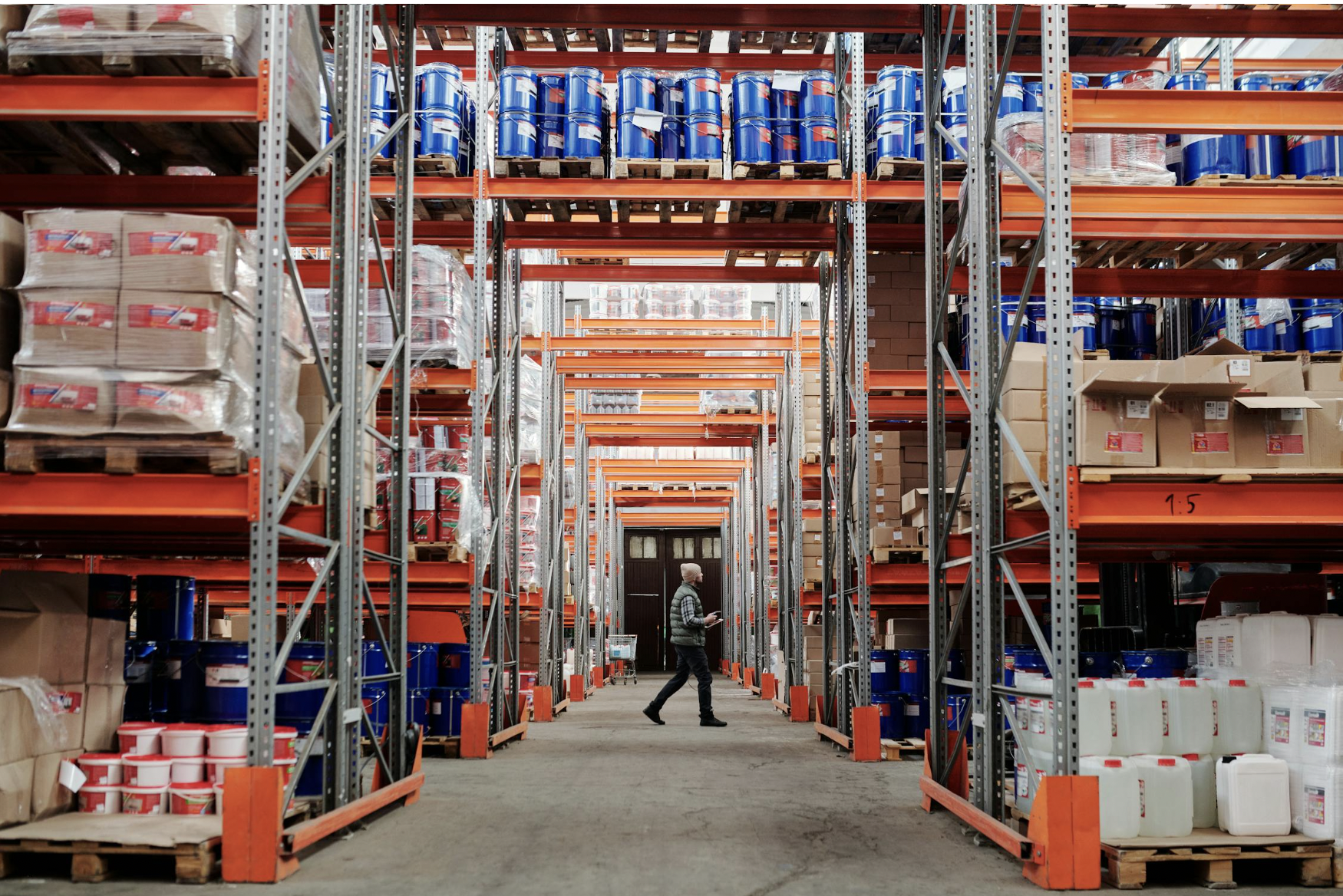
Photo: Tima Miroshnichenko
“Finally, data-driven personalization continues to grow. Retailers are using customer insights to tailor offers and experiences more effectively, improving engagement and managing inventory more intelligently.”
Madappa said policy can make a real difference by supporting local infrastructure. Incentives for investment in warehousing and distribution hubs would go a long way toward strengthening Canada’s logistics network and reducing reliance on global shipping routes.
“Tax credits or grants for companies building micro-fulfilment centres or sustainable transport systems could also encourage innovation and job creation at the same time,” he said.
“When it comes to affordability, the focus should be on helping companies lower their operating costs through modernization, rather than relying solely on monetary policy to manage inflation. If businesses can bring down their costs, that stability will eventually reach consumers through fairer, more predictable pricing.”
Over time, consumers will see more consistent product availability and fewer price swings, explained Madappa.
Photo: Tiger Lily
“Localized supply chains are more stable, allowing retailers to respond faster when costs or demand change. Convenience will keep driving innovation as subscription models and smarter delivery options are growing fast and shoppers look for simplicity and reliability,” he said.
“Transparency will also become standard. People want to know what’s in the products they buy and where they come from. Retailers are responding with clearer sourcing and sustainability data. Capgemini’s 2025 Consumer Behaviour Report shows 72% of shoppers now say transparency directly influences their purchasing decisions, turning it into a true competitive advantage.
“In the end, the retailers that move early, stay adaptable, and keep consumers at the centre will be best positioned for whatever comes next.”
As the 2025 holiday season twinkles into view, retailers once again find themselves in a familiar tug-of-war between optimism with anxiety. The lights are bright, the shelves are stocked (or at least, they should be) but uncertainty lingers behind every barcode.
According to Accenture’s latest holiday survey, seven in ten retail executives worry about inventory shortages or late deliveries that could derail their holiday sales. On the other side of the register, Deloitte’s 40th Annual Holiday Survey shows shoppers feeling their own strain. Nearly 80% expect higher prices this season, and more than half predict a weaker economy ahead. Consumers may be cautious, but they aren’t canceling Christmas. Instead, they’re redefining what “value” means, and retailers must be ready to meet them halfway.
While consumers are tightening their belts, they still expect value, trust, and seamless experiences, even as inflation and supply chain volatility continue to test retailers’ limits.
That tension is precisely why supplier diversification has become a risk management tactic and a top strategy for modern procurement and retail resilience.
Nicole Brackett
Building Resilience in a Value-Conscious Market
The 2025 holiday shopper is a pragmatist wrapped in tinsel. Deloitte’s research found that seven in ten shoppers, across all income groups, are engaging in value-seeking behavior such as:
● Trading down to affordable retailers
● Redeeming loyalty points and coupons
● Choosing private-label alternatives over premium brands
For retailers, this shift toward value creates both a challenge and an opportunity. A constrained, concentrated supplier base limits flexibility in pricing, assortment, and even speed to market. Diversified sourcing, on the other hand, offers room to maneuver, allowing retailers to offer a broader range of price points without compromising quality or ethical standards.
Think of it as a balancing act on a high wire. The more diversified your supply base, the wider your safety net becomes. Retailers who can pivot quickly between suppliers or regions can better absorb shocks, manage costs, and respond to sudden changes in consumer demand. When chaos hits, regardless of the source whether economic or political, diversified procurement ensures that the show can go on.
Balancing Cost, Risk and ESG in a New Procurement Equation
Supplier diversification is about finding the right mix of partners to balance three interdependent forces:
1. Cost Efficiency
In an economy where every dollar must stretch further, supplier diversification gives retailers leverage. By sourcing across multiple regions, retailers can hedge against inflation, negotiate better terms, and avoid bottlenecks in overburdened markets.
Nearshoring options are gaining traction too, reducing lead times and minimizing exposure to volatile freight rates, an especially smart move as shipping costs creep upward again this holiday season.
2. Risk Mitigation
When 70% of executives are bracing for stock shortages, relying on a handful of suppliers is risky and reckless. Diversification spreads exposure across regions and categories, protecting retailers from disruptions caused by political instability, natural disasters, or sudden capacity constraints. When a single port delay can derail a season’s profits, diversification is the ultimate contingency plan.
3. ESG Alignment
Today’s consumers want to know not just what they’re buying, but where it came from and who made it. Expanding supplier networks allows retailers to partner with vendors who share their values around sustainability, transparency, and fair labor practices. As shoppers increasingly vote with their wallets, ethical sourcing is a brand differentiator.
Balancing these three forces requires visibility, collaboration, and data-driven decision- making. Yet Accenture’s research reveals a troubling gap where 82% of frontline employees report that items listed as “in stock” online are often unavailable in stores.
That disconnect reflects a broader challenge of disconnected data, siloed supplier systems, and a lack of real-time insight across complex global networks.
Photo:
Toàn Văn
How Technology Powers Diversification
The good news is that technology is closing gaps faster than ever. Modern digital platforms, like multi-enterprise collaboration ecosystems, connect retailers, brands, and suppliers within a single network and streamlines communication, compliance, and visibility. Artificial Intelligence and advanced analytics are reshaping procurement from reactive to predictive. With AI-driven insights, procurement teams can:
● Identify alternate suppliers or shipping routes before disruptions occur.
● Monitor production progress and compliance in real-time, across continents.
● Evaluate supplier performance based on cost, reliability, and ESG metrics.
● Model “what-if” scenarios to anticipate shifts in demand or logistics.
These capabilities only enhance human decision-making. The best technology amplifies human intelligence, giving procurement teams the power to act decisively when the market shifts. When used strategically, digital platforms transform supplier diversification from a reactive scramble into a proactive, data-informed strategy.
A Holiday Lesson in Agility
If this year has taught retailers anything, it’s that predictability is an illusion. Just-in-time procurement, once the gold standard for efficiency, has evolved into a ‘just-in-case’ sourcing, where flexibility and preparedness are crucial. Supplier diversification embodies that shift to safeguard against disruptions and to gain a competitive advantage. Retailers who invest in diversified, digitally connected supplier ecosystems can maintain stock and deliver value even when global conditions waver.
As Deloitte’s survey reminds us, shoppers this holiday season are cautious but not defeated. They’re still celebrating and spending, but doing so with sharper eyes and higher expectations. Retailers who can meet those expectations with transparency, agility, and reliability will survive the season and build trust that lasts long after the decorations come down. Ultimately, supplier diversification is a philosophy of resilience and a reminder that when the world grows unpredictable, the smartest retailers create stability instead of waiting for it.
Nicole Brackett is an accomplished sales leader with extensive experience across North American and European markets in procurement, supply chain, and SaaS. Known for driving revenue growth and building high-performing teams, she’s earned the 2023 Stevie Award andthe 2022 President’s Club Award. Nicole holds an MBA from VCU and a BS from Virginia Tech. Contact her at nicole.brackett@tradebeyond.com.