Canadian small and medium-sized business owners are feeling the strain of rising costs, slowing demand and uncertainty about managing credit, according to new research from Equifax Canada.
The Equifax Canada Small and Medium Business Owners Survey found that 43 per cent of respondents cited the cost of goods as their top concern heading into the final quarter of 2025. Another 35 per cent pointed to declining consumer demand, while about one in four named issues such as supplier product availability (26 per cent), credit availability from banks or suppliers (25 per cent) and the ability to repay government-backed loans (25 per cent).
Wages were ranked as the most significant expense for 22 per cent of those surveyed, followed by insurance, taxes and supplies, each at 13 per cent. Bank fees, interest rates and fuel costs were also identified as major pressures.
“When wages top the list of pain points and credit conditions remain tight, owners need a crystal-clear picture of their business credit profile to negotiate better terms, manage debt, and preserve cash flow.”
Despite widespread financial pressure, many business owners reported uncertainty about managing credit. While 79 per cent of respondents said they know a business can obtain its own credit report, only 59 per cent knew how to access it.
“Most business owners believe credit matters — three-quarters say their credit report impacts their ability to borrow — yet many don’t know what’s driving their score,” said Brown.
The survey showed that 70 per cent of business owners have checked their credit report, but only 25 per cent have done so within the past month. Nearly 20 per cent said they have never checked their report. Engagement levels varied by age, with 94 per cent of owners under 35 saying they had reviewed their reports, compared to 58 per cent of those aged 35 and older.
Overall, 74 per cent of small and medium-sized business owners agreed that their credit report affects their ability to obtain financing, and 73 per cent said credit access is essential for achieving financial goals. However, only 62 per cent expressed confidence in their understanding of what influences their credit score.
“The gap between awareness and action is what stands out. The goal of Equifax is to bridge that gap with education and access to valuable insights for business owners,” Brown added.
Equifax said its Business Credit Report compiles information from banks, industry groups, collection agencies and corporate registries to help business owners make faster and more informed decisions. The company has also developed a How to Check Your Business Credit Report Guide to assist entrepreneurs.
The survey was conducted online by Leger between Oct. 3 and Oct. 6, 2025, among 100 small and medium-sized business owners across Canada.
By donating to The Salvation Army Thrift Store, Canadians actively participate in extending the lifecycle of clothing and household items, reducing waste, and supporting a circular economy. (CNW Group/The Salvation Army Thrift Store – National Recycling Operations)
Ontarians can now donate gently used items without leaving home through a new free shipping program launched by The Salvation Army Thrift Store in partnership with PUDO Inc.
The initiative allows donors across Ontario to ship clothing, shoes and accessories to The Salvation Army Thrift Store at no cost. PUDO Inc. operates one of North America’s largest e-commerce pickup and drop-off networks.
The Salvation Army Thrift Store said the program is designed to make donating both convenient and sustainable. Donors can reuse boxes from online shopping deliveries, up to a maximum size of eight cubic feet, to ship their pre-loved items.
To participate, donors can visit www.thriftstore.ca/donation-shipping-in-ontario/ to create a free shipping label, pack their items, and drop them off at one of more than 500 PUDO point Counters across Ontario. These are located in participating convenience stores, dry cleaners and drug stores.
Donors can even reuse boxes from their online shopping deliveries — up to a maximum size of 8 cubic feet —making it both environmentally friendly and easy to participate. (CNW Group/The Salvation Army Thrift Store – National Recycling Operations)
“Donations are truly at the heart of what we do,” Colyn added. “Each bag of clothing or pair of shoes dropped off through this program helps fund local Salvation Army programs and services that provide food, shelter, and hope to those who need it most.”
The organization said the partnership with PUDO reflects its continued focus on innovation, accessibility and environmental responsibility, helping Ontarians “give with purpose, protect the planet, and support their neighbours in need.”
The Salvation Army Thrift Store (National Recycling Operations) operates 95 thrift stores across Canada. The non-profit diverted more than 80 million pounds of items from landfills last year while generating funds to support local Salvation Army programs and emergency relief efforts.
Sometimes the most significant food-policy changes happen not with a bang, but with a bureaucratic whisper.
According to Health Canada’s own consultation documents, Ottawa intends to remove foods derived from cloned cattle and swine from its “novel foods” list — the very process that requires a pre-market safety review and triggers public disclosure. Once this policy takes effect, cloned-animal products could enter the Canadian food supply without announcement, notice, or label.
From a regulatory standpoint, this looks like an efficiency measure. From a consumer-trust standpoint, it’s a miscalculation.
Health Canada’s rationale is familiar: cloned animals and their offspring are, by composition, indistinguishable from conventional ones. Therefore, the logic goes, they should be treated the same. The problem isn’t the science — it’s the silence.
Canadians are not being told that the rules governing a deeply controversial technology are about to change. No press release, no public statement, just a quiet update on a government website most citizens will never read.
Cloning, after all, is not about making food cheaper or more nutritious. It’s a genetic management tool for breeders and biotech firms — a way to reproduce elite animals with prized traits. The clones themselves rarely end up on the dinner plate; their offspring do. The benefits, if any, are indirect: perhaps steadier production, fewer losses from disease, or marginally more uniform quality.
But the consumer sees no gain at checkout. Cloning is costly and yields no visible improvement in taste, nutrition, or price. The average shopper might one day unknowingly buy steak from the offspring of a cloned cow — and pay the same, if not more, for it.
And without labels, any potential efficiencies or cost savings stay hidden upstream. When products born from new technologies are mixed with conventional ones, consumers lose their ability to differentiate, reward innovation, or make an informed choice. In the end, industry keeps the savings, while shoppers see none.
This is precisely how we became trapped in the endless GMO debate. Two decades ago, regulators and companies made the same mistake: they introduced a complex technology into the food system quietly, without giving consumers the chance to understand or befriend it. By denying transparency, they also denied trust. The result was predictable — years of confusion, suspicion, and polarization that persist to this day.
Transparency shouldn’t be optional in a democracy that prides itself on science-based regulation. Even if the food is safe — and current evidence suggests it is — Canadians deserve to know how their food is produced. Silence breeds suspicion.
The irony is that this change could easily have been handled responsibly. A brief notice, an explanatory Q&A, a commitment to review labelling once international consensus emerges — small gestures that would show respect for the public and preserve confidence in our food system.
Instead, we risk repeating an old mistake: mistaking regulatory efficiency for good governance. In a time when consumer trust in food pricing, corporate ethics, and government oversight is already fragile, the last thing Canada needs is another quiet policy that feels like a secret.
Cloning may not change what’s on your plate — but how it gets there should still matter.
Household spending in Canada remains more evenly distributed across income groups, unlike the U.S. where spending has become increasingly reliant on the highest earners, according to a new report by TD Bank’s Economist Maria Solovieva.
“The pickup in discretionary spending has also been broad-based, suggesting that monetary policy played a larger role in Canada. A more even spending distribution reduces the downside risk should stock markets falter, making Canada’s growth less dependent on high-income households than in the United States,” said the report.
The report said historically high stock prices have raised questions about whether the recent strength in consumer spending is driven by wealth gains among higher income households. This is what economists call “wealth effects”. Some U.S. economists have recently argued that spending growth south of the border now rests heavily on the highest earners. In Canada, however, the recent strength in consumer spending has been more broad-based across income cohorts.
Maria Solovieva
“To set the stage, it’s worth recalling that personal spending in the U.S. has long been more “top-heavy”. According to the Bureau of Labor Statistics’ Consumer Expenditure Survey, the top 40% of income earners accounted for 61% of all spending in America in 2023, compared with 51% in Canada. More recent estimates by Moody’s economists suggest the gap is even wider.
“Using Financial Accounts data, Moody’s economists derive personal outlays – a broader measure that implicitly captures homeowners’ equivalent rent, social transfers in kind, donations and non-mortgage interest payments. On this basis, the top 40% of earners accounted for 80% of U.S. spending in Q2 2025. In other words, the U.S. consumer engine is increasingly fueled by the highest income households, with growth supported by gains in asset prices.”
Canada’s story stands in contrast.
“Statistics Canada’s Q2 2025 Distributions of Household Economic Accounts show that household final consumption expenditure remains more evenly spread across income groups. The top 40% accounted for 53% of household expenditures in Q2 2025. A broader measure of consumption, more aligned with Moody’s methodology, which includes services received in kind, but excludes non-mortgage interest payments and donations, places this share at 49.2%. This suggests greater weighting of spending towards middle- and lower- income groups,” said the TD report.
“There are also notable differences in the distribution of wealth, suggesting that wealth effects are more evenly spread in Canada. In the United States, wealth remains far more concentrated: the top 40% of income earners held about 85% of total wealth in Q2 2025, compared with 66% in Canada (Chart 2). In both countries, year-on-year gains in wealth were strongest among higher-income households – the top 40% saw their wealth rise almost twice as fast as those of lower- and middle-income groups. In the U.S., this concentration carried through to consumption, with spending growth among top earners outpacing other cohorts, according to Moody’s estimates. In Canada, however, similar wealth dynamics didn’t produce the same divergence in behaviour: despite faster wealth growth at the top, spending increased at roughly the same pace across the income distribution.
“When we dig deeper into Canada’s spending by category, isolating discretionary spending that would typically reveal wealth effects, the data still show a relatively even distribution across income groups. Chart 3 examines second-quarter growth over the past five years and suggests that monetary policy, rather than asset gains, played a larger role in shaping spending.”
Discretionary spending, which also includes transportation and financial services (categories that straddle essential and cyclical spending), surged in 2021 as the economy re-opened and interest rates fell to record lows, added the report.
Growth among the top 40% of households outpaced that of the bottom 40% by about 10 percentage points. By 2022, discretionary spending growth had become much more uniform – around 20% year-on-year, before downshifting to below 5% in 2023-24 as borrowing costs rose. That cooling was not confined to lower income families, the top-40% cohort moved in step, it noted.
Photo: MART PRODUCTION
The rebound in 2025 may partly reflect renewed wealth effects, but the fact that spending strengthened across all income groups suggests that the lagged impact of monetary policy – and perhaps easing trade tensions – played at least as important a role as asset gains. Another common driver of household spending – income growth – likely played a limited role, as it has slowed across all cohorts relative to last year and wasn’t stronger for the higher income cohorts, added TD.
“Canada’s consumer spending outperformance in Q2 helped cushion the economy against the drag from trade tensions. Statistics Canada’s Distributions of Household Economic Accounts show that households across all income distributions were active contributors to that resilience, whether supported by monetary policy or modest wealth effects,” concluded Solovieva.
“The recent acceleration in discretionary spending was also broad-based, arguing against the highest income households driving spending as has been advanced south of the border. A more even spending distribution points to less downside risk if stock markets falter. That doesn’t make Canadians immune – high debt-service ratios remain a constraint – but it does mean growth is less dependent on high-income spenders than in the United States.”
Future Peak Performance at 813 Burrard Street in Vancouver. Photo: Peak Performance
Swedish outdoor brand Peak Performance is expanding its Canadian retail footprint with the opening of a new store in downtown Vancouver on November 29. The 4,000-square-foot location at 813 Burrard Street will mark the brand’s second store in the city, following the success of its Kitsilano concept store, which debuted in December 2023.
The new space, located in the former Arc’teryx store, is positioned within one of Vancouver’s busiest retail corridors. The opening highlights Peak Performance’s growing investment in the Canadian market and its commitment to connecting with consumers who value outdoor adventure and modern Scandinavian design.
“While the Kitsilano store was introduced as a ‘concept store,’ the new Burrard Street location takes things a step further. This isn’t just a commercial expansion, it’s a statement,” said Marcus Grönberg, Vice President of Global Expansion for Peak Performance. “Burrard represents a bold step forward for our brand in North America, offering guests the most immersive Peak Performance experience to date.”
Scandinavian Brand Expands in Canada’s Outdoor Retail Capital
The Peak Performance Vancouver store will offer an expanded product selection, including technical apparel for skiing, hiking, mountain biking, and everyday use. The Burrard Street location will also feature more colour options across the brand’s most popular lines, reflecting demand from both local and international customers.
Located steps from the Vancouver Art Gallery, the store joins a stretch of high-traffic retail that includes several premium outdoor and lifestyle brands. Burrard Street continues to attract brands seeking visibility among the city’s active, style-conscious shoppers.
In addition to its two Vancouver stores, Peak Performance operates its North American headquarters in North Vancouver, which serves as a base for regional expansion and local brand engagement.
“Our aim not only in North America but also globally is to be recognized as a leader in technical outerwear at the intersection of performance and style,” said Grönberg. “The city of Vancouver, especially the welcoming Kitsilano community, has embraced us from day one. Thanks to the incredible response, we’re proud to expand with a second location. Surrounded by mountains and just a short distance from Whistler, Vancouver is a natural home for our brand and our commitment to peak performance.”
New Arc’teryx store at 1001 Robson Street in Vancouver. Photo: Chris Pelyk
Scandinavian Design and Community Experience
The new Peak Performance Vancouver store will reflect the brand’s Scandinavian design principles, featuring bright interiors, light wood finishes, and minimalist visual displays. The design is intended to create a calm and functional space that balances aesthetics with performance-driven storytelling.
The store also aims to serve as a local hub for outdoor enthusiasts. Guests will receive technical guidance and personal advice from brand ambassadors, and the store will offer free repair services as part of Peak Performance’s sustainability commitment. The company plans to host a variety of in-person events, workshops, and community activations that celebrate the outdoor lifestyle at the core of the brand’s identity.
The Burrard Street store will be open Monday through Saturday from 10 a.m. to 8 p.m. and Sundays from 10 a.m. to 7 p.m.
To mark the opening, Peak Performance will host a rail jam event on the steps of the Vancouver Art Gallery on December 7, 2025. The outdoor event will celebrate the brand’s connection to mountain sports and Vancouver’s strong skiing and snowboarding culture. Further details about the event are expected in the coming weeks.
Arc’teryx and Roots Realign Along Burrard and Robson
The arrival of Peak Performance at 813 Burrard follows a reshuffling of major outdoor and lifestyle retailers in the area. Arc’teryx, which previously occupied the space, has relocated to a new flagship at 1001 Robson Street, at the northwest corner of Burrard and Robson. The new location, in the former Roots flagship, nearly doubles Arc’teryx’s retail footprint and enhances its capacity to host immersive, experience-driven retail programming.
Roots, which operated at Burrard and Robson for nearly 30 years, relocated earlier in 2025 to a new concept store at 919 Robson Street, near Robson Square. The new Roots store combines spaces formerly occupied by Peloton and Tesla, positioning the brand within a modernized retail environment designed to enhance customer interaction.
These moves underscore the continued transformation of Vancouver’s Burrard-Robson corridor, where brands are investing in larger, more experiential stores to meet consumer expectations for design, sustainability, and engagement.
Roots flagship store in downtown Vancouver. Photo: Brandon Artis
Strengthening a Global Outdoor Legacy
Founded in 1986 in Åre, Sweden, Peak Performance was created by skiers Stefan Engström, Peter Blom, and Christer Mårtensson, who wanted technical ski apparel that combined functionality with clean Scandinavian style. The brand quickly gained recognition across Europe and later expanded globally, known for its advanced materials, ergonomic construction, and timeless design.
Today, Peak Performance is part of Amer Sports, a global sporting goods group owned by Anta Sports, which has helped accelerate its international growth. The company’s commitment to sustainability remains central to its philosophy, with continued investment in eco-friendly materials, reduced waste, and long-lasting product design.
Peak Performance’s product range includes outerwear, base layers, and lifestyle pieces for skiing, hiking, golf, and urban use. The brand’s reputation for balancing style and performance has made it a preferred choice for athletes and outdoor enthusiasts who value versatility and craftsmanship.
Pandosy neighbourhood in Kelowna, BC. Photo: Tourism Kelowna
Canadian retail punched above its weight in August, with All Stores up 3.7% YOY and All Stores less Automotive, Food, and Pharmacies up 6.9% YOY. For the first time in a while, outperforming the US. The bigger story isn’t the headline; it’s the motivations behind it. August looks like a convergence of values-led shopping, domestic travel, climate, and timing.
First, Canadians are voting with their wallets. Boycotts of American businesses and a broader preference for homegrown appear to be shepherding spend back to Canadian retailers. In PwC data, 49% of respondents say they’ll choose Canadian gifts even if they cost more, 64% of boomers say they’ll generally choose Canadian products, and 53% check where products are made. That sentiment matters most in discretionary categories, which explains why the ex-auto/food/pharma cohort outperformed: those are the aisles where consumers can act on values.
Second, timing and location favored domestic retail. Back-to-school likely kept parents shopping in Canada for apparel and stationery rather than hopping south of the border. August is also a peak domestic travel month, and when people stay national, they spend national on souvenirs, apparel, and experiences that show up in discretionary lines. Layer in end‑of‑season discounts, and you get a potent cocktail of value-seeking behavior and early holiday creep as shoppers front-load gifting while prices are attractive.
Finally, the weather mattered. Canada was warmer than ever: the Okanagan logged its second-warmest August on record, and Toronto had six heat waves. Heat pushes “shoulder-season” buying patterns; people still want fresh looks for fall, but the weather nudges them to buy transitional pieces, accessories, and lightweight layers. That dynamic can lift apparel and adjacent categories ahead of calendar norms.
While we have been tracking Foodservices and Drinking Places sales, we are now beginning to report on these sales, and August showed strong growth at 7.9% YOY. The likely drivers: staycations and national tourism channeled discretionary dollars into entertainment. A dry, hot month kept patios full—another example of weather amplifying experiential spend. When consumers feel they’re “saving” by staying local, they often reallocate into meals, drinks, and live leisure, supporting restaurants and bars.
As we get further into fall, JCWG is thinking about:
Will clothing and accessories stores sustain double-digit growth through year-end?
How will Foodservices and Drinking Places benefit from the Toronto Blue Jays’ postseason—pre/post-game traffic, watch parties, and downtown spillovers?
With a rate cut, do consumers spend more in retail, or does easier credit pull dollars toward larger home purchases instead?
How are YOU preparing for the increased potential spend that a rate cut can unlock—assortment, pricing, staffing, and promotions timed to local events and weather?
Retail Sales by Product Category, Same Month Comparison
Sales for the Month of August
Aug-25
Aug-24
YOY
All Stores
72,539,057
69,932,236
3.73%
Motor Vehicle and Parts Dealers
19,694,079
19,106,184
3.08%
Gasoline Stations
6,555,873
6,867,051
-4.53%
All Stores Less Automotive
46,289,105
43,959,001
5.30%
Food and Beverage Stores
13,966,119
13,686,789
2.04%
Supermarkets and Other Grocery Stores*
9,776,064
9,479,025
3.13%
Convenience Stores
756,291
784,037
-3.54%
Specialty Food Stores
1,016,926
967,232
5.14%
Beer, Wine and Liquor Stores
2,416,838
2,456,494
-1.61%
Health and Personal Care Stores
5,879,644
5,523,059
6.46%
All Stores Less Automotive, Food, and Pharmacies
26,443,342
24,749,153
6.85%
General Merchandise Stores
9,721,686
9,171,844
5.99%
Furniture, Home Furnishings, Electronic and Appliance Stores
3,914,900
3,639,594
7.56%
Furniture Stores
1,275,820
1,221,896
4.41%
Home Furnishings Stores
744,274
688,177
8.15%
Electronics and Appliance Stores
1,894,807
1,729,521
9.56%
Clothing and Accessories Stores
4,274,570
3,827,794
11.67%
Clothing Stores
3,316,385
2,943,773
12.66%
Shoe Stores
515,358
499,499
3.17%
Jewellery, Luggage and Leather Goods Stores
442,828
384,523
15.16%
Sporting Goods, Hobby, Book and Music Stores
4,270,870
4,073,344
4.85%
Building Material and Garden Equipment
4,261,315
4,036,578
5.57%
Miscellaneous Store Retailers
2,781,652
2,671,257
4.13%
Cannabis Retailers
498,708
465,106
7.22%
Foodservices and Drinking Places
9,437,752
8,751,033
7.85%
Retail Sales by Store Category, Year to Date Comparison
Year-to-Date Sales Ending August
Aug-25
Aug-24
YTD
All Stores
549,428,844
524,055,082
4.84%
Motor Vehicle and Parts Dealers
155,965,472
144,867,742
7.66%
Gasoline Stations
49,717,302
51,981,418
-4.36%
All Stores Less Automotive
343,746,070
327,205,922
5.05%
Food and Beverage Stores
104,545,472
101,649,863
2.85%
Supermarkets and Other Grocery Stores*
74,887,851
72,340,885
3.52%
Convenience Stores
5,525,507
5,780,540
-4.41%
Specialty Food Stores
7,424,513
6,962,360
6.64%
Beer, Wine and Liquor Stores
16,707,602
16,566,079
0.85%
Health and Personal Care Stores
47,166,014
43,828,665
7.61%
All Stores Less Automotive, Food, and Pharmacies
192,034,584
181,727,394
5.67%
General Merchandise Stores
72,666,740
69,566,619
4.46%
Furniture, Home Furnishings, Electronic and Appliance Stores
Retail Insider is streamlining its Canadian retail news from around the web to include a handful of top news stories that can be viewed quickly during the day. Here are the top stories from the past 48 hours.
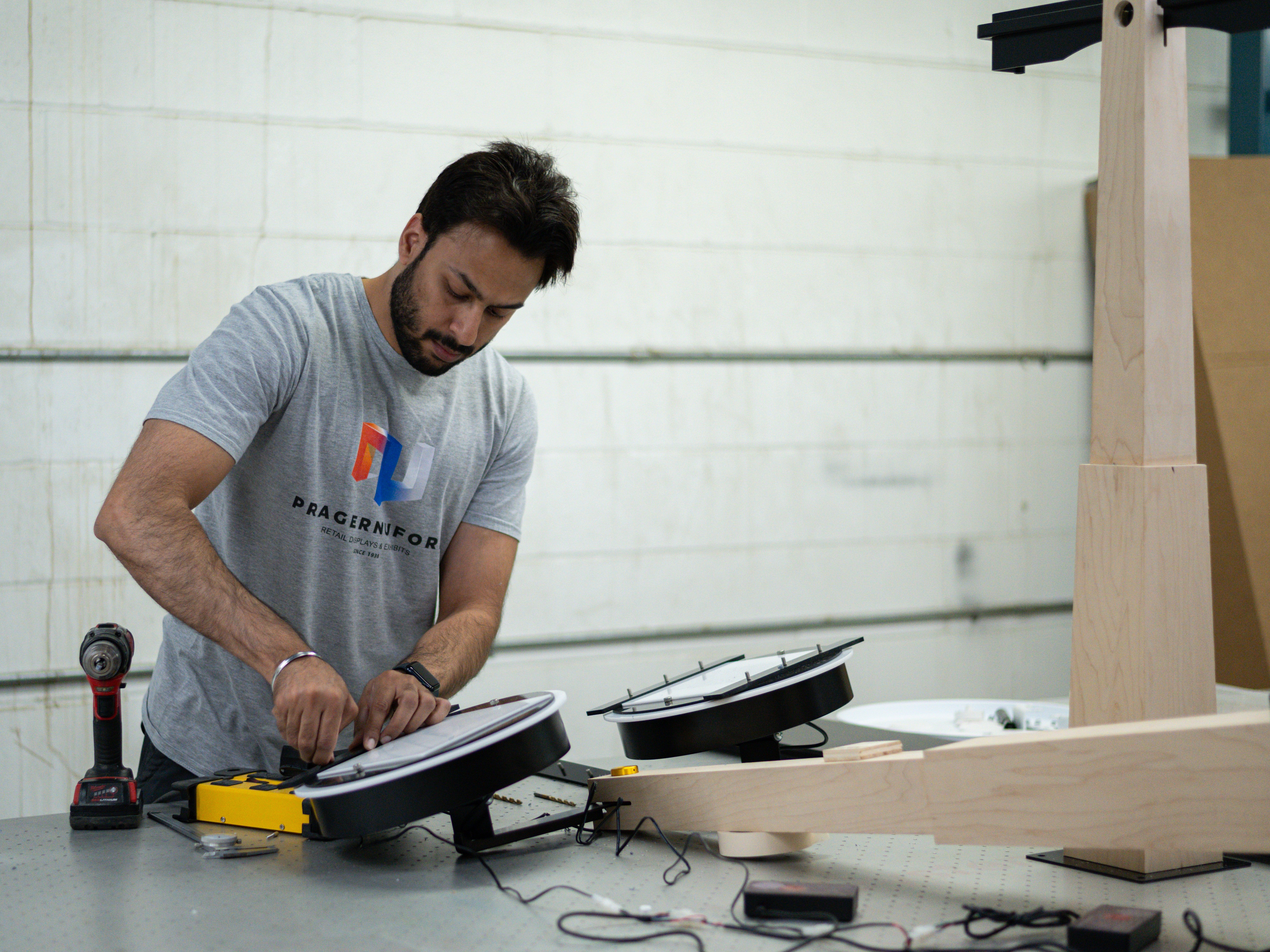
PragerNuform is celebrating more than 85 years in business, spotlighting its integrated design-to-install model that supports brands and retailers across North America. Founded in 1938 as Wm Prager Ltd. in Toronto’s garment district, the company later merged with Nuform Manufacturing and Accenta Displays. Over the decades, it has evolved into a comprehensive partner for retail environments, point-of-purchase displays, and trade-show installations.
CEO Laolu Fashesin said the company’s success lies in its long-term customer relationships. “Since 1938, PragerNuform has been a trusted leader in the design, manufacture, and distribution of retail displays, store fixtures, and trade-show booths across North America. We actively listen to our customers to ensure clarity on their vision and project expectations, delivering results that meet the highest standards of quality and execution.”
Fashesin added that the company’s growth is rooted in collaboration across every level of its business. “Our success is built on strong, lasting partnerships with our customers, employees, suppliers, and the greater community,” he said. “Together, we create retail and brand experiences that bring ideas to life, powered by PragerNuform’s 80,000-square-foot facility and a team known for innovative thinking and long-tenured expertise.”
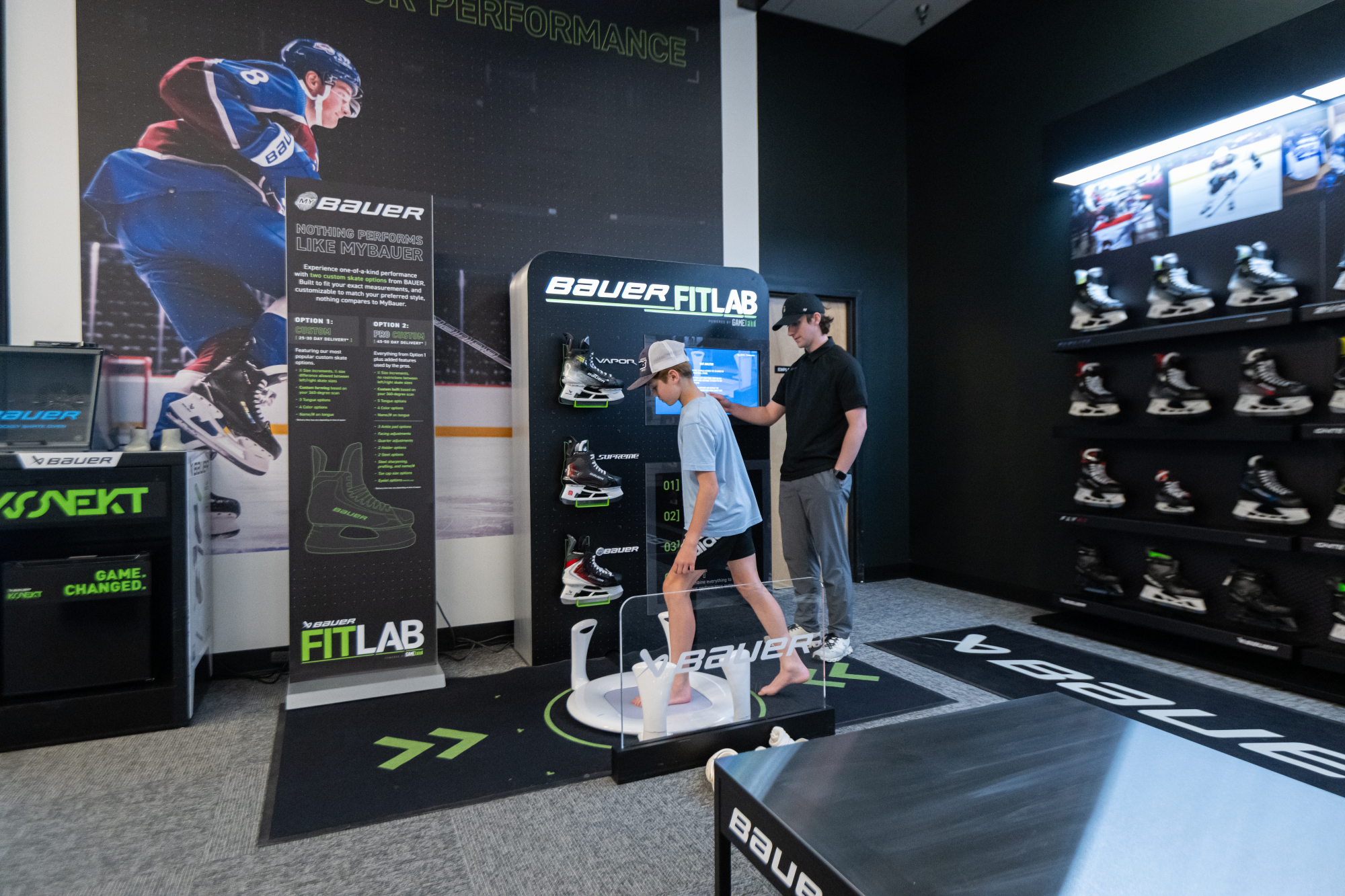
The Bauer Fit Lab experience shown at Front Row Sports, West Seneca. Image: PragerNuform
He emphasized that the company’s people remain its greatest asset. “It’s our people who truly set us apart,” said Fashesin. “Their craftsmanship, problem-solving, and unwavering commitment to client success are at the heart of everything we do.”
The PragerNuform retail design process begins with concept development and engineering before moving to rapid prototyping. In-house machining, millwork, plastics production, and graphics ensure that each program stays on schedule and consistent from the first prototype through to final installation.
Trained installation crews complete projects on site, while warehousing and replenishment programs keep fixtures looking fresh over time. The company’s model reduces handoffs between vendors, minimizes project risk, and ensures clean execution across every rollout.
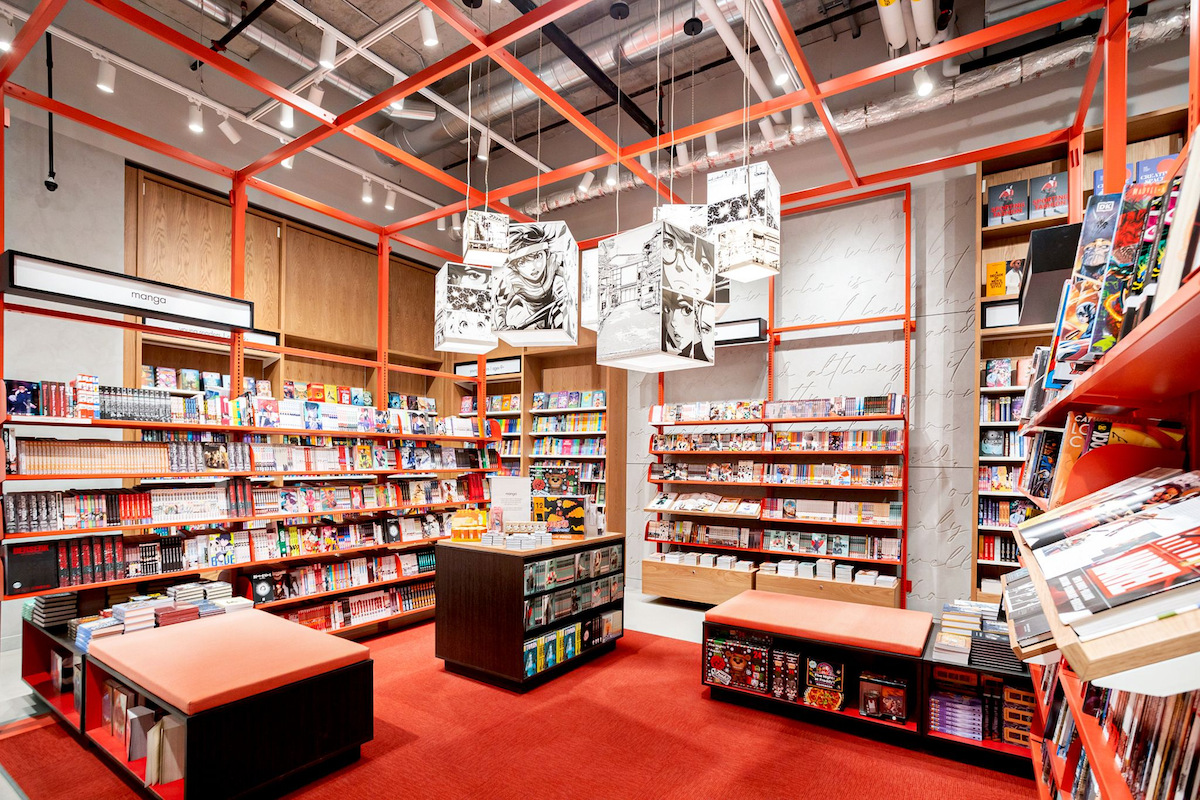
Custom Manga Light Installation for Indigo at the Well, Toronto. Image: PragerNuform
Flexible Canadian and Offshore Production
PragerNuform offers both Canadian and offshore production options, enabling brands to balance speed-to-market with scalability. Domestic production ensures fast turnaround for time-sensitive projects, while offshore manufacturing supports larger programs with efficiency and volume.
The company integrates heritage craftsmanship with modern technology, including CAD precision cutting, flatbed printing, SEG sewing, and controlled assembly. This ensures that graphics and hardware meet perfectly on the first install and that finished environments withstand high traffic and frequent refresh cycles.
Estee Lauder Booth at the Shoppers Drug Mart Beauty Show, Toronto. Image: PragerNuForm
Showcasing Retail Design Expertise Through Recent Projects
Vice President of Design & Sales Marcel Rocheleau highlighted several recent projects that showcase the company’s versatility across sectors.
“For Shoppers Drug Mart, we developed a multi-brand environment for Estée Lauder built from engineered aluminum systems and reusable structures designed for quick installation and redeployment,” said Rocheleau.
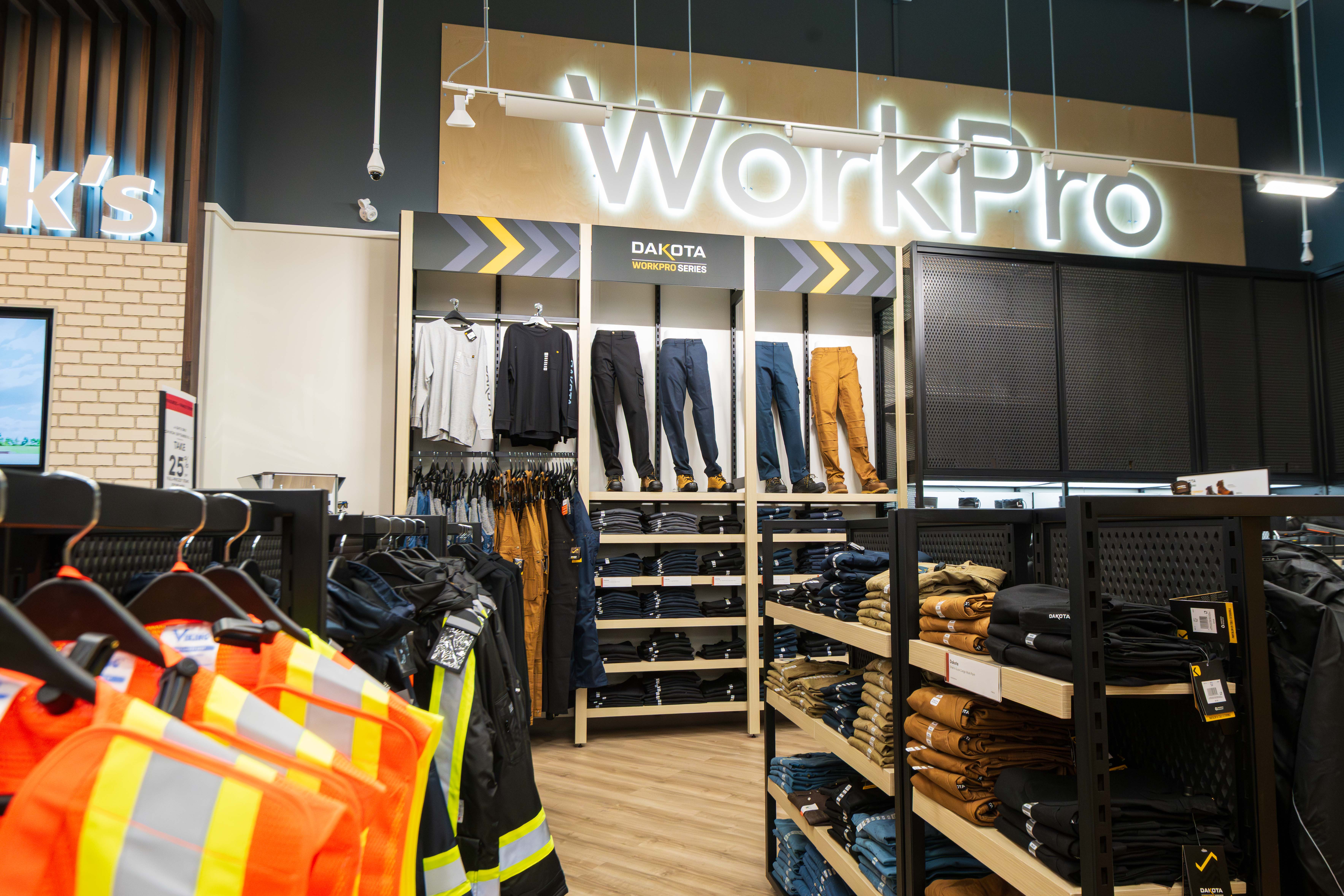
He added that the company’s national rollout for Mark’s is among its most ambitious yet. “We introduced a next-generation fixture package that not only elevates the brand but also maximizes durability, champions sustainable materials, and expands merchandising capacity to meet today’s retail demands,” he explained. “We’re excited to see this program reach hundreds of locations over the next few years.”
Mark’s, New Concept, Vaughan Mills.Image: PragerNuForm
Rocheleau noted that PragerNuform also plays a key role in Bauer’s evolving retail concept. “From the cutting-edge Bauer Fit Lab experience to redefined stick, skate, and helmet displays, we’ve built solutions that match the intensity of the hockey industry.”
Other recent collaborations include fixture programs for Sporting Life, featuring embedded magnets for precise sign placement and movable walls for seasonal flexibility, as well as Team Town, which relied on PragerNuform’s rollout expertise to establish a new fixture playbook across multiple stores.
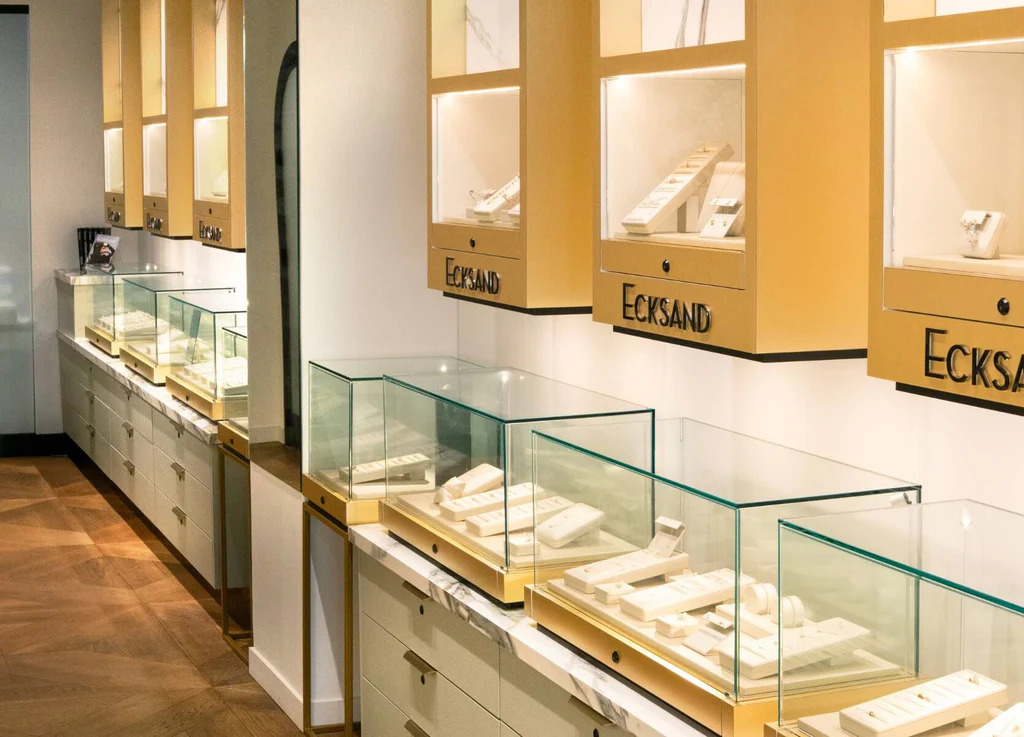
“In Toronto’s Yorkville neighbourhood, the Ecksand flagship required boutique-quality finishes on a six-week timeline, including premium millwork and sleek display cases,” Rocheleau said. “Additional programs for Energizer and Schneider Electric highlight our ability to create durable, easy-to-maintain systems for replenishment-heavy and tech-driven retail environments.”
Ecksand store in Toronto, February 2025. Image: Ecksand
Collaborative Team Model Ensures Project Precision
A defining feature of the PragerNuform model is its internal collaboration; designers, engineers, and production teams work seamlessly together to ensure that approved concepts translate directly into flawlessly executed installations. Prototypes and finish boards resolve design details before production begins, while structured project management keeps milestones and freight schedules aligned with tight retail timelines.
By unifying design, production, and installation, PragerNuform reduces risk and improves predictability for retailers. The approach enables brands to scale store programs across dozens or hundreds of doors while maintaining design integrity and brand identity.
adviso, in partnership with Ad hoc Research, has released the results of the 8th edition of LoyalT, the most comprehensive study of Canadian retail loyalty program performance.
Simon Ethier
“The results of LoyalT 2025 confirm that consumers are more selective, better informed and demand more out of the programs they subscribe to. To stand out from the crowd, retailers must shift from a transactional mindset to an approach that emphasizes anirreplaceable value-added service. Analytics is therefore the prime lever for managing and maximizing loyalty,” said Simon Ethier, Advisor, Omnichannel Retail, Monetization and Strategy, adviso.
Using a sample of 15,000 Canadian respondents and a unique methodology, LoyalT 2025 offers detailed insights into the performance of 87 programs across 11 activity sectors: grocery, restaurants, fashion, pharmacy and beauty, gas and convenience stores, pet products, beverages, entertainment, sports and outdoor, hardware, as well as discount and big box stores.
The major takeaways from LoyalT 2025
The North American geopolitical context is having an impact on loyalty program use, and some programs are more affected than others.
There are more programs. Canadians are members of 22 programs, a significant increase since 2023, but use only nine of them regularly (i.e., 41%).
Programs are performing better and are more efficient. There is a clear improvement in the overall performance score of programs, specifically in the Engagement index, i.e., the ability of a program to keep members engaged.
Appealing to Gen Zs is a must. This age group includes the most frequent and active users, who are looking for premium programs as well as fast access and personalized experiences.
Generosity is now critical. In today’s tense economic times, members’ perception that they are truly earning value from a program influences their satisfaction and loyalty.
Gamification is a fast-growing engagement strategy, being increasingly used by programs and members.
Image: LoyalT
Top 10 programs in Canada
Royal Perks – Burger King
My Panera – Panera Bread
Pet’s Rewards – Global Pet Foods
RealRewards – American Eagle Outfitters
Papa Rewards – Papa John’s
Treats Rewards – PetSmart
PC Optimum – Loblaw Companies
Domino’s Rewards – Domino’s Pizza
Gap Good Rewards – Gap, Old Navy, Banana Republic and Athleta
MyMcDonald’s Rewards – McDonald’s
Top 10 programs in Québec
Domino’s Rewards – Domino’s Pizza
MyMcDonald’s Rewards – McDonald’s
PC Optimum – Loblaw Companies
Walmart Rewards – Walmart
Beauty Insider – Sephora
Tims Rewards – Tim Hortons
Journie Rewards – Ultramar
Starbucks Rewards – Starbucks
MOI Rewards – Metro Inc.
Inspire – SAQ
“The 2025 edition of LoyalT confirms it: brands that continually scale up their programs, activate multiple engagement levers (e.g., mobile experience, gamification, hyper-personalization) and make their relational strategy a cornerstone of their business model clearly stand apart from the competition. Client data remains the true driver of that performance,” said Jonathan Pollender, Business Strategy Consultant, adviso.
Jonathan Pollender
The report introduced the Generosity Score, a new feature of the 2025 study, demonstrating a strong correlation between perceived generosity and consumers’ satisfaction with and attachment to a program.
In Canada, Burger King, Domino’s Pizza and PetSmart top the list of loyalty programs perceived as most generous, while in Québec, Domino’s Pizza, McDonald’s and Walmart lead the way.
LoyalT 2025 confirms that members of Gen Z are the most active users of programs and ascribe great importance to the Attachment dimension (relevance of content, day-to-day usefulness) as well as mobile experiences.
They are also enthusiastic adopters of programs in the restaurant and beverage sectors, as well as premium programs (loyalty programs with a pay tier or subscription model). For example, 66% of Gen Zers in Canada are Amazon Prime members, and 29% are subscribed to UberOne.
The benefits most sought after by this age group are:
The ability to accumulate and redeem points online (81%);
Member-exclusive discounts and free products (78%);
The ability to accumulate points other than by making a purchase (sharing reviews or content, referring friends, answering surveys, viewing content) (76%);
Designer Kim Newport-Mimran closes the Tilley Sport fashion show in Toronto on Tuesday, October 28. Photo: George Pimentel Photography
On Tuesday October 28, Toronto’s Cultural Goods Gallery on Dupont Street hosted the latest Tilley Sport fashion show, marking the debut of the brand’s Spring/Summer 2026 collection. The event represented another milestone for the performance-lifestyle label under the creative direction of Kim Newport-Mimran, who continues to evolve the brand’s aesthetic and market reach.
Just five months earlier, Newport-Mimran had presented the first Tilley Sport collection at a pop-up within Holt Renfrew Bloor Street, signalling the brand’s high-fashion ambitions. This week’s show expanded that vision further, introducing new technical fabrics, colours, and accessories to an audience of industry professionals, athletes, and design enthusiasts.
In an interview following the show, Kim Newport-Mimran, Creative Director of Tilley Sport, shared her approach to the evolving line. “I love to build on collections,” she explained. “You start with the new colours, and I love retro references in the sport arena. This collection feels fresh and modern while grounded in the athletic lifestyle that’s inspiring fashion right now.”
The SS26 line reflects Newport-Mimran’s ongoing fascination with the convergence of sport and style. “We’re looking at trends where you see celebrities courtside at basketball games,” she said. “Sport is having a moment, and I’m happy to be a fashion designer entering into it.”
The new collection embraces the idea of versatility — clothing that transitions effortlessly from the course to the city. Highlights include breathable polos, skorts, and lightweight windbreakers, all made from technical fabrics with moisture management and antimicrobial finishes. Many pieces also feature UPF sun protection, aligning with the brand’s outdoor heritage.
Tilley Sport fashion show in Toronto on Tuesday, October 28. Photo: George Pimentel Photography
Elevated Accessories and Design Details
Accessories played a major role in the SS26 presentation, reflecting a growing emphasis on lifestyle integration. “We designed gym bags in canvas and leather,” Newport-Mimran noted. “Some of them were styled to show how they complement the look. Little bags for sun, tennis, or golf. It’s a twist on elevated style, tying it all together with scarves and textures.”
This balance of utility and sophistication is consistent with the broader direction of Tilley Sport, which has positioned itself at the intersection of athletic functionality and designer refinement. Subtle preppy details, reimagined argyle patterns, and fresh tones of pine green and sand underscored the SS26 palette. “I really loved that neutral story,” said Newport-Mimran. “I loved taking an argyle and reworking a traditional pattern into something new.”
A Rapid Expansion Across Canada
In the five months since its first major showcase, Tilley Sport has achieved significant retail growth. Newport-Mimran revealed that distribution has expanded dramatically through Canada’s top golf clubs. “We went from being in three to 50,” she shared. “It’s been really exciting because this market takes you from the course to the clubhouse. It’s fashion that fits active lifestyles.”
The brand’s rapid adoption in premium golf settings highlights its ability to resonate with both sport enthusiasts and style-conscious consumers. From Fairmont resorts to elite private clubs, the collection’s mix of technical innovation and refined design has found strong traction.
Tilley Sport products are also featured at Tilley’s corporate stores on Ossington Avenue in Toronto and in Oakville, as well as online. This multi-channel strategy, balancing heritage retail with contemporary sport distribution, has positioned the brand for continued growth.
Tilley Sport runway show in Toronto on October 28, 2025. Photo: Instagram story screen shotTilley Sport fashion show in Toronto on Tuesday, October 28. Photo: George Pimentel Photography
Building on Tilley’s Canadian Heritage
Tilley Sport is a modern evolution of Tilley Endurables, the storied Canadian outfitter founded in Toronto in 1980 by Alex Tilley. The brand built its reputation on durable travel apparel and the world-famous Tilley Hat, known for its lifetime guarantee and performance under extreme conditions.
Now owned by Gibraltar & Company since 2018, Tilley’s reimagining under Newport-Mimran and her husband Joe Mimran, best known for Club Monaco and Joe Fresh, marks a deliberate shift toward lifestyle luxury and performance fashion.
“Tilley is an iconic Canadian name,” said Newport-Mimran. “My goal has been to evolve that heritage into something relevant for today’s customer…someone who wants performance, but also wants to look great doing it.”
Clothing on display at the Tilley Sport fashion show in Toronto on Tuesday, October 28. Photo: George Pimentel PhotographyTilley Sport runway show in Toronto on October 28, 2025. Photo: Shayne Stephens
Fashion Meets Function
Under Newport-Mimran’s direction, Tilley Sport has found its niche in the growing market for fashion-led athleticwear. The line includes technical knits, compression pieces, and tailored silhouettes that emphasize function without compromising style.
“I love working in this performance function, effortless style,” she said. “When you shop retail, you often see a beautiful item, but you don’t always see how it comes together. I love showing how to wear it, how it fits into real life.”
Her design philosophy centres on engineering garments for longevity and adaptability, a nod to Tilley’s legacy of craftsmanship. Each piece in the collection is designed to perform in active settings while maintaining a level of polish suitable for travel or leisure.
From Holt Renfrew to the Green
The Tilley Sport Spring/Summer 2026 Collection represents a balance between heritage craftsmanship and forward-thinking innovation. Following the success of its Holt Renfrew showcase, the brand’s Toronto show reaffirmed its momentum and growing influence.
Fashion insiders noted the collection’s ability to merge technical athleticwear with a luxury aesthetic, a niche that has gained significant traction in the post-pandemic market. With pickleball, golf, and casual sportwear now driving lifestyle trends, Tilley Sport’s focus on refined performance design places it at the forefront of this shift.
Attendees echoed the positive reception, with many praising the “sport-luxe” sensibility of the SS26 lineup and its strong sense of identity.
Kim Newport-Mimran and the Tilley BMW at the Tilley Sport fashion show in Toronto on Tuesday, October 28. Photo: George Pimentel Photography
More from Retail Insider:
Tilley Sport runway show in Toronto on October 28, 2025. Photo: Instagram story screen shot