Canada’s small and craft alcohol producers still face major roadblocks when trying to sell alcohol across provincial borders despite recent agreements meant to ease trade restrictions, finds a new report from the Canadian Federation of Independent Business (CFIB).
The report, Bottled Up: Barriers facing small business in interprovincial alcohol trade, reveals that outdated rules and complicated processes continue to block Canadian producers from reaching new markets, even if that market is their neighboring province. Despite public support for reform and recent internal trade commitments, lack of energy for change has resulted in a fragmented system that drives up costs, limits consumer choice, and stifles the growth of small producers, added the national organization.
Keyli Loeppky
“When American liquor products were pulled from store shelves across Canada in response to U.S. tariffs, it opened space that could, and should, have been filled by Canadian producers,” said Keyli Loeppky, CFIB’s director of interprovincial affairs. “Instead, rigid interprovincial rules and excessive red tape continue to hinder small alcohol producers from expanding beyond their home provinces, leaving significant growth potential untapped.
“It’s absurd that Canadians can’t easily purchase alcohol products made in their own country. If we can’t fix barriers at home, how can we expect our businesses to meet goals to expand international trade? Provincial politicians need to put protectionism aside and work towards true free internal trade in Canada.”
The CFIB is Canada’s largest association of small and medium-sized businesses with 100,000 members across every industry and region.
The CFIB said Canada’s alcohol industry is built on small businesses, with over 1,500 breweries, wineries, and distilleries nationwide. Yet entrepreneurs face a confusing patchwork of regulatory, logistical, and pricing barriers when selling outside their home province, including:
Excessive red tape and complex regulations
Poor transparency and communication from regulators
Wide variability in markup rates
High shipping costs
SeoRhin Yoo
“Duplicative lab testing requirements, inconsistent mark-up rates, and confusing rules all add to higher costs and fewer opportunities for Canadian entrepreneurs,” said SeoRhin Yoo, CFIB senior policy analyst for interprovincial affairs. “Allowing direct-to-consumer shipment of alcohol would be a significant step forward, but it’s only one part of the solution small brewers, distillers and vintners want to see. Businesses that want to move pallets of their products, not just bottles, still face myriad barriers that make it not worth the hassle.”
CFIB said it is urging provinces to work together to fully implement the alcohol-related commitments already made under the Canadian Free Trade Agreement (CFTA) and recent Memoranda of Understanding (MOUs) on direct-to-consumer alcohol sales, including a strategic rollout plan for May 2026.
To create a fairer, more competitive marketplace, CFIB is calling on governments to:
Expand government commitments on mutual recognition agreements to include provincial rules, regulations and requirements on alcohol.
Increase transparency on listing processes and mark-up structures.
Establish a cross-provincial working group dedicated to alcohol trade reform.
Provide clear, accessible guidance to small businesses on interprovincial requirements.
Shapermint has launched its Shapermint Core collection at Walmart Canada, expanding its retail presence into more than 270 locations across the country.
The move marks the Canadian debut of the brand’s most popular size-inclusive shapewear styles, following its initial rollout in the United States. The company said the expansion supports its goal of making its comfort-focused products more accessible to customers worldwide.
Massimiliano Tirocchi
“Our launch into Walmart Canada reflects our mission to make comfort and confidence universally accessible,” said Massimiliano Tirocchi, co-founder and chief marketing officer of Shapermint. “We’re thrilled to offer Canadian customers in-store access to our bestselling styles that are loved by millions.”
The Shapermint Core collection features seven wardrobe essentials designed for all-day wear. The line includes a wireless shaping bra, high-waisted shaping panty, boyshort, shorts, bodysuit, shaping tights and cami.
Gabrielle Richards
“This launch is rooted in what our Canadian customers have told us they want: solutions that feel as good as they look,” said Gabrielle Richards, brand director of Shapermint. “Shapermint Core was designed with inclusivity and real life in mind—to support women, not squeeze them.”
The company said the launch reinforces its mission to reshape the shapewear category by focusing on comfort, affordability and confidence.
Founded in 2018, Shapermint serves more than 12 million customers globally and describes itself as one of North America’s leading size-inclusive shapewear and intimates brands.
Canadian consumers are expected to spend nearly $9.3 billion during Black Friday and Cyber Monday (BFCM) 2025, an increase of about $1.7 billion compared to last year, according to a survey by ecommerce marketing company Omnisend.
The survey found that the average Canadian plans to spend $319 on Black Friday and $242 on Cyber Monday. This represents an increase of $60 per person on Black Friday and $40 per person on Cyber Monday compared with 2024.
Marty Bauer
“Canadian consumers are trying to navigate financial pressures such as inflation and higher living costs,” said Marty Bauer, ecommerce and retail expert at Omnisend. “Yet instead of pulling back, many are leaning into Black Friday and Cyber Monday as a way to stretch their budgets, stock up on essentials, and save money over the long term.”
Most Canadian shoppers plan to spend between $100 and $499 on both days, with more Canadians expecting to increase spending (14–15 per cent) than decrease it (6–8 per cent).
Bauer said this reflects a cautious but deliberate growth in holiday shopping budgets. “Even though wallets are tighter, Canadians are increasing their budgets. They are making fewer impulse buys and instead focusing on strategic purchases where they can get the most value.”
The survey also found that Buy Now, Pay Later (BNPL) remains niche in Canada. While 14–15 per cent of Canadians expect to use BNPL this BFCM, 53 per cent prefer to pay upfront, and 25 per cent might use BNPL for larger purchases. “BNPL is on the radar, but it hasn’t become mainstream in Canada,” Bauer said. “Canadians remain conservative in their payment preferences, valuing control and financial stability.”
Discounts and free shipping continue to drive purchases. Seventy-two per cent of Canadians prioritise discounts, and 55 per cent consider free shipping essential. Early access deals (26 per cent) and loyalty points (25 per cent) are less influential, while influencer promotions (10 per cent) and peer reviews (7 per cent) have minimal impact. “This data proves that the basics still win,” Bauer said. “Discounts and free shipping are what consumers want most, while loyalty programs and influencer campaigns play a much smaller role in driving actual purchase decisions.”
Amazon remains the leading shopping destination for Canadians at 79 per cent, followed by Walmart at 45 per cent. Emerging platforms include Temu (17 per cent) and Shein (15 per cent), while Etsy (6 per cent) and TikTok Shop (4 per cent) remain minor players. Bauer noted, “Amazon may lead, but Canadians are clearly experimenting with newer, lower-cost platforms like Temu and Shein. This reflects a growing appetite for affordability in today’s economy.”
Photo: Pavel Danilyuk
Clothing and accessories are the most popular category for Black Friday, with 51 per cent of Canadians planning to buy apparel, followed by tech and electronics (42 per cent) and toys (24 per cent). Other categories include home décor (21 per cent), beauty (25 per cent), and food and drinks (18 per cent). “Fashion and tech are evergreen categories, but the rise of toys shows how parents are waiting until BFCM to stretch holiday budgets,” Bauer said.
Bauer advised retailers to focus on financial value when marketing BFCM deals. He suggested emphasising discounts and free shipping, offering tiered promotions, experimenting with emerging platforms, and using automation tools to target shoppers effectively.
“Canadians are financially stretched but still determined to shop smart,” he said. “Retailers who connect their promotions to real value and savings will capture the strongest growth this BFCM.”
The survey was conducted in August 2025 by Cint on behalf of Omnisend, polling 1,200 Canadian consumers about their shopping plans for Black Friday and Cyber Monday. Average spending estimates were extrapolated to the Canadian adult population of approximately 30 million.
A national survey conducted by Samsung Canada and Leger, which surveyed 510 Canadian workers across construction, healthcare, energy, mining, retail, and public safety, found that retail workers in particular are feeling the impact of unreliable tech:
More than half (56%) have experienced physical device damage, cracked screens and broken ports are common
One in two have faced battery or power failures that stalled their work
Half said that when a device breaks, the entire delivery chain is disrupted
Nearly two-thirds of retail workers say mobile devices are essential to their job, yet most are still relying on consumer-grade tech that wasn’t designed for fast-paced, customer-facing environments.
What might seem like small issues, a scan that doesn’t work, a restock that’s delayed, can multiply across stores and teams, quietly chipping away at customer experience and business efficiency.
“More than two-thirds of frontline retail workers (68%) say mobile devices are critical to their roles, whether that’s managing inventory, processing payments, or keeping customers informed. Yet 63% have experienced at least one device failure in the past year, such as cracked screens and dead batteries,” he said.
“That gap between reliance and reliability is striking. Retail workers are telling us, “We depend on these devices, but they’re not built for the pace and pressure of where we work.” For an industry built on speed and service, this disconnect shows that technology meant to empower employees can just as easily slow them down when it’s not designed for the environment.”
The survey found:
64% of retail workers say mobile devices are essential to their job, with average use of 4 hours per day for sales, inventory, and customer service tasks.
56% have experienced physical device damage, including 42% with cracked screens and 22% with broken buttons or ports.
52% have faced battery or power failures, most often charging issues (44%) and dead batteries (24%).
Half (50%) say when a device breaks, the entire supply chain is disrupted, underscoring how critical device reliability is for retail operations.
Only 35% of retail workers are aware of rugged devices, yet 53% say rugged tech is very important to their work, a clear gap between awareness and need.
Higgins said many retailers assume consumer devices are good enough because they’re familiar and affordable.
“In fact, 38% of frontline workers say a regular device “works just fine”, often because they haven’t been exposed to what rugged technology can offer. But when you look closer, 62% report ongoing issues like cracked screens or battery failures, which shows those consumer devices aren’t actually keeping up,” he said.
“Cost is the other major barrier, one in four workers (25%) think rugged devices are too expensive or hard to justify. Yet when you factor in the hidden costs of downtime, repairs, and lost sales, the math changes quickly. A single cracked screen can delay a transaction or idle an entire checkout lane. For many retailers, the real cost isn’t the device, it’s the disruption when that device fails.”
Device failures affect every part of a store’s operations, added Higgins.
“Our survey data shows that 44% of retail workers face task delays when their devices break, and one in three experience communication breakdowns with their teams. When frontline technology falters, it impacts everything from restocking and customer service to point-of-sale transactions,” he explained.
“In retail, even a short delay adds up. Lost minutes become lost sales, and system downtime quickly strains staff and the customer experience. Reliable technology isn’t just about convenience; it’s the backbone of operational efficiency. When devices fail, the flow of the entire store can falter.”
Retail is becoming more mobile, connected, and data-driven, and the demands on frontline tech are rising with it. Right now, nearly half of retail workers (48%) are aware of rugged devices, but only about one in three (34%) say they or their teams actually use them, added Higgins.
Photo: Alexander Suhorucov
“That awareness-to-adoption gap is the opportunity ahead. I see rugged and business-grade devices becoming the standard, not the exception. The
future of retail technology is about durability meeting intelligence, devices that can survive a drop, a spill, or a long shift, while seamlessly integrating with digital systems and analytics,” he said.
“At Samsung, we’re continuing to invest in technology that empowers workers, tools that perform reliably, stay secure, and give employees the confidence that their tech will work as hard as they do.”
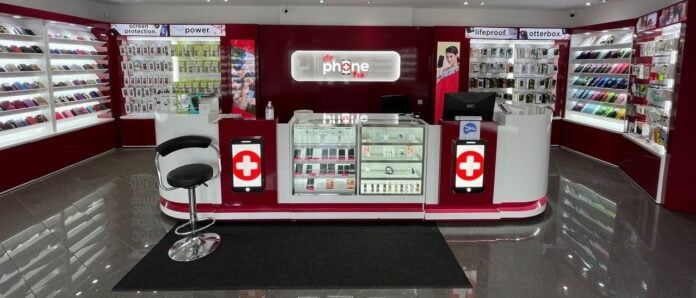
Repairing broken cell phones and other personal electronics will be easier to afford for over a million Albertans thanks to a new partnership between Dr. Phone Fix and the Alberta Motor Association (AMA).
AMA members will be eligible for special discounts on phone repairs and accessories when they visit any Dr. Phone Fix location in Alberta.
Piyush Sawhney
“We are proud to be a partner with AMA. We share a common goal of giving customers exceptional service and premium products. This collaboration allows us to extend exclusive value to AMA’s members while reinforcing Dr. Phone Fix’s commitment to quality repairs and premium accessories,” said Dr. Phone Fix founder and CEO Piyush Sawhney.
Haurdhal said cellphone company province-wide network of 22 locations will make it easier for AMA members to quickly and reliably get the help they need when their phone needs a little TLC.
Founded in 2019, Dr. Phone Fix operates a nationwide network of 35 corporately owned cell phone and electronics repair stores across four Canadian provinces. In addition to its repair services, it sells certified pre-owned devices and a wide selection of accessories. The company has well-established networks to acquire and resell a wide variety of used and refurbished electronic devices from certified vendors. It was recently named to the Financial Times Americas’ Fastest Growing Companies 2025 list.
Retail Insider is streamlining its Canadian retail news from around the web to include a handful of top news stories that can be viewed quickly during the day. Here are the top stories from the past 24 hours.
Big League Food Company announced Monday a significant expansion across its portfolio of Dark Horse Espresso Bar, Village Juicery, and Dear Grain.
This accelerated growth demonstrates the power of BLFC’s platform strategy: acquiring beloved independent brands and providing the capital, infrastructure, and operational expertise to scale them into regional champions. This model allows brands to grow rapidly while maintaining strong financial performance and the deep community roots that customers value, said the company.
Max Daviau
“Big League is proving that independent food brands, when supported by a best-in-class platform, can outperform larger international chains in our home market,” said Max Daviau, Co-Founder of Big League Food Company.
“Our mission is to preserve the soul of these brands while providing the infrastructure and expertise they need to scale into regional champions across the GTA.”
The Toronto-based company said its growth plan is focused on high-traffic, strategic locations that expand the reach of each brand.
Village Juicery (Targeting 9 Units in 2026): Building on its momentum in the wellness and functional food category, Village Juicery will open its first PATH location at First Canadian Place in Q2 2026.
Dark Horse Espresso Bar (Targeting 23 Units in 2026): Following successful openings in Hamilton Airport, Cambridge Centre, and Woodbridge, Dark Horse continues its rapid expansion. Six additional openings are slated through 2026 – including Barrie, 88 Bathurst, and several new GTA and downtown core sites – cementing its position as Southwestern Ontario’s largest third-wave cafe operator.
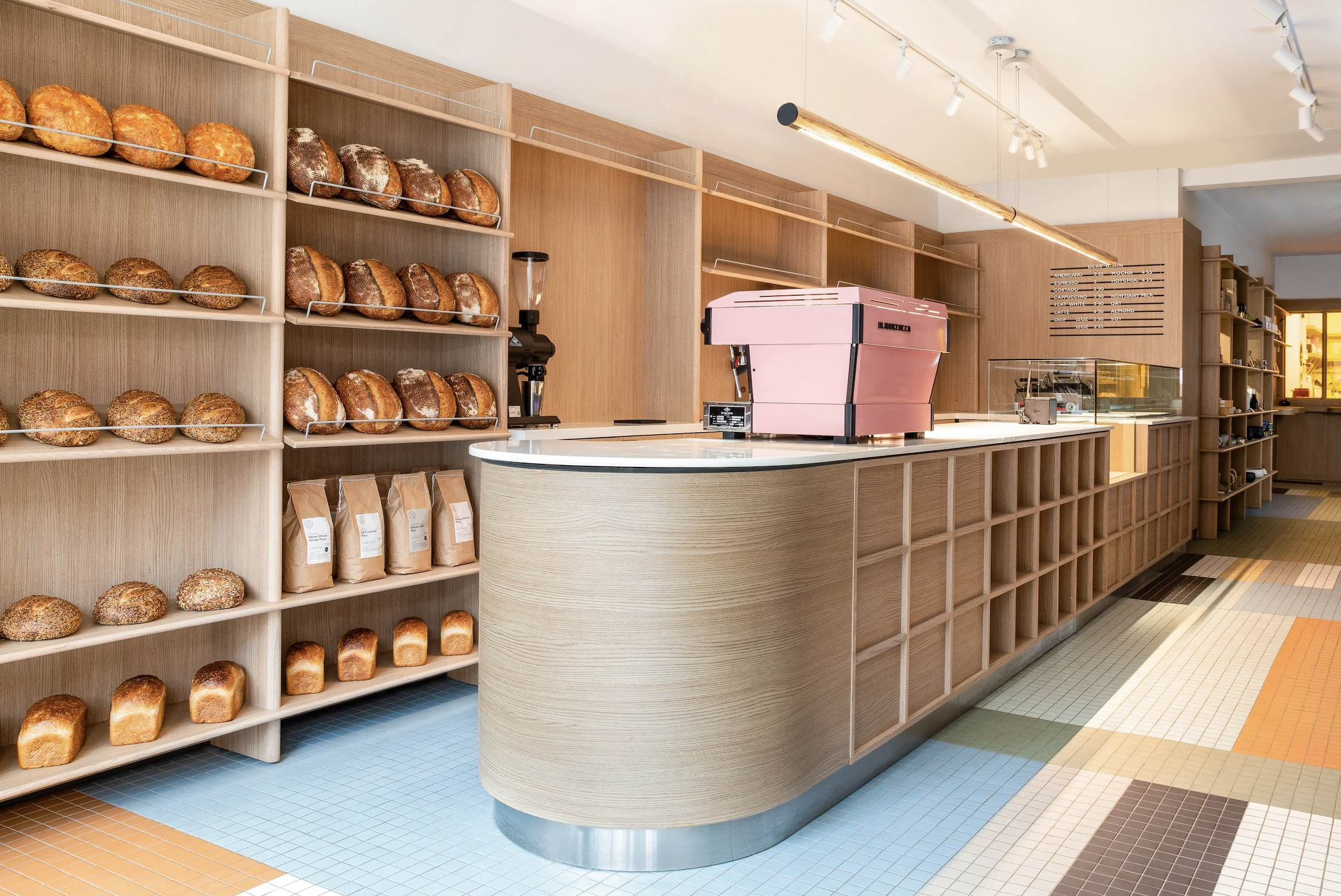
Dear Grain (Targeting 6 Units in 2026): After a highly successful debut on Roncesvalles, Dear Grain will expand further across Toronto with new locations in Summerhill (mid-2026), an additional downtown site (Q4 2026), as well as a second Hamilton location.
“This organic expansion will bring BLFC’s corporate-owned unit count to 38 stores and is projected to drive system-wide revenue to over $70 million. This performance puts the company firmly on track to achieve its $100 million revenue milestone by 2028,” it said.
“Alongside this organic growth, a core pillar of BLFC’s strategy is M&A. The company is actively pursuing acquisitions of other independent food brands across Ontario that are ready to scale and become category leaders.”
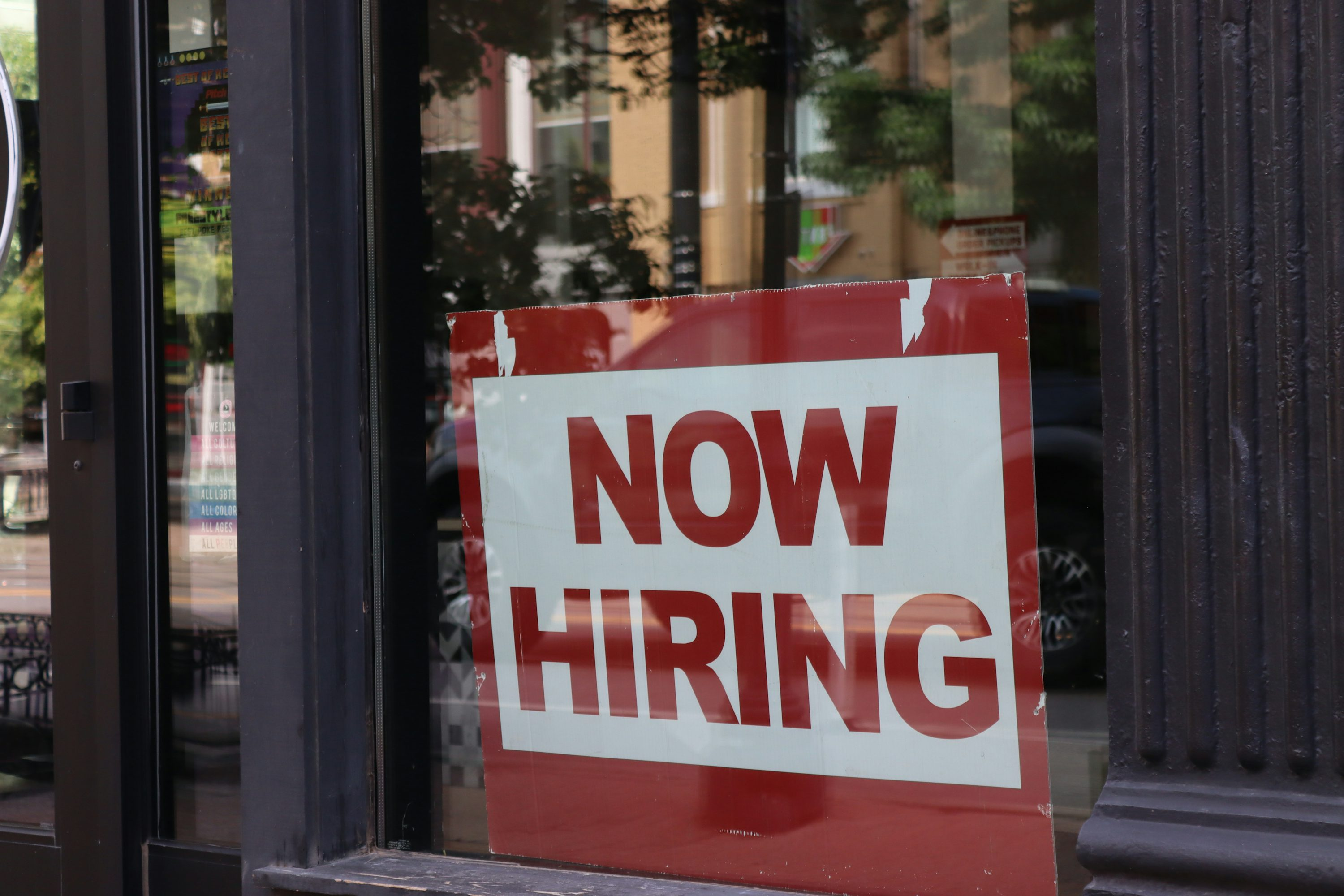
Now Hiring sign in a store window. Photo: Unsplash/free use
Canada’s retail industry is once again leading the nation’s employment recovery, adding more jobs in October 2025 than any other sector. According to Statistics Canada, the wholesale and retail trade sector expanded by approximately 41,000 positions, a 1.4 percent increase month-over-month, marking a significant rebound after months of volatility.
“The results for October astounded everyone in the financial markets, except people in retail and recruiters,” Sears told Retail Insider. “We knew what the groundswell had been since the massive HBC layoff of 8,000-plus people. We saw not a retraction in hiring, but a slow and steady increase in the hiring rate.”
Suzanne Sears.
The October jobs report revealed that nearly two-thirds of Canada’s new jobs came from retail and related service industries. “This most recent labour report, 41,000 of the new 67,000 jobs, were retail jobs,” Sears explained. “That’s followed by transport and warehousing at around 30,000, which is closely tied to e-commerce activity.”
Sears said transportation and warehousing data can often serve as an early indicator of retail’s performance. “If you watch those numbers, you can predict reliably what retail hiring will look like two or three months later, because it all lands in the warehouse,” she said. “When warehouses fill up, it means retail orders are strong.”
The correlation highlights the ongoing integration between traditional retail and online shopping infrastructure, where logistics capacity directly mirrors consumer demand.
Retail Hiring No Longer Driven by the Holidays
While October’s surge coincides with the pre-holiday season, Sears emphasized that the gains are not primarily seasonal.
“The old concept of hiring thousands of people for the holidays pretty much vanished when the major department stores did,” she said. “There isn’t a huge surge of temporary bodies in stores anymore. Instead, what we’re seeing is that part-time work has become the job people actually want.”
Sears noted that part-time employment, which accounted for most of October’s job growth, is no longer viewed as a fallback. “These are desirable jobs,” she explained. “They offer flexibility, they pay comparably to full-time work in many cases, and they fit the lifestyle that many Canadians are looking for right now.”
That shift, she said, is also helping retailers fill roles that might otherwise remain vacant amid ongoing labour shortages and changing work expectations.
Local Spending, Global Shifts
Sears attributes part of the hiring momentum to a “stay-at-home, shop-at-home” mindset that’s strengthening local economies. “Every time you add a ten or twenty dollar charge to anything outside the home, whether it’s parking, event tickets, or travel , the multiplier effect catches up,” she said. “People are spending locally instead.”
She pointed to smaller markets as clear examples of this trend. “You have little shops in Niagara-on-the-Lake that always did relatively well, but they’re now exploding,” Sears observed. “They’re turning around and hiring one or two more people each.”
The U.S. added only 44,000 jobs in October, a stark contrast to Canada’s 67,000. “That’s a big story,” Sears added. “A lot of the reason for Canadian job growth is that Canadians are choosing to stay local and spend local.”
The Amazon Effect: Local Advantage Grows
Another key driver, Sears said, is that major online platforms are losing their price advantage. “Prices on Amazon have skyrocketed because tariffs are now built into nearly every product,” she noted. “A small steam cleaner that used to sell for $89 is now $139.”
“Fast and cheap might still be fast, but it’s no longer cheap,” she said. “There’s not a lot of incentive to shop that way anymore when local retailers are offering competitive prices and better service.”
As a result, Canadian retailers are benefiting from renewed consumer loyalty and improved digital capabilities. “They’re getting much better at e-commerce,” she said. “They can’t match the sheer scale of Amazon, but they’re competitive, and that’s a major shift.”
Retailer putting a hiring sign in a store window. Retail hiring. Photo: Retail Customer Experience
Retailers Regaining Confidence Amid Global Uncertainty
Sears also believes that international trade instability, including renewed U.S. tariffs, initially froze Canadian retailers’ hiring and investment decisions. “When the Trump tariffs came down, everyone was terrified to make a move,” she said. “If there was a decision to hire, lay off, or do nothing, most chose to do nothing.”
Now, she said, that hesitation is fading. “Executives are realizing this could last two or three more years. They’re saying, ‘We either go forward or we die.’”
Improved access to capital and more stable financing conditions are also encouraging retailers to reinvest in staff and operations. “I saw it starting in the summer,” Sears said. “Retailers were asking, ‘If you find anybody, let us know.’ By September they were actively interviewing. So there’s no question in my mind that they’d be hiring in October.”
Sears expects the upward trend to continue through the end of the year, adding that the proportion of Canadians seeking work is dropping as well. “We’ve gone from 7.1 percent to 6.9 percent unemployment,” she said. “There’s a high probability we’ll see that fall even further.”
Post-HBC Retirements Reshape the Retail Workforce
Sears also reflected on the lasting consequences of Hudson’s Bay Company’s mass layoffs earlier this year, noting that many experienced retail professionals simply walked away from the industry.
“People who were on the cusp of retiring just retired flat out,” she said. “Anyone over 50 said, ‘I’ve had enough of retail.’ The core staffing group from about 25 to 55 has been turned off by it.”
The loss of mid-career professionals, she explained, has deepened a generational divide. “Younger people are still studying retail. They’re going to university for it, and they still believe in it,” Sears said. “They see a better way forward, often combining store management with social media skills, but upper management hasn’t fully caught up yet.”
Sears said the industry now faces a critical question: how to restore trust among workers burned by corporate closures and instability. “There’s a bad taste,” she said. “People say, ‘I’ll do anything but not retail.’ If COVID didn’t burn them, HBC did. Many of them lost their benefits, and that left a scar.”
Balancing Optimism with Caution
Even with strong October numbers, Sears acknowledged that some may question whether this growth is sustainable. “That’s the first thing people will say,” she noted. “Yes, it’s good news, but is it sustainable?”
Retail remains Canada’s largest employer, representing about 15 percent of the national workforce. “When retail’s leading, it has a trickle-down effect that’s enormous,” Sears said. “It won’t offset the loss of factories or lumber mills, but it can stabilize communities.”
That stabilization, she argued, is already visible in provinces such as Ontario and British Columbia. “Retail is leading hiring even in Ontario, which has been beaten up badly,” she said. “That’s impressive.”
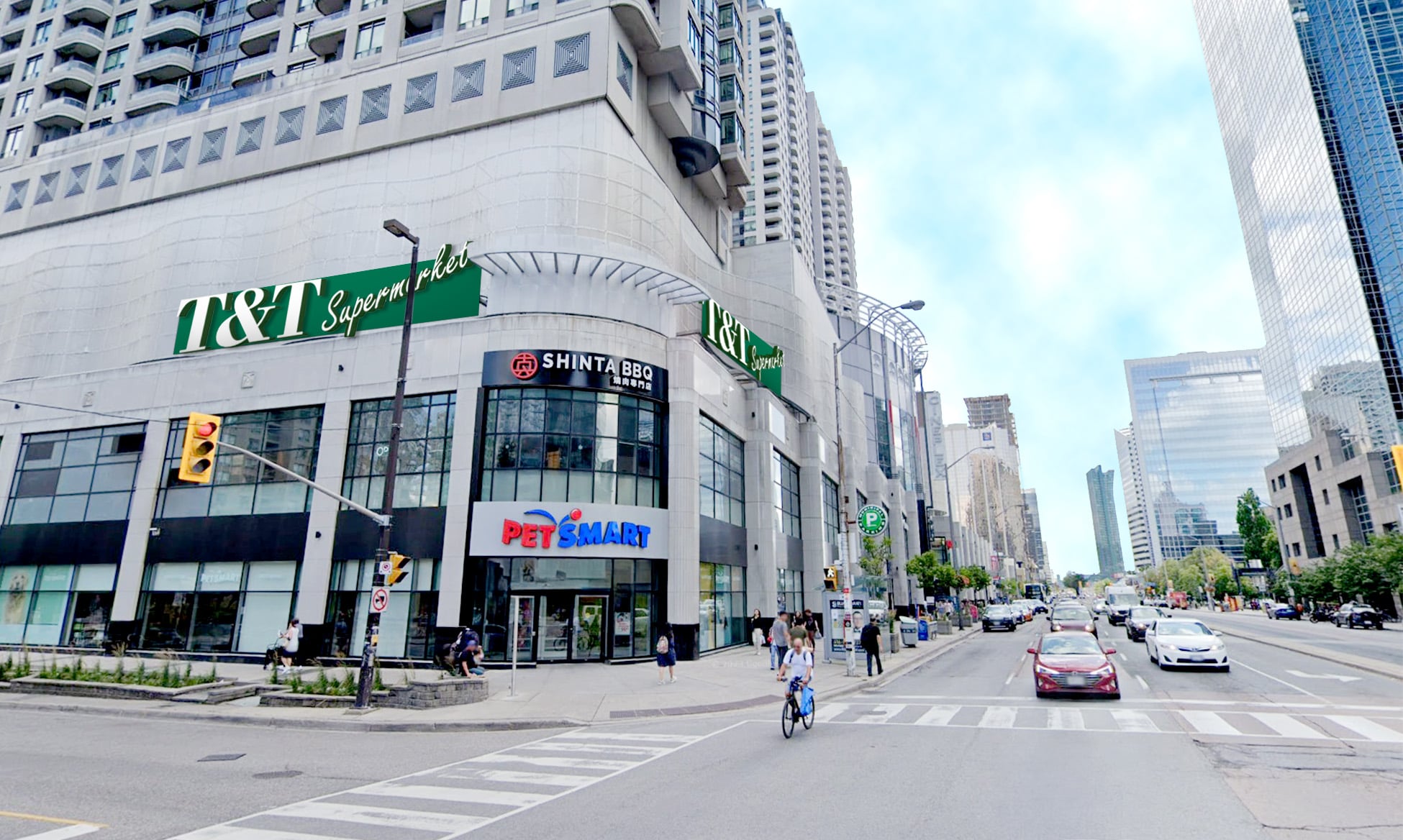
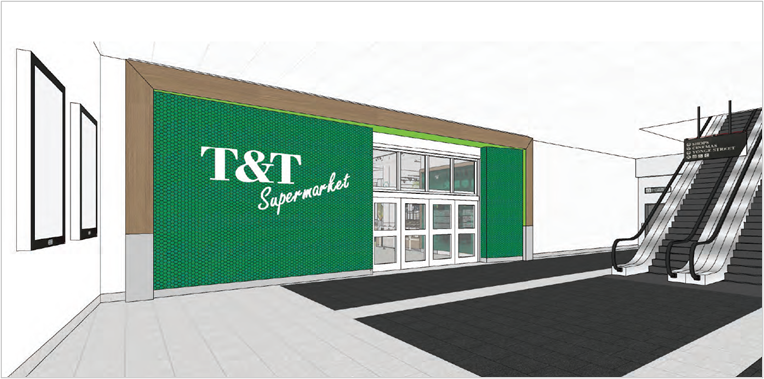
T&T Supermarkets, the largest Asian supermarket chain in Canada, says its will be opening its largest store in Ontario this Fall at 5090 Yonge Street, Empress Walk Shopping Mall, in Toronto.
The grocery store retailer said the store will be 66,000 square feet.
T&T currently operates 38 stores across North America (37 in Canada and 1 in the U.S.)
Upcoming stores in Canada in 2026 include: Erin Mills, Mississauga, ON; Empress Walk, North York, ON; and Gilmore, Burnaby, BC
“Customers can enjoy a self-serve hot food bar featuring authentic Asian dishes. T&T Kitchen is known for its specialties, including Peking Duck, Papa Chicken, a BBQ station, and a sushi counter. It will also offer popular street-food favourites such as freshly made Chinese crepes and Taiwanese-style sticky rice rolls,” said T&T.
It said the store will have the largest bakery section in Ontario with over 150 varieties of baked goods such as Portuguese egg tarts, mango pomelo Swiss rolls, and freshly baked Hong Kong–style buns.
It will also have the largest Asian beauty section in Ontario with thousands of Asian beauty products including skincare, makeup, and wellness items from all over Asia.
“This store will feature a full assortment of more than 500 T&T Private Label items, including pantry staples, dim sum, and trendy snacks. Customer favourites such as juicy pork soup dumplings (Xiao Long Bao), Korean kalbi marinade, green onion pancakes, and seaweed snacks will all be available, plus much more,” added T&T.
“Fresh groceries, prepared meals, bakery, and seafood are now available for same-day delivery through the T&T App. Service is available in select areas.”:
T&T Supermarkets was founded in Vancouver in 1993 and is now led by second generation successor and CEO, Tina Lee. T&T Supermarkets is headquartered in Richmond, BC, with offices in Toronto and Los Angeles.
Tina Lee, CEO of T&T Supermarkets (CNW Group/T&T Supermarkets)
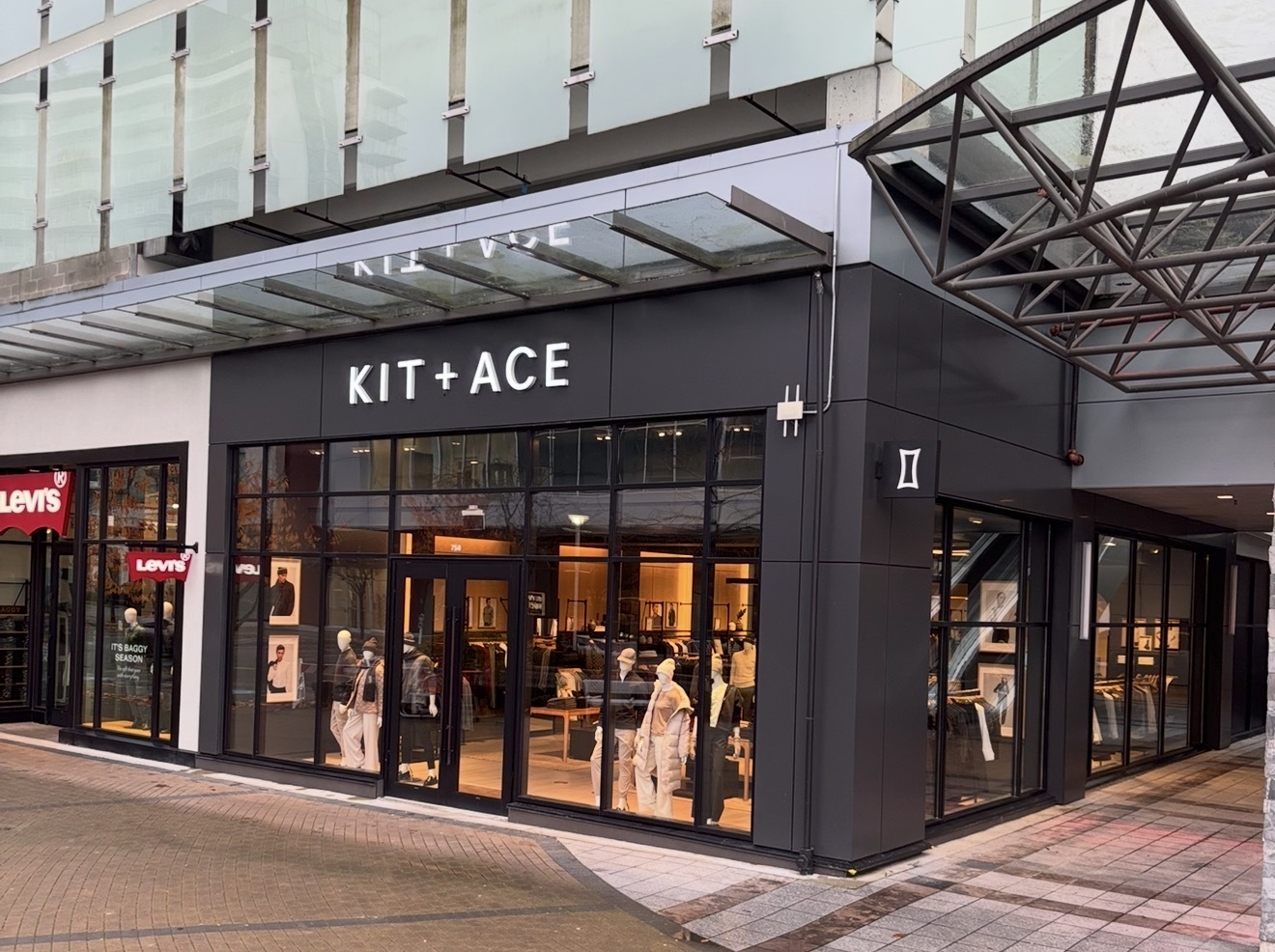
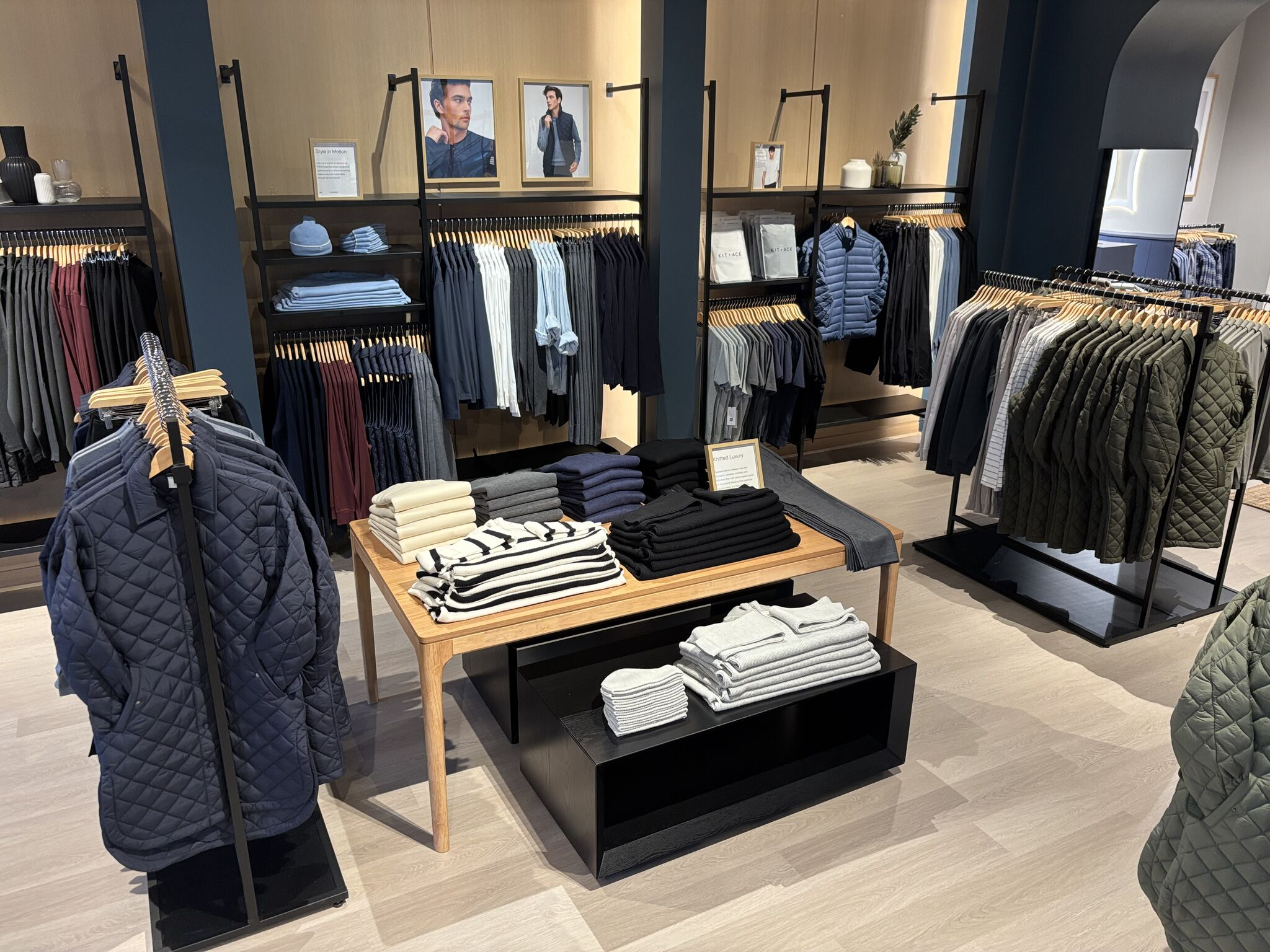
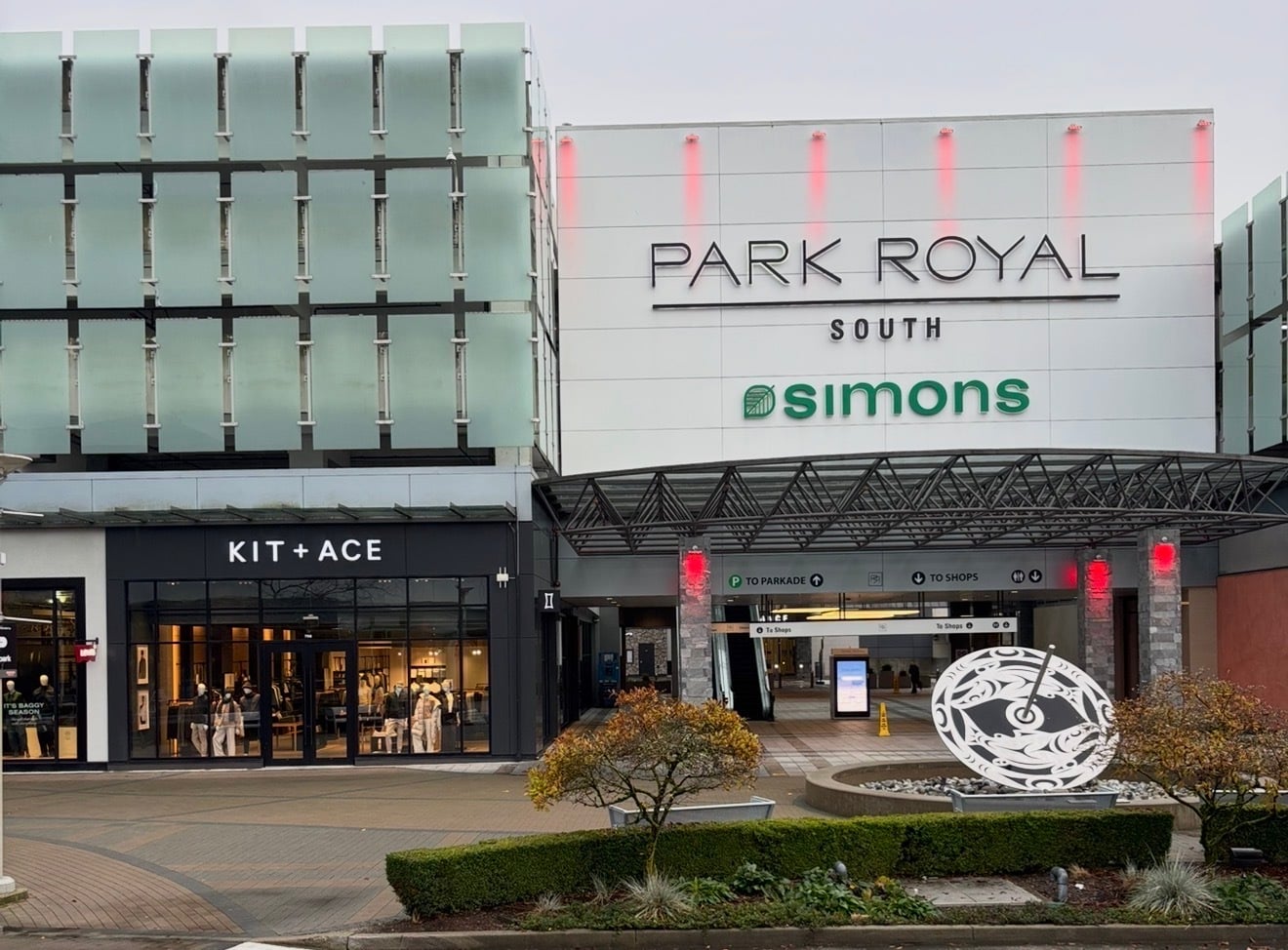
Kit and Ace at Park Royal in West Vancouver. Image: Kit and Ace
Canadian apparel retailer Kit and Ace continues its national retail resurgence with the opening of a new 3,500-square-foot location at Park Royal Shopping Centre in West Vancouver. The store, situated in a high-visibility corner unit within The Village section of the mall formerly occupied by Peloton, showcases the brand’s refined design aesthetic and marks another milestone in its growing Western Canadian presence.
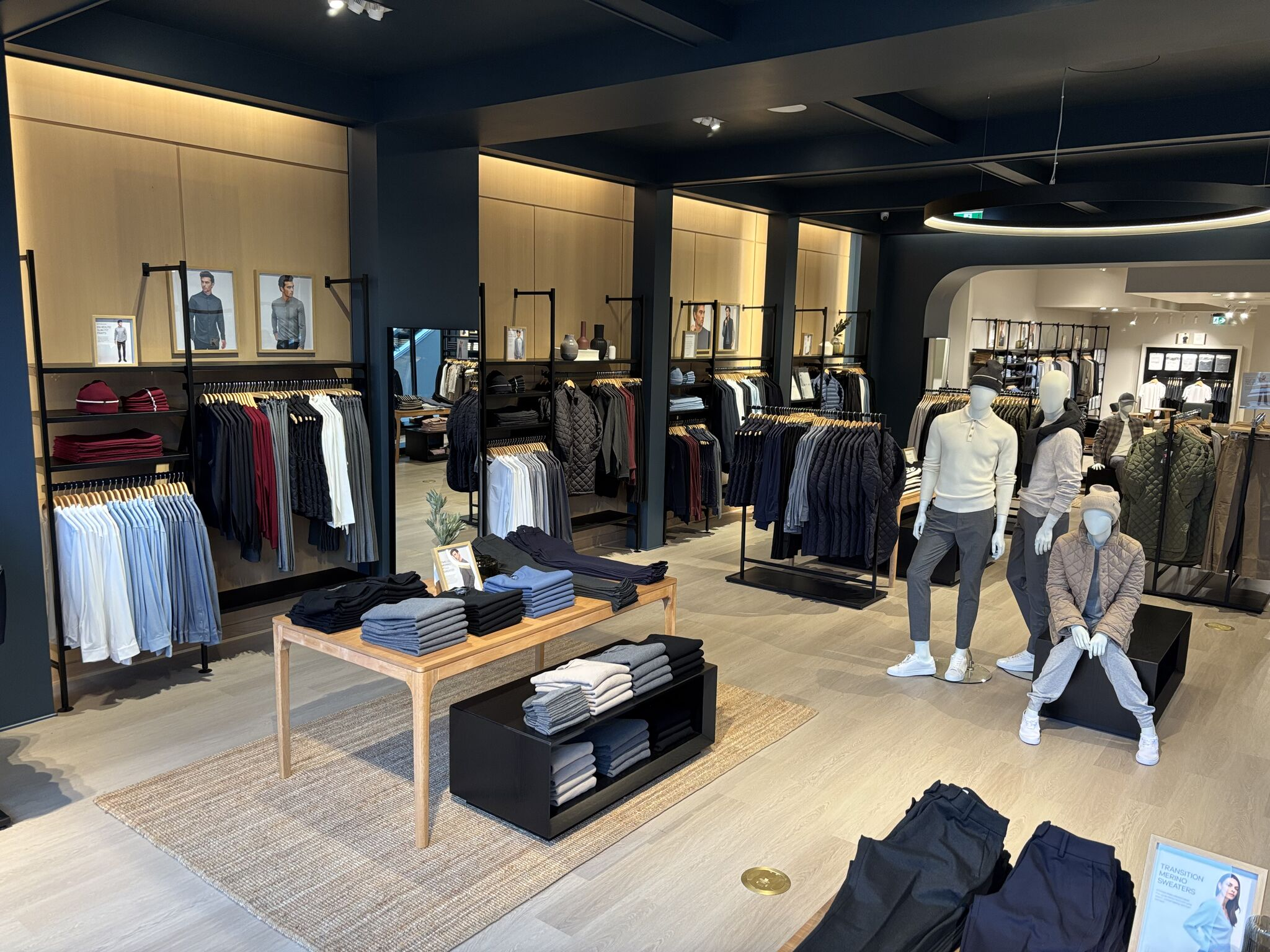
The new Kit and Ace Park Royal store embodies the brand’s contemporary and approachable aesthetic. The space features deep blue walls and ceilings, extensive glass frontage, and abundant natural light, creating an inviting, elevated retail environment. The location enjoys strong pedestrian visibility and aligns with the brand’s focus on community connection and lifestyle integration.
In a statement, David Lui, CEO of Kit and Ace, shared his enthusiasm for the brand’s latest opening:
“We’re thrilled to announce the opening of our newest KIT + ACE in Park Royal Shopping Centre in The Village — a community that celebrates connection, creativity, and modern living. This new space reflects our belief that when you feel your best, you live your best — with technical fashion designed for comfort, confidence, and versatility from day to night.”
David Lui
Lui expressed gratitude toward the team behind the new store, adding, “A heartfelt thank you to our incredible team for bringing this vision to life, and to our new neighbours — we can’t wait to welcome you in.”
Expansion Momentum Across Canada
The Park Royal opening follows a year of rapid growth for the brand, which has been steadily rebuilding its retail network under the ownership of Unity Brands Inc. Since being acquired in July 2023, Kit and Ace has undergone a transformation that blends strategic expansion, product innovation, and renewed consumer engagement.
Throughout 2025, Kit and Ace has opened new stores and pop-ups in several key markets across Canada. These include a long-term pop-up at The Well in downtown Toronto, the brand’s largest store to date at CF Toronto Eaton Centre, and new storefronts at Bayview Village in Toronto, CF Market Mall in Calgary, and Metropolis at Metrotown in Burnaby. Each location has been strategically chosen to strengthen the brand’s connection with urban professionals seeking comfort, quality, and functionality.
The Kit and Ace Park Royal location builds on that momentum, extending the brand’s reach within the Greater Vancouver Area while reinforcing its commitment to bricks-and-mortar retail as an experiential anchor for its direct-to-consumer strategy.
Kit and Ace at Park Royal in West Vancouver. Image: Kit and Ace
Expanding into the Home Space
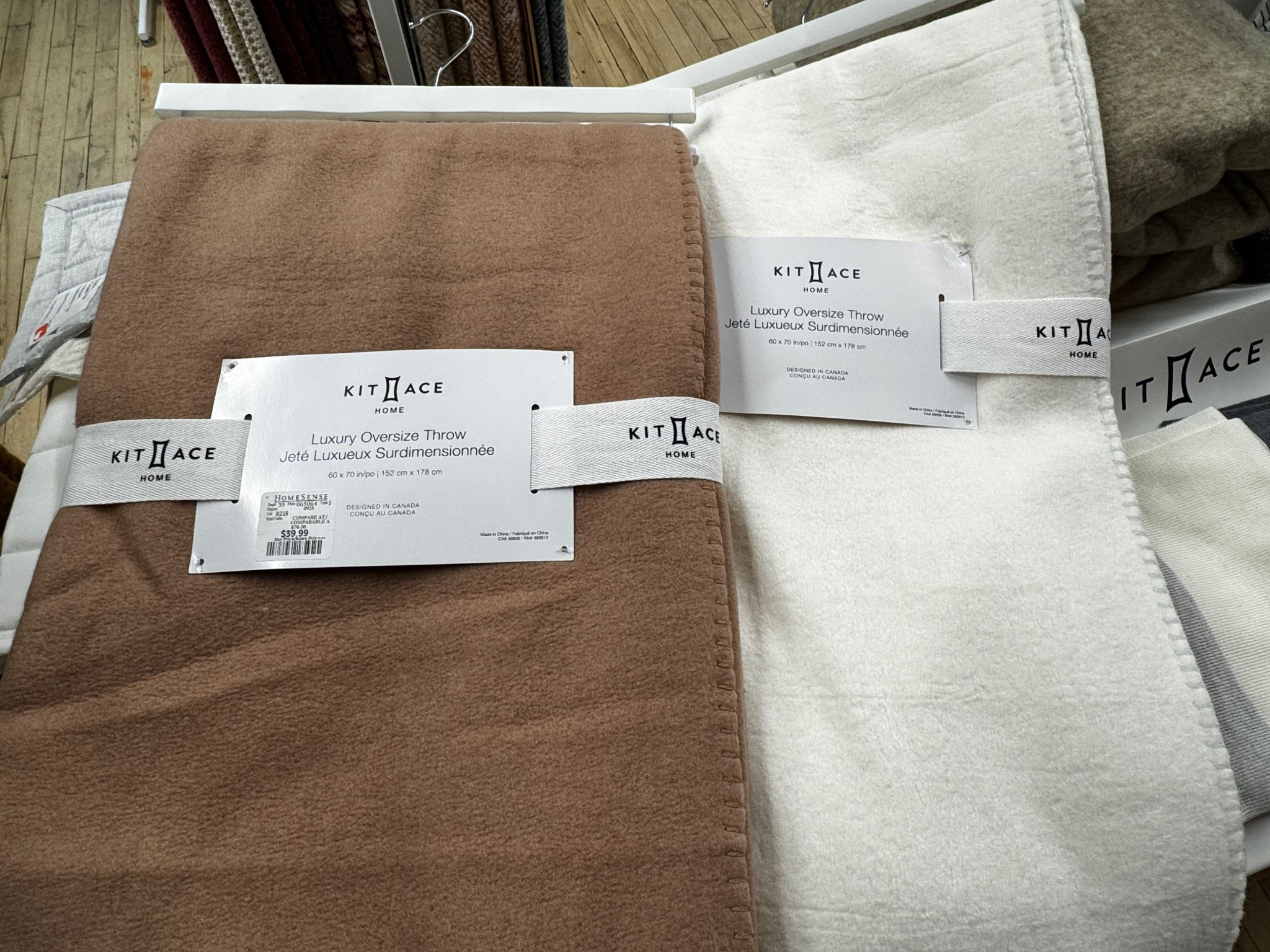
Beyond apparel, Kit and Ace is broadening its lifestyle reach with the introduction of a new home goods line, launched in partnership with TJX Canada, the parent company of Winners, Marshalls, and HomeSense. The collection, now available in over 300 stores across Canada, marks the brand’s official entry into the home category.
Announcing the initiative, David Lui said, “KIT + ACE has officially expanded into the home space in collaboration with TJX Canada – Winners, Marshalls, HomeSense, now available in over 300 stores across Canada.” Explaining the rationale behind the move, Lui added, “Why home? Because comfort doesn’t stop at what you wear. Our goal has always been to help people feel the difference — through softness, function, and thoughtful design.
Extending that same sensibility into the spaces where we rest and recharge was a natural next step.”
The new range features tactile, comfort-driven products including Cable Knit Throws and Bouclé Knit Throws, with more home innovations expected in future collections.
Lui described the collaboration with TJX as “a natural brand extension” that allows Kit and Ace to reach more Canadians in a new setting.
“Launching Home with TJX is a natural brand extension and allows us to share the KIT + ACE experience with even more Canadians — at home, in every season.”
Kit and Ace products in the HomeSense section of the Winners store at 110 Bloor St. W. in Toronto. Photo: David Lui
Leadership and Strategic Direction
Under the leadership of David Lui and Unity Brands founders Joe Mimran (Club Monaco, Joe Fresh) and Frank Rocchetti (Tilley, Loblaws), Kit and Ace has embraced a renewed focus on design excellence, customer experience, and sustainable growth.
The brand’s design and development functions have been centralized in Toronto, leveraging Mimran’s long-standing design expertise and infrastructure. This shift has helped modernize Kit and Ace’s product assortment while reinforcing its Canadian identity.
Lui’s leadership has also prioritized operational agility, allowing Kit and Ace to experiment with flexible retail formats such as short-term pop-ups that evolve into permanent spaces. This approach reflects a broader industry trend toward adaptive retail models that respond quickly to changing consumer habits and market conditions.
Kit and Ace at Park Royal in West Vancouver. Image: Kit and Ace
Founded in Vancouver in 2014 by Shannon Wilson, former lead designer at Lululemon Athletica, and her stepson J.J. Wilson, Kit and Ace initially gained attention for its proprietary “Technical Cashmere.” This machine-washable innovation married luxury with practicality and set the tone for the brand’s future direction.
After an ambitious global rollout that saw the company expand to over 60 stores worldwide, Kit and Ace faced challenges that led to a major restructuring. By 2017, the brand had refocused on its Canadian roots, closing international locations to concentrate on core markets and online growth.
Under new ownership since 2023, Kit and Ace has redefined its identity while preserving its foundational mission: to create smart, easy-to-love, and made-to-last clothing. The current product lineup emphasizes breathable, stretchable fabrics and clean silhouettes designed to transition seamlessly from work to leisure.
Kit and Ace at Park Royal in West Vancouver. Image: Kit and Ace