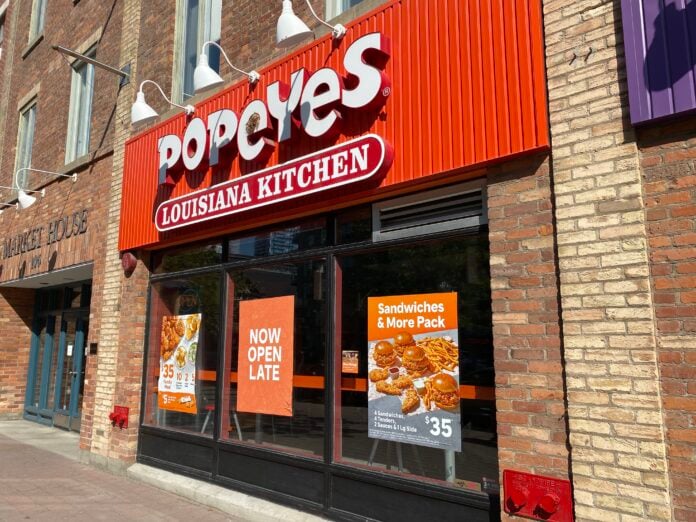
Peter Perdue has been appointed president of Popeyes, U.S. and Canada, succeeding Jeff Klein, who will be leaving the company. Perdue, a 12-year RBI veteran, previously served as chief operating officer of Burger King U.S. and Canada, where he played a key role in the brand’s Reclaim the Flame operations turnaround. His experience also includes roles in operations, franchising, and finance, including serving as regional vice president for Burger King in the Asia Pacific region.
Nicolas Henrich has been named chief operating officer of Burger King U.S. and Canada, succeeding Perdue. Henrich has held senior positions at RBI across franchising, development, finance, strategy, and supply chain.
Josh Kobza
“Popeyes has the best chicken in QSR, and Peter’s mandate is to unlock the share gains we know we are capable of,” said Josh Kobza, CEO of RBI. “Peter has led an impressive turnaround in the operations of our Burger King system, and I look forward to bringing his leadership to Popeyes. We also want to offer our thanks to Jeff Klein for his hard work over the last four years.”
“Nico’s proven leadership in our brand has earned the trust of our franchisees,” said Tom Curtis, president of Burger King U.S. and Canada. “He has been instrumental in strengthening our system and improving franchisee profitability. As COO, he will continue driving operational excellence as a lead contributor to our long-term growth.”
Restaurant Brands International Inc. is one of the world’s largest quick service restaurant companies, with more than $45 billion in annual system-wide sales and over 32,000 restaurants in more than 120 countries and territories. The company owns Tim Hortons, Burger King, Popeyes and Firehouse Subs.
Panda Pilates has opened a new studio in Mississauga, combining Reformer and Mat Pilates classes with an in-house wellness café designed to promote mindful movement, core strength, and overall well-being.
The studio features soft finishes, thoughtful lighting, and a signature floral feature wall, creating a calm environment for guests of all levels, including beginners. Classes focus on alignment, breath, and core activation to help participants move confidently and feel supported.
The studio is located at Mississauga Rd & Dundas St W.
Richa Bhushan
Founder Richa Bhushan said the studio was created to make movement “feel good, welcoming, and inspiring for everyone.” She added, “This is a space to build strength, reset, and take care of yourself in a way that feels beautiful and real.”
It also offers signature fusion classes that combine 30 minutes on the Reformer and 30 minutes on the Mat, providing a balanced session that strengthens, lengthens, and restores. After classes, guests can enjoy specialty coffee, matcha, protein shakes, ginger shots, and seasonal drinks at the studio’s café.
Photo: Panda Pilates
The studio has received support from community and wellness leaders, including Dr. Ruby Dhalla.
She said, “Panda Pilates welcomes every woman with compassion, encourages confidence, and creates a space where mind and body can heal and grow together. Having trained at different Pilates studios, it is refreshing to train at Panda Pilates where you are not just a number, but part of a family committed to your wellness, mental health, physical strength, and health care goals.”
Panda Pilates said it is offering 20 per cent off the first three months for new members through the Panda Pilates app with code WELCOME20.
Shoppers at three downtown Toronto No Frills stores can now use a new technology to make grocery shopping faster.
The pcogo pilot, introduced by Loblaw Companies Limited, allows customers to scan items as they shop through the PC Optimum app, see an estimated total in real time, and streamline the checkout process.
The pilot is available at Jordan’s No Frills (King & Shaw), Bo’s No Frills (Richmond & John), and Jesse’s No Frills (Mount Pleasant & Eglinton).
PC Optimum members with at least 30,000 lifetime points can log in to the app to track their purchases and loyalty points while shopping. The experience ends with a dedicated self-checkout lane, designed to reduce wait times.
“Our pcogo pilot is a direct response to that feedback, focusing on making checkout faster and giving customers more control over their purchases. It’s about delivering on our promise of a great store experience, from clean aisles to quick exits.”
Eligible members can access the pilot by checking into participating stores using a QR code or enabling location sharing on their phones, which ensures accurate product pricing and promotions.
Sensei Farms has launched its locally grown greenhouse produce across all 24 Fortinos supermarket locations in the Greater Toronto Area, marking the company’s official entry into the Canadian retail market.
The announcement was made recently by Sensei Farms in partnership with Loblaw Companies Ltd., Canada’s largest grocery retailer.
Kevin Climie
“At Fortinos, we take great pride in offering our customers the freshest, highest-quality produce — and partnering with Sensei Farms allows us to do just that,” said Kevin Climie, senior director, produce, floral and bulk foods at Fortinos Supermarkets. “Sensei’s innovative approach to greenhouse growing and their commitment to sustainability align perfectly with our focus on supporting local growers and delivering exceptional freshness year-round.”
Sensei Farms operates a large greenhouse in Leamington, Ont., where it uses advanced agricultural practices to grow produce for local communities.
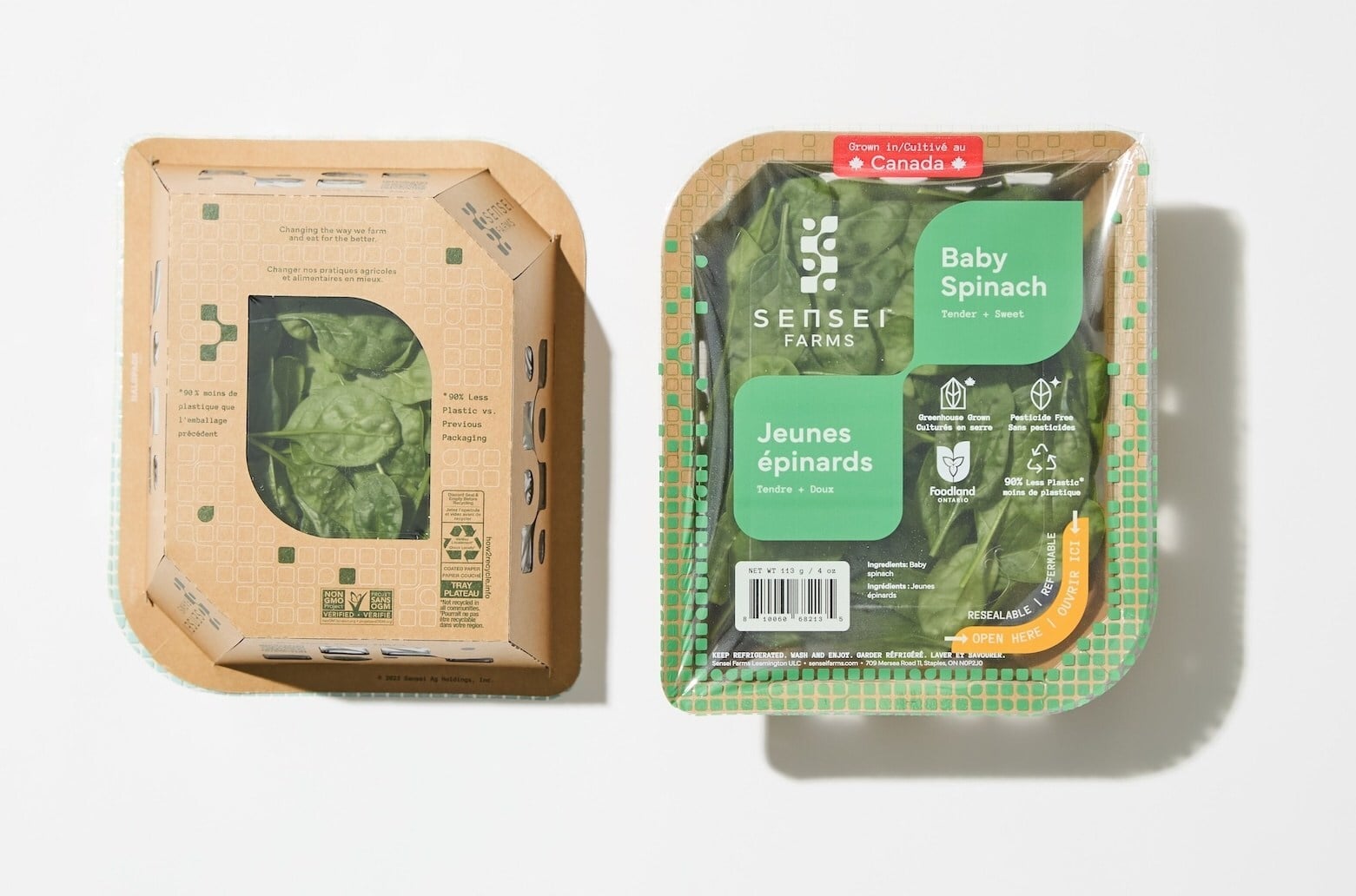
All Sensei Farms items are packaged in recyclable paperboard trays designed for 360-degree product visibility and feature a peel-and-reseal closure to preserve freshness and extend shelf life.
Sensei Farms operates farms in Ontario and on the Hawaiian Island of Lāna‘i, with a combined capacity to grow more than 15.5 million pounds of produce annually.
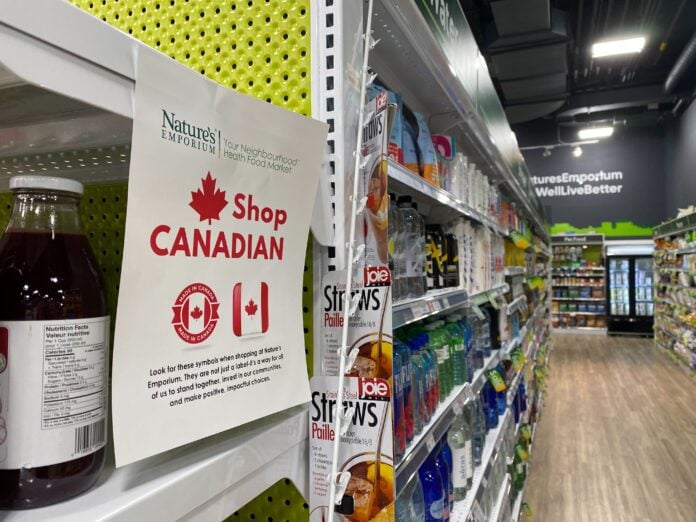
Shop Canadian/Made in Canada/shop local at a grocery store. Photo: Dustin Fuhs
Countless surveys have told us that Canadians want to buy Canadian. They say they want to support local farmers and processors, keep dollars at home, and protect jobs. But when standing in front of the grocery shelf, good intentions often gave way to convenience and price.
That contradiction, however, seems to be fading. And geopolitics has a lot to do with it.
According to the latest NIQ retail data, sales of “Made in Canada” food products are up more than 10 per cent year-over-year as of September 2025, while U.S.-made products are down nearly 9 per cent. For more than six months, this trend has persisted. In the world of consumer data, that’s not a blip — it’s a shift. Canadians aren’t just saying they want to buy Canadian; they’re actually doing it.
Turn on the television any night and there’s one recurring face — Donald Trump. Canadians, whether they follow U.S. politics closely or not, are constantly reminded of that message: America First.
And consciously or not, they’re responding. Every fiery clip about tariffs, immigration, or foreign competition reinforces the sense that Canada needs to rely on itself. Buying Canadian food has become a quiet, patriotic act — a statement of self-reliance in an uncertain world. When cross-border relations feel tense, the grocery store becomes a symbolic space of control. Each jar of Canadian jam, each bag of local flour, feels like a vote for stability and identity.
The “Buy Canadian” idea isn’t new. But for years, it lived mostly in our rhetoric. The North American market blurred origins, and few shoppers bothered to read the fine print. Since early 2025, though, both “Made in Canada” and “Product of Canada” categories have shown consistent growth, while U.S. imports have posted negative sales for seven straight months. In consumer economics, half a year of steady behaviour signals more than a mood swing — it’s habit formation. Canadians are showing signs of permanently incorporating “origin awareness” into their grocery choices.
This new grocery patriotism, however, also raises a difficult question: at what cost? When consumers focus narrowly on national origin, market competition can narrow too. If buying Canadian becomes more about sentiment than value, we risk paying more — sometimes for products that aren’t necessarily better or more sustainable. It’s worth asking whether this wave of food nationalism, however well-intentioned, has contributed to higher prices. The more insulated our food market becomes, the greater the risk of inefficiency and complacency.
Canada’s agri-food sector is remarkably diverse and resilient, but we can’t grow or process everything efficiently. Pretending otherwise is economically naïve. Self-reliance must not become self-restriction. If this patriotic shift is to benefit Canadians, it needs to be guided by our comparative advantages — not emotional reflexes. Our grain, seafood, livestock and pulse sectors are world-class. Our innovation in food safety, traceability, and clean processing is globally admired. That’s where national energy should go: doubling down on what we do best, not trying to replace what others already do well.
Instead of equating “Canadian” with “expensive,” our food economy should aim to make “Canadian” synonymous with quality, efficiency, and innovation. That’s the formula that will keep domestic production competitive while allowing consumers real choice at the shelf.
This is not a call to abandon local pride — far from it. A strong domestic food base is vital for resilience. But the challenge for Canada is to balance patriotic consumption with global pragmatism. We should buy Canadian when it makes sense, trade when it benefits us, and stay open to the world.
The surge in “Made in Canada” sales reflects more than emotion; it’s a response to uncertainty. The world is volatile. Supply chains are political. And consumers, consciously or not, are adapting. But if we let fear rather than strategy shape our choices, we risk turning a healthy preference into a costly habit.
After years of saying they wanted to buy Canadian, Canadians finally are. The question now is whether we can channel that patriotism into productive competitiveness — not protectionism.
Retail Insider is streamlining its Canadian retail news from around the web to include a handful of top news stories that can be viewed quickly during the day. Here are the top stories from the past 48 hours.
The days when online shopping was simply about clicking “add to cart” are long gone. Today’s shoppers expect more: an experience that feels personal, effortless, and rewarding from start to finish. Consumers, in particular, are redefining what great e-commerce looks like: they want convenience, but not at the expense of connection; speed, but with trust; technology, but with a human touch.
In a market where every second and every scroll matters, the most successful retailers are the ones who turn digital storefronts into experiences worth remembering. From intuitive design to mobile-first innovation and virtual try-on tools that bring products to life, here are the key strategies shaping exceptional e-commerce in 2025.
User-Friendly Website Design
Your website is your storefront. And just like a physical shop, it should invite people in, make them comfortable, and guide them effortlessly toward what they need. That starts with intuitive navigation, clean design, and fast load times. A cluttered homepage or confusing menu can drive potential buyers away before they even see your products.
Retailers set the bar high, using minimalist layouts and consistent branding that feel distinct yet globally relevant. Every button, image, and category has a purpose. Accessibility features, such as alt text for images and scalable fonts, also play a big role, ensuring inclusivity for all shoppers.
In short, a user-friendly website should feel invisible. The less a customer has to think about how to shop, the better their experience will be.
Personalized Shopping Experience
The age of one-size-fits-all shopping is long gone. Modern consumers expect personalization; from product recommendations based on browsing history to curated style edits that match their taste. When executed well, it creates a sense of being understood rather than targeted.
Artificial intelligence is making personalization more precise. Shopify’s built-in tools, for example, allow retailers to segment audiences and tailor content to their preferences, all without feeling intrusive. For smaller brands, even something as simple as “recommended for you” sections or personalized follow-up emails can make a difference. For example, an eyeglasses store might suggest frames that perfectly suit a shopper’s face shape, a skincare brand could recommend products tailored to their skin type, and a fashion retailer might curate outfits based on past purchases and individual style preferences, creating a truly personalized experience
Shoppers appreciate feeling recognized, especially in an increasingly digital world. A personalized touch can transform a single purchase into a lasting relationship.
Virtual Try-On: Revolutionizing Shopping
Few innovations have redefined online retail quite like virtual try-on tools. Once a novelty, they are now essential for categories like clothing, footwear, and eyewear, and even make-up. Consumers can visualize how a jacket fits, how lipstick complements their skin tone, or how a frame suits their face before buying.
For example, when browsing new eyeglasses collections, shoppers can try on frames virtually in real time using their webcam or smartphone camera. The experience bridges the gap between digital browsing and physical shopping, offering confidence before checkout.
Virtual try-on technology also reduces returns, since customers have a clearer sense of what they’re getting. As AR and AI continue to merge, expect these tools to become even more accurate and indispensable.
Optimized for Mobile
A growing share of e-commerce traffic comes from smartphones. If your website doesn’t perform flawlessly on mobile, you’re losing business.
An optimized mobile site goes beyond responsive design. It includes lightning-fast load speeds, thumb-friendly buttons, and one-click payment options like Apple Pay or Google Pay. The checkout process should be frictionless, no endless forms or hidden shipping fees.
Retailers that think “mobile-first” rather than “mobile-friendly” tend to see higher conversions. After all, people now browse, compare, and buy on the go. A strong mobile experience means being where your customers already are.
High-Quality Product Images and Descriptions
Visuals sell. In e-commerce, product photography is often your only chance to make an impression. Shoppers rely on high-resolution images that show products from every angle and in real-life settings. To keep up with current trends and ensure consistency across platforms, retailers can quickly and easily learn how to upscale images using AI, enhancing resolution and detail without time-consuming reshoots—perfect for mobile shopping, marketplaces, and product zoom. A clean white background shot is helpful, but lifestyle imagery brings context, how a coat looks in winter streets, how a sofa fits in a cozy living room, how a watch complements an outfit.
Equally important are product descriptions. They should go beyond listing materials and dimensions to explain benefits, usage, and care. Use language that informs and inspires rather than overwhelms. Retailers like Indigo and MEC excel at this balance, offering details that help shoppers make informed, confident decisions.
Fast and Flexible Shipping Options
In areas where geography can make logistics challenging, shipping speed and flexibility are crucial. Consumers now expect quick delivery, but they also value transparency. Offering a range of options lets customers choose based on their priorities.
Equally vital is clear communication. Automated email updates and real-time tracking build trust, while sustainable packaging initiatives can appeal to eco-conscious buyers. Some brands even partner with local couriers to shorten delivery times and reduce their carbon footprint.
The faster and smoother the delivery experience, the more likely customers will return.
Customer Support and Chatbots
Even the best-designed website can’t replace human reassurance. That’s where customer support comes in. Live chat features and AI-powered chatbots provide instant assistance without the need for long phone queues or email delays.
The key is balance. Automation should handle simple queries — like tracking orders or product availability, while real humans step in for more complex issues. This combination creates a 24/7 support system that feels efficient yet personal.
Retailers investing in conversational AI are already seeing results, with higher satisfaction scores and fewer abandoned carts. When customers feel heard, they stay loyal.
Social Proof and Influencer Marketing
Consumers trust people more than they trust ads. That’s why social proof, through reviews, testimonials, or influencer collaborations, remains one of the strongest conversion tools in e-commerce.
Encourage customers to leave honest feedback and showcase it prominently. Authentic, unfiltered reviews carry weight, especially when paired with high-quality visuals or real customer stories.
Influencer partnerships also shape perception, particularly among younger audiences. Brands that align with micro-influencers often see stronger engagement than those chasing celebrity endorsements. The key is authenticity: the partnership should feel like a genuine fit, not a transaction.
Conclusion
Creating the best e-commerce experience is about understanding that shopping is no longer a simple exchange of goods. It’s an interaction built on trust, design, and personalization. From mobile optimization to meaningful customer support, every detail influences how people perceive your brand.
Today’s market continues to evolve rapidly, with technology enabling a richer, more human online experience. Whether you’re a growing retailer or an established brand, investing in thoughtful design and innovative tools will keep you ahead of the curve and keep your customers coming back.
If you’re familiar with AI chatbots like ChatGPT, you probably know that they’re not always accurate. However, it doesn’t stop people from using them for quick answers, research, and recommendations. There are actually around800 million weekly active users, a number that’s doubled this year alone.
Largely, these tools get stuff right. But while convenient, AI can state inaccuracies and worse, it can occasionally suggest unsafe or fraudulent links. It happens more often when you ask for financial website logins or crypto platforms. Our over-reliance on tools like these means we’re becoming more vulnerable and trusting of their outputs. Here’s why we shouldn’t be – and how we can spot dangerous information.
Do We Trust AI Too Much?
Maybe it’s the artificial human element. Perhaps it’s the way things are phrased. The truth is, many people trust AI responses much more than traditional search engines. And herein lies the problem.
We trust the responses because they seem authoritative. ChatGPT and its “colleagues” are confident. They state their “truths” with ease and grace. No doubts to be had. Scammers exploit this. They create fake sites that are convincing to AI bots. Whether it’s crypto, finance, or streaming. AI can’t always tell the difference, which means it can’t filter malicious content perfectly.
Want to avoid this? Cybersecurity starts with critical awareness. Not blind trust.
How Do Malicious Links Sneak Into AI Responses?
Firstly, the links are created with the intention of being so real that AI thinks they are. There are several ways they end up with results.
Poorly verified data sources can slip through content filters. Manipulated search or web-scraping results can put deceptive URLs disguised as legitimate references. Sophisticated phishing domains often mimic real brands so convincingly that even careful users may not spot the difference.
Hackers can also “poison” the datasets that models are trained on. They can introduce patterns that the model replicates. The AI responses might include dangerous links.
Though these links are not intentional on the part of ChatGPT, clicking them can expose you to data theft, malware, or phishing attacks. LLMs also pull from the internet. It means attackers can sneak their malicious links into the websites and data that is indexed.
The solution requires smarter, AI-aware online protection that will detect and block malicious links before they reach the screen.
How to Spot Dangerous Links in AI Responses?
Staying alert is a first step in spotting a dangerous link. Before you click anything, hover over the link to preview the full URL. Look for misspellings, added characters, or strange extensions.
Next, always favor HTTPS over HTTP. A secure domain will encrypt your connection. You can always Google the site or brand directly instead of trusting an embedded link, too.
Dangerous links often use pressurizing text like “limited time offer” or “act now” so that you fall for it. If something feels off, it probably is. Never share login details or personal data through unverified sites.
Even the most careful users can be caught off guard. An extra layer of defense can help. That’s where VPNs come in.
How VPNs Add a Layer of Protection
You can protect yourself further when using AI chatbots by using a VPN. A Virtual Private Network (VPN) strengthens your online security. VPN encrypts your internet traffic and masks your IP address, making it much harder for cybercriminals to intercept or trace your activity. Many leading VPNs now include advanced threat protection. These tools go beyond simple encryption.
If you accidentally click on a dangerous link in an AI-generated response, this extra layer can stop the threat before it reaches your device. Using what’s widely considered the best VPN in Canada means you’ve got the best protection. You can search, research, and interact with AI tools knowing you’re protected against the hidden risks of malicious or fraudulent links.
Safe Browsing Habits for Everyday Users
Even with a strong VPN, there are habits that all internet users should practice every time they log on:
Keep browsers and extensions updated. If possible, set them to update automatically. That way, you know you’ve got the most recent iteration of everything.
Don’t save your payment details on unknown sites. If you’re going to store your card details somewhere, make sure it’s a trustworthy site with a good reputation.
Always use multi-factor authentication. If a cybercriminal were to intercept your logon on payment details, without access to your authentication via mobile (a text message code or email code, for example), then they won’t be able to do anything.
Regularly clear your cache and cookies. You’ll keep things ‘clean’ and will know that your data isn’t stored anywhere it shouldn’t be stored.
Let’s not forget that AI is an incredible productivity tool. But even so, it still requires digital literacy and good judgment when you’re using it.
Key Takeaways
ChatGPT and other AI tools are powerful. But they’re not infallible. Stay vigilant. Check links, use trusted tools, and add layers of protection with a VPN. Being cautious and sensible means you can use these AI tools for all their benefits with less of a risk.
The 2025 holiday season tested every logistics network in ways that revealed fundamental vulnerabilities. Record-breaking online sales created a tsunami of returns that exposed weaknesses in fulfillment systems worldwide. Inaccurate inventory tracking created confusion about what was actually in warehouses. Overwhelmed facilities shipped wrong items or mislabeled packages.
Many retailers discovered how fragile their operations actually were when stress tested by peak volume. That stress revealed problems that normal operations hide effectively. Analysis of what went wrong and what worked reveals how supply-chain leaders are now building resilience into systems that broke under holiday pressure. Understanding Holiday 2025 returns fulfillment chaos means learning from the breakdowns so future seasons don’t repeat those mistakes.
The holiday season always tests fulfillment systems, but 2025 broke systems in unexpected ways. Traditional peak season challenges got magnified by factors nobody fully anticipated. That magnification revealed fundamental architectural problems in systems that seemed adequate during normal operations. Retailers that survived 2025 are now redesigning operations to prevent repeat failures.
What happened during the 2025 holiday season will reshape how retailers approach fulfillment planning for years to come. The lessons from Holiday 2025 returns fulfillment failures are being applied immediately to rebuild capacity and resilience.
When Speed Outpaced Accuracy
Peak-season demand pushed fulfillment centers beyond capacity in ways that forced impossible choices. Rush to meet delivery deadlines meant warehouse staff worked in conditions that produced errors. Mis-shipments where wrong items went to customers created returns floods. Mislabeled packages confused tracking systems and created delivery delays. Higher-than-normal return rates traced directly to fulfillment errors during peak season. Those quality failures created cascading problems beyond initial errors.
The rush created pressure that forced compromises on accuracy standards. Staff working excessive hours made mistakes they wouldn’t normally make. Temporary workers unfamiliar with systems caused errors through inexperience. Worn equipment broke down under constant use without maintenance time. All those factors combined created perfect storm for errors during peak season. The errors created returns that overwhelmed return processing systems designed for normal return volumes.
System strain revealed architectural problems in fulfillment networks designed for pre-2025 volume levels. Networks that handled 2024 volumes comfortably broke under 2025 demand. That volume growth outpaced infrastructure expansion. Legacy systems couldn’t handle real-time data flow from peak season volume. Cloud systems struggled with computation demands. Those infrastructure limitations created bottlenecks that manifested as slow processing and high error rates.
Communication Gaps Across the Chain
Suppliers, carriers, and retailers often worked in silos without visibility into what others were doing. When suppliers shipped inventory to distribution centers, retailers didn’t know real-time status. When carriers picked up returns, systems didn’t always update inventory accurately. When fulfillment centers processed items, suppliers couldn’t see demand patterns to adjust production. That siloed operation meant reactive responses rather than proactive coordination. Reactive responses to problems always arrive too late to prevent damage.
Lack of visibility made return handling reactive instead of responsive. Returns arrived at warehouses without warning of volume spikes. Processing facilities couldn’t prepare because they didn’t know returns were coming. Routing decisions happened after items arrived rather than being planned proactively. That reactive approach to returns management created bottlenecks and delays. Information flowing faster between parties would have enabled predictive positioning of resources.
Integration failures between systems created data inconsistencies that frustrated operations. Inventory counts didn’t match between systems. Returns authorized in one system weren’t recognized in warehouse systems. Payment processed in one system didn’t update vendor portals correctly. Those integration gaps forced manual reconciliation that consumed labor and created errors. Retailers are now investing in system integration that eliminates those manual workarounds.
Lessons in Flexibility and Forecasting
Retailers now invest heavily in better forecasting that predicts demand more accurately. Machine learning models analyzing historical patterns, social media trends, and economic indicators produce better predictions. Better predictions enable capacity planning that builds in buffers. Buffers allow handling demand spikes without breaking systems. That investment in forecasting infrastructure prevents repeating 2025 supply shocks.
Diversified partnerships reduce dependency on any single supplier or carrier. Retailers that depended on one carrier faced problems when that carrier broke down. Those with multiple carriers maintained options when one failed. Suppliers with multiple vendors could shift volume when one bottlenecked. That diversification provides resilience through redundancy. Retailers are now explicitly building redundancy into supply chain architecture.
AI-driven route optimization reduces pressure on any single facility by distributing volume intelligently. Rather than all shipments flowing through central hubs, AI routes around congestion. Dynamic routing adapts as conditions change. That intelligent distribution prevents bottlenecks from forming. Retailers implementing this technology distribute holiday volume more efficiently preventing the breakdown that occurred in 2025.
Conclusion
The Holiday 2025 returns fulfillment chaos became wake-up call revealing system vulnerabilities. Companies that learn from those breakdowns will emerge stronger with smarter infrastructure. That learning translates into specific improvements that prevent repeating 2025 failures. Retailers making those investments now are building resilience that will differentiate them going forward.
Fulfillment systems revealed during crisis perform exactly as designed under normal conditions. That design capacity turned out to be insufficient for 2025 volumes. That realization is driving infrastructure expansion happening right now. Retailers that expand capacity before 2026 holiday season will handle volume smoothly. Those that don’t will face similar breakdowns.
The infrastructure investments being made throughout 2025 in response to Holiday 2025 returns fulfillment lessons will reshape retail logistics for years. Winners from 2026 forward will be retailers that built resilience while losers will be those that didn’t learn from 2025 failures. That competitive sorting based on learning and investment separates forward-thinking retailers from reactive ones.
At Retail Insider, we speak with retailers across Canada every week. One theme keeps coming up in those chats: people still decide to step inside a shop because of what they see and feel on the street and at the door. Screens help, no doubt. But the curb, the glass, the floor, the shelves, the windows and the checkout still do heavy lifting.
Think about a store you passed last week that pulled you in. Odds are it wasn’t a social post that did it. It was a clean window cling that made a promise. A floor marker that hinted at a path. A small sticker on a display that made you pause. That is the work of in-store branding, and it shows up at eye level, hand level, and even underfoot.
Well-made stickers, decals, and print pieces give you control over those small moments. They set expectations before someone crosses the threshold, guide the path once inside, and keep momentum right up to the tap at the terminal. The rest of this piece breaks down what to use, where it pays off, and how to execute without clutter or confusion.
As a practical throughline, we will keep coming back to three outcomes: pull more people in, help them spend more time with the right products, and make it easier for them to buy. That is the whole point.
Define the assets you’ll want to consider
Custom stickers and decals
This bucket covers vinyl window graphics, door hours stickers, die-cut brand marks for fixtures, floor arrows and footprints, price dots, and labels for bundles or seasonal sets. The common thread: they are cut to your shape, printed to your palette, and sized for the surface you own. Good vinyl holds colour under bright light, removes cleanly, and includes finishes that add grip underfoot where needed.
The win is precision. You are not stuck with a one-size template. You can scale a logo for a pillar, add slip-rated laminate for an aisle, or run a batch of small stickers for a pop-up table without changing your broader system.
Other print and in-store materials
Shelf talkers, danglers, small easel cards, table tents, counter mats, banners, postcards for takeaways, bag stuffers, and simple brochures all sit in this family. They reinforce what your decals start and give a customer a reason to touch, scan, or take something with them.
Why “custom” matters rather than generic
Generic signage blends into the background. Custom assets match your colours, use your voice, and speak to a local audience. A Toronto flagship may need bilingual pricing details. A store near a campus may want a student callout. You can tune message length, font size, and placement for the distance and light in each spot. That level of control is what sticks in memory and separates your space from the shop next door.
Before we get into placement, a quick note on production partners. If you do not have a go-to source yet, a one-stop option like Jukebox can simplify the process for stickers and related print pieces. As the Jukebox team put it, “Our focus is simple – consistent print quality, reliable timelines, and materials that look good and last, so retailers can roll out store visuals with confidence and keep the experience consistent across locations.”
That mindset frees store teams to focus on message and placement, not firefighting.
Attracting customers through visuals and physical cues
Window and storefront decals as attention grabbers
Street-facing glass is the first handshake. High-contrast window clings with short copy do the most work here. Keep it to a single offer or a single theme per pane. If you run a narrow frontage, stack the message vertically and anchor it at average eye height. Stores with deep awnings or tinted glass should use bolder colour and thicker stroke weights to stay legible from the sidewalk.
A simple exercise helps: stand 10 steps back at midday and again at dusk. If your message fades at either time, bump thickness, shorten the line, or move the piece.
Floor graphics and directional decals to guide visitors
Once inside, floor decals act like on-the-ground wayfinding. Arrows to new arrivals, footprints to a tasting table, numbers for a three-step demo, or a strip that defines a queue. Use matte finishes to cut glare, keep edges rounded to avoid lift, and set copy large enough to read while walking. Good floor graphics pull traffic to zones that need it and reduce crowding where you don’t.
In-store promotional stickers and print pieces that invite quick stops
Small elements near the hand are underrated. Think price dots with a callout, a die-cut badge on a shelf clip that says New this week, or a peel-and-keep sticker that matches your season. These are the prompts that turn a glance into a reach. Keep copy to five words or fewer, stick to one verb, and anchor the piece close to the product so the brain connects the dots in one step.
All of this sets up the next layer: keeping people involved once they are inside and curious.
From simply being seen to being experienced
Branding consistency across surfaces
Colour drift and mixed fonts kill momentum. Pick one palette and one type pair and carry it through windows, floors, shelves, and checkout. If your brand uses a secondary accent, reserve it for offers and time-bound notices so the eye learns what deserves extra attention. Align tone as well. If your voice is plain spoken, keep it that way on every sticker and card.
Interactive and tactile elements
Give people something to do. A QR on a sticker that loads a 20 second demo. A peelable badge that kids can take. A shelf talker with a texture swatch for a new fabric. A small counter mat with a checklist for a makeup routine. These simple touches add dwell time and help staff start conversations. If you add QR, test it from two steps away and on a mid-range phone to avoid scan misses.
Seasonal or campaign updates made simple
Removable vinyl and short-run print help store teams keep pace with seasons and promos without reworking fixtures. Build a small calendar for swaps and use repeatable sizes so reprints drop into the same spots. That keeps costs steady and speeds install because staff already know where each piece belongs.
Creating micro-moments of engagement
Think small and specific: a sticker on a cooler that says Try the new flavour now, a decal on the floor that marks a photo spot for a capsule launch, or a shelf card that says Press here to feel the lining. These touches are easy to plan and often lead to product in hand, which is where conversion starts to climb.
With the experience dialed in, the next step is making sure all those moments lead to a clear choice and a clean path to purchase.
How these materials help turn browsers into buyers
Strategic placement at decision points
Decision points happen at the shelf, in front of a mirror, beside a demo, and at checkout. Use small, high-contrast stickers and neat shelf talkers at eye and hand level to reinforce the next step: Add to cart, Pick your size, Scan for fit tips, or Ask us for a sample. Keep one clear message per location. Too many layers slow people down.
Reinforcing offers and urgency
Limited time works, but it needs discipline. Time-bound stickers should carry dates or a clear window, and they should come down the day after. Colour-code them so staff can sweep and remove quickly. If you use price dots, align hues with discount tiers so regular shoppers learn the system.
Simplifying choice and reducing friction
Confusion kills conversion. Use bold, consistent signage to sort by benefit, use case, or size. If you sell bundles, add a simple checklist on a small card to show what is inside. For categories with many variants, run a short how-to card with three steps. Make it readable from arm’s length and keep the verbs plain.
Supporting pickup and loyalty
Your physical assets can bridge to your app or CRM without stealing focus. A small QR near checkout that enrolls people in a points program. A sticker on the door that calls out pickup hours. A card that explains returns. Tie each prompt to one action so it does not compete with the sale you have right now.
To help plan where and how to deploy, the following table maps common assets to goals, best placement, and quick notes on install.
Store Asset Planner
Asset type
Primary goal
Best placement
Typical install time
Notes
Window cling
Pull foot traffic
Street-facing glass at eye level
10 to 20 minutes per pane
High contrast, short copy, test legibility at 10 steps
Colour-code by offer level and date for easy sweeps
Counter tent or easel card
Reinforce decision
Demo tables, fitting rooms, checkout
2 to 3 minutes each
Use simple icons and one call to action
Takeaway postcard
Continue the story
Bag stuffer at checkout
Batch drop
Link to how-to pages, new arrivals, or events
Why this matters: teams often buy materials before planning placement. Flipping the order saves budget and speeds execution. Start with goals and zones, then match the format. With the plan set, you can brief staff, stage materials, and roll out in a morning. Now, let’s turn that plan into steps your team can follow without guesswork.
How to plan and execute effective in-store branding with custom stickers and print
Audit your space and touchpoints
Walk the store as a customer would. From the sidewalk to checkout, list every pause point. Snap photos and mark glare, sightlines, and traffic paths. Note fixtures that move often, since those need removable assets.
Define your message and visual look
Write the story first. Is it a new line, seasonal drop, or service upgrade. Pick two or three key lines and stick with them. Set your colour and type choices once and apply them across all pieces. If your team shares a file kit, include sizes and clear margins so nothing gets cramped on press.
Select materials and formats
Map each message to a format. Window claim goes on a cling, a new path needs floor arrows, a bundle needs a shelf talker and a price dot, a tasting needs a counter mat. Choose finishes based on light, traffic, and cleaning routines. If floors get mopped nightly, pick a laminate that can handle it.
Placement strategy and messaging
Create a simple map of your store and drop pins where each piece will live. Add the exact copy to each pin so staff know what goes where. Keep copy short and specific. Test-read everything from the distance it will be seen.
Installation and upkeep
Clean surfaces with the right solution, avoid lint, and apply slow. Train staff on removal so you do not damage paint or lift fibers. Set a weekly sweep for tears, edges, and outdated offers. Fresh always looks better than more.
Measure, learn, repeat
Pick a few easy metrics: door counts, zone dwell time, unit sales on featured items, attachment rate on bundles, and loyalty sign-ups. Track them for two weeks before and two weeks after a rollout. Share a one-page readout with photos so the team sees what moved the needle.
With the plan on paper, it helps to flag a few traps that can trip up even seasoned teams.
Risks and mistakes to avoid when rolling out in-store branding
Too many messages make the store feel noisy. Limit each zone to one main idea. Poor material choice leads to peeling corners or slick floors. Match finish to use and confirm ratings where needed. Inconsistent colours and fonts break trust. Keep a brand kit and enforce it across vendors. Ignoring traffic flow wastes good messages. Place prompts where eyes and hands already go. Letting promos linger past their date makes a store feel sleepy. Build a takedown habit and stick to it. Skipping measurement hides the real wins. Even a simple before and after door count tied to a window change tells you a lot.
Address those points, and your stickers, clings, and cards will work like a quiet team that never takes a day off.
Bringing it all together
The goal is straightforward: more visitors stop, more shoppers spend time where it matters, and more baskets include the items you planned for. Custom stickers, decals, and print pieces serve that plan because they show up right where choices are made. Start at the glass with a single clear promise. Guide the path with floor and shelf prompts. Close the loop with simple messages at decision points. Use one set of colours and fonts so the whole space reads as one idea.
Pick one zone this week and run a small test. Put a tight message on the window, a short path on the floor, and a single callout at the shelf. Track the numbers for two weeks and look at the photos side by side. If the move works, roll it across the rest of your store. If not, change the copy or the placement, not everything at once.
Retailers across Canada are doing exactly that, and the payoff shows up in foot traffic, dwell time, and conversion. The materials are simple. The impact is real. The store does the talking.