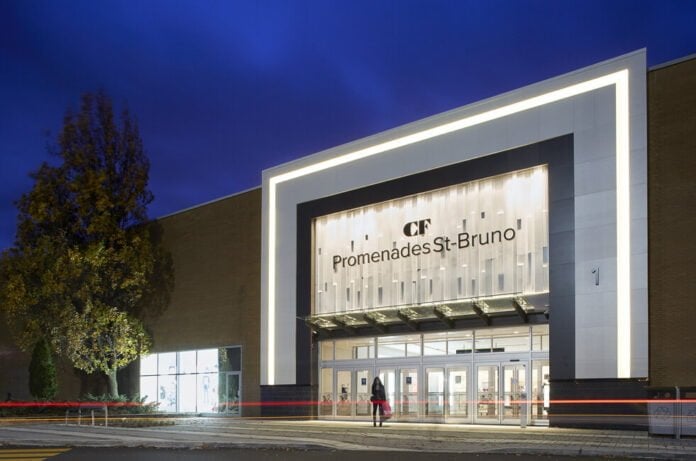
Primaris Real Estate Investment Trust announced late Monday that it has agreed to acquire a 100% interest in Promenades St-Bruno in Montreal, Quebec from Cadillac Fairview for $565 million, to be satisfied by a combination of cash and equity, subject to certain conditions. The acquisition further builds Primaris’ track record of successfully acquiring market leading shopping centres in growing Canadian markets, said the company in a news release.
Patrick Sullivan
“Promenades St-Bruno has all the characteristics which Primaris targets in acquisitions: over $271 million in annual sales, $917 in sales per square foot, and 154 acres of land in Canada’s second largest and growing market of Montreal, adjacent to mass transit,” said Patrick Sullivan, President and Chief Operating Officer. “There is significant NOI growth potential including leasing up vacant and temporarily tenanted space, and optimizing former department store space.”
Primaris is Canada’s only enclosed shopping centre focused REIT, with ownership interests in leading enclosed shopping centres located in growing Canadian markets. The proforma portfolio totals 15.6 million square feet, valued at approximately $5.4 billion at Primaris’ share.
According to Primaris, these are Promenades St-Bruno Highlights:
Leading regional enclosed shopping centre in Canada’s second largest population centre, Montreal, Quebec;
Located in Montreal’s affluent south shore, just 25 minutes from downtown Montreal and easily accessible via the Jacques Cartier and Victoria bridges converging to Highway 116;
Adjacent to Saint Bruno Exo train station, a catalyst for higher-density mixed-use development;
1,096,200 square foot mall located on 154 acres of land, for an approximate 11% site coverage;
$917 per square foot same store sales productivity and total annual CRU sales volume of $271 million;
74.8% long-term in-place occupancy, 81.4% in-place occupancy, 83.3% committed occupancy (excluding the vacant HBC space in-place occupancy is 92.4%);
Weighted average lease term of 4 years;
Approximately $227 million in capital upgrades and redevelopment projects completed since 2015 including investments into common areas, repurposing of the former Sears box, and the completion of a two-level flagship Simons store;
BOMA BEST Gold Certified;
Large format tenants include Simons, Winners, Sports Experts, Marks; and
Notable CRU tenants include Aritzia, Sephora, Lululemon, Nespresso, Uniqlo, and JD Sports.
Simons
Rags Davloor
Rags Davloor, Chief Financial Officer, said: “High quality acquisitions combined with industry leading credit metrics demonstrate the strategic advantages of Primaris’ differentiated financial model. Our commitment to our extremely well capitalized balance sheet is key to Primaris’ profile as a highly credible transaction counterparty.”
Similar to the Trust’s existing portfolio, the Acquisition offers NOI growth potential over the next few years, as operating and financial performance normalizes, and as Primaris’ full-service management platform integrates and operates the property, said the REIT.
Opportunities to increase NOI include:
Redemise and lease approximately 130,600 square feet of former anchor space to strong covenant, high-quality national retailers;
Lease approximately 73,000 square feet of temporarily tenanted or vacant CRU space to strong tenants at market rents; and
Leverage Primaris’ platform to deploy its cost management strategy.
Alex Avery
“Primaris’ high quality acquisitions exceed $1.5 billion in 2025 and $3.3 billion since 2021. All of these acquisitions offer strong NOI growth potential and significant excess land,” said Alex Avery, Chief Executive Officer. “We have materially expanded, and enhanced the overall quality of our enclosed shopping centre portfolio since 2021, driving the portfolio’s proforma annual same store sales productivity to $791 per square foot. The concurrent equity offering increases Primaris’ public float and enhances the trading liquidity of Primaris’ units, to the benefit of all unitholders.”
In June, Toronto-based Primaris announced the acquisition of CF Lime Ridge Mall in Hamilton, Ontario, from an entity managed by Cadillac Fairview, the real estate arm of the Ontario Teachers’ Pension Plan. The $416 million deal was comprised of a combination of cash and equity.
The Canadian Federation of Independent Business (CFIB) is raising concerns about the impact of today’s strike action by Alberta teachers and province-wide school closures on small businesses throughout the province.
Kayode Southwood
“Small businesses are already grappling with economic uncertainty and staffing shortages. Today’s announcement further adds to their challenges,” said Kayode Southwood, CFIB’s Senior Policy Analyst for Alberta. “When employees are forced to stay home to care for children during work hours, productivity drops, and in many cases, so do sales.”
Experience in other provinces highlights the impact of such labour disruptions. When Saskatchewan’s teachers went on strike in 2024, one-third (33%) of small businesses reported a negative impact on their operations. Of the businesses impacted, 74 per cent said they experienced staffing challenges, while 24 per cent experienced lost sales and revenue, explained the CFIB.
According to CFIB’s Business Barometer®, Alberta small business confidence is below optimistic, with insufficient demand and a shortage of skilled labour cited as the greatest limitations to sales and growth.
“Further disruption is the last thing small businesses need right now”, added Southwood. “We urge the Alberta government to work toward a swift resolution to minimize harm to entrepreneurs, their employees, and the communities they serve.”
The CFIB is Canada’s largest association of small and medium-sized businesses with 100,000 members (10,000 in Alberta) across every industry and region.
Image of a French language-branded 'Edo Japon' location. Image: Edo Japan
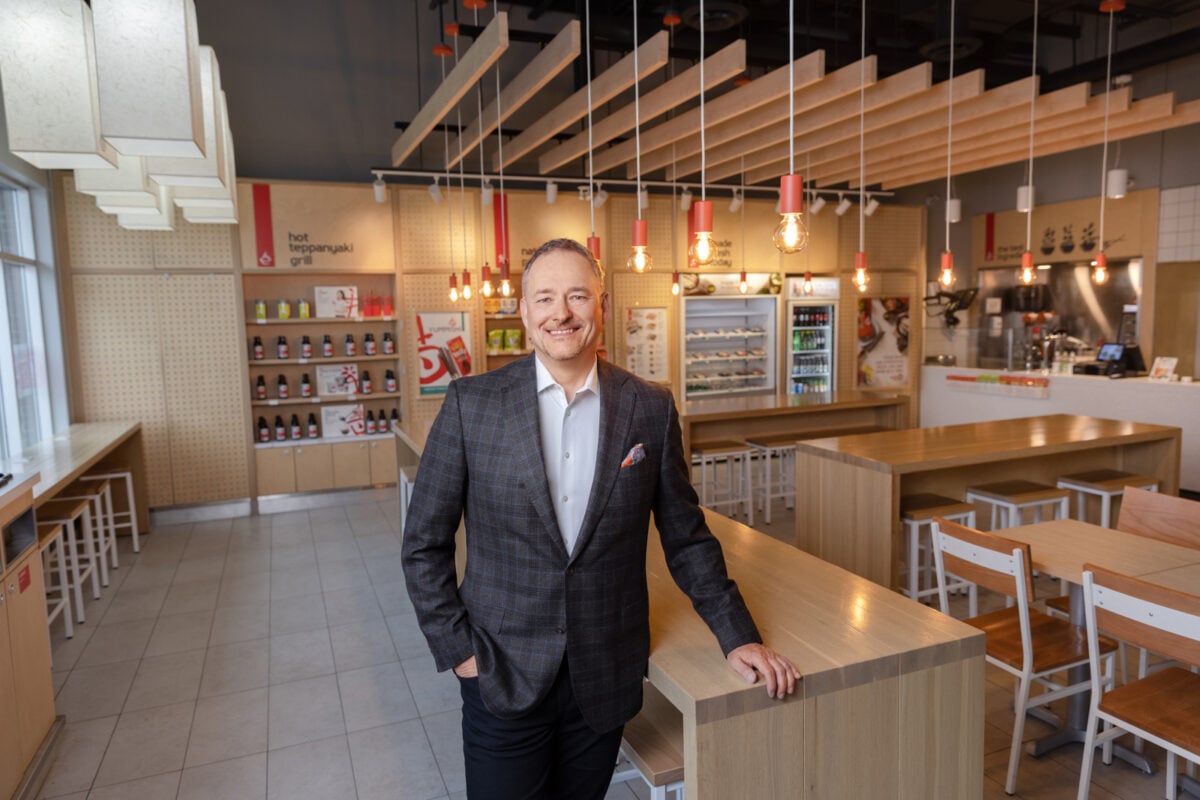
Edo Japan’s national growth story is unfolding across Canada’s retail landscape, with the Calgary-founded quick-service brand accelerating expansion into new provinces and urban markets. The company, known for its approachable Japanese teppan-style meals, plans to add hundreds of locations from British Columbia to Atlantic Canada over the next few years, with Ontario and Quebec emerging as the core focus of its multi-year expansion strategy.The company, which began with a single teppan grill at Calgary’s Southcentre Mall in 1979, now counts more than 200 restaurants nationwide and is investing in new store formats, menu innovation and digital ordering as it grows.
“We’ve held onto the original foundation,” said Dave Minnett, President & Chief Executive Officer of Edo Japan. “From our first Calgary location to the more than 200 restaurants today, the same principles apply – freshly prepared food, made to order, with a focus on hospitality. He added that the brand’s franchise model, conceived to give families and entrepreneurs a path to ownership, remains central to the company’s growth plan.
Dave Minnett
Quebec Expansion
Later this year, Edo Japan will reintroduce the brand in downtown Montréal with a redeveloped flagship at Montreal Eaton Centre, marking the start of a province-wide expansion. For the Quebec market, the brand will be presented locally with a small name variation, Edo Japon, as an early signal of cultural respect and adaptation to language requirements. Everywhere else in the article and across Canada, the brand remains Edo Japan.
“Quebec represents a significant long-term growth opportunity for Edo Japan,” said Jeff Parkinson, Vice President, Restaurant Development at Edo Japan. “Consumer demand for Japanese cuisine is already strong, and we see excellent potential in both enclosed mall and high-street environments. We’re actively engaging with developers and landlords who share our long-term vision for the market, while partnering with experienced local operators to build a strong, sustainable presence across the province.”
The Montreal Eaton Centre location gives the brand a high-trial environment to relaunch. ““Montreal Eaton Centre provides the visibility and traffic we need to accelerate brand awareness,” added Parkinson. “It’s a high-profile setting that allows guests to experience the brand at its best. Our updated design, digital menu systems, and a modernized menu that extends well beyond our signature teriyaki meals.”
“We’re taking a deliberate, long-term approach to growth,” said Parkinson. “That means working closely with developers and landlords to secure the right locations and ensure each new restaurant adds value to the surrounding tenant mix. We’re focused on sustainable expansion with experienced multi-unit franchise partners who understand the market and share our commitment to building a strong foundation in Quebec.”
Jeff Parkinson
From Prairie Staple to Cross-Canada Platform
Edo Japan’s national footprint has widened rapidly in recent years, moving from a Western Canadian staple toward a coast-to-coast platform. Ontario has emerged as the leading growth market, with a strategic mix of suburban street-front sites and select urban placements. Last year, the company opened a high-profile restaurant at Yonge and College in Toronto, a milestone that Minnett characterizes as the brand’s first true foray into a dense downtown landscape.
“The success of our Yonge and College restaurant is shaping how we think about urban development,” said Minnett. “It reaffirmed that our brand performs exceptionally well beyond traditional mall settings. Street-front locations now represent about 75 percent of our new openings, and they’ve become the primary driver of our expansion.”
The brand has also crossed into Atlantic Canada, opening in Fredericton and mapping additional Maritimes locations. “Ontario is number one for growth, Quebec is next, and the Lower Mainland is on our radar,” Minnett said. “We are building density on Vancouver Island and in the Interior, and now the Lower Mainland is coming.”
Edo Japan expects to maintain a cadence of 20 to 25 new restaurants per year in Canada. “We project to be at about 215 as we come into January 2026,” Minnett said. “Looking a little further out, we expect to be at about 275 as we move into the spring of 2028.” He emphasized that the pace will continue to be guided by franchisee success. “Franchisee profitability is at the forefront of our principles. If you lose that, you do not have a scalable model.”
Image: Edo Japan
Menu Evolution, Technology and The “Masters of the Grill”
Edo Japan has invested in a thoughtful evolution of the menu that respects the brand’s roots at the grill. The signature teriyaki meals remain the heart of the offer, complemented by ramen with a “killer broth,” poke bowls that have earned a permanent place after a strong trial, sushi that supports recognition in new markets and a fast-growing bubble tea program designed to reach younger guests.
“We want new items to earn their way onto the menu,” Minnett said. “Poke bowls have done so well we are keeping them, and you can expect another entry or two in that category next year.” A new store design prototype debuted this summer in Ontario, starting in Oakville and then Burlington, with a West Vancouver mall location planned as another early adopter. “We will learn and then scale that out across new stores and renovations starting in spring 2026,” Minnett said.
Technology is reshaping the guest experience and operations. Digital ordering now represents roughly 30 percent of revenue across the system. “Cooking fresh to order has always been one of our defining principles,” said Minnett. “While that approach takes a little more time, it’s also what makes our food stand out. Our app helps bridge that gap by allowing guests to order ahead and enjoy freshly prepared meals right when they’re ready.” The company has layered in loyalty to reward repeat visits and encourage families to pre-plan, which also helps restaurant teams sequence the grill.
The same mindset applies to delivery. “Our food travels well and presents well,” Minnett said. “Canadians are looking for convenience. We like those channels when quality holds.”
Responsible Franchising and Operational Discipline
Edo Japan’s expansion is anchored in a disciplined franchise approach. The brand operates a small number of corporate training restaurants and invests in regional leadership to provide on-the-ground support. “We have extensive training programs,” Minnett said. “We also scale our organization in parallel with growth. We believe we need good leaders close to communities, working with franchise partners. For example, we already have several operations leaders in Ontario with around 20 stores and more to come.”
Fit is as important as finance. “We start by ensuring like-mindedness,” Minnett said. “People who understand hospitality and the day-to-day reality. We sometimes ask candidates to mirror a franchisee behind the counter for a day. There is no better way to see it firsthand.”
Edo Japan location on College Street in Toronto. Photo supplied
Urban Experiments and U.S. Learnings
While Canada remains the focus, Edo Japan is running a controlled pilot in the United States to refine the concept for new contexts. The first American restaurant opened this spring in Chandler, Arizona, with a second set for Scottsdale Fashion Square and a third in Gilbert. The company is partnering in a joint venture with a Canadian family operator to manage the localization process.
“We understand that not everything translates seamlessly across markets,” said Minnett. “Portion expectations differ, and guest preferences can shift in subtle ways. These early learnings allow us to fine-tune the concept thoughtfully before considering broader scale.”
What Edo Japan learns in U.S. malls and high-traffic districts may inform future urban moves in Canada. The Yonge and College restaurant in Toronto has already validated demand for Edo Japan in dense, mixed-use neighbourhoods with strong daytime and evening populations.
Canadian Future
As the brand grows across provinces, that sensibility is shaping how Edo Japan partners with franchisees, suppliers and communities. The company’s test-and-learn discipline, proudly Canadian sourcing, and emphasis on franchisee economics form a through-line from Alberta to Ontario and, now, to Quebec.
“We see enormous runway here at home,” Minnett said. “We’re proud of our Canadian roots, and that pride shows up in everything we do. From our sourcing to our store design. we’ll keep modernizing while staying true to what Canadians have loved about Edo Japan for more than 45 years.”
For more information on leasing or franchising opportunities with Edo Japan ahead of ICSC, please contact:Jeff Parkinson, Vice President, Restaurant Development, at: jeffp@edojapan.com
*Partner Content. To work with Retail Insider, contact Craig Patterson at: craig@retail-insider-com
Morguard, one of Canada’s leading real estate and property management firms, is spearheading an ambitious new initiative that could reshape the future of smart infrastructure. In partnership with CENGN, Canada’s Centre of Excellence in Next Generation Networks, and Nokia, the company announced the launch of three Smart Building Living Labs, which are innovation hubs designed to test and refine advanced building technologies across commercial, retail, and residential sectors.
Valued at $6.5 million, the Smart Building Living Labs will transform three Morguard properties in Montreal, Toronto, and Ottawa into live, technology-driven environments. The initiative aims to provide Canadian startups and scaleups with real-world testing grounds to accelerate the development of AI, IoT, and automation technologies that can improve safety, efficiency, and sustainability in buildings.
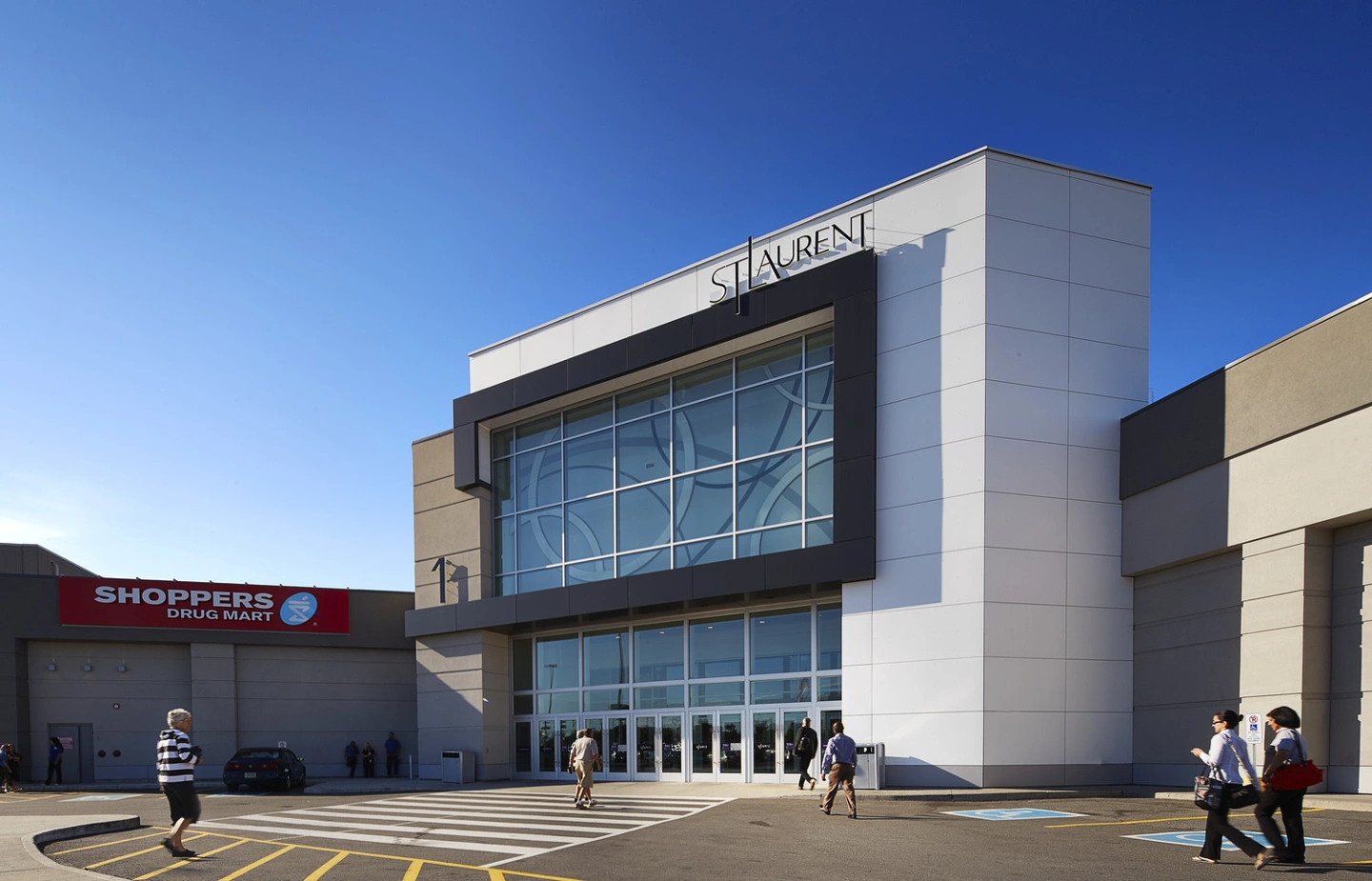
The three selected properties illustrate the breadth of Morguard’s diversified portfolio and its focus on modernization. St. Laurent Shopping Centre in Ottawa will serve as the retail testing environment; Place Innovation in Montreal will focus on office technologies; and The Bay Club in Toronto will host residential pilots.
At the heart of the Smart Building Living Labs project is Nokia’s 5G and advanced networking technology, which enables seamless connectivity across a property’s systems. This infrastructure will allow startups to validate solutions such as AI-driven predictive maintenance tools, robotics for automated operations, and energy optimization sensors that respond dynamically to real-time conditions.
“By integrating these technologies into actual operating environments, innovators can refine their products in the conditions they’re meant to perform,” said Chris Joyce, Vice President of Business Development and Marketing at CENGN. “This initiative strengthens Canada’s position as a global leader in building automation, IoT, and applied AI.”
Supporting Canada’s Innovation Ecosystem
The Smart Building Living Labs are part of CENGN’s broader Living Lab Initiative, which is funded by a $45 million federal investment through the Strategic Response Fund. This national program is designed to give more than 100 Canadian startups and scaleups access to resources, partnerships, and infrastructure that can bring emerging technologies to market faster.
CENGN, known for its work advancing digital adoption across Canada, plays a central role in connecting innovators with industry partners like Morguard. By combining technical expertise, operational infrastructure, and financial support, CENGN’s model helps early-stage technology firms navigate the complex path from prototype to commercialization.
Angela Sahi, President and Chief Operating Officer of Morguard, emphasized the company’s commitment to integrating sustainability and innovation across its assets. “With CENGN, Morguard is proud to bring advanced smart buildings into Canada’s innovation ecosystem,” Sahi said. “These labs reflect our commitment to advancing smart, sustainable properties while accelerating technologies that improve the everyday lives of the people who live, work, and shop in our communities.”
For Nokia, the collaboration extends its ongoing mission to support Canada’s digital transformation. “Nokia is proud to be one of the main 5G and fiber technology partners for CENGN Living Labs,” said Jeff Maddox, President of Nokia Canada. “We are committed to encouraging technology innovation and digital transformation across Canada by providing advanced networking resources and our leadership to pave the way for Industry 4.0.”
A Showcase for Real-World Applications
The Living Labs will enable innovators to pilot solutions that address some of the most pressing challenges in property management and urban development. For example, AI systems can predict when HVAC or elevator equipment will fail, allowing property managers to perform preventative maintenance. Smart sensors can monitor temperature, air quality, and occupancy to reduce energy waste. Autonomous cleaning robots and building security drones may also be tested in operational environments.
What sets this initiative apart is the ability to test these technologies in full-functioning buildings with real tenants and visitors, rather than in closed laboratory settings. “We enable Canadian innovators to bring their cutting-edge technologies to market faster and with greater confidence,” said Joyce.
The integration of AI and IoT within these Living Labs could also have wide-reaching implications for Canada’s real estate sector. As energy costs and carbon reduction targets become top priorities, smart building technologies could become key differentiators for landlords seeking to attract tenants and investors.
Spotlight on St. Laurent Shopping Centre
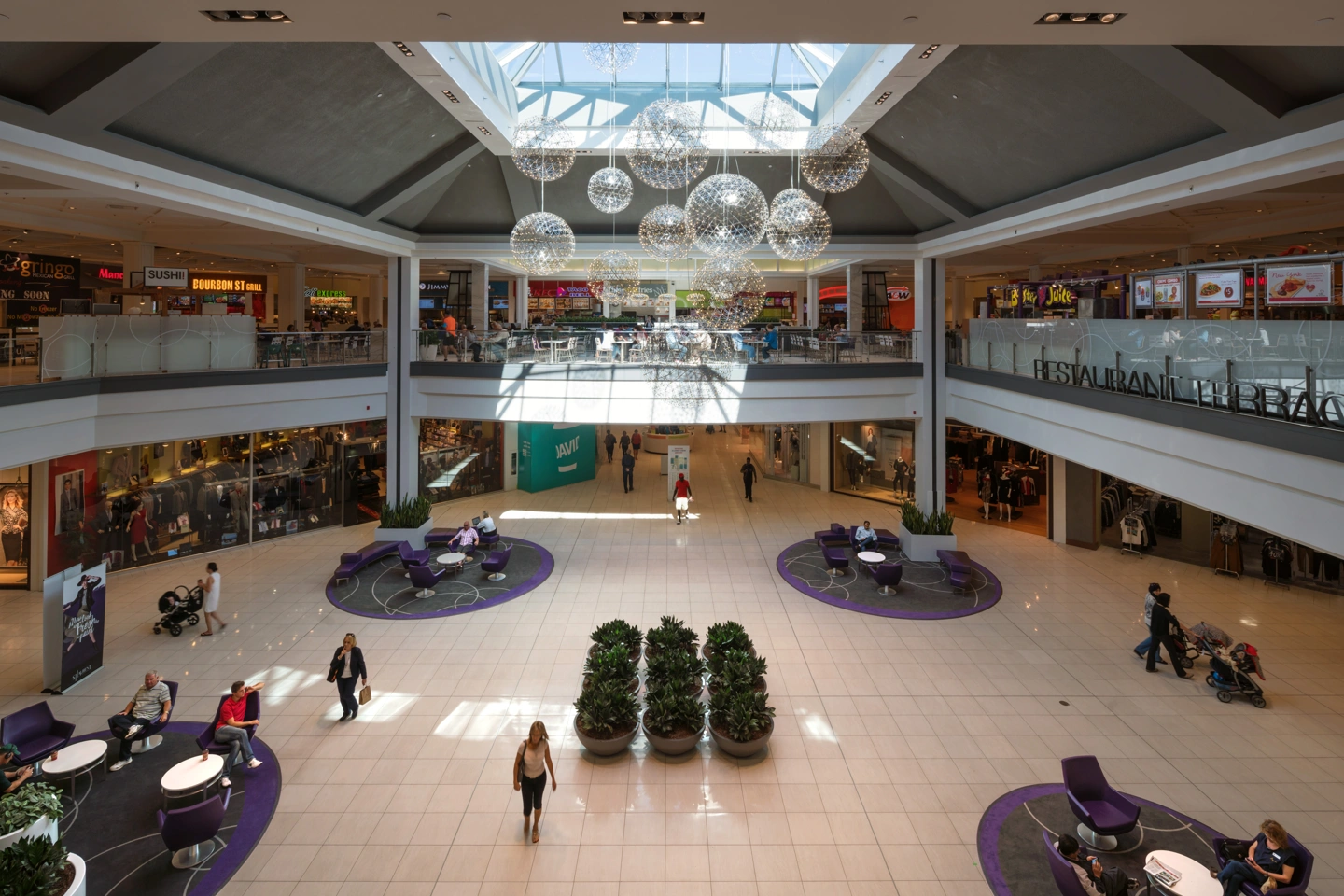
Among the participating sites, St. Laurent Shopping Centre in Ottawa offers an ideal retail environment for testing new technologies. One of the city’s largest malls, the property features over 175 stores across three levels and draws approximately 7.5 million visitors annually. Owned by Morguard Real Estate Investment Trust, it is a cornerstone of the company’s Ottawa holdings and is currently undergoing a major revitalization.
Anchored by Sport Chek and Toys “R” Us, with new additions such as Sephora and H&M, St. Laurent is expanding its digital capabilities through initiatives like ShopList — an AI-driven product discovery platform launching in 2025. The mall is also introducing new digital signage, upgraded infrastructure, and expanded community partnerships.
Centrally located along Ottawa’s O-Train Line 1 with nearly 4,000 parking spaces, St. Laurent exemplifies how technology and accessibility can intersect to create a dynamic retail environment. The mall’s role within the Smart Building Living Labs will highlight how real-time data and automation can enhance both the customer experience and operational efficiency in shopping centres.
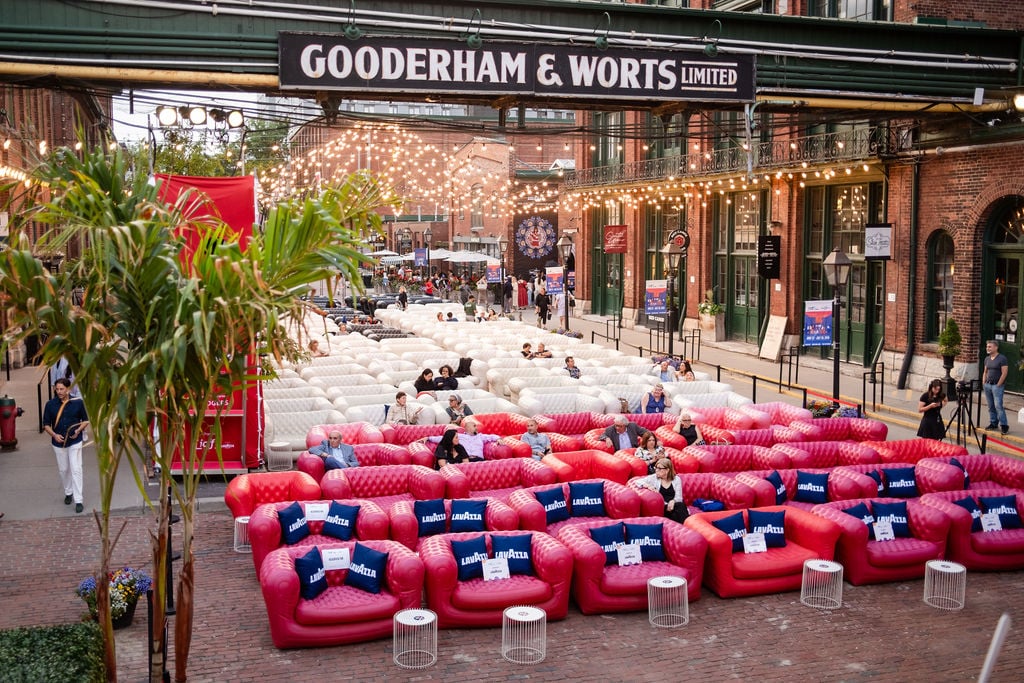
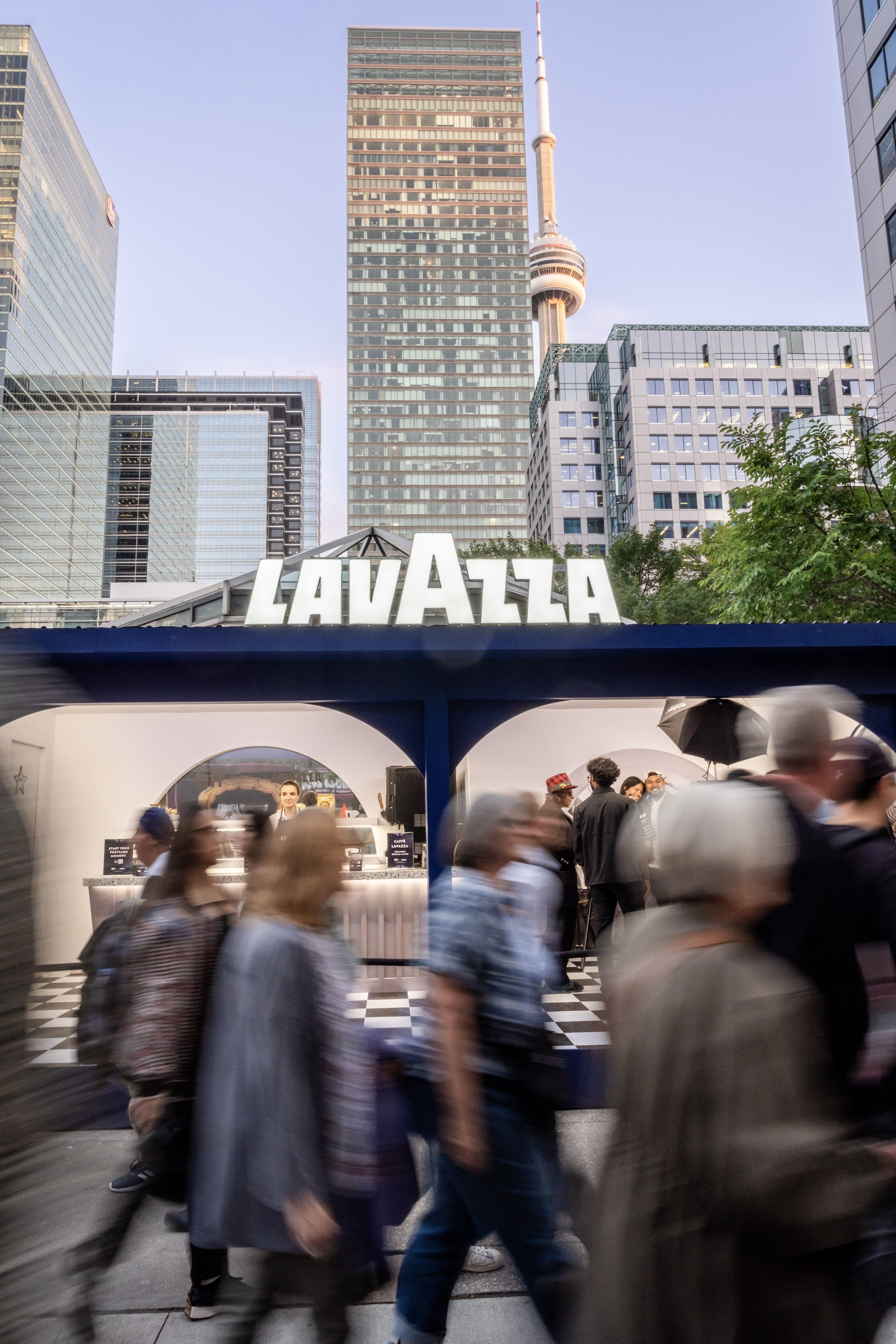
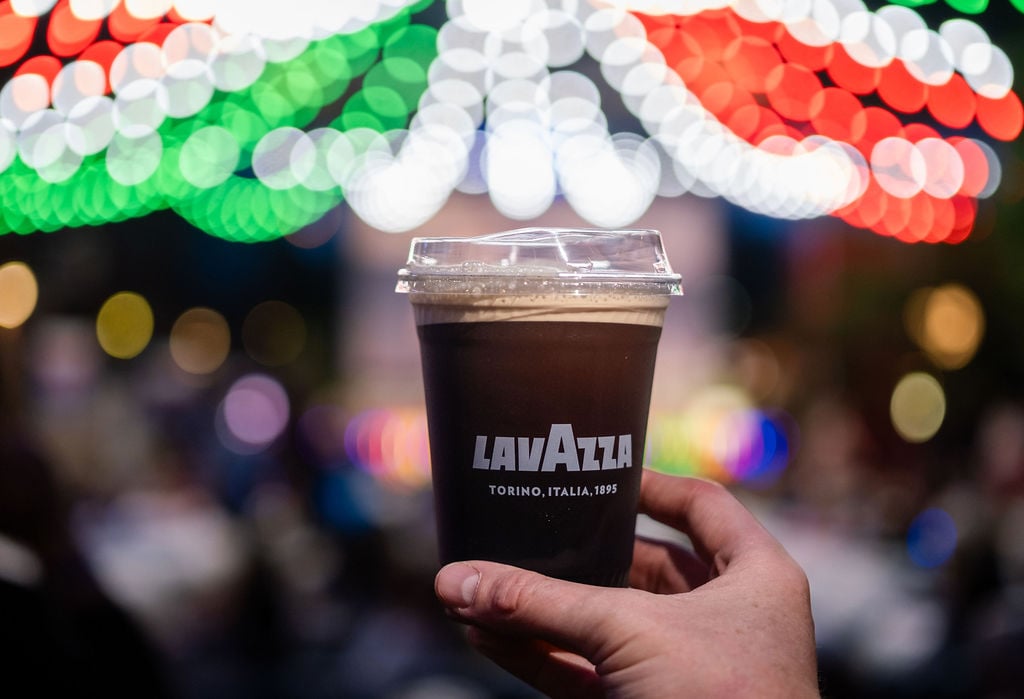
At this year’s TIFF, Lavazza expanded its immersive activation with a classic Italian cinema theme and cold brew coffee sampling – an example of how the brand is going beyond visibility to foster genuine cultural connections.
Lavazza is ramping up investment in Canada as part of a broader push across North America, driven by evolving coffee culture and growing consumer demand.
“We started from 2023 with the opportunity to actually improve our share,” said Foti in an interview. “We have been growing a lot.”
Lavazza’s international expansion began in earnest around 2017, shifting from a business heavily weighted toward Italy to one focused on global markets. At that time, Italy accounted for about 70 per cent of the company’s net revenue. Today, that number has flipped, with international markets representing roughly 70 per cent of sales.
The U.S. and Canada have become key priorities.
“Canada is actually a really brilliant, massive one too,” said Foti, referring to the market size and opportunity. “We really defined a multi-year plan of growth with the objective to more than double our business here.”
Foti said Lavazza’s strategy includes portfolio expansion and localized marketing to meet the changing tastes of consumers, particularly in premium and experiential coffee categories.
“What has been happening recently is a kind of improved way of drinking coffee,” he said. “It’s not just a functional beverage anymore—it’s an experience for consumers.”
He noted the shift in consumption habits across North America, where consumers are increasingly choosing espresso-based drinks, cold brews and other premium offerings.
Photo: Lavazza
“This gave the space to all our premium coffees to actually grow, both on the retail—so home consumption—but also away from home,” he said.
While coffee prices have increased due to inflation, Foti said real demand is also up.
“There has been also some value effect due to inflation, but that contributed to higher demand with higher prices,” he said. “That’s something important.”
Lavazza’s global headquarters remains in Torino, Italy, where the founding family continues to operate the business.
Photo: Lavazza
“The choice of staying in Torino is not a random one,” said Foti. “It was important for us to keep our origin.”
The company’s North American head office is in Pennsylvania, with additional support operations in New York. In Canada, Lavazza maintains a local office and distribution system.
“We are happy about the results in these two geographies,” said Foti. “But of course, there is still a lot to do.”
It was only a matter of time before Canada’s coffee chains began adjusting prices. Tim Hortons was first out of the gate, announcing a price hike of roughly three cents per cup on average—a modest but symbolically significant increase. In an increasingly cashless economy, where digital payments obscure price sensitivity, such adjustments are less likely to trigger consumer backlash. Still, this marks a new chapter in the economics of coffee, where perception and psychology play as much a role as the price of beans.
Despite common belief, the cost of coffee beans represents less than 10% of what consumers pay for a cup at their local café. The remainder is absorbed by labour, rent, equipment, and energy—costs that have risen sharply in recent years. This means that even if global coffee bean prices were to stabilize, the price of your daily latte likely would not.
Globally, coffee futures are trading about 50% higher than the five-year average, driven by production challenges in key exporting nations such as Vietnam and Brazil. Climate volatility, from prolonged droughts to erratic rainfall, has reduced yields and complicated harvest cycles. The prized arabica bean, which thrives only in narrow temperature bands between 18°C and 22°C, is particularly vulnerable. As growing regions shift to higher altitudes and pests like the coffee leaf rust expand their range, the economics of coffee cultivation have become precarious. The uncomfortable reality is that climate change is permanently reshaping the cost structure of one of the world’s most traded commodities.
When Tim Hortons moves, others typically follow. Coffee remains the most effective “loss leader” for some chains—a product that brings customers through the door, where the real profits come from baked goods and meal combos. McDonald’s may hold out longer, thanks to its scale and ability to cross-subsidize beverages, but even it is not immune to global pressures.
A cup of coffee that might be getting a little more expensive in Canada in the coming months, says Dr. Sylvain Charlebois. Photo: iStock
At-home coffee drinkers won’t be spared either. According to Statistics Canada, coffee prices in grocery stores have risen by 32% since January, primarily due to higher import costs and global market distortions caused by tariffs. Although Canada lifted its counter-tariffs on September 1, the United States continues to impose duties on imports from Brazil, Vietnam, and other coffee-producing countries—an illogical policy, given that the U.S. has no domestic coffee industry to protect. As a result, firms are rerouting supply chains to avoid U.S. intermediaries altogether, a costly and inefficient process that inevitably trickles down to consumers.
Yet, despite these economic and geopolitical headwinds, Canadians’ love affair with coffee shows no sign of cooling. With an average consumption of 2.7 cups per person per day, Canada ranks among the top ten coffee-drinking nations globally, well ahead of the United States and the United Kingdom, according to the Canadian Coffee Association. Only the Nordic countries—led by Finland and Norway—drink more per capita. Coffee here is more than caffeine; it’s culture. Whether in a downtown espresso bar or a small-town diner, the ritual of the morning cup endures.
Still, habits are shifting. Younger Canadians are gravitating toward iced and specialty beverages, while older generations remain loyal to their drip coffee. What unites both groups, however, is the willingness to absorb small price hikes for the comfort of routine. In the end, it’s not just the economics of coffee that keep the industry robust—it’s the sociology of coffee, and the deep place it holds in Canadian life.
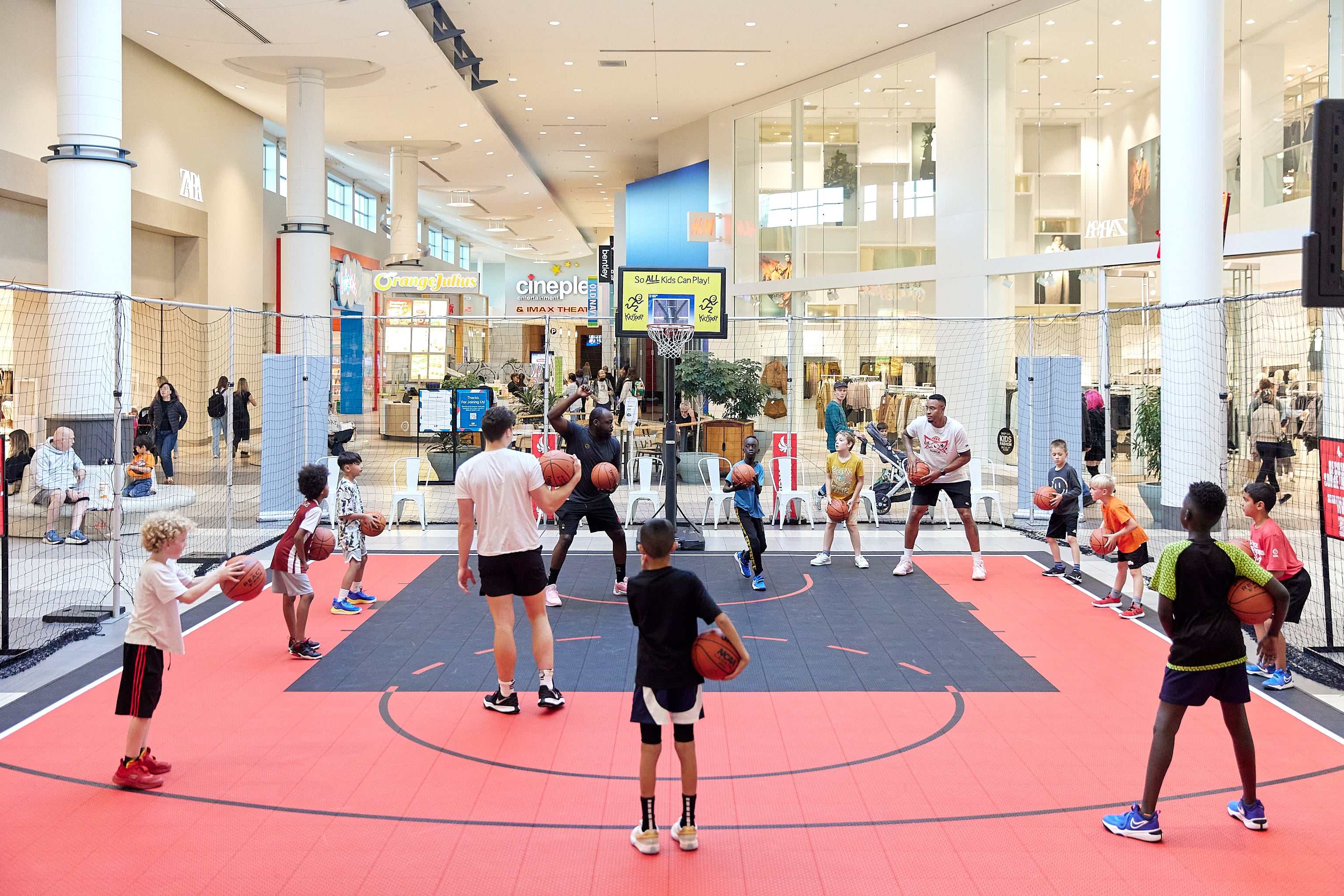
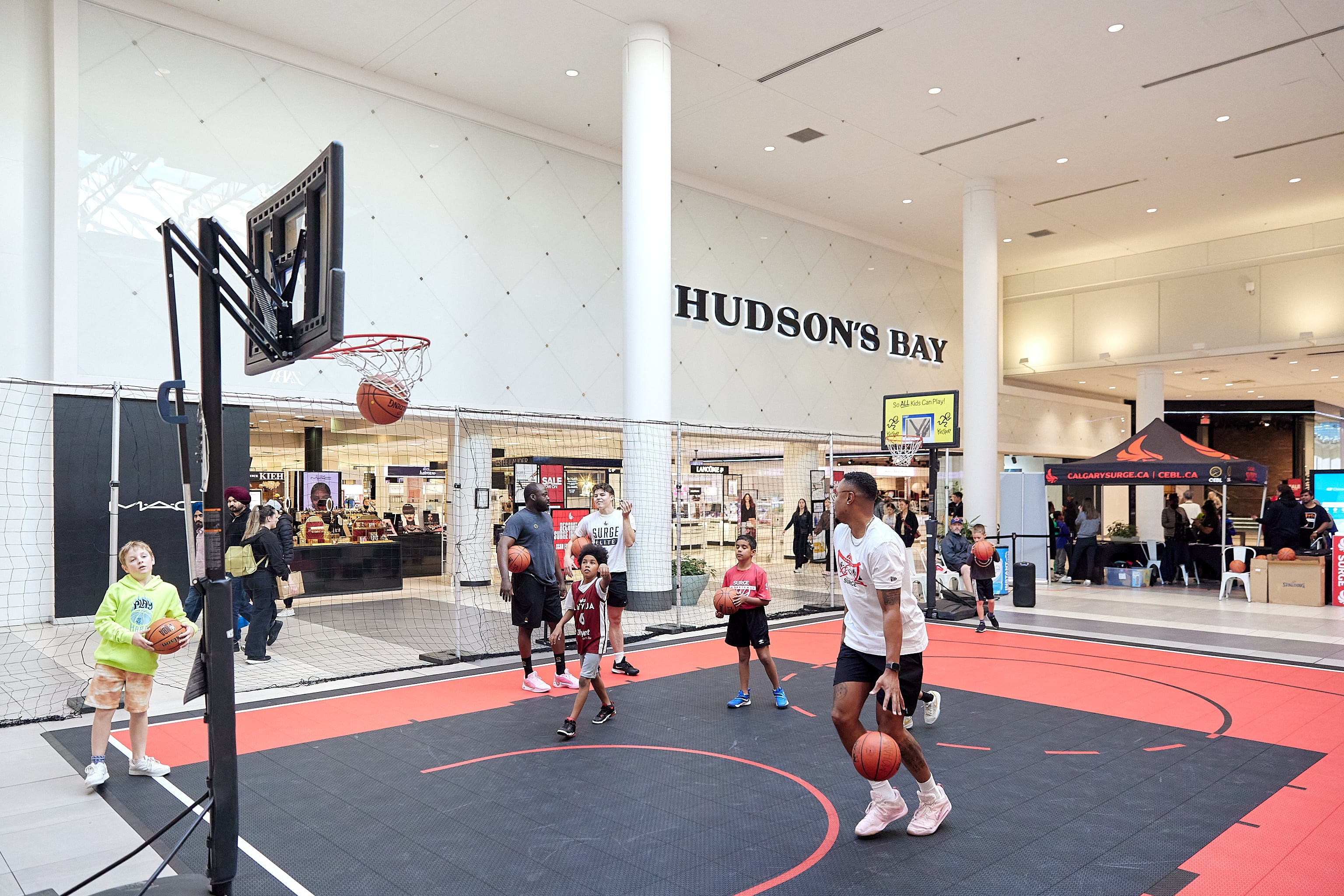
Canadian shopping centres these days are coming up with unique ideas to activate spaces in their real estate by launching different experiences for people. CF Chinook Centre in Calgary has been at the forefront of the trend and its latest initiative is a collaboration with the city’s local professional basketball team.
“With ‘The One,’ a 1-on-1 basketball tournament for high school students and adults, we’re creating an experiential activation that drives engagement, foot traffic, and community connection. Our fourth collaboration with Cadillac Fairview and Chinook Centre shows how sports and arts and culture can activate retail environments in creative new ways,” said Jason Ribeiro, Vice-Chairman & President, of the Calgary Surge of the Canadian Elite Basketball League.
The Calgary Surge is bringing a full day of high-energy basketball action to CF Chinook Centre on October 25. A thrilling 1×1 basketball tournament along with interactive, basketball-themed activities – there’s exciting fun for all ages, whether you’re competing or simply cheering!
Photo: Calgary Surge
“This isn’t just another pickup run. It’s your chance to go head-to-head, earn bragging rights, and claim the ultimate title: The ONE. Winners take home a $250 CF Shop Card, with medals, prizes, and giveaways up for grabs all day long,” says organizers.
“With a live crowd, a DJ, and the energy of Calgary’s busiest mall, this is basketball like you’ve never seen it before.”
Darren Milne
“Our core business revolves around creating engaging experiences, and our collaboration with the Calgary Surge to bring a 1:1 Basketball Tournament to CF Chinook Centre perfectly exemplifies our dedication to fostering a dynamic and vibrant atmosphere at the centre. This has been a growing partnership with the Calgary Surge and we’re excited to deliver this experience to our shoppers,” said Darren Milne, General Manager, CF Chinook Centre.
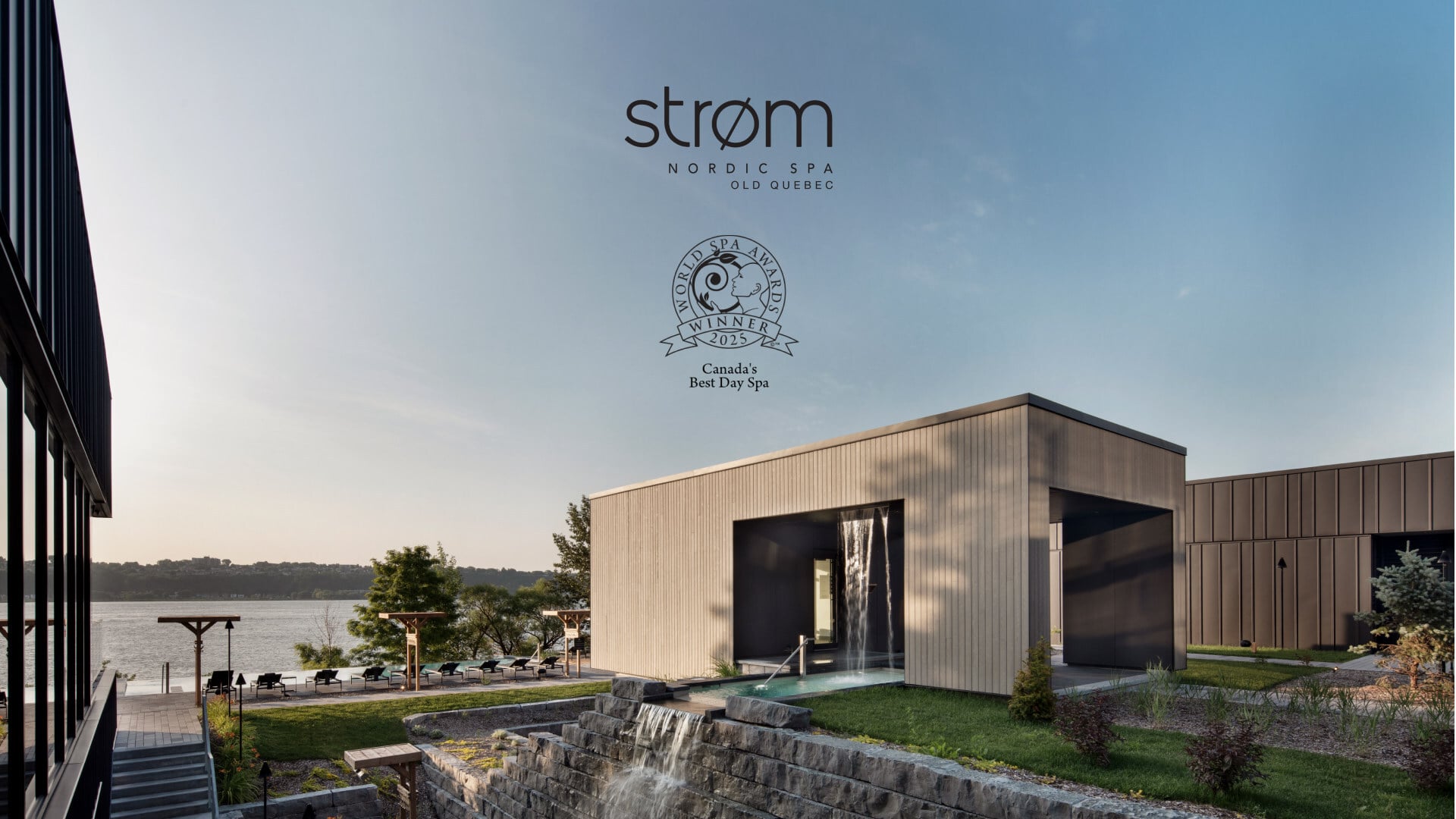
Strøm Old Quebec named Canada’s Best Day Spa at the World Spa Awards (CNW Group/Strøm nordic spa)
Strøm Old Quebec has been named Canada’s Best Day Spa at the World Spa Awards for the second year in a row, according to a news release issued by Strøm Nordic Spa.
The recognition highlights the consistent standards and expertise applied across all of the company’s spa destinations, Strøm said in the release.
Guillaume Lemoine
“At Strøm, we believe well-being is built on balance—between water and architecture, nature and culture, local roots and global vision,” said Guillaume Lemoine, Chief Executive Officer of Strøm Nordic Spa. “This award celebrates not only the remarkable work of the Old Quebec team, but also the collective expertise behind every Strøm.”
Lemoine said the award reinforces the company’s goal to set a “thoughtful, world-class standard for wellness experiences” that remain rooted in Canadian identity while expanding to new audiences.
“It also supports our expansion strategy, bringing Strøm’s vision of balance and accessible well-being to new markets across Canada and the United States,” he said.
Strøm Nordic Spa said its work extends beyond spa experiences to include a signature skincare line, locally inspired culinary offerings, and editorial content through Strøm Magazine, all intended to promote everyday well-being.
“By extending beyond the spa, Strøm shares its unique savoir-faire and inspires a transformative approach to well-being that is both accessible and deeply connected to place,” the company stated.
Strøm said it aims to bring its “distinct vision of well-being—balanced, responsible, and inspiring” to more communities across Canada and North America, while continuing to honour and enrich the cultures and landscapes it engages with.
Founded in 2009, Strøm Nordic Spa operates five locations in Quebec: Old Quebec, Nuns’ Island, Saint-Sauveur, Mont-Saint-Hilaire and Sherbrooke.
Aurora Montreal office on Sherbrooke Street West. Image: Aurora Retail Group
Montreal-based Aurora Realty Consultants and Toronto’s Retail Ventures CND have announced a merger that will form one of the largest retail-dedicated brokerages in Canada. The combined company will operate under the name Aurora Retail Group, bringing together two highly respected firms in the Canadian retail real estate sector.
The new firm will be co-led by Jeff Berkowitz, founder of Aurora Realty Consultants, and Sam Winberg, founder of Retail Ventures CND. Both will serve as Co-Chief Executive Officers of Aurora Retail Group. Joining them on the leadership team will be Manon Parisien, who will assume the role of President, and Justin Pearlstein, who will step into the position of Executive Vice President.
Jeff Berkowitz
With a headcount of approximately 23 to 25 professionals, Aurora Retail Group is expected to stand as one of the largest brokerages in the country that is exclusively focused on retail. The firm will maintain its offices in Montreal and Toronto, in addition to other offices across Canada as well as in the US and UK.
The creation of Aurora Retail Group represents a significant consolidation within the Canadian retail real estate advisory space. Both firms have long histories of guiding major retailers in their market entry, expansion, and real estate strategies across the country. The announcement comes just ahead of the ICSC Canadian conference in Toronto on October 7-8, where the new Aurora Retail Group will be introduced to industry stakeholders.
Aurora Realty Consultants: A Montreal Legacy
Sam Winberg
Founded in 1989 by Berkowitz, Aurora Realty Consultants established itself as a leading retail-focused brokerage at a time when tenant representation was emerging as a critical service in Canada’s evolving commercial landscape. Over the decades, the firm expanded from its Montreal base to work on assignments across Canada, the United States, and Europe.
Aurora built its reputation through projects involving shopping centres, big-box developments, urban street retail, and entertainment venues. The company has been credited with helping introduce global brands such as Sephora and Uniqlo into the Canadian market. Beyond tenant representation, Aurora has advised landlords and developers while also offering consulting for pop-ups, incubators, and international expansion through its WR-C Aurora partnership in Europe.
Berkowitz himself is a well-known figure in the industry, recognized not only for his deal-making but also for his leadership in community initiatives and mentoring programs. In 2017, he co-founded Halcyon Brands, a company dedicated to expanding international retail concepts in North America through e-commerce, licensing, and bricks-and-mortar strategies.
Manon Parisien
Retail Ventures CND: A Toronto-Based Powerhouse
Retail Ventures CND, founded by Sam Winberg, has also carved a prominent place in the Canadian brokerage sector. Winberg brings more than 35 years of experience in retail real estate, having co-founded Northwest Atlantic (Canada) Inc. in 1991, later acquired by Jones Lang LaSalle (JLL) in 2018.
Retail Ventures CND has specialized in tenant-side representation, guiding a roster of both global and Canadian retailers in their market strategies. Winberg and his team have represented brands such as Walmart, Nordstrom, Whole Foods, TJX Companies (Winners, Marshalls, HomeSense), Indigo, Rolex, and Ulta Beauty, among others.
The firm has been particularly active in supporting retailers through expansion challenges and restructurings. Most recently, Retail Ventures CND led the disposition of Bed Bath & Beyond and Buy Buy Baby leases during CCAA proceedings in Canada, showcasing its expertise in complex court-monitored lease assignments.
Justin Pearlstein
Alongside Winberg, the Retail Ventures CND team includes industry experts such as Justin Pearlstein and Vice President Kenzie Kohl, who will continue to contribute to the firm’s national expansion strategies under the new Aurora Retail Group banner.
Building One of the Largest Retail-Dedicated Brokerages in Canada
With the combination of Aurora and Retail Ventures, Aurora Retail Group will bring together decades of expertise and a deep bench of talent. The merged firm will count a team of more than 20 professionals, providing the scale and specialization to compete at the top of the Canadian market.
Services will include tenant representation, landlord consulting, lease negotiations, portfolio management, and strategic real estate advice for retailers entering or expanding across Canada. The firm’s expertise will extend internationally, with relationships and partnerships in the United States, the United Kingdom, and Europe.
The leadership emphasized that the merger positions Aurora Retail Group as a unique entity in the marketplace. By focusing exclusively on retail, the firm will provide a specialized alternative to large multi-sector brokerages, ensuring dedicated attention to retailers and landlords navigating a rapidly evolving sector.
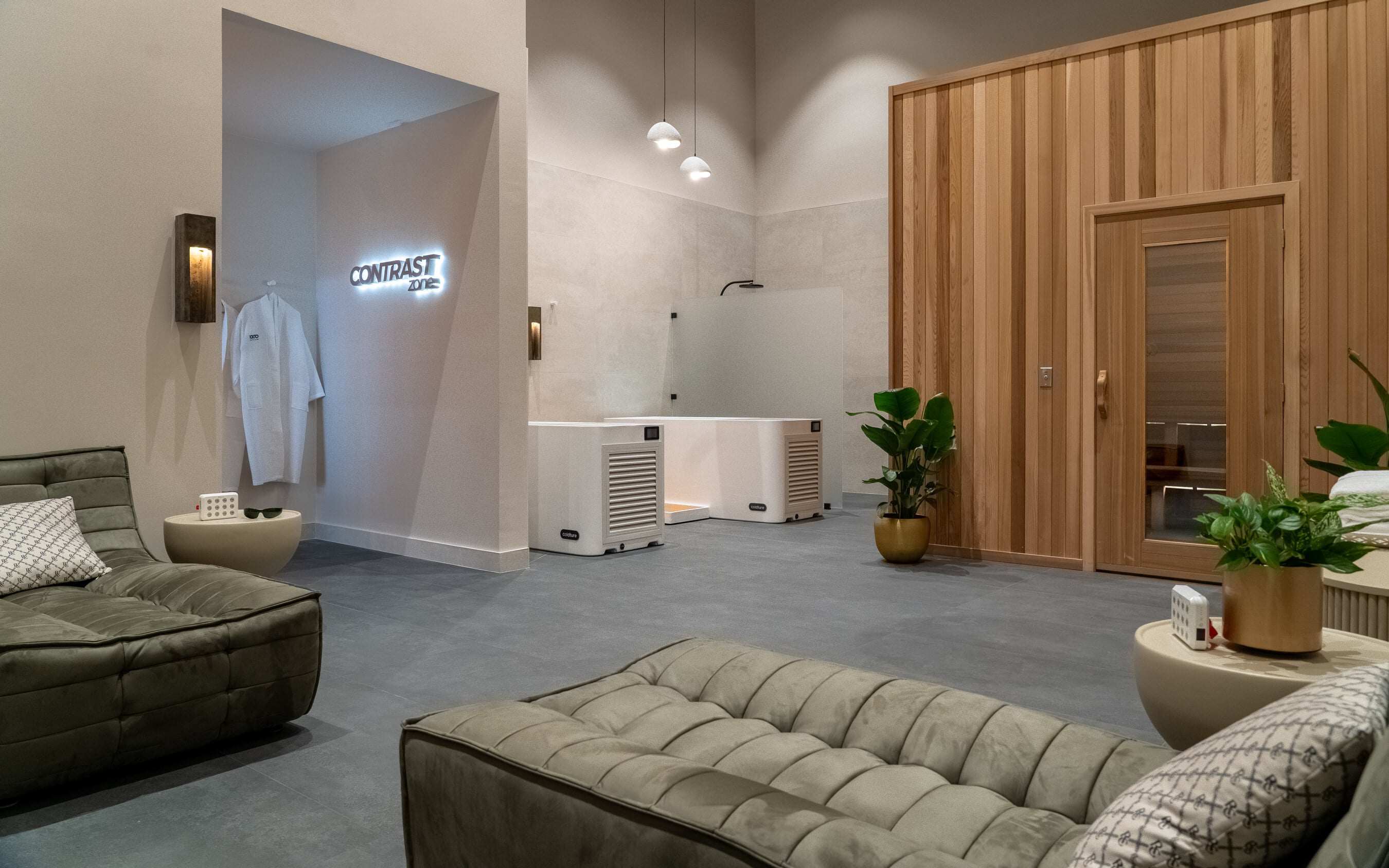
10XTO’s Contrast Zone features Canadian wellness brands Saunafin, Kala, and Coldture. (CNW Group/10XTO)
Luxury athletic club 10XTO has announced the opening of a new wellness space, the Contrast Zone, designed to enhance recovery and performance for its members.
The 90,000-square-foot facility, located in Toronto’s Exhibition Grounds, will debut the Contrast Zone on Saturday, Nov. 8. The new area combines a sauna, cold plunge pools, and red light therapy in a self-guided circuit. Access will be available exclusively to 10XTO members and guests of Hotel X Toronto who book the Experience Wellness add-on.
“Set to open on Saturday, Nov. 8, the refined sanctuary brings together heat, cold, and calm to deliver peak performance, recovery, and renewal,” the club said in a news release.
Developed in collaboration with Canadian wellness companies, the space includes a traditional dry Finnish sauna designed by Saunafin. The sauna delivers deep heat intended to support cardiovascular health and boost circulation.
Two plunge tubs by Coldture offer cold therapy at different intensities—one maintained at 2 to 3 C for a more intense experience, and another set at 9 to 10 C for a gentler option.
To further extend the recovery benefits, the lounge also features red light therapy technology by Kala. According to the release, the red light setup “stimulates mitochondrial activity, improves circulation, and reduces inflammation, offering an advanced layer of recovery.”
After completing the thermal circuit, users can relax in a sage-green lounge area furnished by Rove Concepts.
“Already home to world-class tennis courts, state-of-the-art fitness facilities, and a vibrant community, 10XTO is elevating its wellness amenities even further with Contrast Zone, ensuring members can meet all their needs within one elevated destination,” the release stated.
10XTO describes itself as a next-generation lifestyle athletic club that offers fitness, sports, and wellness amenities in a modern, glass-encased facility overlooking downtown Toronto and Lake Ontario.