Advertisement
Home Blog Page 334

Parmigiano Reggiano Sees Soaring Growth in Canada

Photo: Parmigiano Reggiano

Parmigiano Reggiano is seeing an extraordinary rise in popularity in Canada, with the country quickly becoming one of the fastest-growing international markets for the iconic Italian cheese. According to the Parmigiano Reggiano Consortium’s 2024 performance report, Canada posted an impressive 24.5% increase in imports last year—and momentum is only accelerating.

In the first quarter of 2025 alone, imports of Parmigiano Reggiano to Canada surged by 64.0% over the same period in 2024, and an astounding 166.4% compared to Q1 2023. The sharp growth highlights Canadians’ growing appetite for authentic, PDO-certified products that reflect quality, craftsmanship, and culinary heritage.

“Canada’s exceptional 24.5% growth is a testament to the country’s evolving culinary culture and its appreciation for authentic, PDO-certified products like Parmigiano Reggiano,” said Nicola Bertinelli, President of the Parmigiano Reggiano Consortium. “Canadians are discerning consumers who value transparency and tradition—and we are proud to see our cheese becoming such a beloved part of their lives.”

Marketing and Retail Strategy Fuels Expansion

The Consortium attributes much of the success in Canada to targeted marketing and trade initiatives, which were developed in partnership with leading Canadian retailers and importers. These strategic efforts have significantly increased the brand’s visibility and helped drive consumer demand across key sales channels.

Unlike generic parmesan-style cheeses, Parmigiano Reggiano enjoys Protected Designation of Origin (PDO) status, and the Consortium confirmed that monitoring activities in Canada have found no significant violations—ensuring that the cheese’s reputation remains protected in this fast-growing market.

These developments signal a meaningful shift in Canadian grocery preferences, with premium imports gaining shelf space even in a value-driven retail environment. Parmigiano Reggiano’s growth suggests that Canadian consumers are increasingly willing to invest in quality and authenticity, even amid broader inflationary pressures.

Canadian Demand Reflects Broader Export Growth

While Canada is experiencing one of the most significant spikes in Parmigiano Reggiano imports, the growth is part of a broader international trend. In 2024, total exports rose 13.7%, and international markets now represent 48.7% of total sales for the Consortium.

The United States remains the largest foreign market (+13.4%), followed by key European destinations and Asia-Pacific countries. Canada’s 24.5% growth outpaced nearly all major markets, with only Australia posting a slightly higher figure (+28.2%).

These export gains were part of an overall strong year for the brand. Turnover at consumption reached an all-time high of €3.2 billion in 2024, up from €3.05 billion the year prior (+4.9%). Sales volumes increased by 9.2% globally.

Consumer Education and PDO Recognition Drive Loyalty

A key element of the Consortium’s success in Canada is its effort to educate consumers on what sets Parmigiano Reggiano apart from generic imitations. With €28.4 million invested globally in marketing and communication in 2024, the brand has made consumer awareness a top priority.

Through storytelling, in-store campaigns, and digital media, the Consortium has highlighted the cheese’s unique production methods, regional origin, and long maturation periods. These messages appear to be resonating in the Canadian market, where demand continues to grow across both specialty and mainstream retail channels.

The product’s integrity in Canada has also remained intact. Monitoring efforts confirmed that the Parmigiano Reggiano name is being properly used and protected, with no significant PDO violations reported in the Canadian market.

Strategic Future: Canada as a Long-Term Focus

Looking ahead, the Consortium views Canada as a long-term growth market for Parmigiano Reggiano. While much of the global strategy remains focused on the United States and Europe, Canada’s performance has positioned it as a priority in upcoming marketing and diplomatic initiatives.

“Looking ahead, we must increasingly invest in international market growth,” said Bertinelli. “With exports now nearing half of total sales at 48.7%, creating space in foreign markets is a necessity. Today’s consumers seek products that feature authenticity and heritage—values embodied by Parmigiano Reggiano. Our goal is to make Parmigiano Reggiano not just a cheese, but a lifestyle, a true icon of Italian craftsmanship.”

Despite some concern over rising global trade tensions and tariff risks, particularly in the United States, the Consortium remains optimistic that Canada will continue to offer a receptive and stable market. With strong consumer support, retailer collaboration, and ongoing protection of the PDO designation, Parmigiano Reggiano is well-positioned to grow its Canadian footprint even further.

More from Retail Insider: 

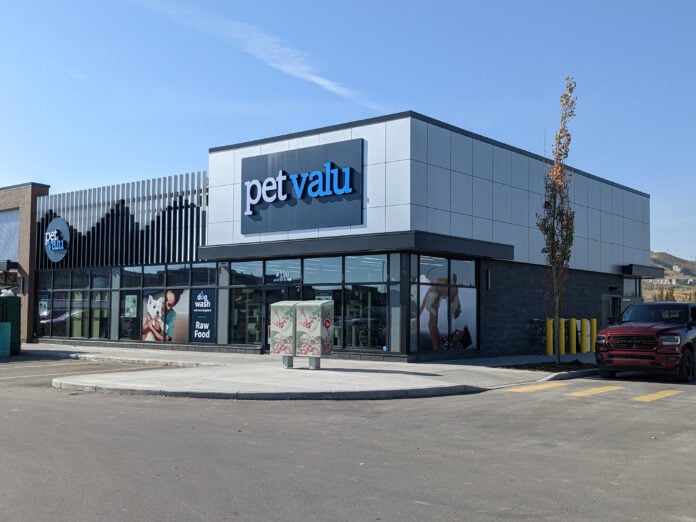
Pet Valu Beats Q1 Forecasts, Raises Price Target

Pet Valu on Front Street in Toronto (Image: Dustin Fuhs)

Vancouver-based Pet Valu Holdings Ltd. has delivered stronger-than-anticipated financial results for the first quarter of 2025, signaling a renewed sense of momentum in the pet retail category. The company posted a 7% year-over-year increase in revenue, reaching $279.1 million, which exceeded both consensus expectations ($275 million) and estimates from analysts at Stifel ($278 million).

Marking a significant turning point, same-store sales rose by 1.4% year-over-year — the first positive growth in this metric in four quarters. That result surpassed Stifel’s forecast of 1% and the consensus estimate of 0.8%. The gains came despite continued challenges in store traffic, which declined 1.1% for the sixth consecutive quarter. However, analysts noted that traffic declines eased throughout Q1 and improvements have extended into the second quarter.

Strength in Wholesale and Loyalty

A key driver of the revenue growth was a 14% year-over-year surge in wholesale merchandise sales, attributed to increased shipments to Chico franchisees. The uptick in sales was further supported by a 2.6% rise in average basket size, helping offset the decline in store visits.

Pet Valu also reported record loyalty penetration in Q1 2025, building on 2024 levels when 85% of sales were linked to loyalty members. The company’s rewards programs, including its “13th bag free” promotion, continue to resonate with Canadian pet owners. According to the report, Pet Valu sees its loyalty program as “a lever to capture market share,” with a goal of converting casual customers to more frequent buyers with a monthly cadence.

Profitability Remains Resilient

Pet Valu’s adjusted earnings per share (EPS) came in at $0.36 for the quarter, up 3% year-over-year and beating Stifel’s estimate of $0.35 and the consensus of $0.34. This result included $0.04 in incremental expenses tied to its new distribution centre.

Gross margin declined by 130 basis points to 33.1%, slightly above expectations of 32.9%, with pressure attributed to higher distribution and occupancy costs as well as an unfavourable mix due to elevated wholesale sales. Selling, general and administrative expenses (SG&A) improved by 70 basis points to 18.2% of revenue, aligning with projections.

Adjusted EBITDA totalled $58.7 million in the quarter, a 4% year-over-year increase, narrowly beating consensus expectations of $57.4 million.

Full-Year Guidance Maintained Despite Economic Uncertainty

Despite economic volatility and trade-related concerns, Pet Valu reaffirmed its full-year 2025 guidance. Management noted that the company has not observed any weakness in consumer spending related to tariff concerns — a positive signal for the broader Canadian retail environment.

“Management maintained its annual guidance despite the economic uncertainty and indicated not seeing any weakness yet in consumer spending related to the tariffs concerns. This is a breath of fresh air for investors, and it speaks to the defensive nature of the pet industry,” noted the Stifel report.

Pet Valu’s 2025 adjusted EPS estimate remains unchanged at $1.64, representing 5% year-over-year growth. The 2026 forecast was slightly increased to $1.80 (from $1.78) following minor revisions to revenue projections.

Target Price Raised as Shares Rebound

Shares of Pet Valu have rebounded sharply from their April 8th low, gaining approximately 25% since that time. Based on the improved outlook and valuation momentum, Stifel raised its 12-month price target for the stock from $28.50 to $33.00.

The revised target is based on a blended approach using a 10.5x multiple on estimated 2026 EBITDA (previously 9.25x), an 18.25x multiple on projected 2026 EPS (previously 16x), and a discounted cash flow (DCF) analysis with a 9% discount rate.

At the time of the report, Pet Valu shares were trading at $28.79 — representing a market capitalization of $2.03 billion. The stock remains rated as a “Buy” by Stifel, with analysts pointing to a favourable valuation relative to historical norms, continued earnings growth, and resilience in a discretionary-challenged economic landscape.

Q2 Margin Pressure Expected, Followed by Recovery

While the company expects similar same-store sales trends in Q2 as seen in Q1, margin pressure is anticipated in the near term. Management projects a 100 basis point sequential decline in EBITDA margin during Q2, driven by timing of projects and promotional efforts, including investments in its Performatrin Prime pricing strategy.

However, Pet Valu anticipates improved profitability in the second half of 2025 as benefits from its new promotional planning tools take effect and new store openings contribute to revenue.

Store Expansion and Infrastructure Improvements

As part of its long-term growth strategy, Pet Valu is on track to complete a significant supply chain upgrade by the end of 2025. This infrastructure enhancement is expected to support the expansion of its store network to 1,200 locations — representing a nearly 45% increase over current levels.

During Q1, the company added six net new stores, bringing its system-wide total to 830 locations. For the full year, Pet Valu is forecasting the addition of 40 net new stores.

A Defensive Play in Retail

Analysts underscored Pet Valu’s positioning within the highly resilient pet industry, which has only declined once in the past 30 years in Canada. This defensive profile, combined with the company’s stable free cash flow, modest leverage, and loyal customer base, makes it an attractive investment in an uncertain retail environment.

“Given the volatile economic environment, we believe Pet Valu is an appealing investment where investors can find refuge,” noted the Stifel analysts. “The Canadian Pet Food industry is defensive, having declined only once in 30 years, a characteristic sought after by investors.”

Risk Considerations

While the outlook remains positive, the report cautioned investors on several key risks:

  • Currency risk: Approximately 23% of Pet Valu’s cost of goods sold is in U.S. dollars, making it vulnerable to a weakening Canadian dollar.
  • Franchise dependency: Over 70% of Pet Valu locations are operated by franchisees, making the brand partially reliant on their operational success.
  • Competitive pressure: The 2023 entry of U.S.-based Chewy into the Canadian market may add pressure on growth and pricing in the months ahead.

Company Background

Founded in 1976 and headquartered in Markham, Ontario, Pet Valu is a leading Canadian pet specialty retailer operating more than 800 stores across the country. The company offers pet food, accessories, and services, including grooming and self-serve dog washes. With a target demographic of discerning pet owners and a growing loyalty base, Pet Valu holds the top market share position in Canada’s pet industry.

More from Retail Insider: 

Kits Eyecare Reports Record Q1 Revenue and Profit

KITS at 1500 Yew in Vancouver. Image: Apple Maps

Vancouver-based Kits Eyecare Ltd., a vertically integrated digital eyewear company, reported a record-breaking first quarter for 2025, with revenue surging 34 per cent year-over-year to $46.6 million. The company also delivered net income of $1.6 million, a significant increase from the $64,000 profit it posted in the same period last year.

The strong Q1 results mark the 10th consecutive quarter of positive adjusted earnings before interest, taxes, depreciation and amortization (EBITDA), and position the company as a notable Canadian retail success story amid broader market uncertainty.

Sustained Profitability and Market Outperformance

Kits’ Q1 net income, though below the company’s Q4 2024 profit of $2.7 million, reflects strong operational performance when excluding one-time gains. The company’s CEO Roger Hardy noted that last year’s Q4 results were positively impacted by foreign exchange gains. Stripped of those, the latest quarter represents improved underlying earnings.

Kits’ stock performance has outpaced broader markets, with shares up 36.5 per cent year-to-date, even as the TSX Composite Index has gained less than 1 per cent over the same period. Despite a slight pullback in stock price today, investor sentiment remains positive as the company continues to execute on its growth plan.

Sales Momentum Led by Progressive Eyewear and Contact Lenses

Driving much of Kits’ revenue surge were higher-margin products, particularly progressive eyeglasses and contact lenses. These categories grew at a compound rate of 50 per cent and are expected to remain major contributors to profitability, given their approximately 50 per cent gross margins.

The company delivered a record 104,000 pairs of eyeglasses in Q1, up from a previous high of 75,000, reflecting increased consumer demand and growing brand awareness. Repeat purchases also contributed to revenue strength, with 63 per cent of total sales in 2024 stemming from returning customers.

U.S. Market Fuels Revenue Expansion

Kits continues to build a substantial U.S. customer base, with 68.4 per cent of 2024 sales originating from the United States. Much of that demand is for contact lenses, which are manufactured domestically within the U.S., shielding the company from tariff exposure. This strategic advantage has helped Kits expand cross-border while preserving healthy profit margins.

As of December 2024, the company reported more than 913,000 active customers. Its focus on automation, customer retention, and supply chain integration has helped secure loyalty in a competitive marketplace.

Outlook for Q2 and Beyond

Kits is forecasting second-quarter revenue in the range of $48 million to $50 million, representing sequential growth of up to 7.3 per cent over Q1. The forecast underscores management’s confidence in continued strong demand across its core categories.

The company’s vertically integrated business model, with in-house optical manufacturing capabilities, remains central to its value proposition. Kits operates an advanced optical lab in Vancouver’s Broadway Tech Park—formerly used by Clearly—where it can produce single-vision glasses in as little as 15 minutes and ship many orders within 24 hours.

History and Leadership

Kits was co-founded in 2018 by Roger Hardy—well known in the industry for founding Coastal Contacts, which operated the Clearly brand in Canada before being acquired by Essilor for $430 million in 2014. Hardy launched Kits alongside Joseph Thompson, a former Amazon executive, and Sabrina Liak, a former managing director at Goldman Sachs.

Since its founding, Kits has positioned itself as a digital-first disruptor in the eyewear space. The company’s product catalogue includes over 7,500 styles of glasses, from its own branded frames to luxury labels like Ray-Ban and Gucci. Its platform features online eye exam tools, virtual try-ons, and a subscription model for contact lenses.

Retail and Community Presence

While Kits remains a predominantly online business, it operates a single physical location at the corner of Cornwall Avenue and Yew Street in Vancouver’s Kitsilano neighbourhood. This space blends a retail showroom with a café, creating a community hub where customers can browse eyewear while enjoying local coffee.

The location reflects Kits’ hybrid approach to retail—merging digital convenience with a localized, experiential touchpoint.

Competitive Landscape and Market Position

Kits continues to carve out market share in the North American eyewear industry, competing with major players such as Warby Parker and traditional optical retailers. Its ability to manufacture eyewear domestically and ship quickly has helped differentiate it in a category where convenience and affordability are key drivers of consumer choice.

The company’s roots in e-commerce, combined with leadership experience in scaling successful optical ventures, provide a strong foundation for continued expansion.

More from Retail Insider: 

First Capital REIT reports strong Q1 2025 results with 5.3% NOI growth, 96.9% occupancy, and robust leasing activity

Avenue Road entrance to Yorkville Village in Toronto. Photo: First Capital REIT

First Capital Real Estate Investment Trust, announced Tuesday financial results for the quarter ended March 31, 2025, indicating its portfolio occupancy matched an all-time high.

KEY HIGHLIGHTS FROM THE FIRST QUARTER:

  • Operating FFO per unit of $0.32
  • Same Property NOI growth of 5.3%, excluding bad debt expense (recovery) and lease termination fees
  • Strong leasing activity, including lease renewal spreads of 13.6%
  • Total portfolio occupancy of 96.9%, matching all-time high
Adam Paul
Adam Paul

“We are pleased to start 2025 with another quarter of strong operating and financial results, underpinned by continued strength in leasing and execution of our capital allocation strategy” said Adam Paul, President and CEO.

“Excellent fundamentals for our high-quality grocery-anchored retail space positions us well to navigate the current environment while continuing to deliver stability and growth in cash flow.”

First Capital owns, operates and develops grocery-anchored, open-air centres in neighbourhoods with the strongest demographics in Canada.

First Capital said its three-year business plan to year-end 2026 is on-track and remains focused upon achieving two key objectives:

  1. Generating annual OFFO per unit growth of at least 3% on average over the three year timeframe; and
  2. Achieving a Net Debt to Adjusted EBITDA ratio that is in the low-8x range by year-end 2026;

To achieve the two key objectives stated above and updating for results to-date and the current outlook, FCR has assumed and expects the following:

  • Average annual same-property NOI growth of at least 3%
  • An aggregate investment of approximately $500 million into property development and redevelopment
  • Development completions, including residential inventory deliveries, of approximately $300 million ($200 million formerly)
  • Property dispositions totaling approximately $750 million ($1 billion formerly), on a cumulative basis with an average expected yield of less than 3%. The dispositions will continue to be focused on a mix of development sites and select low-yielding income properties
  • Acquisitions of $100 million to $150 million, with a focus on multi-tenant, core grocery-anchored shopping centres as well as small, but strategic tuck-ins that are expected to be important to long-term value creation

Related Retail Insider stories:

Ontario-based Kolani Kitchen & Bath expands further into western Ontario with store opening in Oakville [Interview]

Ontario-based Kolani Kitchen & Bath (https://kolani.ca), a popular kitchen and bath wholesaler and retailer, continues expanding throughout key cities in Ontario with a recent winter store opening in Oakville, Ontario.

Founded in 1991, Kolani now has 6 store locations throughout Ontario with plans to add more stores within the next 5 years in both Ontario and other Canadian provinces.

Addo Kolani, Owner and CEO of the company, said that the new Oakville location is an exciting venture to expand further into western Ontario where the company has found much success.

“In the last 5 years we’ve expanded across Ontario into Barrie, Scarborough and now Oakville.  We are planning to further expand more stores in to Western Ontario and have our eyes on opportunities for a presence in Quebec”

The company offers top industry brands including popular Canadian brands like Riobel and Virta, with a huge variety of kitchen and bath products like faucets bathtubs, shower kits, bathroom vanities, lighting and even tiles.

“The size of our showroom stores, which are typically over 10,000 square feet and the long-term partnerships we have with our suppliers gives us an advantage in offering the latest product lines of top brands at prices that are hard to beat any where in Canada,” he said.

Kolani’s main office and first store location is in Woodbridge, Ontario.

BonLook Opens New Store at Royalmount in Montreal

BonLook at Royalmount in Montreal. Photo: BonLook

Montreal-based eyewear brand BonLook has officially opened its latest boutique at the city’s much-anticipated Royalmount shopping destination. The new location, adjacent to Aldo and across from Starbucks on the second floor, represents the 24th standalone store for the brand in Canada and marks a bold new chapter in its evolution under parent company FYidoctors.

“This is more than just a retail expansion—it’s a convergence of design, fashion, and community,” said Dr. Frédéric Marchand, Optometrist and Vice President for Visique and BonLook at FYidoctors, in an interview with Retail Insider. “We felt this project aligned perfectly with our vision for BonLook as a Canadian brand that leads with fashion-forward accessibility.”

Dr. Frédéric Marchand

Corporate Growth Rooted in Canadian Innovation

Founded in Montreal in 2011 by siblings Sophie and Louis-Félix Boulanger, BonLook first made waves as an online-only eyewear retailer before pivoting to physical retail in 2015. With minimalist boutiques and a seamless omnichannel experience, BonLook quickly became known for merging style with service. In 2021, the company was acquired by FYidoctors, a diversified Canadian healthcare company, providing new infrastructure and resources for growth.

“Since joining FYidoctors, BonLook has grown into a major pillar in our organization,” explained Dr. Marchand. “As someone who started as an optometrist in my family’s clinic and joined FYidoctors in 2015, it’s exciting to see how far the brand has come.”

The Royalmount store is the first new BonLook boutique launched post-acquisition and serves as a signal of things to come.

BonLook at Royalmount in Montreal. Photo: BonLook

Why Royalmount Was the Perfect Fit

Royalmount, one of Canada’s most ambitious mixed-use retail projects, is still in its early phases. But with its upscale tenants, expansive entertainment venues, and integrated public transit connections, the development has already made a strong impression.

“We’re excited to be part of this destination,” said Dr. Marchand. “Royalmount is being positioned as a lifestyle centre—not just a mall—and BonLook fits well within that framework. We offer a stylish, emotional retail experience that connects with customers on more than just a transactional level.”

The mall is home to high-end fashion brands and accessible favourites like Uniqlo and Aldo. BonLook aims to serve the customer who values both style and substance, positioning itself as a ‘fashion affordable’ rather than ‘affordable fashion’ retailer. “It’s a subtle difference,” Marchand noted, “but an important one.”

Art Meets Retail: A Collaboration with LeBicar

Adding a local artistic element to the boutique, BonLook partnered with Montreal artist LeBicar to design the store’s facade. The result is a striking minimalist floral mural that acts as a creative landmark in the space.

“Royalmount wanted retailers to create something unique,” said Dr. Marchand. “So we brought in LeBicar, who’s well-known for collaborations around Montreal, to develop a concept that reflected both our brand and the surrounding community.”

Beyond the storefront, additional design elements by LeBicar appear inside the boutique, reinforcing BonLook’s commitment to visual storytelling and local culture. Dr. Marchand hinted that this collaboration could expand into future creative projects.

BonLook at Royalmount in Montreal. Photo: BonLook

Eyewear and Eye Care Under One Roof

While BonLook started as a fashion-focused brand, the integration with FYidoctors has allowed the retailer to add professional optometric services into its stores.

“We’re in the final stages of installing eye exam equipment in the Royalmount location,” said Marchand. “It was important for us to pair style with service. Now, customers can not only find beautiful frames, but also receive professional care, all in one place.”

This offering sets BonLook apart from many fast-fashion optical retailers, as customers can receive complete service—from prescription to purchase—without having to visit multiple locations.

A National Footprint with Montreal Roots

Although BonLook now operates boutiques in multiple provinces, its DNA remains proudly Quebecois.

“Our design team and marketing team are still based here in Montreal,” Marchand emphasized. “This store reinforces our commitment to growing the brand nationally while keeping our identity rooted in Canada.”

With 36 standalone stores, shop-in-shops within FYidoctors locations, and a strong online presence, BonLook has grown substantially. The brand has also launched wholesale distribution of its frames into over 60 other locations across Quebec. “BonLook is now the number one selling frame in quality retail within those stores,” said Marchand.

BonLook at Royalmount in Montreal. Photo: BonLook

Future Growth Plans

According to Marchand, BonLook is far from done expanding. “The Royalmount location came a little earlier than expected in our rollout plan, but we couldn’t pass up the opportunity,” he explained. “We’re looking at future growth both through new boutiques and through expanded wholesale distribution.”

BonLook has also begun testing shop-in-shop formats in smaller communities, giving the brand a way to reach customers outside major urban markets without the costs associated with full store leases.

“Shop-in-shops give us flexibility,” said Marchand. “We can enter smaller towns that don’t have large malls and still provide access to the BonLook experience.”

When asked about broader retail trends in the optical industry, Marchand pointed to increasing commoditization—and the challenges that come with it.

“There’s a race to the bottom right now, with retailers competing to be the cheapest,” he said. “But BonLook has always been about more than just price. Our goal is to offer quality, fashion-forward frames at an accessible price, with service and design that create emotional connections.”

He added, “Some customers come in not knowing the brand, and leave loyal advocates. When you look at the quality, the value, and the service, people are often surprised.”

BonLook is also responding to growing consumer interest in Canadian-made products. “We’re proudly Canadian. Our lenses are now made domestically, and all of our frame design work is done in Montreal,” said Marchand. 

“That matters to people right now.”

More from Retail Insider:

Food Basics to Open at ROQ City in Downtown Toronto

Rendering of ROQ City on Queen Street East in Toronto. Image: Tricon

A new Food Basics grocery store is set to open in the ROQ City development in downtown Toronto, marking a significant step in addressing the area’s ongoing need for accessible and affordable grocery options. Located at the base of Tower B at 261 Queen Street East, the store will span approximately 33,000 square feet, offering value-priced food to a neighbourhood with rising population density and diverse demographics.

As Moss Park and surrounding areas continue to transform with new residential developments and an influx of residents, the arrival of Food Basics is being welcomed as a critical piece of urban infrastructure. The neighbourhood currently has limited grocery options, with the closest store — a No Frills — several blocks away on King Street East. With nearly 900 rental units set to open across two towers in ROQ City, the introduction of another grocery option is expected to enhance local livability while supporting food accessibility for a wide range of residents.

ROQ City under construction in Toronto. Photo via Urban Toronto
Click image for interactive Google Map

Part of Metro Inc.’s Broader Discount Expansion Strategy

Food Basics, which operates as a discount banner under Metro Inc., is in growth mode. The brand is actively expanding its footprint across Ontario in 2025, with parent company Metro announcing plans to open a dozen new discount grocery locations across Ontario and Quebec during the fiscal year. The emphasis on growing its discount format is a response to heightened consumer demand for affordable grocery options amid ongoing inflation and economic uncertainty.

The rise of discount grocery banners is also becoming increasingly visible in urban centres. A recent JLL report noted a significant shift in grocers’ focus toward value-driven retail, particularly in cities like Toronto, where cost-conscious consumers are actively seeking lower-price alternatives without compromising convenience. The expansion of Food Basics into the ROQ City site is a direct response to that growing demand.

Main floor leasing plan for Tower B of ROQ City in Toronto (261 Queen St. E.). Image: Tricon Residential (retail leasing site)
Second floor leasing plan for Tower B of ROQ City in Toronto (261 Queen St. E.). Image: Tricon Residential (retail leasing site)

ROQ City: Revitalizing a Key Corner of Downtown Toronto

The ROQ City development, spearheaded by Tricon Residential, is a transformative project for Toronto’s Moss Park neighbourhood. ROQ — named after the intersection of Richmond, Ontario, and Queen Streets — aims to create a dynamic, mixed-use community with residential, retail, and public components. The development, now under construction, will consist of two rental towers: a 33-storey South Tower and a 24-storey North Tower, with a combined total of 859 rental apartments.

Designed by Hariri Pontarini Architects alongside Graziani + Corazza Architects, and with heritage elements preserved by ERA Architects, the project incorporates 19th-century warehouse facades, maintaining the historical essence of the site while introducing modern infrastructure. Completion is expected by mid 2027.

The retail component will total about 75,000 square feet. Alongside Food Basics, the development will also house a Shoppers Drug Mart, a pharmacy retailer under Loblaw Companies Limited. Shoppers Drug Mart has leased approximately 12,522 square feet of space in the development, further enhancing the everyday retail offerings for residents and the broader community.

Signage renderings for the new Food Basics at ROQ City. Image via Urban Toronto

Accommodating Grocery Retail Needs Through Building Modifications

The inclusion of large-format retailers like Food Basics and Shoppers Drug Mart within the ROQ City development required design adjustments to the site’s retail loading facilities. Tricon Residential submitted a request to the City of Toronto to modify the approved loading dock configuration in Tower B, converting the space from a Type A to a Type B loading designation.

This change was necessary to meet the operational requirements of both retailers, which requested dedicated and more suitable loading arrangements. The minor variance allows the development to better serve these tenants while ensuring the functionality of the site’s logistics and deliveries without impacting other aspects of the project.

Rendering of ROQ City on Queen Street East in Toronto. Image: Tricon

Demographic Evolution Driving Demand

The Moss Park and Garden District neighbourhoods, including the surrounding blocks of Queen Street East and Ontario Street, have experienced substantial change in recent years. Once characterized largely by supportive and low-income housing, the area is now undergoing a demographic evolution. New developments are bringing in higher-income residents, and the emerging mixed-income environment is creating increased demand for diverse retail options.

This shift underscores the importance of grocery options that can serve all income levels. Food Basics, with its focus on affordability, is seen as well-positioned to meet the needs of a broad customer base, from long-time residents to newcomers living in nearby high-rise buildings.

An Emerging Trend: Discount Grocers in Downtown Cores

Food Basics’ move into ROQ City highlights a growing trend in Canadian retail: the arrival of discount grocery stores in urban cores. Historically more common in suburban areas, discount banners like Food Basics and No Frills are now making a strategic push into central neighbourhoods. With affordability being a key concern for many Canadians, even in downtown areas, the presence of these stores reflects a shift in both consumer behaviour and retailer priorities.

Retail analysts suggest that this trend will continue, with grocers adapting to new realities in Canada’s urban centres. As inflation continues to impact household budgets, value-driven formats are expected to become increasingly essential parts of downtown commercial ecosystems.

More from Retail Insider: 

Tim Hortons partners with Ryan Reynolds to launch exciting new breakfast menu innovation in Canada and the U.S. (Videos)

Tim Hortons partners with Ryan Reynolds to launch exciting new breakfast menu innovation in Canada and the U.S. (CNW Group/Tim Hortons)

Tim Hortons and celebrity Ryan Reynolds have launched a multi-campaign partnership which is bringing new menu innovation to Tims customers: introducing the Ryan’s Scrambled Eggs breakfast box, “a delicious and hearty option that will be sure to satisfy morning cravings with the amazing value for money Tims is known for,” said the company.

Ryan’s Scrambled Eggs are available now at participating restaurants across Canada and the United States and are being promoted in a TV commercial created in collaboration with Maximum Effort that spoofs Ryan’s “rider” – the items he asks for backstage while working on a film shoot. In the commercial, he gets his Ryan’s Scrambled Eggs and Tims coffee as requested, along with some other esoteric asks, including a jar of fresh air from his hometown of Vancouver.

“There’s something really special about having the chance to collaborate with such an iconic and beloved Canadian brand. When I visited the Tim Hortons Test Kitchen, I took my role very seriously, by which I mean I ate an irresponsible amount of eggs. And honestly? I regret nothing,” said Reynolds.

Ryan’s Scrambled Eggs breakfast boxes are made to order and include two scrambled eggs made with 100% Canadian freshly cracked eggs, crispy hashbrowns, a choice of sausage crumble or bacon strips, plus Tims iconic Chipotle sauce.

This partnership was first teased at in a video posted on Tims social media channels in the lead up to the premiere of “Deadpool & Wolverine.”

“Ryan has been a great partner and so enthusiastic about leaning into his own love of the Tims brand as we worked on how to bring this really fun collab to life,” said Hope Bagozzi, Chief Marketing Officer for Tim Hortons.

“We’re proud to be a daily breakfast and coffee destination for so many of our guests and this partnership with Ryan is another way for us to offer a uniquely-Tims morning meal that kickstarts your day with great taste and great value.”

Tim Hortons partners with Ryan Reynolds to launch exciting new breakfast menu innovation in Canada and the U.S. (CNW Group/Tim Hortons)

In 1964, the first Tim Hortons restaurant in Hamilton. It is Canada’s largest restaurant chain operating in the quick service industry with nearly 4,000 restaurants across the country. It has more than 6,000 restaurants in Canada, the United States and around the world.

Related Retail Insider stories:

.

Happy Belly Food Group exercises right to acquire remaining 50% of Heal Wellness QSR

Photo: Happy Belly Food Group

Happy Belly Food Group Inc., a leader in acquiring and scaling emerging food brands across Canada, says it has exercised its right to acquire the remaining 50% of Heal Wellness, making the brand a 100% wholly owned subsidiary of Happy Belly.

Heal is a fresh smoothie bowls, acai bowls, and smoothies quick serve restaurant.

Sean Black
Sean Black

“Three years ago to the day, Happy Belly signed a deal with the founding partners of Heal Wellness to enter into a joint venture for the purpose of operationalizing the business, preparing it for growth, and scaling the business. I am very proud of the results that we have achieved so far having successfully grown the business 10x, having grown from 2 locations to 20 locations (6 corporate and 14 franchised), with a significant amount still to open in 2025-2026. Backed by a development pipeline of 130 units across Canada, interest from both franchisees and landlords is rapidly increasing-paving the way for sustained and scalable organic growth coast to coast. This milestone is a clear reflection of what’s possible when you have the 3 P’s – people, process, and product,” said Sean Black, Chief Executive Officer of Happy Belly.

“As a part of this transaction Heal Co-Founder Jesse Davidson will join the Happy Belly team full time and will be promoted to Brand Leader of Heal Wellness. The Heal Wellness concept has hit an inflection point of true hockey stick growth both in net new units (unit count) and in EBITDA in 2025. Which is why we’ve proactively invested in top-tier talent to support Jesse and the team as they manage the growing demand across Canada. Our franchise network continues to expand at a rapid pace, with new interest and inquiries coming in from across the country each week.”

Black said acquiring the remaining 50% of Heal Wellness is a significant milestone for Happy Belly and provides shareholders a more detailed view of its joint-venture acquisition strategy.

“Happy Belly acquired 50% of Heal Wellness three years ago for a non-cash investment of $250,000 in Happy Belly stock (valued at $0.09 per share) into the joint venture. This represented a 2.2x multiple of EBITDA, with a projected forward twelve-month EBITDA of $230,000 CDN. After working together for the past three years using only the cashflow generated from the Heal business (Happy Belly capital not required), the business has transformed both in scale and footprint generating an impressive estimated $750,000.00 CDN in trailing twelve-month EBITDA (“TTM EBITDA”). Happy Belly will acquire the remaining 50% of the business on a debt-free basis at a multiple of 3.75x TTM EBITDA. Happy Belly intends to satisfy the purchase price by transferring its 50% ownership of the JVCo’s existing Happy Belly shares to the Heal Vendors. The value of the shares will be recognized at current market values and transferred on the day of close of this transaction. Final transaction details to be announced at the close of the transaction after all reconciliations are completed (estimated to be completed by end of July),” he explained.

“The value our management team has created is evident not only in Heal’s record EBITDA but also in the increased shareholder value of Happy Belly. By leveraging our share price appreciation to acquire the remaining 50%, we are realizing a 10x gain on invested share capital. With plans to double both our store count and EBITDA within the next 12-18 months, this transaction delivers an exceptional return on invested capital-using existing shares on our cap table to fund the majority of the transaction. We look forward to executing more transactions like this in the future.”

Black said the transaction validates the value Happy Belly creates for its joint venture partners and validates its acquisition strategy based on reduced risk when partnering with founders.

“Our model paves the way for sustained and predictable M&A growth across our portfolio of emerging brands. By balancing organic expansion in our core markets with a nationwide rollout, we’re positioned to deliver long-term value. We’re confident our multi-brand platform will drive strong results, attract top-tier franchise partners, and secure prime real-estate opportunities across Canada,” he said.

“Our accelerated franchising model-validated by strong organic gains-is tailor-made for scaling emerging brands. Our portfolio has 531 units under development agreements, clearly setting the path forward for several years of predictable organic growth for Happy Belly charting a clear course for sustained expansion. As we roll out additional franchise locations, we anticipate significant contributions to both revenue and profitability for Happy Belly.”

Related Retail Insider stories:

Gary Wade, President, Unilever Canada, to receive 2025 Canadian Grand Prix Lifetime Achievement Award from Retail Council of Canada & Food, Health & Consumer Products of Canada

Gary Wade, President, Unilever Canada, to receive 2025 Canadian Grand Prix Lifetime Achievement Award (CNW Group/Retail Council of Canada)

 Retail Council of Canada (RCC) and Food Health & Consumer Products of Canada (FHCP) have announced that Gary Wade, President of Unilever Canada and CEO of Beauty & Wellbeing, North America, will be honoured with the prestigious Canadian Grand Prix Lifetime Achievement Award in recognition of his exceptional leadership and lifelong contributions to the Canadian consumer-packaged goods and retail industries.

Wade joins a distinguished list of past Lifetime Achievement and Trailblazer recipients from across Canada that include Longo’s President and CEO Anthony Longo and the Longo FamilyCindy and Tina Lee of T&T Supermarkets, Burnbrae Farms’ President & CEO, Margaret Hudson, Pattison Food Group’s President, Darrell Jones, Morrison Lamothe Inc & Club Coffee L.P. CEO, John Pigott, Metro Inc.’s Former Senior Vice President Procurement & Corporate Brands, Serge Boulanger, Kruger Products CEO Dino Bianco, and Sobeys Inc. President and CEO Michael Medline.

Michael Graydon
Michael Graydon

 “Gary has consistently led the CPG industry through times of rapid change and uncertainty. His bold, innovative mindset and willingness to challenge convention have propelled the sector forward and inspired others to rethink how we build, deliver, and grow consumer brands”, said FHCP CEO, Michael Graydon.

Diane J. Brisebois. Image: Retail Council of Canada

“Gary’s deep understanding of the evolving consumer landscape has helped drive strategic partnerships that are reshaping the way brands and retailers collaborate. We join FHCP in applauding Gary for his outstanding leadership,” said Diane J. Brisebois, President and CEO of Retail Council of Canada.

The Canadian Grand Prix Lifetime Achievement Award recognizes individuals or families who have demonstrated outstanding service and dedication to the Canadian retail and grocery industries. Recipients reflect the industry’s spirit of community and trust. They have demonstrated a lifelong commitment to their companies’ growth and innovation, to the communities they serve, and to philanthropy, said a news release.

“Over his past 30 years with Unilever, Gary has played a pivotal role in the company’s success—culminating in his appointment as President of Unilever Canada in 2017, where he has been instrumental in driving consistent growth, expanding market share, and strengthening the presence of Unilever’s trusted brands across the Canadian marketplace. Under his leadership, Unilever Canada has not only achieved strong commercial results but also demonstrated a deep commitment to sustainability, innovation, and consumer well-being,” it said.

“In February 2024, Gary’s role expanded to include CEO of Unilever’s Beauty & Wellbeing division in North America. In this dual capacity, he now leads operations across both Canada and the United States, guiding the growth and innovation of some of the region’s most iconic personal care and wellness brands.

“Gary’s industry influence extends well beyond Unilever. He has served as Chair of the Board for Food, Health & Consumer Products Canada (FHCP) and as Vice Chair of the Board for GS1 Canada, contributing valuable insight and advocacy that have shaped policy, advanced industry standards, and supported collaboration across sectors.”

Unilever is one of the world’s leading suppliers of Beauty & Wellbeing, Personal Care, Home Care, Foods and Ice Cream products, with sales in over 190 countries and products used by 3.4 billion people every day. We have 128,000 employees and generated sales of €60.8 billion in 2024. Its leading brands in Canada include Dove, Vaseline, Degree, Axe, SheaMoisture, TRESemmé, Knorr, Hellmann’s, Breyers, Magnum, Ben & Jerry’s, Liquid I.V., and OLLY.  

Retail is Canada’s largest private-sector employer with over 2.3 million Canadians working in the industry. This sector is a major economic contributor, generating more than $93 billion annually in wages and employee benefits. In 2024, core retail sales (excluding vehicles and gasoline) exceeded $507 billion. RCC members account for more than two-thirds of these core retail sales and 95 per cent of the grocery market. Its membership extends across the country, embracing over 54,000 storefronts in diverse formats such as department, grocery, specialty, discount, independent retailers, online merchants, and quick service restaurants.

FHCP is the voice of the food, health, and consumer product industry that employs more than 350,000 Canadians across businesses of all sizes that manufacture and distribute the safe, high-quality products that are at the heart of healthy homes, healthy communities, and a healthy Canada.

The Lifetime Achievement Award will be presented to Wade at RCC’s  Canadian Grand Prix Awards Gala on June 4 at the Toronto Congress Centre.

Capping off RCCSTORE25, Canada’s premier retail conference, the  Canadian Grand Prix Awards Gala will celebrate innovation in food, non-food, CPG and private-label categories. Taking place June 3–4, RCCSTORE25 will feature 75+ expert speakers and draw retail leaders from across North America and beyond.

Related Retail Insider stories: