Restaurants Canada says it welcomes Tuesday’s announcement by the federal government that it is extending the suspension of the federal fuel excise tax until January 31, 2027.
The extension provides some relief to Canadians and businesses facing continued cost pressures, said the national organization.
“Restaurants Canada has been advocating for an extension of the suspension as rising fuel costs add to the financial pressures facing both consumers and restaurant operators. Gas costs have risen by an average of 46% since December 2025, contributing to higher food and transportation costs and supplier fuel surcharges, reported by 86% of restaurants,” said Kelly Higginson, President and CEO, Restaurants Canada.
“For Canadians, keeping the federal fuel excise tax suspended reduces the cost of gasoline and provides some relief from a significant household expense. While the impact on individual household budgets will be modest, any measure that helps ease affordability pressures can provide Canadians with a little more room in their budgets at a time when discretionary spending remains under pressure.
“For restaurants, lower fuel costs can also help mitigate some of the cost pressures flowing through the supply chain. This is particularly important at a time when 57% of restaurants are reporting fewer customers and 54% are seeing reduced customer spending per visit as a result of fuel cost increases. With 41% of restaurants currently operating at a loss or just breaking even, operators have very limited capacity to absorb further increases in operating costs.”
Kelly HigginsonRon Lach photo
Restaurants Canada said it appreciates the continued suspension of the fuel excise tax, recognizing the ongoing affordability and inflationary pressures in an uncertain economic environment.
“We will continue working with the federal government to ease cost pressures for Canadians and operators, support investment and growth, and strengthen the resilience of Canada’s restaurant sector and the jobs and economic activity it supports across the country,” added Higginson.
“As the government also navigates the current trade conflict, Restaurants Canada will continue to provide direct feedback from the foodservice industry—which represents 4% of Canada’s GDP and supports 1.2 million jobs—to help ensure tariffs and government support measures are targeted, effective and responsive to the realities facing businesses across the country.”
Restaurants Canada is a national, not-for-profit association advancing Canada’s diverse and dynamic foodservice industry. Restaurants are a $125 billion industry employing 1.2 million Canadians and the number one source of first-time jobs in Canada, said the organization.
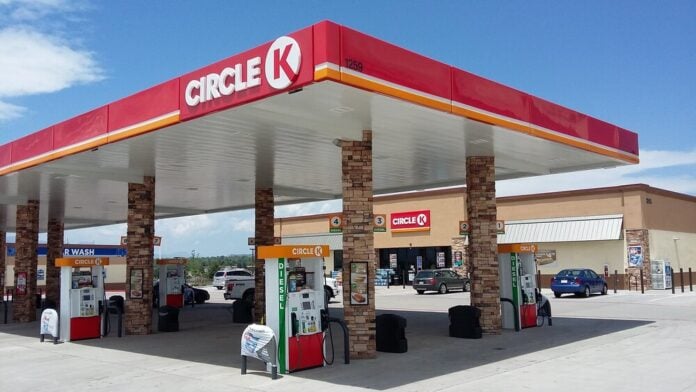
Alimentation Couche-Tard is adjusting what it sells and how it uses space inside its convenience stores as consumers become more selective about their spending, with growth increasingly coming from food, energy drinks and functional products while some traditional convenience categories soften.
The shift was outlined by Couche-Tard President and CEO Alex Miller during the company’s fiscal 2027 first-quarter earnings call Wednesday morning. Miller said elevated living costs and fuel prices continue to weigh on discretionary spending in some markets, while customers remain willing to spend when they see sufficient value.
Carbonated soft drinks, salty snacks and packaged sweets are among the categories performing below historical levels. At the same time, Couche-Tard is seeing stronger demand for energy drinks, enhanced hydration, protein beverages, prepared food and other products aligned with changing consumer preferences.
The company is responding by reallocating space, refining assortments and adjusting promotions around where demand is moving.
Canadian Sales Improved Through the Quarter
The changes are particularly relevant in Canada, where Couche-Tard operates its namesake banner alongside Circle K. Canadian same-store merchandise sales were flat during the first quarter, but Miller said the headline figure masked an improving trend.
Sales improved materially as the quarter progressed and turned positive in the final reporting period. Canadian fuel volumes also increased 1.1%, extending the country’s run of positive same-store fuel-volume growth to eight consecutive quarters.
Several merchandise categories are growing considerably faster than the overall Canadian business.
Energy drinks posted high-single-digit growth during the quarter. Miller said energy remains one of Couche-Tard’s strongest traffic-driving categories globally, alongside growing demand for protein beverages, enhanced hydration and other functional products.
Food is also becoming increasingly important. Canadian food sales grew 4.3% during the quarter, with sales and unit volumes improving year-over-year as Couche-Tard emphasized value offers, meal deals and efforts to convert more store visits into food purchases.
The performance helps explain why flat Canadian same-store merchandise sales do not indicate weakness across the entire store. Growth in food and beverages is being offset by pressure elsewhere, particularly in nicotine.
Miller said Canada’s illicit tobacco market and evolving regulatory environment continue to weigh on legal nicotine volumes. Couche-Tard has been using pricing, promotions and targeted offers to retain customers in the category, although the pressures remained broadly consistent with recent quarters.
Traditional Convenience Categories Face Pressure
The changing mix extends beyond Canada. Couche-Tard said some long-established convenience categories are attracting less spending as customers become more deliberate about what goes into their baskets.
Packaged carbonated soft drinks have softened, while centre-store categories including confectionery and salty snacks have also been under pressure. Miller told analysts that the company is responding by shifting assortment toward products such as protein and functional bars and adjusting shelf allocation as demand changes.
The shift is especially apparent in beverages. In the U.S., Miller said energy drinks are now twice the size of carbonated soft drinks within Couche-Tard’s business, with the energy category continuing to post double-digit growth. Protein beverages and enhanced hydration are also gaining.
Couche-Tard is adjusting cooler space and assortments to reflect those trends, while working with major suppliers to bring new products into stores. Miller said the company continues to outperform the broader energy category and sees further opportunity across energy and functional beverages.
GLP-1 Drugs Could Be Influencing Snack Purchases
One of the more notable comments during the earnings call concerned the potential impact of GLP-1 weight-loss medications on convenience-store purchasing.
Asked about weakness in confectionery and salty snacks, Miller said he believes GLP-1 drugs are having some impact on those categories. He stopped short of attributing the broader slowdown to the medications, acknowledging that it remains unclear how much of the change is temporary and how much could represent a longer-term shift in consumer behaviour.
The observation comes as food manufacturers and retailers pay closer attention to demand for protein, functional benefits and other products associated with changing eating habits. Recent consumer research has similarly pointed to GLP-1 users shifting toward nutrient-dense products containing protein, nuts and grains while reducing consumption of some sweet and fried products.
For Couche-Tard, the immediate response is primarily a merchandising one. The company is adjusting assortment and space as demand moves rather than assuming traditional category patterns will return.
Food Becomes a Larger Part of the Convenience Proposition
Food represents one of Couche-Tard’s largest opportunities to change the economics of its stores.
It now accounts for 13.2% of the company’s merchandise sales. Couche-Tard sold nearly 14 million meal-deal bundles during the first quarter, approximately 20% more than a year earlier, as customers responded to packages combining food, snacks and beverages at defined price points.
The strategy extends beyond competing on the lowest price. Miller said Couche-Tard is developing food offerings across value, middle and premium price points, giving customers opportunities to trade up while retaining the value proposition that has helped meal deals gain traction.
In the U.S., food sales increased 5.2% and hot food grew more than 11%. Canadian food sales rose 4.3%, while Europe recorded growth of 3.6%. Management’s longer-term objective is for food to grow at three to four times the rate of Couche-Tard’s core convenience-store business.
In Canada, that value strategy can already be seen through Circle K’s meal-deal platform, which offers several food-and-beverage combinations at defined price points.
Couche-Tard is also working with large consumer packaged goods companies on prepared-food collaborations. Its Flamin’ Hot Boneless Wings program with PepsiCo and Frito-Lay is now selling more than 40,000 units per week in the U.S., according to Miller, providing an example of how the retailer is using established consumer brands to expand its food offer.
Technology Will Help Shape Store Assortments
Couche-Tard is investing in technology intended to make assortment and inventory decisions more precise as the merchandise mix changes.
Its deployment of the RELEX forecasting, replenishment and space-planning platform is expanding from approximately 200 stores to more than 1,000 locations across North America. Couche-Tard said product availability on RELEX-managed items has improved by more than 5%, supported by stronger forecasting and replenishment.
Most U.S. business units are expected to deploy the technology during fiscal 2027, with Canada scheduled to follow in fiscal 2028. Management expects the system to improve product availability while reducing complexity and spoilage.
The investment also supports Couche-Tard’s efforts to adjust assortments more quickly. As demand shifts among beverages, snacks and prepared foods, forecasting and space-planning tools can help determine what products receive additional space and how inventory is distributed through the network.
New Stores Point to Couche-Tard’s Direction
Couche-Tard’s newer stores provide another indication of where the company wants its broader network to go.
Management said food sales at newer stores are running 120% above the network average, while merchandise sales and average basket size are each approximately 20% higher. Couche-Tard expects to open more than 100 stores during fiscal 2027 and remains committed to its longer-term target of 750 new locations by 2030.
Miller also told analysts that the company’s new-store program has generated average returns on capital in the high teens in recent years. Couche-Tard is increasing its pursuit of individual stores and small groups of locations as another route to expanding the network.
The performance of newer locations is notable as Couche-Tard pushes further into prepared food and other higher-growth merchandise categories. The results suggest that newer stores are increasingly being built around a broader range of customer visits than the traditional combination of fuel, cigarettes, packaged beverages and snacks.
A Changing Convenience Store Basket
Couche-Tard’s first-quarter results showed a Canadian merchandise business that was flat overall, but management’s earnings call provided a more detailed picture of what is happening inside its stores.
Food sales are growing, energy drinks remain strong and Canadian merchandise trends improved enough to turn positive late in the quarter. At the same time, nicotine faces regulatory and illicit-market pressure, while some traditional packaged snacks and beverages are losing momentum as purchasing habits evolve.
Couche-Tard is responding through changes to its shelves, coolers, prepared-food offer and technology investments. The emerging model places greater emphasis on food, energy, protein, hydration and value, providing an early indication of how one of the world’s largest convenience retailers expects the convenience-store basket to evolve.
Taco Bell Canada is bringing back two discontinued menu items and introducing another to Canadian customers as part of a limited-time menu offering beginning Sept. 3.
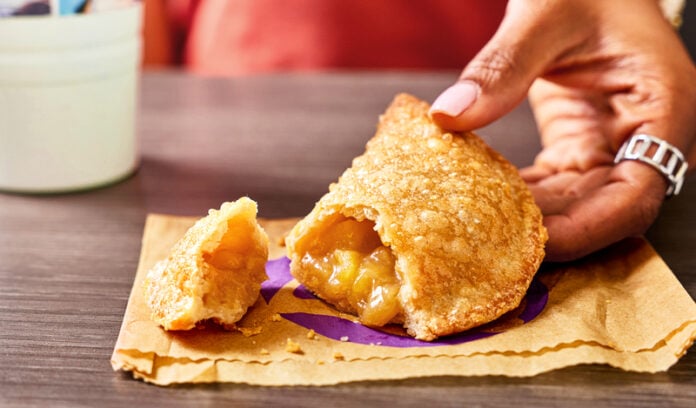
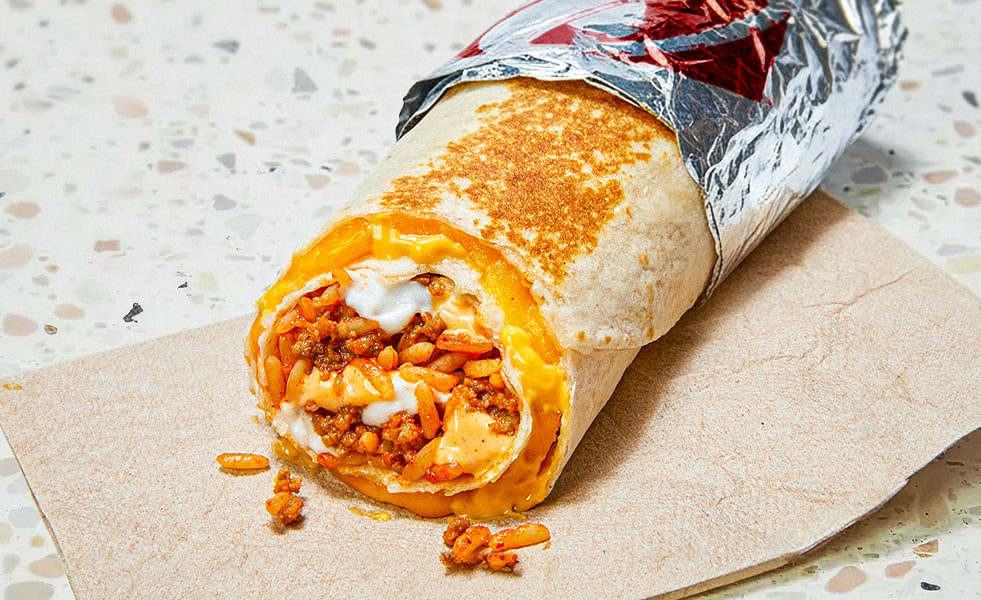
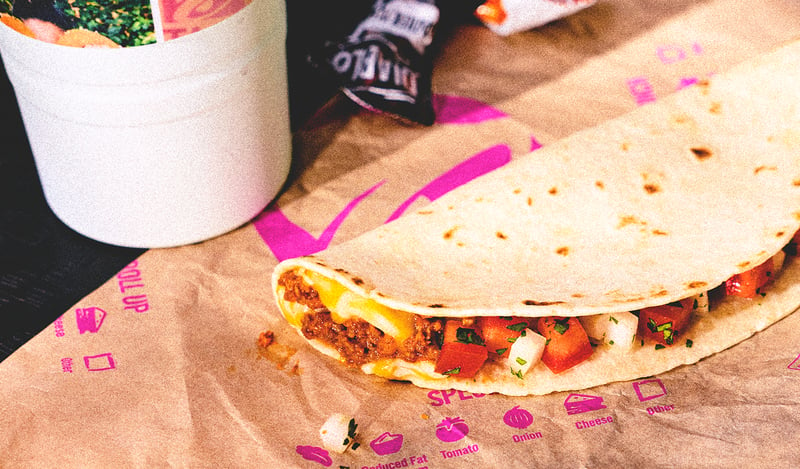
The Meximelt and Caramel Apple Empanada are returning to participating Bell locations after years of customer requests, while the Quesarito will make its Canadian debut. The three items will be available while supplies last.
The menu additions draw on different periods in the brand’s history, with the Meximelt associated with the 1980s, the Caramel Apple Empanada with the 2000s and the Quesarito previously available in markets including the United States and Spain.
Meera PatelTaco Bell photo
“What’s nostalgic for one Taco Bell fan can be a completely new discovery for another,” said Meera Patel, director of marketing, Taco Bell Canada. “And that’s what makes our history such an exciting source of innovation. Sometimes the best place to find what’s next is in the test kitchen vault, and this lineup gives Canadians the chance to experience some of the menu items that helped make Taco Bell so iconic.”
The Quesarito combines a burrito with a grilled cheese quesadilla. The company says the item has been among those requested by customers seeking its availability in Canada.
The Meximelt, described by the company as a longtime customer favourite, is also returning to Canadian restaurants following requests from customers.
The Caramel Apple Empanada, a dessert featuring caramel-apple filling in a crispy shell, is returning more than a decade after it was first introduced by the brand.
Taco Bell photo
The brand has been operating in the country since opening its first Canadian location in 1979. The company says it offers tacos, burritos, quesadillas and nachos, along with limited-time menu items.
Most people don’t think twice about answering their phone. But for many households across the country, staying connected is something that has to be managed carefully, budgeted for, and sometimes given up entirely.
When a phone stops working, or service runs out, life doesn’t pause to wait. Jobs, appointments, and people keep moving. What follows is about how access to one phone changed that pattern for good.
When Staying Connected Isn’t Guaranteed
It rarely comes down to one moment. For a lot of people, the problem builds slowly. An older phone that freezes mid-call. A network that gets spotty by evening. A voicemail notification that shows up a day too late.
These interruptions have real consequences. A job lead that went cold because a callback never connected. An appointment was missed because the reminder didn’t arrive. A family member was left waiting because a message failed to send. Each one feels minor in isolation, but the pattern adds up quickly.
What makes it harder is that the stress is invisible to most people on the outside. There’s no single failure to point to, just a constant low-level uncertainty about whether things will work when they need to. And what cuts through it is simply having service that shows up every time, without question.
A Lifeline Many Don’t Know About
Word spreads in quiet ways. Sometimes it starts with a poster in a clinic. Sometimes it comes from a neighbor who has already applied. Other times, someone hears about it only after months of trying to keep an old phone working.
The government does not hand out phones at the door. Instead, it supports Lifeline, a federal program that helps qualifying households lower the cost of phone or internet service through approved providers.
AirTalk Wireless operates under the federal Lifeline Program as an Eligible Telecommunications Carrier, also known as an ETC. Through providers like AirTalk, eligible customers may be able to apply for monthly service and available device offers, depending on where they live and whether they meet the program rules.
There are limits. Eligibility varies by state and qualifying program. Offers depend on availability and approval. Lifeline service is non-transferable and limited to one service per household.
Knowing this exists can change how people look at their options. For someone who has been sharing a device, dealing with unreliable service, or putting off a phone bill, the path forward may be more concrete than they thought.
The First Step: Getting a Phone That Simply Works
Getting a basic phone through an assistance program doesn’t come with a dramatic moment. It’s quieter than that. The device arrives, service is active, and life starts moving a little more smoothly than it did before.
That simplicity carries more weight than people expect. For someone who spent months managing dropped calls and delayed notifications, dependability changes how daily life actually runs. Appointments get handled on time. Job leads get followed up on properly. The quiet background worry of missing something important starts to fade.
Many people who qualify for assistance programs begin here, with a basic device and active service that holds up through the day. For those already enrolled in Medicaid, learning that afree Medicaid phone is within reach often comes as a genuine surprise. The process exists, the support is real, and qualifying is more straightforward than many assume.
The device may be modest. But for someone rebuilding a sense of stability, a phone that simply works is not a minor thing. That kind of dependability is what makes everything else easier to manage.
But As Life Moves Forward, So Do Your Needs
Stability has a way of raising expectations. Once calls connect reliably and messages arrive on time, the focus naturally shifts toward what comes next. New responsibilities take shape, and the phone that once felt like enough starts to show its limits.
A basic phone handles messages and calls without trouble. But switching between multiple apps slows things down. Loading a document for a job application takes longer than it should. A video call for work or school becomes a source of frustration rather than a tool for getting things done.
The shift is gradual but noticeable. What once felt like more than enough starts to feel like a ceiling. Yesterday’s solution brought real stability. Tomorrow’s demands, though, are already asking for something more.
For many, that next step is more accessible than it seems. Programs that once helped people get connected in the first place are now expanding what’s possible.
When Better Tools Open New Possibilities
Switching to a more capable phone changes the pace of things. Communication moves faster. Apps that used to lag now open without hesitation. Tasks that required patience and workarounds start happening the way they were supposed to. Less time spent waiting means more time spent actually getting things done.
What follows is a shift in confidence. When the phone works the way it should, attention can go toward the tasks themselves rather than the technology getting in the way. That matters more than most people realize until they experience the difference firsthand.
Some assistance programs now make this level of device accessible to qualifying individuals. Afree iPhone 15, for example, puts a genuinely capable tool in the hands of someone who needs it for work, school, or staying connected to healthcare and community resources. The right device doesn’t change circumstances on its own, but it removes a friction that was quietly making everything harder.
The Provider Behind the Experience
The device is only part of the equation. How someone gets to that device, and what the experience looks like along the way, depends largely on the provider they work with.
People who have gone through the application process describe it differently depending on who they worked with. Some found the steps unclear, with requirements that shifted or communication that went quiet after submission. Others moved through it without much difficulty and came out the other side with working service and a device in hand.
With AirTalk Wireless, the process usually starts with entering a ZIP code to check what plans and device options may be available. Applicants then complete an online form and confirm whether they qualify through a program such as Medicaid or SNAP, or through household income. If extra proof is needed, AirTalk may ask for documents before the application moves ahead. After approval, the customer can follow the next steps for shipping and activation. Device offers, service plans, and approval rules may vary by state, qualification, and availability.
The difference often comes down to how well the provider manages the process from start to finish. Documentation requirements, eligibility checks, device availability, and ongoing support all vary between providers. And those differences shape whether the experience feels manageable or overwhelming.
Many people navigating this for the first time look toward authorized Lifeline service providers for guidance. AirTalk comes up often, and for reasonable enough reasons.
The company offers device and service bundles, and the application process is generally regarded as being more straightforward than average.
For someone who is already managing a lot, working with a provider that keeps the process clear and predictable, like them, is worth factoring into the decision.
It’s Never Just a Phone
For a lot of people, a phone is how they stay employed, manage their health, and remain part of the world around them. Losing that connection, even briefly, has consequences that go well beyond inconvenience.
Access is what keeps people on track, and today there are real options worth exploring. The right program, paired with the right provider, can make a quiet but lasting difference. Take the time to understand what is available and choose what fits the actual shape of daily life.
Welcome to the Daily Synopsis by Retail Insider. We hope you enjoy the 9 articles we published covering key developments in Canadian retail.
FoodHero’s platform helps independent Canadian food retailers transform surplus and short-dated inventory into revenue by selling products at reduced prices, addressing a significant source of financial loss associated with food waste. Kit and Ace has relocated to a smaller but better-positioned 2,370-square-foot store within CF Sherway Gardens, resulting in improved sales performance despite a 21% reduction in space.
Gap Inc. reported a 10% sales increase for its Gap brand while Old Navy’s Canadian operations continue to reshape their store network, closing major locations and selectively opening new stores, such as at Toronto’,s Dufferin Mall. Brand activations are increasingly used in retail marketing to create immersive, multisensory experiences that connect consumers with products beyond traditional advertising.
For a neighbourhood grocer, bakery, café or restaurant, food that does not sell represents a direct financial loss. The business has already paid for the product, brought it into the store, handled it and put it in front of customers. If it reaches the end of its selling window without finding a buyer, much of that investment can disappear.
For independent operators working with tight margins, the impact can be substantial. Renaud LeBlanc, President of Montreal-based FoodHero, said food-related shrink can range from roughly two per cent of sales among strong operators to five per cent or higher in some businesses.
“The rule of thumb we often hear is that the cost of shrink can be similar to the net profit at the end of the year,” said LeBlanc. “When you have a solution that can put a serious dent in that shrink, it can significantly impact profitability.”
The scale of food waste across Canada is significant. Research released in 2024 by Second Harvest and Value Chain Management International found that 46.5 per cent of food produced for Canada is lost or wasted. Of that, 41.7 per cent is considered avoidable, with an estimated annual value of $58 billion.
FoodHero has spent the past several years addressing part of that problem at the retail level. Its technology platform allows retailers to sell surplus and short-dated food to consumers at reduced prices, helping merchants recover revenue from inventory that could otherwise become a write-off. After establishing the model with some of Canada’s largest grocery retailers, FoodHero is now expanding its offering to independent businesses.
The Economics Behind Food Waste
Surplus is difficult to eliminate entirely in food retail because merchants constantly have to balance inventory levels against unpredictable demand.
A produce department with abundant displays tends to be more appealing than one with only a handful of products remaining. The same applies to meat, bakery, prepared foods and other fresh categories. Retailers need enough inventory to give customers choice and avoid missing sales, but predicting exactly how much will sell is difficult.
“The grocery business is always trying to manage having shelves full enough to be attractive without wasting food,” said LeBlanc. “You want to maximize the appeal of the store and make sure you’re not missing potential sales, but at the same time you don’t want to order too much.”
FoodHero provides another sales channel when retailers find themselves with excess inventory. The company has worked with major Canadian grocery organizations including Sobeys and Metro since 2019 and now operates across approximately 1,100 stores nationally. LeBlanc said the platform is on track to help Canadian families save close to $50 million this year.
“We have a solution that has proven itself at scale with some of the largest retailers in Canada,” said LeBlanc. “Now we’re offering that solution to independent retailers that want to improve their margins, reduce food waste and gain new customers.”
Renaud LeBlanc, President of FoodHero
Bringing the Model to Independent Businesses
A neighbourhood bakery or independent grocer operates very differently from a national supermarket network. Some of the businesses FoodHero is targeting may have only one, two or three people working in the store, leaving little time for additional administrative work.
That made simplicity an important part of FoodHero’s independent merchant program. The company tested the model with roughly 30 Montreal-area merchants, paying particular attention to the amount of work required to use the platform and whether customers would buy the products being listed.
“For a small independent retailer, the solution has to be extremely easy to use,” said LeBlanc. “They don’t have hours to spend adding inventory. We had to make sure the operational side worked for the merchant and that the inventory would sell.”
FoodHero allows independent merchants to choose how surplus products appear on the platform. Businesses can create surprise bags based around categories such as bakery, produce, deli or cheese, or they can list individual products for customers who prefer to know exactly what they are purchasing.
The company has focused on fitting the technology into existing store operations. LeBlanc said one of the metrics FoodHero watches closely is the amount of labour required to generate additional sales.
“One metric we’re obsessed with is the number of hours required to generate additional sales,” he said. “We’ve been able to scale with large retailers because the technology is simple to use and fits into the routines they already have in the store. That same principle is even more important for independents.”
Turning Surplus Into Revenue
Early results from FoodHero’s independent program indicate strong demand for the inventory merchants put on the platform.
LeBlanc said a previously cited 75 per cent sell-through rate is now on the low side, with participating merchants generally selling most of what they list.
“The last thing we want is for a merchant to spend time putting together a surprise bag or uploading inventory and then have it not sell,” he said. “We’re very happy with what we’re seeing on the demand side. Almost everything sells.”
For smaller businesses, those recovered sales can add up. LeBlanc said bakeries and similar independent merchants using FoodHero are currently generating approximately $1,000 to $2,000 in additional revenue per month, depending on the size of the operation. He said that can amount to roughly $15,000 to $20,000 annually for some businesses.
These sales come from products already sitting in the merchant’s inventory that risked becoming a loss if they could not be sold in time. For an operator dealing with food shrink of several percentage points, recovering part of that value can have a meaningful impact.
FoodHero expects its independent network to grow quickly following the pilot. LeBlanc said the company is working toward having several hundred independent retailers operating on the platform by the end of 2026. Independent grocery stores, bakeries and cafés have joined, while FoodHero is seeing growing interest from restaurants and even florists, where perishable inventory presents a similar challenge.
Finding New Customers Through Surplus
FoodHero can also give participating businesses exposure to customers who may not have encountered them before.
The platform has reached approximately two million Canadian users since launching. For an independent business with a limited marketing budget, that creates another way to put the store in front of potential customers.
“They gain visibility on the app, and they gain new customers when those customers come in to pick up their orders,” said LeBlanc. “We also see additional purchases happening when people are in the store.”
A FoodHero order can become a customer’s first visit to a bakery, restaurant or independent grocer. Some customers make additional purchases when collecting their orders, giving merchants an opportunity to generate sales beyond the original transaction and introduce shoppers to the broader business.
The model also comes at a time when Canadian households remain sensitive to food prices. Consumers can purchase products at reduced prices, while merchants have another opportunity to generate revenue before the inventory becomes unsellable.
How Much Food Waste Can Retailers Eliminate?
FoodHero’s experience with large grocery retailers provides some indication of how far surplus recovery can go.
LeBlanc said some of the strongest-performing stores in FoodHero’s network have dramatically reduced food waste by combining surplus sales with donations.
“Our best stores are getting very close to eliminating food waste in the categories we can address,” he said. “They monetize what they can through FoodHero, and because much of the remaining product has been frozen, it can then be directed to food banks.”
According to LeBlanc, the most performing stores can sell more than $250,000 worth of surplus inventory annually through FoodHero.
There are practical limits, particularly with produce and products that cannot easily be preserved or redistributed. LeBlanc does not suggest that every store can eliminate all food waste, but the results at some of FoodHero’s strongest locations show how much surplus can potentially be recovered.
FoodHero is also working with retailers on longer-shelf-life products that approach or pass a best-before date. Some retailers have internal standards requiring products to be removed from regular shelves even when they can legally continue to be sold and remain suitable for consumption.
The company is exploring a larger role as a liquidation channel for these products, giving retailers another opportunity to recover value from inventory before it leaves the commercial system.
More Room to Grow in Canada
FoodHero was founded by technology entrepreneur Jonathan Defoy after he became interested in the scale of food waste and began developing a technology-based solution. LeBlanc, an entrepreneur with experience in the food business, later joined Defoy as the company developed the platform that launched commercially in 2019.
Working with major grocery partners has allowed FoodHero to build its retailer network and Canadian consumer base. The company sees opportunities to expand within stores already using the platform while adding independent merchants across the country.
That includes introducing additional departments and product categories, helping store teams handle overstocks and short-dated products, and continuing to simplify the process of putting surplus inventory onto the marketplace.
LeBlanc said FoodHero wants to add at least 2,000 additional retailers in Canada by the end of 2027. Canada remains the immediate priority, although the company is beginning to examine an entry into selected U.S. markets in 2027.
There is still considerable room to grow in Canada. FoodHero is working to bring more merchants onto the platform while helping existing grocery partners recover a larger share of their surplus inventory.
For independent food businesses, products that go unsold have already cost the merchant money. Recovering $1,000 or $2,000 a month from that inventory can make a difference for a small operator, particularly when the platform can also introduce new customers to the business.
Across FoodHero’s growing network, those individual transactions also keep usable food from going to waste. For merchants, the opportunity is to recover revenue that might otherwise be lost. For consumers, it means access to food at lower prices. And for FoodHero, there remains a sizeable pool of surplus inventory across Canada that can still be put to use.
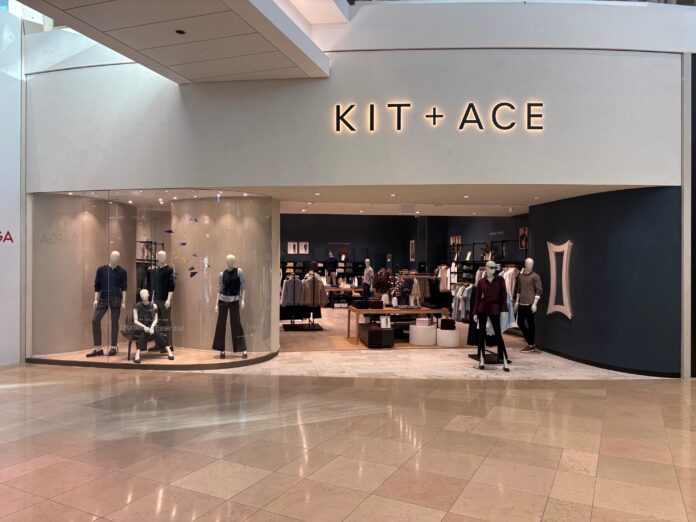
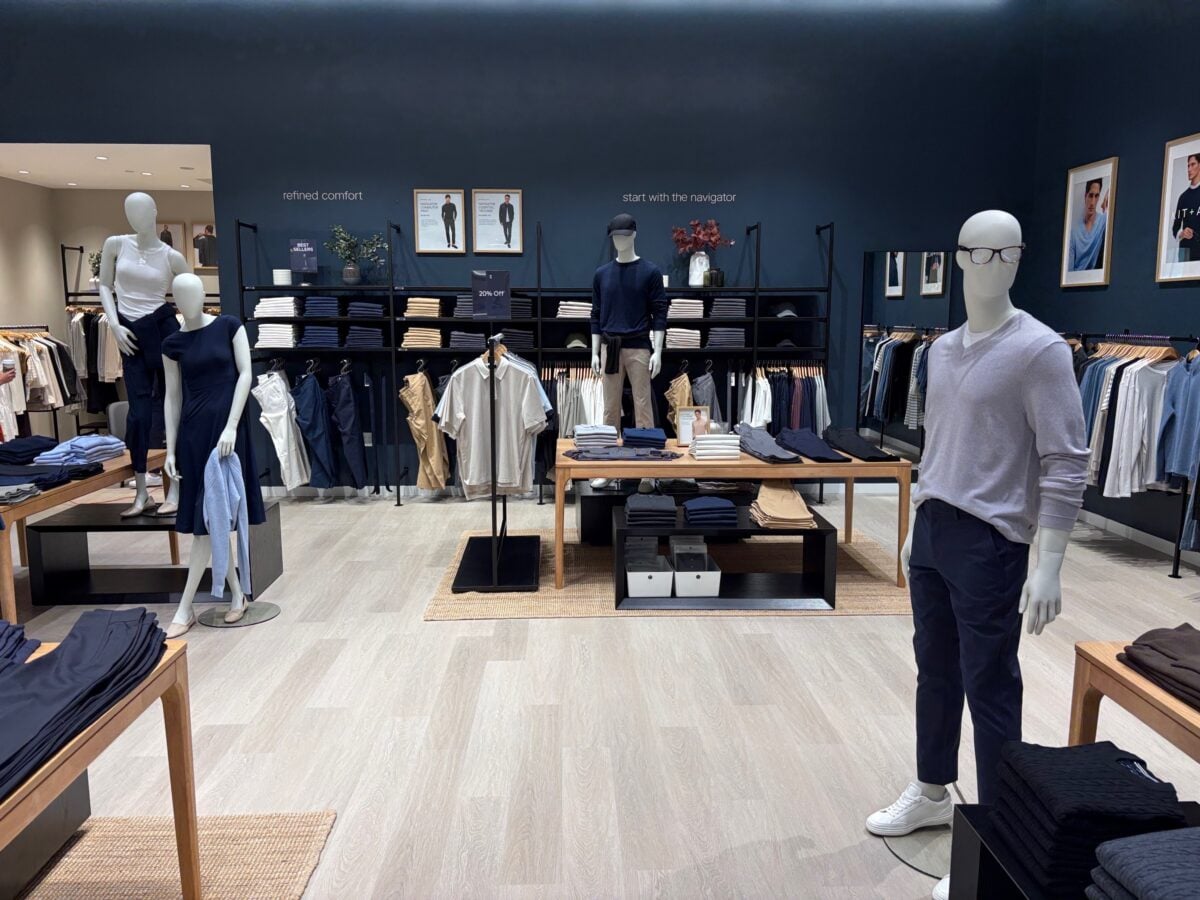
Kit and Ace has opened its relocated store at CF Sherway Gardens in Toronto, moving into a better-positioned space as the Canadian apparel retailer continues to refine and expand its national store network.
The approximately 2,370-square-foot store opened last week, replacing a roughly 3,000-square-foot location elsewhere in the mall. Despite the reduction in size, Kit and Ace CEO David Lui told Retail Insider that the new location has been performing considerably better.
“The store actually went smaller from 3,000 square feet in the old space,” Lui said. “But this location has been way better.”
The new Kit and Ace is positioned between Rodd & Gunn New Zealand and L’Oro Jewellery in a prominent fashion corridor at Sherway Gardens. Andrews is immediately nearby, while Maison Birks, Free People, Harry Rosen and Indigo are also located in the surrounding area.
The relocation had been planned for several months. Lui previously told Retail Insider that the company intended to move into what he described as a better location within the shopping centre.
Stronger Location at Sherway Gardens
The move reduces Kit and Ace’s footprint at Sherway Gardens by approximately 630 square feet, or about 21 per cent, while giving the retailer a new position within the shopping centre.
The approximately 2,370-square-foot space places Kit and Ace within a cluster of fashion, jewellery and lifestyle tenants. Its immediate neighbours are Rodd & Gunn and L’Oro Jewellery, with Andrews and Maison Birks also nearby.
The early performance described by Lui illustrates the importance of positioning within a shopping centre, particularly for specialty retailers where customer traffic, adjacencies and visibility can be as important as the overall size of a store.
For Kit and Ace, the move also fits with a broader approach to real estate that has emphasized the quality of individual locations rather than simply maximizing store size or pursuing a predetermined number of openings.
Kit & Ace CF Sherway Gardens in Toronto
Flexible Approach to Kit and Ace Real Estate
Flexible retail arrangements have played a role in Kit and Ace’s expansion under Unity Brands, which acquired the company in 2023.
Lui previously explained that temporary and flexible stores can allow the company to establish itself in a market while retaining the ability to improve its real estate as opportunities become available. Kit and Ace has also sought to maintain a complete expression of the brand even when operating through temporary arrangements.
Sherway now provides an example of how that flexibility can work within an established shopping centre. Kit and Ace moved to a space that the company considers better positioned and which Lui says has been performing better since opening.
The approach has accompanied considerable growth. Kit and Ace had four stores when Unity Brands acquired the company in 2023. Its network has since expanded to 17 locations through new openings, relocations and returns to markets where it previously operated.
Kit and Ace Reaches 17 Canadian Stores
The Sherway relocation follows a series of openings for Kit and Ace across Canada.
The company recently opened a 4,700-square-foot store at Hillcrest Mall in Richmond Hill, one of the largest locations in its current network. That opening brought the retailer to 17 stores nationally.
Kit and Ace also recently returned to West Edmonton Mall with an approximately 3,500-square-foot store in space previously occupied by Michael Kors. The retailer had operated at the Edmonton shopping centre during an earlier period of expansion before leaving the market.
Earlier in 2026, Kit and Ace opened an approximately 2,200-square-foot store on Government Street in Victoria. The location has performed well, serving customers who previously travelled to Vancouver or purchased products online.
The different footprints also illustrate Kit and Ace’s willingness to adapt its stores to individual real estate opportunities. Its recent locations range from approximately 2,200 square feet in Victoria to 4,700 square feet at Hillcrest Mall, rather than adhering to a single standardized store size.
Selective Growth Under Unity Brands
Kit and Ace’s current expansion follows a significant repositioning of the business under Unity Brands.
Founded in Vancouver in 2014, Kit and Ace originally expanded rapidly in Canada and internationally before contracting its store network several years later. Unity Brands acquired the company in 2023 and has since rebuilt its physical presence.
The retailer now operates multiple locations in major markets including Toronto, Vancouver and Calgary, with additional stores elsewhere in Ontario, British Columbia and Alberta.
Lui has said Canada could potentially support approximately 20 to 25 Kit and Ace locations, although the company does not consider that figure a formal target. Its approach is to evaluate the strength of individual markets and available real estate before committing to additional locations.
The Sherway relocation fits that approach. Kit and Ace had already established a customer base at the shopping centre, but opted to move when an opportunity arose for a location the company considered stronger, even though it meant taking less space.
CF Sherway Gardens Continues to Evolve
The relocation is taking place during a period of significant change at CF Sherway Gardens.
The Etobicoke shopping centre has seen substantial shifts in its tenant mix in recent years following the departures of several large department store anchors. New retailers, restaurants and entertainment concepts are also reshaping parts of the property.
Within the existing mall corridors, changing availability is creating opportunities for retailers to relocate and reconsider their positioning within the property.
Kit and Ace’s new store places the company among a concentrated group of fashion and premium retailers. Rodd & Gunn sits directly beside the space, while L’Oro Jewellery occupies the adjoining location on the opposite side. Andrews, Maison Birks and other fashion-oriented tenants are within the same immediate section of the mall.
For Kit and Ace, the early results suggest that the improved positioning is outweighing the reduction in square footage.
The Gap at Southcentre Mall in Calgary. Photo: Jessica Finch
Gap Inc. is heading into the second half of 2026 with sharply different momentum across its major apparel brands. Gap comparable sales increased 10% in the second quarter, while Old Navy posted a 4% decline after weaknesses in women’s summer merchandise were compounded by pricing decisions and softer traffic.
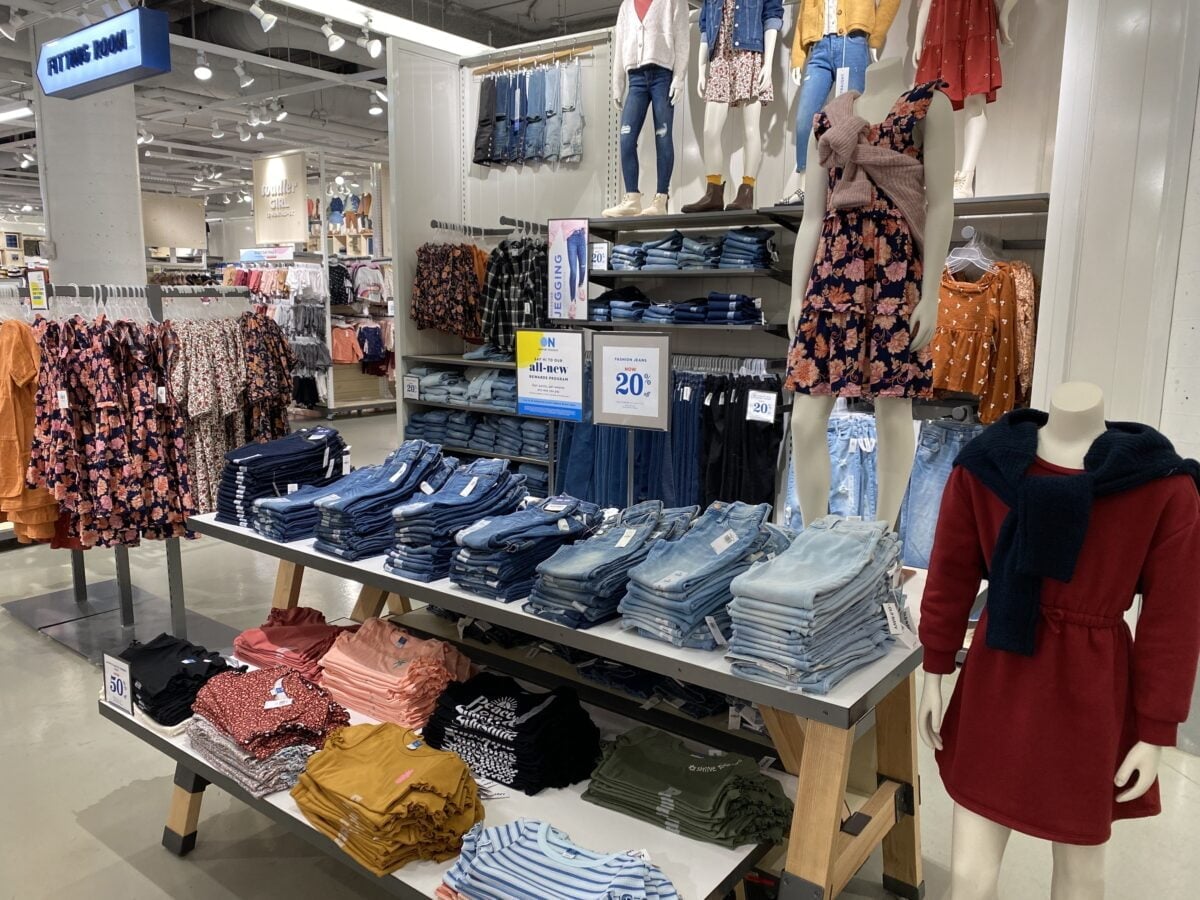
The results come as Old Navy continues to reshape its Canadian store network. Several prominent locations have closed in recent years, including stores at CF Toronto Eaton Centre, CF Markville, Yorkdale Shopping Centre and Laurier Québec. At the same time, the retailer is preparing to open at Toronto’s Dufferin Mall and return to CF Chinook Centre in Calgary.
Old Navy continues to have a sizeable Canadian presence, with approximately 100 stores nationally based on a Retail Insider review of the company’s current store directories. The combination of closures and new investment points to a more selective approach to its physical footprint as management works to improve the performance of Gap Inc.’s largest brand.
Old Navy Sales Fall as Summer Assortment Misses Mark
Gap Inc. CEO Richard Dickson said Old Navy’s second-quarter problems were concentrated in women’s seasonal merchandise, particularly dresses, shorts and swim. Weakness in those categories accounted for approximately three percentage points of the brand’s comparable sales decline.
“We made some assortment and pricing decisions that impacted our value equation,” Dickson told analysts during the company’s earnings call.
Gap Inc. had anticipated pressure from the summer assortment, but the slowdown in traffic was greater than expected. Management also acknowledged that Old Navy’s marketing did not generate the traffic it had planned for as the quarter progressed.
The company used promotions to clear seasonal merchandise and said most of the affected inventory was behind it entering the third quarter. Dickson pointed to improving August sales as fall products reached stores, with denim, activewear, sweaters and knits becoming more important to the assortment.
Old Navy had recorded six consecutive quarters of positive comparable sales before the latest decline. Management expects sequential improvement during the second half as the seasonal merchandise pressure recedes and its fall initiatives take hold.
Old Navy Expands Denim, Activewear and Beauty
Denim remains one of Old Navy’s stronger categories. The retailer is adding fashion and choice around newer silhouettes including baggy and low-rise styles while continuing to emphasize family denim and accessible pricing.
Activewear is receiving a larger platform through Old Navy Sport, which will become the retailer’s dedicated active brand. The initial launch includes approximately 40 shop-in-shops in selected stores, with a greater emphasis on technical products and dedicated merchandising.
Old Navy is also expanding into beauty. Old Navy Beauty Co. rolled out broadly in August following an earlier pilot, combining private-label products with merchandise from more than 30 third-party brands.
Management sees beauty as a potential traffic driver and a longer-term growth category. Old Navy is also expanding its partnership with Fanatics through licensed sports merchandise.
Marketing has been reworked around the fall assortment. A denim campaign featuring Cardi B launched in August, alongside a separate back-to-school partnership with MrBeast.
Dickson said the Cardi B campaign has become Old Navy’s most-viewed campaign to date and has contributed to improved traffic and stronger conversion in women’s denim. Gap Inc. said August results were tracking within its expectations for a substantially better third quarter.
Old Navy at CF Toronto Eaton Center (Image: Dustin Fuhs)
Michael Francis to Lead Old Navy
The merchandise and marketing changes will be followed by a leadership transition.
Michael Francis will become Old Navy Brand President and CEO effective November 2, succeeding Haio Barbeito, who will move into an advisory role during the transition.
Francis joined Gap Inc. in May and has previously worked with companies including Target, Walmart and DreamWorks. Dickson said he has already been closely involved with Old Navy’s second-half plans and has influenced the marketing and product storytelling now reaching customers.
The appointment comes as Gap Inc. looks to regain momentum at a brand that has added nearly US$500 million in annual revenue since the company’s wider transformation began.
Prominent Canadian Old Navy Stores Have Closed
Old Navy’s latest operating changes follow several years of adjustments to its Canadian store portfolio.
In January 2024, the retailer closed its approximately 25,000-square-foot CF Toronto Eaton Centre store along with its location at CF Markville in Markham. Old Navy said at the time that it regularly evaluated its real-estate portfolio as part of maintaining a healthy store fleet.
The Eaton Centre closure removed the retailer from one of Canada’s busiest shopping centres. Winners subsequently expanded into the former Old Navy space.
The chain’s long-running Yorkdale Shopping Centre store also closed in 2025, ending a presence of approximately two decades at the Toronto mall.
In Quebec City, Old Navy closed its 15,990-square-foot Laurier Québec location at the end of February 2025 after deciding not to renew its lease. L’Équipeur subsequently took over the space.
The changes have left Stock Yards Village as Old Navy’s sole operating store within Toronto’s municipal boundaries, according to the retailer’s current store directory. That is set to change later this year.
Old Navy Opening at Dufferin Mall, Returning to CF Chinook Centre
Old Navy is preparing to open at Dufferin Mall in Toronto in space previously occupied by Toys “R” Us. The store is expected to open in November 2026, giving the retailer two locations within the city.
The company is also returning to CF Chinook Centre in Calgary, where Old Navy previously operated before closing its former location.
The new Chinook store is part of the ongoing redevelopment and re-leasing associated with the former Nordstrom space. Gap Inc. recruitment materials have identified Chinook as a new store, while Old Navy signage has appeared at the property.
The return to Chinook adds an important dimension to the Canadian real-estate picture. Old Navy continues to operate at major regional malls and is reinvesting selectively even after closing some long-standing locations.
Its current Canadian network includes stores at Square One, Scarborough Town Centre, Vaughan Mills, Upper Canada Mall, West Edmonton Mall and CF Market Mall, along with numerous power centres and outlet properties.
Retail Insider’s review of Old Navy’s current provincial store directories puts the Canadian network at approximately 100 operating locations. Recent changes indicate store-by-store portfolio management within a large national network rather than a wider exit from Canada.
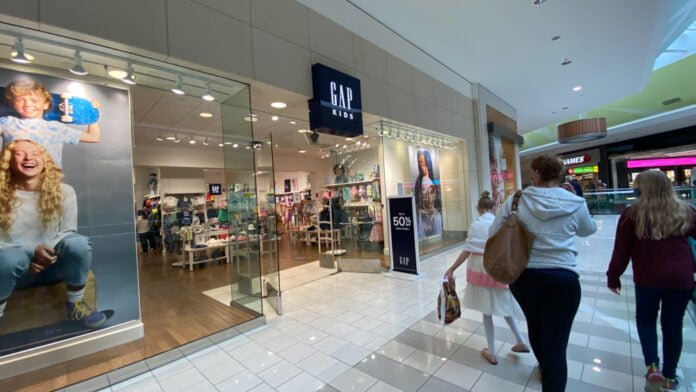
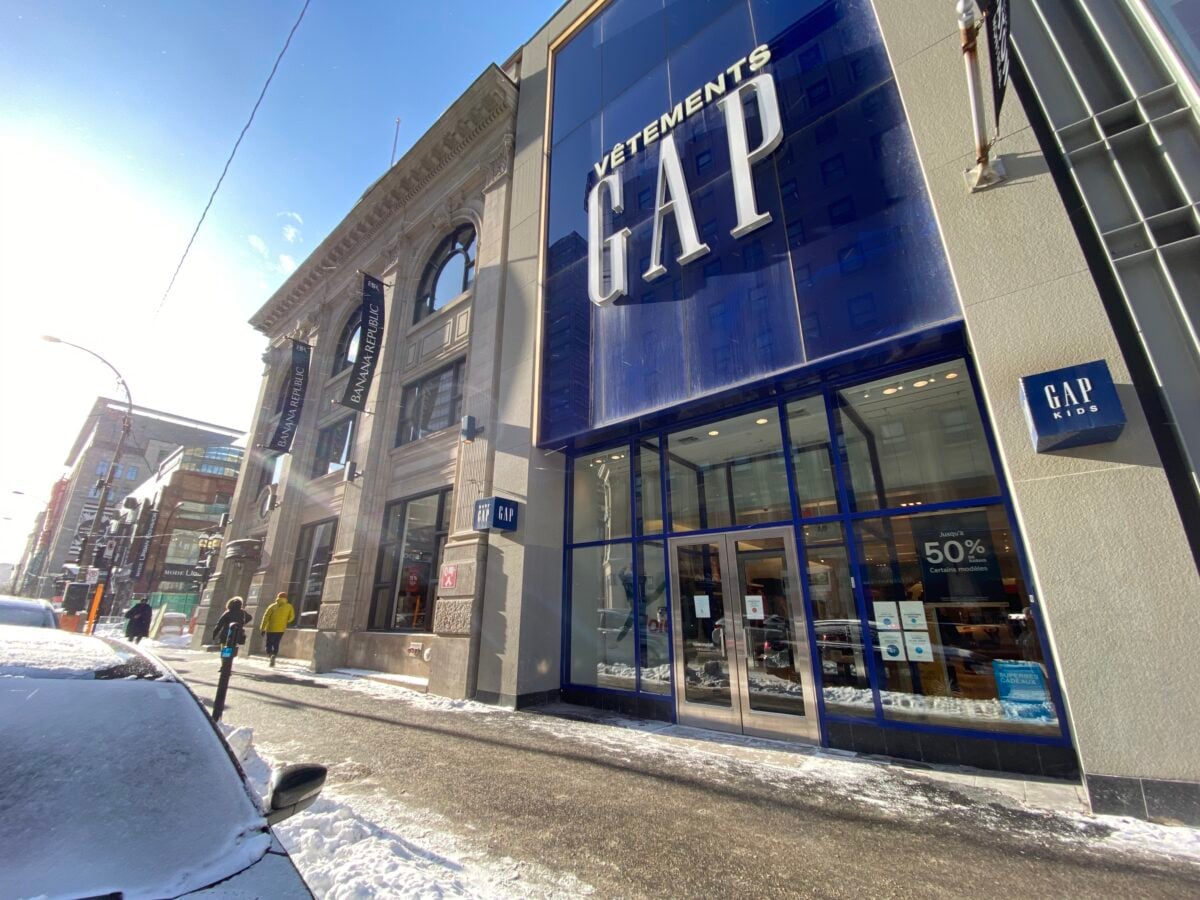
Banana Republic (777 Sainte-Catherine St. W.) and GAP Kids. Photo: Maxime Frechette
Gap Extends Turnaround With 10% Sales Gain
The Gap brand is delivering a considerably different performance.
Comparable sales increased 10% in the second quarter and net sales rose 9%, extending Gap’s streak to 11 consecutive quarters of positive comparable sales.
Women’s merchandise led the quarter, men’s delivered solid results and kids and baby accelerated. Denim and fleece remained key categories, while the company reported continued market-share gains and lower discounting.
Gap’s customer file also continued to expand. Dickson said the company has been attracting Gen Z shoppers while retaining its multigenerational customer base.
A recent collaboration with Hailey Bieber reworked two Gap denim silhouettes, with the Hailey Jean selling out quickly and helping generate traffic across the wider business.
Gap is now looking for growth beyond its traditional apparel assortment. The company relaunched its fragrance collection in July and is preparing to introduce bags in September, with beauty and accessories viewed as longer-term opportunities.
Gap’s Momentum Gives Old Navy Financial Flexibility
Gap’s performance is also helping Gap Inc. absorb some of the corrective action underway at Old Navy.
Adjusted merchandise margin increased 80 basis points during the quarter. Gap’s stronger sell-through and lower discounting gave the company room to promote Old Navy’s weaker seasonal assortment while still delivering an increase in merchandise margin overall.
CFO Katrina O’Connell said the company has revisited Old Navy’s second-half assortment with particular attention to category mix, fashion and value. Gap Inc. is using some of the margin strength elsewhere in its portfolio, along with tariff-related benefits, to support pricing and promotional adjustments at Old Navy.
Adjusted gross margin increased 20 basis points during the quarter despite the additional promotional activity at Old Navy.
Gap Inc. Shifts From Store Closures to Investment
The Canadian store changes are unfolding as Gap Inc. moves into a different phase of its broader real-estate strategy.
The company spent several years reducing its physical footprint, including a restructuring program involving approximately 350 store closures. O’Connell said Gap Inc. has now largely completed the process of eliminating underperforming locations and has begun modestly opening stores.
Capital expenditures are expected to reach approximately US$650 million in fiscal 2026, primarily for new stores and remodels at Gap and Old Navy, along with technology and supply-chain investments.
Gap expects to complete approximately 35 remodels this year, bringing roughly one-quarter of its North American specialty fleet into its latest concept by year-end. Dickson said remodeled Gap stores are outperforming the rest of the fleet.
The company is also increasing investment in technology, artificial intelligence and supply-chain capabilities.
The change in capital priorities is significant for a company whose physical-store strategy was dominated by closures and fleet rationalization earlier in its turnaround.
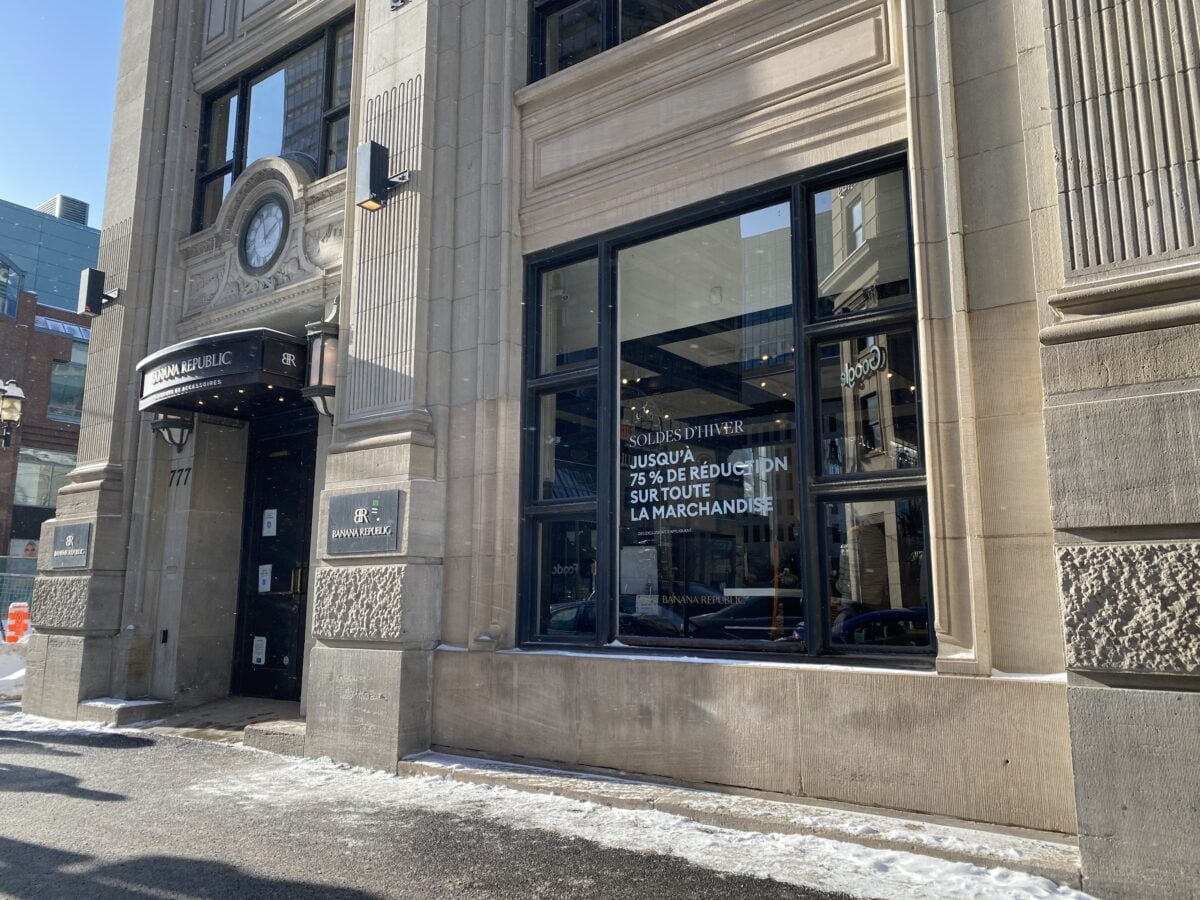
Banana Republic (777 Sainte-Catherine St. W.) Photo: Maxime Frechette
Banana Republic Improves, Athleta Remains Challenged
Banana Republic recorded a 3% comparable sales increase, marking its fifth consecutive quarter of positive growth. Men’s and women’s merchandise contributed to the result, with outerwear, sweaters, denim and linen among the stronger categories.
Athleta remained under pressure, with net sales and comparable sales declining 12%.
Gap Inc. is keeping Athleta inventory conservative while testing new products and reducing its reliance on promotions. Management expects that approach to limit near-term sales improvement as it assesses customer response and works to rebuild the brand.
Gap Inc. Raises Profit Outlook
Gap Inc. generated US$3.7 billion in second-quarter net sales, down 2% from a year earlier, while company-wide comparable sales declined 1%.
The retailer exceeded its profit expectations and raised its adjusted operating margin and earnings outlook. Full-year net sales are now expected to increase between 1% and 1.5%.
Gap comparable sales are forecast to increase in the high-single-digit to low-double-digit range for the year, while Banana Republic is expected to produce low-single-digit growth. Old Navy is forecast to finish between flat and down 1%, and Athleta is expected to remain around its first-half trajectory.
Adjusted earnings per share are now expected at between US$2.35 and US$2.45, representing year-over-year growth of approximately 10% to 15%.
For the third quarter, management expects Old Navy comparable sales to be roughly flat to down 1%, a considerable improvement from the 4% decline recorded in the second quarter.
The next several quarters will show whether Old Navy’s revised assortment, pricing and marketing can restore the growth it generated before the summer slowdown. Gap’s sustained improvement provides a useful benchmark within the same portfolio as management works to strengthen Old Navy.
In Canada, that work is occurring alongside continued changes to a sizeable national store network. Several prominent legacy locations have disappeared, while the upcoming Dufferin Mall store and return to CF Chinook Centre show that Old Navy continues to invest selectively in physical retail as it determines where its stores can perform most effectively.
(Amazon influencer event, August 2026) Image: Tracy Moromisato Photography
Brand activations have become increasingly visible across the Canadian retail landscape, appearing in shopping centres, public spaces, temporary pop-ups and private events created for influencers and other invited guests. The formats vary widely, from interactive beauty installations and product launches to elaborate experiences built around food, hospitality, entertainment and sport.
The idea is to give people an opportunity to experience a brand differently from the way they would through conventional advertising or a product sitting on a retail shelf. For some brands, an activation also creates an environment that can be photographed, filmed and shared online, extending a physical event to a much larger audience.
Pria Rajput, Founder and Creative Director of Black Label Designs, has worked on activations alongside the firm’s broader work in retail, hospitality and wellness. She said interest in these experiences reflects, in part, a desire for interactions that happen away from screens.
“People are looking for experiences that are offline and in person,” Rajput said. “With an activation, you’re taking a product and showing it in a different way than simply selling it in a retail space.”
That helps explain the appeal for retailers and consumer brands. The product remains important, but the setting, activity and interaction around it can become part of how the brand is presented.
Putting a Product Into an Experience
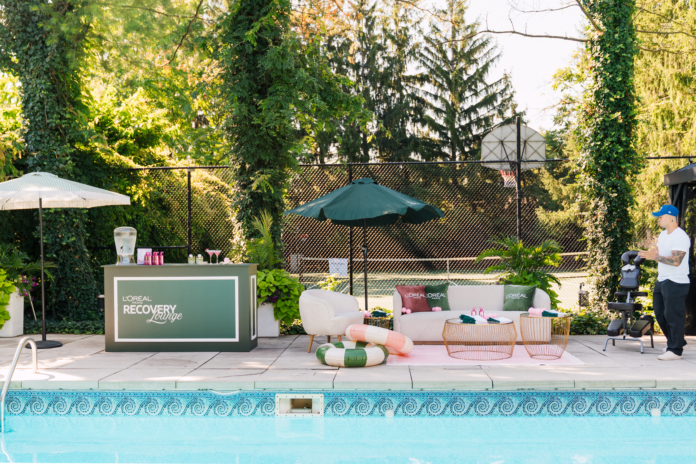
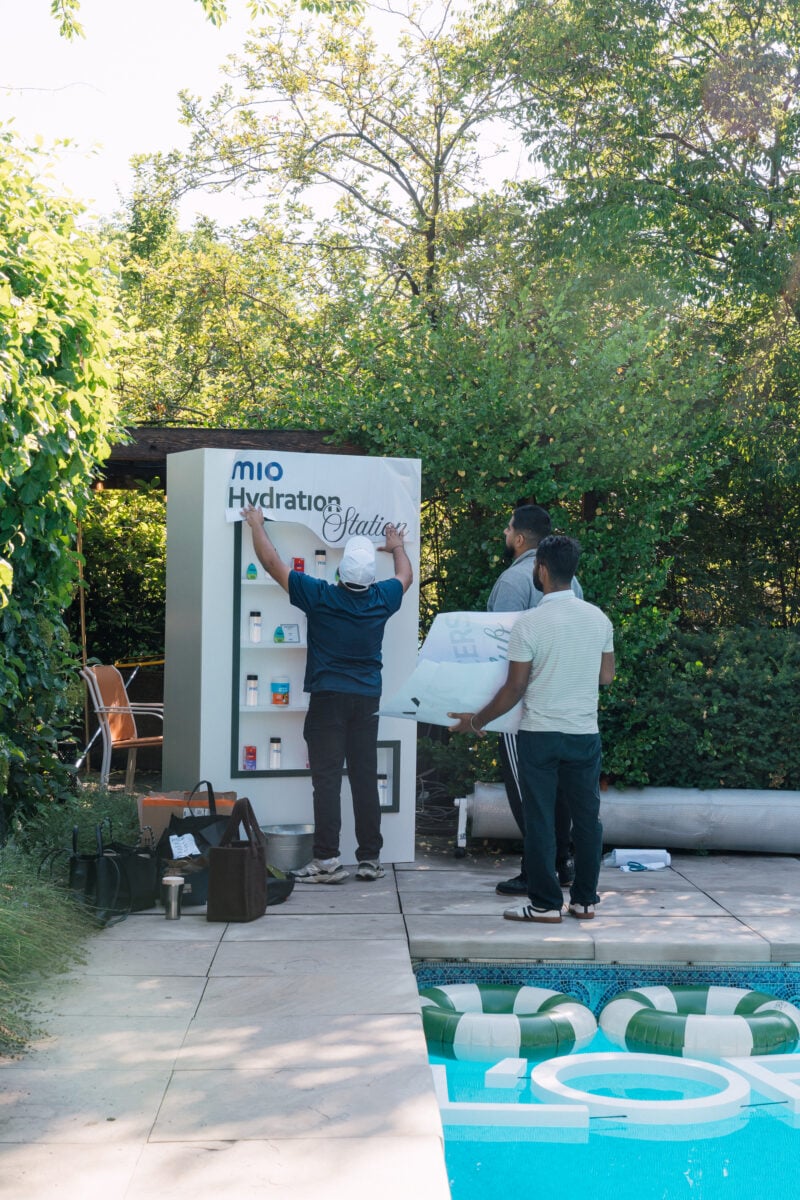
A recent Amazon creator activation attended by Retail Insider offered a clear example. Held at a private residence with a swimming pool and tennis court, the summer event brought together selected creators from the Amazon Influencer Program with a group of sponsoring brands. Canadian tennis star Leylah Fernandez participated in the tennis component, while beauty, personal-care and other products were incorporated throughout the property.
Rajput and her team were involved in designing and producing the activation, with individual products integrated into the broader experience. For Biolage, the team drew from colours associated with the brand to develop specially made popsicles using lime and mojito tones. Branding was incorporated into the popsicle sticks, and guests could ring a bell to receive one. Fresh food, mocktails and other hospitality elements were also part of the event.
“We take the product and figure out what kind of experience we can create around it,” Rajput said.
The setting provided opportunities to place products in circumstances where attendees could imagine using them. Sunscreen and frizz-control products, for example, were being experienced outdoors on a hot summer day, beside a swimming pool and during an event built partly around tennis.
“It’s taking a brand and creating an experience that shows a type of lifestyle,” Rajput said. “You can see yourself using the product that way, and now you’re actually in that environment.”
There is research behind the idea. A peer-reviewed study examining brand experience in event marketing identified multisensory stimulation, physical participation, social interaction and discovery or learning as interconnected ways consumers engage with brands during events. The physical and social environment surrounding a product can therefore contribute to the overall experience of the brand.
For retailers and brands, the surroundings are more than decoration. What people see, taste, touch and do, along with the people they interact with, can influence how they remember the product afterwards.
Creating Something People Remember
Memory is central to Rajput’s thinking around activations. Products in a conventional store compete with hundreds or thousands of other items for attention, while advertising competes with social media, websites, streaming services and countless other messages consumers encounter throughout the day. An activation gives a brand an opportunity to temporarily create its own environment around a product.
“How are they going to experience it, and how does it become a moment they remember?” Rajput said.
The tennis event illustrates the point. An attendee wasn’t simply shown a beauty product; the product became associated with an afternoon involving sport, food, conversation, a swimming pool and an unusual setting. A popsicle, mocktail or game of tennis may have little to do with selling a beauty product on its own, but together those details can place the product within a broader experience.
Execution matters. Adding a logo to a temporary installation or distributing free samples does not necessarily give consumers a reason to remember a brand. The product, audience, setting and activity have to work together, and Rajput said location is an important starting point because it helps determine what can realistically be created.
“Location and environment are huge,” she said. “That’s what sets the parameters for what’s going to be done.”
(Amazon influencer event, August 2026) Image: Tracy Moromisato Photography
Creators Give Activations a Second Audience
The growth of creator marketing has added another dimension to experiential campaigns. An activation may physically reach a relatively small number of people, but an invited creator can photograph the event, produce video, demonstrate products and share the experience with an audience many times the size of the original guest list.
IAB Canada said in a July 2026 assessment of the Canadian market that creator and influencer marketing now plays a central role in how Canadians discover, evaluate and engage with brands. It also noted that expectations are changing as advertisers look beyond reach toward credible storytelling, measurable outcomes and greater integration with broader media strategies.
Creator-focused activations sit within that evolution. Amazon’s Influencer Program, for example, extends the company’s Associates program to qualifying social media influencers. Participants can create their own Amazon pages featuring products they recommend and can earn from qualifying purchases.
A creator attending an activation can be both a guest experiencing the brand and a potential source of content through which other consumers discover the product. In some cases, that relationship can extend into commerce. The physical event may last only a few hours, while photographs, videos and product recommendations created around it can continue circulating afterwards.
Rajput also sees exclusivity as part of the appeal of some invitation-only experiences.
“People want to feel special,” she said. “People want to feel like they’re invited to something that others don’t have access to.”
For creators, that access can provide material their audiences would not otherwise see. An event can be exclusive in person while becoming highly visible online, giving brands exposure well beyond the people who were actually invited.
The Strategy Extends Beyond Influencer Events
Creator events are only one form of brand activation. Pop-ups, product launches, temporary installations and public experiences inside shopping centres can use many of the same principles, even when the objective is to reach consumers directly.
Rajput’s introduction to activations came through shopping-centre work. She said projects involving foot traffic, dwell time and how visitors interacted with tenant spaces eventually led to pop-ups and activations.
“We came into the activation world by mistake,” she said.
(Amazon influencer event, August 2026) Image: Tracy Moromisato Photography
The progression highlights the overlap between retail design and experiential marketing. Both involve decisions about how people move through physical environments, where they stop, what attracts their attention and how the surroundings communicate a brand.
A second Amazon project in Vancouver shows how different the execution can be. A pet-focused activation held on a patio included a faux pool where dogs could play, pup cups and an interactive component allowing attendees to create accessories for their pets. The activities were very different from the Toronto tennis event because the audience and products were different, but the objective was similar: create an environment in which people could interact with the product category instead of simply viewing merchandise.
Bringing a Retail Lifestyle to Life
Canadian Tire Corporation’s recent Hudson’s Bay Stripes campaign provides another Canadian example of the relationship between product and setting. Following its 2025 acquisition of select Hudson’s Bay Company intellectual property, Canadian Tire launched a 32-piece Hudson’s Bay Stripes Summer ’26 collection in May, extending the familiar Stripes into outdoor furniture, beach products, games and entertaining.
The assortment included a pickleball set, Muskoka chair and Canadian-made cedar-strip canoe. Canadian Tire positioned the collection around bringing the Stripes into more everyday Canadian moments, particularly those associated with summer, while an influencer activation in Prince Edward County subsequently placed products from the collection into a cottage setting.
The environment reflected the retail proposition. Merchandise associated with patios, cottages, beaches and outdoor recreation was presented within the type of lifestyle setting the collection was intended to evoke. It follows the same principle Rajput describes: athletic products can be activated through sport, food products through hospitality and beauty products in environments where their intended uses become relevant.
The strongest concepts connect the experience to the product instead of treating the event and merchandise as separate things. That connection becomes particularly important when brands want attendees and creators to remember an experience and subsequently share it with others.
(Amazon influencer event, August 2026) Image: Tracy Moromisato Photography
A Few Hours Can Require Weeks of Work
The temporary nature of activations can disguise the amount of work required to create them. Depending on the scale of a project, Rajput said the process can involve graphic design, illustration, spatial planning, fabrication and millwork drawings before anything reaches the event site. Locations have to be found, logistics organized and concepts approved by participating brands.
Production is followed by installation and onsite coordination, while other teams may be dealing with public relations, guest lists, budgets, staffing and unexpected problems. Once the event ends, everything may have to be dismantled.
“There is a huge team behind these activations,” Rajput said. “We’re talking about digital assets, graphic design and illustration, interior design, logistics, working with the brand clients and fabrication team, and then going into production behind the scenes.”
All of that effort can be directed toward something that exists very briefly.
“There’s a lot involved with pulling an activation together for just a moment,” she said. “There’s all of this pre-production that goes into it, and then it’s just for a moment and it’s gone.”
The temporary nature also gives brands considerable flexibility. A permanent retail environment has to function over a much longer period, while an activation can be designed around a particular product launch, season, audience or cultural moment. A future activation can take an entirely different form.
Measuring What an Activation Accomplishes
Return on investment is one of the more complicated questions surrounding experiential marketing. Rajput has encountered the issue when discussing activation projects with boards and clients, where some results can be readily measured while other objectives relate to awareness, brand perception and the longer-term value of the experience.
“You can measure certain things,” she said. “But you’re not going to have the same type of analytics you would if you were looking at the numbers for a feasibility study.”
Activations are not inherently unmeasurable, and the appropriate metrics depend on what a brand set out to achieve. A shopping-centre activation might look at attendance, participation, dwell time or traffic, while a creator campaign can examine content production, reach, engagement and subsequent affiliate activity. Product sampling, promotional codes, lead collection, media coverage and sales can provide additional measures.
IAB Canada’s recent work on creator marketing similarly points toward a market where brands are expecting measurable outcomes rather than treating creator reach alone as evidence of success. Immediate sales may not capture every objective, particularly when an activation is intended to introduce an unfamiliar brand, encourage product trial or influence how an existing brand is perceived.
“It’s creating a memory,” Rajput said. “It’s creating a buzz, getting people through the door in a different way and creating an experience that’s unique.”
Where Activations Could Go Next
Rajput is seeing more overlap between retail, hospitality, entertainment, wellness and marketing as brands look for different ways to engage consumers in physical environments. Sport can sit alongside hospitality, wellness can be integrated with food and beverage, and a temporary brand installation can begin to look and function much like a retail or hospitality space.
She expects more sophisticated physical installations to become part of the mix, including fabricated environments that allow visitors to experience a brand almost as if they had entered a store created specifically for that moment. For retailers and consumer brands, an activation can be built around one product, audience, season or occasion without having to serve the broader needs of a permanent store.
The installation itself may exist for only a few hours or days, but the experience can travel much further through the people who attended, the content they created and the memories associated with the brand long after the physical space has disappeared.
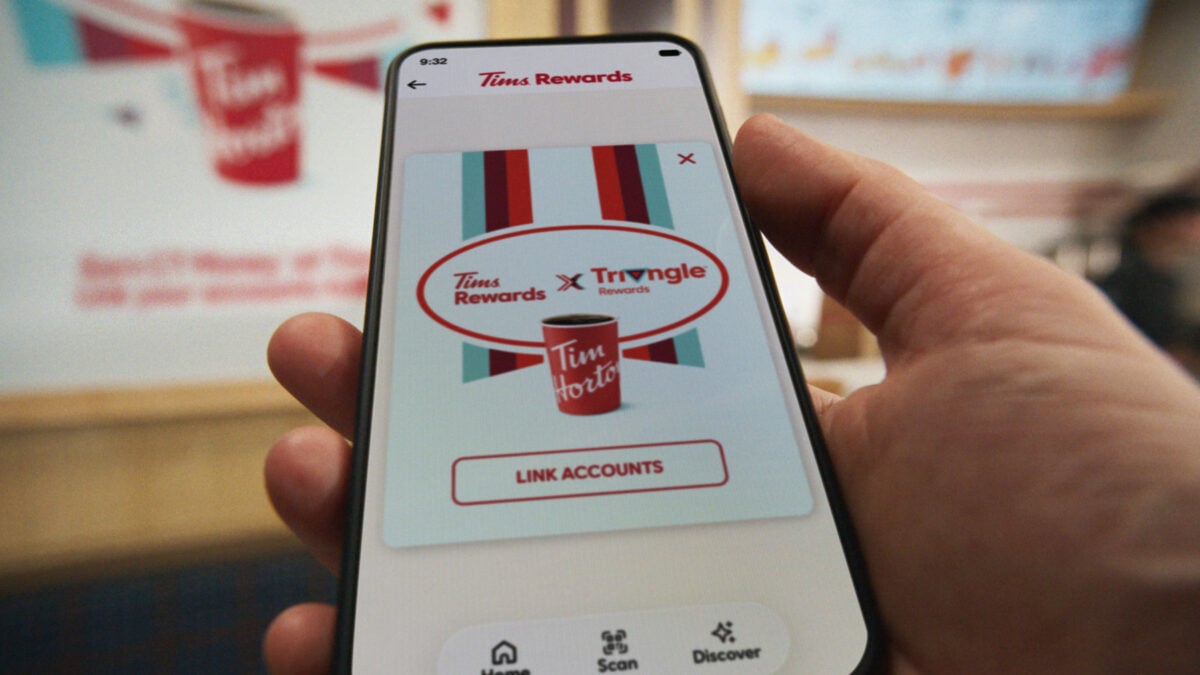
The companies said the program is aimed at connecting the two loyalty ecosystems and giving customers additional rewards for purchases at participating Tim Hortons restaurants.
Linked members can earn up to five per cent in Canadian Tire Money on eligible Tim Hortons purchases, depending on how they pay. Customers can continue earning Tims Rewards points through the existing Tims Rewards program.
“The Triangle Rewards and Tims Rewards partnership is built around one of the country’s most familiar routines: a Tims run,” said Darryl Jenkins, executive vice-president and chief development officer at Canadian Tire Corp. “Partnering with Tim Hortons, an iconic brand and industry leader, will give millions of Canadians an easy way to earn Canadian Tire Money on their Tims purchases and will further expand our Triangle Rewards ecosystem which is designed to create everyday value for Canadians by rewarding members in more places, more often.”
Under the new arrangement, members who scan for Tims Rewards can earn two per cent in Canadian Tire Money on eligible Tim Hortons purchases before tax.
Darryl JenkinsHope Bagozzi
Customers who scan for Tims Rewards and then pay with a Triangle credit card can earn an additional two per cent on the total purchase after tax. Members using a Triangle credit card as the payment method for Scan & Pay in the Tim Hortons app can earn an additional one per cent on eligible purchases before tax.
The companies said customers can link their accounts through the Triangle Rewards website by selecting the option to link accounts and following the instructions to sign in or register for both programs.
“We’re always working on delivering more value for guests and this iconic Canadian partnership does just that because guests will earn both Tims Rewards points and Canadian Tire Money on their orders at Tims,” said Hope Bagozzi, chief marketing officer for Tim Hortons. “We’re proud of all the value we give Tims Rewards members as part of our loyalty program – including earning points on purchases, redeeming points for their favourite Tims products, exclusive Members Only offers, and more. It’s exciting that Tims guests can now also earn Canadian Tire Money on their Tims runs, which can be redeemed at other iconic Canadian banners – like Canadian Tire, SportChek, Mark’s and more.”
The two rewards currencies will remain separate. Canadian Tire Money can be redeemed at Canadian Tire, Party City, SportChek, Mark’s, L’Équipeur, Pro Hockey Life, Sports Rousseau, Hockey Experts, Atmosphere, L’Entrepôt du Hockey and participating Sports Experts locations across Canada.
Tims Rewards points can only be redeemed at participating Tim Hortons restaurants.
Triangle Rewards and Tims Rewards Launch Loyalty Partnership
Canadian Tire said Triangle Rewards has more than 12 million members, while Tim Hortons has almost eight million Tims Rewards members. The companies said millions of customers visit Tim Hortons restaurants each day.
The partnership comes as Canadian Tire continues to expand the reach of its Triangle Rewards program across its retail ecosystem. Canadian Tire’s retail operations include Canadian Tire, Party City, PartSource, Gas+, Mark’s and several sports retail banners.
Tim Hortons operates more than 6,000 restaurants in Canada, the United States and other markets, according to the release. The company said it has nearly 4,000 restaurants across Canada.
The companies did not disclose financial terms for the loyalty partnership.