Toronto retail availability has reached a historic low, underscoring continued demand for well-located storefront space across the city’s core shopping corridors.
According to a new report from JLL, retail availability across 14 tracked Toronto corridors declined to 6.22% in the fourth quarter of 2025, marking the third consecutive quarter of tightening and the lowest level recorded since tracking began. The data points to a market that remains highly competitive, even as broader economic conditions introduce new uncertainty.
Brandon Gorman, Executive Vice President at JLL Canada, said the milestone reflects sustained leasing activity and limited supply in key urban streets.
“It’s the third consecutive quarter of tightening availability and the lowest availability rate that we’ve seen since we started this report” he said in an interview.
Leasing Momentum Continues Across Core Corridors

Toronto’s retail leasing market remained active through the end of 2025, with 24 new lease transactions totaling more than 41,000 square feet completed in the fourth quarter alone. Activity was particularly concentrated along Yonge Street between Gerrard and Bloor, which recorded the highest number of deals and total square footage leased.
Food and beverage operators led leasing activity, accounting for the largest share of transactions. The category continues to anchor street-level retail demand, supported by evolving consumer preferences and strong foot traffic in urban neighbourhoods.
Experiential concepts are also gaining traction. Entertainment-focused tenants such as Hyve and Cardify secured space on Queen Street West, highlighting a broader shift toward activity-based retail that complements traditional merchandising.
Strong Fundamentals Despite Economic Headwinds
While retail fundamentals remain robust, the outlook for 2026 is expected to moderate as economic conditions evolve. JLL notes that slower population growth, softer disposable income gains, and reduced consumer confidence could temper spending in the near term.
However, Toronto’s underlying economic strength continues to support retail demand. The city recorded more than 28 million visitor arrivals in 2025, surpassing pre-pandemic levels, while tourism spending reached a record high. These trends have reinforced the role of streetfront retail as a key component of the urban economy.
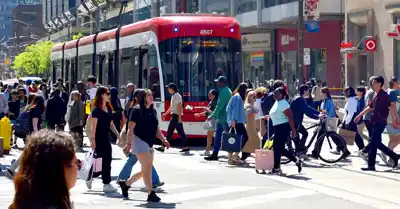
At the same time, office utilization patterns are stabilizing. Midweek attendance has climbed significantly, with Wednesdays reaching approximately 96% occupancy, providing a consistent boost to retailers that rely on weekday traffic.
Tight Supply Driving Competition for Space
The decline in Toronto retail availability reflects a broader supply constraint across many of the city’s most desirable corridors. In several submarkets, availability has effectively disappeared, creating intense competition among tenants seeking high-quality locations.
Even in areas with higher reported availability, such as parts of the downtown core, conditions are more nuanced. Gorman noted that headline availability figures can sometimes overstate true supply, particularly where redevelopment activity or limited-term leasing opportunities restrict tenant options.
“Tenant demand remains strong, but term constraints in recent years significantly narrowed the pool of prospective tenants,” he said.
This dynamic is especially evident on corridors where redevelopment has either removed inventory or created uncertainty around lease durations, shaping the types of tenants that can realistically secure space.
Average Rents Continue to Climb
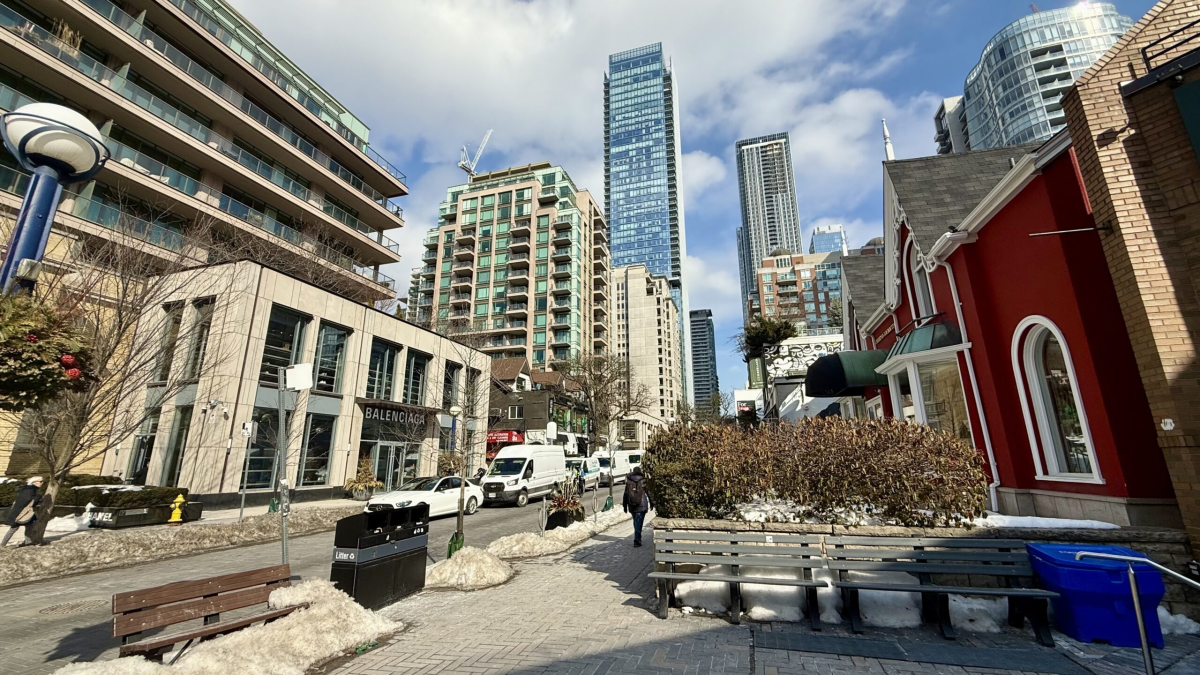
As availability tightens, rental rates have continued to edge upward across Toronto’s urban retail corridors. Average asking rents reached $94.24 per square foot in Q4 2025, reflecting steady growth quarter over quarter.
Prime corridors continue to command significantly higher rents, with top-tier locations achieving multiples of the citywide average. This pricing gap reinforces the bifurcation between prime and secondary streets, as well as the increasing importance of tenant mix and location strategy.
Toronto Retail Market Positioned for Long-Term Growth
Despite near-term economic uncertainty, Toronto’s retail sector remains well positioned for long-term growth. The combination of population density, tourism recovery, and a resilient urban economy continues to support demand for physical retail space.
Gorman emphasized that while conditions may evolve, the fundamentals underpinning Toronto’s retail market remain strong.
“I think if you look at it from that perspective, it’s a very tight market,” he said.
As retailers continue to compete for limited space in high-performing corridors, Toronto retail availability is expected to remain a defining metric for the market heading into 2026.