When clean lines, crystal-clear windows, and the gleam of freshly washed siding make as much of a statement as the architecture itself, you know you’ve hit on something more than just sprucing up. In Kelowna, Live Next Level is setting a new benchmark in residential and commercial curb-appeal services — and it’s not just about appearances.
A Clean Vision
Founded to bring simplicity, quality, and professionalism to exterior home care, Live Next Level offers a full suite of services: window cleaning, gutter cleaning, house washing, pressure washing, and moss removal. What sets them apart isn’t just what they do, but how they do it. Every job is backed by a promise of reliability, friendly service, and visible results.
Operating throughout Kelowna and extending into Lake Country, the company supports both homeowners and commercial or strata clients who want their properties looking their best year-round.
What Makes Live Next Level Stand Out
Customer-centric Approach From fast, accurate quoting to responsive scheduling, the process is designed to be simple and stress-free. Their tagline, “Simple, easy, convenient,” isn’t just marketing — it’s the backbone of how they work.
Quality & Trust With liability and workers’ compensation coverage in place, and a team that uses professional-grade tools and products, customers can expect safe, consistent, and polished results every time.
Reputation & Word of Mouth With over 470 verified reviews, many highlight the team’s punctuality, efficiency, and fair pricing. As one client shared: “What a pleasure to deal with. Fair price, on time, fast and efficient.”
Lifestyle Fit Life in the Okanagan comes with its own maintenance challenges — moss on roofs, clogged gutters, or dusty siding that makes cleaning a year-round necessity. Live Next Level’s services free up homeowners to spend their weekends enjoying the lake, vineyards, or trails, rather than climbing ladders.
The Local Market
The Okanagan’s growing real estate and lifestyle-driven community means more demand for property upkeep. Beyond aesthetics, these services play an important role in protecting property value, preventing long-term damage, and ensuring commercial or strata buildings maintain a professional image.
Looking Ahead
Seasonal spikes in demand will always be part of the industry, but Live Next Level’s strong reputation and comprehensive service menu put them in a good position to expand and grow. As Kelowna continues to develop and attract newcomers, reliable businesses like Live Next Level help keep the city’s homes and commercial spaces looking every bit as polished as the scenery around them.
Getting started with Live Next Level is simple, easy, and convenient — just like their service promise. Whether you’re a homeowner looking to brighten your windows, a strata manager needing reliable upkeep, or a business owner wanting to make a professional impression, the team is ready to help.
📞 Call today: (778) 767-4555 📍 Head Office: 4-3306 Appaloosa Rd., Kelowna, BC
For a closer look at the full range of services, seasonal specials, and customer reviews, head over to their website:Live Next Level
Their friendly staff can provide fast, accurate quotes and get you scheduled quickly, so your property can look its absolute best without the hassle.
Retail Insider is streamlining its Canadian retail news from around the web to include a handful of top news stories that can be viewed quickly during the day. Here are the top stories from the past 24 hours.
Ready to transform your retail strategy? Join industry leaders at eTail Toronto 2025, taking place October 7–8, 2025, at the Hyatt Regency in downtown Toronto. This must-attend event brings together the brightest minds in ecommerce, digital marketing, and omnichannel retail for two days of actionable insights, networking, and cutting-edge innovation.
Gain practical strategies from over 65 senior-level speakers representing leading Canadian and North American retailers. Learn proven tactics in ecommerce, customer experience, and digital marketing that you can immediately apply to your business.
Actionable Sessions & Real-World Solutions
From high-level keynotes to focused panels, every session is designed to deliver insights that matter. Discover how top brands are optimizing omnichannel strategies, leveraging AI, and building customer loyalty.
Unmatched Networking Opportunities
Connect with 500+ retail executives, CMOs, Heads of Ecommerce, CX leaders, and technology innovators. Schedule one-on-one meetings, join interactive roundtables, and build partnerships that will help your business thrive.
Cutting-Edge Technology & Solution Providers
Explore the latest tools and technologies from leading sponsors and exhibitors in the retail innovation space.
Event Specifics at a Glance
Event Name: eTail Toronto 2025
Dates: October 7–8, 2025
Location: Hyatt Regency Toronto, 370 King St. W.
Audience: 500–600+ attendees including retail leaders, brand marketing, and digital commerce professionals
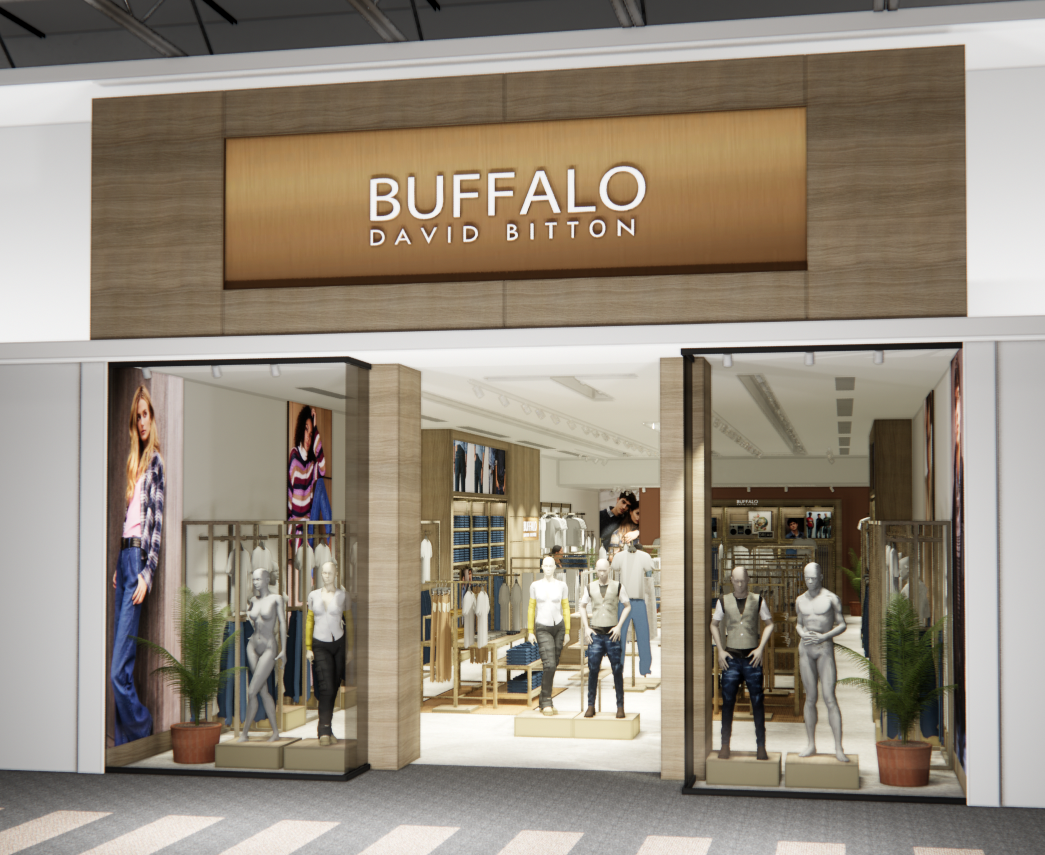
Buffalo David Bitton storefront rendering at Vaughan Mills. Image: LODA Design
Buffalo David Bitton is making a renewed push into the Canadian retail market, launching a new store concept aimed at reconnecting with a loyal customer base while introducing the brand to a new generation of denim shoppers. Under the stewardship of licensee Centric Brands, the first location opened several weeks ago at Toronto Premium Outlets in Halton Hills, followed by an upcoming September opening at Vaughan Mills north of Toronto.
The expansion is being executed in partnership with Toronto-based J2 Retail Management, which is providing retail operations support, visual merchandising, and store setup expertise.
“We want to walk before we run,” said Brent Unger, President of the Lifestyle Division at Centric Brands. “We’re reconnecting with the consumer who has been with us for so long, and once we feel that connection point is strong, we can start to scale and amplify the brand’s presence in Canada.”
Brent Unger, President of the Lifestyle Division at Centric Brands
A Strategic Return to Direct-to-Consumer Retail
Buffalo David Bitton has long been a prominent name in Canadian denim. Founded in France in 1972 and later establishing a strong foothold in Montreal, the brand built a reputation for stylish, well-fitting denim with European flair and North American accessibility.
For years, the brand was heavily distributed through major retailers, including Hudson’s Bay, where Buffalo achieved significant market share. In menswear, it ranked as the department store’s number two denim brand, while in womenswear it climbed into the top seven brands by sales.
With the changing retail landscape, and the decline of many multi-brand mall denim retailers such as Jean Machine, Bootlegger, and Below the Belt, Buffalo Jeans sees opportunity in controlling its own retail destiny.
“We wanted to be in control of our destiny,” Unger explained. “Some wholesale partners are constrained on space and risk tolerance. By opening our own stores, we can offer a broader assortment and create an experience that fully represents the brand.”
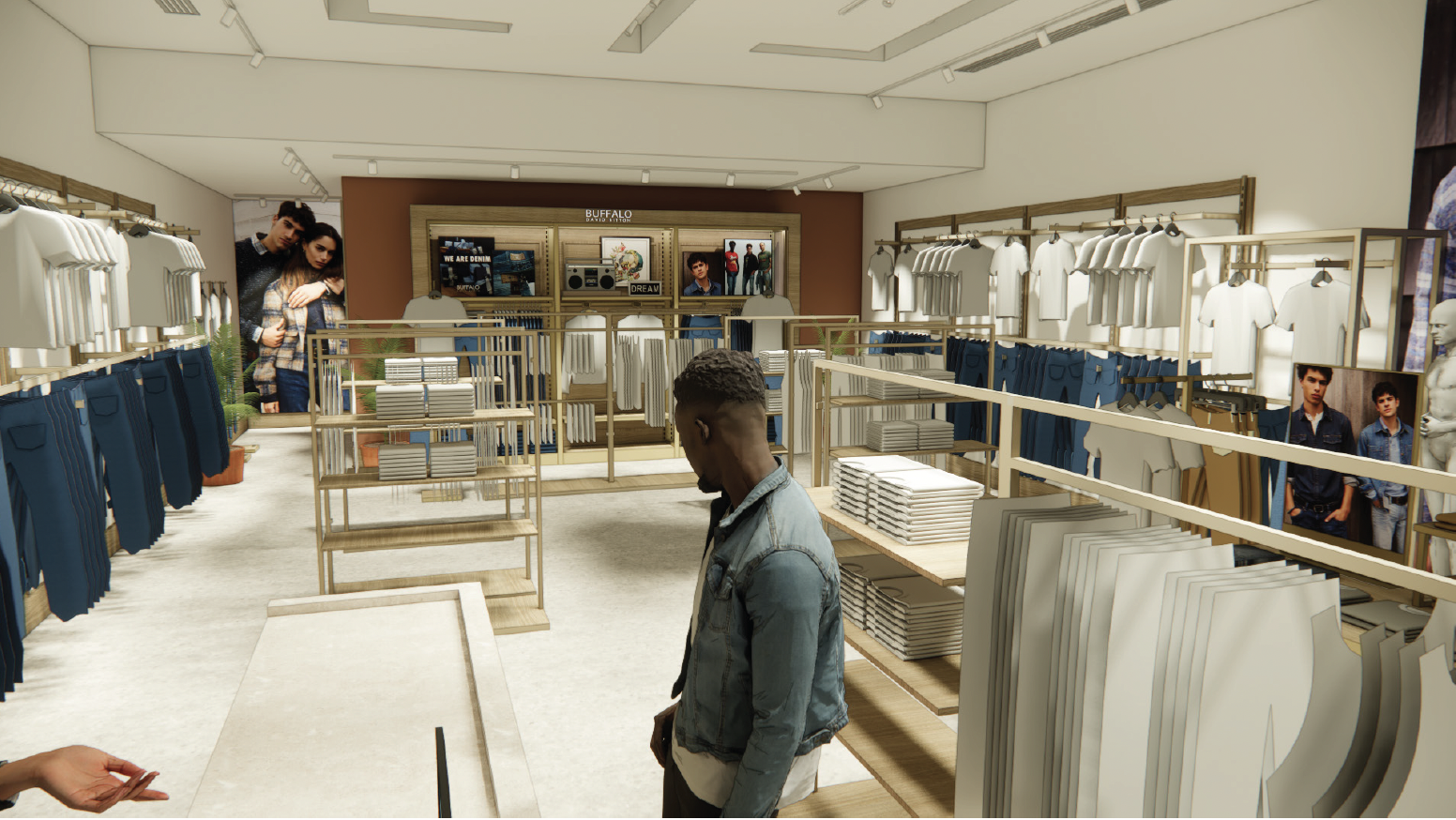
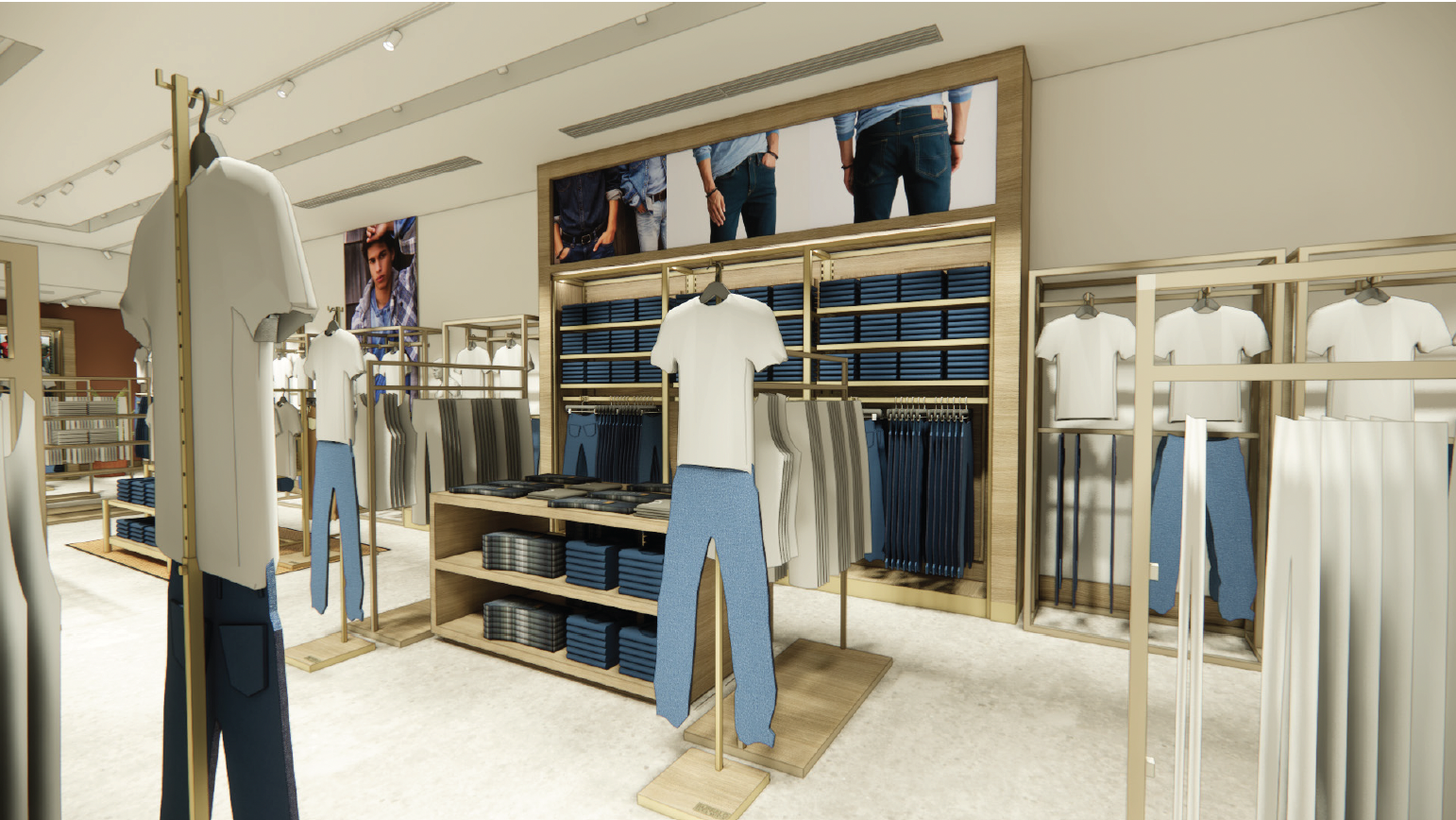
Buffalo David Bitton store interior rendering at Vaughan Mills. Image: LODA Design
Why Outlet Centres Are the Starting Point
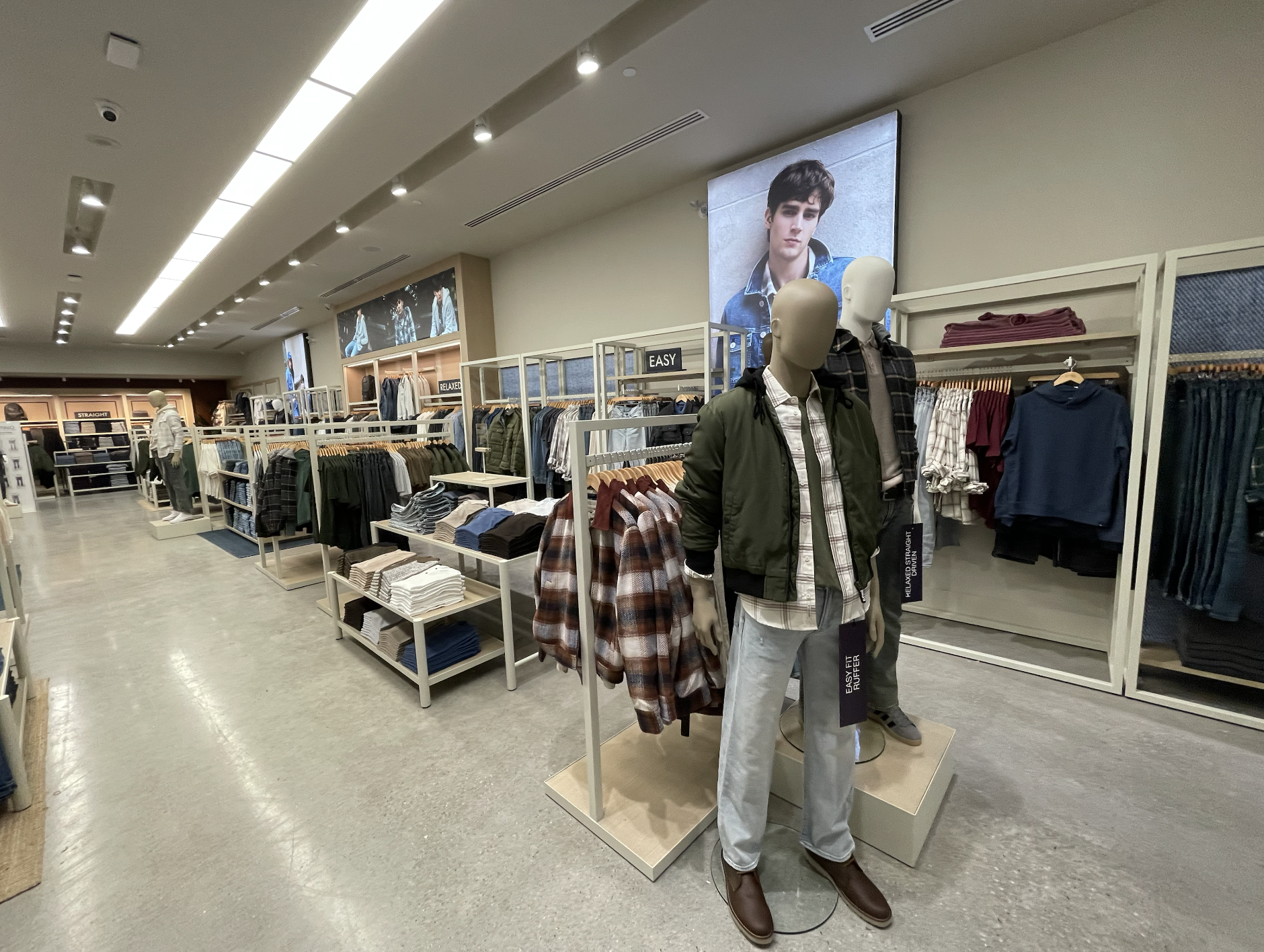
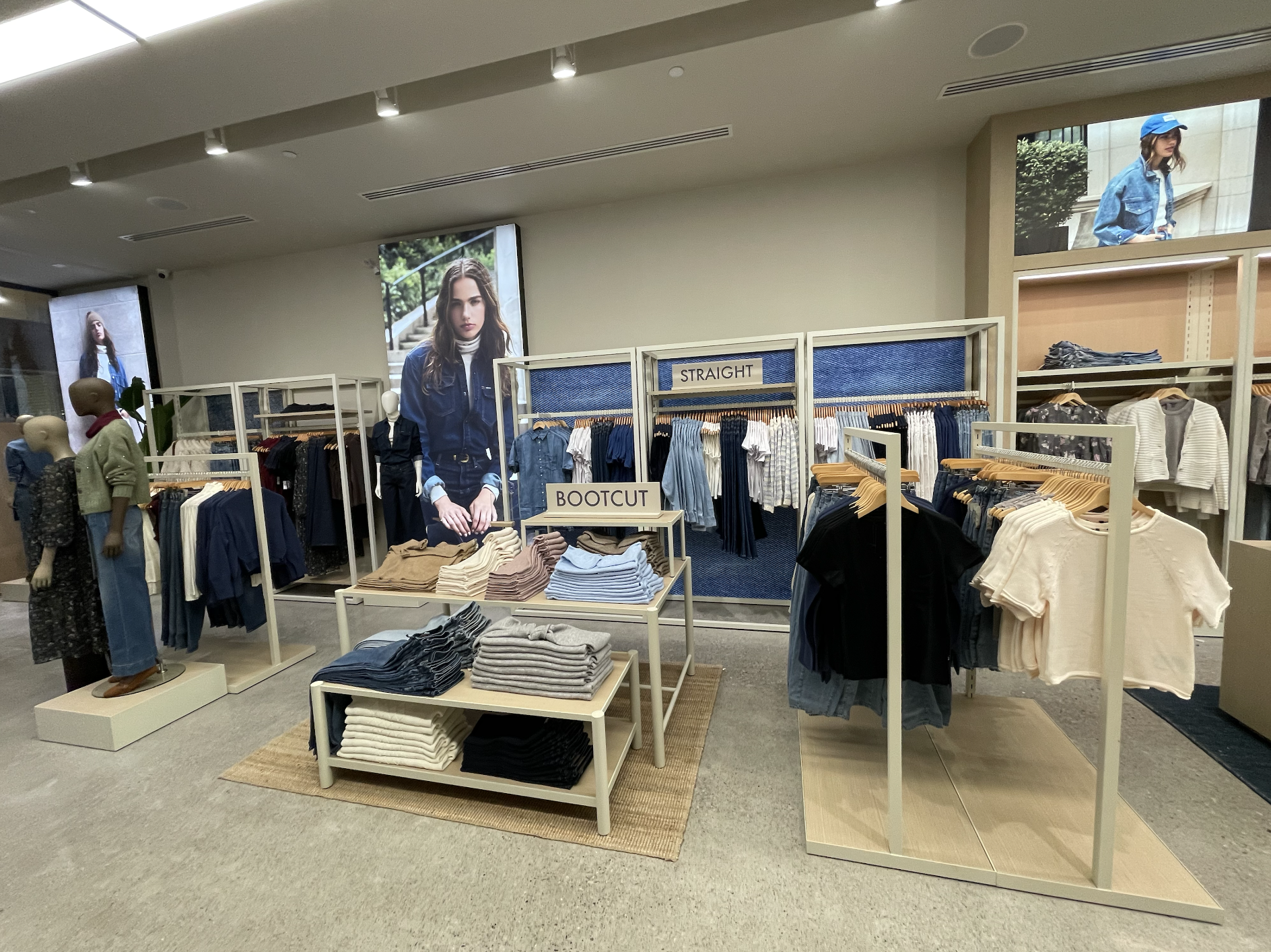
The choice to debut the new Buffalo concept in outlet centres is deliberate. The Toronto Premium Outlets store blends value-driven assortments with a hybrid of outlet and mainline product, offering both men’s and women’s collections.
According to Unger, this approach allows the brand to test customer response without the financial pressures of premium full-price mall rents, which he describes as a challenge for Buffalo’s target price point of $100–$125 for denim.
“If we were selling $225 premium jeans, maybe those rents would make sense,” said Unger. “But we know who we are, and we want to offer great value to our customer without being priced out of the best locations.”
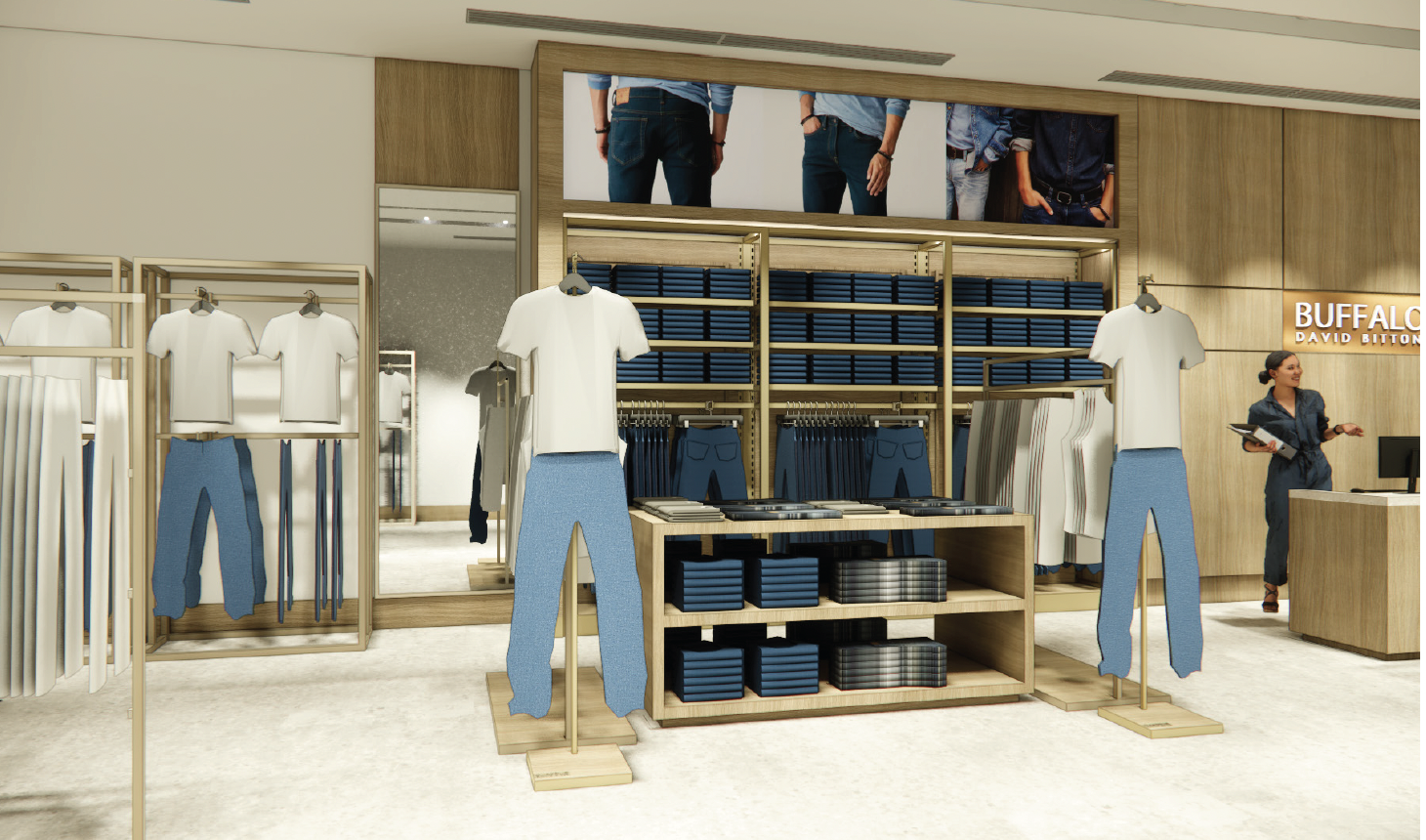
The Vaughan Mills store will differ from the first, with a larger investment in creating an immersive brand experience. “Toronto Premium Outlets was about letting the product stand on its own,” said Unger. “At Vaughan Mills, we’re building more of a brand story, what Buffalo stands for and where it’s going.”
Buffalo David Bitton store interior at Vaughan Mills. Image: J2 Retail Management
Product Evolution: Modernizing the Brand While Honouring Its Roots
Buffalo’s new retail direction coincides with an evolution in its product offering. The brand is moving from the minimalist styles popular during the pandemic to a more expressive, fashion-forward approach, while retaining its core commitment to fit, fabric, and wash.
“We’ve modernized our aesthetics,” said Unger. “Fits that were popular 15 years ago, like looser and wider men’s jeans or barrel-leg women’s jeans, are coming back in updated forms. We’re balancing trend relevance with our most commercially viable fits.”
Beyond denim, the new stores will showcase Buffalo’s growing range of apparel and accessories, including knitwear, dresses, footwear, sunglasses, and winter accessories. This broader assortment reflects a vision to become more of a full lifestyle brand.
Buffalo David Bitton store interior rendering at Vaughan Mills. Image: LODA Design
National Expansion Plans — But with a Measured Pace
While the initial rollout is focused on Ontario, Centric Brands has a roadmap for expanding Buffalo nationwide over the next three to five years. The plan calls for strategically placed stores in suburban centres across Canada, but Unger emphasizes that the timing will depend on getting the retail experience right.
“We have one chance to make the right impression,” he said. “We believe there’s a big void for our product in Canada, and the relationship with our customers has been there for 50 years. We want to tap into that, but we’ll do it in a way that ensures long-term success.”
Tariff changes, shifts in Canadian retail real estate, and the exit of certain competitors have affected the pace of expansion. Nonetheless, Centric remains confident in Buffalo Jeans’ potential to grow its direct-to-consumer presence.
Buffalo David Bitton store interior at Vaughan Mills. Image: J2 Retail Management
The Role of J2 Retail Management
J2 Retail Management’s involvement is central to the rollout’s execution. Founded in Toronto in 2012 by Jodie Wolfe and Brian Le Saux, J2 specializes in turnkey retail services for apparel and lifestyle brands, including logistics, merchandising, store setup, and staffing.
“We could try to build all the retail muscle ourselves, but why not work with experts?” said Unger. “J2 brings the operational intelligence we need to bridge the gap between making great product and delivering great retail experiences.”
J2’s track record includes working with major global brands on Canadian and US retail launches, providing both the creative and operational backbone for successful openings.
Buffalo David Bitton store interior rendering at Vaughan Mills. Image: LODA Design
Centric Brands’ Wider Portfolio in Canada
Buffalo David Bitton is part of Centric Brands’ lifestyle division, which also manages several other major apparel licenses in Canada. These include Loft, IZOD, Dockers, Caterpillar workwear, Merrell, and the recently signed Esprit.
While Buffalo is the current retail focus, Unger noted that the company’s broader brand portfolio offers other candidates for future direct-to-consumer expansion in Canada.
Heritage Meets the Next 50 Years
Buffalo’s retail revival is built on five decades of brand heritage, a loyal Canadian customer base, and a clear-eyed understanding of its market position. The expansion comes at a time when many apparel brands are rethinking their retail strategies to better connect with consumers directly.
“We’re doubling down on what we want Buffalo to look like in our next three-year plan,” said Unger. “We’re reimagining our denim and our customer experience. We have 50 years of heritage to build on, and we’re modernizing for the next 50.”
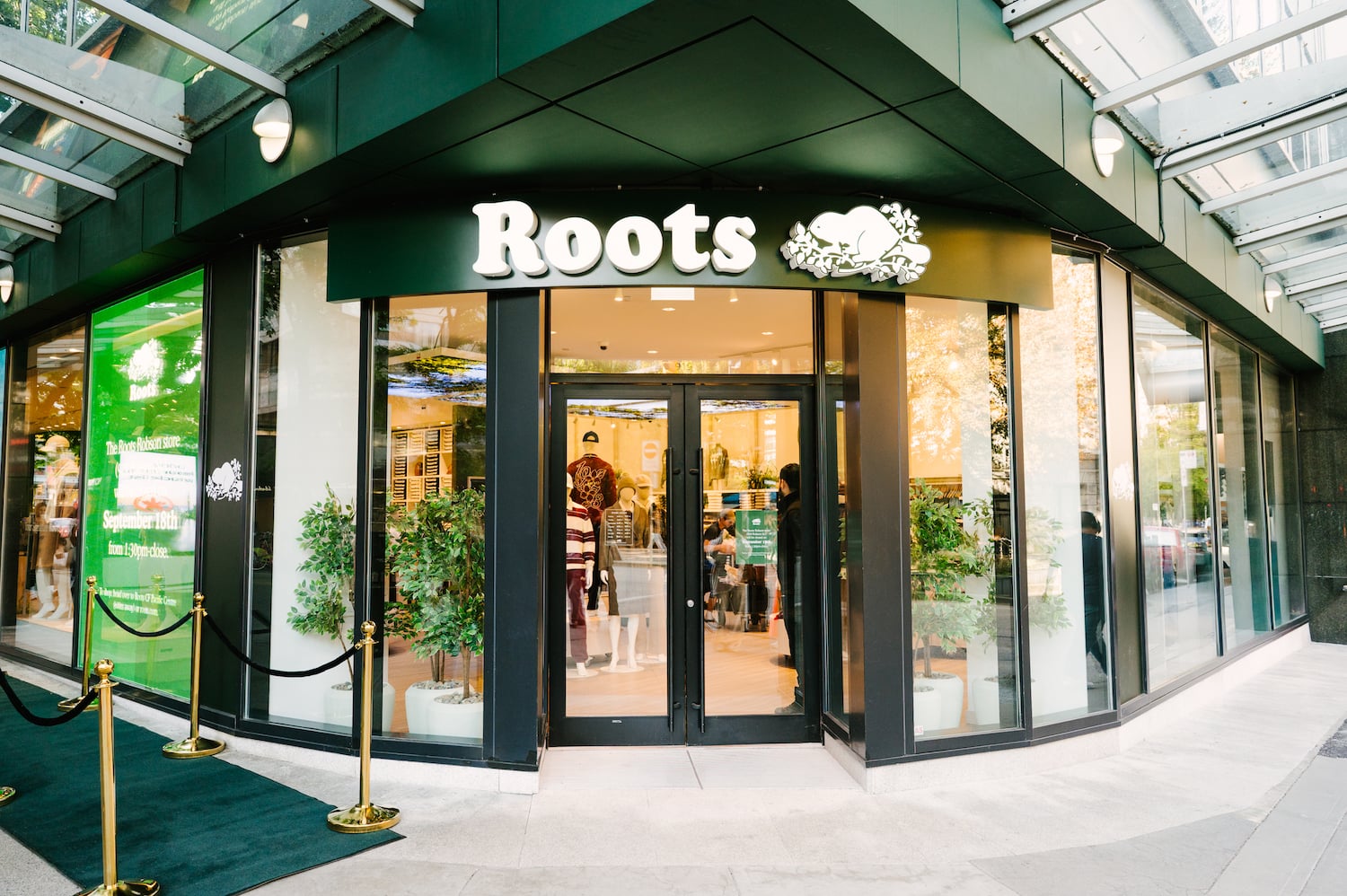
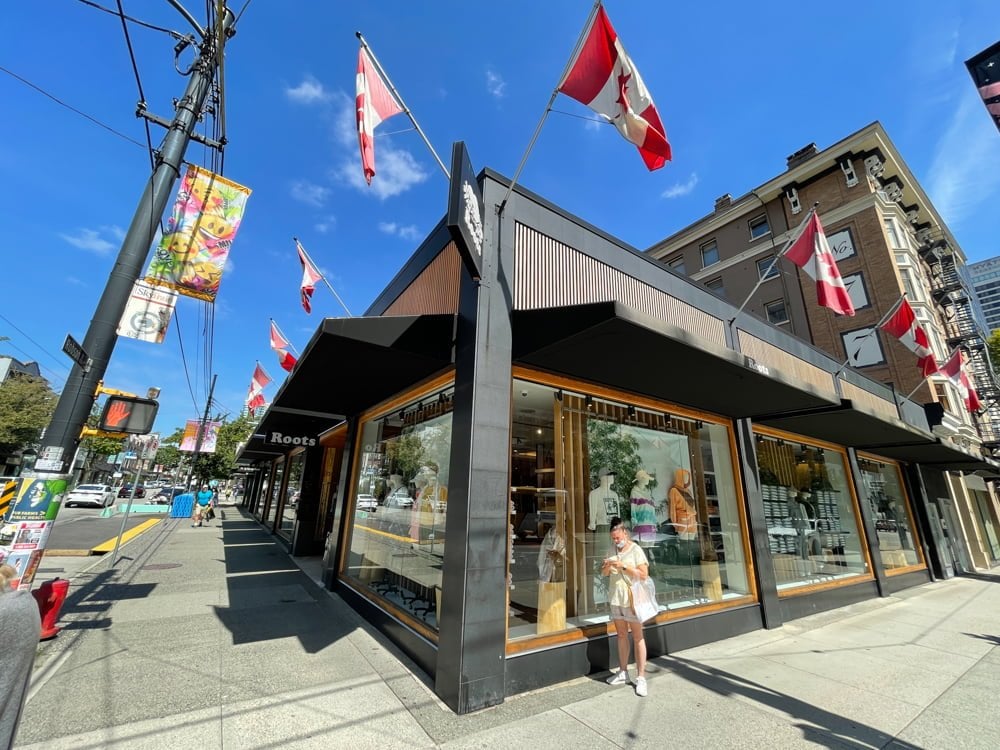
Roots flagship store on Robson St. in downtown Vancouver. Photo: Brandon Artis
Roots has officially opened its new flagship store on the corner of Robson and Hornby Streets in downtown Vancouver, marking a renewed commitment to the city where the brand has maintained a retail presence for three decades. The new store at 929 Robson Street replaces Roots’ long-standing location at Robson and Burrard, a corner now occupied by Arc’teryx.
The move represents both continuity and evolution. While Roots has been part of the Robson Street retail landscape since the early 1990s, the new flagship introduces a bold, modern retail environment designed to resonate with both local shoppers and international visitors.
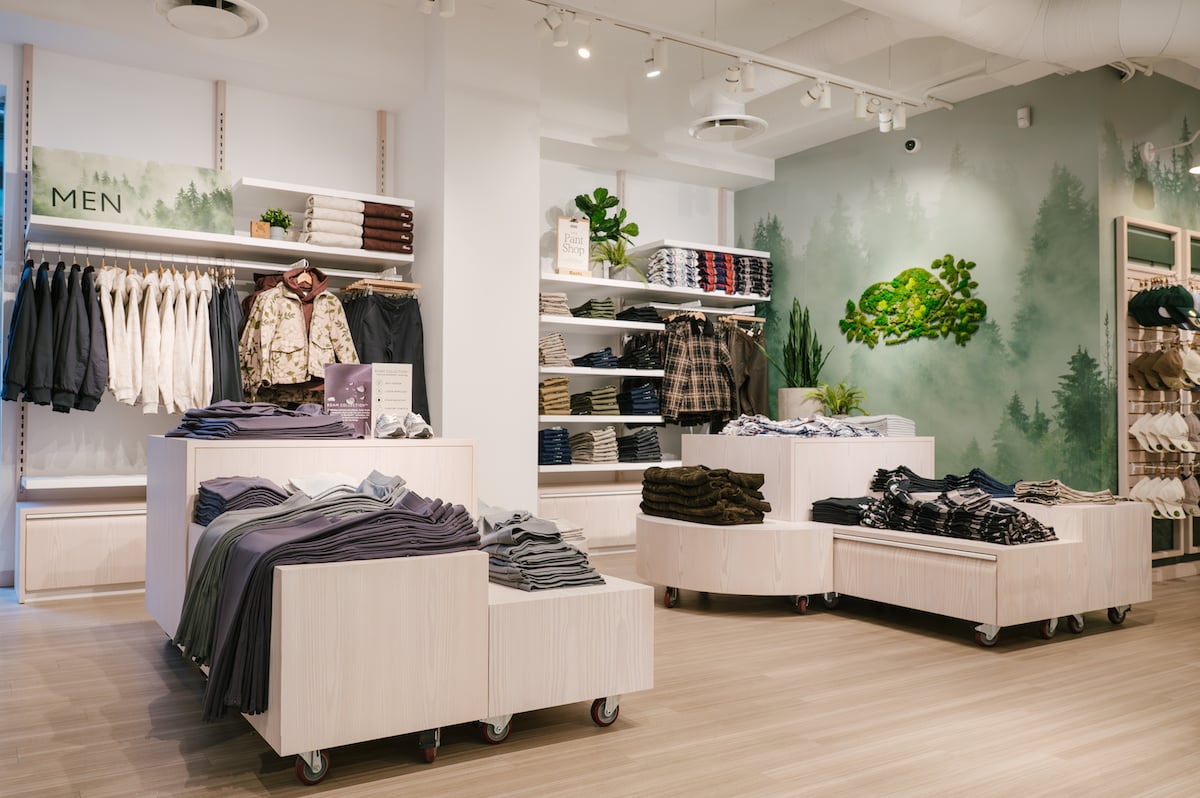
The new Roots Robson Street flagship blends contemporary retail design with nods to Vancouver’s natural surroundings. Inside, shoppers are greeted by layered textures, premium materials, and signature Roots design elements. A preserved moss wall and a moss beaver sculpture serve as focal points, paying tribute to the brand’s iconic logo and Canada’s natural environment.
One of the store’s most striking features is a lightbox ceiling installation showcasing a commissioned image of Stanley Park. The installation underscores the connection between Roots and Vancouver’s outdoor culture, while also serving as an immersive design element.
Digital technology plays a central role in the store. Holographic screens and large-format displays highlight current campaigns and storytelling elements, integrating the brand’s heritage with modern retail innovation.
Roots flagship store in downtown Vancouver. Photo: Brandon Artis
Exclusive Vancouver Collection
Unique to the new flagship is The Vancouver Collection, a curated assortment available only in this store. “We dedicated an entire wall to Vancouver product because we know this store attracts a mix of locals and visitors,” said Meghan Roach, President and CEO of Roots. “Tourists want something that feels distinct to the city, while Vancouverites appreciate the nod to their community.”
Meghan Roach
The store’s exclusivity aims to reinforce its role as a destination. Visitors seeking a keepsake tied to Vancouver will find products that reflect the city’s natural beauty and urban lifestyle.
Expansive Corner Presence
The new store occupies a significant corner footprint at Robson and Hornby, with large street-facing windows and multiple digital screens showcasing Roots’ seasonal campaigns. The location was formerly occupied by Peloton and an adjacent space previously leased to TWG Tea.
Roach noted that the new flagship is considerably larger than the old Robson and Burrard store. “It’s a huge space, almost half a block long, and we’ve been able to design it to feel open, light, and inviting,” she said. “The natural light from the corner windows makes a real difference.”
For Roots, the opening signals a broader commitment to reconnecting with its West Coast customer base. While the brand has hosted numerous activations in Ontario and Quebec, Vancouver remains a vital part of its national retail network.
“Roots has always had deep roots in Vancouver,” Roach explained. “This flagship is about reinvesting in the community, bringing in local partners, and celebrating the city’s unique culture.”
The store launch coincided with a community-focused opening event featuring Vancouver restaurants, cafés, and cultural partners. “We wanted this to feel like more than a store opening,” Roach added. “It was about building connections and celebrating what makes Vancouver special.”
Jeff Berkowitz of Aurora Realty Consultants represents Roots as broker in Canada, and negotiated the lease deal for the Robson Street store.
Roots flagship store in downtown Vancouver. Photo: Brandon Artis
Inside the Store Experience
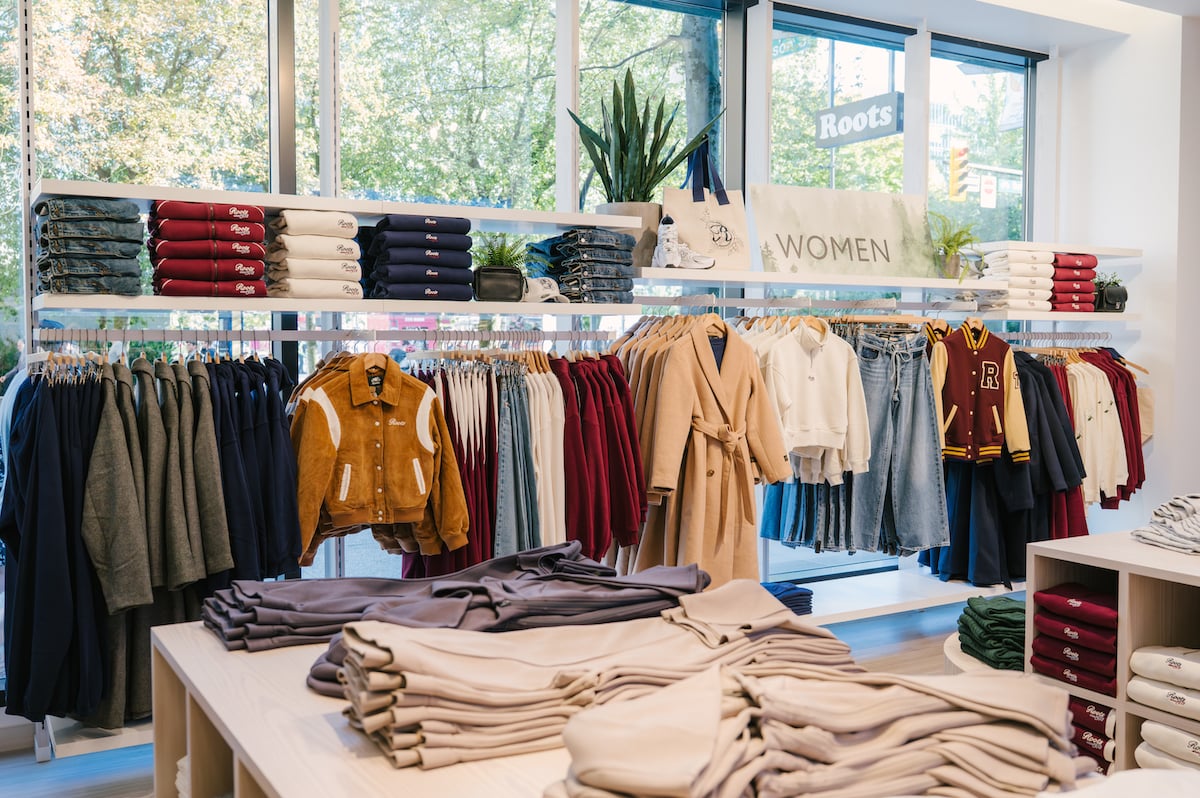
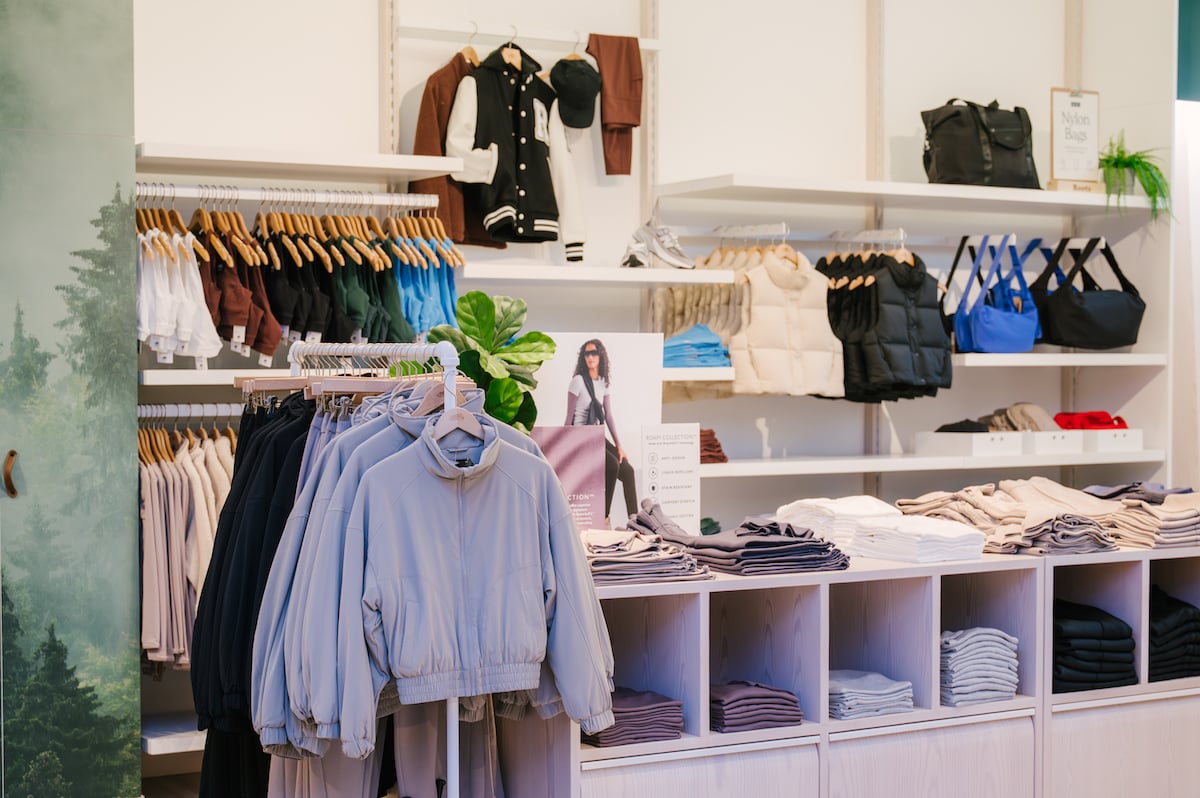
Walking through the flagship, shoppers encounter a series of curated spaces designed to reflect different aspects of the Roots brand. The men’s section is divided from the rest of the store by the moss wall, while gender-free apparel is interwoven throughout. A wallpaper motif inspired by the outdoors adds texture, while light wood tones create a warm and inviting environment.
The fitting room area is enhanced by a digital wall projecting nature scenes, offering a calming and Instagram-friendly backdrop. “It’s about creating moments where customers feel immersed in the brand,” said Roach. “We want the store to feel both experiential and comfortable.”
Outside, the store frontage extends along both Robson and Hornby Streets, creating a dramatic presence in one of Vancouver’s busiest shopping districts. Large digital screens highlight the brand’s storytelling, while the moss wall continues outdoors, blurring the line between the city and the wilderness aesthetic that defines Roots.
Roots flagship store in downtown Vancouver. Photo: Brandon Artis
Roots’ Legacy on Robson Street
The relocation ends an era for Roots on Robson and Burrard, where the brand maintained a store for more than 30 years. That location became synonymous with Roots’ West Coast identity, attracting both loyal local shoppers and tourists from around the world.
The decision to move was prompted by the opportunity to secure a more expansive and high-profile corner. Arc’teryx now occupies the former Roots space, reinforcing Robson Street’s role as a hub for Canadian and international lifestyle brands.
“This move was about positioning Roots for the next 30 years in Vancouver,” said Roach. “Robson Street is one of Canada’s most important retail corridors, and we wanted a space that truly reflected the brand today.”
Former Roots at Robson and Burrard Streets in Vancouver (June 2021). Photo: Lee Rivett.
The Broader Roots Story
Founded in 1973 by Michael Budman and Don Green, Roots began as a maker of negative-heel footwear before expanding into apparel and leather goods. Its first store opened on Toronto’s Yonge Street, and the brand quickly grew into one of Canada’s most recognized lifestyle retailers.
The company’s beaver logo, introduced in 1985, remains a hallmark of Canadian design. Roots has since expanded to more than 100 company-operated stores across Canada. Its eCommerce platform ships to over 60 countries.
Today, Roots is known for its premium sweats, leather bags, and outerwear, with a reputation for quality and comfort. Its stores often feature customization workshops and localized design elements, reflecting the company’s dedication to storytelling and community engagement.
Looking Ahead
Roots’ Vancouver flagship is part of a larger strategy to refresh and modernize its retail presence. The company has recently invested in enhanced store experiences in Toronto, including its Yorkdale and CF Toronto Eaton Centre flagships.
“Our goal is to create spaces where people want to spend time,” Roach said. “Whether that’s in Vancouver, Toronto, or internationally, Roots stores should reflect the spirit of the community while celebrating the brand’s heritage.”
The Vancouver flagship encapsulates this vision, bridging Roots’ 30-year legacy on Robson Street with a forward-looking design that speaks to both local culture and global retail trends.
“Roots is more than a retailer,” Roach concluded. “It’s part of Canada’s cultural fabric, and this store reaffirms our commitment to being a place where people feel connected—to nature, to the community, and to each other.”
Canadians can now have beauty, wellness and everyday essentials from Shoppers Drug Mart delivered directly to their doors, thanks to a new national partnership with Skip.
The agreement between Skip, a Canadian delivery platform, and Shoppers Drug Mart was announced on Wednesday. The service will be available through 650 Shoppers Drug Mart stores across nine provinces, including British Columbia, Alberta, Saskatchewan, Manitoba, Ontario, New Brunswick, Nova Scotia, Prince Edward Island, and Newfoundland and Labrador.
According to the companies, the collaboration marks a significant expansion of Skip’s retail offerings, enabling customers to order products ranging from pharmacy essentials to beauty and skincare items.
“This partnership allows us to extend our reach even further and extend our ‘need-it-now’ experience to ensure that Canadians can access beauty, wellness, and everyday essentials from Shoppers Drug Mart with speed and ease, right to their door,” said Sarah Draper, vice-president of e-commerce at Shoppers Drug Mart.
Sarah Draper
To promote the launch, Skip is offering a limited-time promotion of $20 off orders of $35 or more, using the code SHOPPERS20, valid through Oct. 6.
The partnership also includes a promotional event, the “Grab N’ Glow” pop-up, taking place in downtown Toronto on Sept. 27 and 28 at STACKT Market (28 Bathurst Street). The event will feature professional makeup touch-ups, customized cosmetic bags, vouchers, and product giveaways from brands such as Clarins, e.l.f. Cosmetics, and L’Oréal. The event will be: Saturday, Sept. 27: 12 PM – 8 PM; Sunday, Sept. 28: 12 PM – 7 PM.
Skip began as a Prairie-based start-up in 2012 and has grown into a national delivery network operating in over 450 cities and towns across Canada. Shoppers Drug Mart, a division of Loblaw Companies Ltd., operates more than 1,350 locations across the country.
Credit: Jacob Bixenman, shot at Electric Lady Studios, NYC
Maybelline New York has announced pop star Miley Cyrus as its newest global spokesperson, unveiling a campaign that reimagines the brand’s iconic “Maybe it’s Maybelline” jingle.
The makeup brand, which says it is the number one in the world, revealed the collaboration Wednesday as part of a long-term partnership that includes global marketing campaigns and new product launches.
Maybelline New York, the number one makeup brand in the world, welcomes multi-platinum recording artist and international music icon Miley Cyrus as its newest global spokesperson.
Credit: Jacob Bixenman, shot at Electric Lady Studios, NYC
“I remember singing the Maybelline jingle as a kid and imagining it was me on the screen. Now, it is. To take something so iconic and make it mine — it’s powerful and personal,” said Cyrus in a statement.
“This partnership brings together two core parts of me. You can’t erase makeup from music. Within music, there’s performance and honesty — makeup enhances both. It’s how I tell my truth without saying a word,” she said. “Maybelline shares my belief that makeup should be expressive, ever-evolving. Partnering with Maybelline, a brand that celebrates meaningful values, self-expression and play, felt like the most natural fit in this stage of my life.”
The campaign will launch across television, digital, social media and in-store displays starting September 2025, and features Cyrus’s rendition of the familiar jingle. It will also promote upcoming launches, including a new colour line and Maybelline’s viral Sky High mascara.
Credit: Jacob Bixenman, shot at Electric Lady Studios, NYC
Sandrine Jolly
“She brings a deeply personal lens to beauty that is expressive and emotional. With her unmistakable voice and vision, she turns our iconic jingle into something raw, intimate, and powerfully reflective of this Maybelline era,” Jolly said.
Cyrus, a Grammy-winning artist known for her evolving music and advocacy work, emphasized the broader message behind the campaign.
“I think this campaign shows that beauty is fluid, that confidence can look a million different ways, and that you were born with it all along,” she said.
Maybelline said the campaign bridges “nostalgia and reinvention” while encouraging creativity and self-expression.
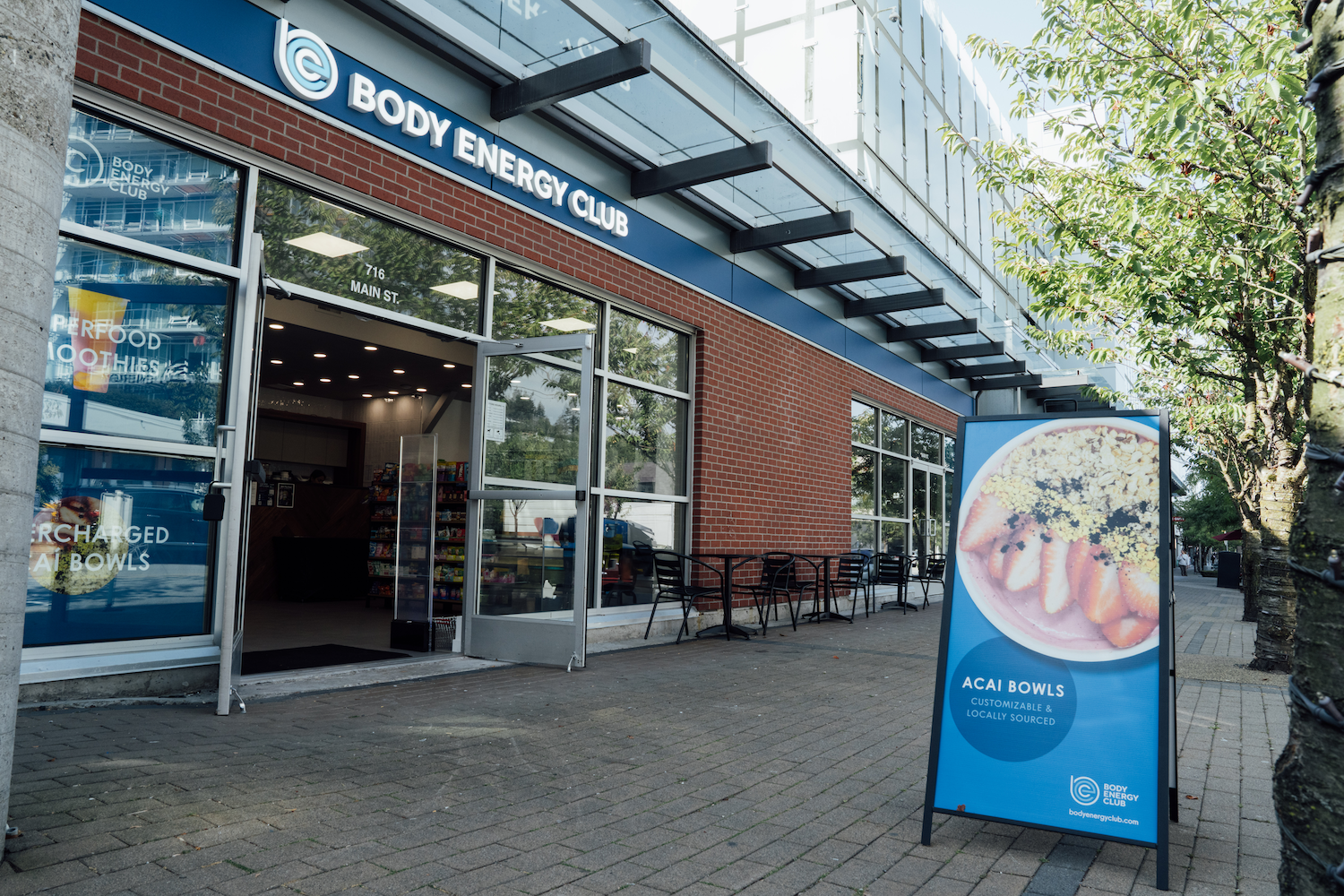
Body Energy Club at Park Royal in West Vancouver. Photo: Body Energy Club
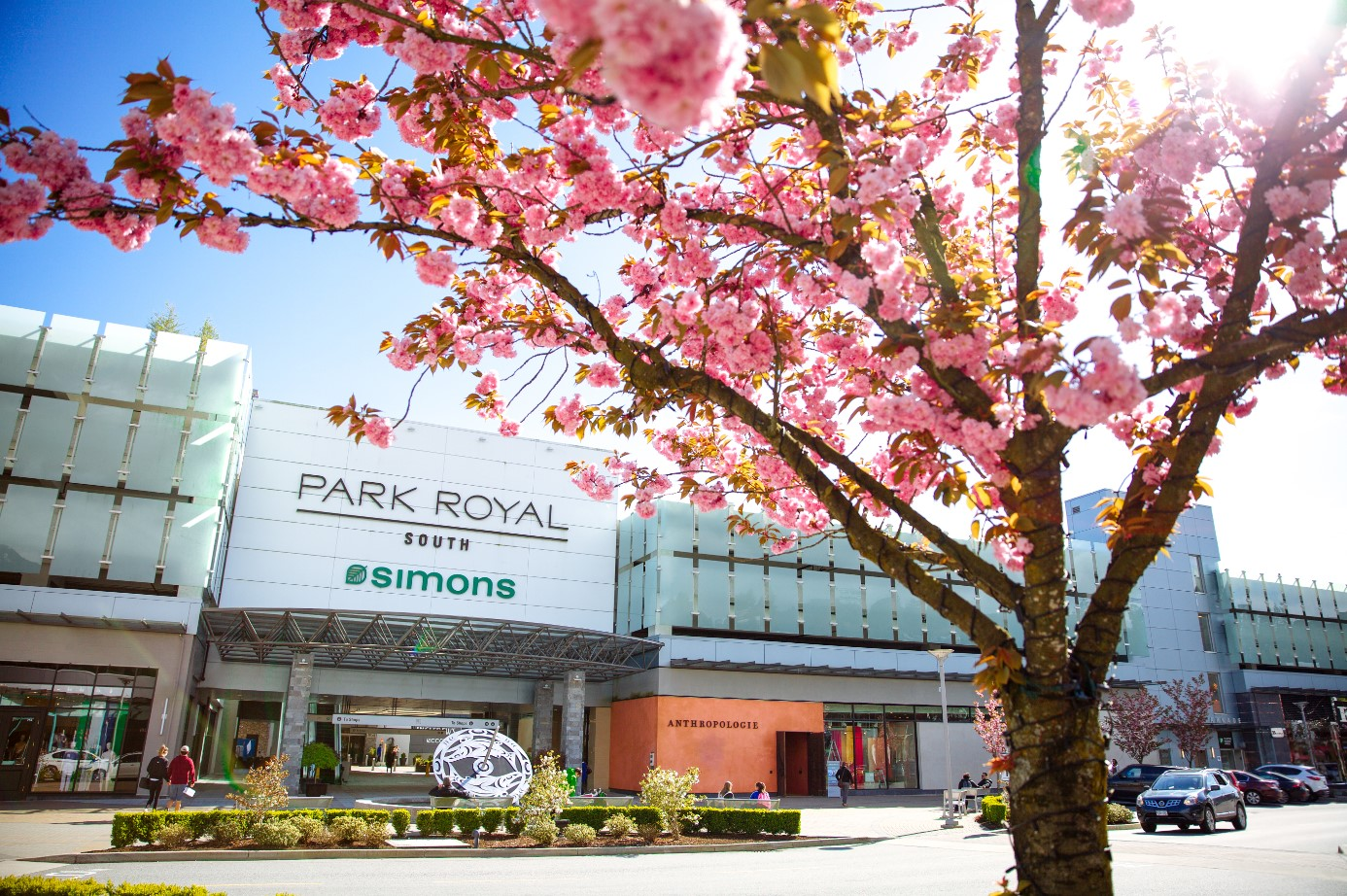
Body Energy Club, a Vancouver-based health and wellness retailer known for smoothies, supplements and grab-and-go meals, has opened its latest location at Park Royal South. The store, at 716 Main Street, introduces West Vancouver residents to the brand’s blend of nutrient-dense offerings and accessible nutrition, deepening its foothold in British Columbia while signaling broader ambitions across North America.
The launch represents another milestone for the company, which has quietly grown from a single 500-square-foot shop in downtown Vancouver into a chain with nearly 20 stores across Canada and the United States.
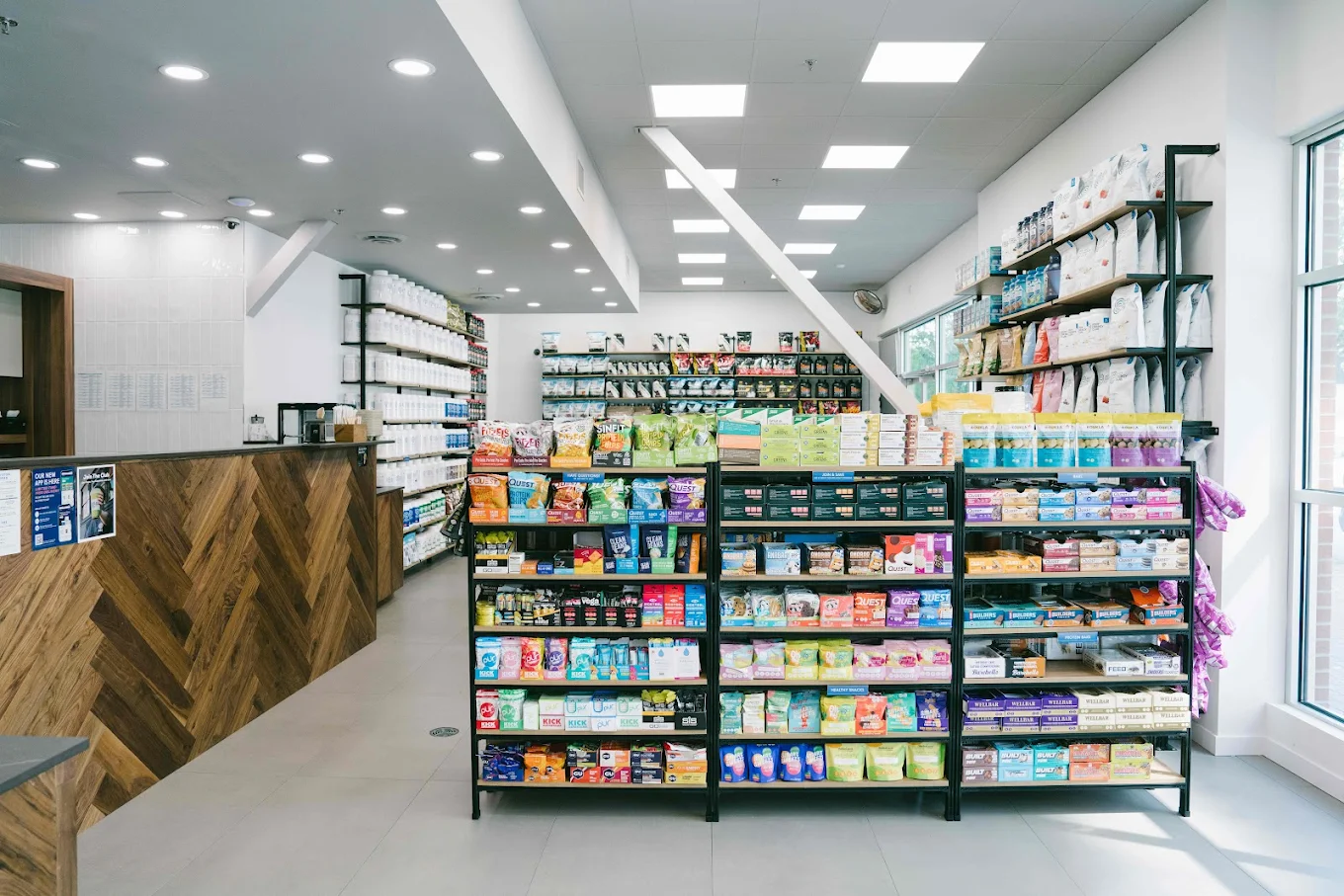
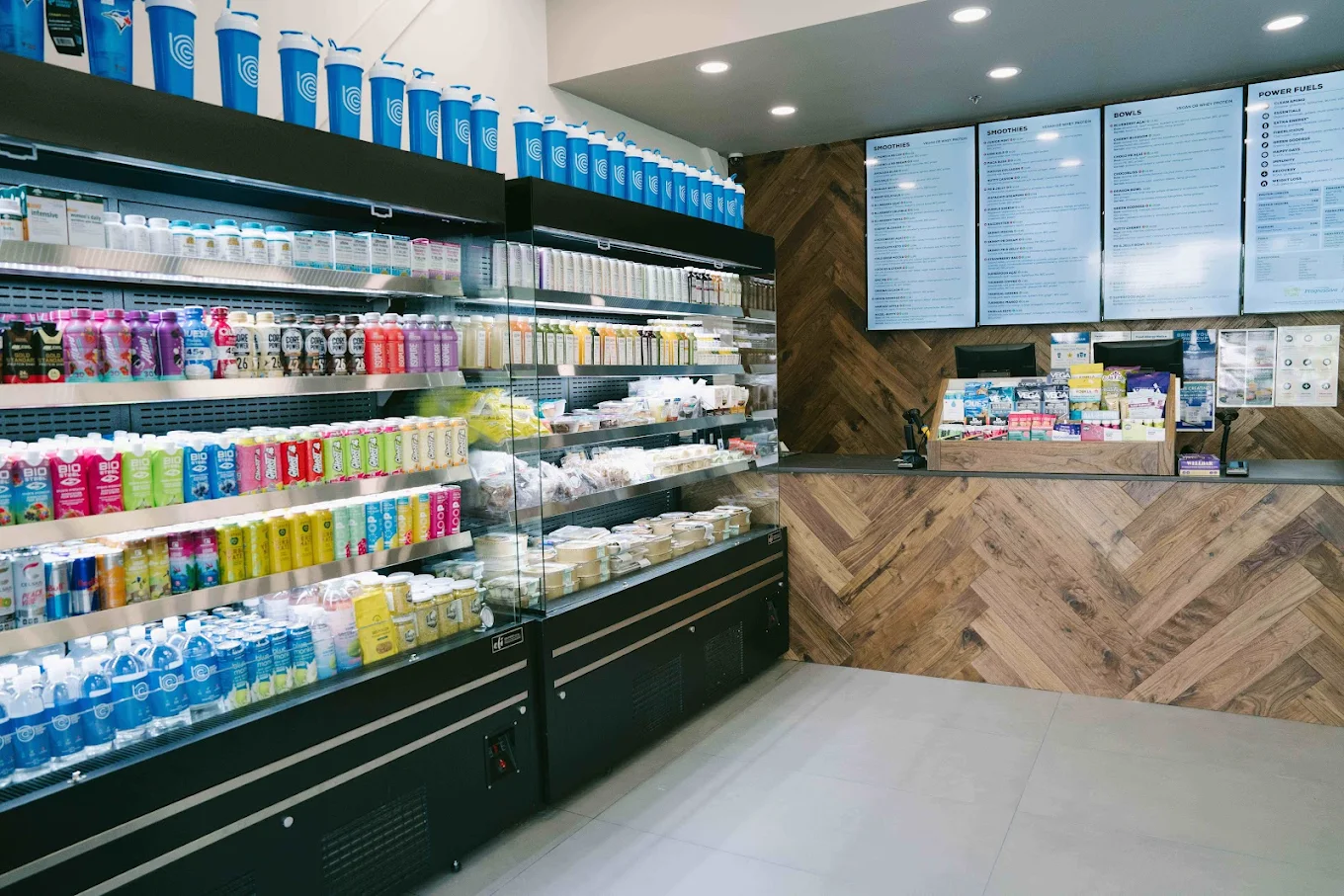
At the Park Royal South store, visitors will find a mix of smoothies, acai bowls, cold-pressed juices, supplements, and healthy prepared meals. The store also houses a full-service supplement section and a smoothie bar, designed to cater to the active lifestyle associated with West Vancouver.
“We’re thrilled to join the West Vancouver community with our Park Royal Mall South location,” said Dominick Tousignant, Body Energy Club’s founder and owner, in announcing the opening. “This area is known for its active, health-conscious residents, and we’re excited to offer them our signature products and welcoming space to support their wellness goals.”
The store will be open seven days a week, positioning itself as a convenient option for families, athletes, and busy professionals alike.
Body Energy Club at Park Royal in West Vancouver. Photo: Body Energy Club
From Davie Street to a Continental Presence
Founded in 2002 by Tousignant, who moved to Vancouver from Shawinigan, Quebec, Body Energy Club began as a small storefront on Davie Street. What started as a local resource for nutritional supplements and smoothies has since evolved into a full-fledged wellness brand with locations across the Vancouver area, as well as in Los Angeles and Chicago.
Over the years, the brand has steadily expanded throughout Vancouver and its suburbs, including Burnaby and Coquitlam. Its entry into the U.S. market in 2015, with stores in Hollywood and West Hollywood, marked the company’s first steps toward international recognition. More recently, Body Energy Club opened sites in Chicago, with prime addresses on Michigan Avenue and Lincoln Avenue.
By 2025, the retailer claimed up to 19 locations across North America. The Park Royal opening signals its intention to maintain momentum, with at least three more stores planned before the end of the year.
Park Royal in West Vancouver. Image: Park Royal
The Body Energy Club Model
Central to Body Energy Club’s appeal is its hybrid model: part smoothie and juice bar, part supplement retailer, and part prepared-meal shop. Locations are compact, typically around 1,100 square feet, but designed for high volume.
The brand’s product mix spans more than 6,200 items, including supplements from over 300 brands, Body Energy Club’s own branded protein powders, vitamins, probiotics, and greens. It also carries kombucha, bottled juices, and ready-made meals.
The stores are built for convenience, with extended operating hours that often stretch from early morning to late evening. Their positioning near gyms, residential towers, and commercial hubs reinforces the retailer’s focus on accessibility.
Body Energy Club at Park Royal in West Vancouver. Photo: Body Energy Club
Online Reach and Warehouse Scale
While the physical stores remain central to Body Energy Club’s identity, the company has also invested heavily in e-commerce. Its online business is one of Canada’s largest vitamin and supplement retailers, supported by a centralized warehouse that manages more than $5 million in inventory.
The digital platform allows customers nationwide to order from the retailer’s extensive catalogue. This expansion into online sales has proven vital in balancing brick-and-mortar growth with a scalable distribution model.
Serving a Broad Community
Body Energy Club’s customer base reflects the broadening definition of wellness. Elite athletes stop in for protein-packed smoothies, while office workers pick up bottled juices or healthy meals to go. Families shop for vitamins and supplements, while younger demographics gravitate toward customizable smoothie options.
The company’s “health for everybody” ethos is rooted in Tousignant’s philosophy of affordability and inclusivity. By pricing supplements competitively and offering a wide range of dietary options, the brand has worked to avoid the exclusivity often associated with the wellness sector.
Today, the company serves upwards of 60,000 smoothies each month and employs more than 150 staff across its network. Despite this scale, it remains privately held and headquartered in Vancouver.
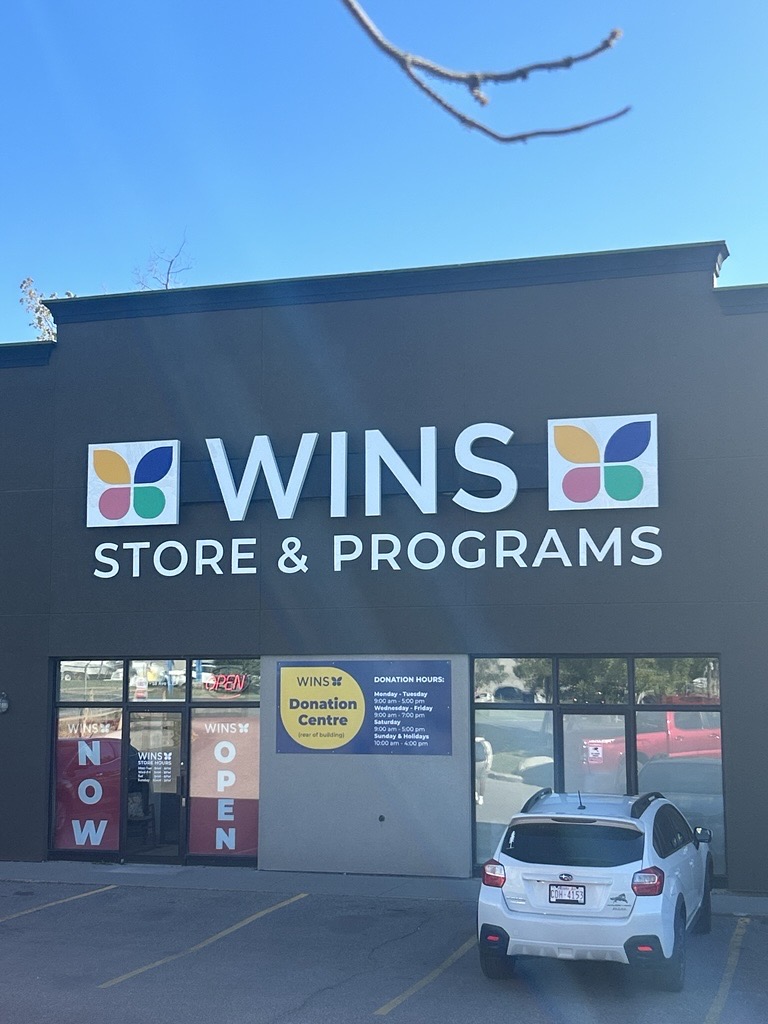
The president and CEO of Women In Need Society (WINS) says increasing demand for support services is driving the charity’s retail expansion in Calgary.
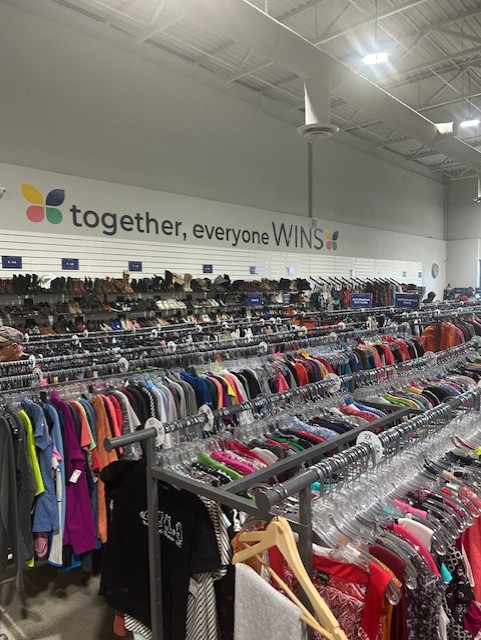
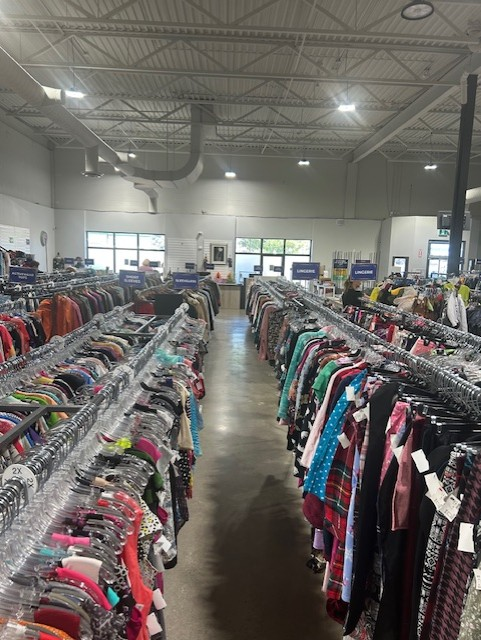
Karen Ramchuk said WINS currently operates seven traditional thrift stores and one additional “bulk” thrift outlet, located at its donation centre on 52nd Street across from the Soccer Centre.
Karen Ramchuk
“It’s kind of like a bulk thrift store and everything is sold by quantity,” said Ramchuk. “It’s a dollar or less depending on how many pieces you buy, but it’s not displayed like a regular retail store. It’s bins and you go through the bins.”
WINS opened two new retail locations in the past year — the first two planned under Ramchuk’s leadership. One store opened in July, and the other just over a year ago.
Ramchuk said store sizes vary from 4,500 to 22,000 square feet. The two smallest were in place before she joined the organization.
She added the charity plans to continue growing its retail footprint.
“Right now, most of our locations are through central Calgary from east to west,” she said. “We have nothing in the far south or far north. Our goal is to try to get into more quadrants of the city.”
Ramchuk said all proceeds from WINS retail operations are reinvested into community programs for women and families experiencing poverty or crisis.
“When WINS opens a location, it’s really not just opening a retail location,” she said. “It’s about generating revenue that we can turn into community programs.”
Photo: WINS
She credited Calgarians’ ongoing support for enabling the charity’s expansion.
“Everything we do is totally done through the generosity of Calgarians,” said Ramchuk. “If Calgarians didn’t donate product to us, if they didn’t donate money to our charity, we wouldn’t be able to do what we do.”
According to Ramchuk, WINS helped more than 27,000 Calgarians last year and processed over seven million pounds of donated goods — enough to fill the Scotiabank Saddledome seven times.
“Our small charity is going through that much product and turning that into those community programs for women,” she said. “The more Calgarians that hear about us, the more product they’ll donate, the more locations we can open, and in return, we help more and more community members that really need help and support.”
Ramchuk said the charitable impact behind the thrift stores distinguishes WINS from its competitors.
“We have competitors that are traded on the stock exchange. We have other competitors that do a little bit of social good. But our organization — we do a lot of social good,” she said.
“We help about 20 to 25 per cent of the people living in poverty in our city. And we couldn’t do it unless people donate their product and shop at our stores.”
She said awareness is a key factor in growing support.
Photo: WINS
“When people really hear and understand what we are, they start to advocate for us,” she said. “They say, ‘Don’t donate anywhere but WINS,’ and, ‘Shop WINS first.’”
Looking ahead, Ramchuk said she sees potential for 12 to 14 locations in Calgary alone.
“There’s no reason why WINS has to stay in Calgary either,” she added. “With time, with growth, or if we got investment into what we were doing, we could be hitting those bedroom communities. We could be hitting other cities and towns across the province. We could potentially grow this model across Canada and be a solution for poverty from one end of the country to the other.”
Part of WINS success is because of Ramchuk’s past retail career including 23 years at Loblaw Companies Limited.
“I worked for a long time in a major retail company and they taught me so very much. I have been able to take the knowledge from that and apply it at WINS and help to build and refine our model. Our financials are posted on our website, we have almost tripled our revenue in the past seven years even without opening new locations, we grew through efficiencies and smart retail practises.
“And now we will begin the true organic growth phase where we are always looking for space and opportunity.
“And if we can find investment (and remember we are a charity) for growth, we could grow much quicker and do even more for people and the environment.”
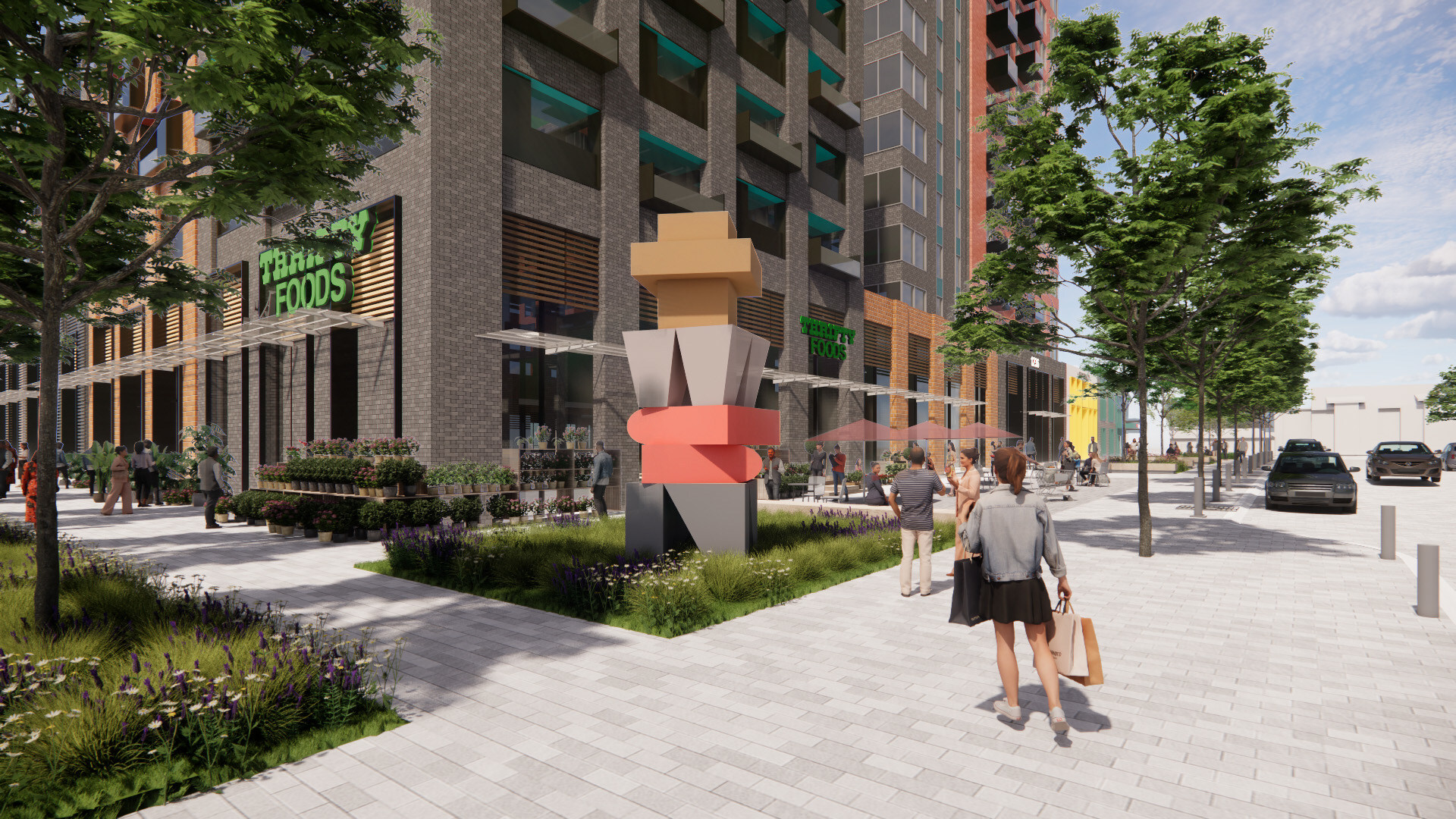
Rendering of the Tsawwassen Town Centre redevelopment from street view. (CNW Group/Century Group)
Century Group has unveiled a significantly revised proposal for the redevelopment of the Tsawwassen Town Centre, with a focus on health care space and reduced density in response to community feedback.
The updated plan includes a 25 per cent reduction in building heights and a 57 per cent decrease in the number of homes, scaling down from 1,433 to approximately 600. According to the developer, the proposal continues to align with the City of Delta’s Official Community Plan and provincial housing targets, while aiming to reflect the character of the surrounding community.
Sean Hodgins
Health care has been prioritized as a key amenity in the new plan. In the first phase, Century Group will dedicate space in perpetuity to the Delta Hospital and Community Health Foundation. The foundation has been working to address long-standing health care access issues in the area.
“We’ve heard the concerns about needing better health care delivery and made changes to address this,” said Sean Hodgins, president of Century Group. “This revised plan reduces scale while still delivering new homes, dedicated space for health care services, and retail that will strengthen our town centre.”
Rendering of a newly expanded Thrifty Foods with an added pharmacy component. (CNW Group/Century Group)
In addition to the health care space, the updated proposal includes:
An expanded Thrifty Foods with a pharmacy component
New housing options, including apartments and townhomes
The addition of 100 new market rental homes to Tsawwassen’s housing supply
“Projects like this will always involve tradeoffs,” said Hodgins. “But we must keep moving forward to tackle Delta’s and the region’s housing challenges.”
Rendering of the health care space dedicated in perpetuity to the Delta Hospital and Community Health Foundation. (CNW Group/Century Group)
The revised plan continues to focus on infill development, renewing an already urbanized area without expanding into greenfield or agricultural land. Century Group says the proposal reflects a balance between future growth and community priorities.