

As Canadians increasingly seek homegrown alternatives, Groupe Marcelle is seizing the opportunity to strengthen its presence in the competitive beauty and personal care market.
With over 75 years of history, the family-owned business, which includes popular brands like Marcelle, Watier, Annabelle, and CW Beggs and Sons, is doubling down on its commitment to local production.
Proudly made in Quebec, the company’s extensive product line, from skincare to cosmetics, resonates strongly with a growing consumer preference for Canadian-made products. David Cape, the company’s President, highlights how Groupe Marcelle is perfectly positioned to meet this demand, emphasizing its use of Canadian ingredients and manufacturing.

While the company maintains a modest presence in the U.S. through online platforms like Amazon, its primary focus remains in Canada, where it operates over 3,000 retail points across the country.
Cape explains that the company’s unwavering commitment to the Canadian market has contributed to its success, with a clear advantage in competing against multinational giants.
As Canada’s retail landscape shifts, Groupe Marcelle has cultivated partnerships with major retailers such as Shoppers Drug Mart and Walmart, helping it maintain a dominant presence in the local beauty sector.
In response to the growing “Buy Canadian” sentiment, Groupe Marcelle is not just relying on in-store promotions but is also engaging consumers through innovative digital marketing. Cape shared the excitement surrounding a viral TikTok video that showcased the company’s Canadian manufacturing process, which garnered over 1.7 million views. This blend of traditional retail presence and modern digital engagement is positioning Groupe Marcelle as a leader in the Canadian beauty market, capturing the attention of Canadians eager to support local businesses.
“Groupe Marcelle is a family business, started a little over 75 years ago by my grandfather, who was a pharmacist in Montreal,” said Cape. “He started distributing the Marcelle cosmetic brand in his spare time, really as a side business. We now sell four brands: Marcelle, Watier, Annabelle, and CW Beggs, which is a men’s brand. We sell these in about 3,000 retail sales points across Canada. We have over 1,200 individual SKUs and we make skincare, fragrance, and makeup products, most of which are made in Quebec. We have a manufacturing facility in Montreal where we actually manufacture the products,” he said.
“We have about 350 employees and do business with most of the large retailers—Shoppers Drug Mart, Jean Coutu, London Drugs in the West, among others. We also sell online through platforms like Amazon and Walmart, so we’re really widely distributed across Canada.
“We have a small presence in the U.S. We sell online on Amazon, on our own Amazon site, as well as a select few retailers. But the vast majority of our business is Canadian. We’ve always focused on building our business in Canada and we’ve always seen that we have more potential here. We’ve layered into it over the last many years and have grown very successfully in Canada.”
For now, Cape doesn’t see the tariff situation having a major impact on its presence in the U.S. It’s just not a large enough business that it’s causing him concern at this point.
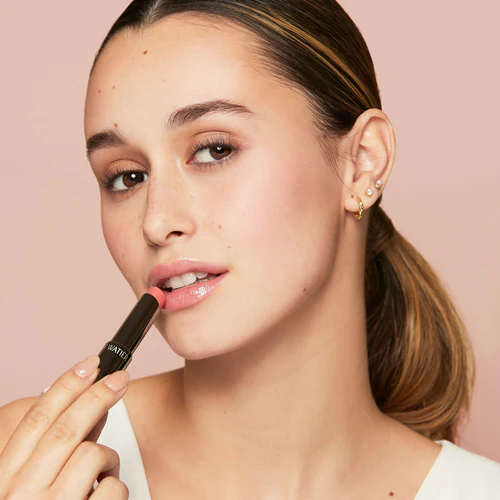
“We are really a Canadian-first business. We innovate here in Canada, we do our R&D here, and we’ve always been very proud of our Canadian heritage. We use and specialize in Canadian ingredients, and that makes us rather unique. We’re trying to communicate this message, and we’re really thrilled and excited to have a very receptive audience. Canadians are looking for products made in Canada. While we compete against the largest multinational companies out there, we’re one of the largest players in the industry within Canada.
“Our ability to differentiate ourselves and share the message of being made in Canada, by Canadians for Canadians, is a unique opportunity, and we’re really trying to make the most of it.”
Cape said the company does business with all the major retailers and that includes those based in the U.S. These retailers have made significant investments in Canada.
“When you’re dealing with them, you’re dealing with Canadian head offices that employ Canadians. They are, as much as other retailers, really focused on Canadians,” he said.
“There’s understandable tension right now as people look for ways to support Canadian-made products. It’s important to consider which companies have made large commitments to Canada, have invested here, and employ Canadians. We do work with these retailers, and it’s a concern. The question is, how do we channel people’s desire to purchase Canadian in the most productive way, rather than hurting people that are making real investments in Canada?
“We’re really seizing opportunities as they come. Some of our retailers, like Loblaws, which owns Shoppers Drug Mart, Jean Coutu, and London Drugs, are focused on promoting Canadian products. We’re working with them because, in the beauty category, we’re the number one go-to for Canadian products.”
He said the company is also taking initiatives to highlight for consumers that it is a Canadian brand, whether it’s on its website or at the point of purchase.
“Canadians are looking for that. We also participate in Facebook groups and other platforms where consumers are looking for Canadian products.
“One of our marketing videos recently went viral on TikTok, showing our facility and how we innovate in Canada. It got over 1.7 million views, and it was an exciting moment. We didn’t make a huge investment in it, but it really took off in that environment. We’re trying to participate and meet the needs of our Canadian consumers who are looking for Canadian-made products,” explained Cape.












So happy to see this. I’ve been using Marcelle skin care and foundation products for years! Great quality and affordable!!