Home Blog Page 372

Hublot Brings Big Bang Anniversary Watch Collection to Yorkdale 

Hublot at the Yorkdale Shopping Centre in Toronto. Photo: Craig Patterson

Hublot is bringing a rare treat to Canadian luxury watch enthusiasts with an exclusive exhibition of its newly launched Big Bang timepieces. The watches, introduced in April 2025 at the renowned Watches and Wonders event in Geneva, will be on display only at Hublot’s boutique in Toronto’s Yorkdale Shopping Centre from May 30 to June 5, 2025.

This traveling showcase is part of the global celebration marking the 20th anniversary of the Big Bang collection, a landmark moment for one of the brand’s most iconic series.

“We are thrilled to celebrate 20 years of such an iconic collection, and to have it here in Toronto is truly exciting,” said Jhonnattan Meneses, Assistant Boutique Director of Hublot at Yorkdale.

Image: Hublot

Yorkdale Boutique Chosen for Canadian Showcase

Toronto’s Yorkdale Shopping Centre was selected as the exclusive Canadian location to host this traveling collection, reflecting the mall’s strong performance in the luxury retail segment. Hublot has seen success at its Yorkdale boutique, which opened in September 2019 as the brand’s first corporately-owned Canadian location.

Strategically situated in the heart of Yorkdale’s luxury wing—alongside Qeelin, TAG Heuer, and Jaeger-LeCoultre—the Hublot store has become a key destination for high-end watch collectors and fashion-forward clientele alike.

Yorkdale itself has earned a reputation as Canada’s top luxury shopping centre, featuring over 270 retailers and welcoming more international brands than any other mall in the country. Its upscale 65,000-square-foot expansion, which will include flagship stores for Dior and Saint Laurent, has solidified its position as a magnet for luxury consumers.

Image: Hublot

The Big Bang Legacy: Two Decades of Fusion and Innovation

First launched in 2005 under the leadership of then-CEO Jean-Claude Biver, the Big Bang chronograph introduced a new era of luxury watch design. The model exemplified Hublot’s Art of Fusion philosophy—seamlessly blending traditional Swiss craftsmanship with cutting-edge materials such as ceramic, carbon fiber, and rubber.

Over the years, the Big Bang collection has become synonymous with bold design and technical innovation. Its influence has been so significant that the Big Bang is now considered a pillar of Hublot’s identity and success.

This year’s 20th-anniversary editions continue that tradition, with new designs and limited-run models that underscore Hublot’s drive to push the boundaries of horology.

Watches Debuted at ‘Watches and Wonders’ in Switzerland

The Big Bang anniversary pieces that will be displayed at Yorkdale were unveiled last month at Watches and Wonders 2025, the preeminent annual gathering of the global watchmaking industry in Geneva.

At the event, Hublot revealed a range of new models showcasing complex materials and in-house movements, including refinements of its celebrated Unico and Meca-10 calibres. Among the key highlights are anniversary editions featuring sapphire, Magic Gold, and other proprietary materials that highlight Hublot’s continued investment in R&D.

The Yorkdale showcase will give Canadian watch collectors and fans a rare opportunity to experience these pieces up close.

Image: Hublot

Vancouver Location Also Marks Strong Brand Presence

In addition to Toronto, Hublot maintains a significant presence in Vancouver, where it operates a prominent boutique on Alberni Street. This two-level, 2,800-square-foot store opened in 2017 within The Carlyle retail complex, originally through a local franchise arrangement. It has since transitioned to a corporate store under LVMH ownership, aligning with Hublot’s global branding strategy.

Located in Vancouver’s ‘Luxury Zone’, the boutique neighbours prestigious brands such as De Beers, Prada, Moncler, and Saint Laurent. Alberni Street continues to thrive as the city’s premier luxury retail corridor, attracting high-spending tourists and local clientele alike.

Hublot’s Global Strategy: Canada as a Key Market

Hublot’s dual presence in Toronto and Vancouver reflects its focus on penetrating Canada’s most affluent and trend-conscious markets. By establishing flagship boutiques in both cities, the brand has effectively positioned itself to serve a growing base of discerning watch buyers.

Globally, Hublot has maintained a dynamic pace of innovation and expansion. Under Julien Tornare, who became CEO in 2024, the brand is pursuing a strategy of streamlining product launches and focusing on meaningful milestones—such as the Big Bang anniversary—to elevate its profile.

Tornare’s leadership is seen as a strategic move to maintain Hublot’s cachet in a saturated luxury market while avoiding overexposure from excessive limited editions.

Hublot’s History: From Bold Beginnings to Global Powerhouse

Founded in 1980 by Carlo Crocco, Hublot broke conventions from the outset with its signature combination of gold cases and rubber straps—an industry first. Despite initial skepticism, this unorthodox pairing caught on, paving the way for Hublot’s future as an innovator.

The brand’s turning point came in 2004 with the appointment of Jean-Claude Biver. The following year’s launch of the Big Bang was a breakthrough moment, earning accolades and skyrocketing sales.

In 2008, luxury conglomerate LVMH acquired Hublot, solidifying its global stature. Since then, the brand has continued to develop proprietary innovations such as:

  • Magic Gold: A scratch-resistant alloy co-developed with EPFL.
  • In-House Movements: Including the automatic Unico chronograph and Meca-10.
  • Exotic Materials: Extensive use of sapphire, titanium, carbon fiber, and ceramic.

Sports, Culture, and Design: Expanding the Brand

Beyond horology, Hublot has become a cultural force through its partnerships and high-profile ambassadors. It has served as the official timekeeper of major events like the FIFA World Cup, and maintains partnerships with clubs such as AFC Ajax and Juventus.

These partnerships underscore Hublot’s approach to integrating lifestyle and luxury—a strategy that resonates with modern consumers seeking more than just a timepiece.

More from Retail Insider: 

RETAIL FORWARD in Montreal to Boost Retail Dealmaking

ICSC is set to bring its newest retail real estate event series, RETAIL FORWARD, to Montreal on Thursday, June 5, 2025. Running from 12:00 p.m. to 6:00 p.m. at Le Windsor Ballrooms, the streamlined program is designed to accelerate dealmaking between retailers, tenants, brokers, landlords, and other key players in Quebec’s retail ecosystem. [Register Here]

The one-day event is framed as a hyper-local and hyper-focused initiative to foster meaningful in-person connections. It emphasizes targeted negotiations and information sharing, aiming to facilitate high-value retail leasing activity in a condensed and productive format.

Retailers in the Spotlight

A significant highlight of the event is its focus on giving retailers and tenants premium visibility. More than 50 retailers, foodservice chains, and service providers are listed as participants, representing a diverse mix of national and regional brands across categories.

Notable names include:

  • Food & Beverage: Tim Hortons, Starbucks, McDonald’s, Ben & Florentine, Thaï Express, Edo Japan, Osmow’s, Poke by Sushi Shop, Wetzel’s Pretzels, and more.

  • Retail & Services: MINISO, Sleep Country Canada, Mr. Lube, TD Bank, and RONA Inc.

  • Grocery & Fitness: Dollarama, Sobeys Québec Inc., and Éconofitness.


This retailer-forward approach positions brands to pitch their expansion plans directly to landlords, brokers, and developers while streamlining the matchmaking process between tenants and available sites.

Event Format: Focused and Fast-Paced

The event will unfold in three parts:

  • 12:00 PM – 6:00 PM: Registration and badge pickup

  • 1:00 PM – 4:00 PM: Retail dealmaking sessions

  • 4:00 PM – 6:00 PM: Networking reception


The core dealmaking session is purpose-built to support rapid negotiations, creating opportunities for brokers and landlords to meet decision-makers and evaluate alignment on site needs in real time.

The Site Shopper: A Retailer Reference Tool

Each attendee will receive a copy of The Site Shopper, a printed directory containing detailed site specifications and contact information for participating retailers. The guidebook is positioned as a critical asset for dealmakers, enabling them to quickly identify viable leasing prospects and initiate discussions on-site.

Cost-Effective Access for Retailers

In line with ICSC’s effort to lower barriers to entry and stimulate retail expansion, registration is complimentary for retailers—regardless of ICSC membership status. Retailers can also reserve complimentary dealmaking tables to meet with landlords and leasing agents directly on the show floor.

Retail Forward Builds on ICSC’s Mission

The RETAIL FORWARD initiative is part of ICSC’s broader efforts to support the evolution of marketplaces and the commercial real estate industry. The event reflects the organization’s focus on cultivating community-driven retail spaces by creating real-world opportunities for stakeholders to build networks, form partnerships, and advance new projects.

With Montreal’s active retail landscape and vibrant commercial corridors, the June 5 event is expected to draw strong participation from brands, landlords, and brokers who are shaping the future of urban and suburban retail across Quebec.

A Catalytic Gathering for Quebec’s Retail Real Estate Sector

With more than 50 retailers confirmed, a curated environment for efficient dealmaking, and no cost for retailer participation, RETAIL FORWARD in Montreal is positioned to become a high-impact event in the city’s 2025 retail calendar. As the Quebec retail industry continues to navigate economic uncertainty, events like this are critical in fostering direct relationships, accelerating leasing activity, and fuelling local retail growth.

For more information or to register, visit the official ICSC website to register.

More from Retail Insider:

Canadian Retail News From Around The Web For June 2, 2025

Canadian Retail News From Around The Web

News at a Glance

Retail Insider is streamlining its Canadian retail news from around the web to include a handful of top news stories that can be viewed quickly during the day. Here are the top stories from the past several days.

Inside the final days of Hudson’s Bay (Globe & Mail / subscriber paywall)

Redesigning the Bay’s old retail spaces will come with challenges and opportunities (CBC)

Broken escalators and a declining market: Experts predict big challenges for Chinese billionaire in executing her ambitious plan for 28 Hudson’s Bay leases (Toronto Star)

Redesigning the Bay’s old stores come with challenges and opportunities (CTV)

From signs to packaging, new language rules come into effect in Quebec (CBC)

RCCSTORE25 set to ignite retail revolution: Industry leaders tackle AI, strategy, future of shopping (Canadian Packaging)

A couple of vintage freaks just opened a funky new shop in Little Italy (Streets of Toronto)

Sad final day at Hudson’s Bay Toronto flagship store (Toronto Star)

Toronto’s Little Italy revival is real — Thanks to these new restaurants (Streets of Toronto)

FreshCo opens 49th store in Western Canada (Grocery Business)

This Day in History, 2025: After 138 years in downtown Vancouver, The Bay closes (Vancouver Sun)

The 50-year nest: How Calgary’s oldest, independent bookstore has weathered a half-century of changes (Calgary Herald)

Select EB Games Canada stores in Ontario holding Nintendo Switch 2 midnight launch event (Inside Halton)

Few Ontario grocery stores accepting booze empties, some weigh returning licences (CTV)

Saks Global Blames Lender for Hudson’s Bay Collapse

Saks Fifth Avenue in the Hudson's Bay Queen Street building, May 2025. Photo: Craig Patterson

In a sharply worded letter filed earlier this month in a New York lawsuit, Saks Global directly blamed Pathlight Capital for Hudson’s Bay’s inability to secure the financing it desperately needed to avoid its ongoing liquidation under court protection in Canada. Saks Global’s chief legal officer, Andrew Woodworth, outlined the accusations in a letter dated March 26, 2025, addressed to Pathlight’s managing director.

“As a result of these actions and inactions by Pathlight, HBC was forced to initiate restructuring proceedings under the Companies’ Creditors Arrangement Act (CCAA) in Canada,” Woodworth wrote. He further added that “Pathlight’s ongoing intransigence further frustrated HBC’s CCAA proceedings, and, on March 21, 2025, forced HBC to announce a near total liquidation.”

The accusations surfaced just days after Hudson’s Bay reached a critical point in its restructuring efforts. On March 26, shortly after Saks Global sent the letter, Hudson’s Bay concluded that it would not be able to secure sufficient financing to continue operating. The retailer subsequently accelerated its liquidation efforts, moving toward the closure of all remaining stores.

Hudson’s Bay Nears End of Operations

Following its court-supervised process under the CCAA, Hudson’s Bay announced that it would proceed with full liquidation sales across its 80 remaining Hudson’s Bay locations, along with 13 Saks OFF 5TH and three Saks Fifth Avenue stores operating under a licensing agreement with Saks Global. These store closures, anticipated to conclude by Sunday, will mark the end of Hudson’s Bay as an operating department store after more than 350 years in business.

Neither Hudson’s Bay, Saks Global, Pathlight Capital, nor their legal representatives have publicly commented on the dispute or the allegations contained in the recent court filings.

Men’s floor on 2 at Saks Fifth Avenue in the Hudson’s Bay building on Queen Street in Toronto, May 28 2025. Photo: Craig Patterson

Complex Financial Ties Between Saks Global and Pathlight

Saks Global itself was established just last year as part of a major restructuring involving Hudson’s Bay’s luxury assets. In 2024, Hudson’s Bay acquired Neiman Marcus and Bergdorf Goodman, combining them with its Saks Fifth Avenue banner to form Saks Global. The reorganization created a luxury-focused entity separate from Hudson’s Bay’s core department store business.

Court documents reveal that Pathlight Capital played a role in facilitating that transaction. As part of the deal, Pathlight agreed to release Saks Global from certain obligations tied to a loan Hudson’s Bay had previously secured. In exchange, Pathlight received millions of dollars in payments.

However, tensions between the two sides have since escalated. Pathlight is now suing Saks Global in New York court, seeking repayment of an outstanding debt of US$8.8 million. Saks Global, in turn, is refusing to pay, asserting that Pathlight “cannot and should not benefit from its own actions,” which it claims ultimately contributed to Hudson’s Bay’s financial collapse.

Pathlight Among Hudson’s Bay’s Largest Secured Creditors

When Hudson’s Bay filed for creditor protection in Canada under the CCAA, Pathlight Capital emerged as one of the company’s largest secured lenders. At the time of the filing, Pathlight was listed as being owed more than $95 million by Hudson’s Bay.

The precise details of how Pathlight’s involvement may have contributed to Hudson’s Bay’s failure to secure new financing remain part of the ongoing legal dispute. Saks Global’s argument appears to suggest that Pathlight’s conduct as a creditor created obstacles that blocked Hudson’s Bay from accessing additional capital, ultimately pushing the company into full liquidation.

Accelerating Collapse of an Iconic Canadian Retailer

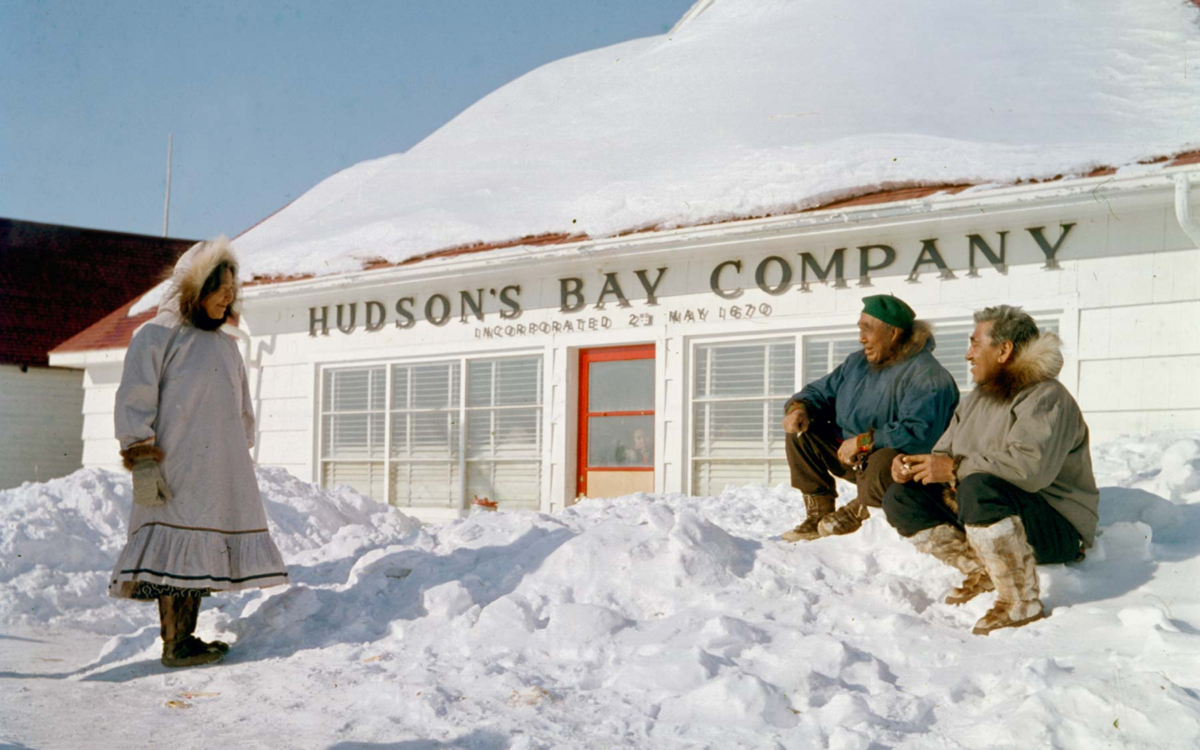
The liquidation now underway represents the near-total dissolution of one of Canada’s oldest and most iconic companies. Founded in 1670, Hudson’s Bay evolved over centuries from a fur trading business into a department store chain that once dominated Canadian retail. Its steady decline in recent years reflected broader challenges facing the department store sector globally, as consumer habits shifted and online competition intensified.

The involvement of multiple financial players, including private equity firms and specialized lenders such as Pathlight, added additional complexity to Hudson’s Bay’s capital structure during its later years. While Hudson’s Bay previously underwent restructurings and ownership changes, the current liquidation marks a definitive end to its legacy department store operations.

Display window at Saks Fifth Avenue in the Hudson’s Bay building on Queen Street in Toronto, May 28 2025. Photo: Craig Patterson

The ongoing legal battle between Saks Global and Pathlight Capital could carry broader implications for Saks Global itself. The luxury retailer, still operating Saks Fifth Avenue and other luxury banners, remains closely tied to Hudson’s Bay’s former parent company through licensing agreements and shared ownership history.

Saks Global’s strong language in its filing signals a more aggressive legal posture as it seeks to limit liability and protect its position in the face of creditor demands. The case may also shed further light on the financial engineering that preceded Hudson’s Bay’s demise — including asset transfers, spin-offs, and the allocation of debt obligations between various entities.

Broader Industry Implications

The developments underscore the ongoing challenges faced by department store operators in North America, where shifting consumer patterns, rising costs, and increasingly complex financing arrangements have left even once-dominant players vulnerable. As liquidation sales continue across Hudson’s Bay and Saks stores in Canada, creditors and financial partners are now left to untangle competing claims to remaining assets.

Meanwhile, observers within the retail and investment communities are closely watching the outcome of the Saks Global–Pathlight litigation, which may offer additional insights into the broader circumstances that led to the accelerated failure of Canada’s most historic retailer.

More from Retail Insider: 

RioCan Seeks Receivership for HBC Joint Venture

Hudson's Bay store at Yorkdale in Toronto on May 12, 2025. Photo: Craig Patterson

In another major development tied to the ongoing collapse of the Hudson’s Bay Company’s Canadian retail operations, RioCan Real Estate Investment Trust has filed a motion seeking to place its real estate joint venture with Hudson’s Bay into receivership. The application, filed late Thursday with Ontario Superior Court, asks that FTI Consulting Canada Inc. be appointed as receiver over the companies that span the joint venture structure.

According to court filings, RioCan’s Chief Financial Officer Dennis Blasutti stated in an affidavit that, “The proposed receivership proceedings will provide the appropriate forum to protect the interests of the stakeholders of the joint-venture entities and maximize value.” The move marks a significant step in the unwinding of one of the country’s most prominent department store real estate partnerships, created less than a decade ago.

The Formation and Scope of the RioCan-HBC Joint Venture

The RioCan-Hudson’s Bay joint venture was established in 2015. It comprises a portfolio of 12 prominent Canadian retail properties, each leased to Hudson’s Bay for its department store operations. The properties are a mix of wholly owned, co-owned, and leasehold interests in some of Canada’s most high-profile shopping centres.

RioCan holds a 22 per cent ownership interest in 10 Hudson’s Bay stores within the joint venture, which include flagship locations in downtown Montreal, Vancouver, Calgary, and Ottawa. The portfolio also includes spaces in Yorkdale Shopping Centre and Scarborough Town Centre in Toronto, Square One Shopping Centre in Mississauga, Devonshire Mall in Windsor, and CF Carrefour Laval and Promenades St-Bruno in Quebec.

RioCan additionally has a 61 per cent ownership interest in properties used by Hudson’s Bay at Oakville Place and Georgian Mall, derived from a combination of its 50 per cent stake in the properties and its 22 per cent stake in the joint venture itself. This structure grants RioCan certain exclusive decision-making powers on operational and leasing matters related to the properties.

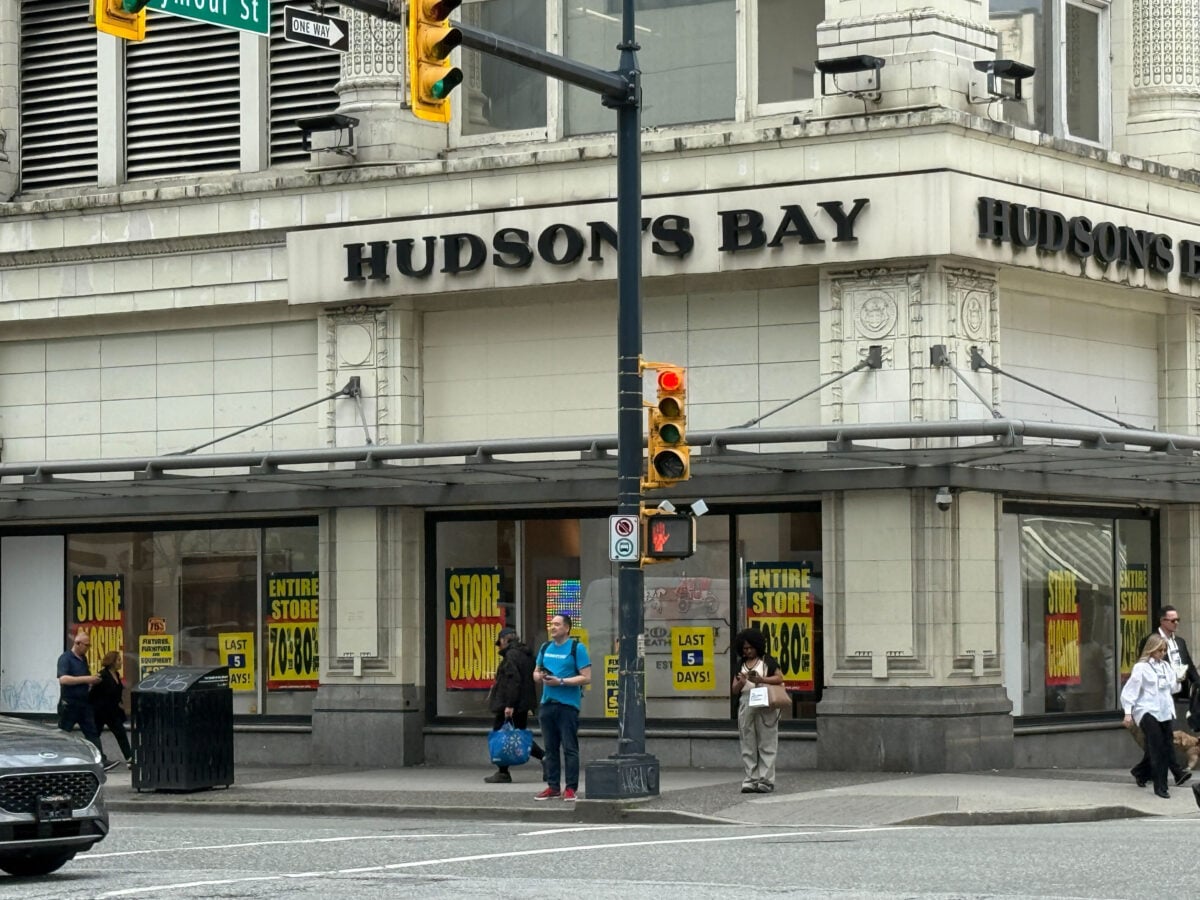
Hudson’s Bay flagship store in downtown Vancouver on Wednesday, May 28, 2025. Photo: Lee Rivett

Hudson’s Bay Liquidation Triggers Receivership Action

The move towards receivership follows Hudson’s Bay filing for creditor protection in March under the Companies’ Creditors Arrangement Act (CCAA). Since then, the retailer has been liquidating all 80 Bay stores and 16 Saks locations across Canada. The liquidation sales are set to conclude this Sunday, leaving over 8,300 employees without jobs.

As part of its CCAA proceedings, Hudson’s Bay initiated a process to sell off its assets, including store leases. That process attracted interest in 39 rental contracts from 12 bidders but failed to produce offers for the remaining 62 leases. Alvarez & Marsal, the court-appointed monitor overseeing Hudson’s restructuring, confirmed in court filings that no bids were submitted for the joint venture properties or HBC’s 78 per cent interest in the RioCan-HBC JV.

While the lease sale process came up short, RioCan indicated in its application that certain unnamed third parties have expressed interest in negotiating new or amended sublease agreements for some of the leasehold sites. These properties include Yorkdale, Scarborough Town Centre, Square One, CF Carrefour Laval, Promenades St-Bruno, and potentially others.

The Debt Structure Behind the Joint Venture

The joint venture is heavily leveraged, with multiple secured lenders beyond RioCan itself. According to the filings, secured debt obligations include:

  • $75 million Yorkdale RBC Financing
  • $105 million BMO First Mortgage Financing (Calgary, Carrefour Laval, and Promenades St-Bruno)
  • $202 million Vancouver HSBC First Mortgage Financing
  • $161 million Montreal RBC First Priority Financing
  • $56.5 million Ottawa First Mortgage Financing
  • $87.4 million Oakville First Mortgage Financing
  • $110 million Georgian Mall First Mortgage Financing

In addition, RioCan extended second mortgage loans totaling approximately $38.2 million on the Georgian Mall and Ottawa properties.

The collapse of Hudson’s Bay’s operations has left the joint venture unable to service its secured debts. HBC’s monthly rents, which previously funded the JV’s debt obligations and operating costs, have ceased. Without this primary revenue stream, the joint venture is unable to meet its financial commitments.

Downtown Montreal flagship Hudson’s Bay store on April 24, 2025. The building started as a location for the Henry Morgan department store chain, which in decades past operated as an upscale business. Photo: Carl Boutet

Receivership as a Solution to Maximize Value

With HBC having disclaimed several of its leases and halted rent payments, RioCan argues that transitioning the JV entities into receivership is necessary to stabilize operations and protect stakeholder interests.

“The appointment of FTI as the Receiver at this time is appropriate as it will provide the stability, structure and supervision required to preserve the value of the JV Property and maximize recoveries for the benefit of the JV Entities’ creditors in general,” Blasutti stated.

FTI would be empowered to borrow up to $20 million to fund the receivership process, with borrowing secured by a court-approved Receiver’s Borrowings Charge. RioCan noted that it is only prepared to provide such financing within the protections of a court-supervised process.

Importantly, the proposed receivership order includes a mechanism that allows certain priority secured lenders to withdraw properties from the receivership, provided they assume responsibility for any allocated receivership costs.

Canadian Tire and Ruby Liu Among Interested Buyers

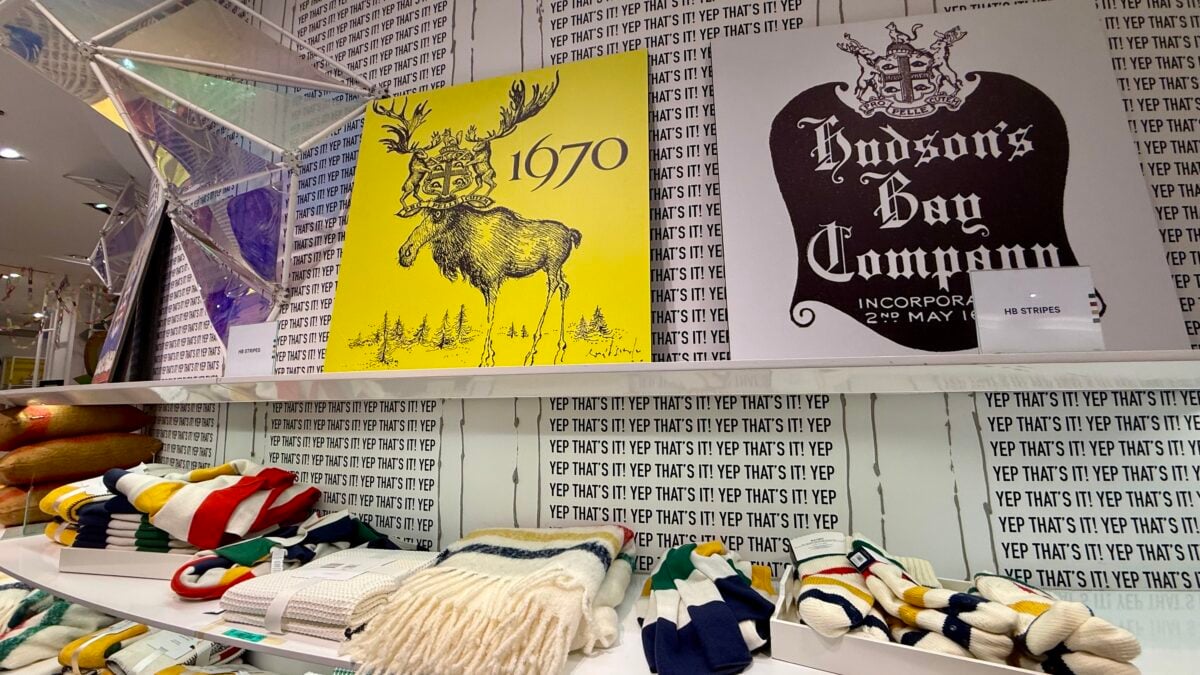
The receivership filing comes as RioCan and Hudson’s Bay navigate multiple overlapping processes to resolve HBC’s insolvency. As part of the CCAA proceedings, Hudson’s Bay recently reached a $30 million deal to sell its intellectual property—including its name, coat of arms, and iconic stripes—to Canadian Tire. That agreement remains subject to court approval at a hearing scheduled for Tuesday.

Alvarez & Marsal has advised the court that the sale process attracted 17 bidders for the intellectual property, but disclosure of full bid details has been temporarily sealed pending court review. The monitor has cautioned that releasing financial details prematurely could hinder HBC’s ability to secure maximum value for stakeholders if the Canadian Tire transaction fails to close.

Meanwhile, mall landlord Ruby Liu has expressed interest in acquiring up to 28 leases in Alberta, B.C., and Ontario, reportedly intending to launch a new department store concept in former Bay locations.

Hudson’s Bay store at Devonshire Mall in Windsor, ON. Photo: TripAdvisor

RioCan’s Path Forward and Broader Implications

For RioCan, the stakes are significant. The trust’s exposure to the joint venture extends beyond its equity interest to include substantial debt holdings and its role as guarantor on certain financing arrangements. The receivership would allow RioCan, in conjunction with FTI and other secured lenders, to explore redevelopment options, tenant replacement, or outright property sales as part of a value-maximization strategy.

For Hudson’s Bay, the receivership represents yet another stage in its dismantling as an operating retailer. Once Canada’s oldest department store chain, HBC’s liquidation is now almost complete, with the company rapidly shedding both its retail footprint and legacy real estate holdings.

The Ontario Superior Court is scheduled to hear RioCan’s receivership application alongside HBC’s motion for approval of the Canadian Tire sale agreement on Tuesday.

More from Retail Insider: 

Bogner Expands in Canada with Borys Paterson Appointment


Image: Bogner

German luxury ski and fashion brand BOGNER has taken a significant step in its Canadian growth strategy with the appointment of Borys Paterson as its new Sales Manager for Canada. The move marks a shift in how the 94-year-old Munich-based brand engages with the Canadian market — one that will now see dedicated leadership within the country for the first time.

“This is the first time Bogner has hired a Canadian-based Sales Manager to directly oversee and grow the brand within this market,” said Linda Ashman, Executive Vice President of BOGNER of America. “We are excited to bring Borys’ expertise to the Canadian market. He has worked successfully with similar brands, and we look forward to his contributions to BOGNER as we continue to grow in the region.”

Borys Paterson

For Paterson, the new role is more than just a career move — it’s a long-awaited opportunity to represent a brand he has worked with and admired for years. “I’ve wanted to be with BOGNER for a long time,” said Paterson in an interview. “I have worked with the brand when I was a buyer at Alterra Mountain Company. Bogner has had a presence in Canada for decades, and there’s always been strong demand here.”

From Wholesale to Wider Horizons

Traditionally, Bogner has been available in Canada through third-party distribution, and most of its visibility has been centered around ski resort towns. The brand is currently available at several high-profile retailers including Sporting Life, Harry Rosen, Petra Karthaus at Manulife Centre in Toronto, as well as dedicated locations in Whistler, including a BOGNER boutique and the seasonal BOGNER Fire + Ice store.

He added that while the current priority is to strengthen relationships with existing wholesale partners, there’s also interest in introducing Bogner’s broader lifestyle collections to urban markets like Toronto, Vancouver, and Montreal — cities where ski apparel is only a seasonal focus but where luxury consumers are increasingly seeking year-round offerings.

Deep Industry Experience

Paterson brings a wealth of experience to the role. Most recently, he served as the exclusive Canadian partner for HEAD Sportswear GmbH, a premium Austrian brand with a strong performance wear heritage. He also previously represented the Vuori brand in Ontario and was instrumental in placing it at Holt Renfrew and other leading Canadian retailers.

With over 12 years of experience in luxury fashion and sportswear, Paterson has cultivated a strong reputation within the industry. “My experience spans both sides of the industry — as a buyer and as a brand rep,” he noted. “I know what Canadian retailers are looking for, and I also understand the nuances of how global brands can resonate in this market.”

A Legacy Brand with Modern Momentum

Founded in Munich in 1932 by Nordic ski champion Willy Bogner Sr. and his wife Maria, Bogner began as an importer of Norwegian ski gear before evolving into a global fashion force. Maria Bogner famously revolutionized alpine style in the 1950s with her stretch ski pants, worn by icons like Marilyn Monroe and Ingrid Bergman.

The brand’s signature “B” zipper pull, introduced in 1955, became a symbol of ski sophistication. Under the direction of their son Willy Bogner Jr., an Olympic skier and filmmaker, the company expanded into tennis, golf, and lifestyle apparel. Bogner Jr.’s 1986 cult classic ski film Fire and Ice helped inspire the brand’s more casual, youth-oriented BOGNER Fire + Ice line, which remains part of the brand’s offering today.

Canada’s Evolving Luxury Landscape

Bogner’s renewed focus on Canada comes at a time when the country’s luxury retail market is undergoing significant transformation. Consumers have demonstrated an increased appetite for lifestyle brands that merge sport, travel, and fashion.

Paterson noted that Canadian consumers are becoming more sophisticated in their tastes. “There’s definitely a demand here for heritage luxury brands with real authenticity,” he said. “BOGNER fits that perfectly — it’s not just about looking good on the slopes; it’s about embracing a luxury lifestyle year-round.”

The BOGNER Fire + Ice collection, which offers a slightly younger and more accessible price point, will also play a key role in broadening Bogner’s Canadian appeal. “It’s not ‘youth’ in the trend-chasing sense — it’s youthful in spirit,” said Paterson. “That’s important for expanding our footprint and attracting a broader demographic.”

More from Retail Insider:

‘Buy Canadian’ Groceries See Modest but Notable Sales Shift

Shop Canadian signage at a store. Photo: Craig Patterson

Visiting a grocery store these days can feel like walking into a Canada Day parade. With shelves draped in maple leaf imagery and displays featuring provincial flags, grocers have leaned into nationalism as a marketing strategy. From a public sentiment perspective, it’s been fascinating. But from an economic standpoint, the real question is: has it worked?

Until recently, we’ve had no clear data showing whether “Buy Canadian” efforts have actually translated into a meaningful shift in consumer behaviour. Plenty of surveys suggested growing enthusiasm for local food, but self-reported preferences don’t always match what people put in their carts.

That’s why the latest numbers from NielsenIQ are worth examining. For the three-month period ending April 19, Canadian food product sales rose 4.4% year-over-year. Over the same period, sales of American food products fell by 4.1%. This coincided with peak tensions over Ottawa’s counter-tariffs and calls for a boycott of U.S. goods.

In short, we’re looking at a swing of roughly 4%—not 10%, not 20%, but 4%. That may seem underwhelming given the media buzz and vocal calls to “go local,” but for a market as mature and price-sensitive as Canada’s, it’s a notable shift.

That said, the increase is modest and likely temporary. We’ve seen this before: nationalism can spike demand in the short term, especially when it’s rooted in political friction. But the bump fades. Price and availability almost always win in the long run.

What this data also shows is that the proliferation of Canadian flags in stores—what some have dubbed “maple-washing”—is more symbolic than impactful. These visual cues might influence a consumer’s decision once or twice, but they quickly become background noise. Shoppers are driven by value, not sentiment.

According to Statistics Canada and Dalhousie University’s Canadian Food Sentiment Index, the average Canadian is still spending around $311 per month on groceries—about the same as six or seven months ago. With food inflation persisting, affordability remains a top concern.

The now-suspended counter-tariffs and GST holiday are no longer significant drivers of food price inflation. As we head into summer, promotional activity and seasonal supply should offer some relief to households. Still, economic conditions remain challenging.

For grocers and policymakers, the lesson is clear: if we want Canadians to buy local, price it accordingly. National pride may get consumers through the door, but it’s value that earns their loyalty. The goal should be to make local food a rational economic choice—not an emotional reaction to foreign policy.

Supporting Canadian food doesn’t need to be a political statement. It can—and should—be a viable, affordable, everyday decision. Whether tensions rise or fall south of the border, let’s make sure consumers have a compelling reason to choose Canadian—because it makes sense, not just because it feels good.

More from Retail Insider:

Maison Margiela Opens at Yorkdale with Oakridge to Follow

Maison Margiela at Yorkdale Shopping Centre in Toronto. Photo: Maison Margiela

Maison Margiela, the revered Paris-based fashion house known for its unconventional and deconstructive approach to design, has officially opened its first boutique in Canada. Located at Toronto’s Yorkdale Shopping Centre, the 1,747-square-foot store marks an important step in the brand’s global expansion strategy, further cementing Yorkdale’s position as Canada’s top luxury shopping destination.

“We are excited to enter the Canadian market with the opening of our first boutique at Yorkdale Shopping Centre in Toronto,” said Gaetano Sciuto, CEO of Maison Margiela. “This new boutique will strengthen our connection with the existing Margiela community and create new opportunities to grow and engage our audience with exciting product launches and immersive brand experiences.”

A second Canadian boutique is scheduled to open in fall 2025 at Vancouver’s Oakridge Park, reinforcing the brand’s commitment to investing in the Canadian luxury market.

A Striking Presence in Yorkdale’s New Luxury Wing

The Yorkdale boutique is part of the shopping centre’s newly developed 65,000-square-foot luxury wing, which continues to attract top-tier international retailers. Maison Margiela is situated near other high-end labels such as Loewe, Rimowa, Versace, Jimmy Choo, Brunello Cucinelli, and Loro Piana. Additional tenants in the expansion will include Dior and Saint Laurent, with two more luxury brands to be announced as the retail wing completes its rollout.

Yorkdale’s transformation reflects a broader $28 million investment aimed at enhancing the mall’s appeal to luxury consumers. The shopping centre is already home to some of the most prestigious brands in the world, including Louis Vuitton, Tiffany & Co., and Bottega Veneta.

The new boutique exemplifies Maison Margiela’s unique architectural language, translating the house’s design ethos into a tactile retail experience. The 6.5-metre-tall façade, entirely clad in travertine stone filled with white epoxy, sets the tone for a sculptural and immersive space.

Travertine arcs extend into the interior, guiding shoppers through the boutique. Illuminated ceiling ellipses and niches coated in Margiela’s signature white epoxy highlight the brand’s collections in a minimalist, museum-like setting. The walls are finished in marmorino, a classic Italian plaster, lending a timeless and artisanal texture to the space.

“Misfit” furniture, a travertine sofa, and décortiqué shelving carved from stained travertine add a conceptual element to the store’s design—each piece deliberately constructed to disrupt norms and invite reinterpretation. 

The boutique includes two fitting rooms and features the full breadth of Maison Margiela’s offerings: ready-to-wear for men and women, accessories, fragrances, small leather goods, and Gentle Monster eyewear.

Maison Margiela at Yorkdale Shopping Centre in Toronto. Photo: Maison Margiela

Strategic Expansion into Canada

The Canadian debut of Maison Margiela follows the brand’s deliberate expansion beyond its established presence in the United States and Mexico. With this opening, the brand now operates 120 stores globally.

The choice of Yorkdale Shopping Centre and Oakridge Park for its first two Canadian locations is a calculated one. Both properties are considered premier luxury retail destinations in their respective markets and offer access to affluent, fashion-conscious consumers.

The leases for both boutiques were negotiated by David Wedemire and Stan Vyriotes of DWSV Realty. The firm is known for securing prime Canadian real estate on behalf of global luxury brands, including several high-profile placements within Yorkdale and Oakridge Park.

Maison Margiela at Yorkdale Shopping Centre in Toronto. Photo: Maison Margiela

Vancouver’s Oakridge Park Store to Follow

The second Maison Margiela boutique in Canada is scheduled to open at Oakridge Park in Vancouver in the fall of 2025. Currently under redevelopment, Oakridge Park is poised to become a dominant luxury retail hub on the west coast.

The store will be situated in the ‘North Arcade’ section of the centre, near fellow high-end brands such as Christian Louboutin and Alexander Wang. Other confirmed luxury tenants at Oakridge Park include Louis Vuitton, Prada, Chanel, Versace and others.

This west coast expansion will position Maison Margiela in the heart of a transformative mixed-use development that combines high-end retail, residential living, and cultural amenities. Oakridge Park aims to challenge Vancouver’s established downtown retail core by creating an alternative luxury node anchored by experiential shopping.

Maison Margiela’s Philosophy and Global Reach

Founded in 1988 by Belgian designer Martin Margiela, the house has become known for its intellectual and experimental approach to fashion. The label is synonymous with deconstruction—often revealing garments’ inner structures, using unconventional materials, and avoiding conventional branding.

Margiela’s philosophy rejects the traditional cult of designer celebrity in favour of showcasing fashion as a collaborative and conceptual form of expression. The house’s ‘Artisanal’ collection has carried the prestigious haute couture designation since 2012, and its commercial lines have consistently blurred the line between art and fashion.

Now part of the OTB Group—short for Only The Brave—the brand is aligned with other avant-garde and high-fashion labels including Diesel, Jil Sander, Marni, Viktor&Rolf, and Amiri. The parent company, founded by Renzo Rosso, emphasizes innovation, sustainability, and the promotion of creative talent across its brand portfolio.

Maison Margiela at Yorkdale Shopping Centre in Toronto. Photo: Maison Margiela

Glenn Martens Named Creative Director

Maison Margiela’s Canadian expansion coincides with a major leadership shift at the creative helm. In January 2025, Belgian designer Glenn Martens was appointed Creative Director of the house, succeeding John Galliano, who stepped down in December 2024 after a decade-long tenure.

Martens, who studied at Antwerp’s Royal Academy of Fine Arts, began his career under Jean Paul Gaultier and later made a name for himself at Y/Project. His work has been noted for its conceptual rigor and its fusion of streetwear, denim, and couture-inspired silhouettes.

In 2020, Martens also assumed the creative director role at Diesel, where he reinvigorated the brand for a younger, trend-conscious audience. He will continue to lead Diesel while heading up Maison Margiela, bringing his distinct point of view to both brands.

Martens is expected to debut his first collection for Maison Margiela during Paris Haute Couture Week in July 2025, under the Maison Margiela Artisanal line. The upcoming show is one of the most highly anticipated of the season, as the industry looks to Martens to shape the next chapter of the iconic label.

More from Retail Insider:

Dolce Amore to “throw its hat” into the savoury culinary world with new concepts in Vancouver

Pino Posteraro (culinary director), Joyce Mak (pastry chef), and Daniela & Giancarlo Cusano of Dolce Amore

-30-

La Famiglia Dolce Amore is growing, and they’re ready to show they’re much more than just gelato! Husband and wife duo Giancarlo and Daniela Cusano are expanding their beloved Vancouver brand with three distinct new offerings under one roof in North Burnaby: The Gelato Mafia “TGM Terrazza”Dolce Amore Bar & Caffetteria, and the brand’s first full-service restaurant, Il Cappello Enoteca.

Located at 6011 Hastings Street, the new headquarters will debut this spring with TGM Terrazza, a gelato patio and pick-up experience, followed by the launch of the caffetteria and enoteca later this summer.

“Dolce Amore was our first child, our second love (after each other), our self-expression, our playground, our way of putting smiles on people’s faces, and in turn on our own,” said Daniela and Giancarlo. “We’ve celebrated many milestone occasions at the original Dolce Amore on Commercial Drive, and the fire we experienced at the end of 2023 was devastating, and nearly brought an end to over 20 years in business.”

Renowned chef Pino Posteraro is Dolce Amore’s culinary director, formerly of award-winning Cioppino’s in Yaletown, to bring the caffetteria, Dolce Amore, and restaurant, Il Cappello Enoteca, to life.

“When we started thinking about what was next for Dolce Amore, we knew we wanted to build something special – honouring the legacy of those who came before us, but also pushing us further. Chef Pino has always been someone we’ve looked up to. His knowledge and excellence in the industry is unmatched, and we are so honoured to have him join us as our culinary director. He brings so much heart and depth to everything he does. We’re excited to grow this next chapter with him on our team.”

These new openings join Dolce Amore’s existing locations, including the original Commercial Drive shop (re-opening in 2026), affectionately known as “The Clubhouse”, and the Lower Lonsdale “LoLo Lounge” in North Vancouver, which features Canada’s first affogato bar.

Originally founded in 2002 by the Grippo family, Dolce Amore was one of Vancouver’s original gelaterias. In 2017, daughter Daniela and her husband Giancarlo reimagined the business as The Gelato Mafia, known for its slogan, “Naturally Made, Criminally Good,” a reference to their commitment to high-quality, locally-sourced ingredients and organic grass-fed milk. Now, driven by their “sweet love” of culture, family, friends, and food, the pair look to expand upon their gelato roots. The Gelato Mafia will remain as “The Gelato Department” of their brand, but Dolce Amore will now offer a true Italian Bar & Caffetteria experience, a gathering place with drinks and food and friendship.

The Gelato Mafia “TGM Terrazza”
Soft opening on June 14, this gelato patio and pickup window offers guests a convenient way to enjoy signature frozen desserts by The Gelato Mafia, such as scoops, takeaway pints, gelato cakes, and more. Gelato is always best enjoyed during a passeggiata, a casual stroll, and their indoor/outdoor patio will allow guests to pop-in at their leisure, said the company.

Dolce Amore Bar & Caffetteria
The true Italian experience. Opening this summer, this modern Italian caffetteria features 25 seats and will be a place for the neighbourhood to gather for great coffee, pizza al taglio, bronze-cut fresh pasta, cocktails, aperitivi, and baked goods by pastry chef, Joyce Mak (previously Cioppino’s), added the brand.

Il Cappello Enoteca
“The Hat of Dolce Amore”. A hat is the final piece to any outfit. The epitome of sophistication and style.  Il Cappello Enoteca is Dolce Amore’s first full-service restaurant. Expected to open later this summer, guests can expect a menu rooted in traditional Italian cooking, presented through a fresh, modern lens of evolution. This is not another pizza pasta joint. Daniela and Giancarlo, together with Posteraro, have put together a talented kitchen team, to bring their dream to life, said the company. 

“There will be an emphasis on Tuscan cuisine, as well as regional dishes from across Italy, from a variety of antipasti, pasta, risotto, to pizza, piatti principali, and of course, gelato desserts. Just like with their gelato, Il Cappello Enoteca will use the finest quality ingredients, both local and sustainable. The 2,000-square-foot space will feature 100 seats across an intimate dining room and enclosed year-round patio. Il Cappello Enoteca promises an elevated dining experience that is both refined and relaxed, where guests are encouraged to, in true Italian fashion, metti giù il cappello, sei a casa — lay down your hat, you’re home,” it said.

Related Retail Insider stories:

Clifton Blake Merges with Metropolitan Commercial to Form CB Metcom

Image: Clifton Blake

Clifton Blake, the Toronto-based real estate investment and asset management firm, has officially merged with Metropolitan Commercial Realty Inc., a seasoned commercial brokerage with a 20-year legacy. The newly formed entity—CB Metropolitan Commercial Ltd. (CB Metcom)—marks a strategic consolidation that strengthens both firms’ abilities to deliver vertically integrated, full-cycle real estate solutions across Canada.

The merger positions CB Metcom as a powerful new player in Canada’s commercial real estate sector, blending Clifton Blake’s investment, lending, and development capabilities with CB Metcom’s deep broker network and transactional experience.

Combining Strengths to Create a Fully Integrated Platform

The union of Clifton Blake and CB Metcom creates a rare offering in the Canadian market: a comprehensive real estate platform that spans the entire value chain—from sourcing and underwriting, to lending, leasing, construction, and asset management.

KC Daya

“Clifton Blake offers the leading full cycle solution for optimizing and managing real estate assets,” said KC Daya, Chief Executive Officer of Clifton Blake, in the official announcement. “By adding a commercial brokerage to our in-house capabilities, we now control a broader segment of the real estate value chain, from origination and underwriting, to lending, construction, leasing, and property management.”

CB Metcom brings more than 250 commercial real estate professionals and a history of over 2,000 leasing and sales transactions to the table. The integration allows Clifton Blake to move faster in deal origination and underwriting while offering brokerage clients access to new financing and development options under one roof.

Impacts on the Toronto Market and Beyond

The implications of the merger stretch far beyond corporate restructuring. For Toronto and other key Canadian urban centres, the move represents a significant boost to local commercial real estate infrastructure. The newly expanded platform is expected to accelerate urban redevelopment, unlock high-performing retail and office opportunities, and enhance capital deployment across major metros.

“With broader market intelligence and extended reach into the brokerage community, the firm is positioned to accelerate growth and streamline execution,” the company noted in the press release.

According to Clifton Blake, this merger will enhance access to off-market deals and improve the speed and precision of underwriting. That means more shovel-ready projects and revitalized sites across the Greater Toronto Area and beyond—potentially attracting both national and emerging retail and office tenants in underserved urban pockets.

Brokerage Clients Now Gain Access to Institutional-Grade Tools

For clients of CB Metcom (formerly Metropolitan Commercial Realty), the merger means access to significantly more tools and capital sources than before. What was once a standalone brokerage operation now functions within a larger ecosystem that includes lending vehicles, real estate investment trusts, construction management, and long-term property ownership strategies.

“We’re stronger together,” said Ming Zee, Managing Director of CB Metcom. “By joining Clifton Blake, we’re offering something rare in the market. Our brokerage team now operates within a fully integrated real estate platform, supported by capital, lending, and development expertise.”

CB Metcom clients will now be able to tap into Clifton Blake’s suite of private equity and debt instruments, including its Private REIT, Mortgage Fund, and Bridge Funds. That level of integration allows CB Metcom to offer more competitive, customized solutions to tenants, landlords, and developers alike.

Aligning to Meet a Changing Market

Clifton Blake’s decision to merge with a leading brokerage firm also reflects broader changes in the real estate sector, where client expectations are shifting toward streamlined, one-stop solutions that reduce execution risk and maximize returns.

“With this strategic alignment, Clifton Blake continues to solidify its position not only in market leadership but as one of Canada’s most agile real estate asset management firms,” the firm stated.

The combined organization will be well-positioned to navigate a high-interest rate environment, densification mandates in urban planning, and growing institutional demand for mixed-use real estate investments. By controlling more elements of the real estate lifecycle, CB Metcom can help clients adapt faster to shifting market conditions—whether they are seeking land acquisitions, redevelopment plays, or stabilized assets.

A History of Collaboration Formalized

While the merger may be recent, the relationship between the two firms is not. CB Metcom (previously Metropolitan Commercial Realty) and Clifton Blake have collaborated extensively in the past, building a foundation of trust and shared client experience.

Founded in 2006 by Ming Zee and David De Courcy, Metropolitan Commercial Realty has focused on land development and strategic leasing. Their track record of success and long-standing partnerships, including with Clifton Blake, made the formal merger a natural next step.

“As CB Metropolitan Commercial Ltd., the firm retains its independent spirit and client-first philosophy while gaining access to the operational scale and financial infrastructure of Clifton Blake,” the release noted.

Looking Ahead: Growth, Intelligence, and Local Reach

The CB Metcom platform is expected to have a significant impact across Canada’s largest real estate markets. The firm’s ability to pair real-time market intelligence with access to capital will be critical as commercial leasing, urban intensification, and land-use optimization continue to define Canada’s post-pandemic property landscape.

CB Metcom’s on-the-ground presence in key markets will also support Clifton Blake’s broader capital markets strategies and leasing initiatives—especially as the company continues to seek out underutilized sites and adaptive reuse opportunities in major cities.

For investors, developers, and tenants alike, the message is clear: CB Metcom offers a deeper, more agile partner that can execute across all aspects of commercial real estate with both scale and speed.

About Clifton Blake

With a 50-year track record, Clifton Blake has built a reputation for delivering strong, risk-adjusted returns through its suite of real estate investment vehicles. The company focuses on urban intensification, construction management, private mortgage lending, and mixed-use development. Its vertically integrated platform is designed to maximize value creation across the entire investment lifecycle. 

About CB Metropolitan Commercial Ltd.

Formerly known as Metropolitan Commercial Realty Inc., CB Metcom was founded in 2006 and has led thousands of transactions across commercial leasing, land development, and property strategy. With a large national broker network and deep client relationships, the firm is now poised for its next chapter as part of Clifton Blake’s integrated platform. 

More from Retail Insider: