The Salvation Army Thrift Store welcomes the Leslieville community to celebrate the grand opening of its ninth Toronto location on Thursday, March 13th, from 10 am to 8 pm. (CNW Group/The Salvation Army Thrift Store – National Recycling Operations)
The Salvation Army Thrift Store will celebrate the grand opening of its ninth Toronto location in Leslieville on Thursday, March 13. The new store at 20 Leslie Street, spanning 10,000 square feet, aims to expand the organization’s reach in the community while providing affordable shopping options and supporting local programs.
“In the last two years, we’ve seen a significant increase in the number of people shopping at our thrift stores, with a nationwide rise of 12% and up to 22% in parts of Toronto,” said Ted Troughton, Managing Director of The Salvation Army Thrift Store. “As more people embrace thrift shopping, we’re thrilled to open our doors in Leslieville, a vibrant and growing community.”
The Salvation Army Thrift Store provides an accessible shopping experience for individuals looking to stretch their budgets while also making environmentally conscious choices and supporting their local community.
“Every purchase and donation help fund local Salvation Army programs and services for those in need such as foodbanks, shelters, rehabilitation for those struggling with addictions and emergency relief efforts,” added Troughton.
Beyond the funds generated through the sales of donated items, the Thrift Store raises money in stores through its GoodWorks@Work campaigns. These initiatives support vital causes such as Send a Kid to Camp, modern slavery and human trafficking prevention, international development, and Christmas kettles, it said.
“Last year, we raised more than $865,000 to further support The Salvation Army’s work,” said Troughton. “Together, we can make a real difference in the Leslieville community. We invite everyone to join us this Thursday from 10 am to 8 pm as we celebrate this exciting new chapter and the impact we are making together.”
The new store will offer a variety of gently used clothing, household items, electronics, art, books, and more for everyone. The store is open for shopping Monday to Saturday from 10 am to 8 pm, and donations are accepted in-store daily.
There are 94 Thrift Stores across Canada that diverted over 94 million pounds of items from landfills last year.
Hudson’s Bay, one of Canada’s most iconic department store chains, has officially filed for bankruptcy protection. While this may come as a surprise to some, for many in the retail industry, the move has been long anticipated. The once-dominant retailer has been facing significant operational and financial struggles for several years, with mounting signs that things were no longer business as usual. From declining store conditions to cash flow problems, Hudson’s Bay has been unable to keep up with the changing retail environment, leading to its current financial crisis.
“Let’s face it,” says George Minakakis, CEO of Inception Retail Group, a retail expert with deep experience in the industry. “The writing was on the wall for Hudson’s Bay for a while. When a brand like this fails to adapt to the modern shopping experience—whether it’s e-commerce, staffing, or store conditions—it’s a matter of time before it hits a wall.” Minakakis’s observations reflect the broader picture of retail brands struggling to maintain relevance in a constantly evolving landscape.
George Minakakis. Photo: LinkedIn.
The filing for bankruptcy protection is the latest in a series of missteps that have seen Hudson’s Bay struggling to stay relevant. The company has failed to meet its financial obligations, citing lower revenue as a key factor in its inability to secure necessary financing. Despite its iconic status, the retailer’s struggles reflect broader issues in Canadian retail, where legacy brands are struggling to adapt to an increasingly digital-first shopping landscape.
Minakakis emphasizes that the root cause of the issues is not just financial mismanagement but a failure to connect with consumers in a meaningful way.
“Department stores like Hudson’s Bay used to be about aspirational experiences,” Minakakis says. “You’d go in for the experience, not just to buy a coat or a set of dishes. But that experience has eroded, and now the stores feel more like warehouses than destinations. Once that happens, you’re facing a huge uphill battle to rebuild that trust.” Minakakis’s point underscores the decline in consumer confidence, which is often the hardest to regain once lost.
Indeed, Hudson’s Bay’s troubles go far beyond its finances. The retailer has been plagued by operational issues, including reduced staffing, store disrepair, and outdated product lines. As Minakakis highlights, these issues have eroded consumer confidence, which is essential for any retailer to thrive. “When you walk into a store and the escalators are broken or the staff is nowhere to be found, that’s a red flag,” Minakakis explains. “Consumers don’t come back from that easily.”
Operational Struggles: Beyond Just Financials
Hudson’s Bay’s financial difficulties are not just a result of market conditions or tariffs; they are deeply tied to persistent operational struggles that have undermined the retailer’s core business. For years, the company has faced a series of challenges that have made its stores less appealing to consumers.
Minakakis said that there have been visible signs of disrepair in several Hudson’s Bay locations. Escalators have been out of service, HVAC systems have failed, and general maintenance has been lacking. “These are basic operational issues that consumers have come to expect from major department stores, yet they have gone largely unaddressed. This has led to an overall negative shopping experience, particularly for older customers who may find it difficult to navigate stores without functional escalators or proper climate control. It’s a simple thing,” Minakakis says. “If you can’t keep your store in good shape, you’re sending the message that you don’t care about your customers.”
Furthermore, Hudson’s Bay’s stores have suffered from insufficient staffing and reduced hours of operation. In many locations, it has been difficult to find staff to assist customers, leading to frustration and an overall poor shopping experience, Minakakis said. While many retailers are adapting to the new reality of online shopping by enhancing their in-store customer service, Hudson’s Bay’s stores have failed to keep up with these expectations. “Customer service isn’t optional in retail,” says Minakakis. “When you can’t find someone to help you, you’re creating a hostile shopping environment. And that’s just one more reason why people turn to online shopping.”
While Hudson’s Bay has attempted to revive the Zellers brand as a means of regaining consumer interest, the effort has been largely ineffective. “The revival of Zellers was seen as a way to introduce value pricing and attract budget-conscious shoppers, but it has failed to deliver significant improvements to Hudson’s Bay’s bottom line. The Zellers relaunch has done little to offset the deeper problems at the core of the Hudson’s Bay brand,” Minakakis said.
Vendors pulling product – an empty womenswear area at Hudson’s Bay, Southgate Centre in Edmonton on Sunday, March 9, 2025. Photo: Christopher Lui
Debt Restructuring: A Temporary Fix?
The decision to file for bankruptcy protection signals that Hudson’s Bay is now in the process of restructuring its debt. This move is intended to help the company right-size its operations, eliminate unnecessary costs, and secure the liquidity needed to continue operations. However, as George Minakakis points out, there is a clear distinction between restructuring debt and restructuring a brand.
“Hudson’s Bay may be able to restructure its finances and stay in business for a while,” Minakakis says. “But this doesn’t solve the underlying problem: the brand’s loss of relevance.” Restructuring debt can buy Hudson’s Bay some time, but it will not solve the deeper issue of how to make the brand relevant to today’s consumer.
“To truly recover, Hudson’s Bay would need to invest heavily in revitalizing its stores and brand image. This would involve updating product lines, improving customer service, and reinvigorating the in-store experience, Minakakis said. “However, these are costly endeavours, and with the company now in debt restructuring, it seems unlikely that such investments will be made in the short term.”
“At the end of the day, it’s not just about finances,” says Minakakis. “You can’t put a Band-Aid on a problem that big. You need to invest in the brand and reinvigorate the experience for consumers. Otherwise, it’s just going to keep slipping further away.”
An emptied-out Hugo Boss men’s area at Hudson’s Bay in Richmond Hill, ON, March 9, 2025. Photo by a reader.
The Impact of Tariffs on Retailers
One of the more controversial aspects of Hudson’s Bay’s bankruptcy protection filing is the mention of tariffs as a contributing factor to its financial troubles. While many have dismissed the notion that tariffs have significantly impacted Hudson’s Bay, there is no denying that rising costs due to tariffs are affecting retailers across the board.
In its bankruptcy protection filing, Hudson’s Bay cited tariffs as a key reason for its inability to secure debt financing. “While it is difficult to quantify the exact impact, it’s clear that the rising costs of imports have put significant pressure on the bottom lines of retailers that rely on goods from overseas,” Minakakis said. “For Hudson’s Bay, this has only compounded its financial difficulties, making it even harder to navigate the current retail landscape.”
Minakakis notes that the issue with tariffs is a broader concern for the retail industry. “Retailers are feeling the impact of tariffs, but many are also dealing with other challenges—like a decline in consumer spending and rising operational costs,” he explains. “It’s a perfect storm, and Hudson’s Bay is one of the first to be hit by it. But it won’t be the last.”
“The broader implications for the retail industry are concerning. If tariffs continue to increase, other retailers—especially those that are already struggling—may find it difficult to secure financing and maintain profitability. This could lead to more bankruptcies and closures, which would have a far-reaching impact on the Canadian retail sector.”
Shuttered watch/jewellery repair at Hudson’s Bay, Southgate Centre in Edmonton on Sunday, March 9, 2025. Photo: Christopher Lui
The Fallout: Vendors and Small Businesses
Hudson’s Bay’s financial troubles are not just a concern for the retailer itself but for the broader retail ecosystem. Many smaller vendors rely on Hudson’s Bay as a key customer, and as the company faces bankruptcy protection, these vendors may be left without payment for outstanding debts.
“As a retailer, Hudson’s Bay is tied to many small businesses,” Minakakis explains. “And if they’re not getting paid, they’re going to feel the effects. Some of these smaller suppliers may not survive this. It’s a big hit to them, and it’s a reminder of how interconnected the retail ecosystem is.”
“There is a real possibility that smaller vendors may be forced to shut down or scale back their operations. Small to mid-sized vendors may struggle to recover from this, particularly those who rely heavily on sales to Hudson’s Bay for a significant portion of their revenue.”
The impact of this could be especially severe for niche brands or Canadian vendors who depend on Hudson’s Bay for access to a broader customer base. For these smaller businesses, Hudson’s Bay’s troubles could be catastrophic, potentially leading to bankruptcy for those that cannot absorb the financial hit.
Real Estate Strategy and Store Closures
Hudson’s Bay’s real estate holdings are another critical piece of the puzzle. While the company no longer owns much of its real estate, it has long relied on its portfolio of high-value properties, including long-term leases, as a core asset. As part of the bankruptcy protection process, Hudson’s Bay may be forced to sell off locations to generate cash, further depleting the company’s ability to leverage its real estate assets.
The prospect of closing approximately 50 stores is also looming. However, this brings into question the viability of these stores and whether they can be sold or repurposed for other uses. “That’s going to be tricky,” says Minakakis. “Who’s going to buy these stores? Retailers are already struggling, and buying up underperforming locations might not be an attractive proposition.”
The key challenge here is the value of the company’s real estate and whether it can be sold at a price that will provide meaningful liquidity. Minakakis points out that Hudson’s Bay’s long-term leases may offer some value, but they are also a liability. “A 100-year lease doesn’t sound as appealing when you’re trying to sell that space,” he adds.
The Future of Hudson’s Bay: Is It the End?
As Hudson’s Bay moves forward with its bankruptcy protection proceedings, the future of the brand remains uncertain. While the company may be able to continue operating for the time being, it faces a difficult road ahead. The brand’s core retail operations need a complete overhaul to survive in an increasingly competitive and digital-first marketplace.
“In the short term, they’ll probably survive, but long-term, I’m not sure,” Minakakis states. “The brand has too many structural issues that can’t be solved overnight. Unless there’s a radical reinvention, Hudson’s Bay may very well be a thing of the past.”
“Looking ahead, it’s possible that Hudson’s Bay will continue to operate in some form, but it will likely be a shadow of its former self. The brand may continue to exist as a smaller, niche player, with only a handful of locations remaining.” However, as Minakakis suggests, .”In 10 years, Hudson’s Bay could be a relic of the past, with only a few stores left for nostalgia’s sake.”
Broader Implications for Canadian Retail
Hudson’s Bay’s struggles should serve as a cautionary tale for other retailers in Canada. As Minakakis emphasizes, many retailers face similar challenges in adapting to an increasingly digital-first world while dealing with rising costs, tariffs, and changing consumer preferences. Hudson’s Bay’s bankruptcy protection filing highlights how difficult it is for legacy brands to maintain relevance in today’s rapidly evolving retail landscape.
Other retailers that are already struggling may soon face similar financial troubles if they are unable to adapt. Hudson’s Bay’s filing underscores the importance of reinvention, especially in a time when e-commerce and changing consumer habits are reshaping the retail industry.
Retail sales in December reached $71.6 billion, marking a 3.7% increase compared to the same month in 2023, according to a report from Statistics Canada. This uptick was seen across 14 of the 18 commodity classes, signaling a robust end to the year for the retail sector.
The most significant contributor to this growth was motor vehicle sales, which surged by 14.1% year-over-year in December. “The growth in motor vehicle sales was largely driven by a 15.0% increase in new motor vehicles,” said the report. New minivans, sport utility vehicles, and light trucks led this rise, with sales in these categories increasing by 16.8%. Additionally, used motor vehicle sales saw a solid increase of 12.6% compared to December 2023.
Photo by Ron Lach
Clothing sales also saw continued growth as the holiday season approached, rising by 3.9% in December. Women’s clothing led the charge with a 3.4% increase, while men’s clothing saw a slightly higher gain of 4.0%. Footwear sales, in particular, experienced a notable rise, up 7.7%, with non-athletic footwear accounting for the bulk of the growth, posting a 9.6% increase, explained Statistics Canada.
The holiday season also brought increased demand for gifts and entertainment items. Audio and video recordings, as well as game software, jumped by 12.4%, while toys and games (excluding game consoles and software) saw a smaller, but still significant, increase of 2.6%.
However, not all commodity classes saw growth in December. Food and beverage sales posted the largest dollar decline, falling by 0.5%. The decrease was primarily attributed to a drop in alcoholic beverage sales, which fell by 5.1%. Despite this decline, other categories within the food and beverage sector performed well. Sales of eggs and dairy products rose by 2.3%, while cookies, confectionery, and snack foods grew by 1.8%, and fresh meat and poultry saw a 2.0% increase, noted Statistics Canada.
Looking ahead, the Monthly Retail Trade Survey’s advance estimate for January 2025 suggests an early increase of 6.5% in unadjusted total retail sales. This figure is preliminary and will be revised in future reports.
These figures point to a resilient retail landscape, driven by strong consumer demand across multiple categories, from vehicles to apparel and entertainment.
For the 16-week period ended December 29, 2024 (Q4 2024), A&W posted system sales of $576.8 million, maintaining consistency with Q4 2023. However, the company experienced a revenue decrease of $9.7 million (9%) compared to the previous year. Despite this, income before income taxes increased significantly by $8.7 million (72%) compared to Q4 2023. Adjusted EBITDA saw a slight increase of $0.2 million (1%), reaching $27.9 million.
Operating costs decreased by $11.7 million (19%) in Q4 2024, and general and administrative expenses were reduced by $1.7 million (10%) compared to the same period last year. During Q4 2024, A&W opened 9 new restaurants, contributing to its growth, it said.
Fiscal 2024 Highlights
For the 52-week period ended December 29, 2024 (Fiscal 2024), A&W achieved record system sales of $1.87 billion, surpassing its previous high of $1.85 billion in Fiscal 2023. Revenue for the year decreased by $7.0 million (2%) year-over-year, while income before income taxes increased by $2.9 million (6%).
Adjusted EBITDA rose by $1.2 million (1%) to $93.5 million, and operating costs decreased by $6.9 million (4%). However, general administrative expenses increased by $1.5 million (3%) in Fiscal 2024. A&W also opened 28 new restaurants during the year, along with its first stand-alone Pret restaurant, reflecting its continued growth and expansion, reported the company.
Net Annual Restaurant Unit Growth
A&W said it significantly increased its pace and number of restaurant openings in Fiscal 2024. The company opened 28 new restaurants, an improvement over the 19 restaurants opened in the previous fiscal year. While 11 restaurants were closed in 2023, only 9 closures occurred in 2024, resulting in a net restaurant count increase of 19 in 2024, compared to 8 in the prior year.
This growth in restaurant openings and fewer closures led to a Net Annual Restaurant Unit Growth of 1.8% in 2024, compared to 0.8% in 2023. A&W attributes this increase to the stabilizing construction timelines following the multi-year slowdown in real estate transactions and construction timelines that resulted from the COVID-19 pandemic, which had significantly impacted the construction and real estate industries.
Strategic Developments
Susan Senecal
Reflecting on the year, A&W CEO Susan Senecal shared her thoughts on the company’s performance: “Reflecting on 2024, A&W has a lot to celebrate and be proud of. We opened 28 new A&W restaurants and opened our first stand-alone Pret restaurant.”
She also highlighted menu innovations, including the South Asian-inspired Veggie Masala Burger and the Spicy Peri Peri Buddy Burger lineup, alongside the nationwide rollout of Pret coffee at A&W locations.
Senecal emphasized the company’s response to a more challenging environment in 2024. “We have renewed our marketing strategy to reflect the growing importance of value and affordability to Canadians. With the decline in disposable income pressuring consumers and the intense price competition in the quick service restaurant industry, we recognize the need for more price activity and offers as well as doubling down on our successful innovation.”
Looking ahead, Senecal spoke about the company’s plans for 2025: “We have made solid advancements on many of our strategic areas in 2024, including a redesigned restaurant operating system which will be rolled out in 2025. We are excited to bring more efficiency and guest experience enhancements to life at our restaurants and for our franchisees.”
Image: A&W Canada
Strategic Combination with the Fund
In Q4 2024, A&W completed an important transaction that altered its corporate structure. On October 17, 2024, A&W acquired all remaining units of the A&W Revenue Royalties Income Fund (the “Fund”) that it did not already own, indirectly gaining control of the A&W Trademarks. This acquisition led to the de-listing of the Fund’s units from the Toronto Stock Exchange (TSX) and the listing of A&W’s common shares under the symbol AW.TO on October 18, 2024.
This strategic move simplifies the company’s structure and strengthens its position for future growth.
Canada has walked itself into an unnecessary trade war with the United States’ biggest geopolitical rival, China. The consequences are now clear: new retaliatory tariffs from China are directly targeting our farmers, affecting over $3 billion in agrifood commodities and products. These measures are a direct response to Canada’s decision to impose a 100% tariff on Chinese electric vehicles (EVs) back in October—a move designed to align with U.S. trade policy and shield the North American auto sector from low-cost competition. But now, the landscape has shifted: Joe Biden is no longer in office, Donald Trump is signaling hostility toward Canada, and China is retaliating against Canadian farmers. Meanwhile, the United States is also taking an aggressive stance against Canada, unprovoked, further complicating trade relations.
Canada has been in this position before. During the Huawei affair in 2018, China employed similar tactics. When Meng Wanzhou, a top Huawei executive, was arrested in Vancouver, China swiftly imposed restrictions on Canadian canola, pork, and other agricultural exports. China’s geopolitical strategy is calculated and effective, targeting industries that will generate maximum pressure on the Canadian government. By contrast, Canada’s trade policy is often reactionary, driven by optics rather than strategic long-term planning.
China’s Targeted Response to Canada’s EV Tariffs
Now, China is once again sending a clear message by targeting Canadian farmers in retaliation for an EV tariff—even though Canada has yet to import a single Chinese-made electric vehicle. This comes on the same weekend that Canada installs Mark Carney to replace Justin Trudeau, the leader who originally imposed the tariffs. The symbolism is undeniable, yet it remains unclear whether Ottawa grasps the significance.
At the heart of this issue is Canada’s flawed strategy on EVs—a policy that mirrors the protectionist nature of supply management in the dairy sector. The federal government has poured over $50 billion into the EV and battery industries, supporting domestic manufacturing, critical minerals, and supply chain development. Beneficiaries include Volkswagen, Stellantis-LG Energy Solution, Northvolt, and Honda, among others. To protect these investments, Ottawa followed the U.S. lead in imposing tariffs on Chinese EVs, effectively limiting market competition and driving up domestic EV prices over time.
This raises an important question: if the Canadian government is serious about climate action, shouldn’t it prioritize making EVs more affordable rather than blocking cheaper imports? Instead, Ottawa has chosen to prioritize jobs in the auto sector over environmental concerns. The inconsistency is staggering.
Meanwhile, the EV and battery industries Canada is trying to protect remain in their infancy. We are not importing Chinese EVs, yet our agricultural sector is bearing the cost of this policy misstep.
To put the misallocation of funds into perspective, let’s consider what else could have been achieved with the $50 billion funneled into EVs and batteries. The beef sector, a vital component of Canada’s food security, offers a compelling case study.
Missed Opportunities: Strengthening Canada’s Meatpacking Industry
With $50 billion, the meatpacking industry could be revolutionized. A mid-sized meatpacking plant costs roughly $200 million to build, meaning these funds could support the construction of approximately 250 plants, each capable of processing between 500 and 2,000 cattle per day. Alternatively, large-scale industrial plants, like those operated by Cargill and JBS, typically cost $800 million each, meaning this investment could fund around 62 massive facilities, each capable of handling 4,000 to 7,000 cattle daily.
For context, Cargill’s High River plant processes 4,000 cattle per day, while JBS’s Greeley facility in the U.S. handles about 5,000. This level of investment would decentralize the North American meat supply chain, increase competition, and improve food security by reducing reliance on a handful of dominant processors.
The lack of foresight in Ottawa’s trade and industrial policies is astonishing. If a country controls its food supply, it holds far greater economic and strategic leverage. China understands this well. The question now is whether Canada’s next government will learn the lesson before more damage is done to our farming sector.
Being involved in a car accident in Fort Lee can have an everlasting impact on your life, physically and emotionally. If the cause of the accident was someone else’s negligence, you have the right to seek compensation under New Jersey personal injury laws.
Handling the legal processes involved in recovering compensation can be overwhelming and complex. Any error or omission can significantly impact the outcome of your compensation claim.
An experienced Fort Lee car accidentlawyer can guide you through each step of the legal process and ensure you present a comprehensive and convincing claim to your insurers.
The Critical Steps To Take Before Hiring A Car Accident Lawyer
In the immediate aftermath of a car collision, it is advisable to take specific steps that can help your lawyer build a robust case. These critical steps include calling for emergency care, informing the police about the accident, providing contact and insurance information to others involved in the wreck, and taking images or video footage of the accident scene, your injuries, and property damages, if possible.
It is also essential to identify eyewitnesses and seek their names and contact details.
According to a lawyer from Stewart Law Offices, a trusted personal injury law firm, fleeing or leaving the scene of a crash without exchanging information can attract penalties for the crime of hit and run.
New Jersey laws require drivers to stop and exchange information with other drivers. Ignorance of New Jersey traffic rules is not a defense to a personal injury action.
It is almost impossible to receive compensation in a personal injury lawsuit after a car accident unless you have sought prompt medical attention and have the proper documentation to prove and support your damages. Seeking prompt medical care ensures quick and effective treatment of your injuries.
One of the first things insurance companies determine is whether or not you sought immediate medical treatment after your car accident and have the documentation to prove that. Once you hire a lawyer, they will investigate your case thoroughly and collect and organize evidence that may include traffic surveillance videos, eyewitness testimonies, DUI test results of the at-fault motorist, testimony from an accident reconstruction expert, expert mechanics reports of the vehicle’s maintenance, the victim’s medical records, and a copy of the police report.
Contact An Accomplished Fort Lee Car Accident Lawyer
Insurance companies employ claims adjusters to protect their assets and interests. These thoroughly trained professionals will go to any extent to avoid paying claimants fairly and justly. A competent Fort Lee car accident lawyer understands the tactics that your insurers will use to avoid liability. Insurance companies are more likely to take your claim seriously if they know you have an accomplished attorney on your side.
If you or a loved one have suffered injuries in an auto accident in Fort Lee, you have the legal right to pursue compensation. However, don’t try to handle your claim yourself. An experienced and skilled car accident attorney will represent and uphold your rights and negotiate for fair compensation tirelessly Contact a Fort Lee car accident lawyer to schedule a free and confidential case evaluation.
Have you ever wondered why some websites rank higher on Google? The secret often lies in their backlinks. Backlinks show search engines that other websites trust your content. The more high-quality backlinks a website has, the better its chance of climbing search rankings. However, building these links can be time-consuming and difficult. Many businesses use link-building marketplaces to speed up the process and get trusted links from authoritative websites. Here are the top 5 link-building marketplaces to boost your SEO in 2025.
PressWhizz.com is the only link-building marketplace that works exclusively with real website owners — never resellers. This direct model guarantees the best pricing in the industry, unmatched quality control, and a rejection rate of under 3%. Thanks to these direct relationships, most orders are delivered within 24 hours, setting a new benchmark for turnaround speed.
PressWhizz was founded by Dušan Novaković, a recognized expert with over 15 years of experience in link building, and Charles Float, one of the most well-known and respected SEOs in the world. Their combined expertise has shaped PressWhizz into a performance-first platform trusted by agencies, brands, and publishers alike.
What truly sets PressWhizz apart are its proprietary tools that no other marketplace offers:
A search engine built in-house, indexing all websites on the platform, allowing users to find pages that already contain the anchor they want — making link insertions seamless and precise.
A powerful competitor gap tool where users can enter up to three competitors and instantly discover the exact links their competitors have — and which ones are available to buy through PressWhizz.
A smart keyword research tool designed specifically for outreach and link building, showing real-time opportunities tied to commercial intent.
With tens of thousands of premium sites, transparent pricing, real-time inventory, and tools designed to save time and maximize SEO results, PressWhizz is not just a marketplace — it’s an all-in-one link-building ecosystem built by SEOs, for SEOs.
MeUp.com
MeUp.com is a link-building marketplace that offers both DIY and fully managed services to enhance your SEO strategy. Unlike many platforms, MeUp.com has no hidden fees or subscriptions – you only pay for the links you purchase. The platform combines free AI-driven tools, competitor gap analysis, automated link tracking and verification, and smart link recommendations to ensure you make data-driven decisions. For those seeking a hands-off approach, MeUp’s managed services handle the entire link-building process at no extra cost. With 120,000+ pre-vetted high-authority websites, bulk ordering, unified invoicing, and transparent tracking, MeUp simplifies SEO and is trusted by agencies and brands worldwide.
Legiit
Legiit is one of the most versatile link building and SEO marketplaces trusted by freelancers, agencies, and global brands. Founded by Chris M. Walker, a recognized authority in SEO and entrepreneurship, Legiit has grown into a full ecosystem for digital marketing professionals.
What sets Legiit apart is its community driven model. With thousands of vetted service providers and buyers, the platform offers not only link building services but also a wide range of SEO, content, and marketing solutions. Legiit’s marketplace is backed by free and premium tools designed to maximize ROI.
Legiit also integrates premium solutions like Audiit.io and Legiit Leads making it more than just a marketplace, it’s a complete growth platform.
With a thriving SuperstarSEO Facebook Group of over 100k members, Legiit offers unmatched peer support and networking opportunities. Its transparent pricing, global reach, and focus on quality make it a go‑to choice for businesses that want scalable, safe, and effective link‑building.
GrowthMate
GrowthMate is a white-hat link-building agency that helps ambitious B2B SaaS and service brands outrank competitors in SEO, gain visibility in AI Overviews and large language models (LLMs) like ChatGPT, Claude, and Gemini, and drive more revenue through high-authority backlinks
Key Capabilities
White-Hat Outreach: High-quality backlinks earned through ethical outreach and real relationships with marketers.
Editorial Link Acquisition: Links from trusted, relevant, high-authority SaaS & Service blogs and publications.
Strict Link Quality Control: Every link is pre-approved with the client and vetted for quality and SEO value.
Monitoring & Replacement Warranty: If a link is removed or marked as nofollow, it gets replaced — no questions asked.
INSERT.LINK
INSERT.LINK is an AI-powered link-building marketplace that offers link insertion, guest posting, and soon, listicle mentions to help you crush your SEO goals. There are no hidden fees or subscriptions you only pay for the links you buy.
When you enter your target keyword, you can see the traffic and ranking keywords for each potential placement page. This transparency helps you make smarter, data-driven decisions.
The platform connects you to over 12,000 vetted, high-authority websites across 127 locations and a database of 32 million indexed pages. Bulk ordering and simple centralized billing make link building straightforward and hassle-free.
INSERT.LINK also offers a competitive affiliate program, giving you a chance to earn by referring others to their platform.
Trusted by SEO agencies and brands across the US, INSERT.LINK delivers reliable, transparent, and results-focused link-building solutions.
Searcharoo
Searcharoo is a data-driven link-building marketplace known for its performance-focused approach. It offers guest posts, niche edits, and outreach services. Searcharoo is owned by Web Media Group Ltd and managed by Karl Hudson and James Dooley. The company is trusted for its detailed reports and ability to secure backlinks from websites with high domain authority. Searcharoo is widely respected within the SEO industry for its commitment to transparency and client success. Many businesses rely on Searcharoo because of its proven track record in helping websites achieve lasting search ranking improvements.
Whitepress
Whitepress is a link-building marketplace that connects businesses with website publishers for guest posts and sponsored content. It operates across multiple countries and languages, making it a top platform for brands seeking international reach. Whitepress is known for its partnerships with reputable publishers and media outlets, offering businesses access to high-authority websites.
UK Linkology
UK Linkology is a respected platform known for providing safe and high-quality backlinks. It focuses on securing dofollow links from trusted websites. UK Linkology checks every link for quality and ensures it follows Google’s rules. This makes it a top choice for businesses that want lasting SEO results without the risk of penalties.
FATJOE
FATJOE is one of the fastest-growing link-building marketplaces. It is known for its quick turnaround and easy ordering process. FATJOE offers guest posts, niche edits, and editorial links. It is trusted by agencies and businesses that need bulk link-building services. FATJOE is a go-to option for those who need fast and affordable backlinks.
Reachology
Reachology is a search-optimised digital PR agency that secures high-authority backlinks from top news sites and online publications. It helps businesses improve SEO performance while boosting their brand visibility. Reachology is known for working with trusted media outlets to place editorial links that drive traffic and enhance search rankings. Many brands trust Reachology because it consistently delivers quality backlinks that meet Google’s standards.
PRNEWS. IO
PRNEWS. IO is a game-changer for brands and agencies looking to get published without the usual PR red tape. With instant access to 100,000+ media outlets worldwide, it simplifies content distribution—no contracts, no retainers, just seamless, pay-as-you-go placements.
What sets PRNEWS.IO apart is its ease of use and transparency. You can filter publications by industry, location, and audience, ensuring your content reaches the right people. Plus, real-time analytics help track performance, making it a smart choice for data-driven PR strategies.
How These Marketplaces Compare
Each marketplace has its strengths. Searcharoo focuses on data and performance. Whitepress is valued for its pricing and control. UK Linkology is trusted for quality and safety, and FATJOE is known for speed and bulk orders. Reachology stands out for media coverage and brand visibility.
Comparison Table of Link Building Marketplaces
Marketplace
Key Services
Strengths
Best For
MeUp.com
Guest posts, Homepage links, Inner page links, Sitewide links, Managed Link Building Services
Transparent pricing, Free SEO tools, High-quality links
SEO agencies, brands, and affiliates looking for high-quality backlinks, and businesses needing scalable, hassle-free link building
INSERT.LINK
link insertion, guest posting, listicle mention soon
SEO agencies, in-house teams, businesses seeking quality backlinks
Searcharoo
Guest posts, Niche edits, Outreach
Data-driven, High domain authority links, Clear reports
Businesses needing high-quality links and performance tracking
Whitepress
Guest posts, Sponsored content
Flexible pricing, Full control over link placement
Businesses needing budget-friendly options and custom placements
UK Linkology
Guest posts, Dofollow backlinks
High-quality, Safe links, Google penalty protection
Businesses focused on long-term SEO and avoiding penalties
FATJOE
Guest posts, Niche edits, Editorial links
Fast delivery, Bulk orders, Affordable pricing
Agencies and businesses needing quick, large link orders
Reachology
Digital PR, Media backlinks
Trusted editorial links a strong online reputation boost
Brands aiming for media exposure and SEO growth
How Do I Choose the Right Link Building Company from This List?
Choosing the right company depends on your business goals and budget. Searcharoo is best for performance and high-quality links. Whitepress is good for affordable pricing and control over placements. UK Linkology is ideal for businesses that want safe and lasting backlinks. FATJOE is a great option for fast, large-link orders. Reachology works best for brands looking for media links and reputation building.
Why Picking the Right Agency Matters
Picking the right link-building agency is important because poor-quality backlinks can harm your website. Low-quality or spammy links can lead to Google penalties, which may lower your search rankings. Trusted agencies like Searcharoo, Whitepress, UK Linkology, FATJOE, and Reachology follow safe SEO practices and deliver quality links. This helps improve your website’s authority, rankings, and online growth.
The Importance of Indexing Backlinks You Create
Getting backlinks is not enough; search engines need to recognise those links. If backlinks are not indexed, they will not pass SEO value to your website. Indexing tools help ensure that Google and other search engines quickly find and index your backlinks. This speeds up your SEO progress and helps your backlinks deliver results faster. Using the right indexing tool can ensure your backlinks are recognised quickly and contribute to your SEO success.
Top Backlink Indexing Tools
BacklinkIndexingTool
BacklinkIndexingTool helps businesses get their backlinks noticed by Google quickly. It is easy to use and speeds up indexing, helping backlinks work faster. This user-friendly tool does not require technical knowledge, making it accessible to small business owners and SEO beginners. It also offers fast processing times, ensuring that backlinks are indexed quickly and boosting website rankings sooner.
Indexceptional
Indexceptional is a bulk indexing tool that helps businesses index large numbers of backlinks. It is ideal for agencies and businesses with high-volume link-building needs. The tool is built for efficiency, allowing users to submit hundreds of URLs simultaneously. It is trusted by SEO professionals who handle large-scale backlinking campaigns and need a reliable solution to get their links noticed by search engines.
GigaIndexer
GigaIndexer is known for its high success rate in getting backlinks indexed. It is trusted by SEO professionals who want to ensure their backlinks are recognised by search engines. GigaIndexer is known for its advanced technology that improves the indexing rate, reducing the risk of backlinks being ignored. It is often used by digital marketers and agencies that require fast and accurate indexing results for their clients.
How to Choose the Right Link Building Marketplace
Choosing the right marketplace depends on your business goals and budget. Searcharoo is best for performance and high-quality links. Whitepress is good for affordable pricing and control over placements. UK Linkology is ideal for businesses that want safe and lasting backlinks. FATJOE is a great option for fast, large-link orders. Reachology works best for brands looking for media links and reputation building.
Final Thoughts
Link-building marketplaces are key to SEO success in 2025. MeUp.com, Searcharoo, Whitepress, UK Linkology, FATJOE, and Reachology are trusted by businesses worldwide for their proven results. These platforms stand out because they offer link-building options, from guest posts and niche edits to digital PR and sponsored content. They help websites climb search rankings and protect businesses from poor-quality backlinks that could trigger Google penalties. Choosing the right marketplace from this list can give your website the competitive edge needed to dominate search results and grow your online presence.
Retail Insider is streamlining its Canadian retail news from around the web to include a handful of top news stories that can be viewed quickly during the day. Here are the top stories from the past three days.
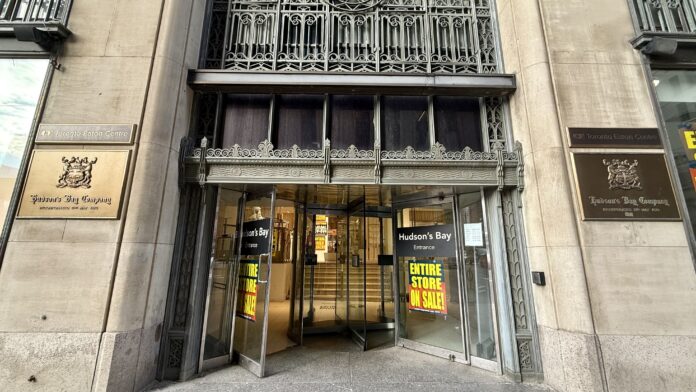
Hudson's Bay at Queen and Yonge in Toronto (Image: Dustin Fuhs)
The Hudson’s Bay Company ULC (HBC), one of Canada’s largest and most iconic retailers, has filed for protection under the Companies’ Creditors Arrangement Act (CCAA) in a bid to restructure its business operations. This move, announced through a court order on March 7, 2025, comes as the company seeks to navigate severe financial distress and reorganize its operations while ensuring the continued operation of its stores and properties.
The CCAA application involves HBC and a number of its affiliated entities, including HBC Canada Parent Holdings Inc., HBC Bay Holdings, and other related companies. The court granted HBC an “Initial Order,” allowing it to continue operations and manage its assets under the protection of the CCAA, a legal framework often used by companies facing insolvency to protect them from creditor actions while they restructure.
Key Provisions of the Initial Order
Under the terms of the initial court order, Hudson’s Bay remains in possession and control of its assets, including its stores, properties, and business operations. The company has also been allowed to continue employing staff and using its current financial systems, ensuring business continuity throughout the restructuring process. HBC is also authorized to pay employee wages, pensions, and necessary business expenses as they arise.
One of the more critical aspects of the order is the appointment of Alvarez & Marsal Canada Inc. (A&M) as the court-appointed monitor. A&M will oversee the company’s restructuring, ensuring that the process complies with CCAA requirements. Their duties include supervising HBC’s cash flows, advising the company on financial matters, and reporting regularly to the court. Importantly, HBC is authorized to explore options for asset sales, lease negotiations, and potential liquidation if necessary.
The company has also been granted a debtor-in-possession (DIP) financing facility of up to $16 million. This financing is intended to support HBC’s ongoing operations, particularly working capital and capital expenditures, while they continue to negotiate with creditors and evaluate restructuring options.
Shuttered Hudson’s Bay store in Banff, AB. Photo: Avison Young
Impact on Operations and Stakeholders
The order includes provisions that shield HBC from creditor actions during the restructuring period, with a temporary halt on any legal proceedings against the company. This “stay of proceedings” is crucial in giving HBC time to develop a plan without the pressure of lawsuits or claims from unsecured creditors.
HBC will also continue paying landlords and vendors, ensuring that the supply chain remains intact. However, the company is protected from claims arising from any pre-filing obligations, allowing it to focus on restructuring rather than settling past debts.
The company will also have the flexibility to lay off employees or negotiate terms with creditors, potentially including real estate lease restructurings or asset sales, as it works to stabilize its operations and position itself for future growth or liquidation.
Next Steps for HBC
The court has set a hearing date for March 17, 2025, where further details regarding the company’s restructuring plan will be presented. This hearing will likely determine whether the restructuring process will result in a sale, debt restructuring, or liquidation. In the meantime, Hudson’s Bay has the protection of the CCAA to stabilize its finances and operations.
Hudson’s Bay’s path forward will depend largely on negotiations with creditors, stakeholders, and potential buyers. The retail giant, which has faced increasing competition in the Canadian market, will need to adapt its business model and operations in response to shifting market conditions and consumer preferences.
This development marks a significant chapter for Hudson’s Bay, a company that has been a staple in Canadian retail for years, and raises important questions about the future of large department stores in the country.
Hudson's Bay plaque on the flagship store at 176 Yonge St. in Toronto. Photo: Dustin Fuhs/6ix Retail
Hudson’s Bay Company ULC (Hudson’s Bay), the Canadian retail giant with over 80 stores across the country, filed for protection under the Companies’ Creditors Arrangement Act (CCAA) in the Ontario Superior Court of Justice on Friday. The legal move marks a critical step in the company’s ongoing battle to stabilize its operations amid a backdrop of financial struggles and significant challenges in Canada’s retail landscape. With the appointment of Alvarez & Marsal Canada Inc. as the court-appointed monitor, the company will now begin a restructuring process in hopes of charting a sustainable path forward.
The court’s Initial Order grants Hudson’s Bay relief from creditor actions for an initial period of 10 days, with the potential for extension as the restructuring process unfolds. In addition to the court’s protection, Hudson’s Bay has secured interim financing from Restore Capital, LLC, an affiliate of Hilco Global, with a CAD$16 million advance already approved. However, the company is expected to seek further financing to support its operations throughout the CCAA process.
For Hudson’s Bay, this bankruptcy filing is not an isolated event but part of a larger, years-long struggle. Despite efforts to turn around the company, it has faced numerous financial difficulties over the past several years. Hudson’s Bay said in documents that it has long been burdened by high operational costs, declining consumer foot traffic, and increasing competition from both online and discount retailers.
Several macroeconomic and industry-wide factors were blamed for the retailer’s situation. The escalating trade tensions between Canada and the United States, the ongoing uncertainty caused by tariffs, and rising costs of living all were said to have contributed to the company’s financial woes. Moreover, shifts in Canadian consumer habits, accelerated by the COVID-19 pandemic, have forced many brick-and-mortar retailers like Hudson’s Bay to adapt to a new retail reality, one that heavily relies on e-commerce.
The company’s recent efforts to refinance its credit facilities earlier in 2024 were ultimately thwarted by the external economic pressures and the risks associated with the ongoing trade war, which compounded the uncertainty in the market.
Outside the temporarily shuttered Hudson’s Bay store in downtown Vancouver, July 2024. Photo: Lee Rivett
The Economic Pressures on Retail: A Perfect Storm for Hudson’s Bay
Hudson’s Bay’s bankruptcy filing blamed a culmination of several intertwined factors, including global trade issues, shifting consumer preferences, and Canada’s broader retail challenges. These include:
Trade and Financing Uncertainty: The ongoing trade war between Canada and the U.S., compounded by retaliatory tariffs, created substantial economic uncertainty. This situation made it challenging for Hudson’s Bay to refinance and secure the necessary capital to continue its operations, it said.
Post-Pandemic Shifts in Consumer Behaviour: The COVID-19 pandemic altered the way Canadians work and shop. A permanent reduction in downtown office workers, coupled with work-from-home policies, led to decreased foot traffic in major urban stores. The prolonged closure of physical retail stores also accelerated the shift toward e-commerce, a shift that has proven difficult for many traditional department stores to fully embrace.
Economic Strain on Canadian Consumers: The rising cost of living, soaring mortgage rates, and a weakening Canadian dollar have all placed pressure on Canadian households. This economic environment has led to restrained discretionary spending, which has impacted retailers like Hudson’s Bay that rely on customer spending for profitability, it said.
(HUDSON’S BAY, YORKDALE. PHOTO: ALEX REBANKS ARCHITECTS. INC.)
A Focus on Canadian Operations
Despite these significant challenges, Hudson’s Bay says it is committed to re-establishing its place in Canada’s retail ecosystem. The company says plans to focus on its core strengths, including its flagship Hudson’s Bay stores.
The Canadian operations of Saks Fifth Avenue and Saks OFF 5TH operate under a licensing agreement — the future of these stores have become uncertain. In Canada, and licensed Saks Fifth Avenue stores include a downtown Toronto flagship and stores at CF Sherway Gardens in Toronto and at CF Chinook Centre in Calgary. Their condition, compared to when they opened between 2016 and 2018, is shocking. Hudson’s Bay also operates 13 licensed Saks OFF 5TH off-price stores in Canada, most of which are underperforming.
As the company navigates this turbulent period, Hudson’s Bay says it remains committed to maintaining its relationships with employees, customers, and partners. Liz Rodbell, the company’s President and CEO, emphasized in a statement that the decision to seek creditor protection under CCAA was made with the best interests of all stakeholders in mind. “While very difficult, this is a necessary step to strengthen our foundation and ensure that we remain a significant part of Canada’s retail landscape,” she said.
Hudson’s Bay’s Financial Struggles: A Closer Look
The retailer’s financial struggles have been a long time coming. Hudson’s Bay was once one of the most prominent and established names in Canadian retail, with a rich history that dates back more than 300 years. However, in recent years, the company has been beset by a series of financial setbacks.
Since being acquired by private-equity investor Richard Baker in 2008, Hudson’s Bay has grappled with high debt levels and rising operational costs. Despite efforts to diversify its business, including a push into e-commerce and international markets, the company has failed to fully capitalize on these ventures. Moreover, Hudson’s Bay’s real estate holdings have been a major factor in its financial strategy, with Baker leveraging the company’s prime retail locations to raise capital. However, this strategy has proven less effective in the face of shifting consumer behaviour and a decline in demand for traditional department stores.
In addition to these financial pressures, the company has faced operational issues, such as the malfunctioning HVAC systems in stores across Canada. In the summer of 2024, multiple Hudson’s Bay locations were temporarily closed due to unsafe conditions caused by HVAC system failures during a heatwave. These incidents highlighted the company’s mounting maintenance issues and deepened concerns over its ability to maintain operations at scale. Sources said problems were mostly related to vendors not being paid.
A New Vision for Hudson’s Bay?
As Hudson’s Bay navigates this restructuring process, the key question is whether the company can reclaim its place in Canada’s retail landscape. Retail experts have pointed out that Hudson’s Bay must adapt to the evolving retail environment, where online shopping, personalization, and omni-channel experiences are becoming more important than ever.
David Ian Gray
David Ian Gray, a prominent retail expert, noted that Hudson’s Bay’s troubles reflect a broader shift in the retail industry, where traditional department stores are increasingly becoming irrelevant. “The problem is they’ve been doing it so much damage by neglect, particularly over the last year or two, with not even doing basic maintenance. How do you rebuild that?” Gray said, adding that while there is hope for the brand’s revival, the long-term future of Hudson’s Bay remains uncertain.
A major challenge for Hudson’s Bay will be rebuilding its relationships with key vendors. According to sources, the company has already alienated many brands due to outstanding debts for merchandise orders. The withdrawal of brands like Australian fashion label Ever New Melbourne, which recently removed all of its merchandise from Hudson’s Bay stores, underscores the retailer’s financial instability. If Hudson’s Bay fails to regain the trust of its suppliers, its inventory levels and store offerings could be severely impacted, making a recovery even more difficult.
Clearing out the product – Ever New Melbourne representatives dismantle a shop-in-store at Hudson’s Bay in Coquitlam, BC. A reader, who took this photo, spoke with reps who were moving product out of Hudson’s Bay, moving it into the CF Pacific Centre and Metropolis at Metrotown Ever New stores.
Rebuilding Hudson’s Bay: Key Areas for Revitalization
For Hudson’s Bay to survive and thrive in the years to come, it must focus on several key areas, according to Gray:
Revitalizing the Brand: The Hudson’s Bay brand has long been synonymous with Canadian retail, but its relevance has waned in recent years. To remain competitive, the company must reinvent itself to meet the changing needs and expectations of modern Canadian shoppers. This includes offering a more curated product mix, enhancing its customer experience, and making the brand more digitally savvy.
Strengthening Vendor Relationships: The recent departure of key vendors signals a breakdown in trust between Hudson’s Bay and its suppliers. To ensure the success of its restructuring efforts, Hudson’s Bay will need to rebuild these relationships and offer more attractive terms to regain access to high-quality merchandise.
Omni-Channel Retailing: As the retail industry continues to evolve, an effective omni-channel strategy is essential. Hudson’s Bay must ensure that its online and offline experiences are seamless, enabling customers to shop whenever and however they prefer.
Cost Management and Operational Efficiency: With its financial difficulties, Hudson’s Bay must streamline its operations, cut unnecessary costs, and focus on improving the efficiency of its supply chain and store operations.
Reinventing Its Real Estate Strategy: The company’s extensive real estate holdings have long been a double-edged sword. While its prime locations have historically been a source of value, they now represent a significant financial burden. Hudson’s Bay may need to reconsider its approach to real estate, potentially selling off or repurposing some of its properties to reduce debt.
Larry Leung’s Perspective on Hudson’s Bay’s Path Forward
Larry Leung, a customer service expert, shared his thoughts on how Hudson’s Bay can regain traction amidst its current challenges. He emphasized the importance of going “back to basics” to address the company’s core issues.
Larry Leung
“Hudson’s Bay should get back to basics and improve sales by focusing on a consistent omni-channel experience, engaging customers with a relevant pared-down product mix, rejuvenating its loyalty program with partners, and engaging employees,” said Leung. “This is crucial to re-establishing the brand’s credibility and customer loyalty.”
Leung also noted that the key to reviving Hudson’s Bay’s fortunes lies in improving the in-store experience and aligning the company’s physical presence with the needs of modern Canadian shoppers. His suggestion to streamline the product offering, paired with a reinvigorated loyalty program, underscores a crucial strategy for the retailer to regain its relevance in a competitive market.
Gary Newbury’s Analysis: A Retail Legacy in Decline
Gary Newbury, a retail supply chain specialist, offered a sobering view of Hudson’s Bay’s financial troubles, attributing much of the retailer’s decline to strategic missteps over the years. He pointed to the company’s acquisition of Neiman Marcus in a significant $2.65 billion deal, questioning whether the leadership truly believed in the future of Hudson’s Bay Stores.
Gary Newbury
“Over the last year or so, HBC acquired Neiman Marcus for a significant outlay of $2.65 billion. One may argue if the leadership thought HBC Stores had a future, they would have invested the money in HBC Stores,” Newbury said. This move, he argues, reflected a larger shift in priorities at Hudson’s Bay, one that further distanced the company from its roots as a quintessential Canadian brand.
Newbury highlighted the amalgamation of Saks Fifth Avenue and Neiman Marcus under a separate leadership team as a pivotal moment. Hudson’s Bay Stores, on the other hand, was left “very much on the outside.” The decision to separate these operations, according to Newbury, was a clear signal of trouble for the Canadian retailer, which has been a fixture in Canada since 1670. “This definitely spelt trouble for this Canadian brand, a brand that has been present in Canada since 1670 and has deep roots in the hearts and minds of Canadians,” he said. For decades, Hudson’s Bay embodied the hardworking, enduring spirit of Canada, and the shift away from this legacy was a turning point that many saw as the beginning of its downfall.
A History of Missteps
The retailer’s troubles were compounded by a series of missteps and poor strategic decisions, Newbury explained. One of the most notable was Hudson’s Bay’s attempt to “buck the trend” by disaggregating its website, The Bay, from its store business, only to abandon the strategy within a year. “They claimed to be ‘bucking the trend’ by having a disaggregated website (TheBay.com) from the store business and said this was genius, only to abandon this a year later,” Newbury remarked. This failure to stick with a cohesive strategy added to the retailer’s struggles and confusion around its digital and physical retail presence.
Another debacle, according to Newbury, was the attempt to revive the Zellers brand. Initially launched in the Burlington Mall as a well-thought-out concept, the Zellers revival ultimately failed due to poor execution. By the time it expanded into Durham Region, it had been reduced to a “home furnishings and apparel landscape of overpriced, fairly perfunctory, and poorly visually merchandised assortments.” This, Newbury suggests, epitomized Hudson’s Bay’s broader retail strategy failures in recent years.
Operational Failures and Lack of Technological Investment
As Hudson’s Bay faced mounting pressures, operational issues also started to surface, further complicating its financial woes. The pandemic only heightened these struggles, with disputes arising between Hudson’s Bay and its landlords over the maintenance of store environments during lockdowns. The company’s failure to maintain its HVAC systems—leading to store closures due to unsafe conditions—was another sign of the operational neglect that plagued the retailer during this period. “There were troubles/disputes during the pandemic with some failed attempts to insist that landlords had not maintained a first-class operating environment during the restriction, and then the failure of HVAC systems reported on the West Coast,” Newbury said.
In addition to these operational challenges, Hudson’s Bay’s lack of investment in modern technology proved to be another critical factor in its demise. Instead of upgrading to newer systems, the retailer chose to patch up its old legacy infrastructure, which hindered its ability to compete effectively in the digital era. “Failure to invest in current technology, choosing to patch up old legacy systems spelled doom for effectiveness,” Newbury stated. This decision left the company behind its competitors in terms of efficiency and innovation.
The Leadership Struggle and the Fall of a Retail Giant
Newbury also pointed to Hudson’s Bay’s ongoing leadership struggles as a contributing factor to its decline. The company cycled through multiple Presidents in a manner reminiscent of Sears Canada’s final years, with each new leader coming and going without making a significant impact. “Presidents were wheeled in and wheeled out, much the way Sears Canada saw in its last 5-10 years,” Newbury remarked.
The constant turnover in leadership sent a clear message to both consumers and suppliers that Hudson’s Bay lacked a clear vision and stable direction. Even as the company tried to shift its strategy, including an ambitious plan to position itself as a premier retail destination, the results were underwhelming. Newbury pointed out that, early in the pandemic, retail futurist Doug Stephens suggested Hudson’s Bay reduce its store count to just 30 locations. A year later, Hudson’s Bay claimed it had developed a new strategy focused on becoming a luxury retail leader. But as Newbury observed, “perhaps this formed an inspired template for the top leadership team—how to bust a brand in five easy steps?”
Looking Ahead: Can Hudson’s Bay Bounce Back?
The road ahead for Hudson’s Bay is fraught with challenges. The company must navigate a complex restructuring process, repair its relationships with suppliers and vendors, and find ways to reinvent itself in an increasingly digital world. The retailer could also close dozens of stores. However, there is a glimmer of hope that with the right leadership, a renewed focus on customer experience, and a revitalized business model, Hudson’s Bay can once again find its place with Canadian shoppers.
As the company moves forward with its restructuring efforts, all eyes will be on the next court hearing, scheduled for March 17, 2025. The outcome of this hearing will determine the future direction of Hudson’s Bay and whether it can remain a viable player in Canada’s competitive retail landscape.