Loblaw Companies Limited announced Thursday its unaudited financial results for the second quarter ended June 14, 2025, indicating that revenue growth reflected higher customer traffic and unit sales as well as larger baskets.
Loblaw said it delivered a strong performance this quarter by continuing to provide Canadians with quality, value, service, and convenience across its nationwide network of stores and digital platforms.
Strong sales growth was driven by new store openings and improved same-store sales, with everyday value offerings, personalized PC OptimumTM loyalty rewards, and impactful promotions driving higher customer engagement, it said.
“In the Food Retail business, consumers continued to focus on value, which resulted in outperformance by Hard Discount and Real Canadian Superstores banners. Same-store traffic, basket size, and item count all increased compared to the same quarter last year. Food Retail tonnage volume also increased, reflecting solid market share gains within both discount and conventional segments. In Drug Retail, robust pharmacy and healthcare services drove continued strength, led by specialty drug growth. Front store sales momentum continued, particularly in prestige beauty categories, partially offset by the strategic exit from certain electronics items. Loblaw advanced its full-year plan to open approximately 80 new stores and 100 new pharmacy clinics, providing access to affordable, quality groceries and healthcare to more communities across Canada. This included opening 10 stores and 12 pharmacy clinics in the quarter, bringing the year-to-date total to 20 new stores and 23 new pharmacy clinics. In addition, the Company continued to successfully execute the ramp-up of its East Gwillimbury distribution centre, said the company.
Loblaw also separately announced Thursday a 4-for-1 common share stock split to ensure its common shares remain accessible to retail investors and the thousands of employees who participate in the Company’s employee share ownership program. The stock split will not dilute shareholders’ equity. The stock split will be implemented by way of a stock dividend.
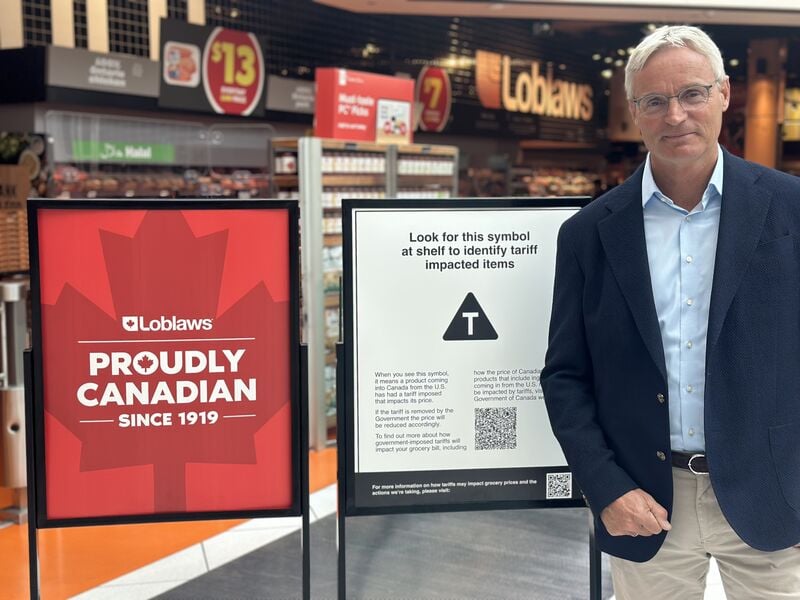
“Canadians are seeking value, quality and service and are increasingly rewarding us for delivering on their needs, resulting in sales and market share growth,” said Per Bank, President and Chief Executive Officer, Loblaw Companies Limited. “We are bringing our value focus to more and more communities across Canada through our new store openings, with 61 new stores opened since last year.”
2025 SECOND QUARTER HIGHLIGHTS
- Revenue was $14,672 million, an increase of $725 million, or 5.2%.
- The sale of Wellwise by Shoppers was completed in the first quarter of 2025. Revenue related to Wellwise in the second quarter of 2025 was nil (2024 – $21 million). Excluding the impact of revenue related to Wellwise, revenue increased by 5.4%.
- Retail segment sales were $14,389 million, an increase of $731 million, or 5.4%.
- Food Retail (Loblaw) same-stores sales increased by 3.5%.
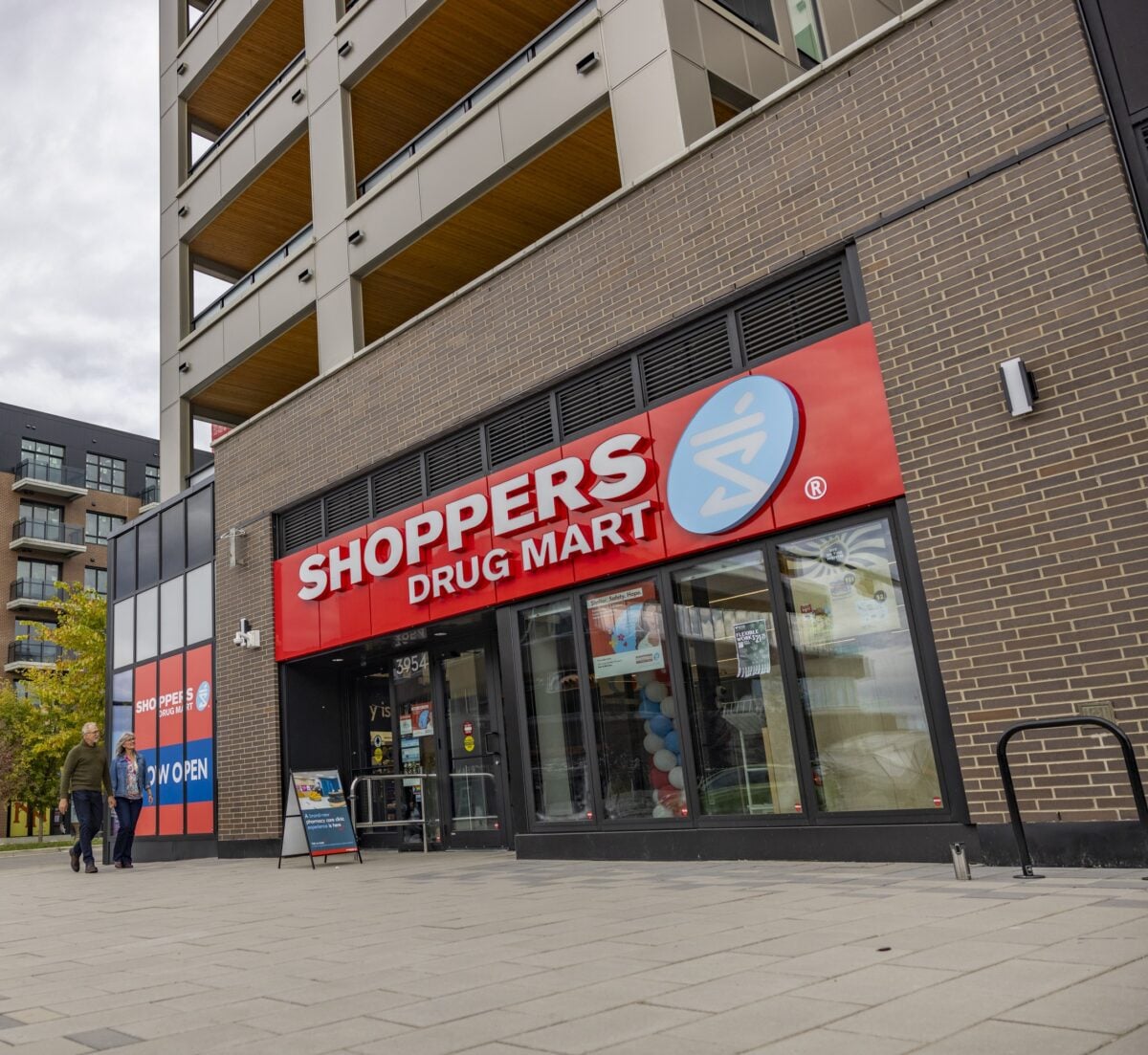
- Drug Retail (Shoppers Drug Mart) same-store sales increased by 4.1%, with pharmacy and healthcare services same-store sales growth of 6.2% and front store same-store sales growth of 1.7%.
- E-commerce sales increased by 17.5%.
- Operating income was $1,239 million, an increase of $371 million, or 42.7%.
- Adjusted EBITDA was $1,840 million, an increase of $127 million, or 7.4%.
- Retail segment gross profit percentage was stable at 32.0%.
- Net earnings available to common shareholders of the Company were $714 million, an increase of $257 million or 56.2%. Diluted net earnings per common share were $2.37, an increase of $0.89, or 60.1%. The increase was primarily driven by the impact of lower costs related to certain intangible assets associated with the 2014 acquisition of Shoppers Drug Mart Corporation which are now fully amortized and lapping of prior year charges.
- Adjusted net earnings available to common shareholders of the Company were $721 million, an increase of $57 million, or 8.6%.
- Adjusted diluted net earnings per common share were $2.40, an increase of $0.25 or 11.6%.
- Net capital investments were $239 million, which reflects gross capital investments of $409 million, net of proceeds from property disposals of $170 million.
- Repurchased for cancellation 2.05 million common shares at a cost of $445 million. Free cash flow from the Retail segment was $640 million.
Loblaw is Canada’s food and pharmacy leader, and the nation’s largest retailer. Loblaw provides Canadians with grocery, pharmacy and healthcare services, other health and beauty products, apparel, general merchandise, financial services and wireless mobile products and services. With more than 2,800 locations, Loblaw, its franchisees and Associate-owners employ more than 220,000 full- and part-time employees, making it one of Canada’s largest private sector employers.
It has more than 1,100 grocery stores that span the value spectrum from discount to specialty; full-service pharmacies at nearly 1,400 Shoppers Drug Mart and Pharmaprix locations and in close to 500 grocery stores; PC Financial services; Joe Fresh fashion and family apparel; and four of Canada’s top-consumer brands in Life Brand, Farmer’s Market, no name and President’s Choice.
Related Retail Insider stories: