Advertisement
Home Blog Page 389

Rains Opens First Canadian Store in Vancouver

Rains store at 2142 W 4th Ave, Vancouver. Photo: Rains

Danish outerwear brand Rains has officially entered the Canadian retail market with the opening of its first standalone store in Vancouver. The 1,175-square-foot boutique, located at 2142 West 4th Avenue in the Kitsilano neighbourhood, marks a milestone in the brand’s global expansion. This is Rains’ 30th store worldwide and the seventh in North America.

The store’s design reflects both Vancouver’s rugged, outdoor-centric environment and Rains’ signature neo-Scandinavian aesthetic. It features artwork by Danish artist Jacob Egeberg, a frequent collaborator with the brand. The store offers a curated selection of Rains’ core outerwear styles, bags, and seasonal collections designed for the urban consumer facing varied climates.

Building a Stronger Canadian Presence

Rains has been steadily growing its presence in Canada for over a decade. Initially operating through a distributor based in Vancouver, the company took over its own distribution in the market approximately two years ago. This shift allowed the brand to refine its strategic approach to retail expansion in Canada.

“We’re excited to solidify our ties to Canada,” said Daniel Brix Hesselager, Co-Founder of Rains. “We’ve been working with renowned retailers including SSENSE, Holt Renfrew, and La Maison Simons for some time, and it felt like the perfect time to cement our presence with a store. It’s crucial to have that physical connection to consumers, and our locations are the truest representation of our vision and ethos as a company. By stepping inside, customers can be immersed in both our products and wider universe.”

Jan Stig Andersen, CEO of Rains North America, emphasized the importance of the brand’s investment in Canada: “Canada has always been a key region for Rains, and we are excited to bring our brand closer to consumers here through these strategic partnerships and store openings. We believe that our continued investment in this market will solidify our presence and set the stage for long-term success.”

Rains Spring/Summer 2025 campaign image

Toronto Showroom Strengthens Wholesale Business

In addition to the Vancouver store, Rains recently opened a showroom in Toronto on Wingold Avenue. The showroom is part of the brand’s strategy to strengthen its wholesale relationships and provide retail buyers with a comprehensive look at its offerings.

“The showroom is something we do both for our internal teams and for retailers,” said Andersen. “It allows our partners to see the full breadth of our collection, how it’s merchandised, and the potential for their stores. Branding-wise, it’s been very important for us.”

Having a physical space has also been a game-changer for the brand’s operations. “Previously, without a showroom or stores, many of our team members were working remotely. Now, we have a space where we can immerse both our team and visitors in the Rains brand experience,” he added.

Inside the RAINS showroom at 90 Wingold Avenue in Toronto. Photo supplied

Retail Distribution and Growth Strategy in Canada

Beyond its direct-to-consumer retail expansion, Rains maintains a strong presence in Canada through partnerships with key retailers. The brand is currently stocked at approximately 30-40 independent stores. The company is actively expanding its reach among high-end independents, leveraging the Toronto showroom to build deeper relationships with retailers across the country.

In terms of retail stores, Rains follows a ‘cluster strategy’ for retail expansion, focusing on key cities and growing within those markets before expanding further. “When we built our presence in New York, we started with one store. Now, we have six locations there,” Andersen explained. “We plan to follow a similar approach in Canada, beginning with Vancouver and eventually expanding into Toronto and Montreal.”

West 4th Avenue in Vancouver. Image: Apple Maps

Product Offering and Customer Segments

Rains’ product range in Canada consists of outerwear, bags, and accessories, with an even split between apparel and bags. The brand has experienced significant growth in the travel segment, as consumers seek innovative and stylish luggage solutions. Additionally, demand for outerwear—particularly puffer jackets and layered transitional pieces—continues to rise.

The brand attracts two primary consumer groups: those looking for functional, waterproof gear, and a younger, fashion-forward audience drawn to its minimalist, urban aesthetic. “You have the cool young people wearing Rains every day and their parents who might only use it when it rains,” Andersen noted. While rainwear remains core to the business, it represents only about 20-25% of overall sales.

Omnichannel Synergy and Future Expansion

A key element of Rains’ strategy is its focus on creating a seamless shopping experience across retail, wholesale, and e-commerce channels. “The synergy between revenue streams is what’s important,” Andersen said.

“Consumers might see a product in-store, then buy it online, or discover something online and go to a store to try it in person. The key is providing a cohesive experience across all touchpoints.”

Online sales data also plays a critical role in determining retail expansion. By analyzing web traffic and conversion rates in different cities, Rains identifies where consumer interest is highest. “Vancouver is our number one city in Canada, followed by Toronto and Montreal. That’s why our expansion starts in these markets,” he explained.

Distinct Store Design Approach

Unlike many brands that maintain uniform store designs globally, Rains tailors each location’s interior to reflect its surroundings. “Each of our six stores in New York looks different,” Andersen said. “We want each location to feel unique while still aligning with our brand DNA. Some stores serve as community hubs with events and activations, while others focus purely on retail.”

The Vancouver store offers a balanced presentation of outerwear and bags, reflecting the city’s climate and consumer needs. While it isn’t one of Rains’ larger ‘community’ stores, future expansions in Canada could see more flagship-style locations.


More from Retail Insider:

1 in 5 small business owners facing cancelled or delayed orders as Canada-U.S. tariff uncertainty continues: CFIB

Photo by Tima Miroshnichenko

Nearly one in five (18%) small- and medium-sized businesses (SMEs) are experiencing cancelled or paused orders due to the ongoing uncertainty around the U.S.-Canada tariff situation, finds new data by the Canadian Federation of Independent Business (CFIB). That number rises to 34% among exporters.

“The uncertainty around tariffs is almost as damaging as tariffs themselves. It reverberates among business owners right now and businesses are adjusting operations on the fly as a result,” said Simon Gaudreault, CFIB’s chief economist and vice-president of research. “While we may have a few weeks of reprieve, there is still concern about the long-term impact of tariffs on small businesses.

Simon Gaudreault
Simon Gaudreault

“Some firms may change their business models and find new markets, but it’ll take some time. Many exporters though are telling us it will be a major struggle to pivot, and they’ll have to decide whether to lay off staff, remain in Canada or explore other markets.

“In some sectors, like retail, many businesses are indicating they’ll be forced to pass on increased costs to customers. Others, like in the agri-business sector, report they will be forced to eat most of the increased costs. Overall, small business owners are sending a clear message that U.S. tariffs and Canada’s retaliatory measures will add further financial strain on businesses and Canadians alike.”

The CFIB is Canada’s largest association of small and medium-sized businesses with 100,000 members across every industry and region.

“About one in five businesses say they can survive less than three months without support if tariffs hit. This should sound an alarm for policymakers. Now is the time to cut taxes, adopt mutual recognition to address interprovincial trade barriers, and promote buying local,” added Gaudreault. “If Canada hits the U.S. with retaliatory tariffs, it must make sure any support programs include the needs of small businesses and that the revenue from those tariffs go back to both importers and exporters as quickly as possible.”

The CFIB said a majority (54%) of SMEs say they don’t feel prepared for the impacts of U.S.-Canada tariffs. CFIB data also found that:

  • 24% are looking to delay expansion plans,
  • 20% are looking to reduce workforce/hours,
  • 45% of small firms are looking for new suppliers to address the tariff situation,
  • 62% can pass on costs to customers or clients at varying levels if U.S.-Canada tariffs are imposed. 

The CFIB said a strong majority of small firms (81%) said they want Parliament recalled to deal with the tariff threat. CFIB is calling for Parliament to immediately reconvene to help small businesses through this period of instability by:

  • Stopping the April 1 carbon tax increase
  • Passing legislation to make sure carbon tax rebates for small businesses are tax free
  • Passing proposed legislation to increase the lifetime capital gains exemption threshold to $1.25M and ensuring the Canadian Entrepreneurs’ Incentive stays in place. 

Small business owners can share their thoughts and experiences with CFIB by visiting cfib.ca/tariffs.

Happy Belly’s Smile Tiger Coffee Roasters signs 25-Unit area development agreement in British Columbia

Smile Tiger Coffee Roasters. Photo, Explore Waterloo Region

Happy Belly Food Group Inc., a leading consolidator of emerging food brands, says it has signed an area development agreement for British Columbia to open 25 new franchised locations of its newest acquisition that closed recently, Smile Tiger Coffee Roasters, an emerging brand in the quick service beverage industry.

Sean Black
Sean Black

“As we continue to focus on asset light growth, it made so much sense to partner with Scott Grandin who is easily one of the top Area Developers in Canada’s QSR industry,” said Sean Black, Chief Executive Officer of Happy Belly.

“We are committed to creating shareholder value across our portfolio with our disciplined approach to organic & inorganic growth as we are just getting started in the quick service beverage industry.

“Acquiring cash-flow-positive brands that are debt-free and demonstrate positive same-store sales like Smile Tiger aligns with our low-risk strategy for delivering consistent returns. Now our focus is on leveraging our platform to scale the brand across Canada with a focus on doubling the EBITDA in 24 months or less.”

“We currently have 446 contractually committed retail franchise locations from area developers across all emerging brands in the Happy Belly Food Group portfolio including those in development, under construction or already open. We are working to actively expand this pipeline significantly in 2025 & 2026 with our disciplined approach to growth. It is key for us to continue selecting the right franchise partners along with the right real estate in order to achieve our development goals for the brands. The selection process has now officially started.”

Photo: Smile Tiger Coffee Roasters

“Happy Belly’s track record over the last several years speaks for itself – whether with Heal Wellness, iQ Foods, Via Cibo, Rosie’s Burgers, or Yolks Breakfast, we have consistently proven our ability to acquire high-potential assets at reasonable multiples and rapidly expand their EBITDA. Smile Tiger is no exception. Signing this area development agreement for 25 net new locations in British Columbia alone, exemplifies our ability to identify and integrate strong-performing brands, setting them up for even greater success under our Happy Belly operational framework,” added Black.

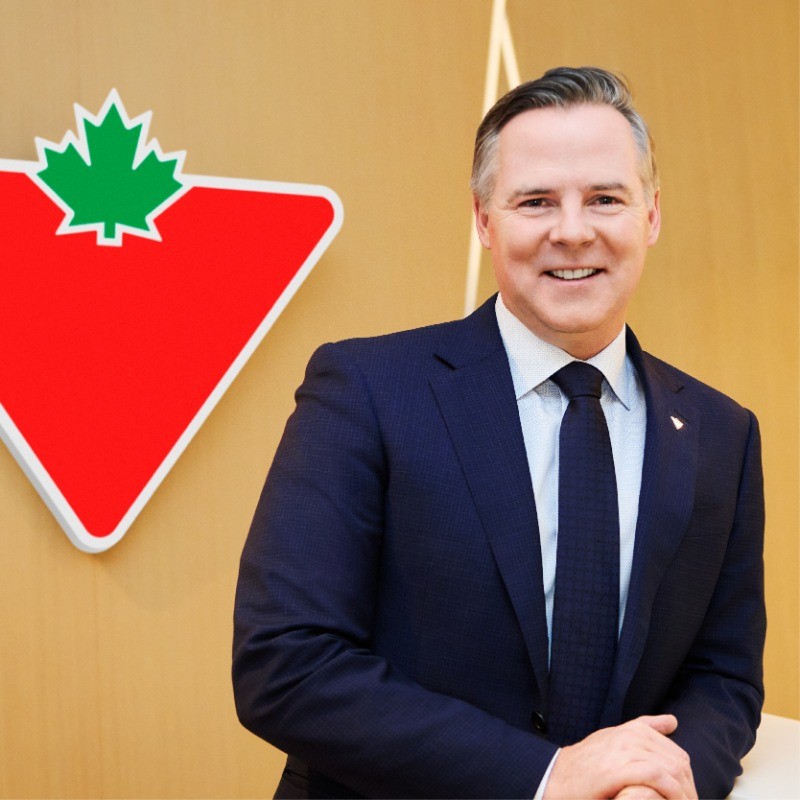
Canadian Tire Corporation charts “strong earnings and a return to growth”

Image: Canadian Tire

Canadian Tire Corporation announced on Thursday financial results for its fourth quarter and full year ended December 28, 2024, saying strong December sales drove a return to comparable sales growth in Q4.

Triangle spend per member was up in Q4, as members earned and redeemed at higher levels than last year, it said, adding that Q4 Diluted Earnings Per Share (EPS) was $7.37; Q4 Normalized Diluted EPS was up 20.4% to $4.07 while Full-year Diluted EPS was $15.92; Full-Year Normalized Diluted EPS was up 21.7% to $12.62.

“In the quarter, we charted strong earnings and a return to growth, while observing economic green shoots like improved consumer sentiment and spending,” said Greg Hicks, President and CEO, Canadian Tire Corporation. “The strength of Triangle Rewards was on display in Q4, as loyalty sales grew 4% and we activated more personalized promotions – having attracted and engaged nearly half-a-million new and returned members in 2024.

Greg Hicks
Greg Hicks

“As we look beyond our Better Connected strategy, we have growing evidence and conviction that a deeper connection of our retail banners and our loyalty system drives higher member engagement and sales.”

FOURTH-QUARTER HIGHLIGHTS

  • Consolidated comparable sales and consolidated retail sales returned to growth and were both up 1.1%, driven by strong December sales across all banners; loyalty sales were up 4%.
    • Canadian Tire Retail (CTR) comparable sales grew 1.1%. Strong growth was led by Automotive and offset by modest declines across other divisions. Essential categories were up 4%, while consumer demand remained constrained in discretionary categories, which were down 2%.
    • SportChek comparable sales were up for a second consecutive quarter, with growth of 0.4% driven by strong franchise sales. Hockey, hydration, and lifestyle footwear were top performing categories in the quarter.
    • Mark’s comparable sales were up 1.8%, as the industrial businesses returned to growth and new store openings drove broad-based growth across Mark’s categories.
  • Consolidated income before income taxes (IBT) was $529.1 million, up $266.1 million. Normalized IBT was up $39.7 million or 13.9% to $324.3 million. Improved retail segment profitability drove the increase.
    • Retail IBT was $436.7 million, up $275.0 million or $41.2 million on a normalized basis, driven by favourable gross margin dollars as a result of higher revenue, lower operating expenses, and lower net finance costs.
    • Financial Services IBT was down $17.7 million, or down $10.3 million on a normalized basis after accounting for costs related to the recently-completed strategic review and targeted headcount reduction in the prior year. Expected increases in net impairment losses, as well as higher funding costs, drove the remainder of the decline.

FULL-YEAR HIGHLIGHTS

  • Consolidated retail and comparable sales, excluding Petroleum, were down 1.7%, reflecting a weaker consumer demand environment. At CTR, essential categories were up 1%, led by Automotive, and outpaced the 5% decline in discretionary categories.
  • Loyalty sales penetration represented 54.4% of full-year retail sales on a direct scan basis, growing the amount of electronic Canadian Tire Money (eCTM) in the ecosystem and driving redemption to create more value for Triangle members. Canadians redeemed $360 million of eCTM in 2024, up 7%.
  • Delivering an improved Retail gross margin rate, excluding Petroleum, up 50 bps to 36.0%, and maintaining operating expense discipline contributed to improved Retail segment profitability and Retail Return on Invested Capital (ROIC) at 9.4%. Normalized Retail IBT was $558.0 million, up 27.4%; Retail IBT was $772.2 million, including the gain on the sale of a Brampton industrial property completed in December 2024.
  • Continued sell through of existing inventory, partially offset by investments in newer retail inventory ahead of 2025, resulted in year-end inventory down 5% compared to year-end 2023. Working capital improvements contributed to strong retail cash generated from operating activities of close to $1.7 billion, compared to $1.1 billion in 2023. At the end of Q4, CTC had fully repaid the $895 million of borrowings associated with its October 2023 repurchase of 20% of the Canadian Tire Financial Services business.
PHOTO: CANADIAN TIRE

STRATEGIC HIGHLIGHTS

  • Since 2022, the Company has been executing its Better Connected strategy, modernizing core retail foundational elements by investing in the business, with total Operating Capital Expenditures of $1.8 billion. Over that time, the Company has also returned $1.9 billion to shareholders, by way of share repurchases and dividends paid.
  • The third year of the Company’s Better Connected strategy has seen CTC:
    • Roll out further CTR store investment projects, with close to a quarter of the Company’s 502 CTR stores updated since 2022. Combined with new store formats and refreshed stores at other banners, CTC has added an incremental ~1 million of retail square feet across its banners over the same period. The Company also drove value by monetizing redundant real estate assets during 2024.
    • Bolster its digital capabilities, better connecting digital and physical channels and supporting $1.1 billion of annual eCommerce sales. These enhancements have contributed to an enhanced customer experience, as demonstrated by improved customer Net Promoter Scores (NPS).
    • Continue to strengthen the Owned Brands portfolio across our banners, growing and elevating our largest brands such as MotoMaster, which delivered double-digit growth in 2024. Since 2022, an additional three brands have achieved annual sales of over $100 million, taking the total to 17. Owned Brands continued to deliver a significant margin differential vis-à-vis National Brands. Customer attachment to these brands remains strong.
    • Grow the base of active registered Triangle members from 7.8 million at the end of 2021 to 9.2 million at the end of 2024. Direct scan Loyalty Penetration is up by 480 bps, delivering even stronger first-party data on which to build.
    • Continue to transform its supply chain network and invest in IT network modernization and resilience. Supply chain investments included optimized capacity utilization and automated fulfilment at existing Distribution Centres (DC) and regional capacity expansion in Western Canada with a new DC in Metro Vancouver, set to open in 2025.

Canadian Tire Corporation is a group of companies that includes a Retail segment, a Financial Services division and CT REIT. Its retail business is led by Canadian Tire, which was founded in 1922. Party City, PartSource and Gas+ are key parts of the Canadian Tire network. The Retail segment also includes Mark’s, a leading source for casual and industrial wear; Pro Hockey Life, a hockey specialty store catering to elite players; and SportChek, Hockey Experts, Sports Experts and Atmosphere. The company’s close to 1,700 retail and gasoline outlets are supported and strengthened by CTC’s Financial Services division. In addition, CTC owns and operates Helly Hansen, a leading technical outdoor brand based in Oslo, Norway.

Related Retail Insider stories:

Oxford Properties Showcases Remix Project Artists in GTA

At the Yorkdale Shopping Centre in Toronto. Photo: The Remix Project/Oxford Properties

Oxford Properties has partnered with The Remix Project to bring emerging artists to the forefront of the Greater Toronto Area’s cultural landscape. The year-long initiative, which aims to nurture young creative talent, is launching with a Black History Month campaign featuring art, photography, and music at some of the region’s most prominent shopping centres and Financial District offices.

“This partnership is about creating visibility and opportunities for emerging creatives by integrating their work into the spaces where millions of people shop and work every day,” said Lucia Connor, Vice-President, Oxford Properties. “It’s a meaningful way for us to support community engagement and cultural representation while leveraging our properties as platforms for artistic expression.”

Supporting Emerging Artists Through Financial and Educational Investments

As part of its commitment, Oxford Properties will support The Remix Project throughout its 20th anniversary and beyond. Scarborough Town Centre (STC) has contributed $20,000 to the program, which will be used to acquire new digital equipment and expand educational opportunities. This funding will help participants gain access to industry-standard tools, mentorship, and hands-on learning experiences to build sustainable careers in the arts.

“This collaboration with Oxford Properties is a significant step toward embedding emerging creatives and celebrating their work across the GTA,” said Abel Lulseged, Executive Director of The Remix Project. “At The Remix Project, we believe in the power of visibility and access—when young creatives see their work showcased in spaces where thousands of people pass through daily, it validates their artistry and fuels their creative journey.”

At the Scarborough Town Centre in Toronto. Photo: The Remix Project/Oxford Properties

Black History Month Initiatives at Oxford Properties Locations

The first phase of the collaboration includes immersive galleries, installations, and digital content showcasing Black artists and their contributions to the arts. Highlights include:

  • Scarborough Town Centre’s Remix Gallery

A 300-foot gallery featuring 15 students and alumni from The Remix Project will launch at Scarborough Town Centre on February 11 at 2 p.m. The unveiling will include a guided Art Walk, where seven creators will share insights into their creative journeys and featured work.

STC’s blog and social media channels will also highlight the participating Black artists, exploring how identity shapes their artistic expression.

  • Yorkdale Shopping Centre’s Community Over Everything Photography Exhibit

A suspended exhibition in Yorkdale’s main atrium will celebrate Black culture and identity through photography by Remix Project artists. The pieces will explore themes of self-love, joy, style, and community.

Yorkdale’s website and social platforms will feature video content of the display and artist interviews to further engage audiences.

  • Square One Shopping Centre’s Digital Creator Series

Square One will showcase content created by Remix Project participants on digital screens throughout the shopping centre. Select creators will also have the opportunity to produce original content after hours, incorporating the retail environment into their projects.

At the Yorkdale Shopping Centre in Toronto. Photo: The Remix Project/Oxford Properties

Financial District Art Installations

Oxford Properties is extending the initiative to its Financial District offices, where installations by well-known Black artists and Remix Project instructors will be displayed:

  • Richmond Adelaide Centre (February 6–28): Large-format works by Taha Muharuma, known for his vibrant visual storytelling and striking use of colour.
  • 1 University Ave (February 11–28): A large-scale activation wall by Afro-futuristic portrait artist Adeyemi Adegbesan, aka Yung Yemi.
  • WaterPark Place (February 14–28): A series of vibrant portraits by Benny Bing celebrating Black identity and empowerment.
At the Scarborough Town Centre in Toronto. Photo: The Remix Project/Oxford Properties

About The Remix Project

Founded as a community drop-in program, The Remix Project has grown into an internationally recognized platform for young creatives. Originally known as Inner City Visions (ICV), Remix has helped countless young adults transition from the streets into studios, equipping them with the skills and networks to pursue careers in arts, entertainment, and creative industries. Participants can earn high school credits and apply for scholarships with Remix’s educational partners.

About Oxford Properties Group

Oxford Properties Group is a global real estate investor, developer, and manager overseeing C$84 billion in assets. Founded in 1960, Oxford’s portfolio spans office, logistics, retail, multifamily residential, life sciences, hotels, and alternative investments. The company is a thematic investor with active development projects worldwide. Oxford is owned by OMERS, the Canadian defined benefit pension plan for Ontario’s municipal employees.

More from Retail Insider:

SmartCentres REIT experiences growing demand for its retail centres

PHOTO: SMARTCENTRES

SmartCentres Real Estate Investment Trust reported its financial and operating results for the quarter and year ended December 31, 2024, indicating strong demand for its retail properties.

Mitchell Goldhar
Mitchell Goldhar

“Reflecting on our 2024 results, I am pleased with our strong financial and operational performance,” said Mitchell Goldhar, CEO of SmartCentres. “Our net operating income has shown steady and consistent growth through the year fueled by strong leasing momentum in all areas, resulting in an industry-leading 98.7% in-place and committed occupancy rate up from 98.5% in the prior quarter.

“Same property NOI continued to deliver strong results in the fourth quarter, growing 3.8% from the same period a year earlier. The strong interest stems not only from our CRU and mid-size users, but also from large format retailers like Walmart, Costco, TJX, Canadian Tire and virtually all of the food stores. Walmart Canada recently announced it will open a new Supercentre later in 2025 in South Oakville, Ontario, Hopedale Mall as part of its announced $6.5 billion expansion in Canada.

“The Millway, our purpose-built rental project in the VMC achieved occupancy of approximately 95% by the end of the quarter, at average rental rates above our original budget. Our mixed-use development pipeline continues to add to the bottom-line with the completion of our self-storage facility in Stoney Creek this quarter, and the closing of 11 additional townhomes at our Vaughan NW project. We are executing on various levels adding FFO and NAV now and for the long term.  Subsequent to the quarter end, we also raised $300 million via a 6.5-year term debenture which we used to repay our recent $160 million debenture maturity and outstanding floating rate debt on our operating lines, all on an accretive basis while filling gaps in our ladder and extending the average term to maturity of our debt.”

SmartCentres Kamloops. Image: SmartCentres REIT

2024 Fourth Quarter Highlights

Retail Operations

  • With growing demand for its retail centres, Same Properties NOI excluding Anchors for the three months ended December 31, 2024 increased by 6.0% (3.8% including Anchors) compared to the same period in 2023.
  • 192,353 square feet of vacant space was leased during the quarter, resulting in an in-place and committed occupancy rate of 98.7% as of December 31, 2024 (September 30, 2024 – 98.5%). In addition to vacant space lease-up, there is growing demand for new build retail, for which it executed 253,000 square feet in the year.
  • Renewed and extended over 91% of leases maturing in 2024 representing 5.0 million square feet at strong rental growth of 8.8% (excluding Anchors).
  • Completed a deal with Costco for the vacant ex-Rona store at Highway 401 and Winston-Churchill Boulevard, which will open in the fall of this year.

Development

  • Its significant stock of municipal approvals is expected to provide long-term portfolio expansion and profitable growth from the approximately 59.1 million square feet (at the Trust’s share) of zoned mixed-use development permissions, including 1.0 million square feet of sites currently under construction.
  • The Millway, a 458-unit purpose-built rental, was completed in Q4 2023. Leasing activity is strong with approximately 95% of the units leased and committed by the end of 2024.
  • Self-storage facility in Stoney Creek opened in October 2024. Construction of self-storage facilities in Toronto (Gilbert Ave.), Toronto (Jane St.), and Dorval (St-Regis Blvd.) is progressing, with all three facilities on schedule to open in 2025. Early site preparation and demolition works have commenced to facilitate the construction of three additional self-storage facilities in Montreal (Notre Dame St. W.), Laval E., Quebec, and Burnaby, British Columbia, which are expected to be completed in 2026.
  • Construction of Phase I of the Vaughan NW townhomes is progressing well, with 11 units completed and closed in Q4 2024, bringing the total to 86% of the pre-sold units now closed.
  • Siteworks and excavation are now complete at the ArtWalk condo Phase I and construction is advancing. Tower crane was erected and footings are underway, with approximately 93% of the 340 units in Tower A pre-sold.
  • Siteworks for the 224,000 square foot Canadian Tire and ancillary retail units project on Laird Drive in Toronto have progressed and exterior services upgrades are almost complete. The below grade parking structure is substantially constructed and work is proceeding on the ground floor slab, with possession expected in Q2 2026.
Premium Outlets Montreal. Photo: SmartCentres REIT

The REIT said net rental income and other for the three months and year ended December 31, 2024 was $141.6 million and $547.5 million, respectively, representing an increase of $13.1 million or 10.2% and $33.9 million or 6.6% compared to the same periods in 2023. This increase was primarily due to lease-up activities for retail and mixed-use properties, an increase in CAM recoveries, and increase in residential closing revenue from townhome closings, it said.

SmartCentres is one of Canada’s largest fully integrated REITs, with a best-in-class and growing mixed-use portfolio featuring 195 strategically located properties in communities across the country. SmartCentres has approximately $11.9 billion in assets consisting of income producing value-oriented retail, purpose-built rental, first-class office and self-storage properties. SmartCentres owns 35.3 million square feet of leasable space with 98.5% in place and committed occupancy, on 3,500 acres of owned land across Canada.

Morguard REIT sees increase in revenue for enclosed regional centres

Parkland Mall in Red Deer, AB (Image: Morguard)

Morguard Real Estate Investment Trust has announced its 2024 Fourth Quarter and Annual Results indicating revenue and net operating income for its enclosed regional retail centres had increased on an annual basis.

In a news release on Wednesday, the REIT said net operating income for the year for enclosed regional centres was up by 3.1% to $44.9 million while it fell by 5.1% to $22 million for community strip centres.

Morguard said revenue for enclosed regional centres rose by 2.7% from the previous year to $105.3 million while it fell by 4.5% to $35.6 million for community strip centres.

The Colonnade on Bloor Street in Toronto. Image: Morguard

“The increase in enclosed regional centres net operating income for the year ended December 31, 2024, is due to increases in basic rent of $3.1 million, increases in percentage rent of $0.4 million, and decreased vacancy costs of $0.9 million. These increases were partially offset by a one-time prior year property tax refund recorded in 2023 on an enclosed regional centre in the amount of $2.8 million, primarily for vacant space and space previously occupied by bankrupt or otherwise failed tenants,” it said.

“The decrease in community strip centres net operating income for the year ended December 31, 2024, is due to the sale of Heritage Towne Centre during the second quarter of 2024.

“The increase in industrial net operating income for the year ended December 31, 2024, is due to increased basic rent at one of the Trust’s industrial properties, as well as increased occupancy.

Robson Central in Vancouver, now occupied by an adidas flagship store. Image: Morguard

“Revenue from real estate properties includes contracted rent from tenants along with recoveries of property expenses (including property taxes).”

The Trust is a closed-end real estate investment trust, which owns a diversified portfolio of 45 retail, office and industrial income producing properties in Canada with a book value of $2.2 billion and approximately 8.1 million square feet of leasable space.

Sephora to Open Second Downtown Montreal Store

Future Sephora store at 1241 Ste-Catherine St. W. in Montreal. Photo: Maxime Frechette

Global beauty giant Sephora is set to open its second location in downtown Montreal at 1241 Ste-Catherine Street West, replacing a long-standing Armani Exchange store. The move signals confidence in the downtown retail market, even as the recently launched Royalmount shopping centre seeks to draw consumer traffic away from the city core.

The new 4,130 square foot Sephora store will be positioned between The North Face and a recently opened New Balance location, further enhancing the area’s retail mix. Across the street, Alo Yoga recently set up shop at the bustling intersection of Ste-Catherine Street and Rue de la Montagne. Additionally, an Apple flagship store is under construction nearby, across from the prestigious Holt Renfrew Ogilvy, which serves as a key luxury anchor for the district.

Sephora’s Growing Footprint in Montreal

Sephora first entered downtown Montreal in June 2012, opening a store in what was then called Complexe Les Ailes at 677 Ste-Catherine Street West. Following a substantial renovation and expansion, the store was integrated into the newly overhauled Montreal Eaton Centre and reopened in September 2019 as a 12,500-square-foot location, one of the largest in the country.

The decision to open a second downtown store reinforces the brand’s confidence in Montreal’s retail strength. The area around Ste-Catherine and Rue de la Montagne has seen a surge in leasing activity, with new retailers clustering near Holt Renfrew Ogilvy, strengthening the district’s appeal as a shopping destination.

This expansion also positions Sephora as a competitor to Holt Renfrew Ogilvy’s 25,000-square-foot beauty hall, which has been a key player in Montreal’s luxury cosmetics market since its opening in April 2019.

The Ste-Catherine Street-facing exterior of Sephora’s store at the Montreal Eaton Centre, March 2024. Photo: Craig Patterson

Sephora’s Expansion Across Canada

Sephora’s growth in Canada has been steady since it first entered the country in 2004, opening its inaugural store at CF Toronto Eaton Centre. Since then, the retailer has aggressively expanded, operating 129 locations nationwide with more to come. Sephora is expected to have over 160 stores in Canada by next Spring.

In November 2021, Sephora announced an ambitious plan to open approximately 50 additional stores in Canada. Since then, it has targeted smaller cities and regional malls, increasing accessibility for customers outside of major metropolitan areas.

Jeff Berkowitz of Aurora Realty Consultants acts as broker for Sephora’s real estate selection and lease negotiations across Canada, helping guide the brand’s strategic growth. Berkowitz has been working with Sephora on its Canadian expansion since 2004 then the retailer entered the country.

Sephora will join other new retailers near the Ste-Catherine and Montagne intersection in downtown Montreal, including New Balance, Alo Yoga and soon, Apple. Photo: Maxime Frechette

The company’s continued expansion comes amid speculation that Ulta Beauty, its major U.S.-based competitor, is considering another attempt to enter the Canadian market. Ulta previously explored expansion into Canada before putting its plans on hold.

The Strength of Sephora in Canada

Sephora has become one of Canada’s dominant beauty retailers, not just through its store network but also through strategic community initiatives and digital innovation.

  • Community Engagement and Partnerships

Sephora Canada has actively engaged with local communities. In June 2021, the company launched its first-ever National Indigenous History Month Campaign, collaborating with Indigenous artists and creators. This initiative highlighted Sephora Canada’s ongoing commitment to diversity and inclusion.

Additionally, in January 2025, Sephora Canada became the first founding partner and official beauty partner of the Toronto Tempo, Canada’s first WNBA team. This move solidifies the company’s support for women’s sports and empowerment initiatives.

Apple is building a flagship store at the northeast corner of Ste-Catherine Street and Rue de la Montagne. Sephora will be located to the right where wood hoarding is seen — this photo was taken a day before signage for Sephora went up. Photo: Maxime Frechette
  • Digital and Omnichannel Strength

Sephora’s e-commerce platform remains a key pillar of its Canadian success. The brand has embraced digital transformation through services such as:

  • Buy Online, Pick-Up In-Store (BOPIS), seamlessly linking its online and physical retail experiences.
  • The Sephora App, offering personalized recommendations, exclusive products, and interactive shopping experiences.

Sephora’s Industry-Leading Loyalty Program

Sephora’s Beauty Insider loyalty program, launched in 2007, has amassed millions of Canadian members. The program is structured into three tiers:

  • Beauty Insider (entry-level)
  • VIB (Very Important Beauty Insider)
  • Rouge (premium tier)

Members enjoy exclusive benefits such as early access to sales, free shipping, and luxury gifts, fostering strong brand loyalty in the competitive beauty industry.

More from Retail Insider:

Volcom Stores in Canada to Remain Open Despite U.S. Closures

Volcom store at West Edmonton Mall in Edmonton. Photo: Volcom

Volcom will continue operating its seven Canadian stores despite former U.S. operator, Liberated Brands, filing for Chapter 11 bankruptcy. While all Volcom stores in the United States are set to close, the Canadian locations will remain open and unaffected by the restructuring other than the end of a loyalty program.

Authentic Brands Group (Authentic) has shifted the licence of Volcom, along with RVCA and Billabong, which were previously operated by Liberated Brands. In the U.S. market, new partners will continue to distribute these brands through wholesale channels.

The seven Volcom stores to stay open in Canada are all located in Alberta, Saskatchewan and British Columbia, with specific locations including:

  • Edmonton: West Edmonton Mall, Kingsway Mall
  • Calgary: CF Chinook Centre, CF Market Mall
  • Fort McMurray: Peter Pond Mall
  • Kelowna: Orchard Park Mall
  • Saskatoon: Midtown Plaza

These stores operate under VLCM Fasions Inc, a separate company from Liberated Brands, which allows them to continue business as usual.

While the Canadian stores will continue operations, there will be a change to the Volcom Stone Rewards Loyalty Program. According to a notice on Volcom’s Canadian website, the loyalty program will no longer be redeemable for reward coupons after February 16, 2025. Existing reward coupons must be used by this date, after which the program will be discontinued due to changes in the operator of Volcom.ca.

Notice on Volcom’s Canadian website.

U.S. Store Closures and the Impact of Liberated Brands’ Bankruptcy

Liberated Brands’ Chapter 11 bankruptcy filing has led to the closure of more than 120 retail stores across North America and the layoff of approximately 1,400 employees. The restructuring will see the company winding down its North American retail operations and selling off its international business units.

The closures affect major retail banners including Volcom, Billabong, and Quiksilver in the United States. However, in Canada, Billabong and Quiksilver will continue to be available through existing wholesale distribution, as well as a Billabong store operated by VLCM Fashions Inc. in Whistler, BC. The distribution for these brands will now be managed by other licensee groups such as The Levy Group and O5 Group which recently acquired them.

David Brooks, Executive Vice President, Action and Outdoor Sports, Lifestyle at Authentic, said, “Our industry is more competitive than ever, and throughout this process, we’ve remained focused on the wellbeing of our partners, providing support to our licensee, Liberated Brands as they evaluate their opportunity to reorganize their business and regain profitability.”

Brooks went on to say, “At Authentic, our primary responsibility is to our beloved brands and to their loyal fans and customers. On the rare occasion that a partner is not able to fulfill its commitments, Authentic will transition the license. This approach is a proven strategy where we consistently see them thrive. To that end, we’ve been working closely with Liberated Brands to thoughtfully transition key licenses to trusted operators within our network.”

“Liberated’s U.S. store fleet was overinflated, burdened with outdated and underperforming locations. As a result, physical U.S. based stores will likely be rationalized, allowing the brands to create more value and strengthen their presence across specialty retailers, department stores, and e-commerce—ensuring a more agile and resilient future.”

Interview with Alex Payne, President of VLCM Fashions Inc.

To clarify the situation for Canadian consumers, Alex Payne, President of VLCM Fashions Inc., confirmed in an interview that Volcom stores in Canada remain unaffected by the bankruptcy of Liberated Brands. VLCM Fashions Inc., which operates the seven Volcom stores in Canada as well as a Billabong store in Whistler, is a separate entity and not tied to the restructuring process in the United States.

“The news has incorrectly reported the effect of the bankruptcy,” Payne stated. “Their stores in the United States had ownership of the product, and they’ve now moved to other licensees, but the brand remains strong.”

Payne said there are no plans for more Volcom or Billabong stores in Canada at this time. That is mainly due to the economy and recent tariff threats from the US government.

More from Retail Insider:

Cool Climate Club™ is leading retail into a new era of bold climate action

Source- Cool Climate Club

Cool Climate Club has announced its launch at the Toronto Stock Exchange, beginning its mission to make climate action impactful, accessible and undeniably cool. Together with younger generations and forward-thinking retail brands, Cool Climate Club is transforming the status quo of climate action in retail, it said in a news release.

The new brand said it offers turnkey tools that track the planting and preservation of trees while monitoring a forest’s impact with a customized dashboard powered by Canada’s Forest Trust Corporation (CFTC).

“Point of sale technology solutions are supported by innovative Cool Climate Club co-branding opportunities to amplify retailers’ nature and sustainability efforts amongst younger generations, including Gen Alpha, Gen Z, and millennials. At a time when climate change is undeniable, nearly 75% of Gen Z’s will support brands that take bold climate action and 78% of millennials expect retailers to become more sustainable (Deloitte Sustainability, 2024). As a result, brands are facing increasing pressure from consumers and employees to take climate action and Cool Climate Club provides a solution with measurable impact,” it said. 

Lauren Adey
Lauren Adey

“Cool Climate Club offers a disruptive opportunity to retail brands with a dynamic way to reach younger customers while making a measurable difference on climate and nature. It’s a win-win-win,” said Lauren Adey, VP, Marketing and Retail, Cool Climate Club. “We’re thrilled to announce this brand as part of our growth strategy at Canada’s Forest Trust Corporation, building on our history of offering turnkey solutions to help our customers and partners reach their sustainability goals.”

With this announcement, the Cool Climate Club is sharing its Advisory Board, bringing expertise in consumer goods, hospitality, real estate, retail, sustainability, finance and public policy.

Members of the Cool Climate Club Advisory Board include:

  • Veronica Bailey, Global Director, Partnerships, Fairmont; Formerly Nordstrom
  • Vanessa Bump, Former Head of Social Impact and Philanthropy, Nordstrom; Formerly Adidas
  • Jaden Braves, CEO, Young Politicians of Canada
  • Rupert Cartwright, Growth Lead, Cobrand; Formerly Perpetua
  • Kevin Deagle, Strategic Climate Advisory; Formerly Senior Policy Advisor, Office of the Minister of Innovation, Industry, and Science
  • Hannah Graham, Director of Enterprise Sales, Dash Social
  • Leigh Harris, Lead Partner, Federal Government Management, KPMG Canada
  • Stephanie Lipp, CEO & Co-founder, MycoFutures
  • Liza Mrak, Co-Owner, Mark Motors Group
  • Emily Naddaf, Director, Strategy and Community Growth, Wealthsimple Foundation
  • Aishwarya Puttur, CBC Youth Columnist, climate justice activist; Former Junior Policy Advisor, Ministry of Environment and Climate Change Canada
  • Aliya Ramji, Partner, McCarthy Tétrault, Co-founder, MT Ventures
  • Tim Sanderson, Former Executive Vice President, JLL, Co-founder of Northwest Atlantic
  • Gary Zed, Founder & CEO, Canada’s Forest Trust Corporation; Former National Partner, EY and Deloitte, Tax Lawyer, Family Office Advisor
Aishwarya Puttur
Aishwarya Puttur

“The time is now to address the irreversible impacts of climate change. We need individuals, businesses and governments to come together to create a livable present and future. Collective action can mitigate the natural disasters we see on the news or experience every day. Here, every action matters. Every tree matters,” said Aishwarya Puttur, Advisor, Cool Climate Club.Youth have shown leadership in climate action, and businesses must also be at the forefront of this collective effort. The Cool Climate Club is accelerating retailers to invest in nature-based solutions and I’m honoured to be a part of this history.”

Cool Climate Club said it is committed to making a positive impact in a challenging global environment. Like the youth it represents, this announcement shows a determined response and relentless action in the face of climate change.