Real gross domestic product (GDP) edged down 0.1% in May for the second consecutive month, as goods-producing industries declined while services-producing industries were essentially unchanged, reported Statistics Canada on Thursday.
“The retail trade sectorcontracted 1.2% in May, as activity in 7 of 12 subsectors decreased,” said the federal agency.
“Motor vehicle and parts dealers (-4.8%) contributed the most to the monthly decline, reflecting lower activity for new and used car dealers and partially offsetting the increases recorded in the previous two months. The subsector was on an upward trend during most of the second half of 2024. Despite posting its third decline in five months in 2025, the activity in May 2025 was 7.8% above the June 2024 level.
“Food and beverage stores (-2.5%) and gasoline stations (-3.1%) further contributed to the decline in retailing activity in May.”
The goods-producing industries edged down in May, driven primarily by a contraction in the mining, quarrying and oil and gas extraction sector, while the manufacturing sector expanded in the month. The services-producing industries were essentially unchanged, as real estate, rental and leasing and transportation and warehousing posted increases while retail trade and public administration contracted. Overall, 7 of 20 industrial sectors expanded in May, explained Statistics Canada.
“Advance information indicates that real GDP increased 0.1% in June. Increases in retail trade and wholesale trade were partially offset by a decrease in manufacturing. Owing to its preliminary nature, this estimate will be updated on August 29, 2025, with the release of the official GDP by industry data for June,” said the federal agency.
“With this advance estimate for June, information on real GDP by industry suggests that the economy was essentially unchanged in the second quarter of 2025. The official estimate for the second quarter will be available on August 29, 2025, when the official estimate of GDP by income and expenditure is released.”
Statistics Canada recently reported that retail sales decreased 1.1% to $69.2 billion in May. Sales were down in three of nine subsectors and were led by decreases at motor vehicle and parts dealers, reported Statistics Canada on Thursday.
Core retail sales—which exclude gasoline stations and fuel vendors and motor vehicle and parts dealers—were relatively unchanged in May. In volume terms, retail sales decreased 1.4% in May, noted the federal agency.
“Feedback from respondents for May highlighted the effects of trade tensions between Canada and the United States on Canadian retail businesses. Supplementary questions asked to respondents show that 32% of retail businesses were impacted by the trade tensions in May, compared with 36% in April. The most common impacts in May were price increases, change in demand for product and increased expenses for raw materials, shipping or labour,” said Statistics Canada.
“Lightspeed is winning where it matters — we added high-quality locations, increased ARPU, and delivered solid top-line growth with expanded margins,” said Dax Dasilva, Founder and CEO.
“We’re seeing strong impact from our product innovation and go-to-market execution, and our focused strategy is gaining traction and delivering profitable growth”.
Asha Bakshani
“Lightspeed had a great start to the year with revenue and gross profit exceeding our previously-established outlook,” said Asha Bakshani, CFO. “Our strong Adjusted EBITDA growth is evidence of the leverage we are seeing in our business model as well as our relentless operating efficiency, allowing us to invest in our business while also delivering higher profitability.”
First Quarter Financial Highlights
(All comparisons are relative to the three-month period ended June 30, 2024 unless otherwise stated):
Total revenue of $304.9 million, an increase of 15% year-over-year.
Transaction-based revenue of $204.6 million, an increase of 18% year-over-year.
Subscription revenue of $90.9 million, an increase of 9% year-over-year.
Net loss of ($49.6) million, or ($0.35) per share, as compared to a net loss of ($35.0) million, or ($0.23) per share. After adjusting for certain items, such as share-based compensation, the Company delivered Adjusted Income of $7.9 million, or $0.06 per share, as compared to Adjusted Income of $16.1 million, or $0.10 per share.
Adjusted EBITDA of $15.9 million versus Adjusted EBITDA of $10.2 million.
Cash flows from operating activities of $12.4 million as compared to cash flows used in operating activities of ($14.2) million, and Adjusted Free Cash Flow used of ($1.7) million as compared to Adjusted Free Cash Flow used of ($3.0) million.
As at June 30, 2025, Lightspeed had $447.6 million in cash and cash equivalents.
“Lightspeed remains confident in its ability to execute its strategy of focusing on retail customers in North America and hospitality customers in Europe and expects to increase Customer Locations within these growth engines while focusing on retaining revenue in its other markets,” said the company which was founded in Montreal in 2005.
“The Gildan Sustainable Growth (GSG) strategy continues to drive solid financial performance, as evidenced by our record second quarter results, driven by strong net sales growth of 12% in Activewear. As we navigate through the current fluid operating environment, we are focusing on what we can control, which is allowing us to continue to strengthen our competitive position and drive profitable top line growth. Moreover, our performance reflects the agility and resilience of our low-cost vertically integrated business model which remains the cornerstone of our ability to deliver long-term value for our stakeholders” said Glenn J. Chamandy, Gildan’s President and CEO.
Highlights
Record net sales of $919 million, up 6.5% vs. the prior year
Gildan recognized as one of the Best 50 Corporate Citizens in Canada by Corporate Knights and is once again included on TIME’s World’s Most Sustainable Companies list
Operating margin of 21.7%, adjusted operating margin1 of 22.7%
GAAP diluted EPS of $0.91 and record adjusted diluted EPS1 of $0.97
Cash flow from operations of $188 million and free cash flow1 of $154 million
Capital returned to shareholders of $145 million through share repurchases and dividends
Company reaffirms its full year 2025 guidance including the impact of tariffs, while narrowing its adjusted diluted EPS1 2025 guidance range
Photo: Gildan Activewear website
“Net sales were a record $919 million, up 6.5% over the prior year, in line with previously provided guidance of midsingle digit growth. Activewear sales of $822 million were up 12% driven by higher sales volumes and, to a lesser extent, favourable product mix and higher net prices. We continued to see market share gains in key growth categories and a positive market response to our recently introduced new products which feature key innovations, including our new Soft Cotton Technology. Furthermore, complementing solid sales to North American distributors, we observed continued momentum with National account customers, driven by our strong overall competitive positioning and as we continued to benefit from recent changes in the industry landscape,” said Gildan.
“International sales decreased by 14.1% year over year, primarily due to demand softness in certain markets. Separately, Hosiery and Underwear sales were $96 million, down 23.3% versus the prior year, mainly owing to lower sales volumes and unfavourable mix, as the category experienced continued broader market weakness during the quarter.”
The company said it generated gross profit of $289 million, or 31.5% of net sales, versus $262 million, or 30.4% of net sales, in the same period last year representing a 110-basis point improvement, which was primarily driven by lower raw materials and manufacturing costs as well as favourable pricing.
Net sales for the first six months of the year ended June 29, 2025, were $1,630 million, up 4.6% versus the same period last year.
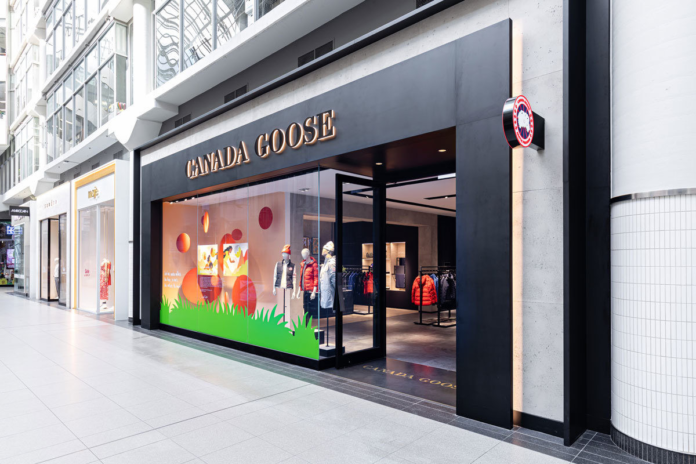
“We’re executing with precision, from bold storytelling to smarter retail moves, and it’s showing up in results. I’m optimistic about the momentum we continue to see as we deliver more relevant product and run a tighter, more focused business.”
First Quarter Fiscal 2026 Business Highlights
Notable highlights from its first quarter included the following:
Launched its Spring-Summer 2025 collection through a highly stylized campaign, featuring styles that embody a fresh aesthetic while staying true to its heritage. Apparel was the fastest growing category within this collection.
Launched the second Snow Goose capsule with a striking summer campaign set in the deserts of Utah.The expedition featured celebrity guests and other influencers, including its star campaigner Lara Stone. The campaign is building brand momentum, supported by our 360-degree marketing approach, which continues to resonate strongly with consumers.
Strengthened its presence in key markets, including two temporary store conversions, bringing the total permanent store count to 76.
Showcased its new store design concept in its newly renovated Amsterdam store with elevated finishes, statement ceiling artwork, and a dedicated VIP space for a more luxurious experience.
Published its fiscal year 2025 Impact Report , which provides an update on the progress of its sustainable impact strategy.
Achieved a 9% reduction in Scope 1 emissions and a 25% reduction in Scope 3 emissions year-over-year. It also invested in 10 renewable energy projects to fully match its Scope 2 emission in fiscal 2025.
First Quarter Financial Highlights All Year-Over-Year Comparisons Unless Noted
Total revenue increased 22.4% to $107.8m, up 21.5% on a constant currency basis .
DTC revenue increased 23.8% to$78.1m, or up 22.8% on a constant currency basis driven by DTC comparable sales growth of 14.8% and revenue from non-comparable stores.
Wholesale revenue increased 11.9% to $17.9m or 11.3% on a constant currency basis primarily due to timing of shipments and increased demand from our wholesale partners.
Other revenue increased 31.1% to $11.8m or 30.0% on a constant currency basis due to higher number of Friends & Family events.
Gross profit increased 25.9% to $66.2m. Gross margin for the quarter was 61.4% compared to 59.7% in the first quarter of fiscal 2026 primarily due to higher margin contribution from its European knitwear facility. Pricing, product mix and channel mix did not have a significant impact on a year-on-year basis.
Selling, general and administrative (SG&A) expenses were $224.9m, compared to $149.5m in the prior year period. The increase in SG&A was primarily driven by a one-time financial award of $43.8m (32.0m USD) resulting from the resolution of an arbitration with a former supplier. Additionally, the company incurred costs to expand the global retail network, increased marketing spend with Spring-Summer 25 and Snow Goose campaigns, and invested in product design and merchandising.
Operating loss was $(158.7)m, compared to $(96.9)m in the prior year period.
Net loss attributable to shareholders was $(125.2)m, or $(1.29) per basic and diluted share, compared with a net loss attributable to shareholders of $(77.4)m, or $(0.80) per basic and diluted share in the prior year period.
Adjusted EBITA was $(106.4)m, compared to $(96.0)m in the prior year period.
Adjusted net loss attributable to shareholders was $(88.2)m, or $(0.91) per basic and diluted share, compared with an adjusted net less attributed to shareholders of $(76.1)m, or $(0.79) per basic and diluted share in the prior year period.
Balance Sheet Highlights
Inventory of $439.5m for the first quarter ended June 29, 2025, was down 9% year-over-year, reflecting higher demand and its continued proactive approach to managing inventory, said the retailer.
“The Company ended the first quarter of fiscal 2026 with net debt of $541.7m, compared with $765.9m at the end of the first quarter of fiscal 2025. This reduction was mainly due to higher cash balances and lower borrowings from our credit facilities compared to the previous year. We began the fiscal year with a larger cash balance, supported by disciplined working capital management and cash generated from operating activities in recent quarters,” it said.
“Our shopping centre portfolio continues to perform very well with NOI growth coming from strong rental revenue growth and percentage rent, and rising cost recoveries,” said Patrick Sullivan, President and Chief Operating Officer. “Leasing momentum remains robust with strong tenant demand across our portfolio, including demand for our HBC boxes. We are in advanced discussions with strong covenant, high-quality national retailers, including large format tenants.”
Patrick Sullivan
“With the acquisition of Lime Ridge Mall, Primaris has acquired approximately $1 billion of market leading enclosed shopping centres in 2025, driving our portfolio quality significantly higher with same store sales productivity totaling $784 per square foot,” said Alex Avery, Chief Executive Officer.
Alex Avery
“Disciplined capital allocation remains a core focus, and we demonstrated its benefits through asset capital recycling and NCIB activity, driving strong financial and operating results, while also delivering transformative changes to our portfolio.”
Primaris is Canada’s only enclosed shopping centre focused REIT, with ownership interests in leading enclosed shopping centres located in growing Canadian markets. The current portfolio totals 14.8 million square feet, valued at approximately $4.9 billion at Primaris’ share.
Quarterly Financial and Operating Results Highlights
$150.8 million total rental revenue;
+5.5% Same Properties Cash Net Operating Income growth;
+5.7% Same Properties shopping centres Cash NOI growth;
+6.7% weighted average spread on renewing rents across 407,000 square feet;
+5.5% Funds from Operations per average diluted unit growth to $0.445;
52.6% FFO Payout Ratio;
$50.4 million in net income;
$5.0 billion total assets;
5.8x Average Net Debt to Adjusted EBITDA;
$584.0 million in liquidity;
$4.4 billion in unencumbered assets; and
$21.43 Net Asset Value per unit outstanding.
Business Update Highlights
Increased guidance for 2025 Cash NOI and FFO per unit to $340 to $345 million and $1.74 to $1.79 per unit fully diluted , respectively;
Acquired Lime Ridge Mall in Hamilton, Ontario for total consideration of $416 million, adding 791 thousand square feet to the portfolio;
Sold Lansdowne Industrial, an industrial centre in Peterborough, Ontario for $9.9 million;
Published its inaugural Green Finance Framework, under which it may issue green bonds, green loans or other related financial instruments;
Issued $200 million aggregate principal amount of senior unsecured debentures maturing June 25, 2033 at a fixed annual interest rate of 4.835% for the financing of eligible green projects as described in the Trust’s June 2025 Green Finance Framework; and
Purchased for cancellation 2,664,000 Trust Units under the Trust’s NCIB program at an average price per unit of approximately $14.98, representing a discount to NAV per unit of approximately 30.1%.
A new survey from Gradient Labs, a customer operations AI agent company, shows that nearly one in four consumers have lost funds because of incorrect or unhelpful advice from support agents. Another one in four say they’ve missed work trying to resolve basic issues.
Shockingly, one in 10 say they’ve been told by a support agent to “Google it” and over half (52%) believe companies intentionally make support harder, not to issue refunds.
The timing matters too. With summer spending in full swing, consumers are more likely to run into issues around travel, retail, and subscriptions, and end up stuck in long support loops that wreck their wallets.
Some 75% of consumers rank long waiting times as a major customer service frustration, with 52% believing companies intentionally complicate the process.
Only 11% of consumers say all of their customer service inquiries are resolved, while 13% report that their problems are rarely or never addressed effectively.
Frustrated by a lack of resolution, 51% of consumers say they have taken their complaints further, with 19% visiting a company’s physical location, 17% threatening legal action, and 13% filing a government complaint.
After wasting time on inefficient and ineffective support processes, 71% of consumers believe businesses should financially reimburse customers for poor customer service interactions.
“Customer service is the backbone of any successful business – after all, a happy customer is a loyal customer. Yet many companies are falling short of expectations. Rather than support and resolutions, dealing with support can feel like more hassle than it’s worth – long wait times, a lack of care, and no guarantee of a resolution,” said the Gradient report.
“Despite all the new-age customer service touchpoints available, most consumers still prefer to do it the old-fashioned way. Promising immediate support, 78% prefer to pick up the phone rather than wait for a reply to their email, tweet, or message.”
When it comes to delivering the best customer service, banks and financial services stand out, with 52% of consumers ranking the sector highly. There’s no denying digital banking support often exceeds expectations – providing prompt assistance with payments, swift statement processing, and a proactive approach to fraud detection, said the report.
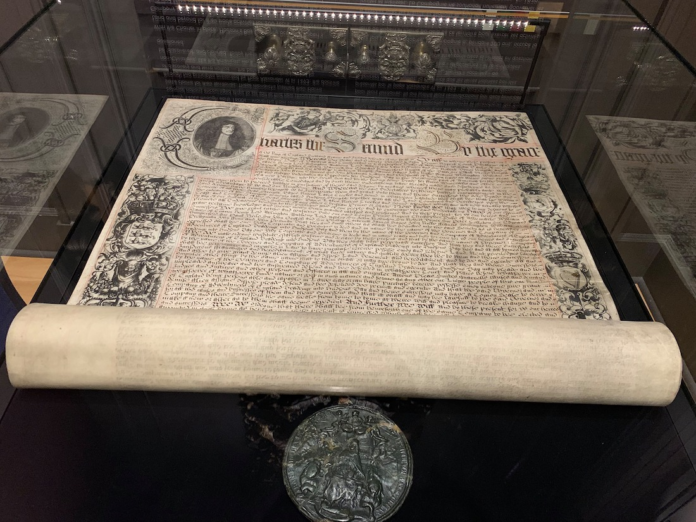
The English Royal Charter of 1670, signed by King Charles II, establishing the Hudson’s Bay Company. (Manitoba Museum)
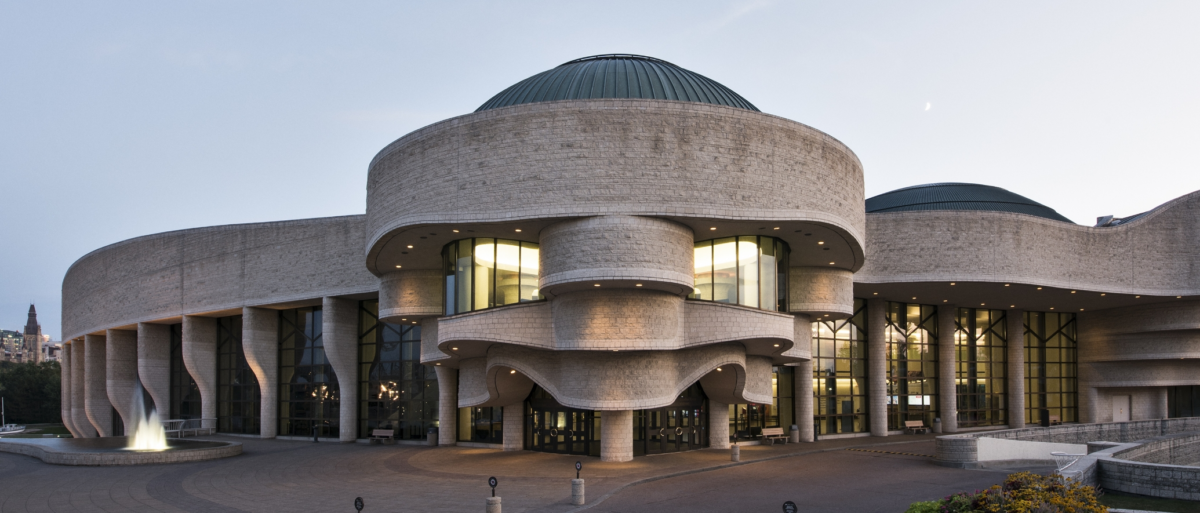
The Canadian Museum of History will soon acquire one of Canada’s most important historical documents, thanks to a major pledge from the Weston family. The family has agreed to purchase the Hudson’s Bay Company Royal Charter, issued in 1670 by King Charles II, for $12.5 million and donate it to the museum for permanent public trust — pending court approval.
The Royal Charter, written on parchment and bearing King Charles II’s wax seal, established the Hudson’s Bay Company and granted it exclusive trading rights over Rupert’s Land, a vast territory encompassing the Hudson Bay drainage basin. The charter relied on the doctrine of terra nullius to claim lands without the consent of the Indigenous peoples who lived there, profoundly shaping Canada’s colonial framework and economy.
“The Royal Charter has played a pivotal role in Canadian history, having a profound and lasting impact on First Nations, Inuit, and Métis communities,” the Canadian Museum of History said in a statement. Historians often compare the charter’s significance to that of the Canadian Constitution and even the American Declaration of Independence.
Terms of the Deal and Court Approval
The museum confirmed on Wednesday that Wittington Investments Ltd., the Weston family’s holding company, will acquire the charter “for immediate and permanent donation.” The deal includes an additional $1 million donation to fund Indigenous consultation and educational initiatives.
Approval from the Ontario Superior Court is required because Hudson’s Bay is operating under Companies’ Creditors Arrangement Act (CCAA) protection after filing for insolvency in March 2025. A hearing on the matter is scheduled for September 9.
The Globe and Mail first reported in April that Hudson’s Bay planned to auction the charter along with a collection of 1,700 artworks and 2,700 artifacts. While Reflect Advisors LLC, the firm overseeing the sale process, held discussions with several interested parties — including museums, universities, and private collectors — no other firm offers were received. “Some parties discussed potential offer values, but all were substantially less than the Wittington bid,” said Adam Zalev, co-founder of Reflect Advisors, in an affidavit.
Image: Canadian Museum of History
Preserving Canada’s Heritage
Galen Weston, chairman and CEO of George Weston Ltd., emphasized the cultural significance of the donation. “At a time when Canada is navigating profound challenges and seeking renewed unity, it is more important than ever that we hold fast to the symbols and stories that define us as a nation,” Weston said. “The Royal Charter is an important artifact within Canada’s complex history. Our goal is to ensure it is preserved with care, shared with integrity, and made accessible to all Canadians, especially those whose histories are deeply intertwined with its legacy.”
The Canadian Museum of History, located in Gatineau, Quebec, plans to consult with Indigenous communities on how the charter should be interpreted and presented. The funding will also support traveling exhibitions and educational programming to engage Canadians nationwide.
Hudson’s Bay’s Collapse and Asset Sales
Hudson’s Bay, once a cornerstone of Canadian retail, filed for creditor protection in March under a debt load exceeding $2 billion. The company closed its remaining department stores in June, ending its 355-year retail legacy. Since then, its assets have been sold under court supervision, including its intellectual property, which was acquired by Canadian Tire Corporation for about $30 million.
The fate of the charter sparked widespread debate, with advocacy groups and government organizations urging that the document remain accessible to the public. Several letters sent to the court raised concerns about compliance with Canadian heritage and cultural property laws.
A Historic Artifact’s New Home
The Royal Charter has long been displayed at Hudson’s Bay’s corporate headquarters in Toronto. Its move to the Canadian Museum of History ensures permanent public access while addressing the broader implications of colonial history and reconciliation.
“This donation is of enormous importance to Canada,” said Caroline Dromaguet, President and CEO of the Canadian Museum of History. “It ensures the Royal Charter—one of the most significant documents in Canadian history—will remain permanently held in public trust and will serve as a catalyst for national dialogue, education, and reconciliation for generations to come.”
If approved by the court in September, the Hudson’s Bay Royal Charter donation will mark the preservation of an artifact central to Canada’s identity and history.
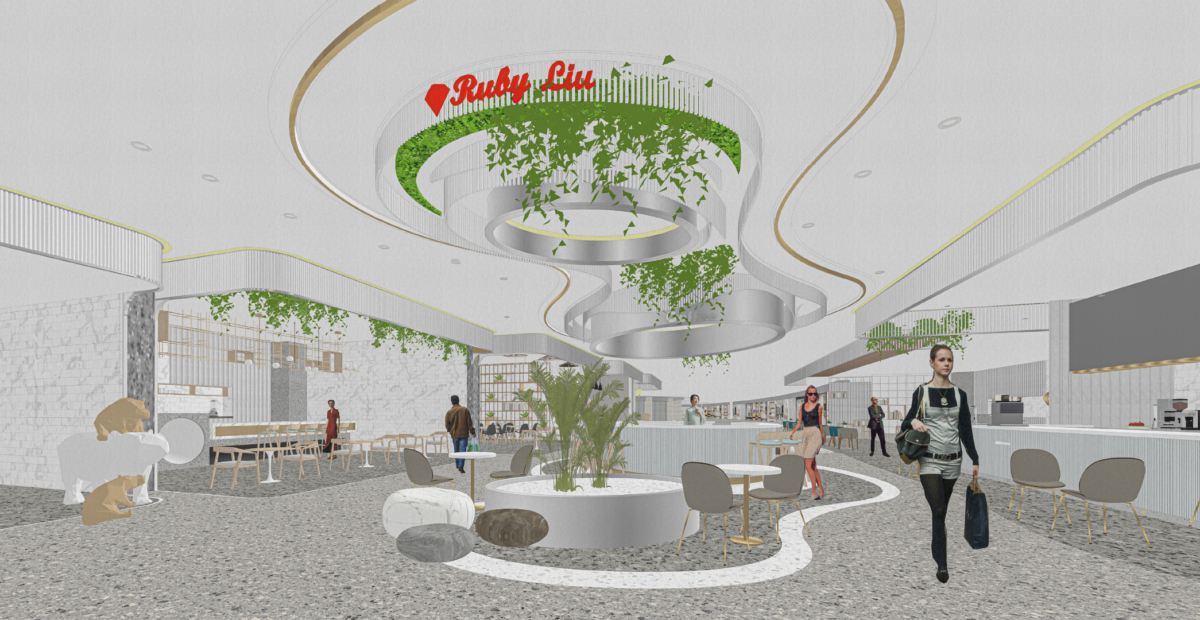
Rendering of the proposed Ruby Liu department store at CF Sherway Gardens in Toronto. Image: Ruby Liu Commercial Investment Corp./Central Walk
The Hudson’s Bay Company is pressing forward with plans to sell 25 store leases to B.C. billionaire Weihong (Ruby) Liu, even as new court documents reveal the retailer once considered terminating the deal over what it described as Central Walk’s failure to meet key obligations.
The motion, filed late Tuesday, asks Ontario Superior Court to approve the transfer of leases despite mounting resistance from some of Canada’s most prominent landlords and Hudson’s Bay lenders. The transaction would allow Central Walk, Liu’s Nanaimo-based real estate investment firm, to assume control of a portfolio of former Hudson’s Bay spaces across Ontario, British Columbia and Alberta for just over $69 million, according to filings.
Hudson’s Bay argues the lease transfer will help repay creditors, create jobs and prevent the costly vacancy of major mall spaces, which it warns could lead to “the visual and economic blight of a dark store for a significantly prolonged period.”
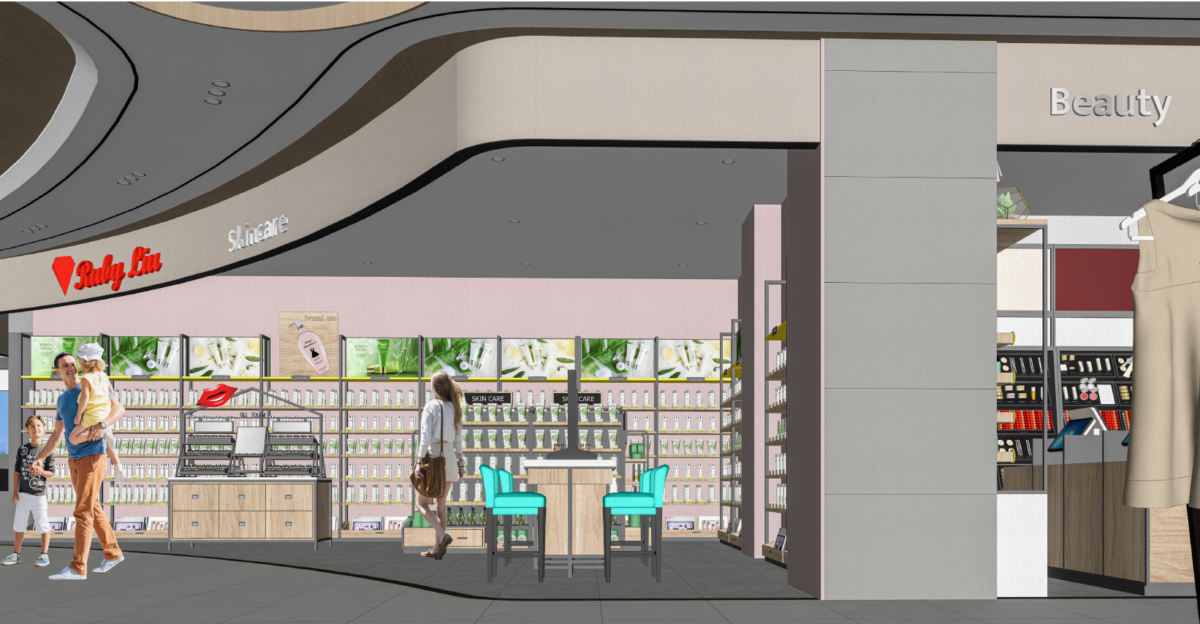
Rendering of a beauty department inside of a Ruby Liu department store. Image: Ruby Liu Investment Corp./Central Walk
A High-Stakes Deal for a Fledgling Retail Venture
The proposed lease package covers 15 Ontario locations, including CF Sherway Gardens, CF Fairview Mall and CF Markville in the Greater Toronto Area, as well as Hillcrest Shopping Centre in Richmond Hill, Upper Canada Mall in Newmarket, Bramalea City Centre in Brampton, and Oshawa Centre in Durham Region. Additional Ontario properties include Mapleview Centre in Burlington, Lime Ridge Centre in Hamilton, Fairview Park Mall in Kitchener and Conestoga Mall in Waterloo. The portfolio also includes CF Masonville Place in London, along with two Ottawa sites: Bayshore Centre and St. Laurent Centre.
In British Columbia, Liu’s company has bid for CF Richmond Centre, Guildford Town Centre, Coquitlam Centre, Willowbrook Centre in Langley, and Orchard Park in Kelowna (in addition to Bay stores in Liu-owned Mayfair Centre in Victoria and Woodgrove Centre in Nanaimo). Alberta locations include West Edmonton Mall, Southgate Centre, CF Chinook Centre, CF Market Mall and SouthCentre Mall in Calgary.
If approved, the transaction would mark one of the most ambitious retail ventures in Canada ever, introducing a new department store banner, Ruby Liu, to the national landscape. Liu, whose net worth well exceeds $1 billion, has pledged $375 million in equity capital to launch the chain, including $120 million for renovations and repairs such as HVAC systems, elevators and escalators, and $135 million for initial inventory.
Court filings indicate Liu’s plan is to open the stores in stages, starting next year, with all operations running by 2027. Financial projections estimate annual sales of more than $420 million and earnings before interest, taxes, depreciation and amortization of $6.5 million by that time.
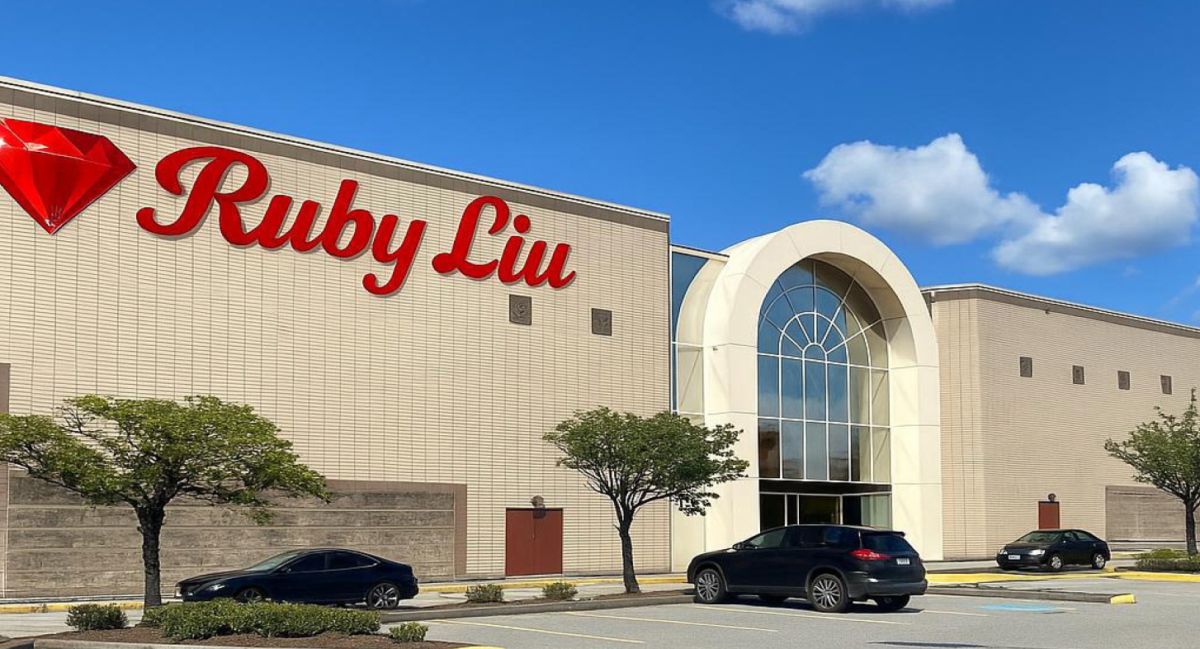
Rendering of a Ruby Liu department store at Hillcrest Mall in Richmond Hill, ON. Image: Ruby Liu Investment Corp./Central Walk
Landlord Opposition and Early Missteps
Despite its potential economic impact, the plan faces stiff opposition from landlords including Cadillac Fairview, Oxford Properties and Primaris REIT. Their concerns centre on Liu’s lack of experience operating a retail chain and on what some described as vague and unrealistic early plans.
Correspondence filed in court shows that in early meetings, Central Walk presented a roadmap suggesting up to 20 stores could open within 180 days of signing leases — a timeline landlords called “predicated upon hope, optimism and not on experience.” Cadillac Fairview concluded Liu appeared to be “making this up as she goes,” according to documents.
The skepticism deepened after reports that Hudson’s Bay, in a July 5 letter, accused Liu of breaching the agreement by failing to “take the most basic and necessary steps to advance its bid.” The retailer even threatened to terminate the deal.
Rendering of a fashion department inside of a Ruby Liu department store. Image: Ruby Liu Investment Corp./Central Walk
Revised Business Plan and New Advisors
Hudson’s Bay now says Central Walk has taken significant steps to address those concerns. The purchase price for the leases was reduced by $3 million, freeing funds for Liu to retain new legal and operational advisors.
Toronto-based J2 Retail Management has been engaged to assist with store setup and vendor negotiations, and several former Hudson’s Bay executives have joined the project, bringing expertise in supply chain, construction and import operations.
The latest filings show interest from more than 60 product vendors and confirm Liu’s commitment to hiring approximately 1,800 employees, including former Hudson’s Bay staff. J2 Retail Management also has access to many of the brands formerly carried in Hudson’s Bay stores.
Liu emphasized in her affidavit that her experience operating three shopping malls has given her “a profound understanding of the retail landscape in Canada.” Before immigrating in 2014, she built and sold a mall in Shenzhen for $1.32 billion, court documents state.
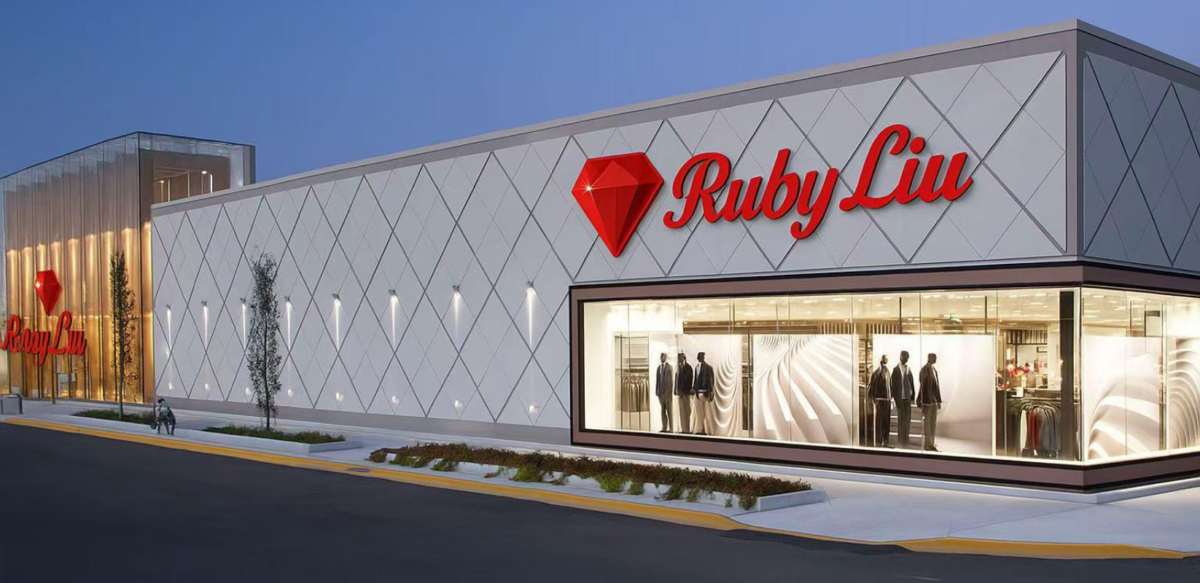
Rendering of a Ruby Liu department store. Image: Ruby Liu Investment Corp./Central Walk
Stakes for Hudson’s Bay and Canadian Retail
For Hudson’s Bay, the lease sale represents a critical step in its restructuring under creditor protection, which the company sought on March 7 amid $1.1 billion in debt and mounting losses. The retailer shuttered all stores in early June after failing to secure a rescue plan, leaving some of the country’s largest shopping centres with vacant anchor spaces.
If successful, the deal could generate $50 million toward Hudson’s Bay’s obligations and offer landlords a path to restoring foot traffic. Failure, the retailer warns, would mean returning the leases and prolonging the vacancies.
Alongside the Central Walk motion, Hudson’s Bay is seeking approval for two smaller deals: five Saks OFF 5TH leases to YM Inc. for $5.03 million and one Hudsons’ Bay store lease at Metropolis at Metrotown to Ivanhoe Realties Inc. for $20,000. A hearing on the Ruby Liu transaction is scheduled for August 28.
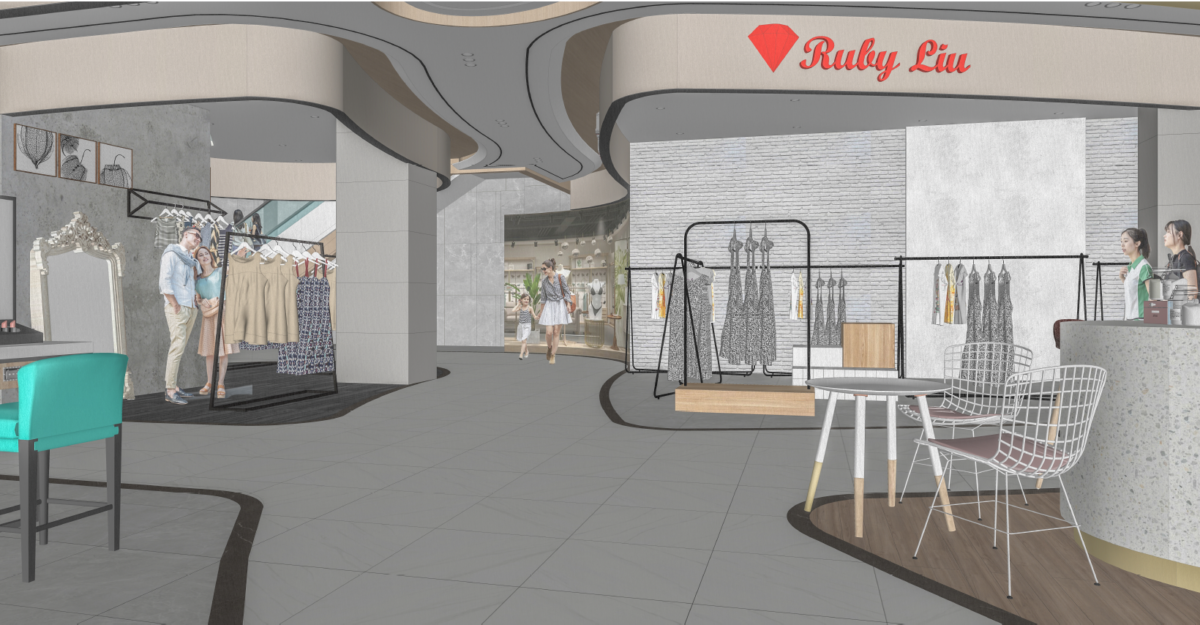
Rendering of the interior of a ‘flagship’ Ruby Liu department store. Image: Ruby Liu Commercial Investment Corp./Central Walk
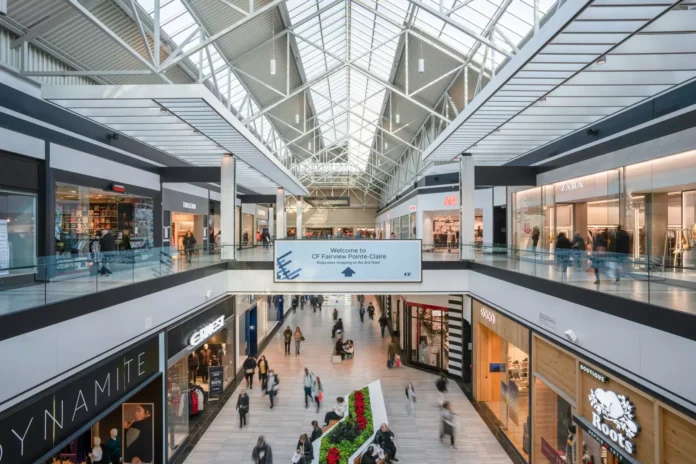
Opening its doors on August 12, 1965, the shopping centre has been a steadfast beacon of commerce, community, and culture for six decades. As the first enclosed shopping centre on the West Island, and the second-largest mall in all of Canada at the time, it quickly became a landmark, a legacy that continues to define CF Fairview Pointe Claire as a vital community hub today, said the real estate company.
“This milestone is a testament to our enduring commitment to our guests, retail partners, and the community we are privileged to serve. We look forward to many more years of creating unforgettable experiences.”
Cadillac Fairview said the shopping centre has been a backdrop to the lives of so many, witnessing the changing landscape while holding true to its role as a gathering place.
“For generations, guests have walked through the centre doors, creating countless memories – from first jobs and family outings to meeting friends and finding that perfect item. To thank the community and to mark this anniversary, CF Fairview Pointe Claire will host a week of engaging events and promotions from August 9th to August 17th, inviting guests to reminisce and celebrate the property’s rich history,” it said.
The planned activities include:
Photo Gallery: A curated display of historical photos showcasing the evolution of CF Fairview Pointe Claire will be featured in the Centre Court.
Client Experience Week: Retail clients and community partners will host family-friendly activations, including sampling and other activities including a photo frame workshop
Anniversary Contest: Guests are invited to share their favourite CF Fairview Pointe Claire memory by scanning a QR code found on digital directories located throughout the property. Everyone who enters will be submitted for a chance to win daily prizes and a grand prize of a $600 CF SHOP! card.
“In honour of this milestone and in recognition of the property team, CF Fairview Pointe Claire is donating $12,600 to Ricochet, an organization offering temporary housing for individuals experiencing residential instability in the West Island. This donation reflects CF Fairview Pointe Claire’s ongoing commitment to making a positive impact in the surrounding community,” added Cadillac Fairview, which is one of the largest owners, operators, investors and developers of best-in-class office, retail, multi-family residential, industrial and mixed-use properties in North America.
Wholly owned by the Ontario Teachers’ Pension Plan, with assets under management of $29 billion, CF manages approximately 33 million square feet of leasable space at 60 landmark properties across Canada, including CF Toronto Eaton Centre, 160 Front, Toronto-Dominion Centre, CF Carrefour Laval, CF Chinook Centre and CF Pacific Centre.
Craig Patterson discusses the Toronto Waterfront BIA with Tim Kocur, Executive Director and Dorsa Alizadeh–Shabani, Manager of Operations. The conversation ranges from the revitalization and rising energy across Toronto’s Waterfront, focusing on the seasonal buzz, new retail openings, and exciting new restaurants like Queen’s Harbour. Alizadeh-Shabani notes the summer’s delayed start due to record rainfall but emphasizes a strong rebound with full crowds and booming cafes. Kocur shares that the eastern waterfront is evolving into a “development powerhouse,” with a wave of new businesses, patios, and community engagement shaping the area into a livelier destination. The addition of unique spaces like Ethos Climbing and new patios at Irene and Simona are just some signs of the district’s renaissance.
They also discuss major infrastructure and placemaking efforts reshaping connectivity and public space. The long-awaited LRT project has gained traction, now in the city’s Transit Expansion Office, with interim bus lanes already installed. Wayfinding signage has been expanded to help visitors discover hidden eateries and attractions beyond the water’s edge. A temporary park at 40 Queens Quay East, complete with whimsical seating, aims to activate otherwise unused space, while beautification efforts around industrial zones like the Redpath Sugar Refinery are gradually improving the area’s appeal. Hotel developments at One Yonge and on Bathurst, plus enhancements at Billy Bishop Airport like U.S. pre-clearance, are adding long-term vibrancy.
Looking ahead, Kocur and Alizadeh-Shabani highlight a future of integrated experiences across east, central, and west waterfront zones. Key developments include a bridge connecting the Parliament Slip to a new island park, expanded green space, and enhanced access to the Toronto Islands with improved bike rentals. They also hint at large-scale placemaking potential at the Rees parking lot, with ideas for sports viewing areas and hospitality activations. From Harborfront Centre’s daily programming and cultural exhibits to fireworks on Canada Day, it’s clear the Toronto Waterfront BIA is building not just a destination—but a multi-generational ecosystem of community, culture, and commerce.
If you prefer to listen to the audio version, it is available below:
The Interview Series audio podcasts by Retail Insider Canada are available on Apple Podcasts, Stitcher, TuneIn, Google Play, or through our dedicated RSS feed for Overcast and other podcast players. Also check out our The Weekly audio podcast where Craig and Lee discuss popular content published on Retail Insider which is part of the The Retail Insider Podcast Network.
Drop us a line at Craig@Retail-Insider.com. You can also rate us in Apple Podcasts or recommend us in Overcast to help more people discover the show!
Background Music Credit: Hard Boiled Kevin MacLeod (incompetech.com). Licensed under Creative Commons: By Attribution 3.0 License. http://creativecommons.org/licenses/by/3.0/