Home Blog Page 42

The Retailer’s Guide to Rigid Box Packaging: Structures, Timelines and What to Ask a Manufacturer

Rigid boxes are the packaging category retailers most often underestimate. They look like a design decision, and they behave like a manufacturing one.

The global rigid box market is projected to grow from USD 68.34 billion in 2026 to USD 100.35 billion by 2034, a CAGR of 4.92%, according to Fortune Business Insights. Personal care and cosmetics are among the faster-growing end uses. For Canadian and North American retailers moving a product into gifting, beauty or premium electronics, the rigid box is usually the first packaging format that cannot be bought off a template.

Here is what changes when you cross that line.

Rigid boxes are a different sourcing category

A folding carton is cut, printed and glued flat, then folded at the point of packing. A corrugated mailer is much the same. Both ship flat and both can be produced on short runs at low cost.

A rigid box is built. Greyboard is cut and formed, wrapped in a separate printed or speciality paper, and assembled with magnets, ribbons, trays, or inserts. The wrap is a second material with its own print, tolerance, and failure modes. That construction is why rigid boxes hold their shape, and it is also why they cannot be quoted or produced on the same timeline as a printed carton.

Two practical consequences follow. Minimum order quantities sit higher, typically starting around 500 units for a custom structure. And the box has to be physically sampled before production, because a rigid box that is 1mm out of tolerance on the wrap does not close properly.

The ten structures, and what each one is actually for

Most rigid box briefs are described in terms of a look rather than a structure. Naming the structure first shortens the quoting cycle considerably.

  • Two-piece lid and base. The default. Lid lifts clear of the base. Full cover or partial cover. Best for apparel, gifting and anything where the product is presented flat.
  • Magnetic closure. Front flap held by concealed magnets. The standard for beauty, fragrance and subscription boxes where the opening is part of the experience.
  • Shoulder-neck. An inner collar sits between base and lid. The construction used for premium spirits and fragrance, where a snug, controlled close signals quality.
  • Drawer and slide. Inner tray slides out of an outer sleeve. Good for jewellery, watches and multi-item sets, and it keeps the product secure in transit.
  • Book-style. Hinged along one edge, opens like a hardback. Used for press kits, high-value samples and collector editions.
  • Hinged and flip-top. Lid attached at the back, opens upward. Common for confectionery, tea and cosmetics.
  • Collapsible. Ships flat; assembles with magnets on-site. The answer when freight volume or warehouse space is the constraint.
  • Round and cylinder. For candles, spirits and anything where a corner would look wrong.
  • Window. A cut-out with a clear panel. A feature that can be applied across most of the above rather than a structure in itself.
  • Custom die-cut shape. Everything else, and the most expensive to tool.

The structure decision drives tooling, insert design and freight volume. It is worth making before the design work starts, not after.

The production calendar retailers underestimate

This is where most rigid-box projects go wrong, and it is arithmetic, not bad luck.

A typical custom rigid box programme runs like this:

  1. Structural development. The brief becomes a dieline and a material spec.
  2. Physical sampling: 7-20 days, depending on structural complexity.
  3. Sample review and approval. Client-side, and the step most often underestimated. A round of changes means a second sample.
  4. Mass production: 15 to 20 days after sample approval.
  5. Sea freight to North America: roughly 40 days. Air and courier compress this at a cost that usually exceeds the box budget.

Add it up. Even with a single clean sample round, a rigid box programme runs 60 to 80 days from approved dieline to landed stock, before design time and before any approval delay on your side. Three to four months from brief to warehouse is a realistic planning assumption.

For a retailer targeting a November launch, that makes rigid box packaging a July decision. Manufacturers that specialise in this category, such as GUKA Packaging’s rigid box range, publish these timelines openly, and a supplier who will not commit to sampling and production windows in writing is telling you something.

What to ask a rigid box manufacturer before you commit

Certifications and capability questions separate suppliers faster than a quote comparison does.

  • How many QC specialists and what testing equipment? A serious rigid box operation runs dedicated QC headcount and instrument-based testing, not spot checks. Ask for numbers.
  • Which certifications? ISO9001 for process, FSC for board chain of custody, Sedex for the social audit trail, GMI where colour-critical print is involved. Ask to see current certificates, not logos on a website.
  • How is colour managed across runs? Pantone matching is a claim. A documented colour management process and a signed-off physical proof are controls.
  • What order visibility is there in production? ERP-level visibility on order status is now standard among established manufacturers, and its absence is a signal.
  • Can they sample before you commit? For rigid boxes this is not optional. Any manufacturer unwilling to produce a physical sample is asking you to underwrite their tolerance risk.

Where sustainability actually bites

Recyclable claims on rigid boxes are usually undone by the insert, not the box. EVA foam and flocked plastic trays are the common failure point in an otherwise recyclable pack.

The substitutions that work are moulded pulp trays in place of EVA, FSC-certified board and wrap, and paper-based ribbon and handle alternatives. Each one changes the tooling, so it belongs in the structural development conversation rather than being retrofitted after sample approval.

Frequently asked questions

What is the minimum order quantity for a custom rigid box? Typically around 500 units for a custom structure. Below that, the tooling and setup costs per unit rise sharply, and a folding carton or a stock box with custom printing is usually the better commercial option.

How long does a custom rigid box take to produce? Sampling takes 7 to 20 days, mass production takes 15 to 20 days after sample approval, and sea freight from Asia to North America takes roughly 40 days. Plan on three to four months from brief to landed stock.

Should retailers source rigid boxes domestically or overseas? It depends on volume and calendar. Domestic converters compress freight time and simplify approvals. Overseas manufacturers generally offer deeper structural capability and lower unit cost at volume. The decision usually comes down to whether the launch date allows for ocean freight.

The short version

Rigid box packaging rewards early decisions and punishes late ones. Name the structure before the design work starts, insist on a physical sample, get the sampling and production windows in writing, and count backwards from the launch date rather than forwards from the brief.

[BYLINE PLACEHOLDER: name, title, GUKA Packaging. Use a production or engineering title rather than a sales one.]


Daily Synopsis: August 25, 2026

Welcome to the Daily Synopsis by Retail Insider. We hope you enjoy the 8 articles we published covering key developments in Canadian retail.

🗞️ The Day’s Retail Insider Article List

🌐 Canadian Retail News From Around the Web

Canada announces $27.6B in counter-tariffs on U.S. goods as retailers, restaurants and small businesses weigh impact

Andrea Piacquadio photo

Tuesday’s announcement of counter-tariffs on 874 U.S. goods is a decisive step to defend Canada’s economic interests, says the Retail Council of Canada.

In a LinkedIn post, Kim Furlong, CEO of the Council, said the national organization supports the federal government’s response and stands behind a united national effort.

“Canada’s retail sector will shoulder a significant share of this burden, with so many essential consumer goods targeted. At a time when Canadian consumers are already stretched, retailers are working to balance the important goal of supporting Canadian producers with the need to offer affordable choices to Canadians. 

“Retailers are ready to rise to the occasion, working with the federal government to ensure Canada’s tariff response is strategic, maximizes impact on the U.S., and minimizes the impact on everyday Canadians.

“Canadian retailers have long championed domestic producers, and we are accelerating that commitment today. We will redouble our efforts to source, promote and buy Canadian, while continuing to give consumers the choice and value they need. Our goal is clear: strengthen Canadian supply chains and support Canadian producers without adding unnecessary pressure to household budgets. By working together, our sector can keep shelves stocked, support Canadian jobs and help protect Canadian families through the challenges ahead.”

Restaurants Canada said it stands with the Government of Canada in defending Canadian economic interests and responding to the latest U.S. tariffs.

It said it is pleased that the proposed measures avoid many of the priority food products it identified to government based on member input. This will help limit additional pressure on food costs and menu prices and protect jobs and Canada’s food supply chain.

“Our review has also identified areas of concern, including some packaging and restaurant equipment, and we are assessing the potential impact of other products included in the proposed measures. We will use the consultation period to seek targeted exemptions where sufficient Canadian or alternative supply is not available,” said the organization.

“More broadly, we encourage the government to consider other measures to help Canadians and businesses manage the economic pressures arising from the trade dispute, including extending the temporary suspension of the federal fuel excise tax on gasoline and diesel beyond September 7.

“Our objective is to help ensure Canada’s response is targeted and effective, with careful consideration of the impact on food costs, Canada’s food supply chain, jobs and investment. Canada’s $125-billion restaurant industry directly employs 1.2 million Canadians, nearly 40% of whom are youth, and supports another 287,000 jobs across the economy. Restaurants purchase approximately $43 billion in food and beverages each year, including roughly $30 billion from Canadian suppliers, making the sector a major purchaser of Canadian agricultural products and an important contributor to the broader Canadian food economy.”

“Restaurants are behind the government in standing up for Canada in this trade fight. We appreciate that it has listened to the concerns raised by our industry and avoided tariffs on many of the priority food products we identified. There are still some important issues to address, and we will continue working with government to get those right. Our focus is on ensuring Canada’s response is as targeted and effective as possible, recognizing the impact these decisions can have on Canadian businesses, jobs, communities and consumers,” said Kelly Higginson, President and CEO at Restaurants Canada.

The federal government announced on Tuesday that effective September 8, Canada will impose counter-tariffs on the U.S. of 15, 25 and 50 per cent on products drawn from those targeted by U.S. Section 338 and Section 232 tariffs, with the rate for each product matching the corresponding U.S. rate.

“Canada’s counter tariffs will apply to products covering $27.6 billion in imports from the U.S. and will focus on sectors such as steel, dairy, appliances, agricultural equipment, pulp and paper, and electronics, that are most impacted by U.S. tariffs,” it said.

“In addition, to support Canadian workers and businesses impacted by U.S. tariffs, the government is also introducing a $7.5 billion package of new and enhanced measures that deliver fast, simple and agile supports to Canadian workers and businesses, building on the nearly $25 billion in supports the government has provided since the implementation of the U.S. unjustified tariffs.”

Dan Kelly, President at the Canadian Federation of Independent Business (CFIB), the national organization appreciates that the government is trying to move quickly, but at first glance it looks like small business owners are being served the usual alphabet soup of complicated programs. They will be challenging for small business owners to figure out, let alone use.

“To date, the federal Regional Tariff Response Initiative (RTRI) delivered by Regional Development Agencies have excluded most small businesses from even applying. Some required a minimum of $2 million in sales, others a minimum of 10 employees. Today’s announcement doesn’t appear to have changed these thresholds. Unless the thresholds are eliminated entirely, then the government will have failed in its promise to support small business owners. The new U.S. 50% tariff hits even the smallest home-based jewellery maker, so why would our government’s support exclude them?,” he explained.

“What we are looking for is one simple program for small businesses that removes as much of the burden of tariffs as possible, ideally delivered by the Canada Revenue Agency.  Instead, we have a patchwork of agencies and programs that no small business has ever heard of before, largely delivering loans to businesses that will have no ability to pay them back.

“While I respect Canada’s need to respond to the U.S. threat, the giant list of counter tariffs will create their own severe challenges for many small businesses who have already done what they can to seek new sources of supply. Canada’s support programs need to be available for companies that use, import or distribute U.S. products too. 

“And for tens of thousands of other businesses, the trade war will mean more uncertainty, higher input costs and lower consumer demand due to its indirect impacts. CFIB is urging the federal government to deliver an immediate cut to the small business tax rate, retroactive to January 1, 2026. The government already publicly signaled a focus on small business in the 2026 fall budget. Doing it now would send a much-needed reassuring message to Canada’s entrepreneurs.

“We’re also urging the government to extend the suspension of the federal excise tax on gasoline and diesel. It’s set to expire on Sept. 7, one day before retaliatory tariffs kick in. The timing couldn’t be worse to see taxes and fuel prices rise.

“I do recognize that it is very challenging to get programs right in a matter of days. As we did during the pandemic, CFIB stands ready to work closely with the federal government and all parliamentarians to find ways to make any supports work for Canada’s small business community.”

More from Retail Insider:

  • Ottawa’s Tariff Retaliation Risks Raising Grocery Prices for Canadians

Toronto’s Woodbine Mall and Fantasy Fair getting a roller rink this fall

SUSO Skate Co.’s Promenade Shopping Centre Pop-Up. Photo credit: Zeyad Abouzeid

SUSO Skate Co., Canada’s premium roller skating company that turns empty mall spaces into pop-up roller rinks, has found a new space to callhome, Woodbine Mall and Fantasy Fair. 

Bringing the joy of roller skating to one of the city’s most iconic former entertainment destinations, the new pop-up space will officially launch to the public on Friday, September 25. Reservations are now open, announced the company on Monday.

The launch marks the latest chapter for SUSO Skate Co., which has built a community around making roller skating accessible, social, and fun for people of all ages and abilities. By transforming underused and unconventional spaces into places to skate, SUSO Skate Co. continues its mission of bringing people together and getting them off screens through this new partnership with Woodbine Mall, it said.

“Woodbine Mall has always been a place with a strong sense of identity, and we saw an opportunity to build on that in a completely new way,” says Henry O’Brien, co-founder of SUSO Skate Co. “There’s a real nostalgia around Woodbine and what it’s meant to generations of Torontonians, and that’s what is so appealing about this space for SUSO. We’re developing something fresh and unexpected at the mall, while also tapping into the memories here. We’re excited to bring skate culture to Woodbine and encourage a new generation to visit for some offline recreation and community connection.”

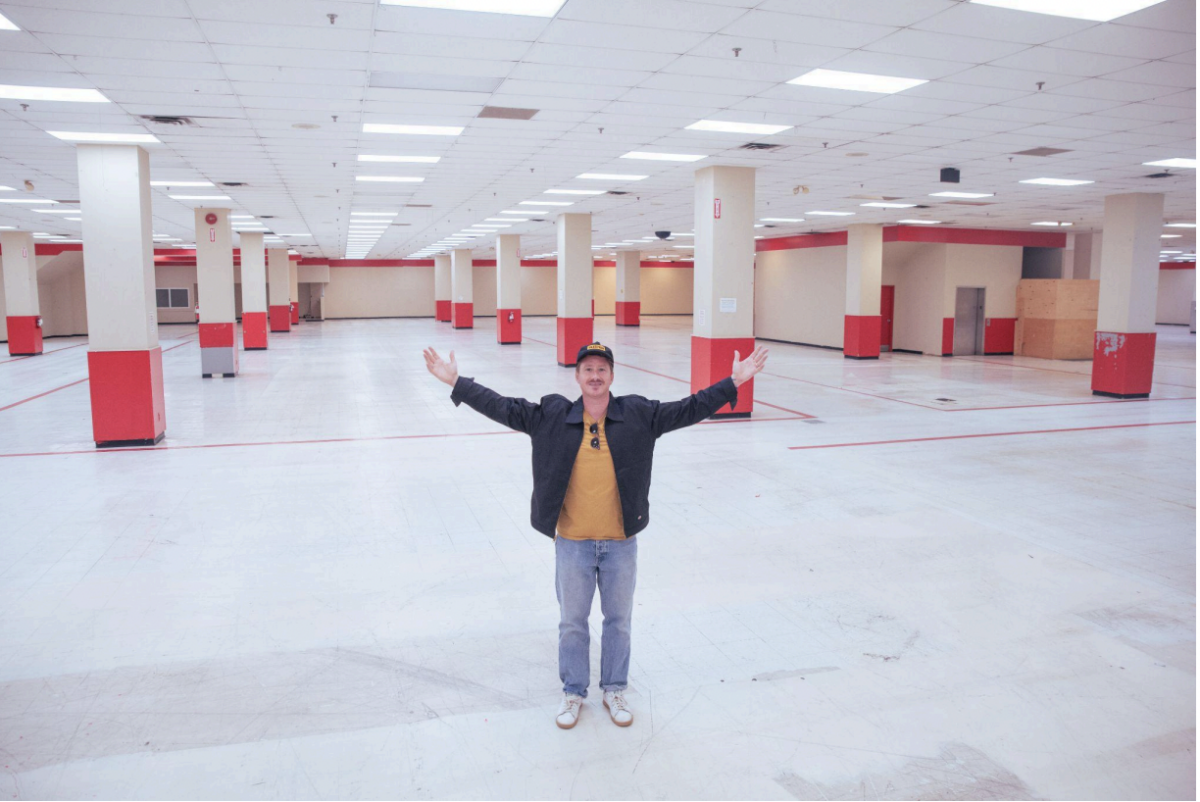
SUSO Skate Co.’s co-founder, Henry O’Brien, standing in a vacant pop-up space at Woodbine Mall. Photo credit: Zeyad Abouzeid

Located on the lower concourse of the mall, directly opposite CinéStarz Deluxe movie theatre,the pop-up expects to host tens of thousands of people, giving new and experienced skaters the chance to step onto the rink, move their bodies and enjoy a fun, analog day out. As a bonus, the roller rink is adjacent to a movie theatre and Fantasy Fair, still in operation, making this pop-up an ideal full day indoor entertainment experience, especially in the colder months, said the company.

People can reserve a time slot and pay online in advance by choosing an available date on SUSO Skate Co.’s website: here. Skate rental fees include admission and wrist guards (from $18/hour), with a full protective gear bundle included for skaters 16 and under. Guests are also welcome to bring their own skates and pay just for admission ($12 for kids and seniors, $14 foradults 16+). 

The pop-up will run for approximately one year.

Hours of Operation (Wednesday to Sunday)

● Wednesday and Thursday: 4 p.m. to 8 p.m. (All Ages)

● Friday: 4 p.m. to 8 p.m. (Adult)

● Saturday and Sunday: 12 p.m. to 7 p.m. (All Ages)

“The biggest opportunity for us is the mall’s proximity to (Highways) 427, 400 and 401. Location aside, the mall is the ultimate nostalgia day out – The Fantasy Fair is Ontario’s Largest Indoor Amusement Park,” said O’Brien. 

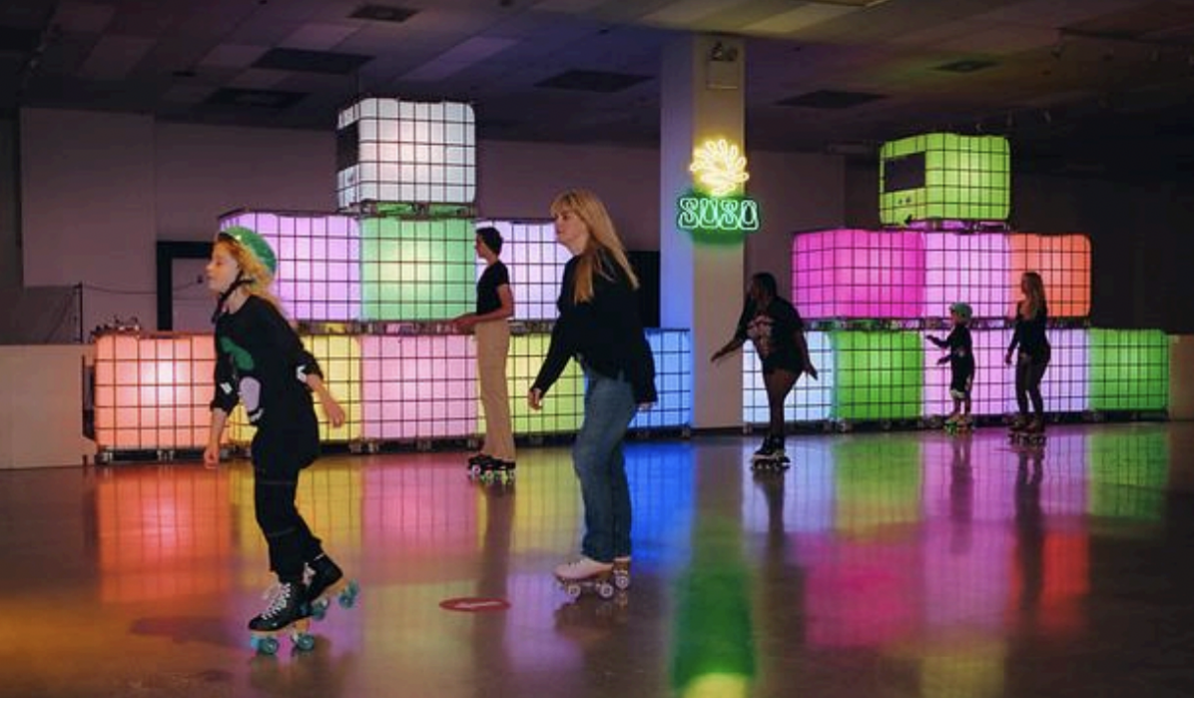
Skaters at SUSO Skate Co.’s Pop-Up at Oshawa Centre. Photo credit: Zeyad Abouzeid

The concept has opened more than 15 pop-ups in vacant retail spaces across the GTA and welcomed more than 250,000 skaters since 2021.

“The biggest learning is that win-win relationships are key to any specialty leasing and entertainment destination. Specifically for SUSO, it’s important that we bring maximum value to the property owner through community engagement, footfall and increased dwell time. And in return, we secure flexible and reasonable lease terms, allowing us to fill a space that would otherwise sit empty,” said O’Brien.

“The retail landscape is certainly changing, with more and more people now shopping online. In our opinion, property owners and malls need to offer something that can’t be bought or clicked online. For us, that’s roller skating but the same applies to pickleball, bowling and many other eatertainment and entertainment concepts. In an age of algorithms, AI and deep fakes, it’s recreation-based concepts that will come out on top and will act as key tenants for malls now and in the future.

“For this Woodbine location, we’ll test a slightly smaller footprint for the first time. This will help us test the feasibility of smaller and longer-term leases in the future, for a new ‘learn-to-skate’ size format, 15,000-30,000 square feet.”

Landlords and retailers these days are using entertainment, recreation and community-focused experiences to attract people back to underutilized shopping centres.

“Each business and concept is different, so I wouldn’t say it’s a one-size-fits-all approach. That being said, I think every brick-and-mortar business should build an experience element into its operations. Something that makes their offering unique and difficult to replicate online,” said O’Brien.

“For example, if a store is selling leather belts, I think they should have someone in-house offering custom engraving or classes teaching others to engrave their own belt. Now that store is in the experience business and the by-product is belts. An experience that can be sold online and fulfilled in-person at the store.”

SUSO Skate Co.’s co-founder Henry O’Brien outside of Woodbine Mall. Photo credit: Zeyad Abouzeid

Woodbine Mall first opened in 1985 and quickly became a destination shopping and entertainment centre in the city. Known for its distinctive architecture and the iconic indoor amusement park Fantasy Fair, the mall was once a busy gathering place filled with major retailers, restaurants and families. Over the decades, Woodbine steadily lost much of the energy it had with the rise of competing shopping plazas and the rise of online shopping, reducing the mall’s role as a destination. 

O’Brien and Janine Bartels, SUSO’s co-founders, recognized that history and opportunity, and jumped at the chance to bring new energy back to the space, introducing Woodbine’s legacy as a community gathering place to a new generation, with skate culture at the forefront.

Looking ahead, O’Brien and Bartels are continuing to expand SUSO Skate Co. through new experiences designed to bring roller skating to more people. SKATEVAN, which launched this summer, extends the SUSO experience beyond the rink, bringing mobile roller skating to community spaces, cities, BIAs, businesses and brands. This fall, the pair will launch the STEM Roller Recess program, combining skating with educational lessons on physics and movement to schools and youth organizations across the GTA. schools, businesses, and brands to bring the joy of offline recreation to people across Ontario.

More from Retail Insider:

Evening Coffee Orders Nearly Triple in Canada as Restaurants Tap New Beverage Trend: Lavazza

Chevanon Photography photo

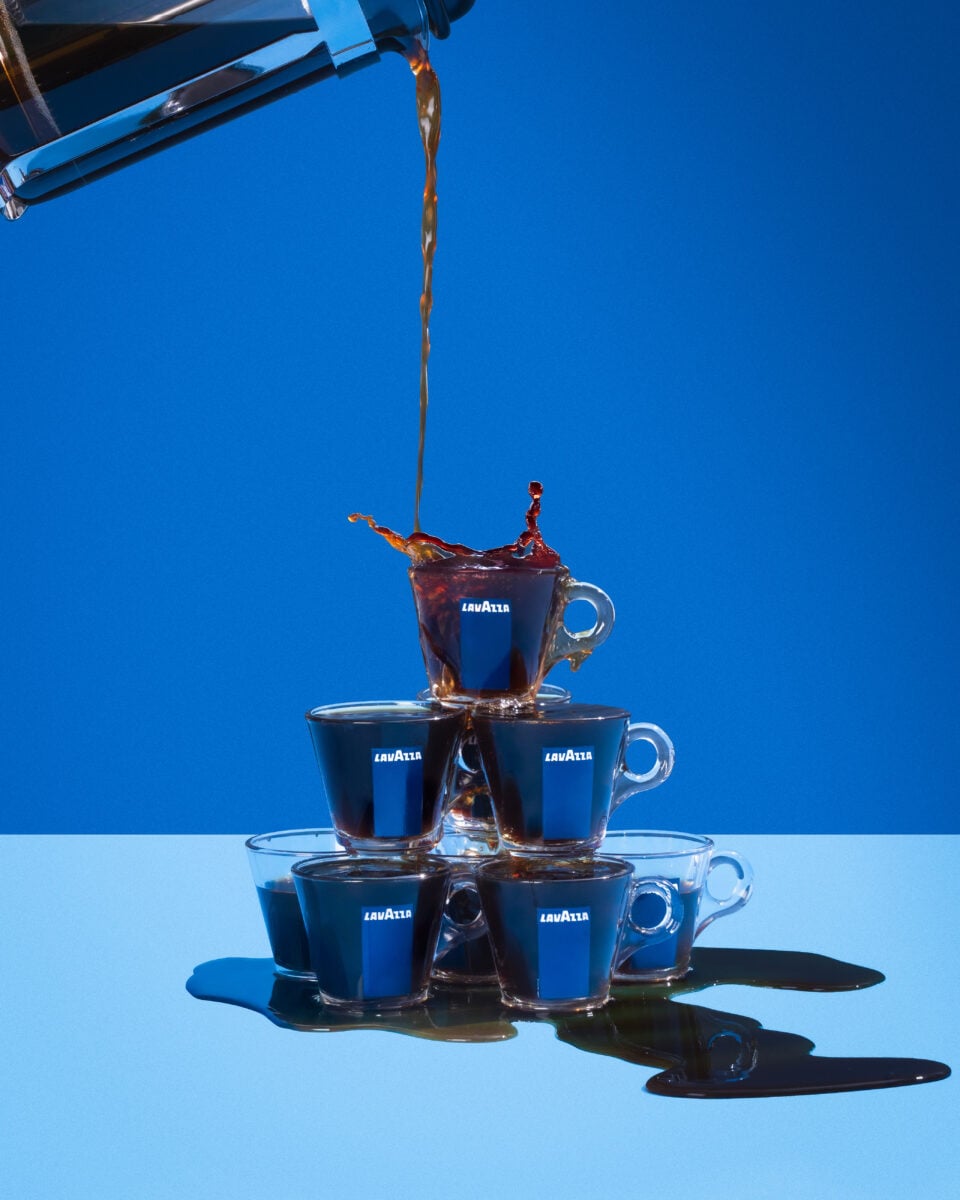
Coffee is no longer just a morning ritual. Restaurants across Canada are finding a new use for their espresso machines well after the dinner rush.

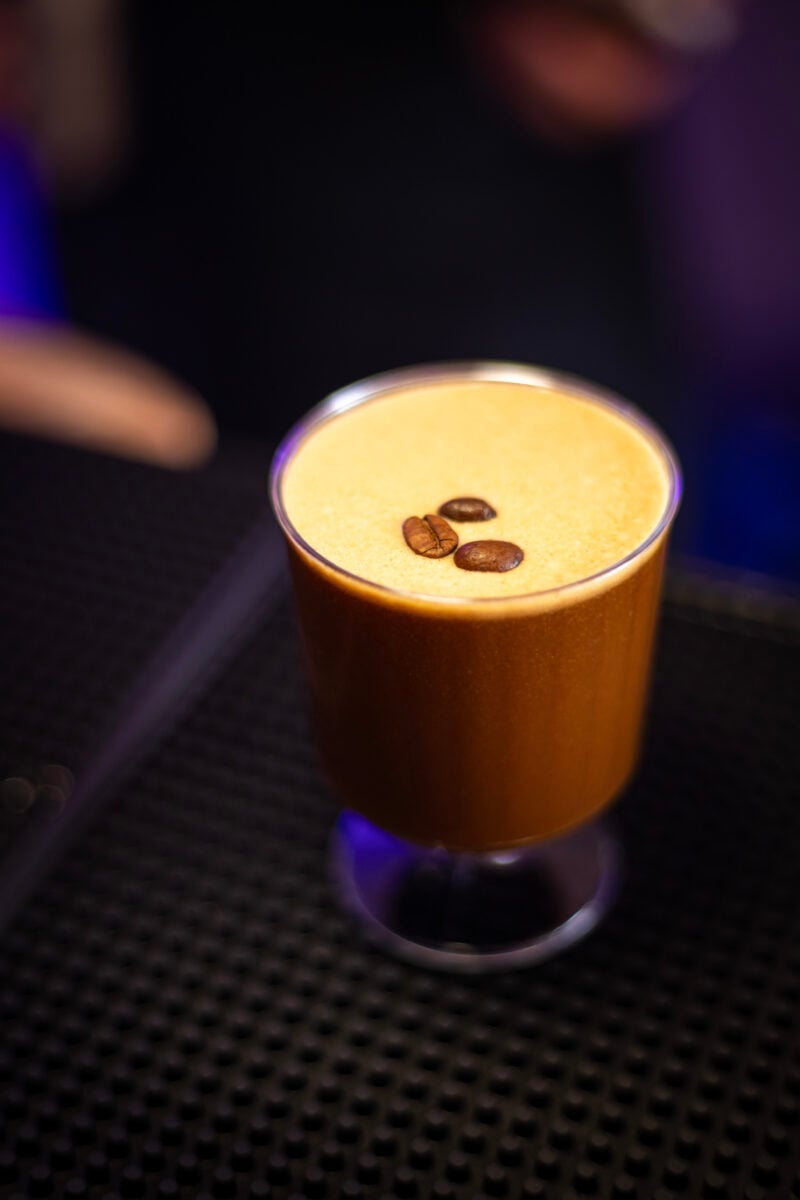
Evening coffee orders in Canada have nearly tripled over the past two years, and it’s a shift that is changing how some people spend their nights out. Premium coffee brands are claiming territory that used to belong almost exclusively to alcohol, especially through espresso-based cocktails and after-dinner service, as consumers look for new ways to linger and indulge after their meal.

In an interview with Retail Insider, Daniele Foti, VP Marketing for Lavazza North America, Lavazza, talks about the trend.

Question: Why are Canadians moving beyond coffee as a morning-only beverage?

Answer: Premium coffee demand has moved well past the morning, and the numbers back it up – evening coffee occasions in Canadian foodservice have nearly tripled over the past few years, and I think it comes down to how people want to spend their evenings today. People are looking for ways to linger and socialize after a meal that doesn’t necessarily default to another round of drinks, and a well-made espresso gives them something that still feels intentional and a little indulgent. Coffee’s versatility is what makes it work: it’s a nightcap, a dessert pairing, or the base for a cocktail when people do want one. It flexes to whatever the evening calls for. 

Q: Why are restaurants investing more in premium coffee offerings beyond breakfast service?

A: For restaurant operators, this comes down to giving guests a reason to stay a bit longer and feel like the experience continues past the meal itself. As evening and beverage-only occasions continue to grow, a well-executed coffee program becomes another way to round out the guest experience and introduce a moment of indulgence.

But it also raises the bar: guesst expect the same level of coffee quality all day, not just in the morning. That means a program has to sustain a much longer day, without slowing down service or overwhelming staff. That’s why we’re seeing more operators lean on streamlined equipment and hands-on training and working with coffee experts so the program stays consistent whether it’s 9 am or 9 pm. Evening coffee service is becoming less of a nice-to-have and more of a real point of differentiation for operators.  

Q: Can you share more on the growth of espresso-based cocktails and sophisticated non-alcoholic options? 

A: What’s driving both is the same consumer expectation: an evening drink should feel crafted, alcohol or not. Espresso is uniquely positioned to meet that – it has the complexity and structure to be shaken, layered or paired the way a cocktail can, which is exactly why the Espresso Martini has had such staying power, and why we’re seeing further innovation in lighter formats like the Espresso Tonic.

That same expectation is reshaping the non-alcoholic side. People drinking less alcohol aren’t looking to trade down to a syrup-heavy mocktail. They still want something premium and intentional. A well-made espresso drink meets that bar. For us at Lavazza, that means investing in new recipes and formats that give people more ways to access a premium coffee experience, whatever moment they’re in.

Q: What does this shift say about the future of socializing and beverage culture in Canada? 

A: This points to socializing becoming more flexible, with alcohol as one option among several rather than the default. Canadians are looking for experiences that fit different lifestyles and occasions whether that means going out for dinner or grabbing coffee with friends. Coffee is becoming a real part of the guest experience, similar to the way a glass of wine can extend a meal. We’re already seeing that show up through things like tableside pour-over carts, curated pairings and flights. 

We expect that to keep building with coffee treated less like an add-on and more like its own program, built out with the same intention a wine list or cocktail menu may be built at a restaurant. That could mean dedicated evening coffee menus, staff trained specifically to guide guests through the coffee experience, and venues that bring this to life. Coffee has earned a real seat at the table for socializing in Canada — not just a quick stop before the night starts — and there’s plenty of room left for that to grow. 

Q: Can you share more on Lavazza’s current presence in Canada? 

A: Lavazza has a strong presence in Canada, and we’re continuing to build momentum across retail, foodservice and culture. Our strategy goes beyond the coffee itself. It’s about how and where we show up. We see coffee as a connector, so our growth is anchored in creating genuine moments within communities that share our values, rather than just expanding distribution.

What that looks like in practice is finding the right moments at the intersection of culture and connection, and creating real opportunities for people to experience Lavazza there -whether that’s through our vast activations at TIFF (Toronto International Film Festival) and the Lavazza IncluCity Festival in Toronto, the Montreal International Jazz Festival, our Holiday Café in Calgary, or a pop-up at the Whistler Ski and Snowboard Festival like we did earlier this year.  You’ll continue to see us show up a lot around sports, film, music and the arts, because it’s something we’re genuinely passionate about and it gives us a chance to connect with people through the things they love, with coffee at the centre of those shared experiences. 

More from Retail Insider:

Back-to-School lunch basket falls 2.8%, but relief may be temporary: report

Gustavo Fring photo
Gustavo Fring photo

Canadian families are seeing some late-summer relief at the grocery store, but they should not assume that food inflation has disappeared, says the Agri-Food Analytics Lab’s Special Back-to-School Food Prices Report 2026, prepared in collaboration with GroceryPulse.ca.

The report said that a national basket of 45 food products declined by 2.8% between July and August, falling from $269.52 to $262.07. Prices declined for 30 of the 45 products, remained unchanged for nine and increased for six.

A more focused basket of 12 popular school-lunch staples also fell by 2.8%, from $55.61 in July to $54.04 in August. Lower prices for bagels, bottled water, canned tuna, cheddar cheese, chicken nuggets and peanut butter helped offset a 6.3% increase in the price of orange juice, it explained.

The Agri-Food Analytics Lab at Dalhousie University conducts research on food prices, food systems, consumer behaviour, supply chains and public policy. Its work provides evidence-based analysis to consumers, industry stakeholders and policymakers across Canada.

Link to report (English) : Special Back To School Report 2026

Link to report (French) : Rapport spécial sur la rentrée scolaire 2026

“Parents are getting some welcome relief as they prepare for the new school year, but we should not confuse a promotion-heavy August snapshot with a lasting reversal in food inflation,” said Dr. Sylvain Charlebois, Senior Director of the Agri-Food Analytics Lab at Dalhousie University. 

“Grocers are competing aggressively for back-to-school spending, and that is helping consumers for now. The real test will come later this fall, when seasonal pressures begin to build and promotional activity may become less generous.”

The report said promotions played a significant role in August. The proportion of GroceryPulse observations priced below the listed regular price rose from 10.1% in July to 17.5% in August. This suggests that at least part of the monthly decline resulted from temporary discounting rather than a broad, permanent reduction in food costs.

Official Statistics Canada data also provide a more cautious picture. Grocery prices were still 3.1% higher year over year in July and exceeded the overall inflation rate for an 18th consecutive month, it said.

Regional differences remain substantial

The cost of the 12-item school-lunch basket ranged from $52.05 in Quebec City to $56.48 in St. John’s, representing a difference of 8.5%, according to the report.

For the broader 45-item food basket, Winnipeg recorded the lowest total at $258.09, while St. John’s had the highest at $280.07. St. John’s and Moncton were among the most expensive markets measured, reflecting the continued influence of freight costs, market size and regional retail conditions, it added.

Greta Hoffman photo
Greta Hoffman photo

Fall relief before prices firm toward December

The report said its September-to-December outlook for 24 popular lunchbox food is forecasting that an 18-item GroceryPulse-anchored reference basket is projected to decline from $90.27 in August to approximately $89.20 in October before rising to about $96.00 in December—6.3% above its August level.

Fresh produce is expected to experience greater seasonal volatility than packaged products. Tomatoes, romaine lettuce and strawberries could become more expensive later in the fall, while many sandwich and protein staples are expected to remain comparatively stable, said the report.

“The most effective strategy for families is flexibility,” said Janet Music, Research Program Coordinator at the Agri-Food Analytics Lab. “Parents can rotate among fruits and protein options according to weekly prices, compare unit prices and take advantage of meaningful promotions on products that store well. A flexible lunch plan can generate savings without sacrificing nutrition or variety.”

Geopolitical risks remain limited but uneven

The report said its central forecast assumes no major geopolitical shock or significant escalation in tariffs and trade disruptions. Under that scenario, geopolitics should have a limited but uneven effect on school-lunch costs this fall.

Imported produce, juices, packaged foods, transportation and packaging would be among the most exposed categories. A weaker Canadian dollar, supply-chain disruptions or new Canadian counter-tariffs on food products could push actual prices above the report’s projections, it said.

“Geopolitics is unlikely to be the main driver of lunchbox prices this fall unless the trade dispute escalates,” said Charlebois. “However, counter-tariffs on food would directly raise costs for Canadian importers and could also influence the prices of domestic substitutes. Food should be treated carefully in any retaliatory trade strategy because families ultimately pay the bill at the grocery store.”

Atlantic Ambience photo

Practical strategies for families

The report recommends that parents:

  • Build lunches around stable staples such as yogurt, whole-wheat bread, bananas and carrots.
  • Rotate fruits and vegetables according to weekly prices.
  • Keep several protein options available, including tuna, cheese, eggs and permitted nut or seed butters.
  • Use promotions to stock up on products that store well.
  • Compare prices per 100 grams or per litre, rather than relying only on package prices.
  • Use refillable water bottles when practical.

The GroceryPulse analysis is based on 7,234 price observations collected from 145 stores across 13 Canadian cities and up to 22 retail banners. The report combines GroceryPulse shelf-price data with Statistics Canada’s Consumer Price Index and average retail-price series.

The full Special Back-to-School Food Prices Report 2026 includes product-level comparisons, regional results, forecasts for 24 lunchbox staples and practical advice for families.

More from Retail Insider:

Canadian SMEs remain optimistic but take more cautious approach to hiring and AI investment: Employment Hero

Vitaly Gariev photo
Vitaly Gariev photo

Canadian small and medium-sized businesses remain broadly optimistic about the next six months but are taking a more selective approach to hiring and investment amid economic uncertainty, according to a new survey from Employment Hero.

The inaugural Employment Hero SME Pulse found 58 per cent of 600 Canadian senior business leaders surveyed are optimistic about their business outlook over the next six months, compared with 18 per cent who are pessimistic.

Hiring remains a priority, with 66 per cent of respondents expecting to add employees in some capacity. However, businesses appear to be taking a more measured approach to workforce growth, with 34 per cent expecting to expand hiring and 32 per cent planning to hire selectively.

“Canadian SMEs are entering the second half of the year from a position of cautious confidence,” said Chris Pinkerton, managing director of Employment Hero Canada. “Businesses haven’t stopped investing – they’re simply becoming much more intentional about where they invest. That means hiring strategically, improving productivity and looking for smarter ways to grow.”

Technology is also drawing increased investment, with 62 per cent of Canadian SMEs reporting that they are increasing their spending on artificial intelligence.

The survey suggests businesses are increasingly looking at AI as a tool for day-to-day operations rather than simply experimenting with the technology, with productivity and efficiency among the stated priorities.

“The conversation around AI has shifted,” added Pinkerton. “Businesses are no longer asking whether they should invest, they’re asking how they can use AI to help existing teams work smarter, improve productivity and remain competitive in an increasingly challenging operating environment.”

Productivity was identified as the leading business pressure among respondents, cited by 41 per cent. Wages followed at 39 per cent, while hiring and talent acquisition was cited by 36 per cent.

The findings indicate that businesses are weighing workforce and technology investments against those operating pressures as they plan for the next six months.

Longer-term growth also remains a focus. Twenty-six per cent of SMEs surveyed said expansion or growth is their primary financial focus over the next six months, while 41 per cent said they are focused on balancing growth with operational stability.

Employment Hero said the survey points to Canadian SMEs continuing to pursue growth while exercising greater discipline around hiring, investment and workforce planning as they enter the fall period.

In an interview with Retail Insider, Pinkerton discussed the survey results.

cottonbro studio photo

Question: What does the survey data tell you about how Canadian SMEs are balancing hiring plans with concerns about wages, productivity and the broader economic outlook?

Answer: Canadian SMEs are still looking to grow, but they are being much more deliberate about how they do it. What stands out to me is that optimism is still there, hiring is still on the table, but businesses are making more careful decisions about where they invest their time and money. When productivity, wages and hiring all sit near the top of the pressure list, it tells you leaders are trying to balance growth with discipline as they head into fall.

Q: With 62% of SMEs increasing their AI investment, what specific uses of AI are you seeing among Canadian businesses, and are those investments changing the types or number of employees they plan to hire?

A: What we are seeing is that AI is becoming part of how SMEs think about productivity and efficiency, not just a standalone technology conversation. For many businesses, the focus is on helping existing teams work smarter and reducing pressure on day-to-day operations. For example, a Canadian SME might use AI to summarize customer inquiries, draft routine responses, or turn meeting notes into follow-up tasks, freeing employees to spend more time on higher-value work. The survey shows that more businesses are increasing AI investment even as many still expect to hire, which suggests AI is shaping how they plan and prioritize, rather than simply replacing the need for people.

Q: Why has productivity emerged as the top business pressure for SMEs, and what are companies doing differently to address it heading into the fall?

A: Productivity is front and centre because SMEs are being asked to do more in a more cautious environment. Businesses are looking closely at how to support growth, manage wage pressure and hire strategically without overextending themselves. Heading into fall, that means more intentional hiring, more interest in AI, a sharper focus on operational efficiency and getting the most out of the teams they already have.

Vitaly Gariev photo
Vitaly Gariev photo

Q: The survey describes businesses as “more intentional” about where they invest. What does that look like in practice when it comes to hiring, technology spending and expansion?

A: In practice, it means businesses are being very selective. They are still optimistic, and many still plan to hire, but they are not taking a growth-at-all-costs approach. They are thinking more carefully about where headcount is needed, where technology can help improve efficiency, and where they can keep growing while maintaining operational stability. That kind of discipline is especially important for SMEs, because they do not always have the same room for error as larger organizations.

Q: How do you expect the retail and consumer-facing SME sector in particular to approach hiring and AI investment through the fall, given the pressures on wages, productivity and consumer spending?

A: My view is that retail businesses are taking a practical and selective approach to fall planning. Consumer-facing businesses feel changes in demand, staffing, and costs quickly, so I’d expect many to prioritize flexibility and be thoughtful about where they invest.

Our recent pulse check survey found that SMEs will continue hiring where there is a clear business need, while also looking for ways to improve productivity and get more from existing teams. AI is increasingly central to that conversation. Statistics Canada reports that 19.2% of Canadian businesses used AI in the past 12 months as of Q2 2026, while our research found that 62% of SMEs are increasing their investment in AI. The next challenge is turning that investment into results, with AI literacy emerging as a key unlock for driving adoption and realizing real productivity gains.

As we enter Q4, I see the theme as selective investment. Using technology where it delivers a clear productivity benefit, switching to vendors that can provide a technology and AI advantage, and staying flexible as demand changes.

More from Retail Insider:

Maureen Simon Foods launches Rolliis in 7-Eleven stores across Canada

Maureen Simon Foods photo

Canadian-owned Maureen Simon Foods is expanding its retail presence with the launch of its Caribbean-inspired Rolliis frozen snacks at 7-Eleven Canada stores nationwide.

The company said the products are being introduced across the convenience-store chain as it seeks to bring its lineup of Caribbean-inspired foods to a wider Canadian customer base.

The Rolliis are made in Canada and come in three varieties: Jerk Beef, Jerk Chicken and Veggie Coconut Curry. The frozen snacks feature seasoned fillings wrapped in a pastry-style roll and can be prepared in an air fryer in about 12 minutes, according to the company.

The Jerk Beef variety contains seasoned jerk beef, while the Jerk Chicken version features a Caribbean-inspired spice profile. The Veggie Coconut Curry option uses a vegetable-based filling with coconut curry flavours.

“Food has always been a powerful way to connect people and celebrate culture, and that’s at the heart of everything we do at Maureen Simon Foods. With the Rolliis, we’ve taken the flavours and inspiration of the Caribbean and created something that fits seamlessly into the way Canadians eat today, convenient, delicious and made right here in Canada,” said Maureen Simon, Founder of Maureen Simon Foods. “Launching in 7-Eleven stores across the country is a huge step forward for our business, and we’re thrilled to introduce even more Canadians to the flavours we grew up loving.”

The rollout gives Maureen Simon Foods access to 7-Eleven’s store network across Canada as the company broadens the distribution of its products.

The company said the Rolliis are intended for at-home meals, snacks, entertaining and sharing, as well as on-the-go consumption.

Maureen Simon Foods photo

Maureen Simon Foods was founded by Maureen Simon and traces its food business roots to the 1980s. The company says Simon draws on her Trinidadian roots, more than 30 years of food experience, and recipes and ingredients associated with her cooking.

Its product line also includes Original Jerk Sauce and Caribbean Coconut Curry Sauce, alongside the three Rolliis varieties.

The company said its products combine Caribbean flavours with influences from Simon’s Canadian-born children.

The Rolliis launch expands the company’s made-in-Canada product offerings through a national retail distribution arrangement with 7-Eleven Canada.

More from Retail Insider:

Toronto Waterfront Looks to Events and Activation as District Builds Toward 2035

Harvest Market as part of WaterFall Festival. Photo: Waterfront Toronto

Toronto’s waterfront is entering a period of growth that could change how people experience the area, as new transit, parks, attractions, development and commercial activity gradually connect destinations that were once largely separate.

That evolution is prompting the Waterfront Business Improvement Area (BIA) to rethink how events and programming fit into the district. Its newly released Waterfront Events and Activations Review looks at opportunities through 2035, including major destination events, recurring programming and more activity in the spaces between established attractions. The strategy also considers how increased visitation can reach businesses across the waterfront rather than remaining concentrated around individual event sites.

“Toronto’s conversations about the waterfront have historically been about one thing or another because the major destinations really have been separate, whether it’s the Toronto Islands, Harbourfront Centre or Ontario Place,” said Tim Kocur, Executive Director of the Waterfront BIA. “But the waterfront has filled in and grown so much with new parks, more residents and businesses. It’s important now to zoom out around those major attractions and look at the whole system of locations and the connections between them.”

The BIA describes an emerging “waterfront city” extending from Ontario Place and Exhibition Place through the central waterfront and east toward the Port Lands. Parks, Harbourfront Centre, Billy Bishop Toronto City Airport, the ferry terminal, cultural institutions, businesses and future development sites are increasingly part of the same waterfront corridor.

The Events and Activations Review was developed following consultation with more than 60 businesses, stakeholders and event programmers. The BIA wanted to understand how continued growth could support programming and where the organization could have the greatest impact.

“Our main takeaway as we went through this exercise was just how exciting the future will be, given the enthusiasm and clever ideas that so many programmers and local stakeholders have,” Kocur said.

He expects the BIA will need to revisit its role every few years as the waterfront develops, particularly as opportunities emerge for larger events, new concepts and off-season programming. There is also room for smaller recurring events that can bring activity to locations between the waterfront’s major attractions.

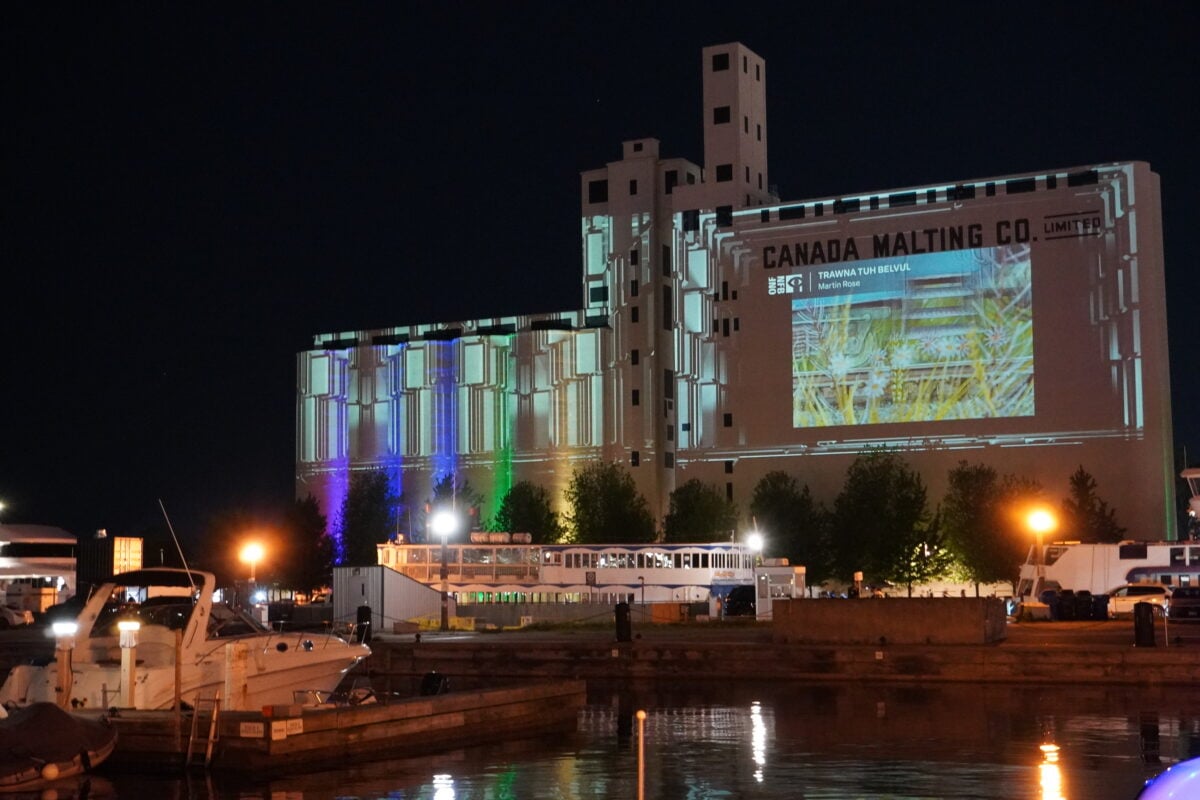
‘A World in a City,’ projection art on Malting Silos, City of Toronto, 2026

A More Coordinated Approach to Waterfront Events

The review recommends a more selective approach to direct event sponsorship, with greater emphasis on major draws, community programming and events involving multiple waterfront partners. The BIA also sees a larger role for itself in bringing stakeholders together, helping organizers understand locations and approvals, and supporting efforts to attract programming to the waterfront.

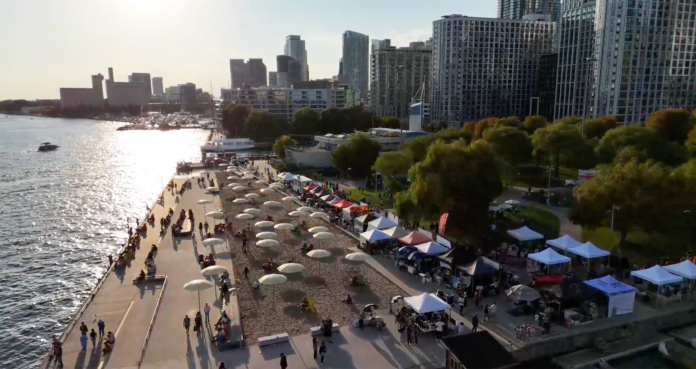
HTO Park and the Sugar Beach/Water’s Edge Promenade area are among the locations identified for more regular markets and events. The review recommends pursuing appropriate events drawing more than 10,000 people in these “gap areas,” alongside larger destination events capable of attracting more than 50,000 attendees.

Getting people to move between those destinations has direct implications for businesses along Queens Quay. Kocur said a survey conducted toward the end of the FIFA World Cup period found that about half of streetfront businesses along Queens Quay reported direct benefits from the additional visitors and activity. Businesses farther from the major events and fan zones were less likely to report the same impact.

“That’s why we’re always emphasizing the need to find ways to ‘fill the gaps’ with additional programming and improve things like wayfinding between major attractions,” he said. “We typically see east-west exploration on Queens Quay as our highest measurement of success, so new visitation drawn here has the potential to benefit as many businesses as possible.”

The Events Review acknowledges that large crowds do not necessarily translate into stronger sales for surrounding businesses. Weekend events may have limited impact on businesses serving office workers, for example, while food vendors at an event can compete with nearby restaurants. The BIA is looking at pedestrian movement, visitor spending, business feedback and other measures as it evaluates the economic impact of programming.

There are also practical ways to make stronger connections between events and businesses, including incorporating nearby restaurants into event promotions and making local business information more visible to visitors. Kocur said businesses in the eastern waterfront have shown particular interest in working together on local programming, and the BIA plans to bring potential partners in that area together more regularly.

Gatsby Redux performances at Harbourfront Centre, Fall 2025

New Data Provides a Closer Look at Waterfront Visitors

The BIA has also released an updated Area Data Package covering pedestrian counts, visitation, visitor profiles, employment, transportation, tourism and resident demographics.

Environics MobileScapes data included in the package recorded approximately 74.3 million visit events to the waterfront during 2025. These are visits rather than unique individuals, so the same person may account for multiple visits during the year. The dataset covers visitors from Canada.

The BIA’s pedestrian counters provide another measure of activity. On June 20, 2026, the combined York, Rees and Lower Spadina counters recorded 68,077 east-west pedestrian and cyclist movements, the busiest measured day during the first half of the year. The date coincided with the start of Summer Music in the Garden and a FIFA match in Toronto. Other high-traffic days coincided with the FIFA period, Victoria Day weekend and Festival of Flavours, and the Dragon Boat Festival.

Dorsa Alizadeh-Shabani, Manager of Operations at the Waterfront BIA, said the data is intended to help businesses understand what is happening around them and who their customers are.

“The purpose of the data package is mainly to help our member businesses understand trends in foot traffic and the spending habits of visitors and residents,” she said. “We hope it gives business owners more insight into their customers and clients so they can better cater to them.”

The information also gives prospective operators another tool when assessing the area.

“It helps a future business owner decide whether the waterfront is the best place for the type of business they’re planning to operate,” Alizadeh-Shabani said. “It also gives prospective businesses a chance to see the type of data the BIA provides to its members as a complimentary service.”

Eastern Waterfront Expected to Evolve With Transit and Quayside

The relationship between development, commercial activity and programming is particularly visible in the eastern waterfront, where large areas are still being built out.

The BIA’s July 2026 Broker Package reports a commercial vacancy rate of 13.3 per cent across the waterfront. Vacancy was approximately eight per cent in the western waterfront and seven per cent centrally, compared with 27 per cent in the east. The report also notes that redevelopment has affected commercial inventory, including the removal of occupied and vacant units at major redevelopment sites.

Alizadeh-Shabani said the eastern waterfront remains a relatively new neighbourhood compared with more established parts of Toronto, and its commercial market is still developing.

“With the new Waterfront East Rapid Transit Line being funded, we are one step closer to creating a more complete neighbourhood,” she said.

The transit project will extend higher-order transit through the eastern waterfront to Ookwemin Minising, with a dedicated surface right-of-way along Queens Quay East and onward through Cherry and Commissioners streets. The project is jointly funded by the municipal, provincial and federal governments.

Quayside will add another major piece to the area as development progresses. A new Toronto Public Library branch has been approved for the development and is expected to become an important community use at street level. Waterfront Toronto says it will be the first TPL branch on Toronto’s waterfront.

‘A Lake Story’ performance on the water by The Bentway, Fall 2025

“This is particularly exciting because a community-use establishment like the Toronto Public Library can generate year-round visitation,” Alizadeh-Shabani said. “We’re optimistic that nearby businesses will feel the effects as well once the library has moved into the community.”

The Events Review identifies Queens Quay East as an area where activation will become increasingly important as development continues. Sugar Beach and Water’s Edge Promenade are identified as priority event areas, while the BIA expects to work more closely with businesses, residents, George Brown Polytechnic and other eastern waterfront stakeholders on recurring programming.

Looking Toward a Seven-Kilometre Waterfront

By 2035, Kocur sees the potential for a much more connected waterfront, with streetcar service linking destinations from the western waterfront through Queens Quay and into Ookwemin Minising. His broader vision is for events that can sometimes operate across much larger sections of the waterfront.

“Along the way, we think there will be at least a few times per year when there are waterfront-wide and multi-week signature events, the kind of events that are large and exciting enough to attract international visitors,” Kocur said.

One model frequently discussed by the BIA is Vivid Sydney, the annual light, music and cultural festival that extends for kilometres along Sydney Harbour during the Australian city’s shoulder season.

“We always talk about Vivid Sydney, where they have seven kilometres of programming for three straight weekends in their fall, as a model,” Kocur said. “That scale is certainly possible here if all the partners and attractions keep working together and thinking bigger each year.”

The Events Review notes that programming at that scale requires significant government investment and corporate sponsorship. Vivid Sydney is cited alongside Montreal’s Quartier des Spectacles as an example of sustained investment being used to build major event destinations and increase shoulder-season visitation.

Copper Canopy, art installation, Harbourfront Centre as part of WaterFall, 2025

Smaller and more frequent programming would continue alongside those larger events. Kocur sees opportunities for recurring weekend markets at HTO Park and Sugar Beach, weekday events for office workers, and neighbourhood programming for residents, families and children.

“A major goal for us is to get better at doing smaller events in an appropriate and consistent way,” he said, adding that some programming could be as specific as events for children or dog owners in smaller parks at the right times of year.

The Events Review recognizes that the waterfront is also home to a growing residential population, requiring programming to be balanced with the everyday use of parks and public spaces.

Alizadeh-Shabani said the BIA welcomes ideas from retailers, restaurants, property owners, event organizers and other members of the waterfront business community. It also holds dedicated discussions with some of the area’s more specialized operators, including boat operators and businesses on the Toronto Islands.

“We’re always open to new ideas and a chance to get to know our business members on a more personal level and offer our support where we can,” she said. “We also appreciate opportunities to talk about what our team is already doing and where we can improve, as long as it’s within our mandate of supporting businesses, engaging the community and unifying the waterfront.”

As development continues, the Events and Activations Review puts increasing attention on the spaces and connections between Toronto’s established waterfront destinations. New transit, parks, housing, workplaces and commercial spaces will bring more people into those areas, while events and recurring programming can give them additional reasons to move between them and return throughout the year.

For the Waterfront BIA, the coming decade will be about finding the right programming for those places, from neighbourhood markets and weekday events to waterfront-wide attractions capable of drawing international visitors.

See more: Waterfront Events and Activations Review

More from Retail Insider:

Most Canadian small businesses unaware of new open banking law: Xero survey

Ketut Subiyanto photo

Most Canadian small-business owners are unaware of legislation that will introduce open banking to the country, while nearly one in five currently share online banking credentials with accountants, bookkeepers, employees or software providers, according to new research commissioned by Xero.

The survey by Angus Reid Group found 82 per cent of Canadian small-business owners had not heard of the Consumer-Driven Banking Act, while 61 per cent said they had never heard of open banking.

Only four per cent said they both knew the legislation existed and understood what it meant for their business.

The findings highlight the ways businesses currently move financial information and the potential changes open banking could bring to those practices.

Eighteen per cent of respondents said they currently share their online banking username and password with an accountant, bookkeeper, employee or software tool. Twenty-two per cent said they had done so at some point.

The research was released at Xerocon Denver on Aug. 19, where Ashalee Mohamed, country manager for Xero Canada, and Jules Hawkins, co-founder of Hawkins & Co Accounting and a Xero Accounting Ambassador, discussed the implications of the change for accountants, bookkeepers and their business clients. The panel was moderated by Sarah Bartnicka, founder and editor of Milk Bag.

Among the respondents, 49 per cent said they would trust their accountant or bookkeeper most to manage access to their financial data. Twenty per cent named their bank, while less than one per cent chose a fintech company.

The survey also found that businesses primarily see administrative benefits from open banking. Thirty-nine per cent said easier accounting and bookkeeping was among the benefits they wanted most, followed by less time spent on financial administration at 28 per cent and lower banking costs at 27 per cent.

Twenty-eight per cent of respondents said they are likely to use open banking services during the first 12 months they are available. Among business owners who were already aware of the Consumer-Driven Banking Act, that figure rose to about half.

“Open banking is arriving in Canada and the majority of small business owners don’t know it’s coming. This is a real gap to close, because a framework only delivers if the businesses it was built for are ready to use it,” said Mohamed. “ What’s striking, but not surprising, is that businesses already trust their accountants and bookkeepers with this more than their own banks. That’s exactly why advisors are best placed to close the awareness gap: owners who already knew about the Act are around twice as likely to say they will use these services in year one. My advice to practices is simple – now is a great time to get ahead of the change and move to the cloud if you’re not already there.”

The survey indicates that awareness of the legislation remains limited among Canadian small-business owners even as businesses continue to rely on existing methods to share financial information with third parties.

More from Retail Insider: