WeCook, Canada’s leading ready-to-eat meal delivery service, is bringing a taste of Montréal’s iconic Schwartz’s Deli to Toronto with a one-day-only immersive pop-up!
Schwartz’s by WeCook will open its doors on Wednesday July 30 from 4-8 PM at Avenue Diner, 222 Davenport Rd, Toronto.
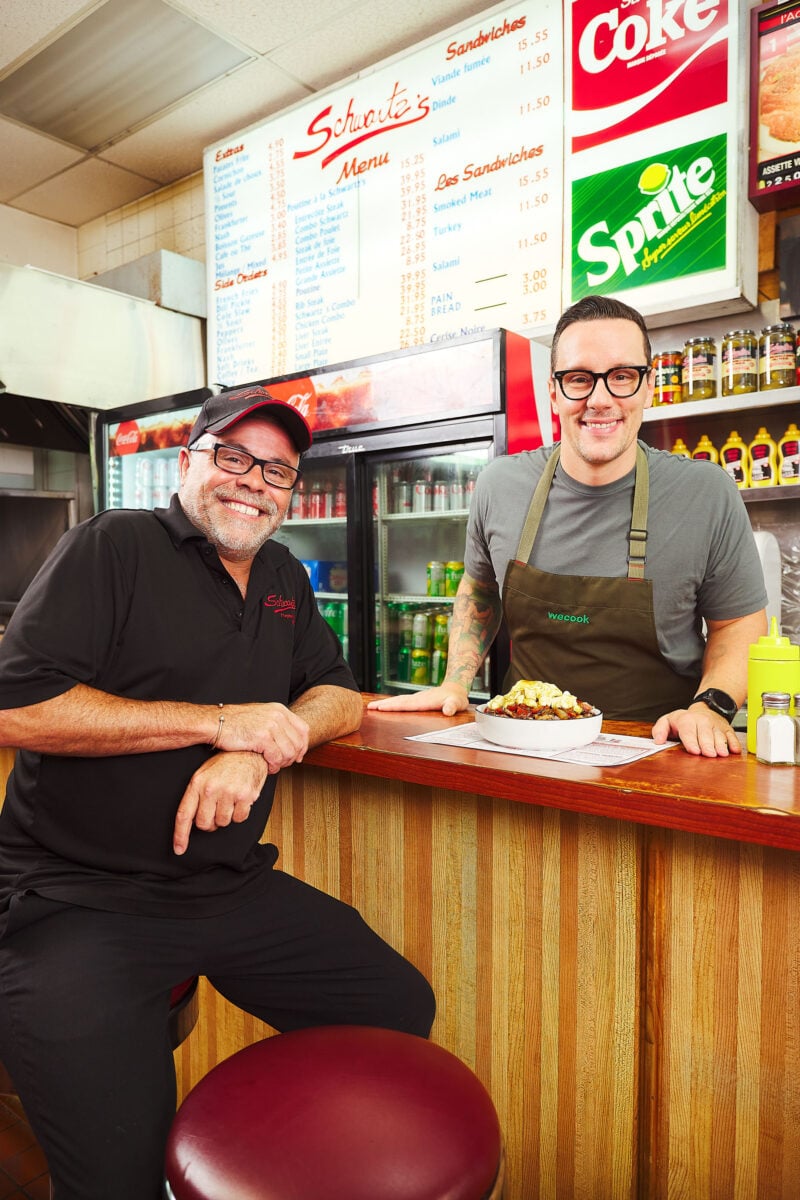
Schwartz’s GM Frank Silva & WeCook Chef Gabriel Drapeau
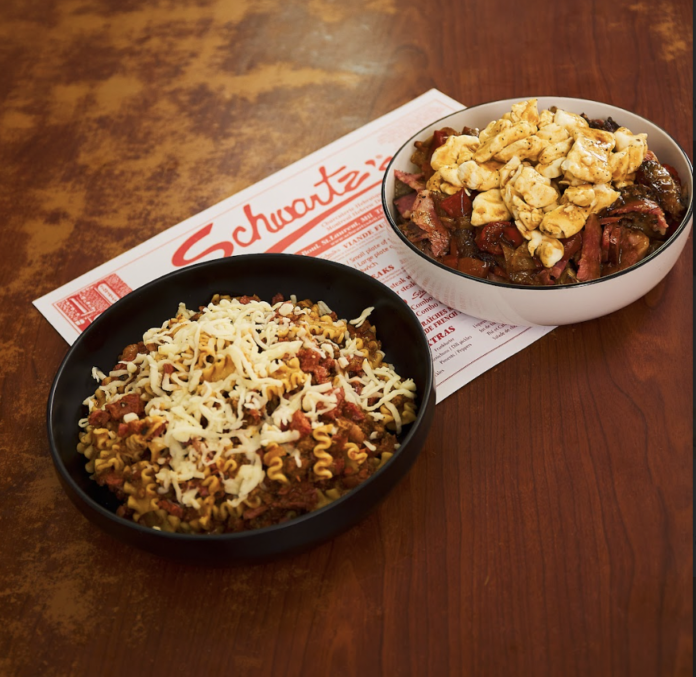
Two new meals created by WeCook’s Executive Chef Gabriel Drapeau (former Executive Chef of Joe Beef Group) featuring Schwartz’s beloved smoked meat will be available at the pop-up.
The meals are also available to order on WeCook’s websitefor a limited time:
Schwartz’s Montréal Smoked Meat Poutine
Week of August 17 menu (available to order starting July 21)
Schwartz’s Montréal Smoked Meat Bolognese Pasta
Week of August 24 menu (available to order starting July 28)
The pop-up will feature the two dishes above for $5 each, prepared by Chef Gabriel himself. Seating is limited and first come, first served.
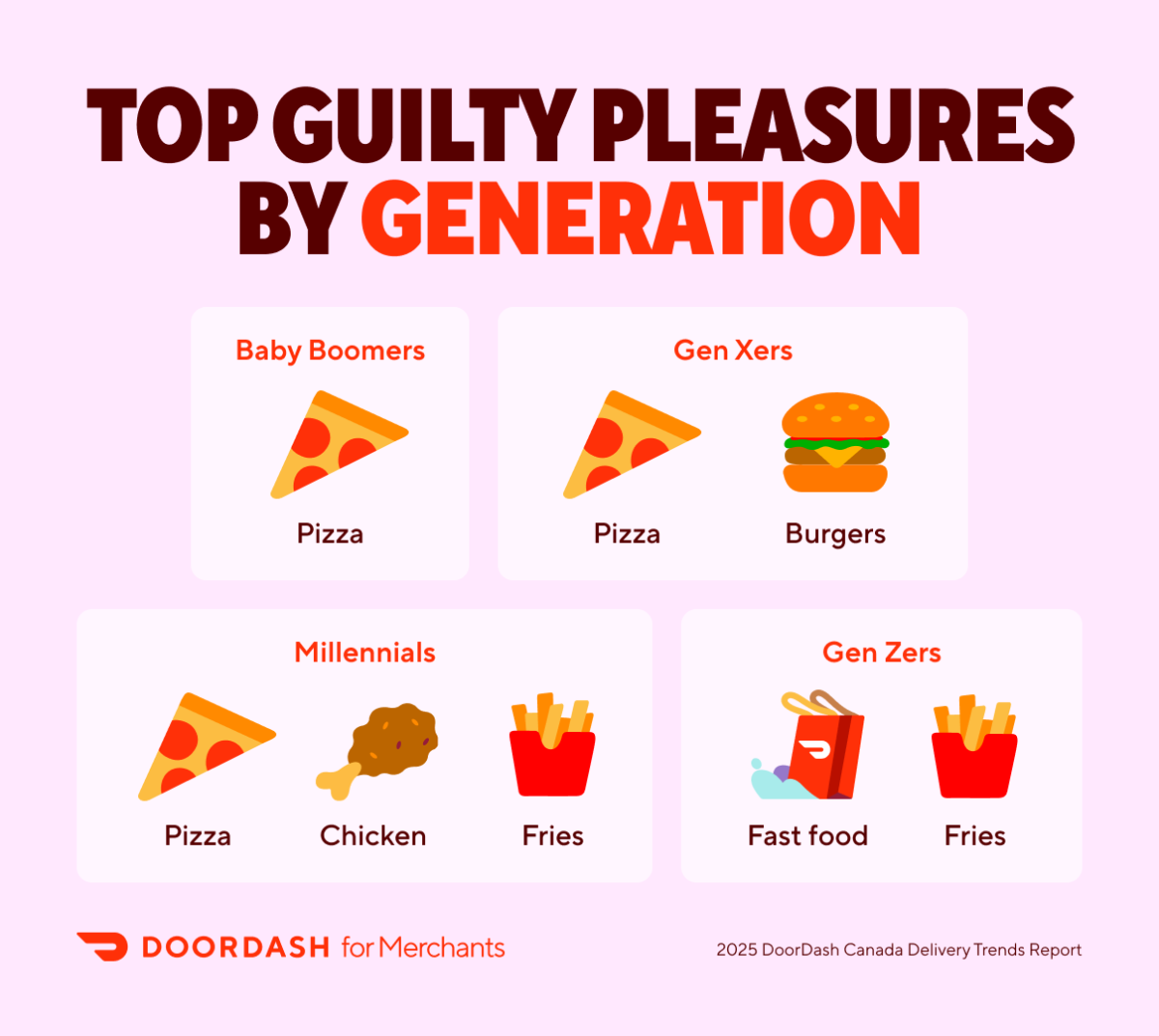
Sample findings that might be relevant for restaurateurs and other business operators include:
Sober-Curious Shift: 76% of Canadians who order alcohol for delivery have also opted for low or no alcohol options in the past six months.
Increased Personalization Appetite: 43% of Canadians say they want AI-powered, personalized recommendations for what to eat or drink. As digital discovery becomes even more tailored, it’s important for restaurants to show up smarter in front of consumers.
Emotions and Impulse: Nearly all Canadians (96%) have ordered delivery to satisfy a craving and 63% placed a last-minute delivery order in the last month.
Multitasking Dining: With 77% of consumers eating delivery meals while watching content, delivery has officially entered the age of background consumption.
“Every year, we survey thousands of consumers to find out what people are craving from their dining and delivery experiences. And every year, these decisions are influenced by the world around us,” said DoorDash.
“Our survey revealed that younger diners in particular want a taste of viral foods from social media, and more than half of consumers are open to having AI make ordering decisions easier – no matter their age. Health foods and sustainable options are high priorities for Gen Z and Millennials, along with non-alcoholic drink options to support a variety of lifestyles.
“Today, mealtimes look pretty different than they did a decade or two ago. Most diners eat their delivery food in front of the TV, and consider restaurant meals as a form of self-care that gives them a break from cooking and meal planning.”
Introducing Nicole Kidman, Clé de Peau Beauté’s new Global Brand Ambassador (CNW Group/Shiseido Canada)
Clé de Peau Beauté, a global luxury skincare and makeup brand, is proud to announce Nicole Kidman as its new Global Brand Ambassador.
Renowned for her commanding presence on and off the screen, as well as her passionate advocacy for women’s causes, Kidman perfectly embodies Clé de Peau Beauté’s vision of Radiance—where a blend of intelligence, artistry, and purpose converge. Her appointment marks a significant moment in the brand history, said the company.
Kidman’s acclaimed career reflects the brand’s DNA—intelligent, exquisite, and uncompromising; shaped by conscious choices and an unwavering passion. With each role, she redefines convention, breaking stereotypes with a dedication that has remained consistent throughout her 40-plus-year career. Her elegance and commitment to meaningful change make her an exceptional ambassador, representing a vision of timeless and transformative beauty and radiance, added the brand in a news release.
Mizuki Hashimoto
“We are delighted to welcome Nicole to the Clé de Peau Beauté family,” said Mizuki Hashimoto, Chief Brand Officer of Clé de Peau Beauté. “We believe Radiance is more than appearance; it’s an inner strength that drives positive change. Nicole exemplifies this belief through her inspiring journey, showcasing how passion and purpose unlock a Radiance that empowers others.”
Beyond her artistic achievements, Kidman has made a profound impact as a UN Women Goodwill Ambassador, advocating for women and girls’ empowerment through education, economic opportunities, and the fight against gender-based violence. Her philanthropic work aligns seamlessly with Clé de Peau Beauté’s mission to cultivate beauty that inspires confidence and meaningful change, explained the company.
Photo: Nicole KIdman Instagram
“I am thrilled to be joining the Clé de Peau Beauté family,” said Kidman. “I am inspired by the brand’s commitment to celebrate individual beauty across every aspect of a person’s life. I look forward to what we can create together.”
“Committed to telling diverse stories, Kidman has showcased a remarkable range of roles, continuously pushing boundaries to amplify underrepresented voices in the film industry. Her bold choices reflect her commitment to infusing artistry with purpose, aligning with the vision of Radiance as a source of empowerment,” added the brand.
“A true symbol of Radiance, Kidman exemplifies the idea that true radiance is cultivated through purpose and positive action. Her journey highlights the transformative power of beauty, inspiring others to embrace their own unique beauty and light.”
Clé de Peau Beauté, a luxury brand of Shiseido Co., Ltd., was established in 1982. It is available in 26 countries and regions worldwide.
Retail Insider is streamlining its Canadian retail news from around the web to include a handful of top news stories that can be viewed quickly during the day. Here are the top stories from the past several days.
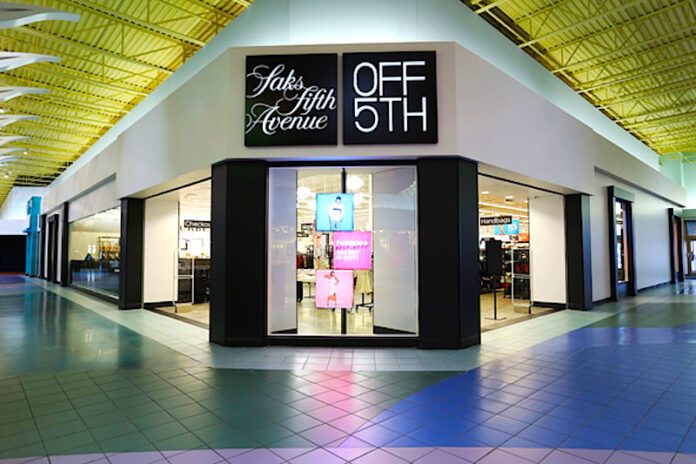
Saks OFF 5TH Vaughan Mills. Photos provided by Hudson's Bay Company.
Canadian fashion powerhouse YM Inc. is set to expand its footprint after reaching a deal to acquire five former Saks OFF 5TH locations from the Hudson’s Bay Company (HBC). The agreements, disclosed in recent court filings, come as the storied retailer navigates a turbulent winding down under the Companies’ Creditors Arrangement Act (CCAA).
The deal, valued at $5.03 million, will see YM take over spaces in some of Canada’s most prominent outlet centres, subject to court approval and landlord consent. This transaction underscores YM’s aggressive growth strategy and highlights the growing appetite for prime retail real estate as HBC seeks to monetize its assets.
Where the New Stores Will Open
According to legal documents filed with the Ontario Superior Court of Justice, YM has secured the following leases:
Vaughan Mills near Toronto – approximately 35,000 square feet
Tanger Outlets Ottawa in Kanata – 28,357 square feet
Outlet Collection Winnipeg – 32,191 square feet
CrossIron Mills near Calgary – approximately 30,000 square feet
Toronto Premium Outlets in Halton Hills – approximately 25,000 square feet
These locations are situated in some of the country’s busiest outlet centres, offering YM immediate access to high-traffic shopping destinations. The stores were formerly occupied by Saks OFF 5TH, which shuttered its Canadian operations last month. Saks OFF 5TH stores in Canada were licensed under the Hudson’s Bay Company.
YM’s ambitions extended beyond these five locations. The retailer had sought to acquire Saks OFF 5TH leases at Pickering Town Centre in Pickering and Skyview Power Centre in Edmonton, and a 175,000 square foot Hudson’s Bay lease at Midtown Plaza in Saskatoon for an additional $1 million. However, landlord approvals for those properties were not secured, a recurring obstacle in the ongoing restructuring process.
The inability to close these additional sites underscores a broader challenge facing bidders and HBC: the need for landlord consent in lease assignments. Many property owners remain cautious about incoming tenants, particularly amid uncertainty around the future of Canadian retail and the viability of new concepts.
Inside the former Urban Planet store at 157 Bloor Street West in Toronto on Friday, October 11, 2024. Photo: Craig Patterson
A Broader Disposition Strategy
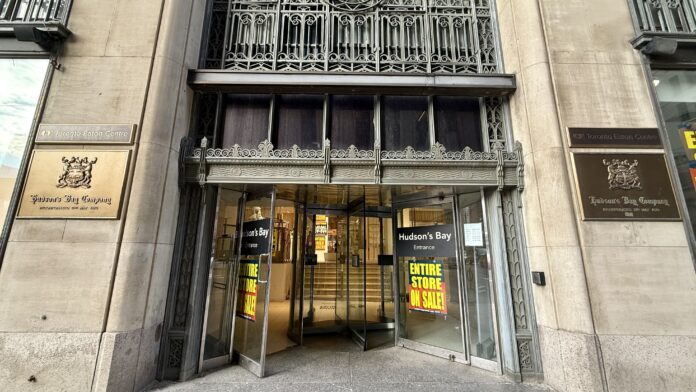
The YM transaction is part of a larger strategy by HBC to dispose of its real estate interests and generate liquidity for stakeholders. HBC has closed all 80 Hudson’s Bay department stores, 13 Saks OFF 5TH stores, and three Saks Fifth Avenue stores in Canada following its entry into creditor protection earlier this year.
The company owes nearly $1 billion to lenders and trade creditors, making asset sales a critical component of its restructuring plan. According to Alvarez & Marsal, the court-appointed Monitor, a total of 39 properties were offered for sale earlier this year, attracting a dozen bidders.
Among the most high-profile bidders is B.C. billionaire Ruby Liu, whose name has dominated headlines in recent weeks.
Weihong (Ruby) Liu in front of the Court House at 330 University Avenue in Toronto on June 23, 2025. Photo: Craig Patterson
The Ruby Liu Saga: A Bidder Under Fire
Ruby Liu initially made waves by acquiring three former Hudson’s Bay leases at malls she owns — Woodgrove Centre in Nanaimo, Mayfair Shopping Centre in Victoria, and Tsawwassen Mills in South Delta — for $6 million. Those transfers were approved by the court last month, returning the spaces to Liu-controlled properties.
However, her ambitions did not stop there. HBC selected Liu as the preferred bidder for 25 additional leases across Canada, positioning her to launch a new department store concept bearing her name. Liu has described her vision as a family-oriented shopping destination blending retail, dining, and entertainment.
Despite these aspirations, landlords have fiercely opposed the proposed transaction. Court filings reveal concerns that Liu has not yet submitted a credible or detailed business plan. The situation escalated during a recent hearing when Liu appeared without legal counsel or supporting documentation, prompting Justice Peter Osborne to adjourn proceedings.
“I not only urge but recommend in the strongest terms that you retain legal representation,” Justice Osborne stated, rescheduling the hearing for August 28. Until then, the fate of the 25 leases remains uncertain, creating heightened anxiety among creditors eager for resolution.
Mounting Costs and Tight Timelines
Delays in approving major lease transactions are proving costly. The Monitor estimates that maintaining HBC’s dark stores costs at least $4.7 million monthly in rent, property taxes, utilities, and related expenses. These carrying costs erode potential recoveries for creditors with every passing day.
In its latest motion record, HBC requested an extension of creditor protection from July 31 to October 31, citing the need for additional time to finalize the YM and IC transactions, secure approval of the Liu deal, and auction valuable corporate art holdings.
“The requested stay extension is necessary to preserve value for stakeholders and avoid a disorderly liquidation,” HBC’s counsel at Stikeman Elliott LLP argued in court filings.
Former Hudson’s Bay store at Metropolis at Metrotown in Burnaby, BC. Photo: Stephen A. Braverman via X/formerly Twitter
Other Lease Sales Underway
While YM’s deal and Liu’s proposal dominate headlines, other transactions have also emerged. Ivanhoe Realties Inc., an affiliate of major landlord Ivanhoe Cambridge, has agreed to pay $20,000 for the lease of a 132,000-square-foot former Hudson’s Bay store at Metropolis at Metrotown in Burnaby. Given Ivanhoe Cambridge’s ownership of Metrotown, the deal effectively returns the property to its landlord.
This nominal purchase price highlights a key reality: in many cases, landlords prefer to regain control of their spaces rather than allow uncertain operators to take over, particularly when anchor tenant stability influences overall mall performance.
YM’s expansion signals confidence in the outlet and value-driven retail segment, even as department store operators struggle to adapt to shifting consumer behaviours. By acquiring these former Saks OFF 5TH sites, YM gains immediate access to prime outlet locations, a format aligned with its portfolio of accessible fashion brands such as Urban Planet, Bluenotes, West49, and Suzy Shier.
“Although our net sales and comparable store sales for fiscal 2025 are lower than fiscal 2024, when excluding the effect of third-party jewelry brand movement, comparable store sales are positive year-over-year, as a result of a strong retail performance and product offering particularly in our third-party branded timepieces. In fiscal 2025, we opened two new stores under the TimeVallée and Birks brands and continued to benefit from the fiscal 2024 renovations in our Chinook and Laval locations. These initiatives along with our recent announcement of the acquisition of the watch and jewelry business of European Boutique will continue to generate greater sales and contribute to improve our results,” said Jean-Christophe Bédos, President and Chief Executive Officer of Birks Group.
Image: Jean-Christophe Bédos
“I would like to thank our teams for their tireless efforts. The results achieved in fiscal 2025 are a testament to our commitment to our customers and I am grateful for the unwavering efforts of all our employees and the implementation of various initiatives during this past year to enhance our product offering and customer experience.”
For the fiscal year, Birks reported net sales of $177.8 million, a decrease of $7.5 million or 4.0%, from the comparable fiscal year ended March 30, 2024. Comparable store sales for fiscal 2025 decreased by 3.4% compared to the corresponding period in fiscal 2024.
“The decrease in net sales and comparable store sales is mainly due to lower sales of branded jewelry due to the exit of a jewelry brand from two stores. When excluding the third-party jewelry brand movement, the comparable store sales increased by 6.9%, mainly driven by timepiece sales. The Company reported gross profit of $66.3 million, or 37.3% of net sales, compared to $73.6 million, or 39.7% of net sales in fiscal 2024, due to lower sales volume resulting from the exit of a jewelry brand from two stores. Gross profit as a percentage of sales for fiscal 2025 was 37.3%, a decrease of 240 basis points from the gross profit as a percentage of sales of 39.7% for fiscal 2024 as a result of the sales mix with decreased sales from third-party branded jewelry, as well as a foreign exchange loss,” it said.
Birks Group is a leading designer of fine jewelry and an operator of luxury jewelry, timepieces and gifts retail stores in Canada. The company operates 17 stores under the Maison Birks brand in most major metropolitan markets in Canada, one retail location in Montreal under the Birks brand, one retail location in Montreal under the TimeVallée brand, one retail location in Calgary under the Brinkhaus brand, one retail location in Vancouver under the Graff brand, one retail location in Vancouver under the Patek Philippe brand, four retail locations in Laval, Ottawa and Toronto under the Breitling brand, four retail locations in Toronto under the European Boutique brand, one retail location in Toronto under the Omega brand and one retail location in Toronto under the Montblanc brand. Birks was founded in 1879 and has become Canada’s premier designer and retailer of fine jewelry, timepieces and gifts.
Here is Birks’ financial overview for the fiscal year ended March 29, 2025:
Total net sales for fiscal 2025 were $177.8 million compared to $185.3 million in fiscal 2024, a decrease of $7.5 million, or 4.0%. The decrease in net sales in fiscal 2025 was primarily driven by the results of the Company’s retail channel. Net retail sales in fiscal 2025 were $7.3 million lower than fiscal 2024, primarily due to the decrease in third-party branded jewelry sales, following the exit of a jewelry brand from two stores, partially offset by an increase in branded timepiece sales throughout the retail network;
Comparable store sales decreased by 3.4% in fiscal 2025 compared to fiscal 2024 mainly due to lower third-party branded jewelry sales following the exit of a jewelry brand from two stores, partially offset by an increase in third-party branded timepiece sales and an increase in average sales transaction value. When excluding the third-party jewelry brand movement, the comparable store sales increased by 6.9%, mainly driven by timepiece sales;
Total gross profit for fiscal 2025 was $66.3 million, or 37.3% of net sales, compared to $73.6 million, or 39.7% of net sales, in fiscal 2024. This decrease in gross profit was primarily due to the decreased sales volume experienced during fiscal 2025, due to third-party branded jewelry sales following the exit of a jewelry brand from two stores, and a foreign exchange loss due to the strengthening of the U.S. dollar, partially offset by the increased sales of third-party branded timepieces. The decrease of 240 basis points in gross margin percentage resulted primarily from the sales mix with decreased sales from third-party branded jewelry, as well as a foreign exchange loss, partially offset by an increase in branded timepiece sales;
SG&A expenses in fiscal 2025 were $59.5 million, or 33.5% of net sales, compared to $65.7 million, or 35.5% of net sales, in fiscal 2024, a decrease of $6.2 million. The main drivers of the decrease in SG&A expenses in fiscal 2025 include lower occupancy costs ($2.7 million) mainly due to store closures and store lease modifications, lower marketing costs ($2.3 million) mainly due to lower brand development initiatives, lower compensation costs ($0.5 million) mainly due to lower sales volume and head count reductions, lower general operating costs ($0.4 million) and lower non-cash based compensation expense ($0.3 million) mainly due to fluctuations in the Company’s stock price during the fiscal year. As a percentage of sales, SG&A expenses in fiscal 2025 decreased by 200 basis points as compared to fiscal 2024, reflecting the Company’s focus on cost management and containment;
The Company’s adjusted EBITDA for fiscal 2025 was $9.2 million, a decrease of $0.8 million, compared to adjusted EBITDA of $10.0 million for fiscal 2024;
The Company’s reported operating loss for fiscal 2025 was $5.5 million, a decrease of $6.7 million, compared to a reported operating income of $1.2 million for fiscal 2024. The operating loss in fiscal 2025 includes an impairment of long-lived assets of $4.6 million related to the write-down of capitalized software costs associated with the delay in completing the implementation of the Company’s ERP system;
The Company’s recognized interest and other financing costs were $9.7 million in fiscal 2025, an increase of $1.7 million, compared to recognized interest and other financing costs of $8.0 million in fiscal 2024. This increase is mainly due to an increase in the average amount outstanding on the amended credit facility, additional borrowings, and a foreign exchange loss of $1.0 million in fiscal 2025 versus a foreign exchange gain of $0.2 million in fiscal 2024 on our U.S. dollar denominated debt;
The Company recognized a net loss for fiscal 2025 of $12.8 million, or $0.66 per share, compared to a net loss for fiscal 2024 of $4.6 million, or $0.24 per share.
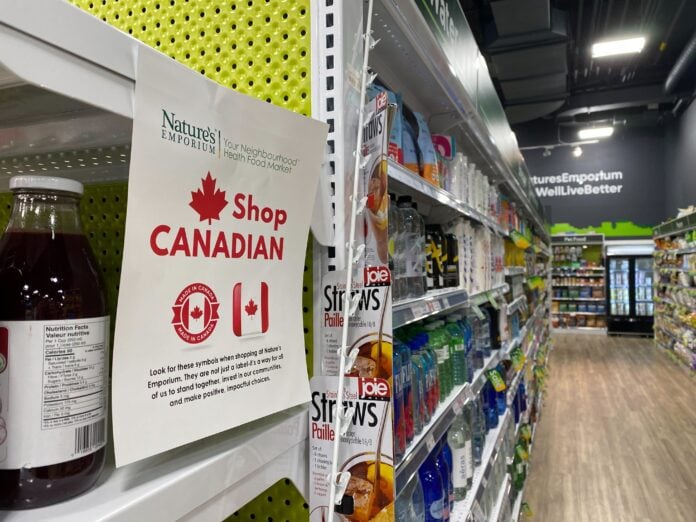
Shop Canadian/Made in Canada/shop local at a grocery store. Photo: Dustin Fuhs
In recent months, Canadian grocery stores have often felt like a year-round Canada Day celebration. Maple leaves were everywhere—on packaging, displays, and promotional signage. But beneath this patriotic imagery, a deeper and more important question emerged: Where is our food really coming from?
This growing consumer curiosity has sparked a remarkable rise in public awareness around food origin labelling. Canadians are becoming more familiar with the legal distinctions between “Product of Canada,” “Made in Canada,” and “Prepared in Canada.” According to the Food and Drugs Act, all food labels in this country must be truthful and not misleading or likely to create a false impression. The rules are clear. “Product of Canada” requires that at least 98% of the ingredients and processing be Canadian. “Made in Canada” means the last substantial transformation took place here, and “Prepared in Canada” refers to food that was processed, packaged, or handled domestically—regardless of where the ingredients originated. This clarity has helped consumers make more informed choices, which is a step in the right direction.
This heightened vigilance has also coincided with a wave of consumer nationalism, fueled in part by geopolitical tensions and anti-American sentiment. Despite the dominance of U.S.-owned retailers like Walmart, Costco, and Amazon in our marketplace, many Canadian consumers made a conscious effort to avoid American food products. The impact was real. According to the latest data from NielsenIQ, the volume of American food products sold in Canada fell by 8.5% over just a few months. In the retail food sector, that kind of shift is massive and rarely seen outside of crisis events.
The speed and scale of this transformation left many grocers scrambling. Procurement strategies that once relied heavily on U.S. supply chains were suddenly under pressure, and origin labelling at store level became noticeably inconsistent. At first, some of the missteps—such as maple leaf symbols displayed next to imported goods—were attributed to logistical oversight. Given the time lag between promotional planning and in-store execution, some leeway was understandable.
But six months on, excuses no longer hold. The persistence of misleading displays and inaccurate origin claims has crossed the line from error into misrepresentation. Instances such as almonds or oranges being labeled as Canadian products—and price adjustments happening swiftly after customer complaints—raise serious concerns. This is textbook “maple-washing”: the act of invoking national symbols or language to imply domestic origin, even when the product clearly isn’t Canadian.
And Canadians are increasingly calling it out. The Canadian Food Inspection Agency (CFIA) received 97 complaints related to product origin claims between November 2024 and mid-July 2025. It conducted 91 investigations and confirmed 29 violations. That is an unusually high level of regulatory activity in such a short span, and it signals a growing lack of tolerance for deceptive marketing in the grocery sector.
Retailers must recognize that this isn’t business as usual. Canadians have shown tremendous solidarity in supporting homegrown products during a time of economic strain and heightened food insecurity. The least the industry can do in return is uphold rigorous standards in product labelling and merchandising. This is not about nationalism—it’s about trust. In a market increasingly driven by transparency and authenticity, misleading your customers is not just unethical; it’s bad economics.
Consumers who encounter questionable food origin claims should report them directly to the CFIA or to the retailer’s customer service. The CFIA typically investigates documented complaints within 30 days. But the onus should not be on shoppers to police the aisles. It’s time for grocers to meet the moment with the same accountability they now expect from suppliers, regulators, and consumers alike.
After months of consumer-led vigilance, the burden now falls squarely on retailers to stop maple-washing once and for all.
Canadian retail sales in May paint an intriguing picture of consumer behaviour and economic trends, with All Stores rising 4.4% YOY, and All Stores Less Automotive, Food, and Pharmacies, growth was an even more robust 7.1% YOY. This performance comes against the backdrop of significant shifts in the retail landscape, including the closure of the last Hudson’s Bay stores on June 1, which may have drawn nostalgic shoppers and increased traffic in surrounding areas. Meanwhile, the ongoing conversation on tariff tensions continues to loom over consumer sentiment.
Supermarkets and other Grocery Stores saw a healthy 6.9% YOY increase, with Loblaw’s reporting particularly strong Q2 results, including a 5.4% rise in revenue and 3.5% same-store sales growth. This performance is notable given that May 1, 2024, marked the start of a Loblaw’s boycott. Ironically, the boycott may have inadvertently boosted YOY comparisons, as consumers returned to normal shopping patterns this year. It’s also possible that inflationary pressures and higher food prices contributed to the revenue growth, though this isn’t necessarily a sign of increased consumer purchasing power.
Conversely, Convenience Stores continue to struggle, with sales down -7.7% YOY and -5.6% YTD. Changing consumer behaviour is at the heart of this decline. Reports suggest that sales of traditional convenience store staples like tobacco and lottery tickets are falling, which, while positive from a public health perspective, presents challenges for the businesses reliant on these categories. Additionally, inflation has made convenience store pricing less attractive compared to larger retailers. As consumers tighten their belts, they appear to be prioritizing value over convenience.
The standout performer in May was the Jewellery, Luggage, and Leather Goods category, which soared 20.4% YOY. While this growth is eye-catching, it’s likely inflated by the addition of new retailers or operators to the category, rather than a genuine surge in consumer spending. Given the economic uncertainty and the post-pandemic travel boom that already occurred, it’s hard to imagine consumers suddenly splurging on these discretionary items.
In fact, current travel trends may be dampening demand for luggage. With ongoing travel boycotts to the U.S. and rising costs of international travel, many Canadians are opting for domestic vacations or canceling trips altogether. This would naturally limit the need for new luggage. The growth in this category, therefore, raises questions on whether it reflects structural changes in the retail landscape rather than true consumer behaviour.
As we proceed into the final month of summer, several questions come to mind for the retail sector and for JCWG:
What impact will vacant Hudson’s Bay spaces have on foot traffic in shopping centres?
What innovative experiences can shoppers expect from the new Ruby Liu stores?
Will the trend of summer staycations continue to drive growth in Canadian retail?
How are YOU adapting to the challenges of major anchor tenant vacancies in shopping centres?
Retail Sales by Product Category, Same Month Comparison
Sales for the Month of May
May-25
May-24
YOY
All Stores
76,479,464
73,246,319
4.41%
Motor Vehicle and Parts Dealers
22,027,393
21,105,126
4.37%
Gasoline Stations
6,322,578
7,022,737
-9.97%
All Stores Less Automotive
48,129,493
45,118,456
6.67%
Food and Beverage Stores
14,041,424
13,420,965
4.62%
Supermarkets and Other Grocery Stores*
10,089,075
9,448,356
6.78%
Convenience Stores
722,890
783,489
-7.73%
Specialty Food Stores
988,608
929,333
6.38%
Beer, Wine and Liquor Stores
2,240,852
2,259,787
-0.84%
Health and Personal Care Stores
6,210,307
5,658,393
9.75%
All Stores Less Automotive, Food, and Pharmacies
27,877,762
26,039,098
7.06%
General Merchandise Stores
10,386,334
9,846,684
5.48%
Furniture, Home Furnishings, Electronic and Appliance Stores
3,782,880
3,495,373
8.23%
Furniture Stores
1,322,693
1,175,700
12.50%
Home Furnishings Stores
774,949
742,438
4.38%
Electronics and Appliance Stores
1,685,238
1,577,235
6.85%
Clothing and Accessories Stores
4,009,893
3,630,648
10.45%
Clothing Stores
3,072,312
2,775,750
10.68%
Shoe Stores
457,251
455,778
0.32%
Jewellery, Luggage and Leather Goods Stores
480,330
399,120
20.35%
Sporting Goods, Hobby, Book and Music Stores
4,321,478
3,963,343
9.04%
Building Material and Garden Equipment
5,377,178
5,103,049
5.37%
Miscellaneous Store Retailers
2,915,920
2,613,910
11.55%
Cannabis Retailers
485,421
434,457
11.73%
Retail Sales by Store Category, Year to Date Comparison
Year-to-Date Sales Ending May
May-25
May-24
YTD
All Stores
330,709,784
315,940,862
4.67%
Motor Vehicle and Parts Dealers
94,802,869
87,995,661
7.74%
Gasoline Stations
30,217,886
31,304,219
-3.47%
All Stores Less Automotive
205,689,029
196,640,982
4.60%
Food and Beverage Stores
63,148,214
61,291,202
3.03%
Supermarkets and Other Grocery Stores*
46,001,282
44,288,741
3.87%
Convenience Stores
3,244,778
3,436,543
-5.58%
Specialty Food Stores
4,388,177
4,081,272
7.52%
Beer, Wine and Liquor Stores
9,513,979
9,484,647
0.31%
Health and Personal Care Stores
29,407,635
27,265,792
7.86%
All Stores Less Automotive, Food, and Pharmacies
113,133,180
108,083,988
4.67%
General Merchandise Stores
43,462,130
41,776,547
4.03%
Furniture, Home Furnishings, Electronic and Appliance Stores
St. Laurent Shopping Centre in Ottawa (Image: Dustin Fuhs)
Morguard has announced a series of revitalization efforts, new store openings, and digital enhancements at Ottawa’s St. Laurent Shopping Centre, which are set to roll out throughout 2025.
As one of Ottawa’s premier retail destinations, these updates reflect Morguard’s commitment to in-person shopping, community connection, and delivering a dynamic experience for visitors, said the real estate company.
In early August, Sephora will launch an impressive new build in the Centre’s fashion corridor. Adding to the excitement, St. Laurent will introduce a first-to-Ottawa flagship concept that combines Bikini Village and La Vie en Rose into a newly renovated and integrated dual-storefront space. This innovative layout will bring a modern and seamless shopping experience to local consumers. The opening of the flagship store concept is slated for August, it said.
Later this fall, H&M will open a brand-new large-format store offering both home and fashion collections. These additions join a diverse tenant mix that already includes popular retailers such as Browns, Lush, Bath & Body Works, Aldo, Roots, and more, added Morguard.
Amy Rozario
“As brands continue to invest in physical retail, we are proud to bring new concepts and elevated experiences to the community,” said Amy Rozario, General Manager, St. Laurent Shopping Centre. “This transformation goes beyond retail and reflects our broader strategy to create an energetic destination for the Ottawa community while offering a variety of experiences.”
To further enhance the experience, Morguard said St. Laurent is expanding its digital presence with web features such as: The ShopList, an AI-driven guided product discovery tool that enhances the way shoppers search for local products along with the installation of large-format media screens throughout the property. A new screen at Entrance 1 will anchor the upgrades, offering vibrant promotional displays and community-focused content.
Morguard said St. Laurent will continue its investment in local partnerships. Collaborations with Atlético Ottawa soccer team, Ottawa Festivals, and other community organizations will bring engaging programs and events to the Centre throughout the year. With free parking and a convenient central location, St. Laurent remains a key destination for residents and visitors, it said.
John Ginis
“St. Laurent Centre has long played an important role in our portfolio, and we are pleased to see its ongoing growth and innovation,” said John Ginis, Vice President, Asset Management, Morguard. “As we continue to develop, own and manage a wide range of properties in Ottawa and across the country, these investments into enhancing the Centre will elevate it as a vibrant community hub and priority destination.”
Centrally located in Ottawa with visibility and direct access onto Highway 417, Ottawa’s major east-west route, St. Laurent is an approximately 870,000 square foot regional shopping centre which welcomes 7.5 million visitors annually. St. Laurent has over 175 stores.
Morguard Corporation is a major North American real estate and property management company. It has extensive retail, office, industrial, hotel and residential holdings owned directly and through its investment in Morguard Real Estate Investment Trust and Morguard North American Residential REIT. Morguard also provides real estate management services to institutional and other investors. Morguard’s owned and managed portfolio of assets is valued at $18.7 billion.
Restaurants Canada says it welcomes and supports the collective call by Canada’s Premiers at this week’s Council of the Federation meeting for a more regionally responsive, transparent, and effective immigration system.
“Labour shortages are having a devastating impact on the foodservice industry in Canada. Our sector employs 1.2 million Canadians, many of whom are youth, but those jobs are at risk if hard-to-fill and skilled positions, like cooks, remain vacant,” said Kelly Higginson, President and CEO, Restaurants Canada.
Kelly Higginson
“We urge the federal government to respond to the premiers’ call to reinstate Provincial and Territorial Nominee Program (PTNP) allocations to ensure access to economic migrants. With more than 78,000 job vacancies, current immigration levels threaten the viability of many restaurants, particularly in rural, remote and tourist areas. It is essential that foodservice be permitted to provide jobs for newcomers.
“As Canada continues to welcome a significant number of asylum seekers, Restaurants Canada supports automatically granting work permits to them so that they can fully contribute to society and the Canadian economy while their claims are processed. As a major employer of newcomers across the country we have the ability to ensure a smooth transition into employment for asylum seekers. We also share the concerns of the premiers that processing times not just for asylum seekers, but for all immigration streams need to be faster.
Higginson said a collaborative federal-provincial framework that is responsive to regional realities is essential.
“We look forward to continuing this conversation with all levels of government,” she said.