Advertisement
Advertisement
Home Blog Page 417

Walmart Canada back in growth mode

Gonzalo Gebara. Photo by Mario Toneguzzi

Retail giant is back in growth mode, says its President and CEO Gonzalo Gebara.

In an exclusive interview while visiting the company’s fulfillment centre in Rocky View County just outside Calgary, Gebara told Retail Insider the retailer continues to look at ways to grow its business in Canada.

Gonzalo Gebara
Gonzalo Gebara

“We like to say that we are back in growth mode. We are going to be opening stores again. We’re going to continue to invest in our supply chain network . . . That’s very important for us. We want to continue to grow our e-commerce business. We’re going to continue to renovate our stores to bring the best standards for customers to have the best shopping experience. It’s a combination of different areas of focus where we will be continuing to invest so that we can accelerate growth for Walmart in Canada.

“This coming year, we will for sure open one, maybe two. Most, probably two. They will be Supercentres. We believe that the Supercentre concept is where the one-stop shop concept continues to be relevant for Canadian customers.”

Gebara said the company intends to continue to accelerate its e-commerce capabilities so that it can offer customers great options to have their groceries delivered, groceries picked up in the stores, general merchandise delivered or picked up in the stores.

“It’s a combination of resources that we are deploying and capabilities that we’re deploying so that our customers continue to make the choice to come to Walmart,” he added.

The two stores to open in 2025 are in the Toronto area. A new Supercentre will be located in Port Credit. The other location has not yet been announced.

Gebara said the company has approved three new stores for Alberta for the next few years.

Walmart has plans to invest about $300 million in Alberta to build those new stores in Calgary, Fort McMurray, Edmonton as well as modernizing more of its store fleet in the province.

“We are going everywhere in the next few years,” he said.

Customers looking for value and convenience

Gebara said the company is seeing similar patterns that it’s seen in the last 12 to 18 months with customers weighing heavily on value.

“And that’s where Walmart does a good job. We think that we show very good value in the way that we show up for our customers,” he said.

“I think customers also want convenience. They want us to show up in different ways, and we’re trying to offer all the different ways and different channels in which they can connect with Walmart, and I think that’s important. 

Photo by Mario Toneguzzi

“The other thing that I’m seeing is slow but steady improvement in consumer confidence. There’s some general indicators that are moving in the right direction as inflation goes down, interest rates go down. We believe that’s going to bring some positive feelings on the side of consumption, but still, we know that consumer confidence is not at the level where it should be. It’s going to continue to take a while.”

He said Walmart was built on the concept of everyday low prices and “we work very hard to provide low prices for customers everywhere we operate.”

“Canada is a very important market for us. We want to continue to grow here. We want to continue to serve more Canadians,” Gebara explained. “We have a very good business here in Canada and we think it can be even better. We just need to make the right investments, continue to put the customer at the centre of our value proposition and be very aware of their needs and the evolution of their needs so that we can adapt and evolve fast. I think that’s what’s making Walmart around the world do well for all the customers.

“We’re fast in adapting to new trends and then we just need to stay true to our everyday low price philosophy, showing value to our customers, convenience and being a place where customers can trust that they can find everything they want at the lower prices. That’s what we’re doing and that’s what we’re going to continue to do in Canada for at least 30 more years.”

Dealing with union activity

The company has been in the news recently with some of its workplaces looking to unionize.

When asked about that, Gebara said: “We believe that we have a great purpose. And we are all very proud to work for a purpose where we want to give the chance to people to save money and live better. So I think that’s great. All of us who work here we work for that purpose and then we have very strong values. Our values are how we bring our Walmart culture to life.

“And that’s the way we believe that we offer a great experience for all of us, the associates of Walmart. We invest in our associates, we develop ourselves, we provide resources so that we can all build a career at Walmart. There’s many, many examples of lots of associates who joined Walmart just for a job and built a career and many years, decades later, they are leaders of our organization.

“Unfortunately we had some areas of our business that had union activity. We’re disappointed with it. We believe that the best way to connect with our associates is directly and not through an intermediary, but we’re working on it and we will continue to stay true to our values to our leadership principles and continue to support our associates so that they can continue to choose us to be a great place to work.”

Recently, Walmart Canada announced the company is investing an additional $46 million in pay increases and benefit enhancements for eligible supply chain associates.  

“This is the latest step in the retailer’s journey to invest in associates through a combination of wages, leading benefit plans, skills training and education offerings at no cost to the associate,” it said.

Earlier this year, Walmart Canada announced over $145 million in new investments in wages for logistics, fleet and retail associates.

Related Retail Insider articles:

Photo by Mario Toneguzzi

Shoppers Drug Mart to Open at 700 University Ave in Toronto

700 University Avenue in Toronto. Photo: Triovest

In late 2025, Shoppers Drug Mart will unveil a new 17,000-square-foot store on the concourse level of 700 University Avenue in Toronto. The location, nestled in the heart of Toronto’s Discovery District, reflects a strategic expansion designed to cater to the needs of both tenants and visitors in one of Canada’s most prestigious medical and research hubs.

The area is home to major institutions such as Princess Margaret Hospital, Toronto General Hospital, Mount Sinai, The Hospital for Sick Children, Women’s College Hospital and the Toronto Rehabilitation Institute, creating a natural synergy for Shoppers Drug Mart’s service-oriented offerings. The University of Toronto and Queen’s Park are also close by.

Direct Access and Connectivity Enhance Customer Convenience

The new Shoppers Drug Mart store will offer direct street-level access from University Avenue, providing easy entry for pedestrians and commuters. Additionally, the store will connect to Toronto’s PATH network and the Queen’s Park TTC subway station, located on the Yonge-University-Spadina line. This connectivity will make it a convenient stop for both professionals working within the 1.2 million square foot Class ‘A’ office tower and transit riders passing through.

Given the structural constraints of the 700 University Avenue building, creative and thoughtful store planning was essential to bring Shoppers Drug Mart’s vision to life. This development required close collaboration between Shoppers Drug Mart and the building’s management team. Allan Caiado, representing Shoppers Drug Mart, negotiated the lease alongside Bryon Breau of Triovest, the property manager, with Jaimy Hunt of KingSett Capital handling the transaction on behalf of the building’s owner.

About 700 University Avenue: A Class ‘A’ Office Tower

700 University Avenue is more than just an office tower—it is a vital center of innovation and healthcare services in Toronto. The 20-storey building boasts over 1.17 million square feet of office space and 51,500 square feet of retail amenities. Recognized for its sustainability and technological integration, the building holds BOMA BEST® Gold, WiredScore Platinum, and Fitwel® certifications. Located at the intersection of University Avenue and College Street, it offers direct access to public transit and major vehicular routes, making it highly accessible for both tenants and visitors.

In addition to Shoppers Drug Mart’s upcoming store, 700 University Avenue features a range of on-site amenities, including a food court, restaurants, banking facilities, daycare services, and more. The addition of Shoppers Drug Mart will further enhance the building’s offerings, delivering essential health, wellness, and convenience products to a diverse audience in the heart of Toronto.

Additional Retail Leasing Opportunities Available

With the introduction of Shoppers Drug Mart, 700 University Avenue is actively exploring additional retail leasing opportunities. The management is targeting quick-service restaurants, fitness centres, service-oriented businesses, and medical-related uses to further complement the existing tenant mix and meet the needs of those who work, visit, and commute through this key Toronto intersection.

More from Retail Insider:

Black Friday 2024: Canadians Focus on Value Amid Challenges

Black Friday. Photo: Importify

Black Friday 2024 is shaping up as a critical barometer for Canadian retail trends, with consumers navigating high prices, cautious spending habits, and evolving shopping preferences. Insights from David Ian Gray, founder and strategist at DIG360 and Angus Reid Group provide a snapshot of what to expect this year, including high participation rates and an increased focus on value. However, as the retail landscape continues to evolve, new challenges and opportunities are emerging for retailers.

Economic Realities Drive Pragmatic Shopping

David Ian Gray

Economic uncertainty remains a defining feature of the 2024 Black Friday shopping season. Inflationary pressures, interest rate hikes, and stagnant wage growth have made many Canadians more budget-conscious. This caution is evident in their shopping priorities.

“In 2023, 93% of consumers reported being more careful with their spending,” Gray points out. “We expect this trend to continue into 2024, with many Canadians seeking the best savings while maintaining quality within a set budget.”

The broader economic context has influenced retailers as well, with many downgrading their Q4 expectations. While the desire for value is strong, fewer Canadians are splurging on big-ticket discretionary items unless substantial discounts are offered.

High Participation, Uneven Gains for Retailers

Participation in Black Friday shopping is expected to remain robust this year, matching or exceeding the record levels of 2023, when 49% of adult Canadians purchased at least one deal. The timing of Black Friday 2024, falling later in the month, could further boost turnout as it aligns closely with the holiday shopping season.

However, not all retailers will benefit equally.

“Big-ticket purchases will remain limited unless major discounting occurs,” Gray explains. Retailers offering smaller, value-driven promotions may find success, but those relying on higher price points without competitive discounts could struggle to attract consumers.

Deal Fatigue Among Shoppers

While Black Friday is synonymous with steep discounts, Canadian shoppers have grown increasingly dissatisfied with the deals on offer. In 2023, 61% of participants rated the promotions as poor or mediocre, a trend likely to persist this year.

Several factors contribute to this disconnect:

  • Higher Expectations: As Canadians tighten their budgets, the demand for significant discounts has grown, but many retailers are offering only modest reductions.
  • Advertising Shifts: In 2023, many retailers cut back on mass advertising to save costs, which dampened excitement. While advertising efforts have rebounded this year, the depth of discounts remains underwhelming in many cases.
  • Improved Inventory: Stockouts, a major frustration in 2023, are less prevalent this year. This change could improve perceptions of the shopping experience, even if deals don’t meet expectations.

Online Shopping Dominates, With Challenges Ahead

The shift toward online shopping, a long-term trend accelerated by the pandemic, continues to gain momentum. In 2023, 90% of Black Friday shoppers purchased at least one item online, with 46% relying exclusively on e-commerce.

Amazon remains a dominant player, with 57% of Black Friday deal-seekers making at least one purchase from the platform in 2023. Its wide selection, competitive pricing, and convenience have solidified its position as a go-to destination for Canadian shoppers.

However, logistical issues could impact online sales in 2024. Recent port and postal strikes may push some consumers back to physical stores, particularly for last-minute gift buying. This shift could provide an opportunity for brick-and-mortar retailers to regain some lost ground.

Challenges for Local Independent Stores

Despite a growing interest in supporting local businesses, independent retailers struggle to compete during Black Friday. In 2023, only 19% of shoppers made purchases from local stores, citing higher prices and limited selection as key barriers.

The promotional noise of emails, flyers, and advertisements from larger retailers often drowns out local efforts. For independent stores, the challenge lies in differentiating their offerings and emphasizing personalized customer experiences, which can’t be easily replicated by larger competitors.

Gray said that the Canada Post strike could lead to more consumers choosing to shop in physical stores, where they won’t have to worry about shipping.

He also suggests that independent retailers can stand out this Black Friday season by focusing on unique experiences rather than discounts. “By offering special services, seasonal events, or curated features, independents can attract shoppers who are looking for alternatives to the consumerism of Black Friday,” says Gray. “Positioning themselves as a refuge from the promotional frenzy allows them to connect with the growing minority of Canadians seeking more thoughtful and meaningful shopping experiences.”

Self-Gifting Declines as Consumers Tighten Budgets

Self-gifting, once a staple of Black Friday shopping, has seen a notable decline. In 2023, only 37% of deal-seekers purchased items for themselves, down from a consistent 50% in prior years. Gray anticipates this trend will continue in 2024, reflecting a broader pullback in discretionary spending.

“Consumers are prioritizing gifts for others and essential purchases over personal indulgences,” Gray observes. This shift underscores the impact of economic pressures on shopping habits, with Canadians making more thoughtful, needs-based buying decisions.

Physical Stores Adapt to New Realities

While online shopping dominates, physical stores still play a crucial role during Black Friday, particularly for specific categories like apparel, home goods, and electronics. In 2023, 53% of shoppers made at least one in-store purchase, a significant drop from 80% in 2018.

This year, retailers are leveraging experiential elements to draw shoppers back to stores. From exclusive in-store deals to immersive brand experiences, physical retailers are emphasizing what e-commerce cannot replicate. “The tactile experience of shopping, combined with immediate access to products, remains a key advantage for physical stores,” Gray says.

What This Means for Retailers

For retailers, the 2024 Black Friday season presents a mixed bag of opportunities and challenges. Those who adapt to changing consumer expectations by emphasizing value, convenience, and personalized experiences will be better positioned for success.

Retailers that will succeed are doing the following:

  • Deepening Discounts Strategically: While maintaining margins is important, offering meaningful discounts on key items can drive traffic and sales.
  • Enhancing Online Platforms: With online shopping dominating, retailers must prioritize seamless digital experiences, including fast shipping and easy returns.
  • Leveraging Local Appeal: Independent retailers can focus on unique, locally made products and community-driven messaging to stand out.
  • Investing in Inventory Management: Avoiding stockouts and ensuring availability of popular items can mitigate shopper frustration and boost satisfaction.

As the holiday shopping season progresses, Black Friday will serve as a crucial litmus test for consumer behaviour. Gray and DIG360 will release further insights in December, shedding light on emerging trends and offering a clearer picture of what to expect through the end of the year.

“Black Friday 2024 reflects the economic realities Canadians are facing,” Gray concludes. “It’s a pivotal moment for retailers to understand their customers and adapt accordingly.”

More from Retail Insider:

Taylor Swift Concerts Boost Toronto Retail Spending by 45%

Taylor Swift. Photo: Scott A Garfitt/Invision/AP

Taylor Swift’s much-anticipated six-show stop in Toronto as part of her Eras Tour brought more than just music to the city. Over a ten-day period, spending in downtown Toronto surged by an impressive 45% week-over-week, according to data from Moneris, the Canadian commerce provider. The concerts, which concluded on November 23, provided a significant boost for retailers, restaurants, and other businesses, illustrating the power of large-scale events to drive local economies.

Retailers Strike Gold with Taylor Swift-Inspired Shopping

Retailers in downtown Toronto saw the biggest gains during the ten-day period, with clothing stores reporting a 49% increase in spending and accessory and specialty stores seeing a staggering 102% surge. Fans flocked to stores to shop for concert outfits inspired by Taylor Swift’s iconic “eras” or to purchase memorabilia.

“Tourists extending their stay may have added shopping to their itinerary as spending at accessory stores more than doubled, and clothing stores were up over 80 per cent,” said Sean McCormick, Vice President of Business Development and Data Services at Moneris. “This highlights how the spillover effect of such events can benefit businesses beyond the concert venue.”

Downtown malls and standalone boutiques became hotspots for Swifties, while international visitors contributed significantly to these figures. Foreign spending during the period rose by 48%, with U.S. travellers driving 83% of this increase.

Capturing the Eras: A Taylor Swift Photojournalism Showcase” at CF Toronto Eaton Centre. Photo: Cadillac Fairview

Restaurants See a Moderate Boost from Extended Stays

Toronto’s restaurant scene also benefited from the influx of concertgoers, though the growth was more measured than in retail. During the first three concerts, spending at restaurants increased by only 2% week-over-week, reflecting capacity constraints at peak times. However, when the entire ten-day period was considered, restaurant spending rose by 12%, with foreign spending at eateries up by 57%.

“When we look at the tour’s full ten-day run, restaurants saw a more notable 12 per cent increase, with a 57 per cent increase in foreign spend,” McCormick noted. “The concert’s real impact for restaurants wasn’t making the busier days busier, but rather helping fill seats during off-peak days.”

Notably, bakeries saw a 54% growth in spending, suggesting that quick bites were a popular choice for concertgoers seeking convenience before or after the shows.

CF Toronto Eaton Centre (Image: CF)

Entertainment and Hospitality Get a Lift

While Taylor Swift dominated the headlines, her fans also engaged with other forms of entertainment in the city. Spending at cinemas increased by 30%, and theatrical productions saw a 130% boost as visitors sought additional activities during their stay.

Toronto’s hotels reaped the rewards of the increased foot traffic, with overall spending up 16% and foreign spending on accommodations climbing by 45%. The impact of international tourists was evident across the board, underscoring the importance of catering to their needs.

A Broader Economic Impact

The data demonstrates how large-scale events like the Eras Tour can have far-reaching effects on a city’s economy. For businesses, the concerts underscored the importance of being prepared for an influx of tourists. Offering payment solutions like Moneris’ Dynamic Currency Conversion, which allows customers to pay in their home currency, is one way retailers can better accommodate international visitors.

“Across key categories, foreign spend has contributed significantly to increases in overall spend,” McCormick explained. “Being set up to accommodate different currencies can give businesses an advantage by being able to better serve tourists.”

Lessons for the Future

As Toronto moves forward from this high-profile event, the data offers valuable insights for local businesses. The Eras Tour highlighted how sustained activity, spread over several days, can provide opportunities to capitalize on periods of slower foot traffic.

For retailers, restaurants, and other businesses, the takeaway is clear: events that draw tourists are not just about the main attraction but also about the additional experiences visitors seek during their stay.

As Taylor Swift bids Toronto farewell and moves on to her final Eras Tour stop in Vancouver, she leaves behind memories of unforgettable performances and an economic boost that will resonate with local businesses for weeks to come.

More from Retail Insider:

Dax Giunta takes over Boutique Evolution Homme in Montreal

Boutique Evolution Homme in Montreal. Photo: Boutique Evolution Homme

Dax Giunta, a seasoned retail professional with deep roots in Montreal’s menswear community, has officially taken over Boutique Evolution Homme from long-time owner Stéphane Wilford. 

After 32 years at the helm, Wilford, who built the boutique into a standout destination known for its European imports, colourful style, and dedicated clientele, passed the reins to Giunta earlier this fall. Located at 1381 Sainte-Catherine Street East in Montreal’s Village, the store is set to continue evolving under Giunta’s leadership.

A New Chapter for Boutique Evolution Homme

Wilford, who began the business as Joe Blo boutique before transforming it into Evolution par Joe Blo and then Boutique Evolution Homme, dedicated over three decades to establishing a loyal customer base, including members of the city’s artistic community. “Stéphane created something special here. The shop is a destination, and I want to honour that legacy while bringing my own ideas to the table,” said Giunta. The boutique remains true to its roots, offering a curated selection of men’s clothing and accessories, including shirts, shoes, belts, and men’s jewelry.

Giunta is no stranger to the fashion world. He grew up immersed in the industry through his family’s business, Tony Tailleur, which provided custom tailoring and uniforms for Air Canada and Via Rail. “My family lived and breathed menswear,” Giunta recalled. “I’ve always had a passion for clothing, and I’m excited to bring that energy here.” His experience includes stints at luxury retailers such as Holt Renfrew and a successful career in real estate, making his return to retail a natural fit. “When I heard Stéphane was looking to sell, it felt like fate,” he added.

Dax Giunta in Boutique Evolution Homme in Montreal. Photo: Boutique Evolution Homme

Preserving Tradition with a Fresh Perspective

The boutique’s building, dating back to the 1880s, adds to its charm and historical appeal. “It’s like stepping into a piece of Montreal’s history,” Giunta noted. While he purchased the business and not the building itself, he holds a right of refusal should it come up for sale in the future. For now, Giunta is focused on enhancing the boutique’s reputation and ensuring a smooth transition for customers, with Wilford staying on temporarily to introduce him to key clients and suppliers.

“Having Stéphane here to guide me through this period is invaluable,” said Giunta. “His knowledge and connections are unmatched, and it’s been a great collaboration so far.” The pair even plan to undertake a buying trip together in January, highlighting the continuity and strong foundation of the business.

Boutique Evolution Homme in Montreal. Photo: Boutique Evolution Homme

Catering to a Diverse Clientele

Boutique Evolution Homme has carved out a unique niche, serving a predominantly LGBTQ+ clientele while welcoming a broad range of customers. “It’s about creating an inclusive space where everyone feels comfortable,” said Giunta. The boutique’s appeal extends to tourists, who often discover the store while visiting the Village. Giunta emphasized the importance of exclusivity, with each piece being unique. “We don’t repeat styles. When you buy something here, you know it’s truly one-of-a-kind,” he explained.

The boutique offers head-to-toe fashion, including shirts, blazers, jeans, shoes, knits, and accessories. “We’re all about individuality and helping people express themselves through clothing,” Giunta said. He plans to introduce select new collections during the holiday season while retaining the elements that customers love. “I’m not here to change what works—I’m here to enhance it.”

Boutique Evolution Homme in Montreal. Photo: Boutique Evolution Homme

Striking Visual Merchandising and Ambiance

The boutique is known for its eye-catching window displays, which draw in passersby. “Whatever we put in the windows tends to sell out quickly,” Giunta shared. Inside, the shop features unique chandeliers, stone walls, and distinctive light fixtures. “The interior has a character of its own, and it’s part of what makes shopping here special,” he added.

Future Growth and Expansion Plans

Looking ahead, Giunta is exploring potential expansion through pop-up locations in Toronto and Western Canada. “Clients often tell us there’s nothing like this in their cities,” he said. 

However, he remains cautious about e-commerce expansion due to the boutique’s exclusive collections and sizing challenges. “E-commerce is a different beast,” Giunta explained. “Our collections are unique, and sizing can be tricky. We want to ensure clients get the perfect fit, and that’s best done in person.”

Giunta’s extensive retail background gives him a strong foundation for success. “Customer service and personalization are at the heart of what we do,” he said. “Our clients have been incredibly supportive. They’re relieved to see the business continue.”

Boutique Evolution Homme in Montreal. Photo: Boutique Evolution Homme

Building Community Connections

Montreal’s Village remains a vibrant mix of bars, restaurants, and retail, with a few unique shops and residential projects adding to the area’s appeal. Giunta is optimistic about the neighbourhood’s future, even as planned street renovations may cause temporary disruptions. “In the long run, it will make the area even more beautiful,” he said.

For now, Giunta is focused on delivering a strong holiday season, with plans for future buying trips and strategic marketing initiatives. “This is just the beginning,” he said. “I’m ready to grow, evolve, and continue providing something truly special.”

More from Retail Insider:

Moscot Relocating Toronto Store to Queen Street West

MOSCOT at 153 Cumberland Street in Toronto (Image: MOSCOT)

Moscot, the iconic New York-based eyewear retailer, is relocating its only Canadian storefront from Toronto’s Yorkville to 407 Queen Street West. The move marks a new chapter for the upscale brand.

The family-owned optical brand has operated at 153 Cumberland Street since its Canadian debut in December 2021. Its new Queen Street West location places Moscot in a vibrant, eclectic retail corridor. Known for its bold yellow storefronts, premium eyewear, and storied history, Moscot will target a new audience in this bustling area of Toronto.

Queen Street West: A New Address for Moscot

Relocating to Queen Street West positions Moscot in one of Toronto’s most vibrant retail hubs. Known for its mix of independent boutiques, global brands, and arts scene, the area attracts a diverse demographic of shoppers, including style-conscious locals, tourists, and creatives.

For Moscot, Queen Street West offers an opportunity to connect with a younger, trendier audience while benefiting from high foot traffic. The eclectic nature of the neighborhood aligns with the brand’s artistic heritage, making it a fit for its distinctive eyewear.

Moscot is relocating to 407 Queen St. W. in Toronto where a Kiehl’s store was once located. Image: Apple Maps

The Role of Harry Rosen in Moscot’s Move

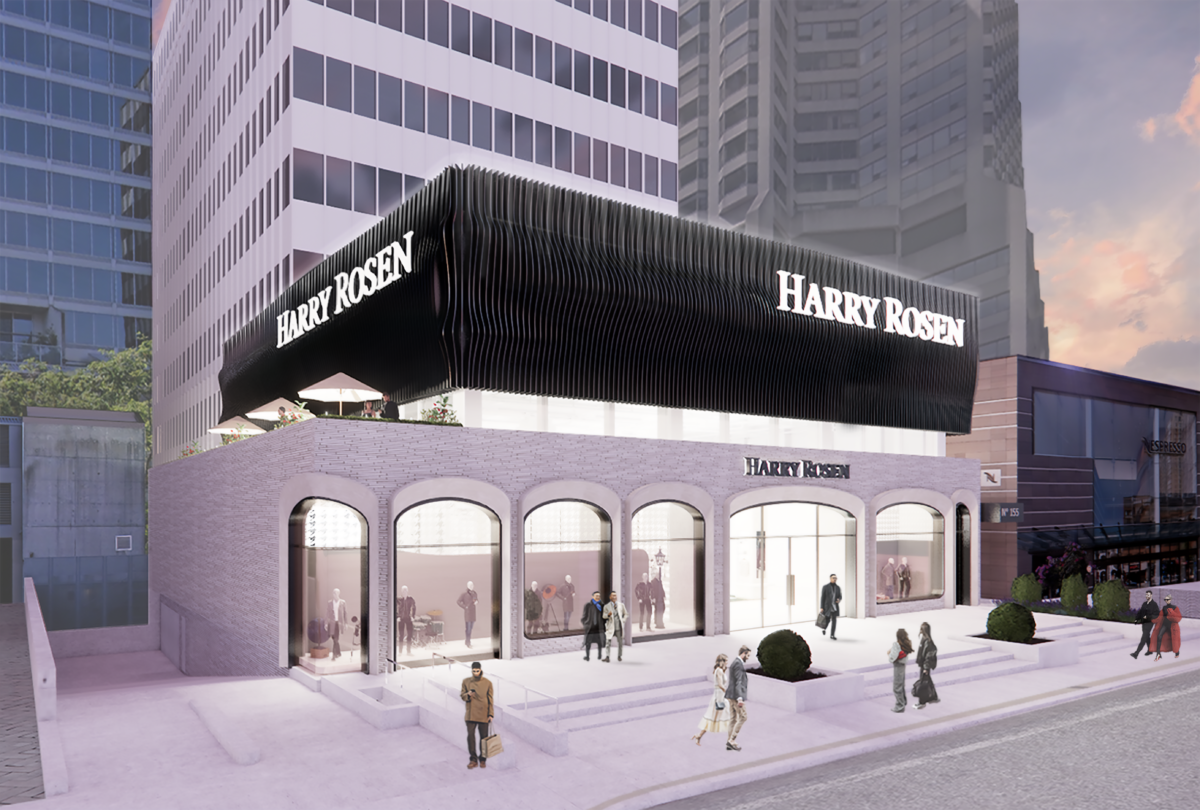
Moscot’s decision to vacate its Yorkville location at 153 Cumberland Street was influenced by the upcoming opening of Harry Rosen’s new flagship store. The luxury menswear retailer is set to occupy 38,000 square feet at the Cumberland Street address. Currently, the podium tenants on the main level. These include Nicolas Menswear, Aveda, and Lululemon, which recently moved to a new flagship at Yonge and Bloor Streets.

Construction on the Harry Rosen flagship will begin in early 2025 as retailers prepare to vacate the commercial podium. 

Future Moscot location on Queen St. in Toronto. Photo: Dustin Fuhs
Rendering of the new Harry Rosen flagship store at 153 Cumberland Street, opening in the spring of 2026. (Rendering: dkstudio architects inc)

A Storied History: Over 100 Years of Moscot

Moscot’s journey began in 1915 when Hyman Moscot started selling eyeglasses from a pushcart on Manhattan’s Lower East Side. By 1925, his son Solomon took over, moving the business to 118 Orchard Street in 1935 and introducing its now-iconic bright yellow storefront under the name “Sol Moscot.”

In 2003, the retailer streamlined its branding to “Moscot” as it began to expand internationally under the leadership of Harvey and Kenny Moscot, Solomon’s grandsons. Today, the fifth generation of the Moscot family continues to drive the business forward. Zach Moscot is at the helm of its eyewear design.

The brand now boasts 28 permanent stores in cities such as New York, London, Paris, Milan, Amsterdam, and Tokyo, along with a presence in Asia through pop-up locations. Plans to open stores in Vienna, Munich, and Osaka signal Moscot’s continued global growth.

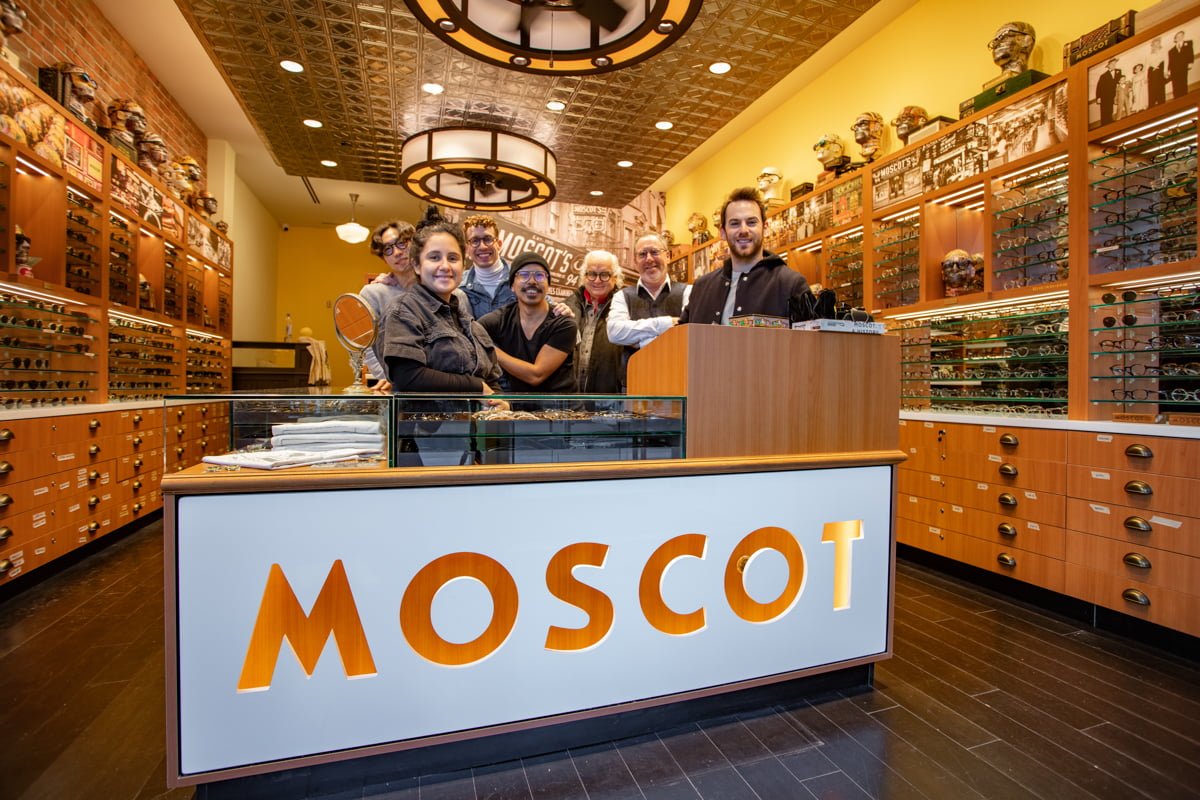
Inside MOSCOT Toronto at 153 Cumberland Street (Image: MOSCOT)

Premium Products and Celebrity Appeal

Moscot is renowned for its distinctive eyewear, crafted from high-quality materials such as beta-titanium and metal. With prices reaching several hundred dollars per pair, Moscot frames appeal to consumers who value timeless style and exceptional craftsmanship.

The brand’s eyewear become a favourite among celebrities. Icons like Andy Warhol, Truman Capote, and Johnny Depp have been counted among its fans. Moscot has also collaborated with several designers since 2008 to create exclusive collections, enhancing its appeal among discerning consumers.

A Competitive Canadian Eyewear Market

Moscot’s relocation comes as the Canadian eyewear market becomes increasingly competitive. Dominated by major players like EssilorLuxottica, which owns brands such as Ray-Ban and Oakley, the industry also sees strong competition from boutique retailers like Bailey Nelson, BonLoook, Ollie Quinn and others.

In addition to facing competition from other premium brands, Moscot must navigate a market undergoing significant consolidation. Smaller independent optical retailers are being acquired, and mid-range brands are expanding aggressively. Moscot’s ability to differentiate itself through its rich history, unique designs, and premium craftsmanship will be critical in standing out in this crowded landscape.

More from Retail Insider:

SENTALER launches first-ever pop-up shop at CF Sherway Gardens (Photos)

Canadian luxury outerwear brand, SENTALER, is launching its first pop-up in partnership with Cadillac Fairview at the CF Sherway Gardens.

The pop-up runs from November 28 until December 2 and it will include the brand’s women’s, men’s, and accessory collections, and offer its clients an exclusive gift of a Baby Alpaca Classic Scarf, valued at $250 CA, with every purchase.

Bojana Sentaler
Bojana Sentaler

“You asked, and we listened. SENTALER is coming to Sherway Gardens! I am excited to offer our luxury outerwear collections to more of our clients in the west end,” said Bojana Sentaler, President and Creative Director, SENTALER

“SENTALER has always been a destination for our network, with many clients travelling from other regions and provinces to visit our Flagship store in Yorkville. After identifying the physical demand for SENTALER in the west end, we are looking forward to giving our clients the opportunity to see, touch, try and feel the SENTALER experience with this pop-up.

“While we have had a very strong online presence for many years through Sentaler.com, we understand that our clients want the full in-person brand experience – to feel the exceptional softness, warmth and impeccable craftsmanship of SENTALER.”

Founded in 2009 by Bojana Sentaler, the brand is designed for the classy and sophisticated woman and man who enjoy fine luxury, longevity, and timeless silhouettes.

Sentaler said the location is in the entrance between Indigo and Harry Rosen.

“It’s a prime location. It’s a beautiful location. We’re very, very excited to have a great weekend and to greet our clients in the west end.  . . . It’s an actual storefront. We made it beautiful. So we’re inviting everybody to come, try, see, touch, feel the coats, and experience the brand in the west end.

“Our flagship in Yorkville is very successful. We have definitely seen a demand for in-person shopping over the last couple of years. Clients definitely want to experience the brand to try on the coats, to see them, to feel them, to touch them. I personally grew up in Etobicoke. So I am from the west end and I have a big following in Etobicoke and we have just seen a very big demand for SENTALER in this area in the West End. And we wanted to Be able to bring the SENTALER experience to our clients. Sherway is a very central mall for our clients in the West end, including Mississauga, Oakville, Caledon, Etobicoke.

“And we’re hoping that through this pop up they would be able to conveniently experience the brand. I know sometimes driving downtown through the traffic can be tough. We wanted to make it more convenient for them to be able to experience the brand in person.”

More physical locations being planned for the future

Sentaler said more pop-ups are in the brand’s plans for the future.

“Our future plan is to continue our international expansion and we have plans to continue with physical store expansions, as well as pop-ups. Considering that we’re an outerwear brand, the fall winter months make a lot of sense for us to pop up. So our plan is to continue to be able to reach our clients globally through physical locations and through more pop-ups.”

The pop-up at CF Sherway Gardens will offer the full SENTALER and SENTALER MEN limited edition Fall Winter 2024/25 alpaca coats, jackets and cape collections, alongside a wide variety of cold weather accessories including 100% alpaca beanies and the Signature Ribbed #SENTALER4SickKids hats, scarves and gloves that benefit SickKids Foundation.

SENTALER is designed for longevity and meticulously crafted in the world’s finest fabric, Peruvian alpaca, with attention to every detail. SENTALER continues to use only sustainable, animal-friendly and ethically sourced fibers and shearlings, natural cupro lining, and logo-engraved corozo buttons in all of its collections. 

Some of the world’s most influential women and men continuously appear in SENTALER coats, including Royalty, political figures, supermodels, A-List Hollywood celebrities and athletes.

Related Retail Insider articles:

Only 4% of small businesses expect stronger sales as a result of the temporary GST/HST holiday: CFIB

Photo- Alexandra Maria

Small businesses do not support the proposed two-month GST/HST holiday, according to a flash survey conducted by the Canadian Federation of Independent Business (CFIB). 

Small firms have major concerns and questions over the timing, process and administrative costs associated with the change.  Over 3,500 small firms responded to this survey conducted on November 26-27, 2024, said the national organization on Thursday.

Dan Kelly

“A majority of small firms oppose the planned GST/HST holiday – and this rises to 62% among those required to implement it,” said Dan Kelly, CFIB president. “Only 4% of small business owners believe they will have stronger sales as a result, with 66% of respondents suggesting it will simply shift sales into the tax holiday period.

“Instead of a complicated, temporary tax holiday, small businesses would far rather government focus on permanent tax changes, such as cancelling the 19% increase in the carbon tax planned for April 1. But if government proceeds with this plan, CFIB is calling on the Department of Finance to give affected small firms a credit of a minimum of $1000 in their GST/HST accounts to cover the administrative and programming costs.

“This legislation was introduced just yesterday – right in the middle of the busiest retail week of the year with Black Friday, Small Business Saturday and Cyber Monday. Small firms – particularly those in retail – do not have the time or resources to effectively make the changes to accommodate this temporary change and very few believe there will be any net benefit.” 

The CFIB is Canada’s largest association of small and medium-sized businesses with 97,000 members across every industry and region. 

The CFIB said small firms in the sectors that will be required to make changes to accommodate the temporary tax holiday report many concerns:

  • 75% say it will be costly and complicated to implement the holiday – small firms report a median of $1000 in additional costs to reprogram their point-of-sale systems to remove and then reinstate the tax;
  • 65% say there is not enough time to implement the change;
  • 71% say big businesses and online giants will have the upper hand in benefitting from the holiday;
  • 68% say it will be difficult to determine which items are temporarily tax-exempt;
  • 66% of retailers of goods subject to the holiday report consumers will delay purchases and 54% believe consumers will return products to repurchase during the holiday period.

The CFIB said the GST/HST holiday does not just affect retailers and restaurants. Manufacturers, producers and distributors who sell exempted items to other businesses will also need to change processes to exempt the sales taxes during the two-month period. Many are unaware of this requirement. 

“CFIB is calling on the government to order the Canada Revenue Agency to forgive the taxes owed, penalties and interests for any good faith errors made by small firms rushing to implement this change,” it said.

CFIB is dedicated to increasing business owners’ chances of success by driving policy change at all levels of government, providing expert advice and tools, and negotiating exclusive savings.

Meanwhile, the CFIB released its Monthly Business Barometer survey on Thursday which showed that the long-term small business confidence indicator reached 59.7 points in November, just shy of its historical average of 60.

Simon Gaudreault

“We’re finally seeing parts of the economy normalize, with some key indicators hinting at a broader economic recovery. Some hard-hit sectors have started displaying optimism levels close to their historical averages, and we’re also seeing improvements on the labour front. We will see how confidence will evolve next month, once the survey captures the impact of the announcement on US tariffs,” said Simon Gaudreault, CFIB’s chief economist and vice-president of research

Andreea Bourgeois
Andreea Bourgeois

“Like consumers, small businesses are left feeling the permanent effects of high prices. So, while inflation is on the right path, there is still a ton of work to do on improving the cost of doing business,” said Andreea Bourgeois, CFIB’s director of economics. “Small Business Saturday is this weekend, and this is another reminder to explore and support your local businesses.”

Across sectors, retail posted a slight increase in its long-term confidence level, reaching 55.9, a significant improvement compared to its 12-month confidence level (40.5) posted a year ago in November 2023, said the report.

Fewer small businesses were reporting challenges with low demand in November, but it remains the primary barrier to business and production growth for nearly half (49%) of small businesses. Although it has shrunk a bit recently, a significant share of businesses (44%) is still slowed down by skilled labour shortages, said the CFIB.

Despite the improvement in some economic indicators, significant roadblocks remain on the road to a full recovery, with historically elevated shares of small businesses reporting challenges with various operating costs. Insurance remains the top cost constraint for a record high share of small businesses (71%) and CFIB will release more findings on the impact of skyrocketing insurance costs on small firms in an upcoming research report this December. Tax and regulatory expenses and wage costs also cause difficulties for 67% and 64% of businesses, respectively, added the national organization.

Related Retail Insider articles:

Whitney Linen in collaboration with Shop Cares Closet

Carolyn Ross
Carolyn Ross

Whitney Linen has popped up at Shop Cares Closet in Toronto for one day (Thursday November 28) in a collaboration that celebrates female-founded brands and a fresh approach to retail—pairing consignment with seasonal pop-ups featuring local designers. 

Cares Closet, founded by Carolyn Ross, is a carefully curated luxury consignment retailer known for its Instagram-based shopping and personalized services like closet clean-outs and personal styling.

Whitney Linen, inspired by summers in the South of France, creates timeless, sustainable pieces for women, men, and the home. Crafted with quality and elegance, these collections embody the ethos of living beautifully in linen.

Whitney Westwood
Whitney Westwood

Whitney Westwood, founder of Whitney Linen, said the concept began in 2011.

“At that point it was very much more into home linens kind of thing. I started working with an actual house fashion designer for a few years and because of my history of being in fashion for a long time, I used to model for years back in in the day. So fashion was very much a part of my upbringing,” she said.

“And my family also brought the first Hermes store to Toronto. So that retail fashion experience was sort of something I always was involved in. That was the beginning and then went more into the fashion line in particular and more sort of clothing and fashion, but really more of a whole lifestyle brand.”

The brand also has a presence in a number of other retailers.

Carolyn Ross
Carolyn Ross

Carolyn Ross, owner of Shop Cares Closet, said the retailer is a pre-loved consignment retail store which has been operating for about two years.

“And we sell contemporary designer and luxury designer brands in excellent condition. I was a buyer for many years. I worked in corporate retail. I worked for Sears before they went under, the Bay, Holt Renfrew. And then I started this about two years ago just for fun. In my closet, I got sick with COVID, was trapped at home and decided it was time to purge the closet and I had posted on my very tiny Instagram with hardly any followers asking people where they suggest I donate my wardrobe and I had about 20 people at the same time saying I’ll buy your stuff and so the concept formed very quickly because seconds later I created an Instagram handle, started posting my personal items and within seconds everything was selling and about two months later I had the business running on its own and I was essentially making more than I did in a year being a buyer for Holt Renfrew,” she said.

“Because I come from that buying corporate retail world, I really want to still focus on brands which is why I love partnering with people like Whitney Linen and other made-in-Canada brands. I think it’s important to bring exposure to these brands as well. Well, they’re not pre-loved but I still think linen falls in the sustainable market category. And I think featuring brands like that and having access to these pop-ups is what makes my business so unique because while we are pre-loved, people still have the opportunity to come and shop these incredible female-run, sustainable-friendly brands.

“I view myself as like not your typical consigner. I try to be your more relatable fashion consigner. It’s like entering into a Holt Renfrew, but at an affordable price but still featuring luxury.”

Westwood said women entrepreneurs these days are sticking together, helping each other, and really building small businesses up.

“I just felt right that it was a good space. We have a lot of cross networks. I think our network really sort of melds together properly and we have the right kind of demographic that we work together well with. And for us, it’s always a great thing – a brand, a Canadian brand, especially when it’s a niche market and it’s Canadian made, it’s really important to get those eyes on you and get out.

“We do pop-ups a lot. It’s sort of that new way of business. I think for a lot of stores and retail outlets. Pop-ups are really great because you’re not taking the overhead needed to have actually a storefront. You’re using the social media side and you’re using the demographics of working with another store retail outlet.”

Whitney Linen is introducing its new resort collection.

Carolyn Ross
Carolyn Ross

“Because it’s the first one we’re doing together, we just really want to bring awareness to the brand to both businesses and show people can collaborate in this market,” said Ross.

“ I think that’s a big thing,” added Westwood. “Collaborations now for everyone is really helpful because to be on your own and trying to tap in through social media, you have certain streams, but it’s really great to kind of collaborate because then you can have access and bring other people and other clients that you have not reached out to, or you don’t have that reach, and then you bring it all together. So together, you’re actually building a better platform and a bigger customer awareness and clients directly.”

Related Retail Insider articles:

Living Beauty launches holiday pop-up at Gaspard 

Luxury beauty brand Living Beauty Inc. is making waves this holiday season with the launch of a holiday pop-up event at Gaspard, located at 886 Queen St. West in Toronto. 

Open from November 28 to December 24, the pop-up will showcase Living Beauty’s curated skincare, beauty, and wellness products alongside Gaspard’s elegant fashion offerings.

Mariam White
Mariam White

“This collaboration is a celebration of luxury and craftsmanship,” said Mariam White, Founder and CEO of Living Beauty Inc. “Gaspard is known for its impeccable French fashion, and we’re thrilled to blend that with our premium beauty and skincare collections in such an iconic retail destination.

“I actually started as a makeup artist and then I got into the business of it. So I had practical experience of working in the field. But I really lucked out. I was in the early stages of medical skin care. 

“Our flagship brand is Biologique Recherche, which is a French brand focused on the successful channels for beauty – spas, salons, plastic surgeons, five-star hotel spas. And we’ve added different niche brands as we’ve grown through the years.”

Pop Up is a Milestone

The pop-up is a prelude to an even bigger milestone for the brand: the opening of Living Beauty’s first physical retail store in Toronto’s Annex in March 2025. Located near Dupont and Christie, the 2,500-square-foot space will feature a retail area and four treatment rooms, and the front of house with all the beauty retail.

“It’s an established neighbourhood. The whole concept behind opening our own retail is we wanted to be small footprint but in a really established neighbourhood where local residents actively feel some ownership in terms of the different stores, being part of the community. We wanted a place where the community would come out and support us.

“Also the location is definitely under-serviced when it comes to professional beauty and beauty in general. So there was an opportunity. And Dupont which is the main street that it is on is developing like crazy. There was an opportunity to get in early.”

Living Beauty, founded in 2015, reflects her vision of an inclusive, results-driven, and community-focused beauty brand. 

“We are a national distributor of niche and cult beauty brands. We have three criteria. Obviously the products have to work, they have to tell a story and they have to be safe. We’re focused on finding those brands.”

Living Beauty
Living Beauty

A Shift for Living Beauty

The upcoming retail store marks a shift for Living Beauty, which has primarily operated as a B2B distributor. White explained that the decision to open a physical location stems from a desire to create a more intimate, service-oriented shopping experience.

“There’s a gap in the market for neighbourhood-based beauty stores that offer expert advice, high-end products, and exceptional services,” she said. “Big retailers and spas often excel in one area but fall short in others. We’re combining our professional expertise with a curated retail environment to fill that void.”

The Gaspard pop-up offers shoppers a chance to discover Living Beauty’s thoughtfully selected products in a festive setting.

 “It’s a unique opportunity to experience the best of beauty and fashion under one roof,” said White.

Looking to the future, White envisions expanding Living Beauty’s footprint beyond Toronto. 

“We see the opportunity in Canada. There are no retail options. As we know, there’s certain giant players in the market and they’ve kind of taken control of beauty. I shop at all of them and I don’t have anything negative to say but I do feel there is an opportunity for something that is just more neighbourhood based, especially when it comes to needing advice, looking for great services. It’s definitely a higher end product,” she said.

“And one thing we recognize is while these retailers are amazing at what they do and a lot of these spas are also incredible in what they do, when they’re a giant retailer they try to do spa services but they don’t do them well and then if they’re a spa they don’t retail enough. They kind of get stuck focused on the professional side. So we’re combining all the expertise that we’ve had and working with retailers. We’re hoping that we will be opening up several locations across Canada because I just think there’s an opportunity.”