Moscot Relocating Toronto Store to Queen Street West

Date:

Share post:

Moscot, the iconic New York-based eyewear retailer, is relocating its only Canadian storefront from Toronto’s Yorkville to 407 Queen Street West. The move marks a new chapter for the upscale brand.

The family-owned optical brand has operated at 153 Cumberland Street since its Canadian debut in December 2021. Its new Queen Street West location places Moscot in a vibrant, eclectic retail corridor. Known for its bold yellow storefronts, premium eyewear, and storied history, Moscot will target a new audience in this bustling area of Toronto.

Queen Street West: A New Address for Moscot

Relocating to Queen Street West positions Moscot in one of Toronto’s most vibrant retail hubs. Known for its mix of independent boutiques, global brands, and arts scene, the area attracts a diverse demographic of shoppers, including style-conscious locals, tourists, and creatives.

For Moscot, Queen Street West offers an opportunity to connect with a younger, trendier audience while benefiting from high foot traffic. The eclectic nature of the neighborhood aligns with the brand’s artistic heritage, making it a fit for its distinctive eyewear.
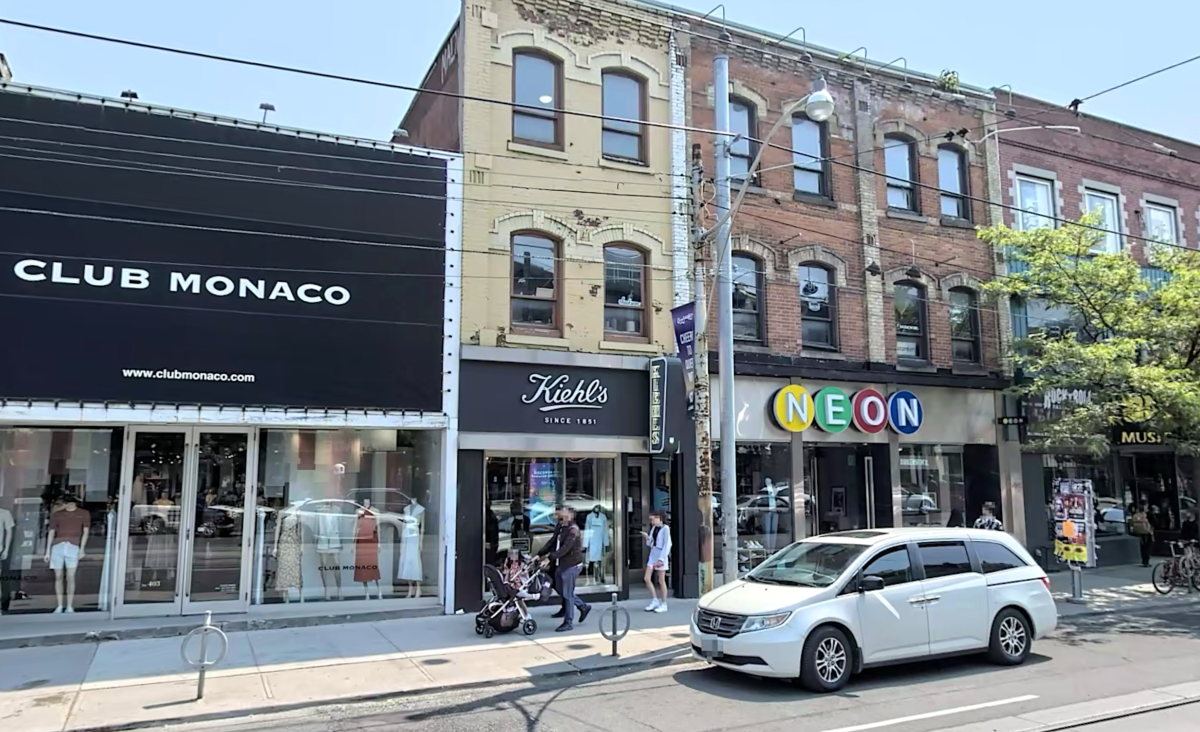
Moscot is relocating to 407 Queen St. W. in Toronto where a Kiehl’s store was once located. Image: Apple Maps

The Role of Harry Rosen in Moscot’s Move

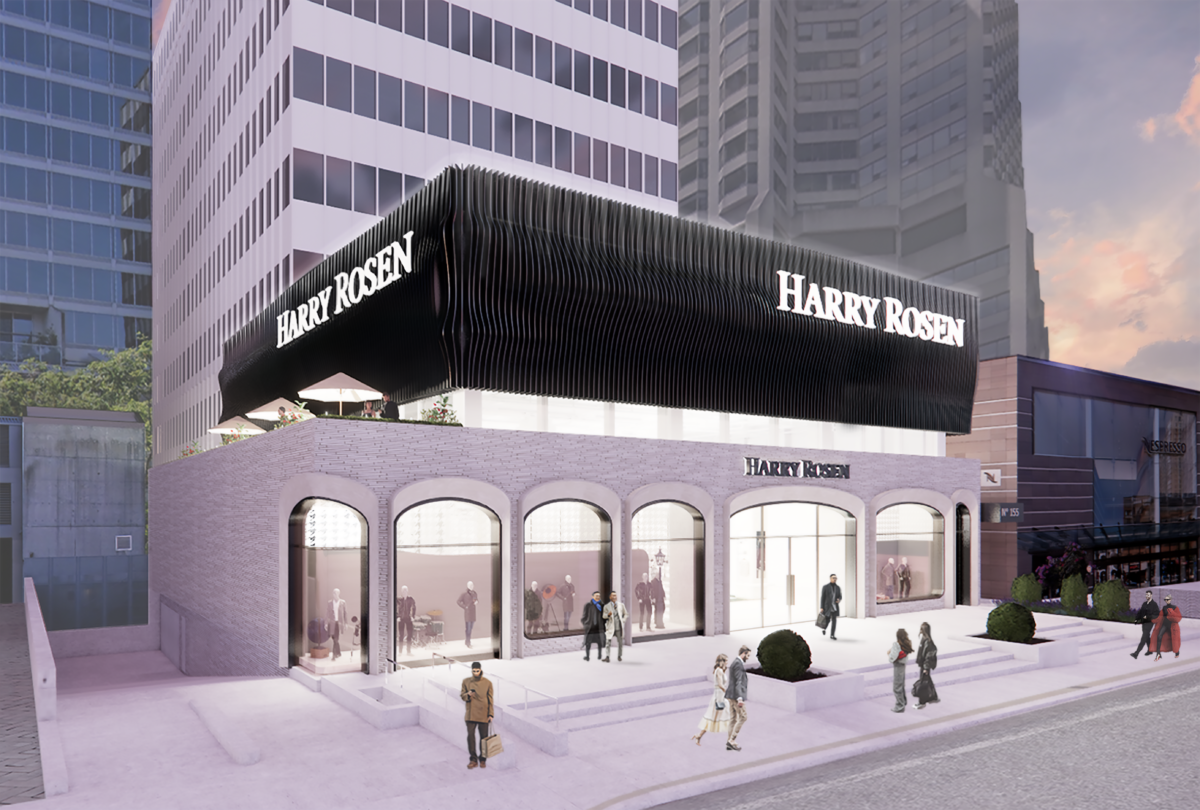
Moscot’s decision to vacate its Yorkville location at 153 Cumberland Street was influenced by the upcoming opening of Harry Rosen’s new flagship store. The luxury menswear retailer is set to occupy 38,000 square feet at the Cumberland Street address. Currently, the podium tenants on the main level. These include Nicolas Menswear, Aveda, and Lululemon, which recently moved to a new flagship at Yonge and Bloor Streets.

Construction on the Harry Rosen flagship will begin in early 2025 as retailers prepare to vacate the commercial podium. 

Future Moscot location on Queen St. in Toronto. Photo: Dustin Fuhs
Rendering of the new Harry Rosen flagship store at 153 Cumberland Street, opening in the spring of 2026. (Rendering: dkstudio architects inc)

A Storied History: Over 100 Years of Moscot

Moscot’s journey began in 1915 when Hyman Moscot started selling eyeglasses from a pushcart on Manhattan’s Lower East Side. By 1925, his son Solomon took over, moving the business to 118 Orchard Street in 1935 and introducing its now-iconic bright yellow storefront under the name “Sol Moscot.”

In 2003, the retailer streamlined its branding to “Moscot” as it began to expand internationally under the leadership of Harvey and Kenny Moscot, Solomon’s grandsons. Today, the fifth generation of the Moscot family continues to drive the business forward. Zach Moscot is at the helm of its eyewear design.

The brand now boasts 28 permanent stores in cities such as New York, London, Paris, Milan, Amsterdam, and Tokyo, along with a presence in Asia through pop-up locations. Plans to open stores in Vienna, Munich, and Osaka signal Moscot’s continued global growth.
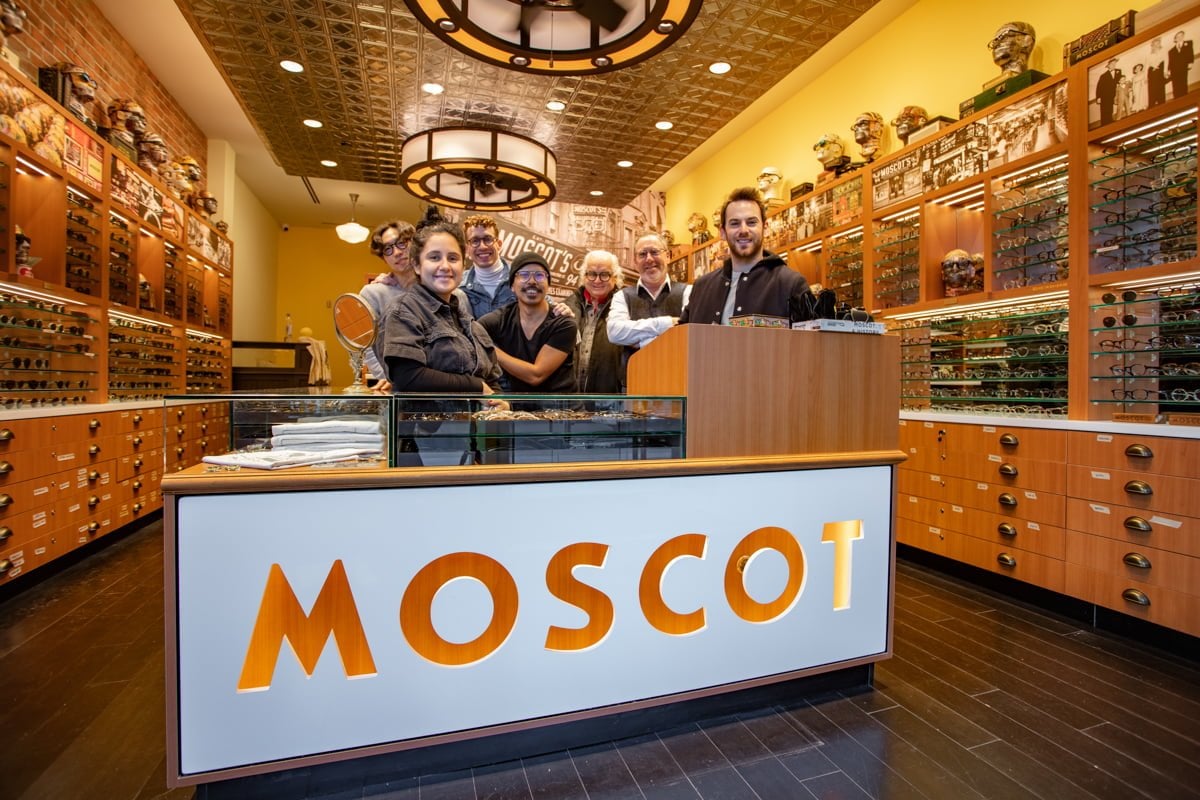
Inside MOSCOT Toronto at 153 Cumberland Street (Image: MOSCOT)

Premium Products and Celebrity Appeal

Moscot is renowned for its distinctive eyewear, crafted from high-quality materials such as beta-titanium and metal. With prices reaching several hundred dollars per pair, Moscot frames appeal to consumers who value timeless style and exceptional craftsmanship.

The brand’s eyewear become a favourite among celebrities. Icons like Andy Warhol, Truman Capote, and Johnny Depp have been counted among its fans. Moscot has also collaborated with several designers since 2008 to create exclusive collections, enhancing its appeal among discerning consumers.

A Competitive Canadian Eyewear Market

Moscot’s relocation comes as the Canadian eyewear market becomes increasingly competitive. Dominated by major players like EssilorLuxottica, which owns brands such as Ray-Ban and Oakley, the industry also sees strong competition from boutique retailers like Bailey Nelson, BonLoook, Ollie Quinn and others.

In addition to facing competition from other premium brands, Moscot must navigate a market undergoing significant consolidation. Smaller independent optical retailers are being acquired, and mid-range brands are expanding aggressively. Moscot’s ability to differentiate itself through its rich history, unique designs, and premium craftsmanship will be critical in standing out in this crowded landscape.


More from Retail Insider:

LEAVE A REPLY

Please enter your comment!
Please enter your name here

RELATED ARTICLES

Subscribe to the Newsletter

Subscribe

* indicates required

RECENT articles

Tim Hortons Targets Stronger Canadian Growth With New Stores, Beverages and Loyalty

Tim Hortons is opening 80 Canadian restaurants while expanding cold beverages and loyalty initiatives after same-store sales growth slowed to 0.1%.

Canada’s Freight Market Is Shifting Unevenly. Here’s What Retailers Should Watch

TFI International’s latest results and analysis from supply chain strategist Gary Newbury suggest Canadian retailers should prepare for uneven freight conditions, changing transportation capacity and evolving logistics costs.

Jamieson Wellness enters into definitive agreement to be acquired by Kirin in C$2.5 billion transaction

The transaction values Jamieson at approximately C$2 billion on a fully diluted equity value basis and approximately C$2.5 billion on an enterprise value basis.

Slate Grocery REIT reports second-quarter results, citing leasing gains and rent growth potential

Completed more than 569,000 square feet of leasing activity during the period as it continued to see rental growth across its U.S. grocery-anchored real estate portfolio.

Premium Brands reports record second-quarter revenue and earnings, revises 2026 outlook

The specialty food producer and distributor said second-quarter revenue reached a record $2.4 billion, up 26.3 per cent, or $495 million, from the same period a year earlier.

SmartCentres reports steady leasing gains in second quarter as occupancy rises, FFO unchanged

The Toronto-based REIT said occupancy reached 98.1 per cent as of June 30, up from the previous quarter.

Daily Synopsis: August 7, 2026

Retail Insider published 12 articles today on Canadian retail including Birks’ market move, Mattel’s strategy shift, Realm Fitness’ community, and McDonald’s new beverage platform.

Leon’s Furniture reports higher net income in second quarter despite lower sales

Revenue declined by $12.9 million from a year earlier, with furniture delivered sales down 4.2 per cent against what the company described as a strong prior-year comparison.

Retail Insider “Marketing & Media Report”: Live Events Shift Attention to Dynamic OOH

Major cultural events are redirecting Canadian retail marketing toward physical spaces. The Q2 2026 report examines how motion-based DOOH, local sports activations, loyalty platforms and measurable sustainability practices are shaping competition for consumer attention across Canada.

Birks to Leave NYSE American as Canadian Jeweller Reshapes Finances

Birks Group will leave the NYSE American for the OTCQB as the Canadian jeweller reports stronger sales, refinances debt and continues retail investment.

What Mattel’s Strategy Says About the Future of Canada’s Toy Market

Canada's toy market is evolving, and Mattel's latest strategy shows how Hot Wheels, building sets, collectibles and Barbie are shaping the industry's next chapter.

Realm Fitness Builds 2,500-Member Community Inside Calgary Industrial Property

Realm Fitness has grown to 2,500 members in Calgary, combining fitness, retail, recovery and community inside a 44,000-square-foot industrial space.

Baffin joins the Royer Group of Companies 

Baffin will operate as Baffin Footwear Inc., preserving the Baffin brand, its leadership team, employees, customer relationships and day-to-day operations while benefiting from Royer's long-term investment and manufacturing expertise.

First T&T Supermarket in Manitoba coming to CF Polo Park in Winnipeg

The “cult-favourite” Canadian supermarket is bringing its signature Asian groceries, prepared foods, bakery favourites, and beauty products to Manitoba for the first time.

Corby to sell Lamb’s rum brand and assets for $39.2 million as it shifts focus to growth categories

Corby said the transaction is intended to concentrate its resources on priority growth platforms, including ready-to-drink beverages and premium spirits, while freeing capital for higher-return opportunities.

Yoto Expands Into 90 Indigo Stores Following Strong Canadian Growth

Yoto has expanded into 90 Indigo stores across Canada, marking its largest retail rollout after strong Canadian growth and years of building its direct-to-consumer business.

Restaurant Brands International reports Q2 results as system-wide sales reach US $12.7 billion

Restaurant Brands International Inc. is one of the world's largest quick service restaurant companies with nearly $49 billion in annual system-wide sales and over 33,000 restaurants in more than 120 countries and territories.

McDonald’s Canada Beverage Platform Shows Early Success

McDonald’s says its new permanent beverage platform is outperforming expectations in Canada as the company targets afternoon traffic with Crafted Sodas, Refreshers and Cloud Iced Coffees while expanding its global growth strategy.

Shopify Q2 results indicate a “monster quarter”

GMV was $115.6 billion, the fifth straight quarter of more than 30% growth. Revenue increased 34% year over year to $3.58 billion.