In an era where economic uncertainty and skepticism toward international models are reshaping how people earn, a new Canadian platform is stepping in to offer a smarter solution. Dorado, a proudly Canadian-owned and operated platform, has officially launched, giving individuals and businesses across the country a fresh way to earn income by referring essential services like mobility, internet, and energy.
Built in Canada, for Canadians, Dorado positions itself as a transparent, values-driven alternative to traditional referral and MLM structures. The platform is free to join, simple to understand, and designed to support earners on their own terms—with no fine print, buy-ins, or complicated compensation schemes.
“We built Dorado to flip the model,” said Scott Simpson, Founder and CEO. “This isn’t about selling overpriced products to your friends. It’s about helping people and businesses earn money by referring services Canadians actually use—like Mobility, PureFibre internet, and energy—with more to come.”
Source: Dorado
Unlike conventional platforms that often rely on hype, hidden fees, or quotas, Dorado aims to keep things simple. Brand Ambassadors can start at no cost, refer essential services, and earn real commissions—without the pressure of inventory or minimum sales.
As regulatory landscapes tighten and costs rise, Dorado offers a stable, compliant, and scalable alternative, backed by established national partners, with more expected to join in 2025.
Key highlights of Dorado include:
100% Canadian conceptualized, owned, and operated
Free to join—no kits, no fees, no monthly minimums
Designed for individual and business earners
Built with automation and compliance at its core
Backed by trusted national service partners
The platform is already welcoming early Brand Ambassadors across the country, turning everyday life events—such as moving, switching providers, or upgrading services—into real income opportunities.
To kick off its nationwide rollout, Dorado will host its first opportunity event, “Earn Smarter and Live Freer,” on June 10. This virtual experience is set to introduce the platform to early adopters and partners, offering a deeper look into how Canadians can earn, save, and grow by sharing essential services.
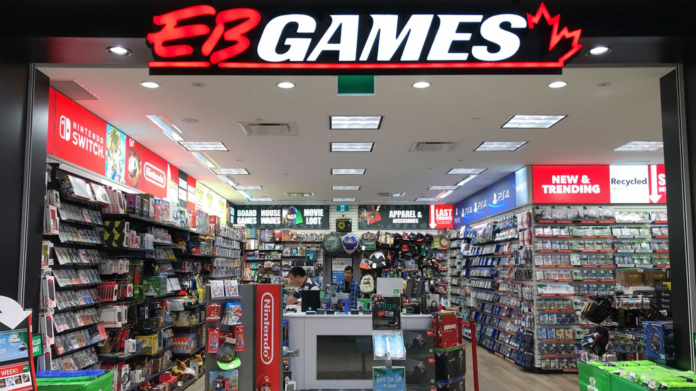
EB Games has announced the return of its popular midnight release event, set for June 5.
Gaming enthusiasts are invited to join the retailer for this thrilling night as it launches the Nintendo Switch 2 and dozens of new games and accessories. Walk-in quantities will be available – while supplies last.
In celebration, stores will be stocked with a diverse selection of accessories, toys, and other gaming essentials to enhance your experience, said the company.
Adding to the excitement, the company will host a Mario Kart World activation on Crescent Street in Montreal during the Crescent Street Grand Prix Festival race weekend festivities, providing fans with a chance to dive into the exhilarating racing experience of Mario Kart World amidst the buzz of race weekend.
“I’m unbelievably proud of what the team has accomplished over the past few weeks. Bringing back midnight launches and organizing the race weekend event showcases our commitment to our community and our passion for gaming,” said Stephane Tetrault, owner of EB Games.
Jim Tyo
“The release of the Nintendo Switch 2 on June 5th will be an epic day for the gaming community, and we are thrilled to announce that we will be opening 132 locations at 12am EDT, ensuring our customers are among the first to play,” added Jim Tyo, President of EB Games.
With over 185 stores across Canada, EB Games leads the market in Video Game and pop culture related Toys & Collectibles.
Recently it was announced that GameStop Canada, previously known as Electronics Boutique (EB Games), is being revived under its original branding following a major acquisition. Tetrault, a well-known French-Canadian entrepreneur with deep roots in the collectibles and entertainment sectors, officially acquired Electronics Boutique Canada Inc. from GameStop Global Holdings S.A.R.L.
With the acquisition, the retailer relaunched under the name EB Games Canada, a brand many Canadians still associate with their formative gaming years.
Scene+ members can now book travel packages through Scene+ Travel, Powered by Expedia, giving them access to new ways to save and opportunities to earn and redeem points when planning their next travel adventure.
Plus, when redeeming their Scene+ points for a travel package – airfare and hotel, members can now also earn points on the hotel portion of their package, the partners announced recently.
“This is just the latest example of our commitment to provide Scene+ members with unique offers and new ways to earn and redeem Scene+ points on the things that matter the most to them.”
As Canadians look for ways to stay home and explore their own country, Scene+ Travel, Powered by Expedia makes that easier with offers that focus on domestic travel to cities like Vancouver, Halifax, Toronto, Calgary and Montreal. Members looking to travel the globe will also have access to promotions for popular international destinations like Cancun, London, Tokyo and Mumbai, explained the partners.
“There are no limitations on destinations and Scene+ members have the flexibility to pay with points, their preferred payment card, or a mix of both. When booking packages in June, members can earn 3,000 bonus points and as always there is no minimum points balance required to redeem towards any package. Having a Scotiabank Scene+ credit card remains the best and fastest way for members to earn Scene+ points and travel faster. Members who pay with an eligible Scotiabank Scene+ credit card can earn up to 6X the points on any booking,” they said.
Scene+ is a carefully curated rewards program offering its more than 15 million members the opportunity to earn points in a wide variety of ways, in a manner that suits their buying habits and lifestyle. Through its relationship with Scotiabank, Scene+ members have an opportunity to accelerate their points-earning potential with eight options on credit or debit cards that give members access to a whole new level of rewards and value. Expedia Group, Inc. brands power travel for everyone, everywhere through its global platform.
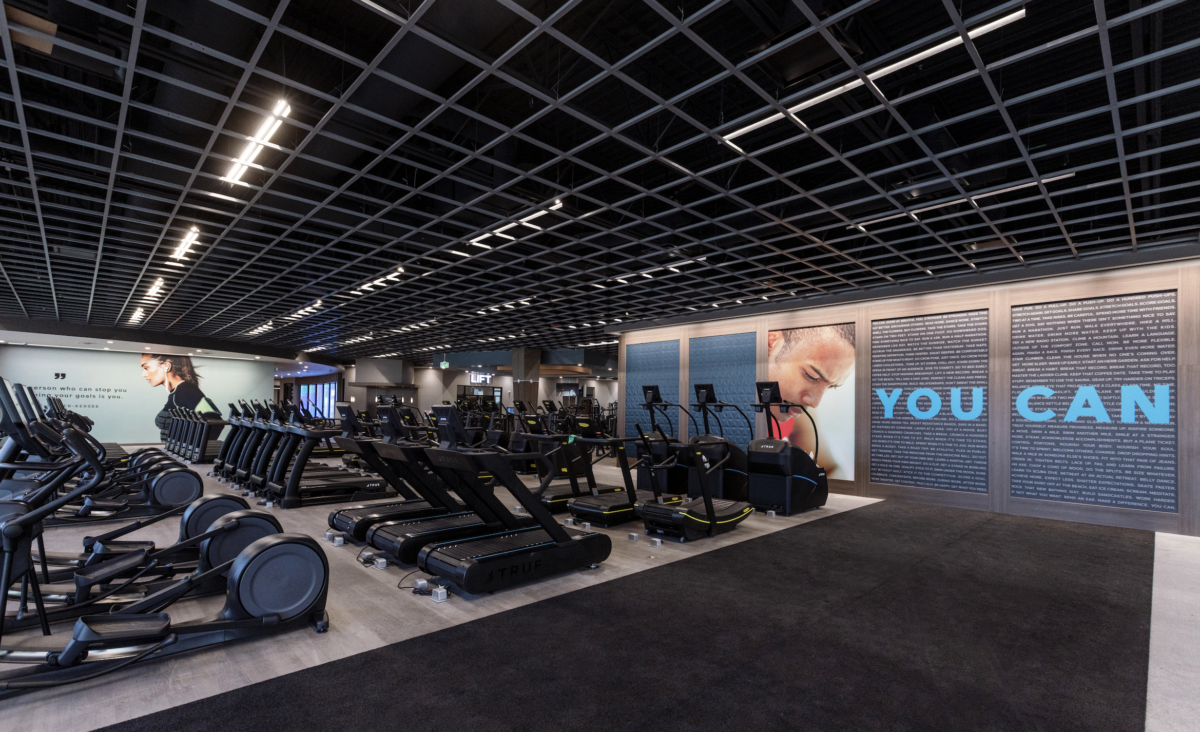
MOVATI Athletic, one of Canada’s foremost fitness and wellness brands, has launched construction of its fourth location in Edmonton, located in the rapidly expanding community of Harvest Hills.
Slated to open early 2026, this new facility is a testament to MOVATI’s continued commitment to delivering a new standard in premium service as part of an inclusive, and wellness-focused fitness experience, said the company.
“Seamlessly integrating form, function and luxury, this new club will offer seven thoughtfully designed boutique-style studios offering up to 200 in-person classes weekly, across yoga, cycling, Pilates, dance and functional training. Members will also enjoy a full-service aquatic area, spa-inspired locker rooms, a private dedicated women’s only fitness space and an array of refined wellness amenities – from contrast therapy suites and recovery zones to a luxe relaxation lounge – all within a single club,” it said.
“Edmonton has embraced MOVATI in such a powerful way, and we’re incredibly excited to continue growing alongside this amazing community,” said Chuck Kelly, President and CEO of MOVATI. “Opening our fourth location is a reflection of that connection. We’re proud to offer more than just a place to work out – we’re creating a space where people come to feel strong and supported in every part of their wellness journey.”
Chuck Kelly
With construction now underway, MOVATI said it is poised to bring its transformative fitness experience to even more Edmontonians. The new club is expected to create up to 120 permanent team positions and provide residents with access to one of the most comprehensive fitness destinations in the region.
Founded in 1997, MOVATI Athletic said it is redefining the fitness experience, blending the intimacy of boutique fitness with the luxury and amenities of a full-service club. As a top- tier fitness brand, MOVATI currently operates 18 clubs across Ontario and Alberta, with an expanding footprint fueled by exceptional member satisfaction and a strong community presence, it said.
“The opening of the fourth Edmonton location marks a significant milestone in MOVATI’s national growth strategy, focused on empowering more Canadians to feel welcome, feel comfortable and feel healthy,” added the company.
Freshii, which is part of the Foodtastic group of foodservice brands, is diving into one of the world’s most popular food trends with the launch of its first-ever lineup of premium poke bowls, now available at locations across Canada.
These include four premium poke bowls featuring sushi-grade salmon, prawns, ahi tuna, or tofu, along with sliced avocados and other fresh ingredients. Freshii is the largest national chain to offer a lineup of poke bowls to Canadian consumers, said the company.
“We’ve absolutely fallen in love with our new poke bowls,” says Chris Cann, Brand Leader at Freshii. “We’ve been working on this product launch for well over a year and the results are exactly what Freshii customers love — quality meals with unique flavours that satisfy your hunger and need for convenience and value.”
Chris Cann
Originating in Hawaii, poke bowls are a cornerstone of island cuisine, celebrated for their fresh ingredients and customizable nature, a philosophy that mirrors Freshii’s core values. Freshii’s new poke bowls embody this spirit, offering a fresh, balanced, and delicious meal option that delivers on flavour and nutritional value, explained Freshii.
“Crafted fresh in-store to deliver a premium, restaurant-style experience, the bowls are available in two flavour styles, teriyaki and ponzu, with a choice of salmon or tofu for the teriyaki bowls, and ahi tuna or prawns for the ponzu bowls. Each bowl features a generous base of rice and greens, topped with a selection of avocado, mango, pickled onions, and crispy wonton strips, plus bold finishing touches like sesame seeds, fried onions, and furikake. Guests can choose from signature sauces, such as Sriracha Mayo or Wasabi Aioli, for added depth and contrast,” it said.
The poke bowl recipes were created by Chef Jason Baker, Director of Culinary, QSR at Freshii and a Vancouver native, whose culinary vision is deeply rooted in the West Coast’s healthy lifestyle and abundance of fresh seafood. His expertise has been instrumental in crafting the lineup to ensure an authentic and exceptional taste experience.
“As someone who grew up on the West Coast, I’ve always been inspired by the way food can be both nourishing and bold in flavour,” said Baker. “With our new poke bowls, we wanted to bring that sense of balance and freshness to every bite using quality ingredients and global influences to create something that feels vibrant, satisfying, and true to Freshii’s mission.”
Freshii is a quick-service restaurant that provides health-conscious consumers with fresh, nutritious, and flavourful meal options on the go. Freshii is wholly owned and operated by Foodtastic, one of the largest restaurant franchise companies in Canada with a portfolio of restaurants that includes Milestones, Pita Pit, Quesada, Second Cup and 22 other renowned banners.
In a time of accelerated transformation and rising consumer expectations, retailers in Canada are proving once again that they don’t just adapt—they lead. Retail Council of Canada (RCC) announced the 14 winners of the 2025 Excellence in Retailing Awards (ERA) Tuesday night at the much-anticipated Excellence in Retailing Awards Gala, a highlight moment of RCCSTORE25Conference in Toronto. The gala evening also saw the presentation of three distinguished Awards of Distinction and 14 Retail Education Scholarships, spotlighting both seasoned leadership and the next generation of retail talent.
Diane J. Brisebois
“This year’s ERA winners exemplify the bold, purpose-driven spirit that defines retail in Canada today,” said Diane J. Brisebois, President and CEO, Retail Council of Canada. “From championing employee well-being to reimagining the in-store experience and investing deeply in sustainability and community, these retailers are setting a global standard for what it means to lead with impact.
“I also extend my heartfelt congratulations to this year’s distinguished recipients of the Awards of Distinction: François Roberge from la Vie en Rose and Jenn Harper from Cheekbone Beauty for exceptional achievements, resilient leadership and courageous, forward-thinking strategies. At a time when it might be easier to take a cautious path, these retailers have chosen to lead with vision, integrity, and impact.”
Winners of the 2025 Excellence in Retailing Awards Announced (CNW Group/Retail Council of Canada)
2025 Excellence in Retailing Awards winners are:
Award Category
Winner
E-Commerce Experience
RONA
Environmental Leadership
Sobeys Inc.
In-Store Experience & Design
Indigo Books & Music Inc.
In-Store Experience & Design
Best Buy Canada
In-Store Merchandising
Walmart Canada
Loss Prevention
Pet Valu Canada
Omni-Channel
Société québécoise du cannabis (SQDC)
Philanthropic Leadership
Pattison Food Group
Philanthropic Leadership
IKEA Canada
Pop-Up Experience & Design
Sephora Canada
Retail Marketing
IKEA Canada
Retail Marketing
Le Groupe Aldo Inc.
Supply Chain Innovations
Staples Canada
Talent Development
Purdys Chocolatier
Santo Ligotti
This year’s Gala also marked a poignant moment of celebration as the industry honoured Brisebois for her remarkable 30-year tenure as President & CEO of RCC with an induction into the Canadian Retail Hall of Fame. “Diane’s unwavering commitment and tireless leadership have elevated the retail sector to new heights,” said Santo Ligotti, Vice President, Marketing and Membership, RCC. “Her legacy will continue to inspire the next generation of retail leaders across the country.”
Retail is Canada’s largest private-sector employer with over 2.3 million Canadians working in the industry. This sector is a major economic contributor, generating more than $93 billion annually in wages and employee benefits. In 2024, core retail sales (excluding vehicles and gasoline) exceeded $508 billion. RCC members account for more than two-thirds of these core retail sales and 95 per cent of the grocery market. Membership extends across the country, embracing over 54,000 storefronts in diverse formats such as department, grocery, specialty, discount, independent retailers, online merchants, and quick service restaurants.
Retail Insider is streamlining its Canadian retail news from around the web to include a handful of top news stories that can be viewed quickly during the day. Here are the top stories from the past 24 hours.
Canadian Tire’s acquisition of Hudson’s Bay’s intellectual property could mark the beginning of a transformation in Canadian retail — if the retailer seizes the full potential of the brands it has acquired. That’s the view of retail executive advisor and Principal at Retail Strategy Group, Liza Amlani, who sees both immediate and long-term opportunities to leverage iconic Hudson’s Bay brands and imagery in ways that could rejuvenate Canadian Tire’s assortment, customer experience, and even international presence.
“I’m really excited about what the future holds for Canadian Tire,” said Amlani in an interview with Retail Insider. “They could really use some freshness in their product assortment. Buying into the categories from the Bay could really help them — taking hero products like the blankets, the stripes — and creating product stories throughout the store.”
Liza Amlani
Stripes, Storytelling, and New Customer Experiences
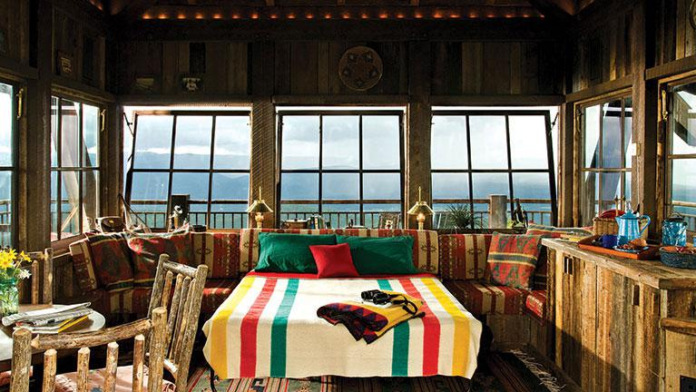
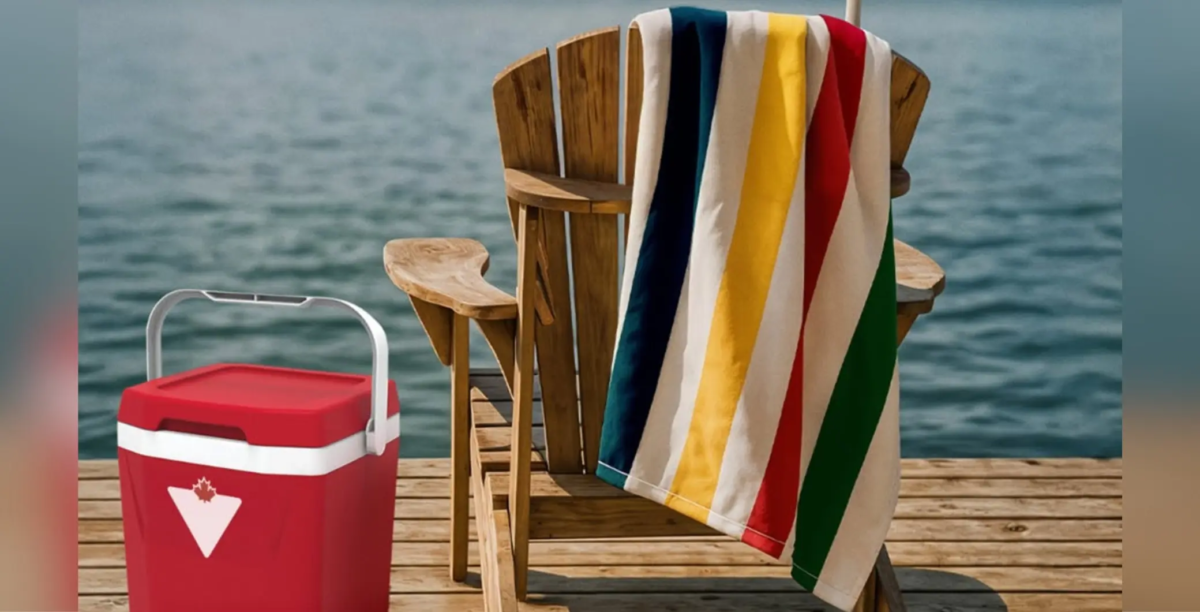
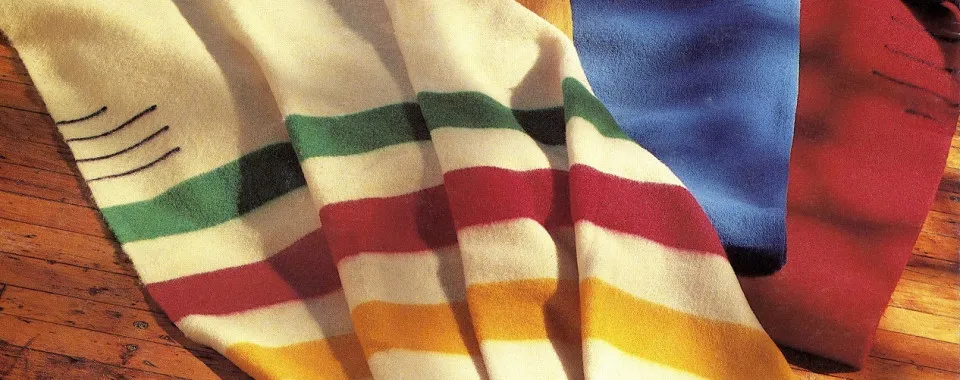
At the heart of the opportunity, Amlani said, lies the famous Hudson’s Bay multicolour stripe design, rooted in the company’s 18th-century fur trading origins. That design, she believes, could be brought into new retail categories that resonate strongly with Canadian Tire’s customer base — including outdoor living, camping, cottage life, and seasonal goods.
“There’s a lot of opportunity to create product stories throughout the store,” she explained. “Think about incorporating the stripes into Yetis, or camping gear. It could be really cool — capturing both new customers and loyal Bay customers. And we know they have the loyalty data. They can leverage that to personalize not only a shopping experience but get the customer excited again.”
Amlani also sees potential for Canadian Tire to experiment with smaller-format stores that focus on tightly curated assortments built around these iconic brands. “I would love to see GlucksteinHome with its own small store footprint,” she said, referring to one of the private labels Canadian Tire now owns. “Even the private labels like Hudson North and Distinctly Home could plug right into Canadian Tire’s banners, including Mark’s Work Warehouse.”
The key, she emphasized, is curation and storytelling. “This isn’t about just adding more SKUs. This is an opportunity to elevate the assortment and create real excitement.”
An International Opportunity: Bringing Hudson’s Bay Abroad
Beyond Canada’s borders, Amlani believes Canadian Tire could also test international waters by reintroducing Hudson’s Bay stripes and branding in global markets where Canadians maintain strong cultural connections.
“I’d love to see them in airports, pop-up stores, or even partner with someone like Marks & Spencer in the UK,” she suggested. “There are a lot of Canadians living in the US and the UK who would embrace this. You could create a small log cabin-type store with curated seasonal products, stripes, and storytelling.”
Hudson’s Bay stripes. Photo: Canadian Tire
Unlocking the Power of Loyalty and AI
One advantage Canadian Tire brings to the table is its sophisticated use of customer data through its Triangle Rewards program — now bolstered by Hudson’s Bay loyalty data acquired in the deal. That combination opens new possibilities for highly personalized retail strategies.
“Imagine combining Triangle Rewards and the Bay’s loyalty program — that’s winning, if they use it properly,” said Amlani. “They’ve already made great strides with AI and CRM, partnering with Microsoft to build store-level tools that could now connect customers directly to new storytelling opportunities behind the product assortment.”
The Court-Approved Acquisition: How Canadian Tire Secured the IP
The opportunity now in front of Canadian Tire stems from a deal approved this week by Ontario Superior Court Justice Peter Osborne. The $30,001,670 purchase price secured Canadian Tire the intellectual property portfolio of Hudson’s Bay Company after an extensive, court-supervised sales process.
The approval came only two days after Hudson’s Bay permanently closed its remaining Canadian stores, ending over 300 years of continuous retail operations that began as a fur trading enterprise. The ruling also authorized a receivership process for the real estate joint venture between Hudson’s Bay and RioCan Real Estate Investment Trust.
During the hearing, Ashley Taylor, counsel for Hudson’s Bay from Stikeman Elliott LLP, confirmed that no parties opposed the transaction, and described the sales process as “robust.” Reflect Advisors LLC conducted a global marketing effort that targeted 407 prospective bidders. While 17 bids were received, none proposed acquiring Hudson’s Bay as a going concern.
According to a confidential memorandum circulated to buyers in March 2025, Hudson’s Bay sought $82 million in first-year funding to support a turnaround strategy involving six stores and its e-commerce platform. However, no buyer was willing to make the required financial commitment.
Former Hudson’s Bay president Bonnie Brooks reportedly explored a potential bid of approximately $13.5 million — though no formal offer was ever made. Weihong (Ruby) Liu, who separately acquired the rights to 28 Hudson’s Bay store leases, invested an estimated $300 million in acquiring those properties and leasehold interests. The name of her new store will be Ruby Liu.
Initial exterior concept branding of the new Ruby Liu department store chain set to launch later this year in Canada. Image: Central Walk
A Wealth of Historic Brands and Private Labels
Canadian Tire’s acquisition includes many of Hudson’s Bay’s most valuable historic trademarks, logos, and private-label brands. The multicolour stripe design, known globally as part of the company’s signature point blankets, is among the most recognizable assets. The Hudson’s Bay coat of arms, featuring two stags flanking a shield, was also included.
Beyond the iconic imagery, Canadian Tire now owns well-known slogans such as “The Official Store of Christmas,” “Bay Days,” “More than you came for,” and “Because…the lowest price is the law.” Additional slogans include “Canada’s cutest baby,” “Truly Canadian,” and “Shopping is good.”
Several private-label brands that were once exclusive to Hudson’s Bay are also now controlled by Canadian Tire, including Black Brown 1826, Distinctly Home, Hudson North, Nordic Fleece, and Beaumark Appliances. The Zellers brand — revived by Hudson’s Bay in 2023 — was excluded from the sale.
Integrating Across Canadian Tire’s Banner Ecosystem
Amlani sees Canadian Tire’s multi-banner retail structure as uniquely positioned to integrate these newly acquired assets. With banners that include Canadian Tire, Mark’s, SportChek, Party City, and Pro Hockey Life, the retailer could extend Hudson’s Bay product lines far beyond their traditional department store environment.
“Imagine Mark’s doing an apparel line with stripes. Or seasonal patio and garden products at Canadian Tire with the Hudson North or Distinctly Home labels. Even the coat of arms could add heritage appeal to outdoor gear,” Amlani suggested.
Canadian Tire’s ongoing True North Plan — a strategy focused on customer data, loyalty integration, and merchandise curation — could serve as the ideal framework for maximizing the value of the acquired brands.
“Everything fits together like a puzzle,” said Amlani. “The path to success is to leverage these hero products and build a merchandising strategy that’s exciting, delightful, and purposeful.”
Hudson’s Bay striped blankets. Image: Barefoot Bushcraft
Caution Against Reviving the Full Hudson’s Bay Banner
Despite the rich potential of the intellectual property, Amlani is clear that reviving full Hudson’s Bay department stores would not be a wise strategy.
“I do not see full HBC stores run by Canadian Tire. The Bay banner doesn’t come with a lot of confidence anymore. The decline has been visible for quite some time,” she said. “Leave the past behind. Create something new and exciting.”
Instead, she argues Canadian consumers are ready for an elevated retail experience. “Canadian customers want exciting product and a delightful shopping experience. Give it to them.”
Potential Collaboration with Ruby Liu’s New Department Stores
Interestingly, Amlani also noted the possibility of Ruby Liu — who now controls 28 former Hudson’s Bay store locations — collaborating with Canadian Tire by licensing the HBC brands.
“She absolutely should do that. Even buying it wholesale from Canadian Tire and creating a shop-in-shop could work well, especially as these stores will operate inside former Bay locations,” Amlani said.
A Turning Point for Canadian Retail
With this historic acquisition complete, Canadian Tire now holds a rare opportunity to reshape parts of Canadian retail — not by simply replicating Hudson’s Bay, but by reimagining its best-known symbols for a new generation of consumers.
“They can absolutely do something special here,” said Amlani. “They just need the creativity and excitement to execute it.”
Shuttered Hudson's Bay store at Toronto's Yorkdale Shopping Centre on the evening of June 1, 2025. Photo: Craig Patterson
The Hudson’s Bay Company’s historic Canadian retail legacy entered a new phase this week as Ontario’s Superior Court approved Canadian Tire Corporation’s acquisition of the company’s intellectual property. The ruling also marked another critical development in the ongoing unwinding of Hudson’s Bay, with the court granting a receivership order for the real estate joint venture between Hudson’s Bay and RioCan Real Estate Investment Trust.
On Tuesday, Ontario Superior Court Justice Peter Osborne approved Canadian Tire’s $30,001,670 purchase of Hudson’s Bay’s intellectual property portfolio. The court determined that the transaction represented the most favourable outcome for the retailer’s assets following an extensive sales process that failed to yield any alternative offers capable of keeping parts of Hudson’s Bay operational.
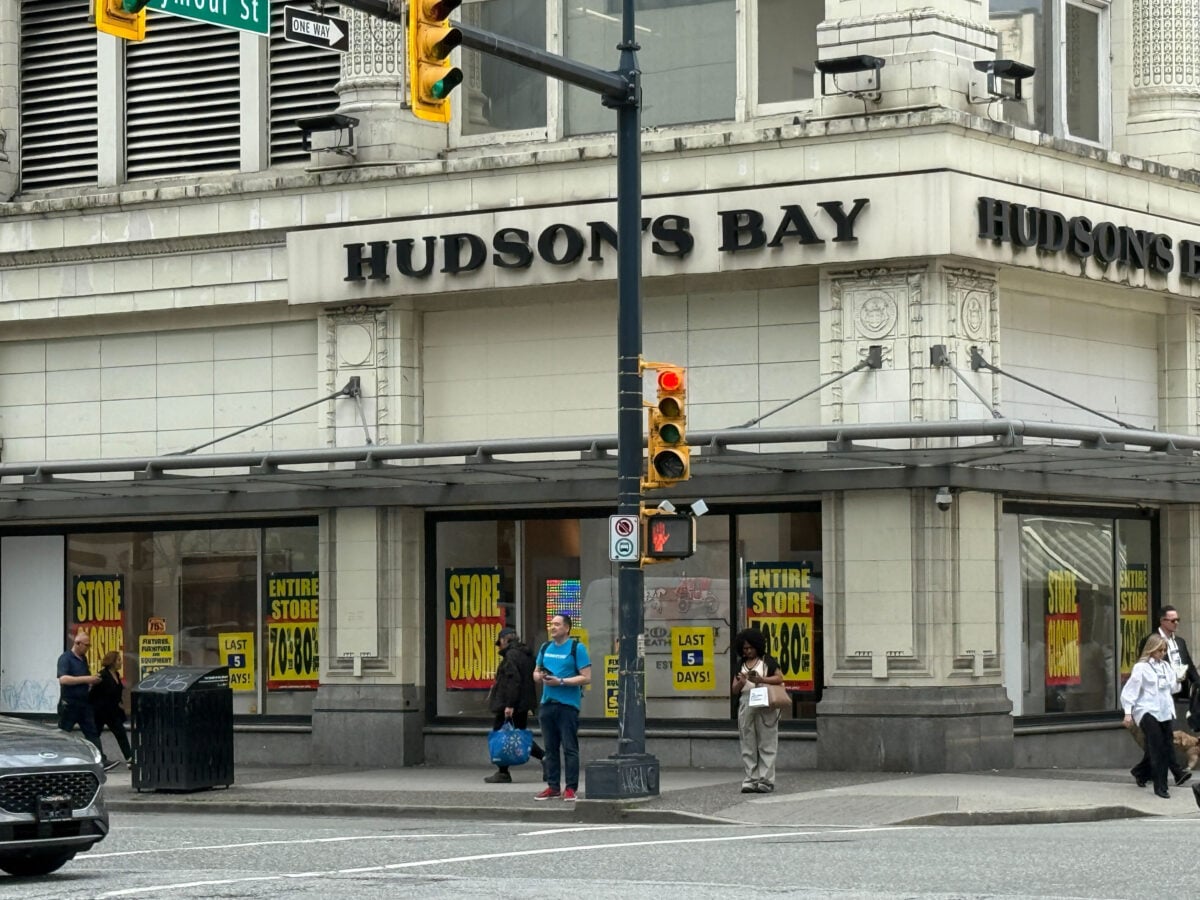
The ruling came just 48 hours after Canada’s oldest retailer ceased operating as a traditional department store. Hudson’s Bay completed its nationwide liquidation sales and closed its remaining Canadian stores for the final time on Sunday, June 1, ending more than three centuries of continuous retail operations dating back to the company’s fur trading origins.
Sales Process Attracted 17 Bids but No Turnaround Buyer
During Tuesday’s hearing, Ashley Taylor, counsel for Hudson’s Bay from Stikeman Elliott LLP, advised the court that no parties had opposed the transaction. The intellectual property sale followed what Taylor described as a “robust” sales process conducted by Reflect Advisors LLC, which distributed marketing materials to 407 prospective bidders globally. A total of 17 bids were received, but no offers emerged to acquire Hudson’s Bay as a going concern, despite extensive efforts to solicit buyers capable of revitalizing some of the retailer’s operations.
According to a confidential memorandum prepared by Hudson’s Bay in March 2025 and presented to prospective buyers, the company had sought investment for a turnaround strategy involving the preservation of six Hudson’s Bay stores that had been excluded from the liquidation process, alongside the company’s e-commerce platform. The plan would have required $82 million in investment during its first year, but ultimately no buyer was willing to commit to such an undertaking.
Former Hudson’s Bay president Bonnie Brooks had reportedly explored the possibility of submitting a bid that would have included both store leases and intellectual property. Brooks’ bid, which may never have been formally submitted, is believed to have offered approximately $13.5 million, assigning no separate value to the intellectual property component. Weihong (Ruby) Liu, who ultimately acquired rights to 28 Hudson’s Bay store leases, did not place a bid for the intellectual property assets but is understood to have committed approximately $300 million to acquire store real estate and leasehold interests.
Initial exterior concept branding of the new Ruby Liu department store chain set to launch later this year in Canada. Image: Central Walk
Royal Charter Trademarks Clarified by Court
During the hearing, Justice Osborne initially delayed approval while seeking clarification on whether Canadian Tire’s acquisition of certain trademarks would restrict public use of historical terminology associated with the company’s Royal Charter.
The Hudson’s Bay Royal Charter, originally granted in 1670, remains one of Canada’s most significant historical documents and is not part of the intellectual property sale. Taylor clarified that the trademarks being transferred included limited uses of “Hudson’s Bay Royal Charter” solely in connection with commercial branding for products such as whisky, coffee, brandy and related goods. Osborne ultimately accepted that the transfer would not interfere with broader historical or public references to the Royal Charter itself.
With court approval now secured, the Canadian Tire transaction is expected to close within the next two to three weeks.
Hudson’s Bay flagship store in downtown Vancouver on Wednesday, May 28, 2025. Photo: Lee Rivett
Historic Brands and Private Labels Acquired
Canadian Tire’s acquisition includes an extensive collection of brand names, logos, slogans, and private labels long associated with Hudson’s Bay. Among the most significant assets is the retailer’s iconic multicolour stripe design, which originated with the point blankets tied to the company’s fur trading history. Also included are multiple variations of the company’s signature blanket patterns, including the historic black-band design, as well as the well-known Hudson’s Bay shield crest, which features two stags flanking a shield.
The list of acquired trademarks extends to promotional slogans such as “The Official Store of Christmas,” “More than you came for,” “Because…the lowest price is the law,” “It’s hard not to think of The Bay,” and the widely recognized “Bay Days” sale event branding. Additional lesser-known slogans now under Canadian Tire’s ownership include “Canada’s cutest baby,” “Truly Canadian,” and “Shopping is good.”
In addition to trademarks and slogans, Canadian Tire will take ownership of several private-label brands that were previously exclusive to Hudson’s Bay stores. These include Black Brown 1826, Distinctly Home, Hudson North, Nordic Fleece, and Beaumark Appliances. Notably, the Zellers brand, which was relaunched by Hudson’s Bay in 2023 as a discount chain, was excluded from the sale and remains outside Canadian Tire’s acquisition.
Hudson’s Bay stripes. Photo: Canadian Tire
Wage Protection Approved for Over 8,300 Terminated Employees
The court also addressed the situation facing more than 8,300 Hudson’s Bay employees who have now lost their jobs amid the company’s liquidation. On Tuesday, Justice Osborne authorized these employees to apply for federal benefits through the federal government’s Wage Earner Protection Program (WEPP). Hudson’s Bay’s legal counsel confirmed that discussions are underway with Service Canada to establish an expedited timeline for distributing WEPP funds. Lawyer Susan Ursel of Ursel Phillips Fellows Hopkinson LLP, who represents the terminated employees, emphasized during the hearing that many workers are experiencing financial distress and are anxious to receive their benefits as quickly as possible.
Separately, the Ontario Superior Court on Tuesday also approved a motion filed by RioCan Real Estate Investment Trust seeking to place its longstanding joint venture with Hudson’s Bay into receivership. The move comes after Hudson’s Bay ceased rent payments for the properties included in the venture following its March 2025 filing for creditor protection under the Companies’ Creditors Arrangement Act (CCAA).
The RioCan-HBC joint venture, originally established in 2015, encompasses 12 retail properties located in some of Canada’s most high-profile urban and suburban markets. The portfolio includes former Hudson’s Bay flagship properties in downtown Montreal, Vancouver, Calgary, and Ottawa, along with locations in key Canadian shopping centres such as Yorkdale Shopping Centre and Scarborough Town Centre in Toronto. RioCan holds a 22 percent ownership interest in 10 of the joint venture properties, as well as a 61 percent controlling interest in two others: Oakville Place and Georgian Mall.
Downtown Montreal flagship Hudson’s Bay store on April 24, 2025. The building started as a location for the Henry Morgan department store chain, which in decades past operated as an upscale business. Photo: Carl Boutet
FTI Consulting Appointed as Receiver to Oversee Real Estate Assets
The joint venture’s financial position had deteriorated sharply as Hudson’s Bay suspended rent payments during its restructuring process. The partnership’s secured debt obligations include hundreds of millions of dollars in outstanding mortgages. RioCan previously disclosed a $209 million loss on its investment in the venture, leading to Tuesday’s motion for court-supervised receivership.
With court approval now granted, FTI Consulting Canada Inc. has been appointed as receiver and will assume operational control over the joint venture’s property portfolio. The receiver is tasked with stabilizing operations, addressing outstanding financial obligations, and exploring avenues to maximize asset value for creditors and stakeholders.
The receivership opens the door to a range of possible outcomes. Properties may be sold outright to new buyers, or leased to new retail tenants. In certain cases, redevelopment may be explored depending on zoning regulations, municipal approvals, and market demand for alternative uses. The receivership also has potential implications for Canada’s retail real estate landscape, particularly given the scarcity of large-format urban retail spaces in markets such as downtown Toronto, Vancouver, Montreal, and Calgary.
End of an Era for Hudson’s Bay’s Department Store Operations
For RioCan, the appointment of the receiver offers a chance to recover at least a portion of the losses already recognized on its investment in the partnership. For Hudson’s Bay, the receivership effectively severs any remaining ties to the substantial real estate holdings it once controlled across the country.
The court’s decisions mark two of the final major steps in the dismantling of the Hudson’s Bay department store chain, a process that began earlier this year when the company entered creditor protection amid mounting financial losses and growing debt obligations. While some elements of the company’s historical legacy will survive under new ownership, the approvals underscore the end of one of Canada’s most enduring retail institutions.
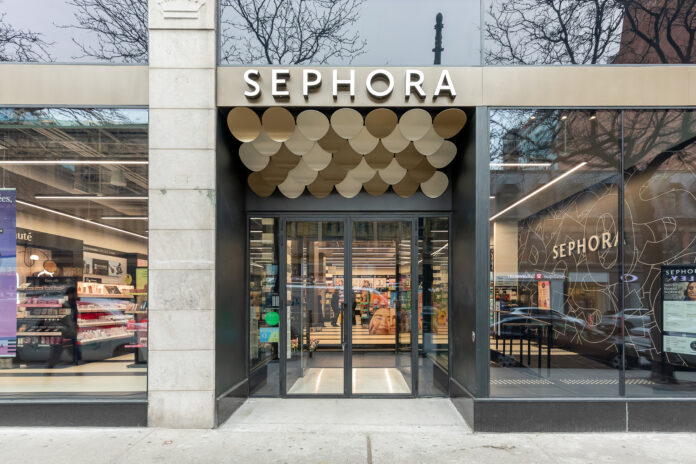
New Sephora store at 241 Rue Ste-Catherine W. in Montreal. Photo supplied
NielsenIQ (NIQ), a leading consumer intelligence company, and Sephora, the world’s leading prestige beauty omnichannel retailer, have announced a strategic collaboration to provide a more comprehensive view of the beauty landscape in North America.
This data sharing agreement unlocks access to a new level of insight into the beauty space, including expansive point-of-sale coverage of Sephora’s omnichannel business, increasing NielsenIQ’s total coverage of beauty. In addition, as a designated Recommended Insights Partner, Sephora will utilize NIQ’s data for best-in-class insights, empowering them to make well informed decisions across their organization.
The collaboration will also leverage NIQ’s expanded Omnishopper and Digital Purchases solution capabilities to better understand shifts in consumer buying behavior across both online and offline channels. Expanded Omnishopper, launched in January 2025, includes the world’s largest consumer panel with 250,000 highly engaged panelists.
“At Sephora, our beauty community is the heart of our business, and we are constantly seeking out forward-thinking partners to help us better serve our clients throughout their shopping journey with us, said Ryan Oto, Vice President, Business Intelligence & Analytics at Sephora. “This partnership with NielsenIQ is a strategic leap forward in how we listen to our beauty consumers, elevate insights across every touchpoint, and deliver on the future of beauty retail.”
Through the combined Omnishopper and Digital Purchases lens, Sephora will gain detailed insights into in-store and online shopping trends and preferences across NIQ’s comprehensive coverage of mass, drug, specialty, e-commerce, and social channels.
“Beauty is one of the most dynamic and culturally relevant categories in retail today. By combining Sephora’s leadership in the space with our unmatched measurement capabilities, we’re bringing new precision and visibility to the brands shaping the future of beauty.”
Sephora is the world’s leading global prestige beauty retail brand with 56,000 employees operating in 35 markets. It has a highly engaged community of hundreds of millions of beauty followers across its global omnichannel network of more than 3,200 stores and iconic flagships, and its e-commerce and digital platforms with a curation of more than 300 brands and its own label, Sephora Collection.
It was founded in 1969 in Limoges, France and became part of the LVMH Group in 1997.
NielsenIQ (NIQ) is a leading consumer intelligence company, delivering the most complete understanding of consumer buying behavior and revealing new pathways to growth. NIQ combined with GfK in 2023, bringing together two industry leaders with unparalleled global reach. Its global reach spans over 90 countries covering approximately 85% of the world’s population and more than $7.2 trillion in global consumer spend.