PepsiCo Canada is launching a new Doritos product in Canada, introducing rolled tortilla chips in three flavours as the snack maker expands its product lineup.
Doritos Roll’d chips is available at major retailers nationwide beginning in August. The new product features a rolled format and comes in Nachos Supreme, Fiery Lime and Dill Pickle Blast.
PepsiCo Canada said the launch is aimed at consumers seeking a combination of flavour and texture, with the rolled shape designed to provide a different eating experience from traditional tortilla chips.
The Nachos Supreme flavour combines cheddar, tomato and jalapeño, while Fiery Lime pairs chili with lime. Dill Pickle Blast features dill and a tangy pickle flavour.
Shirley Mukerjea
“Doritos has always delivered bold flavour and unexpected experiences, and Doritos Roll’d brings that spirit to life with a distinctive rolled format and added intensity” said Shirley Mukerjea, Chief Marketing Officer, PepsiCo Canada. “Younger Canadians are looking for snacks that engage more than taste alone, so we brought together flavour, texture, crunch and visual appeal in one memorable bite, and we’re incredibly excited for Canadians to try it.”
The company said its research found that Gen Z consumers are looking beyond flavour when choosing snacks, with an interest in products and experiences that appeal to multiple senses and allow them to express their personalities.
PepsiCo Canada said the rollout will also include social media content, creator activity and other promotional events tied to the new product.
PepsiCo generated nearly US$94 billion in net revenue in 2025, according to the company. Its portfolio includes Lay’s, Doritos, Cheetos, Gatorade, Pepsi-Cola, Mountain Dew, Quaker and SodaStream.
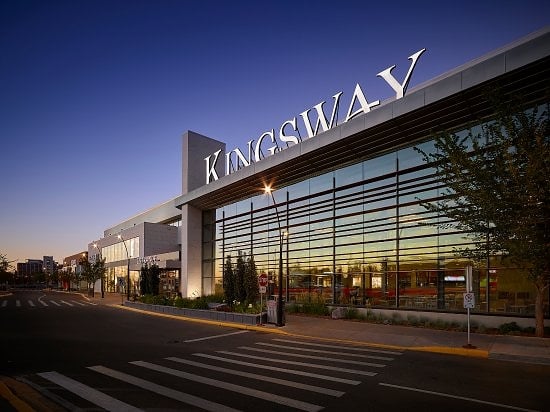
The acquisition marks Westcliff’s return to Western Canada through a prominent retail destination serving one of Alberta’s most important urban markets, said the company in a news release.
“Kingsway Mall represents the kind of asset that has always been central to Westcliff’s approach. A well-established property, deeply rooted in its region, with the ability to serve its community for generations to come,” said Alan Marcovitz, President of Westcliff. “Our return to Western Canada reflects our confidence in the Edmonton market and in the enduring value of retail destinations that bring people together.”
The acquisition adds a well-located, high-traffic asset to Westcliff’s growing national portfolio in a trade area the company believes is positioned for sustained growth, it said.
Kingsway was co-owned by Oxford Properties and managed by Oxford Properties Group, a global leader in premium real estate. Oxford is owned by OMERS, the defined benefit pension plan for Ontario’s municipal employees
No financial details of the transaction were disclosed.
Westcliff photo
“We see an opportunity to build on that foundation and support its continued role as a destination for shoppers across greater Edmonton,” said Nicolas D’Aoust, Vice President of Westcliff and Head of Leasing. “Driven by a young and educated population, Edmonton’s dynamism reinforces its appeal as a strategic market with promising long-term economic prospects.”
Westcliff said it will work closely with Kingsway Mall’s existing management and operations teams to support a smooth transition and maintain continuity for tenants, shoppers and the broader community.
“Kingsway Mall has long served as a gathering place woven into the daily life of the surrounding neighbourhoods. Preserving and strengthening that role for the community will be a primary goal for us,” said Adam Marcovitz, Vice President of Westcliff.
Centrally located just north of downtown Edmonton, Kingsway Mall has been around since 1976. On a 41.8-acre site, the 880,049-square-foot shopping centre features more than 160 stores and services, including Walmart Supercentre, HomeSense, Marshalls, Shoppers Drug Mart, Aritzia, Sephora, Lululemon and Browns Shoes, and attracts close to seven million visitors annually. With annual retail sales of $715 per square foot, Kingsway Mall is a leading Edmonton shopping destination with strong market fundamentals, deep local relevance that maintains strong ties to the community through initiatives that support local causes and organizations, added Westcliff.
Founded in 1972, Westcliff is a privately owned, diversified real estate development and management firm with holdings across shopping centres, office, industrial, residential and hospitality assets in Canada and the United States.
Walmart is giving Canada a larger role in its international digital expansion as the retailer builds its membership, e-commerce and Marketplace businesses beyond the United States.
During Walmart Inc.’s second-quarter earnings call last week, CEO John Furner pointed to Canada several times while discussing the company’s international growth. Walmart International e-commerce sales increased 19 per cent during the quarter, with China, India and Canada identified as markets leading the growth. E-commerce now accounts for about 30 per cent of Walmart International’s sales mix.
Canada is also the first Walmart market outside the United States to receive Walmart+, the company’s paid membership program. Walmart+ launched in Canada on June 4, building on the retailer’s Delivery Pass service with additional benefits including free Walmart.ca shipping with no minimum purchase and an included Crave subscription.
Furner highlighted the Canadian Walmart+ launch alongside another development during the quarter: Walmart expanded capabilities from its U.S. Marketplace platform into Canada and Mexico. He grouped membership, Marketplace, fulfillment services and advertising among the businesses Walmart is increasingly deploying across international markets.
The comments put the Canadian Walmart+ launch into a broader context. Walmart has spent several years developing its membership and e-commerce businesses in the United States, and Canada is now the first international market where the company is extending the Walmart+ model.
Walmart+ Builds on Delivery Pass
Walmart+ costs $8.97 per month or $89 annually in Canada. Existing Delivery Pass members, who had been paying the same $89 annual price since that program launched in 2023, were automatically moved to Walmart+ when the new program launched in June.
The Canadian program includes unlimited free same-day delivery from stores on orders over $35, along with discounted Express Delivery. Members also receive free shipping with no minimum order on thousands of eligible products sold through Walmart.ca and the Walmart app.
Walmart included Crave Standard with Ads as part of the membership at no additional cost, adding an entertainment component to the Canadian program. At the time of the launch, Catherine Theberge-Conner, Head of Membership at Walmart Canada, said the company was bringing together grocery and general merchandise delivery with benefits outside retail.
Andrew Go, Vice President of E-Commerce and Marketing at Walmart Canada, also highlighted the removal of Walmart.ca’s shipping minimum as a significant change for the retailer’s Canadian online business. The additions give Walmart more opportunities to keep members within its ecosystem, from regular grocery orders to smaller online purchases that may previously have fallen below a free-shipping threshold.
Membership Becoming More Important to Walmart
Walmart’s latest results show the growing importance of membership to the company. Membership fee revenue increased nearly 17 per cent during the quarter, while Walmart+ continued to record double-digit membership growth in the United States. Management said the first half produced the strongest membership growth in the U.S. program’s history.
CFO John David Rainey told analysts that Walmart members spend approximately four times more than non-members. The figure refers to Walmart’s broader membership business and is not a measure of spending by Canadian Walmart+ members.
Membership generates fee revenue while giving Walmart another way to increase shopping frequency and customer spending. Canada now gives the company its first opportunity to extend Walmart+ beyond the U.S., where the program has had several years to develop.
Furner returned to the Canadian launch at the end of Thursday’s earnings call, mentioning Walmart+ alongside continued growth in e-commerce, Marketplace and advertising.
Canada Among Markets Leading E-Commerce Growth
Walmart did not disclose a separate Canadian e-commerce growth rate for the quarter, although management twice identified Canada as one of the markets contributing to Walmart International’s 19 per cent e-commerce increase.
Rainey said Walmart has been deploying digital capabilities developed in the United States into other markets, allowing the company to move faster operationally and grow at a lower marginal cost. He also linked continued e-commerce growth to the development of businesses including Marketplace, advertising, data services and membership.
Walmart already has a sizeable Canadian audience across its physical and digital channels. The company operates more than 400 stores nationally and says both its stores and Walmart.ca serve or attract more than 1.5 million customers or visits daily. Its current investment program is adding stores and supply-chain capacity to support further growth.
Marketplace Capabilities Expand in Canada
Walmart told investors that it expanded capabilities from its U.S. Marketplace platform into Canada and Mexico during the quarter. Marketplace allows third-party sellers to offer products through Walmart’s digital properties, increasing the assortment available beyond merchandise sold directly by Walmart.
The platform also feeds other parts of Walmart’s digital business, including fulfillment and advertising. Rainey told investors that sustained e-commerce momentum supports growth in Marketplace, advertising, data ventures and membership, businesses that are becoming increasingly important to Walmart’s financial model.
Management said Walmart is increasingly developing capabilities that can be scaled across multiple countries. The Canadian expansion of Walmart+ and Marketplace provides a current example, with platforms developed in the U.S. being extended into Walmart’s Canadian operation.
Stores and Supply Chain Support Digital Growth
Walmart’s Canadian digital expansion is occurring alongside one of the largest physical investment programs in the retailer’s history in this country. Walmart Canada announced in January 2025 that it would invest $6.5 billion over five years in its Canadian store and supply-chain network, including dozens of planned new stores and new distribution infrastructure. The company described it as its largest investment in Canada since entering the market 30 years earlier.
New Supercentres are being developed with online pickup and delivery incorporated into their operations. Walmart’s planned southwest Edmonton location, expected to open in 2027, will offer online pickup and delivery for grocery and general merchandise. Other recently announced locations are being designed with similar capabilities.
The relationship between stores and e-commerce was a major theme of Thursday’s earnings call. Walmart executives described stores as an increasingly important part of the company’s fulfillment network as customers move between in-store shopping, pickup and home delivery. The hard fulfillment figures discussed on the call were specific to the U.S. business, but Walmart Canada’s current store program is also incorporating pickup and delivery into new locations.
Supply-chain investment is happening at the same time. Walmart Canada opened a 750,000-square-foot fulfillment centre in Milton, Ontario, in June, adding capacity for more than 43,000 unique products and approximately 65,000 pallets. The facility supports Walmart’s core assortment, extended online assortment and Walmart Fulfillment Services, and the company says some local customers are already receiving same-day delivery through it.
The Milton facility follows the opening of Walmart Canada’s 550,000-square-foot Vaughan Ambient Distribution Centre in 2025. The Vaughan facility uses automation, robotics and AI-driven warehouse management and currently serves 131 stores and two fulfillment centres across Ontario.
Competing for More Canadian Shopping Trips
Walmart+ adds another paid membership offering to a Canadian market where membership programs already play an important role in retail. Amazon has used Prime to connect shipping, digital entertainment and other services with its e-commerce business, while Costco has built its retail model around paid membership. The programs differ substantially, but each creates an ongoing relationship with customers beyond an individual purchase.
Walmart enters that competition with a large Canadian store network and a substantial grocery business. Same-day store delivery allows Walmart+ to cover frequently purchased products such as groceries and household goods alongside conventional e-commerce orders, while the inclusion of Crave gives members a benefit they can use without making a retail purchase.
The opportunity for Walmart is to convert more of its existing Canadian store and online traffic into membership relationships and greater use of its digital services. The company is building Walmart+ alongside Marketplace, e-commerce, fulfillment capacity and a multi-billion-dollar investment in its Canadian store and supply-chain network.
Canada’s position as the first international Walmart+ market also gives Walmart an early indication of how its membership model performs outside the United States. Thursday’s earnings call shows that the Canadian business is already part of Walmart’s wider effort to take its membership and digital platforms into more international markets.
Grocery store in Quebec. Photo: Vergo Construction
Canada’s trade negotiations with the United States have failed. Washington has imposed 50% tariffs on approximately $28 billion worth of Canadian products, and Prime Minister Mark Carney has promised a dollar-for-dollar response beginning September 8.
Retaliation may be politically inevitable. But Ottawa must proceed very carefully. In attempting to punish Washington, Canada could easily end up punishing Canadian families at the grocery store.
Tariffs are taxes. Full stop.
A Canadian counter-tariff is collected from the Canadian company importing the American product. The exporter may absorb some of the cost, but importers, distributors and retailers will inevitably pass part of it along. Grocery margins are already thin.
Eventually, the cost appears at the checkout.
We learned that lesson in 2025, when the Trudeau government imposed 25% counter-tariffs on a remarkably broad range of American products. The list included orange juice, peanut butter, coffee, tea, chocolate, rice, pasta, fruit, vegetables, poultry, dairy products, cooking oils, sauces and soups.
It was political theatre masquerading as food policy.
A subsequent Bank of Canada study found that prices for tariffed goods increased by approximately 6% relative to comparable untariffed products. For tariffed food and beverages, the increase approached 8% at its summer peak. Retailers did not pass along the entire tariff, but consumers clearly paid part of it.
Most of those consumer tariffs were removed after six months, limiting the damage. This time, however, the retaliation could be broader, higher and more persistent. If food, ingredients, packaging and agricultural equipment are included, the combined cost could approach $200 annually for an average Canadian household. That estimate reflects not only direct tariff costs, but also the expense of changing suppliers, importing from more distant markets and operating a less efficient supply chain.
Lower-income households would be hit hardest. They have fewer opportunities to stock up, shop at several stores or buy in bulk. Food inflation is also cumulative. Canadians do not recover the purchasing power lost after years of higher grocery prices simply because inflation eventually slows.
Food prices are already roughly 27% higher than they were five years ago. Still, adding more pressure would be reckless.
There is also the risk of a price-umbrella effect. When an American product becomes more expensive, competing Canadian and foreign brands face less pressure to keep their prices down. Importers may replace nearby American suppliers with more distant sources, increasing transportation, warehousing and contracting costs.
The Bank of Canada did not find a statistically significant broad spillover to substitutes in 2025. That is reassuring, but it is no guarantee this time. The coming tariffs could last for years rather than months. The same research found that retailers passed along more of the cost when they believed tariffs would remain. Expectations matter.
Once companies conclude that a tariff is permanent, they renegotiate contracts, change suppliers, rebuild distribution networks and reset prices. Those costs can spread well beyond the products appearing on Ottawa’s retaliation list.
This is why food must be spared.
The final list has not yet been published, but dairy has already been mentioned as a potential target. That makes little economic sense. Canada already controls dairy imports through supply management and tariff-rate quotas. Additional tariffs would affect specialized American products and ingredients without necessarily creating meaningful political leverage in Washington.
Food-manufacturing ingredients should also be exempt, along with packaging, fertilizer, animal feed, refrigeration equipment, agricultural machinery and replacement parts. Tariffing these products would raise the cost of producing Canadian food. A product does not need to appear on a grocery shelf to increase grocery prices.
Ottawa should also resist the argument that food tariffs are harmless whenever Canadian substitutes exist. Restricting a lower-priced import reduces competition and gives domestic suppliers more room to increase prices. Canadian producers may benefit, but Canadian consumers can still lose.
If Canada must retaliate, it needs a scalpel, not a sledgehammer.
Countermeasures should focus on non-essential goods with a low weight in household budgets, sufficient alternative suppliers and genuine political importance in the United States. Government procurement restrictions, investment screening and coordinated legal challenges should also be considered instead of relying almost exclusively on border taxes.
Every proposed tariff should pass four tests. Is the product essential to Canadian households? Is it an input for Canadian production? Can it be sourced elsewhere without significantly higher costs? Will targeting it exert meaningful political pressure in the United States?
If a tariff increases Canadian food-production costs or grocery bills without creating real pressure in Washington, it has failed.
Trump’s tariffs are harmful because they raise costs, distort supply chains and weaken competitiveness. Canada should not reproduce the same damage at home simply to demonstrate resolve.
Retaliate if we must. But keep food—and everything required to produce it—off the tariff menu. The objective should be to pressure Washington, not weaponize the cost of living against Canadians.
New research fromStoryblok, in collaboration with FT Longitude (part of The Financial Times), uncovers the true cost of content debt: content that is outdated, poorly structured, not optimized for search or AI discovery, and difficult to update and publish efficiently.
According to a survey of organizations with at least $1 billion in annual global revenue, content debt is costing retail enterprises $381.3 million on average, based on spend devoted to fixing it and revenue at risk from it.
AI search made a bad problem even worse
Content debt has always been buried in Google searches, but companies ignored it because they didn’t feel the impact. Now that AI is using that outdated content in its answers, many brands are either being misrepresented or left out entirely, explained Storyblok.
The business impact of content debt is significant for retail companies:
5.5% – Average annual revenue at risk from content debt
$4.5 million – Average amount spent fixing content debt (33.4% of total content spend)
93.6 – Average hours spent each week maintaining existing content
Retail executives realize they have a content problem
After decades of letting brand inconsistencies spread online, executives understand that their bad content habits have to change now:
85% say improving the quality, structure, and governance of their content would deliver measurable business value for their organization
78% say their organization carries more digital content than it can realistically keep accurate, relevant, and up to date
69% say outdated or inconsistent content is making it harder for customers to find, trust, or act on their information
68% say the lack of visibility they have of their content is a compliance risk for their organization
60% say poor content quality or structure is weakening their visibility in search and AI-driven discovery
Content debt is a technical problem that can be solved
The report said 68% of retail executives agree that improving their content strategy is more of a technical challenge than a creative one, which suggests that teams are being held back by their CMS and tech stack, not their abilities.
Dominik AngererSHVETS production photo
Dominik Angerer, CEO and Co-Founder of Storyblok, said: “For decades, publishing as much content as possible, hoping it ranks in search, and letting the content and platforms decay has been a business strategy. It felt good at the time, just like loading up a credit card with a bunch of impulsive purchases and not thinking about the true cost of the debt. But now AI has exposed the scope of the problem and it can’t be ignored anymore. The bill is past due.
“In the same way that consumers need to develop a plan to pay off debt, retail brands need a content debt recovery plan that helps them eliminate the content and tech debt that is a burden to their business. The fact that they’re already spending so much time and money maintaining content and it isn’t decreasing the overall effects of content debt in a meaningful way proves that what they’re doing isn’t working.
“The retail companies that audit all of their content, implement new ways of managing it, and measure the results will have confidence that their content is accurate, optimized, visible, and driving revenue in AI and every channel that’s important to them.”
In an interview with Retail Insider, Angerer talked about the issue.
Question: What does “content debt” look like for retailers in practical terms, and why has it become a more significant problem as AI increasingly influences product discovery and purchasing?
Answer: For retailers, content debt often looks harmless. It’s an old product page that’s still live, a pricing page from a promotion that ended months ago, a return policy that was updated on the main site but never changed on an old campaign page, a link where the product is sold out. It’s duplicate product descriptions, or different versions of the same information sitting in different parts of the business.
Most of this happens simply because retail moves fast. Products get discontinued, promotions end, new campaigns launch, people move teams and the old content doesn’t always get cleaned up behind them. Our research found 78% of retail executives say they’re carrying more digital content than they can realistically keep accurate and up to date, and 85% say improving the quality, structure, and governance of that content would deliver measurable business value. That’s a big gap between knowing there’s a problem and having fixed it.
AI is what turns this from a background issue into an active one. Customers can now run into old information without ever visiting the page where it lives. If someone asks an AI tool about a return policy, they might get an answer pulled from information the retailer changed years ago. Content that used to be easy for a customer to miss can now show up right when they’re deciding what to buy. For retailers, that turns an old content problem into a customer and revenue problem.
Q: Your research found that 5.5% of revenue is at risk for global retail organizations with more than $1 billion in revenue. What are the biggest sources of that potential revenue loss, and how should retailers assess their own exposure?
A: The biggest risk sits around anything that directly affects a customer’s decision. When that information is outdated or inconsistent, it costs a sale, causes a return, or damages trust. Retailers are already spending $4.5 million a year on average trying to fix this, and putting in nearly 94 hours a week maintaining existing content, and the revenue impact is still there. That tells you the issue isn’t effort, it’s where the effort is going.
AI makes this harder to control because customers no longer have to visit a retailer’s website to get that information. They can ask an AI tool and get an answer based on content the retailer didn’t realize was still out there.
The first step is figuring out what you actually have. Audit product and policy content, including older pages and anything sitting outside the main site, then check that against what AI tools are actually surfacing to customers. That comparison is what tells retailers where the real gaps are and what to prioritize first.
Q: With 78% of organizations saying they have more digital content than they can realistically keep accurate and up to date, what should retailers prioritize when deciding which content to fix, update or eliminate?
A: Start with what matters most to the customer and the business so pricing, availability, product details, sizing, shipping, returns, and warranties. Getting those wrong directly affects a purchase. Then look at anything that creates compliance, safety, or brand risk. After that, retailers can work through older campaigns, discontinued products, and duplicate content.
The goal isn’t to keep every page alive. It’s to have confidence in the content that matters, knowing what exists, knowing what’s accurate, and knowing who’s responsible for it. That’s where the audit becomes the foundation. Once you’ve identified the problem, you need ownership and a review process, or the same debt just builds back up.
Mikhail Nilov photo
Q: How is the rise of AI-driven shopping and agentic commerce changing the way retailers need to structure and manage product information compared with traditional search and e-commerce?
A: Traditional ecommerce was built around a shopper landing on a product page and making the decision themselves. With AI-driven shopping, more of that process happens through a system comparing products, prices, availability, and policies on the shopper’s behalf.
That puts a much bigger premium on product information being accurate, structured, and consistent. If pricing says one thing in one place and something different somewhere else, the AI system has to decide which version is right, and the retailer may not control which one wins.
Interestingly, 68% of retail executives already say this is more of a technical challenge than a creative one, and it’s worth noting that the retailers who feel most confident in their content are the ones most likely to agree with that. This isn’t because tooling was the cause of their success, but because they’ve already done the harder governance work, and now technology is just helping them continue to get it right.
So retailers need to think beyond individual product pages and build a reliable source of truth behind them, one that both a human and an AI system can trust equally.
Q: What specific investments or changes to their content infrastructure should retailers be making now to ensure their products remain accurate, discoverable and competitive as AI agents become a larger part of the shopping journey?
A: Start with an audit. Retailers need a clear picture of what content they have, where it lives, what’s accurate, what’s outdated, and who owns it. You can’t have confidence in your content if you don’t know what’s actually out there.
Then put a process around it. Products, promotions, and policies change constantly, so there needs to be a clear owner and a clear trigger for reviewing, updating, or removing content when something changes.
Retail scored well overall in our research, ranking the highest of any industry we surveyed in our Content Confidence Index at 76.8, and it’s still carrying $381.3 million in average content debt. That tells you even strong performers can’t out-create their way past this and it is a challenge that has to be managed on an ongoing basis.
This is where the CMS and underlying content infrastructure matter. Giving retailers a way to manage structured product information consistently across their website, marketplaces, and new AI-driven channels, instead of maintaining different versions for each one.
But it is important to call out that while technology supports this, it doesn’t replace the ownership and process work. A retailer that buys new infrastructure before deciding who’s responsible for keeping product information accurate will just build the same mess, faster.
Back-to-school shoppers may still be headed to the stores, but AI is shaping what ends up in their carts before they even hit the aisles. Recent Accenture research found that 51% of Canadians expect at least half of their spending over the next 12 months to be influenced by AI.
44% of Canadian parents are already using or are very interested in using AI-powered tools to build shopping lists, compare prices and determine where to shop.
17% report they’d consider it if it clearly saved time or money.
Accenture’s Canadian Consumer Pulse Survey Data:
61% of Canadians trust a personal AI agent more than their best friend to make a purchase on their behalf
60% of Canadians are open to an agent completing commerce tasks, such as negotiating deals, resolving complaints, re-ordering or renewing subscriptions, as long as the consumer remains in full control.
21% of Canadians would let an AI agent make the final purchasing decision on their behalf (before payment is made by the consumer), within defined boundaries such as price and preference.
Only 7% of Canadians would empower an AI agent to shop autonomously on their behalf, initiating and even completing purchases.
“Parents are using it to compare prices, build lists, check availability and narrow options before they enter a store. That moves the point of influence earlier in the journey. Retailers need to make their value proposition clear, accurate and visible when a family asks AI: “What should I buy, where should I buy it, and how do I stay within budget?”,” she said.
Colic said retailers need to make it easier for both people and AI to understand.
“That means accurate pricing, real-time inventory, clear product details, delivery options, return policies and credible claims. Accenture’s Consumer Pulse research shows 60% of Canadians are open to an AI agent completing commerce tasks, but only 21% would allow an agent to make a final purchase within defined parameters,” she explained.
“The opportunity is real, but trust still has to be earned. Retailers should treat product data and service information as part of the shopping experience, not only back-end details. The winners will make it simple for AI to evaluate their products and simple for shoppers to feel confident in the recommendation.”
Colic added that consumers want help cutting through complexity. Families are weighing price, availability, quality, convenience, and personal preference all at once.
“In Canada, consumers are approaching AI-powered commerce carefully. Consumer Pulse found that 51% of Canadians expect AI to influence more than half of their spending in the next year, while 31% say a successful low-risk AI purchase would make them more comfortable trusting agents with greater autonomy. For retailers, loyalty will be less about habit and more about being consistently useful, reliable, and relevant when AI is helping a consumer decide,” she said.
Andrea Piacquadio photo
Colic noted that AI will make weak value propositions harder to hide.
“If an agent can compare prices, availability, delivery, reviews, and product claims in seconds, pricing and promotions need to be transparent, competitive, and easy to understand. Loyalty programs also need to move beyond points and discounts to more meaningful value, including personalization, convenience, access and trust,” she said.
“At the same time, the store, maybe paradoxically, becomes more important. Consumers may delegate comparison shopping, but they will still want to own moments that feel personal, emotional or experiential. The store’s role is to create confidence and connection where technology alone cannot.”
Colic said the biggest opportunity for Canadian retailers is to help Canadian families make better decisions with less effort. Back-to-school is high-pressure and basket-driven, and AI can help shoppers decide where to spend, where to save, what to buy now, and what can wait.
“Retailers that make it easier will have an advantage. The risk is becoming invisible if products, prices or value propositions are not clear enough for AI to recommend. There is also a risk of over-automating moments consumers still want to feel involved in, from a first-day outfit to a backpack a child is excited about. The right approach is not to replace the human side of shopping; it is to use AI to remove friction and strengthen the moments that create trust, inspiration and loyalty.”
SHEIN Canada is heading to Downtown Montreal debuting its Fall/Winter 2026 collection with a four-day pop-up, transforming a storefront into a fully immersive fashion destination.
“Ease into the season with SHEIN’s Fall/Winter style edit which features six trends that carry you from crisp autumn days into cozy winter nights,” says the brand.
The pop-upis open to the public from Thurs. Aug. 27 – Sun. Aug. 30. The retailer said the pop-up showcases SHEIN’s top selections for Fall/Winter 2026, bringing the season’s style forecast to life through six curated trend installations showcasing the key aesthetics shaping the months ahead. From nostalgic Retro Remix to commanding Power Dressing and richly layered Regal Maximalism, each installation is designed as a boutique-style environment where shoppers can touch, feel, and fully immerse themselves in the fashion experience.
SHEIN Photo
Every trend is brought to life through curated in-store displays, transforming the space into a dynamic, multi-sensory style experience, it said.
The six featured trend spaces include:
Retro Remix: A playful throwback to decades past.
Power Dressing: A commanding, structured aesthetic built on military and equestrian influences.
Regal Maximalism: Opulent and statement-making, defined by dramatic silhouettes.
Dark Romance: A moody, sensual aesthetic centered on brooding tones and gothic-inspired capes.
Soft Glam: A delicate, feminine trend featuring knitted maxi dresses and bubble-hem tops.
Folk Revival: An earthy, bohemian trend rooted in craft and heritage.
SHEIN photo
“Alongside these trend displays, guests will also be able to shop a broader mix of Fall/Winter picks across SHEIN’s multi-category assortment, highlighting the brand’s evolution into a one-stop shop spanning women’s & men’s apparel, women’s curve, accessories, beauty, home, and pet products,” it says.
The pop-up will open at962 Sainte-Catherine Street West from Thur to Sat: 10am – 8pm | Sun: 11am – 6pm
Freshii in Sherbrooke, Quebec. Photo: Freshii/Google Maps
Freshii has added a new lineup of salads to its Canadian menu as the quick-service restaurant chain looks to offer more substantial lunch and dinner options.
The Heartii Salads lineup, available at participating Freshii locations across Canada, includes the Habibii Salad, BBQ Chicken Salad and a redeveloped Kale Caesar.
The menu expansion combines vegetables and protein in three different salad offerings, including a plant-based option and a higher-protein version, according to the company.
“Today’s guests want meals that are nutritious, satisfying and unique,” said Chef Jason Baker, director of culinary at Freshii. “These new Heartii Salads deliver bold flavours, wholesome ingredients and hearty portions that make them a satisfying option for lunch or dinner.”
Chef Jason BakerFreshii photo
The Habibii Salad is a plant-based offering featuring falafel, spicy roasted broccoli, crispy chickpeas, cherry tomatoes, beets, cucumber, roasted sweet potato, red cabbage, pickled red onion, romaine and kale. It is served with a pesto vinaigrette.
The BBQ Chicken Salad includes blackened chicken, romaine, kale, bacon, pickled red onion, avocado, aged cheddar and red cabbage, along with Fiery BBQ Sauce and Green Goddess Ranch.
The redeveloped Kale Caesar features roasted chicken, kale and romaine, Parmesan crisps, a jammy egg, shaved Parmesan, roasted bacon, grape tomatoes, hemp seeds and Mediterranean crunch. It is served with a creamy Greek yogurt Caesar dressing and contains 45 grams of protein.
Freshii said the new salads are intended to provide customers with additional choices for meals that can fit into busy lifestyles while retaining fresh ingredients and flavour.
Freshii photoFreshii photo
“Today’s guests want meals that are nutritious, satisfying and unique,” said Baker. “These new Heartii Salads deliver bold flavours, wholesome ingredients and hearty portions that make them a satisfying option for lunch or dinner.”
Freshii is wholly owned and operated by Foodtastic, which says it has a portfolio of 30 restaurant brands and more than 1,200 establishments across Canada.
Canada’s largest franchise association has signed a trilateral agreement with its U.S. and Mexican counterparts aimed at increasing co-operation, information sharing and support for businesses operating across North America.
The agreement is intended to help franchise businesses better understand and enter each other’s markets, including through greater information sharing on regulations, intellectual property, costs, supply chains, consumers and market-entry strategies.
“While each of our markets has its own unique characteristics, we share many of the same opportunities and challenges. By working together, we can exchange knowledge, share best practices, and create stronger connections that will benefit franchise businesses, franchisees, and the broader franchise community across all three countries.”
Betsy Eslava AltamiranoAlan CatlettSherry McNeil
The three countries collectively account for more than one million franchised establishments, more than 6,600 franchise concepts and more than nine million people employed by franchising, according to the associations.
In Canada, the sector includes more than 1,100 franchise brands and employs about two million people. The industry is projected to be worth nearly $150 billion by 2027, according to the association.
The agreement also calls for joint internationalization projects, which the organizations say will give franchise companies opportunities to learn more about conditions in the other two markets and identify potential growth opportunities.
“By joining forces to share best practices and accelerate brand expansion across borders, we are opening powerful new opportunities for the more than 6,000 brands across North America. This collaboration empowers business leaders with better insights and creates meaningful pathways to ownership and upward mobility for the next generation of entrepreneurs.”
Andrea Piacquadio photo
The organizations will also exchange information intended to help companies anticipate and respond to changing market conditions. The agreement identifies potential advantages of the franchise model, including consolidated purchasing, volume negotiations and opportunities to develop supplier networks.
“Canadian franchising has a strong history of innovation, professionalization, and expansion, and we are pleased to bring that experience to this trilateral partnership,” said McNeil. “At the same time, there is tremendous value in learning from the scale and experience of our U.S. colleagues and from the creativity, adaptability, and growing strength of the Mexican franchise sector. Together, we can help create a more connected and informed North American franchise ecosystem.”
“This agreement began with a very simple question: Why not work together? Today, that conversation becomes a historic milestone. Mexico, the United States, and Canada have different markets, but we have so much to learn from one another. We want this alliance to open doors and make it easier for our companies to learn about, understand, and enter each other’s markets,” she said.
The agreement is between the three business associations and does not constitute an international treaty. It does not create legal obligations for governments or change existing legislation.
A permanent work agenda will now begin following the signing. The associations said the collaboration is expected to support continued development of the franchise sector in the three countries, including entrepreneurship, investment, employment and economic opportunity.
“The signing of this agreement is just the beginning,” added McNeil. “The real measure of its success will be the opportunities we create for our members and the broader franchise community. Whether that means helping a Canadian brand better understand opportunities in Mexico, connecting an international brand with the Canadian market, or sharing knowledge that strengthens franchising across North America, there is tremendous potential in working together.”
The Canadian Franchise Association represents approximately 650 members and more than 40,000 franchisees from Canadian and international franchise brands.
The multi-year agreement follows the first year of the collaboration in 2025 and will include national storytelling, digital and social content, contests, product discovery opportunities and select in-stadium activations during the baseball season.
Garnier said the expanded partnership is intended to provide additional opportunities for the brand to engage with Blue Jays fans through content and in-person experiences.
“This partnership reflects what Garnier Fructis stands for: high-performance hair care that’s accessible to everyone, paired with a team that brings Canadians together coast to coast.” said Carole Maury, General Manager, Garnier Canada. “The Blue Jays’ fanbase reflects the diversity of Canada, and that inclusivity strongly aligns with how we think about beauty and self-care today. We’re excited to build on this partnership in the seasons ahead with meaningful moments for fans.”
The partnership began in August 2025, when Garnier introduced a series of activities at Rogers Centre, including an influencer event, consumer sampling and in-game experiences.
Carole MauryAnastasiya Lobanovskaya photo
The company said the collaboration coincided with the Blue Jays’ 2025 postseason run, which ended with the club’s first World Series appearance since 1993. Garnier said the team reached 24.5 million Canadians during the postseason.
The partnership is continuing as the Blue Jays are in their 50th season, with Garnier positioning the relationship as a way to connect with consumers through the team’s national fan base.
“We are pleased to extend our partnership with Garnier through 2028. Their commitment to innovation and community aligns strongly with our organizational values, and we look forward to continued collaboration.” said Mark Ditmars, Vice President, Partnerships, Toronto Blue Jays.
For the 2026 season and beyond, the companies said fans will see additional activity across digital and social channels as well as in the stadium. Further details are expected to be announced during the baseball season.
Garnier is a brand of L’Oréal Canada, which is a wholly owned subsidiary of L’Oréal Groupe. L’Oréal Canada was established in 1958 and employs more than 1,800 people. Its portfolio includes 36 brands.
Garnier Fructis is one of Garnier’s hair-care brands, offering products for a range of hair-care needs and routines.