Home Blog Page 43

Arc’teryx Sees Potential for 200 Stores in North America as Expansion Accelerates

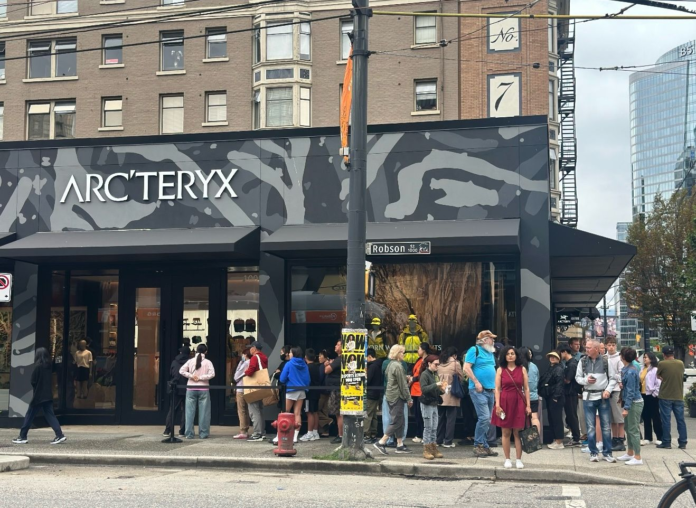
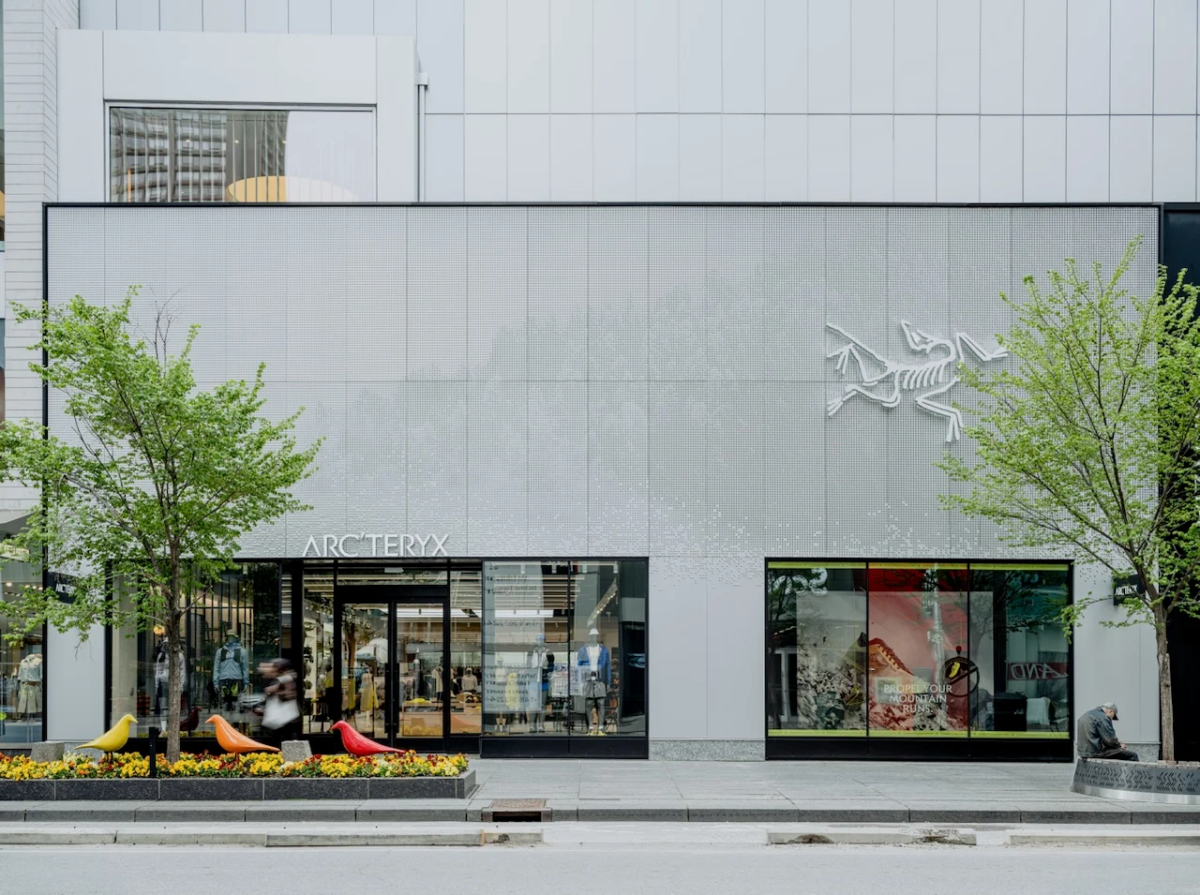
Arc'teryx store at 1001 Robson Street in Vancouver. Photo: Chris Pelyk

Vancouver-based Arc’teryx sees substantial room to expand its physical retail network across North America, with parent company Amer Sports saying the outdoor brand’s current footprint of 75 stores could eventually reach roughly 200 locations.

The long-term opportunity comes as Arc’teryx continues to post strong growth across regions and channels while investing in new stores, larger formats and a broader product assortment. North American growth accelerated during the second quarter of 2026, and Amer Sports continues to identify Arc’teryx as one of its primary global growth engines.

Canada remains central to that strategy. Arc’teryx CEO Stuart Haselden told analysts that Canada is the company’s home market and the market where brand awareness is highest, providing a natural foundation for expansion into the United States.

“Canada is our home market, where we see highest brand awareness, and it has enabled us to have a natural launching point into the U.S.,” Haselden said during Amer Sports’ second-quarter earnings call.

In the U.S., Arc’teryx is concentrating expansion in major urban markets including New York, Los Angeles, San Francisco and Chicago, where management sees the largest pools of consumer demand. That is complemented by what Haselden described as a “mountain town strategy,” targeting outdoor destinations such as Aspen and Park City, alongside e-commerce and selected premium wholesale distribution.

Canada Provides Foundation for Growth

The approach builds on a Canadian store network that has expanded considerably over the past decade. Arc’teryx had only a handful of branded stores in Canada in 2017, while in 2022 the company told Retail Insider it believed the Canadian market could ultimately support approximately 30 to 35 stores. Its current online store locator lists roughly three dozen locations across British Columbia, Ontario, Alberta, Quebec and Nova Scotia.

The Canadian expansion has also evolved beyond adding locations. Arc’teryx has invested in larger and more prominent stores, deeper assortments and locations serving different types of consumers, from major urban shopping districts to mountain destinations.

In Toronto, Arc’teryx opened its 9,274-square-foot Alpha flagship on Bloor Street in 2024, establishing a significant presence on one of the country’s leading premium and luxury retail corridors. The store introduced a broader assortment and an expanded ReBIRD Service Centre, while positioning the outdoor brand alongside some of Toronto’s best-known fashion retailers.

Arc’teryx has also widened its geographic reach. The company opened its first Banff store in 2025, occupying approximately 4,100 square feet in part of the former Hudson’s Bay building and strengthening its connection with consumers in a major mountain destination. Halifax became the brand’s first Atlantic Canadian market, while a location at Royalmount in Montreal added another presence within a major premium retail development.

In Vancouver, where Arc’teryx was founded, the company has continued to invest in physical retail. Its downtown flagship relocated to a larger 6,430-square-foot space on Robson Street in 2025, expanding the brand’s presence on one of the city’s busiest retail streets.

The Vancouver network grew again during the second quarter of 2026 with the opening of Arc’teryx at Oakridge Park. Amer Sports highlighted Oakridge Park and Southdale in Minnesota as two of the brand’s North American openings during the quarter, describing both as elevated presentations of the brand.

Arc’teryx opened eight net new stores globally during the second quarter and continues to plan 30 to 35 net new locations across all markets for the full year.
Arc’teryx Opened First ‘Alpha’ Store Concept at 50 Bloor Street West in Toronto. Photo supplied

Store Expansion Accompanied by Strong Sales

The store expansion is being accompanied by strong performance from the existing business. Revenue in Amer Sports’ Technical Apparel segment, led by Arc’teryx, increased 32 per cent year over year to US$674 million during the second quarter. Direct-to-consumer revenue increased 34 per cent, including a 17 per cent omnichannel comparable-sales increase, while wholesale revenue grew 27 per cent.

All geographic regions delivered strong double-digit growth for Technical Apparel, according to Amer Sports, with Arc’teryx also seeing an acceleration in North America.

Direct-to-consumer distribution has been a major catalyst for Arc’teryx’s growth over the past five years, Haselden said, although wholesale continues to play an important role. The company uses selected wholesale partners to reach consumers and position Arc’teryx alongside other premium brands, while its own stores give it greater control over assortment, service and the overall brand experience.

That shift is increasingly evident across Amer Sports. Group direct-to-consumer revenue increased 40 per cent during the second quarter and accounted for approximately 55 per cent of total revenue, a record high for the company. Wholesale revenue also increased 24 per cent.

Women’s and Footwear Drive New Growth

At Arc’teryx, the next phase of growth is also extending beyond the technical outerwear for which the brand is best known. Women’s was its fastest-growing category during the second quarter, with management pointing to improvements in fit, styling, function and assortment as contributors to higher traffic and conversion among female consumers.

New products and seasonal colourways generated more than 60 per cent of women’s sales during the quarter. Amer Sports has identified the category as a significant long-term opportunity for Arc’teryx and is expanding products developed specifically for women.

Footwear represents another growing part of the business. Arc’teryx reported strong double-digit footwear growth across regions during the quarter, with the Norvan LD 4 trail running shoe remaining its largest-volume footwear style. Management said the brand has a substantial pipeline of additional footwear launches planned for the coming years.

The broader assortment is also becoming more important to the store strategy, giving larger locations room to present outerwear alongside footwear, women’s products and other apparel within a more complete Arc’teryx environment.

Amer Sports CEO James Zheng said the company plans to continue investing in Arc’teryx through global brand campaigns, store openings and greater penetration in selected markets. Product investment will remain focused on growth opportunities including women’s and footwear.
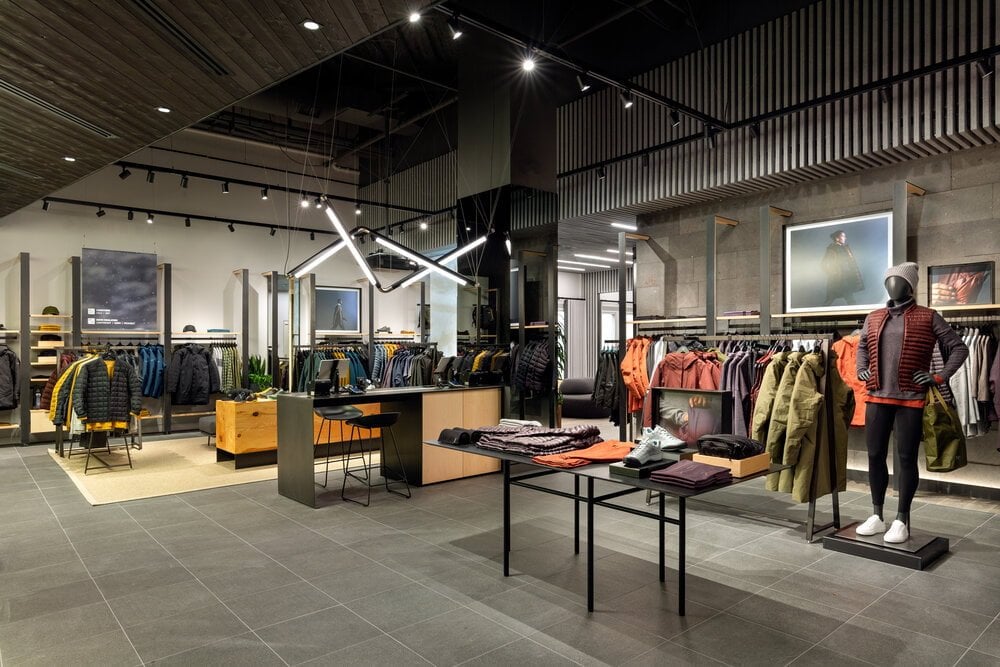
PHOTO: ARC’TERYX

Those investments are being made against a strong financial backdrop. Amer Sports revenue increased 32 per cent year over year during the second quarter, or 30 per cent excluding currency effects, while revenue in the Americas increased 26 per cent.

The company raised its full-year 2026 revenue growth outlook to approximately 24 per cent following the quarter. Expected growth for the Technical Apparel segment was increased to between 25 and 26 per cent, up from previous guidance of between 22 and 24 per cent.

Amer Sports is maintaining approximately US$400 million in planned capital expenditures for 2026, primarily to support retail expansion and IT infrastructure.

Arc’teryx has moved from a relatively small Canadian specialty-store network to a national footprint spanning major urban centres, premium shopping centres and mountain destinations. Canada has become the brand’s highest-awareness market and an established base for its wider North American strategy.

With 75 stores across North America today and management seeing potential for roughly 200 over time, Arc’teryx is preparing for a significantly larger physical presence across the continent. Its Canadian network shows how the brand has used owned retail, premium locations and an expanding assortment to build scale while maintaining its technical outdoor positioning.

More from Retail Insider:

Canadian Retailers Push Sustainability Deeper Into Operations as Business Case Evolves

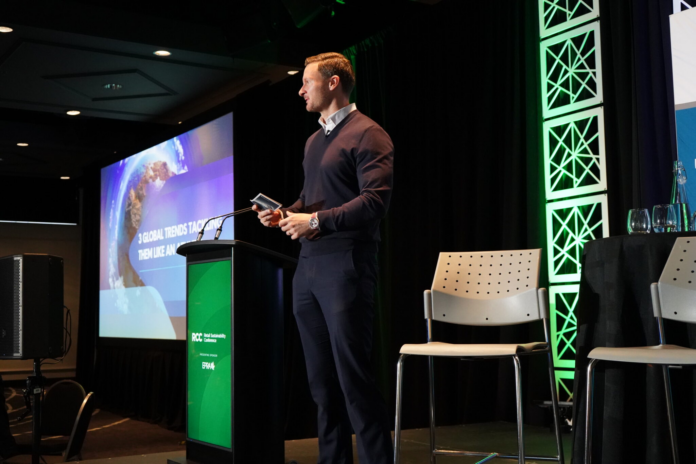
Retail Sustainability Conference. Image: Retail Council of Canada

Retail sustainability is showing up in the machinery of the business.

Across manufacturing plants, stores, distribution networks, packaging systems and product recovery programs, major retailers and consumer-facing companies are putting capital and operating resources behind initiatives measured in energy savings, emissions reductions, diverted waste, electric deliveries and products returned to circulation.

That shift is visible among the finalists for Retail Council of Canada’s inaugural Retail Sustainability Excellence Awards, which will be presented October 28 at the Metro Toronto Convention Centre. The finalist group spans retailers, brands, quick-service restaurant companies and other organizations across ten categories covering packaging, waste diversion, logistics, facilities, supply chains and circularity.

The programs provide a useful snapshot of where sustainability investment is showing up inside retail businesses in 2026. Many of the strongest examples involve changes to everyday operations and capital planning.

Canada Goose, for example, has undertaken a multi-year electrification program across its Canadian manufacturing facilities, replacing natural gas heating systems with electric heat pumps. The company says it has invested more than $7 million in the initiative, reducing natural gas consumption by 45 per cent and associated Scope 1 emissions by 42 per cent.

Sobeys has been working on a different operating challenge: refrigeration. The grocer says it has reduced emissions associated with refrigeration leaks by 37.83 per cent since 2019 and is incorporating lower-global-warming-potential refrigeration technologies into new stores and major renovations.

IKEA Canada, meanwhile, completed more than 365,000 zero-emission home deliveries during its 2025 fiscal year. By August 2025, electric vehicles accounted for 72 per cent of its big-and-bulky home deliveries.

Together, these initiatives show sustainability moving into capital planning, facilities management, logistics and store development, areas that retailers already scrutinize closely for cost, efficiency and productivity.

Sustainability Moves Into Retail Operations

Retailers replace refrigeration systems. Manufacturers upgrade heating equipment. Distribution networks evolve. Stores are renovated and constructed. Packaging is redesigned.

Sustainability considerations are becoming part of those decisions when capital is allocated. That can make some initiatives easier to scale, particularly when they are incorporated into scheduled equipment replacement, new-store development or broader operational modernization.

A Saskatchewan grocery project involving Federated Co-operatives Limited and Gateway Co-op offers an unusual example. The organizations used reclaimed timber from decommissioned Prairie grain elevators in the construction of a 12,682-square-foot food store.

The environmental benefit is clear, but the more commercially significant claim is that the approach can be replicated at a cost comparable with conventional construction. If that can be achieved across future projects, the decision becomes considerably easier for retail developers and operators.

Sobeys’ refrigeration work points in a similar direction. New refrigeration technology can be introduced as stores are built and renovated, integrating emissions reduction into the normal cycle of retail capital expenditure.

For landlords, developers, contractors, architects and equipment suppliers, the implications could be significant. Technologies and materials once treated as specialized sustainability features can gradually become part of the standard specification for a modern store.

Regulation Is Changing the Economics of Waste

These operational changes are unfolding as governments shift greater responsibility for waste and materials toward producers.

Ontario completed its transition to a producer-run Blue Box system on January 1, 2026. Producers of packaging, paper products and packaging-like products are now responsible for operating and funding the program, replacing a legacy system in which municipalities and producers shared costs.

That places more of the economic consequences associated with packaging choices on the businesses putting those materials into the market.

The federal government is also collecting more information through the Federal Plastics Registry. Producers subject to current requirements must report data on plastic packaging and certain products placed on the Canadian market, with 2026 reporting covering 2025 data. Federal reporting does not replace separate provincial Extended Producer Responsibility requirements.

Packaging decisions therefore carry growing implications for reporting, compliance and waste-management costs.

Canadian Tire offers one example of how the response can move upstream into product development. Among its finalist initiatives are programs incorporating post-consumer recycled material into products and packaging across categories including automotive, home and garden.

One project involving MotoMaster oil drain pans shifted manufacturing to Canada while incorporating recycled plastic, with Canadian Tire estimating that comparable sales volumes could avoid the use of up to 33 tonnes of virgin plastic.

The significance extends beyond what happens to a product after a customer has finished with it. Material decisions are being made when merchandise itself is designed and sourced, creating a stronger connection between sustainability teams, merchants, sourcing departments and private-label product developers.

Circularity Creates Another Retail Transaction

Some of the most commercially interesting finalist programs are finding ways to retain a relationship with merchandise after the original sale.

IKEA Canada’s national Sell-back Program allows IKEA Family members to return eligible used furniture in exchange for store credit. The furniture can then be resold through the company’s As-is marketplace.

Over two years, IKEA says the program has returned more than 30,000 pieces of furniture to circulation, involved more than 32,000 customers and issued more than $1.9 million in store credit.

The retail mechanics are particularly interesting. IKEA acquires used inventory, the customer returning the product receives credit that can be spent with IKEA, and another customer gains access to lower-priced merchandise.

Circularity in this case creates another customer transaction.

Sleep Country Canada has developed another version of the model around one of retail’s more difficult end-of-life products. The retailer combines its Green Glove mattress take-back and recycling program with Second Sleep certified renewed mattresses.

Sleep Country says approximately 2.2 million mattresses have been recycled since 2004, while roughly 221,000 have been refurbished since 2021.

TELUS has built a broader product lifecycle system around mobile devices. Trade-in and Bring-It-Back programs collect products from consumers, Mobile Klinik provides repairs, certified pre-owned devices create another merchandise stream, and recycling programs handle products that have reached the end of their useful life. The company says the system operates through 165 locations.

These models point toward an evolving role for retailers. Repair, resale, refurbishment and take-back programs give them opportunities to remain involved later in a product’s life, potentially creating lower-priced inventory, additional customer interactions and incentives for future purchases.

Every circular program will have different economics, and some retail categories lend themselves to resale far better than others. The finalist programs show that circularity can have commercial mechanisms built into its environmental objectives.

Environmental Claims Face Greater Scrutiny

The ability to measure results matters for another reason.

Canada’s Competition Act contains provisions addressing environmental marketing claims, including requirements related to adequate testing or substantiation. Amendments that received Royal Assent in March 2026 changed some of the requirements surrounding environmental claims, but businesses still need evidence supporting relevant claims and remain prohibited from making false or misleading representations.

The Competition Bureau advises companies to keep environmental claims truthful, specific and properly supported while avoiding exaggerated benefits or unsupported future promises.

Against that backdrop, the highly numerical nature of many RCC finalist submissions is notable. The programs frequently specify tonnes of waste diverted, percentages of emissions reduced, numbers of products recovered or deliveries completed using electric vehicles.

For retailers, measuring an environmental initiative can be as important as implementing it. The resulting data can support regulatory reporting, internal capital decisions and public environmental claims.

Sustainability Moves Upstream

Retail sustainability is also extending beyond stores and distribution networks into sourcing.

For companies selling food and other products tied to agriculture, commodities and natural resources, a significant portion of their environmental impact can sit outside direct operations.

Restaurant Brands International, for example, says more than 98 per cent of its greenhouse gas emissions occur within its supply chain. Its sustainability work therefore extends into areas including beef, coffee, palm oil and fibre-based packaging.

Sobeys has similarly developed sourcing criteria for seafood that incorporate factors including species, origin, harvesting methods, certification and other environmental and social considerations. The company says 90 per cent of the fresh, frozen and canned seafood it sells by weight already meets its sustainable sourcing criteria, against a goal of 95 per cent by 2030.

In these cases, sustainability information can serve another business purpose: visibility.

Understanding where products originate, how they are produced and what risks exist within a supply chain can support procurement decisions while giving businesses a clearer picture of their environmental exposure. That becomes particularly important as retailers contend with volatile commodity markets, climate-related disruption and complicated global sourcing networks.

When Sustainability Investment Resembles Productivity Investment

The programs represented among RCC’s finalists do not share a single economic model, and environmental investment should not automatically be assumed to generate a financial return.

Still, a pattern emerges.

Energy efficiency can reduce consumption. Packaging redesign can reduce material requirements. Waste diversion can lower disposal needs. Resale and refurbishment can recover merchandise that previously had little residual value. Take-back programs can bring customers back into a retail ecosystem. Supply-chain data can improve visibility, while better product and packaging design can reduce exposure to producer-responsibility costs.

In parts of retail, sustainability investment is beginning to resemble productivity investment.

Companies have stronger incentives to scale programs when environmental improvement intersects with operating efficiency, cost management, customer retention or revenue opportunities.

The economics will vary considerably by sector. Electrifying a manufacturing plant requires a very different investment from establishing a furniture resale program, while replacing refrigeration equipment differs again from redesigning packaging.

What connects these initiatives is how closely they are becoming integrated with the underlying business.

Could Scale Become an Advantage?

That integration raises another question: which retailers are best positioned to make these investments?

Large organizations can spread investments in data systems, refrigeration, fleet electrification, reverse logistics and packaging development across significant volumes and broad networks. They also have purchasing power with suppliers and greater ability to influence packaging specifications, transportation providers and manufacturing practices.

Smaller retailers may benefit as technologies become less expensive and industry infrastructure develops. Major upfront investments and complex reporting requirements, however, can be more difficult to absorb without scale.

Sustainability capability could therefore become another area where larger retailers gain operating advantages, particularly when reducing environmental impact can also reduce costs or regulatory exposure.

Scale will not determine environmental performance. It may, however, influence how quickly retailers can invest in some of the systems and infrastructure now emerging across the industry.

Sustainability Becomes a Retail Strategy Issue

Retail Council of Canada will announce the winners of its inaugural Retail Sustainability Excellence Awards on October 28.

The larger shift is already apparent among the finalists.

Environmental initiatives are reaching functions at the centre of retail operations: product development, manufacturing, construction, refrigeration, logistics, procurement, inventory recovery and customer transactions.

Regulatory changes are increasing the importance of understanding what materials companies place into the market and what happens to them afterward. Greater scrutiny of environmental claims is raising the value of measurable results, while circular models are giving retailers new ways to recover products, extend their useful lives and reconnect with customers.

For retailers, sustainability is becoming increasingly intertwined with decisions about capital, productivity, costs, merchandise, supply chains and customers. As those connections deepen, environmental performance is becoming another consideration in how retail businesses are built, operated and positioned to compete.

More from Retail Insider:

Daily Synopsis: August 24, 2026

Welcome to the Daily Synopsis by Retail Insider. We hope you enjoy the 10 articles we published covering key developments in Canadian retail.

Westcliff expanded its national portfolio with the acquisition of Kingsway Mall in Edmonton, marking a renewed presence in Western Canada. Walmart intensified its Canadian digital strategy by growing Walmart+, Marketplace, and fulfillment services while making Canada the first international market to adopt its paid membership model.

Ottawa’s planned counter-tariffs on U.S. food inputs could raise grocery prices, risking burden on lower-income households. Retail brands face a $381.3 million issue with outdated and unmanaged content impacting revenue amid growing AI use. Retail Insider also published coverage of SHEIN planning a four-day pop-up in Montreal showcasing its Fall/Winter line.

🗞️ The Day’s Retail Insider Article List

🌐 Canadian Retail News From Around the Web

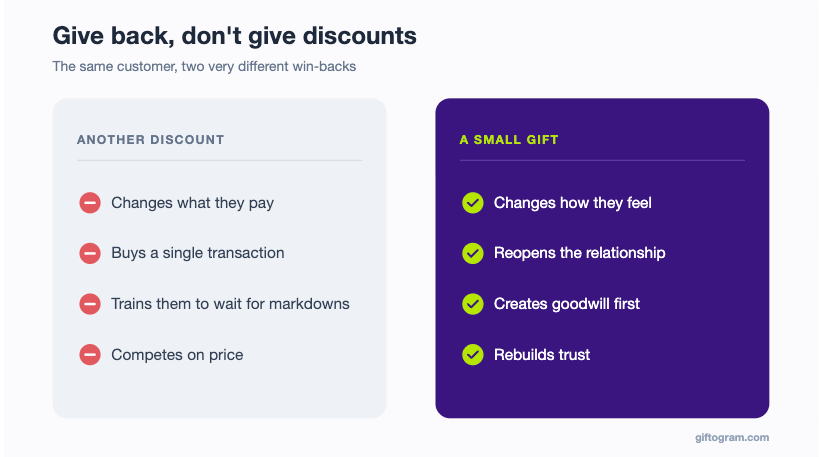
Winning Back Lapsed Customers: Give Back, Don’t Give Discounts

Every retailer knows there’s a big difference between winning a customer for the first time and persuading one to come back. With a new customer, you’re building trust while competing for attention, but former customers are different. They already know your brand, have bought the product or experienced the service, and for whatever reason, decided it was no longer the right fit. So the challenge here isn’t getting them to notice you again, but understanding what changed before giving them a reason to believe in the relationship again. Well-designed customer rewards can play an important role in that process, but only when they’re used to rebuild trust rather than simply encourage another purchase.

Retailers have no shortage of win-back tactics, from discount codes and loyalty offers to gift cards and loyalty incentives. Some rebuild relationships. Others simply buy another transaction. Understanding the difference is what separates a successful win-back campaign from another short-lived sales promotion.


Why relationship repair beats price reduction

If you’re approaching a win-back campaign the same way you’d approach customer acquisition, you’re probably starting in the wrong place. Former customers don’t need to discover your brand. They already know who you are, so your goal now is to understand why they left and what would make returning worthwhile.

Reaching for another discount, while understandable, isn’t always the best move. Instead, ask yourself: “Why did this customer stop buying in the first place?”

If someone stopped buying because of a poor experience, changing needs or a stronger competitor, offering 20% off may generate another order without addressing the reason they left. A lower price changes the transaction, not necessarily the relationship.

The commercial case for getting this right is difficult to ignore. Research summarized by Harvard Business Review estimates that acquiring a new customer costs five to 25 times more than retaining an existing one, while Bain & Company found that increasing retention by just 5% can lift profits by 25% to 95%.

For most retailers, a lapsed-customer list is both a record of yesterday’s sales, and one of the biggest growth opportunities they already own.


Why discounts can become part of the problem

The challenge with repeated discounts isn’t just that they can fail to solve the underlying problem, they can also change customer behavior. Research by Carl Mela, Sunil Gupta and Donald Lehmann, published in the Journal of Marketing Research, found that sustained promotional activity makes customers increasingly price-sensitive over time. The more often discounts appear, the more shoppers learn to wait for them.

That’s where many win-back campaigns begin to undermine themselves. If every period of inactivity is rewarded with a better offer, customers don’t just respond to the discount—they begin to expect it. The campaign may recover the next order, but it also teaches customers that leaving can be worthwhile.

A gift changes the relationship, not the price

If another discount risks reinforcing the wrong behavior, what’s the alternative? Stop asking customers to buy again before you’ve given them a reason to want to.

A small digital gift card changes the tone of the conversation. Instead of saying, “We’ll sell it to you for less,” it says, “We’d like to welcome you back.” The price of the product stays exactly the same, but the relationship starts from a different place.

One is a negotiation; the other is a gesture. Gifts create goodwill before asking for commitment. Research suggests giving first can influence how people respond. In a large field experiment published in Econometrica, economist Armin Falk found that including a small, unconditional gift significantly increased the likelihood of a response.

The principle is simple: giving first changes the tone of the interaction before asking for anything in return, which is one reason digital gift cards have become increasingly common in customer rewards programs. Unlike a store discount, they have value beyond the retailer’s own products and give recipients the freedom to choose something they genuinely want.

Customer rewards platforms such as Giftogram make that practical by allowing retailers to deliver digital gift cards through bulk campaigns. Rewards can be triggered from existing CRM and marketing systems, making it easier to run personalized win-back campaigns at scale.

The technology doesn’t create the thoughtfulness; it simply makes a thoughtful approach practical and repeatable. A discount changes what the customer pays. A gift changes how they feel about the business making the offer. One competes on price. The other starts rebuilding trust.


Where a gift card makes the most sense

Not every customer needs another offer. Some need a reason to feel differently about your brand. Take the customer who hasn’t bought in six to twelve months. A goodwill gesture often lands better than a discount here, precisely because it feels less like a transaction and more like being remembered. Or take the aftermath of a service failure. A refund fixes the money; it doesn’t always fix the feeling. An unexpected gift can.

A meta-analysis in the Journal of Service Research found evidence that, in some circumstances, a well-handled successful service recovery can leave customers more satisfied than if nothing had gone wrong.

Gift cards also work as a thank-you for private, post-purchase feedback, as long as the reward is never tied to a public review. Google’s policies prohibit incentivized reviews, so reward the feedback, not the rating.

Test the economics before you scale it

Like any retention strategy, the only way to know whether it works is to test it.

Start with one customer segment, one reward value and a genuine control group. Then measure the outcomes that matter: repeat purchases, incremental margin and customer value over time. Email opens and click-through rates may tell you whether the campaign was seen. They don’t tell you whether the relationship improved.

As campaigns grow, platforms such as Giftogram help centralize reward delivery and reporting, making personalized win-back campaigns easier to manage without adding manual administration.

Even when a customer doesn’t come back immediately, a gift card has still created a positive brand experience. Unlike another discount email, it’s a thoughtful interaction that can be personalized with your own branding and message, giving customers something of value rather than simply asking for another purchase. Whether they redeem it next week or remember the gesture months later, the reward continues working long after the email has been opened.

Conclusion

Every name on a lapsed-customer list represents someone who chose your business once before. Winning them back begins with understanding why that changed. Discounts, gifts and rewards are all tools. The results depend on choosing the one that solves the problem you’re trying to fix.

What Canadian Retailers Can Learn From the Home Services Sector About Customer Loyalty

Retail loyalty programs have become table stakes. Points, tiers, birthday discounts — nearly every Canadian retailer runs some version of the same playbook. Yet loyalty, in the true sense of the word, is becoming harder to earn. Shoppers compare prices in seconds, switch brands on a whim, and rarely think twice before abandoning a cart for a better deal elsewhere. Companies like Aquatech basement waterproofing, on the other hand, operate in a sector where trust is earned so slowly that customers stay loyal for decades — and that gap is worth examining.

Interestingly, one sector has quietly built a different kind of customer relationship: home services. Companies that install furnaces, repair roofs, or waterproof basements don’t get repeat purchases every week. They might see a customer once every several years. And yet, when that customer needs the service again — or knows someone who does — they call the same company without hesitation.

That kind of trust doesn’t happen by accident. Here’s what retailers can borrow from how the home services industry builds it.

1. Trust Is Built Before the Sale, Not After

In home services, the sales process itself is where trust is won or lost. A technician who shows up on time, explains the problem in plain language, and doesn’t oversell is remembered — and referred. Companies in this space, from HVAC contractors to specialists like basement waterproofing providers, understand that the first interaction often determines whether there will ever be a second one.

Retailers can apply the same logic to every touchpoint before checkout: clear product information, honest reviews, transparent pricing, and staff (in-store or via chat) who genuinely help rather than push. Trust isn’t a loyalty perk unlocked after purchase; it’s the reason the purchase happens at all.

2. Service Recovery Matters More Than Perfection

No home services company gets it right 100% of the time. Pipes still leak after a repair. A waterproofing job might need a follow-up visit. What separates the companies people recommend for decades from the ones they never call again is how the problem gets fixed — quickly, without excuses, and often with an added gesture of goodwill.

Retailers tend to treat complaints as a cost center to minimize. The more useful mindset is to treat them as the single highest-leverage moment to build loyalty. A refund processed instantly, an apology that doesn’t sound scripted, or a small unprompted discount after a shipping delay can do more for retention than months of point accumulation.

3. Expertise Is a Loyalty Driver, Not Just a Sales Tool

Home services businesses succeed by educating, not just selling. A contractor who explains why a basement is leaking, what the long-term risk is, and which fix actually solves it (rather than just patching the symptom) earns credibility that outlasts the transaction. Customers remember who taught them something useful.

Retailers — especially in categories like electronics, beauty, home goods, or outdoor gear — have the same opportunity. Buying guides, honest comparisons, and staff who can answer a real question build the kind of credibility that discount codes never will.

4. Referrals Outperform Rewards Points

Home services companies live and die by referrals, because paid advertising alone rarely covers the cost of acquiring a customer who buys once every few years. That forces them to obsess over word-of-mouth: every job is treated as a potential source of the next three customers.

Retailers, especially those competing with marketplaces on price alone, would benefit from applying the same obsession. A referral program that genuinely rewards both sides — not a token discount buried in the fine print — tends to outperform generic points systems, because it turns satisfied customers into an active sales channel instead of a passive database entry.

5. Consistency Beats Novelty

Home services brands rarely reinvent themselves. The value proposition — reliability, fair pricing, work that lasts — stays consistent for years, because that consistency is what earns the next call. Retailers, by contrast, often chase novelty: new campaigns, new loyalty tiers, new app features, sometimes at the expense of just being dependable.

The lesson isn’t to stop innovating. It’s to recognize that for many customers, the deciding factor isn’t the newest feature — it’s whether the brand delivered exactly what it promised, the same way, every time.

The Bigger Picture

Retail and home services are different businesses with different purchase cycles, but the underlying psychology of loyalty is the same: people return to businesses that make them feel informed, respected, and taken care of when something goes wrong. Home services companies have had to master this because their margin for error, and their frequency of contact, is so much smaller.

Canadian retailers operating in an increasingly commoditized, price-driven market don’t need a bigger loyalty program. They need to borrow a page from an industry that has never had the luxury of relying on impulse purchases — and has built its entire business on being the company people call again.

The Buy Canadian Effect: How Local Service Businesses Are Winning Consumer Trust

Something shifted in the Canadian consumer mindset in 2025 — and it hasn’t shifted back.

What began as a response to trade uncertainty and cross-border tariff tensions evolved into something more durable: a genuine, measurable preference among Canadian consumers for businesses that are rooted here. Not just Canadian-owned in a legal or corporate sense, but locally operated, locally staffed, and locally accountable. Businesses where the owner’s name is on the truck, where the crew that shows up is the same crew that answered the phone, and where a complaint doesn’t route through a call centre in another province.

This shift has been well-documented in the retail sector. The surge in “Made in Canada” labelling, the growth of Canadian-owned online marketplaces, the measurable increase in consumers actively checking ownership before purchasing — all of it reflects a consumer that has become more deliberate about where their money goes and who benefits from it.

What has received less attention is how the same sentiment is reshaping the residential services sector — and producing equally significant results for the local operators who have built the kind of trust that national chains and franchise models struggle to replicate.

The Trust Premium in Home Services

In retail, brand trust is built through product consistency, return policies, loyalty programs, and marketing. In home services, trust is built differently — and the stakes are considerably higher.

When a Canadian homeowner hires a contractor to waterproof their foundation, replace their roof, or rewire their electrical system, they are inviting someone into the most valuable asset they own and handing them significant authority over its condition. The transaction cannot be returned. The work cannot be easily inspected. The consequences of a poor decision — failed waterproofing, structural damage, fire risk — can materially affect the value and safety of the home for years.

In this environment, the factors that drive consumer choice are not price and convenience. They are reputation, accountability, and longevity. And on all three, local operators with deep community roots consistently outperform the alternatives.

The team that provides basement waterproofing Toronto homeowners rely on understands this dynamic well. Direct Waterproofing has operated under the same name since 1995 — more than 30 years of continuous operation in a single market, with a reputation built one job at a time and verified through thousands of documented customer reviews. That continuity is itself a trust signal. A contractor that has operated under the same brand for three decades has, by definition, stood behind its work long enough to accumulate a verifiable history. That history is available to any consumer willing to spend ten minutes with a search engine — and increasingly, consumers are doing exactly that.

What “Buy Canadian” Actually Means in a Service Context

In retail, the Buy Canadian movement has a relatively clear definition: purchase products manufactured in Canada, from companies headquartered here, employing Canadian workers. The supply chain narrative is visible and traceable.

In services, the equivalent commitment is subtler but no less meaningful. Hiring a locally owned home services company means that revenue stays in the local economy rather than flowing to a national head office. It means the crew working on your property is employed by someone who lives in your region and has a direct stake in the community’s opinion of their work. It means that when something goes wrong — and in construction and renovation, something occasionally does — the person responsible is reachable, has a local licence number that can be verified, and has a reputation to protect.

This accountability structure is precisely what national franchise models and aggregator platforms struggle to provide. A contractor sourced through a lead-generation platform may be technically qualified, but their accountability to any individual consumer is limited. They are one node in a network, not a local business owner whose livelihood depends on their standing in a specific community.

Canadian consumers are making this distinction with increasing clarity. A 2025 survey by the Business Development Bank of Canada found that trust and local accountability ranked above price as decision drivers for home services purchases — a notable shift from pre-pandemic data where cost was consistently the dominant factor. The tariff environment accelerated something that was already developing: a consumer base that had begun to question whether the cheapest option was actually the best value when accountability was factored in.

The Operational Advantages of Local Operators

The Buy Canadian preference in home services is not purely sentiment — it is also, in many cases, a rational economic calculation.

Local operators know their markets in ways that national players cannot replicate from a distance. A waterproofing company that has spent 30 years working on homes in a specific region understands the local geology, the age and construction profile of the housing stock, the seasonal patterns that drive specific types of foundation failure, and the municipal rebate programs that can offset costs for homeowners. That local knowledge produces better diagnoses, more appropriate solutions, and better long-term outcomes.

It also produces more accurate pricing. Local operators competing on reputation rather than volume have less incentive to offer artificially low quotes that get revised upward mid-project. Their business model depends on referrals and reviews from a finite geographic community — which means every job has to be completed to a standard that the customer will be willing to describe positively to a neighbour.

For the home services category specifically, this combination of local knowledge, reputational accountability, and community investment is proving to be a durable competitive advantage — one that national scale cannot easily replicate and that the Buy Canadian consumer preference is now actively rewarding.

What Retailers and Industry Observers Should Watch

The trend in home services mirrors dynamics that the retail sector is already navigating. Consumers who have developed a deliberate preference for local, accountable businesses do not compartmentalise that preference by category. A household that commits to buying Canadian-made products from independent retailers is the same household that is scrutinising who waterproofs their basement, replaces their HVAC system, and services their plumbing.

This represents both a challenge and an opportunity for businesses across the home services spectrum. Companies that have invested in local reputation — verified reviews, community presence, long operating histories, transparent licensing and warranty terms — are well-positioned to capture the attention of a consumer base that is actively looking for reasons to choose them. Companies that have relied on price competition or national brand recognition alone are finding that neither is the differentiator it once was.

The Buy Canadian effect is not a temporary phenomenon driven by tariff anxiety. It reflects a durable recalibration of how Canadian consumers think about trust, accountability, and the relationship between where they spend money and what they get in return. For local service businesses that have spent years building genuine reputations in their communities, the market has finally caught up with what they already knew: longevity, accountability, and local roots are not soft values. They are competitive advantages — and Canadian consumers are beginning to pay for them accordingly.

How smaller online retailers can compete without Amazon-scale logistics

For growing independent brands, standing out in today’s e-commerce landscape can feel like an uphill battle. Customers have grown accustomed to 24-hour and same-day delivery, putting retailers under pressure to protect tight margins. 

The answer, here, isn’t necessarily to spend more but to be more deliberate about how shipping is managed. Taking the time to review available services when you compare parcel delivery costs online can uncover opportunities to make smarter decisions. 

A major misstep is trying to replicate massive enterprise ecosystems: it’s simply not possible. Independent businesses can, however, carve out a distinct competitive advantage by rethinking how they approach fulfilment. 

Compete on experience (not infrastructure)

Smaller online retailers may feel intimidated by the physical networks of giants like Amazon, and it’s no wonder: the company generates over $710 billion in annual revenue and has almost 1.5 million employees worldwide.

But the reality is, customers often don’t care if you own a fleet of delivery vans or a huge fulfilment centre. They only care about what happens after they place an order. Once a customer clicks ‘buy’, their priorities are outcome-driven. 

With reasonable shipping prices and delivery windows, independent retailers can shift their focus from owning logistics infrastructure to making good use of the services already at their disposal. 

So, you’re not trying to compete with Amazon on scale – make delivery feel dependable, and you can build the kind of deep brand loyalty that keeps customers coming back for more. 

Make flexibility your advantage

Smaller retailers might not have the shipping volumes needed to secure the kind of direct carrier agreements available to the biggest e-commerce businesses, but they can make flexibility work in their favour.

Relying on one courier for every order isn’t always the best approach, as no single courier excels at every destination, parcel size, or speed requirement. In fact, it often leads to overpaying on certain routes or offering sub-optimal service levels to your customers. 

Different shipments call for different solutions. Access to varying service levels means smaller retailers can choose based on each shipment’s needs without being tied to a single solution.

Equally, it gives retailers room to respond when circumstances change. A carrier that suits regular domestic orders may be less competitive during peak periods, so having alternatives available can prevent something that’s temporary becoming a customer-facing issue. 

With that level of flexibility, you can offer customers the right range of choices at checkout and keep costs under control. 

Don’t try to win every delivery on speed

As an independent retailer, matching Amazon’s same-day delivery promises isn’t feasible. Small retailers often don’t need to match that speed on every order, and trying to do so can increase costs without providing enough value to justify them. 

Data shows that shoppers prefer affordable economy delivery over rapid shipping (as long as they receive a guaranteed arrival date). Offer a clear spread of services (e.g., economy, standard service, and a premium express upgrade), and you give the customer control. 

This kind of reliability is a far more achievable differentiator than speed alone. The lesson is that promising a three-day delivery window (and delivering on time) is better than aiming for overnight shipping and falling short. 

Turn delivery into a brand advantage

Another way smaller retailers can strengthen their position is by making delivery part of the overall brand experience rather than treating it as a purely operational task. For many customers, the relationship with a retailer does not end when an order is placed. The delivery process can influence how they perceive the business, from the first confirmation email to the moment the parcel arrives at their door. 

Clear communication, accurate tracking and realistic delivery promises can give customers confidence throughout the purchasing process and reduce the uncertainty that can sometimes come with online shopping.

Small retailers can also use delivery as an opportunity to demonstrate the qualities that make their brand different. Providing regular updates, explaining any potential delays and making returns straightforward can help create a sense of reliability and transparency. Customers are often more willing to accept a slightly longer delivery window when they know exactly when their order is expected to arrive. This means that smaller retailers do not necessarily need to offer the fastest service available; instead, they need to make the service they offer feel dependable and well managed.

Personalisation can also play an important role. Unlike large marketplaces that often rely on highly standardised processes, independent retailers have more opportunities to create a customer experience that reflects their brand identity. Thoughtful packaging, personalised messages, flexible delivery options or responsive customer support can turn an otherwise routine transaction into a more memorable experience. These details may appear small individually, but together they can help reinforce a retailer’s values and encourage customers to associate the brand with quality and care.

Ultimately, efficient fulfilment and attentive customer service can become a genuine competitive advantage for independent retailers. By focusing on transparency, reliability and personalisation, smaller brands can build stronger relationships with customers and encourage repeat purchases. Rather than attempting to compete with major e-commerce platforms solely on delivery speed or price, they can differentiate themselves through an experience that feels more trustworthy, responsive and personal. In this way, delivery becomes more than simply the final stage of a sale—it becomes an important part of the brand itself.

You don’t need to compete on scale

It’s clear that a huge supply chain isn’t a prerequisite for e-commerce success. Tap into external carrier networks (and routinely compare your shipping options), and, as a smaller merchant, you can easily meet consumer expectations. 

Directing your resources toward the specific fulfilment details shoppers actually value lets you deliver a more efficient, more reliable buyer journey. Better still, you avoid absorbing enterprise-level overhead or infrastructure costs.

Ultimately, smaller online retailers do not need to match Amazon’s scale to compete effectively. Instead, they can focus on what customers value most: reliable delivery, reasonable costs, flexibility, and a positive overall buying experience. By comparing shipping options, using different carriers where appropriate, and offering clear delivery choices, independent retailers can keep fulfilment costs under control without sacrificing customer satisfaction. Rather than trying to win on speed or infrastructure alone, smaller brands can turn agility and personalised service into genuine competitive advantages. In e-commerce, dependable fulfilment and a strong customer experience can be just as valuable as scale.

Peak Season Without the Panic: How Intelligent Route and Capacity Planning Keeps Retailers Ready for Demand Spikes

Every Q4 retailers face the same challenges in their supply chains. Unforeseen spikes in demand create logjams and inventory congestion. Carriers reach capacity, and route planners are overwhelmed. Loads reach weight limits without enough inventory on board or are underloaded and packed too full. By the time the data finally reports in, it is too late. Packages sit stuck in cargo bays, gallons of fuel wasted trucking boxes around town, and customers wait and wait for their packages to arrive.

Despite the best efforts of retail teams, delivering a great customer experience and driving sales growth is becoming increasingly difficult through overworked and under-resourced teams. Most organisations still rely on static route plans, manual scheduling, and what they believe to be a sensible headroom based on historical demand patterns. As tariff volatility and shifting consumer behaviour reshape 2026 retail strategy (Deloitte’s latest outlook flags inventory positioning and fulfilment agility as top-tier concerns), the margin for error is thinner than ever. and fulfilment agility as top-tier concerns), the margin for error is thinner than ever.

This is where having your capacity and route planned by intelligent AI technology is not a nice-to-have anymore but a necessity within the competitive freight and logistics environment.

The Peak Season Problem Is Getting Harder

The “peak season” used to be simple: Black Friday to Christmas Eve. But in the five years since numerous “demand events” have emerged in the commerce world, the period of high-pitched activity has stretched. Today, back-to-school, Labor Day Weekend, Prime Day sales, same-day delivery windows, and other “demand events” have joined the typical shopping spree from Black Friday to Christmas Eve. Meeting all of these new and growing demands on retailers requires delivery companies to manage three key factors: vehicle inventory, routing, and loading.

If a business is getting any of these three key factors wrong, the costs could be massive and ever-increasing. Here we explore the risks associated with empty miles, failed SLAs and how a flawed delivery experience can dent customer satisfaction.

What Intelligent Planning Actually Looks Like

Libera’s capacity and route planning module has been battle-tested within the ElasticRun logistics network of 2400+ small warehouses across 1800+ cities in India, conducting over 5 Million + shipments per day at the peak season. So, the edge cases that can break most systems during the year’s busiest time are not even theoretical to the platform, but rather things that was encountered with and solved at scale over more than a decade at Elastic Run.

.

The platform handles the complexity that most route planning tools struggle with during crunch periods:

Heterogeneous fleets: Peak season means pulling in every available asset – owned vehicles, contracted vehicles for the season and spot-hired vehicles for a week or a short period is not uncommon. At Libera we support a mixed fleet of owned vehicles and contracted vehicles with differing weight, volume and dimension limitations within a single plan, rather than companies having to manage each type of fleet separately.

Tight delivery windows: For quick-commerce and premium delivery services, the available delivery windows are decreasing dramatically. This is especially the case in urban hubs in the UK and around the world, where same-day and even near real-time delivery is becoming the norm. Libera’s planning engine uses AI scheduling to plan for these very tight delivery windows.

Multi-lane optimisation: When a retailer has multiple fulfilment centres or dark stores, the goal is to find the optimal solution for the entire network, rather than optimising the cost per vehicle for each individual lane. Optimising across the entire network with multi-lane planning in Libera ensures travel distance, vehicle volume and cost are optimised whilst workloads remain distributed evenly across the network of facilities without overloading individual hubs.

Real-world constraints: Many planners use route planning tools that do not take into account important factors such as dock availability and service time constraints when optimizing routes. Alternatively, routes and shifts are optimized but then planners hit a wall when they realize there are constraints on where EV drivers can stop to charge up. Libera optimizes route planning, incorporating these real-world factors from the very start.

The Numbers Behind the Claims

The outcomes Libera points to from its own operations aren’t small gains. Route planning that runs 5 times faster means daily plans that used to take a team the better part of a morning can be rerun and adjusted in real time as demand shifts through the day. An 8% reduction in fuel costs achieved through tighter route optimization and higher load factors compounds significantly at peak season volumes. And a 20% improvement in vehicle utilisation directly reduces the number of additional vehicles a retailer needs to hire during high-demand periods, which is where the real cost exposure typically sits.

It’s worth noting that these statistics were generated during the varied high volume trading of a retailer’s peak period as opposed to during a stable and consistent period of trading.

Adaptability Is the Real Differentiator

Perhaps the most underrated aspect of Libera’s planning engine is its configurability. Retail logistics isn’t one thing — a grocery retailer handling 10-minute delivery slots is solving a fundamentally different problem from a furniture retailer managing dock appointments across regional DCs. Libera’s planning scenarios are tailored to the specific constraints of the operation rather than forcing every use case into a single template.

It’s also worth considering whether the routing solution you choose will allow for a manual override in the event that the planner has information that the routing solution doesn’t. Road closures, special handling of an order for a customer, and local knowledge by the driver that a faster route is available. Once the route has been edited and frozen, it can then be sent to the driver’s app on their smartphone. Crucial to choosing the right routing solution is how well it supports the planners in their decision-making. It should be useful, but not override their knowledge and experience.

Planning for 2026 Peaks Starts Now

With Q4 2026 fast approaching, supply chain executives are unclear of potential changes to tariffs that will impact the landed cost of the products that they sell for their organization. Additionally, there are rapid changes in the behaviour of consumers that are also difficult to predict. There are also very restricted carrier markets due to the competitive nature of the industry today. Given these dynamics, success will be less about building a large and complex distribution network and more about utilizing retailers’ advanced planning tools and having the ability to quickly correct for any miscalculations in a company’s sales forecasting process.

Intelligent route and capacity planning has historically been unachievable for many organisations. Planning around a mixed fleet, to a tight delivery time scale, and to multiple locations in real time has been seen as an unattainable black box. That was until Libera, the advanced capacity planning for a global SaaS platform. Designed to handle the toughest of planning scenarios in real time, Libera’s highly scalable, proven architecture has been tested against the biggest and busiest of operations during peak.

Peak season panic is a planning problem. And planning problems, given the right tools, are solvable.

Test Before You Scale: A Lower-Risk Framework for Launching New Online Retail Concepts

Retail launches have traditionally been built around commitment. A concept is developed, merchandise is sourced, inventory is purchased, branding is completed, systems are configured, marketing is funded, and then the market decides whether the idea works.

That sequence is still appropriate for established formats with strong evidence behind them. For a new retail concept, however, it can force too many expensive decisions to be made before the retailer has learned enough about customer demand.

Digital commerce offers another approach. Instead of treating launch day as the moment when the business finally meets the market, retailers can use a smaller online launch to test the commercial assumptions first. The goal is not to build a miniature version of the final business. It is to create the smallest credible customer experience that can answer the questions that matter.

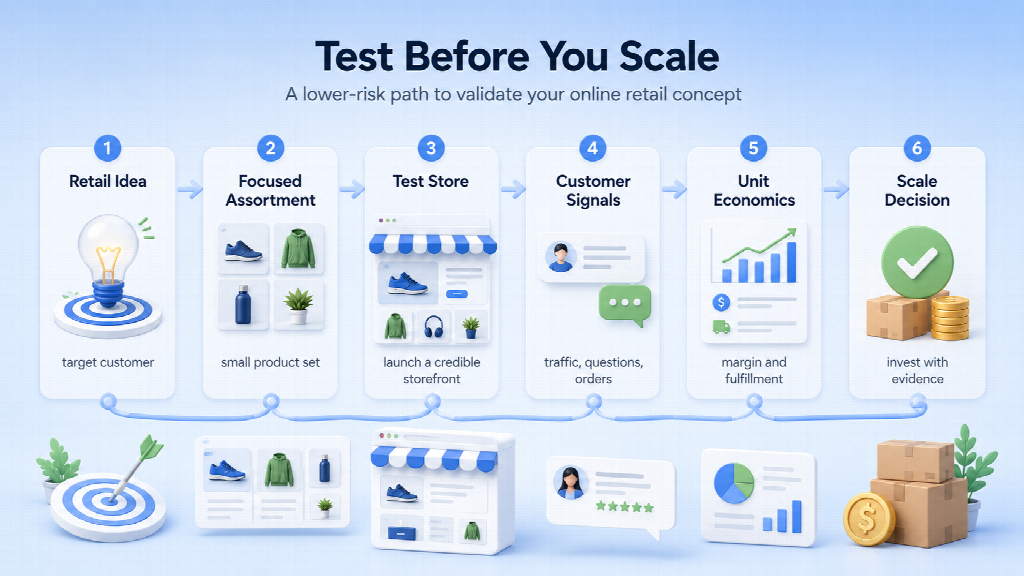
The framework below summarizes a practical “test before you scale” sequence for evaluating a new retail idea.

Start With a Commercial Question, Not a Website

The first question should not be which theme to choose or how many products to upload. It should be what the retailer needs to learn.

A useful hypothesis identifies a customer, a need, an offer, and a reason the concept might win. For example, an independent home retailer might test whether urban customers will pay more for a tightly edited collection of storage products designed for small spaces. A specialty food business might test whether an existing local audience will reorder online when delivery is convenient enough.

Those are testable propositions. “We want to sell online” is not. The narrower the commercial question, the easier it becomes to interpret the results and decide what to change next.

Treat the Initial Assortment as a Hypothesis

A test does not need the full assortment a mature business might eventually carry. In many cases, a deliberately limited range produces better information.

A focused assortment reduces inventory exposure and makes customer behavior easier to read. It also forces merchandising discipline. Each item should support the concept rather than simply fill space.

For an early test, retailers can favour products with manageable order quantities, reliable replenishment, clear use cases, and margins that can absorb realistic fulfillment costs. The aim is to learn what customers respond to before committing deeply to breadth.

This is especially useful when a retailer is evaluating a new category, a new audience, or expansion beyond the geographic reach of an existing store.

Build Only What the Test Requires

A test storefront still needs to feel credible. Customers should see accurate product information, transparent pricing, delivery expectations, return terms, contact details, mobile-friendly navigation, and a checkout that works.

What the test does not necessarily require is a custom technology stack, a large portfolio of applications, or months of design work before the first customer arrives.

Hosted commerce platforms such as Shopify make it possible to assemble a working storefront quickly, which allows more of the early effort to go into the offer, merchandising, customer experience, and demand signals rather than infrastructure.

The technology should be sufficient to run the experiment without becoming the experiment itself. If the concept later proves it needs more sophisticated integration, customization, or workflow, that investment can be made with better evidence.

Use Controlled Traffic to Learn, Not to Declare Victory

A retailer does not need a national campaign to test whether a proposition attracts interest. Relevant traffic from an existing customer list, local awareness, social channels, search, partnerships, or a modest advertising test can produce useful early evidence.

Traffic quality matters more than headline volume. Thousands of poorly matched visitors can make a concept look weak for the wrong reason. A smaller group of prospective customers who actually resemble the target market can be far more informative.

Each traffic source should have a purpose. If an email list is expected to validate interest among existing customers, measure that. If search advertising is being used to test whether people actively look for the product category, measure that separately. Combining every source into one top-line traffic number hides the learning.

Read the Funnel as a Diagnosis

Early sales matter, but the path to the sale often tells the retailer more than the sales total alone.

If visitors arrive and rarely move beyond the landing page, the positioning or audience may be wrong. If shoppers view products but do not add them to cart, the problem may be assortment, price, product presentation, or trust. If carts are created but checkout completion is weak, shipping cost, delivery timing, payment choice, or checkout friction deserves attention.

The point is not to overreact to a tiny sample. It is to use behavior to form the next question. A controlled test should create a sequence of increasingly specific decisions rather than one binary verdict on whether the idea is “good” or “bad.”

Pair Digital Behaviour With Direct Customer Feedback

Analytics can show where customers stop. It cannot always explain why.

Retailers can improve the quality of the test by speaking directly with a small number of customers and non-buyers. Ask what they expected, what felt unclear, what they compared the offer with, what nearly stopped the purchase, and what would make them return.

These conversations are particularly valuable for unfamiliar categories or premium products, where hesitation is often caused by questions that the retailer did not realize needed answering.

The strongest signal is not praise. It is repeated behavior or repeated friction that points to the same commercial issue.

Test the Economics Before You Test Scale

Early revenue can create false confidence if the cost of producing the order is not understood. Retailers should model the contribution economics of several realistic order types before increasing traffic.

That calculation should include merchandise cost, packaging, payment processing, fulfillment, shipping subsidies, discounts, returns, and customer acquisition. A concept that appears attractive at the gross-margin level may look very different once the cost of getting the order to the customer is included.

This is particularly important for store-based retailers moving further into ecommerce. An online order can introduce fulfillment and service costs that are not obvious in a traditional in-store transaction, even as it creates the opportunity to reach customers outside the store’s normal trade area.

If the model only works when every customer buys a large basket, pays full price, and never returns anything, the concept is not ready for aggressive expansion.

Define the Next Investment Before the Results Arrive

A useful experiment has a decision rule. Before the test begins, the retailer should decide what evidence would justify the next commitment.

That next commitment might be a larger inventory order, higher marketing spend, expanded geographic coverage, additional staff, a broader assortment, a physical pop-up, or deeper technology investment.

The threshold will vary by category. A high-ticket retailer may learn from a relatively small number of serious enquiries and completed purchases. A frequently purchased consumer product may need a larger transaction sample and evidence of repeat intent.

The discipline is to avoid moving the goalposts after the results arrive. Predefined criteria reduce the temptation to continue because money has already been spent or because the team has become emotionally attached to the concept.

Online Testing Can Inform Physical Retail Decisions

This framework is not only for digital-first businesses. Store-based retailers can use online testing before making larger physical commitments.

A retailer considering a new product category can launch a tightly edited online collection, measure which items attract attention, learn what questions customers ask, and assess demand beyond the current store catchment area. A business considering a pop-up can test the message and product mix before committing to space. A retailer planning geographic expansion can compare response from different regions before making a location decision.

In that sense, ecommerce becomes a research environment as well as a sales channel.

The Strategic Advantage Is Optionality

Retail has always required decisions under uncertainty. Digital commerce does not eliminate that uncertainty, but it can lower the cost of answering some of the questions that used to require a much larger launch.

When the first version of a concept is designed to learn, the retailer preserves optionality. A strong response can justify deeper inventory, marketing, systems, and physical expansion. A weak response can be diagnosed, revised, or stopped before the commitment becomes much larger.

That is the real value of testing before scaling: not avoiding risk, but taking the next risk with better information.

Conclusion

The most useful first version of a retail concept is not necessarily the most complete one. It is the version that can answer the most important commercial questions at an acceptable cost.

By defining the hypothesis, limiting the initial assortment, building a credible storefront, attracting controlled traffic, reading the full customer journey, checking the economics, and setting decision rules in advance, retailers can turn launch from a single high-stakes event into a sequence of informed investments.

The objective is not to prove the idea at any cost. It is to learn enough to know whether the next investment deserves to be made.

Casavogue Highlights Made-in-Italy Design from Calligaris

Italian furniture has long been admired for the way craftsmanship, engineering and refined design come together in pieces intended for everyday life. At Casavogue in Montréal, that tradition is represented by Calligaris, a century-old Italian furniture brand known for its sophisticated approach to contemporary living.

Founded in Italy in 1923, Calligaris has grown from its origins as a chair manufacturer into an international design brand offering furniture for throughout the home. Tables and seating remain an important part of its identity, with a particular emphasis on adaptable designs that respond to how people live and entertain today.

At Casavogue, the Calligaris selection includes Made-in-Italy pieces that demonstrate this combination of design and functionality, including the Omnia and Yoroi extendable dining tables and the Oleandro dining chair.

Italian Design Made for Contemporary Living

Calligaris began in Manzano, in northeastern Italy, an area with a long history of furniture production. More than a century later, the brand continues to draw on that heritage while working with contemporary designers, materials and manufacturing techniques.

Its dining collections place particular attention on proportion, comfort and flexibility. Extendable tables can adapt for larger gatherings while maintaining a refined appearance for everyday use, and seating is offered in numerous materials and finishes to suit different interiors.

The result is furniture with a distinctly Italian design perspective, supported by practical details that become particularly important once the pieces are part of a home.

Omnia extendable dining table

Omnia: Refined and Adaptable

The Omnia extendable dining table demonstrates this approach through a clean rectangular profile and an extension system integrated into the design.

Made in Italy, Omnia combines a wooden structure with a choice of wood or ceramic tabletop finishes. Its internal rotating extension allows the table to expand from 63 to 83 inches, providing comfortable seating for up to 10 people while keeping the legs positioned at the corners.

The design gives homeowners additional dining space when it is needed without requiring a permanently oversized table, making Omnia particularly well suited to interiors where flexibility matters.

Yoroi extendable dining table

Yoroi: A Sculptural Dining Table

For a stronger architectural statement, the Yoroi extendable dining table takes its inspiration from the armour worn by Japanese samurai. Its central base is defined by vertical grooves and wood inserts, creating a sculptural foundation beneath the tabletop.

The Made-in-Italy design is available in customizable finishes and can extend from 78 inches to as much as 118 inches, accommodating approximately six to 10 guests. Casavogue’s featured version pairs the distinctive base with a Calacatta Paonazzo marble-effect top, giving the table a commanding presence within the dining room.

Yoroi shows a more expressive side of Calligaris, where functionality is incorporated into a piece with enough character to anchor an interior.

Oleandro dining chairs

Oleandro: Comfort with a Distinctive Detail

The Oleandro dining chair brings Calligaris’ longstanding expertise in seating into the collection. Designed by Archirivolto, the chair is characterized by generous upholstery and a distinctive backrest whose wooden frame gradually tapers and flattens toward the ends, a detail inspired by the leaves of the oleander plant.

Made in Italy, Oleandro can be personalized through different upholstery and wood choices, including fabric and leather options. Its combination of cushioning, craftsmanship and carefully shaped details allows it to work alongside a variety of dining tables while maintaining a recognizable identity of its own.

Discover Calligaris at Casavogue

Calligaris is part of the curated selection of Italian and international furniture available at Casavogue. Within the retailer’s 38,000-square-foot Montréal showroom, customers can experience furniture in complete room settings and receive personalized guidance when selecting dimensions, materials, finishes and configurations for their homes.

For customers drawn to Italian furniture, the Calligaris collection brings together a century of design experience with the flexibility required for contemporary living. Pieces such as Omnia, Yoroi and Oleandro demonstrate how craftsmanship and thoughtful engineering can shape furniture that is distinctive, comfortable and designed for long-term use.

Visit the Casavogue website to explore its selection of high-end furniture.

The showroom is open Monday through Friday from 9:30 a.m. to 6:00 p.m., and Saturday and Sunday from 9:30 a.m. to 5:00 p.m.

Casavogue is located at 8260 boulevard Saint-Michel, Montréal, QC H1Z 3E2. For more information, call +1 514-360-3565 or book an appointment to receive personalized advice.