Home Blog Page 473

Parasuco launches Spring 2025 Collection, targets retailers

Parasuco Spring 2025 collection, showcased November 7 at the Park Hyatt Hotel in Toronto. Photo: Marc Santos

Parasuco Jeans, the renowned Canadian denim brand recognized for pioneering styles since the 1970s, recently showcased its highly anticipated Spring 2025 collection in Toronto. An exclusive event last week highlighted Parasuco’s intent to expand its retail presence through strategic wholesale partnerships. Under the creative direction of Tu Ly, Parasuco is merging its iconic heritage with contemporary, trendsetting fashion to captivate a new generation of consumers.

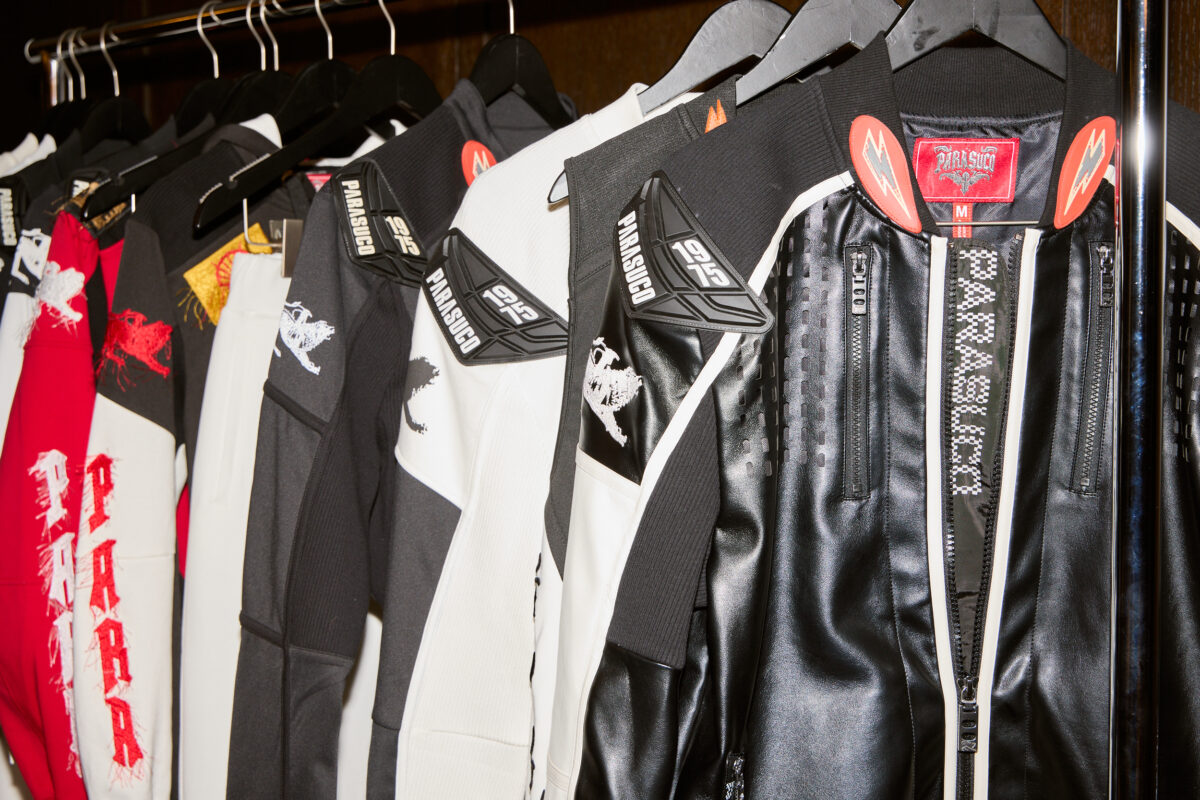
The Spring 2025 collection features “88MPH,” a premium line inspired by the fast-paced, high-energy world of motocross. The standout collection includes leather biker jackets with intricate racing patches, bold logo embroidery, and an Indigo Denim Biker Jacket that blends streetwear with luxury flair. “This collection is about more than just clothing,” said Ly. “It celebrates movement, self-expression, and our fearless approach to design.”

In 2023, Parasuco Jeans appointed Tu Ly as its creative director, marking a significant milestone in the brand’s evolution. Ly, a seasoned fashion professional with over two decades of experience, has previously shaped the visual identities of notable brands such as Moose Knuckles, Ports 1961, and Roots Canada.
Parasuco 88MPH Collection, by creative director Tu Ly. Video by Adrien Charretton
Parasuco Spring 2025 collection, showcased November 7 at the Park Hyatt Hotel in Toronto. Photo: Marc Santos

Meeting Retail Partners and Expanding Wholesale Presence

During their visit to Toronto, Parasuco executives, including Tu Ly and VP Rosie Salcito, met with potential retail partners to explore opportunities for bringing the brand’s latest offerings into select stores. By focusing on strategic wholesale expansion, Parasuco aims to create meaningful partnerships that enhance its retail footprint in key markets. “We’re building strong relationships with retailers who value quality and unique design,” noted Salcito. “Our goal is to make Parasuco accessible to customers seeking distinct, high-end denim and apparel.”

VP Rosie Salcito, left, with Parasuco creative director Tu Ly. Photo taken November 7 at the Park Hyatt Hotel in Toronto. Photo: Marc Santos

While its past retail stores helped define its legacy, Parasuco is now looking to make a significant impact through collaborations with major retailers. “Retailers today want products that stand out,” added Salcito. “Our collection is a blend of meticulous craftsmanship and modern design, perfectly suited for discerning customers.”

Honouring Parasuco’s Legacy While Looking Ahead

Founded in Montreal by Sal Parasuco, the brand became a global name with innovations like stretch denim and acid-wash treatments. Today, Parasuco’s commitment to fashion-forward design and high-quality materials remains at the forefront. “For nearly 50 years, we’ve pushed the boundaries of denim,” said Tu Ly. “Now, we’re doing it again with a fresh, modern twist.”

Ly’s leadership brings a transformative edge to Parasuco’s new direction. “Parasuco has always been about boldness and authenticity,” said Ly. “This renaissance allows us to celebrate our history while introducing new concepts for a younger, style-savvy audience.”

Parasuco Spring 2025 collection, showcased November 7 at the Park Hyatt Hotel in Toronto. Photo: Marc Santos

Strategic Distribution and Market Growth

Parasuco’s decision to focus on wholesale partnerships is part of a broader plan to reach more customers without relying solely on standalone stores. While online sales remain strong, the brand is exploring strategic retail partnerships to increase its market presence. “There’s something special about controlling your message through your own space,” Ly said. “However, our immediate focus is meeting customers where they are—through trusted retail partners and a strong digital strategy.”

Expanding through wholesale presents opportunities for Parasuco. The brand faces competition in the fashion industry but stands out through its commitment to authentic, high-quality design. “In a market crowded with fast fashion, Parasuco offers thoughtful, meaningful designs that stand the test of time,” Ly said.

Looking ahead, the brand is optimistic about its future. “We’re approaching our 50th anniversary, and it’s the perfect time to honour our past while embracing new possibilities,” said Ly. “Our goal is to bring the energy and innovation of our latest collections to customers across Canada and beyond.”

See below for more images from the Spring Summer 2025 Parasuco collection.

Parasuco Spring Summer 2025 lookbook image. Photo: Adrien Charretton

More from Retail Insider:

Canadian retailers adapt to shorter Holiday Season

Friends celebrating Christmas or New Year eve party with Bengal lights and champagne. Image: Adobe Stock Images

Eric Morris, Managing Director of Google’s Retail practice in Canada, shares critical insights on how Canadian retail is evolving as consumers face a shorter holiday shopping season this year. With less time between Cyber Monday and Christmas, Canadian retailers are navigating a landscape influenced by changing search behaviours, economic pressures, and cutting-edge technology.

Canadian consumers have adapted their shopping behaviours, beginning research earlier in the holiday season. “There’s more time before Black Friday than after, creating a unique dynamic,” explained Morris. 

Eric Morris

The trend emphasizes a lengthier research phase for shoppers, allowing retailers more time to engage and influence decisions before a late-season rush. Conversely, the post-Cyber Monday period will likely see a compressed shopping window, with consumers rushing to complete last-minute holiday purchases.

Compounding this dynamic is Donald Trump’s winning the U.S. election, which could distract cross-border shoppers and create an unpredictable retail environment for Canadian retailers with U.S. connections.

Rise of the Undecided Shopper

A notable trend is the rise of the “undecided shopper.” According to Morris, more Canadians are initiating their shopping journeys with broad category searches, such as “running shoes,” rather than specific brands. This reflects a shift towards inspiration-based shopping, with consumers overwhelmed by choices and seeking guidance to make informed decisions. This trend emphasizes the need for retailers to capture attention early in the decision-making process.

Economic concerns remain top of mind for Canadian shoppers. “We’re seeing a more value-conscious shopper,” Morris emphasized, as Canadians continue to face high prices despite inflation rates decreasing from historical highs. Consumers are increasingly driven by the need for the best value and are more likely to search for products tailored to specific needs, such as “gifts for a 10-year-old girl” rather than general items.

Loyalty programs are also key to post-holiday engagement, with 63% of shoppers factoring loyalty incentives into their purchase decisions after the holiday season.

Check out the latest Yaletown views in downtown Vancouver at the SideSignal Collective.

Mobile Dominance and Seamless Shopping Experiences

Mobile usage continues to play a dominant role in Canadian retail, with 75% of shoppers using their phones in-store for price comparisons, coupon searches, and reviews. Morris noted, “The vast majority of research occurs on mobile, but purchase behaviour can vary.” Many shoppers conduct research on mobile but transition to desktops for purchases or use their phones to enhance in-store buying experiences.

Retailers must create seamless experiences across devices and channels to engage shoppers at every touchpoint. “Connecting digital research to in-store purchases is critical for maximizing sales,” Morris emphasized.

Yaletown in Downtown Vancouver with Christmas Decorations around retailers. Photo: Lee Rivett.

Emerging Players and Competitive Market Dynamics

The Canadian retail landscape has seen significant interest in newer entrants like Decathlon, Temu, and Shein. “They’ve struck the right chord with value-conscious Canadian shoppers,” Morris noted, pointing out their rapid growth due to aggressive marketing and a strong value proposition.

This rise in competitive players adds to the intense pressure retailers face during the holiday season, necessitating innovative engagement strategies and compelling offers.

Self-Gifting and Post-Holiday Opportunities

Self-gifting is a growing trend, with many shoppers making purchases for themselves during holiday sales. January sees a spike in self-care searches, offering retailers a chance to re-engage customers and drive loyalty. “Retailers can capture the rise of ‘self-gifters’ and focus on loyalty programs,” Morris noted, highlighting opportunities beyond Boxing Day sales.

Although data on experience gifting is limited, Morris pointed to efforts by the travel industry, such as “Travel Tuesday,” to capture consumer interest post-Cyber Monday. This reflects a broader effort by sectors to tap into consumer spending habits during the holiday season.

AI Tools Transforming Retail Experiences

Google’s AI-powered tools are driving innovation for consumers and retailers alike. New offerings, such as AI Overviews, help shoppers narrow their choices by summarizing content and providing direct links. Google Lens, which allows users to photograph items and find purchasing options, is another example of enhancing the shopping experience. “This holiday season, we’re focused on making shopping easier and more informative,” said Morris.

Retailers also benefit from AI tools that predict demand, optimize marketing campaigns, and generate creative assets quickly. “AI can save retailers time and help differentiate their offerings,” Morris explained, emphasizing the potential for improved engagement and sales.

With Canadian consumers having more choices than ever, leveraging AI tools is essential for retailers. Morris emphasized, “Retail has never been more competitive. Canadians have an abundance of choice, and the right tools can help retailers differentiate, improve results, and connect with consumers effectively.”

More from Retail Insider:

Impact of Trump’s re-election on Canada’s agri-food Sector

Donald Trump wins the US presidency. Photo: Fox News

With President Donald Trump’s recent victory, headlines have been filled with warnings about the “end of democracy,” leading many Canadians to focus on what the next four years might hold. It’s true that the U.S. has just elected its first convicted felon as president, raising questions about the future. But for those of us concerned with Canada’s agri-food sector, food security, supply management, and the well-being of our farmers, the reality may be less about doom and more about data.

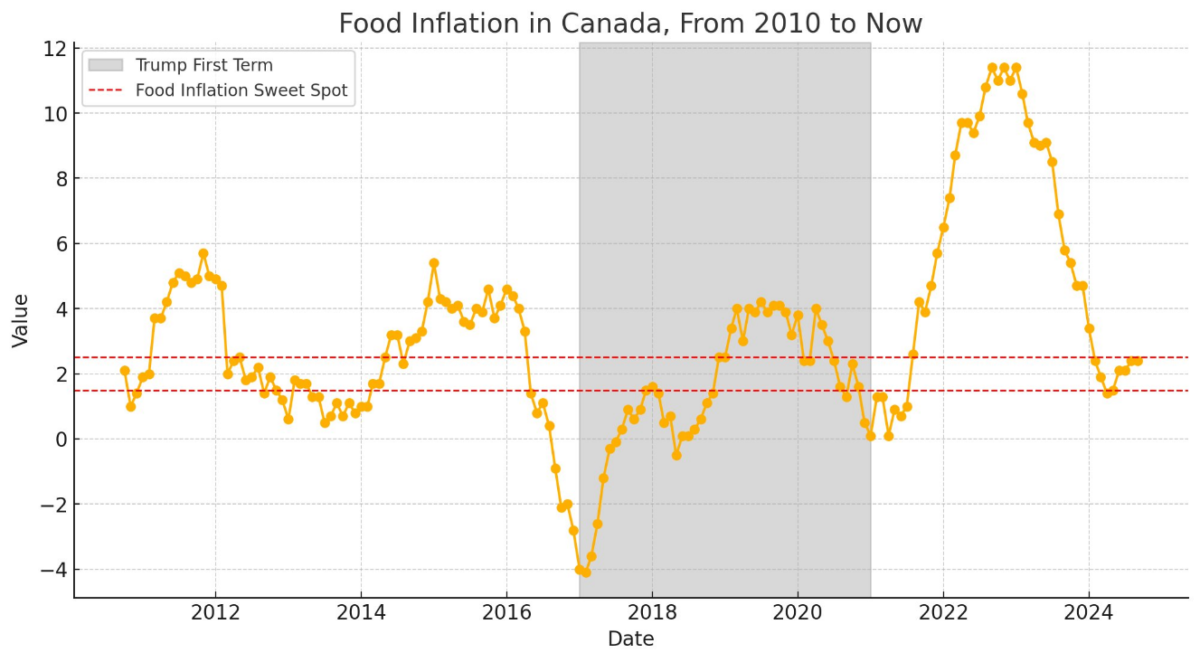
First, let’s examine food inflation during President Trump’s first term. Back in 2016, when President Trump was initially elected, the political climate was similarly intense, with talk of tariffs, renegotiated trade deals, and U.S.-centric policies. When President Trump took office, food inflation in the U.S. was at -4%—a level that may sound advantageous, but negative inflation in food prices often discourages corporate investment and stalls innovation. Though food inflation eventually hit 4% during his first term, it mostly stayed within a manageable range, averaging between 1.5% and 2.5%. Despite fears, no tariffs affecting Canada’s food supply chain were ever imposed.

USMCA and Its Impact on Canada’s Agri-Food Exports

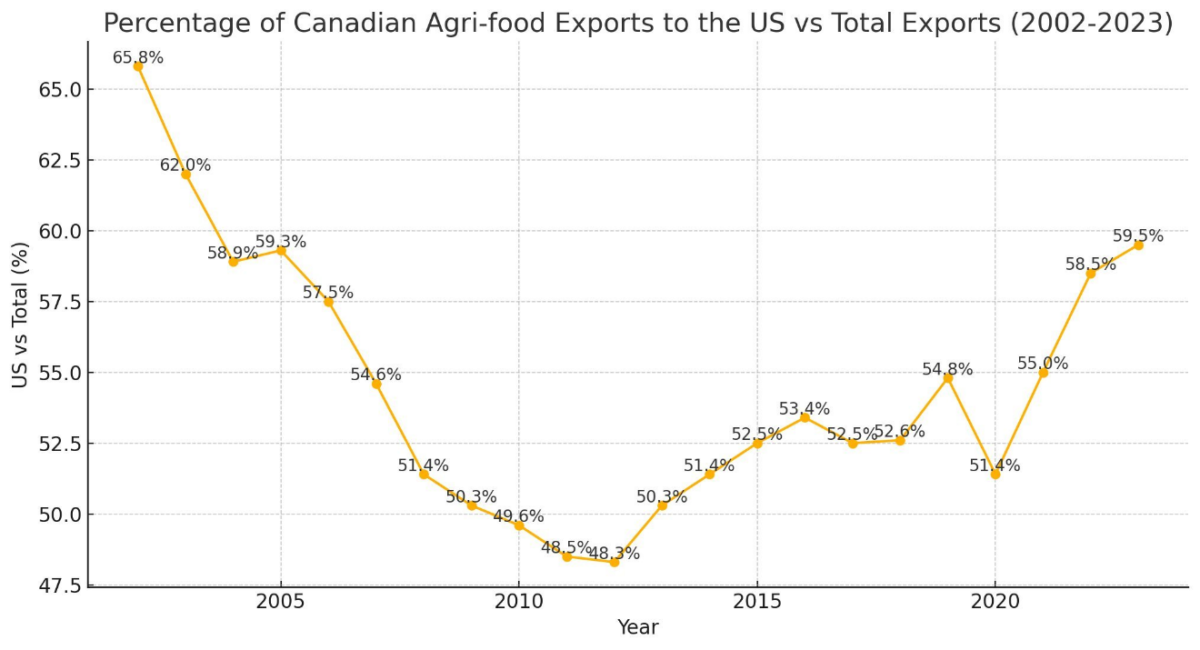
Then came the United States-Mexico-Canada Agreement (USMCA), President Trump’s flagship trade deal, which reshaped North American commerce. Ratified in 2020, President Trump’s last year in office, the agreement has led to a surge in Canada’s agri-food exports to the United States, climbing nearly 57% since 2020 to reach almost $60 billion last year.

Under the Obama administration, around 48% of our agri-food exports went to the U.S., but today, nearly 60% flow south. This dependency on the U.S. is both a blessing and a curse—while our agri-food sector benefits from access to the vast American market, it also leaves Canada’s economy more vulnerable to U.S. policy shifts. President Trump, with his America-first approach, is acutely aware of this dynamic.

Supply Management Concessions and Potential Future Changes

President Trump’s policies brought Canada closer commercially to the United States, especially in the agri-food sector. Additionally, President Trump successfully pressured Canada to concede on supply management, allowing more U.S. market access for products like dairy. Recently, Canada’s Senate criticized Bill C-282, which would have safeguarded supply-managed sectors, including eggs, poultry, and dairy, during future trade deals. If left intact, C-282 could have turned supply management into an even bigger target for President Trump.

But make no mistake—under his second term, further market access will likely be granted to American producers, and Canadian taxpayers will end up subsidizing these sectors even more. While supply management boards may frame these payouts as “compensation” for hypothetical losses, the reality is that they’re subsidies prompted by quota recalibrations, plain and simple.

Agri-food sector in Canada. Image: Canadian Chamber of Commerce

Competitiveness Challenges Facing Canada’s Agri-Food Sector

Yet the real challenge lies in our ability to keep Canada’s agri-food sector competitive. President Trump’s 2.0 agenda promises to reduce energy costs, cut red tape, lower taxes, and inject additional financial support through a colossal Farm Bill nearing $2 trillion. Since 2019, Canada’s wholesale food prices have risen almost 40% faster than those in the U.S., putting Canadian producers at a distinct disadvantage. If Ottawa doesn’t take immediate steps to address competitiveness, Canadian grocers may increasingly turn to cheaper American imports to keep prices in check.

In the end, while President Trump’s return may prompt changes, Canadians should focus on Ottawa’s actions—or inactions—in supporting our agri-food sector. President Trump’s policies may bring more American products to our grocery stores if we don’t shore up our competitive standing. Rather than fearing a distant White House, Canadians might be better off scrutinizing Parliament Hill.

The bottom line? President Trump’s re-election doesn’t signal the end of the world, and any uncertainty can be balanced by looking at the data. The real worry is not Washington but our own government’s commitment to ensuring the health of Canada’s agri-food sector.

More from Sylvain Charlebois:

Essential Holiday Gifts: Must-Have Home Appliances from P.C. Richard & Son

The holidays are the perfect time to give meaningful gifts that add both convenience and style to everyday life. This year, P.C. Richard & Son is offering fantastic deals on a range of high-quality appliances that make perfect gifts for loved ones or a great upgrade for your own home. With options like energy-efficient washers and dryers, smart refrigerators and advanced ranges, these appliances combine modern technology with practical function, making them excellent additions to any home.

Washers and Dryers: The Gift of Efficiency

A new washer and dryer set is an ideal gift for anyone looking to refresh their laundry room and make laundry day more efficient. P.C. Richard & Son offers a variety of models including high-capacity machines and energy-efficient options designed to conserve water and electricity. These appliances are perfect for large families, or for anyone looking to make household chores easier and faster.

For those who prefer modern design and advanced features, a front load washer is an excellent choice. These washers are known for their energy and water efficiency, and their sleek, stackable build makes them a stylish yet practical upgrade for any laundry space.

If you’re shopping for someone who prefers a more traditional setup, a top-load washer provides convenience and reliability without sacrificing modern enhancements of cleaning power and energy-saving features.

Dishwashers: Making Cleanup a Breeze

A dishwasher is one of the most useful gifts you can give this holiday season. Modern dishwashers come with advanced cleaning technologies, energy-efficient operation, and ultra-quiet performance. P.C. Richard & Son offers a wide range of dishwashers with stylish finishes and customizable interior spaces to accommodate all types of dishes and utensils. Whether you’re shopping for someone who loves to cook or just someone who needs an easier cleanup routine, a new dishwasher is a thoughtful addition to any kitchen.

Refrigerators: The Essential Kitchen Upgrade

A refrigerator is the centerpiece of every kitchen, and upgrading to a modern model is the perfect gift for anyone looking to refresh their home. P.C. Richard & Son offers a variety of refrigerators like French-door models with spacious storage, and sleek counter-depth designs that blend seamlessly into any kitchen. These refrigerators offer advanced cooling technology to keep food fresher longer, and include energy-efficient features that help reduce utility costs.

For the tech-savvy person on your list, a smart refrigerator takes kitchen convenience to the next level. These appliances come equipped with built-in touchscreens, voice control, and the ability to sync with other smart home devices. Users can enjoy the ability to check the contents of the fridge while at the grocery store, or manage recipes on the fridge’s display. Smart refrigerators bring modern connectivity to the heart of the home.

Ranges: Elevating the Culinary Experience

A high-quality range is an essential appliance for any home chef. P.C. Richard & Son offers both gas and electric ranges, making it easy to find the perfect match for any cooking style. Gas ranges are favored for their precise temperature control as well as a tried-and-true method of operation. On the other hand, electric ranges provide consistent heat distribution and an easy-to-clean surface, making them a practical choice for busy households. For a more cutting edge method of cooking, induction ranges offer a cooktop that turns cookware itself into the heat source, making them incredibly efficient and safe.

Whether you’re gifting a culinary enthusiast or upgrading your own kitchen, a new range will enhance the cooking experience and add a touch of style to any kitchen space.

Make the Holidays Special with P.C. Richard & Son

This holiday season, P.C. Richard & Son offers a selection of high-quality appliances that are perfect for upgrading any home or giving as a thoughtful, practical gift. Smart refrigerators, sleek dishwashers, and efficient washers and dryers bring convenience and style to everyday life. Whether you’re shopping for loved ones or treating yourself to an upgrade, count on P.C. Richard & Son for the perfect holiday gifts to fit every lifestyle.

Save the Duck opens pop-up at Over the Rainbow 

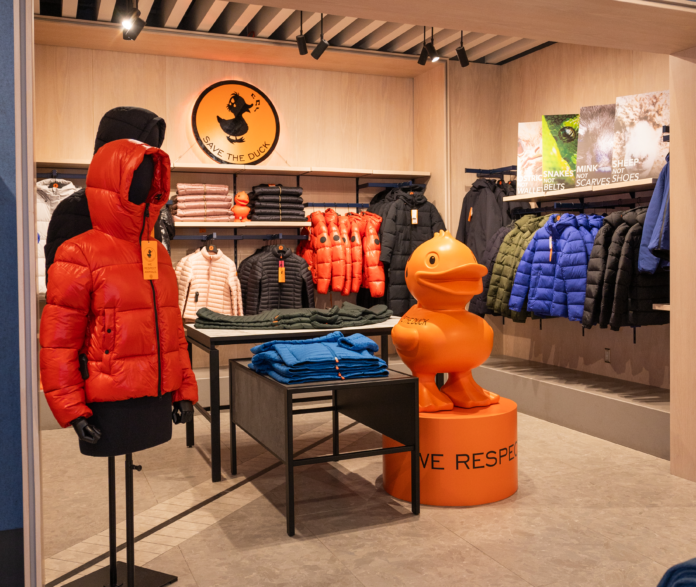
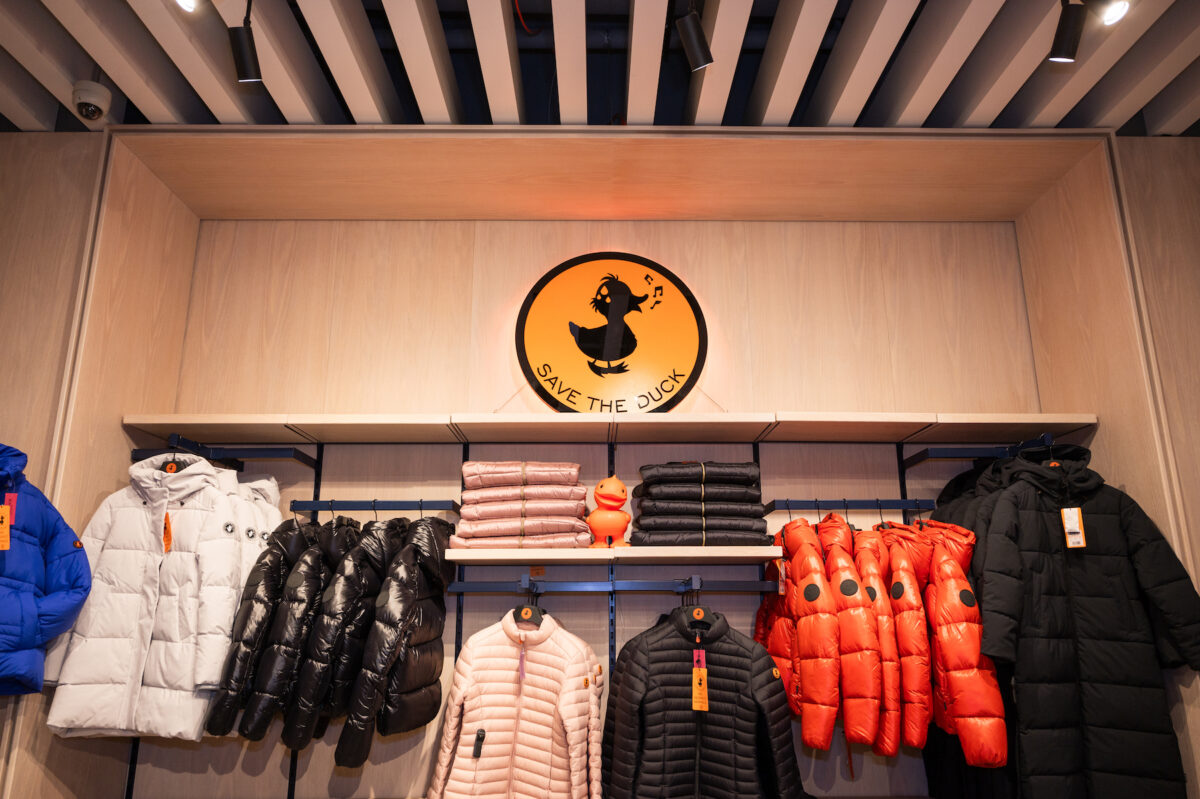
Save the Duck pop-up at Over the Rainbow in Toronto. Photo: Save the Duck x Over the Rainbow

Save the Duck, a renowned Italian outerwear brand known for its cruelty-free and sustainable approach to fashion, has launched a pop-up shop at Over the Rainbow in Toronto’s Manulife Centre. Open until December 6, the pop-up introduces Canadians to Save the Duck’s signature animal-free and eco-friendly offerings, while plans for a spring collection launch are already underway.

Founded in 2012 by Nicolas Bargi, Save the Duck stands apart in the fashion industry with its high-performance outerwear crafted without animal-derived materials. The brand’s proprietary Plumtech® insulation mimics traditional down, providing warmth, breathability, and lightweight comfort—without the need for feathers. 

Loris Spadaccini

“We want people to know you can stay warm, look good, and protect animals and the planet all at the same time,” said Loris Spadaccini, Director and General Manager for Save the Duck North America. “We’ve saved over 44 million birds and repurposed 22 million plastic bottles so far, and we’re just getting started.”

Commitment Beyond Fashion

Save the Duck’s commitment extends beyond crafting stylish outerwear. As a B Corporation certified since 2019, the brand donates 1% of its sales to environmental and humanitarian initiatives worldwide. Recently, Save the Duck helped construct freshwater wells in Sumba, Indonesia, giving local villagers easier access to clean water. 

Spadaccini highlighted this broader vision in an interview: “We do a lot of good things as a brand, aside of making kick-ass products. You cannot save the planet by catering to just a few rich people. Our goal is to be accessible to many.”

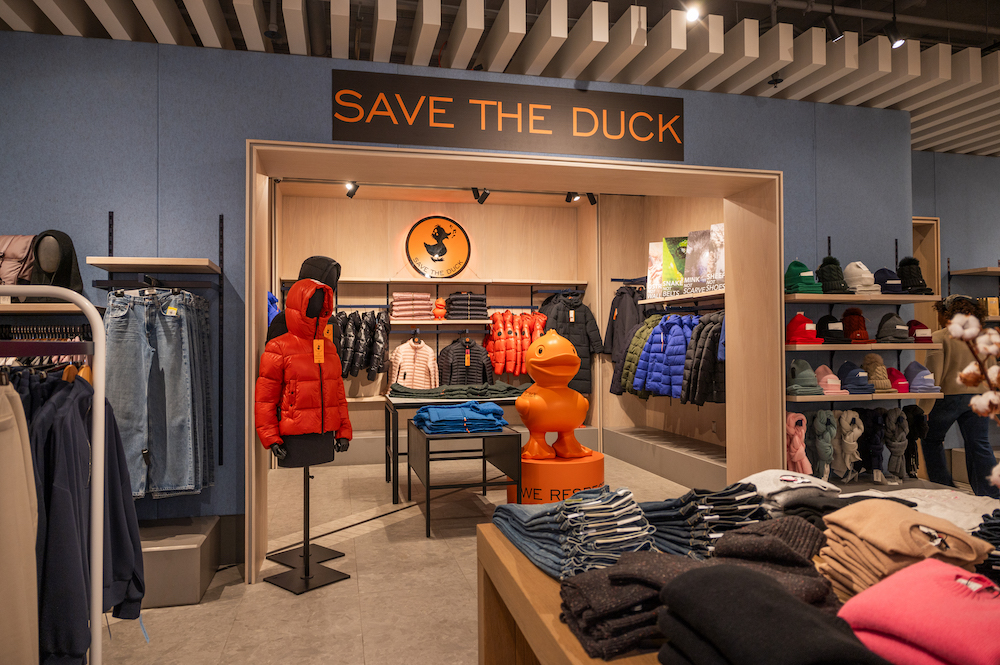
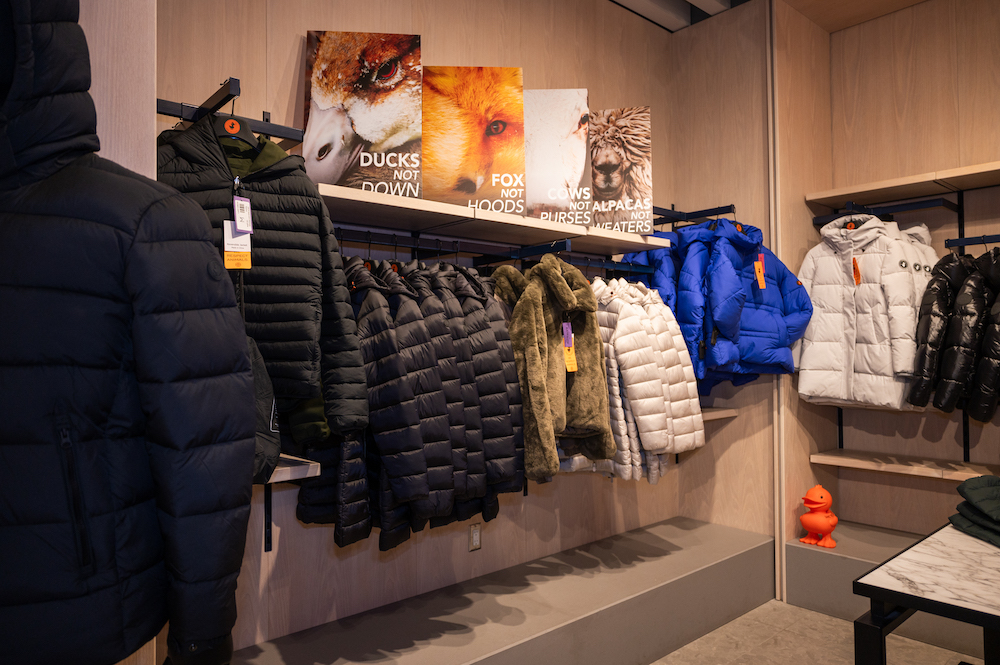
Save the Duck pop-up at Over the Rainbow in Toronto. Photo: Save the Duck x Over the Rainbow

The pop-up at Over the Rainbow features an engaging display, with images of animals and phrases like “Cows not purses” and “Alpacas not sweaters.” According to Spadaccini, “We wanted to communicate our message in a way that makes people stop, think, and smile.”

The Toronto Partnership and Customer Appeal

Over the Rainbow, a staple on Toronto’s retail scene since 1975, was a natural partner for Save the Duck. Founder Joel Carman highlighted the brand’s blend of Italian craftsmanship, style, and commitment to the environment. 

Joel Carman, Founder of Over the Rainbow – Photo by Dustin Fuhs

“Sustainability is important, but the product must be beautiful and functional too,” Carman said. “Save the Duck delivers both. The price point, style, and eco-friendly aspect all come together—it’s what today’s consumers are looking for.”

Carman has seen a strong response to the pop-up on the day of it opening. “People love it. They see something that looks great, fits well, and also aligns with their values. That’s a win-win.”

The pop-up offers a range of jackets, vests, and accessories for men, women, and children—all made using recycled and sustainable materials. “When people come in and touch the jackets, they’re often surprised at how warm and lightweight they are,” Carman said. “I’ve had customers say, ‘I can’t believe this isn’t down.’”

Save the Duck pop-up at Over the Rainbow in Toronto. Photo: Save the Duck x Over the Rainbow

Expanding Presence and Accessibility in Canada

Save the Duck’s foray into the Canadian market is a key step in its global expansion strategy. Spadaccini noted that the brand aims to make sustainable fashion accessible to a broad audience. “Our goal has always been to offer products that everyone can afford, not just a select few,” he said. The brand’s pricing strategy reflects this vision, with outerwear at various price points to ensure widespread appeal.

The success of the pop-up could lead to a more permanent retail presence in Canada. “We’re testing the waters here, and so far, the reception has been incredible,” Spadaccini said. “Toronto is a city that values sustainability, and we’re thrilled to be part of that conversation.”

Save the Duck pop-up at Over the Rainbow in Toronto. Photo: Save the Duck x Over the Rainbow

Responding to Demand for Ethical Fashion

The pop-up’s launch comes as consumer interest in ethical and sustainable fashion continues to rise. “People are increasingly aware of the impact their choices have on the environment,” Carman observed. “But they still want great design and performance. Save the Duck strikes that perfect balance.”

Spadaccini emphasized that sustainability is not a trend but a necessity. “Climate change is real. We all see it. And as my boss says, ‘There’s no Planet B.’ We have to act now for future generations,” he said.

Canada Enacts Bills Advancing the Right to Repair

By Anthony D Rosborough

On November 7, two bills that make enormous progress toward establishing a meaningful right to repair in Canada have become law after receiving royal assent. Bills C-244 and C-294 are complementary private members’ bills that amend the Copyright Act in relation to technological protection measures (TPMs).

TPMs, also referred to as “digital locks,” are software or hardware that restrict the modification or repair of a device or technology. The Copyright Act gives a very broad and open-ended definition of techniques, components and devices that can be considered TPMs.

Both bills can be traced back to 2021, and have spent the past several years winding through the legislative process in Parliament and the Senate. They are the product of enormous grassroots support and advocacy from NGOs, members of the public and national industry associations.

I am a co-founder of the Canadian Repair Coalition and I lead a research team that investigates the technical and legal barriers to medical device servicing and repair in Canada. As an intellectual property lawyer, I have provided law and policy insights to Canada’s Parliament, the European Commission and the Australian Productivity Commission. I appeared as a witness before the Standing Committee on Industry and Technology to speak in favour of these bills.

A broad definition

Given the wide appeal for the right to repair — a right for owners to fix, update or modify their possessions — the bills have received unanimous and multi-partisan support throughout the numerous readings and debates.

TPMs were included in the Copyright Act in 2012 in an effort to combat online piracy of entertainment media and unauthorized uses of works on digital formats and devices like DVDs and the iPod.

Though we have largely moved on from those technologies, TPMs are present in an ever-growing number of smart devices and machinery: everything from agricultural equipment to home appliances to cars to medical devices. Ostensibly, anything with embedded software and a microchip can incorporate TPMs into its design.

a man works on an electronic board
Technological protection measures are software or hardware that restrict the modification or repair of a device or technology. (Shutterstock)

Often repairing computerized devices requires circumventing TPMs, whether to access diagnostic and repair information on the device itself, or in making changes to the onboard software to authorize a physical repair or parts replacement.

TPMs may function through the use of passwords or “service keys,” or they may require a physical device (such as a dongle) to provide access to software. In imposing software restrictions that limit who (and at what cost) a device can be repaired or maintained, vendors and manufacturers are able to rely on TPMs to establish exclusive distribution channels and prevent downstream competition from third party technicians and service people.

Controversy surrounding this exclusivity in the United States has drawn attention to some notorious examples of TPMs. These include McDonald’s ice cream machines: the machines were constantly breaking down, and could only be fixed by the manufacturer. And the John Deere Manufacturing Company was restricting farmers’ efforts to repair million-dollar farming combines.

The state of California only recently enabled power wheelchair users to access repair services they previously couldn’t because of proprietary security dongles or passwords in certain cases.

a parked power wheelchair in a hallway
California granted an exemption to copyright laws for power wheelchair users. (Shutterstock)

Current exemptions

TPMs operate to prevent access to low-level software and firmware necessary for repair, maintenance, diagnosis and interoperability. This tendency for TPMs to restrict or prevent unrelated and practical activities has concerned Canadian academics and copyright experts since 2010.

The Right to Repair movement has acted as the impetus for policymakers to finally find some solutions. Though the U.S. has a lengthy history of creating exemptions to its TPM rules that allow for repair and related activities, Bills C-244 and C-294 represent Canada’s first decisive action on the copyright front.

And in contrast to the temporary and case-by-case exemptions granted for certain products or devices in the U.S., the two bills will introduce permanent exceptions into Canada’s Act.

There are currently very limited grounds under which it is lawful to bypass or “circumvent” a TPM in Canada. Included in the existing exceptions are circumvention for national security purposes or for encryption research, but non-infringing activities like repair, maintenance, diagnosis or device interoperability are not among them.

Bill C-244 creates a new exception allowing for circumvention of TPMs for the purposes of “repair, maintenance and diagnosis.” And Bill C-294 creates a new exception allowing circumvention to make any computerized device interoperable with any other computerized device or system.

This type of interoperability relates to situations where installing a third-party part in a device is prevented by its onboard software, or where it is necessary to make two distinct computerized devices work together. The latter is particularly important for Canada’s agricultural equipment manufacturing industry.

Future access

Despite their enormous promise and progress, the bills are far from the final nail in the coffin in the push for a comprehensive right to repair. Further reforms are needed in other areas, such as provincial consumer protection law, federal competition law and other areas of intellectual property that can impede repair, like patents and trademarks.

And in the longer term, federal policy enabling the right to repair should take note of developments in Europe. These include enacting a repairability index that scores certain products and devices according to the relative ease of obtaining parts, tools, information and software to repair and maintain them.

New regulations are needed that require manufacturers and vendors to ensure that products and devices are designed with accessibility of repairs in mind. Independent repair and servicing businesses need to be able to carry out their work without the fear of infringing various intellectual property rights, and consumers need more information about the repairability of products at the time of sale.

There is undoubtedly much left to do on the policy front in realizing a meaningful right to repair in Canada. But for now, Bills C-244 and C-294 give reason for hope and optimism that the rest is within our reach.

About the Author:

Anthony D Rosborough is an Assistant Professor of Law & Computer Science at Dalhousie University


More From Retail Insider:

How wrestling legend Bret ‘Hitman’ Hart became a rum ambassador (Video)

Photo: Bret Hitman Hart

Wrestling legend Bret “Hitman” Hart has taken on an unexpected but fitting role as the ambassador for Calgary-based Romero Distilling, blending his iconic personality with the distinct taste of an award-winning spirit.

The partnership, forged on mutual respect and genuine admiration for the product, has given Hart a new stage to perform on – but this time, it’s in rum festivals and tastings rather than wrestling arenas. For Hart, who has been discerning with his endorsements, this venture is a rare alignment of values, legacy, and the desire to represent a quality brand.

Bret Hitman Hart
Bret Hitman Hart

“They approached me about being a spokesperson for the rum,” Hart recalls. “I’ve always been a rum lover, and it goes way back to my early wrestling career in Puerto Rico. That’s where I really discovered rum, and ever since then, it’s been my drink of choice. I’ve become more selective about what I drink over the years, but when I tried Romero’s rum, I immediately thought, ‘This is something I can stand behind.’ It’s smooth, well-made, and has that quality you only find in premium spirits.”

For Hart, this is more than just a paycheque or brand alignment; it’s a genuine connection to a product and a family he respects. As part of his role, Hart has become a fixture at various rum events and festivals, most recently in Brooklyn, where fans of both wrestling and fine spirits were treated to a memorable experience.

“When people see me at these events, they’re sometimes surprised, but as soon as they try the rum, they understand why I’m there. This isn’t just an average rum—it’s exceptional,” he says with a smile.

Hart’s commitment to Romero goes deeper than appearances. In a world where celebrity endorsements are often fleeting or shallow, Hart has approached this partnership with thoughtfulness and integrity. The Romero family, known for their dedication to their employees and their craft, has won Hart’s admiration. “I’ve gotten to know the family, and they’re such great people. They take care of their employees and put so much into making their product truly top-notch. That’s the kind of team I want to work with,” he explains.

A Legacy of Choosing Partnerships with Integrity

Over the years, Hart has had many offers for endorsements but has remained selective. His decision-making is driven by his values and life experiences, which led him to turn down certain opportunities that he felt conflicted with his principles. Hart points to a specific instance where he declined a lucrative deal in the gambling industry, noting the impact it had on his decision to support Romero instead.

“I had an offer a few years back to do a commercial for a gambling company,” he says. “But I thought about Jim Neidhart, my old wrestling partner, who struggled with gambling addiction. Jim lost so much because of it, from irreplaceable family jewelry to his financial stability. I just couldn’t, on a personal level, promote something that can destroy lives in that way. You always hear these celebrity endorsements making gambling sound like a fun little hobby, but for many people, it’s a path to losing everything.”

Hart’s personal experiences and memories of Neidhart, who battled gambling addiction throughout his life, are reminders of the role celebrities play in influencing others. “It’s important for me to represent products that I truly believe in, and that have a positive message,” he adds. “Gambling is a choice I could never endorse, but Romero Rum? That’s a product I feel proud to be a part of.”

Romero Rum: An Experience, Not Just a Drink

For Hart, the appeal of Romero Rum goes beyond taste—it’s about the experience and the authenticity of the brand. “Romero Rum is different,” he explains. “It’s not just a drink; it’s an experience. You can sip it on ice and really appreciate the smoothness, or mix it with a simple Coke. At rum festivals, even the more sophisticated rum enthusiasts tell me they’re impressed with how smooth it is.”

Hart’s personal favorite way to enjoy Romero? A classic rum-and-Coke. “I’m a fan of keeping it simple. There’s something satisfying about a well-made rum and Coke. That’s my go-to, but honestly, this rum is smooth enough to drink on its own. Just a little ice and let it melt a bit—then it’s perfect.”

The Connection with Fans, New and Old

Stepping into a new industry has given Hart fresh ways to connect with fans. “Rum festivals are a different crowd from wrestling events,” he laughs. “It’s a mix of people who appreciate fine spirits, and then there are wrestling fans who come up and start talking about matches. But at the end of the day, they all end up trying Romero. They’re always surprised by the quality. It’s great to introduce them to a product I genuinely love.”

The excitement surrounding Hart’s presence at these events isn’t lost on the wrestling legend. “When I was at the Brooklyn Rum Fest, people were genuinely interested in the story behind the rum. And some people just couldn’t believe I was there. It’s nice because we have real conversations, and then they’re all in for the rum too. They tell me later they’re taking it back to their stores, or they’re already planning to pick up a bottle.”

Hart’s appearances are a key part of Romero’s marketing strategy, adding a personal touch to the brand’s promotion. And for Hart, being part of these events is a chance to step into the role of community ambassador once again—an identity he values deeply.

Calgary Roots and Community Pride

Though Hart is known around the world, he remains deeply rooted in Calgary, his hometown and lifelong residence. “I’m proud to represent Calgary and Canada,” he says. “I always made sure to tell the world I was from Calgary during my wrestling career. People didn’t know where Calgary was when I started, but by the end, it was on the map.”

Hart’s brand is tied not only to his wrestling legacy but also to his love for his community. “I get a lot of support from people who remember my career, and they’ll approach me in places like Safeway to share their favorite matches. It’s amazing to have that connection, and it reminds me of my dad, who was also respected by people everywhere he went. Calgary is home. I wouldn’t want to live anywhere else.”

Reflecting on a Legacy and New Ventures

At 66, Hart looks back on his career with gratitude, aware of the lasting impact he’s had on fans around the world. “I’ve had a lot of people tell me I was their hero during tough times. Hearing that makes all those injuries, those long days, worthwhile. To know I was a positive force in people’s lives—there’s no greater reward.”

As for the future, Hart is happy promoting Romero Rum, a brand he believes in. “I tell people, try it, and you’ll see. This isn’t just another product—it’s the best in its class. I’m proud to be a part of it.”

Hart’s journey from wrestling ring to rum ambassador is more than a career pivot; it’s a testament to his integrity and commitment to authenticity. As Romero Rum’s ambassador, Bret Hart continues to embody the values that made him a legend, now toasting to a new legacy, one sip at a time.

Related articles:

Canadian retailers face crisis as port shutdowns threaten Holidays

Port of Vancouver. Image: Shutterstock/licensed

Canadian retailers are confronting a potential crisis this holiday season as container traffic halts at the Ports of Montreal and Vancouver while a Canada Post strike looms. Matthew Poirier, Vice President of Federal Government Relations at the Retail Council of Canada (RCC), warns of severe disruptions that could lead to empty shelves, delayed shipments, and increased consumer costs.

Container Traffic Halted at Major Ports

The shutdown of the Termont and Viau terminals in Montreal began on October 31, with a similar situation at the Port of Vancouver. Poirier explained that container traffic, essential for retail goods, has largely stopped, while bulk items such as grain continue moving. “Most of Canada’s container shipments come through Vancouver,” Poirier said, noting the significant impact of the closure.

Matthew Poirier, Vice President of Federal Government Relations for the Retail Council of Canada (RCC)

The timing could not be worse. Many retailers rely on last-minute shipments for holiday inventory, a practice now disrupted by halted container traffic. Poirier highlighted the example of a delayed shipment of Panettone cakes, reflecting how even seasonal staples are affected. “Some retailers saw the potential issue and diverted shipments months ago, but many are now scrambling,” he said.

Ripple Effects Across the Supply Chain

The shutdowns are not limited to ports; they have rippled throughout Canada’s transportation network. “CN isn’t going into the Port of Montreal because there’s nothing to pick up,” Poirier explained, indicating how rail operations have been impacted. This disruption affects all modes of transportation, including intermodal systems crucial for moving goods across the country.

Small retailers are particularly vulnerable, as they often lack the resources to find alternative transportation solutions. “They are at the bottom of the food chain when it comes to securing alternatives,” Poirier noted, adding that many rely heavily on Canada Post for deliveries. The prospect of a postal strike only compounds their difficulties.

Alternative Solutions and High Costs

With major ports shut down, retailers are exploring other options, such as air freight and trucking. However, these alternatives come with high costs. “Air freight is an expensive option, and trucking faces labour shortages and surge pricing,” Poirier said. Diversions to other ports, such as Halifax, increase costs due to the need for long-distance ground transportation.

The situation has put immense pressure on Canada’s already strained transportation infrastructure. “Even raw materials and fixtures for construction companies are being delayed,” Poirier said, pointing to broader supply chain issues beyond retail.

Government Response and Political Complexities

The RCC is calling on the federal government to act swiftly to mitigate the crisis. However, Poirier described a lack of urgency compared to past labour disputes, such as the rail strike earlier this year. “The government’s hesitancy stems from political dynamics and the challenges of implementing back-to-work legislation,” he said.

Poirier emphasized that the RCC does not oppose collective bargaining rights but believes a balanced approach is needed. “There are ways to ensure essential services continue during negotiations, such as binding arbitration or forced mediation,” he said.

Port de Montreal/Port of Montreal. Photo: Marcel Villeneuve

Broader Implications for Canada’s Economy

Repeated supply chain disruptions pose a threat to Canada’s reputation as a reliable trade partner. “Every disruption erodes our standing and sends investment elsewhere,” Poirier warned. The impact extends beyond retailers to consumers and other industries reliant on timely shipments.

For remote communities, the crisis is even more severe. “Getting goods to places like Northern Canada is already challenging,” Poirier said. The shutdowns further complicate an already difficult logistical process.

Long-Term Effects on Retail and Inflation

The ripple effects of the shutdowns will be felt for weeks, with Poirier estimating that each day of closure adds a week to the backlog. “In Vancouver, we’re already looking at more than a month to catch up,” he said. The delays could stretch into December, affecting holiday sales and supply availability.

The disruptions are likely to contribute to rising consumer prices, exacerbating inflation. “Costs incurred by retailers will eventually be passed on to consumers,” Poirier said, emphasizing the broader economic impact. “This isn’t just a business problem; it’s a consumer issue that affects everyone.”

BETTERBAR: Yorkville’s Newest Wellness Hub

CNW Group/BETTERBAR (CNW Group/BETTERBAR)

BETTERBAR, Yorkville’s newest health-forward dining destination is launching a location in the heart of Yorkville Village in Toronto.

“BETTERBAR offers more than just nutritious meals—it’s a vibrant community space where health-conscious individuals can come together to fuel both body and mind with local, organic, and sustainable ingredients,” said the company in a news release. 

“The cozy 80-seat restaurant has been thoughtfully designed to be a welcoming haven. Whether you’re indulging in a hearty breakfast, enjoying a revitalizing lunch, or savoring a comforting dinner, BETTERBAR is the ultimate destination for anyone looking to complement their active, balanced lifestyle with delicious, wholesome food.”

“The BETTERBAR menu is a celebration of local flavors, featuring organic ingredients and no seed oils, with dishes designed to energize and satisfy throughout the day. Offering everything from plant-based options to nutrient-packed proteins, the menu caters to a variety of dietary preferences.

Menu highlights include:

  • Signature Wraps: Wholesome and delicious, these wraps are perfect for on-the-go nutrition.
  • Fresh Salads: Crisp, colorful, and packed with nutrients, salads are crafted to refresh and invigorate.
  • Sushi Rolls: Delightful and creative, sushi rolls combine traditional techniques with innovative ingredients.
  • Healthy Hot Bar: A rotating selection of warm, wholesome dishes that showcase seasonal ingredients and hearty flavors.
  • Smoothies: A variety of refreshing blends, perfect for a quick, nutrient-rich boost that fuels your day.

The company said BETTERBAR’s interior design was crafted to reflect its wellness-focused mission and menu, creating a warm and inviting atmosphere.

“The space features soft, earthy tones to provide a calming backdrop for mindful dining and pops of pink are strategically incorporated throughout the space—from the seating to the decor—infusing the restaurant with a lively energy that enhances the overall experience,” it said.

Related articles:

WingsUp! lands new location in Toronto’s Liberty Village

Photo: Wings Up!
Photo: Wings Up!

WingsUp! with over 35 locations across the country has spread its wings to Toronto’s trendy Liberty Village, introducing its fresh, never-frozen chicken wings to one of the city’s most vibrant neighbourhoods comprising of young professionals, creatives, and food enthusiasts.

Whether it’s the classic Medium BBQ, the tangy Honey Garlic, the bold Texas Tequila, or the dry and crunchy Lemon Pepper, each wing is made to order, ensuring an uplifting experience every time, said the company in a news release.

 Darren Czarnogorski
 Darren Czarnogorski

“We’re thrilled to bring our unique wings to Liberty Village,” said Darren Czarnogorski, CEO of WingsUp! “Our fresh, never-frozen approach is what sets us apart, and we’re confident that the residents of Liberty Village will love what we have to offer.

“Liberty Village is just the start. With new franchise locations on the horizon in Calgary and Vancouver, there’s never been a better time to join the WingsUp! family. We’re looking for passionate entrepreneurs who are ready to soar with us.”

As WingsUp! opens its doors in Liberty Village, the brand is also seeking new entrepreneurs to join its expanding franchise network. With upcoming franchise locations planned in Calgary and Vancouver, WingsUp! offers a prime turnkey franchise opportunity for business-minded individuals looking to get involved with a proven franchise system in the food industry, it said.

The company said franchisees can expect comprehensive training and support from WingsUp!, including franchise training, marketing assistance, and ongoing operational support. The brand offers low startup costs, making it an attractive option for those looking to enter the franchise business model. And with 35 successful locations and counting, the brand is poised for continued growth, making it an ideal investment for those seeking franchise ownership.

Related articles: