The CEO of one of Canada’s most iconic brands, BeaverTails, is urging Canadians and Canadian businesses to support each other.
“We have seen a wave of patriotism across Canada in recent weeks,” said Pino Di Ioia. “And while we generally avoid politics, we feel that this is a time for Canadians to stand together. Supporting Canadian companies is nothing new for us. We have a decades-old practice of sourcing key ingredients – such as flour – from a network of local suppliers.
“Today, we urge all Canadians to think about their purchasing decisions. We also invite other Canadian businesses to join this conversation. Standing together – united by common purpose – is what Canadians do best.”
Pino Di Ioia
The brand, makers of unique pastries was born in small town Ontario and toda, there are BeaverTails locations at virtually every major tourist destination across the country.
“The BeaverTails brand is authentically and typically Canadian – humble yet quietly patriotic,” said the company.
Milestones:
1978: It first served at the Killaloe Fair, west of Ottawa. Later, stores open at Ottawa landmarks the Rideau Canal and Byward Market.
1990: BeaverTails opens at La Ronde in Montreal.
1990s: It expands rapidly across Canada.
2002: New management team moves head office to Montreal, streamlines operations and strengthens brand to focus on quality and the experienced-driven community we know today.
2008: New boutique locations open showcasing expanded menu.
2015: BeaverTails opens its 100th location.
2016: BeaverTails opens Toronto Waterfront flagship location.
2017: BeaverTails named one of Canada’s top brands by Interbrand.
2025: With 50 iconic locations at leading tourist and resort destinations, plus more than 150 express and mobile locations at amusement parks, zoos, fairs and festivals, BeaverTails is always within reach.
The Government of Canada is making significant investments to expand tourism experiences across Alberta, with over $2.9 million allocated to nine unique projects aimed at showcasing the province’s rich culture, Indigenous heritage, and stunning landscapes.
Terry Duguid, Minister for PrairiesCan, made the announcement recently, highlighting the importance of tourism as a powerful economic driver that sustains local businesses, creates jobs, and contributes to Alberta’s economic growth.
“Alberta has incredible stories to share—from its rich Indigenous heritage to its stunning landscapes and unique local experiences. Supporting tourism at home means backing local businesses, creating jobs, and strengthening our economy. These projects will help more people, from Canada and beyond, experience everything that makes Alberta special,” said Duguid.
Terry Duguid
These investments are part of the federal Tourism Growth Program (TGP), which is designed to support small and medium-sized businesses, Indigenous and non-Indigenous communities, and not-for-profit organizations in developing local tourism products and experiences. The program contributes to the Federal Tourism Growth Strategy, aimed at long-term growth, stability, and investment in Canada’s tourism industry.
Among the projects receiving funding, Tourism Calgary will receive over $434,000 to enhance inclusive programming for Chinook Blast in 2025 and 2026, as well as to develop Indigenous programming for the 2026 Grey Cup and create a new Indigenous music festival. Blackfoot Crossing Historical Park in Siksika will also benefit, receiving $350,000 to expand access to active Indigenous heritage experiences by improving visitor spaces, gallery displays, and exhibit content.
Another notable recipient is Parallèle Alberta, which will receive more than $573,000 to develop and market six new Économusées—artisan workshops that highlight traditional trades and sustainable business models in Alberta. Other investments include funding for Black Sheep Ventures, Granary Road, Mahikan Trails, and Rendez Vous RV Park to enhance their tourism offerings and visitor experiences.
Photo by Andre Furtado
The TGP is expected to support approximately 120 jobs across the province, helping Alberta’s tourism sector recover and thrive. This announcement reflects the principles of the Government of Canada’s Framework to Build a Green Prairie Economy, which aims to create good-paying jobs while driving economic growth across the region.
According to Travel Alberta, the province’s visitor economy reached $12.7 billion in tourism expenditures in 2023, contributing $9.9 billion to the provincial GDP and creating nearly 90,000 jobs.
The $2.9 million investment will play a key role in enhancing Alberta’s position as a top destination for domestic and international travellers, ensuring that the province remains a vibrant and attractive place for visitors to explore.
While 30% of Canadians say they support a strong tip culture, recognizing it’s a key part of income for service industry workers in Canada, the vast majority appear to have extreme tip fatigue – both with expectations around gratuity amounts and with the extent of services that now prompt for a gratuity. This is despite nearly one in three Canadians (31%) that have directly worked in a gratuity-based job as some point. A survey by H&R Block’s also reveals that while most Canadians know that tips are considered taxable income, 47% assume people are not actually declaring them on their taxes.
Yannick Lemay
“It’s important to emphasize that tips are considered taxable income, by law, even if your employer does not include any tip amount on your T4 slip. But the good news is there are many ways to make your tips work in your favour when it comes to filing your taxes,” said Yannick Lemay, Tax Expert at H&R Block Canada.
“Not only are there numerous deductions, benefits and credits you can leverage, there are tax-friendly ways to use your tips to invest in your professional growth and well-being and bolster your savings.”
Canadians begrudge gratuity prompts from card payments machine: A colossal 94% of Canadians say they’re annoyed by card payment machines prompting options for services that tips or gratuities weren’t previously expected. However, more than half (57%) of Canadians feel awkward skipping the tap prompt so tend to leave one anyway, said the survey.
While most Canadians know that tips are considered taxable income – many assume they’re not declared for tax filing purposes: Overall, 84% of Canadians recognize that tips must be declared for tax purposes (whether they are cash, credit or via other payment methods). However, 47% assume that the recipients aren’t declaring their tips when filing their taxes. Conversely, 16% didn’t realize that they must be declared as taxable income. Nearly half of Canadians (45%) say they try to give cash where possible, in thinking that the person then doesn’t have to worry about paying tax on it, explained H&R Block.
Other key findings from the survey:
Canadians are divided on whether they believe the individual or the employer pockets gratuities: While around half of Canadians believe the individual person they’re tipping receives the money, the other half believe it goes into the employer’s pocket.
More than half of Canadians identify as ‘frugal tippers’: Overall, 53% of Canadians consider themselves as frugal tippers, typically opting for the lower tip option and/or only tipping for exceptional service. This compares to 39% who say they’re generous tippers and tend to opt for the higher tip amount or tip most services.
Many Canadians feel that tipping lets employers off the hook to pay employees’ full wage: Overall, 88% feel that tipping culture has become a means for employers to pay their staff less. Furthermore, 91% believe that Canada should have less of a tipping and gratuity culture as employers should cover their employees’ full wages.
Canadians believe 9% is the tipping sweet spot: When asked what Canadians believe the tipping or gratuity amount should be for various services, the overall average equated to 9%, which is well below typical gratuity prompt amounts. However, not all services are perceived as equal when it comes to the average amount considered appropriate by industry:
According to a recent Statistics Canada report, federal and provincial governments earned a total of $15.7 billion from the control and sale of alcohol and recreational cannabis in the fiscal year ending March 31, 2024. Of this total, $13.5 billion came from alcohol sales, showing a slight decrease of 0.5%, while recreational cannabis sales reached $2.2 billion, marking an impressive increase of 12.6%. This total includes net income from provincial liquor and cannabis authorities, excise taxes, retail sales taxes, other specific taxes, and licences and permits.
Historic Drop in Alcohol Sales Volume
Despite a 2.5% increase in the price of alcoholic beverages from March 2023 to March 2024, total alcohol sales dropped by 0.1%, totaling $26.2 billion for the fiscal year ending March 31, 2024. On a volume basis, sales of alcohol fell by 3.8%, marking the largest volume decline on record since Statistics Canada began tracking alcohol sales in 1949. In total, 2,988 million litres of alcohol were sold in 2023/2024. On average, Canadians of legal drinking age consumed the equivalent of 8.7 standard alcoholic beverages per week, down from 9.2 in the previous fiscal year, explained Statistics Canada.
Domestic Products Dominate Alcohol Sales
In 2023/2024, domestic products accounted for 59.0% of all alcohol sales in Canada, a slight increase from 58.7% in the previous year. Beer, at 88.0%, and ciders and coolers, at 85.0%, represented the highest proportions of domestic sales, while spirits (46.1%) and wine (28.8%) had smaller shares.
Record Decline in Beer Sales Volume
Beer sales experienced a record decline of 4.5% by volume, totaling 1,950 million litres in 2023/2024. This marks the eighth consecutive year of volume decline for beer. Beer sales by dollar value also fell by 1.3%, totaling $9.2 billion. Despite this decline, beer remains the top-selling alcoholic beverage, representing 35.1% of total sales, though this is down significantly from two decades ago when beer accounted for nearly half (49.4%) of all alcoholic beverage sales, noted Statistics Canada.
Wine and Spirits Sales Drop
Wine sales also saw a decline in both volume and value. Volume fell by 4.8%, totaling 476 million litres, marking the third consecutive year of decline. Wine sales by value decreased by 0.3% to $7.8 billion in 2023/2024. Spirits sales dropped by 0.5%, totaling $6.9 billion, with volume declining by 3.9% to 184.9 million litres. Whisky, vodka, and liqueurs were the top-selling spirits by share.
Ciders and Coolers See Growth
The only alcoholic beverage category to experience growth in 2023/2024 was ciders and coolers, which saw a 6.9% increase in sales, reaching $2.3 billion. The volume of ciders and coolers sold also rose by 1.3%, totaling 377 million litres. The total sales were equivalent to approximately 0.8 standard drinks per week for each Canadian of legal drinking age.
Source: Binoid CBD
Cannabis Sales Continue to Rise
Recreational cannabis sales saw a significant rise of 11.6%, reaching $5.2 billion in 2023/2024. This growth, though slower than the previous year’s 15.8% increase, reflects continued consumer demand for cannabis products. The increase in cannabis sales occurred despite a 2.8% decrease in the price of cannabis products during the same period, according to Statistics Canada.
Inhaled extracts emerged as the fastest-growing cannabis category, with a remarkable 31.4% increase in sales, accounting for over two-thirds of the overall $0.5 billion increase in cannabis sales. Over the past three years, inhaled extracts have steadily gained market share, with dried cannabis losing ground. In 2023/2024, dried cannabis accounted for 61.4% of the market, down from 71.0% in 2021/2022, while inhaled extracts increased to 29.3% from 18.1%.
Provincial Differences in Cannabis Consumption
Cannabis consumption varied significantly across Canada, with Yukon having the highest per-person sales at $356 per person of legal age. In contrast, Quebec had the lowest at $96 per person, partly due to the province’s restrictions on cannabis vapes and topicals and its limited edible offerings.
This report highlights shifting trends in Canadian alcohol and cannabis consumption, with changes in beverage preferences and a continued rise in recreational cannabis sales. These patterns will likely influence both the market and government revenues in the coming years.
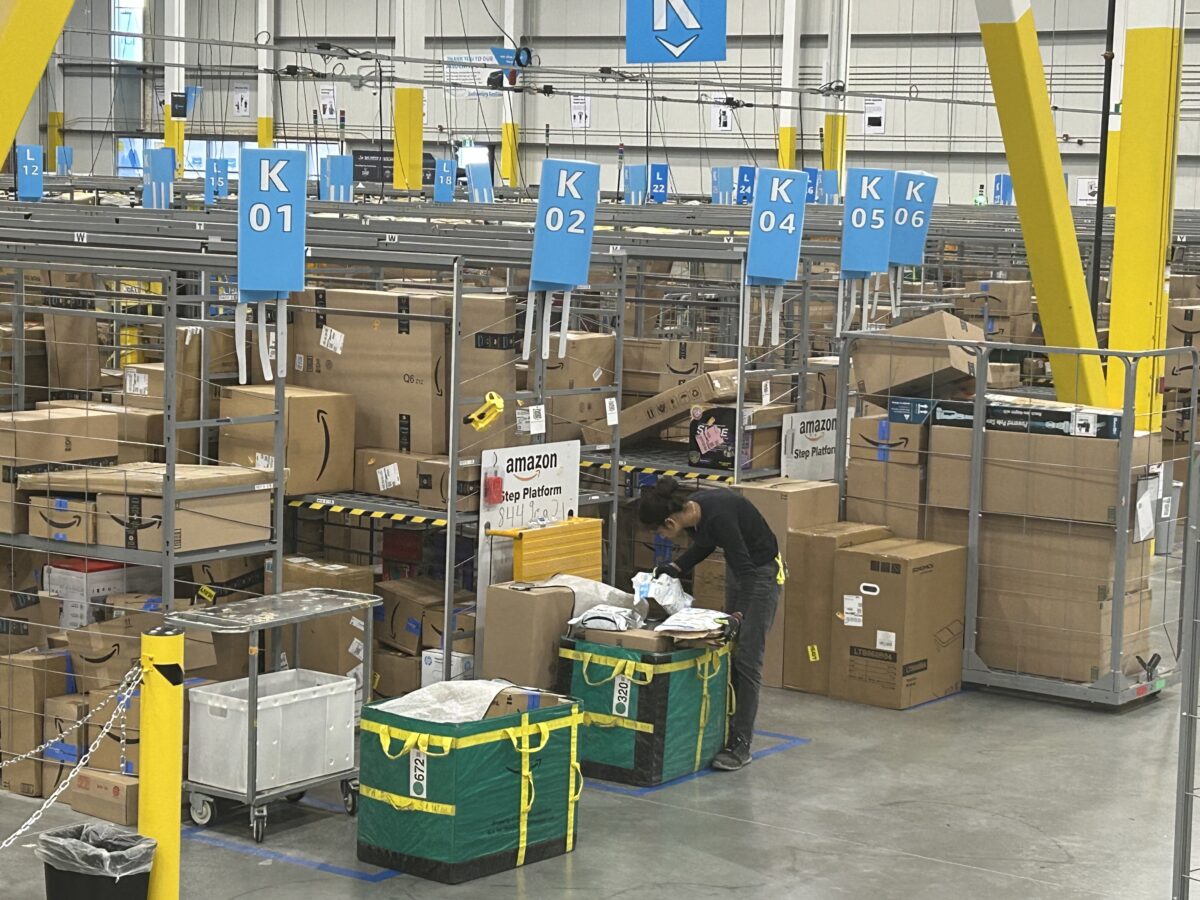
Angela Baciu at the Amazon Delivery Centre in southeast Calgary. Photo by Mario Toneguzzi
Angela Baciu describes an Amazon Delivery Centre in southeast Calgary as where “the magic is happening.”
The Regional Manager for the Prairie Region for Amazon said it’s the last mile for packages before they are delivered to people’s doorsteps.
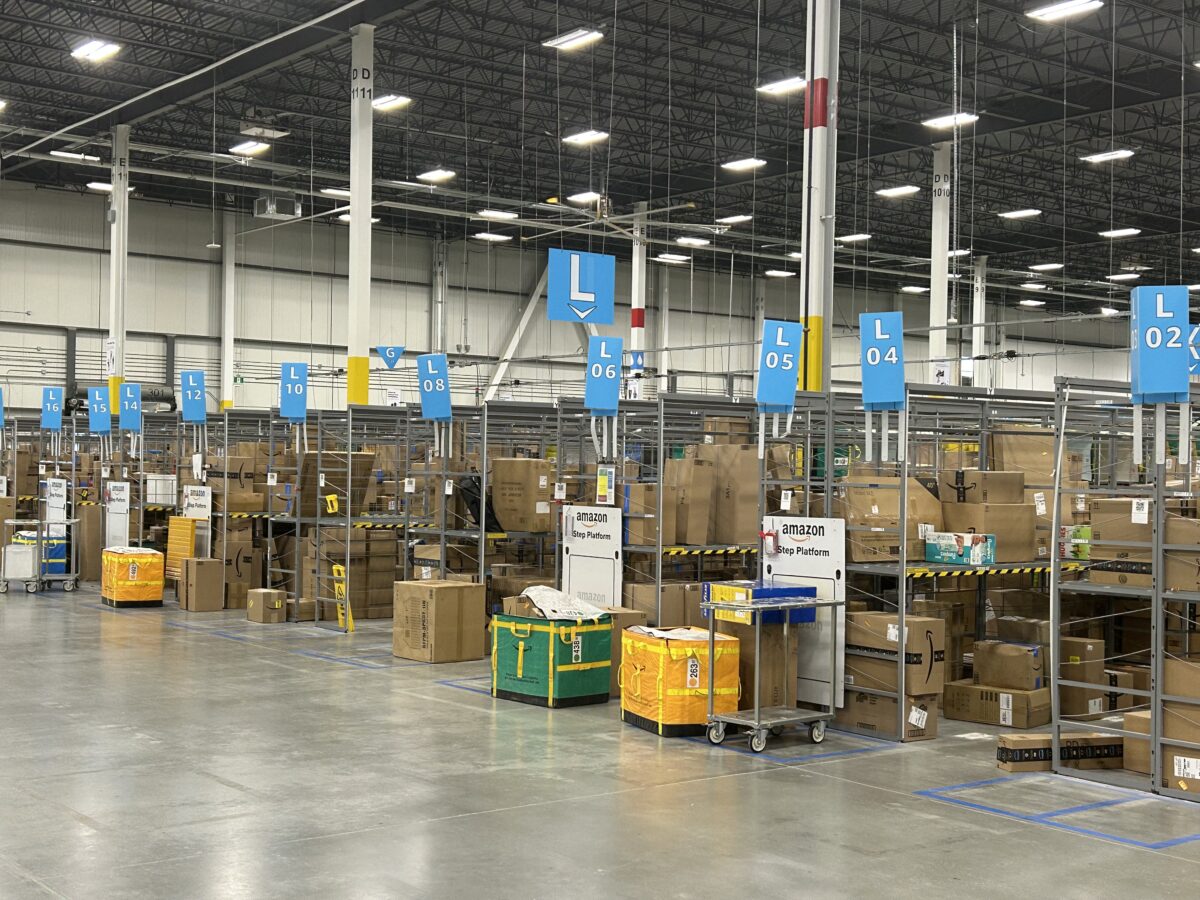
The Calgary facility, one of two in Calgary, is 164,000 square feet. The other facility is about 200,000 square feet. The southeast location opened in August 2020 while the northern location opened last September.
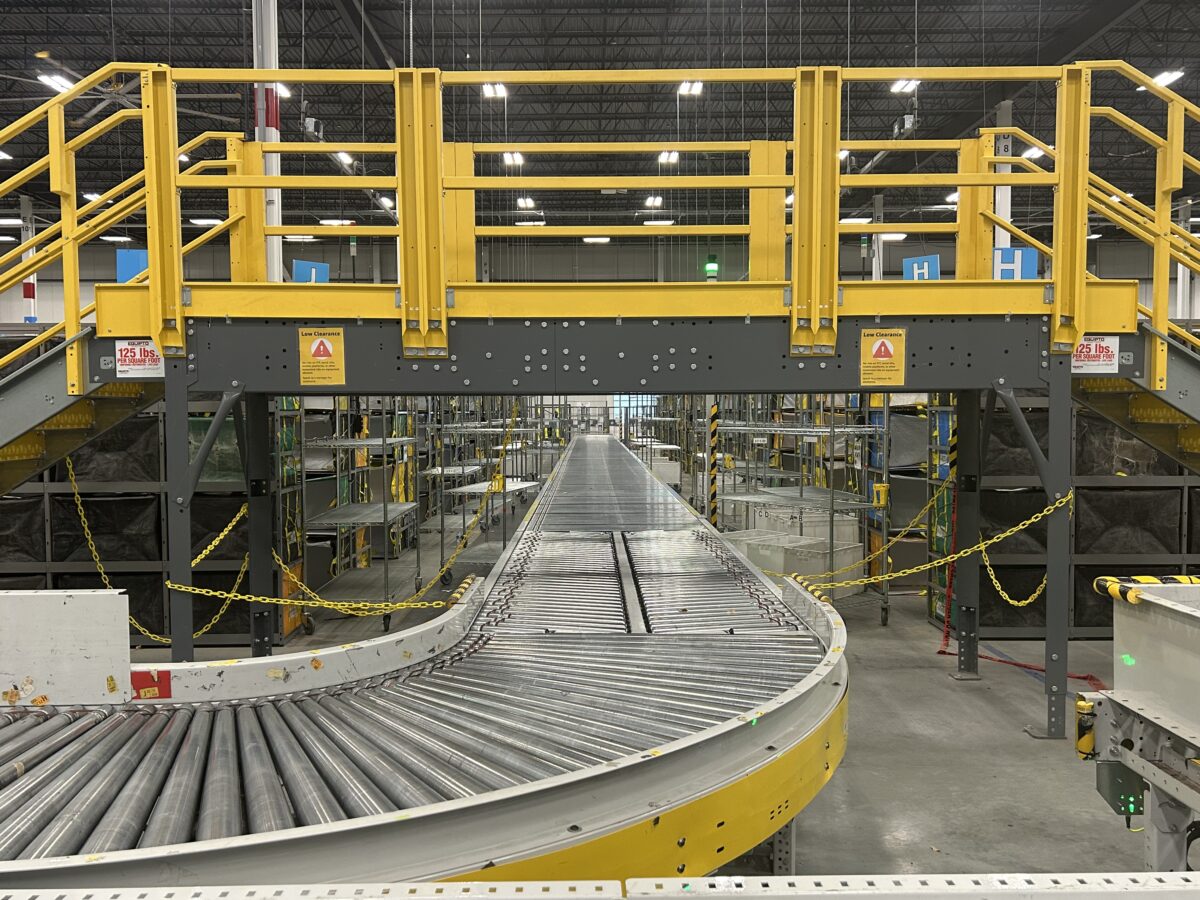
“The packages come to our delivery station. We are sorting based on where it’s going to be delivered. Then we take the bags and they are taken by a third-party of drivers who then deliver the packages,” said Baciu.
The packages come initially from either a fulfillment centre or a sort centre.
From these two stations, Calgary is split in half where deliveries are handled. The centres cover the City of Calgary and surrounding areas.
Photo by Mario Toneguzzi
The number of packages that go through a last mile site is mind-boggling.
“Imagine that this site started in 2020 with 4,000 packages per day. Now in peak, what we consider peak is November and December when we’re having the high volume events, we had 3.7 million packages that are spread between six weeks,” said Baciu. “On an average day, taking out a high volume event, just this station we’re talking about 50,000 packages per day.”
During high volume event days like Prime for example that number can soar up to 125,000 packages per day.
Earlier this year, Amazon announced plans to cease operations at seven facilities in Quebec over the next two months. The closures include one fulfillment centre, two sorting centres, three delivery stations, and one AMXL (extra-large) delivery station co-located with a sorting centre. This decision will impact approximately 1,700 regular employees and 250 temporary seasonal workers in the province.
The company stated that it will revert to a third-party delivery model supported by local small businesses, a system previously in place until 2020. Amazon spokesperson Barbara Agrait emphasized that this move aims to maintain high-quality service and offer greater savings to customers in the long term. She clarified that the decision was not influenced by the unionization of 200 employees at Amazon’s DXT4 warehouse in Laval, Quebec, which occurred in May 2024.
Photo by Mario Toneguzzi
In the company’s 2024 annual report, Amazon said it is a “powerful engine of growth for the Canadian economy. Through innovation, investments, and job creation, Amazon is helping transform the economic potential of communities across the country.
“Since 2010, we’ve made direct investments in our Canadian operations of more than $50 billion. This includes both capital expenditures (such as the fulfilment centres and data centres we build) and operating expenditures (such as the jobs we create). These direct investments create a ripple effect through the economy: Keystone Strategy, an independent economics consulting firm, estimates that Amazon’s investments contributed an additional $43 billion in spillover value-added effects to the Canadian GDP between 2010 and 2023 (Amazon’s spillover value-added effects represent the indirect effects of Amazon’s investments on Canada’s GDP. Amazon’s investment has indirect effects in the economy due to the expanded production of firms that supply the goods and services purchased by Amazon).
“These investments have helped us create more than 46,000 good jobs with competitive pay and benefits across Canada, at our corporate Tech Hubs in downtown Toronto and Vancouver and our close to 70 Operations and logistics sites from coast to coast.”
Five years ago, many Canadians feared that the country was running out of food. Police officers were stationed at grocery stores to manage traffic, as panicked consumers flooded aisles with uncertainty about when they might next have access to essential goods. The fear of an unfamiliar and deadly virus compounded the situation, leading to unprecedented levels of panic buying. Store shelves were emptied at a pace never before witnessed in a country as agriculturally abundant as Canada.
Of course, Canada was never truly at risk of running out of food. The chaos of early 2020 revealed the limits of just-in-time inventory systems but also reinforced the resilience of our food supply chains. While trust in an invisible system is difficult, most Canadians have since come to appreciate its reliability—even in the face of immense disruption.
Since that turbulent period, we have faced our share of supply chain challenges. Shortages, once unthinkable, have become a manageable inconvenience rather than a crisis. The 2022 dispute between Frito-Lay and Loblaw, which left snack aisles bare for weeks, was met with public indifference—an indication of how attitudes have evolved. The supply chain disruptions of the pandemic’s early years were far more severe, yet the most significant economic shock came with Russia’s illegal invasion of Ukraine. This geopolitical event triggered a spike in commodity prices, driving up food costs globally and straining household budgets in Canada and beyond. The ripple effects of that crisis continue to be felt today.
Geopolitical Shifts and Their Impact on Food Security
Interestingly, between 2020 and 2024, trade disruptions such as tariffs and embargoes—once staples of global geopolitics—were momentarily sidelined as most governments and industries focused on pandemic recovery and economic stability. Even major players like China and Russia operated with relative restraint during this period, allowing food supply chains some room to recalibrate.
Despite these challenges, Canada’s food system has remained remarkably robust. A strong agricultural foundation ensures that the country produces more than enough food to sustain itself, with vast arable land and advanced farming techniques supporting both domestic consumption and export markets. Canada’s diversified trade relationships also serve as a buffer, reducing dependency on any single country and allowing for flexibility when geopolitical conflicts or economic shocks arise.
Beyond trade, Canada’s grocery and food distribution networks have proven highly adaptable. Major retailers have developed sophisticated inventory management systems, allowing them to adjust sourcing strategies and respond swiftly to demand fluctuations. Government policies and regulatory oversight have also played a role in maintaining stability, ensuring food safety and supporting key industry players through crises. Meanwhile, innovation in food production has helped mitigate risks associated with labor shortages and supply chain disruptions. Investments in automation, precision agriculture, and digital supply chain tracking have made the industry more resilient.
The Canada-U.S. Agricultural Trade Relationship
Perhaps one of the most significant pillars of Canada’s food security is its close economic integration with the United States. The Canada-U.S. agricultural trade relationship is one of the strongest in the world, ensuring the smooth movement of food across borders. However, this critical pillar is now being tested under President Trump. The return of trade instability, including tariff threats and renewed protectionism, places additional pressure on an already strained supply chain. The cost implications of such disruptions could force Canada’s food industry to seek alternative sourcing and distribution strategies, increasing prices for consumers.
If Trump had remained in office beyond his first term, one can only speculate how his administration might have navigated both the latter years of the pandemic and the war in Ukraine—potentially treating the global economy as little more than a high-stakes game of Monopoly.
Despite these ongoing disruptions, one fact remains clear: Canada’s food industry has demonstrated its ability to withstand crises. Farmers, truckers, processors, manufacturers, grocers, restaurant owners, and frontline retail workers have endured five years of extraordinary volatility. Their efforts have ensured that Canadians continue to have access to safe, reliable food, even in the face of global uncertainty.
If there is one lesson to take away from the empty shelves of March 2020, it is that our food supply chains are built to withstand adversity. While no system is infallible, Canada’s agri-food sector has proven its ability to adapt and deliver—no matter the challenge.
Retail Insider is streamlining its Canadian retail news from around the web to include a handful of top news stories that can be viewed quickly during the day. Here are the top stories from the past 24 hours.
Loblaw Cos. Ltd. and its parent company George Weston Ltd. have reached a settlement in a pair of class-action lawsuits related to allegations of an industry-wide price-fixing conspiracy involving packaged bread in Canada.
The $500 million settlement was announced in 2024, and while it was officially executed on January 31, 2025, it is still subject to approval by courts in Ontario and Quebec. This settlement marks a significant step in resolving a major legal battle that has been ongoing for several years.
As part of the settlement, Loblaw and George Weston will contribute a combined total of $404 million in financial compensation. The remaining $96 million will come from Loblaw’s gift card program, which was introduced in 2017. The settlement funds will be distributed to class-action members, with 22% of the total allocated to eligible individuals in Quebec, and the remainder to those outside of Quebec.
This legal matter stems from allegations that Loblaw and other major companies were involved in a price-fixing scheme that inflated the cost of packaged bread in Canada for over a decade. The class-action lawsuits claim that the conspiracy resulted in at least $1.50 being added to the price of a loaf of bread between 2001 and 2021.
Remaining Defendants and Continuing Legal Actions
While Loblaw and George Weston have settled, several other defendants are still embroiled in the ongoing class-action litigation. These include Canada Bread, Sobeys, Metro, Walmart Canada, and Giant Tiger. The settlement agreement will also provide access to key information that may aid in continuing legal actions against these remaining companies.
Loblaw and George Weston were the first to admit their participation in the alleged price-fixing conspiracy, which they did as part of an investigation by the Competition Bureau of Canada. As a result of their cooperation, both companies were granted immunity from further penalties under the Bureau’s investigation. In contrast, Canada Bread has pleaded guilty to four counts of price-fixing, although it denies involvement in a broader conspiracy.
Accusations and Denials from Metro and Sobeys
In a twist to the ongoing saga, Metro and Sobeys have accused Loblaw and George Weston of conspiring to implicate them in the price-fixing scheme. These companies have vehemently denied the allegations, which has added another layer of complexity to the legal proceedings. The lawsuits, alongside the Competition Bureau’s investigation, continue to unfold, with more developments expected in the coming months.
The investigation by the Competition Bureau began in January 2016, when the Bureau first raised concerns about possible price-fixing among major bread manufacturers and retailers. According to the Bureau, a secret 14-year conspiracy led to inflated bread prices, affecting millions of Canadians.
The impact of the alleged price-fixing scheme was significant. The Competition Bureau claims that as a result of the conspiracy, Canadians paid over $1.50 more per loaf of bread than they would have in a competitive market. This increase in bread prices had a ripple effect, raising the cost of living for many households.
How the Settlement Affects Consumers
Canadians who purchased packaged bread between January 1, 2001, and December 31, 2021, are eligible to participate in the class-action settlement. Those who made bread purchases in Quebec will automatically be included in the Quebec class action, while individuals outside of Quebec will be included in the Ontario class action.
For eligible individuals, the funds from the settlement will be distributed based on a proportional formula, with 22% allocated to Quebec class members and the rest to those outside the province. The distribution process is expected to be completed once the court provides approval, which is expected later in 2025.
Class members in both Ontario and Quebec must be aware of the deadlines for opting out of the settlement. The deadline for opting out of the Quebec class-action settlement is May 30, 2025. Meanwhile, those in Ontario must submit their opt-out requests by April 25, 2025. Additionally, individuals wishing to object to or comment on the settlement must do so by May 30, 2025.
The Société des alcools du Québec (SAQ) is marking its 100th anniversary with a bold new retail strategy, reflecting shifts in consumer habits and demographic changes across Quebec. With Generation Z now outnumbering baby boomers and alcohol consumption trends evolving, the SAQ is implementing a series of initiatives aimed at improving accessibility and convenience while maintaining its core mission.
Quebecers are drinking less alcohol than in previous decades, with many opting for alternatives such as non-alcoholic beverages. This shift, combined with changing purchasing behaviours—where impulse buys now outweigh planned visits—has prompted the SAQ to rethink its business model.
“To maintain our long-term performance, we have to evolve how we do business, be more in sync with all our customers, those of tomorrow as well as today,” said Jacques Farcy, President and CEO of the SAQ. “It is crucial if we are to continue contributing to Quebec.”
Jacques Farcy, President and CEO of the SAQ
Introducing Micro SAQ Agency Stores
In response to consumer demand for greater accessibility, the SAQ will launch a pilot program in April to test six micro SAQ Agency stores in urban settings. These locations, positioned in neighbourhoods with limited SAQ coverage, will provide a curated selection of around 30 products, including spirits-based coolers, sparkling wines, still wines, and spirits.
The micro SAQ Agency stores will be integrated into existing businesses with liquor permits, such as grocery and convenience stores. This initiative aligns with the SAQ’s efforts to offer customers an alternative when traditional SAQ stores are closed. If the pilot proves successful, approximately 100 micro SAQ Agency stores could open across Quebec in the next year.
Importantly, the SAQ emphasizes that strict adherence to sales ethics and regulatory requirements will be a non-negotiable element of this initiative.
Expanding Convenient Delivery Options
Another key component of the SAQ’s modernization efforts is a pilot program for convenient delivery through third-party platforms. Beginning in June, this service will launch in Montreal, offering approximately 150 products for delivery. If successful, the program could expand across Quebec.
Following a model similar to what is already in place in Ontario, delivery personnel from partner platforms will purchase products from designated SAQ locations and deliver them to customers. The SAQ has underlined that maintaining strict age verification and compliance with alcohol sales regulations will be a priority. Additionally, the selection of delivery partners will take into account economic considerations, particularly in relation to current trade tensions with the U.S.
Strengthening Regional Accessibility with New SAQ Agency Stores
Expanding its reach beyond urban centers, the SAQ will open 34 new SAQ Agency stores in underserved areas, specifically in the Bas-Saint-Laurent, Gaspésie, and Chaudière-Appalaches regions. This expansion aims to ensure that Quebecers in rural and remote areas continue to have access to the SAQ’s product offerings.
Each year, the SAQ evaluates its store network to assess profitability and customer accessibility. The decision to introduce more agency stores follows this data-driven approach, ensuring optimal coverage throughout the province.
Photo: SAQ
Closing Underperforming SAQ Locations
While expanding in underserved regions, the SAQ will simultaneously close five underperforming stores that no longer align with customers’ shopping habits. The locations affected include:
Stanstead
Promenade du Portage (Gatineau)
Baie-D’Urfé
Campanile (Quebec City)
Ville-Émard
These closures are planned for fiscal 2025-2026, coinciding with lease expirations. The SAQ says it remains committed to serving customers efficiently and optimizing store locations based on evolving traffic patterns.
The SAQ’s Role in Quebec’s Economy
Founded in 1921, the SAQ is one of Quebec’s most significant government-owned enterprises, responsible for the importation, distribution, and sale of alcoholic beverages. The retailer operates 410 stores and 423 agency stores across the province, along with its e-commerce platform, SAQ.COM.
The SAQ plays a critical economic role in Quebec, having contributed over $2.2 billion to the provincial government in fiscal 2023-2024. Additionally, the organization supports approximately 250 community organizations and events while emphasizing environmental responsibility in its operations.
A Minecraft Movie experience at Yorkdale in Toronto. Image: Oxford Properties
Warner Bros. Pictures Canada is bringing a larger-than-life experience to Toronto’s Yorkdale Shopping Centre, celebrating the highly anticipated release of A Minecraft Movie. This immersive activation, designed to transport fans into the game’s signature pixelated universe, runs throughout March Break from March 8 to March 16, offering visitors an interactive, family-friendly event.
Located near the TTC entrance and Starbucks kiosk in Yorkdale, the free attraction invites fans of all ages to step inside a massive LED portal designed to replicate the game’s blocky aesthetic. Visitors will have the opportunity to snap photos with life-size replicas of iconic Minecraft creatures, including the Creeper, the Bee, and the Pink Sheep.
Fans can also enter a contest for a chance to win an exclusive trip to attend the movie’s world premiere in the U.K., adding an exciting incentive for visitors looking to engage with the event.
A Minecraft Movie experience at Yorkdale in Toronto. Image: Oxford Properties
Exclusive Giveaways and Advance Ticket Access
Cineplex has partnered with Warner Bros. Pictures Canada to enhance the experience by setting up a life-size popcorn bucket, where attendees can purchase advance tickets for A Minecraft Movie ahead of its April 4 release. Guests will also receive exclusive movie-themed giveaways, including posters, activity sheets, and LEGO® Minecraft® polybags, while supplies last.
A Minecraft Movie is a live-action adaptation of the world’s best-selling video game, starring Jason Momoa, Jack Black, Emma Myers, and Jennifer Coolidge. Directed by Jared Hess (Nacho Libre, Pokémon: Detective Pikachu), the film follows a group of misfits who are pulled through a portal into the Overworld, where they must adapt, survive, and master their new reality while battling classic Minecraft foes such as Piglins and Zombies.
With a creative team that includes Oscar-winning production designer Grant Major (The Lord of the Rings), VFX supervisor Dan Lemmon (The Jungle Book), and composer Mark Mothersbaugh (Thor: Ragnarok), the movie is set to bring Minecraft’s distinctive charm and adventure to the big screen.
A Minecraft Movie experience at Yorkdale in Toronto. Image: Oxford Properties
When and Where
The Yorkdale activation runs daily during mall hours from March 8 to March 16, making it a prime destination for families during March Break. The event is free to attend, ensuring accessibility for fans eager to engage with the Minecraft universe before the film’s theatrical debut.
A Minecraft Movie opens exclusively in theatres and IMAX in North America on April 4, 2025, with international releases beginning April 2. Advance tickets are now available for purchase online.