Home Blog Page 57

Furniture retailer CouchHaus targets Calgary and Toronto expansion as national demand drives growth

CouchHaus photo
CouchHaus photo

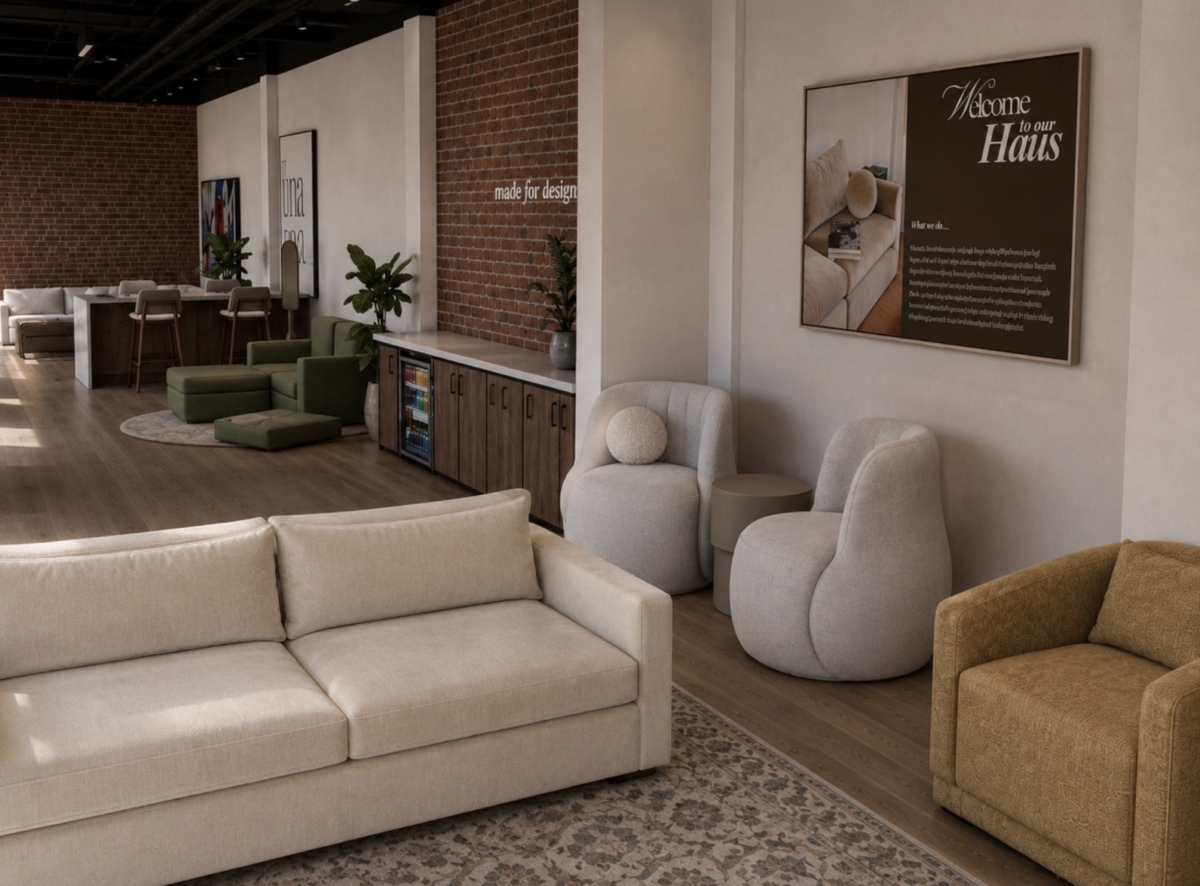
Furniture retailer CouchHaus, the Canadian custom modular sofa brand known for its made-to-order designs, washable slipcovers, and comfort-first approach, is expanding beyond its Vancouver base with a new Calgary showroom opening next week as the company looks to build a broader national retail presence in response to growing customer demand across Canada.

Co-founders Harrison Gordon and Paige Sandher said the Calgary location is expected to soft open in mid-July, with an official opening planned for early August. The move comes as the company also negotiates a lease for a Toronto location it hopes to open in the fourth quarter.

The expansion reflects a shift from operating a single flagship showroom to establishing a physical presence in markets where the company says online demand has already demonstrated customer interest.

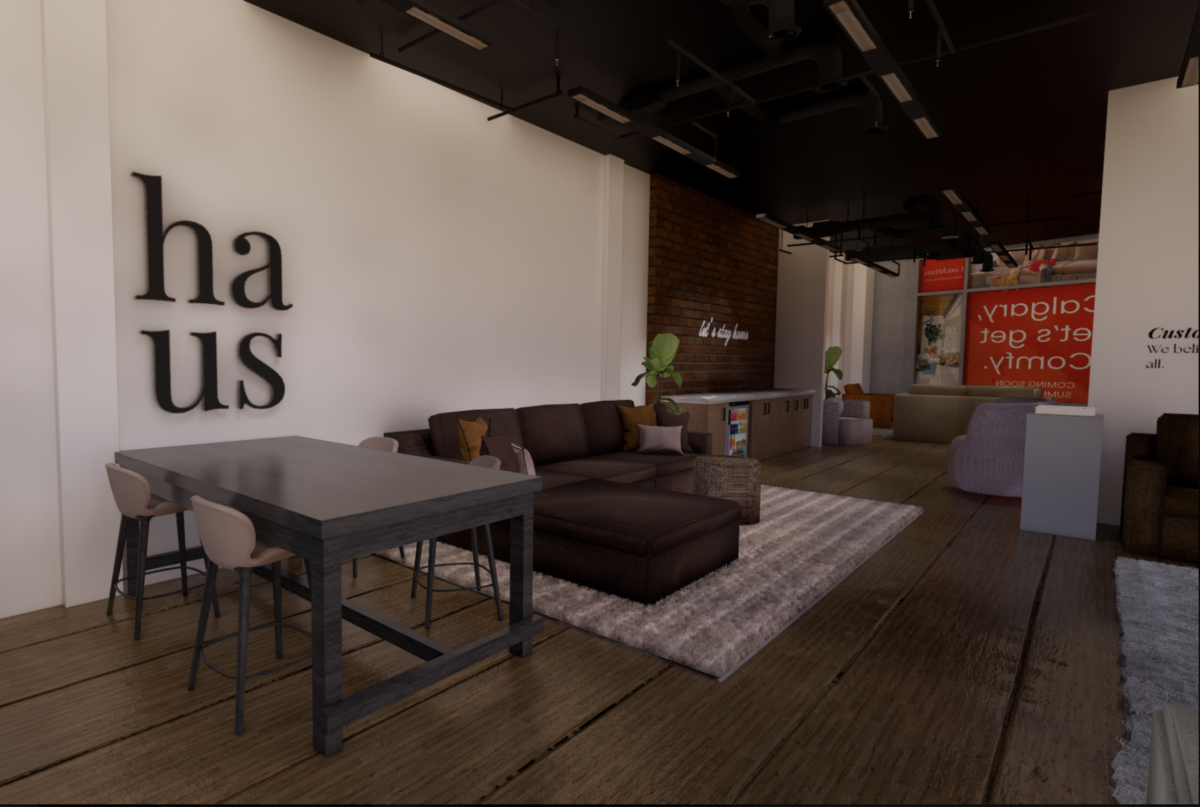
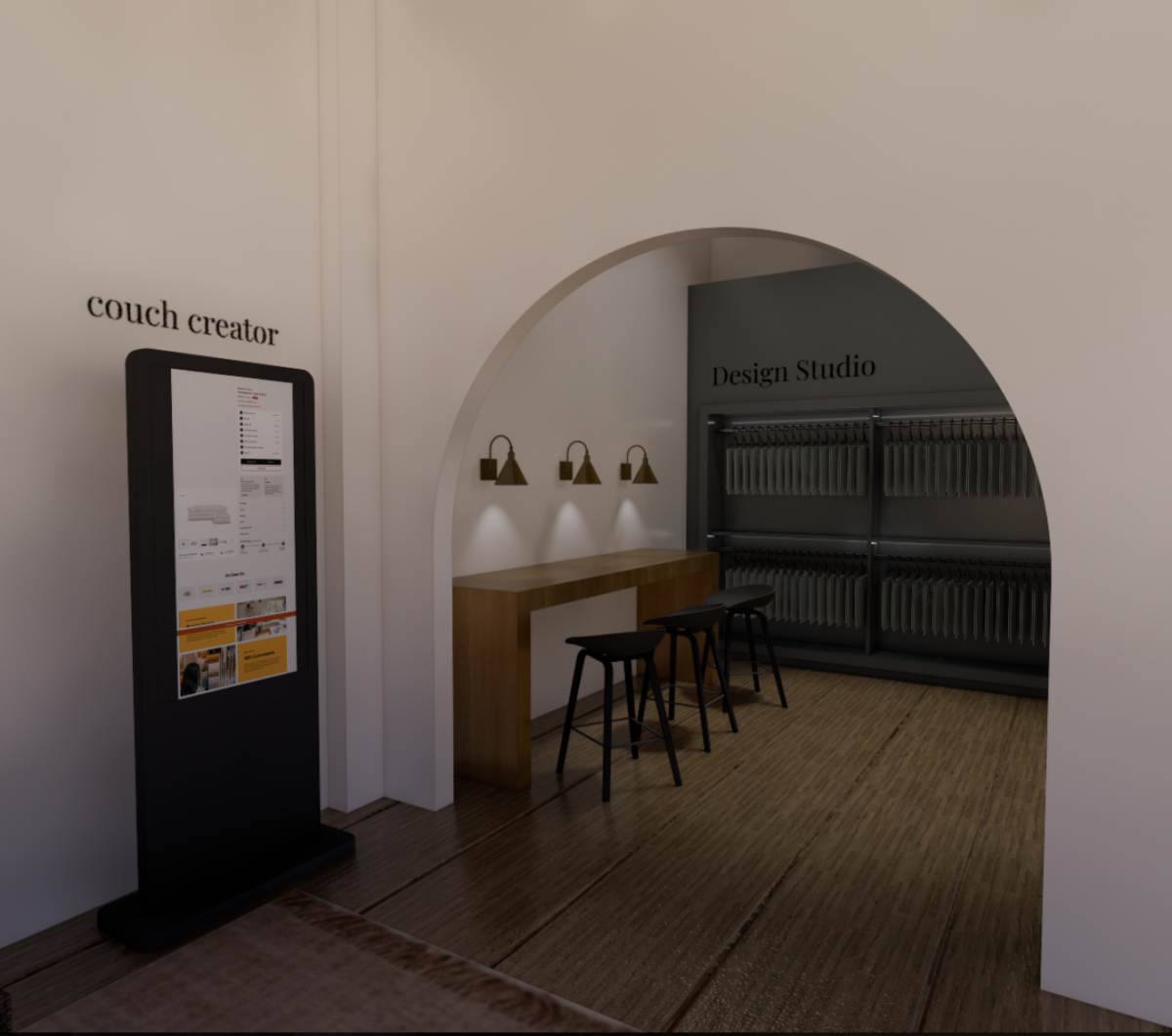
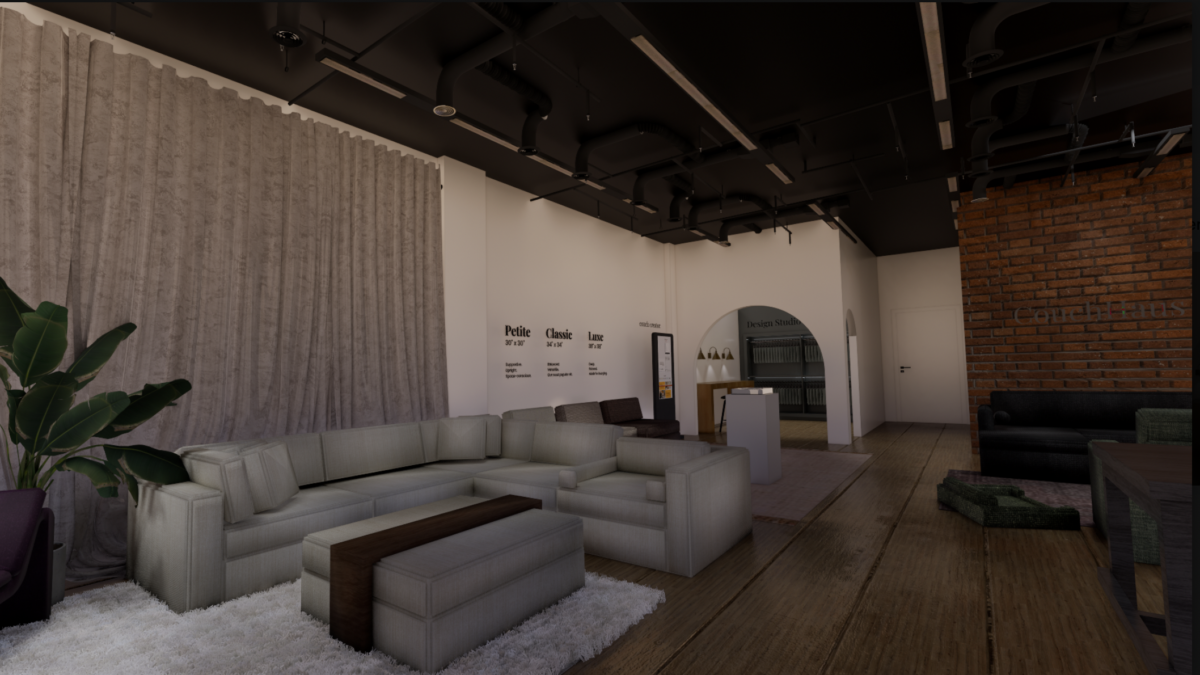
The Calgary showroom will be located in the city’s Beltline district at the corner of 11th Avenue and 6th Street S.W.. At roughly 2,150 square feet, it will be slightly larger than the company’s approximately 1,600-square-foot flagship showroom in Vancouver’s South Granville neighbourhood.

The Calgary showroom will soft open from July 10–15 with appointments and walk-ins available.

“Calgary has consistently been one of our strongest markets, so opening a showroom here felt like the natural next step,” said Sandher. “As we continue to grow across Canada, our retail roadmap is focused on bringing the CouchHaus experience closer to the communities already showing strong demand for our product, paired with our design consults support in the custom journey.”

“The Calgary showroom is an important milestone in our Canadian expansion,” said Gordon. “With Vancouver established and Calgary opening this summer, we’re continuing to explore opportunities in Eastern Canada as we build the next phase of CouchHaus retail.”

Harrison Gordon
Harrison Gordon

Gordon said the Calgary store also represents an evolution in how the company approaches retail development.

“Vancouver was more of a DIY project, and this time we’ve hired general contractors and are making it look a lot more professional,” he said.

The company’s first permanent retail location opened in April 2024 in Vancouver. It later tested demand in Ontario through a three-month pop-up store at Stackt Market in Toronto between November 2024 and January 2025.

Paige Sandher
Paige Sandher

Online data shaped expansion plans

Sandher said customer data played a central role in selecting Calgary for the company’s next permanent location.

“There are a couple of reasons,” Gordon said. “One, the data supports it.”

He said online orders, website traffic and requests for fabric samples consistently pointed to Calgary as one of the company’s strongest markets.

“It’s one of our top five markets across Canada at the moment,” he said.

The company also viewed the Beltline neighbourhood as a strategic fit because of its pedestrian traffic and its proximity to other furniture retailers.

Sandher said the experience in Vancouver reinforced the value of locating near competitors rather than away from them.

“One thing we noticed in Vancouver, which was a great success for us, was being on South Granville where furniture stores are back-to-back,” she said.

While Calgary does not have the same concentrated furniture district, he said many retailers are located within a short walk of one another, creating a similar shopping experience for customers.

“We’re still very close to our competitors, which is good,” she said.
CouchHaus photo
CouchHaus photo

Toronto remains the next priority

The company is also moving beyond preliminary discussions for a Toronto showroom.

Sandher said the business is negotiating a lease in the city’s King East neighbourhood after submitting an offer that landlords are reviewing.

“We’re currently negotiating,” he said. “So it’s more than just scouting.”

The proposed location would be comparable in size to the Calgary showroom, although the total space spans about 3,000 square feet over two levels. Roughly 2,000 square feet would be dedicated to the showroom, while the mezzanine could be used for staff operations rather than retail displays.

Sandher said the company is considering either opening the location initially as a pop-up before transitioning to a permanent showroom or establishing a permanent store from the outset.

The goal is to open during the fourth quarter of the year.
CouchHaus photo
CouchHaus photo

Showrooms remain part of customer experience

The expansion comes despite continued growth through the company’s online business.

Sandher said its products are typically high-value purchases that require more consideration than everyday retail items, making physical showrooms an important complement to digital sales.

“Our product is a high-consideration purchase with a higher order value,” she said.

She said improvements to the company’s website have helped customers better understand its products, but many consumers still prefer to see and interact with furniture before making a purchasing decision.

“Given the custom nature, people still want to interact with products and understand how companies look and feel in showroom settings,” Sandher said.

She said the company considered remaining focused on British Columbia while serving other regions online, but ultimately decided national demand justified expanding its physical footprint.

“We’ve seen that in our orders,” she said.

Because both Calgary and Toronto rank among the company’s five strongest markets based on online conversions, Sandher said opening local showrooms became the logical next step.

“We wanted to support customers with an in-store experience as well,” she said.
CouchHaus photo
CouchHaus photo

Five years after launch, focus remains on growth

The expansion comes as the company marks its fifth anniversary.

Sandher said the business continues to position itself through product customization and ongoing improvements to its online platform.

“There’s something to be said about a young company doing something different,” she said.

She added that the company’s website has evolved significantly and remains an important part of how customers research products before visiting a showroom.

More from Retail Insider:

CouchHaus photo
CouchHaus photo

Report says supply management adds hundreds of dollars to annual food costs, pushes thousands below poverty line

Jack Sparrow photo
Jack Sparrow photo

A report released by the Montreal Economic Institute says Canada’s supply management system increases the cost of staple foods for consumers, adding an average of $224 annually to grocery bills and contributing to higher living costs for lower-income households.

The analysis concludes that higher prices for dairy products, eggs and poultry associated with supply management disproportionately affect lower-income Canadians and estimates that more than 120,000 people remain below the low-income cut-off because of those added food costs.

The report compares prices for milk, eggs and poultry in Canada with comparable markets in the American Midwest to estimate the additional costs associated with the supply management system. According to the analysis, milk costs 171 per cent more in Canada, while consumers pay 46 per cent more for eggs and 29 per cent more for chicken.

“The main effect of supply management is to drive up the prices of a number of staple foods such as milk, poultry, and eggs,” said Gabriel Giguère, senior policy analyst at the MEI. “Unfortunately, those most affected by this policy are the least well-off: that is to say, our lowest-income families.”

The report estimates the average Canadian pays an additional $224 per year because of supply management. It says the impact varies by household income, with those in the lowest income quintile paying an estimated $279 more annually, while households in the highest income quintile pay an estimated $1,141 more.

Measured as a share of disposable income, however, the burden is greater for lower-income households, according to the report. It says the added costs represent 1.25 per cent of disposable income for households in the lowest income quintile, compared with 0.33 per cent for those in the highest quintile.

Gustavo Fring photo
Gustavo Fring photo

The report attributes part of that difference to variations in the types and quantities of products purchased by households with different income levels.

“Supply management is a regressive policy that places a particularly heavy burden on the less fortunate while benefiting only a small number of farmers,” Giguère points out. “For families struggling to make ends meet, it’s clear that having a few hundred more dollars in their pockets at the end of the year would make a big difference.”

The report also examines the relationship between supply management and poverty. It says a household is considered low income if it must spend 20 per cent more of its budget than the average household to meet its basic needs.

Based on that measure, the analysis estimates that higher prices linked to supply management leave 41,279 Canadian households, representing 120,083 people, below the low-income cut-off.

“By abolishing supply management, we could help 120,083 people – roughly the population of the city of Terrebonne – lift themselves out of poverty,” Giguère said. “It wouldn’t make them rich overnight, but it would give some breathing room to the people who need it most.”

The report calls on the federal government to consider abolishing the supply management system, arguing that reducing food prices would ease cost-of-living pressures for Canadian households.

“If the goal is to help people cope with the cost of living, abolishing supply management is one of the most direct measures the government can take,” said Giguère. “Reducing the restrictions that jack up the prices of essential goods is a practical way to help the most vulnerable households.”

The Montreal Economic Institute is an independent public policy think tank with offices in Montreal, Ottawa and Calgary.

More from Retail Insider:

Most Canadians say federal tariffs and taxes are driving up cost of living, MEI-Ipsos poll

Canada Gold opens first Manitoba store, signs Winnipeg Blue Bombers partnership

Canada Gold has expanded into Manitoba with the opening of its first Winnipeg location, giving the precious metals retailer 19 stores across Canada and the Pacific Northwest while also securing a sponsorship agreement with the Winnipeg Blue Bombers for the 2026 Canadian Football League season.

The new store, located at 635 Corydon Ave. in Winnipeg, marks the company’s first location in Manitoba and continues its retail expansion strategy. The company also announced it has been named the Winnipeg Blue Bombers’ Official Precious Metals Partner for the 2026 CFL season.

The partnership includes Canada Gold serving as the Presenting Coin Toss Partner for Blue Bombers games, along with additional initiatives intended to engage fans and the Winnipeg community.

Founded in Vancouver in 2008, Canada Gold operates as a physical bullion dealer.

Chris Pollock, founder and managing partner of Canada Gold, said the new location represents the company’s continued expansion while extending its services to customers in Manitoba.

“We’re excited to bring Canada Gold to Winnipeg and expand our commitment to serving customers with a trusted and transparent experience,” said Pollock. “This new location reflects our continued growth and dedication to providing fair evaluations, competitive pricing, and exceptional service for those looking to buy or sell precious metals and jewellery. We look forward to becoming a valued part of the Winnipeg community and building lasting relationships with our customers.”

Canada Gold said it is an authorized distributor of the Royal Canadian Mint and provides services for customers buying and selling precious metals.

More from Retail Insider:

Canada Gold photo

Canadian pharmacies generated $22.9B in GDP, supported more than 273,000 jobs in 2024: report

Neighbourhood Pharmacy Association of Canada photo

Canada’s pharmacy sector generated an estimated $22.9 billion in gross domestic product and supported more than 273,000 jobs across the country in 2024, according to a report released by Signal49 Research.

The report, The Economic Footprint of Canada’s Pharmacy Sector: Fuelling Health and Local Economies, found the sector also generated $14 billion in labour income and contributed $6.3 billion in tax revenues to governments based on 2024 economic data.

The findings quantify the sector’s economic contribution alongside its role in delivering healthcare services, as governments continue to focus on economic growth and healthcare access.

Canada has 12,558 pharmacy locations, the report said, with nearly two-thirds operating as independently owned or banner-affiliated community locations. Those locations serve communities in every province and territory.

“We know that Canadians see their local pharmacy as a trusted healthcare destination, but this research demonstrates that pharmacies are also critical economic infrastructure,” said Sandra Hanna, CEO, Neighbourhood Pharmacy Association of Canada. “Pharmacies support hundreds of thousands of jobs, strengthen local economies, generate billions in government revenues, and improve access to care in communities of every size. As governments focus on growing Canada’s economy and strengthening healthcare access, pharmacies are uniquely positioned to advance both priorities.”

Sandra Hanna
Sandra Hanna

Among the report’s findings:

  • Canada’s pharmacy sector generated $22.9 billion in annual GDP.
  • The sector supported more than 273,000 jobs across the Canadian economy.
  • It generated $14 billion in labour income and $6.3 billion in annual tax revenues.
  • Every dollar of direct pharmacy output created an additional 20 cents in economic activity elsewhere in the economy.
  • Each pharmacy job supported about 0.4 additional jobs in other sectors.
  • Rural locations employed more than one in every 100 rural residents and helped address healthcare access gaps in underserved communities.
  • The sector accounted for $8.4 billion in GDP and 96,000 jobs in Ontario, and $6.1 billion in GDP and 79,000 jobs in Quebec.
Tessy Agbonome photo

The report says the economic activity generated by pharmacies extends beyond the sector itself through employment and business activity across other industries.

Eddy Nason
Eddy Nason

“The research highlights pharmacy’s uniquely dichotomous contribution to Canada,” said Eddy Nason, Director, Health, Signal49 Research. ” It’s a business, a significant economic driver, and a frontline healthcare service operating at a time of major upheaval in primary care,” he said. “That means pharmacy isn’t just an economic engine–it’s an economic engine with purpose.”

The report says the sector is present in virtually every community across Canada and contributes to both healthcare delivery and local economic activity.

It concludes that the sector can contribute to government priorities related to economic growth, productivity, healthcare access and community resilience through its nationwide network of pharmacy locations.

More from Retail Insider:

Fairmont Waterfront completes first phase of renovation as Vancouver cruise traffic climbs

Fairmont Waterfront photo

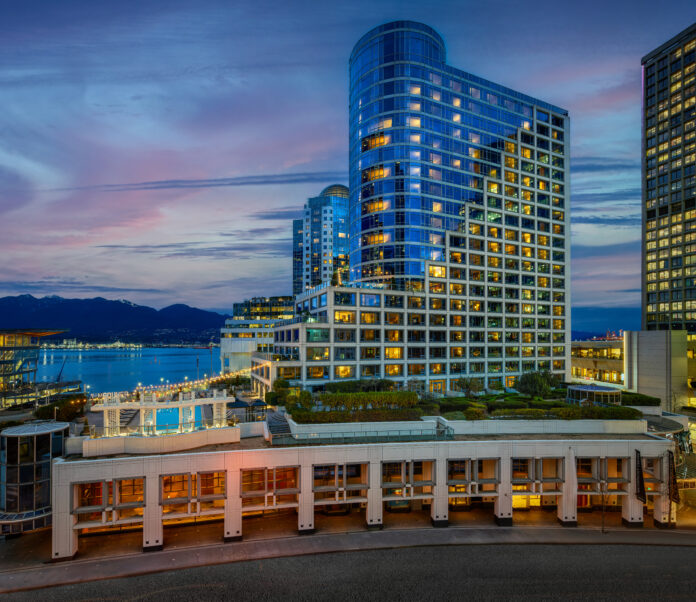
Fairmont Waterfront says it has completed the first phase of a multi-year renovation project as Vancouver’s record-setting cruise season drives increased demand from travellers extending their stays in the city before and after their voyages.

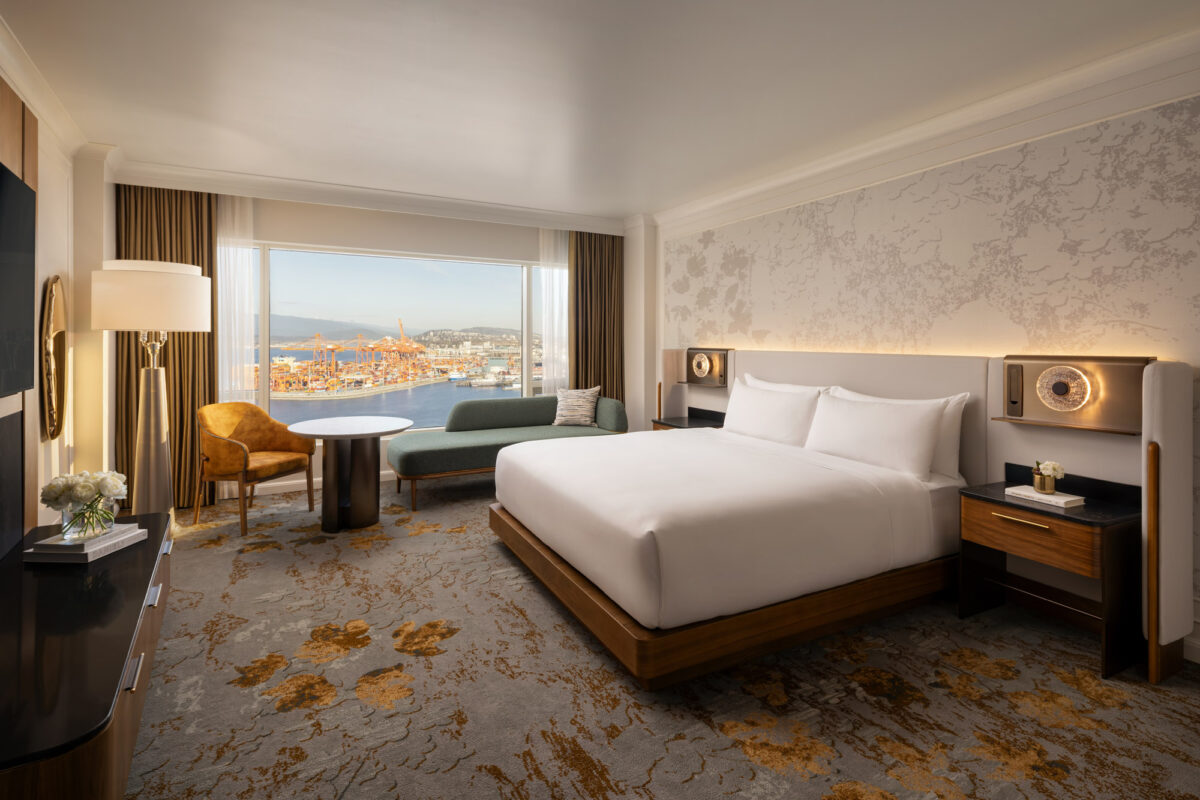
The downtown Vancouver hotel said the initial phase of the project includes 96 redesigned guest rooms and comes as cruise passenger volumes continue to rise at the Port of Vancouver. The property, located across from Canada Place Cruise Terminal, is also expanding its focus on services for cruise passengers as more visitors spend additional time in the city.

According to the Vancouver Fraser Port Authority, the 2026 cruise season is expected to bring about 1.4 million passengers and nearly 360 ship calls, exceeding previous records. The season runs from Feb. 26 through Oct. 13.

The port authority also said 76 per cent of cruise passengers spent time in Vancouver as part of their trip in 2025. Among international visitors, that figure reached 88 per cent, reflecting a growing tendency for travellers to include additional time in the city before or after embarking on a cruise.

Fairmont Waterfront said the trend has contributed to increased demand for accommodation tied to cruise travel. The hotel said bookings for its Connect With Your Cruise Ship package have risen 150 per cent compared with a year earlier.

The hotel offers complimentary luggage transfer for cruise passengers, allowing guests to leave tagged luggage in their room before it is delivered directly to their cruise ship. Its location across from Canada Place Cruise Terminal also allows guests to walk to embarkation.

“Cruise travel continues to be one of the most important drivers of visitation to Vancouver, and we’re seeing growing demand from guests who want to spend additional time exploring the city before or after their voyage,” said Randall Williams, general manager of Fairmont Waterfront.

Fairmont Waterfront photo

“Our role is to help improve that journey, whether that’s through our location just steps from Canada Place, our direct luggage transfer service, or by offering a newly renovated guest room designed for today’s traveler.”

The renovation marks the first completed phase of a broader property redevelopment plan.

Fairmont Waterfront said additional work is scheduled to resume in the fall of 2026 and will include more guest room renovations, upgrades to its Fairmont Gold accommodations, the pool area, hotel lobby and ARC Restaurant + Bar.

The hotel also said guests extending their stays can participate in programming that includes rooftop garden dinners, rooftop bee tours and seasonal wellness activities.

More from Retail Insider:

Fairmont Waterfront photo

Daily Synopsis: July 3, 2026

Welcome to the Daily Synopsis by Retail Insider. We hope you enjoy the 7 articles we published covering key developments in Canadian retail.

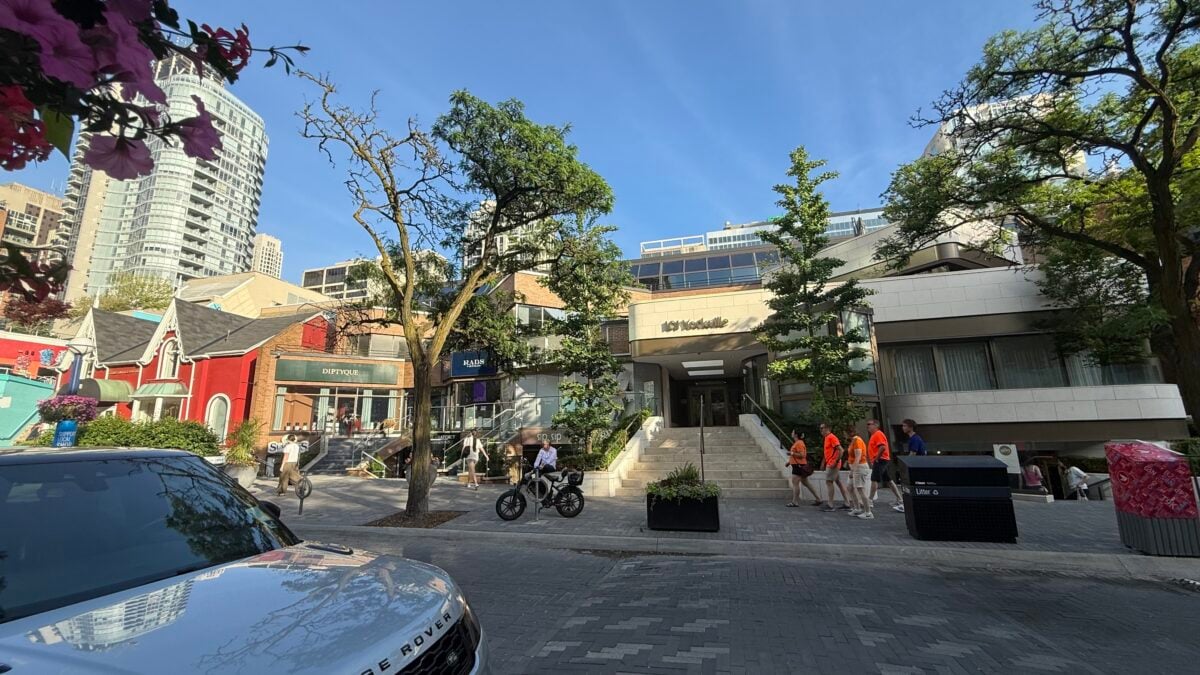
St. John Knits closed its last Canadian boutique in Vancouver, ending over 20 years of standalone luxury retail presence in the country. The acquisition of First Capital REIT by KingSett Capital and Choice Properties marked a shift in Canadian retail real estate, affecting urban retail districts including Toronto’s Yorkville.

Retail Insider also published coverage of Jollibee’s plans to expand its franchise presence in Canada, strengthening multicultural market opportunities. Villages Calgary relocated its store to Inglewood, downsizing while focusing on online sales and adapting to changing urban retail dynamics.

🗞️ The Day’s Retail Insider Article List

🌐 Canadian Retail News From Around the Web

St. John Knits Closes Last Canadian Boutique in Vancouver

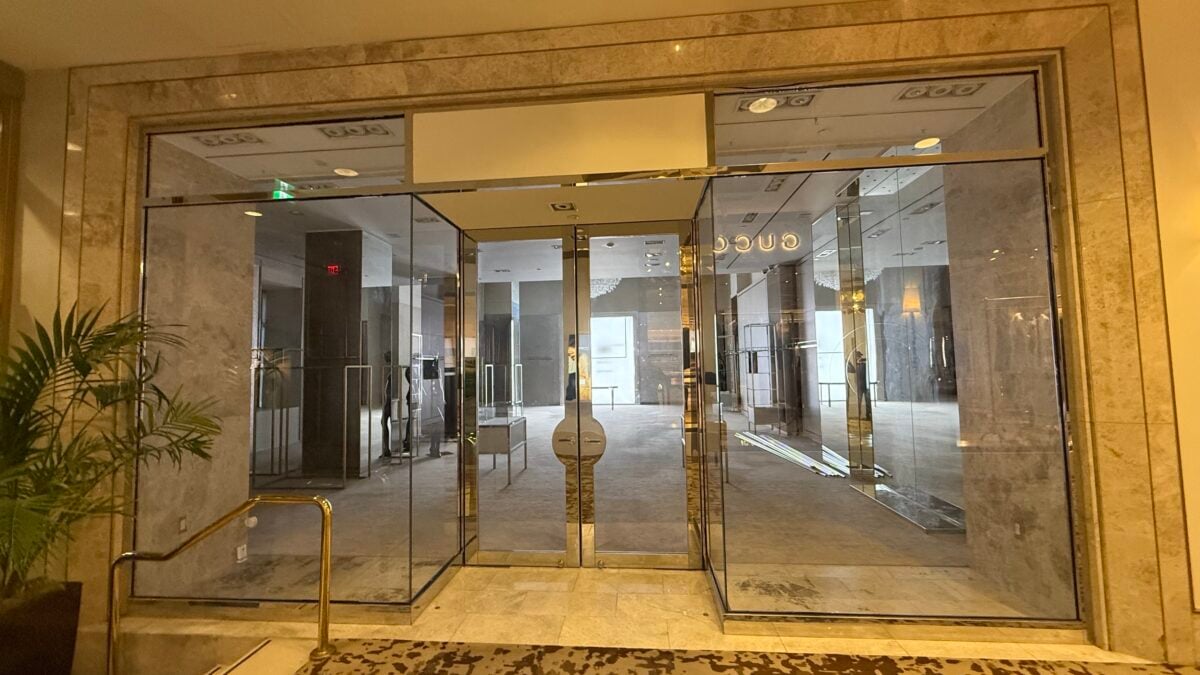
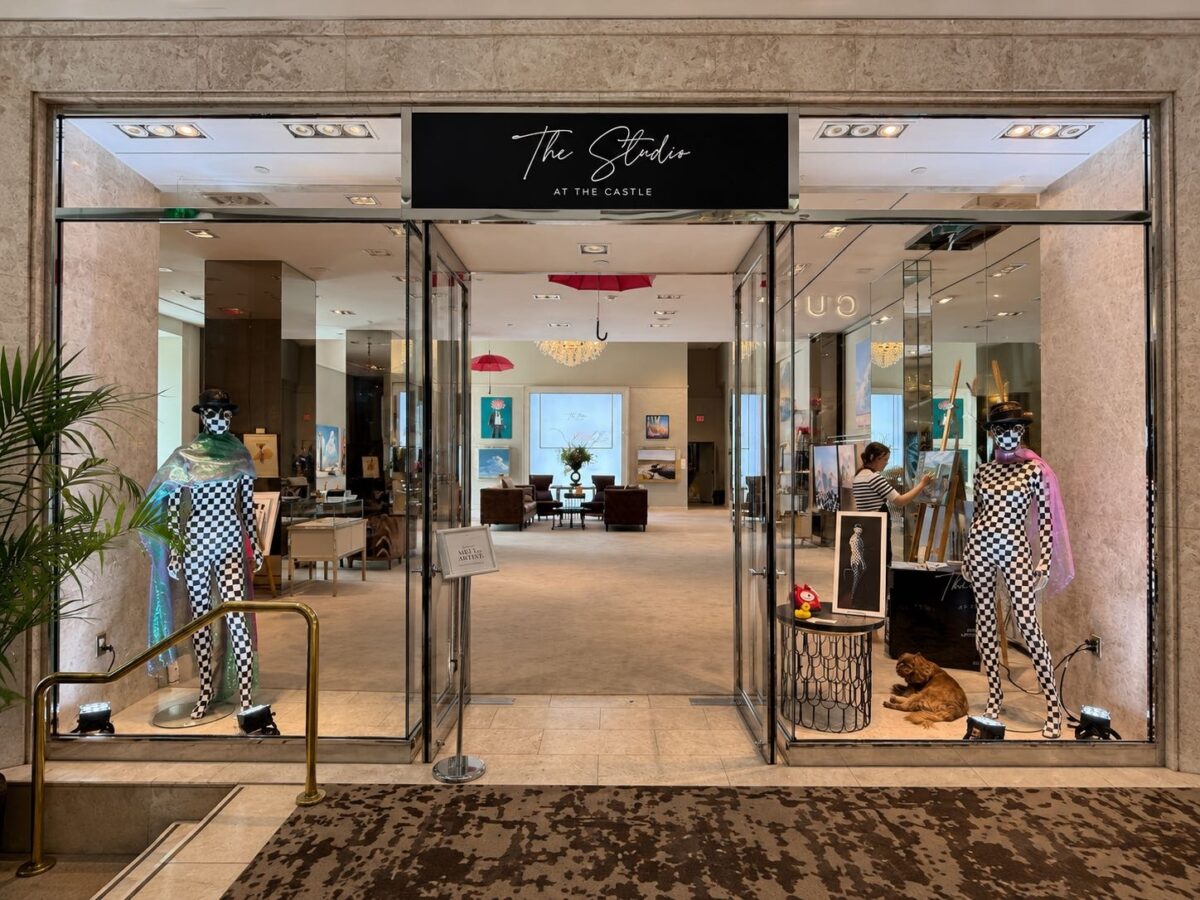
Former St. John store at the Fairmont Hotel Vancouver. Photo: Lee Rivett

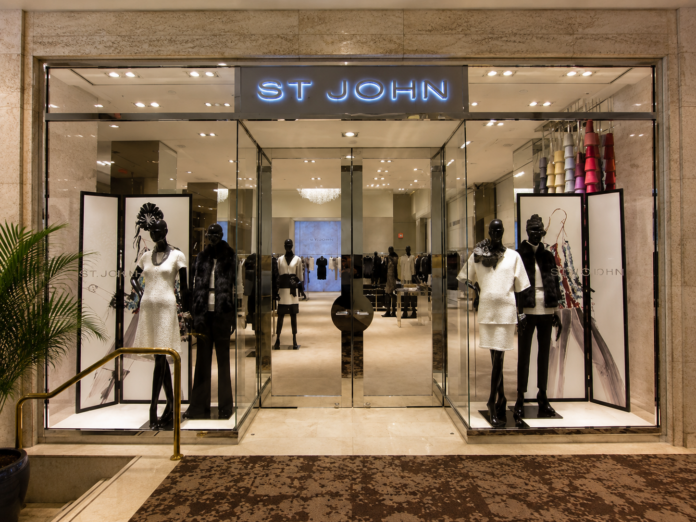
The quiet closure of a boutique inside the Fairmont Hotel Vancouver marks the end of more than two decades of standalone retailing in Canada for American luxury fashion brand St. John Knits.

The store, located within the landmark downtown Vancouver hotel, closed at the beginning of June and has since been replaced by a temporary pop-up art gallery. The closure also ends St. John’s standalone presence in Canada, following the January 2024 closure of the brand’s Toronto boutique at 130 Bloor Street West.

While the departure of a luxury retailer is noteworthy in itself, St. John’s Canadian story is also one of retail history. The brand played an early role in the development of Vancouver’s luxury retail district long before the city’s now-famous collection of global luxury flagships arrived.

A Pioneer of Vancouver Luxury Retail

St. John’s relationship with Vancouver dates back even further than its Fairmont Hotel Vancouver boutique. The brand was sold in the city through Plaza Escada at Sinclair Centre, one of Vancouver’s earliest luxury fashion destinations which opened in 1990 and closed in 2011.

In 2003, St. John opened its own standalone boutique at the Fairmont Hotel Vancouver, occupying a prominent corner location at Burrard and West Georgia streets. At the time, Vancouver’s luxury retail landscape looked very different.

The city’s modern luxury district was still emerging. Chanel helped establish the area as a luxury destination when it opened at 755 Burrard Street in 1991, and only a handful of luxury brands operated nearby. The Fairmont Hotel Vancouver’s retail podium had yet to become the powerhouse collection of global luxury tenants that it is today.

Louis Vuitton occupied a much smaller space in the building, while Dior and Gucci had not yet arrived.

St. John therefore became one of the pioneering luxury brands that helped establish the district’s credentials and attract affluent shoppers to the area.

The Fairmont Hotel Vancouver’s Transformation

Over the next two decades, downtown Vancouver evolved into one of North America’s premier luxury shopping destinations.

The Fairmont Hotel Vancouver itself underwent a dramatic transformation. Gucci opened its first boutique in the hotel in 2006 and later expanded into a roughly 6,500-square-foot flagship. Dior entered the property in 2015 with a nearly 10,000-square-foot flagship, while Louis Vuitton also expanded into a store of approximately 10,000 square feet. The podium today also includes an Omega boutique.

In many ways, St. John helped build the luxury environment that ultimately evolved around it.

That evolution was perhaps most visible in 2014, when St. John relocated from its original corner location within the hotel to a roughly 3,000-square-foot space that had previously housed Griffins restaurant. The move made way for Dior’s flagship store and illustrated how dramatically Vancouver’s luxury market had matured.

The irony is that St. John helped establish a district that eventually became dominated by some of the world’s largest luxury houses operating increasingly large flagship stores, resulting in its relocation to a more obscure space within the hotel podium.

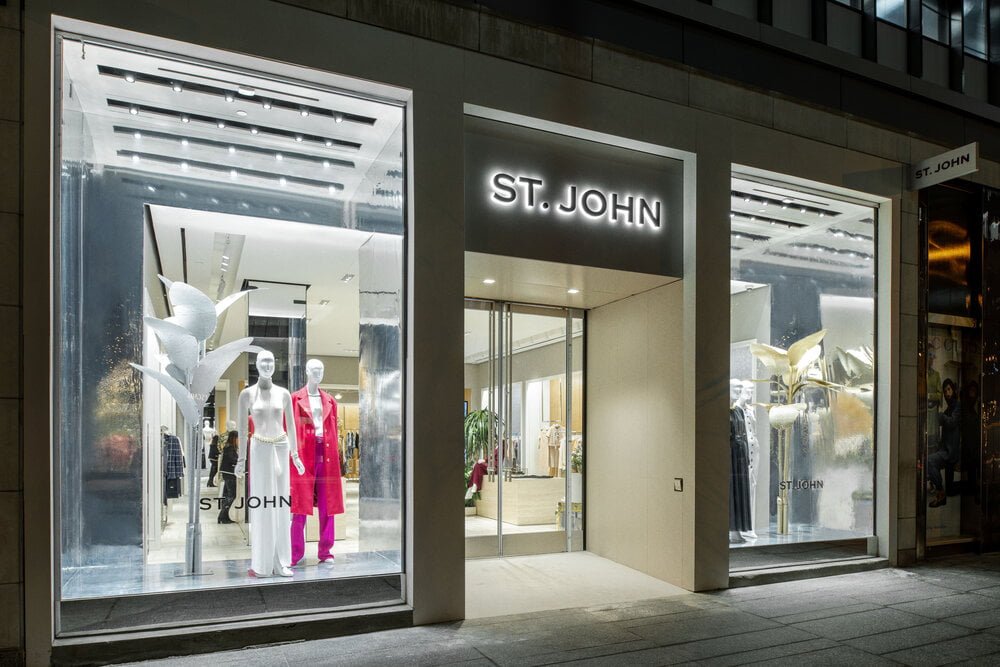
St. John store at 130 Bloor St. W. in Toronto, December 2020. Photo supplied

Toronto Expansion Was Short-Lived

St. John expanded its Canadian presence in late 2019 with the opening of a 2,100-square-foot boutique at 130 Bloor Street West in Toronto’s Yorkville neighbourhood.

At the time, the opening was viewed as a vote of confidence in Canada’s luxury market and Toronto’s increasingly important position among global luxury shopping destinations.

The Toronto store ultimately had a relatively brief run, closing in January 2024 after operating for just over four years.

Its closure left Vancouver as St. John’s sole Canadian location for the final two-and-a-half years of the brand’s presence in the country.

Parent Company Undergoing Strategic Transformation

St. John today is owned by Lanvin Group, which is controlled by Fosun International.

The luxury group has been undergoing a strategic transformation amid a broader slowdown in the global luxury sector. In fiscal 2025, Lanvin Group reported an 18 per cent decline in revenue and said it had been rationalizing its store portfolio and focusing on operational efficiency and profitability.

Interestingly, St. John has been among the stronger-performing brands within the portfolio, with revenue declining only modestly compared with some of the group’s other fashion houses.

That suggests the closure of the Vancouver boutique may be less about the performance of the St. John brand itself and more reflective of changing distribution strategies and the economics of operating standalone luxury stores in relatively small markets.

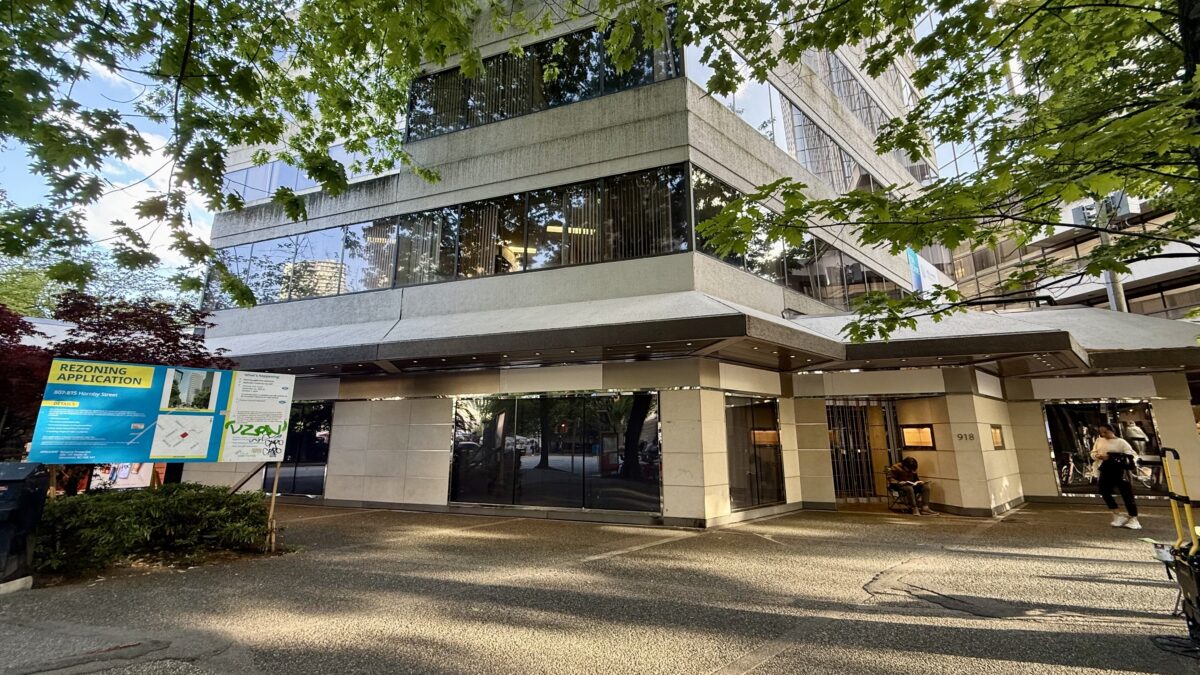
Shuttered Ferragamo store at 918 Robson Street in Vancouver. Ferragamo occupied this address since 1982, and recently relocated to Oakridge Park. Photo: Craig Patterson

Vancouver’s Luxury Landscape Continues to Evolve

St. John’s departure also comes during another period of change in Vancouver’s luxury retail landscape.

Italian luxury house Salvatore Ferragamo recently closed its longtime boutique at 918 Robson Street and relocated to a new store at Oakridge Park. Ferragamo had occupied the Robson Street address since 1982 and was the longest continuously operating luxury retailer in the same Vancouver location.

Unlike Ferragamo, however, St. John has not relocated within Vancouver. Its closure marks the end of approximately 23 years of standalone retailing in Canada and concludes a chapter for one of the brands that helped shape downtown Vancouver’s rise as an internationally recognized luxury shopping destination.

More from Retail Insider:

First Capital Sale Marks End of an Era in Canadian Retail Real Estate

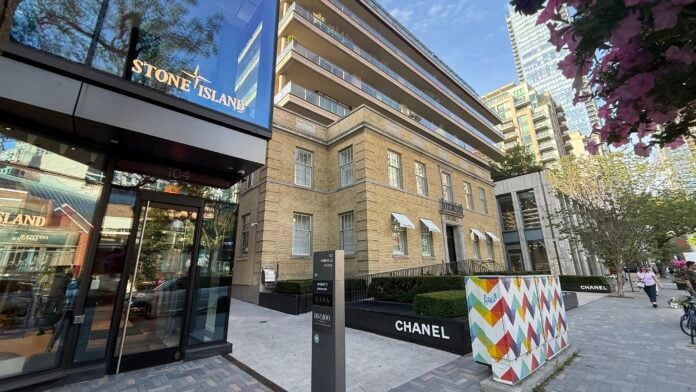
Chanel and Stone Island on Yorkville Avenue in Toronto. First Capital REIT developed several commercial buildings on the street, housing luxury brand stores. Photo: Craig Patterson

Last week, First Capital REIT unitholders overwhelmingly approved the previously announced $9.4 billion acquisition of the company by KingSett Capital and Choice Properties REIT, moving one of Canada’s most significant retail real estate transactions closer to completion.

The special resolution approving the plan of arrangement received strong support, with fewer than one per cent of votes cast against the proposal. First Capital said it intends to seek final approval from the Ontario Superior Court of Justice (Commercial List), with all other required approvals already obtained.

Under the arrangement, First Capital unitholders will receive $19.24 in cash and 0.3186 of a Choice Properties REIT unit for each First Capital unit they hold.

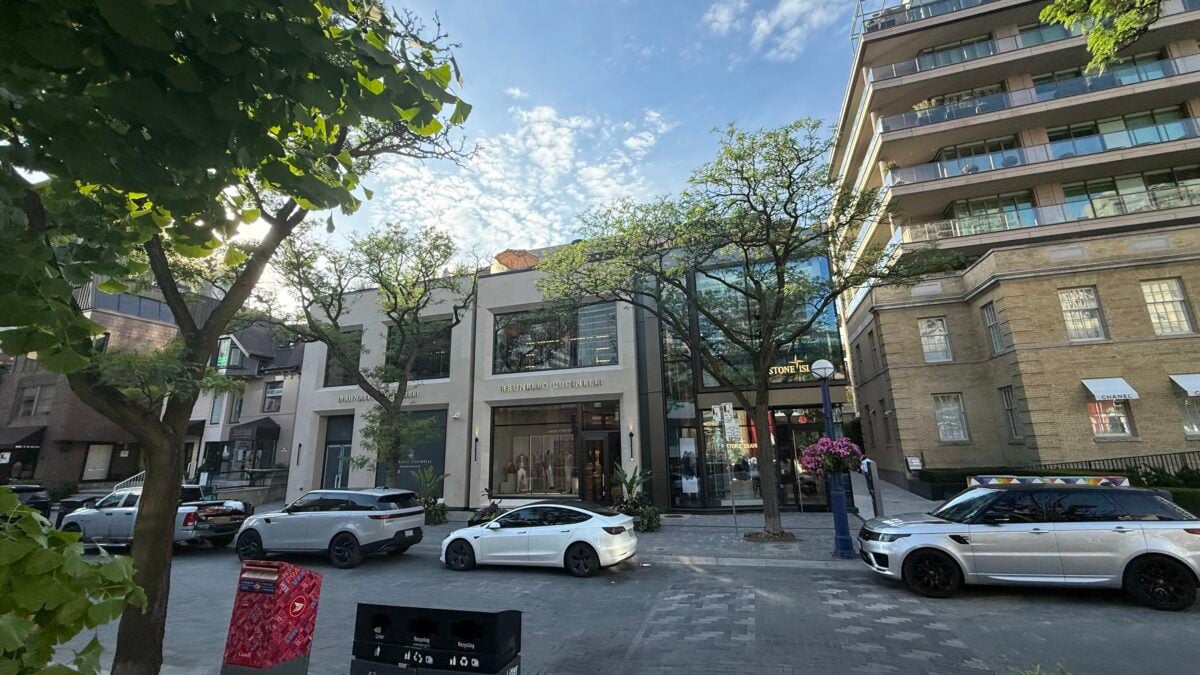
Recently expanded Brunello Cucinelli, Stone Island and Chanel on Yorkville Avenue in Toronto. First Capital REIT developed several commercial buildings on the street, housing luxury brand stores. Photo: Craig Patterson

Once completed, the transaction will see Choice Properties acquire approximately $5 billion of First Capital’s retail assets, while KingSett Capital will acquire approximately $4.4 billion of First Capital assets and all of First Capital’s issued and outstanding units.

The Choice Properties portfolio includes approximately $4.8 billion, or eight million square feet, of income-producing assets, along with approximately $200 million of properties under development. The portfolio is expected to generate approximately $235 million in net operating income in 2027, with near-term annual NOI growth of approximately 3.5 per cent.

For Canada’s retail real estate industry, however, the significance of the transaction extends far beyond the balance sheet.

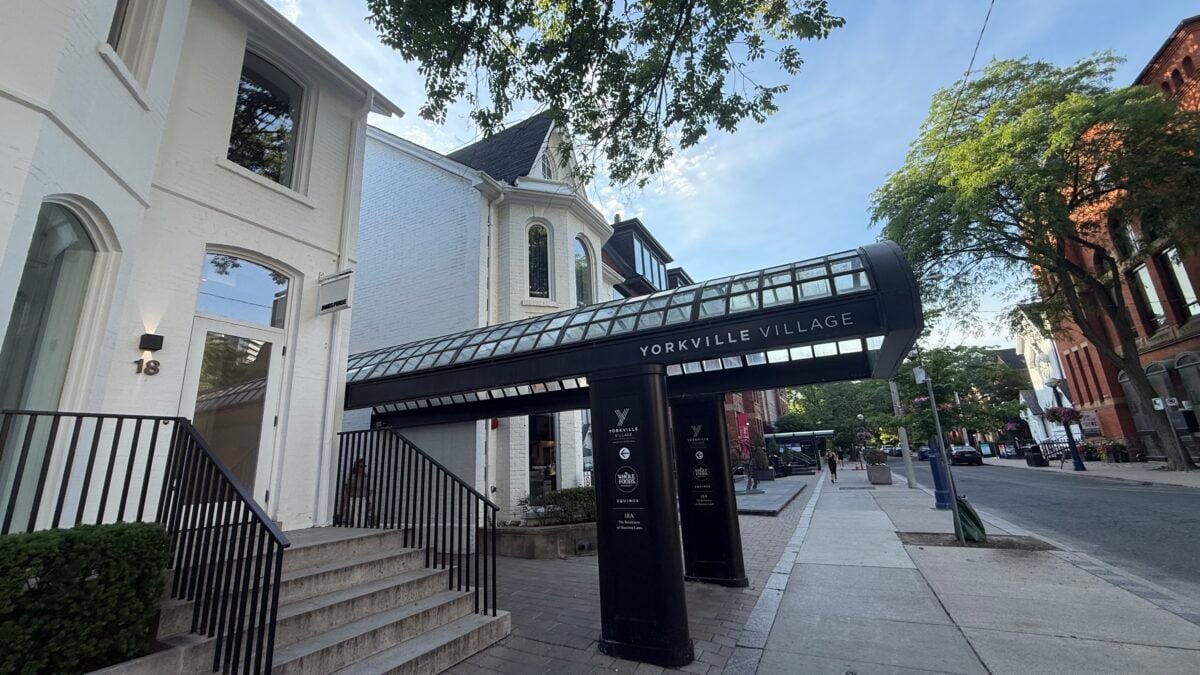
Hazelton Avenue entrance to Yorkville Village shopping centre in Toronto. Photo: Craig Patterson

The End of an Influential Retail Real Estate Platform

For more than three decades, First Capital occupied a distinct place in Canadian retail real estate.

While many landlords focused on enclosed malls, suburban plazas or individual shopping centres, First Capital built its reputation by assembling high-quality urban retail properties, introducing mixed-use intensification to aging shopping centres and creating retail districts that attracted some of the world’s leading brands.

In several cities, the company became more than a property owner. It became a district builder.

That approach helped shape parts of Toronto, Calgary and Montreal, where First Capital assembled properties, upgraded tenant mixes, advanced mixed-use development and attracted retailers that often require confidence in both the individual site and the broader neighbourhood.

The transaction now raises questions about what happens to that long-term placemaking strategy as First Capital disappears as an independent public company.

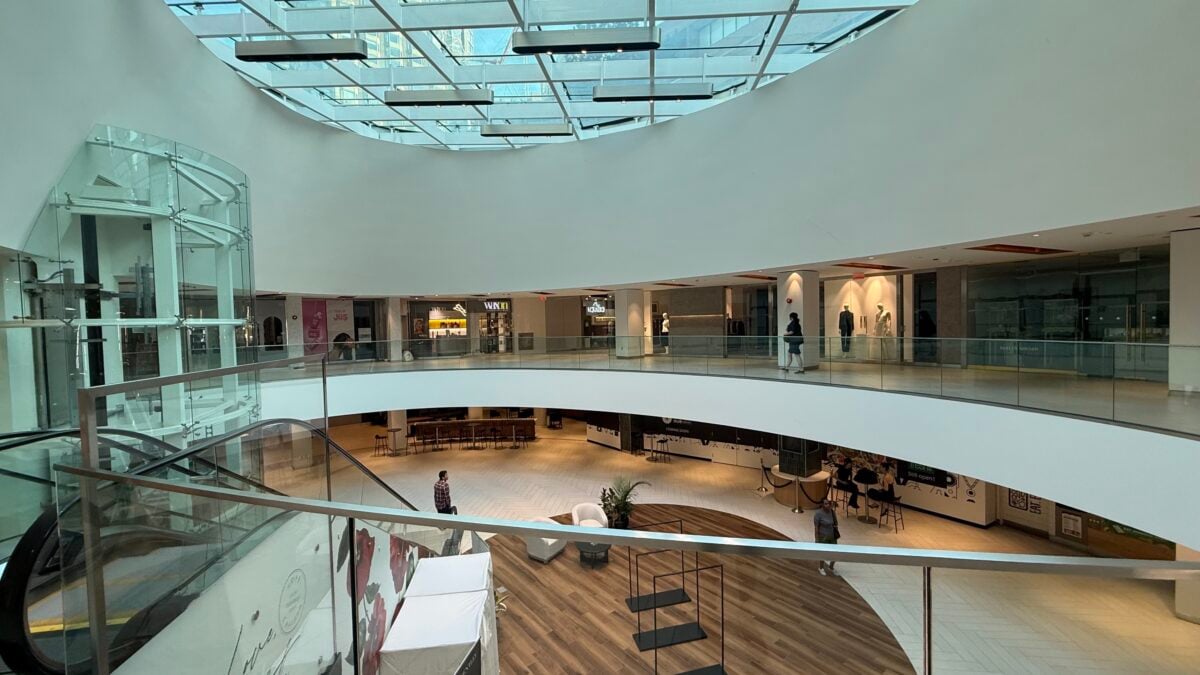
Yorkville Village shopping centre in Toronto (formerly Hazelton Lanes). Photo: Craig Patterson

Yorkville Enters a New Chapter

The most prominent example is Toronto’s Yorkville neighbourhood. Over several years, First Capital assembled a significant collection of properties in and around Yorkville Avenue, including Yorkville Village, formerly Hazelton Lanes, multiple buildings along Yorkville Avenue, the 101 Yorkville Avenue redevelopment opportunity, and an interest in the 138 Yorkville mixed-use tower.

Those holdings helped transform Yorkville Avenue into one of Canada’s premier luxury retail corridors. International brands including Chanel, Balenciaga, Brunello Cucinelli and Stone Island established a presence on the street as the area evolved from a secondary luxury address into a destination in its own right.

Today, Yorkville Avenue sits alongside Bloor Street’s Mink Mile as one of Canada’s most important luxury retail destinations, with international brands increasingly viewing the two streets as complementary luxury corridors.

That evolution did not happen by accident. First Capital’s control of key properties allowed it to influence leasing, streetscape improvements, merchandising and long-term redevelopment planning in a way few landlords could achieve through isolated ownership.

The change in ownership now raises important questions for the district. Will KingSett continue the same long-term vision for Yorkville, or will the strategy evolve under new ownership?

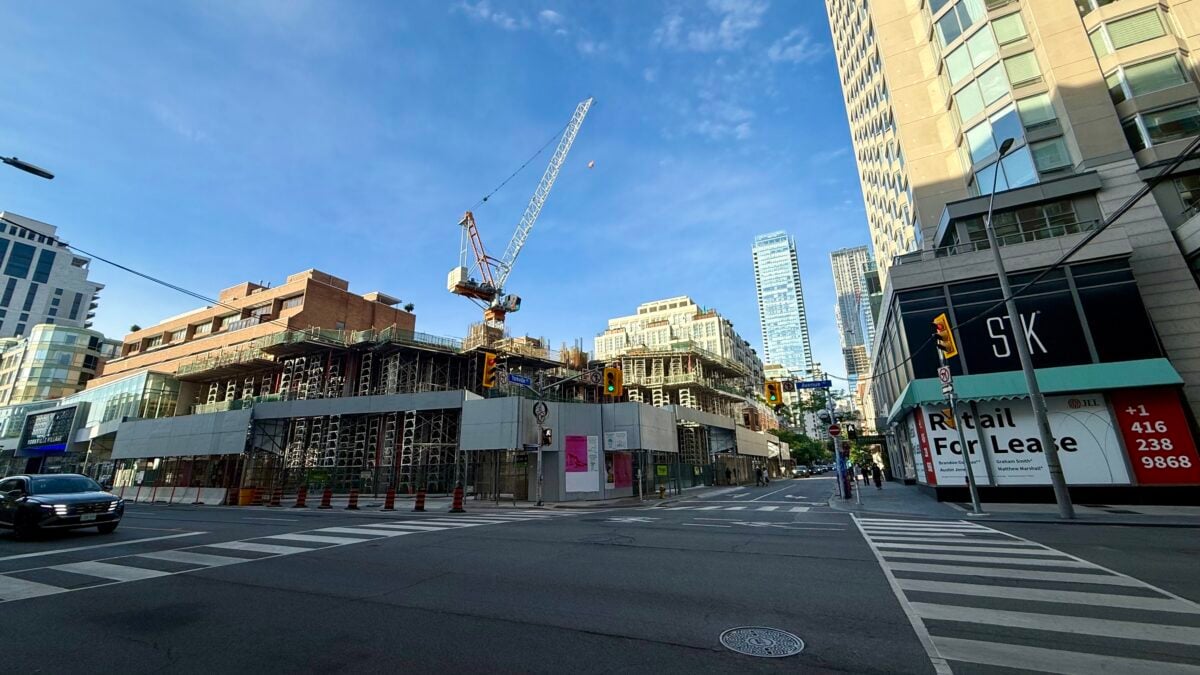
That question is especially relevant at 101 Yorkville Avenue, where future redevelopment has long been anticipated, and at 138 Yorkville, one of the country’s most ambitious mixed-use luxury projects. The 138 Yorkville development attracted national attention for ultra-luxury condominium residences marketed at prices reportedly ranging from roughly $10 million to more than $80 million. Construction is said to have been recently halted amid questions about financing — some are speculating that the new ownership might push for the project to become a rental apartment building.

With First Capital’s ownership interests now changing hands, industry observers will be watching closely to see how KingSett approaches this project as well as Yorkville Village, the surrounding Yorkville Avenue properties and future development opportunities in one of Canada’s most valuable retail districts.

101 Yorkville Avenue in Toronto — First Capital REIT had plans to eventually redevelop the site with luxury retail, and now plans are up in the air. Photo: Craig Patterson
Stalled 138 Yorkville Avenue residential project, with units originally planned to be priced between $10 million (2,400 sq ft) to $83 million. A sub-penthouse is said to have recently been sold for $50 million, and now it’s unknown what the future of the tower will be. Some are speculating about high-end rentals. Photo: Craig Patterson

A Strategy Seen Beyond Toronto

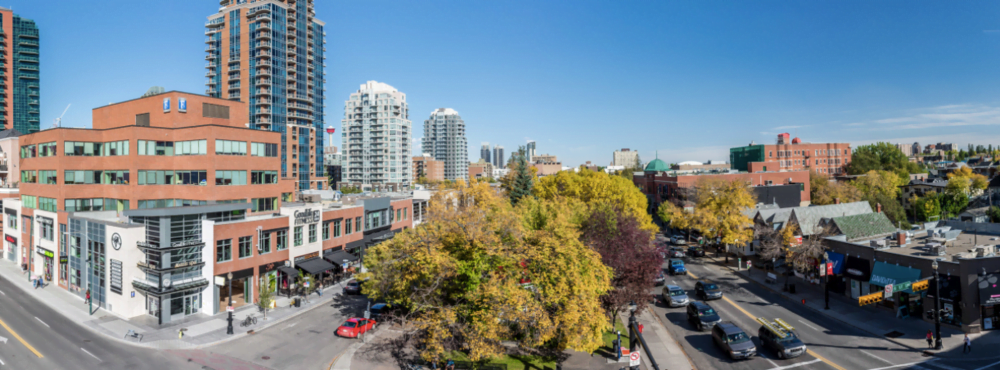
Yorkville was one example of First Capital’s district-building approach. In Calgary, the company pursued a similar strategy around Mount Royal Village, expanding beyond the original property through nearby acquisitions and helping shape a broader retail district along 17th Avenue SW. The strategy demonstrated that First Capital was willing to think beyond individual assets and instead influence entire urban neighbourhoods through strategic property ownership.

In Montreal, the company also became active in urban mixed-use redevelopment, with projects such as Wilderton Centre and other major intensification initiatives reflecting the same broader philosophy. First Capital frequently looked at retail properties not only as income-producing assets, but as platforms for density, neighbourhood change and future value creation.

That is what makes the transaction significant for the retail industry. It is not simply the sale of a REIT. It is the transfer of a portfolio assembled over decades by one of Canada’s most influential urban retail landlords.

Mount Royal Village in Calgary. Image: First Capital REIT

Choice Becomes Even More Important in Canadian Retail

For Choice Properties, the acquisition strengthens an already significant position in Canadian retail real estate.

The portfolio being acquired includes a substantial number of grocery-anchored and necessity-based retail assets, a segment that has remained attractive to investors because of steady traffic, essential-use tenants and redevelopment potential.

The transaction also deepens Choice’s exposure to urban and high-quality retail assets, adding scale to a landlord already closely watched by national retailers, grocers and service-based tenants.

For tenants, the ownership shift could matter over time. Landlords influence more than rent. They also influence tenant mix, redevelopment timing, design standards, leasing strategy and the broader direction of retail properties.

What Comes Next

The immediate next step is court approval and closing. The larger question is what happens after that.

KingSett will inherit some of First Capital’s most complex and potentially valuable urban holdings, including assets with long-term redevelopment potential. Choice will absorb a major portfolio of income-producing retail properties that expands its national footprint.

The transaction also closes a significant chapter in Canadian retail real estate history. Over more than three decades, First Capital became one of the country’s leading advocates for urban retail and mixed-use intensification, helping redefine how shopping centres and retail districts could evolve within growing cities.

For Canada’s retail real estate industry, the sale marks the end of an era.

As the company moves toward new ownership, attention will now turn to whether First Capital’s vision for neighbourhood-building and urban retail placemaking continues, changes or gives way to a different approach.

Either way, one of Canada’s most influential retail real estate companies is set to disappear as an independent public company, leaving behind a portfolio that will continue to shape some of the country’s most important retail streets and shopping districts for years to come.

More from Retail Insider:

Casavogue Launches New Website to Enhance the Customer Experience

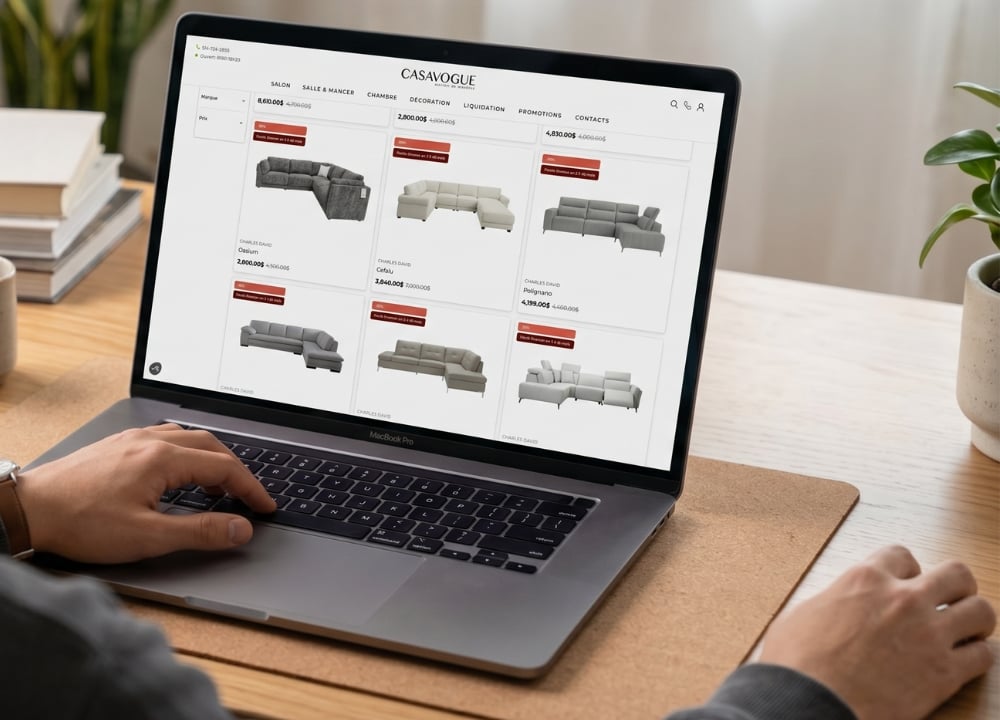
For many homeowners, the furniture selection process begins long before they step into a showroom. Customers often research styles, compare products, and gather inspiration online before making decisions about their living spaces. Recognizing this shift, Casavogue has launched a new website designed to provide a more informative and user-friendly experience while making it easier to explore the company’s extensive furniture collections.

The new platform reflects Casavogue’s ongoing commitment to helping customers make confident and informed decisions when furnishing their homes. With improved navigation, expanded product information, enhanced photography, and direct access to expert guidance, the website serves as a valuable resource throughout the furniture selection process.

Easier Navigation and Expanded Product Selection

The redesigned website offers customers access to a broader selection of furniture across living room, dining room, and bedroom categories. A simplified navigation structure makes it easier to browse collections and locate products that suit different lifestyles, spaces, and design preferences.

Visitors can move through categories more efficiently while discovering new collections and furniture options that may not have been as easy to find previously.

More Detailed Information for Better Decision-Making

One of the most significant enhancements is the depth of information available throughout the site. Product pages now feature more detailed descriptions, specifications, dimensions, and material information, helping customers better understand the characteristics of each piece.

This additional level of detail allows shoppers to evaluate furniture more thoroughly before visiting the showroom, creating a stronger foundation for purchasing decisions.

Direct Access to Personalized Guidance

While the digital experience has expanded significantly, personalized service remains central to the Casavogue philosophy. Throughout the website, customers can connect directly with Casavogue’s team through convenient call-to-action features designed to encourage conversation and collaboration.

Whether discussing room layouts, exploring customization options, or seeking recommendations for a specific space, visitors can easily connect with furniture specialists who understand the importance of finding pieces that align with both practical needs and design goals.

Connecting the Online and In-Store Experience

The new website complements Casavogue’s 38,000-square-foot Montréal showroom, where customers can experience furniture collections in person and explore complete room settings. By allowing visitors to research products, compare options, and review specifications before arriving, the platform helps create a more efficient and informed showroom experience.

Founded in 1972, Casavogue has spent more than five decades helping Montréal homeowners furnish their homes through a combination of curated collections, design expertise, and personalized service. The launch of the new website represents the latest step in that evolution, providing customers with additional tools and resources while maintaining the human guidance that has long defined the company’s approach.

Visit the new Casavogue website to learn more:
https://casavogue.ca/en/

Opening hours:
Monday to Friday: 9:30 a.m. to 6:00 p.m.
Saturday to Sunday: 9:30 a.m. to 5:00 p.m.

Casavogue is located at 8260 boulevard Saint-Michel, Montréal, QC H1Z 3E2.
For more information, call +1 514-360-3565 or book an appointment to receive personalized advice.

Marcos, Carney visit Vancouver Jollibee as restaurant chain plans Canadian expansion

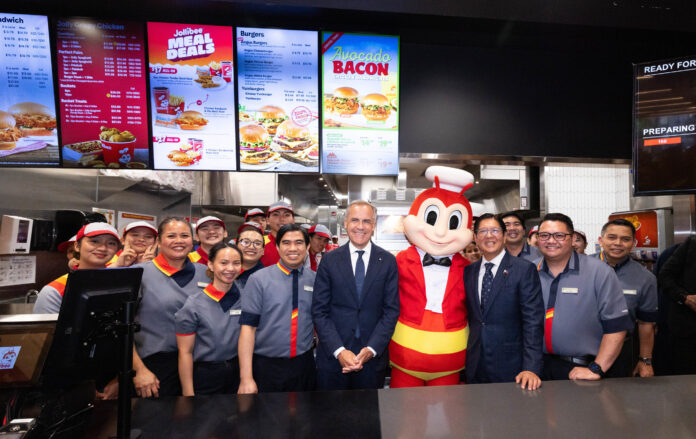
(L-R) Reden Espina, Restaurant Manager; Mark Carney, Prime Minister of Canada; the iconic Jollibee Mascot; Ferdinand Marcos Jr., President of the Republic of the Philippines; Jeffery Santos, Restaurant General Manager; and Jose Anthony Delos Santos, Restaurant General Manager, pose at the counter with the downtown Vancouver Jollibee crew. (Jollibee Photo)

Philippine President Ferdinand Marcos Jr. and Prime Minister Mark Carney visited a Jollibee restaurant in downtown Vancouver recently as the Filipino-founded fast-food chain highlighted its economic ties between Canada and the Philippines and outlined plans to expand its Canadian footprint.

The visit comes as Jollibee approaches its 10th anniversary in Canada and prepares to accelerate growth across the country through its franchising program over the next five years.

The company said the visit recognized Jollibee’s role in bilateral trade between Canada and the Philippines while drawing attention to its expansion strategy in the Canadian market. Jollibee entered Canada in December 2016 with the opening of its first restaurant in Winnipeg and says it intends to continue adding locations nationwide.

The Vancouver event also followed two recognitions for the company’s flagship brand in 2026. Jollibee said it was named to the inaugural TIME100 Companies Industry Leaders in Food & Drink top-10 shortlist and was also included in the sixth annual TIME100 Most Influential Companies list.

Beth Dela Cruz, president of Jollibee North America, said the visit reflected the company’s growth and its relationship with both countries.

“The immense privilege of hosting both President Marcos Jr. and Prime Minister Carney at our downtown Vancouver store, is a truly historic moment for our brand. This visit is a powerful symbol of Jollibee’s place on the global stage. It celebrates the deep bilateral ties between Canada and the Philippines, the vital role of the Filipino-Canadian diaspora in our growth, and the incredible momentum of our brand as we bring our unique, joyful dining experience to more Canadian families,” she said.

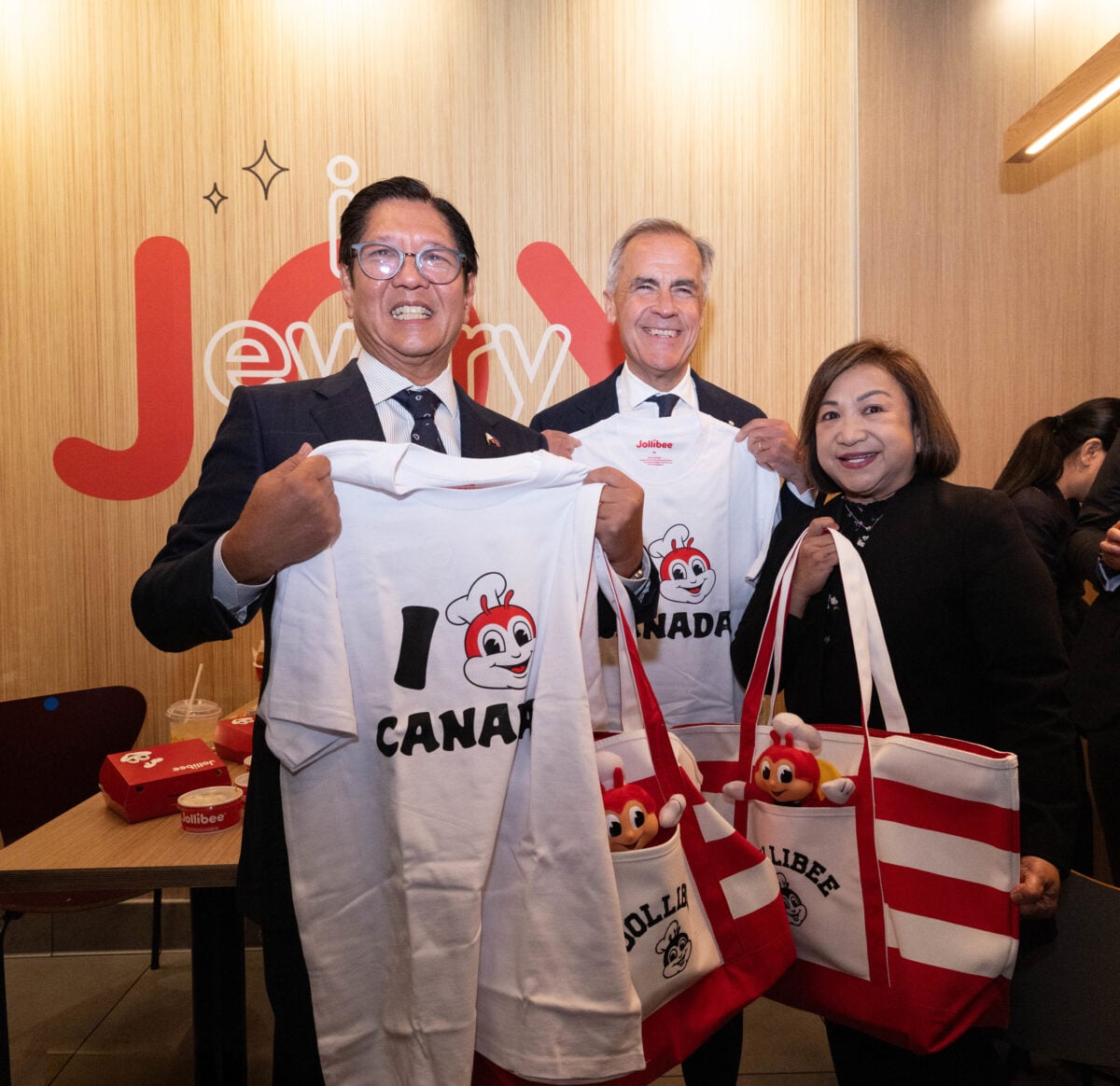
(L-R) Ferdinand Marcos Jr., President of the Republic of the Philippines; Mark Carney, Prime Minister of Canada; and Beth Dela Cruz, President of Jollibee North America, smile as they showcase custom Jollibee commemorative gifts during a historic visit to the flagship Jollibee location in downtown Vancouver. (Jollibee Photo)

Jollibee said its international operations support exports of agricultural products and food manufactured in the Philippines for sale in overseas markets, including Canada. According to the company, products such as Peach Mango Pies, made with Philippine mangoes, and other proprietary ingredients are produced in the Philippines before being exported to Canada.

The company also said its Canadian expansion is supported by its North American franchising platform. It said each new Canadian restaurant represents a local investment and is expected to create between 50 and 60 jobs.

During the Vancouver visit, Marcos and Carney joined Jollibee North America executives and the company’s mascot for commemorative photographs inside the restaurant.

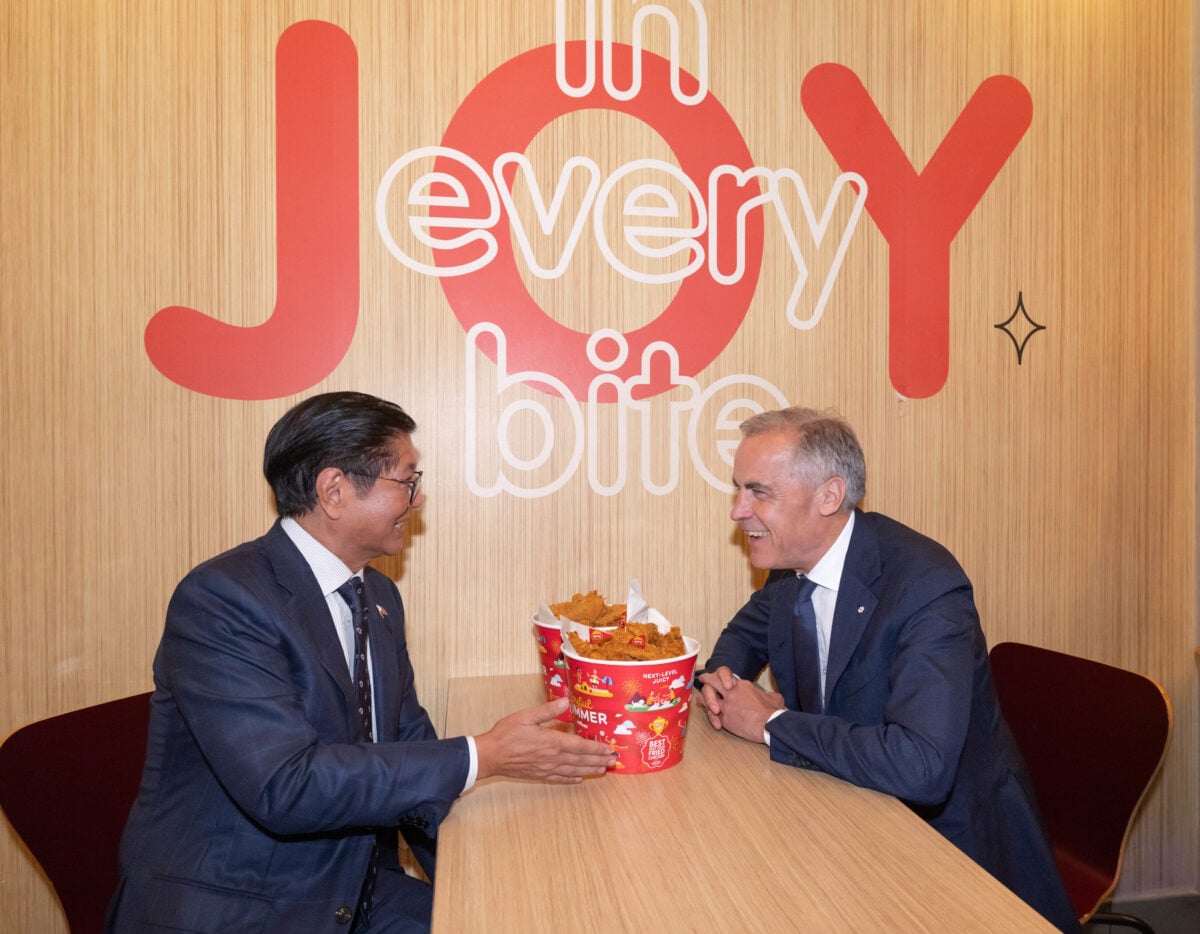
Ferdinand Marcos Jr., President of the Republic of the Philippines (left), and Mark Carney, Prime Minister of Canada (right), share a warm moment before enjoying Jollibee’s world-famous Jolly Crispy Chicken, celebrating the brand’s rapid North American growth. (Jollibee Photo)

The two leaders also participated in a tasting featuring several menu items, including Jolly Crispy Chicken, chicken sandwiches, Peach Mango Pie and Pineapple Quencher. The company said the menu highlighted products connected to its Philippine supply chain.

Jollibee Foods Corp. said it operates more than 10,400 stores and cafés across 33 countries through a portfolio of 20 restaurant brands.

More from Retail Insider: