Keeping up with the cost of doing business (90 per cent), the current economic situation (76 per cent) and the high tax burden (73 per cent) were the top reasons business owners would advise against starting a business, it said.
As Parliament reconvenes this week, CFIB is urging government to address rising business costs.
Corinne Pohlmann
“Small businesses are still facing hardships that are impacting their ability to operate and invest, which in turn impact Canada’s economy and productivity. On top of that, there’s been no update from Ottawa on carbon tax rebates and when small businesses can expect them,” said Corinne Pohlmann, Executive Vice-President of Advocacy at CFIB. “Parliament needs to consider the unique needs of small business if they want to improve the current economic climate.”
The CFIB said small businesses are looking to the federal government to lower taxes and red tape, particularly as over half (59 per cent) of business owners report struggling with taxes and operational costs (51 per cent). For example, more than 830,000 small businesses would benefit from a reduction of the small business tax rate to eight per cent from nine per cent. That means $610 million would stay in small businesses’ pockets, said the national organization.
“Nearly three-quarters (74 per cent) of small businesses want to see government reduce the overall tax burden, while another 77 per cent say addressing rising prices and the cost of doing business should be a top priority for government. If governments reduced the overall burden of taxes and fees, around half (56 per cent) of business owners said they would use the savings to increase employee compensation, pay down their business debt (54 per cent) and expand their business (46 per cent),” added the CFIB.
To support small businesses, CFIB recommends Ottawa:
Lower Employment Insurance premiums for smaller employers and increase the Canada Pension Plan Basic Exemption Amount.
Eliminate the carbon tax.
Reconsider capital gains changes by scrapping or repealing the planned increase in the general inclusion rate to 66.7 per cent.
Increase the small business deduction threshold to $700,000 and the passive income amount to $60,000 and index those thresholds to inflation going forward.
Lower the federal small business tax rate from nine per cent to eight per cent, at least for the next two years.
Eliminate the automatic escalator on alcohol excise duty rates.
Reduce red tape on small businesses.
Christina Santini
“Instead of giving away billions to large foreign multinationals, the government should lower taxes on small businesses, level the playing field and reduce red tape. The recommendations we propose would help hundreds of thousands of Canadian small- and medium-sized businesses face current challenges,” said Christina Santini, CFIB’s director of national affairs.
CFIB’s petitioncalling on the federal government to reduce the cost of doing business has garnered nearly 20,000 signatures since the start of 2024 and counting.
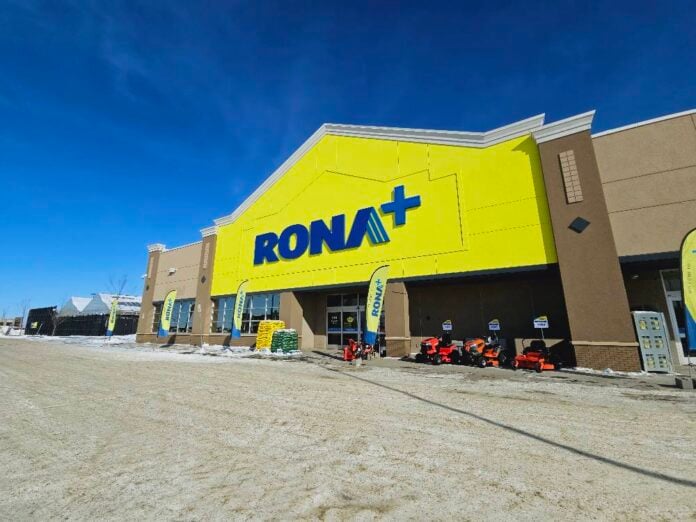
New RONA+ store at Emerald Hills in Sherwood Park, Alberta. Photo: Christa Patterson
RONA inc., one of Canada’s leading home improvement retailers operating and servicing some 425 corporate and affiliated stores, will soon celebrate an important milestone: its 85th anniversary.
The company said it is taking advantage of this opportunity to position the RONA brand as its sole emblem in Canada, with the conversion of its Réno-Dépôt stores to the RONA+ banner. It is also launching a new advertising campaign, organizing activities and exclusivities in all its corporate and affiliated stores, and offering in-store and online promotions to mark this historic moment.
“It all began in 1939, when a group of retailers founded the buying group Les Marchands en Quincaillerie ltée, which later adopted the name RONA, in tribute to partners Rolland Dansereau and Napoléon Piotte. Over time, the organization has grown to become a leader in Canada’s home improvement landscape,” said the company in a news release.
“Today, RONA is reaffirming its status as an independent company. The organization is poised to make the RONA brand its sole retail flagship across the country by converting the remaining 16 Réno-Dépôt stores to the RONA+ banner on October 10. In addition to these conversions, two other stores will also sport the RONA+ brand: RONA L’Entrepôt Québec and RONA Home & Garden Winnipeg. Grand opening celebrations will be held in some of these stores on October 10.”
J.P. Towner
“It’s an important moment that we’re celebrating, and I’m extremely proud of our team’s work. We’ve achieved a lot over the years, taken on many challenges, and today we’re stronger than ever. This will lead us to our goal of becoming Canada’s best home improvement retailer,” said J.P. Towner, President and CEO of RONA inc.
RONA said it will also soon be launching a new advertising campaign to further explain the RONA+ brand concept to consumers and reinforce the positioning of the RONA brand in Canada.
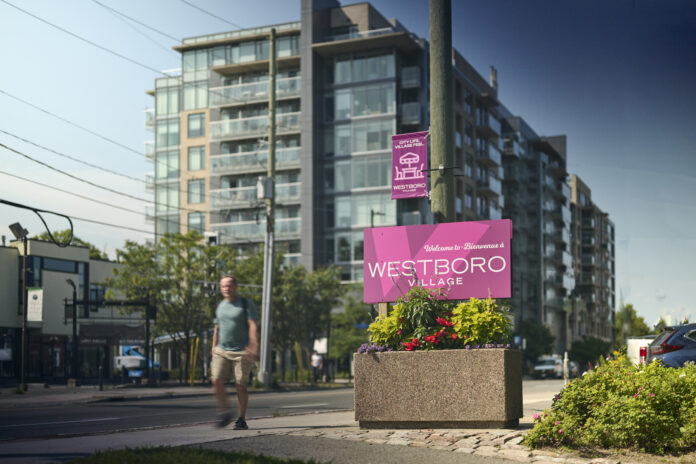
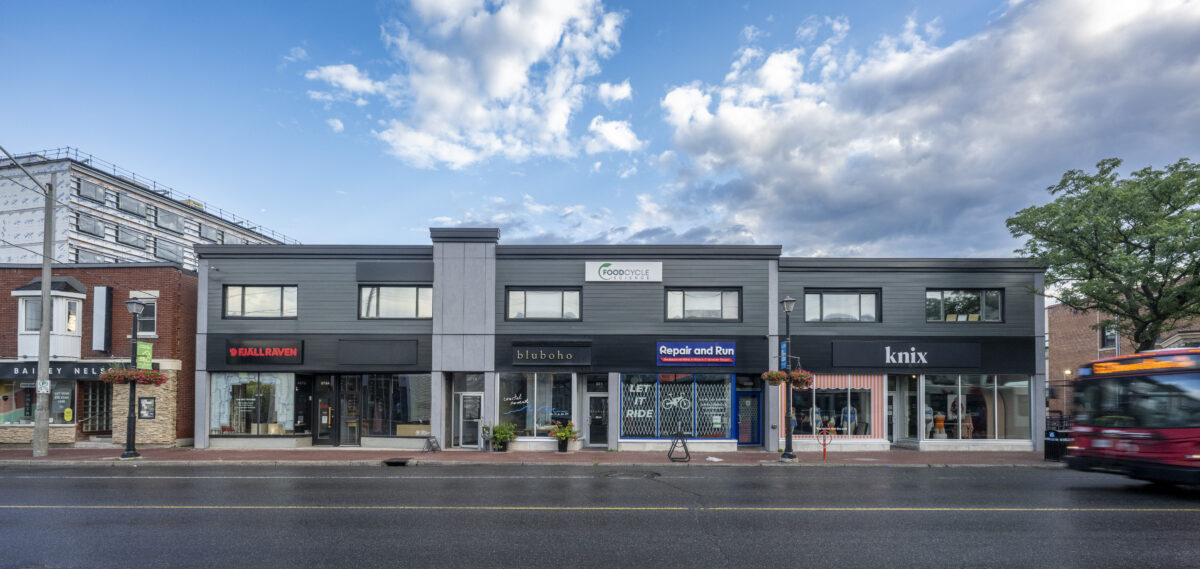
Westboro Village in Ottawa is experiencing transformations with new mixed-use developments, a vibrant retail scene, and community-focused initiatives.
Westboro Village in Ottawa is rapidly growing with new mixed-use buildings, residents, and new businesses opening. Judy LincoIn, the executive director of Westboro Village Business Improvement Area, discusses the neighbourhood, new developments, and future plans.
“We are very much a lifestyle neighbourhood, and that is reflected both in our retail leasing and our services. We have a number of new mixed-use buildings that are nearing completion, have recently been completed, or are under development. We do expect a lot of new residents coming into the area and brand new commercial spaces becoming available. We hope to continue to have a healthy mix of businesses,” says LincoIn.
New businesses in the area
The vacancy rate is ten per cent: “We are really fortunate we don’t have many vacancies, leasing is quite brisk.”
With the neighbourhood thriving, Lincoln says more businesses are coming to the area including DUER, which just opened its fifth location at 348 Richmond Road. The space is 1,700 square feet and brings an exciting element to the neighbourhood.
DUER’s press release says “the new DUER location joins a host of brands in Westboro Village, including lululemon, Saje, MEC and Ollie Quinn. Filled with shops, restaurants and cafes, this upbeat neighbourhood is popular with active individuals thanks to its parks, bike paths and proximity to the Ottawa river.”
“I’ve always loved the extensive bike lanes in Ottawa and this is just one of many reasons DUER is a natural fit for this market,” says Gary Lenett, CEO of DUER in a press release.
The Westboro Village BIA ensures they support each retailer, big or small. Lincoln says the BIA provides personalized resources by offering traffic and visitor data to help businesses in the area understand their customer base and grow their success.
“We really want to meet you and find out what your business is about. We recognize that most of our businesses need support in different ways. Sometimes, if it is a national footprint, they really want local traffic data, local community engagement opportunities, and sponsorship opportunities that they can then work with their regional managers or national sales managers on,” says LincoIn. “For one of the smaller, independent businesses, it is having access to some of the visitor data and traffic data they maybe wouldn’t be able to purchase on their own, and we are able to support them.”
Westboro BIA in Ottawa. Photo: Westboro BIA
LincoIn says when businesses open they introduce themselves, explain what they can offer, campaigns and programs they run throughout the year, give an overview of community partnerships, find out the business’ goals, and answer questions.
“We really want to do everything we can to evolve and enhance that we are a village within the city. We want to do everything we can to attract and promote, so working with our businesses to hear what their needs are and try to respond so that we are able to build on programming each year with their engagement and involvement.”
Westboro BIA in Ottawa. Photo: Westboro BIA
Moving forward
Looking ahead, the Westboro Village BIA is going to continue to improve the neighbourhood including its engagement with both existing and new businesses and to expand community events and programs.
“We have partnered with a local company called Capital Pop-Up Cinema, and they work with different partners throughout Ottawa to show vintage movies in unusual places. It is held sort of right in the centre of the BIA, in an outdoor space next to the City Heritage property, and we will have three movies this summer,” says Lincoln. “We also are doing some really hyper-local programming in the summer that brings people down. So there is a community ukulele group who does free lessons and sing-alongs in our public square. We have also launched a wellness campaign where we are offering fitness classes with the registration fee going to the local school as they are trying to rebuild their playground.”
Westboro BIA in Ottawa. Photo: Westboro BIA
Lincoln says the BIA is also looking at improving the aesthetics of the neighbourhood to draw more people to the area. This includes adding more community art installations, and working with the city to improve public spaces.
“We are positioned well. The city of Ottawa’s official plan is to create 15-minute neighbourhoods, and we are well positioned to be that 15-minute neighbourhood for a lot of people. You should be able to do sort of everything within a 15-minute walk. We have a lot of professional services, healthcare services, beauty services, groceries, and a local bakery – you can sort of get all that done within a 15-minute walk and we are looking forward to continuing to improve the area.”
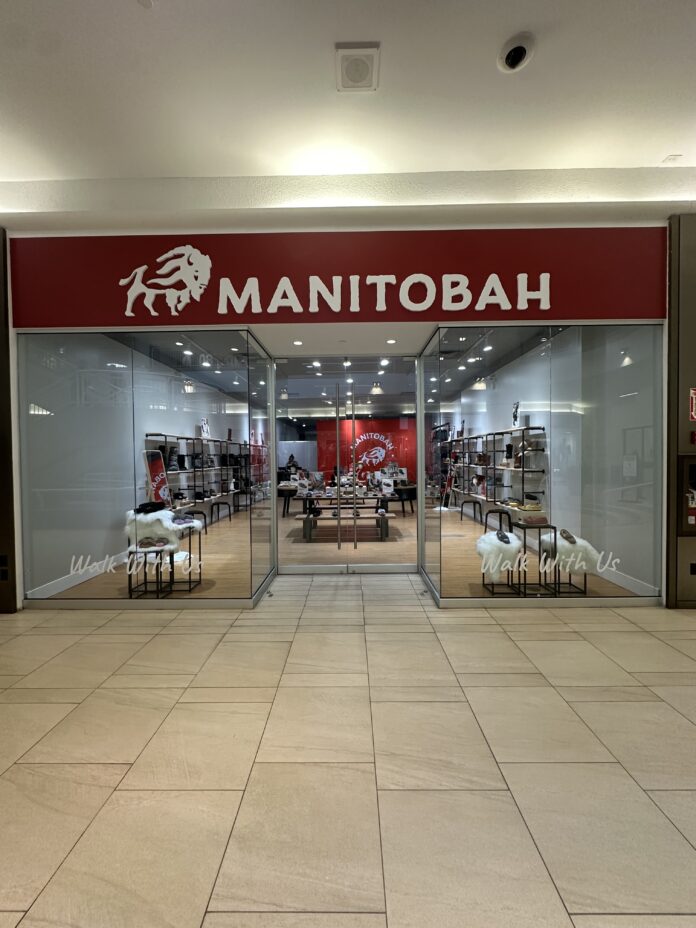
Manitobah Cornwall storefront. Photo courtesy of Manitobah
Manitobah, an Indigenous footwear store, will have a big retail expansion this fall as its retail footprint grows with the opening of several pop up locations.
The company, founded by Sean McCormick in 1997, is well known in providing Indigenous mukluks and moccasins and has become one of the fastest growing companies in Canada.
Mike Wodtke
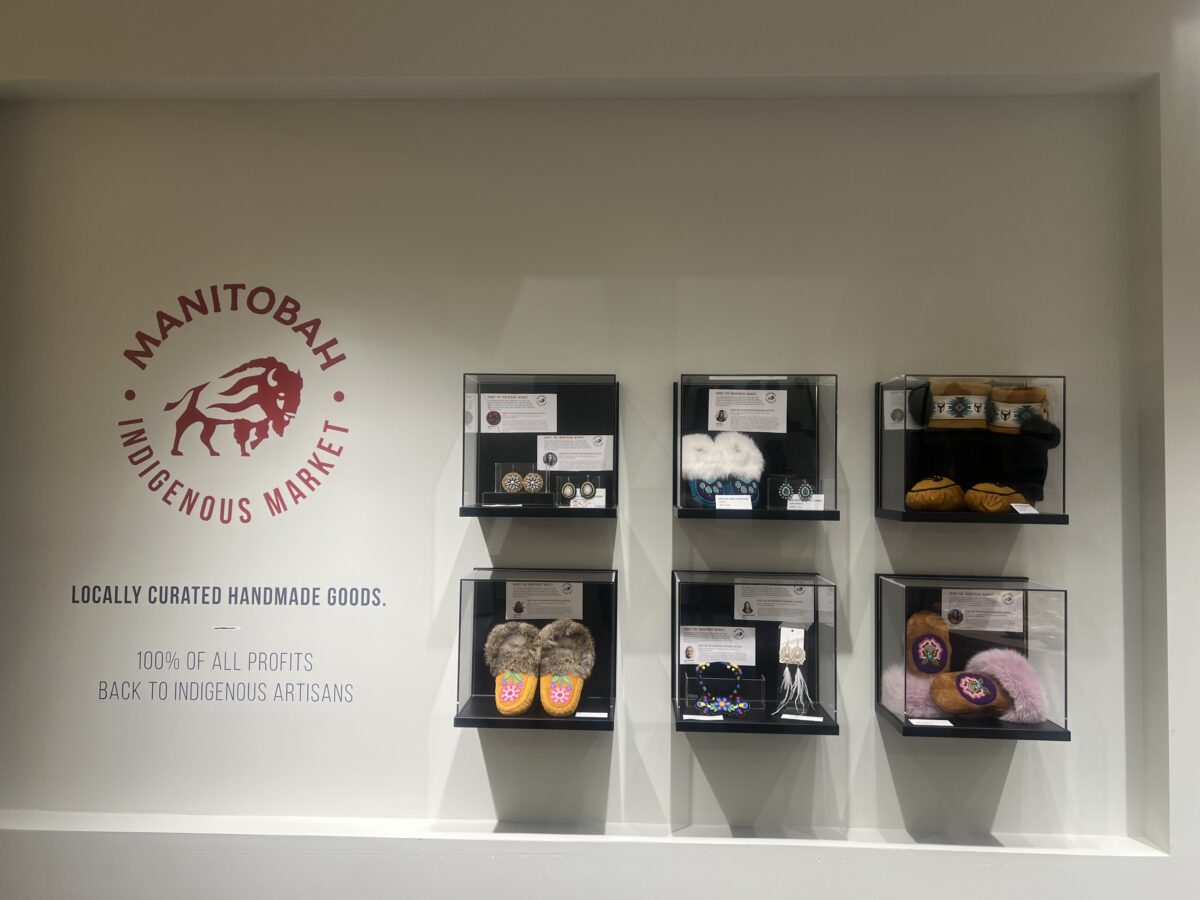
“Manitobah is focused on driving positive impact to Indigenous communities in a number of ways, including our Indigenous Market where 100 per cent of all profits go back to Indigenous artisans. Each of our retail locations features products from Indigenous Market artisans in addition to our regular assortment of Manitobah footwear,” said Mike Wodtke, Chief Marketing Officer of Manitobah.
“Outside of the Forks in Winnipeg, we recently opened up three additional year-round stores in Edmonton, Saskatoon and Ottawa. Those four stores will be paired with 10 additional locations in Canada this season – seven pop-ups and three kiosks. These 14 locations represent a significant increase from the eight we had last year. We continue to be excited about our opportunity to grow our retail footprint,” added Wodtke.
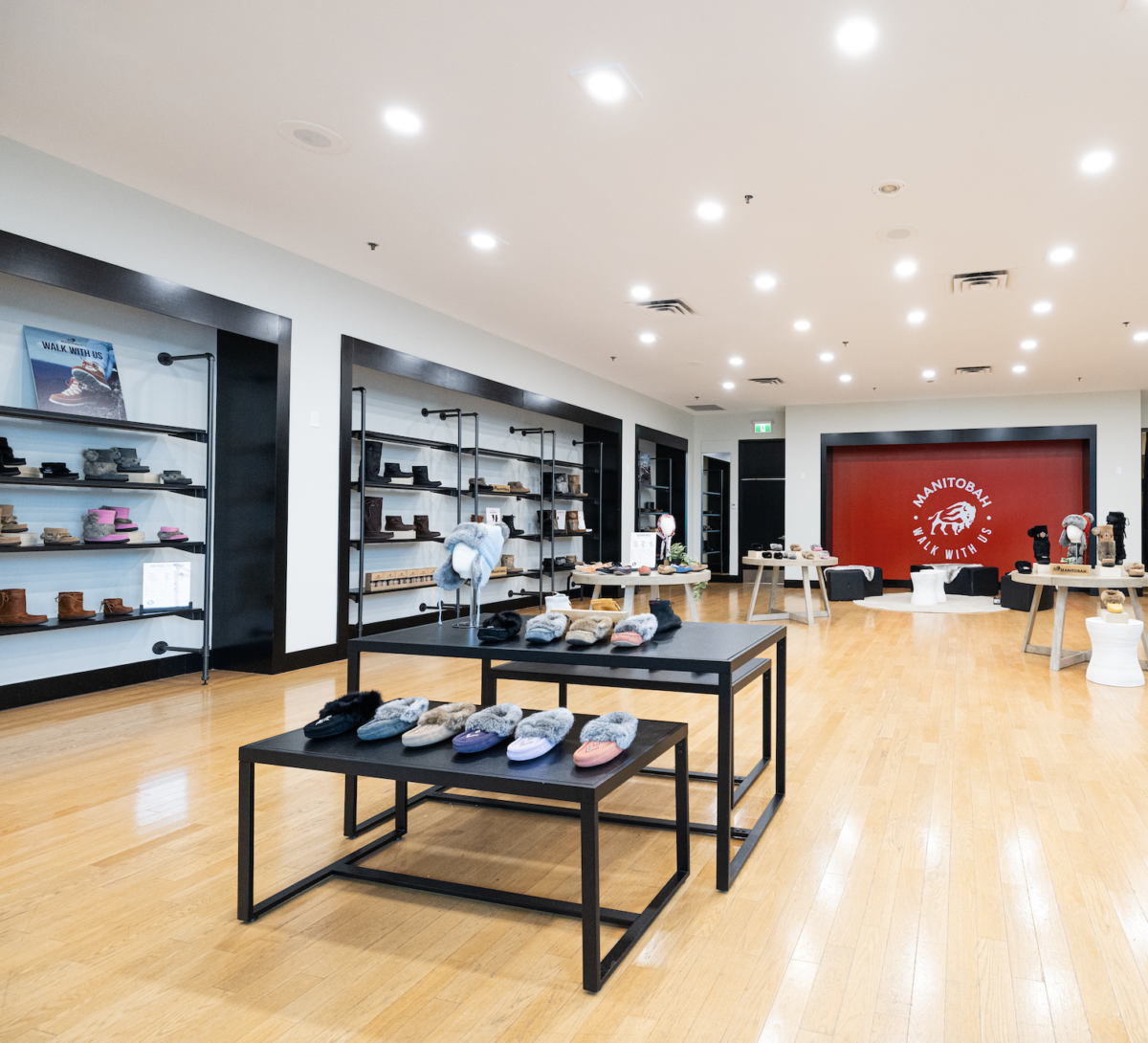
Manitobah Kingsway interior. Photo courtesy of Manitobah
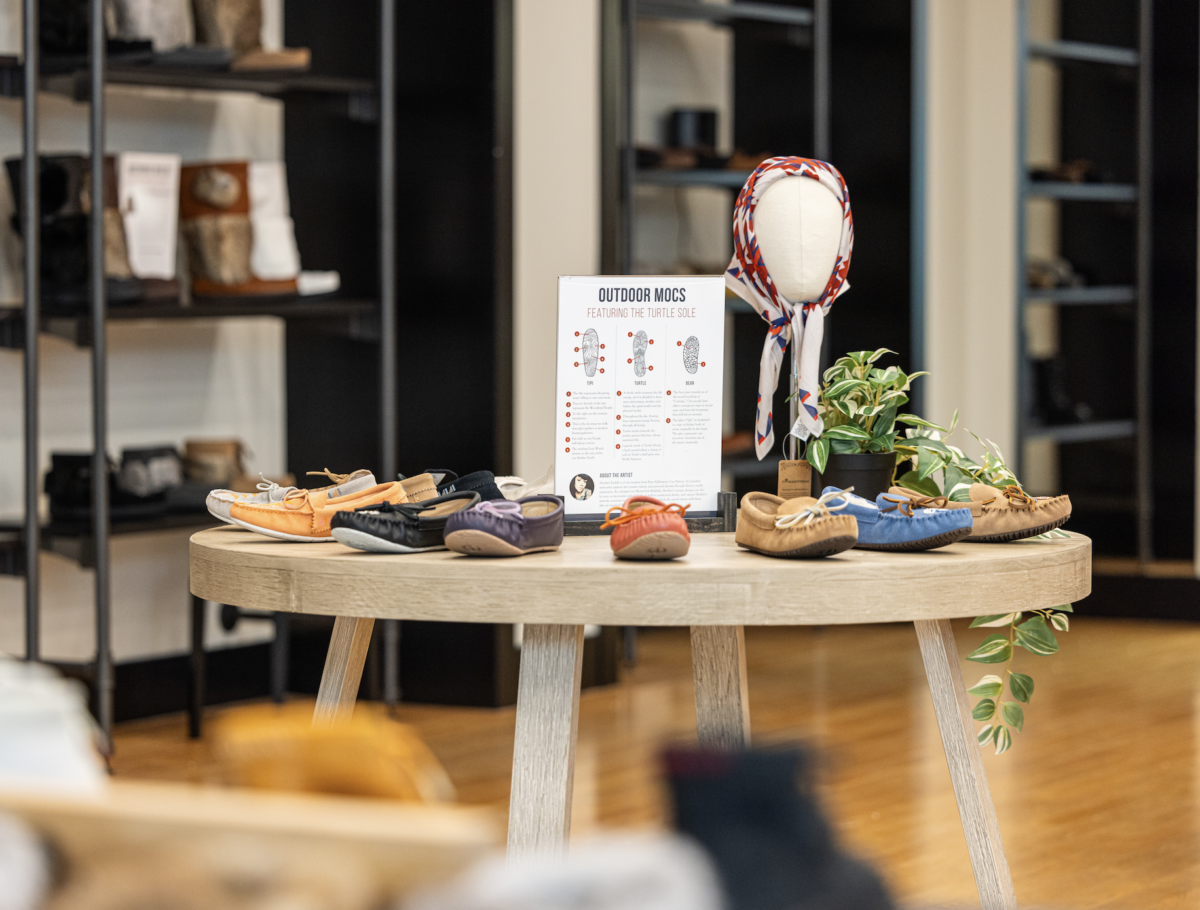
Photo courtesy of Manitobah
The retail expansion includes Calgary (CrossIron Mills), Edmonton (Southgate) and Winnipeg (St. Vitale Centre) as each have a kiosk location – the first year testing this concept.
“As we continue to refine our retail strategy, we will continue to keep our social mission front and centre. This will come to life through compelling in-store merchandising and visual experiences for our customers and community. Additionally, each location will look to regularly host events where we celebrate and highlight the local Indigenous community. And, with our increasing product assortment outside of our core Fall/Winter styles , we will look to increase our retail footprint in Spring/Summer months,” said Wodtke.
Manitobah Indigenous Market St. Laurent. Photo courtesy of Manitobah
“Our hope is that our retail presence expands, both in Canada and into the US, that customers from all backgrounds to walk with us as we celebrate our Indigenous communities,” said Wodtke.
Sean, who is a part of the Metis Indigenous community, started dreaming of owning his own company in high school and wanted a business representing his community. Today, Manitobah sells a variety of mukluks and moccasins using materials from Deerskin, Sheepskin, Full Grown Leather, and Rabbit Fur – materials that have been used for Mukluks for 10,000 years.
BLURRY IMAGE OF SHOPPING MALL AND CUSTOMERS DURING HOLIDAY SEASON
American Express Canada has released an Amex Trendex on social, gifting, and travel trends for the upcoming holiday season.
The company said Canadian-specific data reveals the country desires a holiday season with meaningful experiences. Canadian holiday trends includes plans to gift loved ones an experience over something material, looking to in-person events over dating apps for romantic connection, and an eagerness to travel to be with family or take time to focus on themselves.
Key Amex Trendex findings for Canadian holiday trends:
Many Canadians plan to attend entertainment events this holiday season, with the most popular being: Going to or hosting a holiday party or gathering (61 per cent); Visiting holiday festivals or markets (40 per cent); Taking in holiday shows and performances (29 per cent);
When it comes to holiday gatherings, 17 per cent of Canadians plan to host or co-host more compared to previous years;
About a fifth (18 per cent) of Canadians currently dating or open to dating say they typically date more during the holiday season than other times of the year, with three quarters (75 per cent) of all respondents believing it to be a romantic time of year;
Nearly four-in-10 Canadians buying for a significant other (40 per cent) or children (37 per cent) plan to gift them an experience;
This increases with a gift exchange between friends, with 73 per cent preferring to share a fun experience or trip over a traditional exchange;
Top experiential gifts include entertainment (62 per cent), travel (50 per cent) and food and drink (48 per cent) related experiences;
Photo by Semih Akdağ
Canadians are eager to begin shopping for loved ones this holiday season, with 19 per cent having already started, increasing to 69 per cent reporting they will start by November;
And when it comes to gifting, Canadians are generous compared to global counterparts, with plans to spend $567.01 on their children (3rd highest) and $679.89 on family members (5th highest);
When it comes to gifting, 57 per cent of Canadians actively seek out small businesses when purchasing holiday gifts;
On the receiving end, most Canadians prefer to receive sentimental gifts (69 per cent), gifts from a small business (64 per cent) or live experiences (67 per cent) over physical gifts;
Nearly three-quarters (73 per ent) of Canadians travelling this holiday season are prioritizing it more than in previous years. But consensus is split on their travel plans: Over half plan to travel to visit family for the holidays (58 per cent); Over half of Canadians report focusing on themselves this holiday season (57 per cent) with 43 per cent taking a trip elsewhere, outside of visiting family for the holidays;
Among those not travelling, 37 per cent have family or friends visiting them; and
Unlike those eager to begin holiday shopping, only one-in-five (20 per cent) of Canadians have already booked their trip.
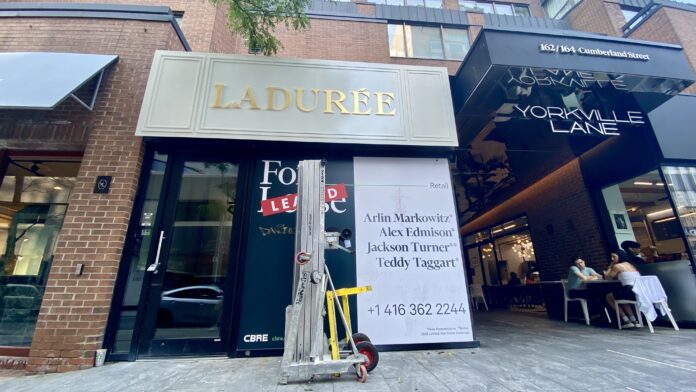
Ladurée Café under construction at 162 Cumberland Street in Toronto. Photo: Craig Patterson
Upscale French bakery and sweets maker Ladurée will open a café concept on Cumberland Street in downtown Toronto’s Yorkville area in October. It will be the third Ladurée location to open in the city.
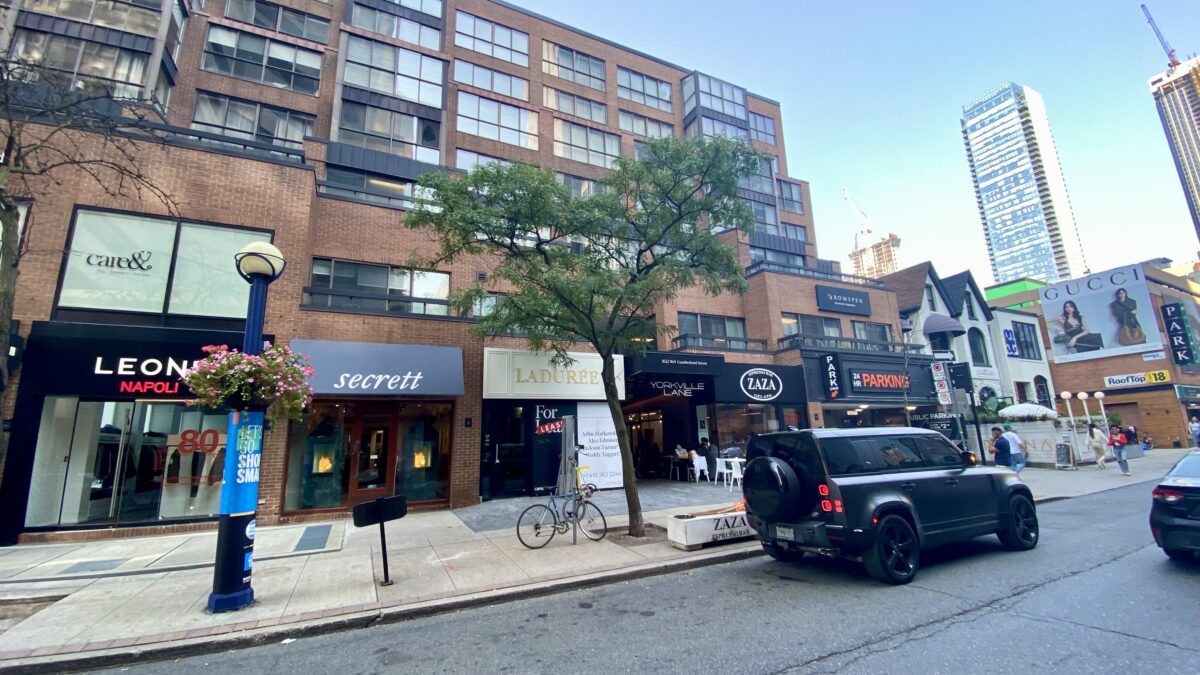
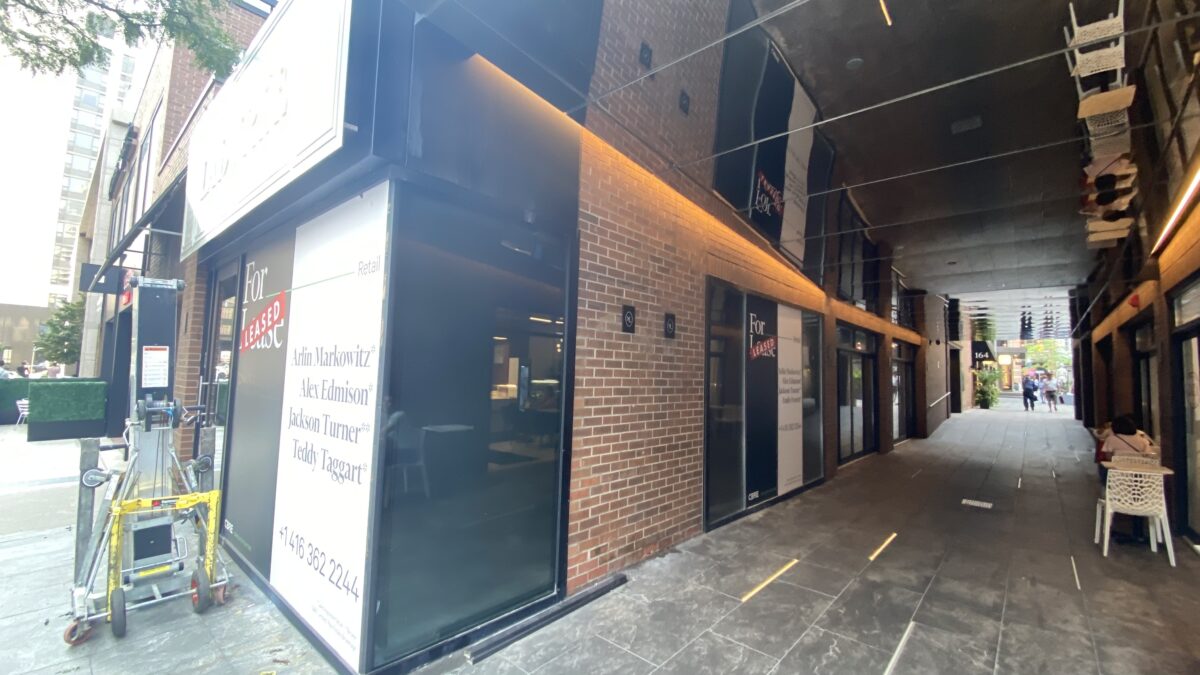
Ladurée’s Yorkville location will be at 162 Cumberland Street, in a 751 square foot corner retail space facing both onto Cumberland Street as well as onto the quaint Village of Yorkville Lane. Ladurée replaces Dice Fruit that previously occupied the space. Ladurée’s location is across the laneway from coffee/gelato shop Zaza and across the street from Nespresso and a new Harry Rosen store that will soon begin construction.
The Yorkville Ladurée will include a sit-down café as well as a range of baked goods, and grab-and-go items. The location will also feature patio seating. The indoor area is expected to have 13 seats (table seating and high bar seating combined) and there will be about 12 outdoor seats.
Ladurée Café under construction at 162 Cumberland Street in Toronto. Photo: Craig Patterson
Fresh baked goods will be available, made by a master chef in a pastry laboratory that opened in the summer of 2023 north of the city. Baked goods will include a range of cakes and pastries, as well as sweets such as its famous macarons, chocolates, teas, jams, and accessories. Also included will be savoury and sweet menu items in the café, including sandwiches.
The fresh baked cakes and pastries will be produced fresh daily from scratch by Ladurée’s French-trained Executive Pastry Chef Alexandra Launay. Customers can pre-order baked goods and pick them up at the location, or choose from the daily selection of cakes and other items already in the store. Ladurée’s Canadian licensee Olesya Krakhmalyova said that the same product will be available in Toronto as in major international markets such as Paris, London, and New York City.
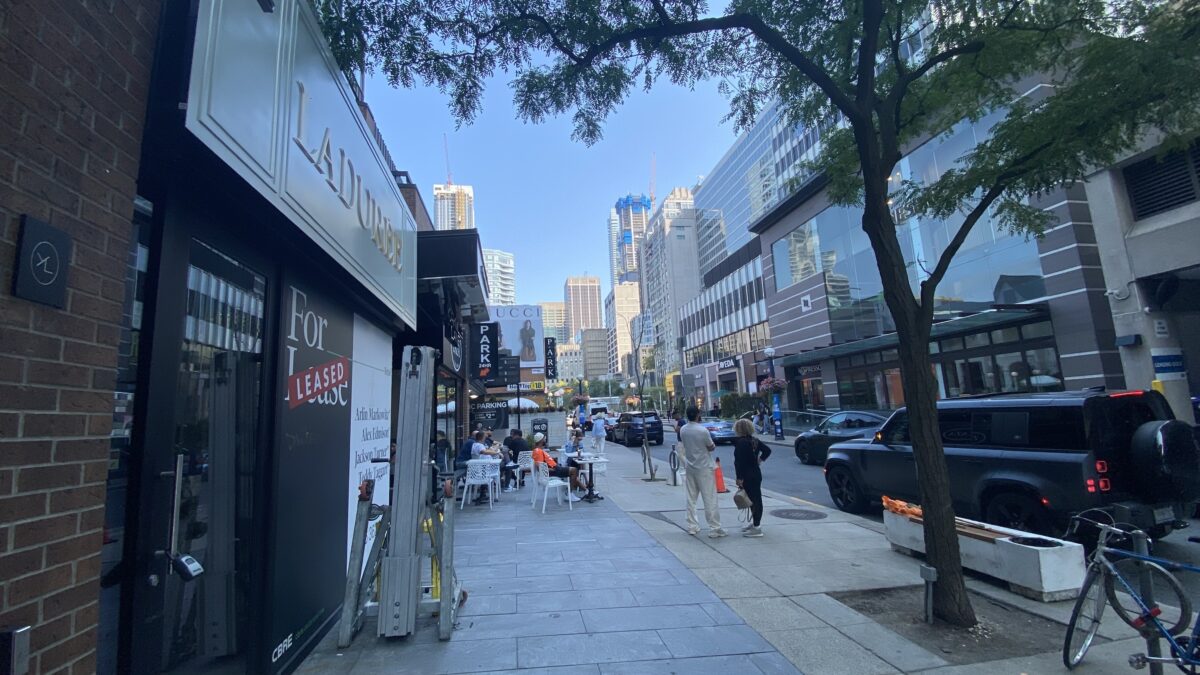
A prime corner location: Ladurée Café under construction at 162 Cumberland Street in Toronto. Photo: Craig Patterson
Contractor Elevate Build Inc. is building the Yorkville Ladurée location. The construction company, founded by entrepreneur Paul M. Bélanger, built Ladurée’s other Canadian locations as well as its pastry laboratories in Toronto and Vancouver.
Ladurée Canada worked with Ulf Bergner of Bergner Real Estate Advisors to negotiate the Yorkville lease deal. CBRE’s Urban Retail Team listed the Dice Fruit retail space for lease.
Ladurée’s Ms. Krakhmalyova said, “I have been waiting for the right space and opportunity in Yorkville for sometime. What we envisioned for Yorkville is a chic Ladurée Café.”
Ladurée’s Yorkville café is expected to be busy when it opens. The Cumberland Street location is near the Village of Yorkville Park, a high-traffic pedestrian area that is particularly vibrant during warmer days. The immediate area also boasts a high density of affluent households that support the many upscale businesses in the Yorkville neighbourhood. Ladurée markets itself on having high-quality products, which will resonate with the neighbourhood.
Looking east along Cumberland Street towards the Village of Yorkville Park and the future Harry Rosen flagship store. Photo: Craig PattersonRendering of the new Harry Rosen flagship store at 153 Cumberland Street, opening in the spring of 2026. (Rendering: dkstudio architects inc)
Yorkville is seeing an unprecedented influx of new wealth, with several new condominium projects under construction with average unit prices exceeding $10 million. These new households are part of the current transformation of Yorkville into something rarely seen in North America — a wealthy high-density district that is also home to a high density of luxury stores. Luxury car sightings have become the norm, and top restaurants and salons are scattered throughout the area.
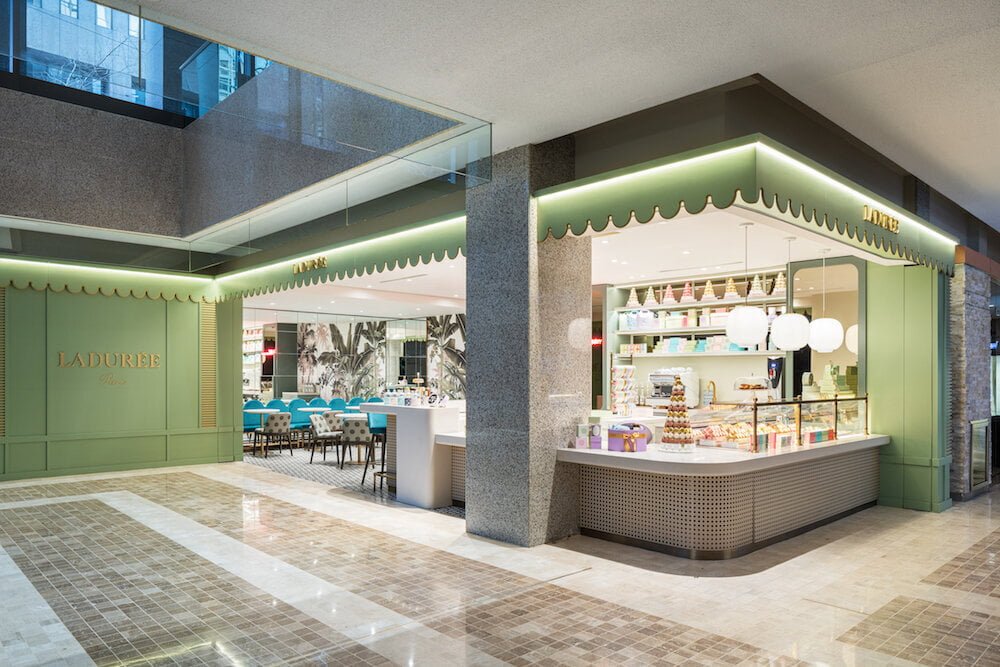
Ladurée at Yorkdale Shopping Centre in Toronto (Image: Ladurée)
LADURÉE, EXCHANGE TOWER LOCATION IN TORONTO. PHOTO: MICHAEL MURAZ
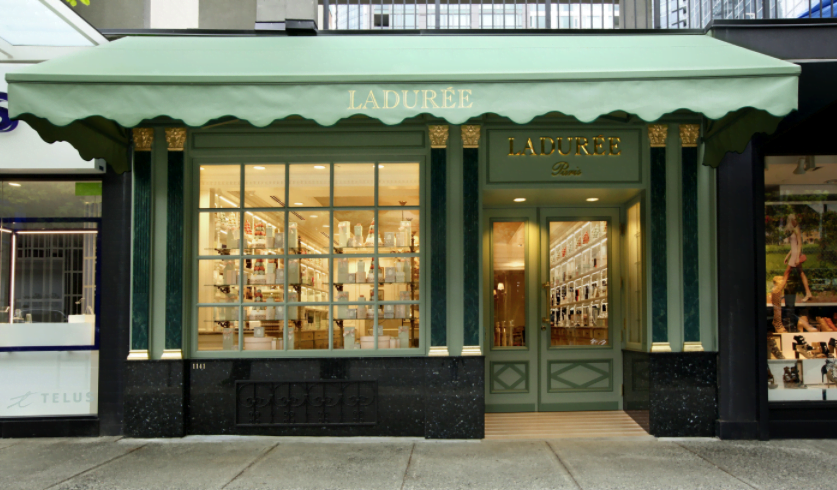
The Toronto locations followed the 2016 opening of Ladurée’s first Canadian storefront at 1141 Robson Street in downtown Vancouver, which spans about 1,100 square feet and has a 23-seat tea salon. There were lineups for weeks after it opened.
The Robson Street Ladurée also has an expanded assortment of cakes and pastries. A pastry laboratory opened just east of the city in the summer of 2018. As with the Toronto pastry laboratory, a French-trained chef works out of the Vancouver kitchen.
1,100 SQUARE FOOT VANCOUVER LADURÉE LOCATION AT 1141 ROBSON STREET
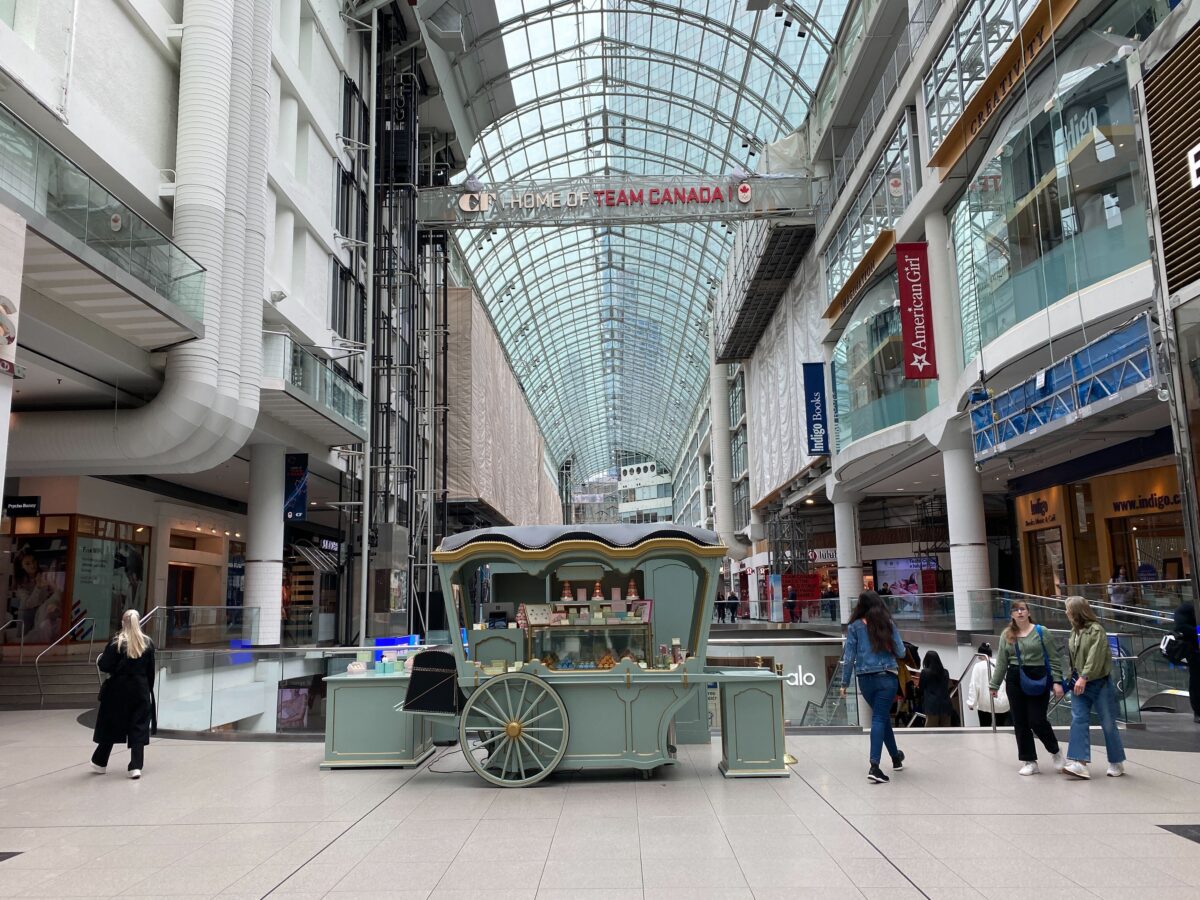
Besides permanent retail locations, Ladurée operates several ‘carriages’ in Canada. They feature a range of macarons and other sweets in large mobile displays that can be moved around the country. Ladurée carriages can be found in shopping centres, airports and hotels, depending on the month and opportunity.
Ladurée Carriage at CF Toronto Eaton Centre (Image: Dustin Fuhs)
Ladurée’s permanent move into Yorkville is part of an ongoing transformation of the area. Luxury brands continue to open stores nearby, and now Cumberland Street itself is seeing increased leasing action with the opening of Ladurée and other businesses such as Harry Rosen’s new flagship store that will open across the street in early 2026. Hazelton Avenue and Scollard Street are also seeing new retail tenants.
Founded in Paris in 1862, Ladurée is best known for its double-decker macarons, selling over 15,000 of them daily. Many Ladurée locations also sell ice cream, sorbets, jams, chocolate and candy, as well as branded accessories. Ladurée was purchased by French business group Groupe Holder in 1993, expanding Ladurée from a handful of locations to dozens of boutiques in 27 countries, including several in the United States. In March 2022 80% of Ladurée was bought by Stephane Courbit through Lov Group. Mélanie Carron became the new managing director, replacing David Holder, the son of the founder of the Holder group.
As a Toronto, Ontario based Canadian lawyer, I advise tenants and landlords in their industrial, retail and office lease drafting and negotiations. This article identifies some of the trends in those sectors that I see in my practice. I also anticipate some possible consequences of those trends on rent and the workings of other lease provisions and provide some concrete suggestions and solutions to incorporate into your lease negotiation. This article is for the commercial real estate leasing professional involved in lease negotiations.
The Ontario commercial real estate leasing market is looking unsettled. It strikes me that several trends will soon test the language and remedies in commercial leases. I suggest that tenants and property owners (“landlords”) need to recalibrate their risk assessments and give these issues greater priority in their lease negotiations. It is time to challenge some of the “standard provisions” in commercial leases, especially regarding allocation of additional rent and the right of a landlord to make physical changes and changes to the character of the centre.
The relevance and possible impact of any trend will also vary by property type, location, size, landlord size and tenant identity and requirements The article leans in favour of tenant strategies when negotiating a lease. A standard lease prepared by a sophisticated landlord already gives the landlord the flexibility it needs.
Also, the office, industrial and retail sectors of the Canadian commercial real estate market are dominated in each case by a relatively small number of property owners, some of whom are dominant in more than one sector. Some have vast resources and, in many cases, are owned by or partnered with Real Estate Investment Trusts and Pension Plans. Microeconomic impacts are muted across large portfolios of these landlords. However, individual properties are generally managed as individual profit centres. Even though the landlord has deep pockets and is not worried, there could be an outsized impact on tenants in a particular centre.
Finally, future interest rates changes, and the direction of inflation will certainly impact businesses and consumers and thereby the severity and direction of these trends.
The office market is the one I see buffeted the most lately and where these trends are most evident. My motivation for this article is partly the recent experience of acting for a tenant and bringing up the possibility of new vacancies in building with the landlord. We asked for protection from increases in additional rent. The response was that there will be no changes to the additional rent clauses by way of limits or exceptions and that it was a waste of time and “it is standard”. Only time will tell.
1. Office Sector
The office leasing market is challenged by:
historically high vacancy rates, the percentages have moved from low single digits to reported availability rates of 20% in older buildings in Toronto since COVID;
historically low utilization rates (reflecting a divergence between a strong economy and job growth on the one hand and space needs on the other);
a flight by major tenants to new buildings with attractive amenities;
high construction costs and renovation costs; and
traffic congestion and a struggling transit system in the GTA.
Office vacancy rates may get worse before they get better when low utilization rates (the office premises is rented but occupied only 60% of the time) catch up to expiring lease terms. How much space will tenants need when renewing their leases?i
As office vacancies rise in most of the office market, landlords will have more trouble selling or refinancing their buildings. A review of the financial pages of various news publications finds stories about banks increasing their provisions for commercial loan losses, including mortgages on office buildings and other commercial real estate, and limiting new loans on some of those assets. It is possible that certain sectors of the commercial real estate market will get sideswiped by stricter loan requirements because of the banks’ much larger exposure in the residential and condominium markets.
2. Industrial Sector
Industrial lease vacancy rates have gone in the opposite direction to the office sector over the past 5 years. Basic rental rates for industrial spaces and warehouses doubled and tripled in the Greater Toronto Area (GTA) and broader Golden Horseshoe area in southern Ontario in the last 5 years while the sector experienced historically low vacancy rates, below 5% in many market segments.
The tenants who have renewed their leases in the last two years have experienced a surprise if not a financial shock. If there is a recession or the imposition of tariffs on Canadian products by the USA in the future, then some small unit industrial tenants in the Golden Horseshoe relying on access to the USA markets for their products could become candidates for default. If that happens, then the historically low vacancy rates in industrial units could turn upward. Whether property values will also drop is a different consideration. It is often the case in the GTA that there are many domestic and international purchasers looking for commercial and retail properties who are not concerned with vacancies. However, banks and financial institutions are concerned with vacancies that reduce net rental income from a mortgaged property.
The big box warehouse and data centre sector is hot and driven by logistics and retailer fulfillment warehouse centres. There have been many new buildings built in the GTA in the last 3 years. My understanding is many of the enormous buildings under construction along the highways in southern Ontario are pre-leased.ii Many of the tenant strategies discussed in this article apply to this market segment as well. Tenants must address unknown, future additional rent factors in their leases. I worked on a long-term warehouse lease for a client. It was a space consisting of several hundred thousand square feet which would utilize the most advanced robotics and environmental and sustainability features. I visited the site during the lease negotiations and took pictures – it was still a cornfield.
Retail rental rates have apparently held up while consumers have continued to spend. Class A malls and specialty malls have enjoyed continued demand for space and Toronto, more than anywhere else in Canada, is still attracting new international retailers. Retail leasing in general has also benefitted from a Canadian market with traditionally lower retail square footage per capita than the USA. iii
However, online sales and a slowing economy could result in new vacancies, transition to non-retail uses, fewer renewals by tenants or tenants who may elect to lease less space.
Canadian traditional retail mall landlords are also facing the challenge of repurposing the space of lost anchor store tenants.iv The landlords continue to show great creativity but may have to redevelop and repurpose large portions of the retail mall property and parking areas for non-retail services, entertainment, and office and residential developments. While big and small landlords create their new visions, existing retail tenants may suffer from the disruption during the transition period, loss of revenue and potentially face rising additional rental rates related to redevelopment costs and fewer retail tenants.
Practical and Legal issues
Landlord standard leases give the landlord broad discretion including:
to unilaterally reallocate the additional rent charges of the centre among the remaining tenants; and
to unilaterally move the tenant to a new premises, add mixed uses, do office conversions, and terminate leases for redevelopment.
The Total Rent Amount is Elusive
I start from the proposition that tenants want certainty in terms of what they pay for rent.
“Rent” consists of the “basic rent” component negotiated as an amount per square foot per annum and an “additional rent” component consisting of the operating costs, utilities, property taxes and other charges which are not assigned a dollar cost in the lease as the basic rent is. Additional rent is estimated and then reconciled after the end of the lease year.
Landlords want certainty that their commercial leases are “net” leases or “triple net” leases, meaning the lease provides that all the additional rent charges incurred by the landlord or the tenant over the term of the lease for the entire centre are paid by the tenants of the centre as additional rent.
Commercial leases have at least a 5- or 10-year perspective and must anticipate the “what-ifs”.
Rising vacancies could result in additional rent charges being reallocated to the tenants who stay! Redevelopment costs and expenses may find their way onto the additional rent ledger. The tenant is interested in the total rent it pays, and vacancies and redevelopment can increase the additional rent component, without limits. I have seen year over year increases of several dollars per square foot.
Some might assume it is enough that the lease provides that the tenant will pays its “proportionate share.” I caution the reader here. One thing I have learned is you cannot assume you know what proportionate share means. Proportionate share means what the lease says it means. It is rarely the simple math you would expect. Proportionate share in net lease terms is most often defined as the allocation of all additional rent costs to the existing tenants, at the landlord’s discretion, so as to cover 100% of the Landlord’s expenditures and costs associated with maintenance, repair, and replacement of the centre.
Tenants need to make sure they understand the definition of proportionate share in the lease and amend it. It is important that it means what they thought it meant when they did their rent projections. Those projections can become unreliable very quickly if the tenant pays for anchor vacancies, low rent deals with major tenants and landlord redevelopment costs. Increased vacancies sound like an opportunity for tenants to negotiate a lower basic rental rate. That is certainly true, but those vacancies also result in fewer tenants to pay the additional rent.
Perhaps landlords will accede to requests for gross up limitations, credits for retroactive tax reassessments and reductions, and the exclusion of capital costs and redevelopment costs from additional rent payable by the tenant. While landlords need to maintain their centres, they also must keep their additional rent costs competitive.
Landlord and agent verbal or promotional statements which “estimate” operating costs and property tax rates for a premises may not be appropriate or reliable going forward. They may rely on outdated assumptions, out of date information, vacancy rates that are not current and tax assumptions that do not consider future improvements. The centre may experience vacancy rates that rise to levels not seen in the past and the landlord may elect (or already have plans) to make significant mixed-use changes and redevelop some or all the centre to deal with the changing demand.
Luxury wing at Toronto’s Yorkdale Shopping Centre, September 2024. Photo: Craig Patterson
Relocations, Conversions and Redevelopment
As for relocations, conversions and redevelopment, tenants need to negotiate minimum periods where their premises location and occupation will not be disturbed, options to terminate and compensation.
As a corollary to the rising vacancies and the pressure on valuation it creates, landlords will push back in the negotiation and seek to maintain flexibility.
Practical solutions for Tenants
Do not accept the statement that a provision is “standard” if you are trying to address your legitimate concerns.
Negotiate both the basic rent and the additional rent at the same time.
Do not accept pure estimates on which you cannot rely. Tenants should ask for proof of estimates using recent historical data that incudes vacancy data, line-item expenses, and copies of tax bills to start.
Tenants should try to cap the increases in operating costs and possibly property taxes at a maximum, non-cumulative percentage, on a year over year basis.
Insist on annual statements from the landlord reconciling the additional rent budgets to the actual costs and taxes incurred. The statement should include enough detail for the tenant to be able to determine if the lease provisions constraining the allocation of additional rent to the tenant have been complied with. Tenants must insist on additional rent transparency when it comes to additional rent at the negotiation stage and throughout the lease term.
If your organization is attracted by amenities the building is offering, then add to your lease the express requirement that the Landlord provide those amenities for the term of the lease, the required standards and work out how much they will cost you in different scenarios.
Retail tenants can also ask for a combination of additional rent caps, detailed annual reconciliation statements and/or a co-tenancy clause. Co-tenancy clauses are based on the principle that a tenant pays the asking basic rental rate for a fully leased retail mall with lots of consumer traffic and pays a lower basic rent for premises in a mall once it suffers a certain level of vacancies. Under such a clause, when vacancies reach a certain level, the basic rent is automatically reduced, the rent is converted to a fixed gross rent, or converted to a gross rent based upon a percentage of sales. In return, the tenant agrees to stay open and avoid making the situation worse for the Landlord and other tenants by closing.
A tenant may add provisions to address a future insolvency of the landlord. How do tenant and subtenant occupation rights work when the bank takes over a property under a non-performing mortgage? Read my earlier article [Landlord Mortgage Defaults: Ensuring Tenants have Security of Tenure, 2021] on the scenarios and strategies for when a tenant might be turned out and the lease cancelled, who the tenant pays the rent to and who maintains the centre.
As a landlord you are concerned with the net effective rent generated from the leases of the property. This number is determined after all costs and expenses associated with tenant inducements are calculated and it is certain by the terms of the lease that additional rent is comprehensive and paid by the tenant. The Landlord is also concerned to be competitive and to keep the good tenants they have.
I prefaced this article with the assumption that the landlord begins the negotiation with a well drafted lease. My first suggestion is for the landlord to maintain the “net” provisions and characteristics of the lease and keep all the leases in the same centre consistent with one another to avoid gaps in expense recovery.
Be upfront about possible future plans for redevelopment and have a plan to address tenant concerns over occupation, disruption of their use, timing, and compensation.
A landlord may also add a requirement that the tenant provide updated financial and other information during the term at regular intervals.
In a market where tenants find it more difficult to pay the rent, due diligence on your tenant is critical. That extends not only to the historical financial covenant shown in the financial statements but also an understanding of the near-term market forces and prospects this tenant is dealing with in its business.
Conclusion
There are several trends that may result in a period of transition in the commercial real estate sectors over the next several years. Landlords and tenants should adjust for a combination of factors such as rising vacancies and landlords repurposing space and redeveloping existing properties. In particular, the well negotiated commercial lease should address those issues from the point of view of how it affects premises operations, character of the centre and each component of the rent.
Tenants should negotiate the basic rent and the additional rent at the same time and should insist on transparency when it comes to additional rent at the negotiation stage and throughout the lease term.
Landlords need to evaluate the tenant covenant based on financial statements and an understanding the economic trends impacting the tenant’s business and prospects.
My purpose is not to presume to see the future or even understand how all the trends may impact these sectors of the commercial real estate market. It is enough to consider the possibilities and ask yourself a couple of questions.
Are any of these scenarios more or less likely than they were in the past?
What impact might they have on the character, use and enjoyment of the premises, the rental cost, or the rental income?
As a tenant or landlord, I suggest your review, update, and reprioritize your issues list for your upcoming lease negotiations to take new account of these trends.
Copyright Dennis Tobin 2024
Dennis Tobin is a partner in Blaney McMurtry’s Corporate Law Practice Group in Toronto. He often speaks and writes on issues of corporate law and commercial and retail leasing. Dennis can be reached at dtobin@blaney.com or 416-596-2897.
People waiting in line at a food bank. Image generated to reflect the article.
Last week, Feed Ontario disclosed that over a million residents in Ontario, Canada’s wealthiest province, sought assistance from food banks over the past year. A million people. That’s essentially Nova Scotia’s entire population as a province.
This revelation presents a stark contrast when juxtaposed with the situation south of the border in the United States. In 2023, while 13.5% of Americans households grappled with food insecurity—characterized by low or very low food security (USDA-ERS, 2024)—the rate in Canada was significantly higher at 22.9% (Proof Toronto, 2024). This suggests that food insecurity in Canada is a staggering 69.6% more prevalent than in the United States—a deeply unsettling statistic.
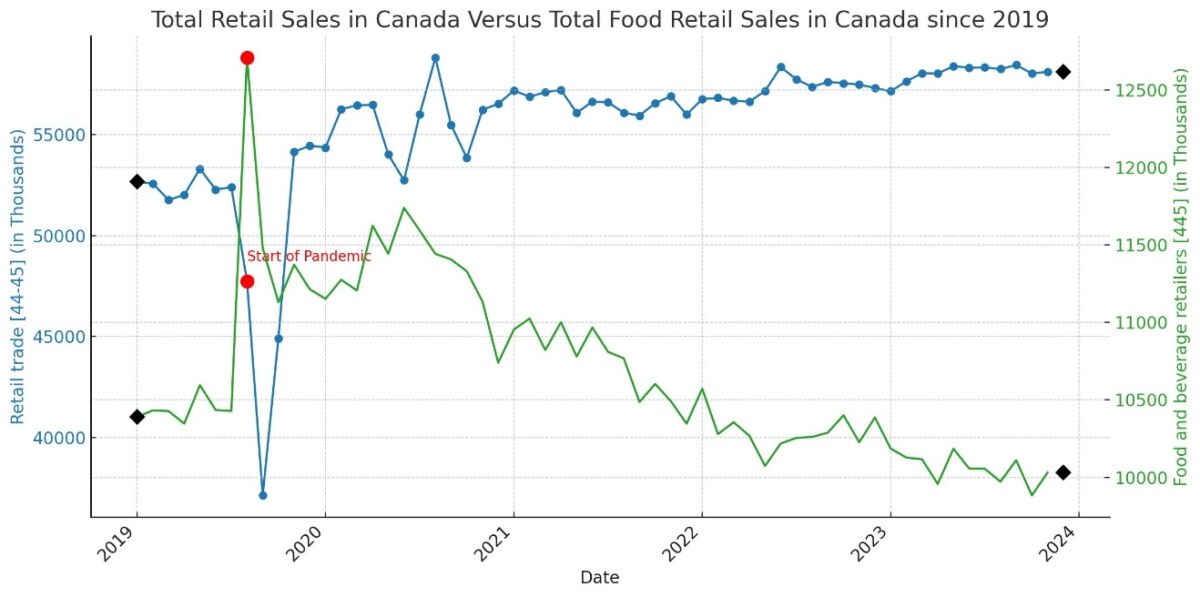
The challenge of affording food in Canada is exacerbated by anemic food sales, particularly stark when compared to the United States where grocery store sales increased by 1.8% in the last 12 months, according to the Federal Reserve Economic Data. In stark contrast, Canadian grocery store sales have plummeted by a worrying 3.2%, according to Statistics Canada (see graph on retail sales).
One plausible explanation for this disparity lies in the higher interest rates in Canada, which likely impose a heavier burden on Canadian households than on their American counterparts, given that the average debt per household is considerably higher in Canada. The Bank of Canada’s pathway to achieving a more stable inflation rate without detrimentally affecting Canadians appears much narrower than that of the U.S. Federal Reserve, evidenced by the harsh reality of ten consecutive rate hikes last year, compelling Canadians to economize particularly on food expenditures.
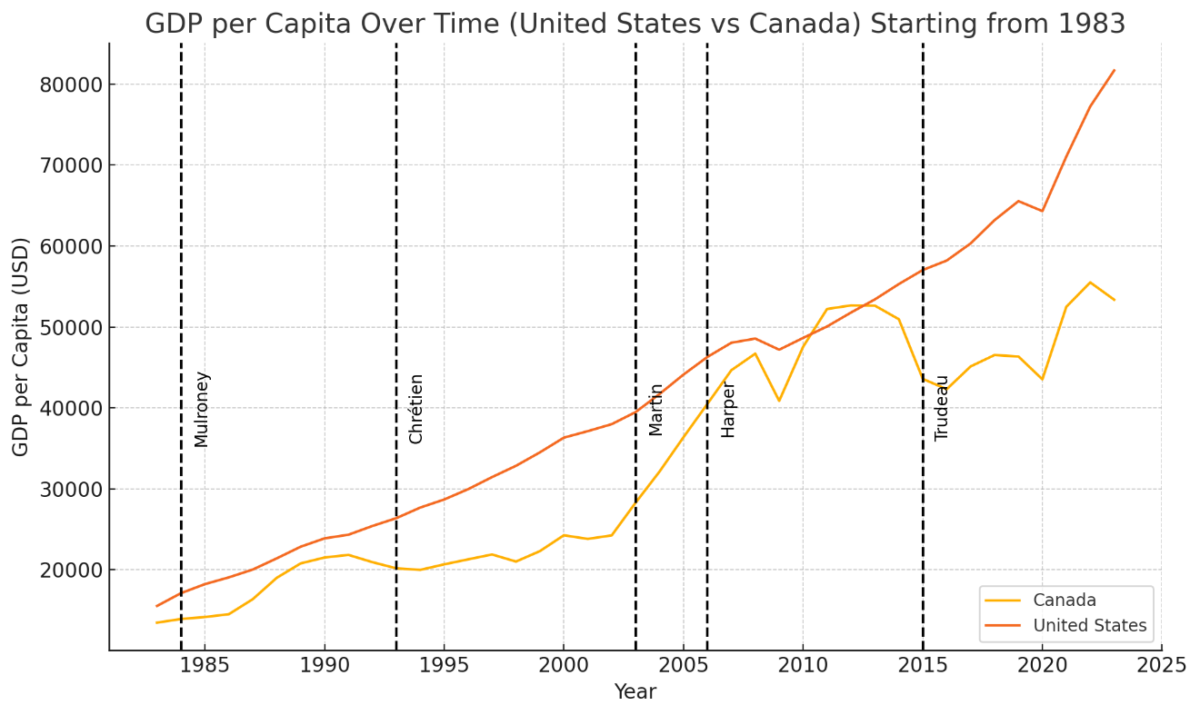
It is becoming increasingly apparent that Canada’s per capita economy is contracting, devoid of the wealth creation observed in the United States. Notably, according to World Bank Data, in 2002, the United States’ GDP per capita was 56.6% higher than Canada’s—a record high during the tenure of another Liberal Prime Minister, Jean Chrétien. The current gap, at 53.07%, is perilously close to this historical peak (see GDP Per Capita graph).
The primary drivers of GDP growth in Canada are currently immigration and public spending, with the government undertaking the bulk of economic heavy lifting. The situation is indeed dire. Moreover, the enthusiasm once held for the economic greening championed by the Trudeau administration is showing signs of significant fatigue. The carbon tax, Trudeau’s principal policy for fostering an eco-friendly economy, is increasingly losing traction due to the prevailing economic challenges. Dissenting voices from within the Federal NDP and the BC NDP government now challenge the carbon tax as the optimal path forward.
The failures of the carbon tax are emblematic of a broader trend in recent policymaking endeavours: the implementation of populist policies devoid of rigorous metrics for evaluating their success over time, all while constructing an expansive communications strategy designed to convince Canadians of the policy’s merits. The federal carbon tax is set to escalate to $95 per metric ton by April 2025, marching inexorably towards the 2030 goal of $170 per metric ton. Despite the mounting pressure, the Trudeau government has neglected to assess whether the policy meaningfully impacts our climate and emissions or to evaluate how the policy might influence the economy over time, with a particular focus on the ramifications for the agri-food sector from farmgate to plate.
The design of the rebate system ostensibly allows Canadians to overlook the real costs of this poorly-conceived policy. However, administering this massive program is not only costly but also fails to leverage the Canadian economy effectively. It is imperative to devise policies that genuinely foster both economic and environmental sustainability for the nation.
Retail Insider is streamlining its Canadian retail news from around the web to include a handful of top news stories that can be viewed quickly during the day. Here are the top stories from the past 24 hours.
Loblaw Companies Limited has initiated a pilot program in Calgary, equipping employees with state-of-the-art body-worn cameras to enhance safety measures.
The move comes in response to a dramatic surge in violent encounters at retail locations across the country, according to the company.
Axon Body Workforce cameras. Image: Axon
Calgary Stores See Enhanced Employee Safety Measures
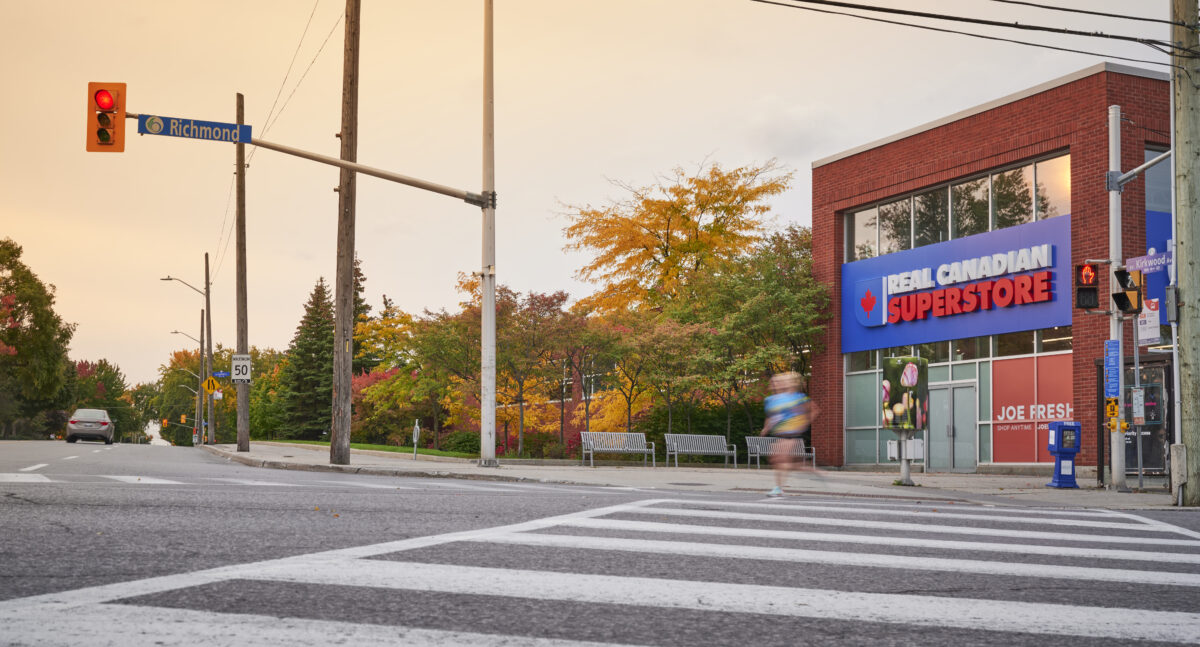
Loblaw’s decision to implement the pilot program is significant given the company’s expansive presence in Canadian retail. Operating under 22 regional and market-segment banners, including the well-known Loblaws supermarkets, the company’s reach extends beyond groceries. The company has a workforce of approximately 136,000 full-time and part-time employees across its various brands, including Shoppers Drug Mart, No Frills, and Joe Fresh. If successful, the body cam employee safety initiative could be rolled out across Loblaw’s extensive network of stores, impacting tens of thousands of workers.
Axon’s Advanced Technology
Axon Enterprise, the company behind the body cameras being used in Loblaw’s pilot program, is a global leader in connected public safety technologies. Founded in 1993 and headquartered in Scottsdale, Arizona, Axon has a long history of developing advanced solutions for law enforcement and, more recently, expanding into the private sector.
The Axon Body Workforce cameras being deployed in Loblaw stores are part of Axon’s latest generation of body-worn cameras. The devices offer high-definition video recording, wide-angle lenses for a broader field of view, and low-light recording capabilities. And their functionality extends beyond simple video capture.
One of the key features of Axon’s technology is its ability to provide real-time situational awareness. The cameras can livestream footage to a command centre, allowing for immediate response to developing situations. The feature could prove crucial in a retail environment, where rapid response to potential threats is essential.
Moreover, Axon’s cameras are equipped with advanced audio recording capabilities, capturing clear sound even in noisy environments. This can be particularly useful in accurately documenting verbal interactions, which often precede physical confrontations.
Rising Retail Violence: The Catalyst for Technological Solutions
The decision to implement body cameras is not without precedent. A National Retail Federation (NRF) survey revealed a disturbing trend: 67% of retailers reported an increase in aggression and violence in 2023 compared to the previous year.
The impact of this rising violence extends beyond immediate safety concerns. The NRF survey found that in 2023, over 45% of retailers adjusted specific store operating hours. Nearly 30% reduced or altered in-store product selections, while 28% completely closed store locations due to safety concerns.