Advertisement
Advertisement
Home Blog Page 581

Canadians Wanting to Learn about Grocery Competition Should Look at the U.S. [Op-Ed]

Image: Kroger

In the realm of comprehending competition, Canada notably lags behind the United States. While both nations grapple with antitrust concerns, the United States distinguishes itself through its unwavering vigilance against monopolies and publicly owned entities. The Department of Justice in the U.S. actively pursues companies and their executives, often resulting in convictions and jail sentences. Remarkably, their investigations are characterized by swiftness, taking mere months instead of dragging on for years. Even complex cases, such as the canned tuna price-fixing scandal, have been met head-on.

Conversely, in Canada, we predominantly rely on corporate goodwill, hoping that companies will voluntarily plead guilty in exchange for immunity. Take, for instance, the bread price-fixing scandal, where Grupo Bimbo, now the owner of Canada Bread, was fined $50 million but continues to engage in business with the federal government. In stark contrast, Loblaw and Weston Bakeries received immunity by blowing the whistle, and the investigation remains ongoing—an astonishing eight years and counting. The disparity in approach is glaring.

Image: Albertsons Companies

U.S.-based companies have grown remarkably cautious and strategic when pursuing mergers and acquisitions. The Kroger-Albertsons saga serves as a prime example. In order to secure regulatory approval, Kroger divested itself recently of over 413 stores to address antitrust concerns, which would be like Canada’s number one grocer Loblaw’s selling 354 stores prior to an acquisition. It represents a fundamentally different landscape.

According to Mark Warner, a prominent Canadian competition lawyer, Kroger is taking proactive steps to address potential FTC concerns in the U.S. They are proposing sales as remedies, effectively challenging the FTC to block the merger and leaving the decision to a judge to assess the remedy’s effectiveness. This trend may become more commonplace among well-funded merging companies, particularly as antitrust enforcers become more proactive. In the past, before the Biden administration, antitrust agencies were more inclined to accept proposed remedies and approve mergers. Canada, it appears, still adheres to a similar approach.

In Canada, significant transactions have been scarce of late. The activist landscape may indeed have shifted, as Warner suggests. The most recent major deal, Sobeys’ acquisition of Safeway, required a consent agreement and the sale of 23 stores—merely 1.5 percent of Sobeys’ total operations. This pales in comparison to the rigorous oversight happening in the United States. Notably, some of those 23 stores divested by Sobeys remain closed even after a decade.

However, let us confront a stark truth. While Congress scrutinized the Kroger-Albertsons deal from its inception, few Canadians raised an eyebrow when major grocers changed hands. In Washington, antitrust concerns evolved into a highly politicized issue, compelling the involved companies to publicly acknowledge public apprehensions. Now, with food prices on the rise, Canadians are beginning to genuinely care about how the architecture of the industry influences food pricing.

Image: Sobeys Orangeville

One major divergence between the United States and Canada becomes evident: Lawmakers and policymakers in both nations reached a consensus many years ago that the intricacies of the food industry are too complex for the general public to fully grasp. Instead, the paramount concern of the public lies in how the industry directly affects their daily lives, particularly in terms of food affordability, access, and safety. Consequently, lawmakers in the United States have been willing to proactively shoulder the responsibility of addressing these concerns on behalf of their fellow citizens.

Conversely, Canada has opted for a different approach. Many politicians have resorted to accusations of corruption and the “greedflation” campaign as their primary strategies. Regrettably, these tactics often discourage the broader public from engaging with and comprehending the intricacies of food distribution and policies.

When we assess the challenge of fostering competition within the food sector, it becomes unmistakably clear that this is a substantial obstacle confronting both nations. Yet, the fact that Canada is even contemplating emulating what France has recently undertaken—calling upon the food industry to freeze prices of 5,000 products—serves as a poignant reminder of how out of touch our lawmakers are with the workings of our own country.

If Canadians do not voice their concerns and demand change, they will ultimately receive the food industry they are willing to tolerate.

T&T Supermarket to Open Store Near Yonge & Dundas in Downtown Toronto [Renderings/Interview]

T&T New Downtown Toronto location at Yonge and Edward St. (Image: Dustin Fuhs)

T&T Supermarket, the largest Asian supermarket chain in Canada, will be opening a new store in the heart of Toronto in the Spring of 2025.

Tina Lee, CEO of T&T Supermarkets in Downtown Toronto

The grocery retailer said the location, steps away from Yonge and Dundas Square, is close to local landmarks such as Yonge and Dundas Square, the CF Toronto Eaton Centre, and Toronto Metropolitan University.

Following the success of its College & Spadina location, T&T said it recognized the need for another conveniently located store in the heart of downtown Toronto. 

“We’ve seen such overwhelming demand at our College and Spadina location, we knew the city was ready for more. When deciding on the location of the new store, we knew a large portion of our delivery orders were going to the Yonge and Dundas area, so it was the natural choice,” said Tina Lee, CEO of T&T Supermarket.

“University students, with their busy schedules and often on their own for the first time, may not have the time or the knowhow to cook for themselves. In addition to ready-to-eat meals, fresh fruits and vegetables, and, of course, late-night study snacks, we’re happy to offer students in the area some familiar flavours from home.”

“Yonge and Dundas is the most iconic intersection in the whole country. So it’s very exciting to be there together and alongside some of the biggest brands in Canada and some of the biggest international brands that come to Canada. They want to be at that intersection as well,” said Lee.

T&T New Downtown Toronto location at Yonge and Edward St.

“While that is an added benefit, I would say that the primary reason for us to be there is we know that is a very popular location for where a lot of our customers currently live, particularly the students at TMU. Not long ago we opened a store at College and Spadina and one of the cool services we have there is ordering online and delivering groceries to homes. So we could tell from our orders that a lot of those orders were going to the area of Yonge and Dundas. The condo market still continues to be alive and thriving with a lot of new condos going up including Panda Condos which is exactly the location that we’re locating in. 

“We’ve been working on this location for quite some time and we feel confident that’s going to do well because we can tell a lot of our customers are going to College and Spadina today. They’re ordering from there and having it delivered to them. Not everybody in downtown Toronto has a car so it’s less convenient to get all the way up to our store in Markham or even across on the street car to College and Spadina. Primarily, we think that our customers are there and we want to be an even more convenient location for them to shop.”

T&T New Downtown Toronto location at Yonge and Edward St.

Lee said the latest Toronto store will be the brand’s third in the country situated in the downtown core of a city. Along with College and Spadina there’s one in Vancouver in the Chinatown area.

She said the supermarket would love to be in more downtowns in the country.

“Here’s the thing about downtown locations. First, the floor plates, the size that we need, are very hard to find and the rent is expensive. We do have to be very selective and then the other thing in all three of the instances I talked about they’re in the bottom of a condo building and those are actually very difficult to construct for a complex operation like ours,” she said.

“You think about the seafood tanks and the kitchen and the ovens and the freezers and the coolers, it’s a lot of engineering to figure out. So the rent is expensive, the floor plates are hard to find, it’s a complex build and the density has to be there enough for us to make sure it’s a thriving store. It’s not a lot of opportunity for us. We have to be very selective about them. We’ve been working on this location I would say for three years, maybe over three years.”

Lee said that the company closed a store on Cherry Street in Toronto in January 2020.

“When we closed it people were really upset about it. It was really sad that we had to close a store – not because it was a poor-performing store but because the city needed the land back to redevelop one of their waterways. Ever since then we were actively looking at relocating even three years before then we were looking at relocating the Cherry Street location and find an alternate downtown Toronto site. We were working on both College and Spadina and this one at Panda Condos at Yonge and Dundas.”

T&T New Downtown Toronto location at Yonge and Edward St. (Image: Dustin Fuhs)

The new location will be 31,000 square feet and part of the Panda Condos, a project by Lifetime Development. It’s on the site of the former World’s Biggest Bookstore site.

Alex Shallal

“We are excited and honoured to welcome T&T Supermarket to our site as their offerings will significantly contribute to the vibrancy and culture at Panda Condos,” said Alex Shallal, Commercial Leasing Director, Lifetime Development.

T&T Supermarket is the largest Asian supermarket chain in Canada, operating 33 stores in British Columbia, Alberta, Quebec and Ontario. T&T Supermarket was founded in Vancouver in 1993 and is now led by second generation successor and CEO, Tina Lee. T&T Supermarket is headquartered in Richmond, BC, with offices in Toronto. It is under the Loblaw Group of Companies.

The company said the new store will cater to both residents in the area and students.

“The new location at 20 Edward Street comes on the heels of recent store announcements for T&T in Kanata, Ottawa, Brossard, Quebec, and Bellevue, Washington. After their Fairview Mall location, the new store will be the second T&T to feature a street food concept. In addition to the usual offerings, it will provide a selection of easy and convenient foods such as Chinese-style crepes, Taiwanese-style stuffed rice rolls and popcorn chicken,” said the company.

T&T New Downtown Toronto location at Yonge and Edward St. (Image: Dustin Fuhs)

In mid-August, T&T announced a second Montreal store will open in Brossard, at the Quartier Dix30, in the fall of 2024.

Quartier Dix30 is the second-largest retail centre in Canada in terms of size, with 3,200,000 square feet of retail and office space, as well as a direct connection to the REM and thousands of residential units planned over the coming years.

“South Shore was one of the most requested locations from the community ever since we announced we’re coming to Quebec. After receiving such a warm welcome in Montreal last year, we’re looking forward to opening a second T&T Supermarket in Quebec. We looked at many development opportunities, and Brossard’s Quartier Dix30 proved to be the obvious choice – it’s a popular and ever-expanding mall, and we aim to be an integral part of the vibrant community that is growing around us. With numerous residential units planned in the coming years, we see immense potential in catering to the evolving needs of our customers, ensuring convenience and a delightful shopping experience,” said Lee.

Now or Never: Rallying Retailers to Lead the Charge in Sustainability

Guest Contributor: Joe Solly, Deloitte Canada, Partner & National Consumer Sustainability & Climate Leader 

For retailers, there’s a pivotal need to resonate with consumers, not just through products but through shared values and genuine purpose. Deloitte’s 2023 report Creating Value From Sustainable Products highlights a significant disconnect between corporate sustainability claims and actual consumer perceptions. While retailers and manufacturers are making substantial progress towards net zero emissions and a circular economy, equal emphasis needs to be placed on effectively communicating these advancements to consumers. It is only when retailers, manufacturers, policymakers, and consumers engage collaboratively will we truly see the strides required for a sustainable future.

Deloitte’s findings underscore the importance of creating a unified platform where all key stakeholders converge to share insights, learn from each other’s experiences, and forge a united front against the relentless challenge of climate change. Retail Council of Canada’s Retail Sustainability Conference on October 3, 2023, in Toronto, offers precisely that – a unique forum designed for the retail community and its stakeholders to synergize.

Deloitte, renowned for its commitment to sustainability, recently unveiled its report on the intersect between sustainability and consumer trust. A striking revelation from the study indicates that despite the seismic shifts towards sustainability in the retail sector, consumer trust remains at a fragile equilibrium. A brand’s purpose-driven initiatives must be transparent, authentic, and resonate deeply with its audience for it to forge a lasting trust bond. This report, amongst many other insights, will be a focal discussion at the conference, enabling attendees to gain an in-depth understanding of how to bridge the trust gap.

Key sessions like “Leadership’s Blueprint to Net Zero” will provide attendees invaluable insights from the frontlines of sustainable initiatives. Industry leaders, including Geraldine Huse (P&G Canada), and George Soleas (LCBO), will delve into their organizations’ transformational steps toward net zero waste and emissions. They’ll spotlight their challenges and successes with Extended Producer Responsibility (EPR) systems, sustainable packaging innovations, and the intricacies of supply chain management.

“Sustainability at the Core: Retail’s Path to Zero Waste and Net Zero” will be another cornerstone discussion.  Kim Saunders (Canadian Tire Corporation), Joe McMahan (Maple Leaf Foods), and Gemma Hinksman (McDonald’s Canada) will discuss their trailblazing efforts in sustainable packaging and waste reduction. An understanding of how consumers have embraced these initiatives, and the ripple effects of the changes on these organizations’ brand reputations and on their journeys to a circular economy will be an important conference takeaway. 

The conference’s agenda is very comprehensive and will also cover, everything from the role of technology, AI, standards, reporting, operationalizing decarbonization, to the elimination of empty miles.  

Not to be missed will be the special opening keynote by Galen Weston, President and Chairman of Loblaw Companies Limited.  In an evolving EPR landscape, industry led solutions are critical to addressing the urgent plastic waste challenge facing Canada. Galen Weston will share how that sort of system change underpins Loblaw’s commitment to make all control brand and in-store plastic packaging recyclable and reusable by 2025.  

In conclusion, RCC’s Retail Sustainability Conference is not just another event; it’s a call for collaborative action. Whether you’re a retailer, manufacturer, policymaker, or a stakeholder vested in a sustainable future, this is a not-to-be-missed opportunity to be part of this transformative journey.

Tickets are available the RCC Retail Sustainability Conference website.  A 20% discount applies to groups of 5 our more. 

Joe Solly

Joe Solly, a Partner at Deloitte Toronto, is the National Consumer Leader for Sustainability and Climate with over 28 years of experience across sectors like retail, automotive, and hospitality. He’s an expert in sustainability strategy, supply chain, risk management, and corporate disclosure. As a key figure in Deloitte’s global Consumer team, Joe collaborates internationally to optimize sustainability and climate investments.

CF Chinook Centre in Calgary Undergoes Major Revamp with 35 New, Relocated, or Renovated Tenants in One Year [Interview]

CF Chinook Centre (Image: Mario Toneguzzi)

CF Chinook Centre in Calgary is one of the country’s busiest and most productive malls and it continues to evolve and change to meet the growing needs and desires of local and regional consumers.

Darren Milne, General Manager of Chinook, said there’s been quite a number of new tenants along with renovations and relocations in the past year.

Darren Milne

“For some context, we have 240 tenants right now so to have 35 new, relocated or renovated tenants in a year is quite significant,” he said.

Here’s what’s happened since November 1, 2022:

  • 12 new tenants: Athleta, Token, Stuffies, Herschel, Mejuri, Jo Malone, Glambar Bazaar, RW&Co, Nike, Alo Yoga, Crepe Delicious, and Uniqlo;
  • 13 relocations with a new store build out: Bentley, Call it Spring, Peloton, Chatters, Birks, Pandora, Jack & Jones, Stitch It, Torrid, Victoria’s Secret, Maxime’s, Zumiez, Bell; and 
  • 7 renovations: Kiehls, Footlocker, L’Occitaine, Le Creuset, Michael Hill, Call it Spring, Burberry.

Still to come by the end of this year is Swatch as a new tenant, the opening of the new Zara expansion and renovation and a renovation at Ben Moss.

Uniqlo Signage at CF Chinook Centre (Image: Mario Toneguzzi)

Recently the big buzz at Chinook has been the frenzy around the opening of the Uniqlo store on August 25.

“The response to Uniqlo has been huge. The day they opened as Uniqlo reported, they had 2,000 people in line. They had a lineup pretty much the entire day and so it was about a 90-minute wait to get into the store the entire day,” said Milne.

“That was the Friday and then even on the Saturday they still had a line for people to get in and their sales and traffic have been consistent ever since. It was really clear that Uniqlo was a tenant that Calgarians wanted to have and they obviously have been supporting them that well.”

Milne said there are a couple of reasons why so many new tenants are coming to Chinook.

“If you think about it in the context of COVID the industry as a whole saw a lot of bankruptcies. That was probably good in the sense that a lot of companies were able to clean up their balance sheets and then come out of bankruptcy in a stronger position,” he said. “We’ve been a beneficiary of them being the first choice for tenants when they want to come to Calgary.

“The second piece of that is not only are we the first choice but we’re having more national and international retailers who are expanding into Canada. So if you think about that, Alo Yoga making a move out of the U.S. into Canada. We were one of their first stores that they wanted to get open as well. And sometimes because we have such high occupancy we can’t always get the tenants in on the same timeline they want to be in. But we still generally find a way to have them here as a tenant. 

“Uniqlo was the same. They wanted to be here earlier and we just needed to do a whole bunch of movement in order to create space for them. I think we’re just seeing a lot of demand for the Centre as a result of both the performance of the shopping centre and the fact that more retail companies are looking to do stores and either grow within Canada or come into Canada.”

Jeff Berkowitz of Aurora Realty Consultants represents Uniqlo in Canada and negotiated the Canadian store leases, including the new Calgary location. SAJO design-built the Calgary Uniqlo store store.

Nike at CF Chinook Centre (Image: Mario Toneguzzi)

Milne said sales productivity at Chinook over the past year has grown exponentially.

“It’s been really, really strong. In part I think because we’ve had all these new tenants and they are tenants who are in demand. In part because Calgarians specifically still have a good level of disposable income and are looking to come and do their shopping here. Traffic continues to move up and continues to be really strong as well,” he said. “Sales are outpacing traffic growth.

“We’re always thinking about what the future looks like in terms of sales and traffic but we still feel really positive about the Calgary market.”

Milne said the shopping centre expects, probably in the new year, to announce a couple of new tenants. Also in 2024, there will be more “right-sizing” of tenants with more relocations.

“When you start to look at just the economic impact of that construction, you think about the 35 stores that have been touched here in the last 12 months between new stores, renovations or relocations, the construction value is significant and the number of jobs that creates is significant. It’s really positive,” he said.

“I would say in the near term the next big launch at Chinook will be when Zara reopens. They’re expanding in place and almost doubling in size. So that’s going to be a big store that will be open here before the end of the year.”

Future Swatch at CF Chinook Centre (Image: Mario Toneguzzi)

With the departure of American retailer Nordstrom from the Canadian market, Chinook Centre like other major malls in the country suddenly had some huge vacant real estate space.

“Nordstrom just disclaimed the lease in late in July. So it’s only been a few months that we’ve actually known we were going to get the real estate back. So we’re actively planning for it. There’s nothing to announce on it yet but we’ll continue to push that forward and plan to have a tenant there that Calgarians are going to want,” said Milne.

“I don’t mean to sound like it’s one tenant or two but I think we’ve got some thoughts on what that could be. We just haven’t settled on a direction yet.”

Additional Photos from CF Chinook Centre

Uniqlo Signage at CF Chinook Centre (Image: Mario Toneguzzi)
Uniqlo at CF Chinook Centre (Image: Mario Toneguzzi)
Athleta at CF Chinook Centre (Image: Mario Toneguzzi)
Pink at CF Chinook Centre (Image: Mario Toneguzzi)
Victoria’s Secret at CF Chinook Centre (Image: Mario Toneguzzi)
Rolex at CF Chinook Centre (Image: Mario Toneguzzi)
Le Creuset at CF Chinook Centre (Image: Mario Toneguzzi)
Peloton at CF Chinook Centre (Image: Mario Toneguzzi)
The Latest Scoop at CF Chinook Centre (Image: Mario Toneguzzi)
CF Chinook Centre (Image: Mario Toneguzzi)
Rocky Mountain Soap Co. at CF Chinook Centre (Image: Mario Toneguzzi)
Uniqlo Signage at CF Chinook Centre (Image: Mario Toneguzzi)

The Price of Love: Why Millennials and Gen Zs are Running Up Major Dating Debt [Op-Ed]

Are you looking for love in all the wrong places? (Shutterstock)

The average American invests US$120,000 throughout their lifetime in pursuit of love, spending significant money on romantic dinners, movie outings and thoughtful gifts, not to mention personal grooming and cosmetic products.

As a result, according to a survey by LendingTree, 22 per cent of millennials and 19 per cent of Gen Z have begun to incur “dating debt.”

Another study by Credit Karma found that 29 per cent of people aged 18–34 have accrued debt for a date, with 21 per cent exceeding $500 in dating debt in a year. Reasons include accidental overspending (29 per cent), an attempt to impress dates (28 per cent) and seeking intimacy (19 per cent).

But another survey by Finder also reveals that 44 per cent of Gen Zs consider debt a romantic deal-breaker when considering a partner.

This highlights potential ties between accumulating dating-related debt and barriers to the chances of success in forming meaningful romantic connections.

Luxury dates are leading to debt for millennials and Gen Zs. (Jelleke Vanooteghem/Unsplash)

This conundrum is a problem for younger generations, where the pursuit of love and connection is intricately tied to an appetite for luxury, ultimately leading to debt accumulation.

The trend has implications for financial stability, emotional well-being and the very essence of modern relationships.

There are a few issues fuelling it, including the desire to signal status and the persuasive retail marketing of luxury as being synonymous with love, creating that false sense of connection between luxury and love.

‘Costly signalling’

Accumulating debt for romantic engagements has its roots in an innate human desire — namely, the urge to signal status. In a digital age where social media and online dating platforms are the norm, standing out in a crowd has never been more challenging, yet it’s also crucial.

The “costly signalling” theory may explain why such habits develop. It argues that humans and animals use resource-intensive or risky behaviours as genuine, hard-to-fake signals indicating their desirable traits and availability.

This is related to conspicuous consumption, which is driven by a desire for status and the clear signalling of this status to onlookers.

Signalling status in relationships or social circles isn’t uncommon, but it’s found a financial expression in younger generations. Young adults are increasingly associating luxury experiences and goods with a unique form of personal expression.

Whether it’s a lavish dinner at a high-end restaurant or gifting a designer handbag, these actions become markers of distinction and status. While these acts add a layer of individuality to a relationship, they come with the risk of potential financial instability.

Luxury brands like Gucci and Tiffany try to entice millennials and Gen Zs to spend big bucks on their love interests. (Dima Pechurin/Unsplash)

Retail marketing

Retailers often employ strategic marketing tactics to link luxury with love, capitalizing on the emotional connection between these two powerful concepts to entice consumers into purchasing high-end goods.

For instance, luxury brands often release limited-edition Valentine’s Day collections, adorned with romantic motifs and themes, ranging from heart-shaped jewellery to high-end designer fragrances.

Additionally, retailers leverage the allure of love in their advertisements. They often showcase couples exchanging luxury gifts in opulent settings, fostering an aspirational connection between luxury products and romantic ideals.

For example, Tiffany & Co. released a “Believe in Love” campaign featuring stories of seven couples at different stages of their relationships, and how Tiffany has played a part in their love journey.

Retailers create an ambience of indulgence and luxury, presenting their offerings as tokens of affection and devotion.

Personalized engraving services on luxury items, such as monogrammed initials or special dates, further enhance the sentimentality and connection between the product and the act of gifting, convincing consumers to spend money on these high-end, emotionally charged offerings.

For example, Gucci’s “apple of my eye” limited-edition collection shows two interlocking red letter Gs that are meant to signify romantic love.

These strategic marketing tactics linking luxury with love contribute to more debt by enticing consumers to overspend on high-end goods with premium price tags. They promote impulse buying through limited-edition collections, foster unrealistic desires through aspirational advertising, encourage additional spending on personalized services and compel people to prioritize romantic gestures over financial responsibility.

This ultimately leads to the accumulation of debt as consumers strive to express their love through emotionally charged purchases.

Marketing campaigns by high-end retailers entice people to spend money they don’t have. (Melanie Pongratz, Unsplash)

False sense of connection

But there seems to be an intriguing paradox when it comes to luxury goods and their ties to social relationships.

While luxury items can enhance someone’s social image and boost self-perception, people also tend to view themselves more positively when they possess or experience luxury — even though they often hold a less favourable view of others who do the same.

This sheds light on a fascinating discrepancy in self-versus-other evaluations when it comes to luxury consumption.

In a dating context, a person boasting about the purchase of an expensive wine on a dinner date, for example, may over-estimate whether it will actually impress their date.

Ordering an expensive bottle of wine on a date isn’t necessarily impressive. (JP Valery/Unsplash)

Gift-givers often believe that more expensive gifts are more appreciated, assuming they convey greater thoughtfulness. But gift recipients don’t necessarily share this belief because they don’t consistently link gift price to their level of appreciation.

This suggests that gift-givers may not accurately predict what gifts will be meaningful to others. And because they personally may connect expensive gifts with something meaningful, it may lead them to spend more, ultimately contributing to greater dating debt.

Interestingly, while it’s known that people use luxury items to signal their social status and earning capacity, the reactions to such gifts may be complex. Indeed, many people prioritize their independence and question the giver’s motives behind such gifts, fearing power imbalances and expectations.

Instead, they may value personal connections over materialistic displays and be cautious in the early stages of a relationship.

Ultimately, open and honest communication about expectations is crucial for navigating these complexities, ensuring that gift-giving aligns with the relationship’s goals and mutual desires.

The concept of luxury often gets mixed up with our quest for love, creating a captivating but misleading link between the two. In the realm of romantic relationships, luxury goods or indulging in extravagant experiences can sometimes make us feel closer to our partners than we really are.

But the ties between luxury and love can be deceiving. While luxury can certainly add to the romance, it’s important for younger generations to see the difference between flashy things and the deep, lasting connections that bring us closer to love.

By Omar H. Fares, Lecturer in the Ted Rogers School of Retail Management, Toronto Metropolitan University and Seung Hwan (Mark) Lee, Professor and Associate Dean of Engagement & Inclusion, Ted Rogers School of Management, Toronto Metropolitan University

This article is republished from The Conversation under a Creative Commons license. Read the original article.

Pet Valu Unveils Canada’s Largest Pet Specialty Distribution Centre in Brampton as Part of $110 Million Supply Chain Transformation [Interview]

Pet Valu Brampton Distribution Centre (Image: Pet Valu)

Pet Valu, a leading specialty retailer of pet food and pet-related supplies in Canada, has opened what it describes as the largest pet specialty distribution centre in Canada – a 670,000-square-foot state-of-the-art facility in Brampton, Ontario.

Richard Maltsbarger

Richard Maltsbarger, President and Chief Executive Officer of Pet Valu, said the centre represents a key milestone in the company’s nationwide $110-million supply chain transformation and the GTA DC will bring unprecedented scale and automation to Canada’s pet sector as the largest distribution centre and robotics automation installation dedicated to serving the pet specialty industry.

“Today marks a significant accomplishment for our teams, whose meticulous planning and tireless efforts have enabled Pet Valu to take a big step towards building Canada’s strongest pet specialty distribution network,” he said.

Pet Valu Brampton Distribution Centre (Image: Pet Valu)

“As the largest pet specialty facility in Canada, our GTA DC will benefit multiple aspects of our business through capacity to support future growth, efficiencies to accelerate speed to customers, tailored facilities to support employees, and job creation to support the communities we serve. We look forward to enhancing distribution services to our corporate and franchised stores in Central and Eastern Canada, including into our Chico banner in Quebec.

“As we grew significantly both through units and the overall growth in the pet population over the past three-plus years, we quickly exceeded the supply chain capacity that we had within our existing network. So, we had been bringing on board additional third-party managed storage over each of the past three years in order to keep up with the great growth that we’ve achieved. And we knew we needed to make the right types of investments to be able to keep up with this growth and continue to grow over the long term. During late 2021, early part of 2022 we undertook a remapping of our entire nationwide supply chain network and identified the opportunity to really build three core distribution centres. One in the Greater Toronto Area, one in Calgary and one in Vancouver to service our growing set of stores and franchisees across the nation.”

Pet Valu is Canada’s leading retailer of pet food and pet-related supplies with over 750 corporate-owned or franchised locations across the country. 

Maltsbarger said the company started with the GTA first because it’s the largest serviced area, servicing all of Ontario, Quebec, New Brunswick, Prince Edward Island, Newfoundland and Nova Scotia.

“Secondly, we acquired our Chico chain in Quebec in February of 2022 and planned right away from the beginning that longer term we would become the wholesale distributor to our Chico franchisees, much as we are to our Pet Valu franchisees today because on the Pet Valu franchise part of the business we provide 90 per cent of the products to our Pet Valu franchisees. They are also a distribution network. Today, at Chico that’s less than 10 per cent,” he said.

“Opening up this new facility now gives us the opportunity to continue to serve our Pet Valu franchisee and corporate stores but now also over time expand our ability to service our new Chico franchisees.”

Pet Valu Brampton Distribution Centre (Image: Pet Valu)

The facility, which was built by Orlando Corporation, is about the size of 11 football fields, employing about 500 jobs. Highlights include a café, nursing room, prayer rooms, training room, driver’s lounge and open concept office space. The facility also employs advanced health and safety features, such as ergonomically-designed workstations and equipment.

Starting in the first half of 2024, Pet Valu plans to introduce automation capabilities into the GTA DC, with the installation of Canada’s largest goods-to-person robotics installation dedicated to pet specialty products. The design will have the capability to process orders same day, while improving pick productivity by more than 50 per cent and reducing the overall footprint compared to a traditional manual picking solution. The facility’s warehouse processes, systems and automation is expected to reduce costs per case and drive productivity improvements as well as provide improved product availability, faster order processing, and overall customer service levels for stores and ecommerce customers.

Nico Weidel

“Our GTA DC establishes a new benchmark for pet specialty distribution capabilities in Canada. In addition to providing a modern supply chain network that can supply our stores with flexible, reliable and accurate service, and world-class on-shelf availability in store and online, the facility supports the individual needs of our diverse workforce,” said Nico Weidel, Chief Supply Chain Officer at Pet Valu.

Pet Valu said it expects the GTA DC to be fully operational by the first half of 2024, following a phased transition period. The facility is commencing receipt and shipment of bulk items such as dry pet food and litter. Once installation and setup of automation equipment is complete in early 2024, receipt and shipment of piece-pick items such as toys and collars will transition over to the GTA DC. It said it will scale down use of its legacy distribution facilities and third-party storage space in the Greater Toronto Area throughout these phases.

Pet Valu Brampton Distribution Centre (Image: Pet Valu)

Pet Valu said it plans to invest $110 million over four years to modernize its distribution networks in the Greater Toronto Area, Vancouver and Calgary.

Progress has already begun in Vancouver, where Pet Valu has signed a lease for a new, near-complete facility, targeting start-up in mid-2024.

Maltsbarger said Pet Valu continues to see really strong fundamentals helping to support the long term growth in the pet industry.

“For 30-plus years now, we’ve continued to see growth in the pet population alongside overall Canadian population growth,” he said. “So as the Canadian population grows, we continue to see a similar percentage usually in the 65 per cent (range) of Canadian household levels generally own pets and that’ll continue to be at or slightly higher than that over the long-term. 

“We’ve also continued to see the long term trend of premiumization and humanization. As we continue to see our devoted pet lovers make their pets even more a part of their life, we see them buying better ingredient foods, often human grade quality food. We see them upgrading the beds and the crates and the toys that they purchase for their pets. And just overall really beginning to see the pet even more and more as part of the family. All of that helps to contribute to what’s been a long-run, 30-plus year growth streak within the pet industry and we continue to see that in place for the long term.”

Pet Valu Ottawa (Image: Fox Contracting)

He said the long-term opportunity is for more than 1,200 locations in the country – that’s an additional 500 stores over the next 10 to 15 years. The company targets between 40 and 50 new store openings per year.

“In total we do about 100 real estate projects per year. About 40 to 50 are focused on new stores and about another 50 to 60 are focused on renovations, expansions or otherwise going in and doing significant touch up and maintenance to our existing stores to make sure that our entire network stays fresh.”

In early August, the company reported its second quarter financial results, indicating system-wide sales of $343.9 million, which was an increase of 10.1 per cent versus the prior year. Same-store sales growth was 6.0 per cent, with both basket and traffic growth contributing. Revenue was $256.4 million, up 12.6 per cent versus last year. Adjusted EBITDA was $53.8 million, up 3.9 per cent versus the prior year, representing 21.0 per cent of revenue. Operating income was $40.2 million, up 2.3% versus the prior year. Net income was $24.1 million, down from $25.3 million in the prior year. Adjusted Net Income was $26.3 million or $0.36 per diluted share, compared to $27.9 million or $0.39 per diluted share, respectively, in the prior year.

Pet Valu Companions for Change Adoption & Wellness Center (Image: Pet Valu)
SPCA Mobile Animal Wellness Services unit (Image: Pet Valu)

In the quarter, the company opened seven new stores and ended the quarter with 758 stores across the network.

The company said it expects 2023 revenue between $1.05 and $1.075 billion, driven by same-store sales growth between seven per cent and 10 per cent and 40-50 new store openings.

Ferragamo Opens Largest Canadian Storefront on Toronto’s Bloor Street Luxury Run [Interview]

Ferragamo Bloor (Image: Michael Muraz)

Italian luxury brand Salvatore Ferragamo has opened its newest Canadian storefront on Toronto’s Bloor Street luxury run. The flagship joins other luxury brands on the rapidly transforming street which will see several more store openings before the end of the year. 
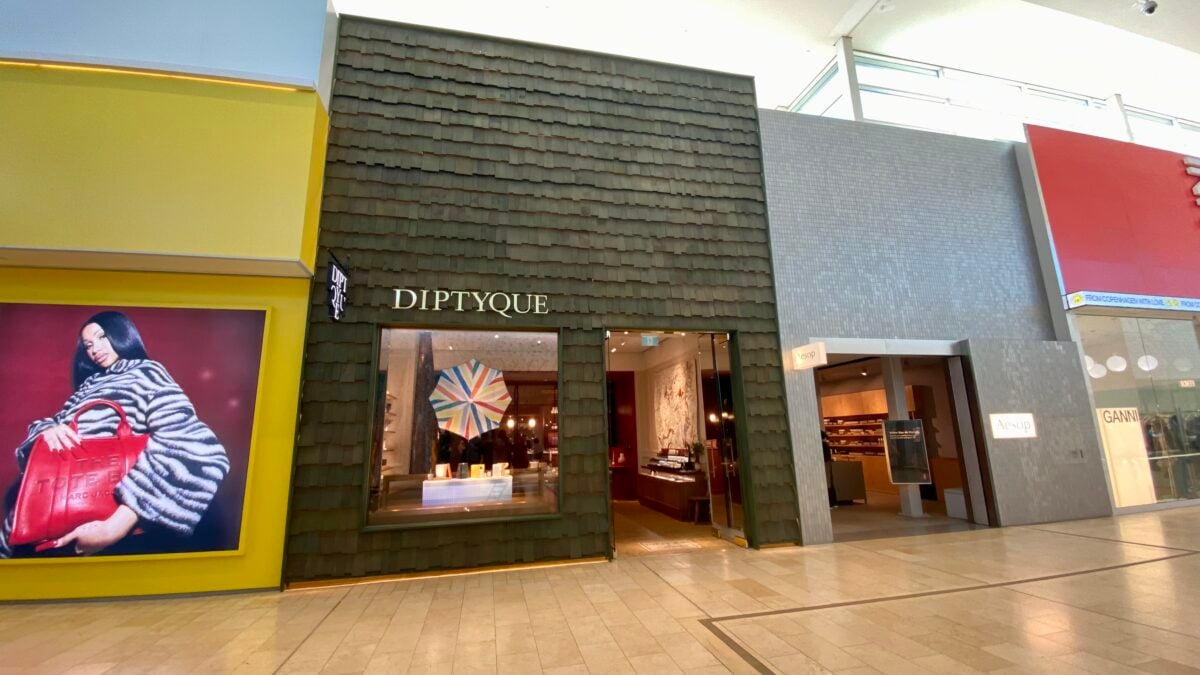
The Ferragamo store is located at The Colonnade at 131 Bloor Street West, in two combined retail spaces that once housed retail locations for brands Coach and Mulberry. The new Ferragamo spans 5,628 square feet on one level with 3,312 square feet of that being selling space, according to the brand. 

Products in the new store include Ferragamo’s range of apparel, leather goods, footwear, silk items and other accessories for both men and women, as well as a range of licensed eyewear, watches, and fragrances. Also included are some exclusive products not available in other Ferragamo locations in Canada. 

Ferragamo Bloor (Image: Michael Muraz)

The store’s beige facade contrasts with black metal frames and an illuminated logo — Ferragamo recently changed the font of its branding from a handwritten version of ‘Salvatore Ferragamo’ (that had been iconic for decades) to a type-written upper-case serif font. Materials used inside the new store include travertine, walnut, and bronze, with design elements including walnut, precious wallpapers, boucle fabrics, and espresso and ivory silk hand tufted rugs. Construction firm Amachris Corporation built out the space. 

Jordan Karp of Savills Canada negotiated the lease deal for the Ferragamo Bloor Street store on behalf of the retailer. Morguard owns and manages The Colonnade. 

The Bloor Street store design is reflective of Ferragamo Creative Director Maximilian Davis’ vision for the brand — Davis was appointed to the position in March of 2022 and he’s taken the brand in a more contemporary direction in terms of product design. 

Retail Insider had the opportunity to speak to Daniella Vitale, CEO of Ferragamo Americas. She said that Bloor Street was chosen for a store because of the importance of the street, and that Ferragamo had been looking for the ‘right’ space in the area for years. Toronto’s growing affluence and increasing tourism are expected to bolster sales in the new store, located alongside various other luxury brands on Bloor Street. 

Younger consumers with money are among Ferragamo’s target market, with the brand bringing in more modern designs in footwear, handbags, accessories and ready-to-wear. At the same time, Ferragamo is embracing some of its iconic product designs while looking to expand its base of luxury customers. Men’s categories have also been strong in Canada, particularly accessories and footwear. 
Ferragamo Bloor (Image: Michael Muraz)

Bloor Street is the fourth Ferragamo store to open in Canada — Vancouver has had a Ferragamo store at 918 Robson Street since the spring of 1981. The Vancouver store was the only standalone location in the country until Ferragamo opened at Toronto’s Yorkdale Shopping Centre in 2013. In the summer of 2016, Ferragamo opened a store in a new wing at Square One in Mississauga. 

Vitale said that Ferragamo is doing well in Canada, with Yorkdale in particular being a strong point in terms of sales. The Vancouver store also does well, and will be eventually relocating — the building where it is located is slated for redevelopment. The Square One Ferragamo store is more of a ‘work in progress’ in terms of sales, according to Vitale. 

Ferragamo could eventually open a store in the Montreal market, said Vitale, and other cities such as Edmonton could be a possibility in the future as well. Ferragamo has partnered with Montreal-based SSENSE to carry the brand wholesale, and an expanded wholesale partnership with Holt Renfrew is also in development. A concession presence for Ferragamo at Holts is currently not in the works, however, according to Vitale. 

The Bloor Street store is Ferragamo’s 41st full-priced retail location in North America — the brand also operates 15 outlet stores in the US. Full-priced locations in the United States include a mix of street-front stores and locations in upscale shopping malls. 

Ferragamo Bloor (Image: Dustin Fuhs)
Future Van Cleef & Arpels on Bloor (Image: Dustin Fuhs)

Ferragamo is the latest luxury brand to open on Bloor Street’s luxury run. Across the street, luxury jeweller Van Cleef & Arpels is preparing to open a store at 100 Bloor Street West, with a Rolex store under construction across the way. The overhauled retail podium at 110 Bloor Street West will soon see storefronts for Saint Laurent, Anne Fontaine, Paris Baguette and Alexander Wang. Luxury French children’s brand Bonpoint recently opened a store at 151 Bloor Street West, and other big names are said to be coming to the street as well with announcements forthcoming. 

Ferragamo was founded in Florence, Italy, by Salvatore Ferragamo in 1927. The brand now has stores, concessions and wholesale accounts globally as well as a digital presence. The brand is renowned for the creation, production and distribution of luxury collections of shoes, leather goods, apparel, silk products and other accessories for men and women, including also eyewear, watches and fragrances under license. 

adidas Originals Opens Unique ‘The Collection’ Storefront at The Well in Toronto [Photos]

adidas The Well (Image: adidas)

Sportswear retailer adidas is set to debut its latest flagship store at The Well in Downtown Toronto.

Retail Insider first reported on the new store back in October 2022 and after a soft launch in August, the brand’s official opening is this weekend, marking a major milestone at The Well.

The Collection: An Elevated Boutique Experience

adidas The Well (Image: adidas)
Lesley Hawkins

“The Collection,” as dubbed by the brand, is more than just a retail space—it’s a curated experience. “Our team of managers and sales associates are looking to create an elevated boutique environment and experience for our consumer,” says Lesley Hawkins, VP of Retail for adidas. “From an assortment perspective, The Collection will have all our hype drops, along with an elevated assortment of premium collections.”

The boutique aims to enhance the customer journey through specialized services and personalized experiences. adidas has focused on offering consumers an unparalleled array of products, from exclusive collaborations to premium collections.

Showcasing a Rich Heritage

adidas The Well (Image: adidas)

At the heart of this flagship store is storytelling. “adidas is the original sport brand and as such, has the largest footwear archives. The Collection concept is our opportunity to showcase our history, culture, and innovation,” says Hawkins.

The adidas Originals line will be heavily featured, including artifacts and exclusive collaborations that weave the brand’s extensive heritage into the store’s fabric.

The Well: The Community

adidas The Well (Image: adidas)

As The Well continues to see progress and its retailers start to open, the brands will need to create a destination of events and attractions to bring tourists and local customers to the property. adidas is joining BMO and De Mello as the first retail spaces that are currently open at the Front & Spadina destination, which gives added opportunity to grow the community from the ground up.

“We will be featuring the work of local photographers as they bring Toronto neighbourhoods to life through their lens,” adds Hawkins. This initiative will kick off during the grand opening weekend, with exclusive workshops and personal shopping sessions available for adiClub members.

Retail leasing for The Well is handled by Josh Katz, Assistant Vice President of Leasing, RioCan Real Estate Investment Trust and Alex Edmison, Senior Vice President, CBRE.

A Nod to Sustainable Design

adidas The Well (Image: adidas)
adidas at The Well in Toronto (Image: Dustin Fuhs)

Apart from offering a customer-first shopping experience, the new store location is full of sustainable design elements. An 18-foot panoramic window overlooks the rapidly growing skyline, supplemented by smart lighting with daylight sensors to automatically adjust interior lighting.

The store even sports a green footwear wall with live plants and reclaimed school gym wood flooring in its change rooms.

Soft-Opening Success

adidas at The Well in Toronto (Image: Dustin Fuhs)

Since its quiet opening last month, the flagship store has already garnered a warm reception. “Consumers from the surrounding towers have been watching this project come to life for the past two years, so it’s exciting to finally have an opportunity to showcase our vision,” concludes Hawkins.

adidas The Well (Image: adidas)

The grand opening of adidas’ flagship store in downtown Toronto is more than just a retail opening—it’s an opportunity for the community to come together and see the years of ideas, planning and development that went into The Well.

Additional Photos from adidas at The Well

adidas at The Well in Toronto (Image: Dustin Fuhs)
adidas The Well (Image: Dustin Fuhs)

Commerce in the Age of Generative AI [Video]

Image: Mastercard

Mastercard’s  Commerce in the age of generative AI, which is its latest Signals report explores how the democratization of generative AI will advance the Next Economy.

In the retail sector over the next two to three years, Mastercard predicts a rise in AI-powered personal shoppers to redefine consumer convenience.

The opportunities include:

  • Virtual shopping experts can scan multiple channels to weed out products with bad reviews and pinpoint the most cost-effective options;
  • It can also harness customer data to provide personalized product recommendations; and 
  • As consumers increasingly share biometric data like body measurements, AI assistants can curate apparel with flawless fits, reducing the volume of returns processed by retailers.

But of course there will be challenges. Virtual assistants will be increasingly privy to a wealth of sensitive data, which poses significant privacy and security risks as it invites misuse and exploitation, prompting regulatory scrutiny.

Mastercard says Klarna and Instacart are already harnessing synergies with AI-plugins and chatbots.

Darrell MacMullin

Some of these seismic shifts will define generative AI’s development in commerce over the next five to seven years with the convergence of five key trends: widespread integration, bespoke AI, data differentiators, AI-to-AI interactions, and its staying power.
In this video interview, Darrell MacMullin, SVP, Product & Platform, at Mastercard in Canada, talks about the trend and its implications for the future.

The Video Interview Series by Retail Insider is available on YouTube.

Connect with Mario Toneguzzi, a veteran of the media industry for more than 40 years and named in 2021 a Top Ten Business Journalist in the world and the only Canadian – to learn how you can tell your story, share your message and amplify it to a wide audience. He is Senior News Editor with Retail Insider and owner of Mario Toneguzzi Communications Inc. and can be reached at mdtoneguzzi@gmail.com.

Interviewed this episode:

Like, Share and Subscribe to Mario Toneguzzi on YouTube!

Follow Mario:

Also check out the other series offered by Retail Insider, including The Weekly podcast and The Interview Series, which are both available on Apple Podcasts, Stitcher, TuneIn, Google Podcasts, or through our dedicated RSS feed for Simplecast and other podcast players.

Follow Retail Insider:

Share your thoughts!

Canadian Consumers Changing Priorities Amid Shift with Retail Impacted: BDC Report

Yonge and Dundas (Image: Dustin Fuhs)

Geopolitical tensions, environmental concerns, rising prices and reduced spending power are motivating Canadians to cut back and entrepreneurs can respond, according to the latest edition of BDC’s 2023 Consumer Trends report.

Pierre Cleroux

“These trends have become part of our daily lives and we realize that they are associated with the larger trend of consuming and owning less, whether it’s a conscious choice or to save costs,” said  Pierre Cléroux, vice-president Research and Chief Economist at BDC (Business Development Bank of Canada). “Today’s prudent consumers have different expectations; it’s important to keep these in mind when adjusting to shifts in their behaviour.

“This is our third study once we realized trends have changed quite a bit. The last study was 2016. And the trends are quite different this time.”

Williams Sonoma at CF Toronto Eaton Centre (Image: Dustin Fuhs)

The study found three emerging trends with important implications for all businesses, regardless of size or industry:

  1. The client is always right. 34 per cent of Canadian businesses have redesigned the customer experience even though most consumers (90 per cent+) strongly agree that a simple and satisfying experience is fundamental to the consumer-business relationship. Proactively managing online reviews can help entrepreneurs who have a strong presence with younger generations keep track of what’s being said online and correct points of misinformation. Technology can help for many aspects of the clients’ journey, from marketing automation to e-commerce websites to identifying the right channels to effectively deliver customer service;
  2. Less is more. Only one in 10 businesses offer a way for consumers to purchase used, refurbished, or returned merchandise. Entrepreneurs are not honing in on a trend that appeals highly to Millenials, Gen X and Baby boomers alike. In fact, almost two-thirds (61 per cent) of consumers prefer to live simply. Entrepreneurs can help their clients consume less, by rethinking their product design to improve their environmental footprint. Another prime example of appealing to different generations is to segment messages to personalize communications based on past purchasing behaviour;
  3. It’s not me, it’s you. Consumers want businesses to inspire trust and just over half of them (56 per cent) have stopped buying from companies whose business practices they don’t agree with. To be a better corporate citizen, entrepreneurs can consider third-party certification to acknowledge they live up to the highest standards. Knowing what makes their customers tick shows that they care and helps differentiate from competitors.

Cléroux said the first trend about consumer experience is new. 

“Over the last year, people have been using online much more. The expectation is really now that you should get the same experience online or in the store,” he said. “The expectation is much higher than it was.

“There’s an expectation that businesses should be a good corporate citizen. It’s the first time we’ve seen this trend. This is really new in terms of what we have been seeing over the last three reports . . . The importance of being a good citizen it’s more important for the younger generation and that’s important because that’s the next consumer. So that’s something to keep in mind.”

Amazon Pick Up at Staples Corktown (Image: Dustin Fuhs)

Cléroux said the research has indicated that consumers are slowing down in consumption.

“There’s two reasons. First is the financial pressure. And the second is about 40 per cent were saying they want to reduce their consumption because they worry about the environment. If we go back to the financial pressure, there’s no doubt that the last year has been hard on consumers. Inflation has been high. Interest rates have been increasing. People pay more. A lot of Canadians are paying more every month for their mortgage so they don’t have the same amount of money to spend,” he said. 

“This is very related to the current situation. The pressure on people’s wallets is really there and that’s what we see in the result of this third report.”

Cléroux said that in this environment businesses have to give more options to the consumer who are looking to reduce their spending.

The BDC said that back in 2016 when it conducted a similar study, Millennials were driving the hyper-connected consumer revolution, sharing platforms were only emerging and there was a need to better target consumers with personalized messages and experiences.

This report said few businesses (29 per cent) are taking a generational approach to the products and services they offer, although behaviour, values and beliefs vary by age. For instance, environmental considerations are more important for Millennial consumers. Taking a generational approach to understanding purchase behaviour can be valuable to businesses looking to better target their customers, as not all trends are expressed the same way, it said.