Craig and Leucepe (Leo) Martinez, Program Director at eTail Toronto, discuss the upcoming eTail Toronto conference, set to take place on September 25-26 at the Hyatt Regency Toronto (Register here). The event, known for its practical and actionable insights, will gather over 300 attendees and 75 speakers, offering a comprehensive exploration of the latest trends and challenges in eCommerce. Martinez emphasizes that eTail Toronto is not just a conference but a community, having supported the retail industry through major changes since 1999.
The conference will cover key themes such as the connected customer journey, digital transformation, and the critical role of AI in retail. Martinez highlights the importance of real-world use cases, focusing on how retailers are leveraging human-centric AI to optimize the customer experience. Day two will explore the needs of the modern consumer, emphasizing storytelling, purpose-led brands, social commerce, and sustainability in retail.
Networking opportunities are a major focus at eTail Toronto, with over 10 hours dedicated to structured activities, including meetups, roundtable discussions, and private events. Martinez encourages attendees, especially first-timers, to make the most of these opportunities to build valuable connections. The conference promises to be a dynamic event, offering both education and networking to advance the retail industry in Canada.
Retailers & Brands – Get 20% off your tickets to eTail Toronto with code RETINSIDER –[Register Here]
If you prefer to listen to the audio version, it is available below:
The Interview Series audio podcasts by Retail Insider Canada are available on Apple Podcasts, Stitcher, TuneIn, Google Play, or through our dedicated RSS feed for Overcast and other podcast players. Also check out our The Weekly audio podcast where Craig and Lee discuss popular content published on Retail Insider which is part of the The Retail Insider Podcast Network.
Subscribe, Rate, and Review our Retail Insider Podcast!
Drop us a line at Craig@Retail-Insider.com. You can also rate us in Apple Podcasts or recommend us in Overcast to help more people discover the show!
Background Music Credit: Hard Boiled Kevin MacLeod (incompetech.com). Licensed under Creative Commons: By Attribution 3.0 License. http://creativecommons.org/licenses/by/3.0/
Retail Insider is streamlining its Canadian retail news from around the web to include a handful of top news stories that can be viewed quickly during the day. Here are the top stories from the past 24 hours.
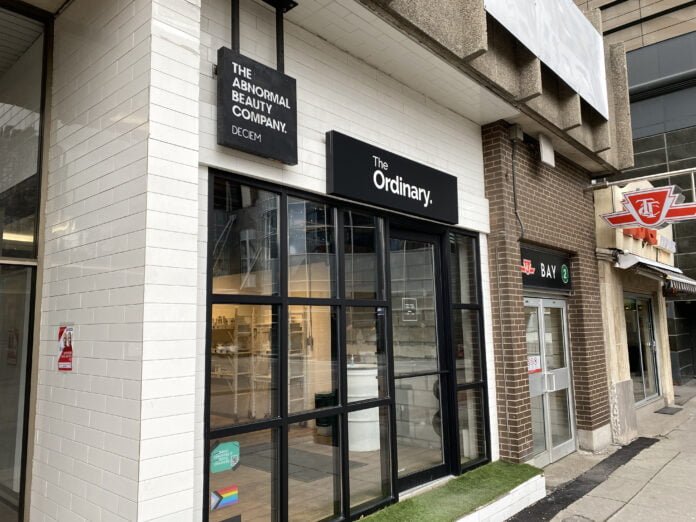
The Ordinary at 1240 Bay St in Toronto (Image: Dustin Fuhs)
Canadian market research firm Leger has released its highly anticipated 2024 Brand Momentum study, offering a comprehensive analysis of brand performance across various industries in Canada and the United States. This year’s edition features a special focus on the Canadian skincare market.
The study, unveiled during a recent webinar hosted by Luc Dumont and Tracey Berkenbush, employed a methodology to evaluate brand strength and vitality. Leger surveyed 2,505 Canadians about 15 different skincare brands, assessing factors such as visibility, differentiation, and perceived value for money.
One of the most striking revelations from the study is the dominance of The Ordinary in the Canadian skincare landscape. The brand secured the top position with an impressive momentum score of 29.3, significantly outpacing its competitors. Canadian consumers overwhelmingly praised The Ordinary for its quality, innovation, and uniqueness, with 72% of respondents rating its quality as superior to competitors.
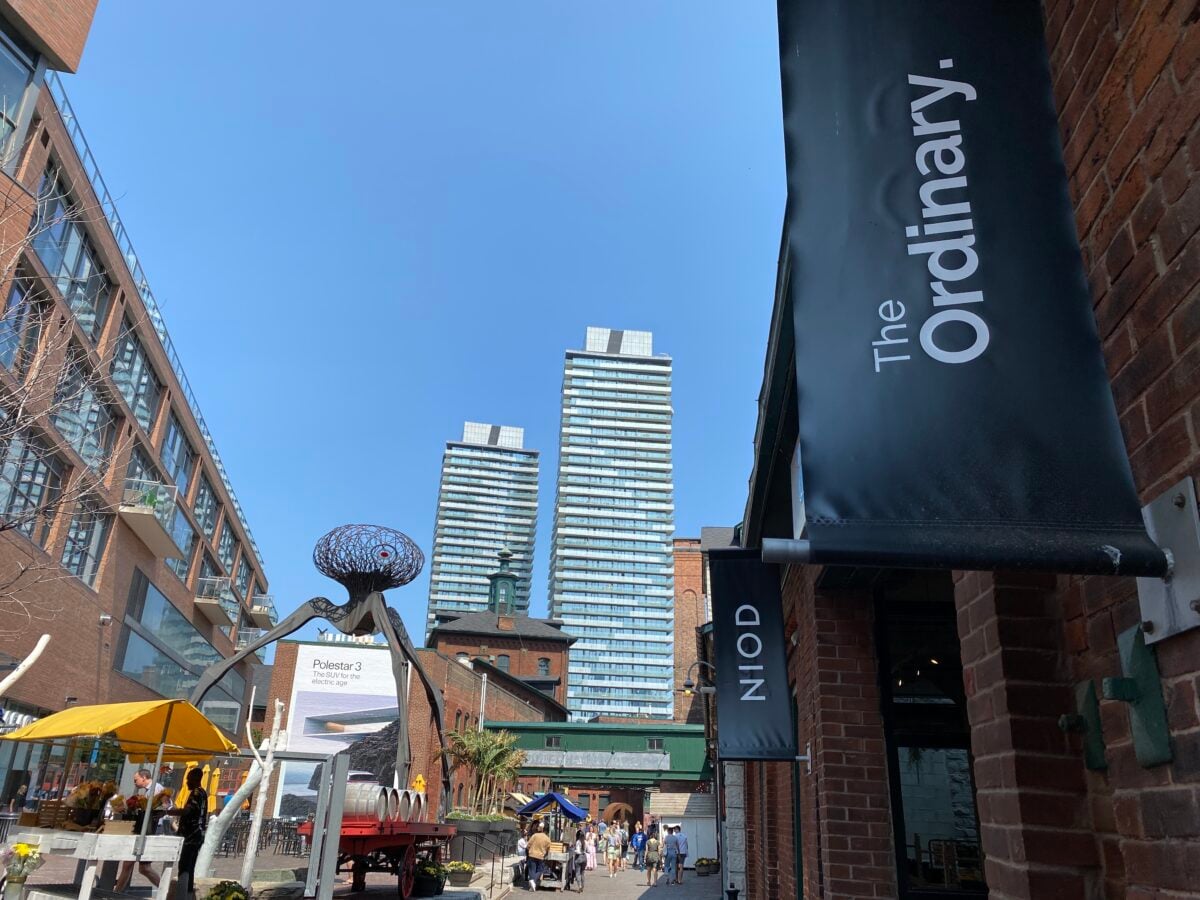
The Ordinary at The Distillery District (Image: Dustin Fuhs)
Following The Ordinary in the rankings were Aveeno (19.3), Youth to the People (18.9), The Inkey List (17.3), and CeraVe (17.2). These scores reflect a combination of current brand strength and future growth potential.
The study also shed light on key factors driving consumer decisions in the skincare industry. Meeting specific skincare needs emerged as the primary consideration, cited by 23.3% of respondents. Value for money and overall appeal tied for second place, each influencing 12% of consumers’ purchasing decisions.
Luc Dumont, senior vice-president at Leger, emphasized the strategic importance of the Brand Momentum Index for CPG clients. “Our robust Brand Momentum Model not only measures current brand performance on validated key drivers of purchase behaviour but also forecasts future potential,” Dumont explained in a statement. He added that these insights enable brands to make informed decisions to enhance engagement, loyalty, and long-term success in an increasingly competitive market.
The study’s findings have significant implications for both established and emerging brands in the Canadian skincare industry. With consumers placing high value on quality, innovation, and specific need fulfillment, brands may need to reassess their product development and marketing strategies to align with these preferences.
For those seeking more detailed information, the full study and a recording of the explanatory webinar are available on Leger’s website. The resource offers in-depth analysis and data visualization.
Google is rolling out a suite of enhanced capabilities for retailers as the holiday shopping season approaches. The announcement, made during the company’s annual Think Retail virtual event, introduces several new features to its Merchant Center retail hub, aimed at empowering retailers with more robust tools and insights.
One of the key additions is the “Shopping trends” feature, set to launch globally in the coming weeks. The tool will allow Merchant Centre users to explore popular shopping queries, ranked by popularity and organized by topic and product. Retailers will gain valuable insights into the specific language consumers use in their product searches, enabling them to optimize product descriptions for improved search relevance.
In a move towards artificial intelligence integration, Google is introducing two new generative AI insights features to the Merchant Centre. Retailers will soon have access to AI-based insight summaries at the top of the analytics tab, providing quick overviews of recent product performance. This feature will allow businesses to immediately identify critical updates, such as products experiencing a substantial increase in clicks, upon logging in.
Furthermore, the new AI capabilities extend to custom reporting. Retailers will be able to generate tailored data sets by simply describing the type of analysis they need. For instance, a query like “show me the performance of my best-selling dresses” will prompt the AI to produce a custom report highlighting the retailer’s specific performance data, eliminating the need for manual report creation.
Google Ads is also receiving upgrades to enhance local inventory management. The platform will now automatically sync in-store availability from a retailer’s website and integrate it into their Merchant Centre account when setting up campaigns. This streamlined process aims to make it easier for shoppers to view in-store product availability directly from shopping ads.
Additional improvements to Google Ads include the ability to set new customer acquisition goals in Performance Max and Search campaigns. Retailers can also optimize these campaigns with profit-focused objectives, such as cart-level conversions and cost of goods sold. Moreover, the platform now offers the option to customize exclusions at the format level for Search and Shopping ads, allowing retailers to have more control over when their ads appear on branded queries.
Jeff Harrell, senior director of merchant shopping at Google, emphasized the importance of these updates in a corporate blog post. “This holiday, brands that can stay agile and turn data into decisions will make the most of the shorter holiday shopping season,” he stated, underscoring the potential impact of these new tools on retailers’ success during the crucial holiday period.
The Canadian Arts & Fashion Awards (CAFA), often hailed as “Canada’s most fashionable night,” has announced its official nominees for 2024. The prestigious event, launched in 2013, celebrates outstanding achievement and emerging talent in the Canadian fashion industry.
CAFA brings together top artists, influencers, and business leaders from across Canada and around the world. The awards have previously honoured notable figures such as Imran Amed, Aurora James, Kim Cattrall, and Iris Apfel, among others.
Toronto native Brooke Lynn Hytes, a renowned drag artist and television personality, will return as host for this year’s gala. CAFA says that Hytes’ captivating performance at last year’s event left a lasting impression, prompting CAFA to invite her back for another evening of celebration.
The red-carpet gala is scheduled for Saturday, October 19, 2024, at the Fairmont Royal York in downtown Toronto. Those interested can now purchase tickets to the gala and after-party through the CAFAwards.ca website.
CAFA’s nomination process is largely self-nominating, with a distinguished committee of industry experts reviewing and voting on final nominees based on specific criteria. Special honourees are bestowed separately from the main categories.
Vicky Milner, CAFA Co-Founder and President, said, “We continue to be amazed by the caliber of talent we have here in Canada. We are grateful for the opportunity to spotlight these noteworthy people and brands and bring Canadian arts and fashion to the global stage.”
Grace Mahary at CAFA 2022
The event is made possible through generous sponsorships, with NARS Cosmetics returning as the presenting sponsor. Other returning sponsors include Yorkdale Shopping Centre, Disruptive Edge, Fairmont Royal York, Palettera, The Kit, and Toronto Star. New sponsors for 2024 include Amazon, Dyson, Harry Rosen, Optimum Retailing, and LaSalle College Montréal.
This year’s nominees span various categories, showcasing the diversity and talent within Canadian fashion. The Womenswear Designer of the Year Award nominees include A Bronze Age, Beaufille, Frascara, RVNG Couture, and SHAN. For the Menswear Designer of the Year Award, nominees are By David Kollar, Raised by Wolves, Section 35, and Spencer Badu.
Emerging talents are also recognized, with categories for both fashion and accessories design. The Fashion Design Student Award highlights promising graduates from Canadian fashion programs, ensuring a spotlight on the next generation of designers.
The CAFA 2024 also emphasizes the importance of sustainability and social impact in fashion. The Sustainability Award will honour a Canadian designer, brand, or individual taking action to inspire change towards a more sustainable future in the fashion industry.
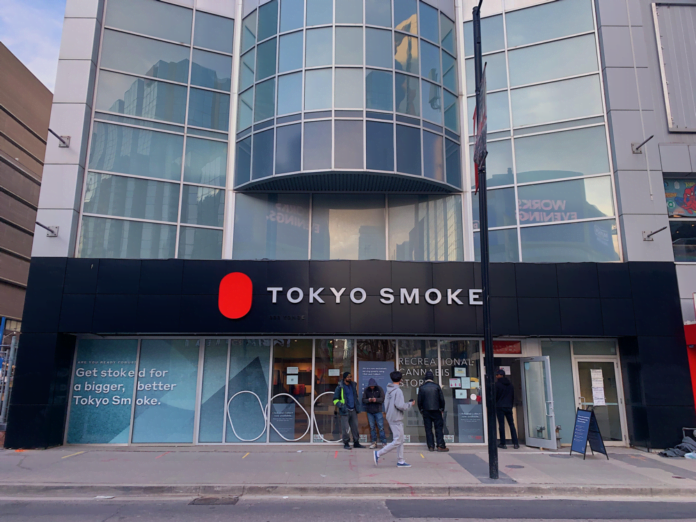
Canadian cannabis retailer Tokyo Smoke has announced a restructuring plan that includes the closure of 29 stores across the country. The move comes as the company seeks creditor protection under the Companies’ Creditors Arrangement Act (CCAA), signalling a strategic shift in response to evolving market conditions.
The decision to shutter nearly three dozen locations is part of a broader effort by Tokyo Smoke to align its operations with the current state of the Canadian cannabis market. Industry insiders have long noted the challenges facing retailers in this sector, including market saturation and declining product prices. Tokyo Smoke’s restructuring appears to be a direct response to these pressures, with the company citing “significant” changes in both market dynamics and regulatory conditions as primary factors driving the decision.
INTERIOR OF TOKYO SMOKE STORE. PHOTO: TOKYO SMOKE
INTERIOR OF TOKYO SMOKE STORE. PHOTO: TOKYO SMOKE
Despite the closures, Tokyo Smoke will maintain a substantial presence in the Canadian market. The company plans to keep 167 locations operational across four provinces: Ontario, Manitoba, Saskatchewan, and Newfoundland and Labrador. The retention of stores suggests a targeted approach to streamlining operations while preserving the brand’s core market presence.
The restructuring comes less than two years after a significant change in Tokyo Smoke’s ownership. In September 2022, OEG Retail Cannabis, a company affiliated with the owner of the Edmonton Oilers hockey team, acquired the Tokyo Smoke brand from cannabis industry giant Canopy Growth Corp. The transition in ownership coincided with a period of intensifying competition and market challenges within the Canadian cannabis retail sector.
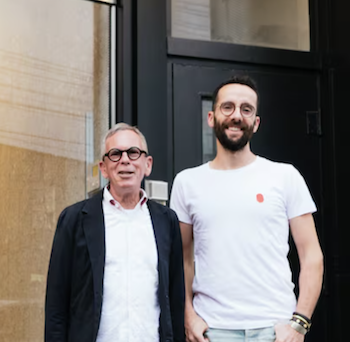
Lorne and Alan Gertner
Tokyo Smoke’s journey in the Canadian cannabis landscape has been marked by several notable milestones since its founding in 2015 by father-son duo Lorne and Alan Gertner. The brand quickly gained recognition, earning the “Brand of the Year” award at the 2017 Canadian Cannabis Awards. Its growth trajectory included strategic acquisitions and partnerships, such as the merger with DOJA Cannabis in 2017 to form Hiku Brands Company Ltd., which was subsequently acquired by Canopy Growth in 2018.
The company’s innovative approach to cannabis retail was further demonstrated in November 2021 when Tokyo Smoke partnered with UberEats to offer cannabis order pick-up services through the popular food delivery app. The move showcased the brand’s commitment to leveraging technology and convenience to enhance the customer experience.
Giant Tiger and Indspire launch third-year collaboration with a new shirt design to support indigenous post-secondary students. Featuring a brand-new design by Two-Spirit Ojibwe artist Patrick Hunter (pictured), the shirt is available now at select Giant Tiger stores and GiantTiger.com. (CNW Group/Giant Tiger Stores Limited)
Giant Tiger Stores Limited has launched its third-year partnership with the national Indigenous charity Indspire to create an exclusive orange shirt and raise awareness for National Day for Truth and Reconciliation.
Patrick Hunter
Featuring a brand-new design by Two-Spirit Ojibwe artist Patrick Hunter, the shirt is available now at select Giant Tiger stores and GiantTiger.com, with 100 per cent of the proceeds donated to Indspire to support Indigenous post-secondary students through the Learning from the Past Fund.
The company said the new design reflects Hunter’s vision of uniting First Nations communities in Canada through his joyful artistry while bringing awareness to the National Day for Truth and Reconciliation. To explore the new design and discover the journey behind its creation, click HERE.
“When creating the new artwork for the shirt, I drew inspiration from the quote, ‘They buried us, but they didn’t know we were seeds’,” said Hunter. “The National Day for Truth and Reconciliation addresses difficult conversations, and I feel we’ve come a long way. Canadians are now starting to recognise the accomplishments of First Nations people. In the past, our story was often linked with trauma but, today, a deeper understanding and awareness is growing through knowledge. With this partnership and the new design, I hope to bring more joy to the world as we continue these important conversations.”
Gabrielle Hargrove
“We are thrilled to continue our partnership with Indspire and the incredibly talented Patrick Hunter to create a one-of-a-kind shirt and raise funds for Indigenous post-secondary students,” said Gabrielle Hargrove, Senior Vice President and HR Officer at Giant Tiger Stores Limited. “At Giant Tiger, we are committed to doing what’s right for our customers, and we are proud of our partnership with Indspire and the meaningful discussions it fosters to make a tangible difference in the communities we are privileged to serve.”
Giant Tiger has supported programs that help Indigenous students graduate and become leaders of tomorrow for a long time and its collaboration has raised over $750,000 to date for Indspire’s Learning from the Past Fund, which provides bursaries to Indigenous post-secondary students pursuing education in Indigenous Studies and Languages.
Mike DeGagné
“Our continued partnership with Giant Tiger exemplifies how collaboration can lead to meaningful change,” said Indspire’s President and CEO Mike DeGagné. “The funds raised through this initiative not only provide critical support to Indigenous students pursuing post-secondary education but also foster a deeper understanding and respect for Indigenous cultures across Canada. This campaign is a testament to the power of unity in promoting education and reconciliation.”
Every summer, Canada’s major cities come alive, with the addition of pedestrianized streets, al-fresco dining, parklets and other temporary installations. The ever-growing conversion of roadways into car-free public spaces allows citizens and tourists alike to enjoy a greater portion of the streets, turning cities into a convivial, festive, and dynamic destination.
Summer also coincides with the release of Time Out’s list of the world’s coolest streets. Canadian cities are regularly featured on this list in recent years, with, for example:
What makes a street “cool?” Who is this type of ranking for and what impact can it have locally? As design professor at UQAM’s School of Design and a doctoral student at INRS-UQAM’s joint urban studies program, we looked into these issues.
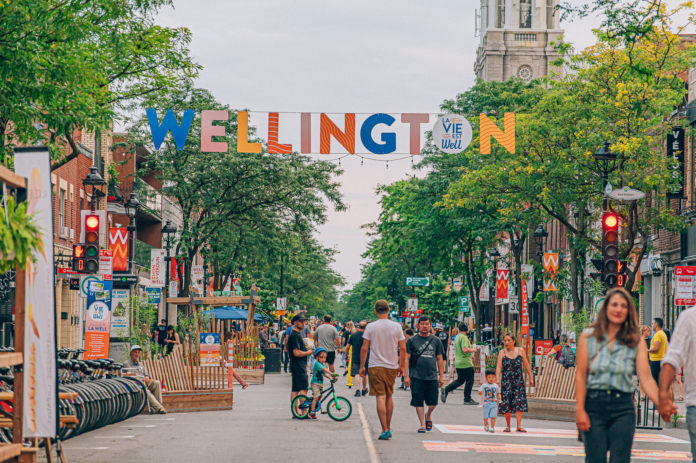
What makes Wellington Street so cool? (Montreal Gazette)
Prize lists that make you dream
Headquartered in London, Time Out is a global media and hospitality company specialized in urban tourism, which operates on multiple digital and physical platforms. After over fifty years of operation, it prides itself on being “the only international brand dedicated to urban living” and vows to “inspire travel and allow people to discover the best that the city has to offer.”
Apart from cool streets, the company publishes all kinds of other lists. These include an annual compilation of the world’s top cities and of the trendiest neighborhoods, the best TV shows of all time, the best summer songs, best pasta shapes, best hangover cures, and more. A variety of travel, leisure or business magazines feature these lists in their own publications.
“Coolness” according to Time Out
Time Out relies upon a global network of journalists, specialized in the arts, gastronomy, travel and entertainment, located in 333 cities and 59 countries, to identify the 30 streets that make the list, after consulting tens of thousands of city dwellers.
Several criteria determine their degree of “coolness”, including, among other things, the local offer in terms of gastronomy, entertainment and nightlife, as well as the street’s authentic character. The cool street is a friendly place, where everyone feels welcome and wants to hang out. A mix of local residents and discerning city dwellers patronize its various bars, cafes and independent businesses. In recent years, new criteria such as outdoor terraces, pedestrianization and initiatives linked to sustainable development have also been taken into account. Although scattered across the world, these streets share the same DNA. They are generally located in cities that appear on the Time Out ‘top cities’ list.
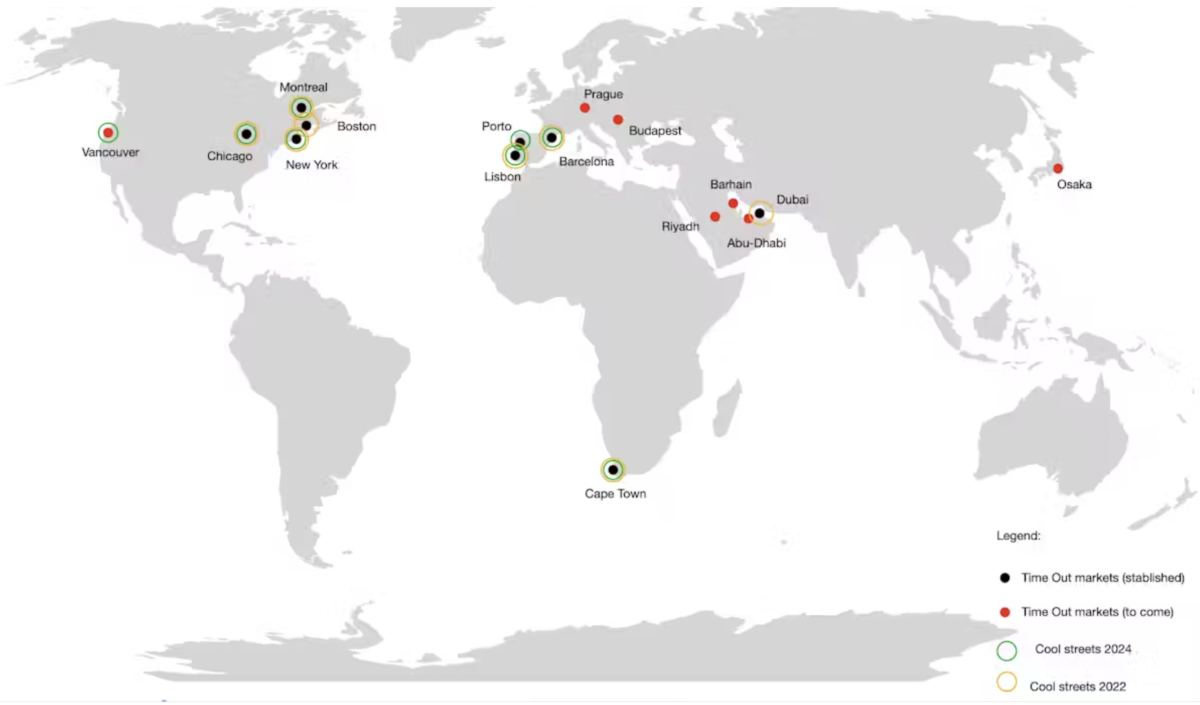
These are also often cities where the company built one of its famous gourmet markets. There are eight Time Out Markets around the world, in Lisbon, New York, Boston, Montréal, Chicago, Dubai, Cape Town and Porto, with several more to come. This may explain the company’s interest in promoting tourism to these destinations.
Cool streets frequently surround the ‘Time Out’ gourmet markets. (Courtesy of the authors), Author provided (no reuse)
The streets that appear on the list generally feature establishments that themselves appear on coveted lists: starred restaurants, clandestine bars, exclusive boutiques, renowned micro-breweries, artisan bakers, etc. They are located on the fringes of the usual tourist circuits, in areas which have yet to be conquered by gentrification and large commercial chains.
Typically, these destinations are first discovered by a local elite of artists, connoisseurs and members of the bohemian bourgeoisie, in search of “authentic” experiences, sheltered from crowds and mass consumerism, where they rub shoulders with neighborhood regulars. They are followed by influencers, on the lookout for unexplored territories, off the beaten track, who will attest to their cosmopolitanism, their audacity, discernment, and their own trendiness.
Ossington among world’s coolest streets (CityNews)
Local streets and international consumerism
They are, to a large extent, the main targets of these rankings. At a time when the greatest vectors of influence are social networks, where success, achievement and recognition are measured in the number of “likes” or subscribers, this type of compilation is intended for destination influencers.
Thus, cool streets are vehicles for the personal branding of influencers who leave in their wake the desire to consume novelty and exclusivity. In our society of spectacle and appearance, where one’s image is paramount, influencers are in constant search of distinction, seeking to position themselves as avant-garde, pioneers and trend-setters. Motivated by FOMO (fear of missing out), their subscribers emulate them in order to feed their insatiable need for celebrity capital.
Tourism agencies favor such granular content marketing strategies to secure a positive return on investment, rather than expensive targeted campaigns. Media companies like Time Out capitalize on the vast sphere of influence of these opinion makers and benefit from their wide distribution network to amplify their impact and confirm their status as city specialists.
An accelerator of inequalities
However, the enthusiasm generated for these destinations is as fragile as it is ephemeral. “Coolness” is a perishable commodity. Once a street appears on the list, this well-kept secret runs the risk of losing its exclusive character to become predictable or outdated. The resulting increase in popularity and massive arrival of hordes of tourists will undoutedly push local elites, in their neverending quest for novelty, to use their keen flair to find other territories to colonize.
These growing incursions into neighborhoods formerly sheltered from mass consumerism risk disturbing their fragile ecosystem. Ultimately, it is the local population who may suffer the most from being featured on such lists. The rising popularity of these destinations can cause prices and rents to soar, thus accelerating the sector’s gentrification and commercialization. Small independent businesses may not survive such rent hikes, having to move out and be replaced by large chains. The phenomenon is already clearly visible on Wellington Street, two years after boasting first place on the cool-street list.
With our summers becoming increasingly sweltering, another type of “cool” street should be of interest. Born out of the initiative of Libby Gallagher, an Australian doctor of landscape architecture, the Cool Streets Pilot Project aims to adapt city streets around the world to face climate change through a participatory citizen approach focused on reducing heat islands. Many other initiatives seek to transform streets into innovative convivial spaces, which do not rely on consumption. It is this kind of “cool” street, whose positive impact is not only more lasting but also beneficial for local residents, which should be celebrated.
Authors:
Anne-Marie Broudehoux, Professeure agrégée en design de l’environnement, Université du Québec à Montréal (UQAM) and,
Bernardo Emmanuel, PhD candidate, Institut national de la recherche scientifique (INRS)
Every summer, Canada’s major cities come alive, with the addition of pedestrianized streets, al-fresco dining, parklets and other temporary installations. The ever-growing conversion of roadways into car-free public spaces allows citizens and tourists alike to enjoy a greater portion of the streets, turning cities into a convivial, festive, and dynamic destination.
Summer also coincides with the release of Time Out’s list of the world’s coolest streets. Canadian cities are regularly featured on this list in recent years, with, for example:
What makes a street “cool?” Who is this type of ranking for and what impact can it have locally? As design professor at UQAM’s School of Design and a doctoral student at INRS-UQAM’s joint urban studies program, we looked into these issues.
What makes Wellington Street so cool? (Montreal Gazette)
Prize lists that make you dream
Headquartered in London, Time Out is a global media and hospitality company specialized in urban tourism, which operates on multiple digital and physical platforms. After over fifty years of operation, it prides itself on being “the only international brand dedicated to urban living” and vows to “inspire travel and allow people to discover the best that the city has to offer.”
Apart from cool streets, the company publishes all kinds of other lists. These include an annual compilation of the world’s top cities and of the trendiest neighborhoods, the best TV shows of all time, the best summer songs, best pasta shapes, best hangover cures, and more. A variety of travel, leisure or business magazines feature these lists in their own publications.
“Coolness” according to Time Out
Time Out relies upon a global network of journalists, specialized in the arts, gastronomy, travel and entertainment, located in 333 cities and 59 countries, to identify the 30 streets that make the list, after consulting tens of thousands of city dwellers.
Several criteria determine their degree of “coolness”, including, among other things, the local offer in terms of gastronomy, entertainment and nightlife, as well as the street’s authentic character. The cool street is a friendly place, where everyone feels welcome and wants to hang out. A mix of local residents and discerning city dwellers patronize its various bars, cafes and independent businesses. In recent years, new criteria such as outdoor terraces, pedestrianization and initiatives linked to sustainable development have also been taken into account. Although scattered across the world, these streets share the same DNA. They are generally located in cities that appear on the Time Out ‘top cities’ list.
These are also often cities where the company built one of its famous gourmet markets. There are eight Time Out Markets around the world, in Lisbon, New York, Boston, Montréal, Chicago, Dubai, Cape Town and Porto, with several more to come. This may explain the company’s interest in promoting tourism to these destinations.
The streets that appear on the list generally feature establishments that themselves appear on coveted lists: starred restaurants, clandestine bars, exclusive boutiques, renowned micro-breweries, artisan bakers, etc. They are located on the fringes of the usual tourist circuits, in areas which have yet to be conquered by gentrification and large commercial chains.
Typically, these destinations are first discovered by a local elite of artists, connoisseurs and members of the bohemian bourgeoisie, in search of “authentic” experiences, sheltered from crowds and mass consumerism, where they rub shoulders with neighborhood regulars. They are followed by influencers, on the lookout for unexplored territories, off the beaten track, who will attest to their cosmopolitanism, their audacity, discernment, and their own trendiness.
Ossington among world’s coolest streets (CityNews)
Local streets and international consumerism
They are, to a large extent, the main targets of these rankings. At a time when the greatest vectors of influence are social networks, where success, achievement and recognition are measured in the number of “likes” or subscribers, this type of compilation is intended for destination influencers.
Thus, cool streets are vehicles for the personal branding of influencers who leave in their wake the desire to consume novelty and exclusivity. In our society of spectacle and appearance, where one’s image is paramount, influencers are in constant search of distinction, seeking to position themselves as avant-garde, pioneers and trend-setters. Motivated by FOMO (fear of missing out), their subscribers emulate them in order to feed their insatiable need for celebrity capital.
Tourism agencies favor such granular content marketing strategies to secure a positive return on investment, rather than expensive targeted campaigns. Media companies like Time Out capitalize on the vast sphere of influence of these opinion makers and benefit from their wide distribution network to amplify their impact and confirm their status as city specialists.
An accelerator of inequalities
However, the enthusiasm generated for these destinations is as fragile as it is ephemeral. “Coolness” is a perishable commodity. Once a street appears on the list, this well-kept secret runs the risk of losing its exclusive character to become predictable or outdated. The resulting increase in popularity and massive arrival of hordes of tourists will undoutedly push local elites, in their neverending quest for novelty, to use their keen flair to find other territories to colonize.
These growing incursions into neighborhoods formerly sheltered from mass consumerism risk disturbing their fragile ecosystem. Ultimately, it is the local population who may suffer the most from being featured on such lists. The rising popularity of these destinations can cause prices and rents to soar, thus accelerating the sector’s gentrification and commercialization. Small independent businesses may not survive such rent hikes, having to move out and be replaced by large chains. The phenomenon is already clearly visible on Wellington Street, two years after boasting first place on the cool-street list.
With our summers becoming increasingly sweltering, another type of “cool” street should be of interest. Born out of the initiative of Libby Gallagher, an Australian doctor of landscape architecture, the Cool Streets Pilot Project aims to adapt city streets around the world to face climate change through a participatory citizen approach focused on reducing heat islands. Many other initiatives seek to transform streets into innovative convivial spaces, which do not rely on consumption. It is this kind of “cool” street, whose positive impact is not only more lasting but also beneficial for local residents, which should be celebrated.
A landmark building at one of Toronto’s most prominent intersections is getting a makeover, as GWL Realty Advisors (GWLRA) begins extensive renovations to modernize 33 Yonge’s façade and lobby which is part of an overall strategy to reimagine the property as a destination.
GWLRA is undertaking the renovations and rebranding on behalf of its owners, the Great-West Life Canadian Real Estate Investment Fund No.1 (CREIF) and the London Life Real Estate Fund. The renovations commenced this summer and will be completed in the fall of 2025.
Along with the renovations, GWLRA is revealing new branding for the property – now called Berczy Square – drawing inspiration from the adjacent Berczy Park and the building’s unique location at the junction of two distinct neighbourhoods in Toronto’s downtown core.
Steffan Smith
“Steps from the Financial District, Union Station, and serving as a gateway to the St. Lawrence Market and the surrounding downtown, Berczy Square is a beautiful building in a premier location,” said Steffan Smith, Executive Vice President, Asset Management at GWLRA.
“The commercial office market is evolving, and projects like Berczy Square will meet the needs of today’s workplaces while setting a new standard for amenities and design. Our investments will transform the lobby into an active, welcoming space for workers and visitors and revitalize the collection of restaurants on the ground floor.
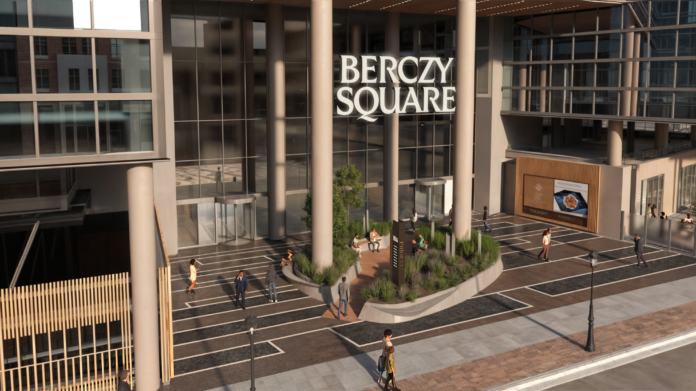
Image courtesy of GWLRA
“It’s a very unique building. It is our most unique building. It’s short but it takes up a full city block. So it’s 13 storeys and it was built in a way where the developer created an atrium with natural light from top to bottom. Nobody would ever build a building this way. We’re just lucky enough to have these bones where there’s natural light coming right into the core. You can walk into the lobby, look straight up and see the sky.”
The building will be home to five new or refreshed restaurants.
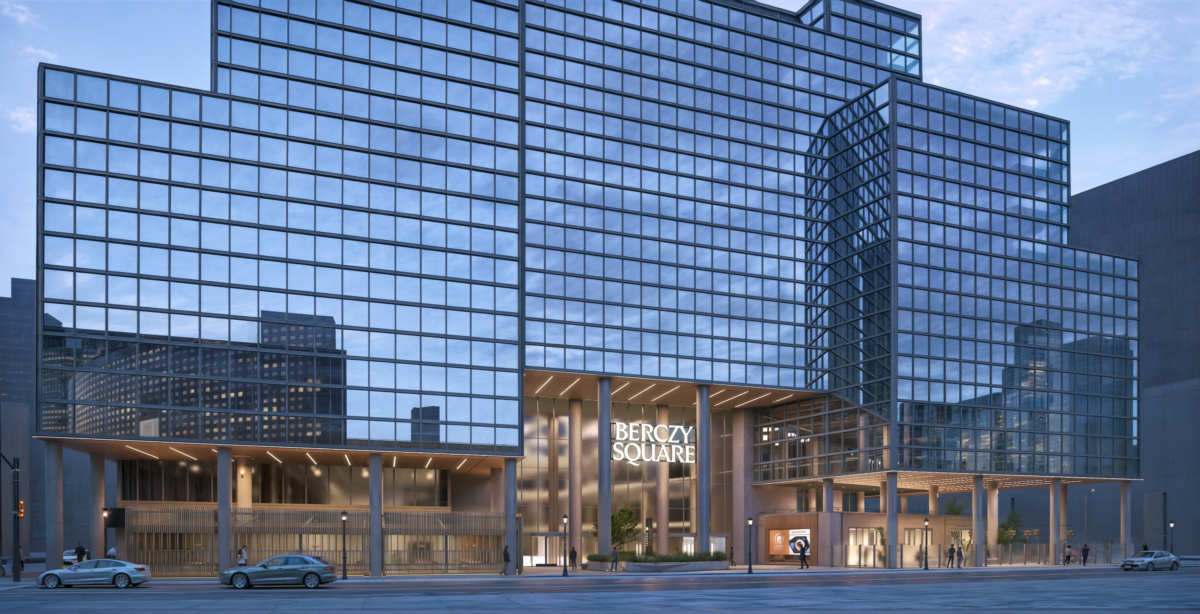
Image courtesy of GWLRA
“We had four restaurants to begin with. When we were rebranding and going to do the lobby renovation, we didn’t want to do the lobby repositioning without knowing who our long-term F&B (food and beverage) clients were going to be,” said Smith.
“So once we started showing these folks what we were planning for the asset, we got best in class breakfast, lunch and dinner. And even to the Michelin Star rated group.”
Three of the restaurants are open while two are being built out and will be completed by mid 2025.
Ceci Bar, by O&B, and Sammarco by the group behind Giulietta and Osteria Giulia are the ones next to open.
“This is not your standard Bay Street rectangle tower. It has very large floorplates. It has the natural light spilling into the core but we are a six-minute walk from Union Station so you still have that great location which is what folks are looking for as they start or continue to bring people back to the office,” said Smith.
“But we also have this natural greenspace and this park just on the other side of the street. We believe it checks all the boxes with natural light, wellness, greenspace, close to Union Station, across the street from Brookfield and the Path so it really does everything without being 100 per cent corporate.”
An interpretation of the classic Italian steakhouse, Chef Rob Rossi and David Minicucci’s latest entry to Toronto’s culinary scene, Sammarco, will offer an upscale dining experience. With interiors by II by IV Design and branding by Concrete, Sammarco will feature unique stone detailing, terrazzo and marble flooring, and warm wood-accented walls. Guests will enjoy a private dining room for corporate events, a wine room, and an outdoor terrace.
Rob Rossi
“There is a renaissance of restaurants happening in Toronto, and we look forward to opening in one of the most iconic parts of the downtown core,” said Chef Rob Rossi, whose Yorkville restaurant Osteria Giulia earned a Michelin Star in 2023. “Sammarco will build on the success of our other locations to offer guests exceptional food and an unparalleled dining experience that reshapes the concept of a steakhouse. From simple and beautifully presented food, attentive service, and a curated wine list, to bespoke plateware and fine Italian linen, we are creating an incredible hospitality venue.”
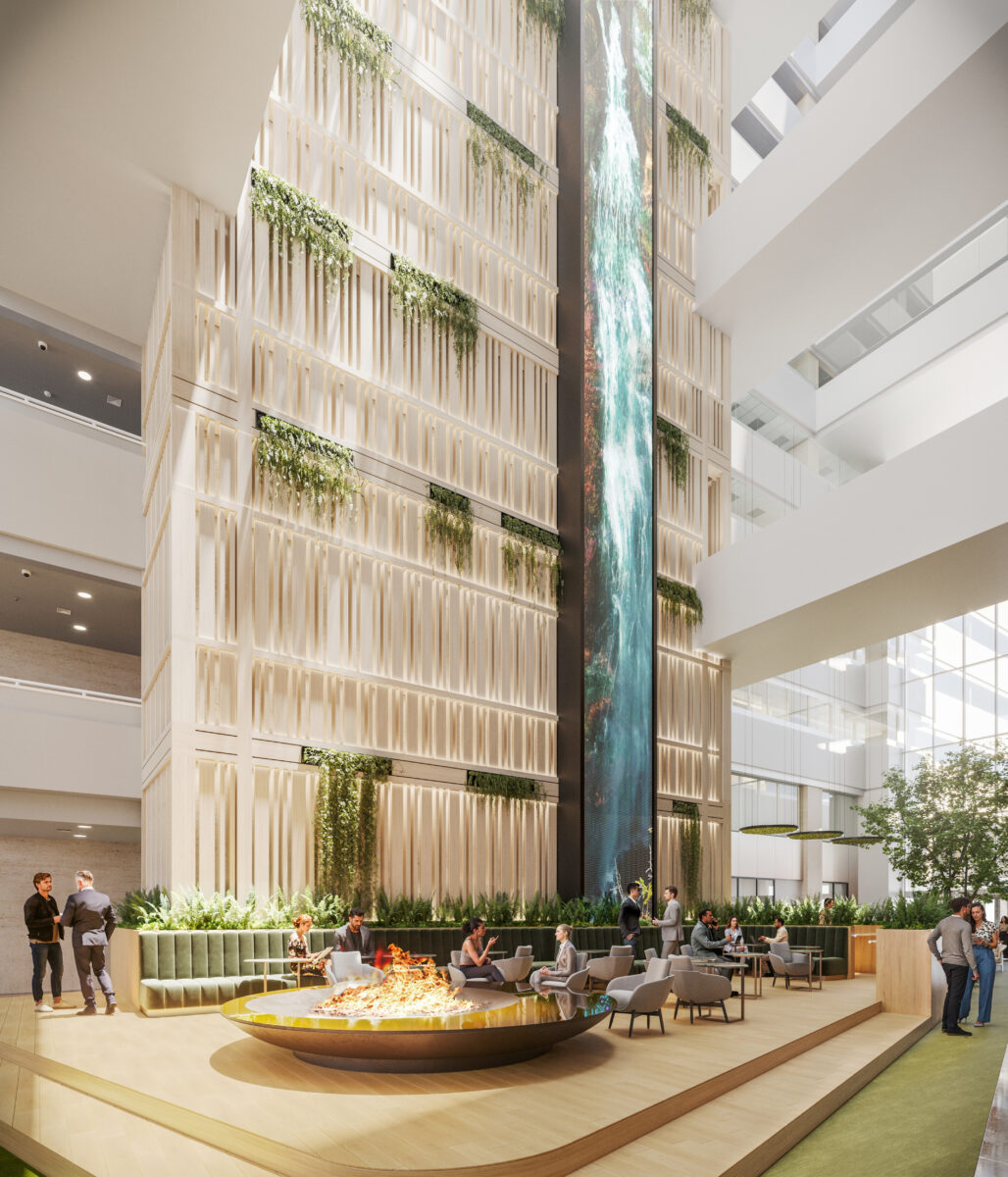
“Extensive renovations to the building’s lobby are intended to create a sense of community, with a design that evokes feelings of pause and escape. Helmed by Alison McNeil from DIALOG, who drew inspiration from her extensive background in hospitality and workplace design, each of the lobby’s bold design moves draw direct inspiration from natural elements,” said GWLRA in a statement.
“Upon entering the lobby, visitors will be greeted by oversized pillars which serve as a backdrop for a natural stone front desk. Evoking the feeling of arriving in a hotel lobby, the dramatic entrance is meant to offer a sense of discovery. Behind the arrival area, a pond surrounded by seating under hanging moss pendants offers a place for solitude and relaxation. An expansive wooden deck will take up the middle section of the lobby, offering a range of seating options and a fireplace feature.
“To accentuate the soaring ceilings of the building’s atrium, the elevator bay will be wrapped in a nine-storey trellis-like structure. The trellis will feature live plantings and will be accompanied by an 80-foot-tall digital screen displaying art work.”
Alison McNeil
“There is a perception that there is a sudden change in what workers need out of an office, but the way people work has been evolving for nearly two decades,” said McNeil. “A building must offer more than a computer, a desk and a chair. Buildings need amenities, spaces that inspire collaboration and, most importantly, they need to foster a sense of community. We’re excited to be working with GWLRA because they understand the importance of experience.”
The lobby design is the latest in a series of upgrades to 33 Yonge, including an exclusive gym for building tenants and end-of-trip facilities including bike parking, showers, and a change room. The façade upgrades were designed by Gensler and are intended to bring a feeling of warmth and uniformity to the retail experience. Wood soffits, warm lighting and consistent materiality are being introduced to both entrances, as well as to the outdoor patios that line the podium.
Renovations on the façade have commenced and will be coordinated with hospitality tenants to avoid any disruptions during patio season.
Retail Insider is streamlining its Canadian retail news from around the web to include a handful of top news stories that can be viewed quickly during the day. Here are the top stories from the past 24 hours.