Costco is poised to expand its presence in Regina, Saskatchewan, as plans for a second location in the city clear a significant regulatory hurdle.
The City of Regina’s planning department has given the green light to a development application for a new Costco store, marking a crucial step forward in the retailer’s expansion strategy. The approval, granted last week, comes after a thorough review process that began in late July of this year.
The proposed location for the new Costco warehouse is strategically positioned in Regina’s west end, adjacent to the Westerra neighbourhood at 8701 Dewdney Avenue. The site falls within the city’s existing zoning regulations, eliminating the need for additional approval from the Regina City Council.
Spanning about 160,000 square feet, the warehouse will offer ample space for Costco’s bulk merchandise and diverse product range. In addition to the main store, the development plans include an on-site gas station, catering to the needs of motorists in the area with discounted gas.
Costco has incorporated extensive parking facilities into the project design. The plans outline provisions for 1,284 standard parking stalls, complemented by 16 accessible parking spaces, ensuring adequate accommodation for shoppers during peak hours.
Public engagement played a crucial role in the approval process, with the City of Regina actively soliciting feedback from residents. The response was overwhelmingly positive, with 566 individuals—representing 91 percent of the total 620 comments received—expressing support for the new Costco location.
The proposal was met with a handful of critics. Nineteen respondents voiced opposition to the project, citing concerns about potential traffic impacts, questioning the appropriateness of the location, and expressing a preference for smaller-scale retail developments. Additionally, 35 individuals indicated conditional support, suggesting modifications to certain aspects of the plan, such as fuel station offerings and measures to mitigate traffic congestion.
While the approval from the planning department marks a significant milestone for the project, Costco has yet to announce a specific timeline for construction and opening of the new warehouse.
Regina’s other Costco store at 2110 Anaquod Road opened in 2018. The store replaced a smaller location that opened in 1993.
Porsche Cars Canada, Ltd. (PCL), the Canadian arm of the renowned German luxury sports car manufacturer, is making its way further into the Canadian retail landscape with an innovative approach to showcasing its electric vehicle lineup.
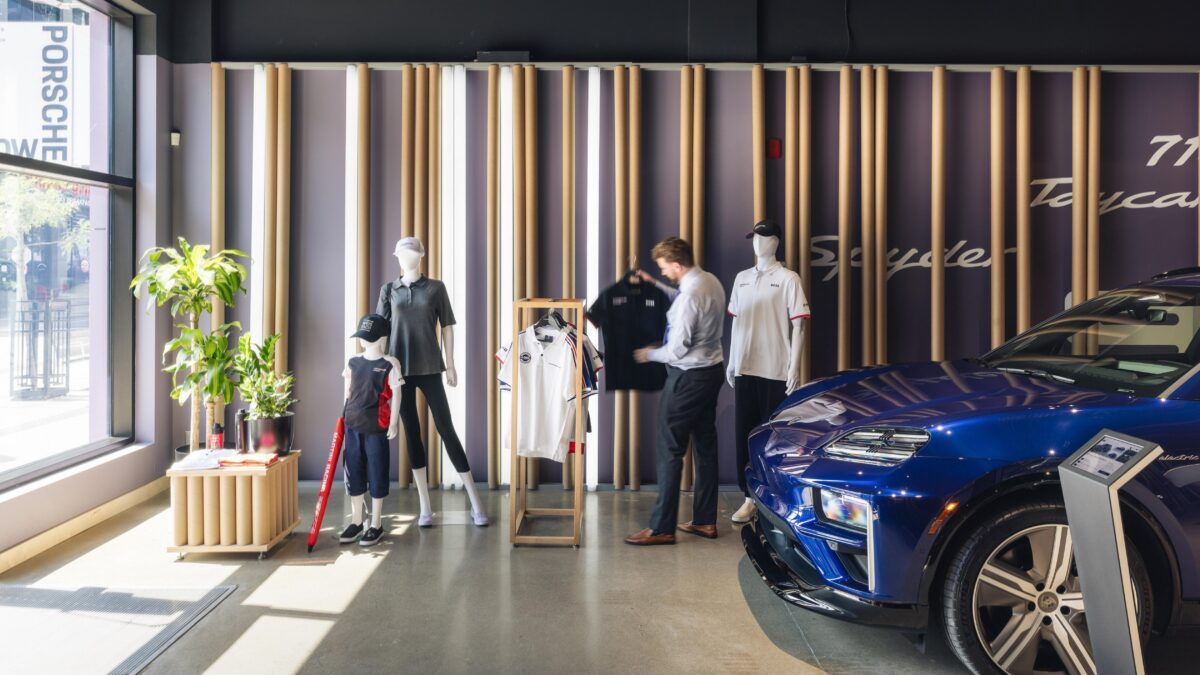
To herald the arrival of new electrified models such as the Macan Electric and the 2025 Taycan, Porsche has unveiled five Porsche NOW locations across metropolitan areas in Montreal, Ottawa, and Vancouver. The brand pop-ups represent a first-of-their-kind initiative in Canada, with a distinct focus on electric mobility.
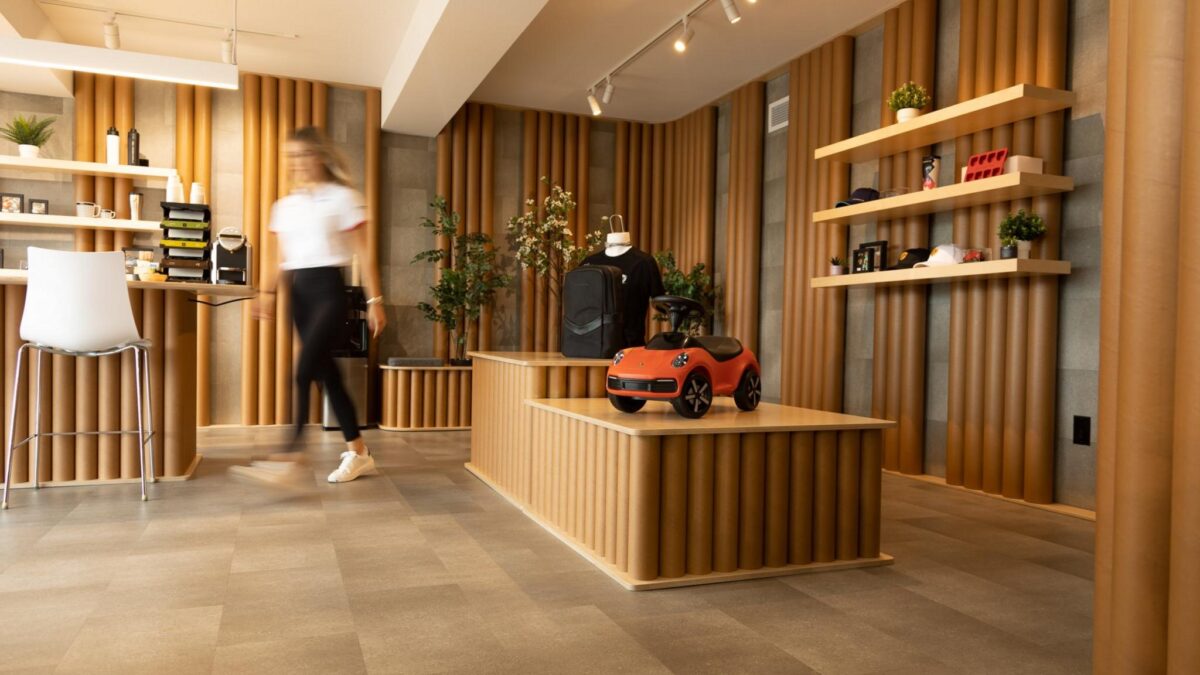
The Porsche NOW concept embodies what the company describes as being a modern luxury retail experience, offering visitors an intimate and temporary sales environment. The pop-up locations provide a unique platform for consumers to engage with the Porsche brand, explore vehicles, and interact with product experts in an experiential setting. Each pop-up features a configuration lounge and a Porsche Lifestyle corner, alongside one or two electrified Porsche vehicles on display.
Photo: Porsche Canada Photo: Porsche Canada
Sustainability is at the forefront of the Porsche NOW design philosophy. The pop-ups incorporate recyclable cardboard cylinders in various elements, including walls, seating, and display fixtures. The distinctive colour palette, inspired by the Provence shade introduced with the new electric Macan, creates a stylish and inviting ambiance that reflects Porsche’s commitment to both luxury and environmental consciousness.
Each Porsche NOW location is operated independently by a Porsche Centre, with encouragement to implement sustainable concepts in their design and construction. For instance, the Langley location utilizes solar panels to power its temporary structure, while the Richmond pop-up features flooring made from recycled footwear, offering visitors a tangible connection to sustainability efforts.
Photo: Porsche Canada Photo: Porsche Canada
To enhance the visitor experience, Porsche NOW locations will host a variety of curated lifestyle events. These range from in-person yoga classes to live painting sessions, providing an engaging and diverse array of activities that align with the brand’s luxury lifestyle positioning.
The five Porsche NOW locations in Canada are strategically situated in high-traffic areas:
The temporary retail spaces are set to operate until the end of the year, providing Canadian consumers with an extended opportunity to experience Porsche’s vision for electric mobility.
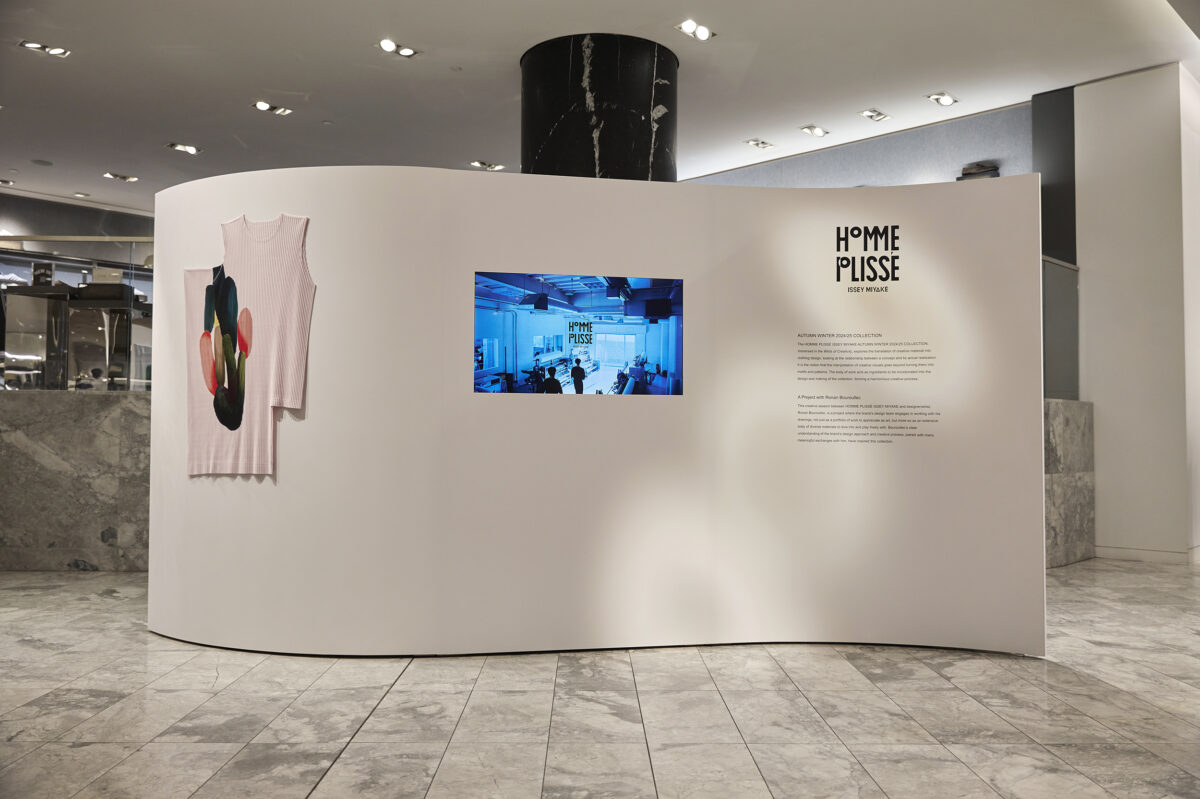
HOMME PLISSÉ ISSEY MIYAKE HOLT RENFREW VANCOUVER. Photo: Holt Renfrew
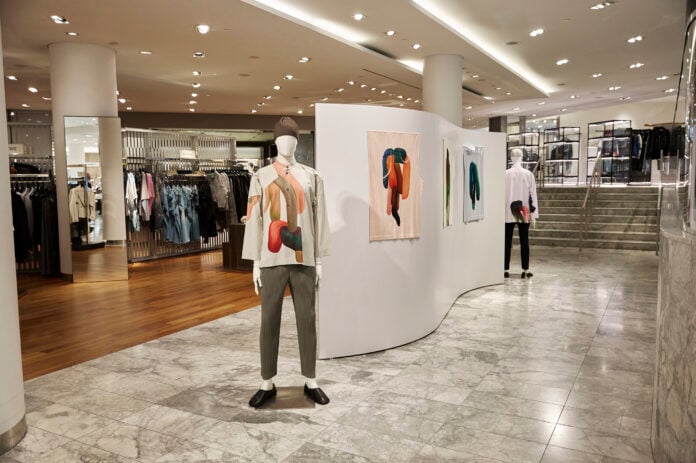
Holt Renfrew has unveiled a groundbreaking installation and collection by HOMME PLISSÉ ISSEY MIYAKE in collaboration with renowned designer and artist Ronan Bouroullec at Holt’s Vancouver location.
The North American exclusive showcases a unique creative partnership between the innovative fashion brand and Bouroullec, pushing the boundaries of artistic expression in retail spaces. The installation, which opened last week, offers shoppers and art enthusiasts a glimpse into the intersection of fashion and contemporary art.
At the heart of this collaboration is a collection titled “Drawing,” which ingeniously integrates HOMME PLISSÉ ISSEY MIYAKE’s signature pleated fabric with Bouroullec’s distinctive artistic vision. The design concept explores the fascinating relationship between two-dimensional artwork and three-dimensional garments, translating the negative space in Bouroullec’s original drawings into wearable forms.
HOMME PLISSÉ ISSEY MIYAKE HOLT RENFREW VANCOUVER. Photo: Holt Renfrew
The collection’s standout feature is its innovative use of pleating techniques to enhance the vivid colours and delicate brushwork of Bouroullec’s original paintings. This approach not only showcases the brand’s technical prowess but also creates a unique visual experience where fashion truly becomes a canvas for art.
Visitors to Holt Renfrew Vancouver’s men’s floor will have the opportunity to experience the extraordinary installation until September 13.
HOMME PLISSÉ ISSEY MIYAKE, launched in 2013, is renowned for its contemporary menswear that builds upon Issey Miyake’s revolutionary pleating technique. The brand’s commitment to innovation is evident in its three core principles: pleats, product, and present. Each garment is crafted using wrinkle-proof, quick-drying textiles with uniform pleats that don’t cling to the skin, offering both style and practicality.
The Big Arch™ is available at participating McDonald's restaurants in Canada starting August 27. (CNW Group/McDonald's Canada)
Starting August 27th, burger enthusiasts across Canada will have the opportunity to try McDonald’s latest creation, the Big Arch burger. The new menu item represents the company’s response to customer feedback calling for a more substantial burger option.
The Big Arch is described as being a towering assembly of classic McDonald’s ingredients with some novel additions. At its core are two quarter-pound patties made from 100% Canadian beef, sourced from local ranches and farms. These are complemented by three slices of white processed cheese, a combination of crispy and slivered onions, pickles, and lettuce. What sets this burger apart is the new Big Arch sauce, specially developed to add a tangy twist to the familiar McDonald’s flavour profile.
Alyssa Buetikofer, Chief Marketing Officer at McDonald’s Canada, emphasized the company’s commitment to meeting customer demands. “We’ve listened attentively to our guests who expressed a desire for a larger burger option on our menu,” Buetikofer stated. “The Big Arch is our exciting response to this feedback, blending the McDonald’s tastes our customers love with unique new elements, including our specially crafted Big Arch sauce.”
The introduction of the Big Arch aligns with McDonald’s Canada’s longstanding tradition of supporting local agriculture. The company says that it takes pride in its partnerships with Canadian farmers and ranchers, which enable them to deliver the quality beef that forms the foundation of their popular burgers.
In a playful nod to the burger’s anticipated popularity, McDonald’s has hinted at the return of the Hamburglar, the brand’s mischievous mascot known for his burger-snatching antics. The company suggests that this notorious character may have caught wind of the Big Arch’s debut and could be plotting to get his hands on one, adding a touch of nostalgia and whimsy to the launch.
Canada’s selection as one of the first global markets to introduce the Big Arch underscores the country’s importance in McDonald’s international strategy. The move also highlights the company’s efforts to tailor its offerings to local tastes and preferences while maintaining its global brand identity.
Canadian businesses and retailers are breathing a huge sigh of relief today with the resumption of operations for Canada’s two largest railways.
Canadian Pacific Kansas City (CPKC) and Canadian National Railway (CN) were ordered by the federal government to end their recent network shutdowns, which was upheld by the federal labour board.
“And it is good news that @TeamstersCanada will comply, even as it challenges the decision. Hoping for a quick end to the uncertainty with Canada’s critical rail service,” he tweeted.
The Canadian Manufacturers & Exporters (CME) welcomed the Canada Industrial Relations Board (CIRB) order for the resumption of rail services following the Minister of Labour’s direction under Section 107 of the Canada Labour Code.
“The CIRB decision mandates that the railways and their employees resume their duties by 00:01 EDT on August 26 and continue operations until the final binding arbitration is completed,” it said in a statement.
“Months of uncertainty culminating in a wind-down of services and a full rail stoppage has created significant operational and reputational challenges for Canada’s industrial economy. Manufacturers across Canada are relieved that critical rail services are being restored, providing much-needed stability and certainty heading into the fall.
“This stoppage, along with other recent supply chain disputes and disruptions has underscored the need for systemic change. CME is encouraged by the Minister’s recognition of these problems, and we look forward to working with the government to strengthen Canada’s supply chains and ensure the long-term, reliable flow of goods vital to our economy.”
“That uncertainty really disrupted supply chains for well over two weeks. The whole chain was compromised and we’ve seen delays. I think the industry will recover. Farmers will likely be able to have access to markets but this situation really brought a lot of really damning uncertainty both sides of the border,” he said.
“We have two highly integrated economies so the disruption and the dispute really didn’t help. I think a lot of businesses, grocers, are relieved by the fact that Ottawa at the last minute showed some leadership forcing people to come to a deal.”
A lengthier disruption would have been devastating for the Canadian economy.
Michelle Wasylyshen
In a statement, Michelle Wasylyshen, National Spokeswoman for the Retail Council of Canada, said: “After weeks of engagement, RCC is supportive of the federal government’s move to impose arbitration to end the railway stoppage. Every single day that railways don’t operate, Canada’s retail supply chains suffer immensely. In fact, it takes at least a week to 10 days to recover from only one missed day of operations. At the same time, costs for food and consumer goods would have risen and shelves would quickly become empty for an endless number of products that Canadians depend on each and every day.”
“The lockout did indeed happen, however within a day or so, the federal government intervened with imposing binding arbitration and a return-to-work order pending agreeing to the terms of a new collective agreement. The lockdown sent a shudder through many industries,” he said.
Whereas this suited CN/CPKC, it did not favour the heads of Teamster’s union. At government level, their co-operation party did not support government intervention as their leader felt this gave all employers a “hand up” in future disputes (e.g. Air Canada).
“The retailers and distributors I have talked with are on high alert, especially when the unions suggested they would withdraw labor with the government’s heavy-handed approach to negotiations. Many are expecting the government to keep pressure up to ensure supply chain integrity is maintained. And it’s not just Canada that will feel any pinch when it comes to strike action. CN/CPKC run an extensive network across the North American continent. The impact on Canada’s reputation for a longer strike will be catastrophic.
“Preliminary actions by retailers had included buying forward for peak and trying to get product safely into their networks prior to August 22. Now with threatened strike action, they are trying to figure out what their options are, especially with road transportation hitting capacity levels over the last couple of weeks with the extra moves being covered.
“Why is the government imposing its will on a commercial negotiation between union(s) and two commercial railroad operators, the latter accountable to its Board of Directors and shareholders?
“Whilst the negotiations are being managed (the two parties are considerably adrift from alignment), retailers and other industries relying on the rail transportation network should be exploring and securing capacity to continue operations. The only saving grace, and it’s not a good one for brand and retailers, this peak may be somewhat lower than last year due to current higher interest rates negatively impacting on “shelter costs”., however, retailers cannot afford to let their consumers down.”
A report by the Conference Board of Canada suggested a two-week rail disruption would result in a $3 billion loss in nominal GDP this year in Canada.
The loss would be felt by both households, with a $1.3 billion loss in labour income, and businesses, with a $1.25 billion loss in corporate profits, said the Conference Board.
Grocery store giant Loblaw launched a pilot program recently allowing cashiers to sit on the job at some of its stores check out counters.
In a statement to Retail Insider, the Loblaw Public Relations department said: “Earlier this year, we piloted a four-month program in 10 of our stores across the country that provided cashiers with the option to sit. The pilot ended at the beginning of August, and we are evaluating colleague and customer feedback to determine the next steps.”
Sylvain Charlebois
Sylvain Charlebois, Senior Director, Agri-Food Analytics Lab at Dalhousie University, said he was recently speaking with Per Bank, CEO and President of Loblaw Companies Ltd., last week.
“He was the one that told me about this pilot,” said Charlebois. “Nobody was aware of it. He basically saw my column on the issue a few months ago (in a publication). I’m not sure if my column triggered the whole process but they actually ran a pilot in the summer which I thought was interesting. I verified that with Loblaw but they never actually made an announcement about it.
“My column basically invited grocers to think about this issue because employees are getting older. Working conditions is often mentioned as an issue now. Recruitment is an issue in the industry and perhaps at some point it’s time to think differently.
“And a lot of people have actually traveled and they do see that in some countries around the world it is common practice to offer the option to cashiers to either sit down or stand up. In Europe for example, in most cases most European cashiers actually do sit down and they have the infrastructure to support that kind of work. I think it’s actually important. Of course in light with what’s been happening with self checkouts there are mixed reactions to self checkouts and if people do value the humanity of exiting the store perhaps it’s time to think differently about the job itself and how we actually see the role and how they can be more comfortable.
“Say for example if someone wants to have a chat. The slow lanes like we’re seeing in Denmark for example. When we actually surveyed Canadians on the issue, Canadians are pretty split. Some people do think it’s about time, we need to do the same as other European countries. But there are many Canadians who do feel strongly about the fact that if they do see cashiers sitting down, they may feel that person is either less professional or perhaps lazy. So that’s why I think Loblaw decided to run a pilot for now to see how people would react.”
Charlebois said it’s a cultural issue.
“A lot of people never even thought about standing cashiers versus sitting cashiers. As far as I’m concerned I think it’s a really good debate to have,” he said.
“I think the best way to go about it is to do exactly what Loblaw did. Run a pilot and see how people react and perhaps even give an option to employees to do so.”
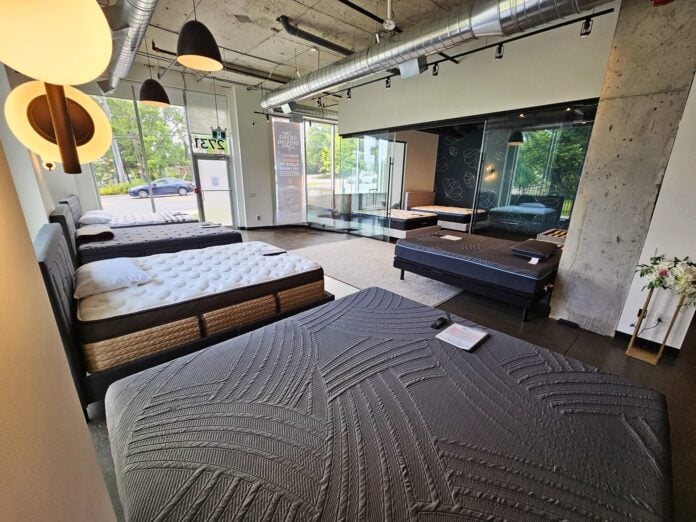
Leading online-mattress retailer SleePare has launched the first-of-its-kind, try-and-buy online mattress store and showroom in Toronto.
“We are thrilled to bring our unique try-and-buy concept to Toronto, Canada,” said SleePare’s CEO Shanir Kol. “We understand that buying a mattress is a significant decision, and we want to ensure our customers are completely satisfied with their purchase. Our Toronto mattress store enables customers to test out the mattresses they have been considering online.”
Shanir Kol
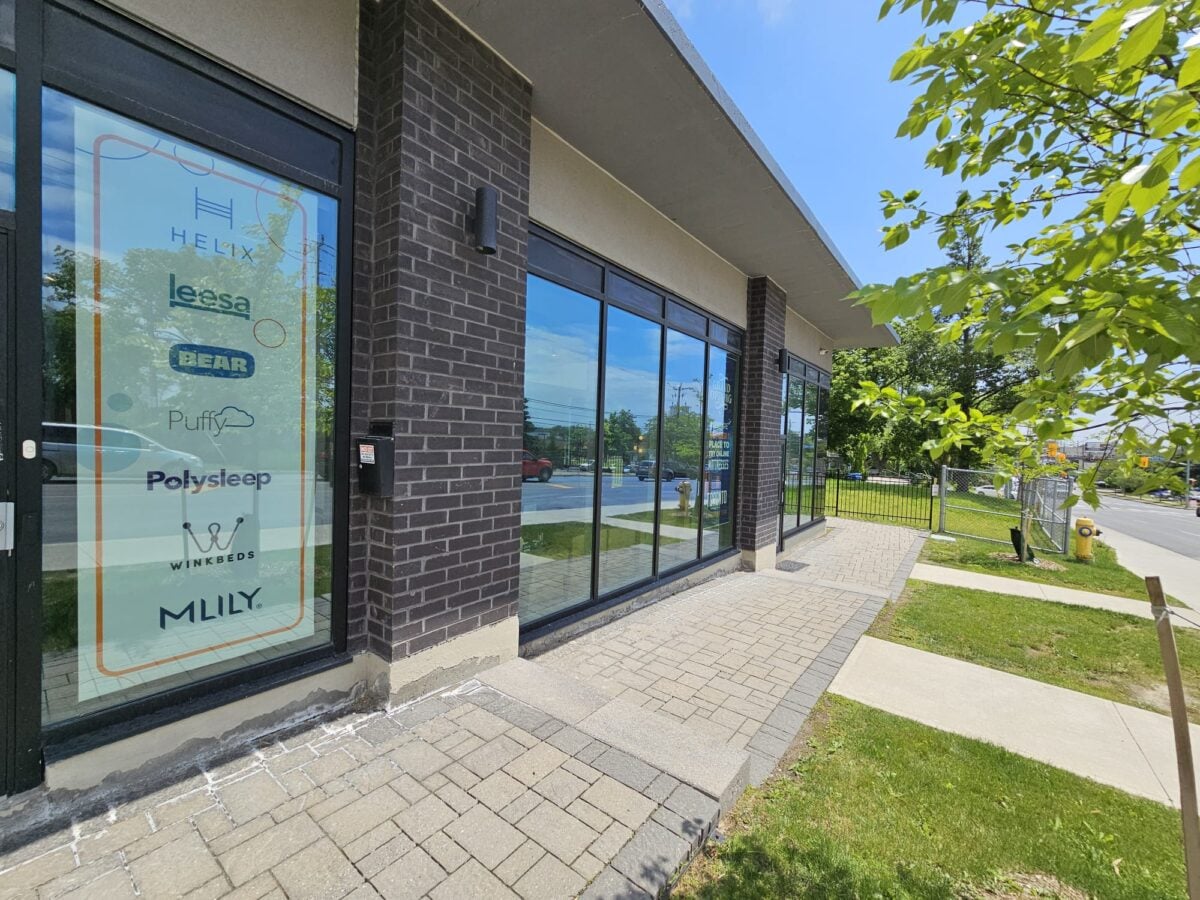
The store is located at 2737 Dufferin St, North York.
The first location opened in Manhattan, New York in 20018. Today, the retailer has eight stores in major cities in the U.S. such as Chicago, Los Angeles, New York City, D.C, and Miami.
“Initially the idea was that I was looking to start an online brand. The competition was there. I was thinking of trying a different angle. A new industry. I always think of a business as a way to solve problems. So I thought the problem those guys were going to have is they were going to sell those mattresses online, they don’t have stores. So why don’t I take a showroom and let them send their customers over and try the mattresses before they purchase,” said Kol.
“I got those mattresses, rented a showroom in New York City, luckily they were happy to cooperate with me and send me the mattresses and let their customers know we were there for them to come and try their mattresses. As we saw the traffic grow we decided to open a second showroom and the model we kind of figured out as we went.
“Now people are getting even more interested because online mattresses are getting so much more expensive . . . People want to take the time and make sure they made the right decision.”
Kol said like New York City the Toronto store will test the market to determine if customers are interested in the concept and some of the brands.
SleePare’s new try-and-buy concept enables guests to test out any of their exclusive online mattresses in their local store before they make a buying decision. In a no-pressure environment with personalized support throughout the process, the customer gets exactly what they need when buying a mattress.
The Toronto location includes the most innovative and newly released products from top brands, including:
● Bear
● Dreamcloud
● Ghostbed
● Mlily
● Winkbeds
● Helix
● Leesa
● Lull
● Nectar
● Puffy
● Brooklyn Bedding
These brands are generally only available when you buy them online, but Sleepare has flipped the process and put the decision-making in the hands of a nice little nap, said Kol.
He said it’s hard to say whether the company will open more locations in Canada.
“The first year is always a learning phase. We have to see the amount of people that will come into the store, the amount of people that will end up purchasing,” added Kol.
“As of now, part of the model is we take care of all the costs associated with bringing the mattress into Canada. So we pay the freight, the custom clearance, out of our pocket. So our margins a lot smaller in Canada right now but we’re hoping that it will make up with increased traffic.
“We’ll wait and see at the end of the year if everything makes sense to grow to other cities. We’re definitely seeing interest from other cities in Canada.”
Kol said the concept is looking to expand into further markets in the U.S., using digital data to determine where customers are shopping for mattresses from. In terms of real estate, he looks for spaces that are accessible.
Retail Insider is streamlining its Canadian retail news from around the web to include a handful of top news stories that can be viewed quickly during the day. Here are the top stories from the past several days.
Food delivery platform DoorDash is broadening its reach in the Canadian market through new partnerships with regional grocery chains, offering customers in multiple provinces enhanced access to local food options.
DoorDash announced collaborations with several regional grocers across Canada last week. The partnerships include Healthy Planet, Nature’s Emporium, Lina’s Italian Market, Sungiven Foods, and Supermarché PA, adding approximately 60 new grocery store locations to the platform’s network.
The expansion marks a notable shift in DoorDash’s strategy, focusing on integrating smaller, regionally-owned businesses into its digital ecosystem. Customers in British Columbia, Ontario, Alberta, and Quebec will now have the ability to order from these local favourites through the DoorDash app, bridging the gap between traditional grocery shopping and the convenience of online delivery.
In the Greater Toronto Area, health food enthusiasts will be pleased to find 35 Healthy Planet locations now available on the platform. Calgary residents can access the authentic Italian offerings of Lina’s Italian Market, while Nature’s Emporium brings its natural and organic products to Ontario customers through this new digital channel.
British Columbia sees significant representation in this rollout, with all nine of Sungiven Foods’ stores in Burnaby, Surrey, Richmond, and Vancouver joining the platform. Meanwhile, Quebec’s gourmet food scene becomes more accessible as Supermarché PA partners with DoorDash to offer its curated selection of products for delivery.
Lewis Matthews, head of grocery and retail partnerships at DoorDash Canada, emphasized the importance of these collaborations: “Establishing partnerships with beloved local grocers connects Canadians with new choices within their neighbourhoods, all while supporting regionally-owned small and medium-sized businesses. We’re proud to empower local communities through these partnerships and expand convenient access to a variety of foods from the comfort of their homes.”
DoorDash’s Journey and Market Position
Founded in 2013 by Stanford University students, DoorDash has quickly risen to become a dominant player in the food delivery industry. The company, which went public in December 2020, has established itself as the largest food delivery platform in the United States, boasting a 56% market share. Its influence extends beyond restaurant deliveries, capturing 60% of the convenience delivery category as well.
DoorDash’s growth has been particularly noteworthy in recent years. By March 2019, it had surpassed GrubHub to become the leader in total sales, commanding 27.6% of the on-demand delivery market. This rapid ascent culminated in DoorDash’s debut on the Fortune 500 list in 2024, where it ranked #443.
The company’s expansion into Canada began in 2015 with its launch in Toronto, marking its first step into international markets. Since then, DoorDash has continued to innovate and expand its services, including the introduction of its first ghost kitchen, DoorDash Kitchen, in Redwood City, California, in October 2019.
Adapting to Changing Market Conditions
The COVID-19 pandemic accelerated DoorDash’s growth and prompted the company to adapt its services. In April 2020, DoorDash became the fastest-growing food delivery service, implementing contactless delivery options and providing safety equipment to its drivers. The company also launched its “Reopen for Delivery” program in October 2020, helping brick-and-mortar restaurants that had closed due to the pandemic to partner with ghost kitchen operators for food delivery and pick-up services.
In a move that further blurred the lines between digital and physical presence, DoorDash opened its first physical restaurant location in November 2020, partnering with Bay Area restaurant Burma Bites to offer delivery and pick-up orders.
Tesla has made a strategic move to broaden its retail footprint in Canada. The automotive giant has launched its own Amazon storefront, providing Canadian Tesla owners and electric vehicle (EV) enthusiasts with a new convenient option to purchase essential charging equipment.
The company’s decision to establish a presence on Amazon’s platform allows Tesla to leverage Amazon’s vast customer base and efficient distribution network, potentially reaching a wider audience of EV owners and enthusiasts across Canada.
Currently, the Tesla storefront on Amazon offers two key products: the Wall Connector and the Universal Wall Connector. The Wall Connector, priced at CAD$625, is designed specifically for Tesla vehicles, while the Universal Wall Connector, available for CAD$800, is compatible with all EVs featuring a J1772 connector. These prices mirror those found on Tesla’s official website, maintaining consistency across different sales channels.
The primary advantage for customers purchasing through Amazon lies in the platform’s renowned shipping efficiency, particularly beneficial for Amazon Prime members. Additionally, the straightforward return process associated with Amazon purchases provides an added layer of convenience and reassurance for buyers.
This retail expansion comes as Tesla continues to solidify its position as a leader in the electric vehicle market. With its headquarters in Austin, Texas, Tesla operates six large-scale, vertically integrated factories across three continents. The company’s workforce of over 100,000 employees is involved in every aspect of the product lifecycle, from design and manufacturing to sales and service.
Tesla’s journey began in July 2003 when Martin Eberhard and Marc Tarpenning founded Tesla Motors, naming it after the pioneering inventor and electrical engineer Nikola Tesla. The company’s trajectory changed significantly in February 2004 when Elon Musk joined as its largest shareholder, later assuming the role of CEO in 2008.
Since its inception, Tesla has introduced several groundbreaking vehicle models, each contributing to the company’s rapid growth and market dominance. The Model 3, in particular, has achieved remarkable success, becoming the first electric car to surpass one million global sales in June 2021.