Home Blog Page 605

ReturnBear continues to expand its reach in the circular economy (Interview)

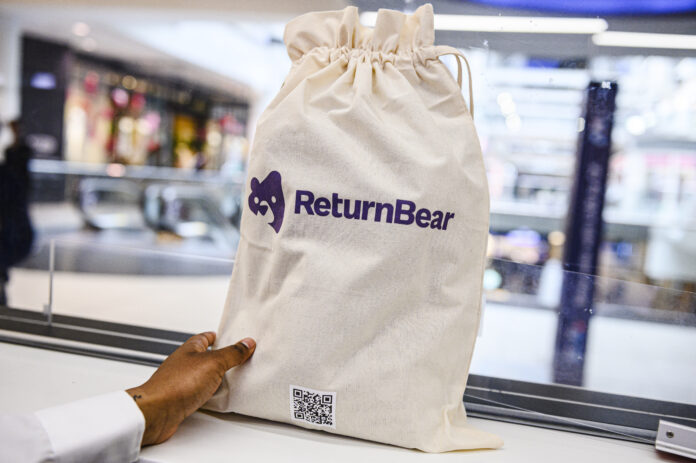
Photo courtesy of ReturnBear

The recent report Global Fashion Agenda details the advantages of circular fashion and the roadmap to its realization and a recent survey revealed that 45 per cent of brands have set targets to generate at least 10 per cent revenue from circular business models by 2040.

ReturnBear, a leader in end-to-end reverse logistics, is at the forefront of the circular fashion industry. Its returns processes support top brands like SKIMS, True Classic, and Sol Kyst. 

Brands are trusting ReturnBear to optimize the full lifecycle of their ecommerce returns in both domestic and international markets. It combines comprehensive returns software with specialized reverse logistics services to give consumers a local return experience while reducing operating effort and logistics costs.

Sylvia Ng

“We launched Canada’s first and only instant refund network and we give merchants access to over 1,000 locations across the country in locations like Staples, Cadillac Fairview, HBC stores, etc.,” said Sylvia Ng, CEO of ReturnBear.

“And we’ve also more recently begun our expansion internationally. So we now have hubs in the U.S. in Portland and in Buffalo and we recently launched in the UK just north of London and we’re launching in Australia soon, before the end of the year.

“It’s focusing on cross-border returns. If we’re talking about sustainability, cross-border right now is growing at double the rate of domestic ecommerce but cross-border is also contributing to an outsized portion of emissions because as you can imagine there’s longer distances you travel when you’re dealing with cross-border returns. So what we’re trying to do with all these locations that we’re building up is obviously to keep products local where we can when the merchants can resell and get that back into their inventory as fast as we can without needing to ship it back and forth across borders.”

The company was founded in October 2021 but it didn’t launch until mid-way through 2022.

Ng said that by keeping products locally, carbon emissions can be reduced by about 40 per cent.

“It’s a huge thing and costs obviously are just kind of directly related to that. We reduce costs by around 30 to 50 per cent depending on the cases,” she said.

“The environmentalist in me is happy to see especially the younger generations care. Unfortunately I think the data still points to the fact that as much as we care, it doesn’t trump costs not in this day and age when inflation is obviously a factor in your decision making for buying.

“A lot of what we’re seeing is that merchants, and especially the ones that we work with, have to juxtapose both and ideally you reduce costs while saving on the emissions and sustainabilities in order for you to drive sales and that is obviously what ReturnBear is trying to do and we are trying to do both at the same time.”

Ng said Europe tends to be ahead in their thinking on sustainability. There are more regulations in place regarding sustainability than in North America. 

“As a Canadian I would say I tend to think that we as Canadians are very good when it comes to sustainability but I think we still have a ways to go in terms of getting the regulations in place and us as consumers pushing our regulators to get more in place so that our businesses can also align with those goals.”

ReturnBear has the support of Koru, Cadillac Fairview and the Ontario Teachers’ Pension Plan in helping brands optimize their customers’ return experience while retaining revenue and reducing shipping costs.

It helps brands achieve sustainability objectives by reducing the number of packages in transit, the distances they have to travel, and by streamlining item recovery to avoid sending products to landfills.

In a previous Retail Insider article, Ng said: “The growth of e-commerce has spotlighted one of online retail’s biggest problems: returns. More online shopping means more online returns. Returns are costly for merchants and a hassle for customers, and up until now there has been no streamlined process to make this easier for Canadians,” said. “We are on a mission to make retail returns easy and accessible for everyone. We are proud to expand ReturnBear and provide a cross-country solution for Canadian retailers and shoppers alike.”

Reitmans sees comparable sales growth of 3.5% from a year ago in Q2

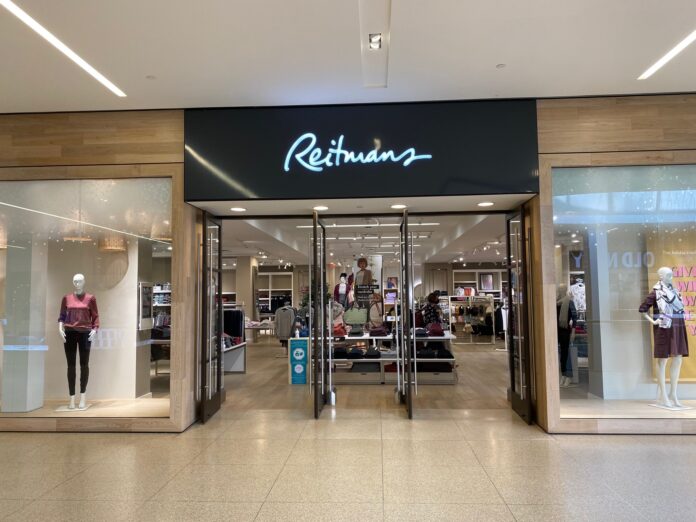
Exterior of Reitmans at West Edmonton Mall. Photo: Reitmans

Reitmans (Canada) Limited, one of Canada’s leading specialty apparel retailers, has reported comparable sales growth of 3.5 per cent for its fiscal 2025 second quarter compared to the previous year.

In a news release on Thursday, the retailer said:

  • Net revenues increased 0.4 per cent to $215.5 million
  • Adjusted EBITDA increased 21.9 per cent to $23.4 million
  • Gross profit margin increased 330 basis points to 59.1 per cent
  • Results from operating activities (“ROA”) increased 13.8 per cent to $21.5 million
  • Net earnings improved 17.2 per cent to $15.7 million
Andrea Limbardi

“We had an excellent second quarter and one of our best quarters of the past 10 years,” said Andrea Limbardi, President and CEO of RCL. “Despite operating 16 fewer stores compared to the same period last year, our net revenues were up slightly, underscoring how strongly our product offering resonated with our customers.

“Our teams successfully navigated supply chain challenges and avoided late deliveries, which ensured our stores had the right inventory at the right time. We read summer trends well, benefited from favourable weather, and successfully drove higher sales dollars and units per transaction. All of that, in addition to being less promotional during the quarter, contributed to improved gross margins and higher profitability.

“This is an exciting time for our business. We see a lot of opportunity for continued growth, selectively and strategically expanding our footprint in all three retail brands and doubling down on our menswear business. The ongoing modernization of our distribution facility remains on track and will ultimately help support our long-term vision. While the overall retail environment continues to be affected by economic uncertainty and logistics issues, we are well-positioned to drive profitable growth.”

Although Canadian consumers continued to tighten discretionary spending, net revenues were maintained mainly through improved sales dollar and units per transaction, said the retailer, adding that comparable sales, which include e-commerce net revenues, increased primarily due to increased sales per transaction.

The company operates 389 stores under three distinct banners consisting of 224 Reitmans, 85 PENN. Penningtons, and 80 RW&CO.

Randy Harris, President and Founder of Trendex North America, said, “Trendex in its Canadian Apparel Insights monthly newsletter noted that Reitmans Q2 2024 results were outstanding in light of consumer spending. However it needs to be noted that the retailers ecommerce sales fell 1.3% during the quarter and 4.8% in the first half of this year.”

Related Reitmans Article: Reitmans’ New CEO Andrea Limbardi Eyes Growth and Modernization Amid Economic Challenges [Interview]

Musician Post Malone partners with beverage brand poppi

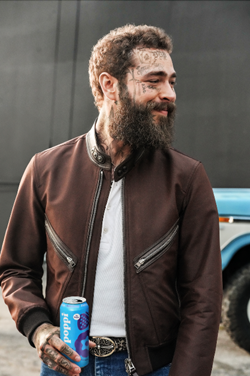
Photo from poppi Instagram

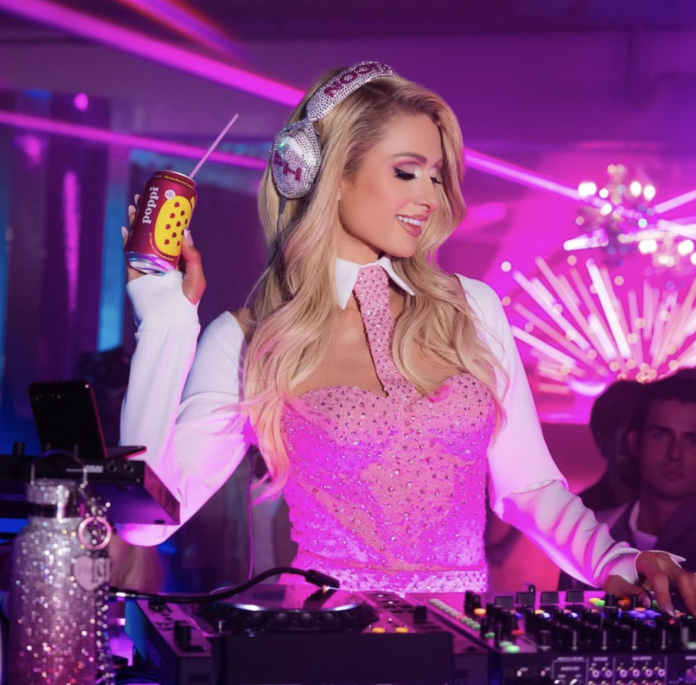
poppi, the viral prebiotic soda brand revolutionizing soda for the next generation, has announced a partnership with 9x diamond-certified and GRAMMY® Award-nominated musician, Post Malone, who recently made a lifestyle change in part by giving up traditional soda.

In a news release, the company said Post has found his perfect match in poppi, a prebiotic soda with 5 grams of sugar and 25 calories per can.

“Since his now-famous public break up with traditional, sugary soda, Post has been drinking poppi – the full-flavored, deliciously refreshing modern soda that gives people the freedom to love soda again. The authenticity of his personal soda story, the positive impact it has had on his health, and his genuine love for the brand quickly got the attention of the poppi team, including Texas-based founders Allison and Stephen Ellsworth,” it said.

Allison Ellsworth

“The partnership was so authentic for both poppi and Post, and we could not be more excited,” said Allison Ellsworth, Co-Founder and Chief Brand Officer at poppi. “We’re on a mission to revolutionize soda for the next generation, and who better to help us usher that message than global superstar Post Malone who has such an impactful, personal story to share.”

The beverage company said it is debuting a custom 12oz can of Wild Berry poppi, Post’s favorite flavor, exclusively at Kroger. Labeled “Posty’s Soda,” the unique can tells his story of quitting soda until he found poppi, with a classic Post aesthetic and nod to Texas, where both he and poppi are from.

Post Malone

“I’m excited to partner with Allison, Stephen and the entire poppi team to bring the future of soda to everyone,” said Post.

What originally started as a home-brewed concoction quickly became a farmers’ market favorite turned Shark Tank investment and is now available at major retailers. poppi’s brand-first approach, cultural cache, and rapid growth has nurtured an incredibly loyal fan base, including celeb fans like Hailey Bieber, Kylie Jenner, Billie Eilish, Russell Westbrook, Jennifer Lopez, Olivia Munn, and more.

Related Article: Entrepreneur Doug Putman Discusses Why He’s Focused on Brick-and-Mortar Retail: Interview

Rebelstork secures investment to help growth plans

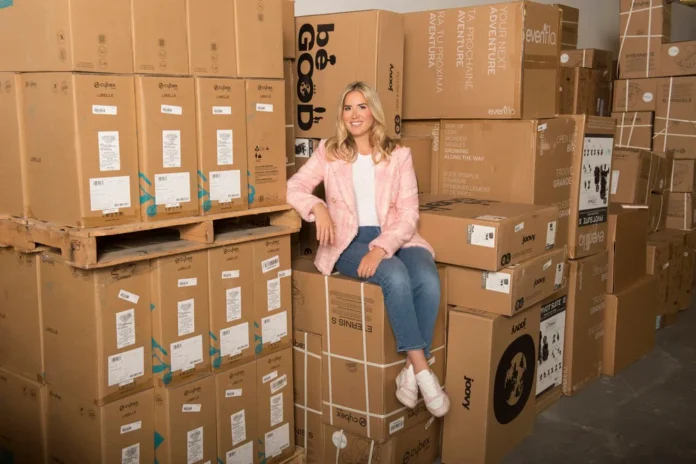
Emily Hosie - Photo courtesy of Rebelstork

Rebelstork, North America’s largest baby gear returns recommerce marketplace, has announced a new investment funding that will help the company build upon its innovative solution to the baby gear industry’s pressing returns crisis.

Launched in 2020, Rebelstork said its proprietary technology diverts the largest assortment of overstock and retailer-returned baby gear away from landfills and into customers’ homes at a fraction of the retail price. The $18M Series A was led by Maveron Ventures with participation from Serena Ventures, Marcy Venture Partners, and existing seed investor Golden Ventures.

Emily Hosie

“We are seeing an exciting shift in the retail industry where global iconic brands and mass retailers are majorly stepping up to change the bad habits in their returns supply chain,” said Emily Hosie, Founder and CEO of Rebelstork. “At the same time, we’re seeing a new generation of shoppers embracing returns recommerce in a big way. Rebelstork has created the solution.  Our innovative technology and marketplace was created to bridge the gap by offering a sustainable and cost-effective solution for both parents and brands.“

Rebelstork said it is partnered with more than 2,500 brands across 45 categories (including leading baby brands Million Dollar Baby, BabyBjörn, 4moms, and Ergobaby), as well as mass retailers, including Target to create new revenue streams and mitigate return costs using the Rebelstork technology and marketplace. It said it has also seen significant traction among a new generation of shoppers who are driving the demand by opening their minds to quality-checked open-box (never used, simply returned)  discounted goods. 

“The rise of online shopping and the convenience of purchasing items without physically seeing them has led to a surge in returns across all retail verticals, costing the industry more than $800B annually and the baby gear industry, specifically, close to $16B annually. Rebelstork is the first company to effectively build the technology required to address the challenge of returns and overstocks, saving over 12 Million pounds of waste from landfills annually.  Through the development of several proprietary technologies and processes, Rebelstork has emerged as the gold standard for baby gear returns recommerce. By giving each item a unique identifier and implementing a rigorous quality-check process dubbed the “Rebby Pinky Promise,” Rebelstork provides supply partners with a sustainable solution, addressing their challenges and concerns while creating a new revenue stream. This innovative approach ensures that only quality-approved returns are resold, diverting these products from landfills and promoting a circular economy,” explained Rebelstork in a news release.

Rebelstork said its REV™ pricing technology has become the AI market-maker in the price-reduced baby gear market by providing the real-time pricing strategy to optimize ROI and its unique deal batch technology system streamlines the returns recommerce process, providing full transparency and comprehensive insights for their partners into the handling of their products.

Jason Stoffer

“As the returns crisis continues to escalate, finding sustainable solutions will be crucial for both businesses and consumers in the long run,” said Jason Stoffer, General Partner at Maveron. “Emily and the Rebelstork team invented a new market while creating impressive technology to do it effectively.  They are proving to the retail industry that there is a solution that is better for our planet while also generating a new revenue stream for partners. Their innovative approach benefits savvy shoppers and contributes to a more environmentally conscious and socially responsible generation of consumers.”

Female-founded and proudly certified as a B-Corporation, Rebelstork was established to empower shoppers, brands, and retailers to participate actively in the circular economy. Rebelstork plans to use the Series A investment to launch new products, expand operations, and grow the team.

Related article: Canada’s 1st Baby Gear Marketplace Secures Major Expansion Investment

Tupperware Bankruptcy Filing Shakes Iconic Brand’s Future

Tupperware, the iconic food storage brand that revolutionized home organization, has filed for Chapter 11 bankruptcy protection amid ongoing financial struggles. The company is at critical juncture as it seeks to protect its brand while pursuing a digital transformation.

Decades of Success Give Way to Modern Challenges

Tupperware’s journey began in 1946 when chemist Earl Tupper created airtight plastic containers inspired by paint can seals. The brand exploded in popularity during the mid-20th century, largely due to its innovative sales model of home-based “Tupperware parties.” These gatherings allowed women to run their own businesses, selling products within their social circles.

However, recent years have seen Tupperware facing mounting financial difficulties. Sales have steadily declined since 2018, with the company struggling to compete against rising competition from cheaper alternatives and online platforms. The COVID-19 pandemic provided a brief sales boost, but it wasn’t enough to reverse the overall downward trend.

Tupperware Bankruptcy Filing: A Path to Transformation

Tupperware’s president and CEO emphasized that the bankruptcy process is intended to support moving the company to a digital-first strategy.

The company reported over $1.2 billion US in total debts and $679.5 million US in total assets in its bankruptcy petition. Tupperware’s stock has plummeted 75% this year, closing at approximately 50 cents per share prior to the announcement.

The Future of Tupperware Parties and Sales Model

Despite the financial turmoil, Tupperware maintains that there are currently no changes to its independent sales consultant agreements. The company still partners with a global sales force of over 465,000 consultants who sell products on a freelance basis across nearly 70 countries, including Canada.

Related Retail Bankruptcy Articles: Lastman’s Bad Boy Furniture Proceeds to Liquidation Following Bankruptcy

Canada Goose Partners with Marchon for Luxury Eyewear

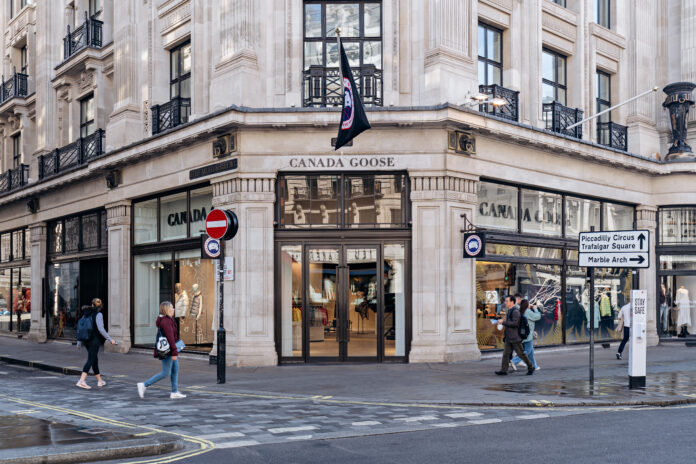
Toronto-based performance and outerwear brand Canada Goose is partnering with Marchon Eyewear to introduce an eyewear collection. This collaboration is a first for Canada Goose as it expands its product line into the luxury eyewear market.

Marchon Eyewear Canada Goose Partnership Unveils Sustainable Vision

The exclusive, long-term global licensing agreement between Marchon Eyewear and Canada Goose will bring a new line of sun and optical styles to consumers worldwide. Set to debut in Spring 2025, the collection will feature Canada Goose’s signature design elements and performance features.

Sustainability at the Core of New Eyewear Line

Both companies say that they share a commitment to sustainability, which is reflected in their choice of materials for the new eyewear line. The collection will incorporate eco-friendly options such as Eastman Acetate Renew™, plant-based resin, and titanium.

Thomas Burkhardt, President of Marchon Eyewear, highlighted the shared values of quality, craftsmanship, and design between the two companies. Dani Reiss, Chairman & CEO of Canada Goose, views it as an opportunity to create a lifestyle brand and deepen connections with consumers across all seasons.

The new eyewear collection will be available through various channels, including select optical retailers, department stores, Canada Goose stores, and online platforms such as www.canadagoose.com and www.eyeconic.com in the US.

This strategic move allows Canada Goose to extend its brand presence beyond outerwear, offering customers a complete luxury performance experience. It also provides Marchon Eyewear with an opportunity to leverage Canada Goose’s strong reputation in the premium market. Canada Goose, which began selling outdoor wear including parkas, has since expanded into categories including fashion, footwear, accessories and even swim wear.

Related Article: Canada Goose In Transition As It Seeks Future Purpose Following Retail Rollout

Canadian apparel e-commerce sales set to rise: Trendex

The Canadian apparel e-commerce market decreased by 2.2 per cent during 2023 to C$6.9 billion, and accounted for 19.4 per cent of apparel sales. Last year was the second consecutive year apparel e-commerce sales decreased in Canada, according to a report by Trendex North America.

Trendex forecasts that online apparel sales will increase by 0.9 per cent in 2024 and by 6.1% from 2023- 2027, while during the same two periods total apparel sales will increase 2.5 per cent and 13.0 per cent respectively. 

It said forecasting the growth of apparel e-commerce sales is a function of a number of variables, including:

  • The degree to which consumers will continue to be negatively affected by inflation and high interest rates;
  • The sales growth of both Shein and Temu;
  • The degree to which Shein and Temu forced other apparel e-commerce retailers to lower their prices;
  • The propensity for consumers overall to continue to return to shopping in stores vs. online, both of which slowed considerably during the first half of 2024;
  • The first quarter 2024, e-commerce sales of Canadian apparel retailers.

“Holding down the growth for apparel e-commerce was the luxury apparel e-commerce segment whose sales decreased an estimated five per cent-eight per cent in 2023. While luxury apparel sales were still strong with high end customers, this segment has never shown a high propensity to shop online. Aspirational shoppers cut back on their online luxury apparel purchases because of economic headwinds. This trend was reflected in the poor performance of Farfetch and Net-A-Porter last year,” said the report.

“Adding to the woes of the luxury apparel e-commerce segment was the expanded sales of in store luxury apparel sales. The expansion of the number of luxury apparel stores, the upgrading of luxury apparel stores along with the expansion of luxury apparel nodes including Yorkdale and the Bloor St. corridor, all served as a deterrent to online luxury apparel sales.”

Trendex said, using its proprietary database and other sources, it determined that in 2023 Shein was Canada’s largest apparel e-commerce retailer, which is somewhat surprising given the fact that the retailer entered Canada in February 2023. 

“The retailer’s success, as our readers are aware, is attributable to its ever-changing fast-fashion offering and low prices. Walmart and The Gap were second and third largest retailers. The country’s 12 largest e-commerce retailers accounted for 56.5 per cent of apparel e-commerce sales. An interesting fact is that seven of the retailers were Canadian owned.

The full report can be found here.

Related Trendex Article: International Retailers And Their Success In Canada: Interview With Randy Harris Of Trendex

Mastering operational execution: the three levels every retailer needs to thrive in the AI era

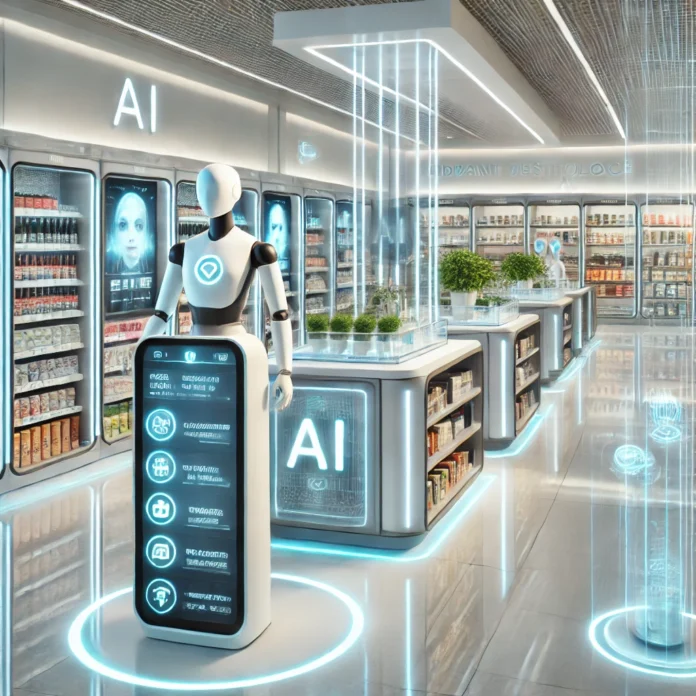
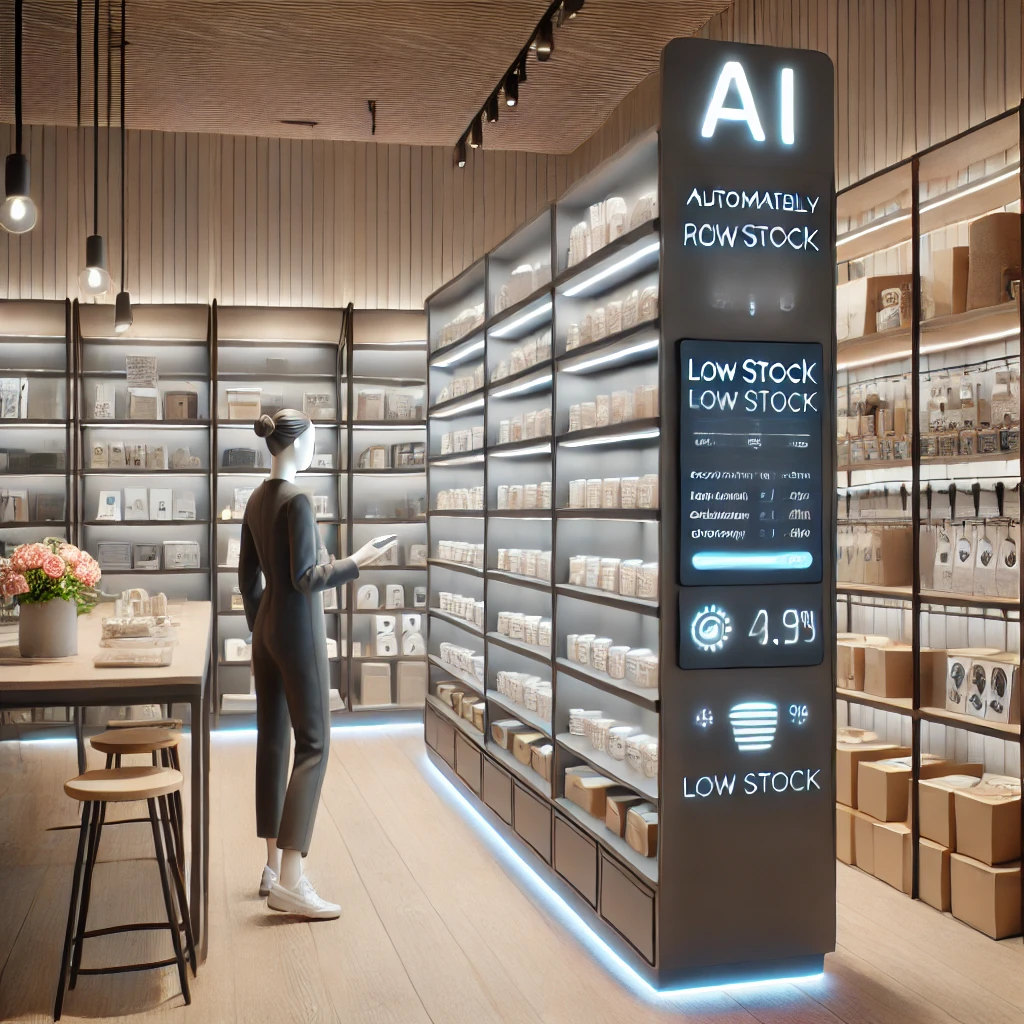
Futuristic Retail Store: Showcasing advanced AI technologies in action within a modern retail environment.
By George Minakakis, Founder and CEO of Inception Retail Group, and Author of ‘The New Bricks & Mortar Future Proofing Retail‘

Be bold and harness the power of AI in operational execution. AI cannot only learn from historical data but also anticipate market trends, understand consumer behaviour before it happens, and make decisions that position your brand ahead of the competition. In the high-stakes world of retail, where every misstep can lead to significant losses, the ability to move beyond the constraints of hindsight, reactive decision-making and missed opportunities, and instead leverage proactive foresight, isn’t just advantageous, it can be ground-breaking. This is the promise of mastering operational execution in the age of AI.

Whether retailers use AI to develop real-time advertising responses to customer queries, virtual shopping assistants, seamless omnichannel integration, AI-powered training and support, or AI-facilitated employee-customer engagement programs, operational execution is imperative to create collaborative efforts between the home office, retail staff, and customers, whether in person or a virtual state.

As someone who has led retail chains, I can tell you there are a lot of good ideas out there, but you can’t stick wings on all of them and hope they’ll fly. The best brands know that once you get past the whys and what’s of your strategic choices, it comes down to the how. Quite often, this is where ideas either take root or fail.

Retailing is, in essence, about operational execution. Even the best-laid plans can lead to ruin without the ability to execute flawlessly. In today’s competitive retail landscape, success hinges on more than just selling products; it requires a strategic alignment on critical initiatives supporting goals and objectives around the consumer, the in-store experience, and employee development. When these initiatives are executed effectively, they create a robust framework that drives brand growth, customer loyalty, and financial performance.

To meet these objectives with strong operational execution, here are three levels to build that foundation. Level 1 focuses on efficiency and consistency, Level 2 emphasizes agility and responsiveness, and Level 3 is about innovation and continuous improvement.

Futuristic Retail Store: Showcasing advanced AI technologies in action within a modern retail environment.

Level 1: efficiency and consistency

While standardized processes might not be popular, retailers must be structured and disciplined from the moment strategic choices are identified to their delivery – a monumental equation in operational execution.

Standardization of processes: Standardized processes are essential for consistency, ensuring that every aspect of the customer experience is predictable and reliable.

Automation of routine tasks: Automate as many routine tasks as possible, allowing staff to focus on delivering excellent customer experiences and developing their skills. Eliminating non-productive tasks enables employees to engage with customers, increasing sales.

Performance monitoring: Peter Drucker famously said, “What gets measured gets managed.” This principle is crucial in operational execution. Without measuring processes and tactics with data, it’s difficult to improve anything.

Level 2: agility and responsiveness

Brands need to respond quickly and effectively to challenges. The rapid transition to AI necessitates real-time data collection and analytics to gain insights into operational performance.

Real-time data and predictive analytics: Using predictive analytics to anticipate issues and opportunities is vital to agility and responsiveness.

Flexible processes: Critical processes should be adaptable to support adjustments that improve customer experiences. Implementing agile methodologies allows for quick adaptations and iterative improvements.

Proactive problem solving: Implement problem-solving teams from the home office to the front lines. The entire brand team is responsible for looking for cause and effect in every aspect of sales and service.

Level 3: innovation and continuous improvement

The highest level of operational execution focuses on continuous and measurable improvements. That means everything that comes into contact with customers and staff.

Vision-driven inclusive culture: Create work environments where diverse perspectives can be heard and evaluated. Involving frontline employees in the change process is crucial for evolution and buy-in.

Continuous learning and development: Invest in ongoing training and development programs to keep employees’ skills and knowledge current. Developing talent from within ensures a long-term connection to the brand.

Integration of advanced technologies: Embrace the industrialization of human and artificial intelligence to develop and deliver next-generation strategies and innovations that will lead the marketplace.

Emotional AI for customer engagement: Introduce AI that analyze customer emotions and tailor interactions accordingly, creating more empathetic and effective customer engagement.

Collaborative AI tools: Implement AI-driven tools that facilitate communication and collaboration between home office and retail staff, ensuring seamless communication and alignment across all levels of the organization.

Fostering innovation

As we strive to retain and gain more customers through enhanced customer experiences, training, and developing talent, we must provide all the resources needed to foster innovation. While AI, data, and machine learning are powerful, they offer no guarantee of competitive advantage. It is the human ability to create the right offerings, experiences, and innovations with sound operational execution that will ultimately yield the most significant results.

*This article originally appeared in Retail Insider the magazine. You can read the latest issue here.

——-

George Minakakis. Photo: LinkedIn.

George Minakakis is the CEO of Inception Retail Group, author of three books, and keynote speaker.

Other articles featuring George Minakakis include Video Interview: George Minakakis Discusses the Biggest Mistakes Retailers are Making Today

Bata celebrates 130 Years with a new brand campaign: “Make Your Way” 

Make your Way – Key Visual

Bata, one of the world’s leading footwear companies, is celebrating its 130th anniversary with a new brand campaign named: “Make Your Way.”

“This milestone marks a celebration of Bata’s rich heritage, and an exciting evolution aimed at positioning the brand as one of the top choices worldwide,” said the company in a news release on Thursday.

“The “Make Your Way” campaign reflects Bata’s renewed focus on style, comfort, and affordability, aiming to attract a younger, trend-conscious audience while honouring its strong heritage.”

Sandeep Kataria

“This campaign is about inspiring self-expression and confidence. At Bata, we make shoes to accompany consumers as they create their own path in life and build their road to the future,” said Sandeep Kataria, Global CEO of Bata. 

The retailer said the new positioning, “Stylish, comfort-enhanced, affordable shoes for every side of you to make your way” aims to connect with today’s fashion-conscious consumers, to expand Bata customers base and drive further growth. It will be communicated through Bata’s key labels: “Bata”, “Bata Comfit,” and “Bata Red Label.” This strategy positions Bata as the only major high-street footwear Retailer genuinely targeting ‘Every Side of You’ through authentic and heritage-rich in-house brands, covering every aspect of consumer life: dress, leisure and sport. 

Developed with the agency &Rosàs, the global campaign includes media investments, in-store storytelling, and a redesign of Bata’s e-commerce and social media approach.

“It will also feature do-good marketing efforts to inspire and support women across various disciplines. Starting in September in Europe, Bata will introduce a special 130th-anniversary edition of women’s ballerinas, supporting women in ballet and dance, fostering participation from diverse backgrounds, and aiding women facing economic challenges. The Ballerinas are a fashionable reinterpretation of the original Batovka, an innovative shoe launched in 1897 by Bata, which embodied the company’s vision about quality & affordability, it said.

Bata is one of the world’s leading shoemakers, selling more than 150 million pairs of shoes annually. Founded in 1894, the family-owned business operates in over 56 countries across five continents.

Today’s consumers are seeking more in-store shopping experiences: Adyen Canada report

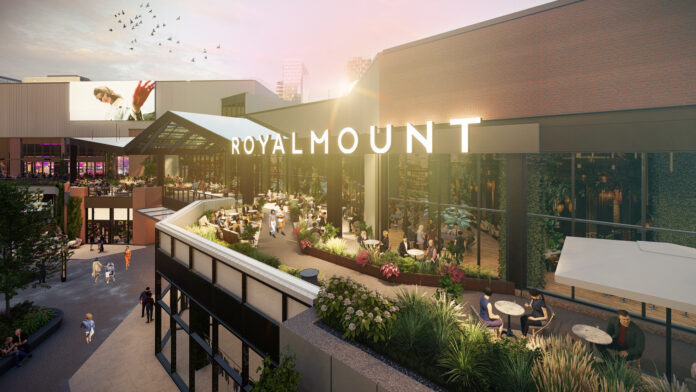
Photo credit: Royalmount/Carbonleo

The highly anticipated opening of the Royalmount shopping mall in Montreal signals a massive investment in retail spaces and in-person commerce. 

This continues a major shift among Canadian consumers in 2024 where they are seeking more in-store shopping experiences.

According to a retail report by Adyen Canada, 54 per cent of Canadians prefer to shop in-store rather than online. And nearly a third (32 per cent) are likely to spend more money if a retailer makes the experience more interesting.

Sander Meijers

Sander Meijers, Country Manager for Adyen Canada, said the resurgence of physical retail can be attributed to the unique experience that brick-and-mortar stores offer. 

“There’s a desire for tangible interaction — to see, touch and even smell the products — before purchase. While online shopping has its own benefits and advantages, there is something special about hunting down a coveted item and having it in your hands upon leaving the register. It’s an experience,” says Sander Meijers.

“In-store shopping can also have a social element. Shopping with family or friends is something that online platforms haven’t yet fully replicated. Beyond that, consumers want the freedom to explore, pay and return items wherever they want. In the future, I believe we’re going to see an increased focus on unified commerce so retailers can bring their online and in-store payments systems together to deliver greater experiences, while removing friction.”

Rennaï, a new beauty and self-care retailer is now open at ROYALMOUNT in Montreal, Canada (CNW Group/Rennaï)

Meijers said developments like Royalmount shopping are an example of how retail is evolving in Canada. 

“By blending shopping with entertainment and lifestyle offerings, businesses can attract visitors who seek an elevated shopping experience, a trip that’s more than just an errand. The new Rennai store is another example; it’s not just a store, but a holistic experience.”

“In today’s increasingly digital world, in-person retail is about creating a destination that offers a memorable experience. Payments can play a big part in enabling this by facilitating seamless transactions and enhancing the overall journey. 

“New malls like Royalmount highlight how retail is changing. Physical retail is evolving where a customer can start their shopping journey on a mobile app, browse options online, and complete their purchase in-store.”

As consumer expectations continue to evolve, so too must the retail landscape, added Meijers.

“New technology and rising customer expectations are raising the bar across the industry, which means there’s an increasing demand for innovative spaces that blend convenience with experience, and developers are responding by creating environments that cater to this. Mobile terminals, and even Tap to Pay, will make clunky terminals fixed on a counter a thing of the past. Every payment could potentially become a service moment between individuals that is seamlessly integrated in the shopping experience.”

“Today’s consumers are searching for retailers that offer not only high-quality products but also integrated and personalized shopping experiences. They’re looking for convenience, sustainable business practices, and a seamless blend of online and offline shopping channels. According to Adyen’s Retail Report, the challenge is 26 per cent of businesses say they lack the customer data and technology infrastructure to truly understand their customers. And just 25 per cent of businesses know the majority of their customers well enough to personalize items. Highly personalized experiences used to be reserved for luxury retail. Now, thanks to innovations in financial technology, retailers can leverage data-driven tailored experiences, like personalized discounts and promotions, efficiently and at scale.”

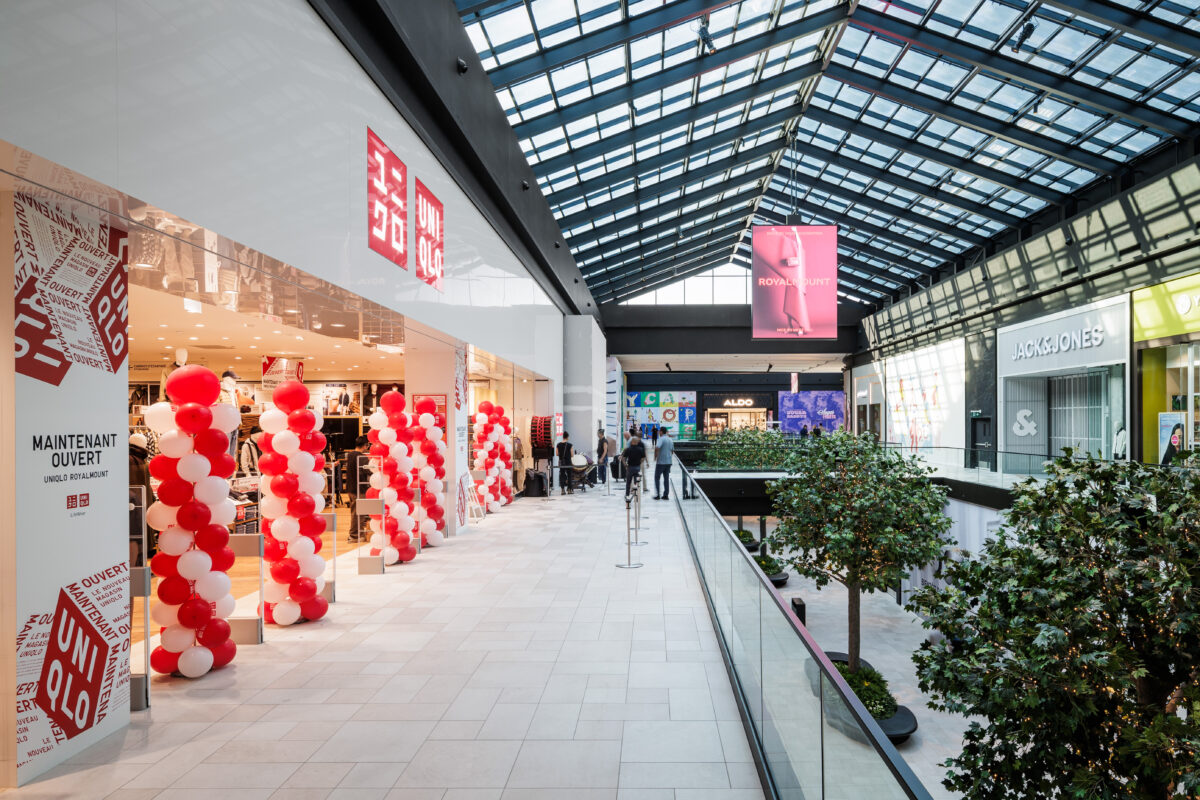
Uniqlo’s new store in Royalmount in Montreal. Photo courtesy of Uniqlo

Meijers said the brick-and-mortar store needs to be connected with the online world to thrive. 

“Retailers must innovate within their physical environments to remain competitive. This means engaging customers on multiple levels, especially those that cannot be replicated online, ranging from in-store events to personalization that make the shopping experience more engaging and meaningful.”