Home Blog Page 61

UniverCell Canada Expands Through Franchising Growth

Photo: UniverCell

Canadian electronics repair retailer UniverCell Canada is accelerating its national growth strategy, driven by franchising and a differentiated value proposition centred on pricing transparency. The company recently opened a new location in Mississauga, marking another step in its broader expansion across Canada.

Founded by Afaq Ahmed Shaik, the business has grown from a single kiosk in Winnipeg into a network of more than 17 locations spanning Ontario, Manitoba, and Quebec. The company is now positioning itself for further national growth, with franchising at the core of its expansion strategy.

“We started this journey in 2021 after learning from earlier franchise experiences,” said Shaik. “Today we are operating 17 locations across three provinces, and we are fully bootstrapped. Our focus now is to grow across Canada and make repair services more accessible.”

Photo: UniverCell

New Mississauga Store Highlights GTA Growth

The company’s newest location at Mavis Mall in Mississauga strengthens its already significant presence in the Greater Toronto Area, where it now operates multiple stores including in Vaughan, Richmond Hill, Ajax, Whitby, and Toronto.

Afaq Ahmed Shaik

Shaik emphasized that the GTA remains a priority market due to its scale and density. He noted that additional opportunities are being explored in areas such as Brampton, downtown Toronto, and Oakville, where consumer demand for device repair and resale continues to grow.

“There is still a lot of room in the GTA,” he said. “We are seeing strong demand in several underserved pockets, and we plan to continue expanding strategically.”

Franchise Model Driving National Expansion

A key pillar of the UniverCell Canada expansion strategy is its franchise program, which enables rapid growth without heavy corporate capital investment. The company currently operates a mix of corporate and franchised locations, with multiple franchise partners managing several stores.

“We are looking for owner-operators who want to build a business in their community,” said Shaik. “We provide training, systems, and vendor access, so even those new to the industry can succeed.”

The company is actively targeting new markets across Canada, including Atlantic Canada, where internal research has identified strong consumer demand for repair services. Western Canada also remains a focus, with Alberta and British Columbia offering long-term growth opportunities.

Transparent Pricing Sets Brand Apart

A defining feature of the company’s model is its commitment to fully transparent pricing, a rarity in the fragmented device repair industry.

“We identified that customers struggled with unclear pricing, inconsistent warranties, and unpredictable turnaround times,” said Shaik. “So we built a system where customers can see pricing upfront, understand timelines, and book repairs with confidence.”

UniverCell publishes repair pricing online for a wide range of devices, eliminating the need for in-store quotes or negotiation. This approach, combined with standardized warranties and defined turnaround times, is designed to build consumer trust in a category often dominated by independent operators.

Shaik noted that this transparency is a key competitive advantage in a highly unorganized market. “Most repair shops do not have a strong online presence or standardized processes. We are trying to bring structure and consistency to the industry.”

Phones, photo: UniverCell

Shift to Strip Retail Locations Improves Economics

The company has also refined its real estate strategy, moving away from enclosed shopping centres toward strip plazas and high-traffic street locations. This shift has significantly improved store-level economics.

“We tested whether we could replace mall foot traffic with targeted marketing,” said Shaik. “We found that we could generate similar revenue at lower cost, which improved profitability.”

By focusing on accessible locations with shared traffic from neighbouring businesses, UniverCell has been able to optimize rent-to-revenue ratios while maintaining visibility and convenience for customers.

Photo: UniverCell

Omnichannel Growth Through Marketplace Integration

In addition to physical retail expansion, the company is growing its digital presence through marketplaces such as Best Buy Canada Marketplace. This channel has improved cash flow and enabled more frequent revenue cycles compared to traditional franchise royalty structures.

“We moved into marketplaces to stabilize cash flow and invest in growth,” said Shaik. “Now we are expanding that model so our franchise partners can also benefit.”

The company is working toward integrating its retail inventory with online platforms, allowing devices acquired through buyback programs to be refurbished and sold through both its own e-commerce channels and third-party marketplaces.

Sustainability and Circular Economy Focus

Sustainability is another core component of the UniverCell Canada expansion narrative. The company promotes device longevity through repair, refurbishment, and resale, positioning itself within the growing circular economy.

With more than 25,000 devices repaired to date, the company estimates significant reductions in electronic waste. Its buyback program also encourages consumers to trade in used devices, which are then refurbished and reintroduced into the market.

“Our mission is to extend the life of devices and reduce waste,” said Shaik. “Repair and reuse should be the first option before replacement.”

Photo: UniverCell

Technology and AI Integration to Support Growth

Looking ahead, UniverCell is investing in technology to support both customer experience and franchise operations. This includes AI-driven diagnostics, automated pricing tools, and internal systems designed to assist technicians and franchisees.

The company is also developing tools that allow customers to assess device conditions remotely and initiate buyback transactions from home, further expanding its national reach without relying solely on physical store visits.

“We want to operate as a technology-enabled retail company,” said Shaik. “Our goal is to connect all our stores through a unified system and make the process seamless for customers.”

Positioned for Continued National Growth

As the Canadian market continues to shift toward affordability and sustainability, UniverCell Canada is positioning itself to capture demand through a combination of franchising, transparency, and technology.

With expansion plans spanning multiple regions and a growing footprint in key urban markets, the company’s next phase of growth will depend on scaling its franchise network while maintaining operational consistency.

“We want to be present everywhere in Canada,” said Shaik. “Our goal is simple, to make device repair easy and accessible for everyone.”

More from Retail Insider:

Canadian Spending Holds Steady as Consumers Shift Priorities

CF Toronto Eaton Centre. Photo: Cadillac Fairview

New data from Moneris suggests that Canadian consumers are not pulling back from spending altogether, but are becoming more deliberate in how and where they spend. Transaction data from the first quarter of 2026 shows a market that is stable on the surface, yet undergoing meaningful shifts beneath.

According to Moneris, which processes approximately one in three transactions in Canada, total spending in Q1 2026 declined by just 0.27% year-over-year, while average transaction size rose slightly by 0.18%. The result is a retail environment that remains steady overall, even as consumer sentiment weakens.

At the same time, survey data conducted with Angus Reid Institute highlights a more cautious outlook. Nearly half of Canadians believe the economy is struggling, while only 13% expect conditions to improve over the next six months. In addition, 43% say they plan to reduce spending on non-essential items, marking a notable increase in economic concern compared to mid-2025.


Essentials and Value Retail Continue to Gain

The data points to a clear shift toward essential categories and value-oriented retail formats. Grocery spending increased by approximately 3% year-over-year, while mass merchants saw a stronger gain of nearly 7%. These results indicate that consumers are prioritizing necessity purchases and seeking out value as they navigate economic uncertainty.

In contrast, several discretionary retail categories experienced declines. Apparel spending fell by about 2%, while household-related categories also declined by a similar margin. Department stores saw a more significant drop of 8%, reinforcing the ongoing challenges facing traditional mid-market retail formats.

This divergence highlights a growing polarization in the retail landscape, where value-driven and necessity-based retailers are outperforming more discretionary segments.

Experiential Spending Remains a Priority

Despite increased caution, Canadians continue to allocate spending toward experiences. Entertainment spending rose by 11% in the first quarter, with average transaction size increasing by 17%. This suggests that when consumers choose to spend, they are often prioritizing higher-value experiences.

Travel-related spending also showed resilience. Airline spending increased by 11%, although average transaction sizes declined, indicating that consumers may be opting for shorter trips or more budget-conscious travel options.

These trends align with a broader pattern seen in recent years, where experiences continue to capture a larger share of discretionary spending compared to physical goods.

Tourism Spending Patterns Shift

Foreign visitor spending in Canada remained relatively flat overall, declining by 1.81% year-over-year. However, the composition of that spending is changing.

International visitors increased their spending on entertainment by 21%, while reducing spending on hotels by 9%. At the same time, airline-related spending surged by 211%, suggesting a shift toward shorter stays or different travel patterns that prioritize activities over accommodation.

These changes may reflect evolving travel behaviours, including more frequent but shorter visits, as well as a greater emphasis on experiences during time spent in Canada.

Regional Performance Shows Mixed Results

Spending trends varied across the country, underscoring regional differences in economic conditions. Alberta and Saskatchewan both posted gains of approximately 1.24% in total spending, while Quebec saw a modest increase of 0.23%.

In contrast, Ontario experienced a decline of 0.57%, while British Columbia was down 0.86%. Manitoba recorded the largest regional decline at 2.14%.

These variations suggest that the Canadian spending trends story is not uniform across the country, with some regions demonstrating greater resilience than others.


Momentum Improves Through the Quarter

While overall quarterly results were flat, monthly data shows a gradual improvement as the quarter progressed. Spending declined by 2.35% in January, followed by a smaller decline of 0.63% in February, before turning positive in March with a 0.73% increase.

This trajectory indicates that consumer activity may be stabilizing, even as broader economic concerns persist.

Businesses Adapting to a More Selective Consumer

“The Moneris data, when combined with the Angus Reid survey, shows that Canadians haven’t stopped spending altogether, but are more focused and selective when it comes to discretionary spend,” said Sean McCormick, Vice President of Business Development, Data Services at Moneris.

He added that businesses can respond to this shift by focusing on customer experiences that emphasize value, quality, and convenience, while reducing friction in the purchasing process.

A More Focused Consumer Environment

The latest Moneris findings reinforce a broader shift in Canadian spending trends. Consumers remain active in the marketplace, but are making more intentional decisions about where their dollars go.

For retailers, this environment presents both challenges and opportunities. Value-oriented formats and essential categories are seeing steady demand, while discretionary segments face greater scrutiny. At the same time, continued strength in experiential spending highlights the importance of offering compelling reasons for consumers to engage.

As 2026 unfolds, the data suggests that Canadian consumers are not retreating, but are instead reshaping their spending habits in response to a more uncertain economic landscape.

More from Retail Insider:

The Ball Depot Launches E-Commerce Platform

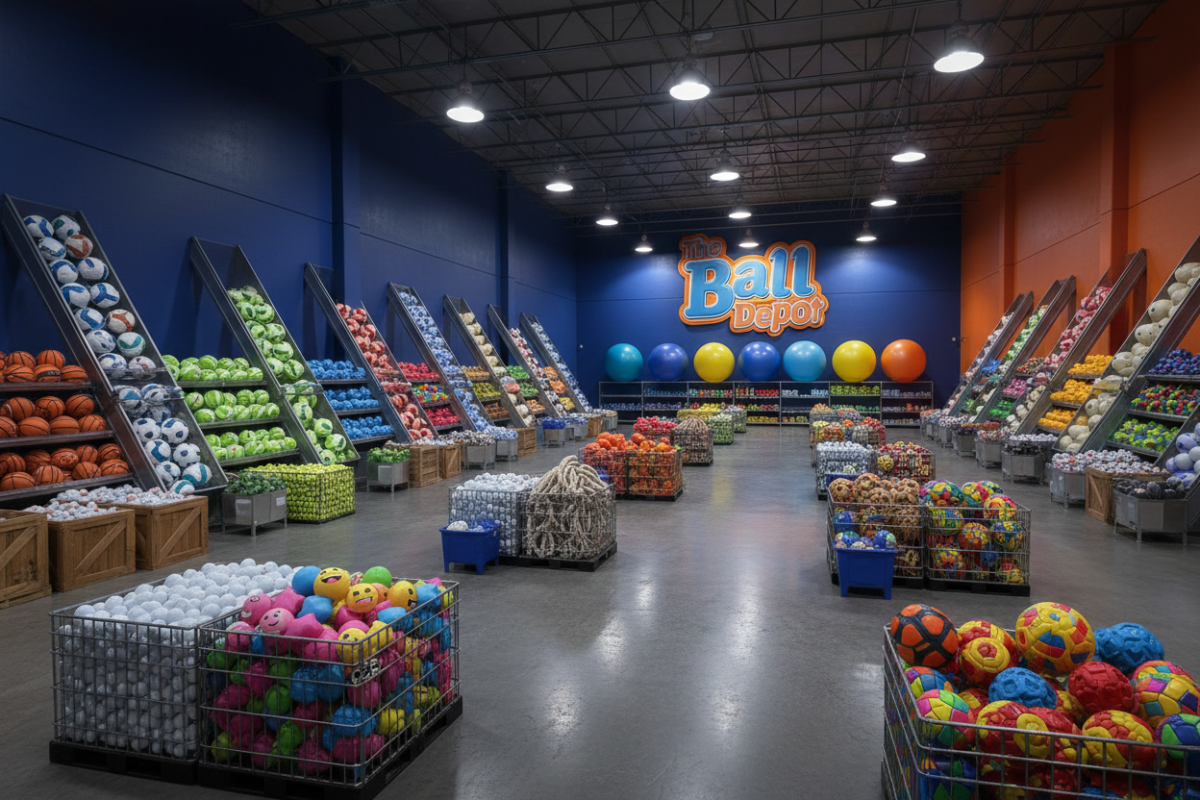
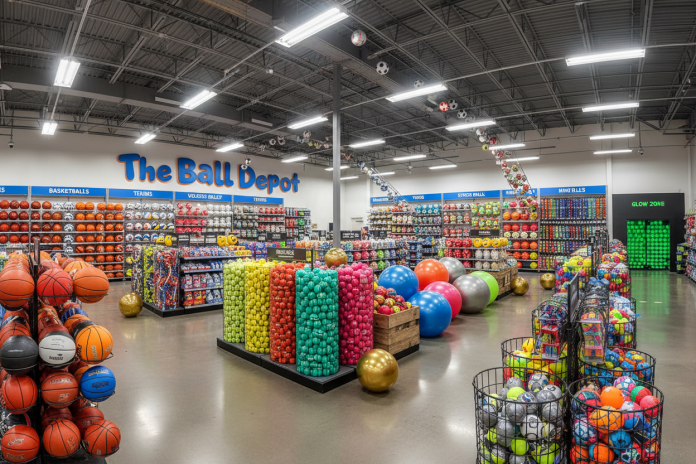
Rendering of what a future retail location could look like for The Ball Depot - Source: Terri-Lyne G.

A new Canadian e-commerce concept is entering the market with a highly focused merchandising strategy, as The Ball Depot launches online with more than 1,000 products dedicated to a single category.

Founded by Vancouver-based entrepreneur Terri-lyne Gedanitz, the platform officially went live on April 7, 2026, offering a wide assortment of balls across sports, children’s play, fitness, novelty, and pet categories.

The Ball Depot e-commerce launch reflects a growing trend toward niche digital retail concepts that consolidate fragmented product categories into a single destination, simplifying the shopping experience for consumers.

TBD Spread – Source: The Ball Depot

A 15-Year Concept Comes to Market

The idea behind The Ball Depot has been years in the making. Gedanitz first conceived the concept roughly 15 years ago, long before today’s e-commerce infrastructure made it feasible.

“I had the idea in my late twenties, but the timing wasn’t right,” she said. “Now, with direct-to-consumer shipping and digital tools, it finally makes sense to bring it to life.”

Her background spans creative industries, including film, casting, and writing, along with experience launching multiple small businesses. That creative foundation is now shaping how the brand is being positioned.

“Once you start thinking about it, balls are everywhere in daily life,” she said. “Sports, kids’ games, pets, even décor. I realized how big the category really is.”

Rendering of a potential retail rollout for The Ball Depot – Source: The Ball Depot

Building a Category-Driven Retail Platform

The Ball Depot e-commerce launch is built around a simple value proposition. Instead of requiring consumers to shop across multiple retailers depending on the product type, the platform aggregates the category in one place.

“If it’s a ball, we want it to live here,” Gedanitz said.

The assortment ranges from low-cost everyday items to specialty and niche products, with new inventory being added on an ongoing basis. The platform also includes a bulk purchasing option and a request system for customers seeking specific or hard-to-find products.

From a logistics perspective, the business benefits from the nature of its core product.

“A lot of balls ship deflated, so shipping is actually quite affordable,” Gedanitz explained. “That makes the model more viable, especially when working with suppliers globally.”

Products are sourced from multiple regions including the United States, the United Kingdom, and Asia, with shipping times typically ranging from several days to two weeks depending on origin.

Digital-First Strategy with Gamification and AI

As a new entrant, The Ball Depot is leaning heavily into digital marketing channels, including social media, influencer outreach, and content-driven promotion.

Gedanitz is also incorporating gamification into the platform, with an interactive discount feature designed to increase engagement and encourage repeat visits.

“I wanted the site to feel fun and interactive,” she said. “Shopping shouldn’t feel transactional. It should feel like an experience.”

Artificial intelligence is also playing a role in the company’s early-stage operations, from marketing creative to website development.

“AI allows a small business to create high-quality content without huge costs,” she said. “It helps level the playing field.”

TBD Spread – Source: The Ball Depot

Competing in a Fragmented Market

While The Ball Depot’s niche positioning offers differentiation, the company still operates within a competitive retail landscape.

Traditional competitors include category-specific retailers such as sporting goods stores and pet shops, which typically carry limited selections within their respective niches. At the same time, broader platforms such as Amazon remain a dominant force across categories.

“My biggest competition is Amazon, because they have everything,” Gedanitz said. “But I’ve found that in many cases, our pricing is actually competitive or better.”

Looking ahead, she plans to expand distribution channels, including the possibility of launching on third-party marketplaces while maintaining exclusive products on The Ball Depot’s own platform.

Long-Term Vision Includes Experiential Retail

Although the business is currently online-only, Gedanitz has a longer-term vision that extends into physical retail.

“If the online store performs well, I would love to open a physical location,” she said.

That concept goes beyond a traditional store format. Gedanitz envisions an experiential space where customers can interact with products in a playful environment.

“I’m thinking big, like a warehouse-style space where people can come in, play, and really engage with the products,” she said. “It would be about creating an experience, not just selling.”

She also sees opportunities for customization services and expanded product storytelling within a physical setting.

A Niche Concept with Growth Potential

The Ball Depot e-commerce launch highlights how focused retail concepts can carve out space in an increasingly crowded digital marketplace.

By consolidating a widely distributed product category and pairing it with a creative brand approach, the company is positioning itself for growth across both consumer and potential wholesale channels.

For Gedanitz, the concept remains rooted in simplicity.

“At the end of the day, balls are about fun,” she said. “That’s what we want the brand to reflect.”


More from Retail Insider:

Adyen expands Giving program worldwide

Two-thirds of Canadians say they want to abolish tipping culture entirely (H&R Block, March 2026), but according to Adyen data, Canadians aren’t becoming less generous, they’re just tired of being guilted into it.

Despite tariffs, rising costs, and real financial pressure, Canadian donations through Adyen Giving – the company’s global checkout donation platform used by leading brands worldwide – grew 3x from 2024 to 2025. 

So, Adyen is expanding its Giving feature globally with adidas, off the back of a successful run in Canada. Since 2023, shoppers across 216 adidas stores in Canada and the U.S. alone have donated over $1 million to causes including the Terry Fox Foundation. Now, adidas is taking the program to Europe, Brazil, and Mexico.

While tipping fatigue dominates the headlines, Canadians are quietly giving more than ever, and a global brand is expanding donation capabilities worldwide because of it.

Sander Meijers, Adyen’s Canada Country Manager, said charitable giving at checkout is a fundamentally different emotional experience than tipping.

“The cause is clear, the choice feels genuinely voluntary, and there’s no ambiguity about where the money is going or why it matters. This transparency replaces social pressure with a sense of personal agency,” he said.

“Our Adyen Giving data from 2024 to 2025 shows that Canadian donation volumes tripled, even amidst heightened cost-of-living pressures. While this growth may partly reflect increased availability of the feature, making it more available to engaged shoppers, we also saw a distinct rise in donations. The takeaway is that when given a meaningful way to contribute on their own terms, Canadians show up in a big way.”

Sander Meijers
Sander Meijers

Meijers said the core difference between a “guilt-driven” tip from a donation that consumers feel genuinely good about making is agency.

“Tipping has a social expectation – the screen is facing you, the employee is watching, and saying no feels uncomfortable even if the service didn’t warrant a tip,” he said. 

“The decision isn’t really yours in any meaningful sense. In fact, Adyen ran a survey on tipping sentiment in Canada last year, which found that one in four Canadians (25%) say pre-calculated percentages actually make them tip less than they intended. A well-executed checkout donation flips that entirely. The ask is transparent, where you know the cause, you know where your dollar goes, and critically, declining doesn’t carry any social cost as the money doesn’t go to the worker cashing you out. That psychological safety is what makes the difference. 

“When people give freely, without pressure, they actually feel better about the brand they’re shopping with and the purchase they just made. It becomes part of a positive experience rather than a tax on it. That’s what we’ve seen play out in the adidas program, with shoppers choosing to round up for the Terry Fox Foundation not because they had to, but because it felt like the right thing to do at that moment.”

Meijers said Canadians have a well-documented culture of community giving, with high charitable rates and a strong culture of supporting causes that feel locally grounded and credible. They also want to see brands show up for authentic causes – Adyen’s 2025 Retail Report found that 45 per cent of Canadian consumers would be more loyal to a retailer that demonstrates a strong social purpose, and/or contributes to charitable causes. 

“This made Canada an ideal market to test out Adyen Giving with adidas. adidas’ brand purpose, ‘through sport, we have the power to change lives,’ makes it a natural fit to partner with The Terry Fox Foundation, an iconic Canadian cause focused on getting active for good. The alignment between the adidas brand and the cause, and the shopper’s own sense of identity matters enormously,” he explained.

“When adidas launched Giving for The Terry Fox Foundation across its Canadian store network, it was received as an authentic extension of the brand, which drove participation. The success they have seen in various markets led them to expand globally.”

Meijers said the ask needs to be simple, fast, and completely opt-in. If a shopper has to navigate multiple screens, read lengthy explanations, or feel like declining is complicated, you’ve already lost them, and you may have damaged the relationship in the process.

“Beyond that, the charity needs to make sense in the context of the brand and resonate with the actual customer base. A mismatch there creates skepticism rather than goodwill. Retailers also need to be transparent about where the funds go and report back on impact. Shoppers increasingly expect accountability, and that follow-through is what builds long-term trust and repeat participation,” he said.

“Adyen Giving is a completely free feature, ensuring that every dollar goes to the charity. In addition, Adyen is matching all donations in 2026.”

Meijers believes giving and tipping will remain distinct. The united principle being that positive checkout experiences are paramount for merchants. 

“In a lot cases, giving creates that, by offering a richer connection with the brand and its ethos. Separately, pushback against tipping culture will force a reckoning in how prompts are designed across the board. Consumers are becoming more discerning about when and why they’re being asked for more money at the point of sale. For brands where there is tipping existing as part of their checkout flow, giving comes after,” he said.

“What I don’t think we’ll see is giving replacing tipping in any structural sense, as they serve different purposes and different relationships. But the growth we’re seeing in programs like Adyen Giving tells me that purpose-driven giving at checkout has significant room to grow, and that retailers who embrace it thoughtfully will earn real loyalty in return. 

“The adidas expansion into Europe, Brazil, and Mexico is a signal that this isn’t a Canadian or North American phenomenon – it’s a global shift in how consumers want to engage with brands.”

More from Retail Insider:

Small Business: Elevating First Impressions Online

By Erin Shea, Senior Director of North America Marketing at VistaPrint

For many small businesses today, the box is the storefront.

As more entrepreneurs sell online or through social platforms, customers often experience a brand for the first time not in a physical space, but at their doorstep. A package arrives. The customer opens it. In those few seconds — the box, the materials, the presentation — the brand comes to life.

At a time when Canadians are becoming more selective about where they spend their money, nearly eight in ten say supporting local businesses feels more important than it did a year ago. This makes those first impressions matter more than ever. Where storefronts once relied solely on window displays or signage to draw people in, packaging now carries that same responsibility. It’s the first physical touchpoint a customer has with your business, and it sets the tone for everything that follows.

And consumers notice. Research shows that 72% of people say packaging design influences their purchasing decisions, highlighting just how powerful that first visual and tactile impression can be. For small businesses competing in crowded digital marketplaces, packaging isn’t just about functionality — it’s emotional marketing.

Erin Shea
Erin Shea

Turning the Unboxing into an Experience

The most memorable unboxing experiences usually have something in common: they feel intentional.

That doesn’t mean they need to be elaborate or expensive. Often, it’s the small details that make the moment memorable, like a custom mailer, branded tissue paper, or a thank-you note that reminds the customer there’s a real person behind the business.

These touches create something increasingly rare in digital commerce: a tangible brand experience.

When customers make fewer purchases, but expect more from each one, those moments of surprise and delight can have an outsized impact on how a brand is remembered.

When a package feels thoughtfully designed, it signals care and professionalism. In fact, 61% of consumers say branded packaging makes them more excited to open a parcel, showing how much anticipation and emotion can be built into a single delivery.

Entrepreneurs have an opportunity not just to deliver a product, but to create a moment customers remember.

Extending Your Brand Beyond the Product

Great packaging works best when it feels like a natural extension of your brand.

Just like your logo, website and marketing materials communicate something about your business, your packaging should carry that same identity forward. Colour, typography, materials and messaging all help reinforce the personality of your brand.

For some businesses, that might mean clean, minimalist packaging that reflects a modern aesthetic. For others, it could be bold colours or playful design elements that capture the energy of the brand.

Increasingly, sustainability is also part of that story. Many entrepreneurs are also thinking more carefully about how their packaging reflects their environmental values. Across Canada, sustainability has become a major factor in purchasing decisions. Research shows that 73% of Canadian consumers actively seek products with eco-friendly packaging, reflecting growing expectations around responsible design and materials.

When packaging reflects what a brand stands for, it becomes another way to communicate those values.

Creating Shareable Moments

One of the biggest shifts in recent years is how packaging has become a marketing tool in its own right — largely because of social media. Unboxing content has exploded across platforms like TikTok, Instagram and YouTube, turning packaging into a form of organic advertising. 

Customers routinely share the experience of opening a product, from subscription boxes to small-batch goods — introducing brands to entirely new audiences.

In many ways, the unboxing moment has become part of the product itself. 

For small businesses with limited marketing budgets, this is a powerful opportunity. When customers share these experiences, they’re not just showing the product — they’re showcasing the brand behind it.

When entrepreneurs think about packaging through that lens, not just as a shipping solution but as a brand moment, packaging becomes the stage for that story.

VistaPrint photo
VistaPrint photo

Small Details, Big Impact

Running a small business means constantly balancing creativity, operations and cost. Packaging might seem like a small piece of the puzzle. However, in today’s experience-driven economy, it’s one of the few moments where a brand can create genuine surprise and delight.

The product might be what customers buy, but the experience is what they remember. And when customers remember how your brand made them feel — not just what they bought — they’re far more likely to come back.

In a market where customers are more intentional about the brands they support, those small details can make all the difference. For entrepreneurs building their brands one customer at a time, the unboxing experience is just as important as what’s inside.

(Erin Shea is the Senior Director of North America Marketing at VistaPrint. VistaPrint helps small business owners and entrepreneurs create custom designs and professional marketing.)

More from Retail Insider:

Canada’s Shrinking Middle Class Is Fueling Food Inflation

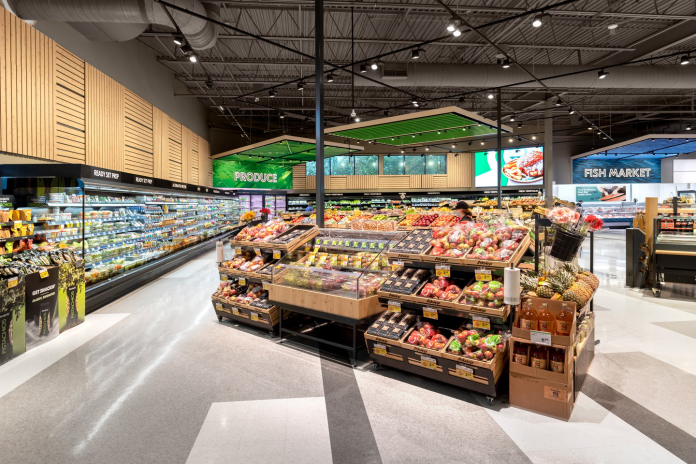
Sobeys grocery store in Orangeville, ON. Photo: Sobeys

Canada doesn’t just have a food inflation problem. It has a market structure problem—and it’s getting worse.

Over the past two years, we’ve been fixated on prices: why groceries cost more, why inflation remains stubborn, and why relief hasn’t materialized for many households. But we are missing the bigger issue. Canada’s economy is becoming increasingly K-shaped, and that is quietly undermining both affordability and innovation in our food system.

The data is unequivocal.

Over the past decade, Canada’s income distribution has shifted quietly but meaningfully. Data from Statistics Canada shows that the top 20% of earners increased their share of total income from roughly 40% in 2015 to nearly 43% in 2025, while the bottom 20% saw their share decline from about 5.6% to below 5% over the same period. As a result, the middle 60%—once the backbone of consumer demand—has steadily lost ground, with its share slipping by several percentage points.


At the same time, income growth is increasingly driven by financial assets, not wages. Higher-income households are benefiting from investment gains, while lower-income households are seeing their incomes lag behind rising costs. The result is a clear divergence: one group moving ahead, another falling behind, and a middle class slowly eroding.

This matters enormously for food.

A healthy food economy depends on a strong middle class. It is the middle that tries new products, supports emerging brands, and ultimately allows innovation to scale. Without it, the market fragments.

What we are now seeing is the emergence of two parallel food economies in Canada.

At the top, demand remains robust. Premium products, convenience, and value-added innovation continue to perform well. At the bottom, households are trading down aggressively, focusing on calories per dollar, often sacrificing quality, nutrition, and variety. Meanwhile, the middle—once the engine of growth—is shrinking.

This bifurcation has consequences.

First, it makes food inflation feel worse than it actually is. Official inflation numbers are averages, but they mask lived reality. Lower-income households spend a much larger share of their income on food and are more exposed to price increases. When prices rise—even modestly—they feel it more acutely.

Second, it makes inflation more persistent. When higher-income consumers continue to spend, there is less downward pressure on prices. At the same time, demand for essential goods among lower-income households is inelastic—they still need to eat. This combination creates a floor under prices that is difficult to break.

Third, and perhaps most importantly, it weakens innovation.

Without a strong middle class, companies face a difficult choice: innovate for the wealthy or cut costs for everyone else. What disappears is the space in between—the place where most meaningful, scalable innovation happens.

We are already seeing signs of this. Private label products are gaining ground. Retailers are becoming more risk-averse. Mid-tier brands are struggling to maintain shelf space. The system is not collapsing, but it is becoming less dynamic, less competitive, and ultimately less innovative.


And yet, the policy response remains largely focused on spending—subsidies, rebates, and temporary relief measures.

That approach misses the point.

Canada does not need to spend its way out of this problem. It needs to fix how its food market functions.

There are several reforms that would cost little, yet deliver meaningful impact.

Start with competition. Canada’s grocery sector remains highly concentrated. Stronger enforcement of competition laws—particularly around mergers, supplier relations, and exclusivity practices—would increase pressure on prices and create space for new entrants. This is where the new Grocer Code of Conduct will help.

Next, address internal trade barriers. It is still easier, in some cases, to import food from abroad than to move it across provincial borders. Harmonizing standards and removing interprovincial frictions would expand markets, reduce costs, and improve efficiency—without a dollar of new spending.

Regulatory simplification is another low-cost, high-impact lever. Aligning federal and provincial rules, speeding up approvals, and reducing duplication would lower compliance costs and allow innovation to reach consumers faster.

None of these measures are politically easy. But they are fiscally responsible—and increasingly necessary.

Because the risk is not just higher food prices.

The risk is that Canada’s food system becomes permanently divided: a premium market for those who can afford it, and a survival market for everyone else. That is not just an economic problem—it is a social one.

A K-shaped economy doesn’t just widen inequality. It changes how markets behave. It weakens innovation. It erodes resilience.

And in food, more than any other sector, that matters.

If we want a more affordable, innovative, and resilient food system, we need to stop focusing solely on prices—and start fixing the conditions that shape them.

More from Retail Insider:

Daily Synopsis: Apr 15, 2026

The latest Retail Insider articles explore critical shifts in Canadian retail, including rising food prices from global conflicts, a continued decline in new business openings, and premium retail expansions like Michael Hill’s new flagship in Vancouver. These developments highlight operational and economic pressures retailers face amid evolving consumer demands and cost challenges. Below are these stories along with Canadian Retail News From Around the Web.


🗞️ The Day’s Retail Insider Article List


🌐 Canadian Retail News From Around the Web

UNIQLO Announces First Winnipeg Store Opening Date

Opening day at Uniqlo Union Station. Image: Joel John

Global apparel retailer UNIQLO has confirmed the opening date for its first store in Winnipeg, marking a significant milestone in its Canadian growth strategy. The company will open its debut Manitoba location at CF Polo Park at 10:00 am on May 15, 2026, with a second store planned for the city later in the year as part of a broader UNIQLO Winnipeg expansion.

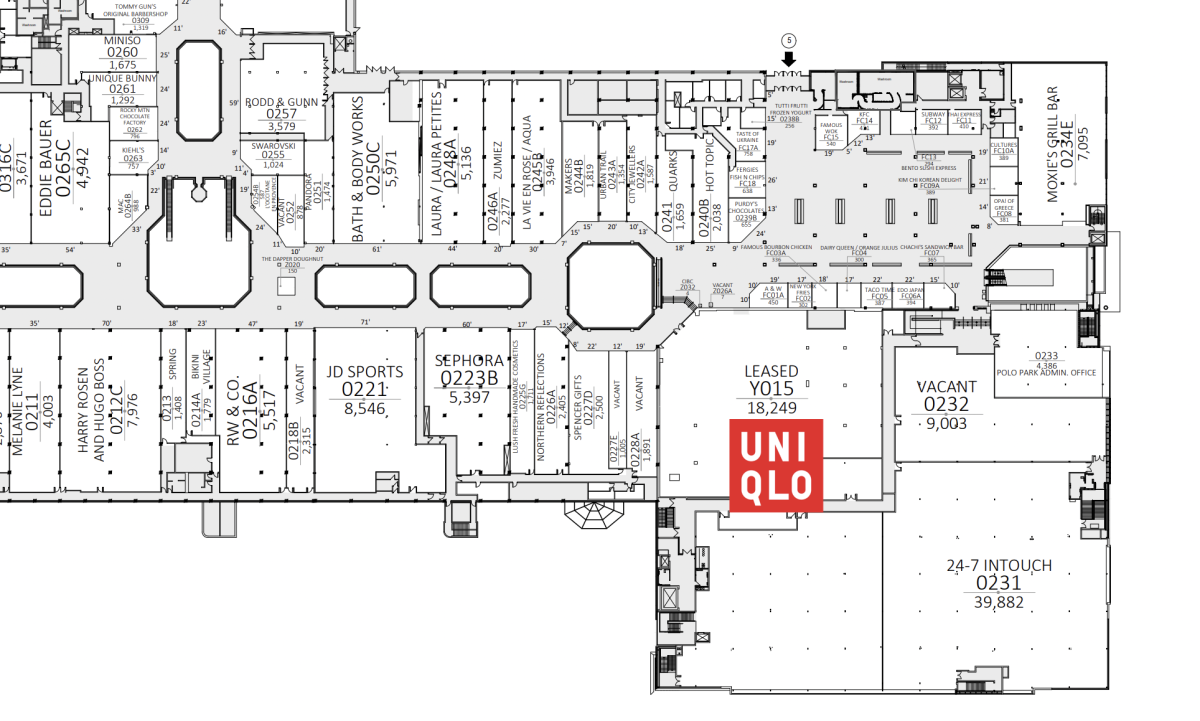
The CF Polo Park location will span more than 18,000 square feet and offer the brand’s full LifeWear assortment for men, women, and children. The opening represents UNIQLO’s first entry into Manitoba after nearly a decade of steady expansion across Canada.


To mark the launch, UNIQLO has organized a series of opening weekend events designed to engage the local community. Festivities will include a ribbon-cutting ceremony, a taiko drumming performance by Hinode Taiko, and complimentary food and beverages from Winnipeg-based businesses.

The first 500 customers will receive a commemorative tote bag, while early visitors will also be offered cookies from Gunn’s Bakery and coffee from Little Sister Coffee Maker. Additional programming includes a Japanese-style Garapon prize wheel, offering a range of giveaways such as local products and branded merchandise.

UNIQLO has also partnered with local businesses and artists to create a Winnipeg-inspired collection of T-shirts and totes, reinforcing its strategy of embedding stores within local cultural contexts.

Screen shot of level 2 of CF Polo Park in Winnipeg, via Cadillac Fairview
 

Second Winnipeg Store Planned for 2026

In addition to the CF Polo Park store, UNIQLO has confirmed plans for a second Winnipeg location at St. Vital Centre, expected to open later in 2026. The store will occupy a large-format space previously held by a department store, reflecting a broader trend of international retailers backfilling vacancies left by legacy anchors.

This dual-store approach signals a deliberate strategy to establish immediate market presence in Winnipeg, rather than testing the market with a single location. The UNIQLO Winnipeg expansion is also expected to include local hiring initiatives, supporting store operations and customer experience delivery.

Jeff Berkowitz of Aurora Realty Consultants represents UNIQLO as broker in Canada, and negotiated the lease deals on behalf of the retailer.

A Decade of Canadian Growth

UNIQLO entered Canada in 2016 with flagship stores at CF Toronto Eaton Centre and Yorkdale Shopping Centre. Since then, the retailer has expanded across major urban markets including Vancouver, Calgary, Edmonton, and Montreal, followed by secondary cities such as Ottawa, Quebec City, and Victoria.

The brand has focused on measured growth, leveraging large-format retail spaces and tailoring its product offering to Canadian climate conditions. Its emphasis on technical apparel, including HEATTECH and AIRism, has resonated with consumers across diverse seasonal environments.

As of 2026, UNIQLO operates more than 35 stores in Canada, supported by a growing e-commerce platform that has helped build demand in regions prior to physical store entry.

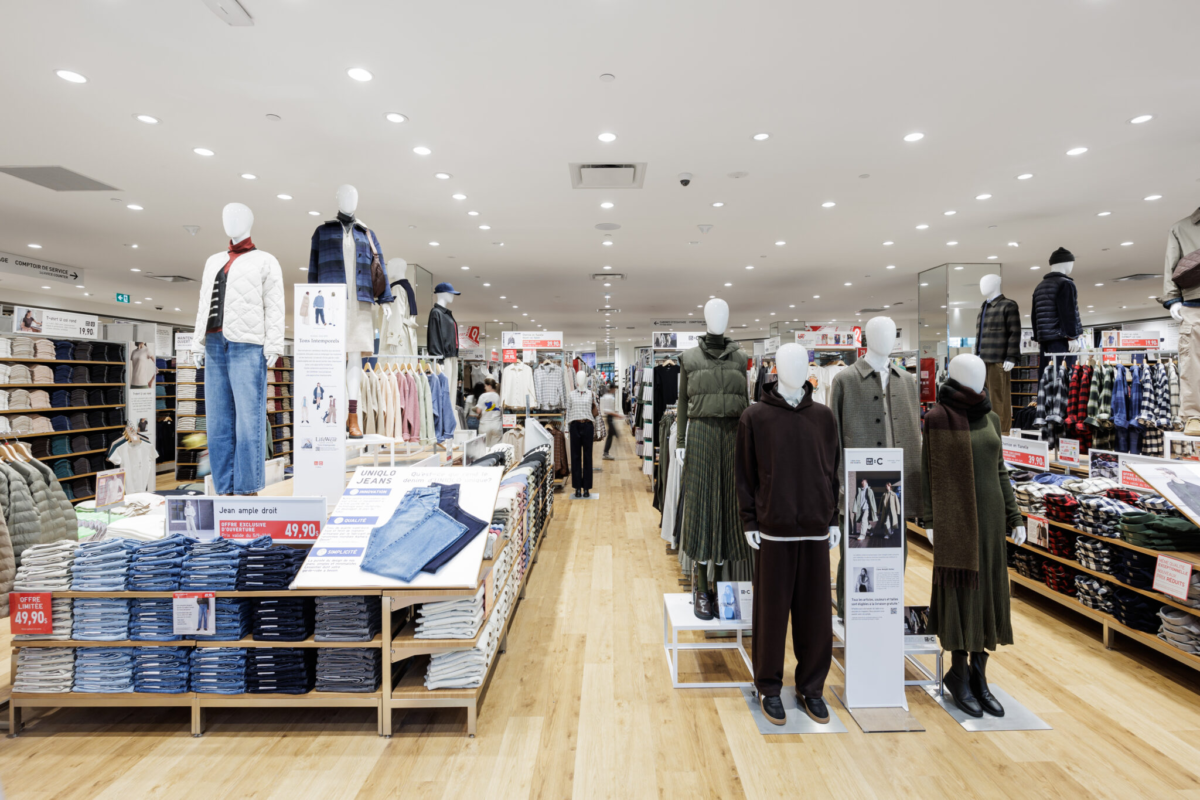
Inside the new Uniqlo store at Royalmount in Montreal. Photo: Uniqlo

Strategy Reflects National Retail Positioning

The move into Manitoba effectively bridges UNIQLO’s eastern and western Canadian operations, reinforcing its position as a truly national retailer. The company’s ability to secure prominent retail spaces and align with evolving shopping centre strategies has been a key driver of its success.

Globally, UNIQLO operates more than 2,500 stores and is part of Fast Retailing, one of the world’s largest apparel companies. The brand continues to focus on large-scale store openings in key markets, supported by an integrated online and offline retail model.

More from Retail Insider:

Sandra Sanderson Receives RCC Lifetime Achievement Award


The Retail Council of Canada has announced that Sandra Sanderson, Chief Marketing Officer at Empire Company Limited and Sobeys Inc., will receive the Canadian Grand Prix Lifetime Achievement Award, recognizing her decades of leadership and contributions to the retail industry in Canada.

The award will be presented on June 3, 2026, at the Canadian Grand Prix Awards Gala in Toronto, held as part of RCCSTORE26, the organization’s flagship annual conference.

Sandra Sanderson brings a rare breadth of experience across both consumer packaged goods and retail, having held senior marketing roles at global and national organizations including Procter & Gamble, Kraft, and Coca-Cola before transitioning into retail.

Her subsequent leadership roles included positions at Canada Post, Danier Leather, Shoppers Drug Mart, Walmart Canada, and White House Black Market. This cross-sector experience has given Sanderson what industry observers often describe as a “360-degree” view of the Canadian consumer.

That perspective has become particularly valuable in an era where retailers must balance physical store strategy, digital engagement, and evolving customer expectations.


Driving Transformation at Empire and Sobeys

At Empire, Sanderson has played a central role in the company’s multi-phase transformation over the past seven years. As Chief Marketing Officer, she has led efforts to modernize marketing capabilities and better align the business with changing consumer behaviours.

A key initiative under her leadership has been the launch and growth of Scene+, a loyalty program that now counts more than 15 million members across Canada. The program reflects a broader industry shift toward data-driven customer engagement and ecosystem-based loyalty strategies.

Sanderson also led the development of a Marketing Technology & Digital Center of Excellence, positioning Empire to better integrate data, personalization, and digital marketing capabilities across its portfolio of banners, which include Sobeys, Safeway, IGA, Thrifty Foods, Foodland, FreshCo, and Lawton’s.

In addition, she has overseen Empire’s entry into the retail media space through the launch of Empire Media+, an area that continues to see rapid growth globally as retailers monetize their first-party data and digital platforms.

Purpose-Driven Leadership and Community Impact

Beyond commercial strategy, Sanderson has emphasized the role of retail organizations in supporting communities. Under her leadership, Empire developed a new community investment strategy, including initiatives focused on child and youth mental health.

She also led the company’s involvement as the Official Grocer of Team Canada, including the “Feed the Dream” Olympic and Paralympic campaigns, which positioned the retailer as a national partner supporting athletes and communities alike.

This combination of commercial leadership and community engagement reflects a broader trend within Canadian retail, where purpose-driven strategies are increasingly integrated into brand positioning.

Industry Recognition and Influence

Sanderson’s recognition by RCC adds to a long list of industry honours. She received the Canadian Marketing Association Lifetime Achievement Award in 2025 and was inducted into the American Marketing Association Hall of Legends in 2023.

She has also been named Marketer of the Year multiple times and continues to contribute to the industry through board roles, mentorship, and academic engagement, including serving as a guest lecturer at Ivey Business School.

Her influence extends beyond her executive role, particularly in shaping the next generation of marketing leaders in Canada.

Recognition Among Industry Leaders

The RCC Lifetime Achievement Award places Sanderson among a group of notable Canadian retail leaders, including past recipients such as Margaret Hudson of Burnbrae Farms, Dino Bianco of Kruger Products, Carmen Fortino of METRO Inc., and Gary Wade of Unilever Canada.

The award recognizes individuals who have demonstrated long-term service, innovation, and leadership within the retail and grocery sectors, reflecting the industry’s emphasis on both performance and community impact.

As the retail landscape continues to evolve, Sanderson’s career highlights the increasing importance of integrated marketing, data-driven strategy, and purpose-led leadership in shaping the future of Canadian retail.

More from Retail Insider:

Iran Conflict Could Trigger New Food Price Shock in Canada

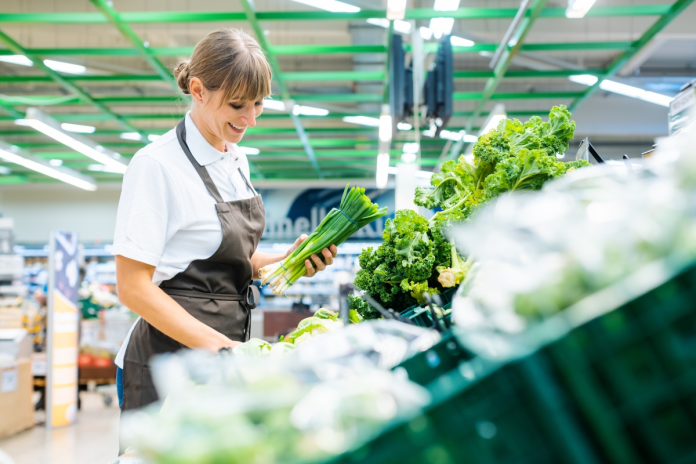
A worker in a grocery store in Canada. Retail staffing and jobs are key words in Canada. Image: WorkBC

By Michael von Massow and Alfons Weersink

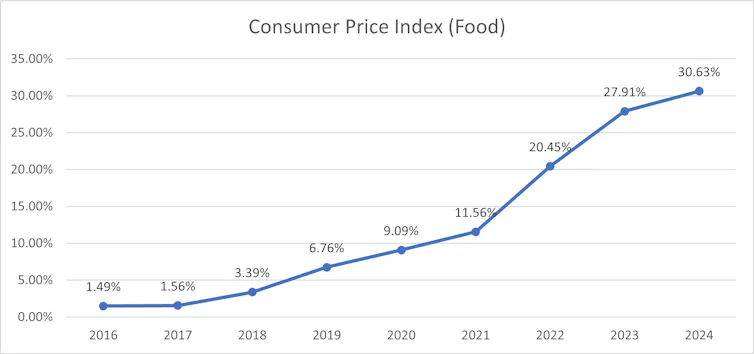
Food prices in Canada have been rising at a faster rate than overall inflation for the past several years. In fact, food prices are 30 per cent higher than they were a decade ago.

In the face of this pressure, consumers are increasingly worried about the impact of the war in Iran on food prices. While there is currently a ceasefire in place, it appears fragile, and oil and fertilizer prices will be slow to fall.

The conflict will undoubtedly have an impact on food prices, but in the short term it will likely be fairly small. If the disruption lasts longer, we could start to see more significant price increases.

A graph showing how food prices have increased from 2016 to 2025
The consumer price index of food from 2016 to 2025. (Statistics Canada)

Unlike previous shocks, Iran is not a major food exporter, and no Canadian food imports pass through the Strait of Hormuz. Instead, any impact on food prices will come indirectly through rising petroleum prices driven by uncertainty around oil infrastructure in the Middle East and disruptions to the strait.

Approximately 20 per cent of the world’s oil moves through the strait, and the loss of that flow has dramatically increased fuel prices. Oil is currently trading above US$100 per barrel, up from under $60 at the end of January.

Fuel costs and food transportation

There are three main ways high oil prices can affect food prices. The first is the direct impact on the cost of moving food through the supply chain.

The United States Department of Agriculture estimates that transportation accounts for roughly 3.5 to four cents of every food dollar. This suggests that even large increases in fuel prices will not have a substantial impact on average food inflation.

Fuel is only one component of transportation costs, so increases are not reflected one-to-one on food prices. There are, however, significant differences across food categories.

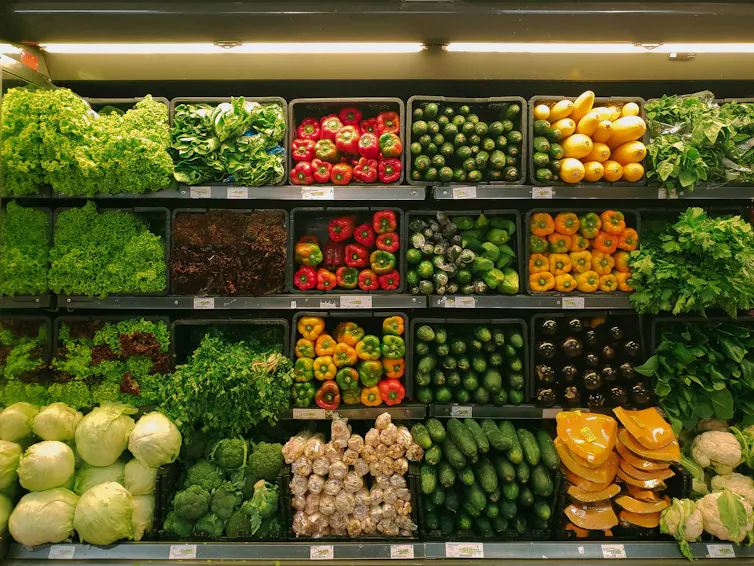
Fresh fruits and vegetables are the most exposed. Transportation accounts for about eight per cent of of every food dollar for fresh fruits and vegetables — the highest share among food categories.

Fresh fruits and vegetables in the produce section of a grocery store
Fresh fruits and vegetables are the most exposed food category to transportation costs. (Unsplash)

These products travel long distances and require refrigeration, which can be up to 30 per cent more expensive than dry freight by truck and three times more expensive than dry freight by sea.

Taking into account seasonal variation and Canada’s geography and location, transportation could represent 10 to 15 cents of every dollar spent on fresh produce this time of year. As a result, prices for imported fruits and vegetables could rise quickly in grocery stores.

These effects should moderate in spring as transport distances shorten, the weather warms and production moves closer to domestic markets. Smaller increases may also occur in other less processed foods like meat, which are heavy and also require refrigeration.

Fertilizer prices and pressure on farmers

The second mechanism is the impact of higher oil and fertilizer prices on food producers. Nitrogen fertilizer prices have risen more than 70 per cent since the start of 2026, although many farmers are partially protected in the short-term because fertilizer is often purchased in advance.

There is, however, a risk of fertilizer shortages since 25 per cent of the world’s urea flows through the Strait of Hormuz.

In practice, shortages are unlikely in Canada. Western Canada exports more than 700,000 tonnes of urea, with most of it going to the U.S., while Eastern Canada imports similar volumes from regions outside the Middle East. Prices will likely be higher, but supply constraints should be limited.

Farmers, rather than consumers, are likely to bear the brunt of higher fuel and fertilizer costs. Because commodity prices are determined by global supply and demand, farmers have limited ability to pass higher input costs down the supply chain.

Typically, crop and fertilizer prices move in tandem, allowing higher costs to be at least partially offset by higher returns. For example, the most recent fertilizer price spike followed Russia’s invasion of Ukraine, which also drove up commodity prices amid concerns about reduced wheat production from a major growing region.

In response to higher input costs, farmers may reduce fertilizer application rates or shift away from fertilizer‑intensive crops. While these adjustments can ease some pressure, crop producer margins will remain under strain unless commodity prices rise enough to offset higher energy and fertilizer costs.

Broader impacts across the food system

The third mechanism is the more diffuse effect of petroleum-based products used in food supply chains. Plastics and many chemicals are derived from petroleum, so higher oil prices will increase the cost of producing these goods.

Plastic food packaging alone represents approximately one-third of all plastic packaging in Canada. Canadians throw out more than four million tonnes of plastic waste a year, with only a small portion recycled.

Higher production costs in food processing are typically passed on to consumers through food processing and packaging. As a result, a sustained increase in oil prices will gradually scatter through the food value chain.

A muted impact on fuel prices — for now

The war in Iran will undoubtedly affect prices, particularly through higher fuel costs that are already affecting transportation and other energy-intensive sectors.

However, this may be one of the few instances in recent years where food inflation trails general inflation. The war in Ukraine had a more dramatic impact on food prices because Ukraine is a major exporter of food, and that food disappeared from the market.

By contrast, the effects of the conflict in Iran are more indirect and will take time to work through the system.

If the war in Iran persists, however, it could have profound global impacts, with most of them extending beyond food prices. The duration of the conflict is the primary consideration for what the longer-term impact will be on food prices.

About the Authors:

  • Michael von Massow is a Professor of Food Economics at the University of Guelph.
  • Alfons Weersink is a Professor, Dept of Food, Agricultural and Resource Economics at the University of Guelph

This article originally appeared in The Conversation.

More from Retail Insider: