Home Blog Page 613

Ontario’s 2-Tier Minimum Wage: As Discriminatory Now as it Was in the 1990s [Op-Ed]

The province of Ontario has increased its minimum wage to $16.55 per hour — unless workers are students under the age of 18, in which case their labour is only worth $15.60.

Québec and Manitoba eliminated their two-tier minimum wage in the late 1980s over concerns that the wage differential amounted to age discrimination and therefore violated Canada’s Charter of Rights and Freedoms. Ontario almost did as well 30 years ago. But the Ontario NDP government broke its promise, as I detail below.

The issue is personal for me. When I was 17 years old, I was hired by my hometown library. But a week into the job I was called into the head librarian’s office and told that they had made an administrative error. They would need to pay me the lower rate.

With that, my wages dropped from $4 an hour to $3.15. Over the next year, I worked for substantially less than other students hired at the same time and who were doing the same work. This is an experience not easily forgotten.

Age discrimination

A few years later, I did something about it. As the head of a provincial student group, Ontario New Democratic Youth, I launched a campaign on the issue in late 1989. As I wrote at the time:

“If the two-tiered system was based upon any other category (of difference), it would not be tolerated.”

We made the case that it was “unfair to value one person’s labour less than another’s simply on the basis of age.”

We then launched a Charter of Rights and Freedoms challenge on the issue of age discrimination with the help of Toronto labour lawyer Steven Barrett. A notice of application was submitted to the Supreme Court of Ontario in April 1990.

But then, most unexpectedly, the Ontario NDP won the election in September 1990 and Bob Rae became premier.

It seemed strange to us to continue the court challenge as our youth group was the party’s youth wing. Besides, the Ontario NDP had promised to eliminate the two-tier minimum wage in its election platform. It was also mentioned in the government’s first speech from the throne. So, we dropped the lawsuit.

A photo of the paperwork pertaining to the lawsuit the author’s youth group launched and then dropped. (Steven High)

The Ontario government reduced the student differential in 1991 to 45 cents an hour from 85 cents an hour, promising to eliminate it altogether the following year.

Bob Mackenzie, the NDP’s labour minister, even told the media at the time that the under-18 minimum wage “just cannot work in a society that promises equality and fairness. In fact, the existence of the student differential is currently before the courts in a challenge under the Charter of Rights and Freedoms.”
But then something changed, and the NDP decided to maintain the lower differential.

I have long wondered what happened.

Employer lobbying

Thirty years later, I am writing a book on how the NDP government responded to the industrial crisis. So, I decided to do some digging in the archives to find out why.

Thanks to Richard Allen, an NDP cabinet minister and historian who donated his records to McMaster University, I discovered that the Ontario Restaurant Association and other employer groups lobbied hard to convince the NDP cabinet to reverse itself.

According to archival material, they argued:

“The student minimum wage category should not be seen as discriminatory against young inexperienced workers, instead it should be viewed as an affirmative action initiative which assists young inexperienced workers in gaining employment.”

These were tough economic times and the youth unemployment rate was a dismal 18 per cent.

A photo of the paperwork pertaining to the lawsuit the author’s youth group launched and then dropped. (Steven High)

To find out more, I filed an access-to-information request and discovered that a decision was made in September 1991, the same month the NDP abandoned its longstanding promise to deliver public auto insurance, to hold off on eliminating the youth differential.

Instead, the Student Minimum Wage Consultation Group was formed with representatives of the four main employer groups in the hospitality industry, all with a strong vested interest in maintaining the youth differential, as well as two service-sector unions and an obscure student group nobody ever heard of.

The consultation group recommended keeping the differential.

Discriminatory differential

In its April 1993 cabinet submission on the subject, the Ministry of Labour conceded that the differential was discriminatory but recommended it was maintained anyway.

Here is how they worded it:

“Clearly, the student minimum wage does discriminate on the basis of age and student status. The student component does not appear to present any legal difficulties, but the age discrimination is a complex legal issue.”

It went on to say that “legal analysis concluded that if a Charter challenge were to be raised again there is a risk that the student differential could be found to violate the Canadian Charter of Rights and Freedoms on the basis of age discrimination.”

Ontario Premier Doug Ford makes an announcement on the province’s minimum wage in November 2021. THE CANADIAN PRESS/Nathan Denette

Thanks to us dropping our case, the ministry could advise: “There is no legal ruling directly on this issue and no current challenge.” The NDP cabinet therefore agreed with the warped line of reasoning that paying less to younger workers was a form of affirmative action.

Thirty years later, young people in Ontario are still paying the price: 95 cents an hour, to be precise.

By Steven High, Professor of History, Centre for Oral History and Digital Storytelling (COHDS), Concordia University

This article is republished from The Conversation under a Creative Commons license. Read the original article.

Van Cleef & Arpels Opens Canadian Flagship Store on Bloor Street in Toronto [Photos]

Van Cleef & Arpels Toronto Bloor (Image: Van Cleef & Arpels)

Richemont-owned French jewellery brand Van Cleef & Arpels has opened its Canadian flagship store at 100 Bloor Street West in Toronto. It’s the third standalone location for the brand in Canada after Van Cleef & Arpels opened its first standalone storefront in the country in 2017. 

The new Bloor Street store spans about 2,500 square feet on one level, with a soaring facade that is a first of its kind for the brand in the Americas. The Art Deco-inspired black and golden geometric and pyramidal pattern facade is said to be inspired by Egyptian history reminiscent of Claire-voie. 

Van Cleef & Arpels Toronto Bloor (Image: Van Cleef & Arpels)

The beautiful space within features several rooms housing products, including a range of high-jewellery pieces not found in other locations. Two hand-crafted, French-made glass chandeliers illuminate the space, with rooms within featuring intricately panelled walls.

Unique to Canada, the Bloor Street store includes two rooms for private shopping and events. A salon, which has the appearance of a luxurious living room in a Paris apartment, can be made private for one-on-one shopping. Next to it is an ‘events room’ that has the appearance of a fine dining room, with custom fabric walls depicting a floral motif and an elegant oval shaped Veronese style chandelier that is encased by a gold leaf ceiling in the centre of the space.

It’s the third standalone Van Cleef & Arpels store in Canada. The brand opened its first store in Canada at Toronto’s Yorkdale Shopping Centre in the summer of 2017, spanning about 1,620 square feet on one level. A second Canadian location opened in Vancouver at 1069 Alberni Street in late 2017, spanning more than 4,000 square feet over two floors. 

In Montreal, a licensed Van Cleef & Arpels boutique operates within the Birks flagship store on Ste-Catherine Street. On Bloor Street at the Manulife Centre in Toronto, as well, Birks currently houses a Van Cleef & Arpels store with its own street-facing entrance — it’s not yet known if the boutique will remain open or if another brand will replace it. The first licensed Van Cleef & Arpels boutique space in Canada opened at the downtown Vancouver Birks flagship in 2006 spanning about 300 square feet (and Toronto shortly thereafter). The Vancouver boutique was expanded in early 2016 to 1,435 square feet and it closed during the pandemic. 

Van Cleef & Arpels Toronto Bloor (Image: Van Cleef & Arpels)

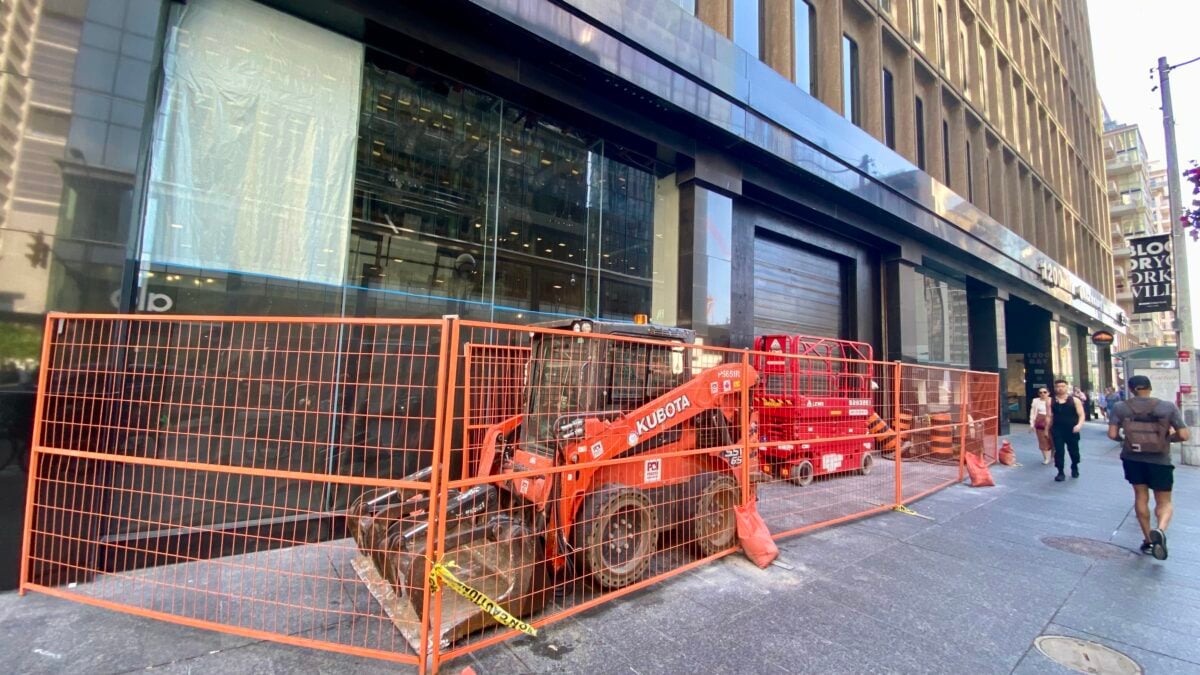
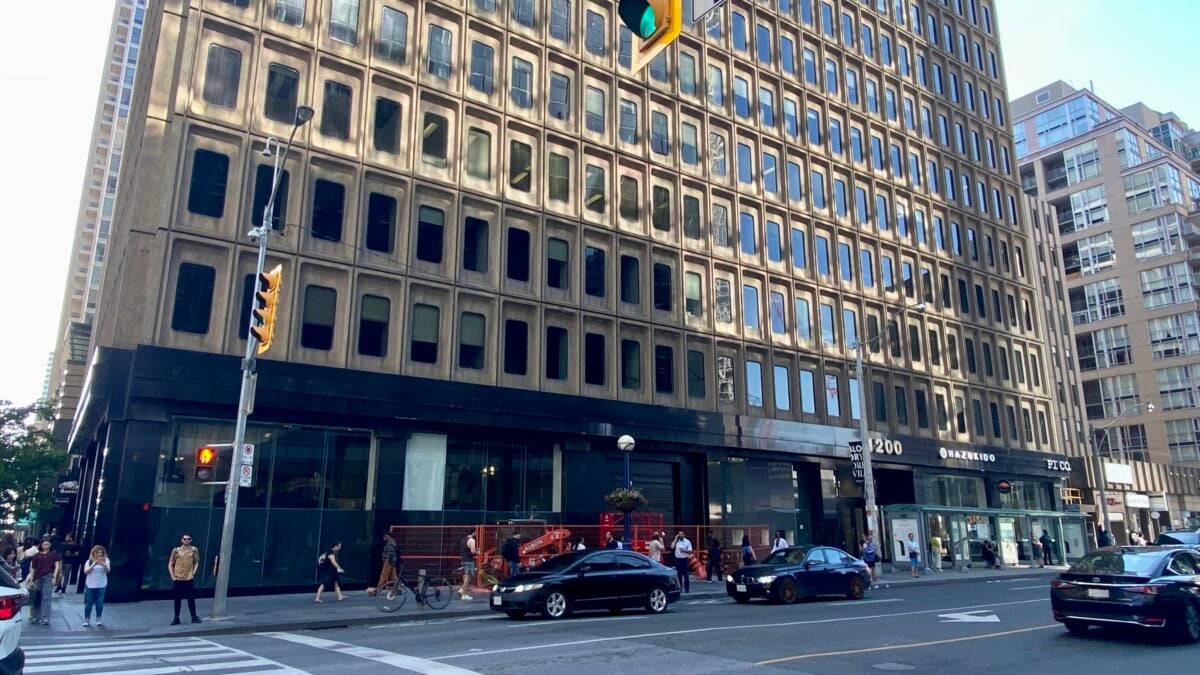
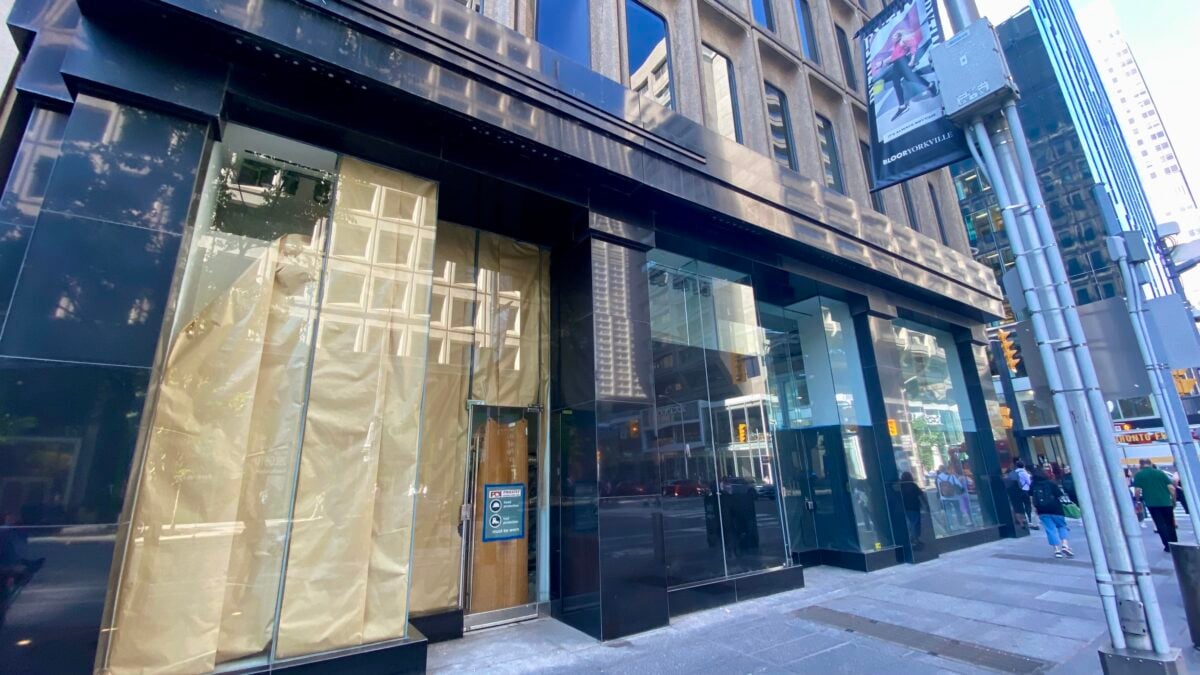
The Bloor Street Van Cleef & Arpels replaces a Zegna store that opened at 100 Bloor in December of 2018. The Zegna store involved a partnership with Ermenegildo Zegna and Harry Rosen, and the store was ultimately unprofitable and shuttered last year. JLL, under the direction of Brandon Gorman, leased the former Zegna space. Casdin Parr of JLL represented Van Cleef & Arpels in the lease deal to put the brand into 100 Bloor. 

Toronto’s Bloor Street is seeing rapid change with the addition of luxury brands. Several stores are under construction with anticipated opening dates this year, including Rolex at 101 Bloor Street West, and a row of stores at 110 Bloor Street West including Saint Laurent, Alexander Wang, Anne Fontaine and Paris Baguette. Several luxury watch brands will open at the base of the Park Hyatt Hotel before the end of the year, and more leases are said to have been signed on the street with announcements to follow here in Retail Insider. 

It’s not yet known if Van Cleef & Arpels will open more standalone stores in Canada. Sources were unable to confirm if any talks or negotiations had taken place for stores at Royalmount in Montreal or Oakridge Park in Vancouver, both of which will have an expansive roster of luxury stores upon opening. Royalmount’s opening date is set for August 15, 2024 and Oakridge Park is expected to open some time in 2025. 

Richemont also operates standalone boutiques in Canada for its jewellery brands including Piaget, IWC, Panerai, Vacheron Constantin, Montblanc and Jaeger LeCoultre. These are all in the Toronto and Vancouver markets though Piaget has yet to open a store in Vancouver. Chloé, known for its women’s ready-to-wear and bags, operates a flagship at Toronto’s Yorkdale Shopping Centre which is currently being renovated. Richemont also owns pricey Belgian luxury brand Delvaux which has concessions at Holt Renfrew stores in downtown Vancouver and at 50 Bloor Street West in Toronto. 

British Brand ‘FatFace’ Continues Canadian Store Expansion with 1st Outlet Store and More Locations to Open this Year [Interview]

FatFace in Georgian Mall, Barrie, Ontario (Image: GTA General Contractors / Mike Black PhotoWorks)

FatFace, a British, family, lifestyle clothing brand that is Made for Life, has opened its first Canadian outlet store at Toronto Premium Outlets in Halton Hills.

FatFace opened its first three stores in Niagara-on-the-Lake, Barrie and Newmarket earlier this year. 

Mark Wright

The opening of the stores in Canada follows months of research using insights from the US and Canadian customers to identify the towns to launch in and builds on a successful performance in the United States, ever since the first store opened in North America six years ago, said the retailer, said Mark Wright, Chief Operating Officer at FatFace.

“While this is our first outlet store in Canada, we have two outlet stores in the US, where customers love being able to buy clothes from current and past seasons. Earlier this summer we launched a pop-up in Toronto’s Distillery District, and we’re excited to also be putting down some roots down in the Toronto area at Toronto Premium Outlets,” said Wright.

“This is just the start of our journey in Canada, and we’re really excited to see where it will take us. Our first store only opened in May, and we already have five up and running, including our pop-up in Toronto’s Distillery District. What’s more we’re planning on opening another three stores before Christmas. In terms of generating growth in this new market, we’re sticking with the brand’s roots of relying on strong word of mouth about excellent product and customer service. You won’t see any FatFace advertising, but you might spot people wearing their favourite Airlie sweatshirt in the special Canadian flag design.

“While Canadian customers can currently use the US website to order online, we are working hard to improve and refine this experience, with updates to come in early 2024. All the early signs are good, and we’re committed to building a credible and loved brand in Canada.”

FatFace at Toronto Premium Outlets (Image: Linkedin)
FatFace in Georgian Mall, Barrie, Ontario (Image: GTA General Contractors / Mike Black PhotoWorks)

Jennifer Bowyer and Jeff Berkowitz of Aurora Realty Consultants represents FatFace in Canada. According to Aurora’s website, FatFace stores will ideally be in the 1,200 to 1,800 square foot range in tourist markets (such as Niagara-on-the-Lake) as well as high streets and shopping centres. 

FatFace currently has 180 stores in the UK, five in Ireland and over 25 stores in the US and Canada. Looking ahead, FatFace plans to open three further stores in Canada in 2023. This will take the number of Canadian stores to eight

“We are a global brand with commitment and appetite to extend in North America. Alongside new store openings, we are growing our online business in the UK, US and Europe. We also sell our products through third party stores and websites, such as at Next in the UK and Van Maur in the US,” said Wright.

“FatFace is an iconic British brand with a trusted heritage providing great quality clothing. Back in 1988, two friends with a love of the outdoors and adventure began selling homemade T-shirts and sweatshirts out the back of a campervan to fund their adventures. Now 35 years old, our rich brand heritage continues to delight customers, with ranges for all the family.

“The brand’s popularity continues to grow as we execute our strategy: never compromising the quality of our products, being laser focused on our multi-channel offering, growing our international business and all the while remaining dedicated to sustainability to ensure the business is fit for the future. Our headquarters are in Havant, on the south coast of England. We love being by the seaside, where outdoor living is an important value, inspiring us to create products our customers love.”

FatFace in Georgian Mall, Barrie, Ontario (Image: GTA General Contractors / Mike Black PhotoWorks)

Although FatFace started out with a focus on men’s ski and sportswear, it is now firmly a family lifestyle brand, said Wright.

“Our current sales mix is around 65 per cent on womenswear, 25 per cent on menswear, and a small but important selection of kidswear and accessories. Last year we launched a pet range as part of our commitment to make clothes for the whole family. Our customers have a thirst for life and sense of adventure. Authenticity, community and sustainability are important to us in all our locations. We take this responsibility to our customers and their environments seriously, as evidenced by the fact that we recently became the UK’s largest retailer to be awarded B Corp status,” he said.

“From our responsible sourcing practices, climate conscious initiatives and inspiring charity partnerships to the wonderful people who are driving change across our business and in our local communities, becoming a B Corp™ is a celebration of all that we stand for. Our sustainability journey began over 10 years ago but fast forward to today – now an international multi channel business – and we are more focused and ambitious than ever on finding ways to reduce our impact on the planet, and positively support our colleagues and the communities we operate in. We know this is something our customers care about whether they’re buying one of our iconic Airlie sweatshirts, or purchasing some of our novelty socks.”

FatFace Pop-up at The Distillery District (Image: Dustin Fuhs)
FatFace in Niagara-on-the-Lake, Ontario (Image: GTA General Contractors / Mike Black PhotoWorks)

Wright said what sets the retailer apart from other brands is the breadth of its  product range married with its unwavering commitment to quality.

“Whether shoppers are looking to get kitted out for the outdoors, have a relaxing night in, or get dressed up for a special occasion, our customers know they can rely on FatFace for an outfit that never compromises on style or quality. In that sense, we have no real direct competitors taking the same holistic approach to providing high quality clothing for the whole family to live in, no matter the occasion,” he said.

***Photos courtesy of Mike Black PhotoWorks

Icebreaker Strategizes Canadian Growth with New Initiatives and Enhanced E-commerce [Interview]

Icebreaker at 278B Queen St W, Toronto, ON (Image: Dustin Fuhs)

Icebreaker, a New Zealand-based brand focusing on Merino wool outdoor clothing, is looking to enhance its wholesale program, expand its product selection, and is continuously looking to improve its sustainability initiatives such as reducing plastic in products and shipping.

Noah Bryan

Icebreaker was founded in 1995 and its first expansion into the international market was in Canada. Today, it has nine locations in Canada, has an e-commerce team to support the Canadian market, has a wholesale program, and is now looking to increase consumer awareness of the brand.

“Our big focus for this year is really focused on increasing consumer awareness and the benefits of Merino Wool and Icebreakers approach to natural performance apparel. So when you think about it, growth for the brand in the Canadian market – we think about the investment we are making in growing consumer awareness. Icebreaker has been invested in the Canadian market for decades, and we will continue to emphasize the importance of the Canadian consumer,” says Noah Bryan, the North America General Manager for Icebreaker.

Product Selection And Expansion

Icebreaker at CF Carrefour Laval (Image: Icebreaker)

Consumers can find a variety of products for Men, Women, and children. Last year, the brand introduced its real fleece program where consumers can find 100 percent natural Merino wool and high pile fleece which Bryan says is soft, warm, and breathable.

Icebreaker’s current collection is for the Winter 2023 and consumers can expect the brand to build out its athletic wear.

“We have built out the new program for this current season and we are very excited about that. It will also extend to some more athletic silhouettes called the Descender franchise, which will continue to build into and really meet the needs of a consumer who wants 100 percent natural performance apparel without a compromise to performance.”

Icebreaker has Canadian storefronts in Vancouver, Toronto, Calgary, and in Montreal and has no plans to expand; however, Bryan says it is going to be expanding staff in Canada for the growing demand and will be providing more support to its current wholesale partners.

“Right now, we are not expanding our footprint, although we have expanded our staffing in Canada to accommodate a more robust wholesale presence for the brands. We have more teams servicing our wholesale customers in the Canada market, but our retail footprint will remain the same in the near term,” says Bryan. “We partner with the best retailers in Canada, and so it is less about expansion and of doors and partners, but more about the growth within existing partners that we have and supporting them with better merchandising and point of purchase sales materials.”

E-commerce platform and Loyalty Program

Icebreaker Nature Rewards

Bryan says Icebreaker’s e-commerce platform is a great way to communicate with consumers and let them know about what is happening within the brand.

“We are really excited about the way that the Canadian e-commerce site for Icebreaker engages with the consumer. We have the ability to tell really fantastic stories and we continue to kind of roll out new initiatives for the brand. Our e-commerce site specifically tends to be a great vehicle for us to communicate things that maybe have a more narrow commercial application but represent innovation and kind of groundbreaking fabric technologies for Icebreaker,” says Bryan.

Icebreaker also provides a loyalty program for consumers, nature rewards. Under the loyalty program consumers can get fifty points for signing up, ten points per dollar spent, and five points when you purchase products on sale. There are four levels in its loyalty program:

Icebreaker at CF Carrefour Laval (Image: Icebreaker)
  • First Level offers consumers who registered a voucher for ten percent off.
  • Tier 1 offers a $20 voucher when you have 2,000 points and a single-use free express shipping voucher.
  • Tier 2 offers $60 when you have 5,000 points, and unlimited shipping for three months.
  • Tier 3 offers $150 when you have 10,000 points and unlimited free shipping.

All levels include early access to sale offerings and products. Additionally, consumers only have one year to use their points as they will reset on the date you signed up.

Although people can easily shop online, Bryan says they still encourage people to come in-store to experience the products through its touch labs.

“The only thing that will be changing is we will continue to use our stores as a way for consumers to really put their hands on the product. We call our retailers touch labs because we feel very strongly that once you experience the quality and feel of an Icebreaker, you won’t go back.”

Icebreaker Montreal 1515 Saint-Catherine St W (Image: Google)

Zero Plastic and New Dare To Repair Program

Bryan says Icebreaker made a commitment years ago to go 100 percent plastic free in its apparel collections and in the upcoming collection – it is forecasted at 98.3 percent plastic free across the entire apparel collection. In addition to the collection, this also applies to shipping as Bryan says the brand does not use any plastic in packaging, tags, or labels – everything is natural.

Icebreaker also has a new program, Dare to Repair, that will be rolled out across stores in Canada soon. The program allows consumers to bring in broken products and have it repaired by a qualified seamstress, learn about how to take care of the product, and consumers can learn what happens to the product once it has reached its limit. This will decrease the amount of consumers throwing away an item just because it is broken and will allow products to last longer.

“We are one of the few brands who have come to this place very early on and we have been very consistent about how we execute. We will continue to drive that pace forward, and sometimes that requires innovating new fabrics to replace synthetics, without compromising performance. Icebreaker has been committed to doing this for years and our commitment remains as strong as ever.”

Navigating the Grocery Aisles: How Canadians are Adapting to Soaring Food Prices and Changing Shopping Habits [Op-Ed]

Walmart Canada in Brampton, Ontario (Image: Field Agent Canada)

It’s undoubtedly been a challenging time for consumers at the grocery store, as dynamic shifts in economic landscapes and global challenges redefine our daily lives. In this era, the resilience and adaptability of individuals and communities have become paramount. Among the fundamental aspects of daily life, the cost of groceries has experienced significant fluctuations in recent times, raising concerns not only in Canada but also reverberating worldwide. These fluctuations have had multifaceted impacts on households and individuals. As Thanksgiving approaches, a recent survey conducted by our Lab at Dalhousie University, in collaboration with Caddle, sheds light on how Canadians are navigating the complexities of higher food prices and the profound impact on their nutrition and well-being.

Shifting Habits in the Face of Soaring Prices

The survey results are indicative of the fact that 64.1% of Canadians have substantially altered their grocery shopping habits in response to the economic realities of our time. An astonishing 86.4% of Canadians now consider themselves more price-conscious compared to a year ago. Evidently, Canadians are actively seeking ways to save on their grocery bills, with 55.1% employing cost-saving mechanisms more frequently than they were 12 months prior. These mechanisms include utilizing coupons, apps, loyalty programs, and referencing flyers, with 79.2% of Canadians having availed themselves of loyalty programs in the past year and 74.8% actively using coupons. Additionally, 52.8% have explored food-rescuing apps, and 41.4% actively seek “enjoy tonight” deals. Furthermore, 49.7% of Canadians have contemplated growing their own food to counteract the impact of food inflation on their budgets.

Diverse Shopping Destinations

Dollarama on Front Street in Toronto (Image: Dustin Fuhs)

The survey reveals that Canadians are diversifying their shopping destinations in pursuit of more affordable groceries. A noteworthy 59.3% of Canadians are now more inclined to visit discount stores, reflecting a significant increase from the past 12 months. Similarly, 47.0% have increased their visits to dollar stores compared to a year ago, reflecting their efforts to save on grocery expenses. Furthermore, 18.5% of Canadians are frequenting farmers’ markets more often. In tandem with these trends, a substantial 17.0% of Canadians have embraced online transactions for food purchases for over a year.

Rise of Store Brands

Whole Foods Market in Vancouver, BC (Image: Field Agent Canada)

Store brands, also known as private labels, are gaining prominence in response to the market’s heightened frugality. A significant 63.8% of Canadians are now more inclined to opt for generic brands over national brands as a cost-saving measure, particularly when compared to the previous year.

Altered Grocery Shopping Patterns

Nature’s Emporium at Shops at One York (Image: Dustin Fuhs)

Canadians have modified how they visit grocery stores and manage their inventories in response to rising food prices. Approximately 41.2% of Canadians now visit grocery stores less frequently and are adopting more strategic stocking practices. Conversely, 26.5% are increasing their visits to grocery stores, capitalizing on deals and purchasing only what is needed for two or three days. A substantial 79.1% of Canadians assert that they have significantly reduced food waste in the past year, demonstrating a willingness to consume leftovers or repurpose ingredients.

Nutritional Compromises: A Growing Concern

Rising food prices have compelled Canadians to make challenging dietary choices. Nearly half of Canadians (49.2%) have reduced the quantity of meat or protein sources they purchase due to increased food costs, a greater number than the previous year. While 45.5% of Canadians prioritize cost over nutritional value when grocery shopping, a larger proportion than last year, 63.3% of Canadians are apprehensive that compromising on nutrition due to high food prices may have adverse long-term effects on their health.

Regional, Generational, and Income Disparities

The survey’s breakdowns by province, generation, and income level illuminate how Canadians are grappling with the impact of elevated food prices. While regional disparities show variations in grocery shopping priorities and concerns across provinces, generational differences highlight the heightened concern among Millennials about the potential health implications of prioritizing cost over nutrition. Income levels also play a significant role, with higher-income individuals being less likely to prioritize cost over nutritional value.

The findings of this survey offer a compelling glimpse into the evolving challenges that Canadians face when it comes to their grocery shopping habits and their concerns about nutrition amidst rising food prices. It is evident that these challenges are not just economic but also deeply tied to the daily lives and well-being of Canadians. As we gather around the Thanksgiving table this year, it is crucial for policymakers, industry stakeholders, and individuals alike to reflect on the profound impact of food inflation on our choices, our health, and our collective resilience in these uncertain times.

Things are improving, food inflation is slowing and Canada fared better than most countries this past year, which is why we should all be thankful.

Vancouver-Based Tableware Retailer Fable Discusses Plans for Canadian Store Expansion [CEO Interview]

Fable at 2871 Granville Street in Vancouver (Image: Fable)

Tableware retailer Fable has expanded with the opening of a new store in Vancouver.

Joe Parenteau, Co-Founder and CEO of the Vancouver-based company, said the retailer is in expansion mode these days.

Joe Parenteau

“One is through product expansion. So we’re working on a lot of new pieces for the living room and part two is through different channel growth. We do some wholesaling like Hudson’s Bay and Indigo,” he said. “But we’re also starting to open up more and more stores for us.

“It’s a combination of a lot of things for the future.”

Fable at 2871 Granville Street in Vancouver (Image: Fable)

With The Bay, products are sold online currently. At Indigo, they are sold in the stores.

“We’re in a variety of restaurants and places like that too,” said Parenteau. “Like some Earl’s locations. CRAFT Beer. We’re in a lot of places.

“When we’re looking at new store locations, we’re hoping to open up one or two more next year, primarily in markets where we have a good community base. We’re thinking something like Calgary, Edmonton. They’re big markets for us today. We’d like to complement those online markets with an in-store experience but we also consider locations like New York, L.A., where again we have a lot of community there, a lot of customers, as a great opportunity for expansion as a good portion of our sales does come from the United States.”

Fable began in November 2019.

“We are crafting home decor, starting with tabletop, you’ll see us do more home decor pieces in the future. Primarily working on creating a design concept that is timeless. Pieces that are all designed to match each other and items that are all crafted ethically and sustainably,” said Parenteau, whose partners are Tina Luu and Max Tims.

“So we do quite a vetting process on the people who make our products and the way in which we design them and the technologies we use. Hopefully we’ll have your product lasting you a lot longer than typical home decor.”

Mitchell Knoepfel of Avison Young represented Fable in the transaction. Mario Negris, Martin Moriarty and Josh Cochrane of Marcus & Millichap represented the landlord.

Fable at 2871 Granville Street in Vancouver (Image: Fable)

The concept had its roots from a personal problem. Parenteau said most generations looking for home decor initially shopped at IKEA.

“I think IKEA is really great, and they ultimately design all their pieces to match. So when you want to graduate from the IKEA days, which is where I found myself, you turn to the traditional stores, Williams Sonoma, Pottery Barn, Crate & Barrel. But those stores are nothing like IKEA. In fact, they had designed nothing to match each other.”

And for a consumer like himself, Parenteau found that challenging.

“So the concept behind Fable is to make the shopping experience even easier for home decor and make it as simple as possible,” he said.

Parenteau said its products are made in Portugal, Germany, Italy and Japan. They are sold in Canada, the U.S. and the UK. Products are also sold online and in other retail stores.

The first store opened on Queen St West in Toronto and the latest one in Vancouver opened at 2871 Granville Street in South Granville “which is kind of the home decor mecca,” he said.

The new store is about 3,500 square feet. 

“I think a lot of people are looking for a more sustainable option when they’re shopping and they want products that are timelessly designed and can last a longer time,” said Parenteau. “That’s ultimately what we offer.

“Most of our customers love our products not only because of the sustainability and transparency focus but the design style is much more modern take and it’s not too in your face and it’s not too old timeless classic. It hits the modern mark but not being too bold or over the top.”

Sleep Country Canada Launching ‘The Rest’ Luxury Concept Store, Targeting Upscale Demographic [CEO Interview]

The Rest by Sleep Country at Yorkdale Shopping Centre (Image: Dustin Fuhs)

Canadian retail giant Sleep Country is launching a new concept store this fall in the Yorkdale Shopping Centre.

Stewart Schaefer

“We’re opening up a very new, exciting luxury concept, a very bespoke experience. It’s called The Rest,” Stewart Schaefer, President & CEO of Sleep Country Canada and Dormez vous, told Retail Insider.

“It really is a collection of mattresses and linens, sheets and pillows and duvets that we don’t carry in Sleep Country that is a much more luxurious line above whatever we sell at high end at Sleep Country for obviously a very refined taste where they believe their sleep is priceless.

“It’s a much smaller concept. It will also be a heightened experience. Within our team we talk about it as a seven-star hotel over a five-star hotel. And it comes to life somewhere around mid to late November.”

Image: Yorkdale.com
The Rest by Sleep Country at Yorkdale Shopping Centre (Image: Dustin Fuhs)
Robert Horst

“It’s exciting to see Canadian brands evolve to capture new customer segments with in-store experiences,” said Robert Horst, Vice President, Retail, Oxford Properties.

“The Rest is another first-to-market concept at Yorkdale that complements the range of home décor retailers. We’re delighted to welcome The Rest among the new brands opening at Yorkdale this year.”

Schaefer said the store is about half the size of a regular location. It will be about 2,500 square feet.

“And it is strategically located right near Restoration Hardware because we do believe it does appeal to a similar demographic and it will feature, where we have roughly 40-odd beds in a Sleep Country 5,000-square-foot store, this store which is 2,500 square feet will only feature 13 uniquely, customized, fabulous beds at different price points, at different luxury levels with special ingredients into these beds that are all the luxury materials that you can think of.

“Yorkdale being Canada’s number one high end, premium mall, was chosen for all the unique tenants that they have including being next to Restoration Hardware and all the other people that they bring in. As well, launching a brand new concept the thousands upon thousands of people that enter through that mall during the holiday season is a huge part of our marketing where we hope to receive a lot of exposure in a very short period of time.

“It’s also a concept that will be very exclusive across the country where we could probably have maybe only five to a maximum of 10 of these locations opened in various cities – Vancouver, Calgary, Edmonton, Montreal. That has not yet been decided upon but the first one we figured that Yorkdale mall is that pristine mall in Canada we had to try it out. If we believe, which we do, that there is an opportunity to cater to a more customized bespoke higher end clientele that just want something more luxurious and if it works in Toronto we’re going to try and appeal to that market across the country.

The Rest by Sleep Country at Yorkdale Shopping Centre (Image: Dustin Fuhs)
Sleep Country Express at Walmart Canada (Image: Sleep Country)
Image: Sleep Country Canada Head Office

Sleep Country currently has 296 locations across Canada. That doesn’t include its six Casper stores.

“There’s a bunch of (new) stores already in the pipes. So we’re excited about that,” said Schaefer. “Next year, it happens to be our 30th year anniversary and coincidentally we’re going to be opening our 300th Sleep Country-Dormez vous store. We’re going to create some type of an event around that.”

West Side Stories: From Retail Resilience to Remarkable Renewal

As the retail landscape in Western Canada accelerates into the future, Retail Council of Canada’s Retail West Conference is once again proving itself as the cornerstone for innovative thought sharing, transformative insights, and invaluable networking. With the Agenda designed to address the issues facing retailers in Western Canada, each session will provide both unique perspectives and solutions-based recommendations.

For any retailer considering whether to attend, let’s look what Western Canadian influencers Sharon Hayles from Diane’s Lingerie, Jackie Ross from JRoss Recruiters, and Polly Tracey from Best Buy Canada and are saying about Retail West 2023:  

1. Given the changing retail landscape, how crucial is participating at Retail West in providing insight to today’s retailers?

Sharon Hayles (Diane’s Lingerie): “Retail West isn’t just another conference; it’s the conference. This conference touches on relevant issues trending in the retail landscape. It brings together global insights with Western Canadian considerations for building forward-thinking strategies and offering unique insights to navigate the evolving retail terrain. I especially like that there are both big and independent retailers sharing their learnings. “

2. Of the many sessions on the packed Agenda, which holds the most interest for you and why?

Jackie Ross (JRoss Recruiters): “I’m a raving fan of David Lui. I’m looking forward to his opening mainstage session with Michael LeBlanc, exploring the development of Unity Brands and its recent acquisition of Vancouver-based Kit and Ace and local footwear brand Casca. David’s optimistic nature and enthusiasm about the future of Canadian retail is always infectious. He is a progressive leader and outstanding entrepreneur. His partnership with Joe Mimran and Frank Rochetti, brings a trifecta of talent to the table with marketing, product design and operational expertise to promote products that focus on fashion, wellness, and an active lifestyle on a national and global scale. It’s exciting to watch more Western Canadian-centric and Canadian-focused brands thriving.”

3. With many retail leaders and visionaries present, who are you most looking forward to connecting with at the conference?

Jackie Ross (JRoss Recruiters): “Michele Guimond from MEC as well as Kriston Dean from Purdys Chocolatier, Rachel Mielke from Hillberg & Berg, and Ashely Freeborn from Smash + Tess are such inspirational leaders whose work and accomplishments I have also admired for years. And I always love seeing my friend David Ian Gray from Dig360. We love to get together for drinks and insights afterward and recap the day.”

4. How do you think Retail West offers a different perspective or set of insights compared to other conferences in the industry?

Polly Tracey (Best Buy): “Retail West is a ‘for retail, by retail’ conference, so I find it tackles real issues, happening right now.”

Jackie Ross (JRoss Recruiters): “I like the intimate setting. There are opportunities to make meaningful connections and expand your network, providing you and your teams with exposure to peers, experts, and potential partners. I’ve made so many great connections at this conference over the years and have lots of friends in the room!  So, if you are looking to get introductions, come find me, introduce yourself and I’m happy to help! ”

5. Finally, for retailers on the fence about attending, what would you say is the ‘can’t miss’ component of this year’s Retail West?

Polly Tracey (Best Buy): “ I think it’s the efficiency of so much offered in one day – jam-packed schedule, a wide variety of topics and formats, networking and connecting. I particularly like the breakout sessions – the smaller audiences mean there are often more candid questions asked.”

The endorsements are clear: Retail West 2023 is an experience, an opportunity, and perhaps most importantly, one of the most effective forums for exploring the changes in retail in Western Canada and the opportunities for innovation. Whether you’re a seasoned retail veteran or a new entrant, the promise of the event is undeniable.

Ticket for Retail West can be purchased here. A 20% discount applies to groups of 5 our more.