Home Blog Page 618

Mandated $20/hour Living Wage Could Drive 600,000 Canadian Small Businesses to Closure, Warns CFIB Report [Interview]

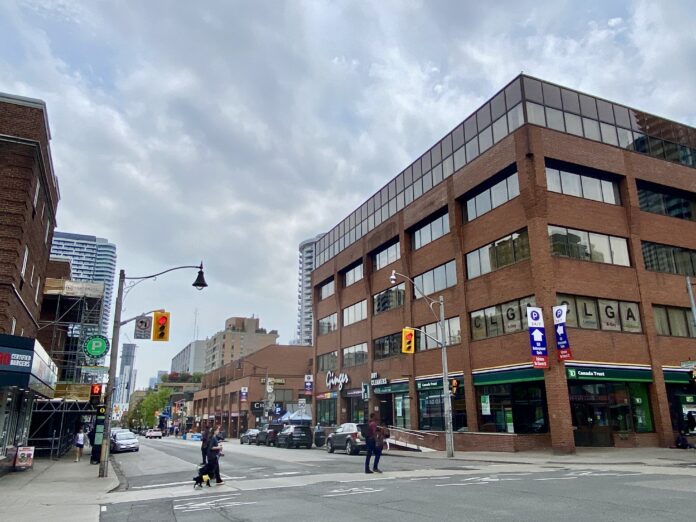
Church St & Wellesley St E (Image: Dustin Fuhs)

Mandating a $20/hour living wage across Canada could push over half a million small businesses to the brink of closure, according to a new report by the Canadian Federation of Independent Business (CFIB).

The report, “Affordability, minimum wages, and living wages: Striking a balance for small businesses,” said it would cost the Canadian economy $44.9 billion in extra wages and put almost 600,000 small businesses at risk of becoming unprofitable.

Beatrix Abdul Azeez

“Minimum wage and living wage policies often miss the mark when it comes to truly supporting the most vulnerable workers. Governments are setting these wages with no anchor in economic reality, relying on subjective and unpredictable criteria,” said Beatrix Abdul Azeez, CFIB policy analyst. “Governments should shift away from relying on these blunt tools and instead adopt a new approach to ensure workers can cope with the rising cost of living, while also guaranteeing that small businesses aren’t unfairly burdened.”
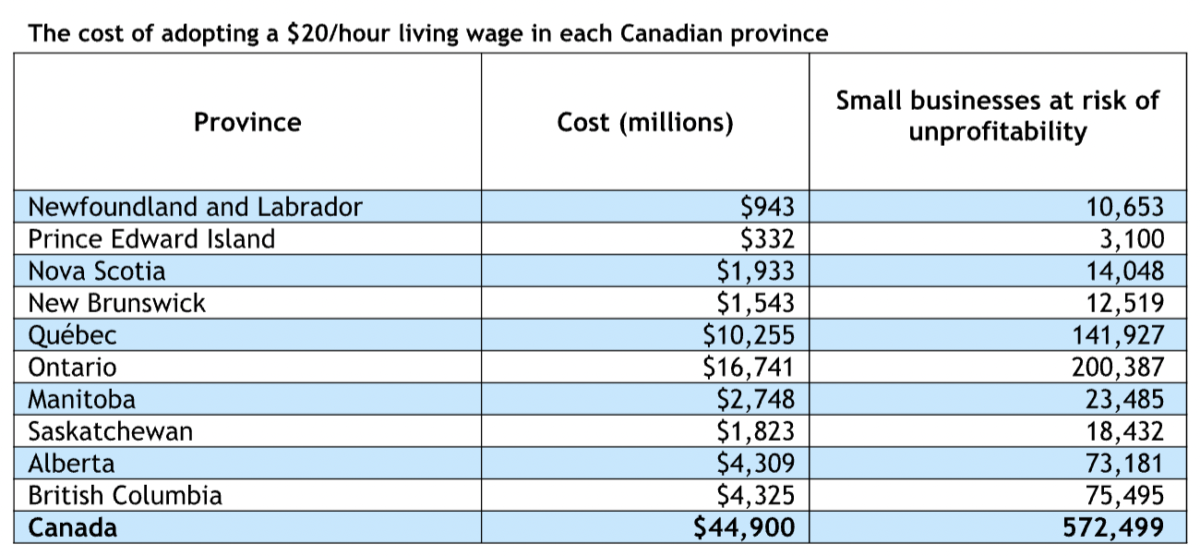
Image: CFIB

The provinces that would be hardest hit with a $20/hour living wage would be Ontario with a cost of $16.7 billion and with 200,387 businesses at risk followed by Quebec ($10.2 billion, 141,927 businesses), British Columbia ($4.3 billion, 75,495 businesses) and Alberta ($4.3 billion, 73,181 businesses).

The CFIB said governments need a new approach to address affordability challenges as traditional minimum wage and living wage policies fall short in addressing the root causes of the rising cost of living while simultaneously increasing costs on small businesses.

“Mandatory wage hikes do not actually address the affordability crisis. While they are good intentioned, they actually cause unintended consequences for small businesses,” said Abdul Azeez. “What this report does is draw attention to those consequences and offers alternative solutions that the government can put in place to address the affordability crisis.

The CFIB recommends that governments:

  • Alleviate the impact of rising minimum wages on small businesses by reducing other taxes and payroll costs (such as small business tax rate, CPP, EI, health/education payroll taxes, etc.);
  • Establish a minimum wage setting process that is predictable, transparent, reflective of market conditions, and mindful of economic impacts;
  • Link minimum wage adjustments to private sector wage growth or a predetermined percentage of the median wage;
  • Address the root causes of the affordability crisis by enacting policies to increase the supply of housing, reduce energy taxes, and remove interprovincial and international trade barriers;
  • Provide targeted fiscal support for vulnerable workers through reduced personal income tax rates, increased basic personal amounts, and expanded tax credits.
Affordability, minimum wages, and living wages: Striking a balance for small businesses (CFIB 2024)

“Canada says that small businesses are the backbone of the economy. So mandating the living wage will cause Canada to lose more than 40 per cent of their businesses actually,” said Abdul Azeez. 

“This would be a very high burden for businesses. In fact, we asked our members what was the impact of the last minimum wage hike and for six out of 10 they actually had to increase wages for those earning even above the minimum wage which just goes to show that there’s a cascading effect on wages when minimum wages are increased. 

“Another six out of 10 had to increase the prices of goods and services which just puts more inflationary pressure on the economy. And unfortunately for those small businesses who cannot absorb this extra cost they have to work more. The business owners have to work more and even cut out some investments they’re doing in their business.

“Governments need to reflect on the role they actually play in fueling this crisis. There are many different ways that the government can address this crisis by looking within. They can implement policies that help lower the price and increase the supply of essentials such as housing, food, energy, gas. Things that people require to live a normal and fulfilled life. So the governments just need to look within and address the root causes instead of placing this burden on small businesses.

“The Bank of Canada has been sounding the alarm about Canada being in a productivity emergency. What we see is we’re paying more money for the same level of productivity that we had in past years. Of course, if minimum wages are increasing arbitrarily without reflecting what’s actually going on in the labour markets people may be more inclined to hire more experienced workers. So people that are less experienced may be less likely to get jobs just because the cost of hiring them is so high. So this is one of the unintended consequences as well.”
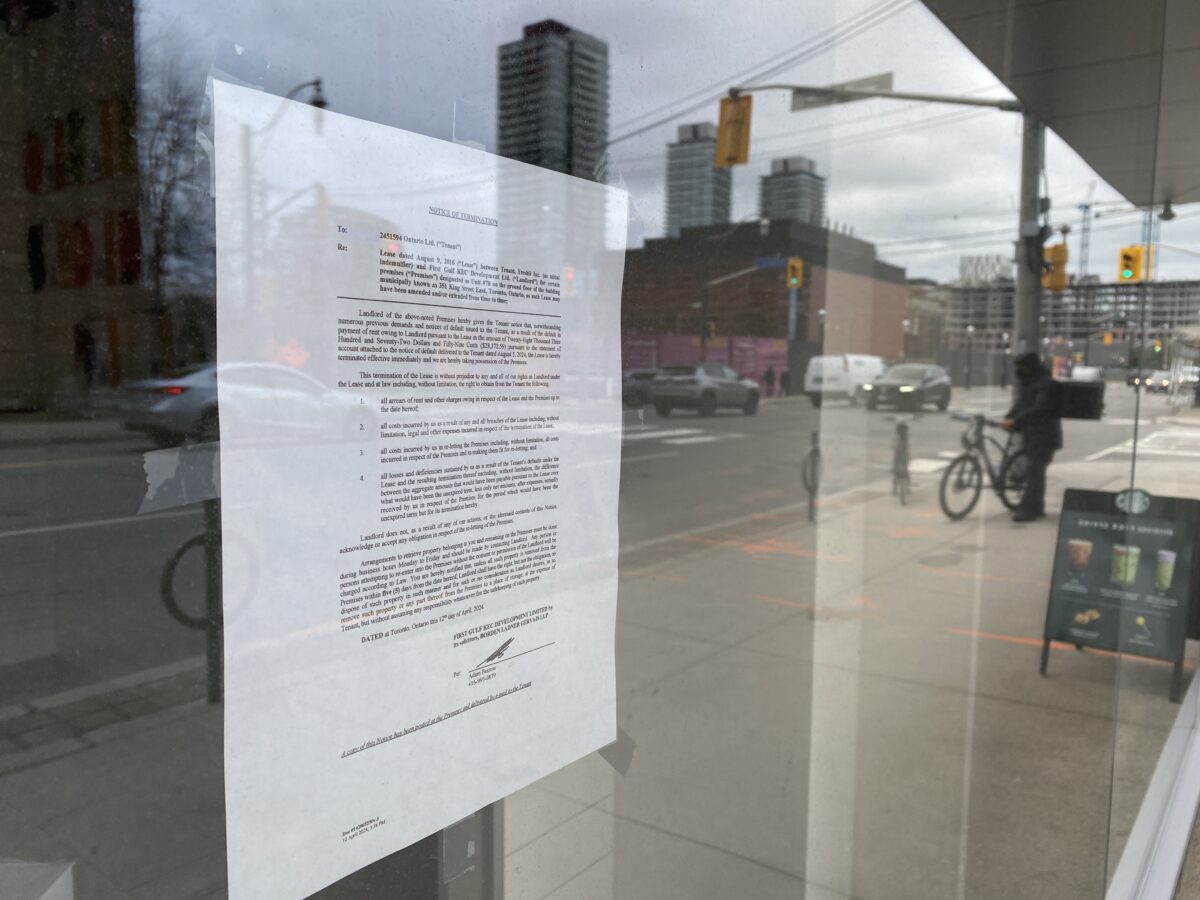
Notice of Termination (Image: Dustin Fuhs)

The CFIB also said that 31 per cent of small businesses had to cut back on hiring young and unskilled workers, with 25 per cent of them reducing overall employment with a hike in a minimum wage.

“Canada’s cost of living crisis requires a more effective framework: making sure rent, food, and gas prices are affordable and stable while extending support to workers and small businesses through tax reductions,” said Jairo Yunis, CFIB’s director for BC and western economic policy. “This would go a long way in addressing Canada’s affordability shock.”

Stokes Inc. Invests in Store Renovations and New Gift Line to Reinforce Market Presence [Interview]

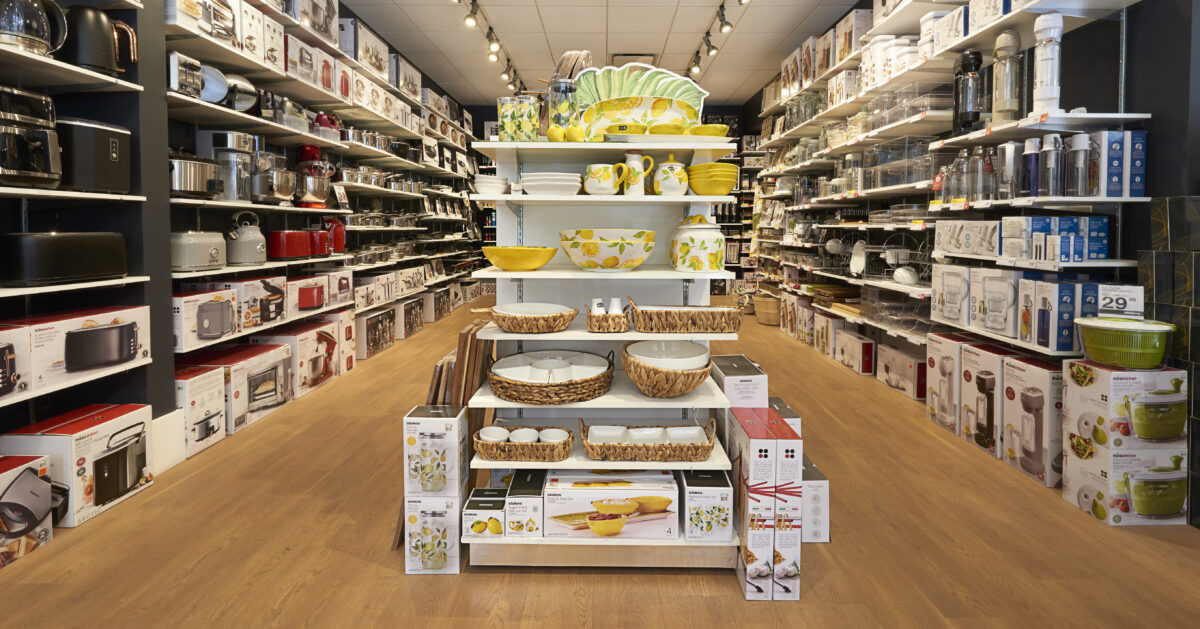
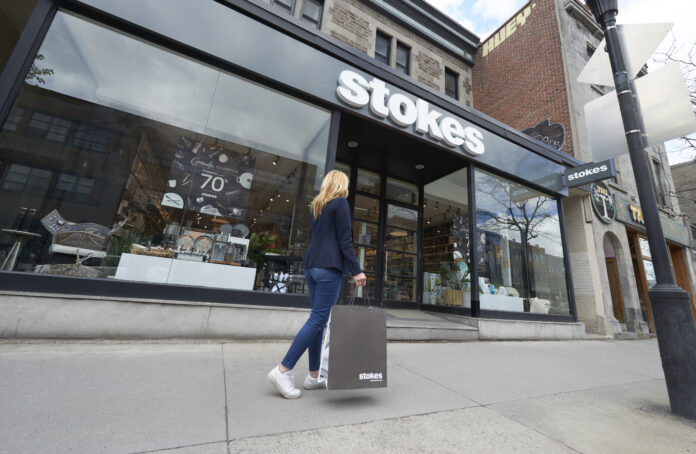
Image: Stokes

Stokes Inc., Canada’s go-to destination for kitchenware, tableware and homeware needs, has been active again following a restructuring 4 years ago during the pandemic.

The brand, which is 89 years old and still a family business, has been opening new stores, renovating stores, relocating some and recently launched a new gift line as well as investing in its digital presence.

Cesar Morales

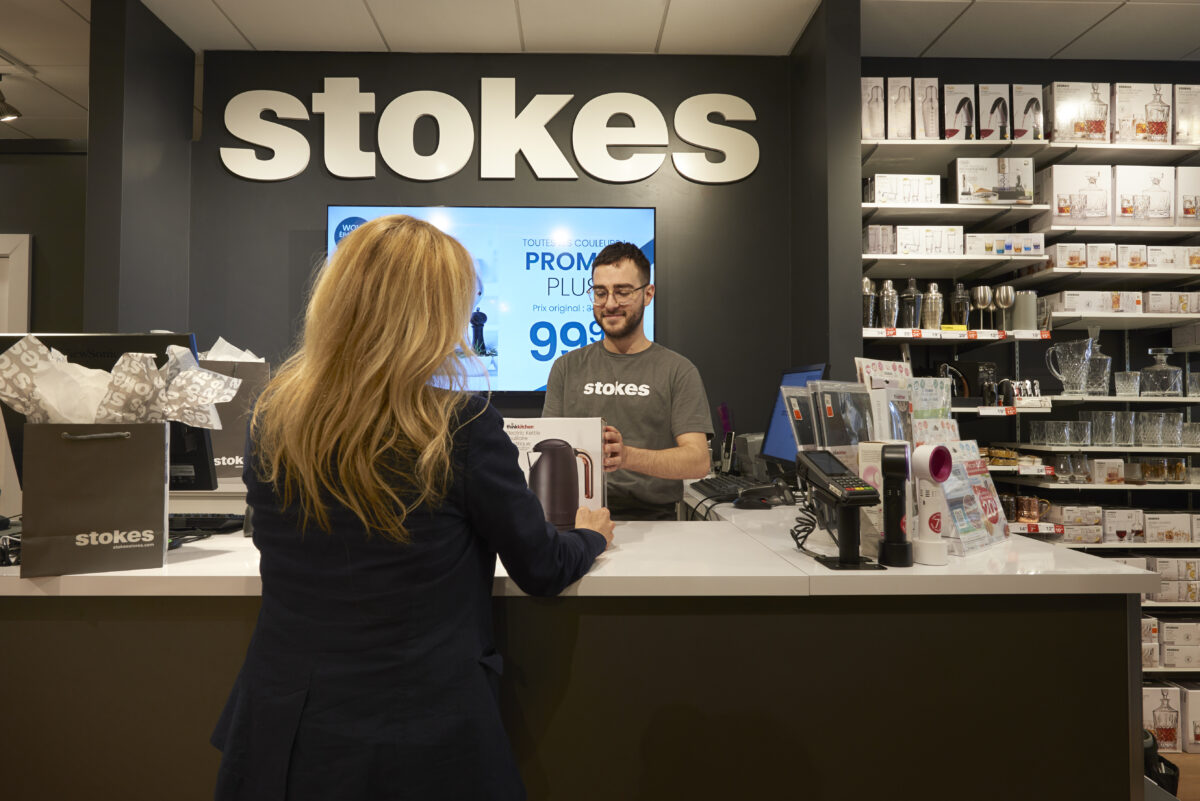
Cesar Morales, Marketing and Branding Director for Stokes, said in the past few years the company has launched a new website with “more of an omnichannel view where we offer BOPIS (buy online pick up in store) for our customers.”

“We’ve really worked a lot on our online shopping experience in the past few  years. We also launched a new POS system last fall which will help us improve customer experience in stores,” said Morales. “There are other initiatives coming in the next 12 months as well”

“We’re trying to really become a more experiential retailer to compete with the big brands. Stokes is there to help them be their ‘at home’ chef . . . Stokes is very unique in what we sell.”

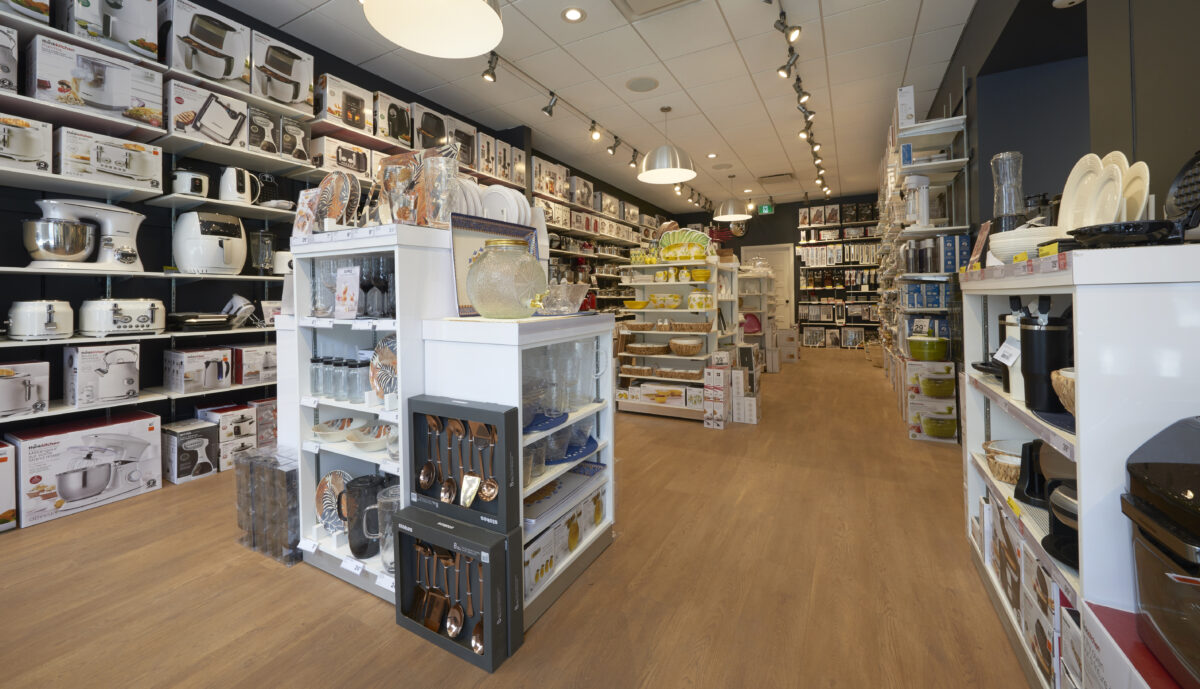
Image: Stokes
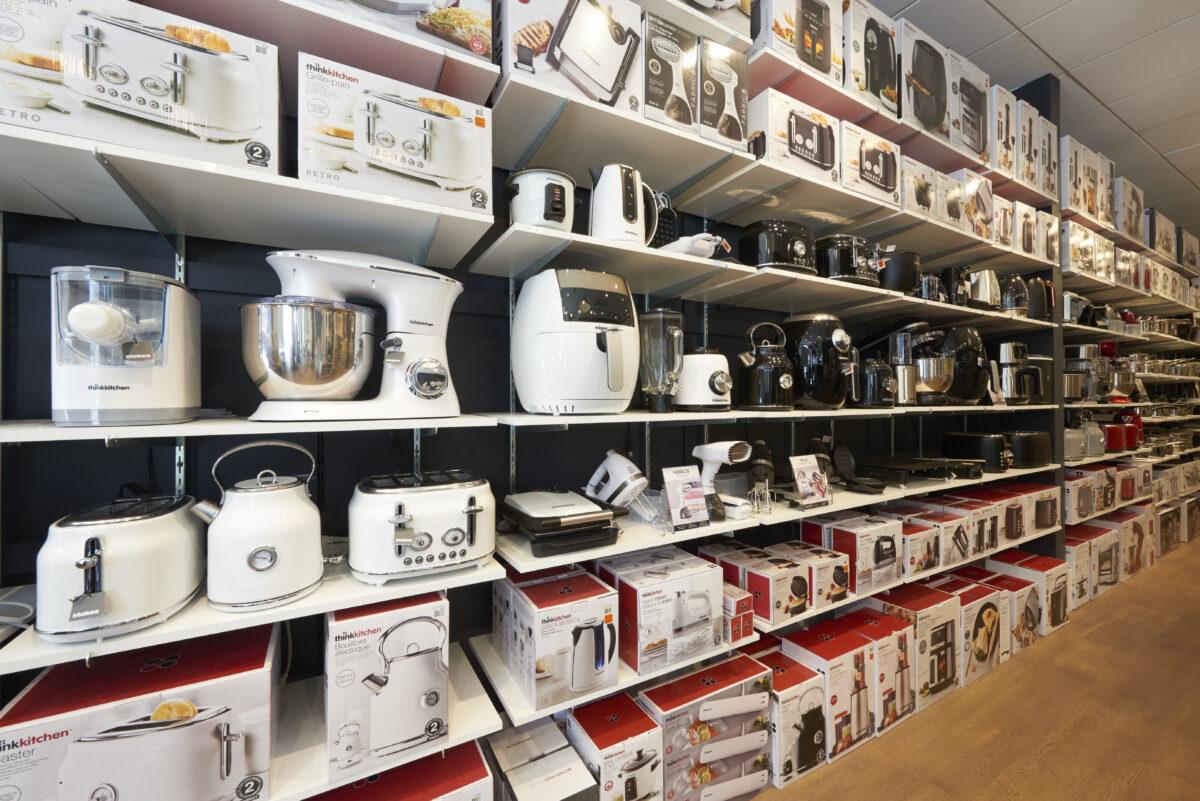
Image: Stokes

Currently the company has 104 stores across Canada.

Some of the Renovations, Relocations and New Stores in the last 18 months have been:

  • Rue St-Denis (Montreal, QC)
  • Carrefour Angrignon (Montreal, QC)
  • Carrefour de la Rive-Sud (Boucherville, QC)
  • Méga-Centre Charny (Charny, QC)
  • Bramalea City Centre (New – Brampton, ON)
  • Stone Road Mall (New – Guelph, ON)
  • Intercity Shopping Centre (New – Thunder Bay, ON)
  • Southcentre Mall (New – Calgary, AB.)
  • Kingsway Mall (New – Edmonton, AB)
  • Avalon Mall (St-John’s, NFLD)
  • Royalty Crossing (Charlottetown, PEI)

Stokes stores are about 2,500 square feet.

Youtube video
Image: Stokes

Renovations were geared for the aesthetic look of locations with a fresher image, a nicer shopping environment for customers in key locations as well as a better presentation of product within the stores.

Morales said the company has also invested more on the digital side of the business in an effort to increase its social media presence on platforms such as Instagram, Pinterest and TikTok. It’s also working with local chefs and promoting local talent.

Morales said the brand is also working hard to improve its product selection.

“When you come to the store, you’ll always see something new,” he said. “And we are always working on being an important lifestyle/value option for our customers.”

Image: Stokes

Recently, Stokes launched its new Easy to Gift line, where no wrapping is needed. The collection encompasses a variety of items.

“We are thrilled to introduce our new gift line, a demonstration of our enduring commitment to innovation and excellence,” said Morales. “Each product in this collection has been carefully curated to deliver both practical utility and aesthetic charm, making it an ideal choice for any occasion. Our dedication to providing value to our customers remains steadfast, and with gifts starting at only $9.98, we are proud to offer affordable gift giving, especially in times when prices are on the rise.

“We want to also position Stokes as a destination for gifts, not just customers buying for their own needs.”

How Big Food Companies Can Do More to Create Healthier Food Environments [Op-Ed]

Companies can do more if they truly want to support healthier dietary patterns among adults and children in Canada. THE CANADIAN PRESS/Cole Burston

Healthy eating is challenging in our current food environment in Canada. When delicious, attractive, unhealthy foods are promoted, priced, and placed for easy access and consumption, it contributes to the suboptimal eating patterns among most Canadian adults and children.

The food industry has a role in the World Health Organization’s global action plan for addressing chronic diseases by creating healthier food environments, by taking actions like reducing the amount of salt, saturated fats and sugars in foods. After all, food companies are the ones who create, distribute and market the majority of foods we consume.

It is no secret that companies and their shareholders have legally mandated profit-driven interests — interests that may not align with a desire to support public health and healthy eating among Canadians.

To understand more about food industry commitments, we studied the nutrition-related policies and pledges of the largest food and drink manufacturers in Canada, including companies like Nestlé, Coca-Cola and Danone. We wanted to understand the commitments companies have made to create healthier food environments in Canada and to see if things had improved since 2018, when our team of nutrition and public health researchers first conducted this exercise.

We used standardized methods that have been used in other countries to evaluate the top 22 food and drink manufacturers in Canada and their company policies and commitments related to nutrition in six key areas:

  • corporate strategy,
  • food (re)formulation,
  • nutrition information and labelling,
  • marketing and promotion,
  • accessibility and availability, and
  • transparency in relationships.

Scores for each of these six areas were added up to generate overall scores out of 100 for each company. To make sure the evaluation was relevant, we adapted the methods so they considered current policies in Canada. Our newly released report, which follows a similar report our team published in 2019, revealed some surprising findings.

Surprising findings

An empty shopping cart in a supermarket
A new report looks at the commitments large food and drink manufacturers like Nestlé, Coca-Cola and Danone have made to create healthier food environments in Canada, and whether they have improved since 2018. (Shutterstock)

Our work showed that some companies are doing more than others. We found a range of overall company scores, with the highest score totalling 75 points out of 100, while the lowest score was 18 points.

The top performing company, Unilever, had a defined strategy to support healthier diets, public targets for the proportion of sales from healthier products and a commitment to report on these targets, and a policy that restricts marketing to children up to the age of 16. These positive examples demonstrate that it is reasonable to ask companies to make public health commitments, and to expect them to report on their achievement of these goals.

The results showed that many food and beverage companies are not doing enough to positively shape diets in Canada. The median score received was 49/100, a small improvement since our last report.

When we looked at each of the six key areas, we found very few commitments to make healthier foods more available and accessible. Most commitments centred on what companies said they were doing to improve the nutritional quality of their food products. We also found some important areas where none of the 22 companies had made any commitments. For instance, none had committed to decrease their spending on marketing unhealthy foods.

Company commitments related to nutrition matter. They guide companies’ current and future actions, they inform shareholders and governments of corporate intentions and perhaps most importantly, they can be used to hold companies to account for actually meeting their stated commitments.

Recommendations for healthier food environments

A nutrition label showing sodium, carbohydrates and protein
Some food companies may be taking steps in the right direction, but overall progress towards healthier food environments remains slow. (AP Photo/Keith Srakocic)

If food manufacturers are to play a meaningful role in improving food environments, commitments and targets need to be specific, comprehensive, and clearly and transparently shared with Canadians. Companies also need to track and report on their progress in achieving their targets. We see some promising practices emerging internationally. For example, Mexico-based international food manufacturer Grupo Bimbo publicly reports the healthfulness of the products it sells and what proportion of its sales come from healthier foods.

Based on our analysis, we have created a set of recommendations for food manufacturers. For example, we recommend that:

  • Food manufacturers should set and publicly report on targets for the proportion of their sales that come from healthier foods.
  • All food manufacturers should commit to specific, measurable, achievable, relevant and time-bound (SMART) targets for the amount of sodium, sugars and saturated fats in their products and report on their progress.
  • Companies should commit to pricing healthier foods the same or lower than less healthy foods.

We also suggest that companies pledge not to advertise unhealthy products and brands on product packaging or in settings or media where children less than 18 years old may be exposed, in line with recent World Health Organization recommendations.

Companies can do more if they truly want to support healthier dietary patterns among adults and children in Canada. Some companies may be taking steps in the right direction, but others seem to need more incentive to act and overall progress remains slow.

This work highlights the importance of introducing government policies that would require companies to make positive changes and create healthier food environments in Canada. Given the billions of dollars in health-care costs each year in Canada caused by diet-related diseases, it is likely worth the investment.


This article is republished from The Conversation under a Creative Commons license. Read the original article.

By Lana Vanderlee, Canada Research Chair in Healthy Food Policy, Assistant Professor in Nutrition, Université Laval, Alexa Gaucher-Holm, Master of Science student, School of Nutrition, Université Laval, Dana Olstad, Associate Professor, Department of Community Health Sciences, University of Calgary and Monique Potvin Kent, Professor, School of Epidemiology and Public Health, L’Université d’Ottawa/University of Ottawa

Canadian Custom Clothing Brand ‘Surmesur’ Expanding with New Locations, and Partnership with NHL Coaches’ Association [Interview]

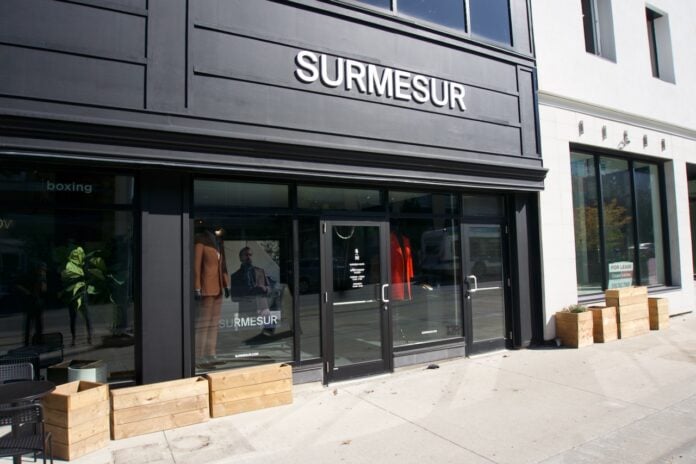
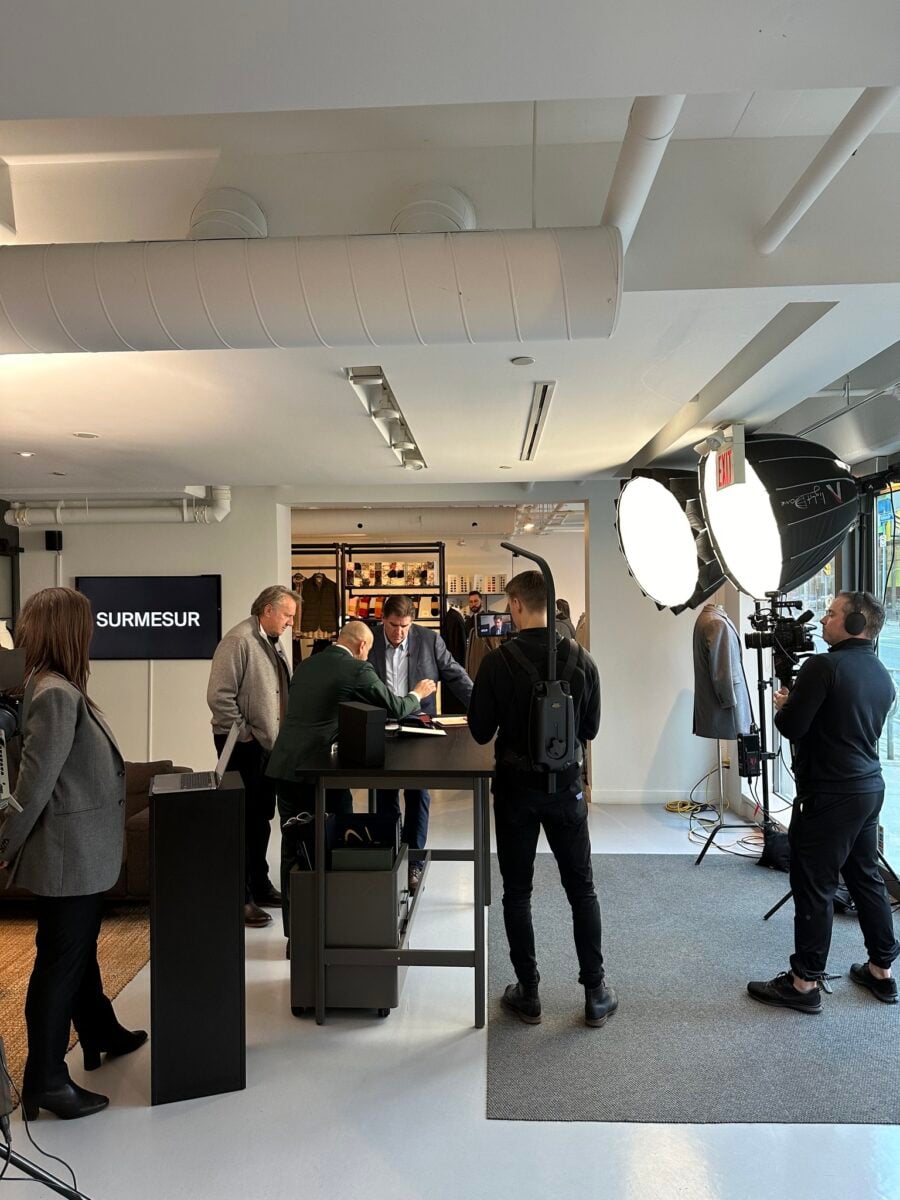
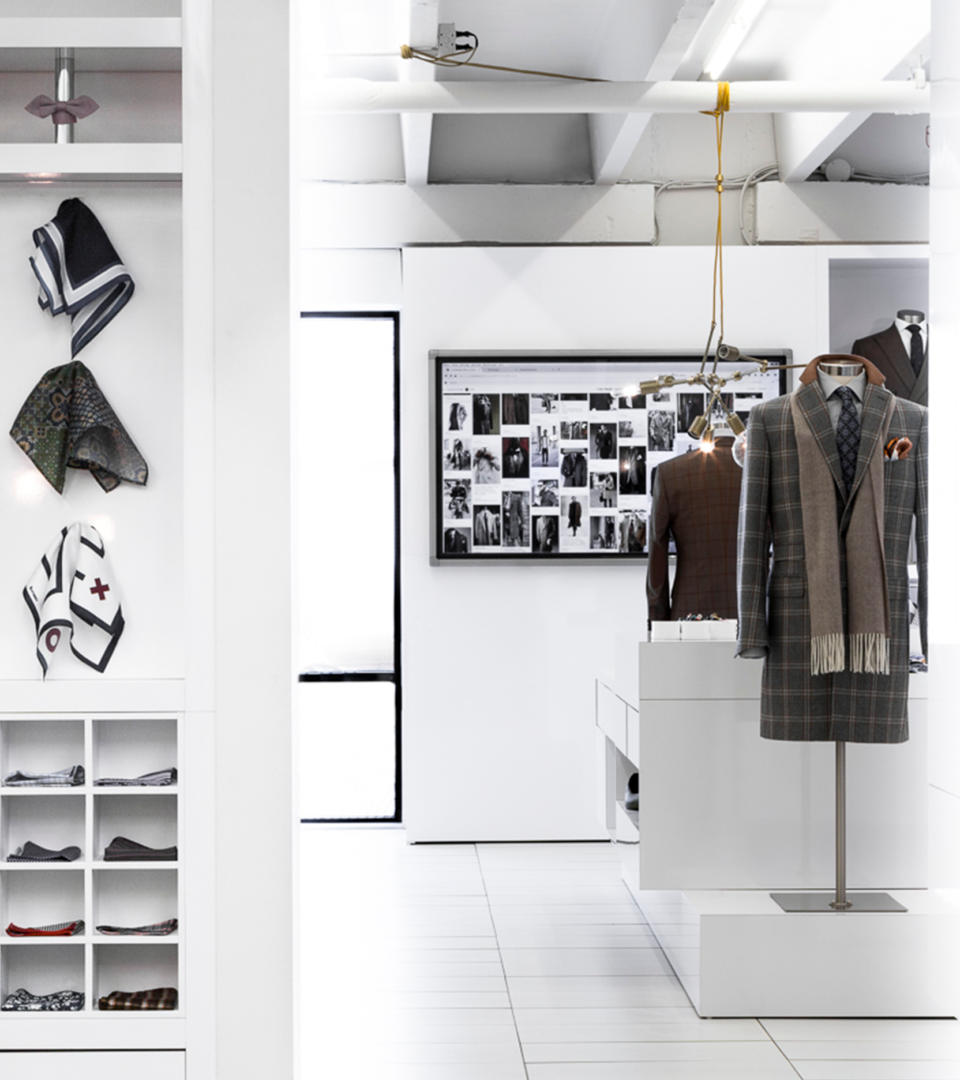
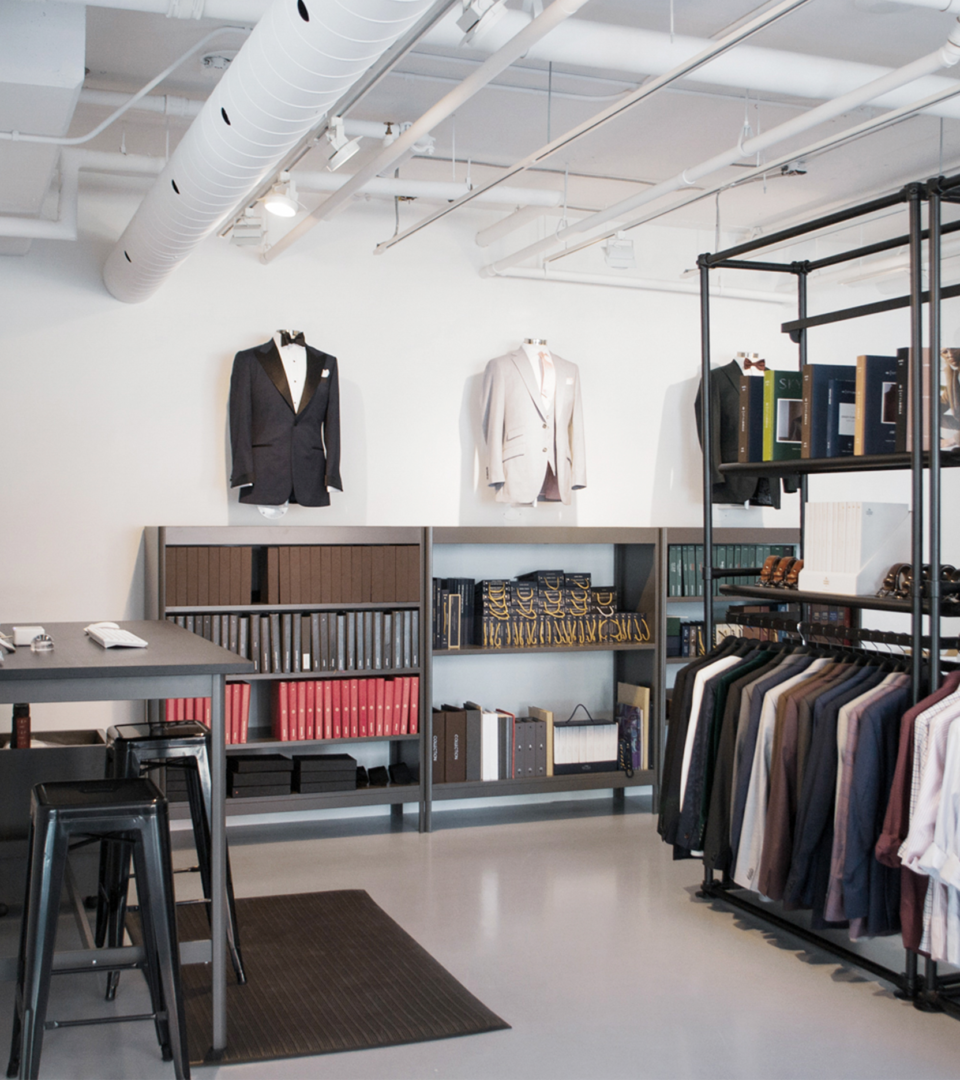
Surmesur Waterloo (Image: Surmesur)

Canadian custom clothing retailer Surmesur continues to expand its brand in Canada.

Last fall, the retailer opened its ninth showroom in the heart of Waterloo, Ontario, on King Street.

Jean-Pierre Lachance

And the brand also became the Official Suit Provider of the National Hockey League Coaches’ Association (NHLCA).

“This partnership has been a fantastic journey into the heart of professional sports styling,” said Jean-Pierre Lachance, Marketing Director at Surmesur. “It underscores our devotion to custom tailoring and personal service, ensuring every coach not only looks sharp but feels at the top of their game during every pivotal moment.”

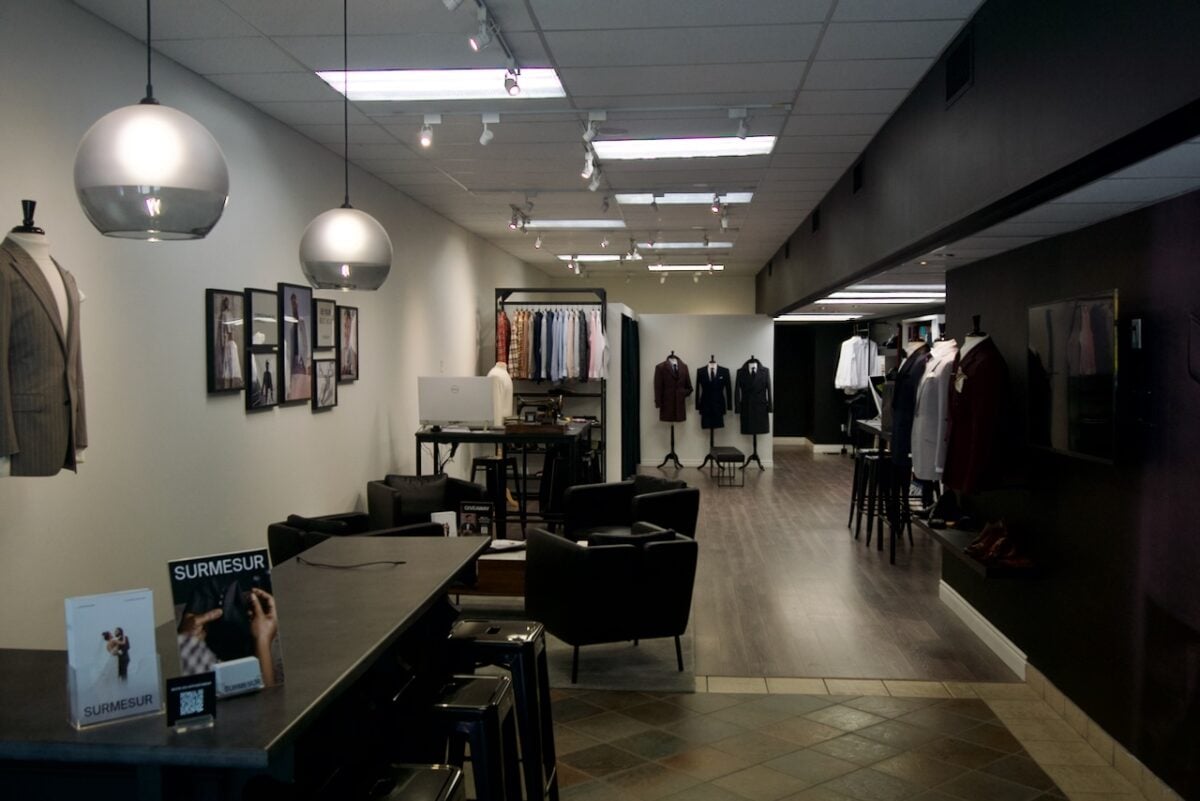
Surmesur Waterloo (Image: Surmesur)
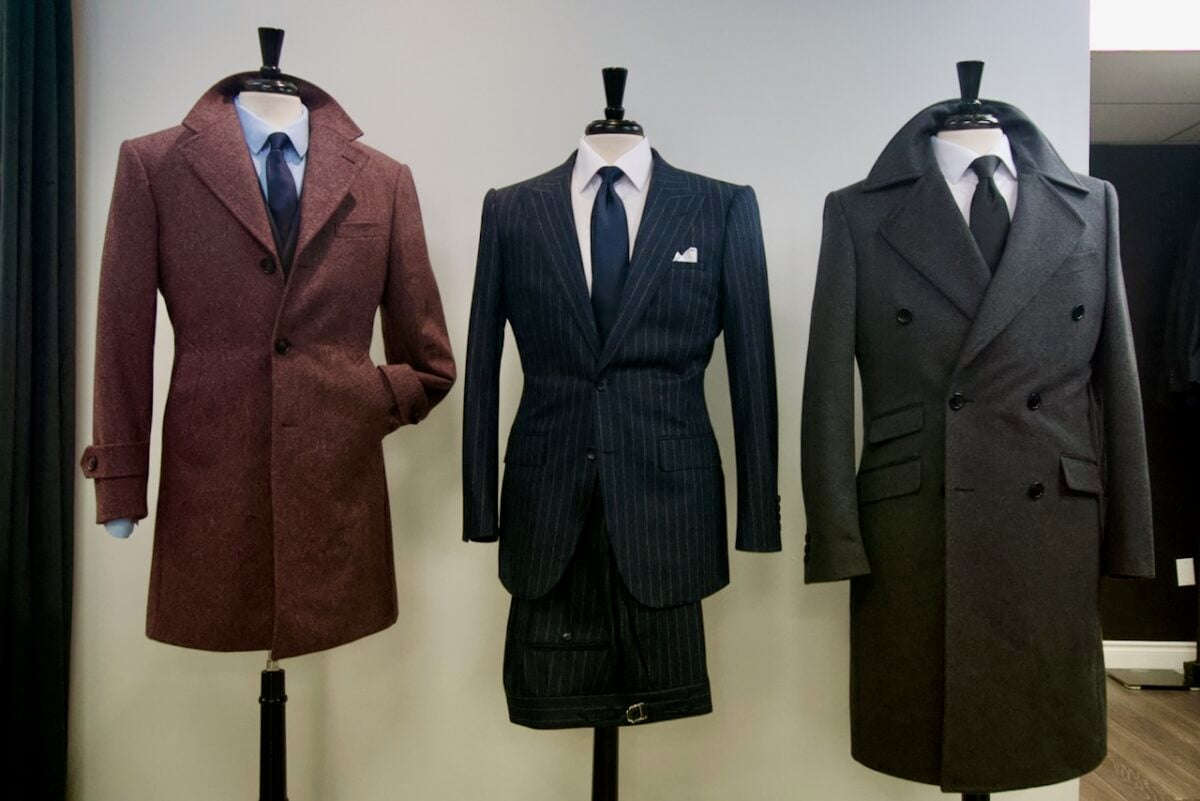
(Image: Surmesur)
Surmesur Waterloo (Image: Surmesur)

Established in 2010 by the visionary Thériault brothers, François and Vincent, Surmesur has championed the seamless merge of tradition with innovation. The brand provides a one-of-a-kind shopping experience, allowing clients to design everything they need for their Sartorial Journey—from daily office wear to life’s most special occasions, including weddings, a particular specialty of Surmesur. Beyond its head office and flagship store in Quebec City, Surmesur has locations in Montreal, Laval, Ottawa, Toronto, Mississauga, Vancouver, Pittsburgh, and Mexico City. 

“We might open a few stores in Mexico and obviously we’re always on the lookout for the United States,” said Lachance. “This year we also developed an on the road service across Canada. So we have a team from Quebec and Vancouver and they’re doing cities like Calgary, Halifax, stuff like that. But there’s no physical store yet. But it’s a good way for us to test those markets, meet with some people.

“We do partnerships now with military, private clubs. There’s clubs all across Canada. So we’re starting to do those partnerships. It’s a really nice way also for us to get in a city, meet the members, usually these guys have big businesses, a lot of networking, a lot of contacts. We never know. But there’s no stores that are going to be open within the next six months but we are moving Toronto. We are opening a new Toronto store in September and the first store was actually in Quebec City, it’s been here for 14 years, and we are moving there also.

“The Toronto store is going to be a more modern approach to tailoring. We are planning the construction at the moment.”

Surmesur Waterloo (Image: Surmesur)

Surmesur has dressed over 170 NHL coaches this year.

“It gives me confidence knowing I’m not just dressed in a suit, but in a suit that’s crafted to stand up to the pressures of the NHL,” said Rick Tocchet, Head Coach of the Vancouver Canucks.

Surmesur said its collaboration with the NHLCA is a testament to shared values of teamwork, meticulous attention to detail, and peak performance—qualities that resonate as much on the ice as in its showrooms. 

Vincent Thériault

The positive feedback from coaches has been overwhelming, ensuring that Surmesur will continue to style the NHL coaches into the next season.

Vincent Thériault, Co-Founder of Surmesur, said its new location on King Street South in Waterloo “represents more than growth. It underscores our unwavering dedication to quality.”

Surmesur at the 2024 NHL All Star Game (Image: Surmesur)

For companies like Surmesur, COVID had a huge impact. There was no networking, no weddings, no people at the office. Most of what Surmesur sells was non-existent during that period of lockdowns.

“But it was a way for us to rethink a little bit our services. We kept everyone on the payroll and it gave us time to introduce new products. An offering that is a little bit more casual. Now we can do those types of jackets also, sport shirts. We introduced the jeans,” said Lachance. “We introduced a bunch of new products now for I would say the more business casual vibe.

“Now it’s only by appointments so we can have a little less stylists and they can plan better and create a more personalized relationship with their clients. That was a big move for us because usually we were on street level and people were coming inside and asking questions. This was hard for a stylist in doing a consultation but also answering random questions by people just looking around in the store.

“We just did our best month yet last month. All stores are breaking their records. The wedding season for the past two years has been amazing. Weddings are back. Events are back. Galas are back. Networking is back. For us it’s been an amazing year. I think last year was our best year for the company. It’s great.”

Toronto’s Waterfront BIA Releases Comprehensive Report to Boost District’s Vibrancy and Retail Experience [Feature]

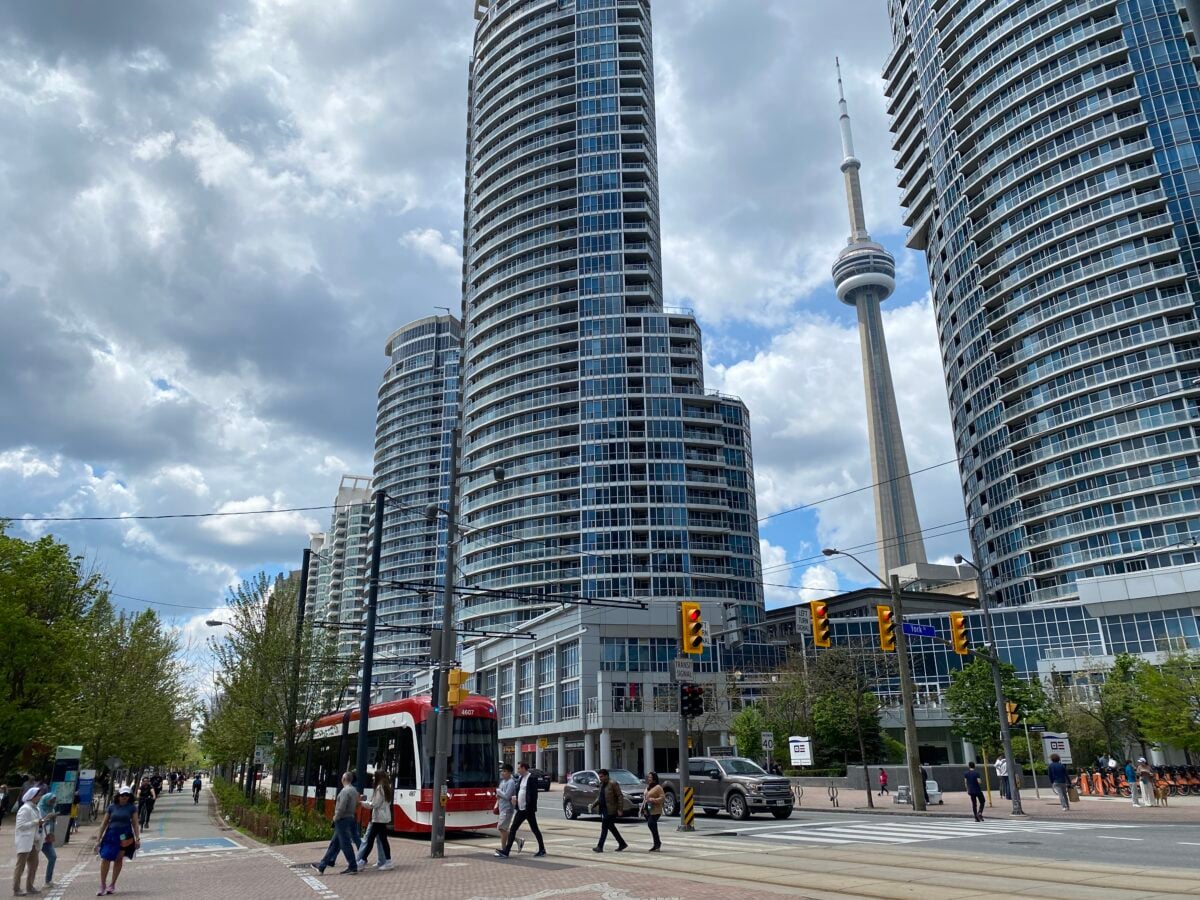
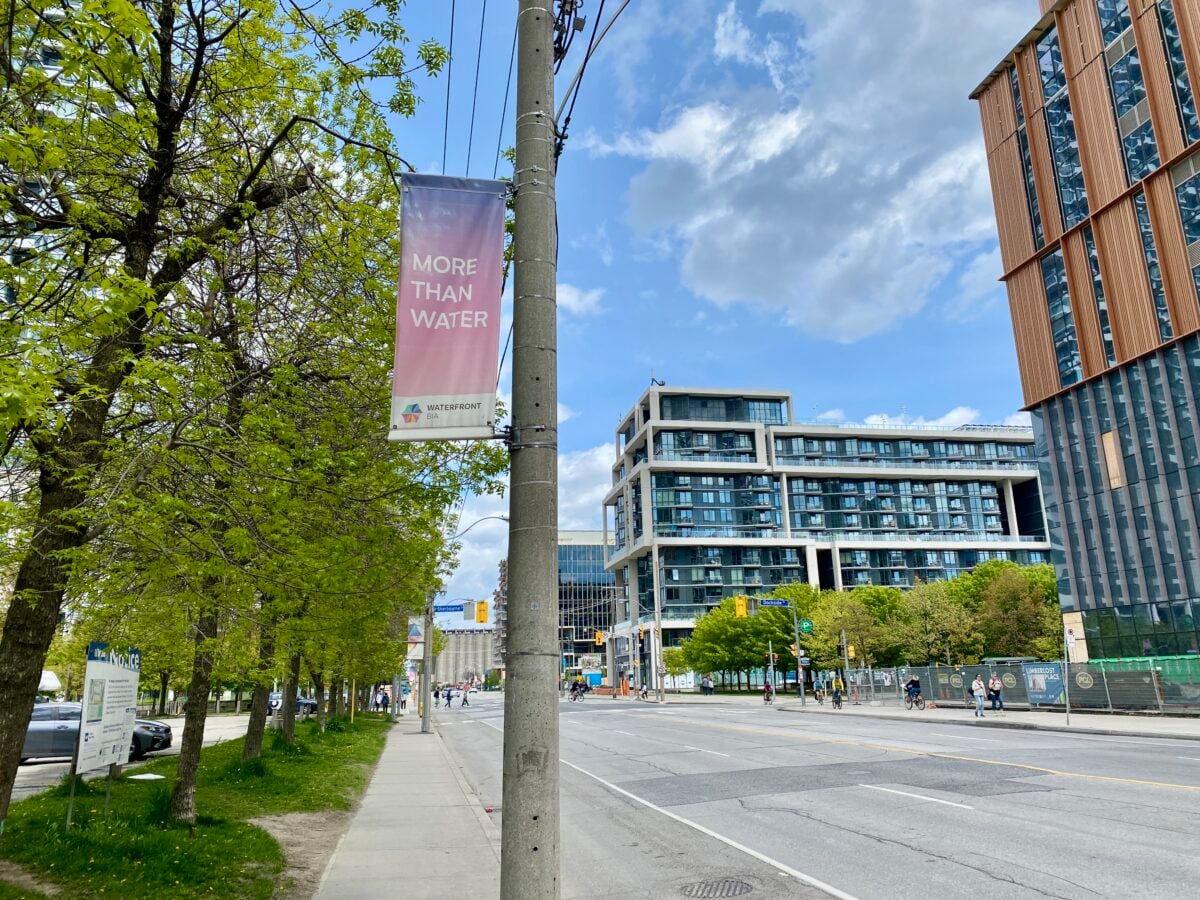
Queens Quay West (Image: Dustin Fuhs)

The Waterfront BIA (Business Improvement Area), in Toronto, recently completed a review for public-facing commercial businesses in the popular area with a series of recommendations to turn it into a more vibrant and active part of the city.

“The key insight from our study reveals a challenge in aligning the diverse aspirations for Toronto’s waterfront, encompassing tourism, office, and residential spheres. This diversity of purpose has led to development decisions that, while well-intentioned, have not fully satisfied the needs of any particular group,” said the Waterfront Retail Review report. 

“Among these decisions, we’ve observed retail spaces positioned away from main thoroughfares, lobbies in locations better suited for public retail, limited retail engagement places along the water’s-edge, retail spaces of sizes that may not be suitable for more diverse business use, uneven and inconsistent distribution of retail areas along Queens Quay, and restrictive signage and façade guidelines that complicate business visibility. 

“Such decisions can impact the long-term vibrancy of the district, potentially affecting its attractiveness to tourists, office workers, and residents who are in search of a dynamic and accessible retail environment but find it hampered by the existing constraints, forcing them to go elsewhere in the city.”

Queens Quay at York (Image: Dustin Fuhs)
Dorsa Alizadeh-Shabani and Oliver Hierlihy (Image: Waterfront BIA)

The report contains an overview of the current planning context and best practices relevant to the area, a built-form review of existing commercial spaces along the waterfront, research summarizing the current retail conditions of the waterfront, and the results of surveys conducted with waterfront business owners, residents, and visitors to the waterfront in Summer 2023.

“With most of the eastern waterfront under development, this report and the recommendations suggested here can be used to help inform future development planned for the area and to help future developers and business owners address the issues that are present in the western and central waterfront with the assistance of the Waterfront BIA,” said the report.

“Sample consumer journeys and resident experience sections have been developed to help guide the discussion of what factors need to be considered in the future to ensure that the right retail mix is in place to extend the customer experience on the waterfront for the multiple stakeholder groups that utilize the area.”

The report also touches on comparable waterfront districts across North America to illustrate how Toronto’s waterfront can be shaped to have a more engaging consumer-facing commercial experience.

The boundaries of the Waterfront BIA are from Stadium Road to Cherry Street along the Queens Quay corridor, with the northern boundary of Lake Shore Boulevard and the lake’s edge to the south, inclusive of the Toronto Islands as well. The BIA is funded by a special levy on commercial and industrial properties in the area.

Queens Quay West (Image: Dustin Fuhs)
Tim Kocur

Tim Kocur, Executive Director, Waterfront BIA, said the BIA’s mandate is to support development of the neighbourhood as a “premier destination waterfront and make sure it’s clean, active, fun and well functioning every day and that it’s well connected to the rest of the city.”

Dorsa Alizadeh-Shabani, Manager, Operations, Waterfront BIA, said the eastern waterfront is still being developed and the BIA believes there’s still an opportunity there to have it be developed into the world-class waterfront that is envisioned – vibrant and active on the streetfront.

“We’re trying to help it develop an identity much like some of the other BIA’s around the city. Have more of a cultural identity. And we want to emphasize more on that arts and culture section, maybe to be able to help develop that into the waterfront we know it can be,” she said. 

Oliver Hierlihy, Operations Director,Waterfront BIA, said the waterfront is many things to many people – it’s an office district, a tourist district, a residential district, a park district.

“With that comes the tricky question of who is this all for? That’s something we’re trying to answer a little bit through the study,” said Hierlihy.

“The big outcome is activity. Residents, visitors, office workers. People looking for things to do. That was the real outcome of the study. Reorienting our organizations towards activity to the extent of wayfinding. How do you find your way around?”

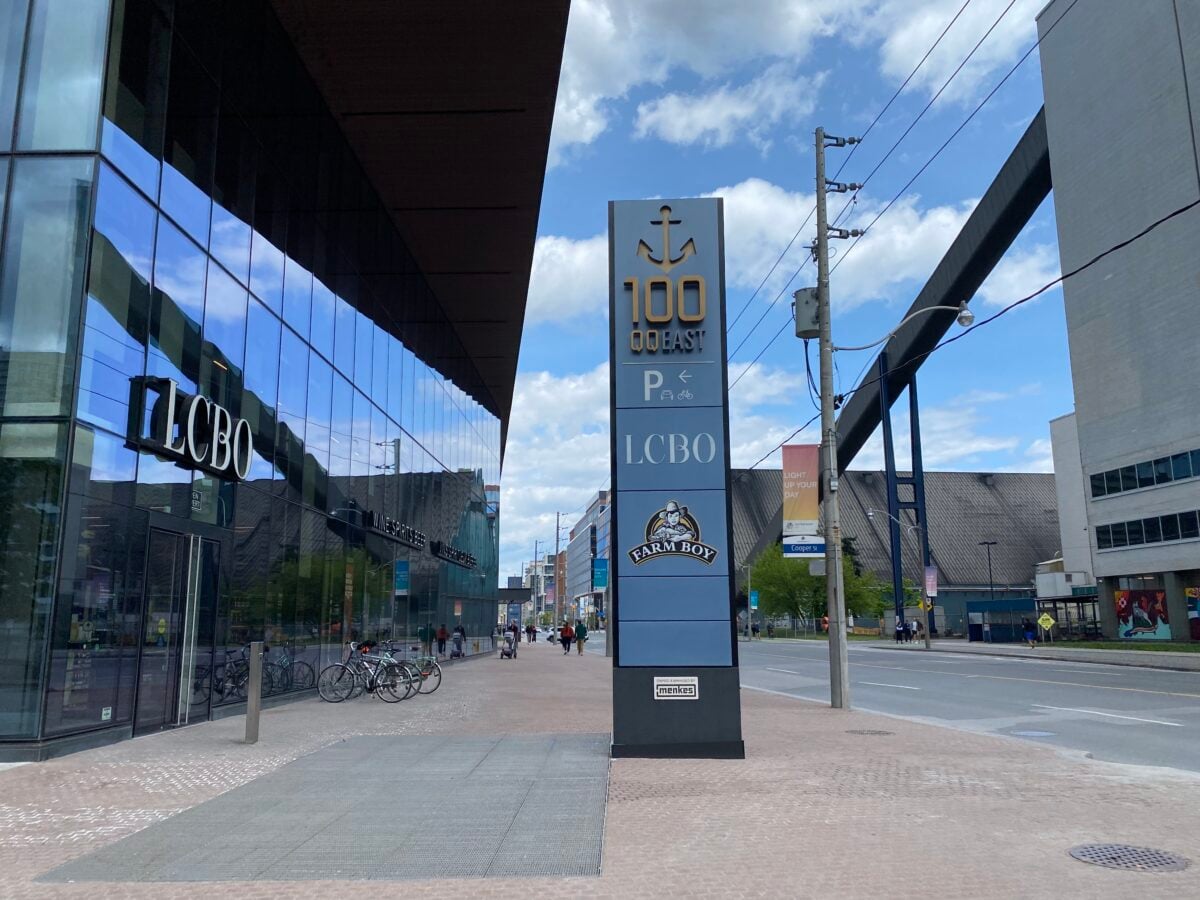
100 QQ East (Image: Dustin Fuhs)

According to the report, general principles for advocacy related to pedestrian level retail for new development plans and for on-going redevelopment include a connected waterfront providing a continuous experience:

  • Maximize visibility and frequency of retail and public amenity frontages along priority retail corridors to encourage continual exploration and discovery of waterfront opportunities;
  • Add and enhance wayfinding and signage solutions wherever possible, including for parking access and interior businesses;
  • Advocate for selective sizing and placement of retail spaces within new developments that considers a balance with current and proposed retail and amenities nearby, focused on a variety of uses for residents, visitors, and office workers;
  • Support visible connections to retail, specifically those located at the above-ground PATH network. Entranceways to the PATH should be clear from the exterior ground level of buildings.

The report said the importance of these are magnified along the high-traffic east-west corridors (Queens Quay, Water’s Edge Promenade, Harbour Street) and north-south corridors.

Youtube video

The report said it’s also important to maximize the vibrancy of activity and showcase the area’s best shared asset – the water:

  • Emphasize activity and creative usage of retail space along the water’s edge and on the water wherever possible, e.g. waterfront patios, floating patios, water-focused businesses, etc;
  • Focus on supporting opportunities to create more destination experience spaces that can enhance the area as a multi-element visitor experience, e.g. food halls, breweries, family- friendly activities, etc.;
  • Encourage support for flexible/adaptable commercial space configurations to embrace the seasonal nature of the neighbourhood, e.g. ice cream in the summer, hot chocolate in the winter;
  • Support the development of spaces that allow the waterfront to house arts, culture, and musical amenities, including as a nightlife destination, e.g. extended hours of operation on special event days, high-quality soundproofing of spaces, etc.;
  • Consider temporary activation of vacant units through early development phases, e.g. artist and exhibition spaces, pop-up retailers, etc.

“World-class waterfronts highlight activity and recreation, including engaging public spaces, programmed events and activations, and complementary businesses that serve as points of engagement and activity. In isolation, none of these tactics can significantly move the needle, but in combination, their impact can be significant. The BIA should assist in recruiting and supporting the development of these types of activations, specifically along the ground-level of the buildings along the Water’s Edge Promenade. In addition, an improvement in the nightlife activities that should be available at the waterfront will help establish a cultural identity for the area and encourage visitors to spend more time here,” said the report.

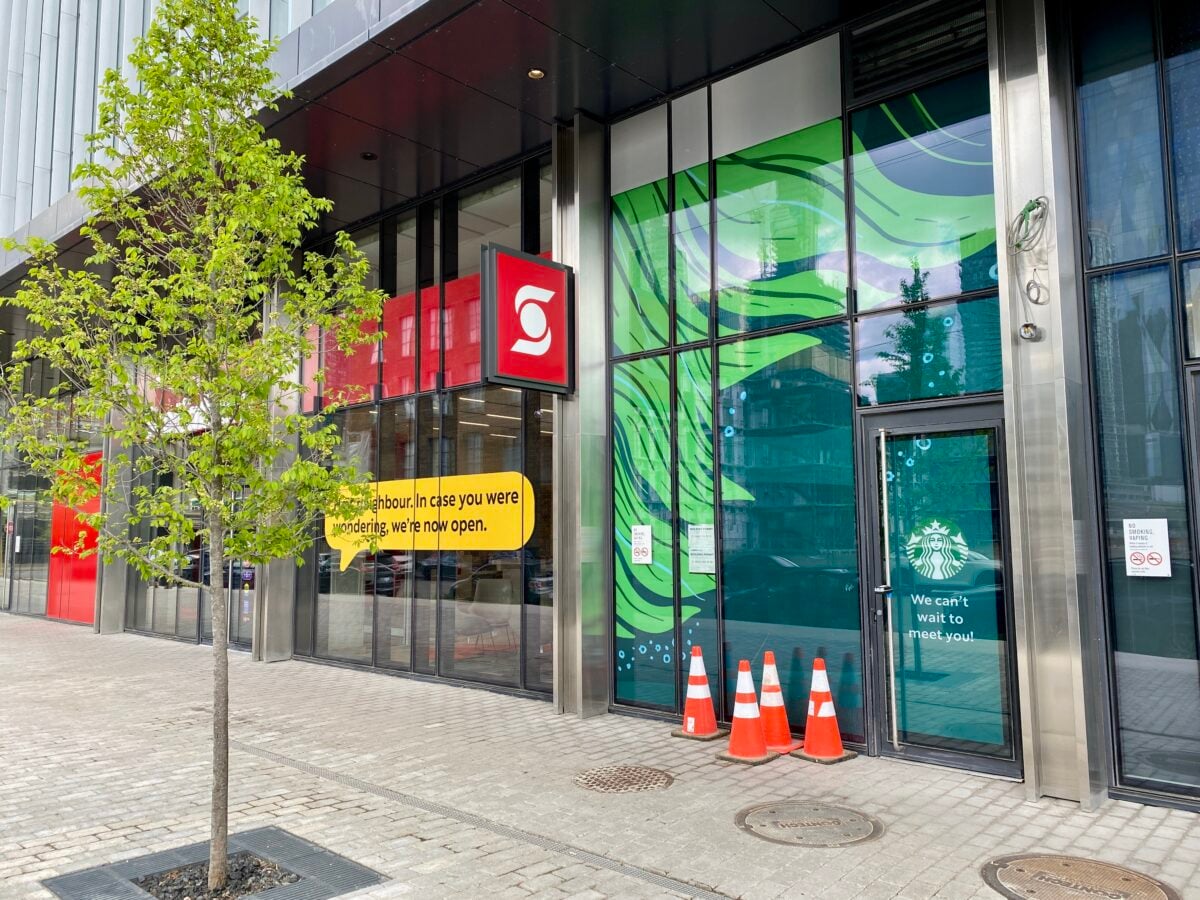
Future Starbucks at Sugar Wharf (Image: Dustin Fuhs)
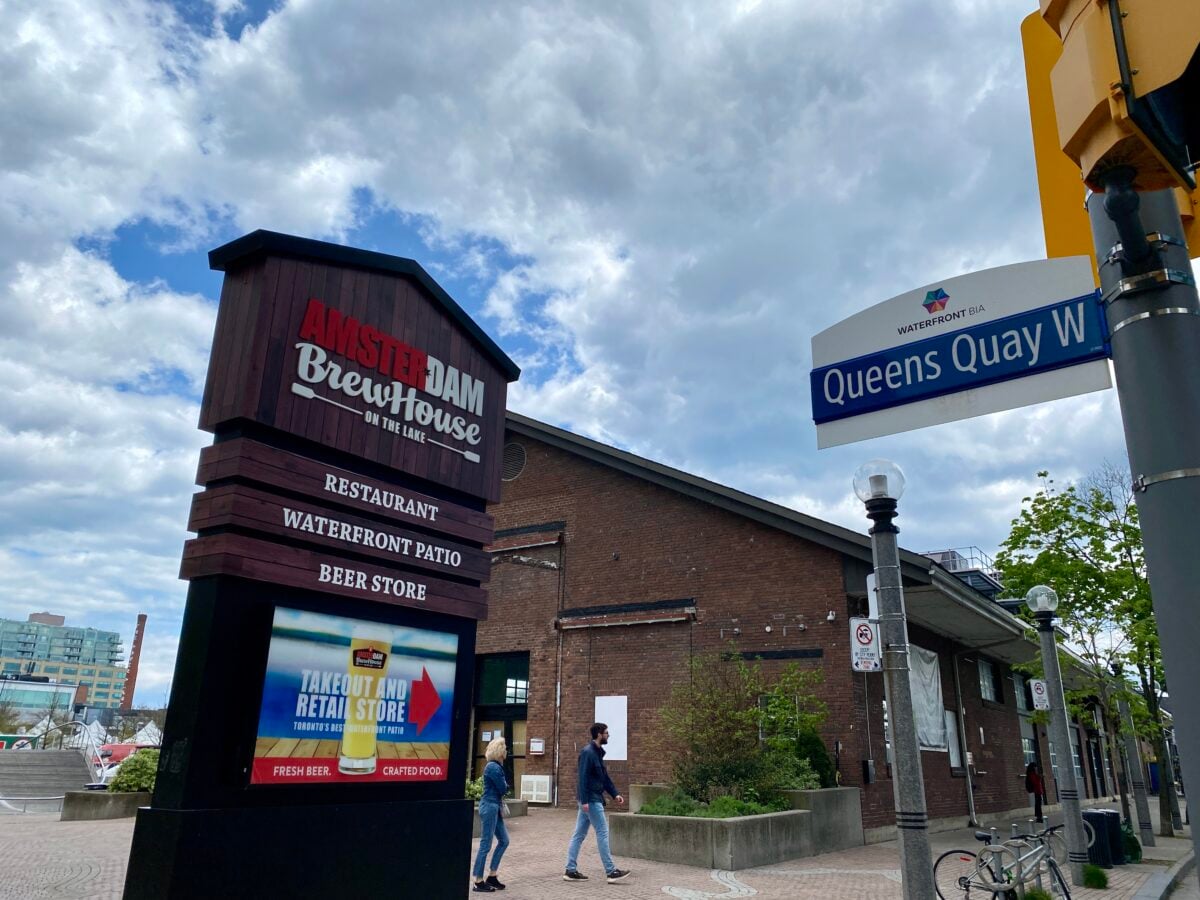
Amsterdam Brewhouse at 245 Queens Quay W (Image: Dustin Fuhs)

Other key recommendations include:

  • Be intentional with the mix of retail space sizes: The use of commercial spaces is primarily defined by what the size of the retail spaces can accommodate, along with their strategic placement. For example, large units are used for grocery stores, medium units for sit-down restaurants, and small units for quick-service restaurants and convenience stores. With new developments, unit size and placement must be intentionally chosen and laid out to accommodate desired retail mix results;
  • Extending the shoulder seasons: Find ways to extend the shoulder seasons (Spring and Fall) by activating and sponsoring mid-season activities and installations. The dead of Winter is bad for retailers city-wide, and with the wind off of Lake Ontario, the impact of cold weather is heightened. The BIA should focus on programming and marketing to extend the season people see as acceptable to visit the waterfront into Spring and Fall by giving people a reason to come. This is of specific importance because many businesses on the waterfront are seasonal by nature, such as ice cream shops, bike rental businesses, and tour, charter and water taxi businesses that tend to close their doors in winter, when the BIA’s efforts will have limited benefit;
  • Utilize co-location to create hubs for visitors: The waterfront experience isn’t one thing; it is many, with anchor activity hubs such as Harbourfront Centre programming, Lighthouse Immersive shows, sports at the Rogers Centre and Scotiabank Arena, Sugar Beach, the Music Garden, and the Toronto Islands representing single trips for people coming to the area. Each of these visits serve as an opportunity to expand upon the consumer’s journey through the co-location of businesses that serve the sample demographics visiting those anchor activity hubs. An excellent example of this in practice is sports bars on the waterfront at locations near the stadiums or restaurants with patios close to the Harbourfront Centre;
  • Traffic and parking: Construction and traffic issues are evident throughout the neighbourhood as the area continues to grow. Many businesses mentioned that one of the main issues customers complain about is the traffic and lack of parking. This can be one of the main reasons customers do not return to certain businesses on the waterfront. The Waterfront BIA conducted a parking study using a consultant in 2020 and can advocate for better signage for parking and for the City to put temporary traffic mitigation measures in place when multiple construction projects are taking place. Services such as Traffic Agents can help with better traffic flow and extra traffic safety in the neighbourhood at times of disruptions. In addition, the need for more customer parking within the waterfront can be addressed by arranging partnerships between parking management companies and businesses to establish a parking validation system for customers who are within walking distance of certain parking lots. The Waterfront BIA can step in as a connector and an assistant to businesses to help establish such a system and support business needs in the area;
  • Utilize retail mix strategies to attract local customers: Having a solid mix of complementary businesses co-located can strengthen the business ecosystem. One example is locating an anchor business that brings customers to the area for necessities, such as a grocery store, pharmacy, gym or daycare, and co-locating businesses close to these that will benefit from that traffic, such as coffee shops and dry cleaners. An example of where this is being done exceptionally well is the Loblaws at Queens Quay and Lower Jarvis, where customers come to get groceries with access to convenient subsidized parking and, on the same trip, have access to a pharmacy, coffee shop, wine shop, shoe repair store, medical clinics, and clothing store. These strategies should be the focus while designing new retail spaces and modifying old ones;
  • Wayfinding: Better wayfinding, including maps of the waterfront, is needed throughout the area to improve the visitor experience and to guide the visitors to different sites, businesses, and activities once they are at the waterfront. Most people come to the waterfront to enjoy the lake or to visit the Islands and the parks, but once they arrive, they don’t know where to go to get to the Islands or what else to do in the area. Better wayfinding tools, even temporary ones, would be beneficial to encourage and guide visitors to explore the entirety of the waterfront;
  • Building relationships with brokerages: The Waterfront BIA can also work with area brokerages and real estate firms to educate property managers and landlords about what type of businesses the visitors are asking for and what seems to be missing in the area. We can emphasize the importance of drawing exciting and unique businesses to the district that will attract visitors and provide them with a memorable experience. This report can act as an advocacy tool to inform area stakeholders what the community is asking for and to highlight the value of unique consumer-facing commercial spaces that bring in visitors year-round and not just during the warmer months. 

Vestis Fashion Group Relocates ‘Weekend by Max Mara’ Storefront at Metropolis at Metrotown [Photos] 

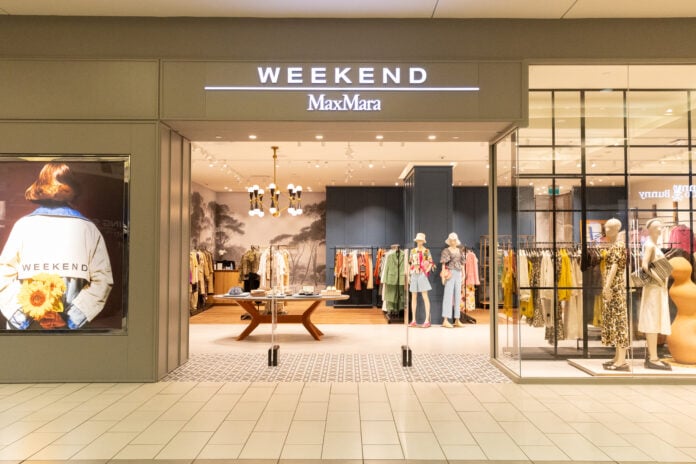
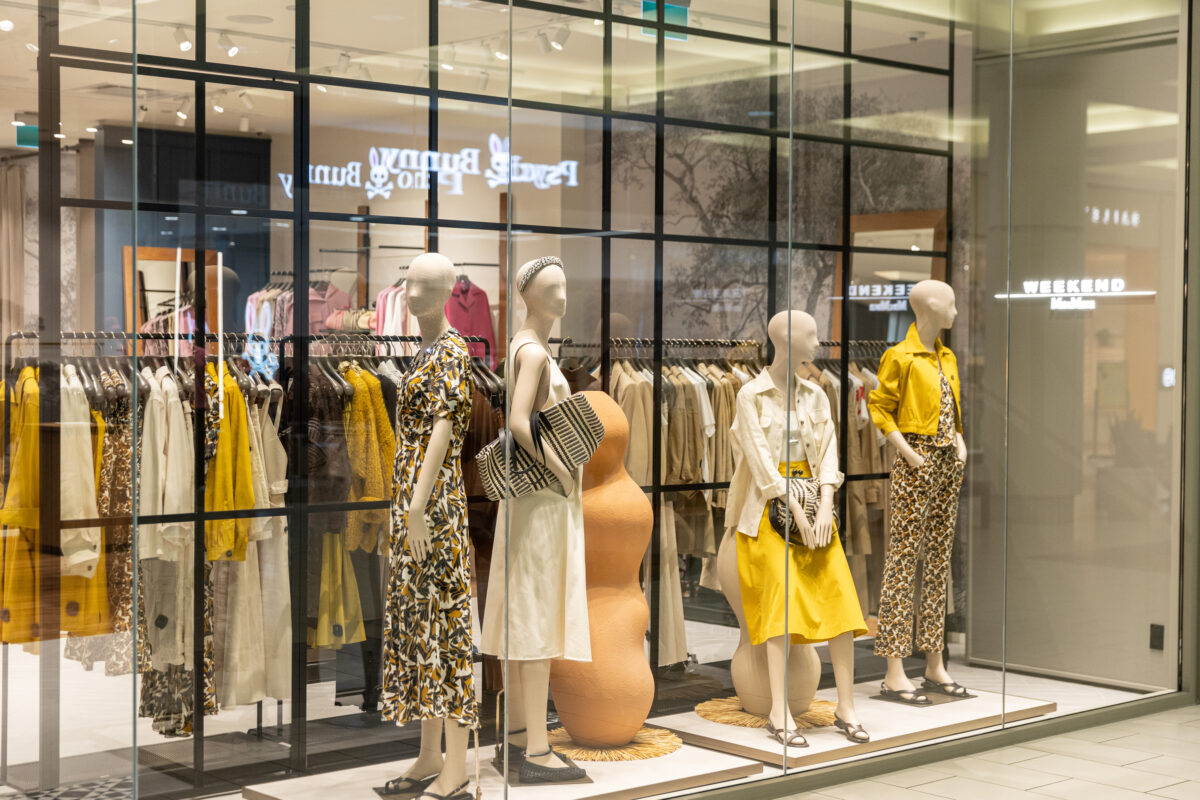
New Metropolis at Metrotown Weekend by Max Mara store. Photo: Alex Law Photography

Vancouver-based luxury brand retail operator Vestis Fashion Group has relocated its Weekend by Max Mara storefront at Metropolis at Metrotown in Burnaby, near Vancouver. Its new main level location replaces a former store that operated upstairs for about 10 years. 

The new Weekend by Max Mara store spans 1,858 square feet in a retail space boasting a 40 foot wide facade. It replaces a Michael Kors store, and neighbouring retailers include Anne Louise Jewellers, Arc’teryx, Psycho Bunny, Browns Shoes, and similar strong brands. 

The Metropolis at Metrotown Weekend by Max Mara carries the full range of the brand’s women’s fashions as well as bags, footwear and accessories. Italian women’s luxury fashion brand Max Mara launched Weekend by Max Mara as a diffusion line in 1983 with a lower price point than the main label. Over the years Weekend by Max Mara has established itself as a brand with a loyal following of women globally. 

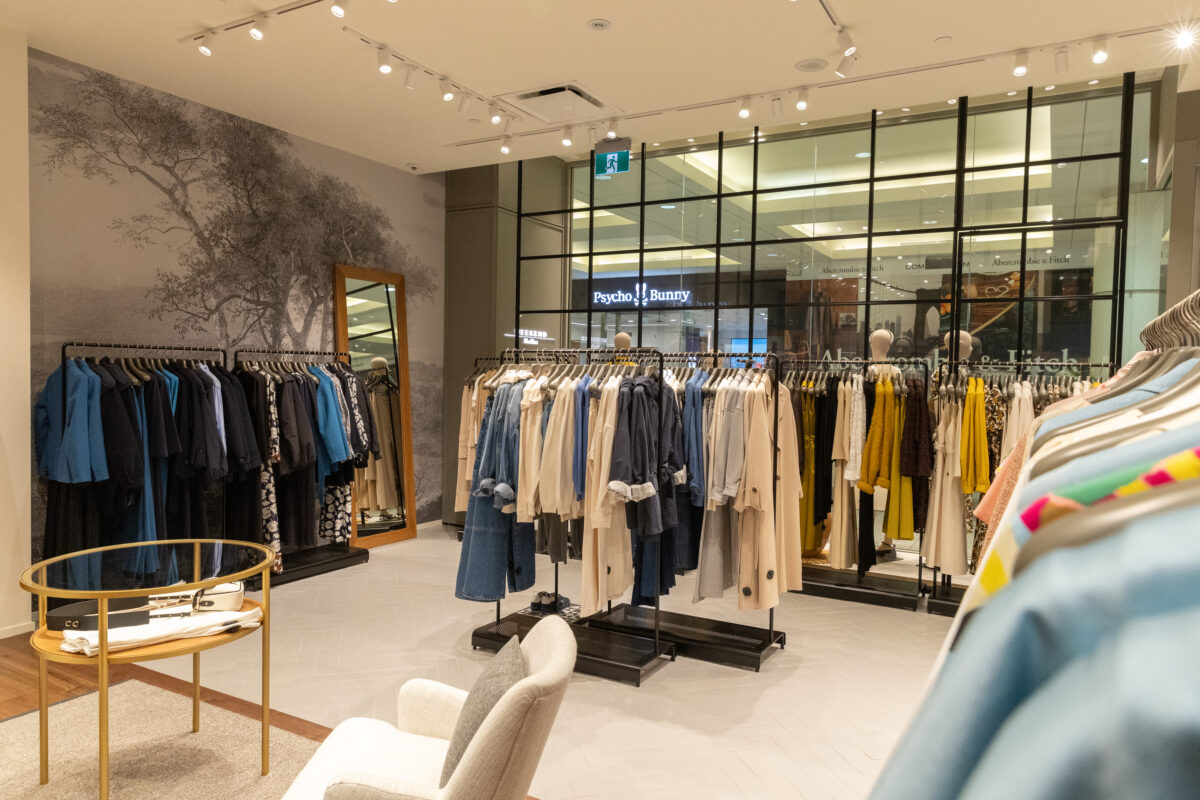
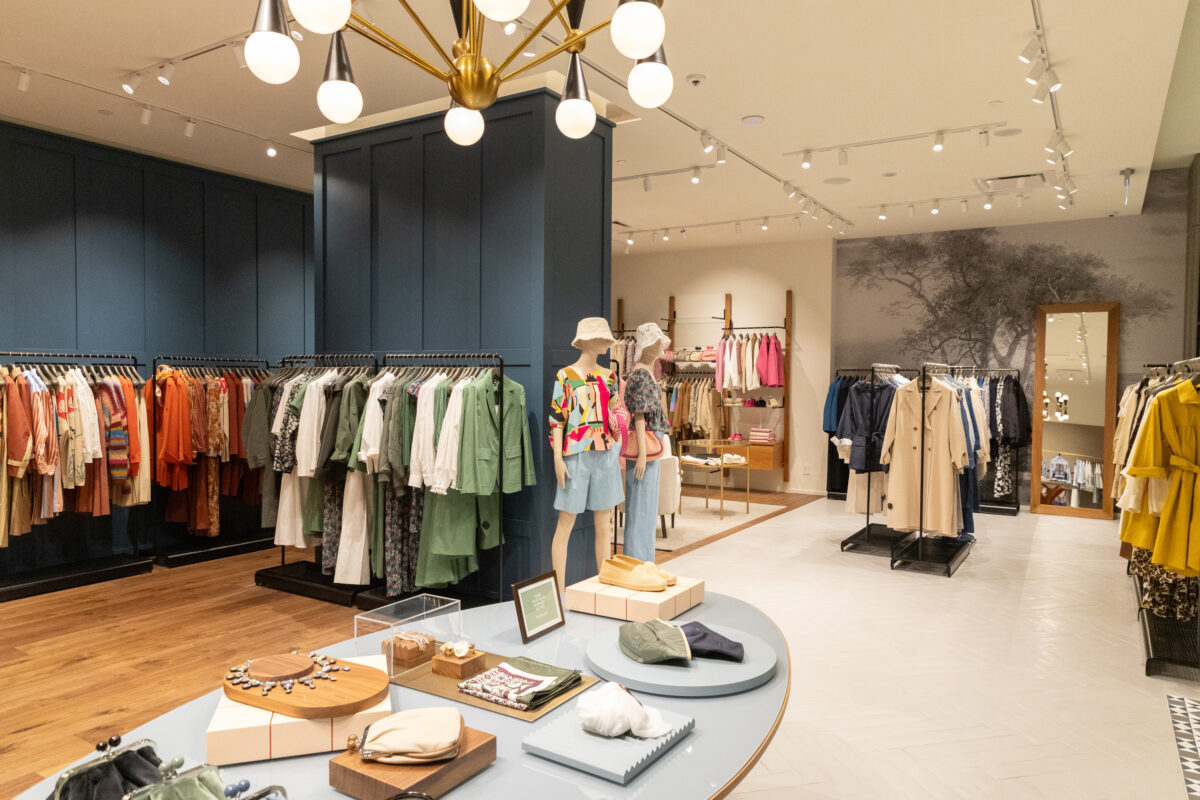
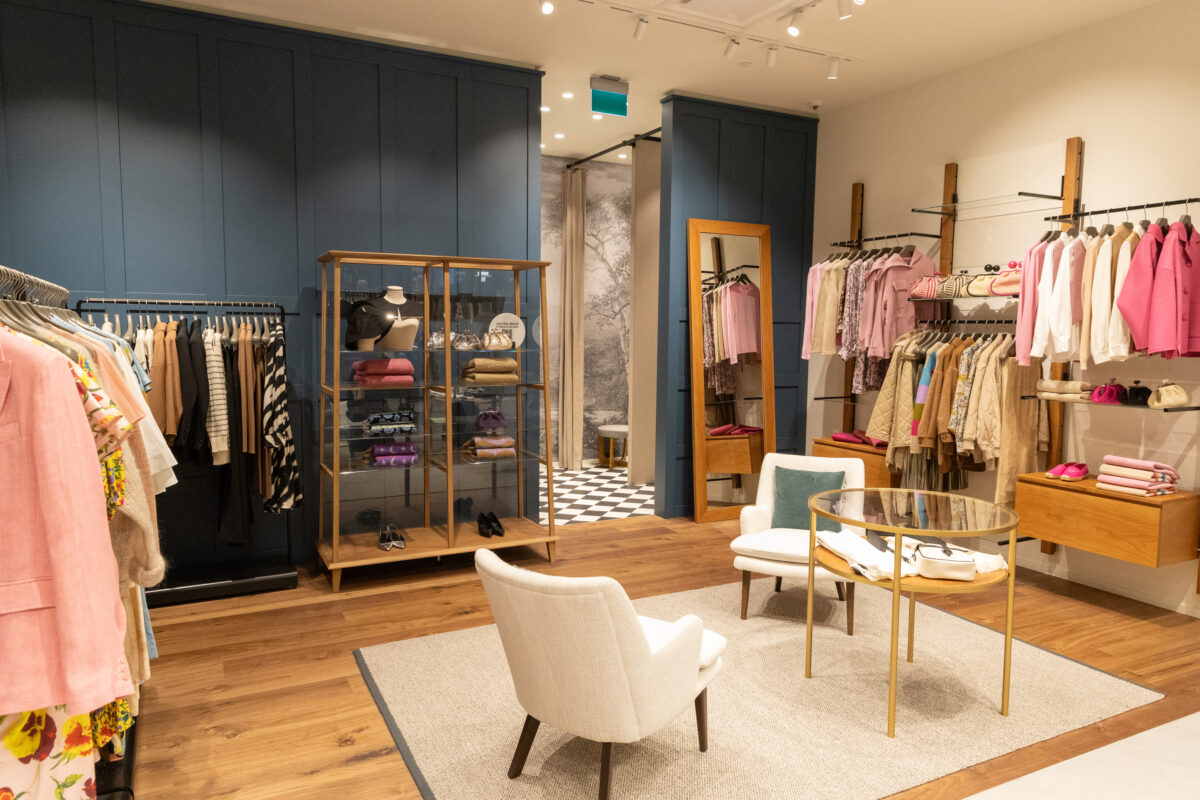
Inside the new Metropolis at Metrotown Weekend by Max Mara store. Photo: Alex Law Photography

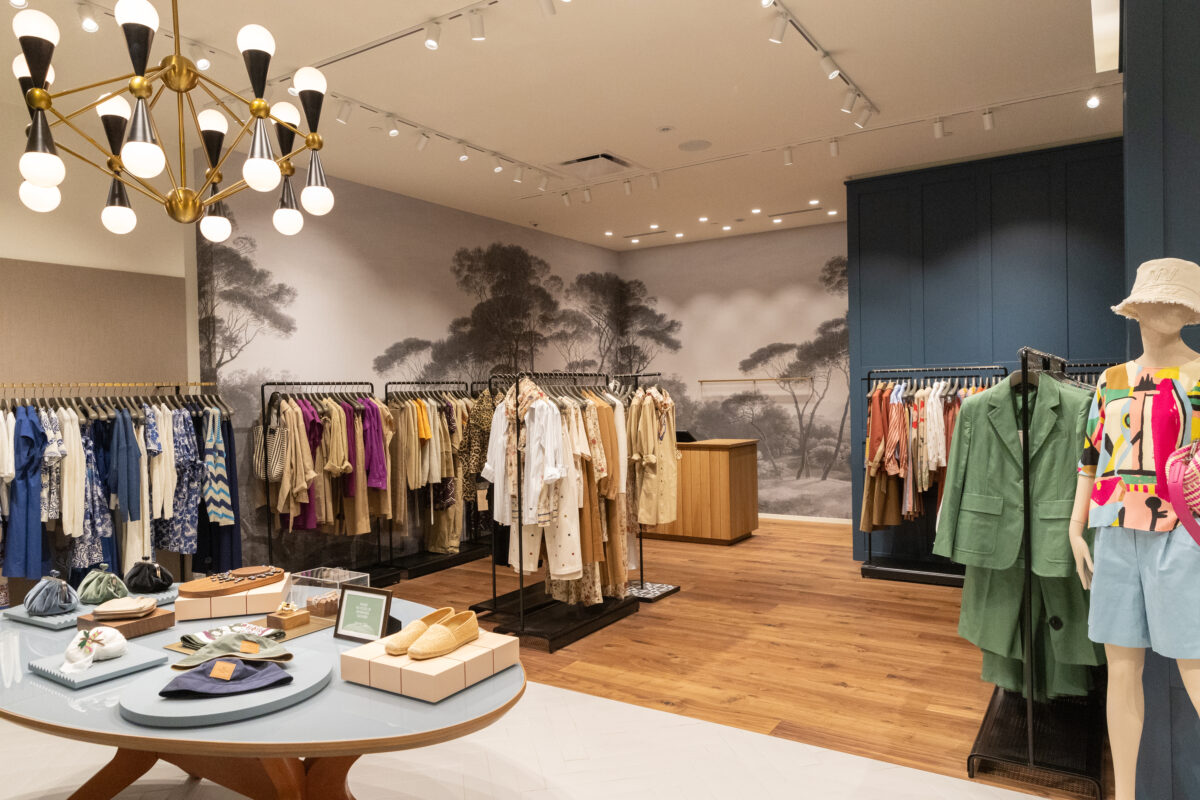
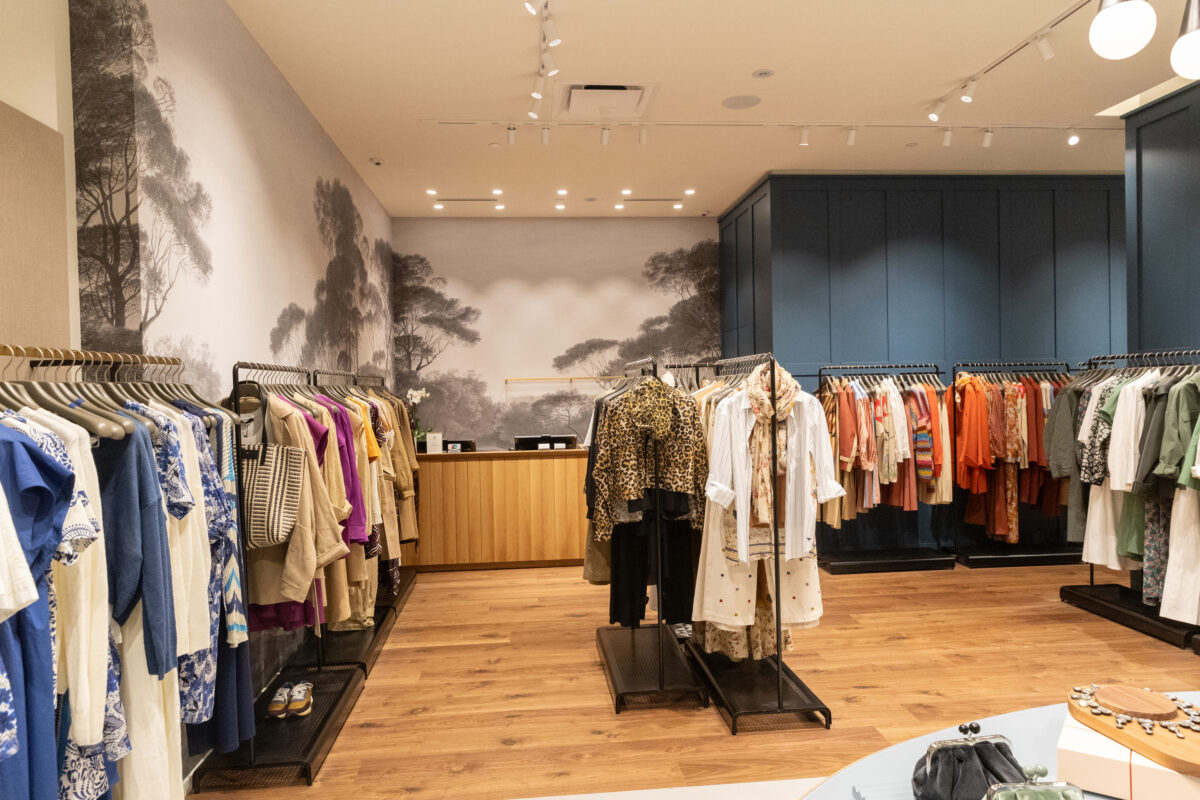
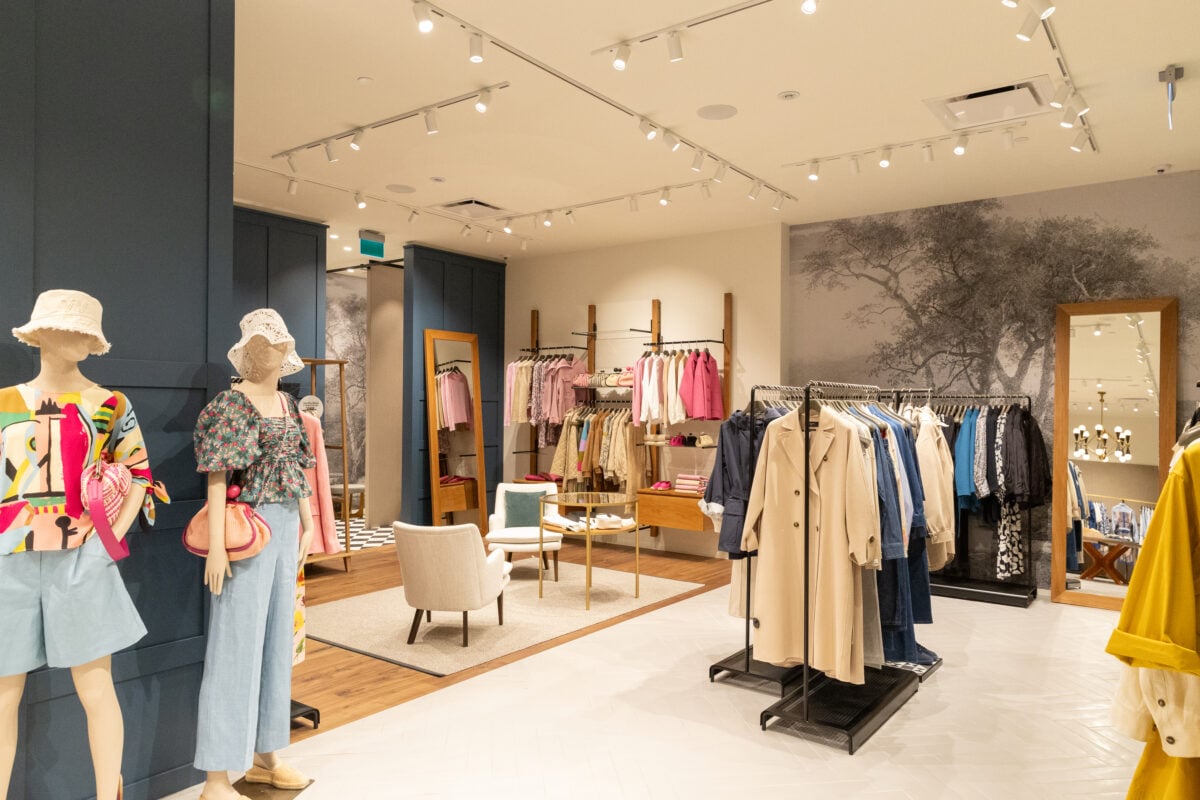
The Metropolis at Metrotown store design is described as being “reminiscent of a contemporary European home” with flooring of natural wood in two neutral shades that contrast with geometric cement tiles and checkerboard motifs. Wallpaper in the store depicts black-and-white Italian landscapes and gardens. Walls are painted a shade of teal blue and are adorned with the brand’s signature boiserie accent walls. 

Vestis Fashion Group was founded in 1985 by entrepreneur Catherine Guadagnuolo. Currently Vestis has the license to operate Max Mara-branded stores in Western Canada via Max Mara USA. That includes having two Max Mara storefronts in Vancouver (by next year it will be three), and three Weekend by Max Mara stores in the Lower Mainland. 

The Max Mara locations include a flagship at 3025 Granville Street just north of Shaughnessy, and a storefront at CF Pacific Centre in the downtown core. In about a year, Vestis will reopen its Max Mara store at the overhauled Oakridge Park at 41st and Cambie Streets, formerly known as Oakridge Centre. Vestis also operates Weekend by Max Mara stores at Metropolis at Metrotown and CF Pacific Centre, along with a shop-in-store within the 3025 Granville Street Max Mara location. 

Inside the new Metropolis at Metrotown Weekend by Max Mara store. Photo: Alex Law Photography

Harriet Guadagnuolo, Vice President of Retail at Vestis Fashion Group, said that the opportunity to move stores came up after the renewal of a 10-year lease.  The new store, with a wider presence, provided the opportunity to showcase Weekend by Max Mara’s newest retail aesthetic. 

Over the past decade, the Metrotown Weekend by Max Mara store has built up a clientele, Guadagnuolo said, which had kept the brand in the mall. Metropolis at Metrotown is one of the most productive malls in the country in terms of sales per square foot, though it’s not known to house luxury brands other than at a handful within jewellery stores. Weekend by Max Mara would be considered the most upscale mono-brand store in the mall, given the retail mix. 

Vestis Fashion Group brought the Max Mara brand to Canada, and continues to operate the highest saturation of Max Mara stores of any city in North America. Vancouver is also among the top cities for sales in the world, speaking to the strength of the local client base. 

Inside the new Metropolis at Metrotown Weekend by Max Mara store. Photo: Alex Law Photography

The next big move for Vestis in the Vancouver market will be the opening of a Max Mara store at Oakridge Park in Vancouver next year. Max Mara will join an impressive roster of luxury brands in the overhauled mall with names such as Louis Vuitton, Prada, Brunello Cucinelli, Moncler, Versace, Christian Louboutin, Miu Miu, Rolex, and others. Harriett Guadagnuolo also said that Vestis could be looking at taking on another brand for the Vancouver market, as it has in the past, though we’ll have to wait to hear of any further details. 

Canadian Tire Launches AI Shopping Assistant and Humanoid Robots to Enhance Customer Service and Operations [Interview]

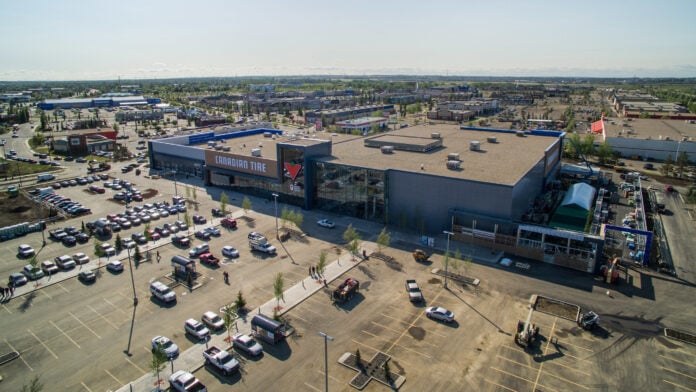
Canadian Tire store located in Edmonton, Alberta, Canada (CNW Group/CANADIAN TIRE CORPORATION, LIMITED - INVESTOR RELATIONS)

Canadian Tire Corporation (CTC) has launched two innovative technology initiatives to help streamline business for the company and the consumer.

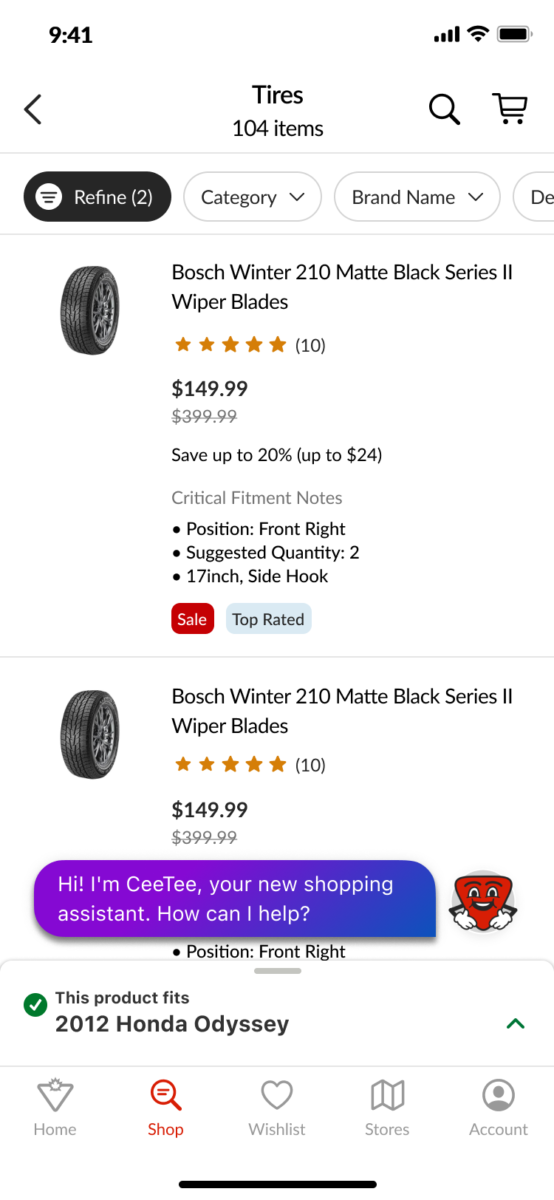
Canadian Tire’s new shopping assistant, CeeTee, is available on the Canadian Tire app under the “Tires” category and helps customers easily select the right tires for their vehicles.

CTC has also partnered with Sanctuary AI to introduce the inaugural human-like robot, known as “General Purpose Robots”, which are designed to alleviate tedious and monotonous tasks in retail stores and distribution centres so employees can focus on more valuable work.

Cari Covent

“The importance of emerging technology is really twofold. The first is that by using it and experimenting with it, we’re not just teaching our employees on how to leverage some of these emerging trends but we’re also establishing ourselves as a leader and able to get in front of some of the technology that’s coming. So that’s really important to us,” said Cari Covent, Head of AI and Emerging Technology, Canadian Tire Corporation.

“And the second thing that’s really important is that from an emerging technology perspective we really want to understand how we can use it to generate growth within our company as well as drive efficiencies. So we see AI, generative AI, as an opportunity to automate a lot of work that doesn’t need to be done by humans and it really allows them to focus on higher value work.”
“We’re one of the first in Canada to really come out with a generative AI powered, customer facing application. And we’re also using gen AI across the organization in a number of different ways. But the other thing that’s important is that the traditional AI for the work that’s been happening for years in our organization as well as in the industry around machine learning and operation research and optimization that still remains really important. A key element we believe to our success has been the investment that we’ve made in both our data platforms. We’ve invested heavily in our data platforms and our processes and our first party data as well as in our digital platforms. And by doing that over the last three to four years it’s really allowed us to move very quickly when generative AI became something that we could use in the early part of 2023.”
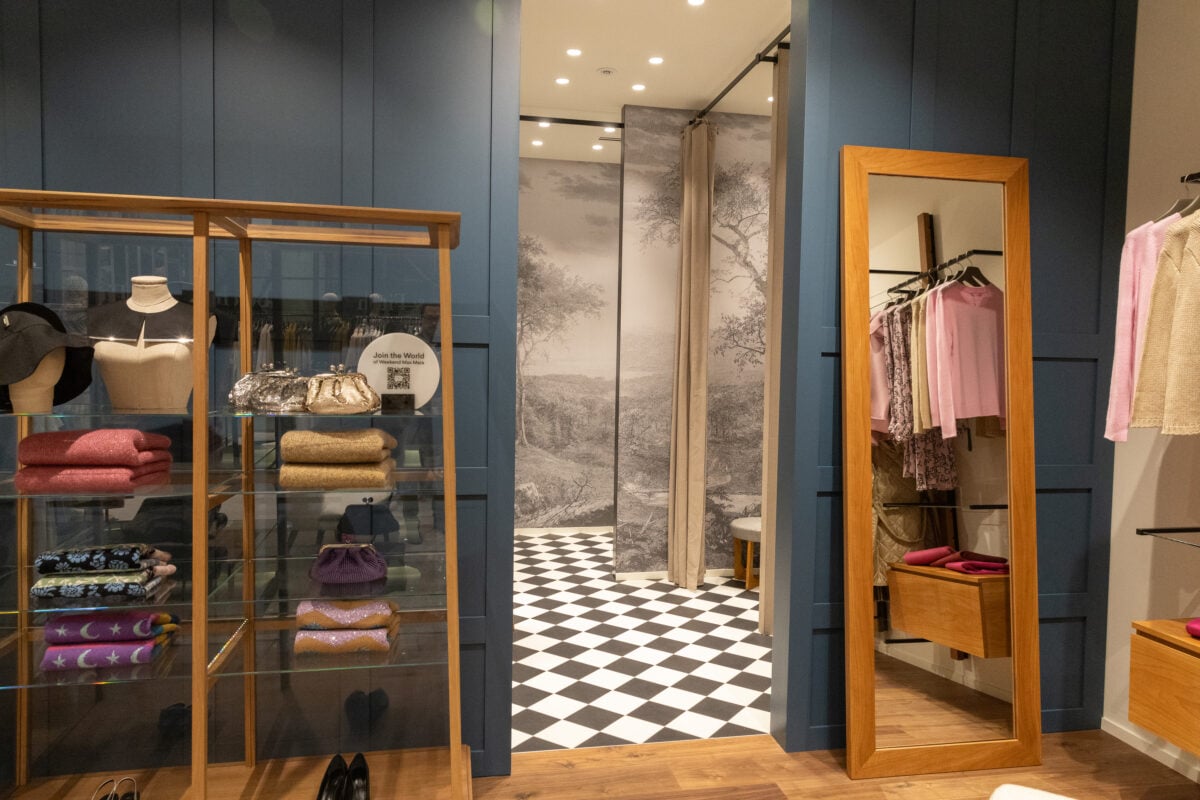
Image: Canadian Tire

Covent said CeeTee is an easy-to-use, AI-powered shopping assistant designed to assist customers throughout their tire shopping journey, simplifying the process of finding the right tires for their vehicles, all at a click of a button. 

The CeeTee shopping assistant supports tire selection, offers real-time local inventory updates, facilitates purchases and interacts with customers in a very natural and human way. 

CeeTee is available on iOS for customers throughout Canada (excluding Quebec).

“It allows customers to go in and ask questions in natural language. So very different from searching on a website and being constrained by specific rules and what’s available. It has the capability of being able to use a combination of large language models as well as our product data as well as our store data to be able to answer really any question that a customer might have related to tires and how to use those tires,” added Covent.
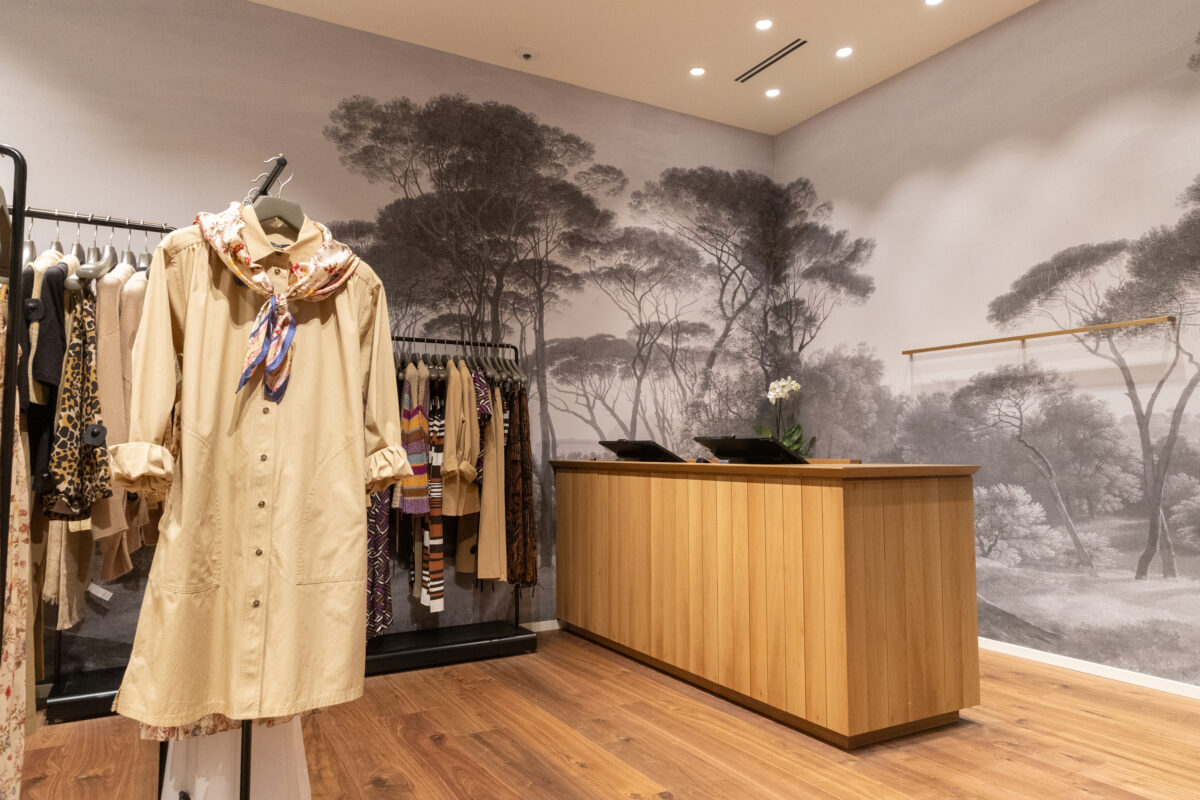
Image: Canadian Tire

Today, it is strictly for tires but Canadian Tire will look at rolling the concept out for other products.

“We’re very pleased at the direction it’s going so our goal now is to scale that, look at bringing in additional categories and/or doubling down on the entire automotive shopping experience. We’re just trying to determine what would be the best in terms of providing an optimal customer experience as well as return on investment. So we’re just working through that decision right now.”

Covent said the humanoid robot concept is with Canadian company Sanctuary Cognitive Systems Corporation that is working towards developing the first general purpose robot.

“How that’s different than other robotics we might use in supply chain is that the other robotics are usually focused on single tasks. This robot can do multiple tasks similar to what a human can do,” she said. “And what makes this interesting is that eventually it will be autonomous. So no different than a human that goes into work every day at a distribution centre and has multiple different things to do in its day this robot will also have multiple different things to do and it will be able to operate completely autonomously.”

Image: Canadian Tire

Covent said there are a number of different tasks that will be developed.

“Our work with Sanctuary in this general purpose robot is not to replace the employees that we have. It’s really to help us solve for a problem that we have which is to attract employees into that type of work and also to reduce the manual labour that happens in the distribution centres,” she said.

For example, boxes will come down a conveyor belt today, down 16 conveyor belts, and a human will take the box, put it on a pallet, stock it up to a certain height then wrap the pallet completely and then it gets shipped to stores. It’s heavy and monotonous work.

“What this robot will be able to do is take that, move it onto the pallet . . . Because of the ability of the robot to be able to see where the next spot goes on a pallet, it’s not just stocking, stocking, stocking. It’s actually essentially creating that puzzle on the pallet,” she said.

“That’s one example. Another example we’re working on is picking and packing. Products are made available to pack into a tote, the robot depending on all different sizes, can pick up those products, put it into a tote, package the tote and then the tote will then get sent to a store for receiving.”

Image: Sanctuary AI

Recently, at a Mark’s retail store in Langley, BC, a robot was used for picking and packing as a pilot project. The robot has the ability to scan a label and then place it into a soft package for ecommerce shipment. 

“Right now it’s not in the stores or in the DC’s. We bring it out to test it. It’s being trained in a lab in Vancouver and what they essentially do is take these types of used cases, they use simulation technology to simulate what it would be in our stores and in our distribution centres and they train the robot on that,” said Covent. “Once it’s mastered the elements of the task, then we take it into our store or into our distribution centre and we test in a real-life situation alongside humans.”

She said once Sanctuary is able to scale the robots then CTC will have the availability to put them into its distribution centres. 

“It will be in the distribution centres well before it will be in a store,” she said.

“Many organizations are facing labor challenges. Our population is aging, birth rates are declining, and workers have more choice for what they do and where they work than ever in history,” said Geordie Rose, co-founder and CEO, Sanctuary AI, in a statement.

“Through our partnership with Canadian Tire Corporation, we worked on analyzing how their work was done and what work people like and don’t like doing, in both their retail and distribution center environments. In January we deployed a general-purpose robot to a retail store to attempt to perform many necessary but rudimentary tasks that people note finding unsatisfying or unfavorable. The results were spectacular. We are ecstatic to have accomplished this with Canadian Tire Corporation, one of Canada’s leading companies.”