Technology company Square, knowns for its innovative payment solutions, has announced a strategic partnership with Jane Technologies, the premier online ordering platform service for cannabis dispensaries. This collaboration signals Square’s entry into the Canadian cannabis market, offering licensed cannabis retailers a comprehensive solution for both online and in-person commerce.
Jane Technologies, widely known as “Jane,” empowers cannabis dispensaries integrated with Square to expand their business horizons beyond traditional brick-and-mortar operations. Through the Jane platform, customers gain access to an up-to-date menu of cannabis products, enabling them to place orders for convenient pick-up or delivery.
This strategic alliance represents a significant leap forward in the joint mission of Square and Jane to enhance commerce solutions within Canada’s booming recreational cannabis industry.
As part of this initiative, Square is rolling out an exclusive Early Access Program tailored for licensed cannabis dispensaries. This program extends a unique opportunity to authorized cannabis sellers in Ontario, allowing them to be among the first to test Square’s comprehensive retail point-of-sale solution within their physical stores before its broader deployment.
Roshan Jhunja, Head of Retail at Square, expressed the company’s unwavering commitment to addressing the distinctive needs of cannabis dispensaries.
“Square is continually driven to resolve the challenges faced by sellers, and we recognize that cannabis dispensaries have been underserved when it comes to reliable and integrated commerce tools. Dispensary owners are searching for an easy-to-use, fully integrated omnichannel solution to streamline their operations both in-person and online. We are privileged to collaborate with Jane in developing a robust online offering and encourage cannabis dispensaries to explore our software, hardware, and payment solution through our Early Access Program,” he said.
Jane’s CEO, Socrates Rosenfeld, echoed the sentiment, highlighting the synergy between the two companies’ visions.
“Square’s reputation as a global commerce leader speaks volumes, and our partnership with Jane, driven by our shared commitment to empower traditional retailers with top-tier digital tools, felt like a natural progression. We are thrilled to merge Square’s robust point-of-sale infrastructure and APIs with Jane’s powerful ecommerce platform to deliver a best-in-class omnichannel experience to Canadian cannabis retailers,” he said.
The legalization of recreational cannabis in Canada in 2018 ignited a rapidly expanding market estimated to be valued at over $4.5 billion, with projections indicating annual growth of more than 18% through 2024.
Licensed cannabis dispensaries in Ontario keen on participating in Square’s Early Access Program to engage in in-person sales with Square for Retail and delve into online commerce through Jane can access detailed information and sign up via the official website.
The Body Shop Christmas Advent Calendar (Image: Dustin Fuhs)
It’s hard to believe but Christmas is only a few months away and people are already starting to shop for holiday gifts in preparation for the busiest retail time of the year.
To get an early read on the biggest retail season of the year, Field Agent Canada surveyed 2,104 Canadians about their initial thoughts on holiday shopping for 2023.
The survey found that 44 per cent of people are going to be shopping earlier, four per cent later and 52 per cent the same.
TVs at Best Buy Canada on Black Friday 2022 (Image: Dustin Fuhs)
“Retailers and suppliers will be wise to put their best foot forward in terms of assortment and pricing to capture the spending by those early shoppers,” said Jeff Doucette, General Manager, Field Agent Canada.
Jeff Doucette
“Shoppers will be on the lookout for deals and to create a Merry Christmas while controlling overall spending.”
When asked what month they will start their holiday shopping, the breakdown was as follows: already started, 18 per cent; September, 13 per cent; October, 25 per cent; November, 35 per cent; 1st 15 days of December, 10 per cent; and last few days before Christmas, three per cent.
Doucette said retailers are trying to get out earlier and earlier, ahead of each other.
“I think COVID, and the supply chain challenges there, trained us to get it while you can,” he said. “And I think just with the recession, people have more of a sensitivity around price and if they see a good deal on something they’re grabbing it because it might not come back later.
“We asked people if they bought any holiday gifts during Amazon Prime Day in July and 26 per cent said yes. So sometimes they’re doing it not even consciously that they’re buying stuff for Christmas. It’s kind of out of sight, out of mind.
Holiday Display at Lindt CF Toronto Eaton Centre (Image: Dustin Fuhs)
“Also, 74 per cent of respondents said they would buy Christmas gifts during the second Amazon Prime Day in October. The big events coming up for shopping like Black Friday 86 per cent will shop on that day, 76 per cent will shop on Cyber Monday.”
Here’s where Canadians plan to buy holiday gifts: shopping centres, 77 per cent; big box stores, 81 per cent; small local shops, 54 per cent; online retailers, 81 per cent; and craft fairs, 34 per cent.
With rising concerns about inflation and a potential recession, Canadians were asked if this would impact how much they spend this holiday season – 16 per cent said No and 84 per cent said Yes.
CF Toronto Eaton Centre on Black Friday 2022 (Image: Dustin Fuhs)
When asked if those factors would impact where they spend their money, 32 per cent said No and 68 per cent said Yes.
“We don’t have any comparables (to previous years) but sort of the sentiment when we go through some of the verbatims in the survey is like ‘my holiday budget hasn’t gotten bigger even though there is inflation, so I need to be smarter or in the end just buy less things’ and part of that solution is the follow on question of shopping in different places where they wouldn’t have shopped in the past to find gifts that may be a better deal,” said Doucette.
“Those big box, discount retailers have that advantage where people might shop early, grab some deals . . . watching the flyers a bit more. It’s pretty important.”
Doucette said people feel they have to be smarter these days to outwit inflation.
Retail Insider is streamlining its Canadian retail news from around the web to include a handful of top news stories that can be viewed quickly during the day. Here are the top stories from the past 24 hours.
Walmart Canada is investing $50 million over the next five years in associate career-driven learning and development, offered through programs at top-tier schools in Canada.
The company will cover the cost of tuition, books, and course fees for associates through its Live Better U (LBU) education program.
AnnMarie Mercer
“We believe there is a path for everyone at Walmart and we want to remove barriers to high quality education,” said AnnMarie Mercer, Chief People Officer, Walmart Canada. “We’re proud that through LBU, we’re offering our associates a program designed with them in mind. LBU meets associates where they are on their educational journey by offering online, flexible programs to help them balance work, life and school.
“As the retail environment, and I’ll actually go beyond just the retail environment, the world around us is changing quite rapidly and as we think about the future how do we ensure that we’re continuing to upskill our associates to meet the needs both today and in the future. That’s kind of the genesis behind LBU. It’s really about upskilling for the future.”
Live Better U Canada (Image: Walmart Canada)
LBU offers a path for all associates, whether they’re looking to accelerate their growth, get in-demand credentials, or receive a degree or licensing for a specialized role. The course offerings were curated based on the new and future needs of the business. Some offerings include:
Growth accelerators such as English as a Second Language, French as a Second Language and GED courses;
In-demand courses and certificates such as project management, data analytics, omni retail, ecommerce, business communications and strategy; and
Degrees and licensing for pharmacy technicians and opticians, with more to come.
“As we think about talent, every organization is looking for critical skills for the future . . . We want to make sure we have a path for all. Within Walmart we have very different career paths and associates can explore whether it’s a pure retail operations side or a career in HR, a career in technology, data, etc.,” said Mercer. “And given our size as an employer, 100,000 associates across Canada, we want to (ensure) we are creating opportunities for our associates to grow and that is both within our local market as well as preparing and creating paths for individuals internationally, given that we operate in many different markets around the world.”
Image: Walmart Canada
Mercer said the program in Canada will likely touch thousands of people across the country.
She said the retailer wants to ensure associates are trained and equipped with the skills of the future so they stay and grow with Walmart Canada. All eligible permanent part-time, full-time, and salaried Walmart Canada associates can apply to LBU.
“LBU has been a game-changer in the U.S. these past five years, and we’re thrilled to expand our footprint and offer this life-changing benefit to even more Walmart associates,” said Lorraine Stomski, SVP, Associate Learning & Leadership, Walmart Global. “Our participants are more likely to be promoted and less likely to leave the company than their peers, meaning it helps our people and our business. Nearly 120,000 Walmart U.S. associates have taken advantage of the opportunity to grow with the company while building a brighter future and better life. We can’t wait to see that impact continue to grow with this expansion.”
Walmart has more than 400 stores across Canada.
LBU is the latest offering in a comprehensive learning and development offering at Walmart Canada. Last year, they launched an internal talent marketplace: an AI-enabled platform that provides visibility to career paths within the company. In addition, associates have access to OnDemand learning platforms including Harvard Spark, Harvard ManageMentor, and ExecOnline.
“LBU is a part of a whole ecosystem of learning. Earlier this year we launched another program called OnDemand Skills and this is various different programs through key partners . . . It’s an element where you can take and upskill any time, anywhere. That’s for various different disciplines. It could be for data. It could be many different topics,” said Mercer.
“We also have our Walmart Academy which is really around building critical skills that we require which are job requirements for today. And LBU is really about preparing for the future. So that way we’ve got various different streams as we think of the whole talent ecosystem of how do we build pathways for all of our associates when, how and where they want to take it.”
Mercer said associates have told the retailer that they want to continue to grow, to continue to learn. This gives them the opportunity to continue to build skills for a future career with the company.
“I think we’re really excited about this because everyone is looking for critical skills in the future. We really have taken an internal first approach in a way that we can continue to grow our talent. They’re ambassadors of our culture and what we believe in. We have a very strong purpose as an organization with a save money, live better purpose. We believe that across all the things that we do,” she said.
“So if we can continue to develop talent within our organization, those are great leaders for the future as well.”
Plastic undoubtedly remains a significant environmental concern, and there is a widespread consensus that it demands immediate attention. While addressing plastic bags and utensils presents relatively straightforward challenges, the real dilemma lies in addressing plastic packaging, particularly within the grocery store sector. This summer, the Canadian government introduced the Pollution Prevention Planning Notice (P2), a targeted initiative aimed at primary food plastic packaging used for food. P2 seeks to compel Canada’s largest grocery retailers to formulate pollution prevention strategies with a focus on reducing, reusing, and reimagining primary food plastic packaging, with a strong emphasis on incorporating recycled materials. Kudos to the government for taking this vital step.
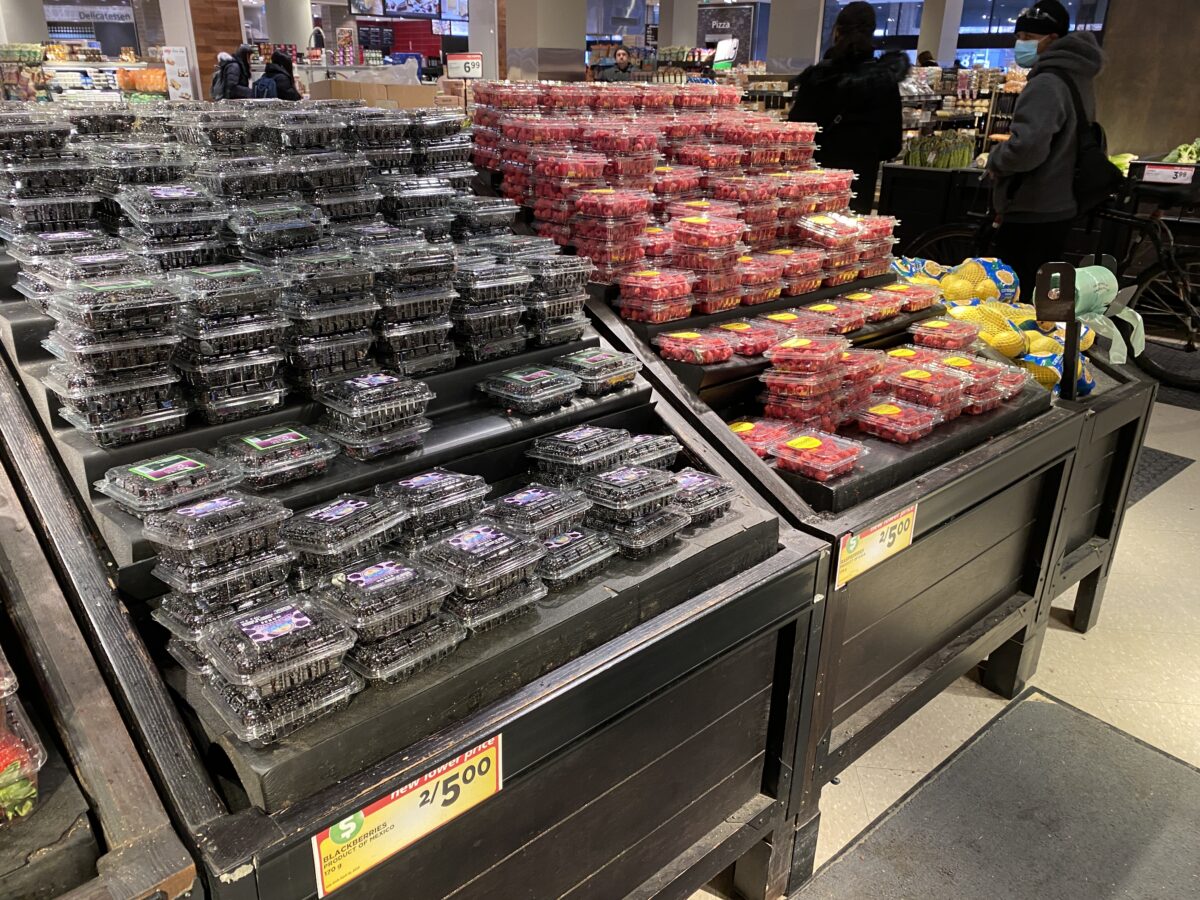
A striking statistic reveals that roughly one-third of all plastic packaging in Canada pertains to grocery store food packaging, much of which is designed for single-use purposes. From juice boxes and produce bags to yogurt containers and meat trays, the sheer ubiquity of such packaging necessitates immediate action. Initially, Environment Climate Change Canada (ECCC) proposed voluntary industry targets, but it is not challenging to envision a progression towards more stringent obligations over time. However, recent developments indicate a notable shift in the approach’s tone, as the industry’s commendable efforts to reduce plastics are seemingly undervalued. ECCC appears to remain impervious to reasoning beyond ideology and seems to overlook the potential consequences of hastily pursuing plastic elimination, effectively sidelining science-based policymaking.
The ramifications of P2 could be profound for our access to fresh produce. Canada imports approximately $7 billion worth of fruits and $3.5 billion in vegetables annually. International trade plays a pivotal role in ensuring affordable food for Canadians. While we export our food globally, we also depend on global markets for our sustenance. Hence, the economics of food packaging hold immense significance, both domestically and internationally. Surprisingly, many foreign suppliers who provide produce to Canada remain unaware of P2 and its potential repercussions. Over the years, several food manufacturers, including Nestle, have exited the Canadian market for various reasons, withdrawing some brands. P2 could further discourage key suppliers that support our healthy aspirations.
A few years ago, a comprehensive assessment led by one of Canada’s foremost supply chain management and food waste experts, Dr. Martin Gooch, projected that ineffective packaging could lead to nearly half a million metric tonnes of increased food losses and waste compared to current levels, valued at CA$2.5 billion. It’s worth noting that this estimate is considered conservative. Significantly, the highest losses are anticipated in perishable commodities vulnerable to damage or those necessitating specialized packaging. Plastic packaging often extends the shelf life of products sensitive to ethylene, a natural ripening agent produced by fruits and vegetables. For example, carrots are susceptible to ethylene produced by neighbouring produce, which shortens their shelf life, affects their appearance, and diminishes their taste. Less appealing produce at retail translates to reduced consumer desirability.
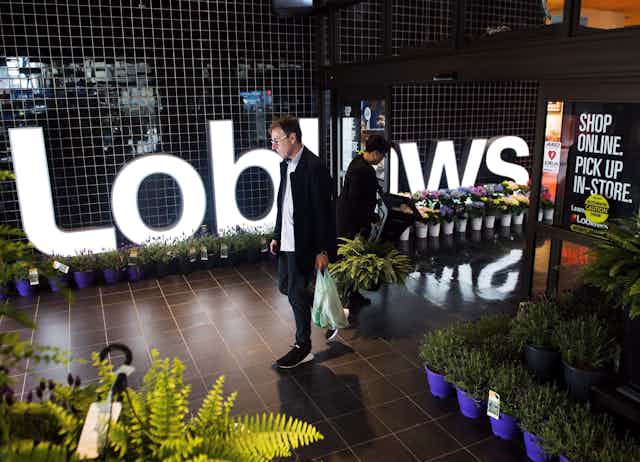
Loblaw Empress Walk (Image: Dustin Fuhs)
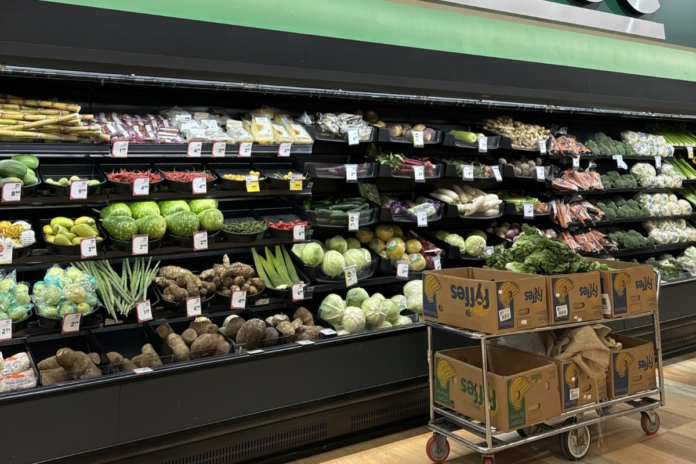
The report’s findings were quite specific, indicating that beans would suffer the most significant increase in losses at 100%, followed by soft berries and cucumbers at 90%. Leafy greens (73%), carrots (61%), cherries and grapes (50%), beets (45%), and soft fruit (34%) would also see substantial losses. Across the 20 commodities currently sold prepackaged in plastic, moving away from plastic packaging would result in a 17% increase in loss. In essence, the elimination of plastics could inadvertently impact food prices at retail.
ECCC’s most significant oversight appears to be its failure to consider the unique logistical and trade realities of Canada. It seems that ECCC is primarily influenced by ideas drawn from European studies. However, it’s crucial to note that in the UK, for example, a far greater proportion of fresh produce sales are prepackaged compared to Canada. Less frequently mentioned is the fact that even these changes would lead to increased labour requirements, higher operational costs, and other forms of pollution, such as supply-chain emissions. More comprehensive data and a thorough scientific evaluation of the consequences are unquestionably required.
There is no denying the urgency of eliminating plastics from grocery stores. However, it is equally vital to understand the potential repercussions of such actions. Currently, it appears that ECCC is indifferent to the future blame that may be solely directed at the food industry for higher food prices when it was the implementation of ECCC’s policies that contributed to this outcome. And ECCC is fully aware it can evade accountability.
A more nuanced approach is undoubtedly warranted – one that adeptly balances environmental objectives with the economic and logistical realities of Canada’s food industry.
Future Neo Coffee Bar on Spadina (Image: Dustin Fuhs)
Neo Coffee Bar, which opened its first location in Toronto in 2015, is planning a major expansion with a number of new downtown locations as well as eventually growing the brand to other places in the region.
Sari Samarah, President and CEO, Broker of Record for Value Insight Realty, which is handling Neo’s real estate needs, said the brand today has two stores and a third and fourth that’s been confirmed.
Sari Samarah
“We can announce the Exchange Tower in The Path, which will open this winter and our fourth location,” he said. “The store at 57 Spadina Avenue should be opening by the end of this month.”
“The Taylor is owned by Tricon, world-renowned developer who has provided the beautiful property for our newest Neo Store.”
“The Taylor is one of Toronto’s most desirable residential rental addresses and an experience at the centre of it all,” shared Hurwitz. “We are thrilled for this bespoke Neo Coffee Bar to open in our mixed-use project and elevate the community. Partnering with best-in-class retailers such as the Kinka Family is crucial to providing the amenity rich product that enhance the lives of our residents.
“The Taylor’s apartment feature premium touches and high-quality craftsmanship brought together by celebrated interior designer Cecconi Simone. It’s a place you will be thrilled to call home.”
Existing Neo Coffee Bar stores are located on Frederick Street in the St. Lawrence Neighbourhood and one at Bay and College.
Future Neo Coffee Bar at 57 Spadina (Image: Dustin Fuhs)NEO COFFEE BAR ON FREDERICK STREET IN TORONTO (Image: NEO COFFEE BAR)
Samarah has a connection with the Kinka family which is a Japanese restaurant group with brands such as Kinton Ramen, Kinton Izakaya, Jabistro and Kintori Yakotori.
Samarah said the brand is working on several other new locations that could be for next year and others that could be for the following year.
“We are planning on opening another three to five new locations in 2024 and continuing to grow more rapidly into 2025 and beyond,” he added.
“Our current focus is expansion in Toronto and the GTA, however we will also expand to the suburbs soon as well. We’re working now on something in Mississauga and North York. It’s not all urban locations.
“We’re looking for high traffic locations with approximately 800 to 3,000 square feet. Highly dense populations with strong traffic and large daytime population locations.”
Future Neo Coffee Bar in Exchange Tower (Image: Dustin Fuhs)Future Neo Coffee Bar in Exchange Tower (Image: Dustin Fuhs)
According to the brand, Neo is “the perfect spot to sit and catch up on the day’s news while enjoying your caffeine fix. We are neighbours with schools and big offices alike, and we make everyone feel like they have a community space to share.”
“At NEO COFFEE BAR, we want to serve you with a serene coffee experience. Tastefully designed aesthetic where you find respite from the city is a pillar of focus for us. Enhanced by curvilinear concrete walls, warm wood accents, and modern furniture, our refreshingly minimalist, light-filled coffee bar is beautifully furnished with bench seating, pedestal tables, and spacious booths. The space provides a unique, out of the mold, look and feel, and provides a coffee oasis away from the hustle of downtown Toronto.”
In May 2022 the magazine Architectural Digest named Neo one of the 23 most beautifully designed modern coffee shops: “With the mission to make Neo Coffee Bar the neighborhood’s regular haunt, local architecture firm Dialogue 38, Inc. infused the Toronto outpost with that classically cool look: Curvilinear concrete walls, plenty of wood accents, and modern furniture all nestled into a minimalist space.”
Image: NEO COFFEE BARNeo Coffee Bar at 161 Frederick St in St. Lawrence Market Neighbourhood (Image: Dustin Fuhs)
Samarah said one of the unique features of Neo Coffee Bar is that its style is Japanese.
“The location at Spadina is going to be open late and it’s going to have cocktails and a larger food offering. The brand is known as a coffee shop but for the Spadina location it’s going to be open late. So you have a Japanese cocktail bar and coffee shop at the heart of King and Spadina. It’s going to be something exciting that people won’t expect from the concept. It’s also a 3,000 plus square foot space,” he said.
“I foresee us expanding more heavily over the next few years. The energy I feel for what’s about the happen is similar to that of Kinton Ramen in it’s early years of expansion. And the profitability on coffee can be stronger than the full service restaurant model because you don’t need the same type of build out infrastructure.”
Ren’s Pets recently opened two locations in Toronto and has one more planned for this month, just in time for this year’s Halloween shopping.
Larissa Wasyliw, Vice President of Ecommerce and Marketing at Ontario-based Ren’s Pets, says more than ever people are shopping for Halloween, not just for themselves – but also for their pets.
Larissa Wasyliw
“We are really excited about Halloween. It is actually one of the most celebrated holidays people will have with their pets. And what we are seeing, since the pandemic, is that everybody has pets as there was a high adoption rate. Pets are being included in all of the Fall and Halloween activities because people really think of their pets as part of their family,” says Wasyliw.
Each Ren’s Pets store will now have their Halloween supplies ready. For this year, consumers can find a variety of Halloween themed products such as costumes, accessories, toys, treats, and Fall themed clothing.
“When we did our orders for this year, we really had in mind that coming out of the pandemic – people were wanting to celebrate quite a bit. One of the most popular things we have ordered this year was pyjamas – Halloween pyjamas for your pets, which is really fun. People right now are going all out and celebrating big, and we really expect that to happen this year with pets.”
Along with other retailers, Wasyliw is seeing an increase in consumers shopping earlier for Halloween, meaning Ren’s Pets have dropped their Halloween collection earlier than ever before.
What Consumers Are Looking For This Halloween
Halloween Pugs (Image: Ren’s Pets)
Wasyliw says consumers this year are looking for premade costumes, such as pumpkins, tacos, and hot dogs – which all seem to be a popular option this year and for past Halloweens. She also sees consumers buying a blend of products and accessories to add to what they already have or to create their own costume.
Consumers are not only spending money on Halloween costumes, but also products to lead up to Halloween.
“The other thing consumers are looking for is not so much even a costume, but seasonal attire. So we have little hoodies that are ghosts and different fun things. Shoppers would like to dress their pets up in clothing that represents Halloween around the season, and then they put the actual costumes on for Halloween to celebrate the actual event.”
Image: Ren’s Pets
Although Wasyliw says consumers are being cost effective right now and are watching their pocketbooks – people still love to spoil their pets. Ren’s Pets is seeing consumers reusing a costume, but then adding onto it by buying accessories or placing their disposable income into hoodies, extra seasonal clothing, and treats.
“That is what we are seeing this year. We are also seeing people buying their pets special treats for Halloween as we do offer cookies and different little treats for pets that are themed with flavours or different creations just for Halloween.”
Ren’s Pets will have costumes available such as cow costumes, superheroes, tacos, hot dogs, and although they do not have Barbie specific costumes, Ren’s Pets do carry a lot of dresses and accessories that could be used for a Barbie costume. Consumers have the option of shopping online, in-person, and even have the option of ordering through DoorDash.
Social Media Stars & Contests
Image: Ren’s Pets
For the month of October Ren’s Pets will be celebrating cats all month, have a special one week flyer that is dedicated to the season, and will have contests.
One popular trend Wasyliw is seeing is shoppers having matching costumes with their pets and to include the whole family.
“We have always done pet costume contests which are really fun and then this year, we have been talking about how to make it extra special. And one of the things that we noticed, is that people love to match their costumes with their pets costumes, especially in Toronto and in our urban stores. So we have been thinking about really fun marketing activities and social media activities that we can do with our consumers and their pets.”
As an example, Wasyliw says she remembers a picture of a pet from one year dressed up as a hot dog and their owner was dressed up as a bottle of Ketchup.
“Because of this, their costumes really become social media stars. The pet parent loves their pet costumes and they post it all over social media channels. We have just about seen everything which is amazing and that is why we love our pet photo contest.”
This year, consumers can expect to see photo events and people can bring in their pets to get their photo taken with a different backdrop in each store. Ren’s Pets will also have treat samples as “pets always love to try something new and exciting with the Halloween flavour.”
In addition to the Halloween season, Ren’s Pets will also be getting ready for Christmas which will start in November and instead of Black Friday, they will have Bark Friday. “We do the 24 days of Christmas where we offer deals for our customers across the whole month of December, so it is a perfect timing to get these stores open.”
New Stores
Ren’s Pets Toronto Beaches (Image: Ren’s Pets)
Ren’s Pets Toronto Beaches Grand Opening September 2023 (Image: Ren’s Pets)
As of the end of September, Ren’s Pets will have opened twelve new stores in 2023; they have recently opened two new locations and are opening one more at the end of the month.
One store recently opened to the public was in the Toronto Beaches neighbourhood on September 2nd. This location is one of Ren’s Pets’ smaller format ‘urban concept’ stores and is right across from a dog park on Queen Street East.
Ren’s Pets Markham (Image: Ren’s Pets)
The second location opened on September 16th in Markham, and the third store will be in Oshawa and set to open September 30th.
“We have been having great success in the GTA. Markham is a perfect fit for us to build out a store and then finally on the 30th, we are opening up in Oshawa. So those three do wrap up our twelve stores we have opened this year, which is just a phenomenal fast paced growth for the company.”
By the end of September, Ren’s Pets will have 57 locations across Canada.
Retail Insider is also able to confirm the first two stores in 2024 will be in Collingwood and Napanee.
Retail Insider is streamlining its Canadian retail news from around the web to include a handful of top news stories that can be viewed quickly during the day. Here are the top stories from the past several days.
Future Browns Shoes on Bloor Street (Image: Dustin Fuhs)
Montreal-based footwear retailer Browns Shoes is returning to Toronto’s Bloor Street after closing a store nearby about four years ago. The new Browns store will be on a busier stretch of Bloor Street near Holt Renfrew, and it will become a draw for the area that otherwise lacks footwear retailers.


The new Browns Shoes store will span nearly 4,300 square feet at the base of the 60 Bloor Street West office tower. Browns will be between Alo Yoga at 60 Bloor and and the Holt Renfrew flagship which occupies much of the ground floor at 50 Bloor Street West.

Eric Ouaknine
Eric Ouaknine, Vice President of Retail at Browns Shoes, said that the new Bloor Street store will feature a totally new and unique store concept that would include 20 foot ceilings, and custom finishings throughout. Customers will be able to enter the store from within the lobby of 60 Bloor, as well as from Bloor Street itself. “We’re excited to be back on Bloor Street, in what we feel is one of the busiest stretches of commercial real estate in Canada”, Ouakine said.

Rendering of the new Browns Shoes store at 60 Bloor Street West in Toronto. Image supplied.

The store will house Browns’ in-house brands as well as various other brands ranging from athletic to designer. In recent years Browns Shoes has focused more on its own core brands, maintaining quality and design, while also carrying a range of complementary brands that have attracted loyal shoppers.
Browns will be a welcomed addition to the Bloor-Yorkville area, which has only a handful of footwear retailers. Current footwear retailers in the area include a Ron White store at the Manulife Centre and a JP Fortin store at the Yorkville Village shopping centre (formerly Hazelton Lanes), as well as La Canadienne which replaced a Kate Spade store in 2021. Holt Renfrew also features a sizeable footwear offering in its adjacent women’s store and nearby men’s store, while some multi-category specialty retailers in the area are also carrying shoes.
Browns Shoes has recently been expanding and relocating stores while also opening new ones. The company could have a further opportunity for growth, given Nordstrom’s recent exit from Canada. It’s estimated that Nordstrom’s Canadian footwear sales were about $150 million across its six full-line stores. Given the lack of competition in Canada, Browns has the opportunity to gain further market share.
Future Browns Shoes on Bloor Street (Image: Craig Patterson)Future Browns Shoes (Far Left), Holt Renfrew (Centre) and Future Arc’Teryx at the Holt Renfrew Centre on Bloor Street (Image: Dustin Fuhs)


Browns has had a presence in the Bloor-Yorkville area since the 1970s. Its first store was at the Hazelton Lanes shopping centre. In 2008 it relocated to 110 Bloor Street West where it remained until just before the pandemic. Higher foot traffic at the new 60 Bloor store is expected to result in higher sales.

Various footwear retailers have vacated Bloor-Yorkville over the past decade, including Stuart Weitzman, Davids Footwear/Capezio, Speccio, Tanya Heath, Town Shoes, Shoe Warehouse, and others.
Oberfeld Snowcap represents Browns Shoes as brokerage in Canada.
We’ll follow up on this story when Browns opens its Bloor Street store.

IKEA Distribution Centre in Beauharnois, Quebec (Image: IKEA)
IKEA has opened its massive Distribution Centre and Customer Distribution Centre in Beauharnois, Quebec, near Montreal, to enhance its omnichannel capabilities.
The facility is just over one million square feet – the size of 13 American football fields – and it replaces the company’s Brossard DC/ CDC, which is 925,696 square feet.
Mathieu Rochon
Mathieu Rochon, Central Fulfillment Unit Manager and Director of Beauharnois’ Distribution Centre and Customer Distribution Centre at IKEA Canada, said the facility will become a cornerstone of progress, serving not only as a hub for its operations but also as a testament to its unwavering dedication to delivering excellence and being a home away from home for its co-workers.
“We have two main businesses in this Distribution Centre. The first one is delivering to the stores. We distribute to stores from Winnipeg to Halifax. Mostly the East Coast and Central Canada and the GTA and also to customer distribution centres in the GTA and these are locations where we send e-commerce orders directly to the customers,” said Rochon.
“This new centre can house 244,000 pallets on site here. This is why it’s so important for us to distribute to the stores and be more efficient, store more goods and be closer to the customer and be more efficient that way.”
IKEA Distribution Centre in Beauharnois, Quebec (Image: IKEA)IKEA Distribution Centre in Beauharnois, Quebec (Image: IKEA)
The retailer said the new Beauharnois facility is the first IKEA Distribution Centre in over three decades.
It said the state-of-the-art Beauharnois Distribution Centre and Customer Distribution Centre will play a pivotal role in streamlining IKEA’s logistics operations, ensuring that products reach customers’ homes with increased speed and accuracy. By optimizing its distribution network, IKEA aims to further elevate the shopping experience and meet the ever-evolving needs of its valued customers by notably using automated storage and retrieval systems as well as automated goods to person picking and packing solutions, it said.
The new Beauharnois location was awarded LEED Silver certification and is equipped with 20 electric vehicle chargers for co-workers and guests. The retailer will install 15 electric vehicle chargers for commercial fleets, in December, supporting IKEA Canada’s ambition to provide zero emission home deliveries by 2025.
The facility will have over 380 workers.
At the heart of the IKEA Beauharnois Distribution Centre and Customer Distribution Centre are over 380 co-workers.
The retailer operates 16 stores in Canada.
IKEA Distribution Centre in Beauharnois, Quebec (Image: IKEA)IKEA Distribution Centre in Beauharnois, Quebec (Image: IKEA)
A DC is a central warehouse that receives goods from suppliers and distributes them to stores and CDCs. In Canada there is only one DC in Beauharnois that services IKEA stores in Manitoba, Quebec, Ontario, and Atlantic Canada. BC and Alberta stores are serviced by a DC in the United States that is in closer proximity to them.
A CDC holds stock for home delivery and pick-up orders where each order is individually picked and packed for final distribution to the end customer, either directly or through a hub. IKEA Canada maintains CDC sites in Beauharnois, Mississauga, Vancouver, and a third-party facility in Kleinburg, ON.
“We are unique in Canada,” said Rochon. “We distribute to both the stores and the customers directly and we’re the only unit in Canada that does that.
“There’s a lot of automation in here. We want to be fit for the future. We want to be a leading omnichannel retailer in Canada . . . so we really invested in automation.”
IKEA Distribution Centre in Beauharnois, Quebec (Image: IKEA)
The company said the Beauharnois CDC is using a first of its kind interface solution in IKEA that creates an interaction between the carton creation machine (Packsize) and our Warehouse Management System (WMS) that knows the size of the customer order. This means the right size box can be prepared for the customer order automatically saving time and materials for co-workers.
An Automated Storage and Retrieval System is installed to receive, store, and pick full pallets of merchandise. This system comprises over 90 per cent of the storage and handling capacity for the unit.
The CDC employs Goods-To-Person Picking using a tote bin Automated Storage and Retrieval System that receives and stores less than full pallet quantities of product for customer direct orders. This system brings totes to a picking station to fulfill orders, then returns the totes to the storage array.
IKEA Distribution Centre in Beauharnois, Quebec (Image: IKEA)2019 Construction Photo
of IKEA Distribution Centre in Beauharnois, Quebec (Image: IKEA)