New store front design of the T&T Supermarket at 530 Oxford Street West, to open in Summer 2024 (CNW Group/T&T Supermarkets)
Canada’s largest Asian supermarket chain, T&T Supermarkets, will open a store in London, Ontario, on September 27, 2024. It will be located at 530 Oxford St W, at the intersection of Oxford St W and Wonderland Rd.
The 39,000 square foot store is poised to become the largest Asian supermarket in London, offering residents an extensive array of Asian groceries and prepared foods. The store’s arrival is particularly meaningful for T&T Supermarkets’ CEO, Tina Lee, who said that she has a personal connection to the city.
Click image for interactive Google Map
“As a former Western University student, I remember the three-hour carpools to Toronto just to shop at T&T,” Lee reminisced. “Those trips were more than just grocery runs; they were a cure for homesickness. Two decades later, I’m thrilled to bring the T&T experience to my old stomping grounds, knowing that London’s residents and students still crave what we have to offer.”
Tina Lee
The new supermarket will be housed in a renovated strip mall owned by York Developments. The store opening will generate 120 new positions in the community.
Customers can look forward to an immersive food culture experience at the new T&T. The store will feature fresh produce, an extensive selection of Asian groceries, an in-house bakery, and a variety of prepared food stations. Highlights include a hot meal buffet bar, sushi counter, Hong Kong-style barbecue pork, and the popular Tianjin crepe station, catering to diverse tastes and preferences.
The London location will also offer the convenience of online ordering for both home delivery and click-and-collect services through the T&T website and mobile app.
Since its founding in Vancouver in 1993, T&T Supermarkets says it has been dedicated to introducing Canadians to the myriad flavours of Asia. With over 33 stores across British Columbia, Alberta, Ontario, and Quebec, T&T Supermarkets has established itself as a cornerstone of Asian-Canadian food culture. Under the leadership of CEO Tina Lee, the second-generation successor to the company’s founders, T&T continues to expand its reach and influence in the Canadian retail landscape.
That includes recent store announcements in the US for Washington State and California, where T&T has recently focused expansion efforts.
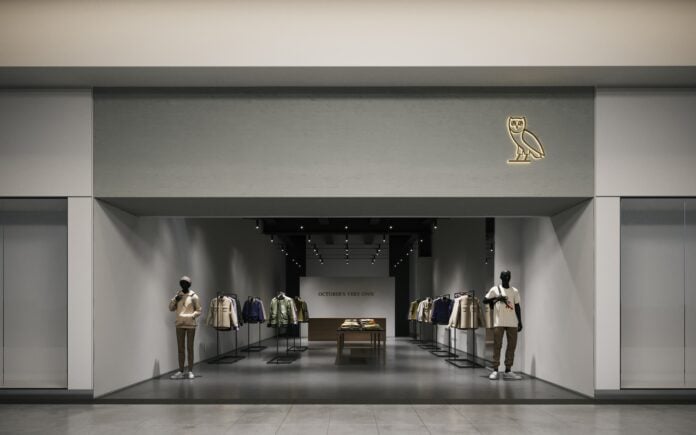
Rendering of the OVO store at Scarborough Town Centre in Toronto. Image supplied
October’s Very Own (OVO), the lifestyle and apparel brand co-founded by global hip-hop icon Drake, is set to open a temporary location at Scarborough Town Centre (STC) this weekend that will remain open for an undetermined amount of time.
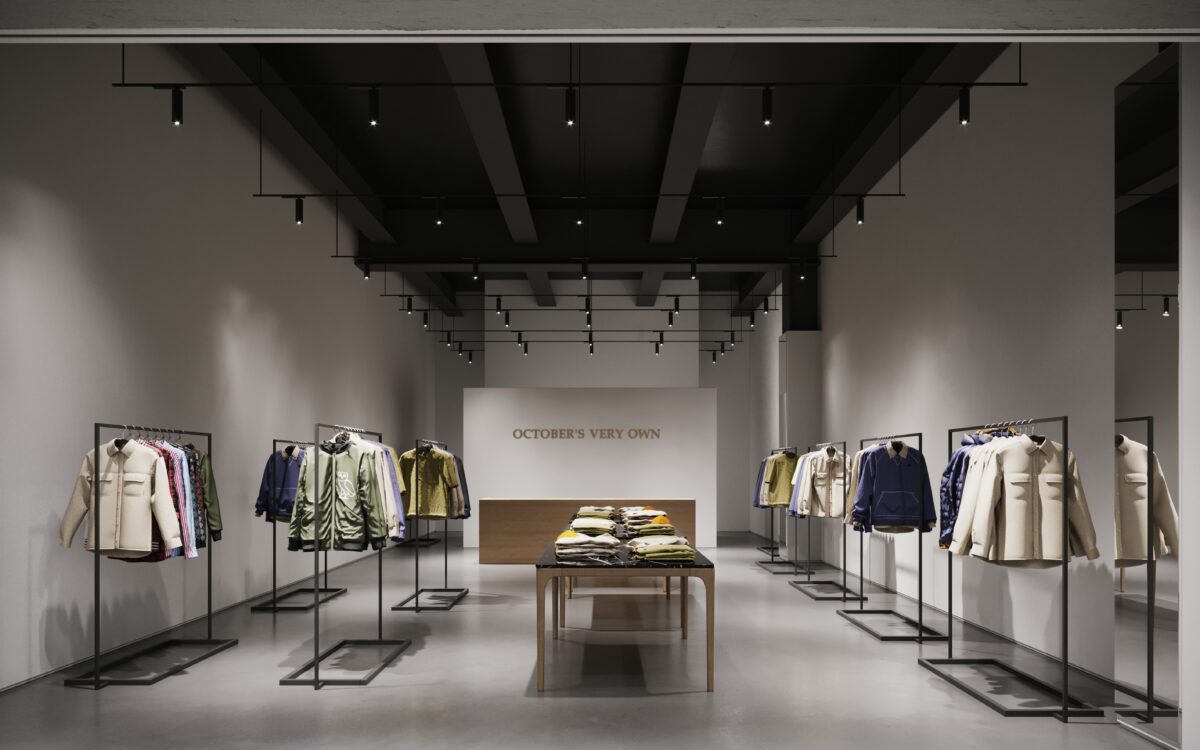
The seasonal pop-up, located on the upper level near Entrance #2 of the mall, will showcase OVO’s most comprehensive product lineup to date. In a nod to its local roots, the store will feature an exclusive OVO East End capsule collection, alongside apparel from the Scarborough Shooting Stars, a Canadian Elite Basketball League team co-owned by OVO’s Nicholas Carino.
“I’m thrilled that the newest OVO store will reflect the neighbourhoods that have shaped me and so much of Toronto’s cultural and athletic talent,” said Nicholas Carino, affectionately known as “OVO Niko”, in a statement.
Rendering of the OVO store at Scarborough Town Centre in Toronto. Image supplied
The pop-up’s arrival at Scarborough Town Centre is a homecoming of sorts. Robert Horst, Oxford Properties’ VP of Retail and former Scarborough Town Centre General Manager, said “As a Scarborough native, I understand firsthand the impact OVO has on our community. Hosting an OVO seasonal pop-up with exclusive items and events is incredibly meaningful to Scarborough Town Centre and our customers.”
Drake wearing an OVO hoodie. Image: OVO
Horst elaborated, “We consistently engage with the community to discover inspiring local enterprises and help them establish a retail presence in our mall. This collaboration with OVO represents an exciting instance where a brand with local roots and global appeal is returning to its origins.”
Since its inception in 2011, OVO has grown from a series of collaborations with Roots Canada into a full-fledged global lifestyle brand. The company has expanded its retail footprint with stores in major cities across North America, including Toronto, Los Angeles, New York, Chicago, and Vancouver.
OVO’s product range has diversified significantly over the years, moving beyond its initial offerings of parkas and jackets to include a wide array of clothing and accessories. The brand has also gained attention for its high-profile collaborations, including partnerships with the Toronto Raptors, Canada Goose, and Air Jordan.
As OVO continues to grow, this seasonal pop-up at Scarborough Town Centre represents a strategic move to reconnect with its roots while simultaneously expanding its reach. For shoppers and fans alike, it offers a unique opportunity to experience the brand’s latest offerings in a setting that celebrates its local heritage.
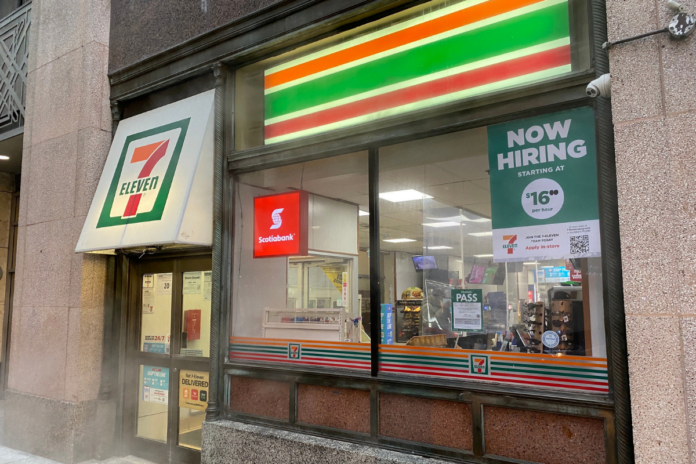
7-Eleven Hiring Sign on Bay Street in Toronto (Photo: Dustin Fuhs)
Canadian multinational convenience store operator Alimentation Couche-Tard Inc. is reaching out to some of Canada’s most prominent pension funds to support its proposed acquisition of Seven & i Holdings Co., parent of 7-Eleven.
If successful, the proposed acquisition of Seven & i Holdings would represent the largest-ever foreign takeover of a Japanese company, with Seven & i Holdings currently valued at approximately US$38 billion in the market with 85,000 stores globally.
Couche-Tard, which already manages a network of about 16,700 stores and has a market value of roughly US$56 billion, is considering a range of funding options to support the venture. Options include traditional debt financing as well as the possibility of issuing new stock. The discussions with Canadian pension funds are ongoing, and no final agreements have been reached.
Major pension funds and sovereign wealth investors, flush with cash, have been increasingly active in financing large-scale transactions. The strategy allows companies like Couche-Tard to tap into substantial pools of capital while providing institutional investors with opportunities for significant returns.
The potential acquisition of Seven & i Holdings by Couche-Tard could have far-reaching implications for the global convenience store industry. It would combine two retail powerhouses, potentially creating a dominant force in the sector with an unprecedented global footprint. For Canadian consumers, this could mean access to a wider range of products and services, as well as potential innovations in the convenience store experience.
Talks are still in the preliminary stages. Couche-Tard has made a non-binding proposal, and there are likely to be numerous regulatory and financial hurdles to overcome before any deal can be finalized. The involvement of Canadian pension funds, if secured, could also provide a vote of confidence in the strategic vision behind the potential acquisition.
Payroll employment in retail trade decreased by 15,100 (-0.8 per cent) in June, contributing to an overall downward trend since February 2023, reported Statistics Canada on Thursday.
“From February 2023 to June 2024, the net payroll employment loss in retail trade was 39,300 (-1.9 per cent),” it said.
“In June, seven of the nine subsectors in retail trade recorded decreases in payroll employment. The declines were led by sporting goods, hobby, musical instruments, book, and miscellaneous retailers (-3,500; -1.7 per cent), clothing, clothing accessories, shoes, jewelry, luggage and leather goods retailers (-3,400; -1.6 per cent) and general merchandise retailers (-2,200; -0.8 per cent). The remaining two subsectors were essentially unchanged.”
The federal agency reported that the number of employees receiving pay and benefits from their employer—measured as “payroll employment” in the Survey of Employment, Payrolls and Hours—decreased by 47,300 overall (-0.3 per cent) in June.
The decline in June followed five consecutive monthly increases from January to May, with a cumulative gain of 147,600 (+0.8 per cent) over this period. On a year-over-year basis, payroll employment was up 110,400 (+0.6 per cent) in June, added StatsCan.
“Meanwhile, job vacancies in June were little changed at 554,000. On a year-over-year basis, job vacancies were down by 190,500 (-25.6 per cent) in June.
“In June, monthly payroll employment decreases were recorded in 11 out of 20 sectors, led by retail trade (-15,100; -0.8 per cent), manufacturing (-10,600; -0.7 per cent), construction (-7,700; -0.7 per cent) and administrative and support, waste management and remediation services (-6,600; -0.8 per cent). Mining, quarrying and oil and gas extraction (+2,500; +1.2 per cent) was the lone sector to record a monthly increase in June. The remaining eight sectors were little changed.”
As back to school shopping is ending, Jeff Doucette, the general manager at Field Agent Canada, discusses financial strains on families. Doucette discusses the newest findings in the Field Agent report results, which shows 73 per cent of consumers say inflation has hit them harder this year.
“The results were not majorly different from year to year, but we still see inflation is impacting people. 42 per cent of people said they would be spending more on back to school supplies this year, and a lot of that is just a function of inflation, not necessarily about buying more stuff,” says Jeff Doucette.
The financial strain of inflation on back to school shopping
Doucette says the financial stress is not necessarily from buying more items, but rather from basic necessities rising in costs.
Inflation is forcing parents to rethink purchases this year. Rather than buying new items, such as backpacks, simply because it is the start of a new school year, Doucette says parents are opting to reuse last year’s purchases.
Consumers are really thinking about where they need to spend because budgets have been stretched to the max, and they have to save in certain spots. I think there are some smart shoppers out there and I think consumers are really thinking about where they need to spend. So if this means reusing a backpack – then that is what is going to happen.
73 per cent of consumers say inflation has hit them harder this year
Jeff Doucette
“I think people often forget when inflation is sort of baked in, when you have inflation one year, the next year’s inflation is on top of it, so there is that cumulative effect people often forget about. Consumers are definitely feeling that hinge.”
Doucette says this is leading the increase to second-hand items.
“There is an element with kids now in fashion on the clothing side of thrifting, and thrifting does not necessarily mean the drags of clothing. It can be also expensive to buy thrift stuff, but usually there is a better value in buying those second hand clothes. So if it is part of the fashion, then that might actually be a money saver for parents and back to school.”
At Dalhousie University, for example, there is a free pop-up store available for students from August 30th to September 6th. This is the first free pop-up shop at the university and online it says: “It’s a student’s one-stop shop for free school supplies, and household items like kitchenware, decor, and more … The Free Store promotes sustainability and affordability by giving gently used items a new life.” Doucette notes the report focuses on Kindergarten to Grade 12, excluding university students.
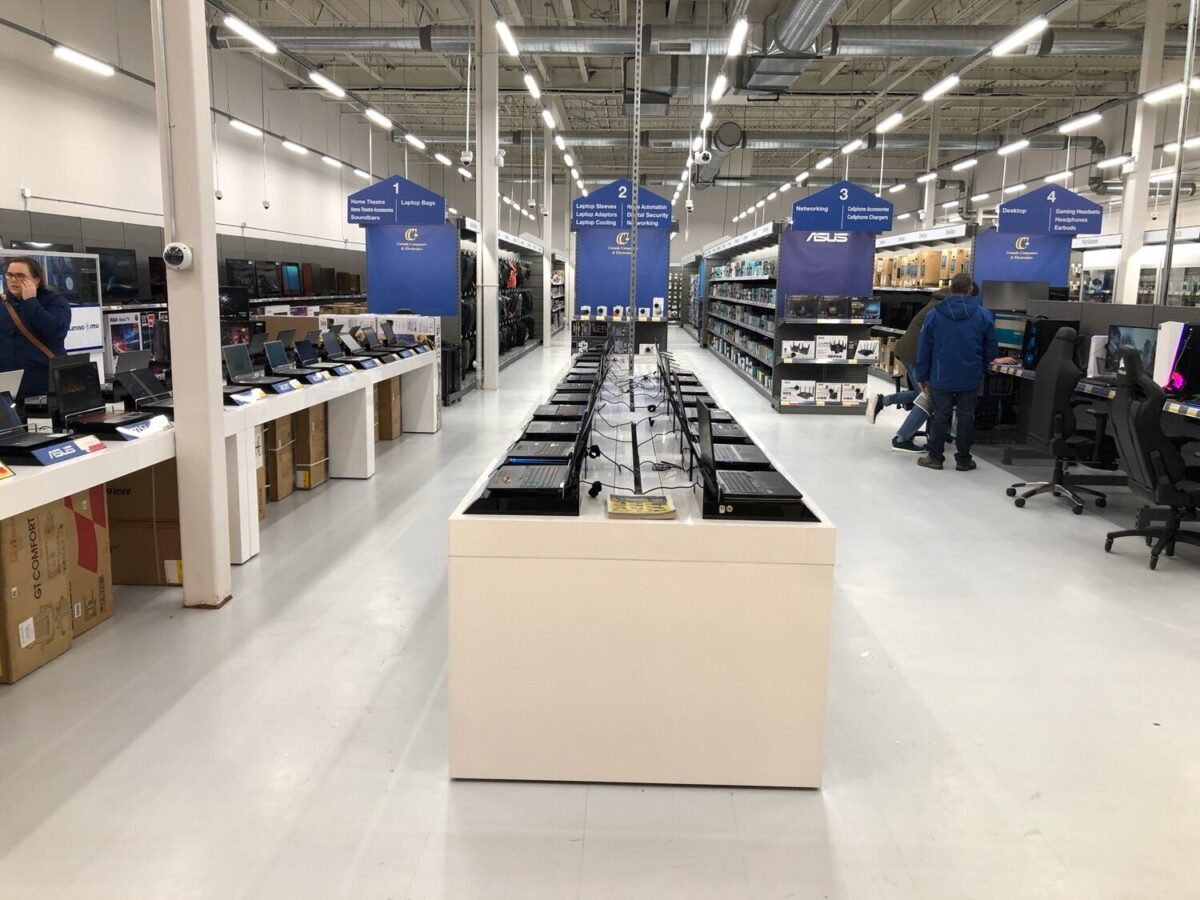
CANADA COMPUTERS & ELECTRONICS
Electronics are down from last year
For schools, having electronics in the classroom and at home is becoming essential, but is usually a one-time purchase.
“I have kids in junior high school and the fact they are running around with $1,500 laptops in their backpacks is ridiculous. I get technology is at the core of everything we do now, but it is amazing it has been added as a cost to parents – it is a very different world. Even the cheapest Chromebooks are still a couple of hundred dollars.”
Doucette explains that although schools require students to have computers, many of them often go unused.
“My daughter, who is going into grade nine uses it a lot more, but my son who is going into grade six – it seems like dead weight in his backpack. They ask you to have this technology, but then it doesn’t get used as much as you think it might. If you have three or four kids and you have to buy laptops now, it is a really expensive part of school supplies. It is a tough pill to swallow.”
Since electronics do not need to be replaced yearly, Doucette says electronic purchases are down this year compared to last.
Less brand loyalty
Walmart has come out on top for store visits at 91 per cent, with Dollarama landing in second place.
Doucette says Walmart offers great values, advertise well, and have a dedicated space for back to school supplies.
“It is a destination for Walmart and they are really focused on it. And the whole one-stop-shop routine is great. If you have a list of things and you go to Walmart, you are going to be able to get 90 per cent of what is on that list. You don’t have to wander around the store, staff members are keeping it organized, and they just make it really easy.”
Doucette says it is surprising to see Dollarama in second place. “Seems like a big drop off from Walmart, but a 66 per cent for Dollarama is insane.”
More tier shopping
“I would say those 66 per cent of consumers that shop at Dollarama are like ‘I am going to go to Dollarama first, see what I can get, and then I am going to Walmart.’ And then those people that don’t go to Dollarama, they start at Walmart and see what they can get and then go to Staples. So it is sort of this cascading shopping list where consumers are starting at the cheapest retailer and working their way down.”
Doucette says retailers offering “one stop shop” and great values
In the report, Staples was behind Walmart, Costco, and the Superstore at 41 per cent and Doucette says it is because of value and convenience.
“I go to Walmart more often for other things, I go to Dollarama for other things, and same with the Superstore. It is a convenience factor where I am already there and if they have a big display it triggers me to go pick up those supplies. Whereas people don’t go to Staples on a regular basis and not even a location they go to weekly.”
Amazon is another factor for convenience as parents can just have the school supplies shipped to their front door. This year, the report shows Amazon being at 78 per cent.
“It just shows up at their house. So in actual fact, you would have people going to Amazon first, then Walmart or Dollarama, then Superstore, and then maybe Staples. That speciality store keeps getting pushed further down the list because either you are getting beat on value, convenience, or that online shopping capability – consumers are less loyal to companies right now for back to school shopping.”
As for online shopping, Amazon, Walmart, and Temu came out as the top three choices.
Sustainability not a purchasing factor for most
Although sustainability is becoming a trend, the report shows only three per cent of consumers consider sustainability “extremely important.” Doucette says parents who are able to buy more sustainable choices, are able to afford to.
“I think sustainability is a tough sell when it costs even more. There is definitely a dedicated following and people who will make that choice, but they are also able to afford to make that choice. There are a lot of parents where sustainability is not even hitting their radar because they just want to get this list done and they have 200 dollars to do it.”
Since sustainability products are costing more, consumers are more likely to spend on non-sustainable products to stretch out their dollar.
In terms of clothing, sustainability is harder as kids outgrow their clothes quickly throughout the school years.
“Fast fashion works for kids because they are literally growing out of it. If you think about sustainability from a fashion standpoint, that T-shirt you bought will no longer fit in a year and chances are, on the first day of school, it is going to come home with a ketchup stain on it. So I think a parent’s view of clothing is a lot different and sustainability isn’t the top choice.”
As this year’s back to school shopping is hitting parents harder than previous years, the report shows parents are looking for great value and convenience. From shopping online, Walmart, or Dollarama – parents are facing financial challenges and want quick, painless, and cost friendly experiences.
Padam Dugal, Store Manager, RONA Scarborough Midland, and team members. (CNW Group/RONA inc.)
The RONA Foundation, which oversees the philanthropic activities of RONA inc., one of Canada’s leading home improvement retailers operating and servicing some 425 corporate and affiliated stores, is launching its 2024 Home Sweet Home campaign, raising funds to revitalize living environments or facilitate access to housing for Canadians in need.
The campaign will run from September 1 to 30 in all RONA network corporate stores, as well as in participating distribution centres and RONA affiliated stores.
Catherine Laporte
“Our in-store and distribution centre teams are inspired by this timely cause, and they’re motivated because each team chooses the local organization it wants to support. Some non-profits sometimes find it harder to raise donations because they don’t have the infrastructure of a big national organization behind them. That, we’ve got,” said Catherine Laporte, Chair of the RONA Foundation Board of Directors and Senior Vice-President, Marketing and Customer Experience at RONA.
RONA said the campaign will support nearly 150 Canadian non-profits that help victims of domestic violence and their children, low-income families, and people with disabilities or mental health issues.
“Every person should have a safe place to live. That’s something I strongly believe in, especially given the issue of access to housing that affects so many Canadians today,” said Josée Lafitte, Director of the RONA Foundation.
RONA network customers across the country will be invited to make a donation to support a local cause during their in-store visits. Online shoppers will also have the chance to participate by making a donation when shopping on rona.ca.
To consult the list of organizations supported in your region, click on the following links:
The RONA Foundation is a charitable organization created in 1998. For its 25th anniversary, in 2023, the RONA Foundation redefined its mission, which is to improve the quality of life of Canadians in need by revitalizing their living environments and making it easier to access housing. In particular, it aims to help victims of domestic violence and their children, low-income families, and people living with disabilities or mental health issues. Visit ronainc.ca to learn more about the RONA Foundation.
RONA inc. is one of Canada’s leading home improvement retailers headquartered in Boucherville, Québec. The RONA inc. network operates or services some 425 corporate and affiliated dealer stores under the RONA+, RONA, Réno-Dépôt, and Dick’s Lumber banners. www.ronainc.ca.
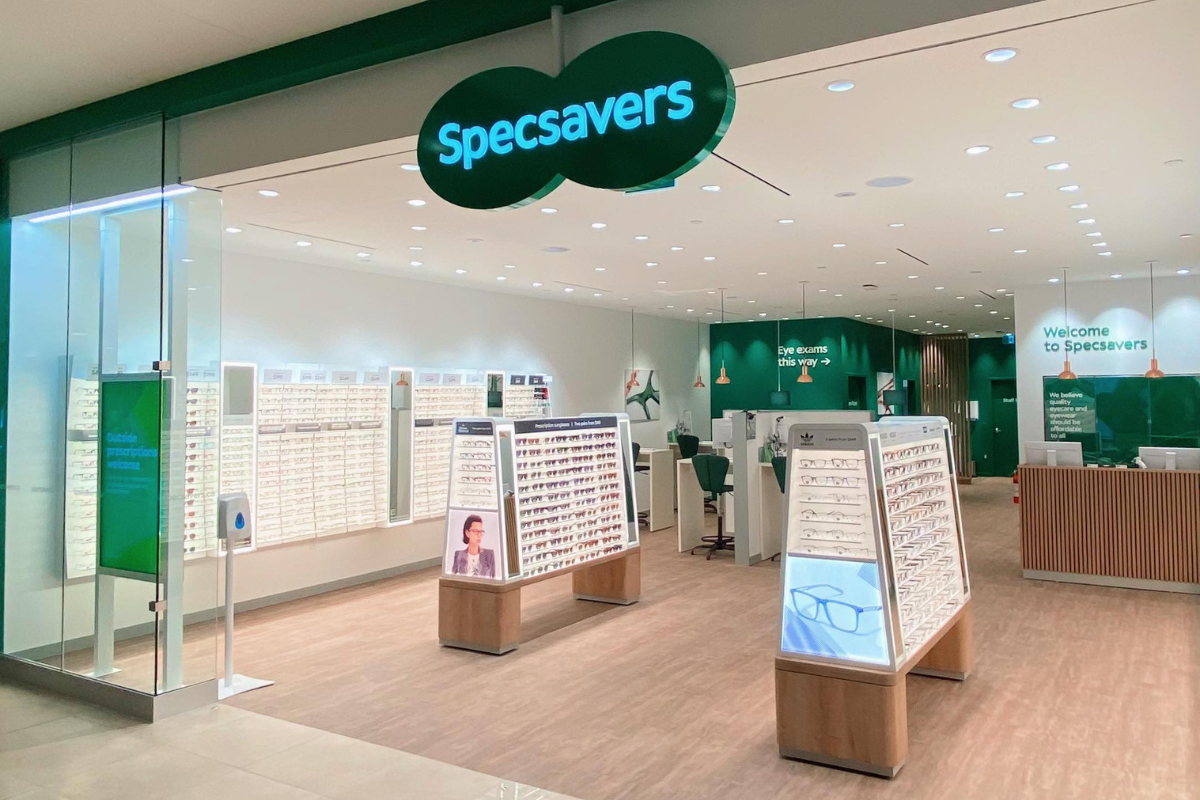
Eyecare and eyewear brand Specsavers has opened its first Manitoba stores at CF Polo Park and St. Vital Centre in Winnipeg.
The company said more locations are opening in 2024 including its third location September 12 in SmartCentres Winnipeg West.
An August 2024 Leger survey commissioned by Specsavers of Manitobans who wear corrective lenses revealed that 50 per cent feel that there aren’t enough affordable glasses options available in the province. When taking into consideration the level of quality available, 75 per cent felt they would like to have more quality, affordable options available to them, according to the survey.
Bill Moir
“Our eyecare professionals are excited to welcome customers into our new locations. Specsavers offers high quality and stylish eyewear collections alongside friendly, professional service,” said Bill Moir, Managing Director of Specsavers Canada. “We know that for too many people in Manitoba, the cost of eyewear can be a barrier to better vision. It is concerning when people choose to delay important eye exams to avoid the cost of their eyewear purchase. At Specsavers, no one has to compromise on quality or style to stay within an accessible price point.”
Specsavers is offering complete glasses from $39 including standard single vision lenses and scratch resistant treatment until September 22. Everyday offers include glasses with progressive lenses from $149. Seniors over the age of 65 get 50 per cent off their lens upgrades starting September 9.
Specsavers Canada at The Pen Centre (Image: Specsavers Canada)
Specsavers’ new study also shows that of Manitobans who wear glasses:
Nearly one in four would like to see more stylish/fashionable options
30 per cent would like to see more choice in the market in general
Half shop around at multiple stores to find the best price
41 per cent will also visit multiple stores to find the right style
Specsavers is an optometrist-owned and-led business that entered the Canadian market in late 2021. Since then, over 125 locations have opened across the country, in B.C., Alberta, Ontario, and now Manitoba. As part of Specsavers’ commitment to accessible eyecare, Specsavers equips every location with optical coherence tomography (OCT) technology, which helps optometrists to detect sight-threatening conditions, such as age‑related macular degeneration, glaucoma and diabetic eye disease, in their earliest stages.
Founded in the UK 40 years ago by optometrist husband-and-wife team, Doug and Mary Perkins, there are now more than 2,700 Specsavers healthcare businesses globally, serving over 44 million patients and customers.
Specsavers said it is driven by its purpose of “changing lives through better sight” and aims to transform the way Canadians experience eyecare by offering exceptional service, advanced clinical equipment and affordable and quality eyewear.
WOW! mobile boutique, one of Canada’s premier multi-carrier wireless retailers, is celebrating its 10th anniversary, marked by significant growth, and ambitious expansion plans.
The company said it continues to revolutionize the wireless retail experience for Canadians by offering their signature personalized, unbiased advice.
The latest expansion is into Ottawa’s CF Rideau Centre, which the company said will tap into a market of 20 million annual shoppers.
And it also plans to broaden its offerings throughout 2024, including small business solutions.
Scott Grover
“Over the past decade, WOW! mobile boutique has become synonymous with retail excellence beyond selling phones in traditional environments,” said Scott Grover, Managing Director of WOW! mobile boutique. “Our 10th anniversary isn’t just a celebration of our past; it’s a launching pad for our future expansion, innovation and involvement in the communities in which we live, work and play.”
Nella Noakes
Nella Noakes, National Sales Director, added, “Our expansion into Ottawa’s Rideau Centre represents our commitment to reaching more Canadians. This new location will showcase a net new kiosk design, combining cutting-edge technology with personalized service.”
WOW! mobile boutique said it is set to broaden its service offerings throughout 2024, venturing into more non-traditional retail environments and rolling their sleeves up in community events including schools, festivals and sporting events and extending product offerings to include wearables and offering small business solutions to Canadians. This expansion aims to provide a more comprehensive suite of telecommunications services to Canadian consumers and businesses.
Michael Cioffi
“As we look to the future, we’re excited to expand our services to meet the evolving needs of cell phone customers and our carriers,” explained Michael Cioffi, Director of Marketing, Merchandising and Communications. “By offering small business solutions, we’re positioning WOW! mobile boutique as a one-stop shop for all telecommunications needs.”
WOW! mobile boutique currently operates 80 Locations across Canada
CF Rideau Centre is officially open for business the first week of September; with Grand opening event on October 10th (10th day, of the 10th month, in Wow!’s 10th year)
Cioffi said the company’s growth plans include a combination of new store openings, kiosk retrofit designs and a deployment of a new generation of kiosk designs: There are plans to open two new stores for the remainder of 2024 – CF Rideau Centre in Ottawa as well as adding a second location in a high volume flagship mall in November which will be announced in the future; By the end of 2024 it will have 10 of its existing kiosks retrofitted to its new design and a dozen more experience updated refreshes In 2025, there are expansion plans seeing several new locations open in Western Canada, Ontario and Quebec.
“Our growth potential is endless. Our expansion plans are to continue to assess communities and shopping centres we feel are a fit for our services and work with mall management to pursue leasing opportunities. With the growth, expansion and shopping traffic trends in specific malls, there is an appetite to open several boxes in the same mall to expand our footprint in the areas where we have had great success with the customer base in those communities,” added Cioffi.
“Furthermore, WOW! mobile has organized a series of community roadshows outside the traditional retail environment. Our events team is partnered with schools, associations, festivals and tradeshows in a pop-up format to offer our signature personalized, unbiased advice and wireless solutions.
“Our offering of services and community impacts have been overwhelmingly well received and we have secured partnerships with over 20 schools during back-to-school to date and sponsored/participated in festivals such as Burlington Sound of Music Festival, Vibrant South Asian Summer Fest in Brampton and had the honour of being a main sponsor for the Poutine Feast across Canada this year, just to name a few.”
Cioffi said the company looks at its current data trends from locations it currently operates to determine opportunities in the future.
“Furthermore we leverage our marketing research and resources to determine traffic trends, community needs and general gaps and opportunities our business model can not only benefit from but the communities are asking for,” he said.
The company said its success is built on providing personalized, unbiased advice for Canada’s leading wireless carriers. This growth underscores the company’s vital role in the Canadian wireless landscape and a destination of choice for retail sales associates looking to benefit from extensive onboarding and training practices.
WOW! mobile boutique has been operated by Match Transact since 2013. It offers Canada’s best wireless carriers, TELUS, Rogers, Koodo, Fido and Chatr, and it carries accessories.
Fiverr International Ltd., a global freelance platform, has released research exploring retailers’ readiness for the upcoming holiday season indicating businesses are taking a more strategic approach to how businesses manage marketing efforts, freelance talent, and AI technologies as they look to level the playing field against larger e-commerce brands while also capturing Gen-Zers’ shopping habits and grappling with the economic hurdles like inflation.
Gali Arnon
“The holidays are often make-or-break for many small businesses, so it is critical to plan ahead, know where to place your focus and ensure that your audience is getting the right message,” said Gali Arnon, Chief Business Officer at Fiverr. “This data shows that retail and e-commerce businesses are doubling down on social media campaigns to reach new markets and embracing AI to streamline their daily operations as more and more consumers are looking to buy the perfect gift as far ahead of the holiday season as possible.
“With inflation, competition, and staffing shortages intensifying both online and in stores, the insights from our latest research underscore the type of expertise businesses need to stay ahead. Demand is up for experts with AI skills, digital marketing, and social media to maintain loyal customers and reach new audiences near and far.”
Fiverr conducted a global survey of over 2,500 consumers and over 2,500 small-to-medium business leaders (excluding sole traders) in partnership with Censuswide.
Key findings:
Smaller retailers have found their place among larger companies like Amazon and Temu with 53 per cent of surveyed businesses not considering competition from larger e-commerce brands as a challenge this year;
Inflation becomes the predominant concern for businesses, with 48 per cent of global respondents citing it as their primary challenge;
A third of retailers surveyed cite staffing shortages ahead of the holiday season, simultaneously, a third of retail and ecommerce businesses are now hiring freelancers to support their operations;
Compared to last year (55 per cent) over 80 per cent of businesses are now offering discounts on their products to satisfy the deal-hunters;
Customers are continuing to prioritize good deals (42 per cent), free shipping (32 per cent), and high-quality products (30 per cent);
Last minute shopping remains a priority as well, with 18 per cent of global respondents focusing on fast shipping times;
52 per cent of people surveyed will start buying presents in October and November while 18 per cent are hitting the summer sales to find gifts;
43 per cent of Gen-Zers are planning to spend more this holiday season, compared to the 37 per cent of millennials that plan to do to same
57 per cent of U.S. retailers surveyed are investing in social media ads to reach their target audiences;
Global surveyed retailers are investing in: 39 per cent social media ads, 35 per cent in influencer marketing campaigns, 33 per cent email marketing, 29 per cent updated product pages and improved SEO functionalities;
Amongst Gen-Zers: 34 per cent use TikTok shop; 25 per cent get their gift ideas through social media influencers’ recommendations; and 14 per cent use generative AI search to help with gift buying;
In the U.S., TikTok shop continues its dominance – nearly 54 per cent of Gen-Zers find their gifts on this platform alone;
Surveyed U.S. Gen-Zers also cite social media as a major influence in their holiday shopping – a third of respondents plan to find gifts via Facebook and Instagram ads, and nearly a quarter (24 per cent) through influencer recommendations;
With shopping increasingly moving online, nearly seven in 10 retailers (68 per cent) surveyed are now implementing AI throughout their operations this holiday season – and they want Gen Z to take noticel
41 per cent of retailers surveyed plan to invest in AI tools to expedite work, and 35 per cent want to embed AI throughout the entire customer journey with chatbots, customer personalization, or customized marketing campaigns; and
AI is already becoming second nature for Gen Z, over 54 per cent of Gen-Zers use AI to assist in their holiday shopping – whether it be to find the best prices (17 per cent), find new gift ideas (22 per cent), or to even create holiday presents themselves (18 per cent).
Craig and Leucepe (Leo) Martinez, Program Director at eTail Toronto, discuss the upcoming eTail Toronto conference, set to take place on September 25-26 at the Hyatt Regency Toronto (Register here). The event, known for its practical and actionable insights, will gather over 300 attendees and 75 speakers, offering a comprehensive exploration of the latest trends and challenges in eCommerce. Martinez emphasizes that eTail Toronto is not just a conference but a community, having supported the retail industry through major changes since 1999.
The conference will cover key themes such as the connected customer journey, digital transformation, and the critical role of AI in retail. Martinez highlights the importance of real-world use cases, focusing on how retailers are leveraging human-centric AI to optimize the customer experience. Day two will explore the needs of the modern consumer, emphasizing storytelling, purpose-led brands, social commerce, and sustainability in retail.
Networking opportunities are a major focus at eTail Toronto, with over 10 hours dedicated to structured activities, including meetups, roundtable discussions, and private events. Martinez encourages attendees, especially first-timers, to make the most of these opportunities to build valuable connections. The conference promises to be a dynamic event, offering both education and networking to advance the retail industry in Canada.
Retailers & Brands – Get 20% off your tickets to eTail Toronto with code RETINSIDER –[Register Here]
If you prefer to listen to the audio version, it is available below:
The Interview Series audio podcasts by Retail Insider Canada are available on Apple Podcasts, Stitcher, TuneIn, Google Play, or through our dedicated RSS feed for Overcast and other podcast players. Also check out our The Weekly audio podcast where Craig and Lee discuss popular content published on Retail Insider which is part of the The Retail Insider Podcast Network.
Subscribe, Rate, and Review our Retail Insider Podcast!
Drop us a line at Craig@Retail-Insider.com. You can also rate us in Apple Podcasts or recommend us in Overcast to help more people discover the show!
Background Music Credit: Hard Boiled Kevin MacLeod (incompetech.com). Licensed under Creative Commons: By Attribution 3.0 License. http://creativecommons.org/licenses/by/3.0/