Home Blog Page 686

Yorkdale Launches Unprecedented 100,000 Square Foot Luxury Retail Expansion in Toronto [Feature/Photos]

Yorkdale Shopping Centre (Image: Craig Patterson)

Oxford Properties is launching the most ambitious luxury retail expansion to date at Toronto’s Yorkdale Shopping Centre. The landlord is re-tenanting about 100,000 square feet of the mall’s centre run for luxury retailers, creating one of the world’s leading clusterings of luxury stores in one single location. 

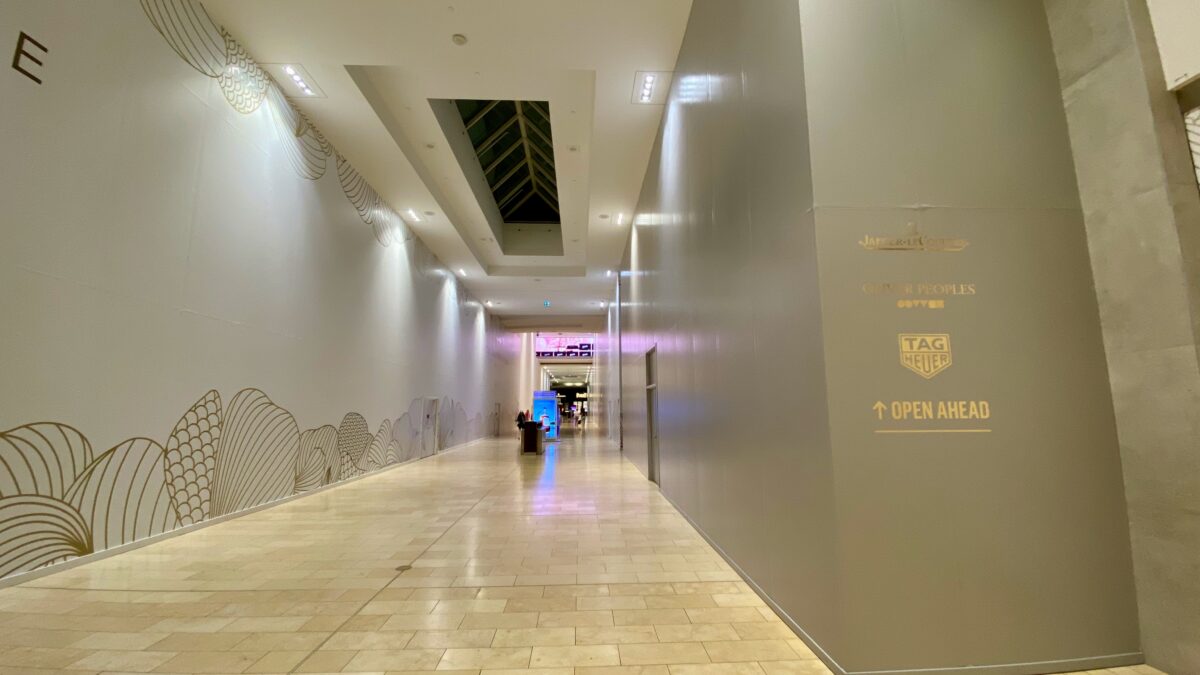
The unprecedented transformation will see one of Yorkdale’s original corridors, one which recently housed a large venue for pop-up entertainment, into a row of the world’s leading luxury brands which will operate stores as large as 15,000 square feet. Curious visitors to the mall may have recently noticed hundreds of feet of construction hoarding as well as the relocation of almost all of the previous tenants that once occupied the expanse. 

Yorkdale’s Director, William Correia, said in an interview that there’s now over 900 linear feet of construction hoarding along the central corridor, with a significant re-merchandising taking place that involves relocating most of the corridor’s previous tenants to other parts of the mall. The process began months ago with retailers such as Browns Shoes and Ecco relocating stores within Yorkdale. A handful of non-luxury tenants remain for now and they’ll be relocating as well — Untuckit will soon have a new smaller format store in another part of Yorkdale, and long-time tenant Michel’s Bakery will also be finding a new home as part of the central corridor’s complete overhaul. 
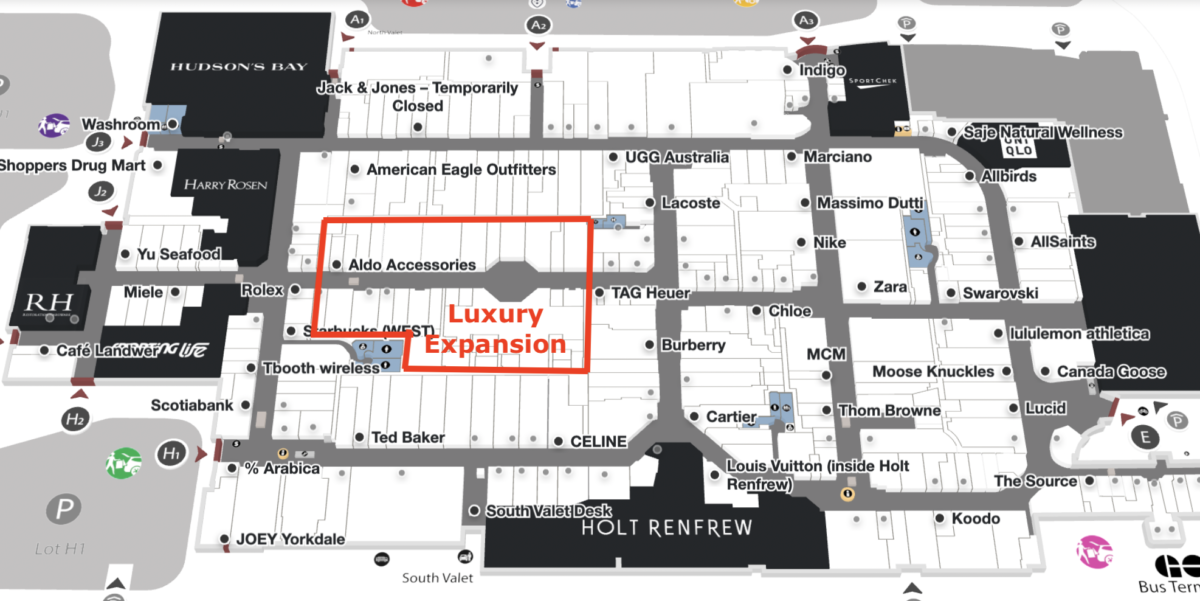
Click image for interactive Yorkdale mall map.
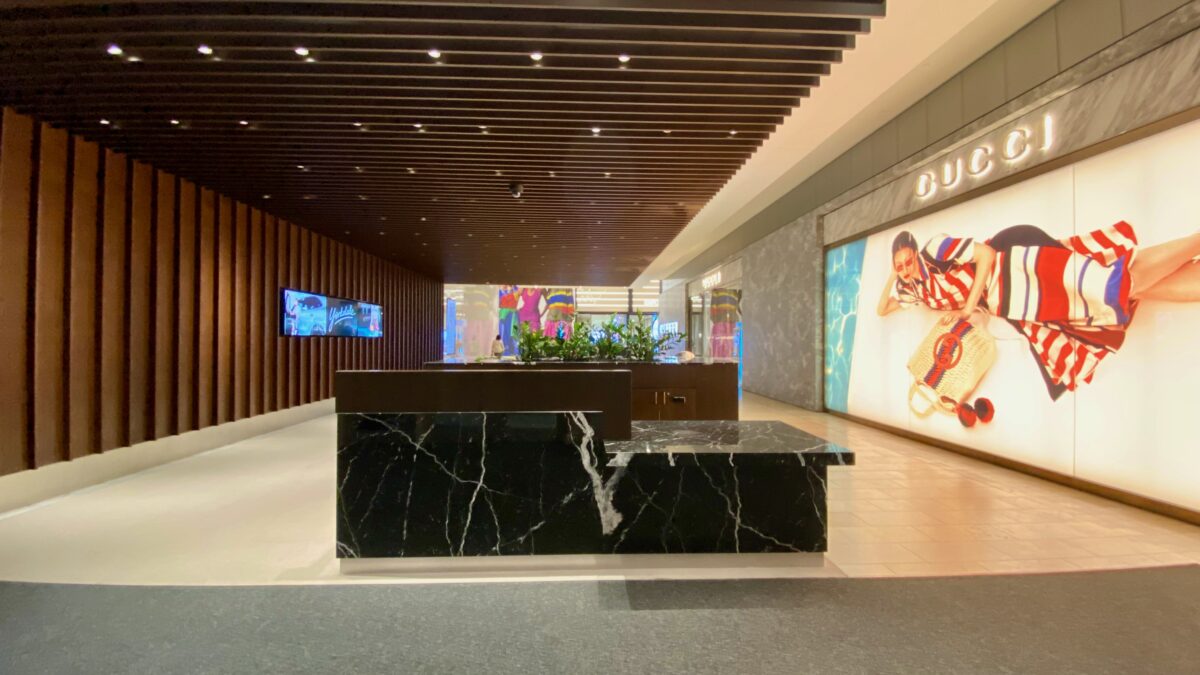
The western end of the future luxury wing at Yorkdale. Photo: Craig Patterson
Almost empty: The central corridor of Yorkdale in preparation for its luxury retail debut. Photo: Craig Patterson

Correia said that the luxury square footage at Yorkdale will expand significantly with the re-tenanting of the mall’s centre run. Currently about 13% of Yorkdale’s space is dedicated to luxury retailers, and Correia estimated that when the luxury expansion at Yorkdale is completed in 2025, about 18% of the mall’s space will be for luxury brand stores. That number could be as high as 20% according to another estimate provided by someone at Oxford Properties to Retail Insider. 

The expanded roster of stores at Yorkdale will create the single most significant clustering of luxury brands in Canada according to Correia. No other shopping centre in Canada, or luxury retail node for that matter, comes close to matching the sheer number of luxury stores found at Yorkdale, not to mention what’s to come. 

Correia said that Yorkdale could even become the leading centre in North America in terms of luxury offerings, while the new tenants are expected to help increase the mall’s sales per square foot. Already, annual per square foot sales at Yorkdale are in excess of $2,000, with overall sales at the mall exceeding $2 billion annually for the first time last year. A recent ICSC report said that Yorkdale’s productivity per square foot is fourth in North America in terms of shopping centres, and more high-selling luxury brands could boost Yorkdale’s productivity to be closer to that of the luxurious Bal Harbour Shops near Miami, currently ranking number one for sales.
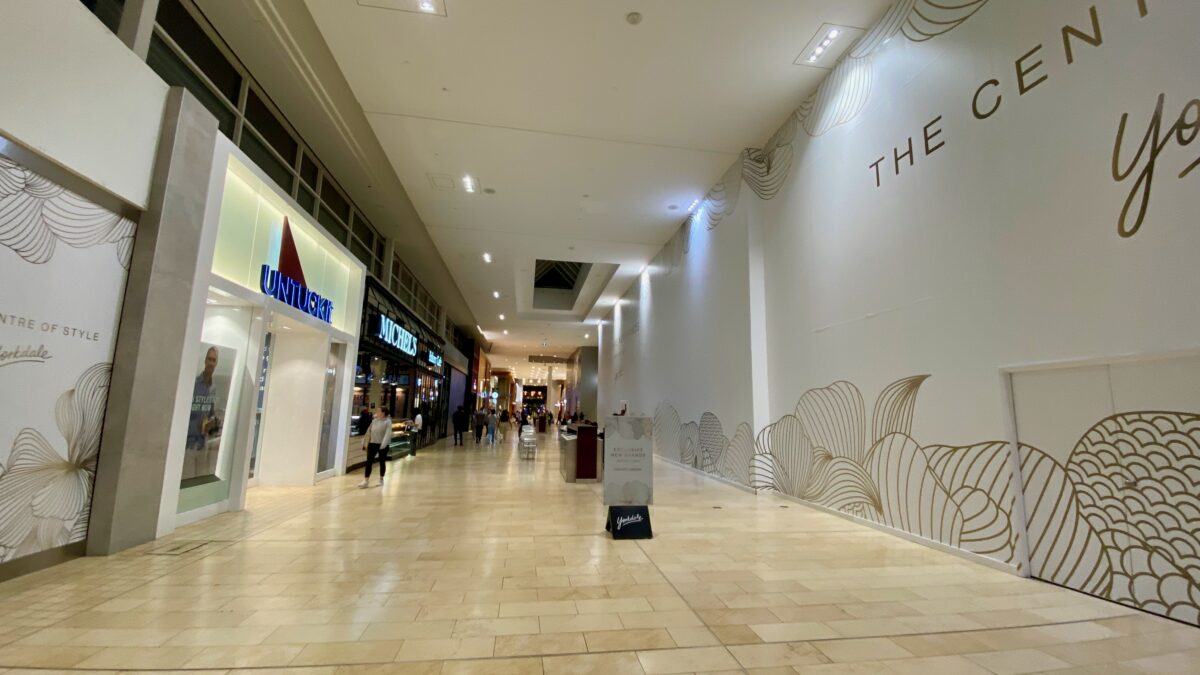
Untuckit and Michel’s Bakery will both be relocating from the centre run for new luxury brands. Photo: Craig Patterson
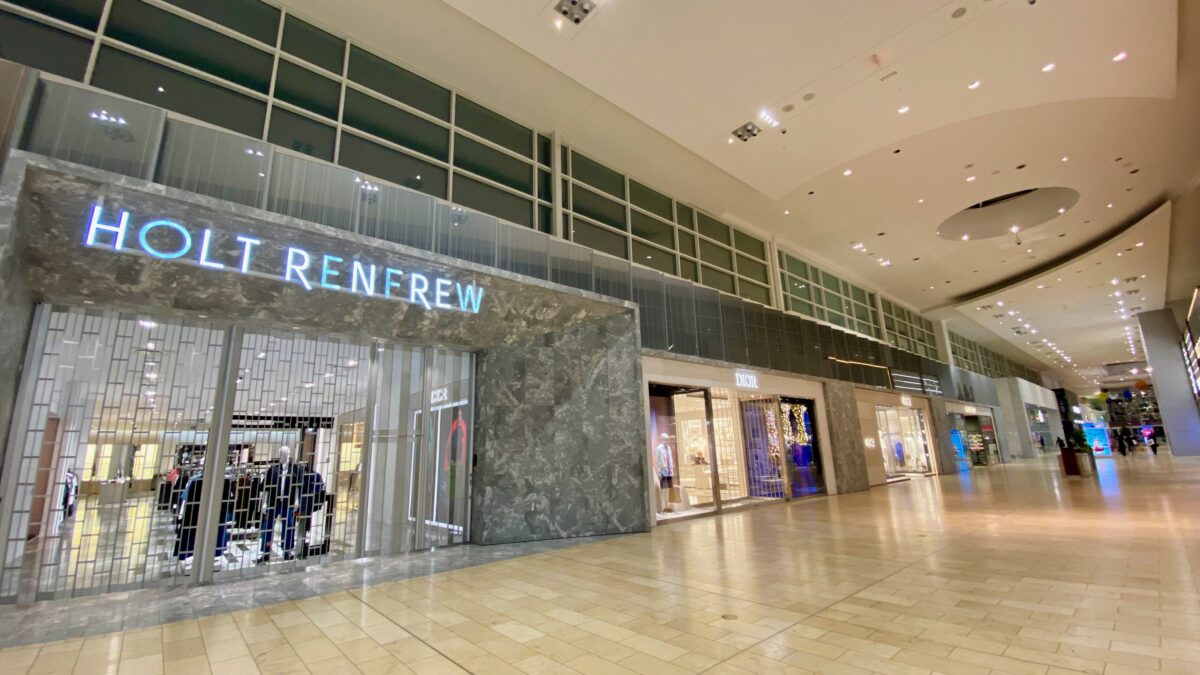
Valet lounge near Holt Renfrew, Yorkdale. Photo: Craig Patterson

In an effort to cater to even more affluent consumers coming through its doors, Yorkdale will be making some upgrades including a renovation of its valet lounge, according to Correia, as well as a new VIP program that could not yet be discussed. The mall already offers valet parking which was recently expanded due to demand. Food and beverage has also been added to Yorkdale to keep affluent shoppers there, with examples including the attractive restaurant in the mall’s RH store and a new upscale two-level Chinese restaurant across from it. 

Correia said that Yorkdale’s newest luxury wing should be finished either in late 2024 or early 2025, with luxury brands opening their stores for spring or fall 2025, depending on timing. 
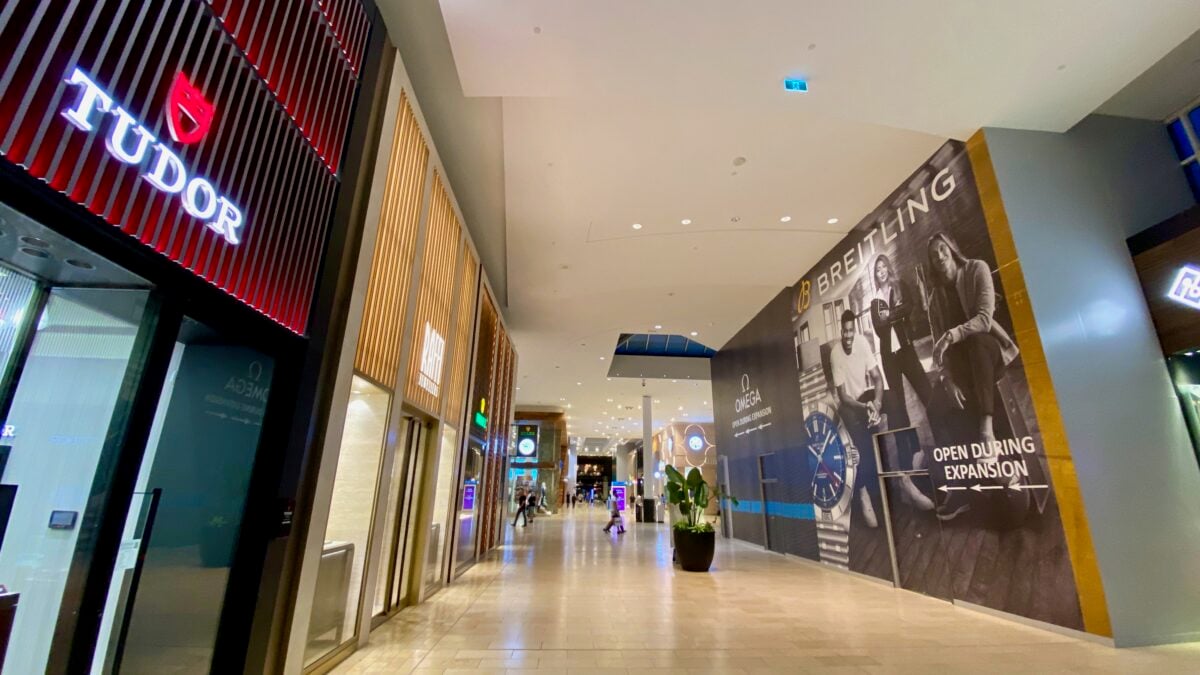
Initial luxury expansion at the western end of the future luxury corridor at Yorkdale. Photo: Craig Patterson

Luxury was already beginning to open on the edges of Yorkdale’s central corridor where the new luxury wing is now being built. In the summer of 2017, jeweller European Boutique unveiled Canada’s first standalone Breitling store in the corridor, located at the western end towards the mall’s Sporting Life and RH stores. Since then, locations for brands including Tudor have opened on the western end of the corridor via Raffi Jewellers, which has a Rolex store on the corner. At the eastern end of the corridor (closer to other luxury stores), brands such as Hublot, Oliver Peoples, TAG Heuer and Jaeger LeCoultre have opened and this fall, the first North American storefront for luxury jeweller Queelin will join them. In a way, the addition of these luxury brands to the formerly mid-range retail corridor was something of a foreshadowing of what was to come. 

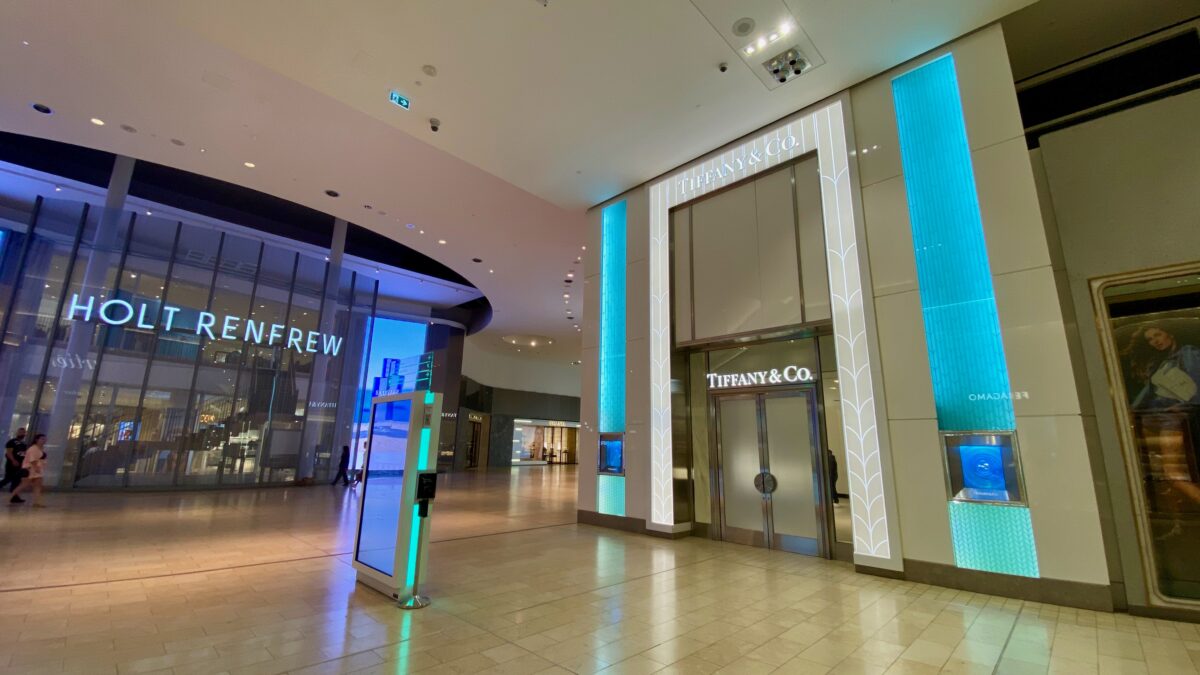
Yorkdale has had some upscale stores and stores carrying luxury brands since its opening nearly 60 years ago. Holt Renfrew has had a presence at Yorkdale for decades, albeit in smaller spaces (until 1998 it operated a 27,000 square foot store where Aritzia is now, before relocating to its current space which had been a grocery store). Yorkdale’s standalone luxury store openings began in 2009 when Tiffany & Co. unveiled a store in the mall, across from the Holt Renfrew store (which in 2012 saw a substantial expansion including the addition of mall-facing luxury brand concessions). In 2013, just a decade ago, things really began to pick up when Ferragamo, Cartier, David Yurman, and Mulberry opened stores at Yorkdale, while in 2014 other luxury names joined them included Bulgari, Moncler, Jimmy Choo, Montblanc, and Versace. 
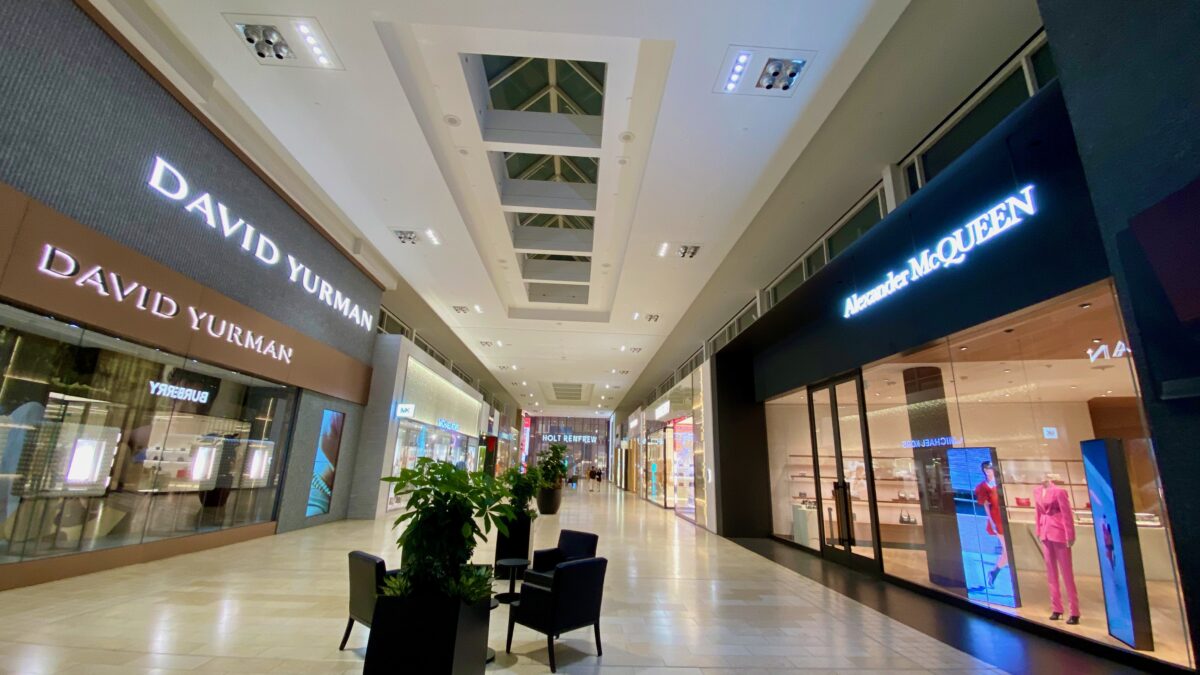
The ‘original’ luxury wing at Yorkdale, directly north of Holt Renfrew. Photo: Craig Patterson
Tiffany & Co. was the first mono-brand luxury retailer to open at Yorkdale in 2009. The store has since been renovated and a ‘new concept’ Tiffany store is said to be in the works. Photo: Craig Patterson
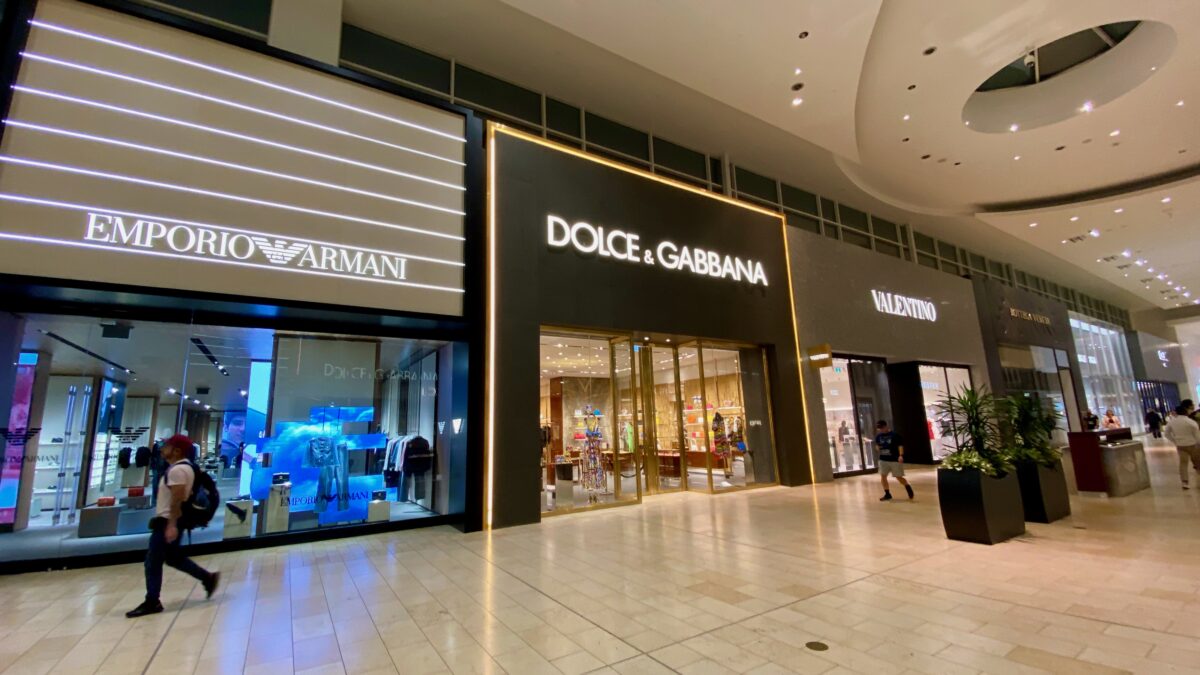
New Dolce & Gabbana and Emporio Armani stores in Yorkdale’s 2012 expansion wing. Photo: Craig Patterson
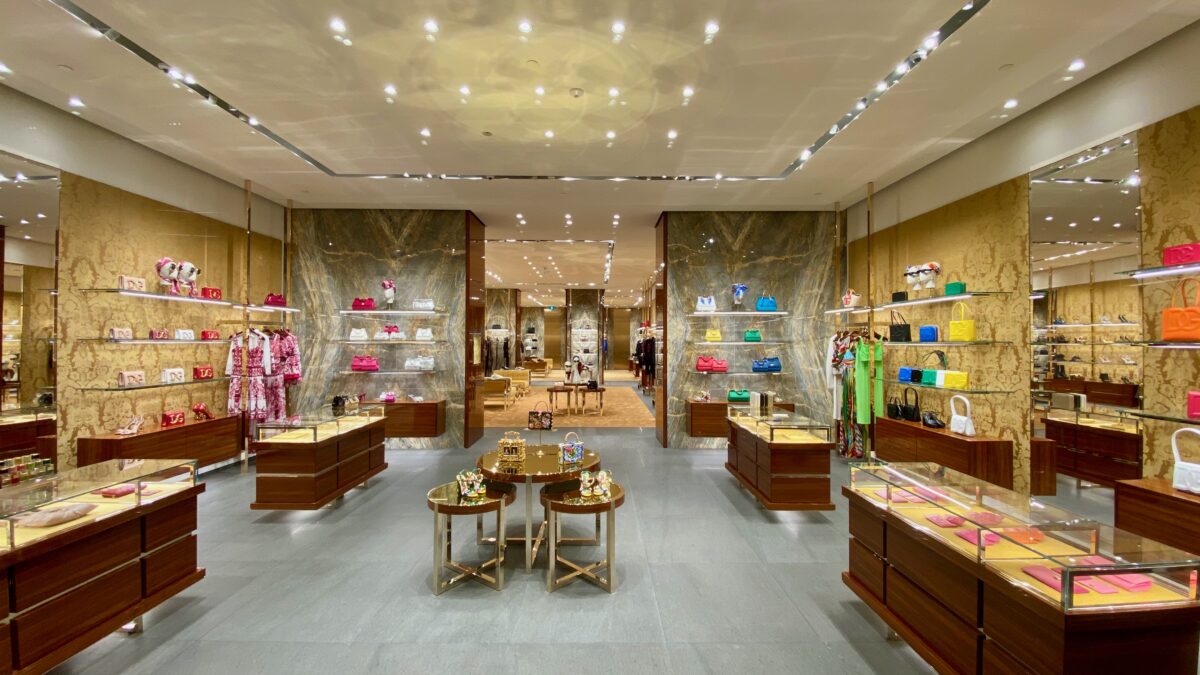
Inside the new Dolce & Gabbana Yorkdale. Photo: Craig Patterson
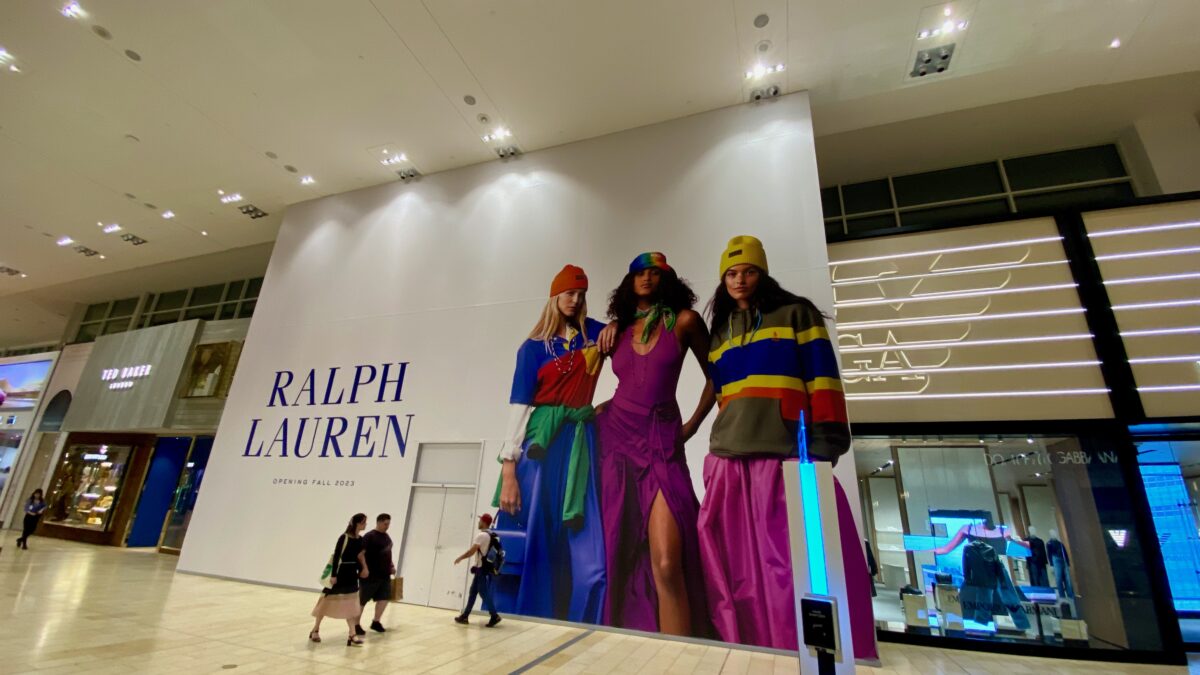
Opening soon in the 2012 expansion wing: Canada’s first ‘World of Ralph Lauren’ store, which is expected to also open in Montreal and Vancouver. Photo: Craig Patterson

Those first luxury stores were located in a corridor directly north of the main entrance to Holt Renfrew, and in 2016 Saint Laurent opened in what would be the beginning of another set of luxury brand corridors that have since been built in the mall. Yorkdale’s 2012 expansion wing beside Holt Renfrew has also been for the most part re-tenanted with luxury stores, with the most recent opening being Dolce & Gabbana last week. Ralph Lauren will soon open its first ‘World of Ralph Lauren’ store in Canada in the new wing as well. 
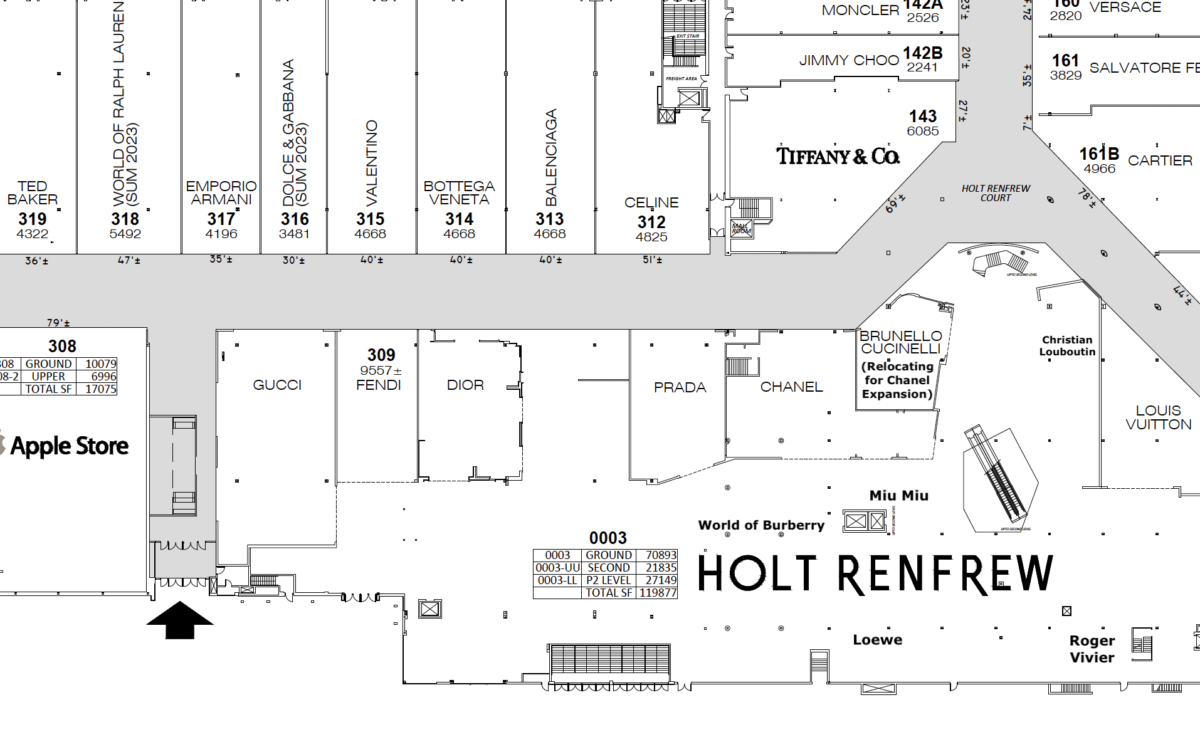
2012 expansion wing becomes coveted luxury retail address: configuration of Holt Renfrew’s main floor concessions as well as new brand stores such as Dolce & Gabbana that have opened nearby.

New tenants for Yorkdale’s newest luxury wing have yet to be announced, with non-disclosure agreements requiring tight lips. Some chatter in the industry includes a few brands that some say will be opening in the new luxury corridor. One of those brands is Fendi, which in the fall of 2022 opened a standalone store at Yorkdale which was said to be on a two-year lease in anticipation of a flagship in the new wing. Only three years before, Fendi opened a mall-facing concession at Holt Renfrew, and in June of 2021 Holts announced that by the end of that year the sale of fur was banned from its stores (including in leased concessions). Fendi, which was founded as a house of fur, began to plan its exit almost immediately.  

Fendi isn’t the only brand with a concession at Holts that is said to be moving into Yorkdale’s new luxury wing. There are whispers that other brands are seeking more space, despite the unusually large concession spaces that Holt Renfrew has been able to offer (Gucci’s is about 6,000 square feet for example). Italian luxury brand Brunello Cucinelli, which has a concession at Holts, is said to be eventually moving to a larger space in the new luxury wing. Chanel, which operates a large and highly productive concession at Yorkdale’s Holts, is said to be annexing the adjacent Brunello concession space as well as a substantial amount of space on Holts’ second floor for an expansion of its own. 
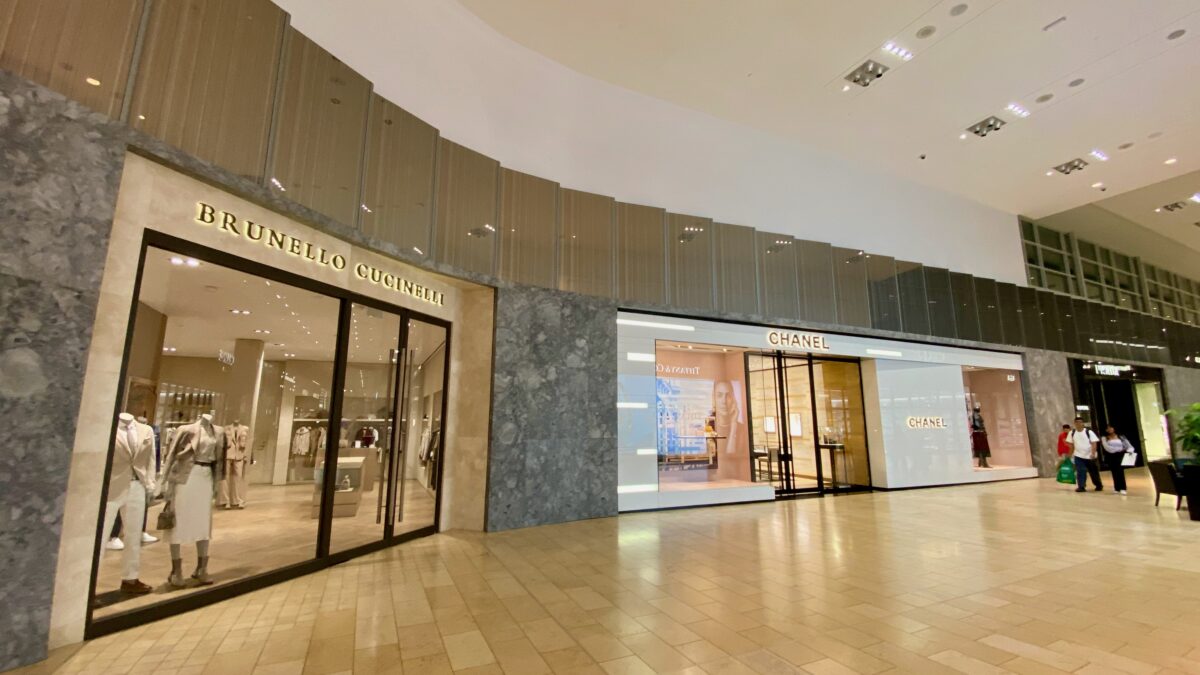
Chanel’s concession at Holt Renfrew is said to be annexing the adjacent Brunello Cucinelli concession, as well as space upstairs, for a very large expanded Chanel concession that could become the largest of its kind in the world for the brand. Photo: Craig Patterson
Mall-facing concessions at Holt Renfrew for Dior, Fendi and Gucci — this space is expected to be repurposed amid a major shift at Yorkdale. Photo: Craig Patterson

Holt Renfrew will be renovating part of its store into 2025 according to the company, signalling a shift in its retail space as Yorkdale continues to transform. The concession model was seen as necessary for Holt Renfrew to maintain its roster of exclusive luxury brands not found elsewhere in Canada. Holts boasts a clustering of brands not found at Saks or at the former Nordstrom locations in Canada, and the clustering of brands at Holts has resulted in almost all of its stores selling in excess of nine figures annually. 

Some brands have successfully negotiated the opening of ‘world of’ concessions within Holt Renfrew stores, carrying a brand’s entire line of men’s and women’s ready-to-wear as well as bags, accessories and footwear. Examples include Balenciaga at Holts in Vancouver and Bloor Street, Loro Piana in Vancouver, Burberry and Dior at Holts Yorkdale and Gucci Yorkdale and, soon, Calgary. Other brands such as Chanel operate large concession spaces at Holts, carrying the brand’s entire offerings in one area. At some point, some concessions may look to jump ship and open standalone stores, as Louis Vuitton did before the pandemic when it exited two Holt Renfrew stores in Alberta and relocated into major suburban shopping centres. 
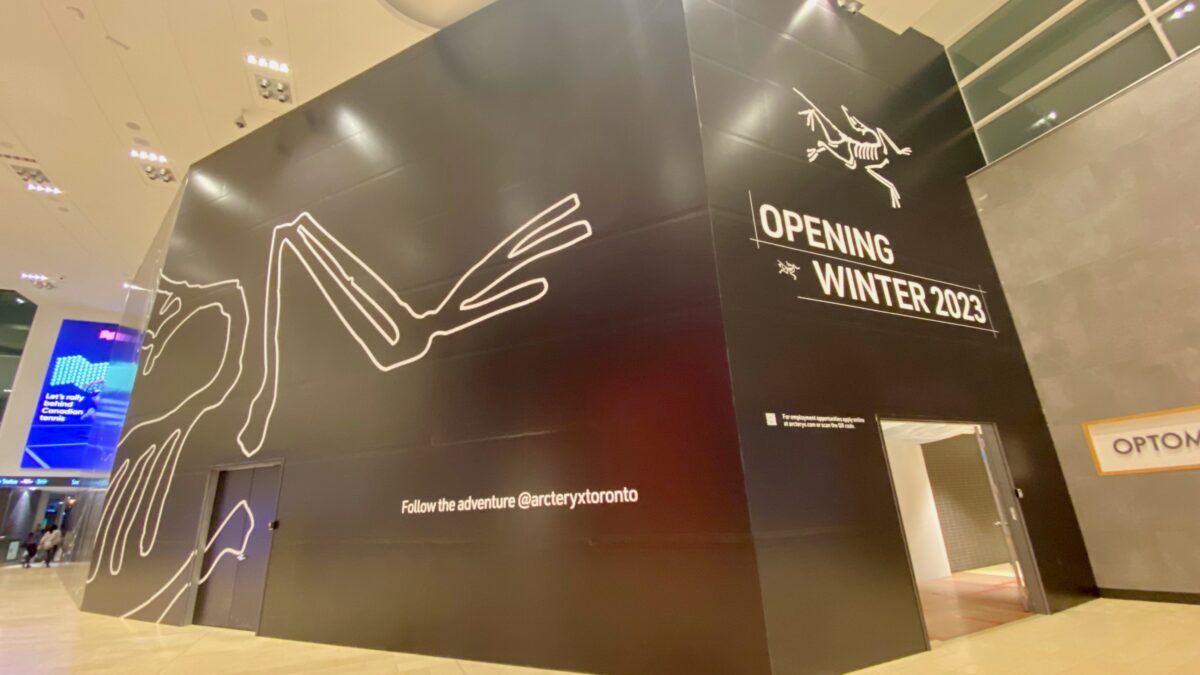
CONCEPT no more: Vancouver-based Arc’teryx will open a 3,600 sq ft store where a pop-up space for brands once stood. CONCEPT opened in 2017 and was ultimately abandoned, becoming a temp space for brands to operate while renovating elsewhere in the mall. Photo: Craig Patterson.
The entrance to the former Nordstrom store has been turned into a temporary lounge area. Rumours in the industry say that a large format retailer could take much of the former Nordstrom space at Yorkdale. Photo: Craig Patterson
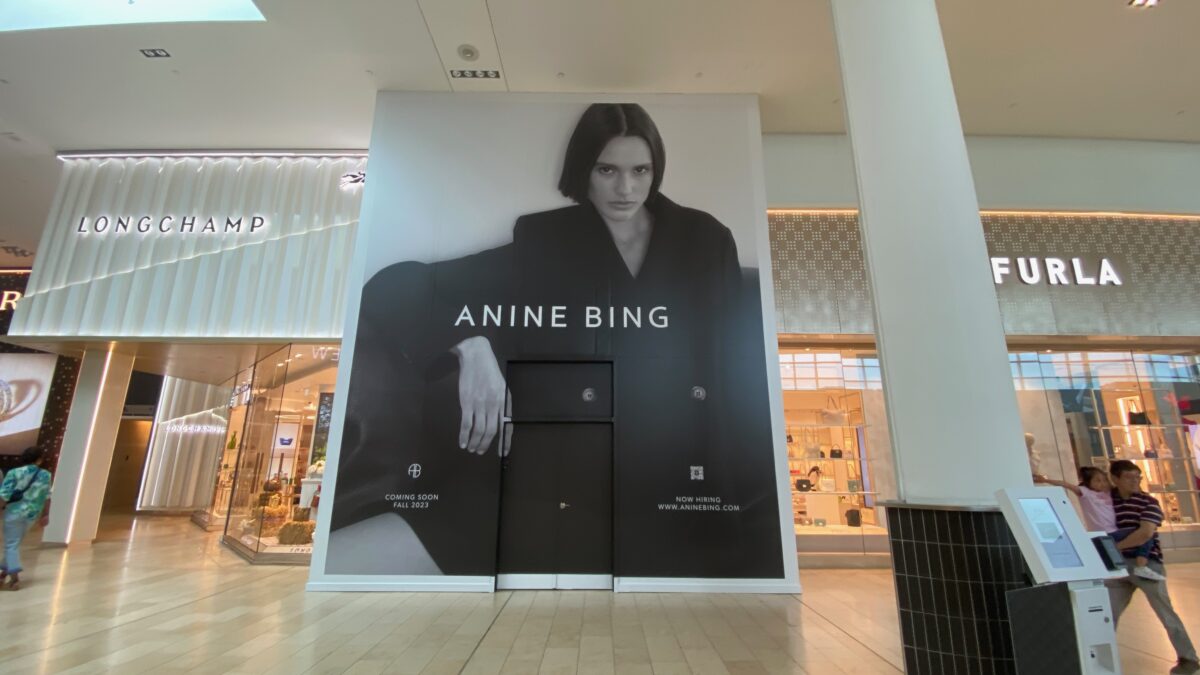
Opening soon: Canada’s first location for popular women’s fashion brand Anine Bing. Photo: Craig Patterson

Yorkdale is unlike any shopping centre in Canada, both in terms of its offerings as well as its importance for international retail entrants. More brands open first-in-Canada stores at Yorkdale than any single place in the country, including many first-to-market luxury brands. Yorkdale for the past decade has seen a fascinating transformation that will continue for years to come. Nordstrom recently vacated its 190,000 square foot space in the mall, and it has not yet announced what will replace it. Yorkdale’s future also includes mixed-use buildings on the site, including multiple residential towers where there are currently surface parking lots. 

Oxford Properties has invested millions into Yorkdale, including a recent $10 million investment to renovate its third floor food court. The expanded food court now provides seating for 1,200 diners and it recently added nine new restaurant concepts, bringing the number to 23. 

An Earls restaurant opened this spring, with “a design, menu, and a wine list inspired by the Yorkdale customer”, according to Oxford Properties. In total, Yorkdale has 35 quick-service restaurants and 12 traditional restaurants. 

We’ll continue to report on the new luxury wing at Yorkdale, including new tenant announcements when permitted.  

Related Links: Retail Profile: Yorkdale Shopping Centre in Toronto (Summer 2021 with Photos)

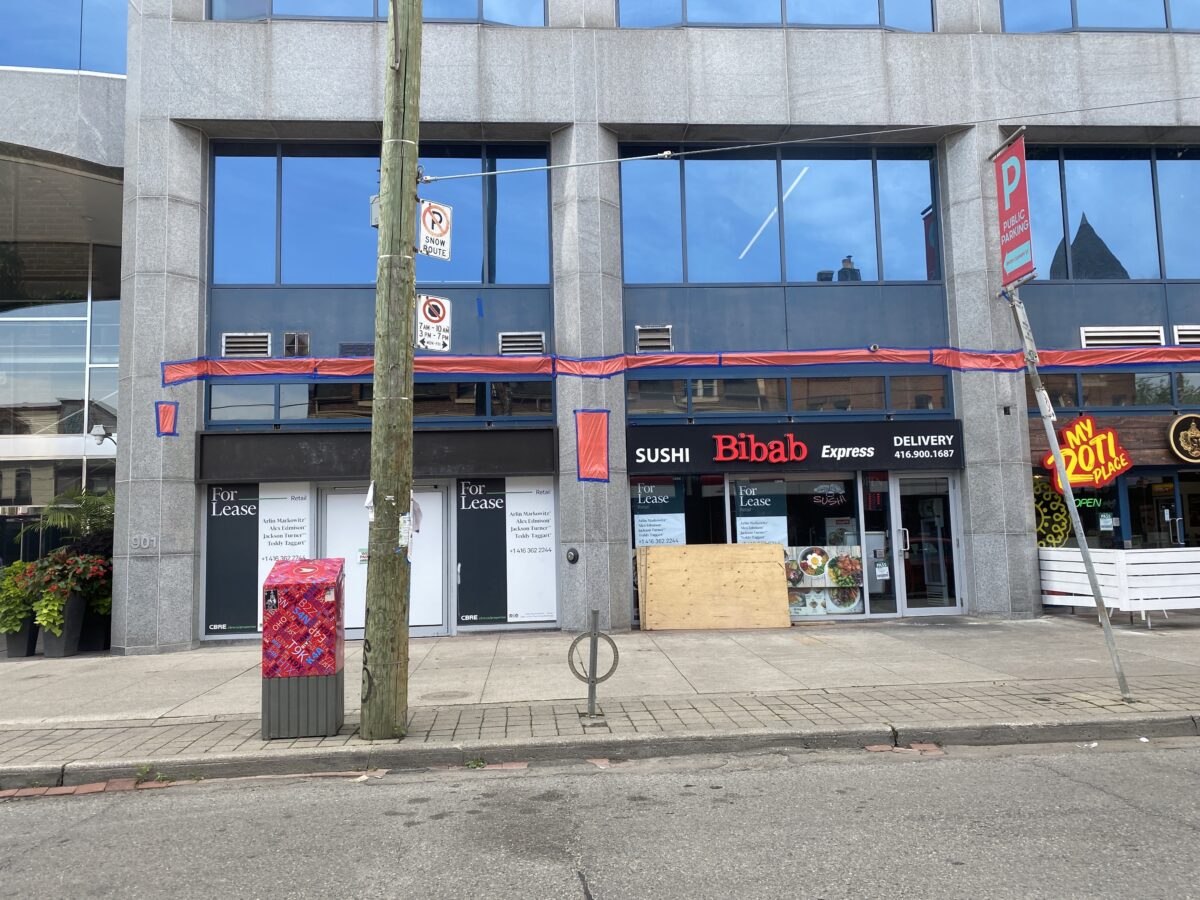
Canadian Business Associations Rally to Extend CEBA Repayment Deadline Amid Looming Crisis [Interviews]

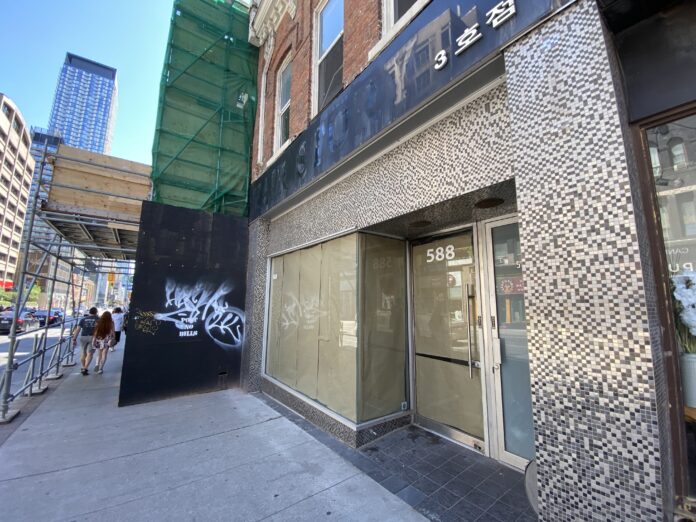
Shuttered Business on Yonge Street (Image: Dustin Fuhs)

Industry associations representing thousands of Canadian businesses are urging Deputy Prime Minister Chrystia Freeland to extend the Canada Emergency Business Account (CEBA) repayment deadline.
Not doing so could put thousands of Canadian businesses at risk of closure. 

With the CEBA repayment deadline on Dec. 31, 2023, if the loan is not repaid by then, small business owners will lose the up to $20,000 forgivable portion and pay the entire amount at a five per cent interest rate.

John Kiru
John Kiru

“It was a great support mechanism when it was needed the most. The government did the right thing in supporting people and then making money available to them. Adding the forgivable portion was a very important element in doing this and encouraging people to do it,” said John Kiru, Executive Director, Toronto Association of Business Improvement Areas (TABIA).

“The reality is that the recovery from COVID has not happened as quickly as people would have expected or at least as the government is expecting. Anybody on the streets of Toronto, anywhere across the country, the reality is that the recovery is nowhere near happening. The recovery is going to take many years and certain business types, certain sectors, will take even longer.

“So the reality is the initial deadline a year ago was too soon. It’s proving to be that even this year’s deadline is too soon because again nobody expected the cost of money to be where it is – five per cent overnight lending rate or five and a quarter per cent overnight lending rate, the carrying costs of money, etc., is incredibly, incredibly expensive. So add that to the cost increases of labour, product and everything else in the business sector and it’s the ultimate perfect storm if you can refer to it that way, which has not allowed the local small businesses to build up the revenue that they need, the savings that they needed, to pay off (the loan).”

Shuttered King Street Business (Image: Dustin Fuhs)

Kiru said the majority of the businesses are not in the position to repay that loan at the moment. This will lead to either more business closures or businesses getting into more debt to pay off the loan.

“People will close their doors. We haven’t seen the end of this thing,” he said.

“This country, this sector, the small businesses, the main street, the communities, cities, towns, all these elements can’t afford more closures. The vacancies that are out there. How main street goes so goes the rest of the neighbourhood. So some of these social issues that we’re experiencing on our main streets are simply going to be compounded by having more vacancies, more derelict-looking stores with newspapers and brown paper hanging in their windows, because vacancies are an indicator of how the neighbourhood goes and that has an impact. There’s a perception of lack of safety. And that will affect the value of the properties that abut these neighbourhoods, these commercial areas, right across the country.

“Main street across Canada will be impacted if we don’t help to nurture and support local small businesses. It’s a perfect storm.”

At the end of July, more than 30,000 business owners have signed a petition by the Canadian Federation of Independent Business (CFIB), calling for an extension to the current CEBA repayment deadline.

Corinne Pohlmann

“Businesses can’t wait any longer. They need a clear answer from Ottawa now,” said Corinne Pohlmann, Executive Vice-President at CFIB. “We’re not asking for total loan forgiveness—just more time. If businesses are forced to close because of their pandemic debt, government will not be able to recoup that money. It’s a win-win situation if businesses are allowed more time to repay.”

This summer, a joint letter was sent to Deputy Prime Minister Chrystia Freeland calling for more time to repay CEBA loans while keeping the forgivable portion. More than 250 business associations from coast to coast and across all sectors signed on. CFIB’s research shows that one-fifth of all businesses in Canada—nearly 250,000 small businesses—could be at risk of closing their doors next year unless the federal government changes the deadline.

CFIB is pushing the federal government to extend the repayment deadline for the CEBA loan to the end of December 2025 or at least 2024.

“Small businesses have to deal with high interest rates, inflation and shortages of labour. Most recently, many were hit by the supply chain disruptions caused by the strike at BC ports. They’re suffering one blow after another. How much more do they need to endure before Ottawa realizes it needs to extend the CEBA loan repayment deadline to provide some reprieve?” said Christina Santini, Director of National Affairs at CFIB.

“The message from small businesses is loud and clear: they need more time to repay their CEBA loan. With only half of small businesses back to normal sales, most businesses — particularly in the arts, recreation, hospitality and the service sectors — will need extra runway,” said Dan Kelly, CFIB president. “Financial institutions still have time to delay repayment processes if the government extends the CEBA deadline, but that window is closing. Ottawa needs to act now.”

A new report by CFIB entitled Back in Business? Spring Update on Small Business and CEBA showed:

  • Of the nine in 10 small businesses who used CEBA, three quarters accessed loans between $40,001 and $60,000, while one quarter received loans of up to $40,000.
  • Only 10 per cent of CEBA users have repaid their loans.
  • A total of 43 per cent of CEBA users risk missing the current repayment deadline by end of 2023. Small businesses in the arts, recreation, and information (62 per cent), hospitality (61 per cent) and social services sectors (46 per cent) are most likely to miss the current CEBA deadline.
  • The smallest businesses with 0-4 employees are the most likely to miss the repayment deadline (49 per cent)
  • Even among the 47 per cent of small business owners who indicate they will meet the 2023 deadline, half say they will struggle to do so, and two-thirds would like to see an extension of the repayment deadline.

Here is the full letter to Freeland.

Dear Minister Freeland:

Industry associations representing hundreds of thousands of businesses across Canada are urging you to extend the current Canada Emergency Business Account (CEBA) repayment deadline by two years to the end of 2025, or at least by one year, while maintaining access to the forgivable portion.

Almost 900,000 CEBA loans were approved across Canada. Many businesses had no choice but to take on this loan due to circumstances beyond their control. This includes businesses in some of the hardest hit industries such as the retail industry and tourism sector. Mandatory business closures and other government health restrictions left businesses with severe income losses and cash flow issues.

Despite their best efforts, high interest rates, inflation and increased labour costs are making it difficult for small-and-medium size businesses to keep their heads above water, let alone make any dent in the debt many had to take on to survive pandemic restrictions. A recent analysis of over 15,000 Canadian businesses found that inflation, input costs, and interest/debt costs are the three most acute obstacles faced by business (at 56%, 40% and 38%, respectively), and the smaller the firm, the more constrained they are by debt.

Moreover, recent surveys focussed on CEBA loan-holder companies reveal that:

  • 49% of small businesses are still making below normal revenues;
  • 50% of Canadian foodservice operators are currently operating at a loss or breaking even compared to 12% pre-pandemic; and,
  • 45% of Canada’s tourism businesses are likely or somewhat likely to close within the next three years without government intervention into their mounting debt load.

Unless the federal government acts quickly to postpone the CEBA repayment deadline, businesses that are unable to repay their CEBA loan in time will lose access to the forgivable portion of up to $20,000, thus further increasing their debt load. Extending the repayment timeline for the CEBA loan without losing access to the forgivable portion would give many small-and-medium size businesses the stability and certainty they need to get back on their feet on a path to prosperity.

We urge you to quickly address this important matter.

Downgrading the Ingredients in our Food Items: ‘Skimpflation’ Hits Grocery Stores in Canada [Op-Ed]

Cheez Whiz at City Market (Image: Craig Patterson)

Amid the escalating tide of food prices, the practice of coining novel terms to elucidate the surge in these costs has become widespread. In addition to contending with the dual challenges of escalating expenses and diminishing product sizes—commonly known as “shrinkflation”—consumers have also found themselves grappling with the concept of “shelflation.” This pertains to the reduction in the shelf life of grocery products due to disruptions in the supply chain, particularly affecting perishables like produce. If you’ve noticed a decline in product quality, this phenomenon can be attributed to “shelflation.”

However, it is imperative for consumers to remain vigilant about the emergence of yet another term, “skimpflation,” which signifies a subtle alteration in the nutritional composition of certain products. While the term may be unfamiliar to many, the practice itself has a decades-long history.

Food manufacturers have quietly adjusted the formulations of various food items, often resulting in discernible disparities in taste and texture. Indeed, numerous food products have undergone discreet modifications. For instance, a recent CBC report highlighted changes in E.D. Smith’s pumpkin pie filling recipe, with vegetable oil shifting from its previous third position to sixth place, and water taking on a more prominent role as the third primary ingredient. Even familiar items like Cheez Whiz spread have undergone transformations over the years, wherein cheese has been overtaken as the primary component by an entity known as “modified dairy substances.” This trend extends across a spectrum of products, including granola bars, chips, chocolate, pasta, and crackers.

Cheez Whiz at City Market (Image: Craig Patterson)

The motivations driving these adjustments are multifaceted. While the term “skimpflation” might insinuate a deliberate downgrade in quality and nutritional value to cut costs—partially accurate—there is a more intricate narrative at play. As the costs of food ingredients surge, companies often reformulate and rigorously test new recipes to ensure that consumers remain unaware of any changes. Many research and development initiatives are centered on providing the market with competitively priced food items, resulting in subtle modifications. Admittedly, the nutritional integrity of products can be compromised in the process. Nevertheless, the pursuit of cost savings is merely one facet of a broader tale.

Companies undertake reformulation efforts to render products more appealing to specific demographics. This might involve intentional alterations in flavours, calorie counts, sodium levels, fat content, or even sugar content. Some changes are driven by strategic considerations, while others are motivated by regulatory factors. For example, the impending front-of-packaging labeling regulations set to take effect in January 2026 will mandate the inclusion of a new symbol on packages containing elevated levels of saturated fat, sugars, and/or sodium. To avert having such an indicator on their products, manufacturers are already engaged in reformulation, resulting in revised ingredient lists for numerous food items.

In essence, “skimpflation” transcends mere cost-saving measures. It is equally a response to regulatory requirements. While these practices are entirely legal, consumers can gauge the implications of “skimpflation” by consistently monitoring food labels, even scrutinizing a few products each week. Regrettably, there is a limited scope for consumer action in this regard.

However, the impact of “skimpflation” on our food economy extends beyond products to encompass customer service. Over the past year, a report from Field Agent Canada has illuminated a host of unsatisfactory service-related experiences in grocery stores, indicative of a shift in service quality and labour issues. As a collective, 79 percent of Canadians have observed instances of product unavailability, 55 percent have encountered longer queues, 48 percent have noted a shortage of checkout clerks, 47 percent have struggled to locate store employees, and 39 percent have identified an insufficient number of checkout lanes. The proliferation of self-checkout lanes in recent years has further exacerbated consumer dissatisfaction. All these instances underscore a trend of cutbacks and cost-saving measures.

The landscape of grocery shopping has undergone a transformation. Not only have products evolved, but the service provided has also undergone alterations. It is imperative for consumers to remain vigilant, adapting to these changes as they navigate the evolving food economy.

Retailers in Greater Toronto Area Bracing for Real Estate Market Shifts as Population and Economic Growth Drive Demand: JLL Report

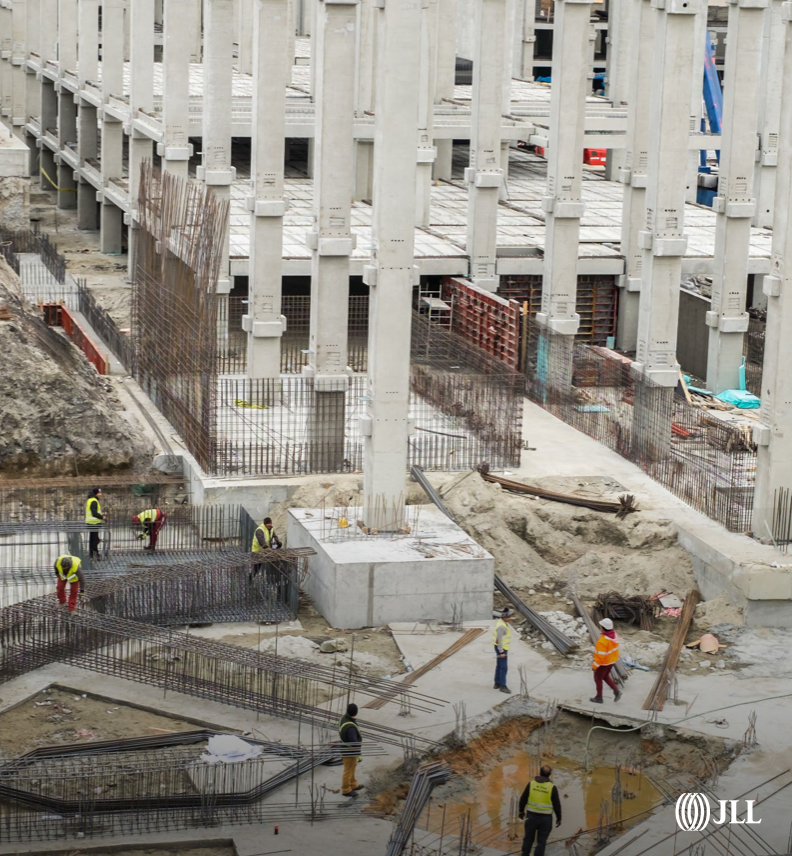
Image: JLL

Retailers in the Greater Toronto Area must proactively adapt to the evolving dynamics of the real estate market. This entails closely monitoring areas experiencing growth and staying informed about new real estate projects that might present expansion opportunities, says a new retail report by commercial real estate firm JLL.

“Retailers should actively monitor the expansion of real estate projects and the growing demand for retail space. As these projects evolve and scale up, retailers should be prepared to seize opportunities for expansion,” said the report.

“Retailers should closely consider transit-oriented projects that have the potential to significantly expand their trading area. These projects provide access to a broader customer base and allow retailers to enter new markets.”

Greater Toronto Area (GTA) retail insights and opportunities

The report said driving factors for retail space growth in the GTA include:

  • Population growth. The outlook for population growth certainly makes the GTA an area of interest for retail. As the top destination for newcomers, its population is expected to exceed 10 million by 2046 – up from only 6.2 million in 2021;
  • Economic growth. As the country’s hub for finance, technology, and health care, the GTA should continue to be one of the earliest (or the first) landing places for international retailers and retail innovation;
  • Housing development. The focus on high-density, mixed-use projects in growth areas and along transit corridors is bringing easy access to retail, services, amenities, and employment. Far higher housing demand than supply – which is currently creating affordability challenges – should continue to fuel further housing and retail construction; and 
  • Transit and infrastructure development. Despite proceeding more slowly than desired, the construction of new subway lines and the expansion of GO Transit opens opportunities for increased accessibility and foot traffic, increasing retail demand. 

Paul Ferreira, Senior Vice President, Retail Brokerage, JLL Canada, said the dynamics in place in the GTA are similar to what many other major markets in Canada, such as Vancouver, are facing.

Paul Ferreira

“We have a race to bring more residential supply to help with our housing crisis. They’re all going to face a lot of these same kinds of pressures,” he said.

“We are continuing to see consistent residential growth in the GTA and all of southern Ontario quite frankly. All of our secondary markets are growing. What we used to consider non-growing secondary tertiary markets, we’re seeing a lot of growth in those markets now.

“Our message to retailers is they really need to be keeping track of where residential growth is because we’re seeing growth everywhere now. Where we used to have markets that were flat to declining, we’re seeing growth everywhere. So what does that mean for their current store networks? Does that mean they need to adjust to see where that growth is coming and make sure that they’re well-positioned to service it? And make decisions on their store network.”

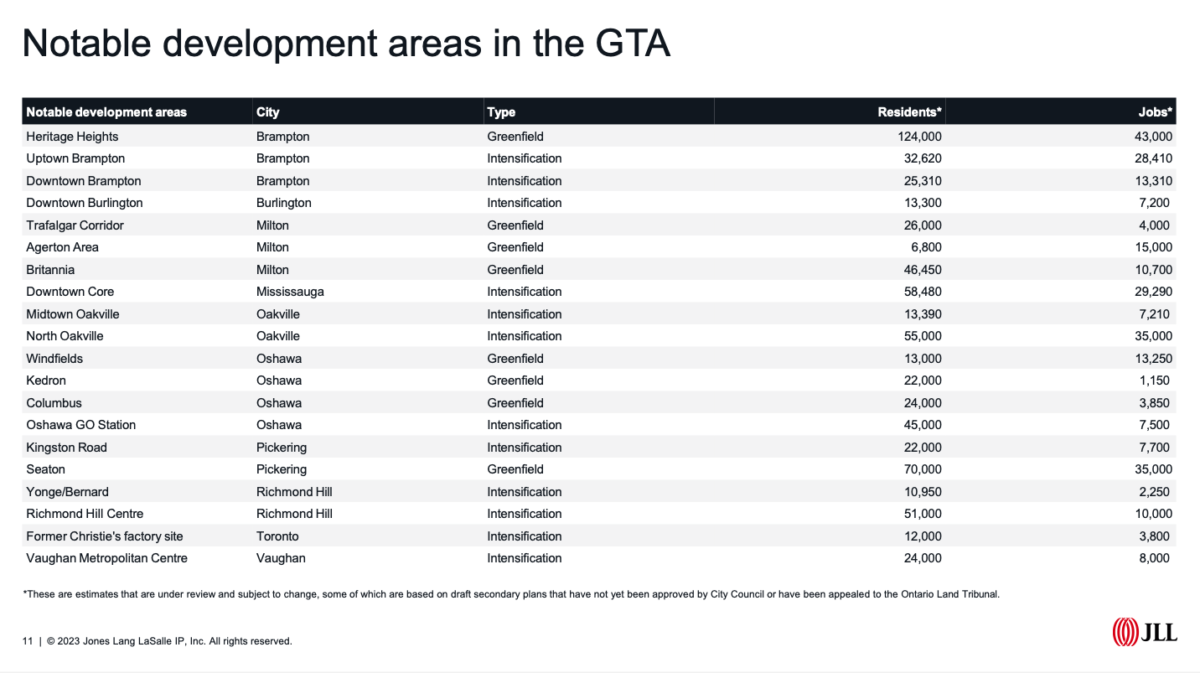
Image: JLL

Ferreira said in the GTA there’s a particular sensitivity to understanding where this growth is. While there is still some greenfield growth taking place around the GTA, there are also a lot of proposals for more density than “we’re used to ever seeing.”

“We have nodes that as time has gone on developers have gone back and gotten more density and the proposals have gotten even denser,” he said. “That’s bringing even more people in.

“When you have a large master-planned (project) or redevelopment that’s a lot easier to deal with the retail component. You can plan for it. You’ve got one developer making decisions. When you have some of these nodes that have multiple developer proponents, in many ways the retail is what makes these areas vibrant, what makes these areas communities, providing services, providing places for people to gather. But when you have individual properties that are brought forth sometimes as much as municipalities master plan and do secondary plans on these areas, sometimes the retail is not as cohesive as it should be.

“And that’s when you start to get retail that may not be as great as it could be when it doesn’t have the proper infrastructure, the proper access, the proper exposure where the spaces aren’t designed to be able to accommodate not just the tenant for today but the kind of tenants we need for the future.”

Ferreira said the power centres that were built in the late 1990s and early 2000s, many of them are still successful and 100 per cent leased and could add more space if the developers wanted to, but these are now redevelopment targets.

“So we have a lot of retailers that are going to be displaced over the next decade as their leases come up and these power centres enter their phase of redevelopment into mixed-use projects. That’s something to be aware of, making sure that we can re-accommodate these retailers and thriving retail because a lot of those shopping centres are fulfilling regional shopping needs not just local. A lot of the retail that’s coming back that we have seen in proposals is more local in nature – providing a grocery store, a drug store, some service uses. But not necessarily a place for those regional retailers to come back into,” he said.

Image: JLL

The report said developers need to prioritize the development of infrastructure that supports the success and growth of retailers. This includes ensuring business exposure, easy access for customers, ample parking, efficient logistics for receiving goods, availability of outdoor restaurant patios, and sufficient retail space with desirable features like high ceilings and minimal obstructions such as columns. Developers may need support from municipalities in this regard.

“Developers and retailers are successful if they prioritize and elevate the overall shopping experience, ensuring that retail spaces are not downgraded or compromised − especially when redeveloping shopping centres. Thoughtfully designed retail spaces foster thriving retail environments and have the power to attract both local shoppers and visitors from neighbouring areas,” said the report.

JLL said municipalities should take a more holistic approach to planning growth areas, giving equal weight to commercial and residential aspects. This includes master planning commercial areas, protecting them from displacement by residential expansion, and incentivizing developers to meet the diverse needs of retailers.

“Municipalities should offer incentives to developers to foster the inclusion of a range of retailers. They should also pay attention to the challenges faced by smaller retailers who might lack bargaining power, ensuring that their needs are met,” added the report.

“Municipalities must find a harmonious equilibrium between the economic forces driving residential expansion and the preservation of retail areas. Safeguarding established retail nodes and nurturing a vibrant retail sector within the community are critical.”

JLL said almost two-thirds of population growth in the next five years will come from outside the city of Toronto. Milton is expected to be the fastest- growing municipality, with 25 per cent population growth from 2022 to 2027. Brampton’s population should grow by more than 100,000 from 2022 to 2027. Halton is the fastest- growing region, with 12 per cent population growth from 2022 to 2027. 

Canadian Retail News From Around The Web For August 11th, 2023

Canadian Retail News From Around The Web

News at a Glance

Retail Insider is streamlining its Canadian retail news from around the web to include a handful of top news stories that can be viewed quickly during the day. Here are the top stories from the past 24 hours.

Shoppers upset over lack of cashiers as self-checkout use soars (CBC)

Canadian Tire sees cautious consumer spending drag down profits (Financial Post)

Coach parent Tapestry buying Capri, owner of Michael Kors and Versace, in US$8.5 billion deal (CTV)

Sleep Country Canada earns $12.7 million in second quarter as revenues decline (BNN)

Indigo reports loss, lower sales as cyberattack effects carry into first quarter (Canadian Press)

Canadian spending habits showing early signs of slowing says RBC report (BNN)

Survey: 1 in 4 Canadians will go shopping for back-to-school this year (Newswire)

Posthaste: Inflation tempting more Canadians to shoplift, but some anti-theft measures go a step too far: poll (Financial Post)

White Oaks Mall sold to London developer with ‘major plans’ (London Free Press)

Atlantic Canada’s first YOYOSO location coming to N.B. (Country94)

La Canadienne Opens Newest Retail Location, 1st Mall Store at CF Carrefour Laval (Newswire)

‘Huge victory’: Workers at Calgary Starbucks store become first in Alberta to land contract (Sherwood Park News)

Rural Manitoba liquor vendor says he may run out of stock by this weekend due to strike (CBC)

Inside Doug Putman’s New Home Furnishings Concept ‘rooms + spaces’ as Retailer Expands Rapidly in Canada [Interviews/Photos]

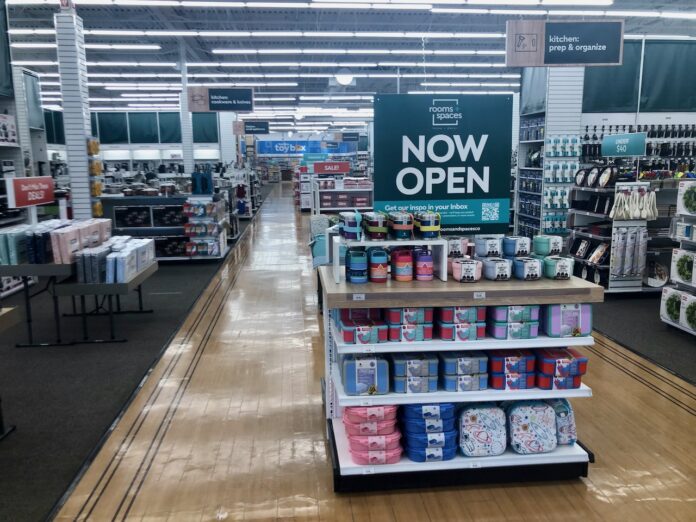
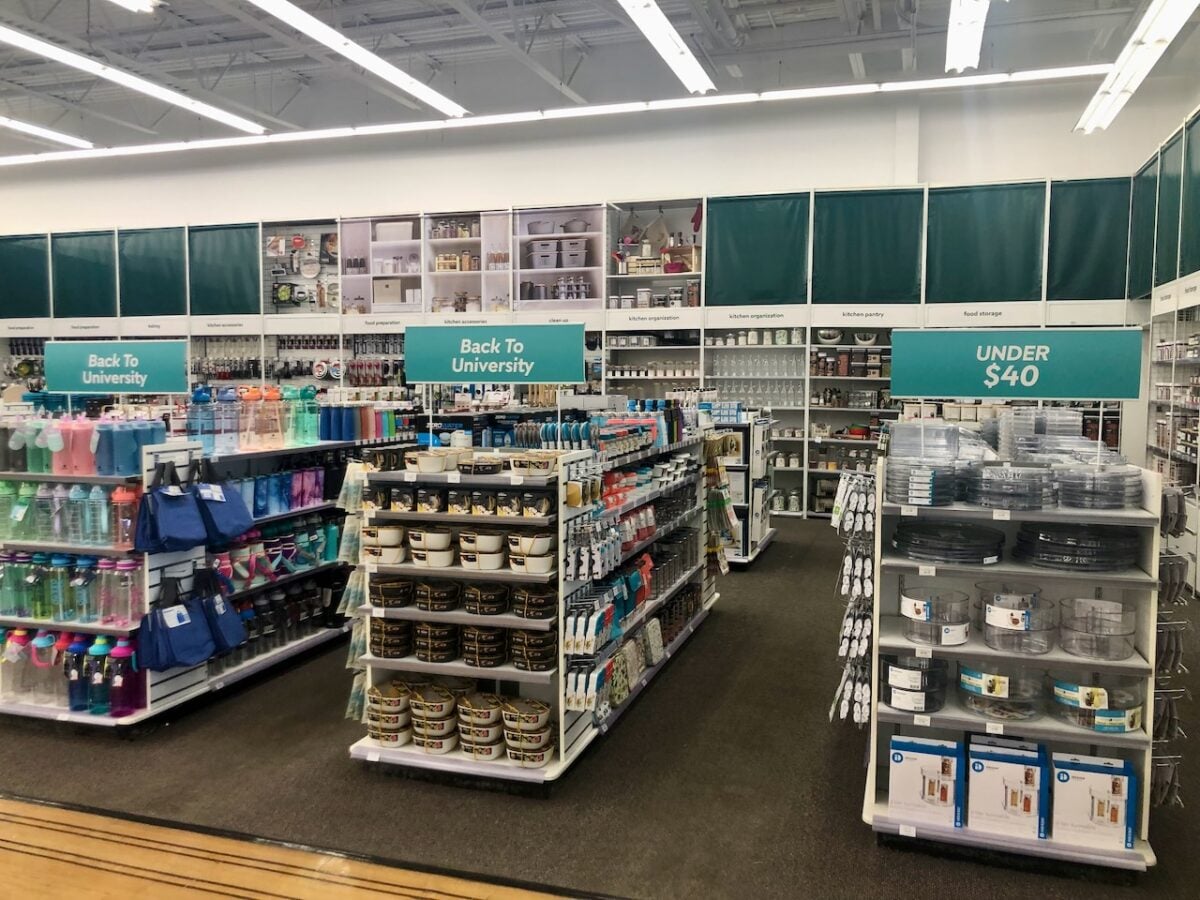
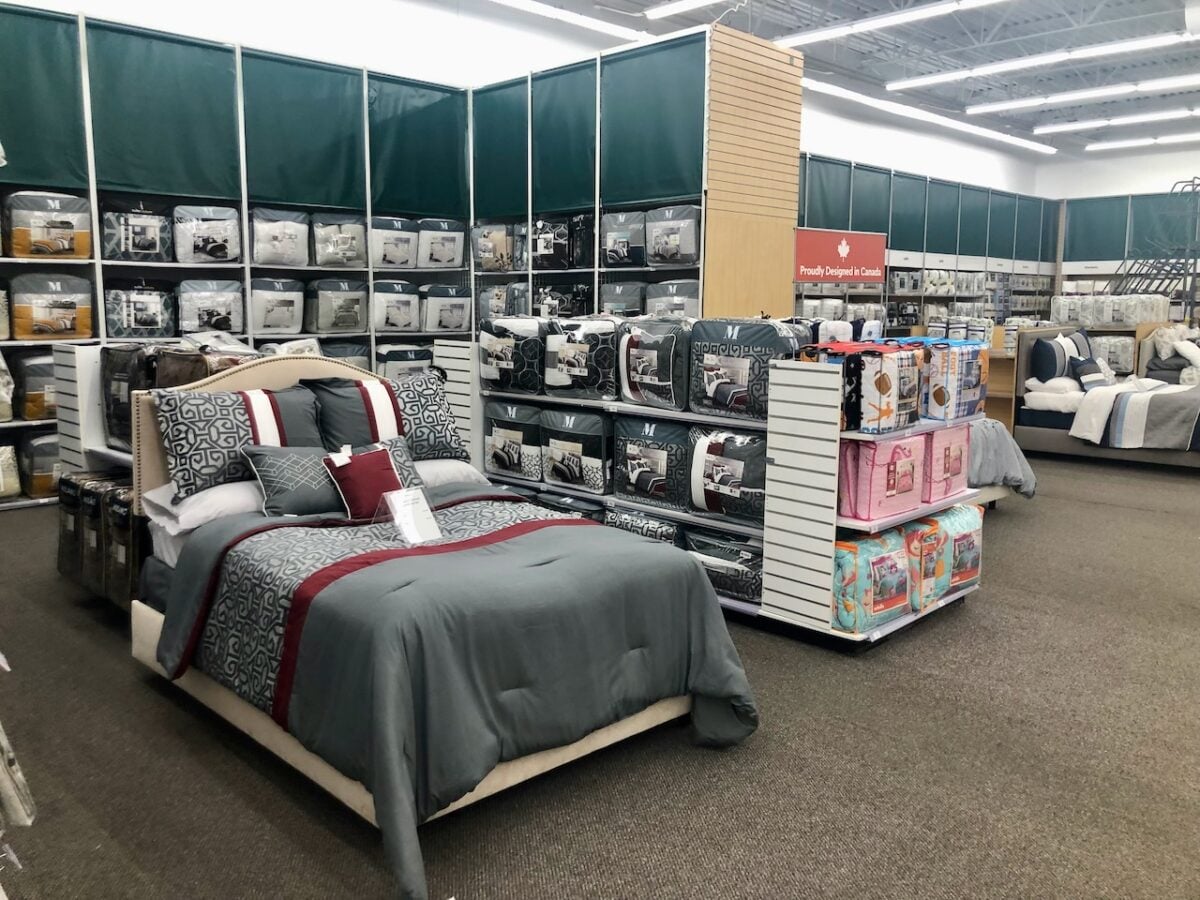
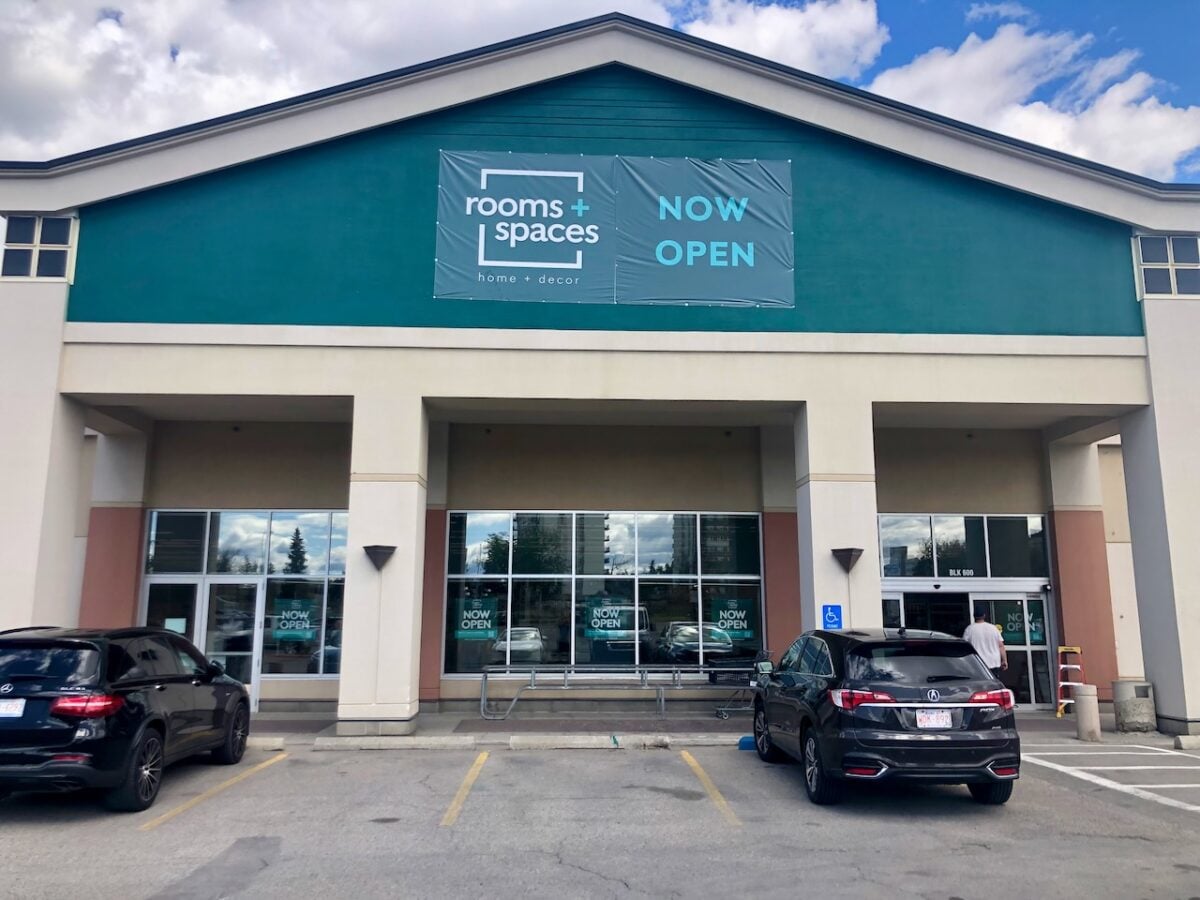
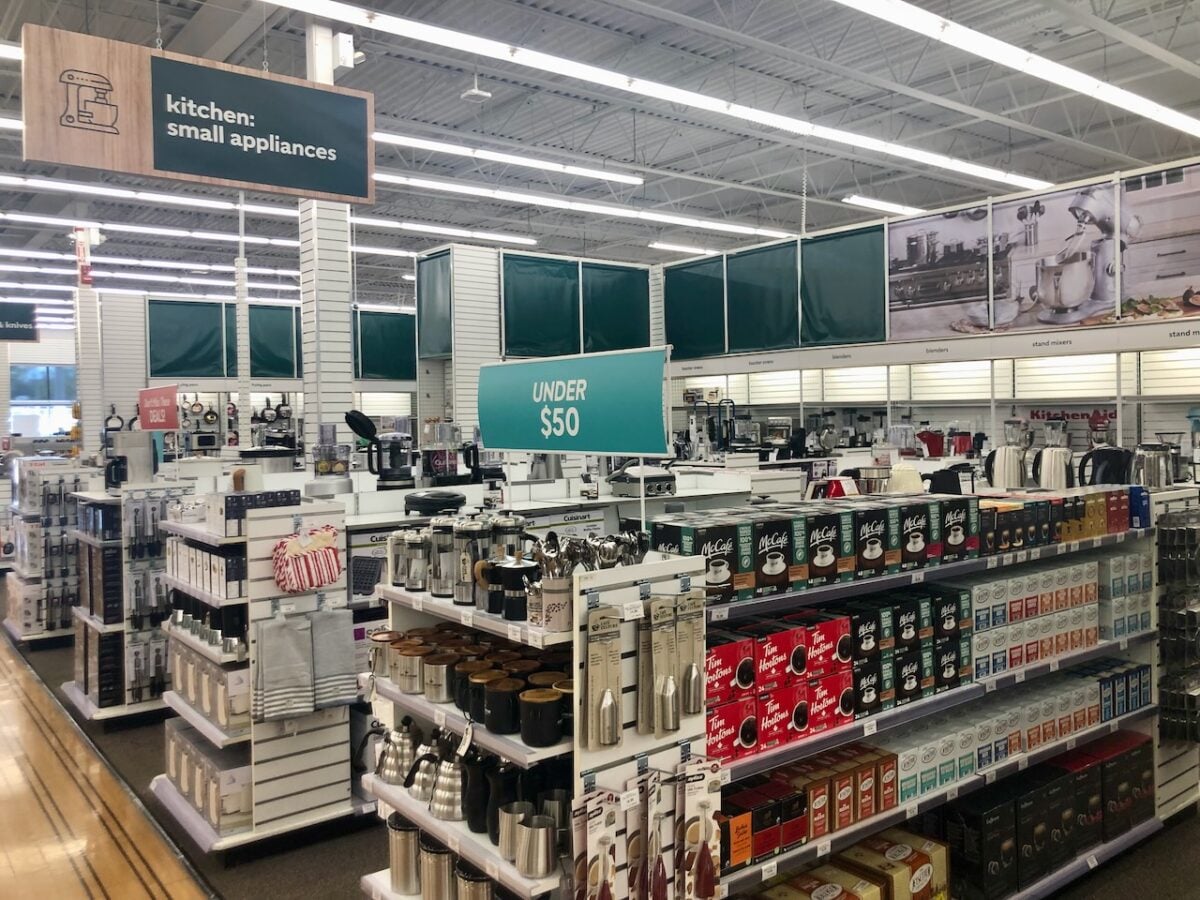
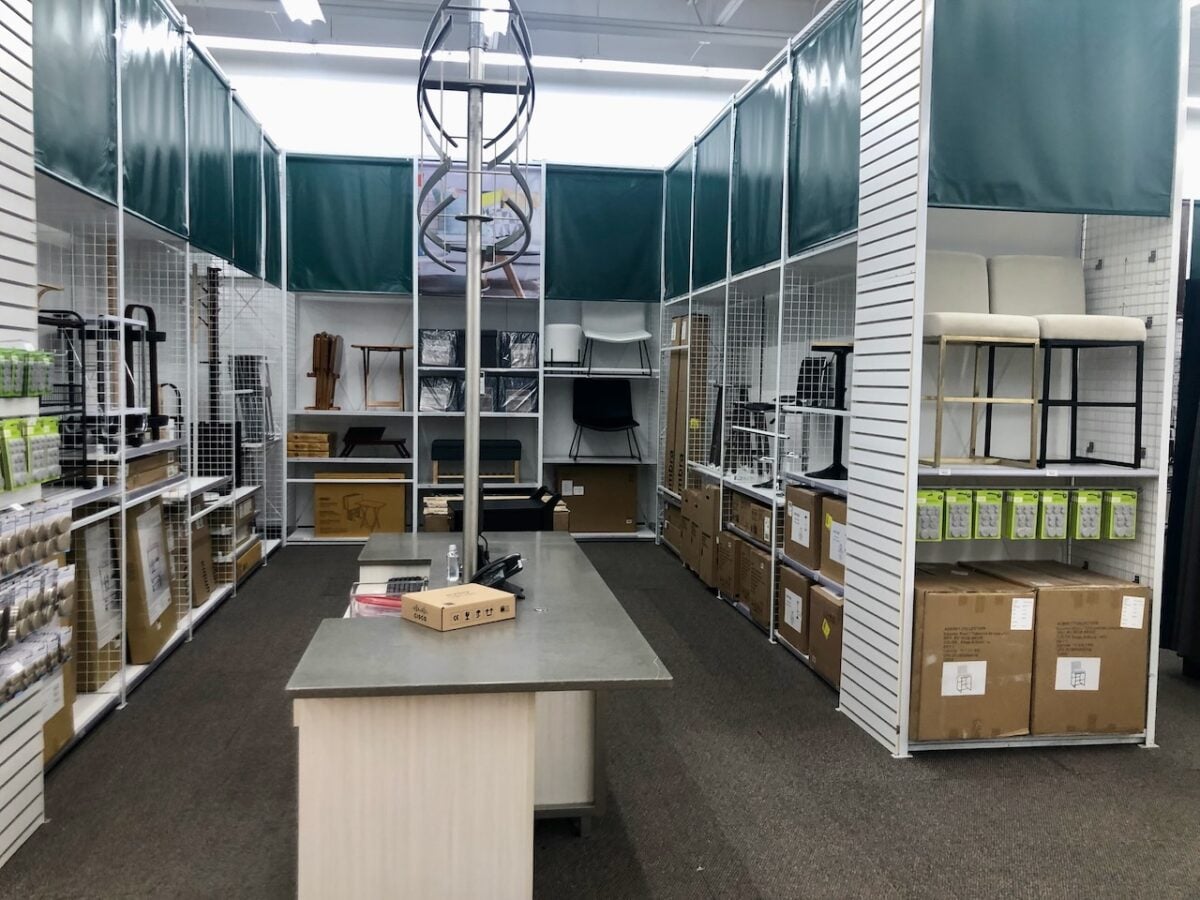
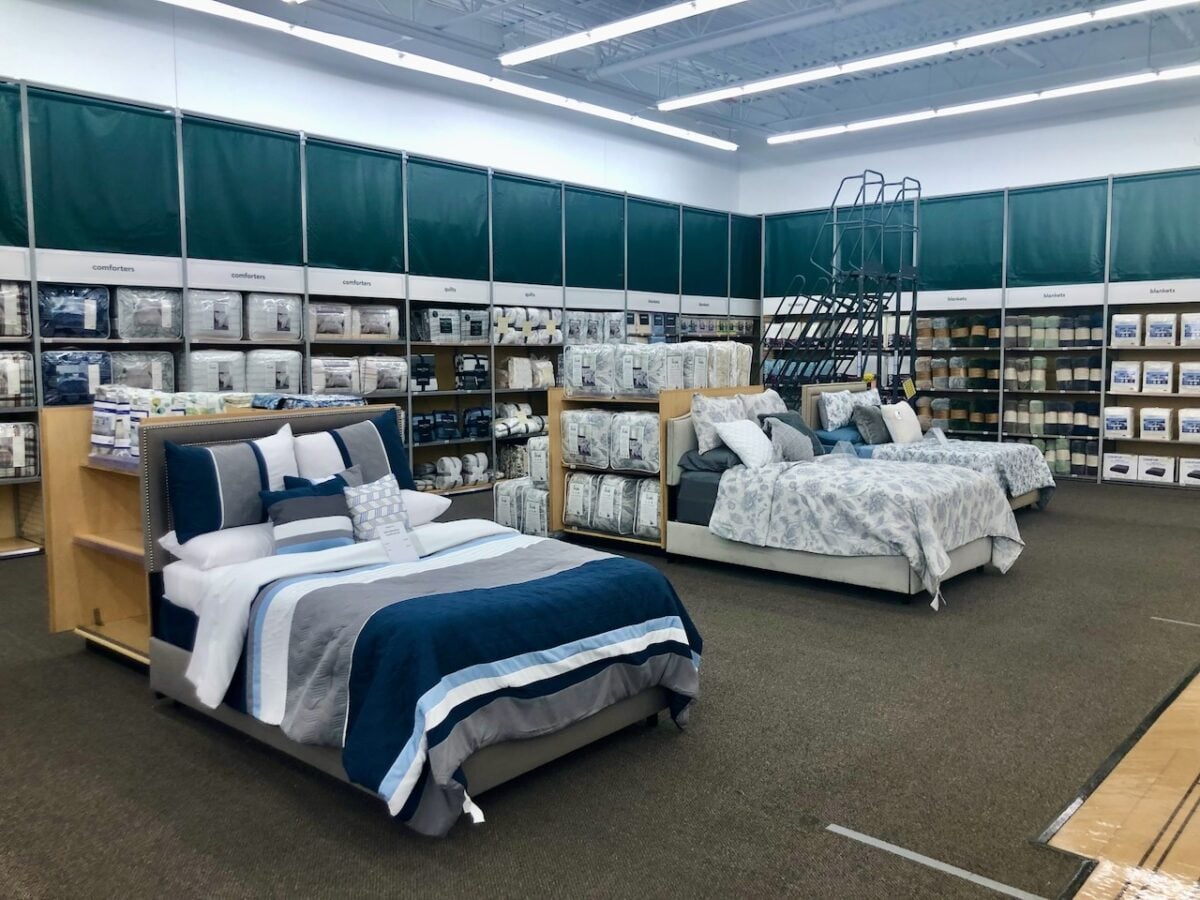
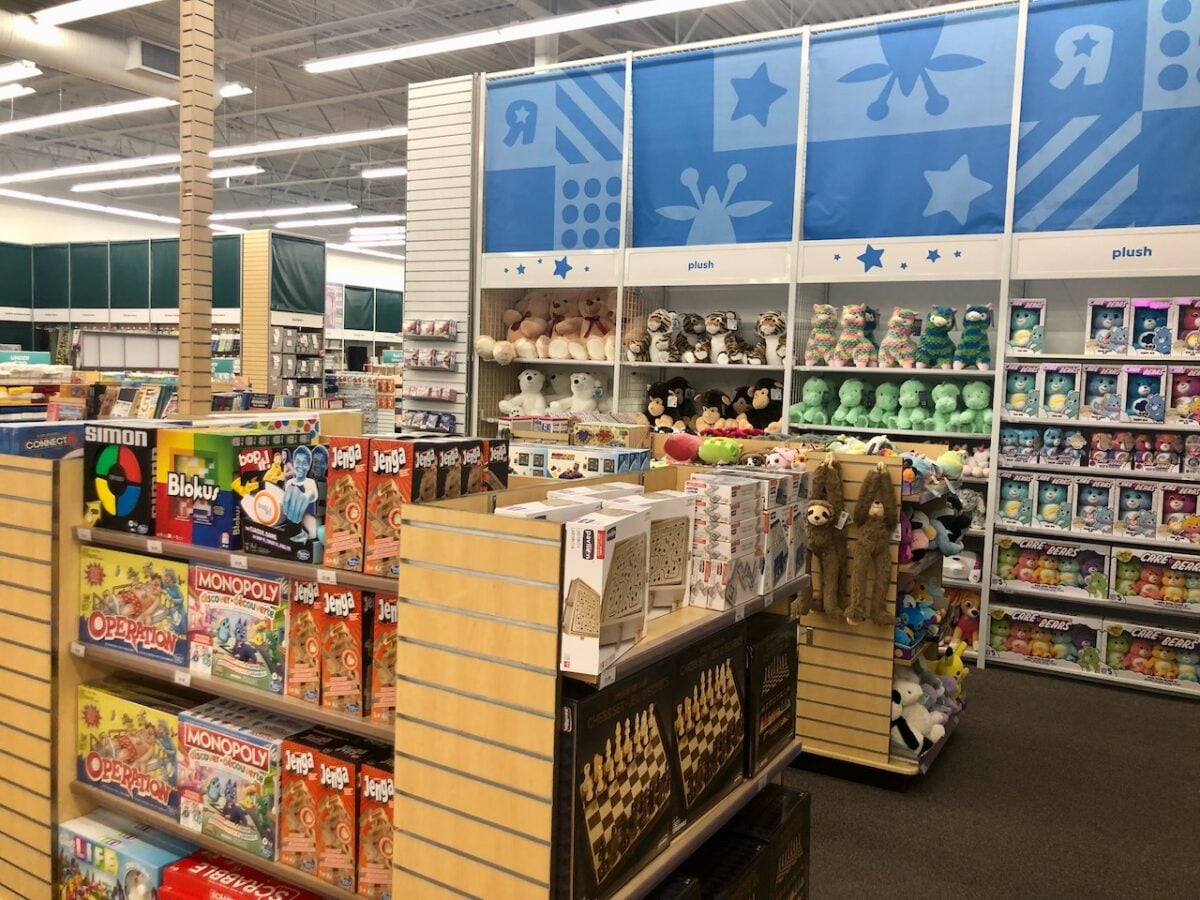
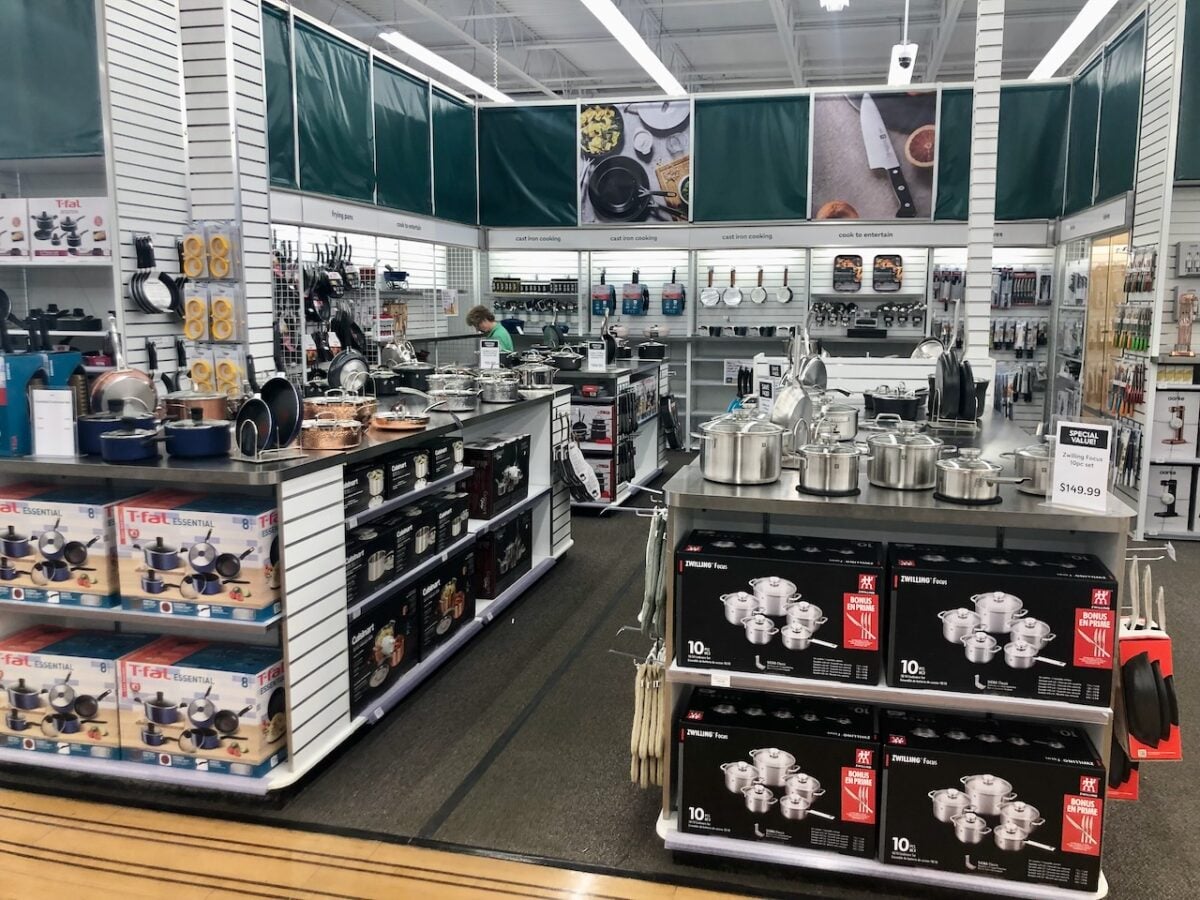
rooms + spaces Calgary Brentwood Village (Image: Mario Toneguzzi)

New Canadian retailer rooms + spaces is rolling out its concept across the country with grand openings in August.

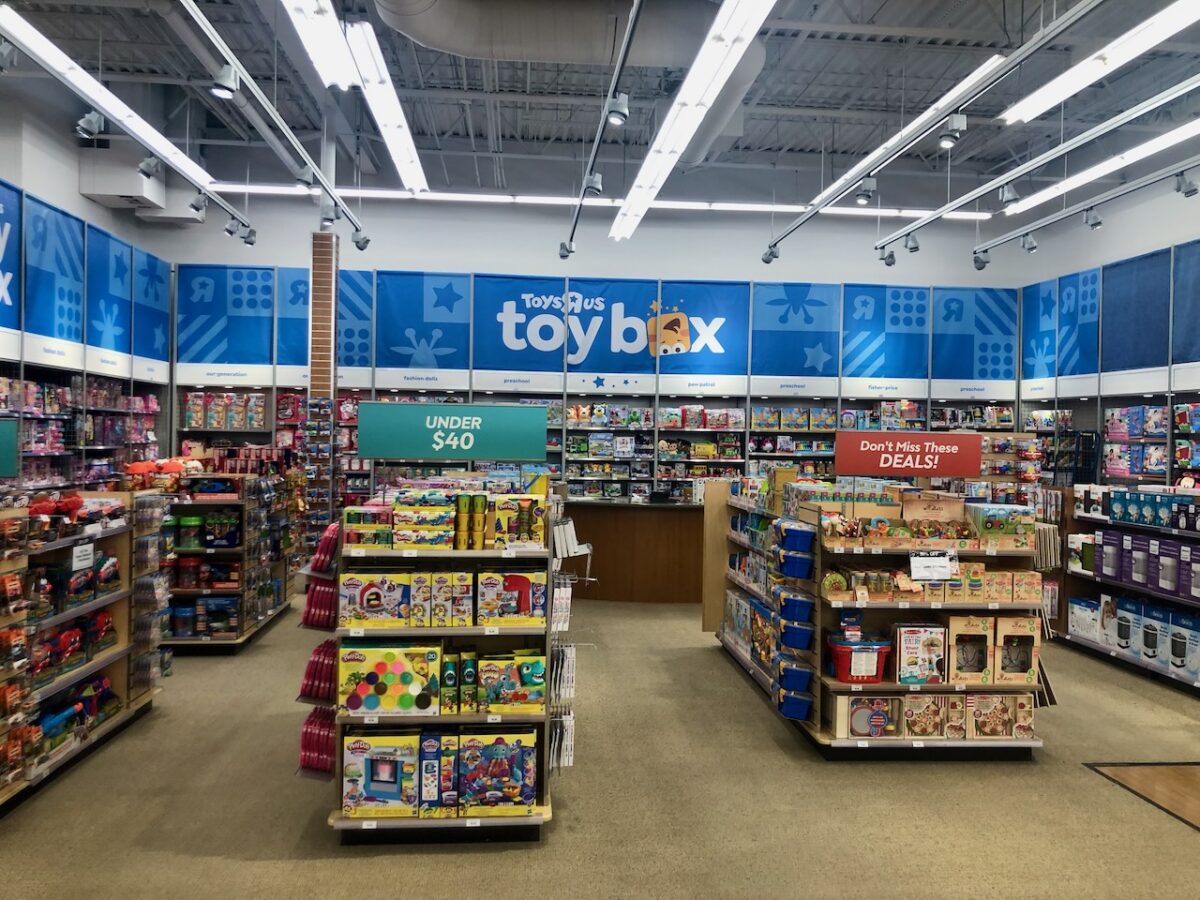
The Canadian-owned home and décor retail brand in British Columbia, Alberta, Saskatchewan, Ontario, Nova Scotia, New Brunswick and Newfoundland also features a Toys”R”Us shop in shop. 

rooms + spaces is a subsidiary of Putman Investments. 

Doug Putman

“The opening of our 24 new rooms + spaces stores across the country shows the strength of Canadian-owned retail,” said Doug Putman. “We saw an opportunity in the market to create an enjoyable in-store shopping experience across the home goods category and that is exactly what our new stores deliver.”  

rooms + spaces was created by Canadian entrepreneur Putman, who has bought and transformed iconic brands globally, including Toys”R”Us and Babies”R”Us and Sunrise Records in Canada. More than 500 store associates have been hired across the 24 rooms + spaces stores across Canada, which accounts for more than 800,000-square feet of retail space.

The stores are in spaces formerly occupied by Bed Bath & Beyond and buybuyBABY storefronts.

rooms + spaces Calgary Brentwood Village (Image: Mario Toneguzzi)
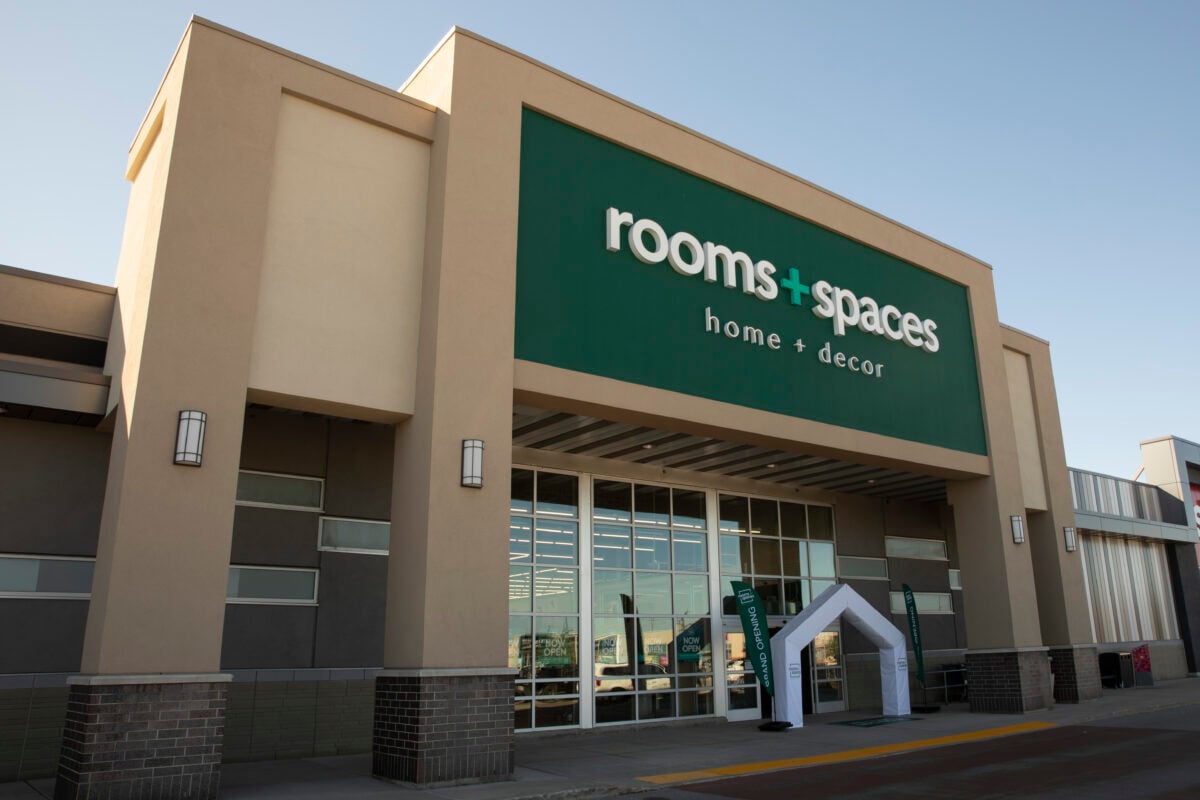
rooms + spaces in Woodbridge Ontario (Image: rooms + spaces)

Greg Dyer, President, rooms + spaces, said the company is excited to bring a new shopping experience to customers “that makes it easy to find inspiration and see how products will look in different spaces throughout the home.”

He said 18 stores have already opened with six more opening in the next eight weeks.

“You can expect more coming for sure,” he said of the retailer’s future plans beyond the first 24 stores. “I’m not committing to a time period on that but yes we have plans for significantly more stores.”

Youtube video

Dyer said stores range in size from 20,000 square feet to 38,000 square feet. Typically, the ideal space is about 25,000 to 26,000 square feet. 

“We have seen a great response since we began to open our doors across Canada and look forward to welcoming our customers in store for our grand opening celebrations,” he said.

“We have worked closely with our vendors to build a product assortment that caters to the design preferences and lifestyles of Canadian consumers. We have an exciting lineup of products from both new and well-known brands we know our customers will love.

“We have done a very slow opening so people are trying to figure out who we are but very, very positive about the assortment, the way we’ve laid out the store, giving people room to shop. I think they’re just learning now the spectrum of Canadian assortment . . . It’s very much a Canadian perspective on what Canadians are looking for and we have great partnerships with Canadian vendors and suppliers who really know the Canadian assortment.” 

rooms + spaces Calgary Brentwood Village (Image: Mario Toneguzzi)

With a focus on supporting Canadian businesses, over 80 per cent of rooms + spaces vendors will be from Canada. Each store also features a 1,500 to 2,500-square-foot Toys”R”Us shop in shop.

rooms + spaces store locations and grand opening dates include:  

British Columbia

  • Kelowna: Orchard Plaza, 1876 Cooper Road (Grand Opening: August 26)
  • Langley: Langley City Square, 19860 Langley Bypass (Grand Opening: To be confirmed.)
  • Vancouver: 1740 West Broadway (Grand Opening: August 19)
  • Victoria: Mayfair Shopping Centre, 775 Finlayson Street (Grand Opening: August 26)

Alberta

  • Calgary: Brentwood Village, 3630 Brentwood Road NW (Grand Opening: August 26)
  • Calgary: Chinook Station, 306 Glenmore Trail SW (Grand Opening: August 26)
  • Edmonton: South Edmonton Common, 2021 98 Street NW (Grand Opening: August 26)
  • Edmonton: West Edmonton Mall, 8882 170 Street NW (Grand Opening: August 26)

Saskatchewan

  • Regina: Grasslands Shopping Centre, 4855 Gordon Road (Grand Opening: August 26)
  • Saskatoon: Preston Crossing, West, 1709 Preston Avenue North (Grand Opening: August 26)

Ontario

  • Belleville: Bell Front Shopping Centre, 366 North Front Street (Grand Opening: August 26)
  • Brantford: Brantford Bell Centre, 221 Henry Street (Grand Opening: To be confirmed.)
  • Cambridge: Smartcentres Cambridge, 70 Pinebush Road (Grand Opening: August 26)
  • Newmarket: Green Lane Centre, 18126 Yonge Street (Grand Opening: August 26)
  • Kitchener: The Boardwalk, 225 The Boardwalk (Grand Opening: August 26)
  • London: Westwood Center, 3325 Wonderland Road South (Grand Opening: To be confirmed.)
  • Richmond Hill: Bayview Ridge Shopping Centre, 225 High Tech Road (Grand Opening: August 26)
  • Stittsville: 5487 Hazeldean Road (Grand Opening: August 26)
  • Stoney Creek: Heritage Greene, 1783 Stone Church Road East (Grand Opening: August 26)
  • Whitby: Thickson Ridge Power Centre, 1650 Victoria Street East (Grand Opening: To be confirmed.)
  • Woodbridge: RioCan Colossus Centre of Woodbridge, 67 Colossus Drive (Grand Opening: August 12)

Nova Scotia

  • Dartmouth: Dartmouth Crossing, 45 Lemlair Row (Grand Opening: To be confirmed.)

New Brunswick

  • Fredericton: Corbett Centre, 15 Trinity Ave. Building C (Grand Opening: To be confirmed.)

Newfoundland

  • St. John’s: The Village Shopping Centre, 430 Topsail Road (Grand Opening: August 26)

Additional Photos

rooms + spaces Calgary Brentwood Village (Image: Mario Toneguzzi)

Unique ‘Iris Galerie’ Eye Artwork Concept Expanding in Canada with Plans for 30 New Locations in 3 Years [Interview]

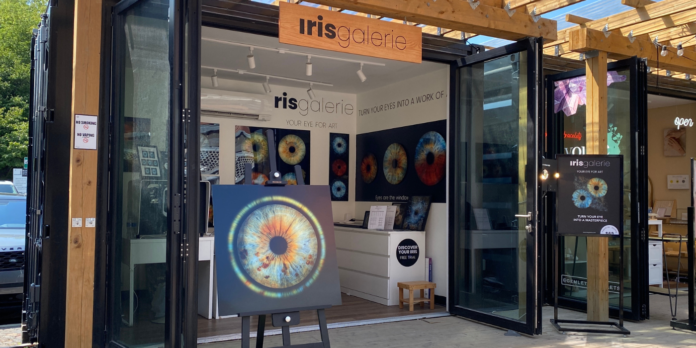
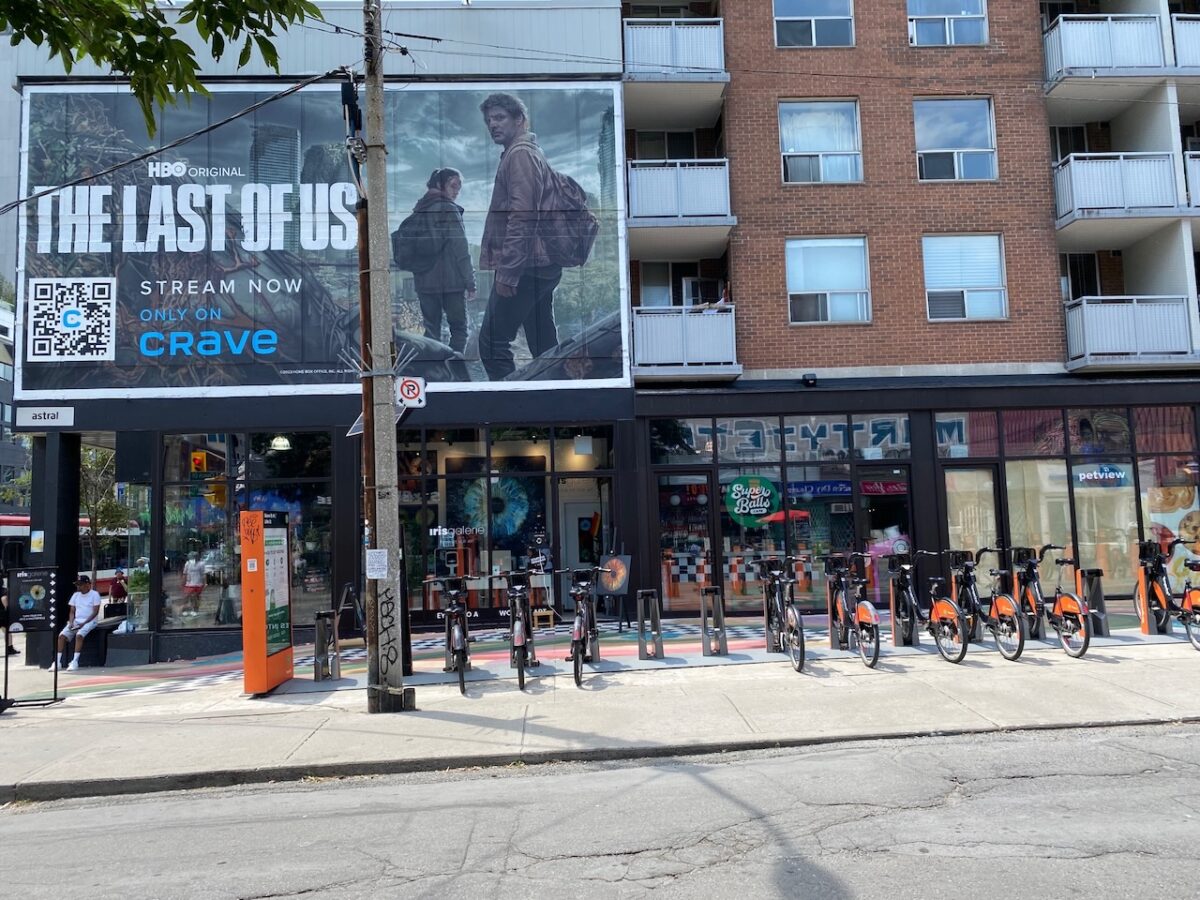
Iris Galerie Distillery District in Toronto (Image: Dustin Fuhs)

Iris Galerie, a new international based eye artwork concept, is opening three locations in the upcoming months in Ontario.The concept came to Canada this past year and has no plans to slow down as it is planning to open 30 locations within three years.

Emeric Wehbeh

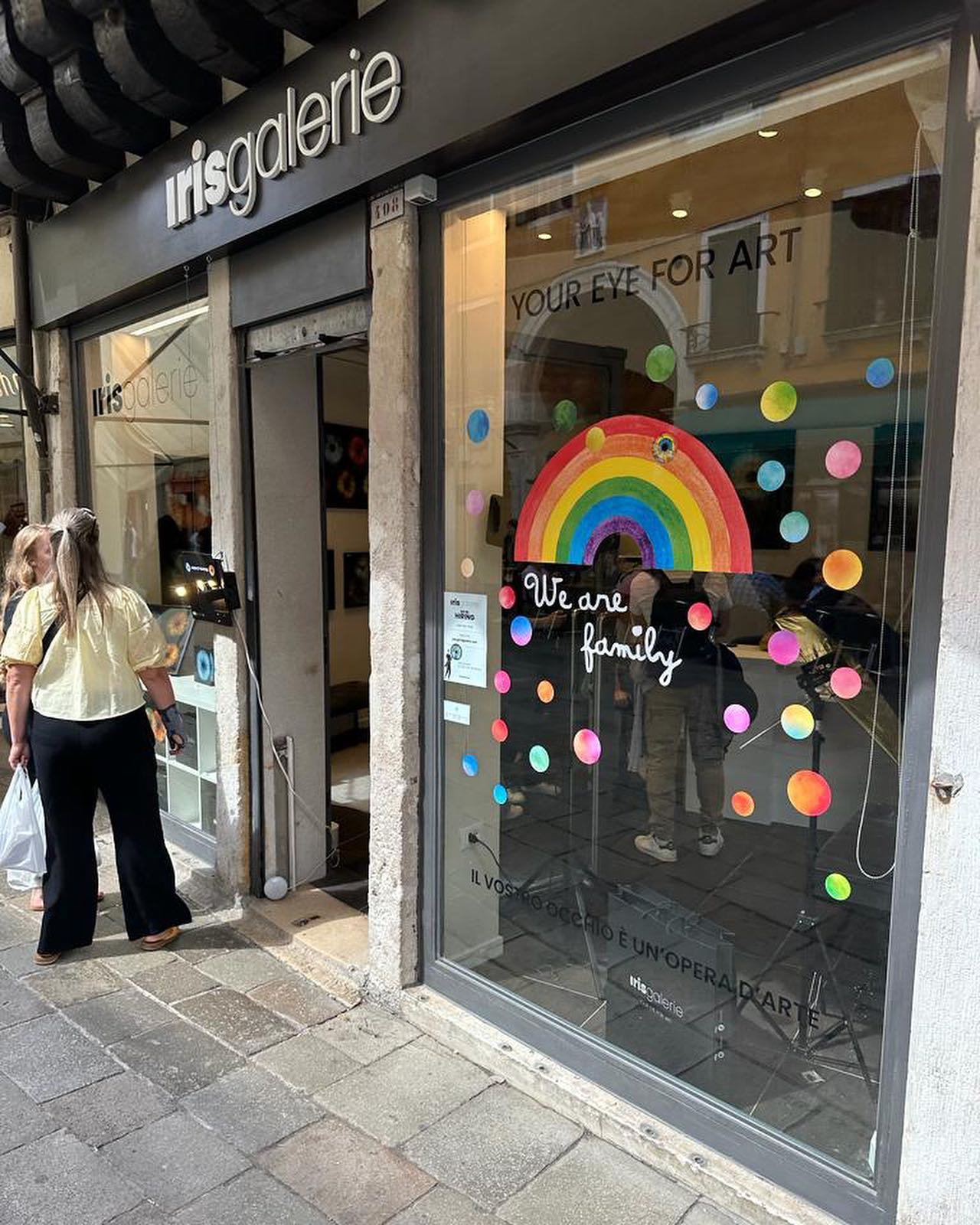
The concept started in 2021 in Paris after the founder, Emeric Wehbe, was inspired to capture the beauty of eyes during the pandemic as the masks covered everything else. Since opening, Iris Galerie has expanded to over 100 locations worldwide, including four stores in Canada with more coming soon.

Iris Galerie uses state of the art photography to capture the beauty of people’s eyes and create unique artwork and can include up to five different irises. Tanguy Saillant, Country Manager, says they get a variety of people stopping by such as individuals, couples, and families.

“It is a concept that is across cultures and is about love, family, and celebrating everyone. During Covid, the only thing people would really see was the eye because of the mask and so the founder thought there was something very specific about the eye and he thought no one really knew how an eye could be so beautiful. So, he wanted to create specific artwork and that was the beginning of the idea and how the concept started,” says Saillant.

How The Concept Came to Canada

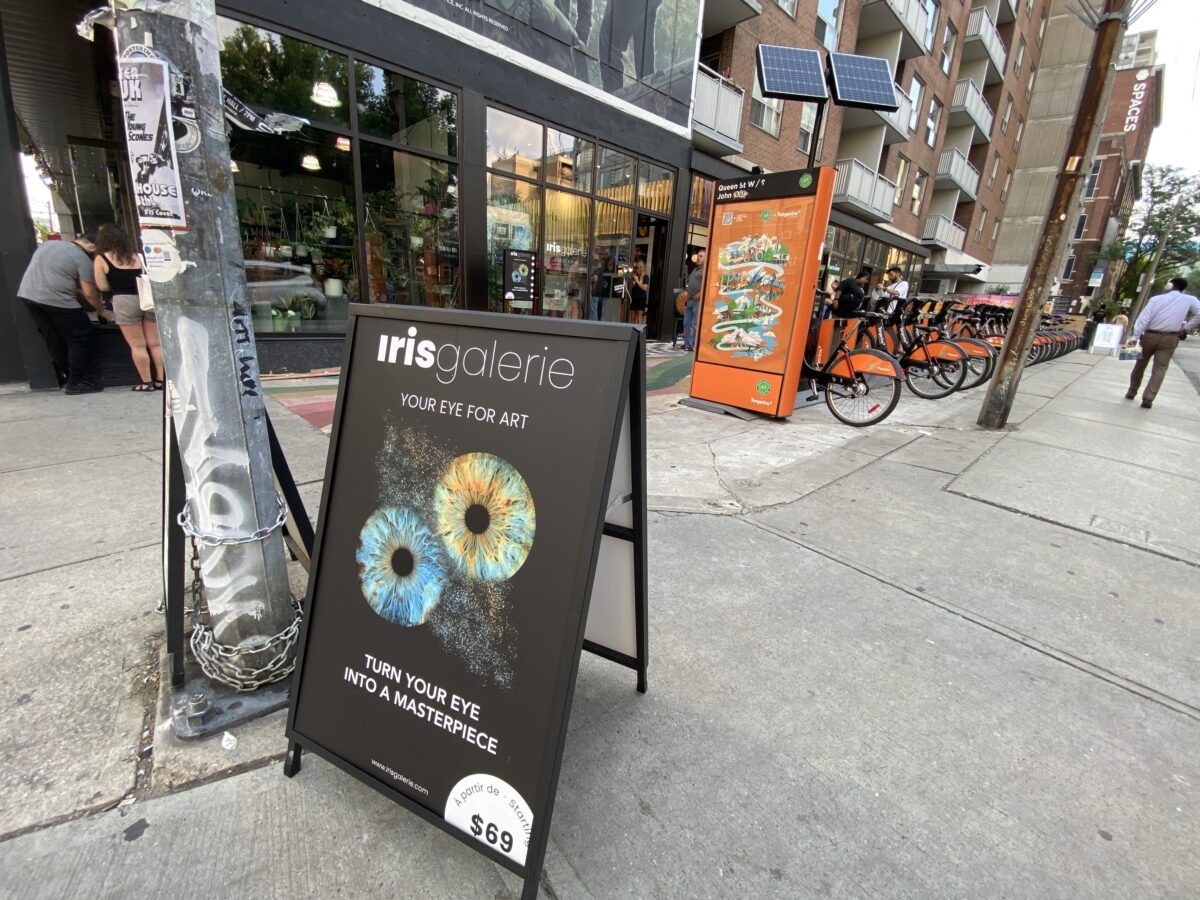
Iris Galerie on Queen Street West in Toronto (Image: Dustin Fuhs)
Tanguy Saillant

Saillant is originally from France and was living in Canada between 2016 to 2020; however, decided to move back during Covid to be closer to family and worked in the fitness industry. As he knew they would move back to Canada, Saillant was searching for opportunities in Canada and wanted a new adventure – and that is when he found Iris Galerie.

“At the time, I did not know exactly if it was a good concept, but after spending time in Paris and experiencing the store – I quickly realized that the concept is very positive, is easy to sell, the environment is simple and elegant, and it is great to work for this type of brand. So, I made a deal to bring this concept across Canada.”

New Locations and Expansion Plans

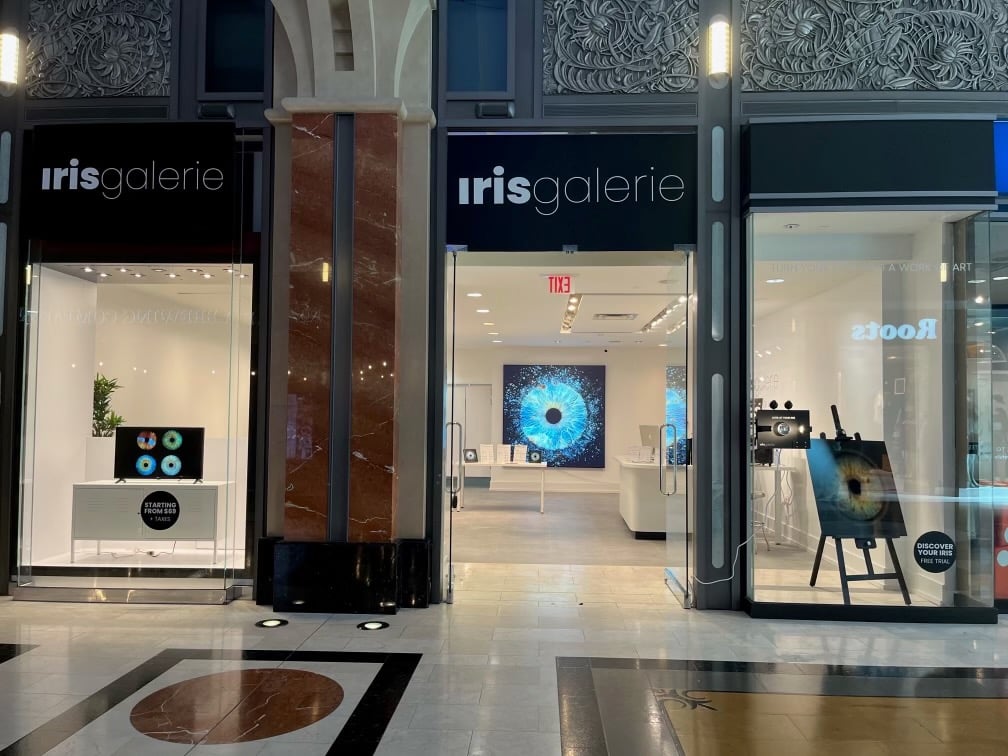
Iris Galerie at Fallsview Casino Resort in Niagara Falls

Iris Galerie already has four locations in Canada including two in Toronto, one in Quebec City, and a few weeks ago Saillant opened a location in Fallsview Casino Resort in Niagara Falls. Along with the new opening, Saillant says he is also opening locations within the next few months in Ottawa close to the ByWard Market and in Blue Mountain.

The new location in Ottawa will be opening this month and the location in Blue Mountain will be opening in October. Saillant says most of the stores in Europe are between 400-600 square feet as the concept does not require a lot of space, such as the Toronto Kiosk in the Distillery District which is only 100 square feet.

All locations currently have opened at a fast speed and is not looking to slow down.

“It is growing really fast – we opened in the Distillery District in Toronto on May 3rd, Quebec City on May 26th, Queen Street in Toronto on June 9th, Niagara Falls opened July 18th, and then Ottawa will be opening in August. As for Blue Mountain, we just need to do some renovations and I think we are going to be opening in the middle of October.”

After these openings, Saillant says he is looking to add 30 more locations throughout Canada within the next three years. He will be looking at areas such as Montreal in Quebec, Alberta, British Columbia, and more places in Ontario, such as Niagara-on-the-Lake.

Product Offerings

Image: Iris Galerie

Currently, Saillant says they have multiple different products they can send, but has many ideas for future innovations for the brand – but is unable to share his ideas just yet.

“People speak about taking pictures of dogs and cats, but I am unsure if we are going to go that way even if it could be a great idea. I think it is in our mind but we also have other stuff we are thinking of but is still confidential. We need to make sure our ideas will stick and something that can be done on site and maybe artwork that will need a specific professional lab.”

How it Works

The whole experience, Saillant says, takes around thirty minutes and is appointment based.

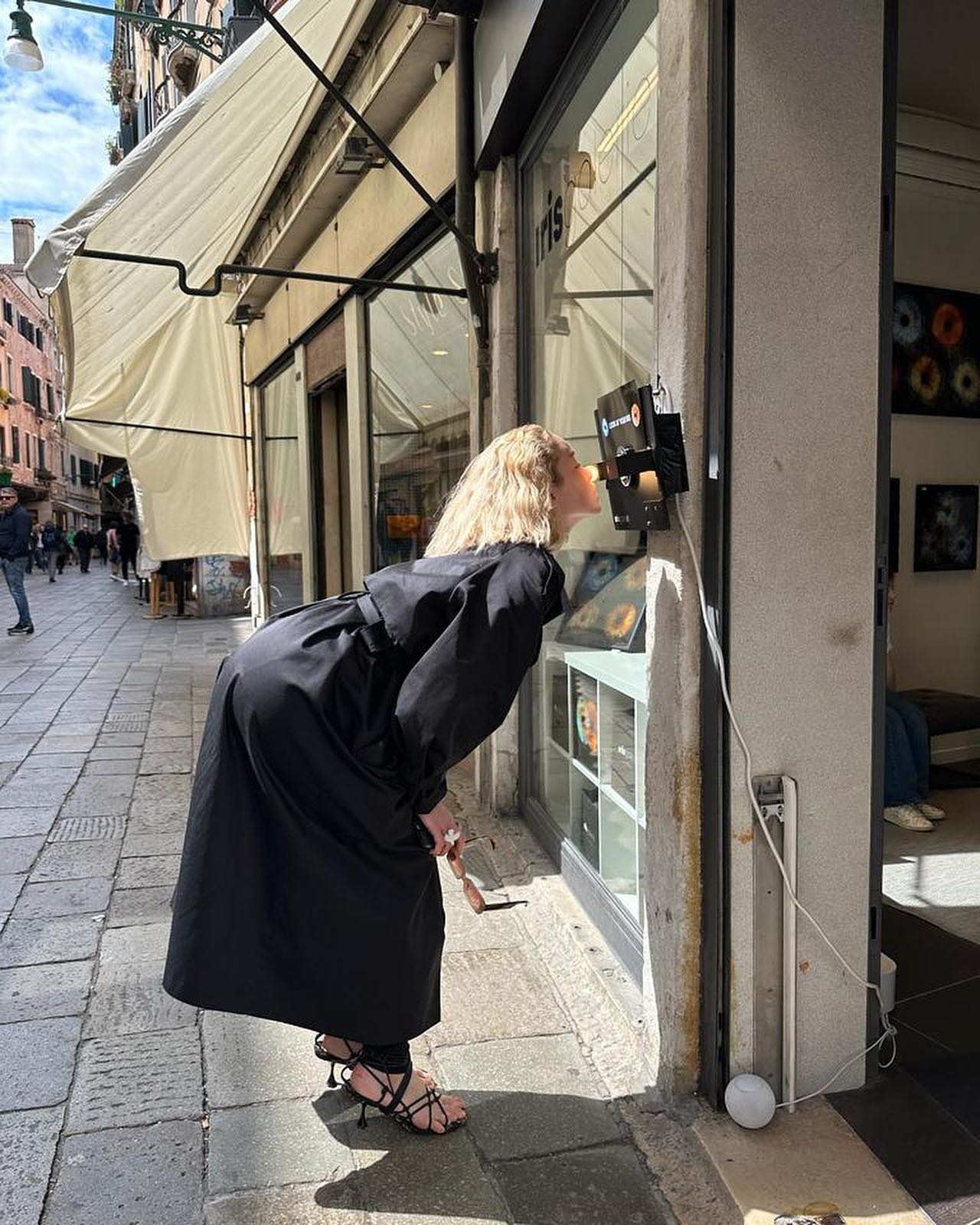
“Taking the picture is very quick, we have a small mirror in the store and people can look at their eyes and the mirror is able to show the Iris ten times more as you see daily. The mirror is used to help people get an idea about their eye and helps decide which eye they would like to use.”

After the picture, the rest of the time is spent on editing the picture and transforming it into artwork. After it is complete, consumers have the option of three different print sizes they can print on site and everything else is done off site and takes around two weeks to be delivered.

Image: Iris Galerie

As for next steps for the brand, Saillant says he is on the hunt for new locations and encourages people who have open vacancies to connect as he is able to open a store quickly.

“If they think that the concept would be a good fit for their retail area, then it would be great to connect. What is so unique about Iris Galerie is that we can relive the beauty of everyone and be able to create artwork and capture the beauty of the eye.”

Dean Davidson’s Journey: From Hobby to Holt Renfrew and Global Success with Jewelry [Interview]

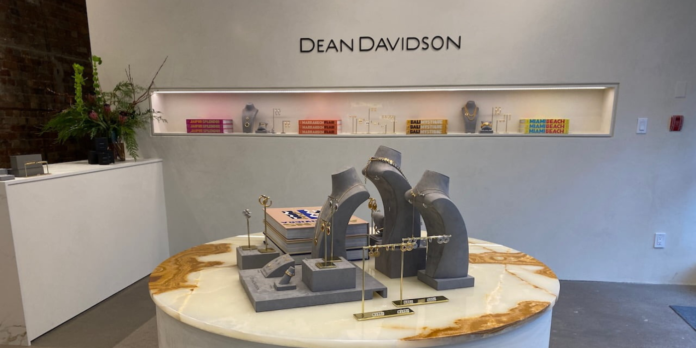
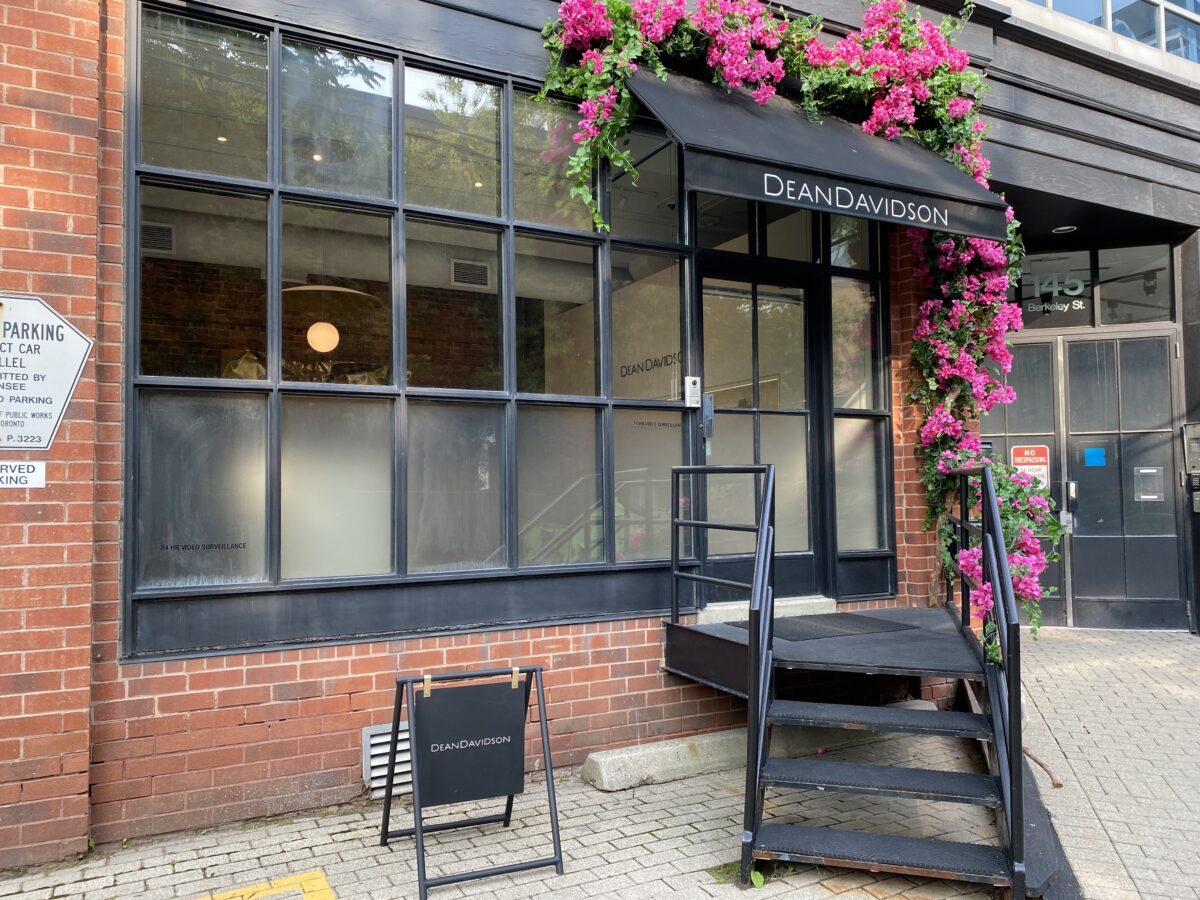
Dean Davidson at 145 Berkley (Image: Dustin Fuhs)

Craig and Dean discuss the inspiring journey of Dean Davidson‘s jewelry brand, from its humble beginnings as a hobby to becoming a successful line carried by prestigious retailers like Holt Renfrew.

They delve into the design process, materials used, and future plans, including the possibility of expanding into homeware. Dean shares insights into his demographic, awards, and the opening of his first physical store in Toronto.

The interview reveals the brand’s global distribution, carried by major names in the industry. They wrap up with Dean’s vision for the future, focusing on further expansion and introducing homeware to their retail boutiques.

A transcript of the conversation can be found below.

Youtube video

The Interview Series video podcasts by Retail Insider Canada are available through our Retail Insider YouTube Channel where you can subscribe and be notified when new video episodes are available.

If you prefer to listen to the audio version, it is available below:

The Interview Series audio podcasts by Retail Insider Canada are available on Apple Podcasts, Stitcher, TuneIn, Google Play, or through our dedicated RSS feed for Overcast and other podcast players. Also check out our The Weekly audio podcast where Craig and Lee discuss popular content published on Retail Insider which is part of the The Retail Insider Podcast Network.

Transcription

Craig Patterson 0:03
Welcome to the Retail Insider Video Interview series. I’m your host, Craig Patterson, and we’re joined here today with a special guest. This is Dean Davidson. He’s the founder of a very well-known jewelry business with the same name, Dean Davidson. Welcome, Dean.

Dean Davidson 0:17
Great. Thank you for having me.

Craig Patterson 0:19
Let’s talk a little bit about your brand. First of all, how did you get started?

Dean Davidson 0:25
So I started in spring of 2008. I actually used to work in a completely different field. I worked in agriculture. And I was on a trip probably my first big international trip to South Africa. I bought a bracelet in a market in Cape Town brought them back to Calgary I was living and I started making them kind of as a hobby, ended up getting introduced to a clothing designer in Calgary, Paul Hardy, and I designed jewelry to complement his clothing collection. And we went to New York Fashion Week and Paris Fashion Week and LA and then Holt Renfrew picked up that line. And I ended up enrolling in jewelry design classes at A-CAD in Calgary. And then three years later, I launched my first solo collection, and that’s 15 years ago.

Dean Davidson (Image: Erin Leydon)

Craig Patterson 1:44

That’s incredible. So you kind of got started with a passion and from there, you designed a line that got picked up by Holt Renfrew, which is, you know, the most respected large format luxury retailer in Canada. How did that all happen? Did they come to you?

Dean Davidson 1:54
So we built a relationship. I said the line that I designed was carried alongside the clothing in the Toronto location of Holt Renfrew. And so when we parted ways, I approached them with my very first collection, actually called “The Davidson by Dean Davidson,” and they picked up that very first collection.

Craig Patterson 1:44
Tell me about the jewelry itself. Is it called Demi or… tell me a little bit about the stones that are used, the metals, the price point as well.

Dean Davidson 1:54
So it’s called Demi-fine jewelry. It’s really kind of indiscernible from fine jewelry, but at a much better price point. We worked with a family-owned factory in Jaipur, India, and they specialize in making fine jewelry. They’ve actually made jewelry for the royal family of Jaipur. So the quality is really strong. We use semi-precious gemstones. Our base metal is high-quality brass. And then we plate it with 22-karat gold, rhodium, or silver colour.

Craig Patterson 2:23
Excellent. In terms of product types, tell me about your necklaces, rings. Tell me about the collection?

Dean Davidson 2:30
Yeah, so we do everything from hoop earrings to necklaces, rings, cocktail rings, which is a big category for us, pendants, statement necklaces. So we kind of run the whole gamut of pieces and inventory.

Craig Patterson 2:45
Are there any other categories as well, beyond jewelry, yet?

Dean Davidson 2:49
Yes. So we’re kind of dabbling in homewares a little bit. That’s part of the future plans that the brand would love to move into home objects, objects for the home that complement our jewelry pieces.

Dean Davidson at 145 Berkley (Image: Dustin Fuhs)

Craig Patterson 3:03
Oh, great. We’ll talk more about the future as well. Because do you have a core demographic or a certain consumer who you found is buying your jewelry?

Dean Davidson 3:13
Yeah, so our demographic would be women, I would say from 35 to 70, would be our age bracket that appreciates our designs.

Dean Davidson 3:26
Excellent. And you won a Canadian art and fashion award in 2019. I was actually there. Tell us about the award. How did that go down?

Dean Davidson 3:34
Yeah, so I was nominated for the award in 2019 and felt very fortunate to win and to be acknowledged by my peers in the industry. And yeah, it was just a great honor and it’s so nice that the CAPA has formed and it’s acknowledging Canadian artists. So I just felt very fortunate to be one of them.

Dean Davidson (Image: Dustin Fuhs)

Craig Patterson 3:56
Congratulations. It’s amazing. And now you’ve opened your first actual physical store. This was quite recent, and it’s in Toronto, in Cabbagetown South. Can you tell us about the store and how it came about?

Dean Davidson 4:08
Yeah, so we were actually, thanks to our loyal customers who have seen a lot of growth in our business, I was actually looking for a larger office space. And I found this really beautiful building with a retail component on the main floor. And so we decided it was time to jump into a boutique. And we created a really beautiful, serene environment. It feels kind of like a loft apartment, a place you would want to hang out in and spend the day and just look at beautiful jewelry. So we were really happy, and we are excited now to have that full experience for the customer from the time they step in the door until they put their jewelry on when they’re at home.

Craig Patterson 4:51
Now tell me about your distribution globally. We had a journalist write an article about 250 stores, I think, around the world. It could be a bigger number. Now tell me a bit about it. Who’s carrying the Dean Davidson line?

Dean Davidson 5:03
So some of the more notable names would be Saks, Nordstrom, Harvey Nichols Hong Kong. We’re carried in a large department store in Spain, Four Seasons, and several locations of resorts and spas around the world. And then several boutiques. So we have specialty stores mainly in Canada and the US.

Craig Patterson 5:24
Terrific, terrific. El Corte Ingles is probably the Spanish one.

Dean Davidson 5:28
Yes, yes. Yes. Sorry, I couldn’t think of it at the moment. But yes, that’s the one. Yeah, yeah.

Craig Patterson 5:32
Interesting because there are so many locations. Interesting in terms of distribution. So that’s excellent. What do you think towards the future, whether it’s stores, you mentioned home goods? Tell me about your thinking for the future of your brand.

Dean Davidson 5:43
So we want to continue building our wholesale business in the US and internationally. I think we’d like to look at opening more retail locations down the road as well. And then, as far as from a product perspective, introducing homeware. So that would be the extension that we would introduce to our retail boutiques.

Craig Patterson 6:02
Terrific. I look forward to seeing this as it develops in terms of collections. Well, best of luck with everything here in the business. This has been really, really interesting. This has been Dean Davidson, and he’s the founder of his own jewelry brand, Dean Davidson, based in Toronto. Thank you for joining us, Dean.

Dean Davidson 6:25
Great. Thank you for having me.

Craig Patterson 6:27
I’m Craig Patterson, the founder, and publisher of Retail Insider. Thank you so much for watching us today. If you’re watching on our YouTube channel or listening to us on our podcast channel, be sure to subscribe on either if you haven’t already. Thank you so much. Take care and bye for now.

Subscribe, Rate, and Review our Retail Insider Podcast!

Follow Craig:

Follow Retail Insider:

Listen & Subscribe:

Share your thoughts!

Drop us a line at Craig@Retail-Insider.com. You can also rate us in Apple Podcasts or recommend us in Overcast to help more people discover the show!

Background Music Credit: Hard Boiled Kevin MacLeod (incompetech.com). Licensed under Creative Commons: By Attribution 3.0 License. http://creativecommons.org/licenses/by/3.0/

Canadian Retail News From Around The Web For August 10th, 2023

Canadian Retail News From Around The Web

News at a Glance

Retail Insider is streamlining its Canadian retail news from around the web to include a handful of top news stories that can be viewed quickly during the day. Here are the top stories from the past 24 hours.

Are retail stores doing enough to prevent shoplifting? Canadians split in poll (Global)

Profits at Metro surge as grocery chain sees higher sales (CBC)

Leon’s says after declines in Q2, second half is looking better (Furniture Today)

Amazon’s Canada expansion ‘really paying off,’ VP says (BNN)

Reimagining health & beauty in grocery (Grocery Business)

Pollution prevention plan for grocery stores is a welcome development in the fight against plastic packaging waste (Environmental Defence)

‘It’s already affecting us’: Merchants fearful about Ste-Catherine roadwork (Montreal Gazette)

Employees ‘collateral damage’ in labour dispute: Manitoba Liquor & Lotteries president (CBC)

Ikea store at Scarborough Town Centre will open this month (Toronto.com)

Could East Vancouver’s iconic Kingsgate Mall be sold for development? (Global)

Calgary Co-op launches petition to save compostable bags (Calgary Herald)

Meet Lauren and Matt, co-owners of Market Price (Downtown Halifax Business Commission)

The push to make Verdun’s Wellington Street pedestrian-only year round (CBC)

Biggest retro game store in Canada opens third location in Whitby (InSauga)

Laval jewelry store robber granted full parole (Montreal Gazette)

Queen Street West coffee shop frustrated by repeated robberies, suspect in custody (Global)