Advertisement
Home Blog Page 704

Solar Power Pilot Project Launches at CF Chinook Centre in Calgary [Photos/Interview]

CF Chinook Centre (Image: ENMAX Power)

An innovative solar power pilot project at CF Chinook Centre “has successfully addressed an exporting challenge affecting similar electricity grids across North America, paving the way for increased customer choice while building a lower carbon future,” say officials.

The project was a partnership between ENMAX Power and Cadillac Fairview. Construction began in early 2021 with funding from Natural Resources Canada and Alberta Innovates and it included the installation of 

1,900 solar photovoltaic panels atop CF Chinook Centre spanning 53,000 square feet, approximately the size of three professional hockey rinks.

CF Chinook Centre (Image: ENMAX Power)

“To date, it’s meeting expectations. So it is a long-term partnership and commitment between ENMAX, Chinook and Cadillac Fairview. Even though it’s a pilot project there is definitely a commitment to see this project be long term,” said Paige O’Neill, General Manager at CF Chinook Centre.

“It truly matches Cadillac Fairview’s leadership and push towards a low carbon economy. It’s definitely a priority that CF is committed to in reducing our carbon footprint not only through our own actions and goals but also always looking to being aligned with like-minded partners like ENMAX and the other partners in this initiative.”

O’Neill said Chinook Centre is expecting to produce about 900,000 kilowatt hours a year which represents almost 10 per cent of the electricity consumption of the entire mall.

“What that translates to is it mitigates about 650 tons of CO2 per year reduction which in turn it contributes to CF’s targets of reducing the operational carbon footprint by about 35 per cent by 2030,” she said. 
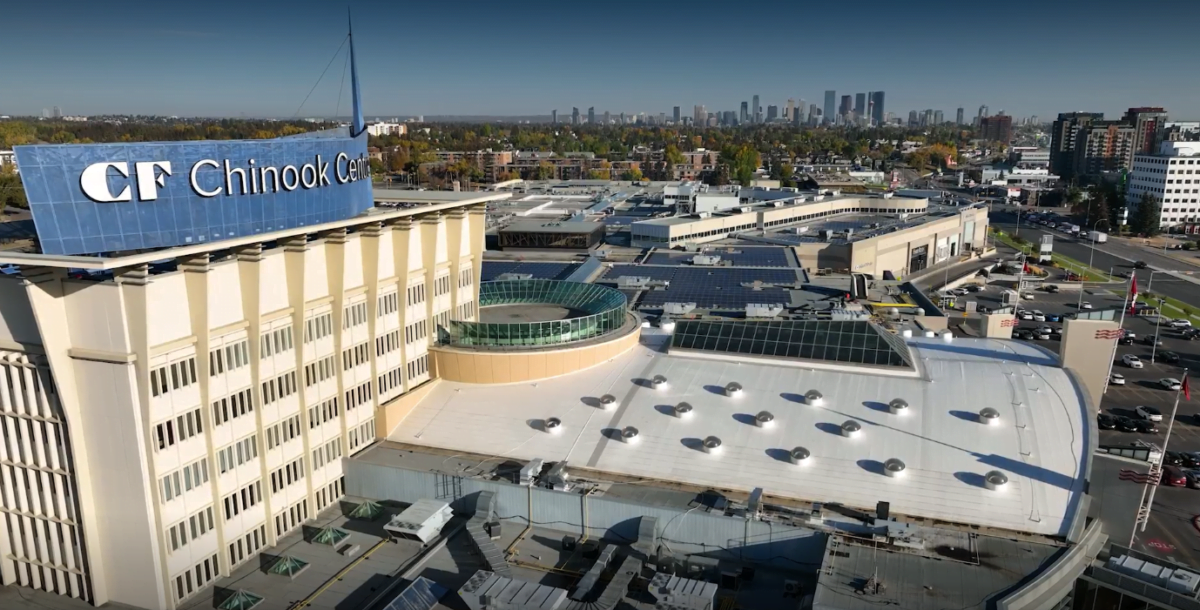
CF Chinook Centre (Image: ENMAX Power)

O’Neill said Cadillac Fairview has a number of initiatives through recycling and different environmental ventures in different malls across all its portfolio. 

“But right now it’s focused for Chinook and Calgary on this pilot initiative but CF is always working to partner with companies and different kinds of projects that can help with our sustainability goals,” she said. 

“The success of this pilot is an exciting step forward in enabling customers on our secondary network to adopt renewable energy options such as solar and battery storage,” said Jana Mosley, President ENMAX Power. “This innovative solution will give urban customers – both in Calgary and potentially across North America – more choice in how they generate and use electricity while maintaining a safe, reliable grid.” 

“This groundbreaking initiative marks an exciting turning point in Cadillac Fairview’s corporate sustainability journey and our commitment to reducing our carbon footprint,” said Karen Jalon, Vice President, Sustainability, Energy and Smart Technology, Cadillac Fairview. “Through our partnership with ENMAX, we’re able to make collaborative and impactful environmental change that will help to efficiently power neighbouring communities moving forward.”
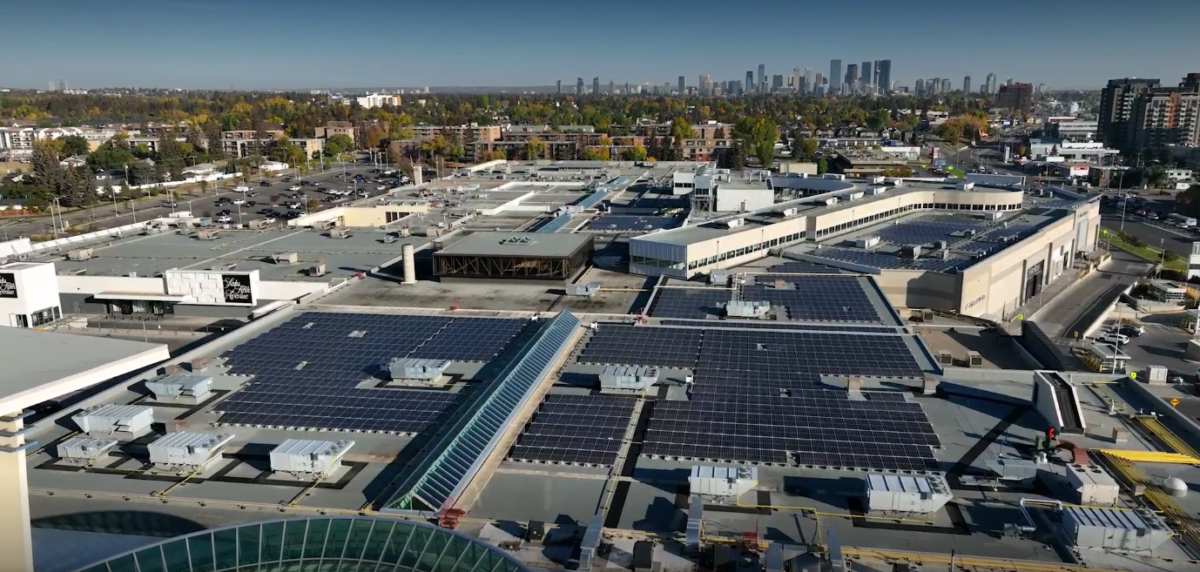
CF Chinook Centre (Image: ENMAX Power)

Officials said the solar panels are generating electricity and exporting excess energy back to the grid – a first for specialized secondary networks which supply power to dense urban settings including downtown Calgary.

“Most parts of Calgary’s electrical system are capable of two-way power flow and customers are eligible for credits for electricity they export back to the grid. Up until now, that hasn’t been possible for customers in high-density areas like some shopping malls and downtown. That’s because they get their power from an interconnected web of transformers, known as a secondary network, which provides high reliability but wasn’t capable of exporting power,” said ENMAX.

ENMAX Power and CF announced their partnership in April 2021 as the first on-site customer implementation to test the two-way technology at CF Chinook Centre, Calgary’s largest retail complex. The network’s highly specialized hardware, software and communications systems were carefully modified to facilitate two-way power flow while maintaining system safety and reliability, said the utility company.

“ENMAX Power will continue monitoring and reviewing the results of the pilot this year with a goal to make the technology more available to customers on the secondary network going forward,” it said.

Matrix Marketing Partners with Modern Expo for ‘Next Gen’ Retail Fixtures [Interview]

Image: Modern Expo

Burlington, Ontario-based Matrix Marketing Concepts for years has been helping retailers and brands connect with shoppers with the belief that an exceptional retail environment starts with a welcoming and immersive experience and attractive fixtures and visual merchandising.

The full-service store design, fixture, and retail marketing agency has now partnered with Modern Expo, a top company in creating modern retail ecosystems for more than 20 years around the globe, to be the exclusive supplier and distributor of their product in North America.

Chris Fowler, President of Matrix, said Modern Expo is one of Europe’s largest gondola fixture manufacturers and active in 75 countries around the world.

“They have some of the largest retailers on the planet as their customers. These guys are global in terms of their presence. Their product is fantastic. They have multiple lines of business actually – only some of which are things we’re going to engage in at this stage,” said Fowler.

Image: Modern Expo

“The one that we’re really engaged with right now is the fixturing line and that’s grocery, pharmacy, convenience. They have a gorgeous bakery line, they have a stunning line for wine and spirits. That’s the stuff that we’re bringing into North America – Canada, US, Mexico. Things we’re really excited about.

“It really is the next generation of retail fixtures.”

In the past three years, Fowler said, there’s been a gap in the marketplace with availability of product – specifically referring to fixturing, gondola.

Matrix had been working with another company in Europe, trying to find a way to bring their product to North America. When the pandemic hit, it put that company into a bit of a tailspin. Another European partner led Matrix to Modern Expo.

“We’re the exclusive Canadian distributor of a company called HL Display out of Sweden. They have an entire line of shelf management systems. We’re also the exclusive distributor of Siffron product out of the US. The two companies are the leaders in retail management systems,” explained Fowler. 

Image: Modern Expo

“Our partners at HL were the ones that introduced me to Modern Expo and the rationale was we would like to try and identify a new, innovative, modular system to bring to North America. Basically a better mousetrap. If you’re old enough to remember the Oldsmobile ads from years ago, the tag line was ‘this is not your father’s Oldsmobile’. Every time I look at this product it makes me think of that because this isn’t the same stuff that the North American manufacturers have been making since 1952. They haven’t changed it. It’s exactly the same.

“Well, the Modern Expo product is so different. The fit and finish and look and flexibility and innovation behind it, it’s just fantastic. That’s really why we’re so excited. Not only is it fantastic product, fantastic-looking product, there’s so many lines that really can help to integrate a complete solution into a retailer from bakery, wine and spirits, pharmacy, grocery. All the custom work that Matrix already does – custom metal, custom wire and millwork – it’s really a complete solution.”

Fowler said this is the evolution of retail. This is what fixturing is going to look like going forward. The product is so much smarter, it’s just a massive improvement in what we find today in the North American marketplace.

“It’s easy to assemble. All the things that are challenges with the North American system, this stuff outperforms and more, even in terms of weight capacities. They match or exceed all the weight capacities on any of the North American product. All of the different lines of product are so fantastic from a customer’s perspective, a retailer’s perspective. We can do front of store. We can do back of store,” said Fowler.

Image: Modern Expo

He cited the Calgary Co-op grocery chain as an example with its many sectors from grocery to bakery to wine and spirits to pharmacy to convenience and gas. 

“We can do all of it with this line of product,” added Fowler. “That’s a good example of a retailer right there where we could have a line for grocery, a line for convenience, for the bakery.

“It really is an exciting time to be in retail and to be able to help these retailers realize the vision they have and where they could go with their stores now that we have an alternative product in the market to be able to offer them something different.”

Image: Modern Expo
Image: Modern Expo

Matrix began in 1991 and today has clients across North America in the following sectors – grocery, pharmacy, convenience and gas, pets, home improvement, specialty store. It also works with consumer packaged goods companies. 

“All we do is retail. Anything you can think of in the store is what we do. So everything from fixturing, gondola, racking, custom metal, custom millwork. Anything you need in that retail environment is what we do,” said Fowler. “That’s always been our direction. Trying to find a way to help our customers through either design or manufacturing to find a better way to connect with that consumer in the store.

“Where’s the only place where the product, the intent to purchase and the consumer collide? That’s in the store . . . That’s where you want to influence them, engage them. That’s really what we do.”

Toronto Retail Seeing Increasingly Robust Leasing Activity as Workers Return to Offices [Interview/Report]

King Street East in Toronto (Image: Dustin Fuhs

A retail report by commercial real estate firm JLL says retail leasing activity in Toronto should remain robust after a strong push in the second quarter of this year.

Both enclosed and open-air Toronto retail properties have attracted new concepts, with a special attention from first-to-market. Combining a dip in Q1 and the subsequent rebound in Q2, on balance the first half of the year remained on par with the first halves of 2021 and 2019, it said.

“Foot traffic is catching up, interest in in-store purchases remains high, and pent-up demand for travel and services is leading to new openings, especially restaurants. Many retailers and food-services operators have concluded that this is a window of opportunity they shouldn’t miss, and some are willing to absorb the current high construction costs ‒ even building entirely new spaces ‒ in order to capitalize,” said JLL.

“Increasing demand for retail space, fewer available spaces, and rising inflation and interest rates are among the primary contributors to the acceleration of rents in Q2. Rates went up by seven per cent year-over-year, which is in sync with the current inflation rate in Canada.

“On the supply side, overall retail inventory is expected to remain constrained as construction activity fell over the past few quarters and fewer deliveries are anticipated. Investment in retail construction has consistently contracted while investment in warehouses has accelerated. More recently, investment to build hotels and restaurants has rebounded.”

Yonge Street in Toronto (Image: Dustin Fuhs)

Paul Ferreira, Senior Vice President of Retail with JLL, said all signs for the most part indicate things are improving from retail sales, retail traffic, and rents stable or going up.

“I think all the metrics we would typically look at for how things are going with retail and retail real estate are improving coming out of the pandemic. The area of concern I would still have is traffic and footfall in the downtown urban core as most employers are still waiting out to see what the ultimate workplace presence ends up being in our downtowns,” he said.

Paul Ferreira

The number of employees returning to the downtown core has gradually improved since February, and office occupancy should surpass 30 per cent before the fall, explained the JLL report, adding that a recent study from the University of California shows that this past spring Canadian downtowns lagged most U.S. downtowns in terms of economic and social activity (as measured by mobile phone data). Toronto and Montreal downtowns had similar rankings.

“As the number of COVID-19 infections in Ontario peaks and trends down, it’s less likely that the seventh wave will derail the momentum, prompt a stiffening of measures, or slow business activity again. Toronto’s public transit ridership continues to recover. Toronto Transit Commission (TTC) ridership reached 57 percent of pre-COVID levels in late June, from 34 percent in the beginning of February. With the resumption of in-person classes in the fall and more workers returning to the office, ridership should continue to make significant progress,” said JLL. 

“TTC forecasts that overall ridership will approach pre- pandemic levels by the end of 2023, with the complete return of students and resumption of discretionary travel, but a significant gap from office workers. The return of office workers will be continual and gradual, as major employers have announced the transition to return-to-work using a hybrid working model.”

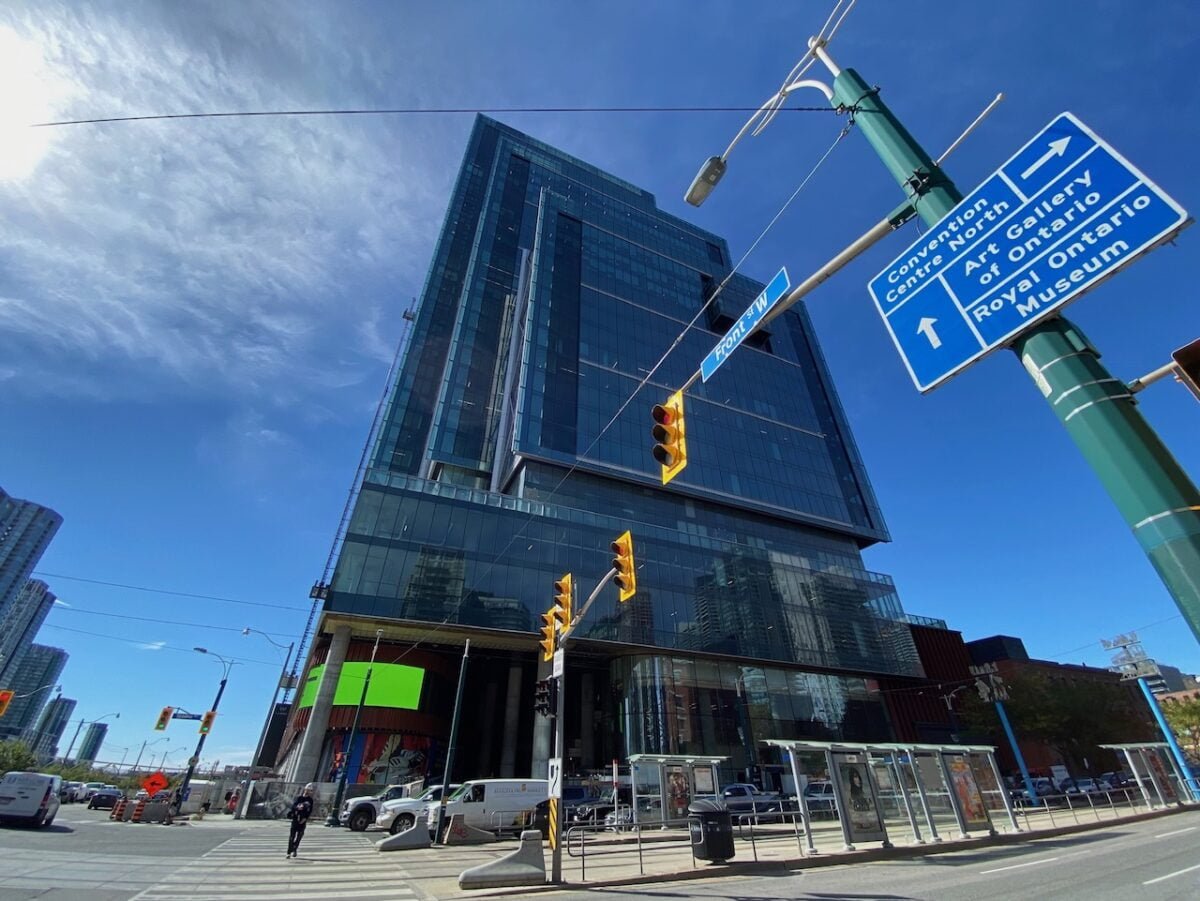
Development at One Front, Union Station and 160 Front Street (Image: Dustin Fuhs)

Ferreira said the hybrid work arrangement is likely here to stay.

“What we’re seeing in downtown Toronto I’d say in the last number of weeks the presence in downtown Toronto is greater than I’ve seen it through the pandemic, since the pandemic started. The GO trains are all busier. Transit, subway, when you talk to people who are taking it seems to be full again at rush hours. But it’s not consistent on the days,” he said. “Everybody seems to be focused on the Tuesday, Wednesday, Thursday. So what does that mean for the retail and the businesses in our downtowns?”

JLL said retail sales in Toronto have been increasing since January (based on seasonally-adjusted numbers), despite Omicron. For the remainder of the year, sales should remain robust. Businesses and consumers are fairly confident about shopping due to the ongoing post-pandemic rebound, and this should last for some time.

“There have been several major retail events in downtown Toronto this year. First, IKEA opened its first urban format in Canada on Yonge Street, backfilling Bed Bath & Beyond. Second, the renovation of Union Station is near completion, and retail spaces there are in process of being occupied by several brands including Sephora and Decathlon. Third, The Well mixed-use development is set to open its retail component in early 2023,” said JLL.

adidas Construction at The Well (Image: Dustin Fuhs)
Future Bath & Body Works and Mango at CF Toronto Eaton Centre (Image: Dustin Fuhs)

“In addition, several international concepts plan to open their first location in the market. Recently, U.S. fitness Alo Yoga, Spanish fashion Mango, and Brazilian steakhouse Fogo de Chão have indicated Toronto as one of their key markets. After being largely closed during the pandemic for more than six months altogether, shopping malls are now able to breathe and operate under more normal conditions. Some days of the week are recovering faster than others. Overall, sales and foot traffic will continue to recover and approach pre-pandemic levels by the end of 2022.

“Over the long term, asset-management teams have accelerated densification plans to turn malls into mixed-use developments. Several malls have made their plans public and started to execute them. 

Toronto malls have seen vacancy rates decline as more retailers feel compelled to expand in enclosed spaces. Shopper hesitancy has decreased, and masking is no longer mandatory. EV, athletic, and luxury have notably expanded across the major malls.”

Retailers and Landlords in Canada Ask for Tax Refund to Attract International Tourists [Interview]

Image: West Edmonton Mall

An alliance of economic stakeholders is calling for the implementation and return of a Visitor Tax Refund program to stimulate the Canadian economy.

The alliance includes Aldo Group Inc., Birks Group Inc., Harry Rosen Inc., Hudson’s Bay Company, Cadillac Fairview Corporation Limited, Quadreal Property Group, the Retail Council of Canada, Global Blue Group and Triple Five.

“The international context and the closing of borders have exacerbated an already serious issue of declining tourist spending in Canada. Every opportunity must be taken to stimulate the Canadian economy. This program would greatly benefit the tourism sector, retailers, and the Canadian economy in general, as it faces unprecedented economic challenges,” said Jean-Christophe Bedos, President and CEO of Birks.

“We are convinced that implementation of a Visitor Tax Refund program must be part of a series of actions by the government to ensure a strong economic recovery and position Canada as a global shopping destination and would substantially benefit the Canadian economy more broadly.”

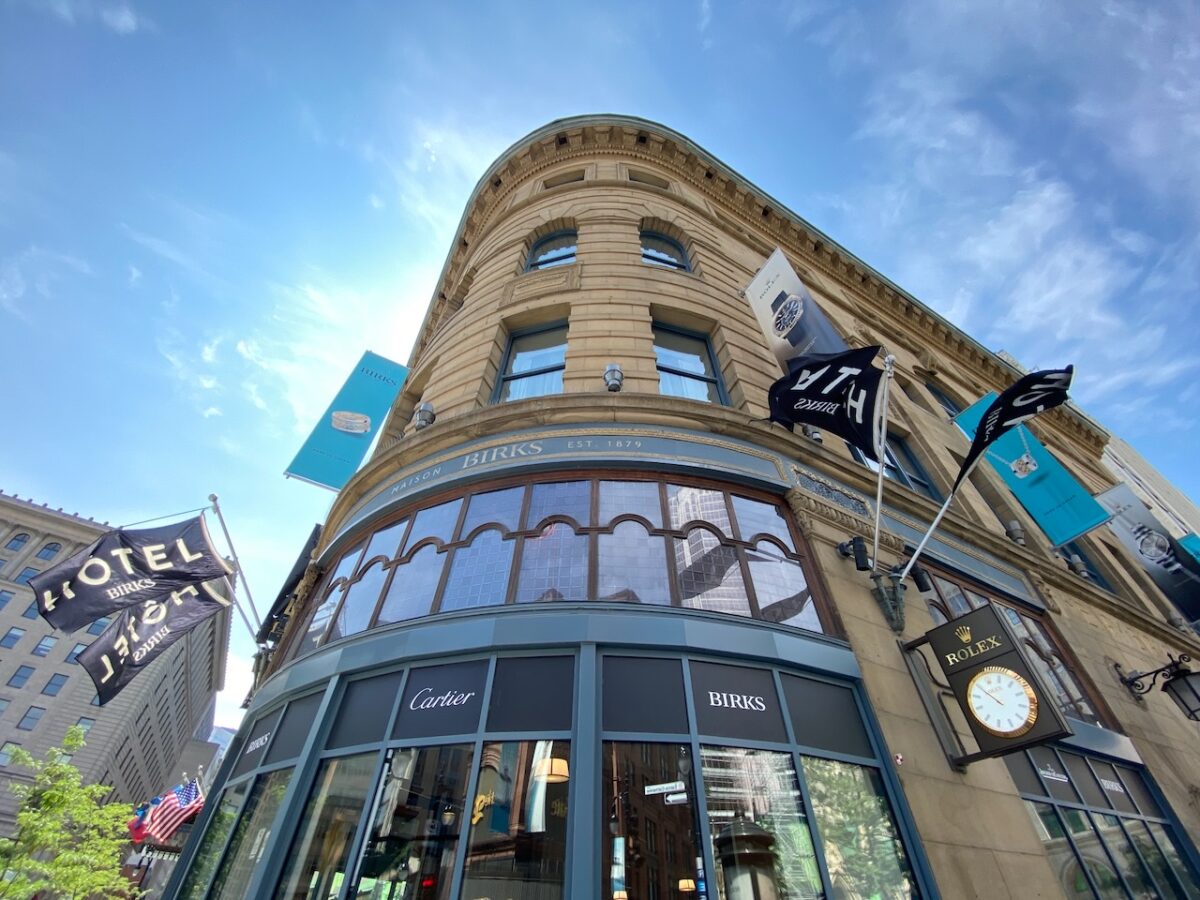
Maison Birks (620 Saint-Catherine St W, Montreal) Image: Dustin Fuhs

The alliance submitted on July 20 its brief to the Minister of Tourism and Associate Minister of Finance, Randy Boissonnault, as part of the consultations of the federal government’s Tourism Growth Strategy. 

The implementation of this measure is intended to ensure an economic recovery in the tourism sector, which has been greatly affected by the global situation of the last few years, said the alliance.

“The pandemic has affected many industries, including tourism, hospitality, and retail. The program proposed would allow international shoppers to reclaim the Goods and Services Tax (GST) and provincial sales tax on their purchases. The Alliance strongly believes this would boost both the number of visitors to Canada and the amount of money spent by those visitors.

An ongoing decline in per-capita tourist spending had already been observed, beginning in 2007, when the Government of Canada canceled the previous visitor rebate program,” said the alliance.

“A five per cent decline in this sector over the past seven years was a marked contrast to competing jurisdictions, such as the European Union, United Kingdom, or Japan, which has seen a 23 per cent increase in spending since its program was implemented in 2012. While the objective of the program is to ensure neutrality of tax treatment between tourist spending on exported goods and other exports, a VTR would enhance the international competitiveness of the tourism sector and domestic retailers, while increasing our country’s retail sales and exports, resulting in increased tourism shopping yield and a range of macroeconomic benefits.”

Image: Toronto Pearson Facebook

Just recently, the federal government dropped all COVID travel restrictions.

Bedos said that back in the Spring earlier this year the Tourism Minister invited the industry to contribute and make proposals about tourism in Canada. 

“We had started working on analyzing with the Retail Council of Canada what difference it would make to reintroduce the Visitor Tax Refund. But when Mr. Boissonnault invited contributions to re-launch the tourism industry in Canada, post-pandemic, we felt that this was time to make a serious, well-documented proposal because we strongly believe, based on experience, that in many, many other countries that the Visitor Tax Refund makes a big difference in terms of number of visitors and in terms of how much visitors spend and how much revenue it brings to the economy,” he said.

“For Canada to emerge as a destination for true international tourists, Canada needs to step up to the best international standards and when you look at how much tourism represents in terms of percentage of GDP in Canada it’s less than two per cent. But in countries in Europe like France, Italy and Spain, it’s in the area of eight per cent and this is very much due to how the country has organized the strategy to attract tourists and the Visitor Tax Refund is part of that strategy.”

Hudson’s Bay Queen Street (Image: Dustin Fuhs)

Bedos said the recent lifting of COVID restrictions in travel will have a very strong impact on the tourism industry in Canada.

“You need incentives not deterrents to attract people. A lot of people have a choice to decide which country they are going to visit. If we make it difficult or not very attractive for international travelers to come to Canada then they go somewhere else,” he said.

“And let me tell you, we have observed, and analyzed the data, since Canada dropped the Visitor Tax Refund, previous (system), that wasn’t very productive and expensive to manage for the government. The government dropped the program in 2007. Since 2007, the spend per capita for tourists has dropped year in, year out. Forget about COVID years. Of course, they were exceptions but over 15 years, every year the spend per capita has dropped between five and seven per cent. We need to bring that back up because countries like Japan, for example, or every other country of the OECD who have a Visitor Tax Refund program has seen spend per capita, how much each tourist spends when they visit, they have seen that number increase every year.

YVR Airport (Image: YVR)

“So there’s a very big missed opportunity for Canada and the economy. We estimate that actually this would represent about $1 billion of revenue for Canada which is missed because we don’t have a Visitor Tax Refund system.”

According to Statistics Canada, tourism spending in Canada grew 19.8 per cent in the second quarter, a fifth consecutive quarterly increase. Tourism gross domestic product (GDP) (+20.4 per cent) and jobs attributable to tourism (+11.2 per cent) also rose in the second quarter.

The federal agency said travel restrictions impacting tourism activities during the first quarter of 2022 were eased effective February 28, allowing the tourism sector to continue its recovery in the second quarter. More visitors from outside of Canada were admitted, and passenger air travel expanded services. With this most recent increase, tourism spending in the second quarter was 21.7 per cent lower than the pre-COVID-19-pandemic levels of the fourth quarter of 2019, added StatsCan.

Decathlon to Open 1st University Store Location in Quebec City [Photos/Interview]

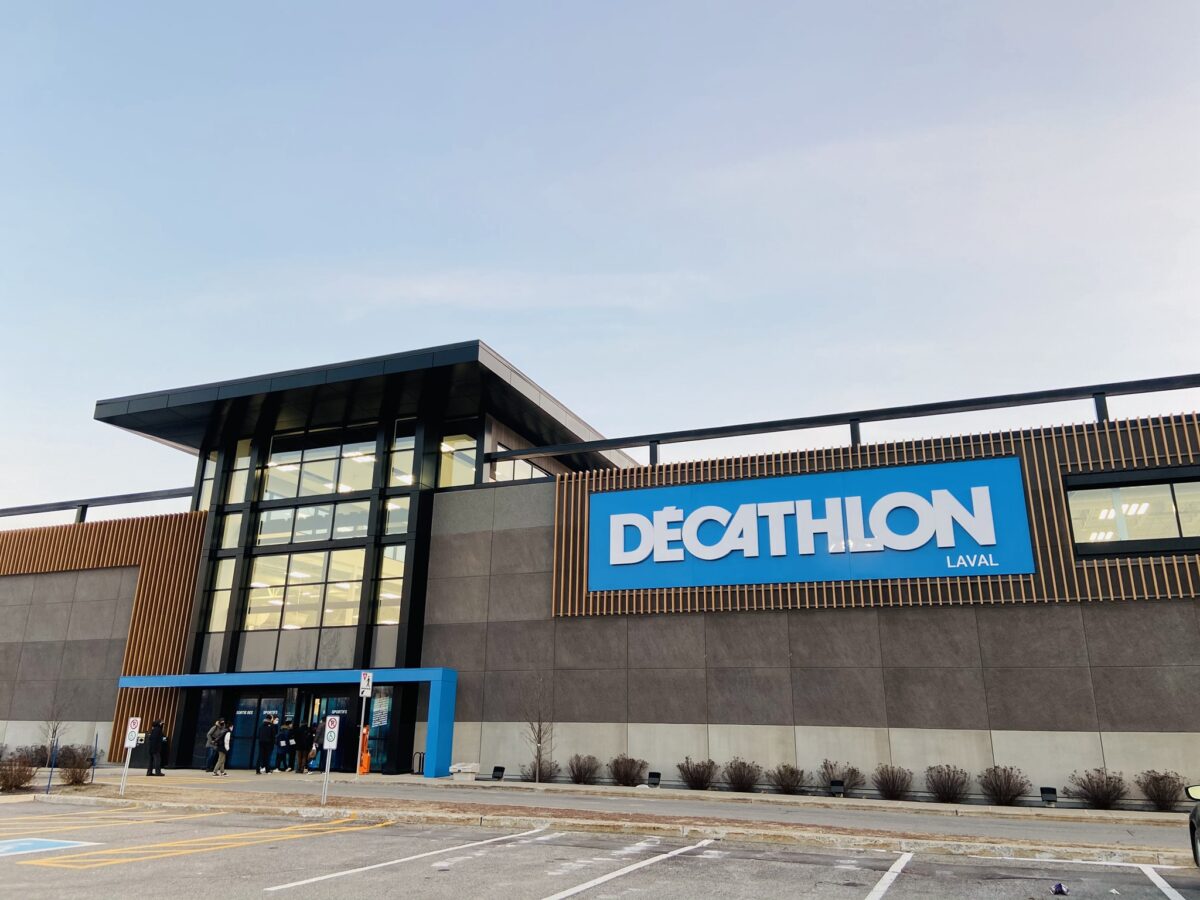
Decathlon at Laval University (Image: Decathlon Canada)

For Decathlon Canada, the globally-renowned sports retailer, it’s been a few months of non-stop big news announcements.

First, it opened a new City concept store, at Toronto’s Union Station, on September 1.

It also announced in August that it will be added to Marché Central in the Summer of 2023, one of Canada’s top performing power centres and Montreal’s premier value shopping destination. 

And now, the giant retailer plans to open its second store in Quebec City on October 16. It will be the company’s 13th store in Canada and will be located at Laval University.

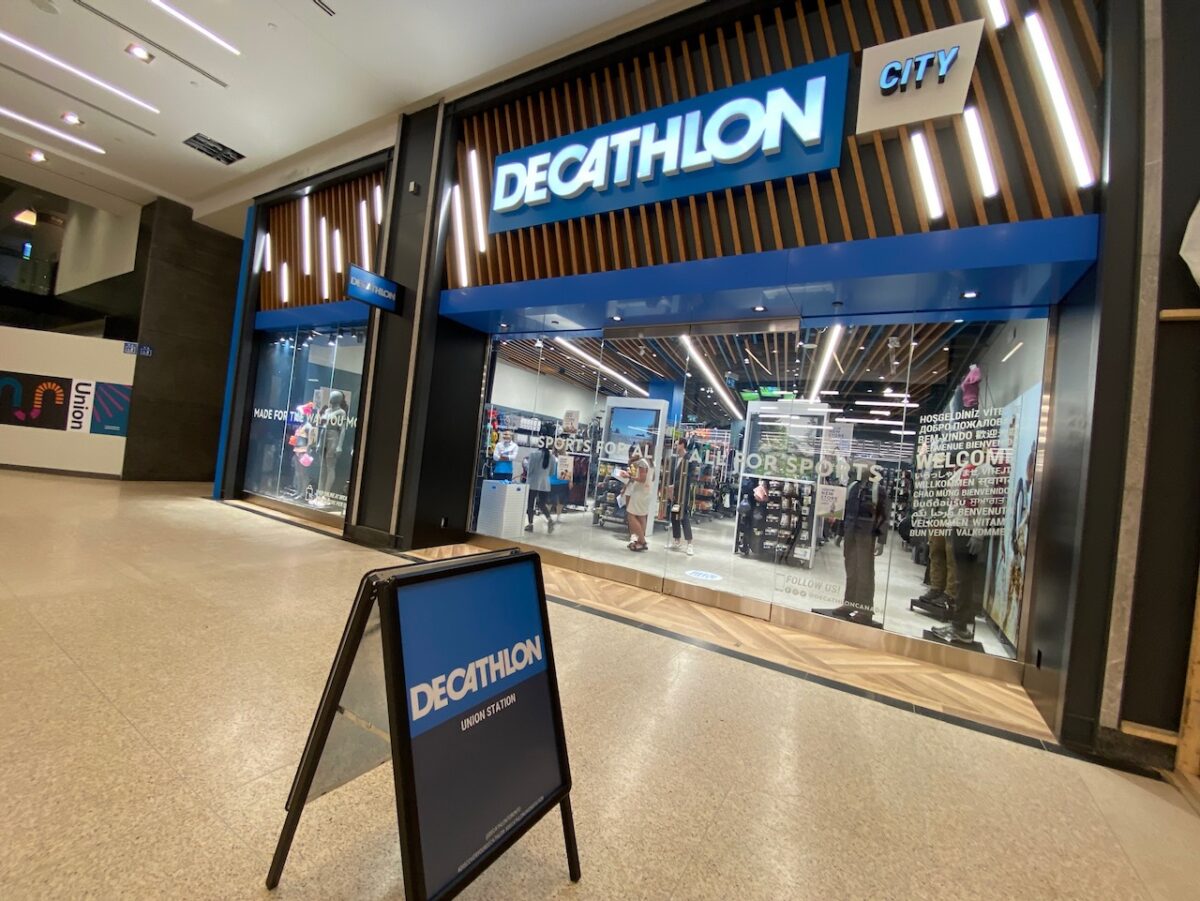
Decathlon City Union Station (Image: Dustin Fuhs)

The company also has plans to open a bigger store in the Scarborough Town Centre by mid next year. 

Romain Berquand, store leader in Quebec City, said the new concept store at Laval University gives it access to 55,000 students on campus and is more accessible by public transportation than its other store in the Quebec capital.

Romain Berquand

“For the minds of the people who live in Quebec City, Université Laval represents sports excellence. With the store we’re going to open, it’s going to be like a presentation of the product. And we want to offer the opportunity for people to try and learn about the products” he said.

“It’s going to be a little store. I think 4,700 square feet and we’re going to offer a lot of accessories. We want to help people practice sports in the sports installation of the university. With all that, we want to offer the possibility to everyone to test the products in place in the sports installation before having the chance to buy.

“We want to make people understand that price is not always a condition to have quality sports products. We will have a lot of items that will be on display so people can come, touch, try and learn about the products from our teammates who know everything about the products as well.”

Decathlon Pop-up at STC (Image: Decathlon)

The retailer’s first store in Quebec City opened in September 2019. That store is a destination store in the city and outside the city’s core. 

“Some of the people know the brand Decathlon so we have a lot of customer visits,” said Berquand. 

The Laval University store is much smaller than a typical Decathlon store. For example, the other Quebec City store in Sainte-Foy is about 50,000 square feet.

Berquand said outdoor sports is very strong in Quebec City with people having a mindset to be healthy. And people would like to have good equipment to pursue their activities. That is helping people discover many different sports.

“Quebec is a big market and a big opportunity for Decathlon. I think Decathlon is a big opportunity for people who live in Quebec. Our first store is outside of the city and it’s not really accessible because we don’t have good public transportation to go there,” he said.

“So with the opening of this store more in the centre, in the university, a very people place, I think we can meet people there and make the sports even more accessible because the price is accessible, the place where the store is is accessible by public transportation.”

Decathlon City Union Station (Image: Dustin Fuhs)

Berquand said Decathlon wants to get people moving, not only those already passionate about sports, but those who are not passionate yet but they will discover the passion with accessible and quality items.

“Decathlon is a sports store, sure, but not only for people who already do sports. It’s also for people who want to discover sports or new sports,” he added.

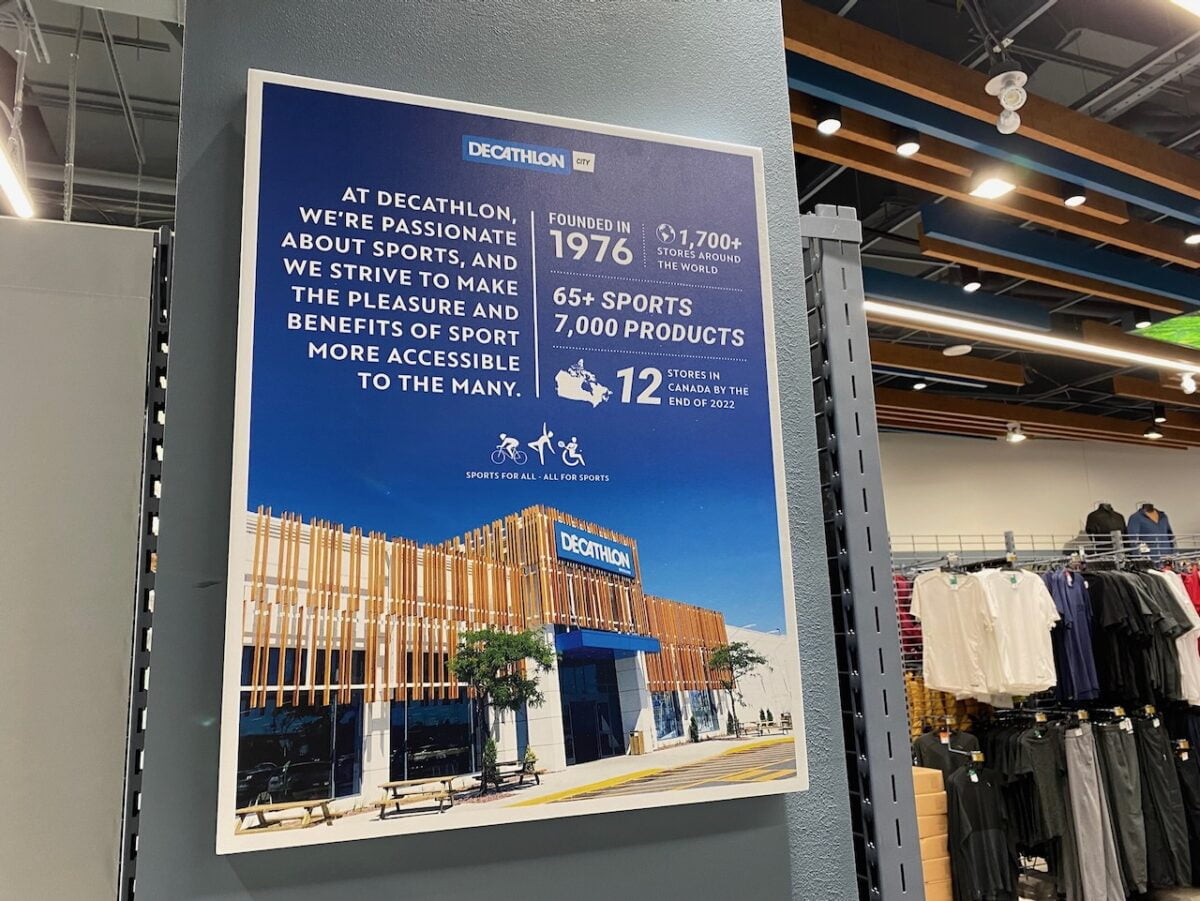
Decathlon’s Union Station store is Canada’s first City concept store with about 3,500 square feet. 

Image: Decathlon Canada

Decathlon also has four large, full-concept stores in Ontario (Vaughan, Burlington, Brampton and Ottawa). 

Bjorn Bosmans, Ontario leader for Decathlon Canada, said the Union Station store “is a great way to introduce our brand to people who live, work or commute in the downtown core.” 

“We want to get Torontonians moving through this central hub acting as a point of connection, a place for events, and see where this experience can take them,” said Bosmans. “Union Station provides us with the perfect access point for our new City store experience, and we look forward to meeting people and bringing the community together to stay active, uniting under the banner of sports.”

The Decathlon store to open in the Summer of 2023 at Marché Central will be 35,000 square feet and join a Walmart Canada Supercentre in the shopping venue’s sixth retail phase. For Decathlon, it will be the retailer’s fifth location in Montreal.

“We are so excited to be opening a new store in the commercial hub of Marché Central,” said Marion Nadeau, Regional Director of Quebec, Décathlon Canada. “This location will provide those in the Greater Montreal area with even greater access to our quality, affordable sports gear, and equipment. We are eager to build lasting connections within the community and hope to share our love of sports and active living with everyone who enters the store.”

Hurricane Fiona Fallout Continues to Significantly Impact Atlantic Canada Retailers Following Pandemic Challenges [Feature Interview]

Image: NovaScotia.ca

It has been over a week since hurricane Fiona hit Atlantic Canada and there are still thousands of customers without power. As people are focused on individual recovery, the Canadian Federation of Independent Businesses have said businesses now have to face their reality and have a long way to go for recovery.

Fiona reached Atlantic Canada on September 23rd, causing power outages and damages throughout the East Coast – leaving homes and businesses without electricity for a few days or longer. Nova Scotia has also recently declared a state of emergency for some areas that were heavily impacted to help with clean up.

The CFIB has been around for 50 years in Canada, and it is the largest business group representing small businesses across the country. Louis-Philippe Gauthier, the Vice President in Atlantic Canada for the CFIB, has already seen the impact this storm has had for small businesses. The CFIB represents 95,000 businesses across Canada and 10,000 of those are in Atlantic Canada.

Businesses Still Not Fully Recovered from the Pandemic

Louis-Philippe Gauthier

“If you look at the state of businesses before Fiona hit, we still had 51 percent of our members not back to pre-pandemic levels, and we still have 65 percent of our members that have pandemic debts. So, for businesses right now, it would not have been a pleasant hit. Some businesses have closed for an additional week and after the last two and a half years, its hard for them and will not be an easy situation for businesses to find themselves in,” says Gauthier.

“With many businesses not having electricity, the impact was direct – the reality was they were just not able to operate,” says Gauthier. “Right now, I think 98 percent is fully plugged back in. Realistically, businesses finding themselves a long time without electricity has really hurt them and they are just losing revenue.”

Halifax Shopping Centre Closes and Gives Back to Community

The Halifax Shopping Centre is just one example of how the storm impacted businesses as it needed to close its doors for a day before the storm and two days afterwards due to safety and clean up.

Stephanie Schnare

“We ended up closing our doors for two days as well as before the storm to allow people to get home and to prepare. The Shopping Centre was without power for 24 hours and so during that time frame, we had our senior staff members remain onsite for security reasons and for monitoring the building overall,” says Stephanie Schnare, the Marketing Director of the Halifax Shopping Centre.

Schnare said after the hurricane, the team went outside to clean up and see if there were damages – which luckily, there were none to the mall. In addition, the mall brought in a beekeeper to check on the beehive that was brought into the Halifax Shopping Centre back in the Spring.

“Something new this year is we introduced a beehive to the shopping centre back in the Spring, so we had to have a beekeeper come in to make sure that the beehive was ready for the storm as well – which it did great, the bees weathered through it,” says Schnare.

Opening its Doors to the Community

Once The Halifax Shopping Centre opened again two days after the storm, they wanted to give back to the community by offering hot coffee and places where people could charge their phones.

“We were very lucky, I know a lot of individuals who received a significant amount of damage; however, in our area we did have some trees and debris with a lot of smaller branches. Our crew spent the day on Sunday cleaning up outside of the shopping centre but there was minimal impact to us which was a blessing,” says Schnare. “So, when we reopened on Monday, we were also able to provide some hot coffee to shoppers coming in who were still without power. Just little things to help and make a difference for people who are still without power and giving people the chance to charge their devices, access to Wi-Fi – we were just happy to be able to reopen so we could welcome members of the community in.”

The Halifax Shopping Centre also has partnered with the Red Cross to use social platforms to raise awareness of the fundraising effort so anyone who is willing to donate can to help those who were impacted by the storm. The fundraising is expanding to PEI and Newfoundland.

“Halifax is feeling a lot of community and a lot of compassion towards those who have been impacted right now. I think it is very telling of the East Coast that there were a lot of people offering other individuals without power a warm meal, hot coffee, a place to charge their phone, and to connect to Wi-Fi,” says Schnare.

Financial Help for Businesses

Image: Nova Scotia Power

Gauthier said the government has deployed the Disaster Support Program to help those impacted. In addition, the government will also be providing a wage top up to help with cash flow for businesses. This was announced for PEI and in Nova Scotia.

“In some cases, that will be very helpful, but for some – it just won’t be enough,” says Gauthier. “Businesses will of course have to apply for insurance, but what is covered and what won’t be is another conversation and it really depends on what businesses have under their insurances. So, for us, we are waiting a few weeks before surveying our members on how the process of the disaster support is going.”

It was also just announced that Justin Trudeau is offering a Hurricane Nova Scotia Recovery Fund which will be 300 million, it is unknown as of right now about how or when people can start receiving funds but will certainly help the community. In terms of businesses bouncing back from Fiona, it will take some time and Gauthier said it really depends on what their conditions were like before the storm.

“Business owners are a very resilient bunch. When you see these storms occur annually, not at this level, businesses just have to cope with it. What else could business owners do other than just get ready and make sure they are secured for the next one.”

These types of storms like Fiona are hitting Atlantic Canada harder every year, and experts believe it will be the new normal for Atlantic Canadians and businesses will just have to continue to adjust: “the best thing we can do right now is to support Atlantic Canada businesses, continue to shop local, and support small businesses.”

Related Retail Insider Articles

Video Interview: How Downtown Retail Is Doing in Canada In A Post-COVID World

Video Interview: How Downtown Retail Is Doing in Canada In A Post-COVID World

Michael Kehoe, Broker of Record, Fairfield Commercial Real Estate in Calgary, discusses the state of retail in the downtown cores of major cities in Canada.

Kehoe talks about what he is currently seeing in the retail sector, how the industry has responded to the pandemic, what to expect this holiday shopping season and what’s happening with an upcoming big consumer real estate conference in Toronto.

The Video Interview Series by Retail Insider is available on YouTube.

Connect with Mario Toneguzzi, a veteran of the media industry for more than 40 years and named in 2021 a Top Ten Business Journalist in the world and the only Canadian – to learn how you can tell your story, share your message and amplify it to a wide audience. He is Senior News Editor with Retail Insider and owner of Mario Toneguzzi Communications Inc. and can be reached at mdtoneguzzi@gmail.com.

Interviewed this episode:

Like, Share and Subscribe to Mario Toneguzzi on YouTube!

Follow Mario:

Also check out the other series offered by Retail Insider, including The Weekly podcast and The Interview Series, which are both available on Apple Podcasts, Stitcher, TuneIn, Google Podcasts, or through our dedicated RSS feed for Simplecast and other podcast players.

Follow Retail Insider:

Share your thoughts!

Calgary Co-Op to Redevelop One of its Oldest Stores into Mixed-Use Community [Interviews/Renderings]

Calgary Co-Op (Rendering: Royop Development Corporation)

One of the oldest Calgary Co-op stores, the second in the chain, is being transformed into a mixed-use community in partnership with Royop Development Corporation.

The local development company purchased the North Hill Co-op property site, along 16th Avenue NE, in September and will turn the property into a brand new Calgary Co-op grocery store, to replace the current 60-year-old supermarket, residential apartments, parkade, and two new commercial retail buildings.

Construction is set to begin in early 2023, first focused on a multi-storey mixed-use building with 180 residential apartments and townhomes with resort-like amenities such as an entertainment hub, sound stage, podcast studio, sports club, and culinary kitchen. The new building is expected to be ready for residents as early as autumn 2024. Below the residences will sit a 55,000-square-foot commercial level, featuring a new full-service Calgary Co-op grocery store, bank, and retail spaces. 

Jeremy Thal

Two additional commercial retail buildings will be constructed to house a Calgary Co-op Wine Spirits Beer, Calgary Co-op cannabis shop, car wash and gas bar, and other service-oriented businesses. The existing Calgary Co-op gas bar will remain on the site with a new car wash to be added during the project. To accommodate an influx in shoppers and residents, two levels of parkade will also be added to the site.

“We are grateful for the opportunity.  This is a true example of a mixed-use development that will breathe new life into 16th Avenue,” said Jeremy Thal, President and CEO, Royop Development Corporation. “We are excited to be leading the transformation of 16th Avenue North East. We are more than excited to deliver what will be Calgary’s best example of a mixed-use grocery store with Calgary Co-op.”

Calgary Co-Op (Rendering: Royop Development Corporation)

Jacob Weber, Senior Vice President – Development, for Royop, said the company, which has been around for 60 years, historically has created many retail community centres throughout Alberta and Western Canada – many of them focused on grocery stores.

“Over the past five years we’ve transitioned into a pure mixed-use developer both horizontal and vertical in constructing purpose-built rental apartments and grocery stores,” he said. “We have many long-standing relations with all the grocers across the country. Calgary Co-op is no exception. We’ve had a long-standing relationship in working with them.

“They had aspirations in redeveloping this site for a number of years and they just weren’t able to pull it off themselves. So they came out a few years ago looking for someone to help them do that. They contacted us because of the relationship we have and our reputation for being able to develop a grocery store in particular. We just started working together with them, taking a look at the site. It’s a 60-year-old food store there. It’s definitely ready for a refresh and we saw a great opportunity to work with Co-op as a partner, create a new community hub for Winston Heights and Tuxedo (neighbourhoods) and beyond.”

He said the City of Calgary has invested heavily over the last few years to create a new corridor along 16th Avenue. 

“There’s a lot of positive momentum towards revitalizing this corridor for the city and we looked at it as a great opportunity to spearhead that,” added Weber. “This really is a really good opportunity to create something special for the city and that’s a lot of what we do – creating those special community, focused centres around a food store.

“The residential units will be purpose-built residential apartments.  There is very little supply of purpose-built rental in the surrounding neighbourhoods and particularly of the first class style that will be constructed.  We see our project as adding a much needed and desired housing type to the community, with the bonus of being located directly above a brand new food store.”

During construction the current Calgary Co-op store will remain operational until the new and larger, more efficient store is opened, at which time the old location will be demolished to make room for other new buildings.

“We are pleased to enter into a long-term relationship with Royop on the sale and lease back of this property,” says Damon Tanzola, Vice President, Facilities Development and Real Estate for Calgary Co-op. “This transaction is part of our redevelopment strategy which enables us to invest back into our member-owned businesses, provide enhanced amenities to the community and support the continuing sustainability of Calgary Co-op.”

Damon Tanzola

Ken Keelor, CEO of Calgary Co-op, said the North Hill store has been around for a long time with a number of renovations over the years. 

“That neighbourhood is changing over and it’s time to build a new store. You can tweak it that much. I’m hoping as we do this it will transform the store. We always talk about the goal of delivering exceptional customer experience. It’s very hard to do that in a very old store.

Ken Keelor

“This will be new. It will be modern. It will be larger than the current store and it will feature products and services that we continue to curate for the neighbourhood. The site will now have Co-op Wines, Spirits and Beer. It will have Cannabis and of course the gas bar, carwash. So it will become a bit of a one-stop shop as well for customers.”

Keelor said the new store will be 42,000 square feet. The current store is in the mid 30,000 square feet range.

The grocery chain is also currently working on adding a residential component to its store in its Oakridge location in the south part of Calgary. Other company sites could in the future see residential space added.

Owned by members, Calgary Co-op is one of the largest retail co-operatives in North America. Locations in Calgary, Airdrie, Cochrane, High River, Okotoks, and Strathmore include food centres, pharmacies, gas stations, car washes, commercial cardlocks, home health care centres, wine, spirits, and beer locations, cannabis, Community Natural Food stores and Beacon Pharmacies. With over 400,000 members, 3,850 employees, assets of $627 million and annual sales of $1.2 billion, Calgary Co-op was recognized as one of Alberta’s Top 75 Employers of 2022.

The first store opened on November 15, 1956. North Hill Centre, Calgary Co-op’s second store, opened in 1960.

Royop Development Corporation is Western Canada’s premier mixed-use real estate developer. With nearly 60 years of experience the company   manages 75 properties and has over $1.3 billion in real estate under development.