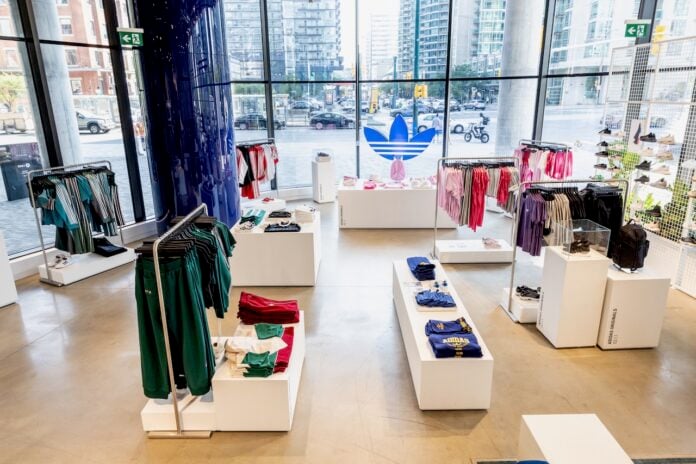
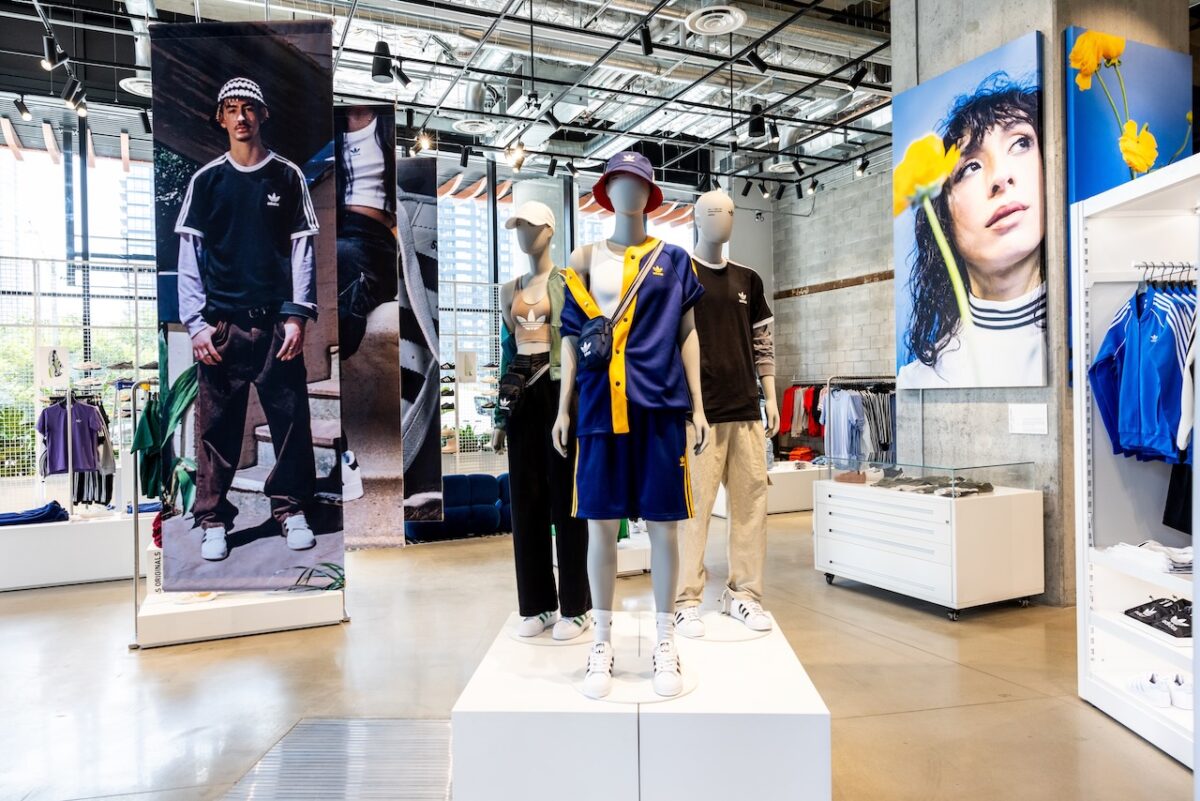
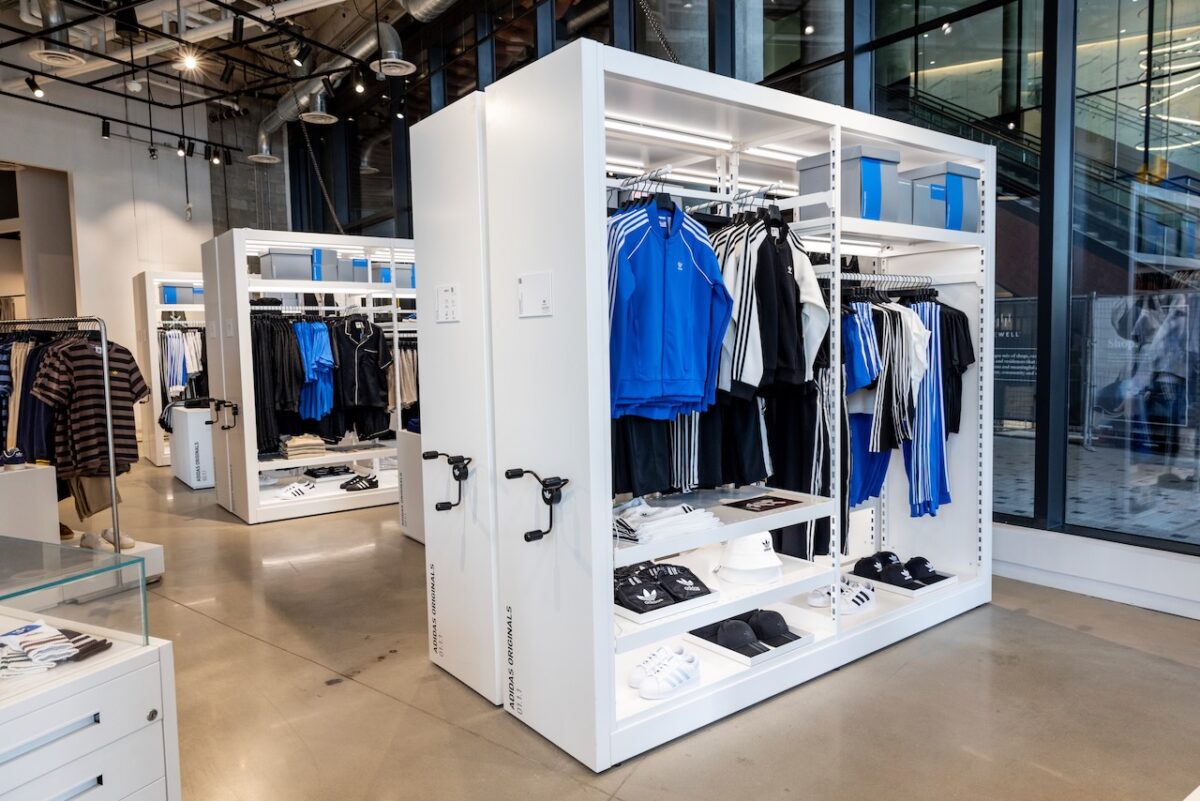
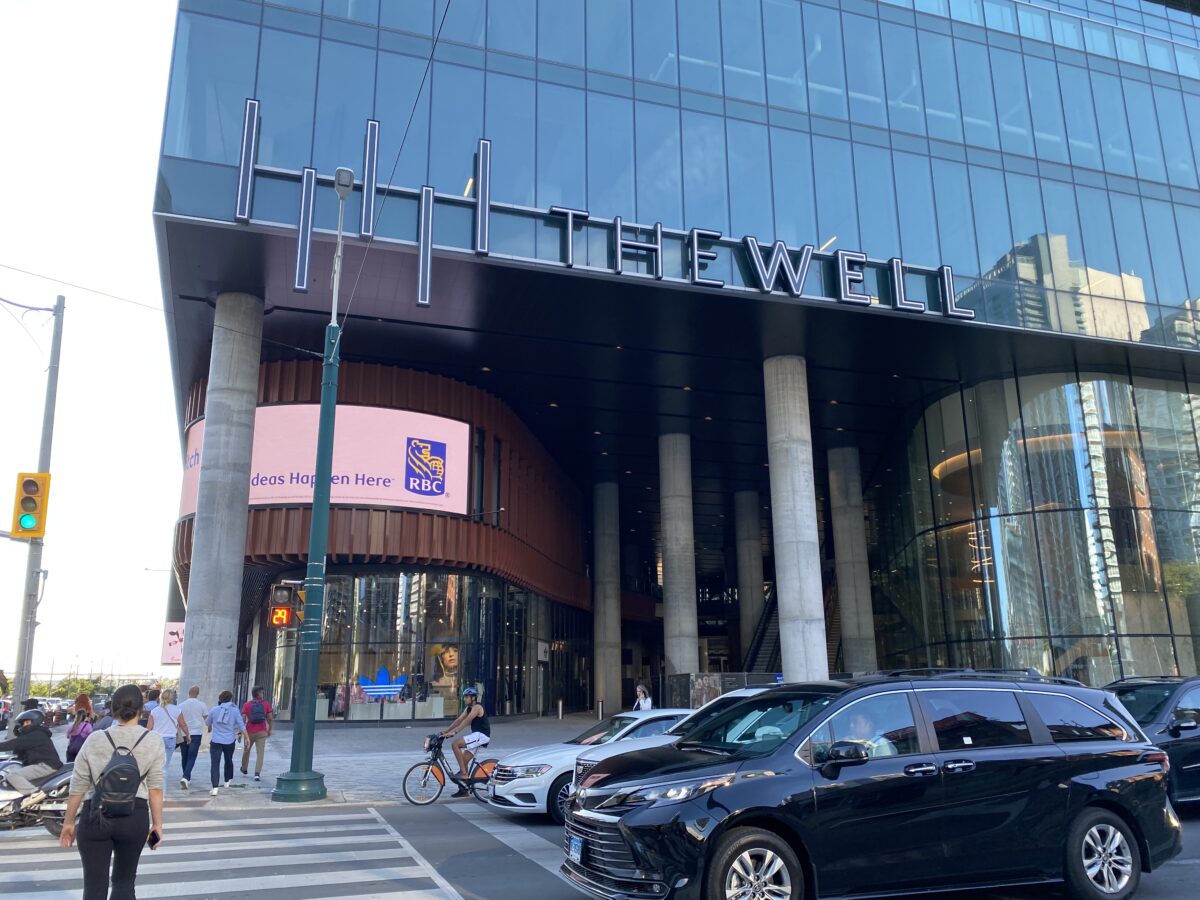
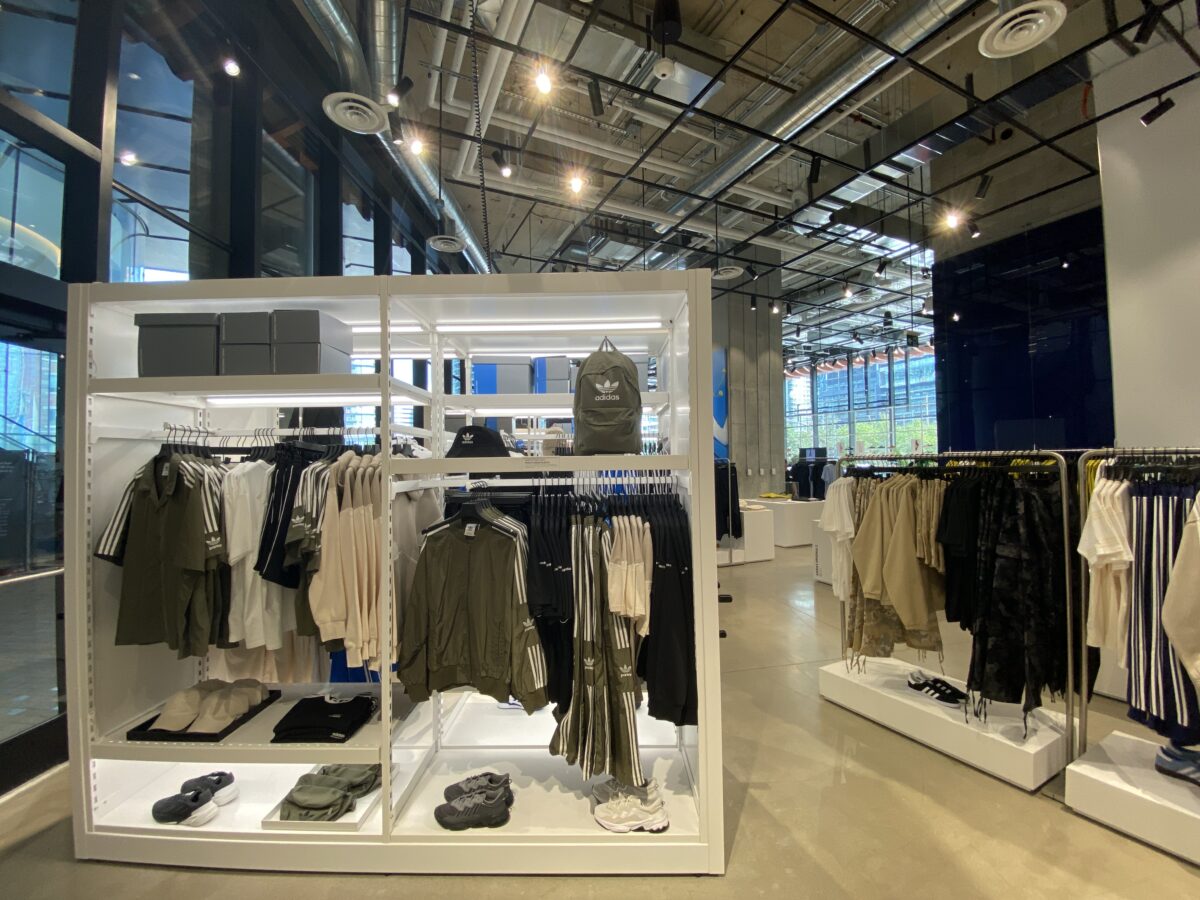
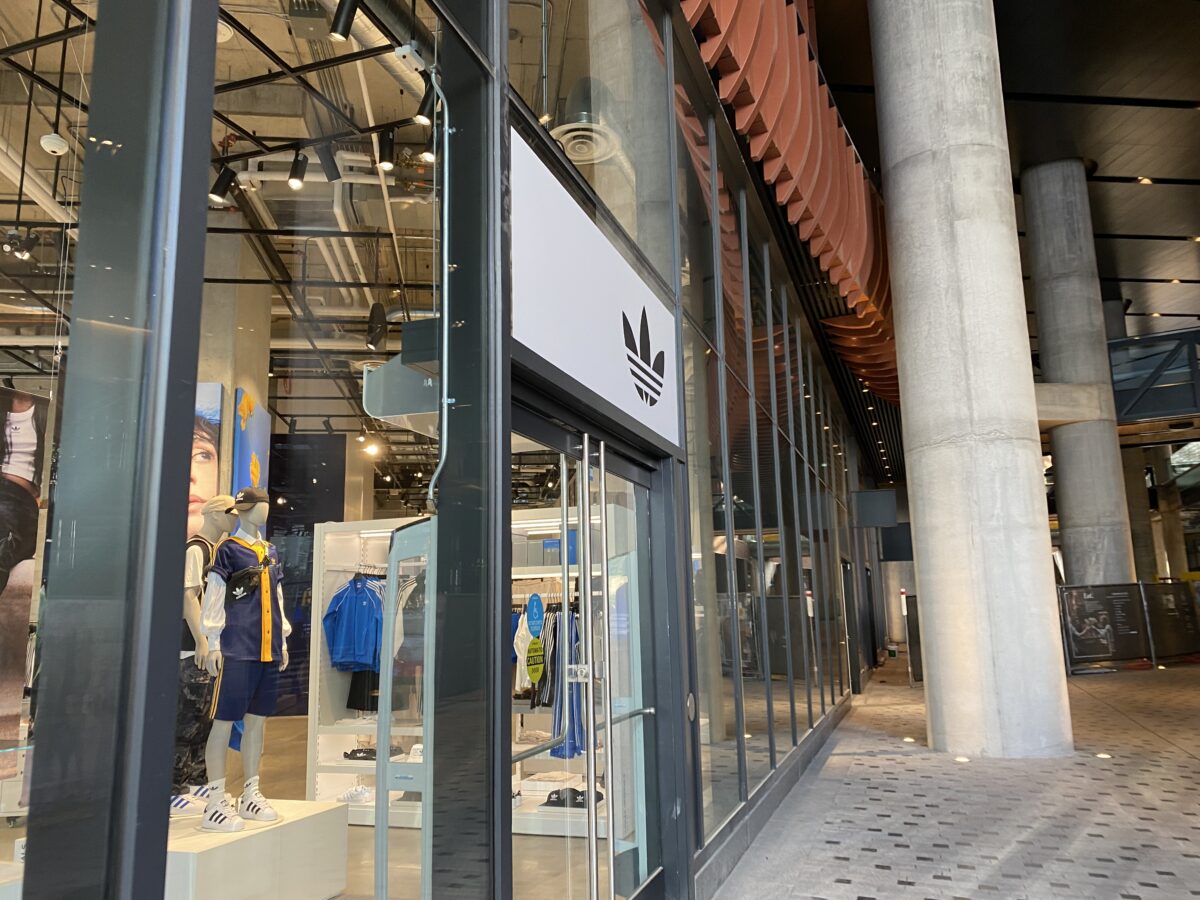
Sportswear retailer adidas is set to debut its latest flagship store at The Well in Downtown Toronto.
Retail Insider first reported on the new store back in October 2022 and after a soft launch in August, the brand’s official opening is this weekend, marking a major milestone at The Well.
The Collection: An Elevated Boutique Experience
adidas The Well (Image: adidas)
Lesley Hawkins
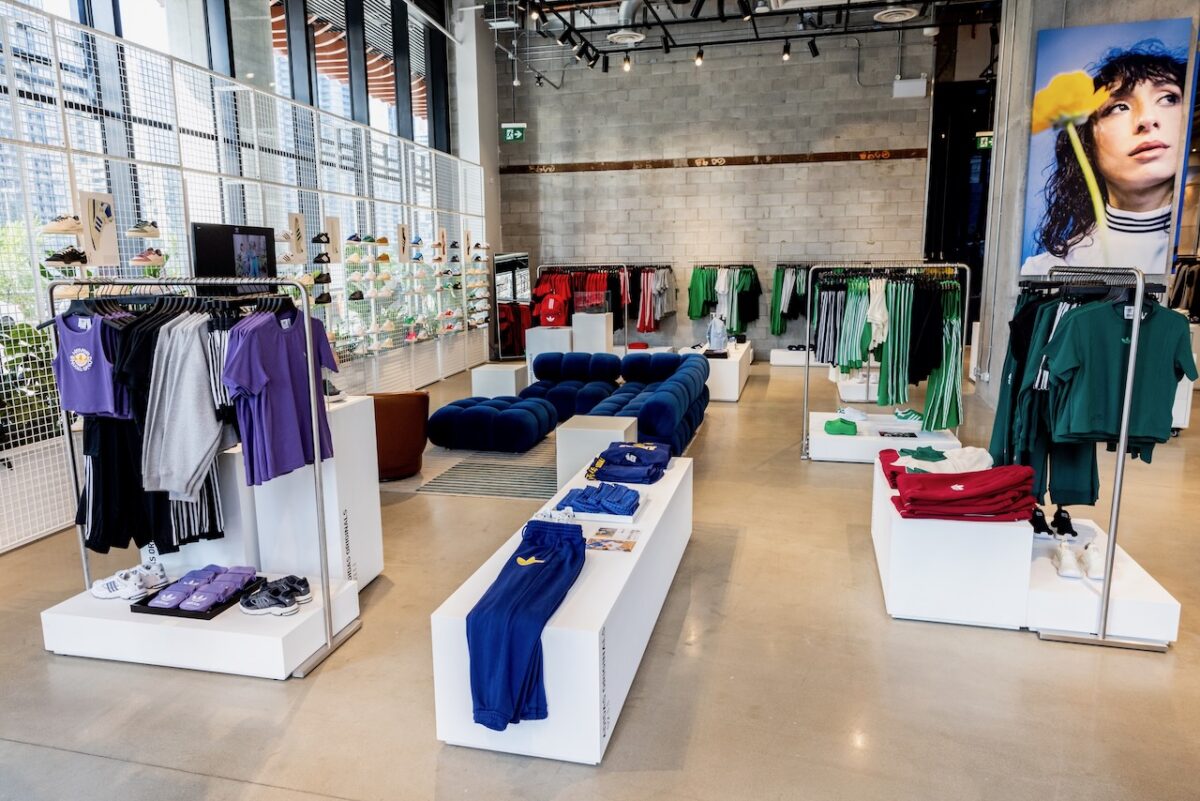
“The Collection,” as dubbed by the brand, is more than just a retail space—it’s a curated experience. “Our team of managers and sales associates are looking to create an elevated boutique environment and experience for our consumer,” says Lesley Hawkins, VP of Retail for adidas. “From an assortment perspective, The Collection will have all our hype drops, along with an elevated assortment of premium collections.”
The boutique aims to enhance the customer journey through specialized services and personalized experiences. adidas has focused on offering consumers an unparalleled array of products, from exclusive collaborations to premium collections.
Showcasing a Rich Heritage
adidas The Well (Image: adidas)
At the heart of this flagship store is storytelling. “adidas is the original sport brand and as such, has the largest footwear archives. The Collection concept is our opportunity to showcase our history, culture, and innovation,” says Hawkins.
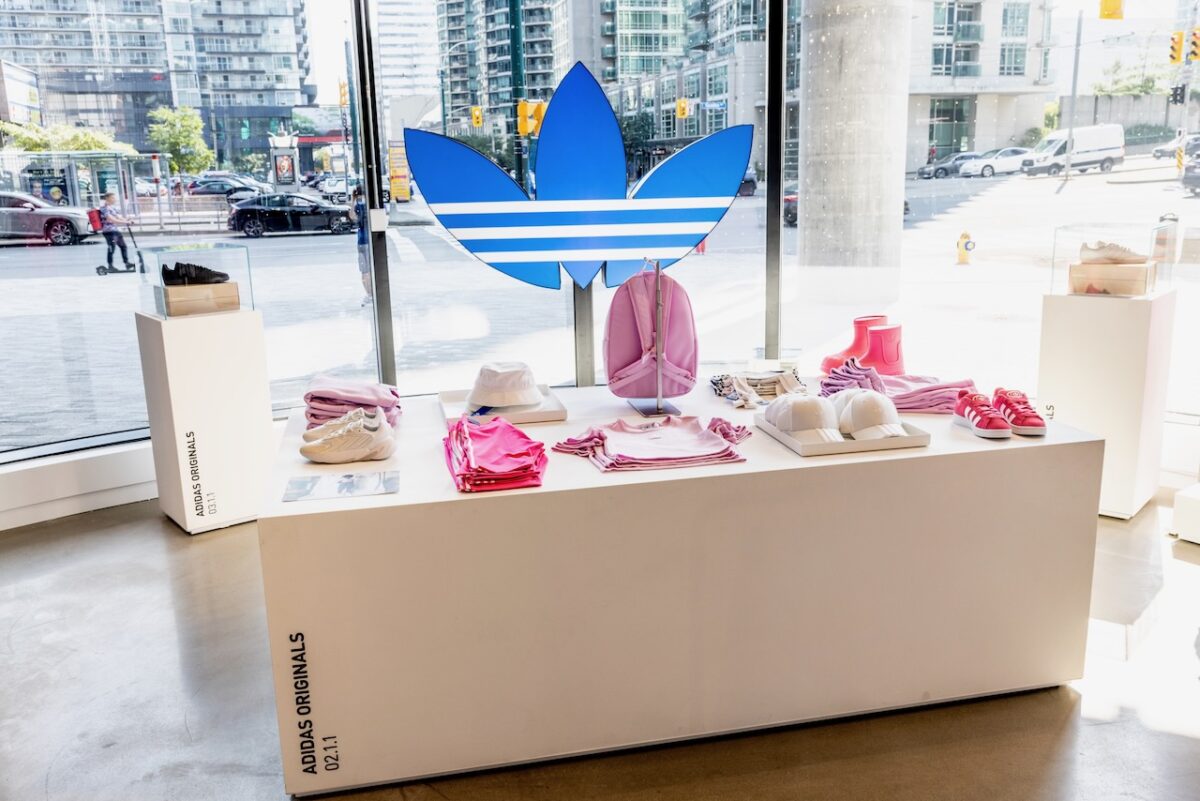
The adidas Originals line will be heavily featured, including artifacts and exclusive collaborations that weave the brand’s extensive heritage into the store’s fabric.
The Well: The Community
adidas The Well (Image: adidas)
As The Well continues to see progress and its retailers start to open, the brands will need to create a destination of events and attractions to bring tourists and local customers to the property. adidas is joining BMO and De Mello as the first retail spaces that are currently open at the Front & Spadina destination, which gives added opportunity to grow the community from the ground up.
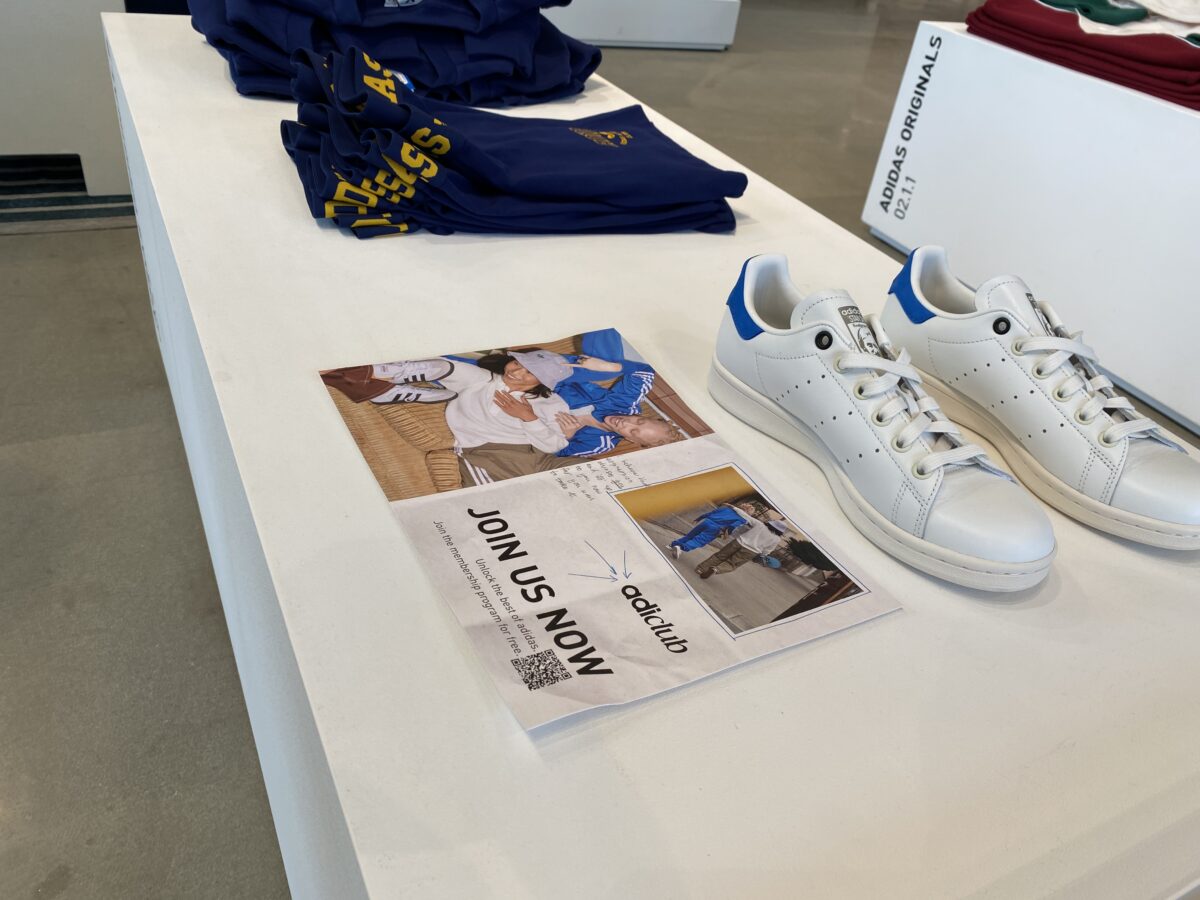
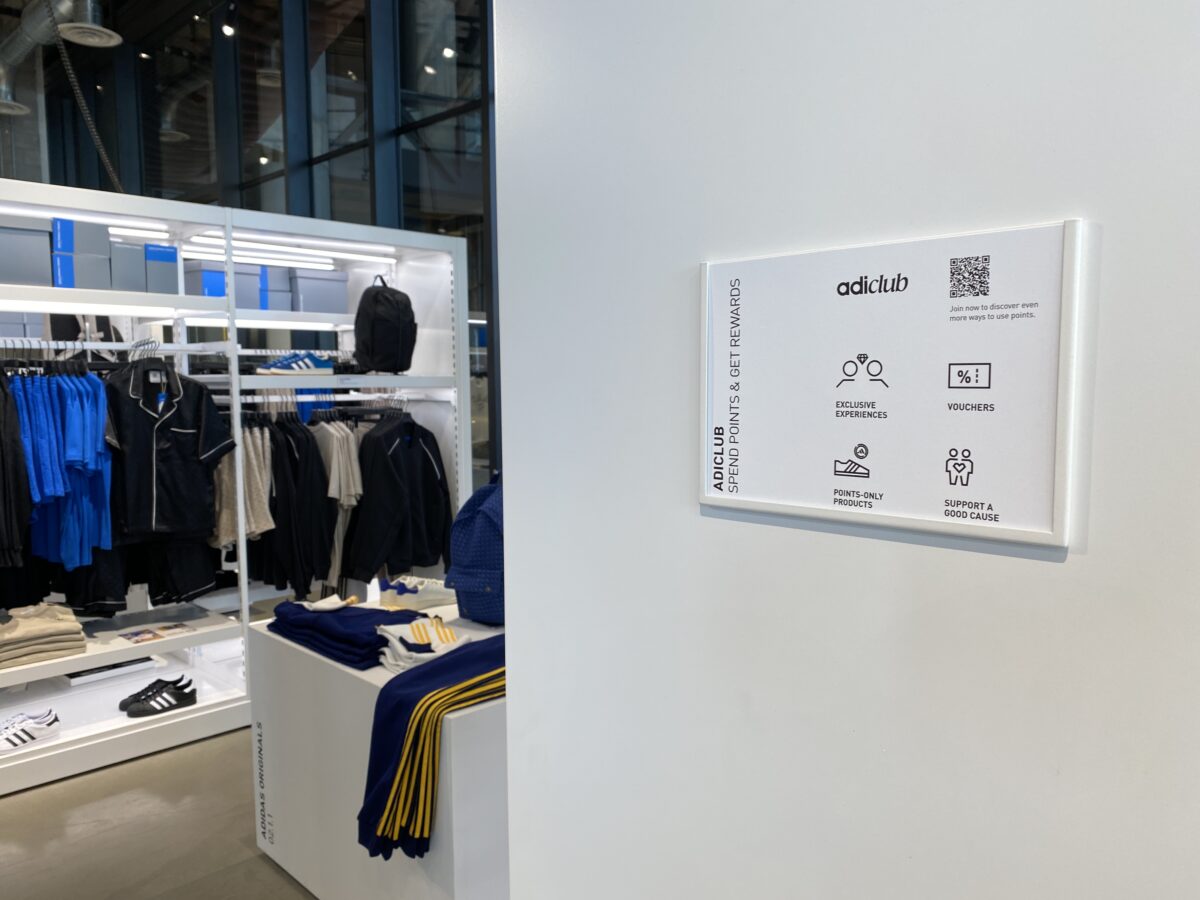
“We will be featuring the work of local photographers as they bring Toronto neighbourhoods to life through their lens,” adds Hawkins. This initiative will kick off during the grand opening weekend, with exclusive workshops and personal shopping sessions available for adiClub members.
adidas The Well (Image: adidas)adidas at The Well in Toronto (Image: Dustin Fuhs)
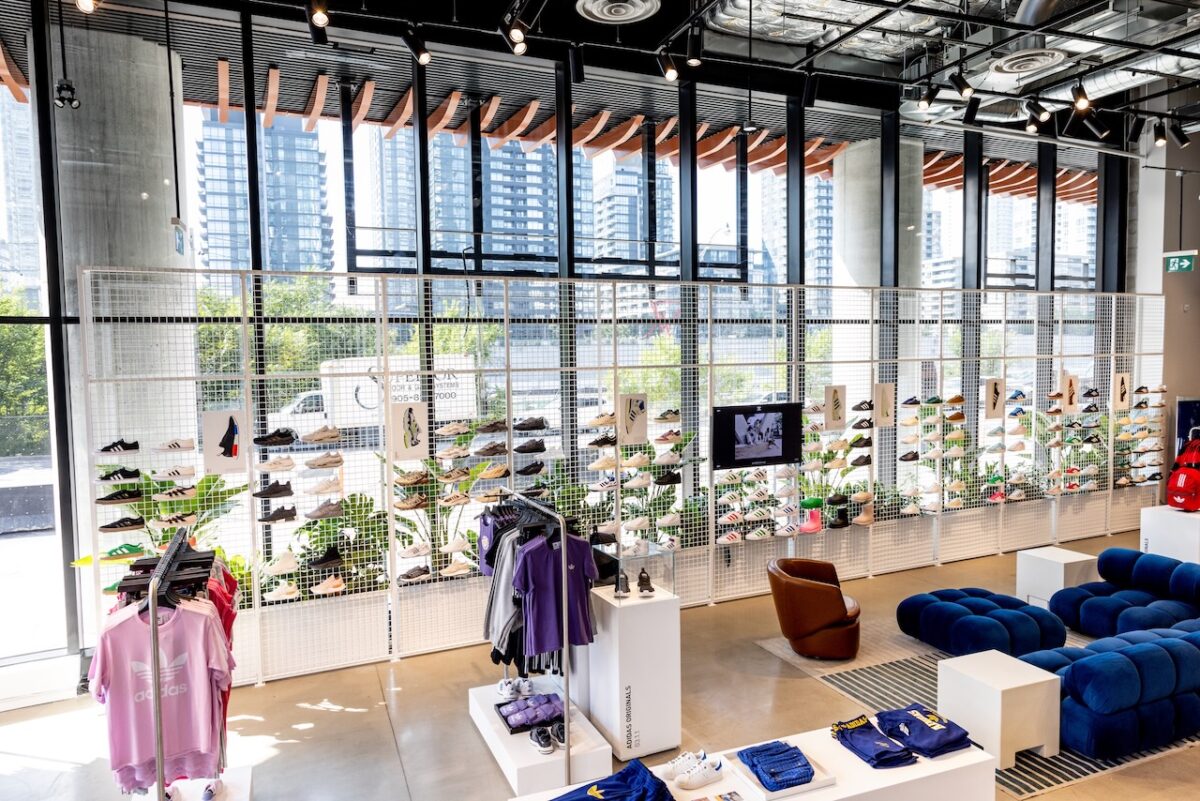
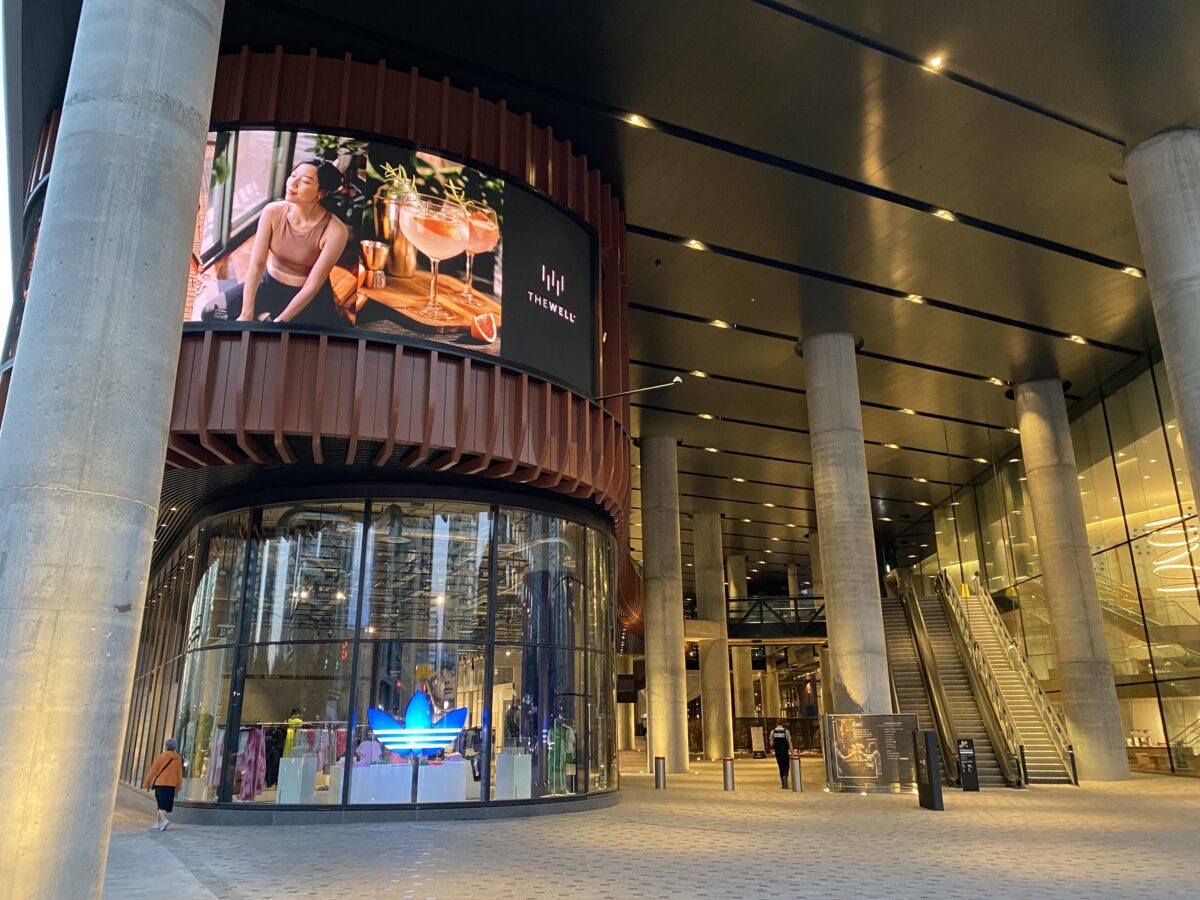
Apart from offering a customer-first shopping experience, the new store location is full of sustainable design elements. An 18-foot panoramic window overlooks the rapidly growing skyline, supplemented by smart lighting with daylight sensors to automatically adjust interior lighting.
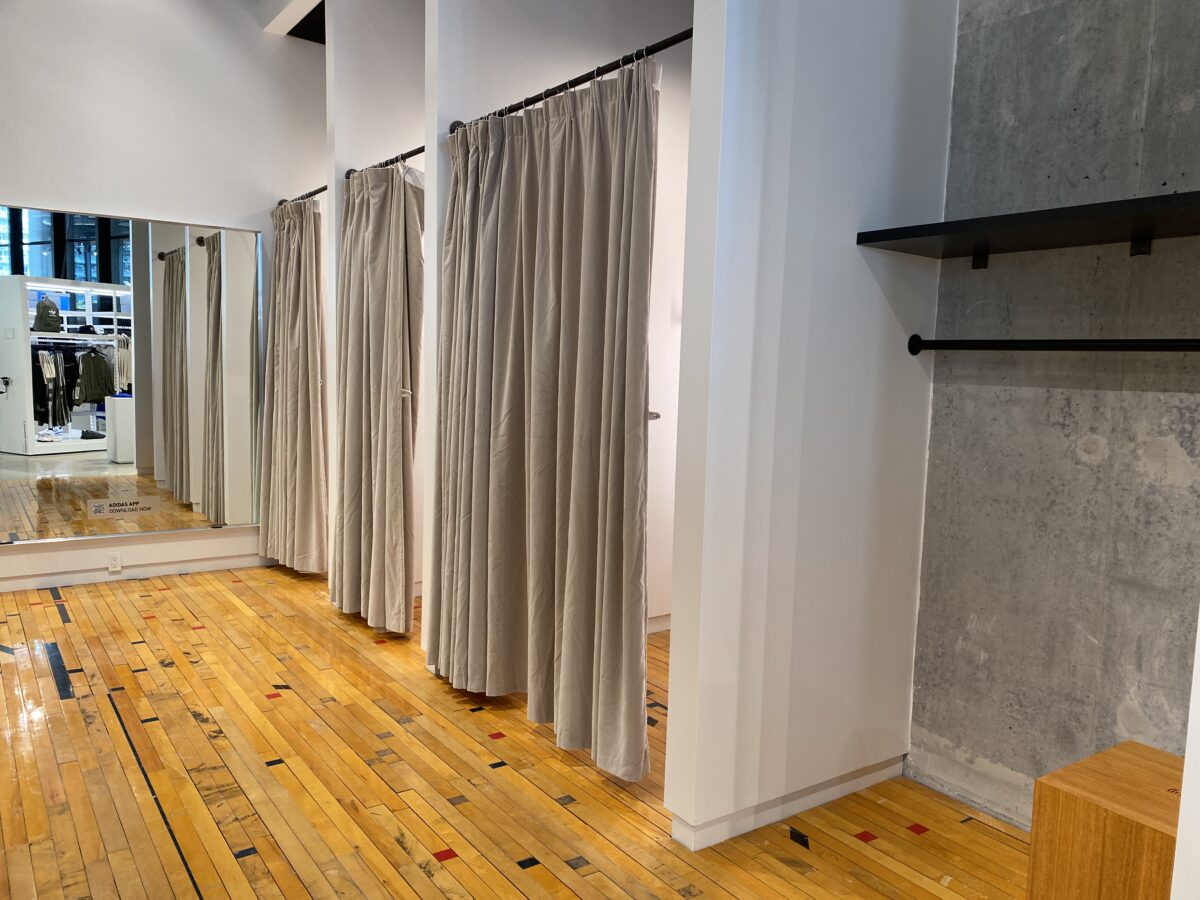
The store even sports a green footwear wall with live plants and reclaimed school gym wood flooring in its change rooms.
Soft-Opening Success
adidas at The Well in Toronto (Image: Dustin Fuhs)
Since its quiet opening last month, the flagship store has already garnered a warm reception. “Consumers from the surrounding towers have been watching this project come to life for the past two years, so it’s exciting to finally have an opportunity to showcase our vision,” concludes Hawkins.
adidas The Well (Image: adidas)adidas The Well (Image: adidas)
The grand opening of adidas’ flagship store in downtown Toronto is more than just a retail opening—it’s an opportunity for the community to come together and see the years of ideas, planning and development that went into The Well.
adidas at The Well in Toronto (Image: Dustin Fuhs)adidas at The Well in Toronto (Image: Dustin Fuhs)adidas at The Well in Toronto (Image: Dustin Fuhs)adidas at The Well in Toronto (Image: Dustin Fuhs)adidas at The Well in Toronto (Image: Dustin Fuhs)adidas at The Well in Toronto (Image: Dustin Fuhs)adidas The Well (Image: Dustin Fuhs)
Mastercard’s Commerce in the age of generative AI, which is its latest Signals report explores how the democratization of generative AI will advance the Next Economy.
In the retail sector over the next two to three years, Mastercard predicts a rise in AI-powered personal shoppers to redefine consumer convenience.
The opportunities include:
Virtual shopping experts can scan multiple channels to weed out products with bad reviews and pinpoint the most cost-effective options;
It can also harness customer data to provide personalized product recommendations; and
As consumers increasingly share biometric data like body measurements, AI assistants can curate apparel with flawless fits, reducing the volume of returns processed by retailers.
But of course there will be challenges. Virtual assistants will be increasingly privy to a wealth of sensitive data, which poses significant privacy and security risks as it invites misuse and exploitation, prompting regulatory scrutiny.
Mastercard says Klarna and Instacart are already harnessing synergies with AI-plugins and chatbots.
Darrell MacMullin
Some of these seismic shifts will define generative AI’s development in commerce over the next five to seven years with the convergence of five key trends: widespread integration, bespoke AI, data differentiators, AI-to-AI interactions, and its staying power.
The Video Interview Series by Retail Insider is available on YouTube.
Connect with Mario Toneguzzi, a veteran of the media industry for more than 40 years and named in 2021 a Top Ten Business Journalist in the world and the only Canadian – to learn how you can tell your story, share your message and amplify it to a wide audience. He is Senior News Editor with Retail Insider and owner of Mario Toneguzzi Communications Inc. and can be reached at mdtoneguzzi@gmail.com.
Also check out the other series offered by Retail Insider, including The Weekly podcast and The Interview Series, which are both available on Apple Podcasts, Stitcher, TuneIn, Google Podcasts, or through our dedicated RSS feed for Simplecast and other podcast players.
Geopolitical tensions, environmental concerns, rising prices and reduced spending power are motivating Canadians to cut back and entrepreneurs can respond, according to the latest edition of BDC’s 2023 Consumer Trends report.
Pierre Cleroux
“These trends have become part of our daily lives and we realize that they are associated with the larger trend of consuming and owning less, whether it’s a conscious choice or to save costs,” said Pierre Cléroux, vice-president Research and Chief Economist at BDC (Business Development Bank of Canada). “Today’s prudent consumers have different expectations; it’s important to keep these in mind when adjusting to shifts in their behaviour.
“This is our third study once we realized trends have changed quite a bit. The last study was 2016. And the trends are quite different this time.”
Williams Sonoma at CF Toronto Eaton Centre (Image: Dustin Fuhs)
The study found three emerging trends with important implications for all businesses, regardless of size or industry:
The client is always right. 34 per cent of Canadian businesses have redesigned the customer experience even though most consumers (90 per cent+) strongly agree that a simple and satisfying experience is fundamental to the consumer-business relationship. Proactively managing online reviews can help entrepreneurs who have a strong presence with younger generations keep track of what’s being said online and correct points of misinformation. Technology can help for many aspects of the clients’ journey, from marketing automation to e-commerce websites to identifying the right channels to effectively deliver customer service;
Less is more. Only one in 10 businesses offer a way for consumers to purchase used, refurbished, or returned merchandise. Entrepreneurs are not honing in on a trend that appeals highly to Millenials, Gen X and Baby boomers alike. In fact, almost two-thirds (61 per cent) of consumers prefer to live simply. Entrepreneurs can help their clients consume less, by rethinking their product design to improve their environmental footprint. Another prime example of appealing to different generations is to segment messages to personalize communications based on past purchasing behaviour;
It’s not me, it’s you. Consumers want businesses to inspire trust and just over half of them (56 per cent) have stopped buying from companies whose business practices they don’t agree with. To be a better corporate citizen, entrepreneurs can consider third-party certification to acknowledge they live up to the highest standards. Knowing what makes their customers tick shows that they care and helps differentiate from competitors.
Cléroux said the first trend about consumer experience is new.
“Over the last year, people have been using online much more. The expectation is really now that you should get the same experience online or in the store,” he said. “The expectation is much higher than it was.
“There’s an expectation that businesses should be a good corporate citizen. It’s the first time we’ve seen this trend. This is really new in terms of what we have been seeing over the last three reports . . . The importance of being a good citizen it’s more important for the younger generation and that’s important because that’s the next consumer. So that’s something to keep in mind.”
Amazon Pick Up at Staples Corktown (Image: Dustin Fuhs)
Cléroux said the research has indicated that consumers are slowing down in consumption.
“There’s two reasons. First is the financial pressure. And the second is about 40 per cent were saying they want to reduce their consumption because they worry about the environment. If we go back to the financial pressure, there’s no doubt that the last year has been hard on consumers. Inflation has been high. Interest rates have been increasing. People pay more. A lot of Canadians are paying more every month for their mortgage so they don’t have the same amount of money to spend,” he said.
“This is very related to the current situation. The pressure on people’s wallets is really there and that’s what we see in the result of this third report.”
Cléroux said that in this environment businesses have to give more options to the consumer who are looking to reduce their spending.
The BDC said that back in 2016 when it conducted a similar study, Millennials were driving the hyper-connected consumer revolution, sharing platforms were only emerging and there was a need to better target consumers with personalized messages and experiences.
This report said few businesses (29 per cent) are taking a generational approach to the products and services they offer, although behaviour, values and beliefs vary by age. For instance, environmental considerations are more important for Millennial consumers. Taking a generational approach to understanding purchase behaviour can be valuable to businesses looking to better target their customers, as not all trends are expressed the same way, it said.
Overall, there have been many improvements in Montréal’s retail sector as vacancies have decreased with foot traffic and sales continuing to climb, says a new retail report by commercial real estate firm JLL.
It said consumers are starting to feel the effects of the Bank of Canada’s interest rate hike campaign. However, notable retail-friendly developments are currently underway, which will serve to facilitate and encourage commercial activity on the island and beyond.
Jesse Provost
Jesse Provost, Associate Vice President of the Retail Advisory Group for JLL, said the retail scene is exciting in Montreal these days with new projects such as Royalmount with new to market retailers coming to the city.
There’s also quite a bit of activity on the iconic Sainte-Catherine Street with many retailers looking to locate on that busy retail area.
“By and large, I would say it’s pretty exciting and a good time for retailers generally in Montreal. That being said, obviously the economy is what it is. We’re seeing interest rates continuing to increase. So people are being more cautious with their spending. Retailers are very well aware of this,” said Provost. “They’re trying to navigate those choppy waters for the next couple of quarters until we really see results of all of this at the end of it all.”
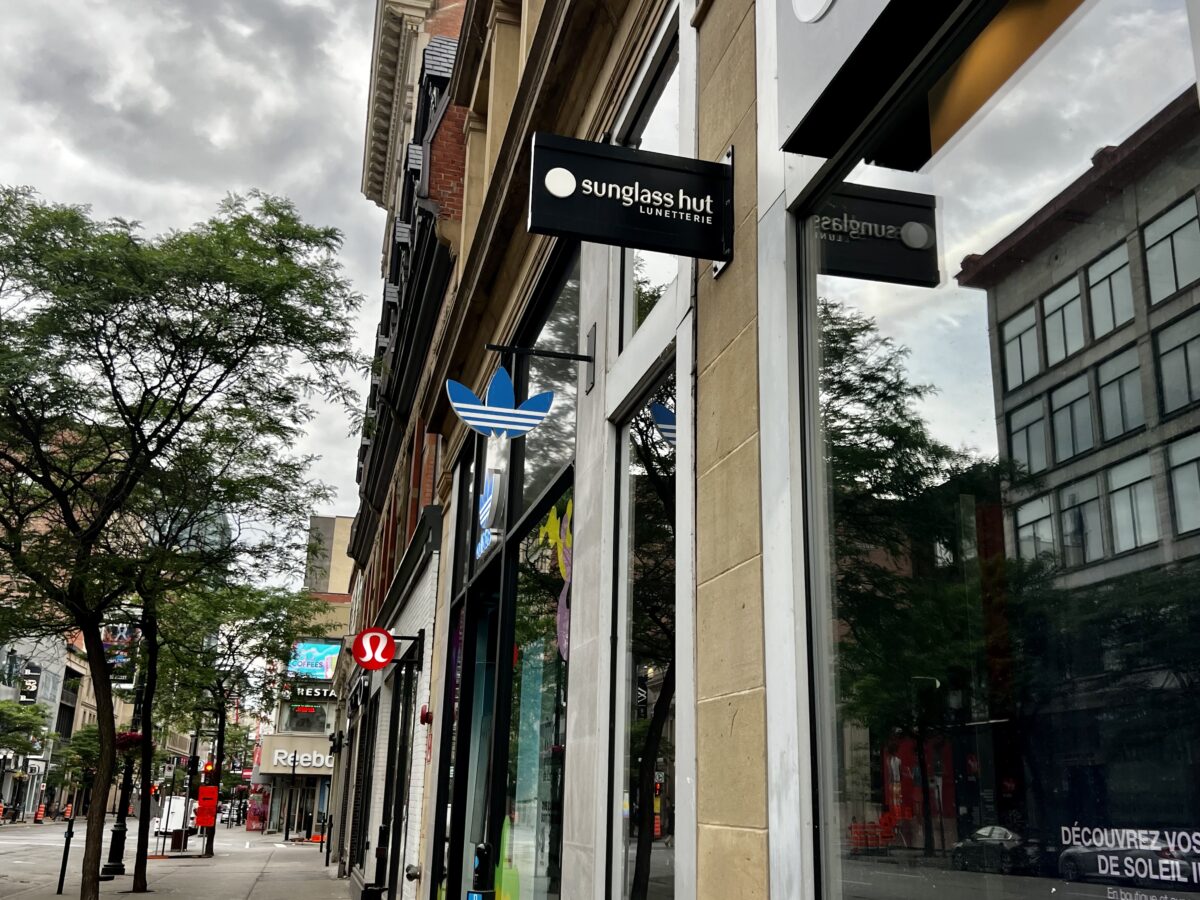
Sunglass Hut and Adidas on Saint-Catherine St W, Montreal (Image: Maxime Frechette)
Retailers continue to be attracted to Montréal.
“Montréal is culturally a very attractive city. For some brands they do want to bank on that reputation that Montréal has of being a city of culture, a city of fashion. The prominence of Sainte-Catherine Street. If you’re going to open in Montréal you’re going to want to be on Sainte-Catherine Street eventually. It might not be your first stop, but obviously it’s something you’ve got to keep in mind,” said Provost.
“I think in the past Sainte-Catherine Street has had notable vacancy. With the way the retail market is today and how some retailers have been quite successful coming out of the pandemic, I think it’s a great opportunity for them to start looking and settling in our beautiful city. Definitely something all retailers should be doing.”
The JLL report said air travel in Montréal has seen a remarkable uptick, reaching levels rivaling pre-pandemic times. Hospitality data in Montréal paints a similar picture. According to AHGM and Tourisme Montréal, hotel occupancy in Q4 2022 stood at 68.4 per cent, a mere 1.5 per cent lower than in Q4 2019. It’s worth noting that the current cost of renting a room in Montréal is 22 per cent higher than in 2019, indicating a robust comeback for tourism, as well as sightseers’ willingness to spend money in search of experiences in the city, said the report.
“Thanks to a renewed interest in experiences, Montréal restaurants enjoyed a marked surge in visits in 2023. OpenTable data reveals that Montréal has outperformed both Toronto and Vancouver in terms of restaurant reservations, with a notable 12 per cent increase between Q2 2022 and Q2 2023. In contrast, Toronto and Vancouver only experienced modest growth, each showing a mere one per cent increase during the same period,” said JLL.
“The growth in downtown foot traffic can also be attributed to the increased frequency of college and university students attending school onsite. Between Winter 2022 and Fall 2022, the proportion of in-person learning vs virtual learning increased by nine per cent, reaching 96 per cent. The positive momentum spans multiple semesters and has enabled students to physically attend school at a pre-pandemic pace.”
Image: mtlcentreville.ca
While downtown Montréal has witnessed the return of tourists and students to levels comparable to pre-pandemic times, the reintegration of office workers into their workplaces has been notably slower, indicating a lasting presence of hybrid work models, explained the report.
“According to Altus, the adoption of fully onsite working policies among employers has experienced significant growth between Q1 2022 and Q1 2023, almost tripling from five per cent to 13 per cent. While the YoY increase is noteworthy, there is still vast progress needed to reach pre-pandemic workplace attendance levels. Unless office workers revert to their pre-2020 levels of workplace attendance, substantial growth in future foot traffic in downtown Montréal remains unlikely,” it said.
The increase in foot traffic has meant improved retail leasing activity in the market. The vacancy rate is still above pre- pandemic levels, however, progress has been made in recent quarters.
Citing Statistics Canada data, JLL said net effective rents have rebounded and are now 3.8 per cent higher than they were in 2019. Compared to Toronto and Vancouver, rental rate growth in Montréal has been tamer, with these cities seeing increases of 5.5 per cent and 8.8 per cent respectively over the same period.
“It’s expected that rents will increase in the coming quarters, however, the Bank of Canada’s fiscal tightening campaign may limit growth potential,” added the report.
JLL said that recently the developers of Royalmount – Montréal’s upcoming shopping and dining destination unveiled new updates about its tenants and development. Several luxury brands including Yves Saint Laurent, Jimmy Choo, and David Yurman will be establishing their first-ever stand-alone stores in Quebec. Furthermore, Michael Kors and TAG Heuer will also join Montréal’s next luxury hub in 2024, which will include over 170 stores and 60 restaurants once complete.
Royalmount (Image: CarbonLeo)
Seeking to boost its connectivity to Montréal’s transit system, Carbonleo has begun construction on a footbridge spanning over 200 metres that will connect the shopping district to the De la Savane metro station. Once complete, the pedestrian bridge is expected to accommodate nearly 10 million pedestrians annually and encourage car-free foot traffic, added the report.
“In late July, Montréal saw the long-awaited arrival of its most anticipated transit endeavor since 1966 – the REM LRT network. This significant milestone brought forth a portion of the network, linking the South Shore section via five stations to downtown Montréal. As a result, South Shore suburbanites can now access the heart of the city within 18 minutes,” said the report.
“Next year, the REM project will add more than a dozen new stations, significantly improving connectivity between the suburbs and Montréal’s downtown core. Among these stations, the McGill REM station is projected to be the network’s second busiest, accommodating around 25,000 commuters daily. The future station is expected to provide a boost to foot traffic and sales to both the Eaton Centre and retailers along Sainte-Catherine Street.”
According to JLL’s Sainte-Catherine Street Retail Analysis, the street has adapted to changing spending habits. The street has seen an increase in its share of clothing and footwear operators on a 900-metre span between 2019 and 2023, which bodes well as these categories have been trending well in the GMA for the past few years.
“Between Q2 2022 and Q1 2023, Montréal Centre Ville reported a two per cent decrease in the street’s vacancy rate, while the urban mall vacancy rate experienced a more substantial drop of seven per cent, reaching 12 per cent. Furthermore, pedestrian activity surged by an impressive 115 per cent along three prominent intersections between Q1 2022 and Q1 2023, indicating a positive recovery in foot traffic,” said the report.
“These positive trends are expected to continue, supported by recent and upcoming developments. The opening of the new Nike store, the introduction of future REM stations, and an ongoing redevelopment project aimed at widening sidewalks and adding street furniture between Mansfield Street and Atwater Avenue will likely contribute to the continued growth and attractiveness of the area.”
Future MUST and Home Société at Home on Power in Toronto (Image: Dustin Fuhs)
Downtown Toronto’s retail landscape is about to get a trendy update.
Quebec-based home furnishing retailers MUST and Home Société will be opening in a condo development in the Corktown neighbourhood of Toronto in 2024. Construction hoarding has been installed at the ‘Home on Power’ development at the corner of Parliament and Adelaide St E.
Both brands will have their own separate entrances.
Future MUST and Home Société at Home on Power in Toronto (Image: Dustin Fuhs)
The move from the brand comes as downtown Toronto is experiencing a surge in condo developments that are completing or near-completion, which gives the G2MC-brands a ready-made customer base for its interior home decor solutions.
G2MC is a furniture retailer operating under the Maison Corbeil, Jardin de Ville, Galerie du Meuble, MUST, and Home Société banners.
Future MUST and Home Société at Home on Power in Toronto (Image: Dustin Fuhs)
In addition to the new location, the brand has confirmed that there will be another opening in Ontario. A standalone MUST store will join the retail offerings at Heartland Town Centre in Mississauga, opening at the end of 2023, making it the first standalone MUST store in Ontario.
Retailers Adapt to Urban Living Trends
Future MUST and Home Société at Home on Power in Toronto (Image: Dustin Fuhs)
MUST and Home Société aren’t the only brands targeting the condo dwellers. The company is setting up urban storefronts as a way to directly appeal to the downtown residents who live in compact spaces but still have disposable income to outfit with quality and style.
The brand aims to fill the niche by opening up a store in an area of the core that’s seeing densification and long-term development.
Sister concept Jardin de Ville has seven locations in Quebec and Ontario, including a store in the St. Lawrence Market neighbourhood.
A Retail Ecosystem Grows in Home on Power
Staples Corktown – Photo by Dustin Fuhs
‘Home on Power’ has started to see residents move in over the past few months, giving retailers in the area a long-term view of the potential customer base – including Staples. The office retailer underwent a facelift in 2022, shifting from its former King Street East location to a new format store on Richmond Street, which was caused by the Ontario Line subway construction.
The new Staples storefront focuses on serving small businesses and entrepreneurs, even including a podcast recording studio and a Mos Mos coffee bar.
Aisle 24 Set to Join the Retail Lineup
Home on Power will also be home to Aisle 24, a rapidly expanding Canadian cashier-less convenience store concept. Known for its innovative technology, Aisle 24 has been on an growth plan, opening locations in trendy Toronto neighbourhoods like Liberty Village, Entertainment District, and The Distillery District. The brand recently made its Alberta debut with two new stores in Edmonton.
Aisle 24’s inclusion in the ‘Home on Power’ complex adds to the project’s image as a destination for urban retail innovation.
The Backstory on Parent Company, G2MC
MUST West Island (Image: MUST)
MUST and Home Société are a part of the G2MC portfolio, a heavyweight in the Canadian furniture and decor market. Formed through the merging of several Quebec-based brands—Galerie du Meuble in 2012, Maison Corbeil in 2013, and Jardin de Ville in 2015—G2MC has expanded its footprint to 17 stores across Quebec and Ontario. The company also operates three e-commerce platforms and boasts a diversified portfolio of brands, signalling its strong position in both mid and high-end markets.
Maison Corbeil will be celebrating its 50th anniversary this year. The brand was founded in 1973 by Colette Corbeil and her husband Raymond and continues today with her sons Éric and Stéphane. Retail Insider will be profiling the retailer as more details become available for the celebration.
As G2MC gears up to open its new downtown Toronto location, it’s clear that the city’s retail landscape is in the midst of a transformation. Businesses are increasingly focusing on urban-centric strategies to appeal to a new generation of city dwellers, and MUST has the opportunity to position itself at the forefront of this trend with the right investment at the right time.
Retail Insider is streamlining its Canadian retail news from around the web to include a handful of top news stories that can be viewed quickly during the day. Here are the top stories from the past three days.
The retail industry has faced its share of challenges in the past few years. Recognizing the need for innovation and resilience, April Sabral, founder of retailu and a prominent name in retail leadership, proudly announces the Rise Up Retail Summit.
Slated for September 19th, this six week virtual event is a personal growth conference specifically crafted for retail professionals, taking place weekly. These live sessions will run for six weeks and is slated to be the retail summit not to be missed. Short, on topic and filled with tactics and strategies with the best of the best.
The inaugural Rise Up Retail Summit will be the first conference dedicated entirely to professional growth within the retail industry, according to organizers. The summit promises to deliver inspirational talks and practical insights for attendees looking to advance their retail careers.
The speaker lineup will feature seasoned retail executives, innovators and experts representing diverse fields within the industry. Like Liza Amlani, Kimberly Lee Minor, Steve Worthy, Dean Correai to name a few. Each will share strategies, innovations and leadership principles geared toward the distinct challenges and opportunities facing today’s retail world. Through keynotes, workshops and discussions, attendees can expect an in-depth exploration of relevant topics impacting operations, technology, customer engagement and company culture. The summit hopes to equip retail professionals at all levels – from rising store associates to experienced leaders – with the tools and motivation to drive change.
Sabral’s commitment to the retail industry spans three decades, during which she has led stores and operations teams with unparalleled dedication and vision. “The retail landscape is in a state of flux, and professionals within the industry are seeking direction, inspiration and strategies to navigate these changes,” she said. “With the Rise Up Retail Summit, we aim to provide a platform that addresses these challenges and empowers retail professionals to rise above them. This summit is the culmination of collaborative efforts, bringing together some of the brightest minds in the industry.”
Here are some statistics to prove why this is so important and now more than ever, to WIN the year igniting and inspiring the leaders of leaders could just help you WIN the year.
Leadership development in the retail industry impacts sales results and retention in the following ways:
Improved Employee Engagement and Satisfaction:
-Engaged employees are 17% more productive.
-High engagement can lead to a 20% increase in sales.
2)Reduced Employee Turnover:
-Replacing an employee costs about 16% of their annual salary.
-Leadership development helps retain teams.
3)Enhanced Customer Service:
-Investing in customer experience can result in significant financial gains.
-Leadership development improves service through effective team management.
4)Increased Sales Performance:
-Effective sales managers boost sales growth by 20%.
-Sales-focused leadership development improves team performance.
5)Adaptation to Industry Changes:
-Strong leadership is crucial for adapting to evolving retail landscapes.
-Leadership development fosters strategic thinking and adaptability.
6)Talent Pipeline Development:
-Organizations with robust leadership development are more adaptable to industry changes.
-It builds a pipeline of future leaders for sustained success.
The decision to host the Rise Up Retail Summit as a virtual event ensures accessibility for retail professionals worldwide, allowing for a diverse and global exchange of ideas. It also underscores the importance of adaptability and forward-thinking in today’s digital age, qualities that Sabral champions in her leadership approach.
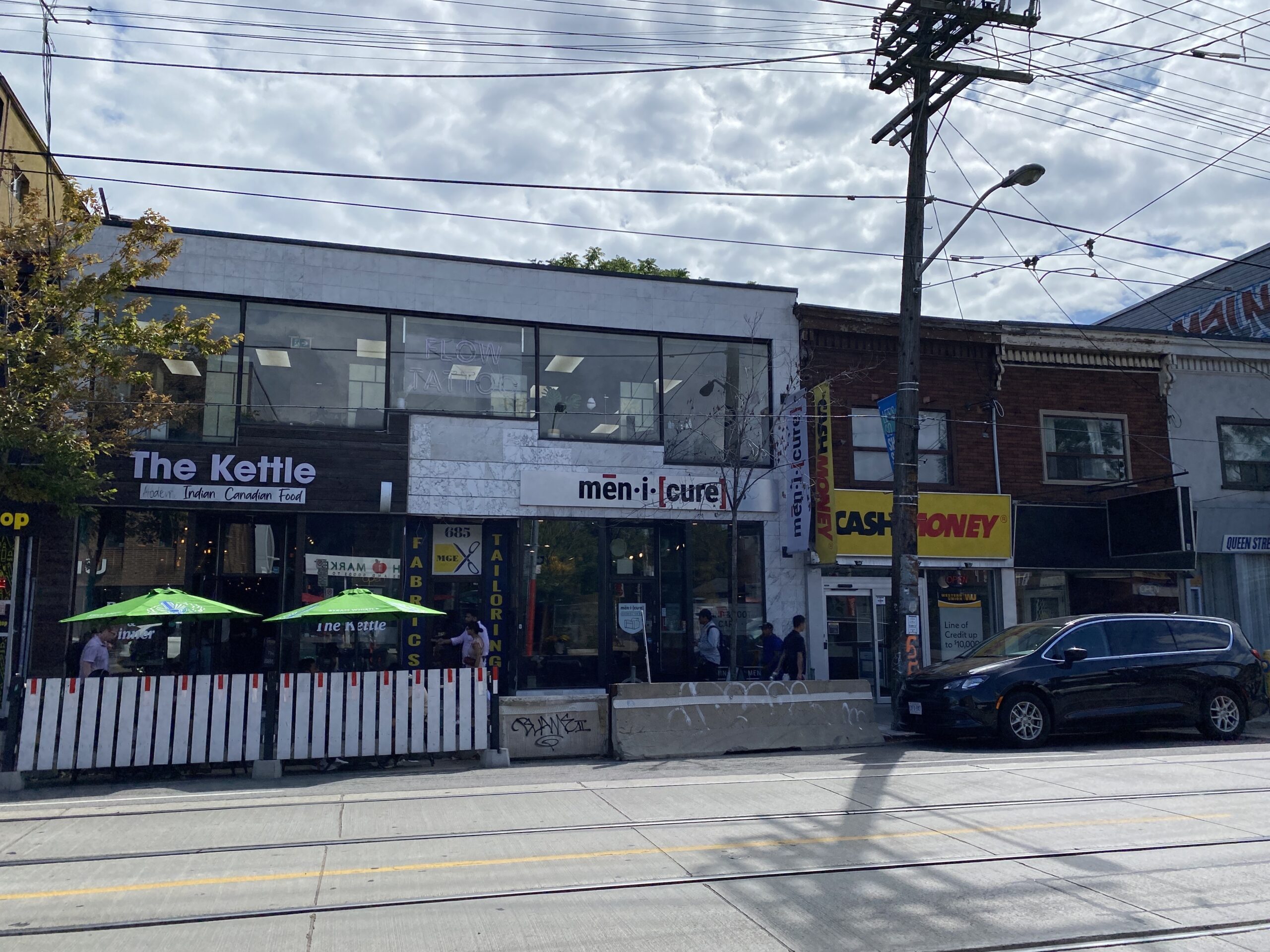
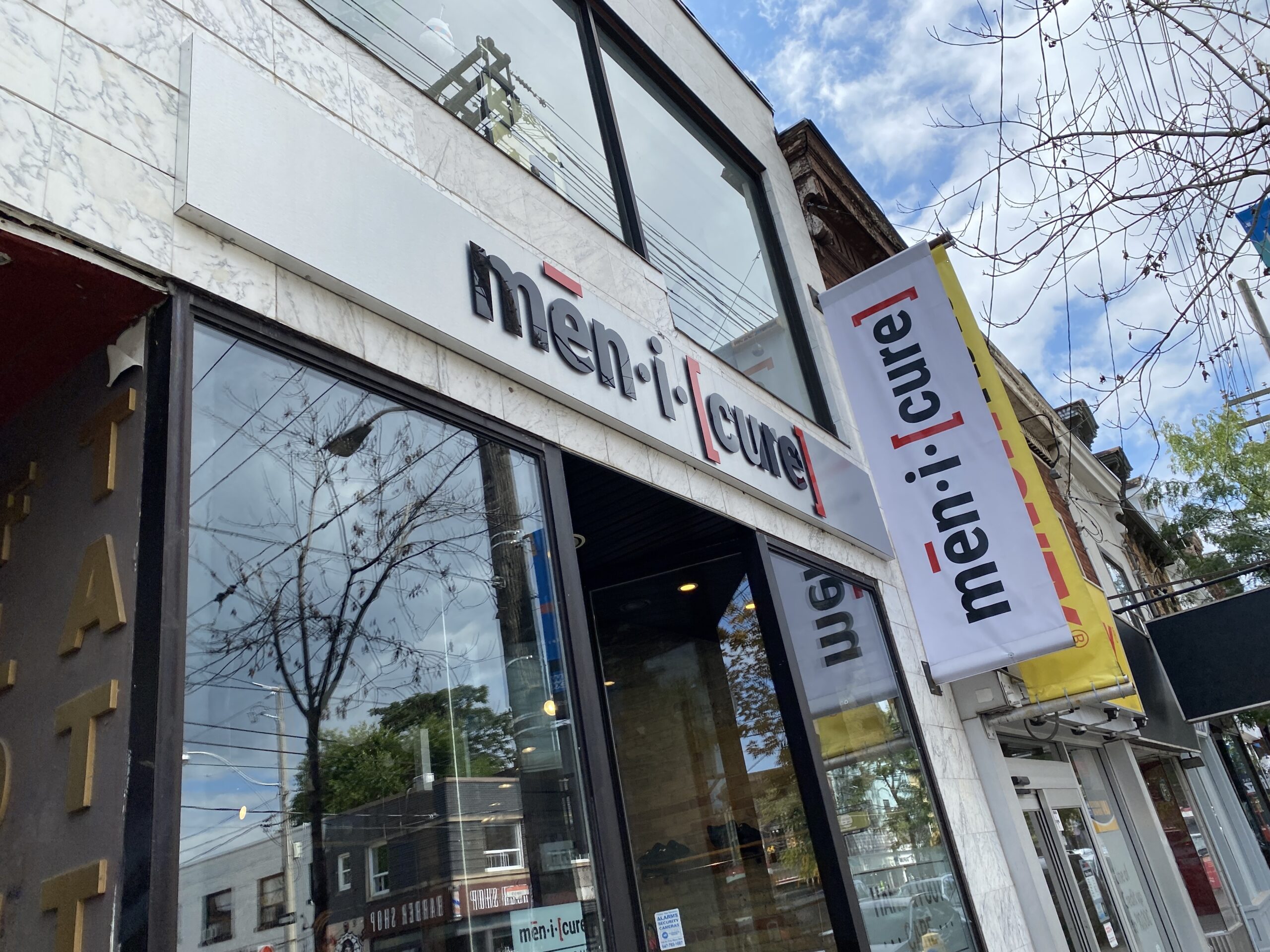
Menicure on Queen Street West (Image: Dustin Fuhs)
Just over two years ago, Richard Arnold launched his idea for a men’s grooming salon.
Today, Menicure Grooming is poised to grow by another three locations in the near future in Toronto.
“We do manicures and pedicures for men and laser and waxing hair removal and in addition we do facials,” said Arnold, the President and Owner.
“Now, we say it’s for men but we don’t care who walks in the door to be honest. It’s more of the design in the facility and it’s more geared I would say towards men as when you compare a barber shop to a hair salon.
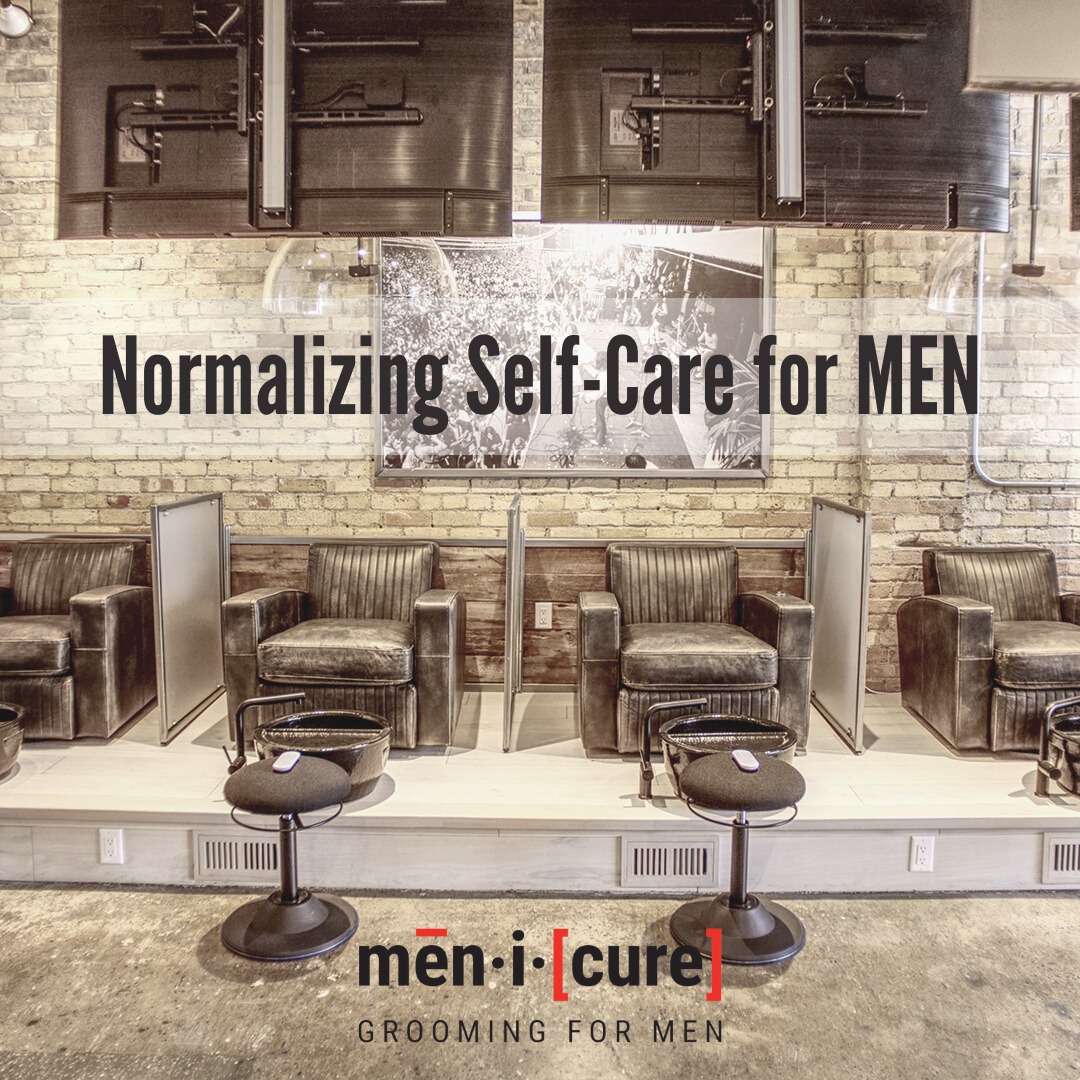
“It’s catered more towards men. There’s comfy club chairs that you sit in to get a manicure or a pedicure. There’s TVs that drop down right in front of you. There’s directional audio. If you’re getting hair removal, there’s TVs in the ceiling. There’s good music playing. It’s manly but it’s not your basement. It’s bright. It’s very clean.”
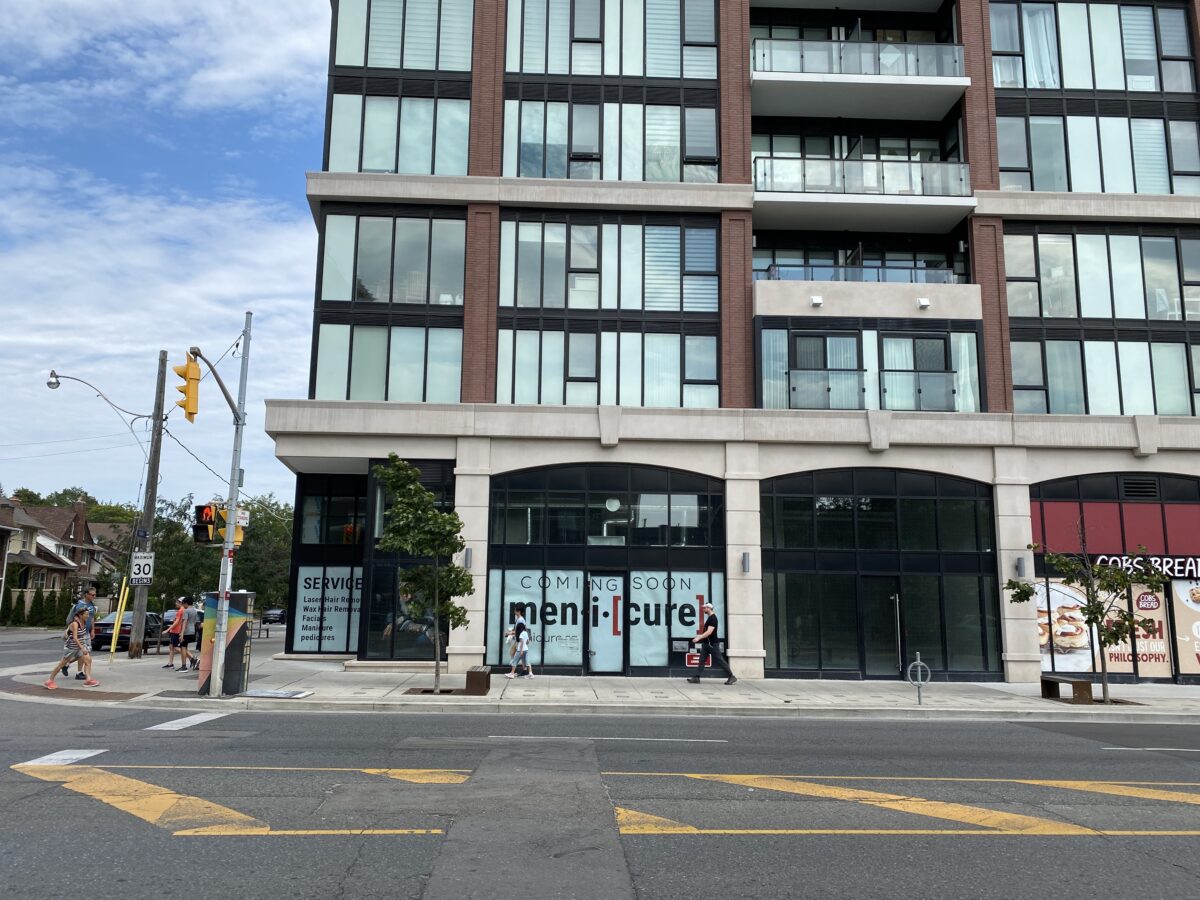
Image: Menicure Future Menicure at Yonge/Davisville (Image: Dustin Fuhs)
The first location opened at Queen Street West. Two more will be opening at Yonge/Davisville and Yonge/Lawrence. And Arnold is currently working on securing a fourth location.
“The two new locations are quite different. There’s one that’s a little bit smaller than our existing location and then there’s one that’s huge. We’re actually going to call it Menicure Plus because it will have some other services in it than what is currently being offered by Menicure.
“Primarily we’re going to be offering barbering as well. We’re going to bring in a third party to handle that aspect of the business. It’s not the business we’re in. But it will be contained within the building. It’s also going to have a pretty decent fitness facility in there . . . It’s really going to be an advanced wellness building.”
The enhanced Menicure location will be going into the former space occupied by Burger Cellar at Yonge/Lawrence.
The next one at Yonge/Davisville should be open by the end of September while the larger one will likely open at the beginning of 2024.
“We’re looking for a location in The Path which is an area that’s below the Financial District in Toronto. We’re not quite there yet on the location but it looks promising,” said Arnold.
Future Menicure at Yonge/Lawrence (Image: Dustin Fuhs)
When asked how many locations the brand can eventually grow to, he said: “Well really our feeling is that you could probably have one in pretty well every neighbourhood in the GTA and then expand beyond that. It’s like your local barbershop. They’re all over and we feel that we could be in the same position as that.”
One of the unique features of the brand is that it’s fully licensed. The brand also sells products in-store.
“Most men that I know are doing this type of grooming to some extent – either by themselves or with their spouse or men are going into these other salons with their female spouse. A lot of men are doing these services. Maybe they don’t talk about it quite so much,” said Arnold. “But a lot of men are doing these services.
Menicure on Queen Street West (Image: Dustin Fuhs)
Menicure on Queen Street West (Image: Dustin Fuhs)
“I was one of them. I would go to a local nail salon and really felt like a third party in these salons. They’re not designed as much for men. That’s really the way this started. We have a business partner, he’s in the same situation. He would go and get his nails done as well and hair removal and things like that. And again the feeling was where we were going they weren’t necessarily designed with us men in mind as much as women. They’re definitely more geared towards women and rightly so probably because that’s where the market was.
“Our feeling is that the market is changing. As a matter of fact, if you look at the cosmetic industry, men’s cosmetics is the fastest growing part of the business and we feel the same way in the aesthetic part of the business. That’s really how it started. We just wanted to build a place that was a little more oriented towards a men’s type environment.”
As the company says on its website: “When you look good, you feel even better.”
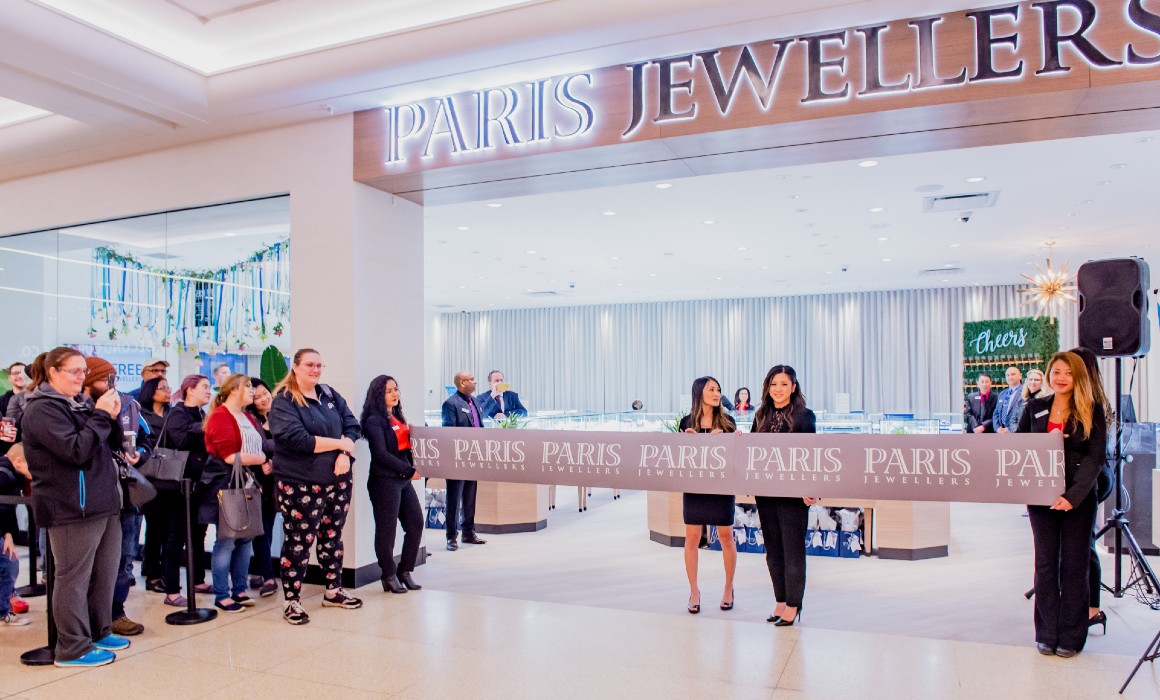
PARIS JEWELLERS CO-FOUNDERS, CHAU & TRANG LUI. PHOTO: PARIS JEWELLERS
Craig and Chau Lui, Co-Owner of Paris Jewellers, discuss the remarkable journey of the Edmonton-based jewelry brand that originated from humble beginnings to a thriving jewelry brand with 23 locations across Canada. Chau recounts how her mother’s perseverance as an immigrant led to the establishment of the first store, even in the face of language barriers. The family’s dedication and the warm embrace of the St. Albert community propelled the brand’s growth, marked by a unique combination of passion and clear responsibilities.
The conversation delves into the intricacies of the jewelry business, highlighting the company’s dual focus on in-store and online experiences. Chau emphasizes the distinct preferences of customers across various locations, where factors like cultural nuances and trends play a significant role. This adaptability extends to Paris Jewelers’ innovative approach to product development, where Chau describes a data-driven process that responds to customer demands while celebrating personal moments through intricately designed jewelry pieces.
Looking ahead, the dialogue touches on the challenges posed by the pandemic and the company’s resilient response. Chau discusses the insights gained during lockdowns and the transformative power of perspective that prompted the company to reevaluate its strategies and streamline its operations. With a focus on maintaining the bond of trust with customers and further expansion, the video podcast provides an insightful glimpse into the dynamic world of Paris Jewelers and its continued commitment to crafting meaningful jewelry experiences.
A transcript of the conversation can also be found below.
If you prefer to listen to the audio version, it is available below:
The Interview Series audio podcasts by Retail Insider Canada are available on Apple Podcasts, Stitcher, TuneIn, Google Play, or through our dedicated RSS feed for Overcast and other podcast players. Also check out our The Weekly audio podcast where Craig and Lee discuss popular content published on Retail Insider which is part of the The Retail Insider Podcast Network.
Craig Patterson 0:03 Welcome to the Retail Insider Video Interview series. I’m your host, Craig Patterson, and we’re joined here today with a special guest. Chau Lui. She is the co owner of Edmonton based Paris Jewellers. Welcome Chau.
Chau Lui 0:16 Thank you so much for having me.
Craig Patterson 0:18 Let’s talk a bit about Paris Jewellers. How was it founded?
Chau Lui 0:23 Paris Jewellers really was founded by my mom. So our family immigrated from Vietnam. And my mom came here with her with us with her family just to try to build a better future for her kids being there’s so much opportunity in Canada. We landed first in Winnipeg, and then made our way to Alberta. And we grew up seeing was my mom worked really hard, she worked two or three jobs at the same time and didn’t know how to speak English. So she went to English as a Second Language class. She then had the opportunity to start training as the goldsmith at like a competitor’s jewelry store. And she got really good at it. And a few years later had the opportunity to open one small store in a town called St. Albert, Alberta. So I really, dearly love St. Albert so much. And the time that she opened this very small, 400 square foot modest store, she still didn’t know how to speak English. So every time a customer would come in, she would pull out her Vietnamese-English dictionary. And that’s what she used to translate and communicate with customers. So I don’t know how it happened. But I think customers just love the way that she made them feel in the store. And we started getting more well known in the community of St. Albert. And I’ll never forget the kindness of this community that took a chance on a family that really was new to the country, didn’t know how to speak English, didn’t really have a brand. So it was really special to us to have that store.
Image: Paris Jewellers
Craig Patterson 1:43 Was the store called Paris Jewellers – the first location?
Chau Lui 1:46 The first location was called St. Albert Goldsmiths because it was in St. Albert and she was a goldsmith. So it was called St. Albert Goldsmith. And a couple of years later, the mall approached us and said, “You know what, you’re doing quite well. How do you feel about opening a second store in the same Mall?” and of course we were like, “No, we have one store, it’s more than we could have ever dreamed of”. But, we didn’t grow from our comfort zone. So took the risk open that second store. And that’s how Paris Jewellers came to be.
Craig Patterson 2:12 That is fascinating. Now the company has more than 20 stores, I think. Tell me about the current operations.
Chau Lui 2:17 Yeah, so currently, we now have 23 stores in four provinces across Canada. So BC, Alberta, Saskatchewan and Ontario.
Craig Patterson 2:26 Excellent, excellent. And now you are a co owner of the business being the daughter of the founder. Tell me a little bit about the dynamics around the business currently, and how things are going.
Image: Paris Jewellers
Image: Paris Jewellers
Chau Lui 2:37 The dynamics like a family dynamic, I will say, honestly, is really, really interesting. There’s, there’s a plus side. And there’s also a side that can make it really, really challenging as well. So I joined the company and helped expand it to the 23 locations. But as I was growing the company, I really learned that I needed someone that was so much better than me in so many things. The financing, the planning, and so then I recruited my sister, she was actually working in oil and gas in Calgary, and I said, “Okay, I need to build a business, I kind of need you to come”. So I had to convince her to come to the company. So she is a co owner with me. And she’s absolutely fantastic. So the dynamic for us, it’s really good working with your family, especially your sister, it’s like you have someone who you trust that has your back. And it’s a very much a team effort. I don’t feel alone like building this business. What I will say is because it’s a family dynamic, we’re all very passionate. One of the things that works for us is we have really clear responsibilities and guidelines written out so that everybody knows their role and everybody knows their expectations. Like we have this thing in our company. And if it’s written, it’s real. So anytime we have a plan, we write it down, we make sure that everybody understands. And then even if we disagree, when we decide to move forward to plan our policy is we support that person, there’s no “I told you so”. We just move forward together. So for the most part, it’s actually really, really incredible as long as we’re super clear in communicating.
Craig Patterson 3:56 Right – now tell me a bit about the product. I know that Paris Jewellers comes out with some new limited edition made, or the partnerships or themes. Telling me that about the jewelry because there’s a uniqueness to it.
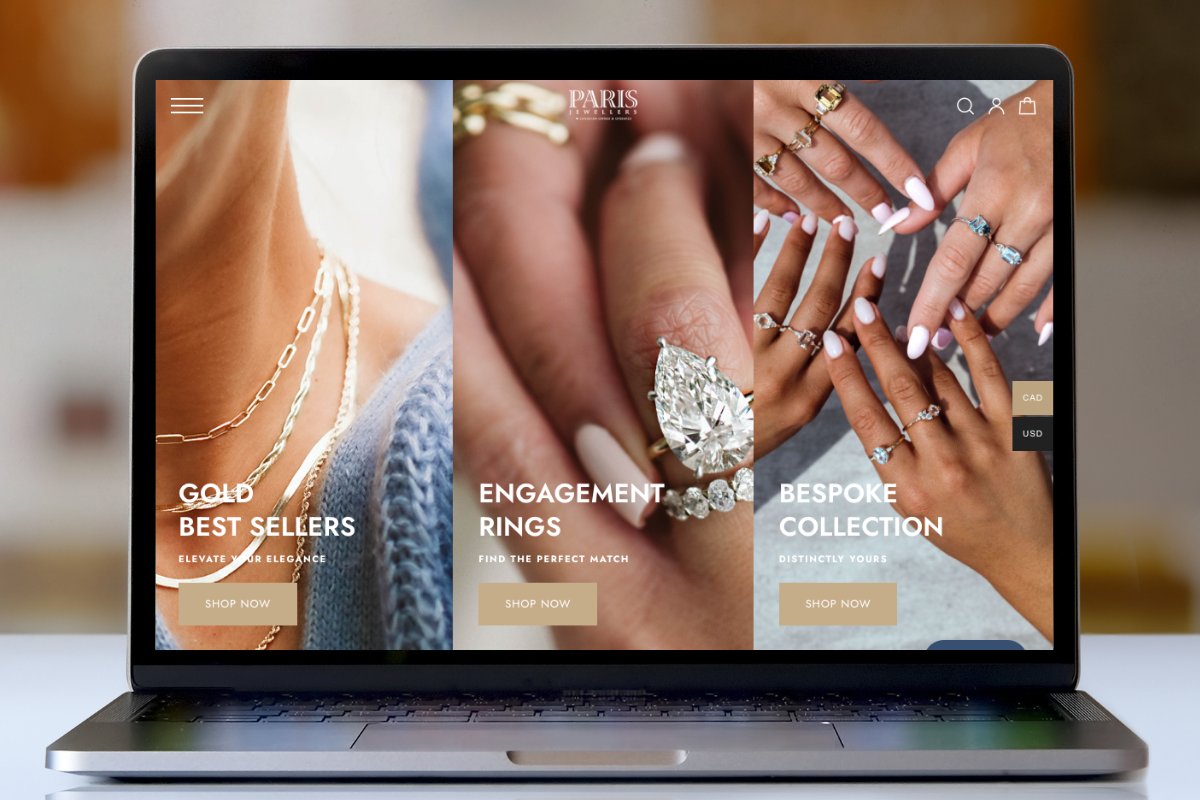
Chau Lui 4:07 Oh, thank you so much the product is just, it is just the heart of our company, because those products celebrate a moment in time for that customer. So we just believe that every time a customer puts on that special piece, like they hold that moment close to their heart. So for us, we take our cues from the customers, right? We think about what they want, what they’re asking, for example, like we have a live chat on our website, we are always like monitoring what’s being asked, what are people looking for, our customer care and like, quote department, we’re just always monitoring what’s been quoted. And if we see a lot of that, and then we also look at trends, then we really dream up and create products that we think customers are gonna love because that’s what it’s all about. If the customer doesn’t love the product, it doesn’t matter how much we love it. They’re buying it. So a lot of the things some of the things that we do, really we look at fashion, we look at trends, and we look at what Our customers want, we just launched a craft your carat, which we’re really excited about. This is a way to design your engagement ring online. So it’s like creating your ring your way. So one of the biggest occasions in someone’s life could be their engagement. It’s so special. And we were seeing customers constantly ask, can I get this ring, but with this stone shape, can I get this ring, but with a different size, in a different metal, and a different gold color? And we were getting it so often. And also, I actually make a point to do reception, my company still I schedule time, and I answer the phones, it’s the only way I get to really connect with customers now and without our team members, and I learned so much by the questions that people ask. So I would a lot of times get “I need a quote for this, I need a quote for this, you want to change the ring”. So then we started dreaming up “What if we could create something online where a customer can really craft their ring, see different options, and they could get it with convenience”, because it’s really about what they want. So we just launched that. And I’m so excited because I think it’s about meeting the customer where they are, and where they need to be during their shopping experience.
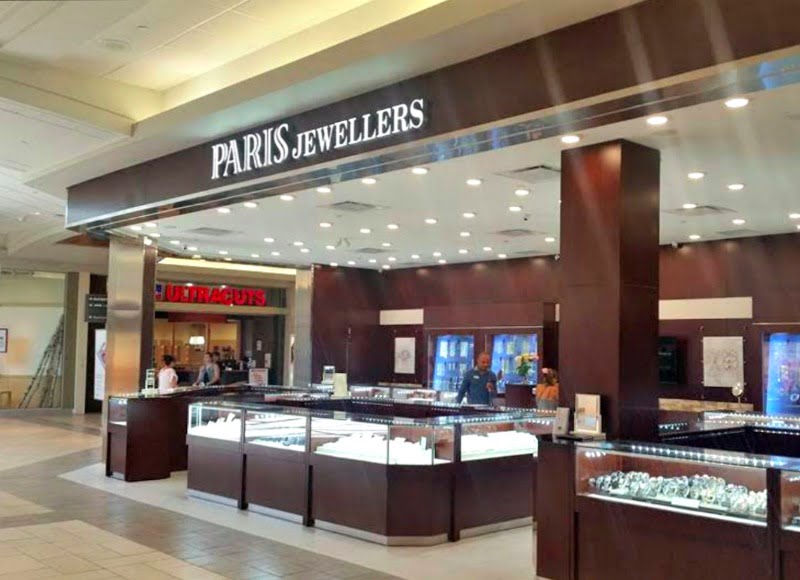
Paris Jewellers at CF Market Mall. Photo: Jessica Finch
Craig Patterson 6:06 That is so interesting. Now tell me about the different categories of jewelry, because obviously you’ve got engagement rings, wedding rings, and so on. Tell me about the occasions and who’s the customer that’s buying a lot of this.
Chau Lui 6:18 What we’re learning is our customers, our retail locations, is a different demographic than our online customers. So it’s almost like we have two different businesses, right? I never thought that that would ever happen. But it is absolutely happening right now. So we do have that engagement ring customer. And we find that that engagement customer because it is such a huge experience. If we can do it right, we have to earn their trust, they will continue to shop with us for years to come for anniversaries, for birthdays, for baby gifts. What about when they have kids, we have a beautiful children’s jewelry line partnered with the Make a Wish Foundation of Canada for the baby’s first pieces of jewelry. So things like that we also have a customer, that is very fashion forward we’re finding and they usually start online. So they are looking for affordable luxury, solid gold pieces, trending earrings, stacking, earrings, stacking necklaces, stacking rings, they’re looking for all of those things. And they start online, they may go into the store. But we also want to encourage people to celebrate every single moment in every single occasion. It doesn’t have to be a special occasion, they should celebrate themselves every day. That’s a part of our vision that everyone’s celebrating and their story. So those are the occasions but I think there’s there’s so many more.
Craig Patterson 7:35 Now that is fascinating. And in terms of the online, are there certain purchases that are made. Probably not something for an engagement ring because you want to try that out in the store. But tell me what sort of the online sales in terms of say what categories are really, really popular?
Chau Lui 7:50 That’s a great question. So what we’re finding has been really great online is our solid gold jewelry. So your solid gold essentials that you’re gonna wear everyday gold chains, gold earrings, and also personalized jewelry. People are wanting something a little bit more personal, that like shares their story. So our initial necklaces are growing well. But we also do sell Engagement Rings Online. It is when a customer will trust us that they will move forward and spend 1000s of dollars buying an engagement ring online. I think that that is the biggest compliment that we can receive that a customer’s request is enough for that occasion.
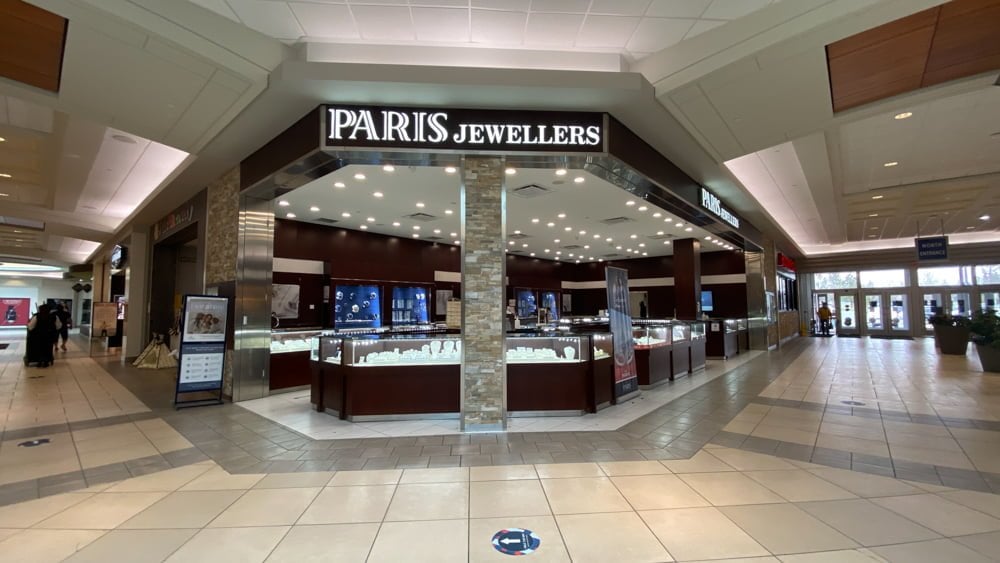
Craig Patterson 8:25 Oh, it makes sense. Tell me about the experience in the store. Because jewelry stores are very much I guess a high touch type of experience. But tell me about the actual Paris Jewellers stores including the interiors and the customer service.
Chau Lui 8:40 Yeah, that’s that’s a great question. Because we have 23 stores and we’ve been around for over 30 years. A lot of our stores have like, different looks actually we’re trying to get everything streamlined and renovated. That takes quite a bit of time and planning. But I would say like our newest concept, look, it would be our West Edmonton Mall flagship location, our hometown of Edmonton. It’s very neutral. It’s very great. It’s very open, we want customers to feel really comfortable. And we wanted the jewelry to take center stage. When it comes to the experience, I would say for us. And for me especially, that’s a product that I’m super passionate and really, really intentional and crazy about in the best way because customers have something we don’t have. They have choice, they can choose to go anywhere. So when they choose us, I believe that it’s an honor and it’s a privilege. So the experience has to be really, really great. So when a customer walks in our store, this is what I want to see. And it probably doesn’t happen all the time to be honest, but this is what we train for. So we have a really regimented training program to ensure that the customers are getting the great experience. We don’t want to start showing any one product so like Craig, if you walked in the store, I would expect someone to say hi, how are you welcome Paris Jewellers? And then just really get to know you ask you questions to determine what jewelry works for you what’s important to you in selecting these pieces and then begin to show you the products. Because I think we have to earn the right to know the customer to start showing the product so that we can get it right for them. It’s important.
Image: Paris Jewellers
Image: Paris Jewellers
Craig Patterson 10:09 Terrific, terrific. Now, in terms of retail expansion, Paris Jewellers is in Western Canada. Do you foresee the business expanding perhaps a little bit further east? Or tell me about what you have is maybe a bit of a longer term vision for for Paris Jewellers.
Chau Lui 10:23 I am super excited about expansion. I don’t know if I’m allowed to share anymore, but like we are absolutely looking forward to growth, especially where we see that it’s working online, right. Like we have to be able to make those data driven decisions. So if we see there’s an area online that we’re doing well, we’re going to look into that more. So I am excited for what the future holds. We did open a store in Edmonton in 2021. And then we just kind of like during the last few years, took a pause and really looked at our foundation looked at growing the business internally with like training with product, making sure everything was right before we look forward to expansion, but absolutely open to expanding for sure. I think it’s a very exciting time to retail. And there are so many opportunities and I just think of all the customers that maybe don’t know us yet, that I’m excited to get to know us.
Craig Patterson 11:13 Paris Jewellers opened a store in 2021 not to bring up any bad memories for anybody here. But let’s talk a bit about the pandemic. How were things with the pandemic, we had some obviously lock downs and whatnot. How was the jewelry business online and the physical business during that time?
Chau Lui 11:30 Yeah, yeah. So that was a time that I will say that we’ve never worked harder in our lives than during that time – just because things were changing all the time. And we’re in four provinces, every province had different rules. So when when people asked like, how is how did the company do during the pandemic? I have to kind of say like, it depends on the province. Ontario didn’t fare as well as we were closed so often (over one year, we were closed seven months out of the year). So that was a challenging year. Of course, online sales surged. But we saw that as an opportunity to say, Okay, what’s working? And how do we keep these customers with us when everything opens up? So that was a huge focus for us during the last few years to really look at that online business and say, what is working? What can we double down on and make the better? And how do we continue to keep these customers loyal? The pandemic gave us a really amazing gift, I would say like, I know, it was such a challenge for so many people. But it gave us the gift of perspective. So this was a time that Trang and I took with the team. And we looked at our business with a fine tooth comb and said, what’s working, what’s not working, we created a stop doing list. Because we’re like, what are we doing? What are we doing? And why? And if we didn’t have an answer that was better than that’s because we’ve always that’s the way we’ve always done it, then we just removed it. So it was actually I look back at it as a time where we looked at our business and we built a foundation, we corrected things that were wrong. And we’re still continuing that. But it was a gift in terms of that perspective for us.
Image: ParisJewellers.com
Craig Patterson 12:58 Now moving forward here, were there any markets outside of where you are currently that are seeing demand for the jewelry online?
Chau Lui 13:13 We’re seeing it all over Canada. But I would say I think there’s lots of opportunity in Ontario for us. There’s so many people in Ontario. And I feel like we have three stores there so that would be very exciting and interesting for us for sure.
Craig Patterson 13:29 Is anything else you want to talk about today with Paris Jewellers?
Chau Lui 13:34 Oh, I just I’m so excited for the holiday season. So you’re just catching me as two days ago, we had our big holiday campaign shoot. And I’m just so excited. For all of the things that we’re launching, we’re launching something really special, I don’t know how much I’m allowed to share. But something really unique and special that we’ve been working on for like quite a while now. So I’m excited for that. And our holiday collection like it launches November third. And I feel like the team has worked so hard to really bring a collection that customers are going to love and be able to celebrate the holidays with and celebrate themselves. So I’m really excited about that.
Craig Patterson 14:04 That’s terrific. What goes into developing these collections?
Chau Lui 14:08 Yeah, we take feedback from consumers. So some things that we work on like a year or two in advance, we look at a trend and we look at how is that going to work for us. When you see things on the runways, it is done so well and so beautifully, but might not work for your Albertan or like in Prince George BC. So we take that and then we kind of dream things up, get ideas going get samples, and then we look at it. And then we actually, a lot of times, wear samples to make sure that it’s right, we make changes, some things go through like three or four iterations before it even makes it to the sales floor. And if it doesn’t make it then we just hold back the sample. So it is like a really great experience and process for us. But the most important thing I will say it is it is that customers feedback. When we see something that does really, really well we look at it and say what about this item works and where can we grow this certain product category and that collection right?
Craig Patterson 14:58 Do you notice quite a difference in term as of how, or trends that people look for, say in Edmonton and Calgary as being larger cities versus some of the smaller communities.
Chau Lui 15:07 Yes, it is such a difference because, for example, our store in Lloydminster, which is just a few hours away from Edmonton, their top sellers are so different from our Edmonton store. It is like a contrast, like quite a stark difference, right? And so we’re noticing those trends. So what we really try to do is cater to that look at sell through and have store assortments like, the stores do have the same assortment for the most part. But we do have to make changes based on the stores, right. We have a store in Brampton, Ontario, where they sell yellow gold more than any other store in our company. So we make sure that they have more yellow gold all the time, because that’s what the customer wants, they’re not going to be buying white gold as much. So we really try to make those adjustments. it is a lot of coordination and work. But it really is like when we get that product to the store, we want it to be great for the customer, right?
Craig Patterson 15:56 That’s right, that would be a cultural thing. You’d have more solid gold in a place like Brampton versus in another market, where would be a different demographic?
Chau Lui 16:04 Absolutely. So I think we have to, we really have to adjust. And we really have to say what is the customer want in this area? And how can we apply that. At the end of the day, we’re all just solving problems for customers, right?
Craig Patterson 16:14 Absolutely. Lloydminster is kind of close to my heart having played hockey there. I grew up in Cold Lake. I’m curious, what – off the top of your head – sells really well in Lloydminster versus at West Edmonton Mall?
Chau Lui 16:30 Okay, I will tell you absolutely Lloydminster sells a lot of pendants. They sell a lot of gold pendants, charms, crosses, it is really, really important to that community. Grad in that community is so important. So we always make sure that for grad season, it is a big deal there, we always make sure that we have a great selection for grads. So our grads can come into our store and feel really, really good. Pairing these items with their dresses, they love things in color. So those are things that we have to know about our customers. So we make sure that store stocked so our customers are happy when they come in, but grad is a big deal in Lloydminster, eh?
Image: Paris Jewellers
Craig Patterson 17:05 Absolutely! Now I had to look at the website, it was talking a little bit about the importance of having good people. Tell me about the staffing in stores as well as finding the best managers for Paris Jewellers.
Chau Lui 17:17 Yeah, that’s a great question. I’m sure everybody in retail is going to tell you in the last two years staffing has been more of a challenge. I will say that we are specific in the type of people that we do look for number one, they have to have our values first, it’s being grateful, being kind being sincere, having a can do attitude, wanting to leave a legacy. So like one of our first interview questions is, what are you grateful for today, because being grateful is one of our main core values. And if they can’t find something that they’re grateful for, it’s really challenging for us to bring them on board, right? Because there’s just not that alignment. So we will look at that. And I think for me is the number one I look for is willingness because willingness is something you can’t train. If you have that we can train you on anything because we have great training programs, right? We have leadership training programs, product knowledge, sales, training, we have it. So if they have willingness, and they have our values of being kind and sincere, and having that “can do” attitude and being grateful – they are going to do well at Paris Jewellers. But we’re super clear in the interview, what we’re about and what they can expect, because there’s no surprises. So I think that’s really helped us streamline our interview process and who we want to bring on board so that they can be successful. It’s important that you find the right fit, not just for us, but for them as well.
Craig Patterson 18:32 Terrific. Well, I’m grateful that you joined us here today. Thanks so much. This has been a chat with Chau Lui, you’re the co owner of Edmonton based Paris Jewellers, thank you so much for joining us here today and telling us about the business.
Chau Lui 18:46 Thanks for having me, Craig.
Craig Patterson 18:47 And I’m Craig Patterson. I’m the founder, CEO and publisher of Retail Insider Media. I’m also the host here of the Retail Insider video interview series. Thank you for so much for joining us here today. Be sure to subscribe on whatever platform that you’re either watching this on or listening to this on and be sure to join us for more of these here. Thank you so much everyone again for joining us today. Take care and bye for now.
Subscribe, Rate, and Review our Retail Insider Podcast!
Drop us a line at Craig@Retail-Insider.com. You can also rate us in Apple Podcasts or recommend us in Overcast to help more people discover the show!
Background Music Credit: Hard Boiled Kevin MacLeod (incompetech.com). Licensed under Creative Commons: By Attribution 3.0 License. http://creativecommons.org/licenses/by/3.0/
Dollarama at The Tenor in Toronto (Image: Dustin Fuhs)
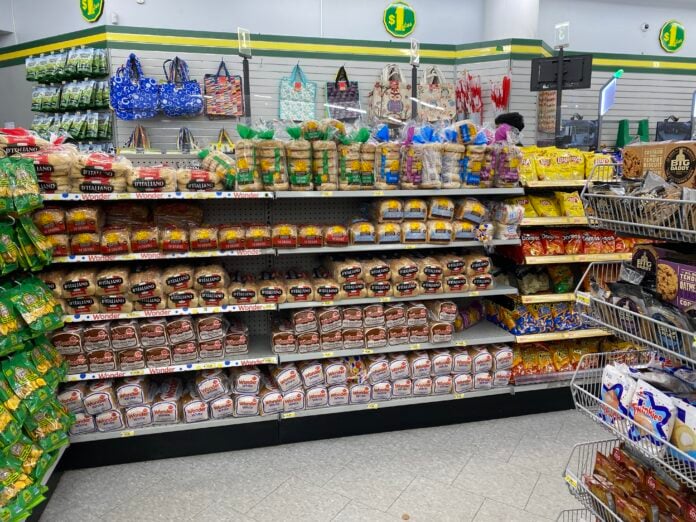
In an era where the cost of living continually surges, the pursuit of affordable groceries has evolved into a financial battleground for many Canadians. Recent investigations by intrepid reporters in Quebec and Ontario have uncovered a revelation that may surprise some: Dollar stores, most notably Dollarama, provide identical non-perishable products to regular grocery stores but at significantly lower prices, often falling within the 30% to 75% range. While many shoppers were aware of this, many likely were not. But this begs the question: How is this possible? How can Dollarama offer the same products, in the same size, and from the same brands, at a much lower price?
Different business models, full stop. Dollarama’s ability to offer rock-bottom prices is underpinned by two critical pillars: remarkably low operational costs and robust supplier-retailer relationships. While one might assume limited variety, exemplified by having only one option for ketchup or peanut butter, the reality is that the products are indistinguishable from those found in major grocery chains. This might appear counterintuitive, but the key lies in Dollarama’s dominance over supplier shelf space in its vast network of over 1,400 stores.
Dollarama at The Tenor in Toronto (Image: Dustin Fuhs)
Suppliers recognize the advantages of collaborating with Dollarama. They no longer need to contend for limited shelf space or engage in cutthroat competition with rival brands, making it an appealing proposition for them. The result is beneficial deals that ultimately trickle down to the consumer’s advantage. Suppliers can also sidestep concerns about how grocers may prioritize their in-house labels. Dollarama’s house-brand strategy is not strong.
With projections hinting at the possibility of surpassing 2,000 stores by 2030, Dollarama’s influence in the market is poised for substantial growth, selling more food. For consumers, Dollarama’s approach of offering only a single option for each product may initially seem restrictive. In a world that often celebrates choice, the idea of having just one brand of ketchup or peanut butter may raise eyebrows. However, this simplicity lies at the heart of Dollarama’s cost-saving strategy, which directly translates into competitive pricing.
Dollarama’s success extends beyond its pricing strategy. It excels at maintaining minimal operational costs, with daily average staffing expenses capped at a mere $500. Its stores operate with efficiency and simplicity, unlike major grocery chains such as Loblaw, Metro, and Empire, which also function as real estate giants, potentially driving up overhead costs over time.
Furthermore, while dollar stores like Dollarama bypass expensive advertising campaigns, these cost savings can be transferred to consumers in the form of lower prices. When you spot Galen Weston on TV, you’re essentially covering the cost of those ads when shopping at Loblaw. In contrast, Dollarama shoppers enjoy the benefits of lower prices without the need to subsidize a celebrity-studded marketing campaign.
Dollarama at The Tenor in Toronto (Image: Dustin Fuhs)
But it’s not all great at Dollarama. Let’s be candid—critics may contend that Dollarama faces socioeconomic biases and challenges related to product quality and store ambiance. A visit to Dollarama might reveal an unpleasant odour reminiscent of a plastic manufacturing plant in Beijing. While it’s true that the scent of a plastic factory may linger in some stores, many are willing to overlook this for the sake of their budgets. The reality is that Dollarama serves as a lifeline for numerous Canadians struggling to make ends meet.
Nevertheless, Dollarama is not without its challenges. Recent investigations, notably from the Halifax Examiner, have brought to light instances where Dollarama stores located near major grocery retailers are pressured to limit their product offerings. This practice is not unique to Dollarama and underscores broader issues within the retail sector. To genuinely foster competitive pricing within the grocery sector, addressing these concerns is imperative, and Canada’s Competition Bureau should do so without delay.
Dollarama’s ascendancy is nothing short of remarkable. Its unorthodox approach challenges the traditional grocery store model, prompting a reevaluation of what we value in our shopping experience. It serves as a reminder that different business models can yield different benefits, and sometimes, simplicity and efficiency can be the keys to success.
While the food elites may continue to dismiss the role of dollar stores, the reality is that dollar stores are making the market more competitive. The chain is opening 70 new stores this year alone. Someone’s buying. As Canadians wait for a knight in shining armour to bring more competition, dollar stores are already doing so, silently and effectively, providing affordability where it is needed most.