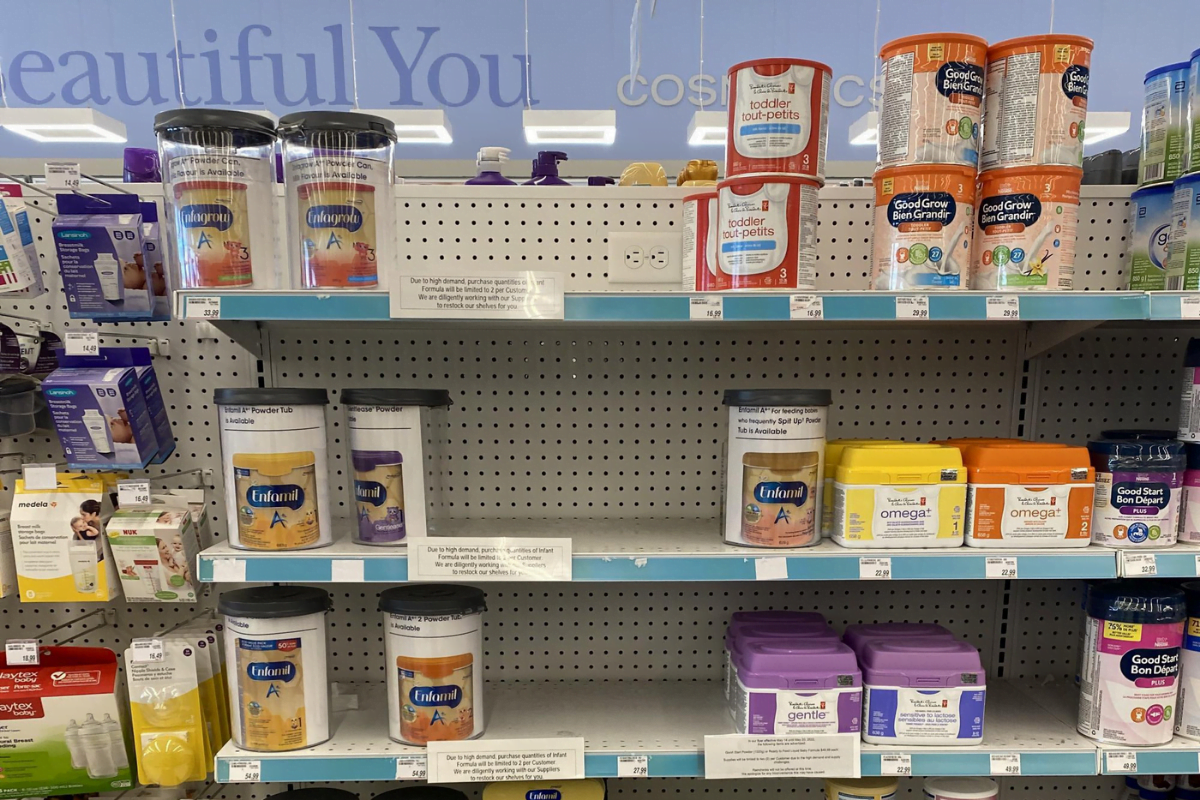
Parents of toddlers are concerned these days about baby formula shortages due to a combination of factors. A major recall in the United States affecting the top manufacturer of baby formula, coupled with supply chain challenges, has made things difficult for parents. In the U.S., some parents are driving hours just to get the right product for their baby. In more than six states, over 50% of retail stores are out of stock. Breast milk banks are getting organized, and many organizations are helping desperate parents. If someone is looking for a product for their child, they will find it, but it may not be the product their baby is accustomed to, and that of course can be a problem for nervous parents.
But the big problem is the recall which occurred on February 17. Abbott, the largest baby formula manufacturer in the U.S., voluntarily recalled its Sturgis-manufactured products and closed the facility following reports that four infants had fallen ill from bacterial infections. Two toddlers allegedly died after having consumed formula produced in the plant. Even a whistle-blower report was submitted last year to the FDA about what was going on at the plant. Abbott denies everything, based on evidence the company collected itself. Still, the plant in Michigan could be shut down for another two months, if not more. Regulators would typically expedite the opening of such an important plant. We saw this during COVID with major meat plants, but the relationship with the FDA and Abbott is clearly fractured and messy.
When only three companies manufacture about 98% of what is consumed in the country, things will escalate when a recall occurs. The baby formula market is not that profitable since birth rates have been dropping in the U.S. When a market is shrinking, getting new players is challenging.
It’s not the first time baby formula has made international headlines. In 2008, China had its own baby formula scandal when thousands of toddlers were hospitalized, and few actually died. A top manufacturer had opted to add melamine to their baby formula. For months, everything was hidden from the public since Beijing did not want any bad publicity as it was hosting the Summer Olympics that year. This became one of the most significant food safety scandals in history. It’s interesting that the U.S. is now dealing with its own baby formula headaches.
But in Canada, the situation might be a little different. First off, demand for baby formula in the United States is typically higher in most states. According to the CDC, in the U.S., about 56% of infants are breastfed up to the age of 6 months. In Canada, that rate is above 80%, according to the International Journal for Equity in Health. Reliance on baby formula in the United Sates is more acute. Also, Health Canada has temporarily allowed other infant formula and dutch baby formula brands from the U.S., the U.K., Ireland, and Germany to be imported into Canada. This measure will help put many parents at ease. Still, most of the baby formula consumed in Canada is imported from companies, so any hiccups outside of Canada can impact our supplies, at any given time.
But most Canadians don’t know that Canada is indeed home to a large baby formula plant. In Kingston, Ontario, Canada Royal Milk, owned by China’s Feihe International, built a plant back in 2017. It is the largest baby formula plant in Canada by far. However, all its products are shipped back to China – all of them. The plant itself uses Canadian cow and goat milk. For any experts who understand how the Canadian dairy sector works, this is troubling.
Not only that cow milk is partially subsidized by Canadian taxpayers, but dairy farmers also have expensive government-sanctioned quotas intended to serve Canadians only. Supply management is about feeding ourselves, and nobody else. Supply management is considered one of the most protectionist policies we have in Canadian agriculture. But for baby formula, we produce for China, almost exclusively. Something is not right.
Selling to China is not really the problem. After all, China’s melamine scare in 2008 made Canadian dairy products all the more attractive. It’s hard to blame an industry for capitalizing on an opportunity. But this dairy is Canadian dairy. To get Canadians to buy into our supply management regime, and to produce what we need in Canada, Canadian dairy farmers have long argued we can’t ship milk abroad and grow the Asian market. Since dairy farmers have no incentive to grow any markets at all, we have allowed a Chinese-owned company to invest in Canada, only to ship our own food back to China.
Subsidizing and protecting our own milk production to serve other markets is not what supply management was designed to do when it was implemented more than 50 years ago. The milk sold to Canada Royal Milk should not only be off quota, but the facility should also be Canadian owned and operated so some of the focus would be on the Canadian market itself. Most ironic, due to trade barriers on both sides, the Kingston-based plant is only 30 kilometers away from the American border and can’t ship products to the United States. As such, Canadians are still reliant on imports, despite the existence of Canada Royal Milk.
For Canadian consumers, having access to Canadian made baby formula would also be reassuring, but dairy farmers just don’t think about the market that way. Money is money, and who is being fed is totally secondary.
For Canada, this is truly our own baby formula problem.